Hubbry Logo
Recreational vehicleRecreational vehicleMain
Open search
Recreational vehicle
Community hub
Recreational vehicle
logo
8 pages, 0 posts
0 subscribers
Be the first to start a discussion here.
Recreational vehicle
from Wikipedia

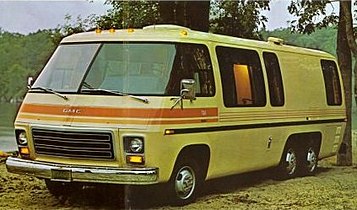
An example of a Class C recreational vehicle, recognisable by the extension of the cabin over the cab
A motorhome in Hamburg
Map symbol used by the US NPS to indicate an RV campground

A recreational vehicle, often abbreviated as RV, is a motor vehicle or trailer that includes living quarters designed for accommodation.[1] Types of RVs include motorhomes, campervans, coaches, caravans (also known as travel trailers and campers), fifth-wheel trailers, popup campers, and truck campers.

Typical amenities of an RV include a kitchen, a bathroom, and one or more beds.[2] RVs can range from utilitarian – containing only sleeping quarters and basic cooking facilities – to luxurious, with features like air conditioning (AC), water heaters, televisions and satellite receivers, and quartz countertops.

Types

[edit]

RVs can be either trailers that are towed by vehicles or vehicles that can be driven themselves. Most RVs have one level, but there are also some with two levels. To save space while traveling, larger RVs often have slide-outs or canopies that open up when parked. RVs that can be driven can be categorized "motorhomes", which will have the engine in front, whereas some have engines in the rear. Those with rear engines are called pushers. Generally, pushers use diesel fuel, while pullers use gasoline, thought this trend has change in modern times to include more diesel options for front engine RVs.

Recreational vehicle types[3]: 13 [4]
Name Image Type Length Description
Camper or Travel trailer Trailer 13 to 35 ft (4.0 to 10.7 m) Uses tow hitch attached to rear frame of towing vehicle
Fifth wheel Trailer 17 to 40 ft (5.2 to 12.2 m) Uses fifth-wheel coupling centered above rear axle of towing vehicle
Folding / Pop-up Trailer 8 to 16 ft (2.4 to 4.9 m) With collapsable sides that are stowed during towing
Class A (Integrated) Motorhome 26 to 45 ft (7.9 to 13.7 m) Typically built on heavy-duty truck or bus chassis
Class B (Semi-integrated) Motorhome 17 to 23 ft (5.2 to 7.0 m) Typically vans with elevated rooflines
Class C (Alcove) Motorhome 20 to 30 ft (6.1 to 9.1 m) Typically built on cutaway pickup or van chassis with bunk over cab area
Truck camper Insert 8 ft (2.4 m) or more Carried in bed area of pickup truck

History

[edit]

Early RVs

[edit]

The first recreational vehicles were horse-drawn. They evolved during the second half of the nineteenth century as adaptations of vehicles used for other purposes, including public transport caravans (UK, also known as stage wagons), gypsy vardos (Europe), living vans (UK), ambulance wagons (US) and sheep herders wagons (US).[5][6][7]

The first, currently-known, purpose-built RV was the horse-drawn Wanderer (UK), commissioned from the Bristol Wagon Works Company by Dr. Gordon Stables in 1884.[8] Stables was a pioneer of the UK's Gentlemen Gypsy movement[5] (1885–1914) which promoted the restorative benefits of horse-drawn leisure caravanning and inspired the formation of the world's first RV club, The Caravan Club (UK), in 1907.[9] The Wanderer was closely followed by the McMaster Camping Car (US,1889).Camping-vehicle In the 1890s, US RV pioneers self-built timber 'houses on wheels' for health, leisure and hunting purposes. The most widely reported of these were those of Morgan Lasley and his family.[10] Horse-drawn RV use declined after the First World War as many horses were killed during the war and automobiles became cheaper, more powerful and more widely available.

The first powered RVs were steam-drawn trailers from France including the Grande Diligence of Prince Oldenburg (1896) and the De Dion Bouton trailer of Monsieur Rénodier (1898).[11] The first steam-driven motorhome was the Quo Vadis (France,1900) and the first gasoline-driven motorhome was the Passe Partout (France, 1902).[11] The first recorded powered motorhomes in America were the 'camp cars' of Roy Faye and Freeman Young of 1904–06 (a 1904 Rambler, 1905 Thomas Flyer and 1906 Matheson).[12][13] Lightweight tent trailers were especially popular in the US from 1911, thanks to improved roads, new national parks and the affordability of tow vehicles such as the Ford Model T.[14] At the other end of the price scale, luxury touring limousines, developed in France by De Dietrich in 1904, were built in small numbers in the US by Welch (1909) [15] and Pierce Arrow (1910). The first US RV club, the Tin Can Tourists, was formed in 1919.[16] The first known recreational fifth wheeler was the Auto Salon Deluxe built in Belgium for Baron Crawhez by Auto-Mixte Pescatore in 1913.[17]

Wider development

[edit]

In the early twentieth century RV builders in the UK (Navarac, Piggott Bros, Eccles, Bertram Hutchings),[18] the US (Detroit Trailer Company, Welch, Graham Brothers, Pierce-Arrow) and France (De Dietrich, Cadel) experimented with a wide range of RV types including caravans and trailers, motorhomes, touring limousines, tent trailers and fifth wheelers. Early motorhomes ('house cars' in the US) were usually converted goods trucks and were heavy, noisy, inflexible and expensive, restricting their use to the wealthy or self-builders.[19] The 'one box' RV was not seen in large numbers until the small, lightweight Volkswagen Kombi of 1950.[20] During the 1920s and 1930s, caravans (travel trailers) became the dominant form of RV in the UK due to their low cost, weather-resistance and flexibility.[20] There was likewise a travel trailer boom in the US in the 1930s as automobile production-line manufacturing techniques were used in travel trailer manufacturing to meet growing demand from recreational users and those seeking low-cost housing during The Great Depression. Self-built trailers were highly popular in the US during the 1930s and travel trailers featured in a number of Hollywood movies including Mickey's Trailer (1938).

The 1920s and 1930s, saw some influential, maverick builders construct innovative RVs in small numbers. These included Bertram Hutchings (UK, 1930–39, streamlined caravans), Charles Louvet (France, 1924–34, aircraft-inspired, coach-built motorhomes and trailers), Noel Pemberton Billing (UK, 1927, Road Yacht motorhome), Glenn Curtiss (US, 1918–30, Adams Motorbungalo, Curtiss Aerocar, Aero Coupler hitch) and William Hawley Bowlus (US, 1934, aluminum monocoque trailers). Wally Byam's Airstream (US, 1931 onwards) was a successful trailer builder of the period and is the only survivor of over 400 pre-WW2 US RV manufacturers.[21][22] These early advancements in RV and trailer design established the foundation for a burgeoning industry that would continue to develop over the subsequent decades.

Prior to WW2 a number of other countries developed their own small-scale RV manufacturing industries including Germany, Australia, New Zealand and the Netherlands. Germany had a particular focus on small, lightweight caravans towable by low-cost automobiles [23] whilst Australia developed 'pop-top' caravans with good ventilation, ample water storage and high ground clearance.[24] During WW2 RV production was halted in most countries except when required as accommodation for military personnel or essential workers.[25]

Post-war recreation

[edit]

Between 1945 and 1960, RVs flourished in many western countries as disposable income and leisure time grew. Dedicated RV parks were established to cater to the needs of both short and long-term RV users. Improvements in RV technology including batteries, fridges, gas cookers, toilets and lightweight construction techniques dramatically improved RV comfort levels. More powerful gasoline and diesel engines allowed RVs to increase in size, weight and speed. Regulations were introduced in many countries to control how RVs were manufactured and used.

21st century

[edit]

As of 2016, the average age of RV owners in the United States was 45, a three-year decrease since 2015.[26] Per 2020 research reports, more millennials are interested in buying RVs due to their increased demand for camping and outdoor recreational activities, especially in the US.[27]

Due to the COVID-19 pandemic, sales of RVs in the United States have increased, and as of March 2021, 11.3 million households own an RV, which is a 26 percent increase over the past ten years. In October 2021, 58,000 RVs were manufactured in North America, the most ever in a single month.[28] Wholesale recreational vehicle shipments during the first four months of 2021 rose more than 86% over 2020, because consumer demand for RVs has soared since the pandemic's onset. Analysts expect industry revenue to increase 1.1% through 2026 as U.S. residents continue to plan domestic trips because of continued travel restrictions around the globe.[29]

Industry

[edit]

In the United States, about 85 percent of recreational vehicles sold are manufactured in Indiana,[30] and roughly two-thirds of that production in Elkhart County, which calls itself "the RV Capital of the World", population 206,000. The industry has US$32.4 billion annual economic impact in Indiana, pays US$3.1 billion in taxes to the state and supports 126,140 jobs and US$7.8 billion in wages, according to the RV Industry Association.[31]

The recreational vehicle industry around Elkhart is part of a large network of related transport equipment companies, including utility trailer makers and specialty bus manufacturers, who source from the same supply chains.[30] The industry has taken hits from US tariffs on steel and aluminum and other duties on RV parts made in China, from plumbing fixtures to electronic components to vinyl seat covers. Tariff-related price hikes forced manufacturers to pass on some of the increased costs through higher RV prices, which in turn has contributed to slower sales.[30] Shipments of RVs to dealers fell 22% percent in the first five months of 2019, compared to the same period a year earlier, after dropping 4% in 2018.[30]

Usage

[edit]
Class-C motorhome[32]
Class-A motorhomes[32]

RVs are most commonly used for living quarters while traveling. People may choose to take a road trip in their RV and use the RV to sleep in, rather than a hotel room. They may even decide to tow their car from the back of the RV[33] so they can use that to travel around more easily when they reach their destination.

Although the most common usage of an RV is as temporary accommodation when traveling, some people use an RV as their main residence. In fact, one million Americans live in RVs.[34] In Australia, the slang term for a retired person who travels in a recreational vehicle is a "grey nomad".[35]

There are local and national RV rental companies, such as Adventure KT and Outdoorsy that specialize in renting RVs to families for vacationing purposes.[36] People enjoy the road trip and luxuries an RV provides while traveling without having a long-term expense. This is similar to home vacation rentals but is cheaper and also offers the flexibility of itinerary planning.[37]

While it is legal in all of the United States to live in an RV, there are laws regarding where and for how long RVs can be parked.[38][39]

Some owners fit solar panels to the roof of their RV.[40] It is possible for RV users to live off the electrical grid while still having access to internet, making remote working feasible.[41]

Usage of RVs is common at rural festivals such as Burning Man,[42] but most festivals have strict rules about operating an RV during the event. Burning Man is strict about RV water leaks, and generator usage is another of the restrictions that festivals put on the use of RVs.

RVs are a form of housing for homeless people.[43]

Environmental impact

[edit]

RVs are significant emitters of air pollutants and contribute nearly 10 percent of U.S. mobile-source hydrocarbon emissions and about three percent of carbon monoxide emissions as measured in 2000. Because of this, they pose risk to air quality, human health and visibility in natural areas.[44]

The vehicles also have a large environmental impacts outside of fuel consumption both from their manufacture and use. Demand for lauan plywood for use in recreational vehicles is driving large-scale deforestation in Indonesian Borneo, destroying rainforests, peatlands, and wildlife habitats while displacing Indigenous communities. Although conservation groups have documented the R.V. industry’s reliance on timber from recently cleared forests, major manufacturers deny knowledge of deforested wood in their supply chains.[45]

Ecosystems can be damaged from RV usage through chemical pollution, soil and water degradation wildlife disruption and accelerated erosion. However, most studies have shown a majority of drivers deny their personal impact on the environment.[46]

A study from 2021 examined the environmental impacts of recreational camping in Sri Lanka’s dry-zone national parks, focusing on soil, vegetation, woody debris, litter, tree damage and campsite cleanliness. The findings showed significant localized degradation at both high and low-use campsites, with issues such as soil compaction, loss of woody debris, fire scars and litter diminishing natural values and negatively affecting visitor experiences, highlighting the need for stricter visitor management, education and sustainable campsite practices.[47]

See also

[edit]

References

[edit]

Further reading

[edit]
[edit]
Revisions and contributorsEdit on WikipediaRead on Wikipedia
from Grokipedia
A recreational vehicle (RV) is a motorized or towable vehicular unit primarily designed to provide temporary living quarters—including sleeping, cooking, and sanitary facilities—for recreational, , , or seasonal purposes, distinguishing it from permanent dwellings or standard transportation. These vehicles enable self-contained mobility for leisure activities, often accommodating families or groups in remote or transient settings without reliance on fixed . RVs encompass two principal categories: motorized units, such as Class A (bus-like motorhomes with expansive interiors), Class B (compact van conversions), and Class C (cab-over designs built on truck chassis); and towable units, including travel trailers, fifth-wheel trailers, pop-up campers, and truck campers that hitch to a separate towing vehicle. This diversity allows adaptation to varying needs, from luxury long-haul travel to lightweight weekend outings, with motorized RVs offering integrated propulsion and towables providing flexibility in detachment for parking or storage. Originating in the early 20th century— with the first purpose-built RV appearing in 1904 as a custom automobile conversion featuring bunks and basic amenities—RVs evolved significantly post-World War II amid rising automobile ownership and postwar prosperity, spurring mass production in the 1950s and 1960s by manufacturers incorporating aerodynamic improvements and modular interiors. By 2024, U.S. RV shipments reached 333,733 units, reflecting sustained demand despite market fluctuations, with towable models comprising the majority due to their affordability and ease of storage. The RV sector supports a robust , including campgrounds, service networks, and aftermarket accessories, while facing practical challenges like fuel efficiency constraints, maintenance costs, and regulatory variances across jurisdictions—such as exemptions from standards under U.S. HUD rules affirming RVs' transient nature. Adoption has surged among demographics seeking experiential travel, with global market valuation exceeding $48 billion in 2023 and projections for continued growth driven by trends and preferences. Defining characteristics include emphasis on durability for varied terrains, self-sufficiency via generators and water systems, and scalability in size from under 20 feet for solo adventurers to over 45 feet for extended group voyages.

Definition and Overview

Core Definition and Purpose

A (RV) is a motorized or towable that integrates transportation capabilities with temporary living quarters specifically for , , and . This design equips the vehicle with fundamental amenities including sleeping accommodations, cooking facilities such as a or , and sanitation systems like a or waste holding tank, enabling self-sufficient operation detached from permanent . These features distinguish RVs by prioritizing mobility and practical functionality for short-term habitation over stationary or commercial housing alternatives. The primary purpose of RVs centers on facilitating leisure-oriented mobility, allowing users to pursue experiential through independent without reliance on external or utilities. By housing essential life-support systems within a drivable or towable frame, RVs causally enable extended stays in remote or transient locations, fostering in recreational pursuits such as or road trips. Industry data underscores this utility, with RV owners averaging 9 trips annually and utilizing their vehicles for a median of 30 days per year, reflecting consistent demand for such autonomous living arrangements. Empirical evidence from owner surveys indicates strong alignment between RV design and user expectations, with 86% of owners reporting usage equal to or exceeding anticipations, thereby validating the vehicles' role in delivering satisfactory recreational independence. This high fulfillment rate stems from the inherent causal mechanism of integrated mobility and habitability, which minimizes logistical constraints inherent in traditional travel modes.

Distinctions from Commercial or Temporary Housing Vehicles

Recreational vehicles (RVs) are distinguished from commercial vehicles primarily by their intended non-commercial, leisure-oriented use, which affects regulatory treatment under U.S. (DOT) guidelines. Commercial vehicles, such as buses or trucks used for transporting goods or passengers for hire, fall under (FMCSA) rules requiring commercial driver's licenses (CDLs) for vehicles exceeding 26,001 pounds gross vehicle weight rating (GVWR) when operated in interstate . In contrast, RVs operated for personal, recreational purposes—defined as vehicles designed for temporary habitation during or —are exempt from CDL requirements even if their gross combination weight rating (GCWR) or GVWR exceeds 26,001 pounds, provided they carry no more than 15 passengers (including the driver) and are not used for compensation. This exemption reflects the causal distinction in risk profiles: recreational operation involves sporadic, lower-mileage without the fatigue or payload pressures of commercial hauling. RVs also differ from utilitarian vehicles like basic , campers, or cargo vans, which lack the integrated self-contained amenities (e.g., , , sleeping facilities) essential for independent temporary living and prioritize function over . Slide-in truck campers, for instance, often require attachment to a separate towing vehicle and do not qualify as fully self-propelled or towable RVs under standards from the Recreation Vehicle Industry Association (RVIA), emphasizing RVs' design for mobility-enabled leisure rather than mere utility or work-site transport. Regulatory classifications reinforce this: RVs receive partial exemptions from (FMVSS), such as those for in multi-purpose passenger vehicles, because their and body configurations are tailored for infrequent, non-commercial occupancy rather than high-volume public or freight service. Against temporary housing vehicles, such as manufactured homes or disaster-relief trailers, RVs prioritize ongoing mobility and brevity of occupancy over semi-permanent placement. Mobile or manufactured homes, built to HUD Code standards for long-term residency, are sited on foundations or blocks with utility hookups resembling fixed dwellings, whereas RVs are engineered for frequent relocation via roads, with lightweight construction unsuitable for indefinite stationary use. FEMA temporary housing units, deployed for crisis response, similarly emphasize rapid setup for shelter but lack propulsion or recreational features, classifying them as non-vehicular emergency aids rather than conveyances. Usage patterns underscore this: while approximately 1 million resided full-time in RVs as of 2023, representing only about 1.5% of RV owners, the vast majority—over 40 million participants annually—employ them for seasonal trips averaging 20-30 days per year, affirming their role in transient over domicile substitution.

Types

Motorized RVs

Motorized RVs, or motorhomes, integrate self-propulsion with onboard living facilities, allowing direct driving to destinations without requiring a separate vehicle. This design prioritizes convenience for extended travel but incurs higher upfront purchase prices compared to towable RVs of similar interior space, often starting at $150,000 for basic models due to the embedded , , and costs. Drivability varies by class, with chassis selections influencing maneuverability, stability, and : heavier or bus frames support luxury amenities but reduce , while lighter bases enhance urban suitability at the expense of interior volume. Class A motorhomes feature a bus-like structure built on commercial bus or heavy-duty truck chassis, such as Freightliner or custom frames, with lengths typically spanning 25 to 45 feet. They offer expansive living areas, high ceilings, and luxury features like full-body paint and multiple slide-outs for added floor space, powered by or diesel engines delivering 300-450 horsepower. capacities reach 5,000 to 15,000 pounds depending on gas versus diesel pusher configurations, enabling vehicles or small trailers, though fuel efficiency averages 8 to 13 miles per () due to their and . Suitability favors long-haul travel where stability on custom air-ride suspensions mitigates wind sway, but their size demands commercial driver's licenses in some regions and limits access to narrow roads or urban parking. Class B motorhomes, often called camper vans, utilize full-size van chassis like Mercedes Sprinter or Ford Transit, resulting in compact dimensions of 16 to 24 feet overall. These agile units prioritize drivability with standard , rear-wheel or all-wheel drive options, and fuel efficiencies of 15 to 20 mpg from efficient diesel or gasoline engines. Lacking slide-outs, interiors focus on modular conversions with wet baths and kitchens, making them ideal for solo or couple use in off-road or city environments where quick parking and low profiles reduce visibility and turning radii. Class C motorhomes employ a cab-over design on medium-duty chassis, commonly the Ford E-450 with its 7.3-liter V8 producing 350 horsepower, and lengths from 20 to 33 feet. The overhanging bunk or storage above the cab maximizes sleeping capacity for families, often incorporating one to three slide-outs for dinettes or bedrooms, while fuel economy hovers around 7 to 10 under loaded conditions. Their truck-based frames provide robust up to 5,000 pounds and better ground clearance than Class B models, balancing family-oriented space with moderate drivability for mixed highway and access, though cab-over visibility can challenge tight maneuvers. Overall, motorized RVs trade the flexibility of detachable towables for seamless transitions between driving and habitation, with integration enhancing reliability but elevating demands on unified systems.

Towable RVs

Towable recreational vehicles, commonly referred to as trailers, are non-motorized units designed to be pulled by a separate tow vehicle, enabling the towing vehicle to operate independently after detachment at a campsite. This modularity contrasts with motorized RVs by allowing versatile use of standard pickup trucks or SUVs for towing, though larger models necessitate heavy-duty trucks with sufficient payload and towing capacity. Primary subtypes include bumper-pull travel trailers, fifth-wheel trailers, and pop-up campers, each differing in hitch mechanics, size, and stability characteristics. Travel trailers attach via a ball hitch at the rear bumper of the tow , offering lengths from approximately 10 to 40 feet and accommodating diverse plans for families or couples. Their versatility stems from compatibility with a wide range of , but stability during travel requires proper weight—typically 10-15% of the trailer's gross weight—to prevent sway. hitches mitigate this by transferring some load to the tow vehicle's front and rear axles, significantly reducing side-to-side motion and improving handling, though they do not eliminate sway entirely. Fifth-wheel trailers employ a kingpin hitch mounted in the truck bed over the rear , enabling lengths of 20 to 45 feet and gross ratings (GVWR) often exceeding 15,000 pounds. This configuration distributes weight more evenly across the tow vehicle's axles, enhancing towing stability compared to bumper-pull designs by positioning the pivot point closer to the trailer's , thereby minimizing the "tail-wagging-dog" effect common in travel trailers. Empirical comparisons confirm fifth wheels provide superior highway handling, particularly in crosswinds, due to reduced leverage on the hitch. Pop-up or foldable campers feature collapsible sides for compact , with weights ranging from 2,700 to 4,000 pounds, allowing use with mid-size vehicles and facilitating seasonal storage in garages. Setup involves cranking the roof to extend sleeping quarters, typically requiring 15 to 30 minutes, which suits short-term recreational use but demands manual effort. Their lightweight construction improves and ease of maneuvering, though limited insulation restricts all-season viability.

History

Origins in Early 20th Century (1900-1940s)

Early experiments with motorized living vehicles emerged in during the late , primarily in , where steam-powered vans served as precursors to recreational vehicles. Builders utilized steam engines for self-propelled caravans, such as those developed around the , driven by innovations in mobile transport amid limited gasoline adoption. These rudimentary designs, often custom-built for touring, featured basic sleeping quarters but suffered from operational complexities like boiler maintenance and low speeds, restricting their practicality. In the United States, the first production motorized recreational vehicle appeared in 1910 with the Pierce-Arrow Touring Landau, a luxury camper van exhibited at the Madison Square Garden auto show. Built on a Pierce-Arrow chassis, it included fold-out beds, a small kitchenette, and rudimentary plumbing, catering to affluent adventurers seeking home comforts on wheels. This model marked a shift toward gasoline-powered motorhomes, influenced by rising automobile ownership, though its high cost—exceeding $8,000—limited production to elite buyers. Shortly after, in 1915, financier Roland Conklin commissioned the Gypsy Van, a custom 8-ton land yacht with upscale interiors, a rooftop garden, and self-contained utilities, which undertook a cross-country tour from New York to California. The proliferation of affordable automobiles, notably the from 1908 onward, spurred grassroots conversions into campers during the 1910s and . Enthusiasts added wooden bodies with canvas tops for sleeping and storage to Model T , enabling widespread touring amid expanding road networks and a burgeoning culture. By the late , towable trailers gained traction; the 1929 , developed by inventor Arthur G. Sherman in , became the first mass-produced travel trailer, featuring a wooden frame with canvas roof and basic amenities like a fold-down bed. Pre-World War II growth remained constrained by economic factors and technological limitations, with recreational vehicles numbering in the low thousands annually by due to high manufacturing costs and sparse amenities such as absent or reliable . These early RVs emphasized mobility for vacationing elites and middle-class tinkerers, laying foundational designs amid the auto industry's expansion, yet their rarity underscored the era's focus on experimentation over commercialization.

Post-War Expansion and Mass Production (1950s-1990s)

The post-World War II economic expansion, characterized by a 37% growth in U.S. GDP during the 1950s and rising middle-class affluence, catalyzed demand for recreational vehicles as families pursued leisure travel amid increasing disposable income and shorter workweeks. Suburbanization, driven by the GI Bill's home loan guarantees and the Federal-Aid Highway Act of 1956 which initiated the Interstate Highway System, facilitated greater mobility and weekend escapes from urban centers, transforming RVs from niche luxuries into symbols of accessible vacationing. This era's leisure economy emphasized outdoor recreation, with RV adoption reflecting causal links to postwar prosperity rather than idealized narratives of universal wanderlust, as production scaled with verifiable infrastructure and wage gains. In the , early postwar models like the 1952 Executive Flagship—a 65-foot, 18-ton —highlighted ambitions but remained rather than mass-produced, underscoring the transition from custom builds to scalable manufacturing. , founded in 1958 by John K. Hanson initially for boat and furniture production, pivoted to RVs and introduced mass-market motorhomes in 1967, featuring five models up to 27 feet with innovations like molded bodies starting in 1966, enabling efficient assembly lines that boosted output from thousands annually in the early . The Recreation Vehicle Industry Association (RVIA), tracing roots to the 1939 Manufactured Housing but formalizing post-1960 growth through mergers like the 1974 union of the RV and Travel Coach Association, standardized safety and quality amid surging shipments that rose from under 10,000 units pre-1960 to peaks exceeding 200,000 by the early 1970s. The , triggered by embargo and U.S. oil production declines, caused RV sales to plummet over 50% from 1972 highs to 1975 lows due to fuel scarcity fears and price surges, prompting manufacturer shakeouts and a shift toward smaller, diesel-efficient designs. Recovery in the late 1970s and 1980s involved aerodynamic improvements and lighter materials, with community organizations like the —founded in 1966 to aid stranded travelers—fostering loyalty through and rallies, sustaining demand despite economic volatility. By the and , industry standardization via RVIA guidelines on integration and amenities enabled consistent , with annual shipments stabilizing at 200,000-300,000 units, reflecting pragmatic adaptations to mandates over romanticized expansion tales, as evidenced by persistent growth in towable trailers amid motorized dips. This period bridged pre-digital manufacturing peaks, prioritizing empirical cost reductions and efficiencies rooted in industrial legacies.

Digital Age and Modern Iterations (2000s-Present)

Following the , which severely impacted , the RV sector underwent a phased recovery, with wholesale shipments stabilizing and gradually increasing through the as economic conditions improved and consumer confidence returned. By the late , annual shipments approached 500,000 units, reflecting renewed interest in recreational travel. This period also marked the widespread adoption of digital technologies in RV design, including GPS navigation systems tailored for large vehicles and integrated electronic controls for managing slide-out mechanisms, leveling systems, and onboard appliances, enhancing usability and safety. Luxury iterations proliferated, featuring expandable slide-out rooms—hydraulic or electric extensions that increase interior living space by up to 50% when parked—and arrays for , enabling extended boondocking without reliance on campgrounds. These advancements catered to demands for comfort and self-sufficiency, with solar capacities in modern models often exceeding 300 watts to support , lighting, and device charging. Manufacturers like those producing high-end Class A motorhomes integrated these features as standard, driven by toward premium buyers seeking home-like amenities . The catalyzed a surge from 2020 to 2022, as restrictions on and indoor accommodations boosted RV popularity for outdoor, distanced ; shipments rose to a record 600,240 units in 2021, up 39.5% from 430,412 in 2020, before declining 17.8% to 493,000 in 2022 amid easing restrictions. This boom was amplified by the acceleration of , which allowed professionals to maintain while embracing nomadic RV lifestyles, prompting designs with dedicated workspaces, Starlink-compatible , and robust power systems. However, disruptions— including shortages of , semiconductors, and lumber—strained production during the peak, leading to backlogs and elevated costs that contributed to subsequent market corrections. Post-surge adjustments saw shipments contract further, with 2024 totals at approximately 333,700 units and 2025 forecasts centering on a of 337,000 units, reflecting dealer normalization and moderated as rates rose and trends stabilized. Persistent supply chain vulnerabilities, such as reliance on global components, underscored the industry's exposure to geopolitical and logistical risks, even as technological integrations like app-based monitoring and automated systems continued to evolve for efficiency and user convenience.

Industry Dynamics

Key Manufacturers and Supply Chains

holds the largest share of the U.S. RV market at approximately 52.4% in key segments like Class C motorhomes as of recent data, owning brands such as , , and Keystone, while Forest River commands about 24% and is noted for high production volumes under ownership. follows with around 10.7% in motorized RVs, focusing on premium models, though the top two firms collectively dominate 75-80% of overall U.S. production. These leaders face vulnerabilities from frequent recalls, with Forest River averaging over 50 annually, often tied to manufacturing defects like faulty wiring or brake lines, as reported in 2025 NHTSA actions affecting thousands of units. Supply chains for RVs rely on specialized verticals, including from Freightliner Custom Chassis—a Daimler providing heavy-duty platforms for Class A and Super C motorhomes used by major builders—and imported components for interiors, exposing the industry to global disruptions. Post-COVID shortages of semiconductors, appliances, and other parts led to rushed assembly and quality lapses, with production ramp-ups exacerbating defects in 2020-2022 builds. A 2025 investigation highlighted wood sourcing risks, tracing in U.S. RVs—sourced via Asian suppliers—to in Borneo's rainforests, including linked to Indonesian mills supplying major brands without robust policies. Internationally, Europe's market emphasizes motorhomes with a 54.12% share in 2024, led by firms like Germany's Carthago, a family-owned luxury founded in with over 1,500 employees and a focus on high-end integrated models. These players integrate similar from makers but contend with regional supply variances, underscoring the industry's dependence on just-in-time sourcing prone to geopolitical and environmental pressures.

Economic Contributions and Market Realities

The recreational vehicle industry contributes significantly to the U.S. economy, generating an annual economic impact of $140 billion while supporting nearly 680,000 jobs across , retail, , and related sectors, according to a study commissioned by the RV Industry Association (RVIA). This figure encompasses direct output from RV production and sales as well as indirect effects, such as $13.6 billion in federal, state, and local taxes paid annually. The sector's multiplier effects extend to , where RV travel sustains over 83,000 jobs at campgrounds and contributes more than $50 billion in annual economic activity through spending on accommodations, , and local services. Globally, the RV market was valued at $72 billion in and is projected to reach $179.16 billion by 2033, reflecting a (CAGR) of 10.66%, driven by rising demand for experiential travel and remote work-enabled mobility. Despite short-term volatility, long-term trends indicate resilience, with historical data showing recovery from past downturns, such as the post-2008 rebound that saw U.S. shipments increase steadily through the . This growth counters narratives of structural decline by highlighting the sector's adaptability to demographic shifts, including aging populations seeking mobility and younger consumers prioritizing outdoor lifestyles. Market realities, however, reveal cyclical pressures, including a 15.1% year-over-year decline in U.S. wholesale RV shipments to 28,150 units in May 2025, amid elevated interest rates and an inventory overhang from pandemic-era overproduction. Higher borrowing costs have constrained consumer financing, particularly for full-time RVers who face challenges with loans structured as rather than mortgages, leading to higher rates and shorter terms that amplify default risks during economic softening. While these factors have softened retail —down approximately 8.6% year-to-date in 2025 despite some shipment upticks earlier—the industry's dependence on underscores its sensitivity to macroeconomic conditions like inflation and policy. Long-term projections nonetheless affirm sustained expansion, buoyed by linkages that buffer against isolated sales slumps.

Usage and Lifestyles

Vacation and Short-Term Recreation

Approximately 8.1 million U.S. households own recreational vehicles, with the majority utilizing them for episodic and short-term rather than full-time living. Owners typically take 3-4 trips per year, averaging around 25 days of use annually, often consisting of weekend getaways lasting 3-7 days or longer excursions of 1-2 weeks. These patterns emphasize flexibility in scheduling, allowing spontaneous departures and adjustments to itineraries without fixed reservations. Common destinations include national parks and boondocking sites on public lands, where dispersed camping without hookups appeals for its immersion in nature; in 2022, boondocking accounted for 16% of U.S. nights, reflecting a post-pandemic surge in off-grid preferences. Empirical comparisons demonstrate cost efficiencies for group travel. A study by the RV Industry Association found that RV vacations for a family of four can cost up to 60% less than equivalent and stays, with daily expenses 48-49% lower when factoring in shared accommodations, on-board cooking, and reduced dining out. For two-person trips, savings reach 46%, primarily from amortizing fixed costs like and site fees across multiple occupants, though per-person logistics may add 20-30% in variable expenses compared to stationary -based travel. These advantages hold for trips under 2,000 miles, where RV itineraries enable bundled activities like park hopping without separate transport fees. RV-based short-term recreation yields restorative benefits through nature exposure and unstructured family interaction. Research indicates that RV travel fosters psychological restoration by facilitating detachment from daily stressors and engagement with natural environments, enhancing attention recovery and positive affect. For families, such vacations strengthen bonding via shared responsibilities like navigation and meal preparation, with studies linking outdoor-oriented trips to improved relational well-being and reduced anxiety in children. However, usage remains weather-dependent, as inclement conditions can disrupt outdoor plans and necessitate indoor confinement, limiting appeal in regions with variable climates.

Full-Time Residency and Nomadism

Full-time residency in recreational vehicles refers to using an RV as a primary , often coupled with nomadism for location-independent lifestyles enabled by trends post-2020. This approach surged during the , with the number of full-time RVers reaching approximately 486,000 individuals by 2025—more than double the figure from 2021—according to surveys by the RV Industry Association (RVIA). The rise reflects housing market pressures and a desire for mobility, but it demands adaptations beyond occasional use, such as larger water tanks and robust power systems for extended boondocking. Financial realities often contradict myths of affordability as a housing alternative; total annual operating costs for full-time RV living typically range from $24,000 to $60,000, encompassing fuel (around $3,000–$5,000 for frequent travel), insurance ($1,000–$1,500), and maintenance. Maintenance alone can exceed $5,000 yearly due to accelerated wear from constant mobility, including tire replacements, chassis servicing ($800–$1,000 annually), and unforeseen repairs that strain budgets without fixed incomes. Many entrants, seeking escape from high rents, encounter debt cycles from RV loans (with high interest rates) and escalating repair bills, as evidenced by reports of families trapped in perpetual financial strain despite initial savings intentions. Key challenges include the scarcity of full-service hookups (electricity, , sewer), which confines nomads to crowded campgrounds or forces off-grid reliance, complicating and power needs in remote areas. Healthcare access poses further hurdles, as frequent relocations disrupt consistent care, portability, and services in transient settings. Successes hinge on self-sufficiency innovations, such as installations (common in 40–50% of full-timers for off-grid power) paired with batteries and systems, enabling weeks of autonomy but requiring technical expertise and upfront investments of $2,000–$10,000. These adaptations mitigate hookup dependencies but underscore the lifestyle's demands for mechanical proficiency and financial buffers against breakdowns.

Demographics

United States Ownership Patterns

Approximately 8.1 million U.S. households own recreational vehicles as of , comprising 6.7% of all vehicle-owning households. This figure reflects a maturing market where ownership has shifted demographically toward younger cohorts, with the median owner age dropping to 49 from 53 in 2021. The 35-54 age group now accounts for 46% of owners, signaling a transition from traditional baby boomer dominance to greater millennial involvement, driven by factors such as flexibility and family-oriented travel preferences among younger adults. Additionally, 31% of owners are young families under age 45 with children, underscoring RVing's appeal for multigenerational and introductory use. RV-owning households typically exhibit above-average levels, with 53% reporting annual exceeding $75,000. This economic profile aligns with the costs of acquisition and maintenance, though entry-level models have broadened access for middle-income families. patterns also show geographic concentration in Sunbelt states, including , , and other southern and western regions, where milder climates support extended seasonal use and higher shipment volumes. Beyond owners, participation extends to over 40 million Americans who engage in RVing annually, often through rentals or shared access, amplifying the activity's reach across demographics. This broader trend highlights causal shifts like digital nomadism and post-pandemic travel recovery favoring younger, tech-savvy users over retiree exclusivity.

Global Adoption and Variations

Adoption of recreational vehicles outside North America remains lower overall, influenced by denser urban infrastructure, narrower roadways, and cultural preferences for alternative travel modes like rail or short-haul flights. In Europe, the market emphasizes compact designs suited to regional constraints, with motorhomes holding a 54.12% share in 2024 and campervans growing at an 11.85% CAGR. New motorhome registrations reached 160,467 units in 2024, marking a 9.6% increase from 2023, led by countries like Germany. European preferences favor smaller, van-based models such as those built on Transporter chassis, which offer maneuverability in cities and compliance with height restrictions under 2 meters for many models. These compact vans, often featuring pop-up roofs, dominate due to practical needs for parking and on winding roads, contrasting with larger North American rigs. Stringent emissions regulations, including CO2 targets of 95 g/km from 2021 and escalating to zero-emission mandates by 2035 for light vehicles, pose barriers by increasing costs for diesel-powered RVs and accelerating shifts toward battery-electric variants, which are surging at a 38.05% CAGR through 2030. In , RV ownership reflects a robust outdoor culture, with an estimated stock of 3.11 million units in 2025 projected to grow to 4.21 million by 2030 at a 6.23% CAGR, driven by and campervan dominance. This growth outpaces broader trends, where the market valued at $6.5 billion in 2024 advances at 3.8% CAGR, limited by underdeveloped infrastructure. Emerging markets in show nascent expansion tied to rising middle-class ; China's RV revenue grew from $878.3 million in 2022 toward $1,603.9 million by 2030, fueled by policy support for leisure travel, while India's market remains modest at $147 million in 2022, reaching $207.5 million by 2030 amid improving road networks. These regions prioritize affordable, lightweight trailers for short trips, though adoption lags due to urban density and preference for fixed holidays over mobile nomadism.

Technical Specifications

Propulsion, Chassis, and Mobility

Recreational vehicles primarily utilize or diesel engines for , with diesel configurations dominating larger Class A motorhomes due to superior for heavy loads. Class A models often employ commercial truck such as those from Freightliner, equipped with diesel engines delivering 340 to 360 horsepower. These provide structural integrity for gross weights exceeding 20,000 pounds, incorporating and robust braking systems to handle the physics of high center-of-mass vehicles, where stability depends on wide track widths and low roll centers to mitigate tipping risks during cornering. For towable RVs, mobility hinges on the towing vehicle's capacity, governed by gross rating (GVWR) limits that encompass combined masses without exceeding ratings. Proper hitch setup requires tongue weight of 10-15% of trailer GVWR to align forces and prevent sway, as excessive rear bias shifts the center of gravity rearward, amplifying oscillations from wind or road inputs per dynamics. hitches counteract this by leveraging spring bars to redistribute approximately two-thirds of tongue weight to the tow vehicle's front and trailer axles, enhancing control and braking efficacy. Fuel efficiency remains low across types, averaging 6-10 miles per gallon for gasoline-powered units and 7-12 for diesel, reflecting the thermodynamic of large-displacement engines under variable loads. Emerging electric propulsion faces range constraints of about 125 miles per charge, limited by battery and the added mass of lithium-ion packs that reduce overall in heavy vehicles. Diesel engines offer better long-term reliability for high-mileage use due to robust construction, though initial costs and emissions compliance add complexity.

Amenities, Safety, and Durability Features

Recreational vehicles incorporate various amenities to enhance livability during travel or extended stays, including rooftop solar panels typically rated at 100 to 220 watts per panel for battery charging and low-draw appliances, though larger arrays of 400 watts or more are required to support intermittent use of high-consumption systems like air conditioners. RVs require specialized furniture, including mattresses marketed as RV-sized due to non-standard dimensions that differ from household beds, such as shorter lengths and custom fits to accommodate RV space constraints. Air conditioning units, often 13,500 BTU models drawing 1,200 to 1,500 watts during operation or 15,000 BTU variants using 1,500 to 1,800 watts, provide cooling but strain limited onboard power sources, frequently necessitating generator backups or shore power for sustained runtime. Holding tanks for waste management further constrain off-grid autonomy, with blackwater capacities in travel trailers commonly ranging from 25 to 40 gallons, requiring dumping every few days depending on occupancy and usage patterns. Safety features in modern RVs prioritize hazard detection and vehicle control, such as anti-lock braking systems (ABS) integrated into chassis for improved stability during towing or driving, liquefied petroleum (LP) gas detectors to alert for propane leaks from cooking or heating appliances, and smoke alarms positioned near sleeping areas to comply with basic protocols. detectors and backup cameras supplement these, addressing risks from exhaust fumes and maneuvering challenges, though their effectiveness depends on regular testing and battery maintenance as recommended by manufacturers. Durability varies by construction materials, with fiberglass exteriors offering superior resistance to , easier cleaning, and better retention of aesthetic appeal compared to aluminum siding, which resists rot but dents more readily and accumulates dirt on its matte surface. Aluminum-framed laminate walls paired with panels generally outperform traditional wood-framed "stick and tin" builds in , yet both types suffer from prevalent seal failures leading to leaks—a leading cause of water intrusion and structural degradation, often manifesting within the first year if inspections are neglected. These leaks, stemming from cracked caulking around vents or seams, can propagate mold and weaken framing, underscoring the gap between advertised robustness and real-world demands for proactive sealing checks every 90 days per industry guidelines. While amenities promise home-like comforts, empirical patterns of early failures in seals and appliances highlight the need for rigorous to mitigate inherent vulnerabilities in mass-produced designs.

Controversies and Challenges

Manufacturing Quality and Recalls

The recreational vehicle industry has faced persistent scrutiny over manufacturing quality, with the (NHTSA) documenting frequent recalls primarily attributable to assembly errors, material defects, and inadequate . Forest River Inc., one of the largest RV producers, has averaged approximately 50 recalls annually in recent years, many stemming from manufacturing oversights such as improper wiring installations that pose fire hazards. For instance, in 2025, Forest River issued recalls for over 2,000 units of 2025-2026 Spirit and Shasta Oasis trailers due to unprotected wiring harnesses chafing against sharp edges, increasing fire risk from electrical shorts. Similarly, Newmar Corporation recalled more than 500 2023-2024 London Aire, Essex, and King Aire motorhomes in mid-2025 after reports of baggage door skins detaching from frames during operation, linked to insufficient adhesive and fasteners applied during assembly. These defects often trace to causal factors in production processes, particularly the post-COVID-19 demand surge from 2020-2022, which strained supply chains and labor pools, prompting manufacturers to accelerate output without commensurate enhancements in oversight or training. from industry analyses indicates that rushed assembly lines contributed to systemic issues like faulty electrical routing and structural weaknesses, as factories prioritized volume over precision amid a 39.5% shipment peak followed by normalization. Owner surveys and claims data reveal that around 30% of RVs encounter major mechanical breakdowns—such as electrical failures or faults—within the first three years, with many manifesting in the initial year due to "" from latent assembly flaws. Wiring problems, a recurrent defect, frequently involve loose connections or incorrect routing that lead to arcing or overheating, exacerbated by cost-cutting on protective sheathing during high-volume builds. While manufacturers offer extended warranties and post-sale remedies—often covering recall repairs at no cost to owners—persistent recall volumes underscore limitations in proactive quality assurance, advising prospective buyers to scrutinize NHTSA records and conduct independent inspections. Improvements in some segments, such as automated for , have emerged, yet the prevalence of errors in budget-oriented models highlights ongoing trade-offs between affordability and durability in an industry reliant on modular, high-throughput fabrication.

Environmental Impacts and Resource Use

The manufacturing of recreational vehicles relies heavily on wood products for interiors and cabinetry, with the U.S. RV industry emerging as the largest consumer of tropical plywood, sourcing significant volumes from deforested regions in Indonesian as of 2025. Investigations trace plywood used by major manufacturers like and Winnebago to operations that have cleared over 100,000 hectares of since 2018, equivalent to felling approximately 500 giant meranti trees daily to meet demand. Despite availability of Forest Stewardship Council-certified alternatives, adoption remains minimal, contributing to habitat loss for species like orangutans and elevated risks, though sustainable lauan substitutes would add only marginally to costs. Operational resource use centers on consumption, with Class A motorhomes averaging 6-10 miles per gallon depending on engine type and load. Typical owners drive 5,000-8,000 miles annually, translating to 500-1,000 of or diesel per year, generating roughly 5-10 metric tons of CO2 emissions from alone. Diesel variants burn 25-35% cleaner than equivalents, reducing per-mile pollutants, yet overall efficiency lags behind standard automobiles. Lifecycle analyses reveal mixed footprints: manufacturing a caravan emits about 5.6 tons of CO2 equivalents, with operational phases dominating due to lower utilization rates compared to daily . However, comparative studies indicate RV-based vacations produce lower per-person CO2 emissions than alternatives; for a of four, an RV trip emits 1.35-1.81 fewer tons than flying to a destination, driving locally, and staying in hotels, owing to consolidated and reduced . European data similarly show camper holidays generating up to 10 times less CO2 per participant than hotel stays with flights, as localized road avoids aviation's high intensity. Resource recovery potential exists through recyclable materials like aluminum and , which constitute key components, though end-of-life recycling rates for RVs remain under 50% in practice due to dismantling challenges. Waste mismanagement poses risks, including improper disposal of blackwater and graywater from onboard systems, which can contaminate campsites if not handled at designated facilities, amplifying localized beyond emissions. These impacts are mitigated by trends toward designs and solar integration, which cut fuel needs and enable off-grid use, but full lifecycle comparisons underscore that infrequent RV operation—often seasonal—yields a smaller absolute footprint than high-frequency personal vehicle use.

Regulatory and Social Frictions

Numerous municipalities in the United States impose strict ordinances prohibiting long-term on residential streets or to mitigate visual blight, , and issues. For instance, many cities limit street to 24 to 72 hours, with outright bans on overnight stays in urban areas like parts of , where local laws prevent indefinite roadside residency. These regulations, often justified by municipal codes prioritizing neighborhood and public safety, have escalated amid rising vehicular living, prompting debates over whether they constitute overreach against nomadic lifestyles or necessary controls on de facto encampments. Emission standards further complicate RV mobility and adoption, particularly for electric models. California's Advanced Clean Trucks regulation, effective from January 2025, mandates zero-emission chassis for new motorhomes exceeding 8,500 pounds GVWR, effectively banning non-compliant sales in the state and influencing manufacturers nationwide through supply chain effects. While intended to curb greenhouse gases, these rules pose engineering challenges for heavy RVs requiring substantial battery capacity for range, potentially stifling electric innovation by prioritizing unattainable timelines over practical feasibility in a sector dominated by diesel and propane systems. Similar mandates in states like Oregon and New York amplify this friction, as RV chassis certification under EPA evaporative and exhaust standards adds compliance burdens that delay market entry for low-emission alternatives. Social perceptions of RVs often conflate recreational use with , fostering stigma that portrays owners as transient vagrants rather than self-reliant individuals evading high urban costs. This association intensified post-2020, as economic pressures drove more unhoused persons into RVs, leading to public complaints about "rolling homeless" degrading campground aesthetics and safety. In forums and surveys, recreational RVers report , with authorities and residents equating customized vans or trailers to squatter vehicles, despite legal distinctions under HUD criteria excluding functional RVs from vehicular definitions. Such biases, amplified by media portrayals of RV encampments in cities, erode tolerance for dispersed living, even as indicate many users maintain employment and mobility. Dealer-level controversies exacerbate these tensions, as seen in 2025 cases where major retailers like shuttered locations amid disputes unrelated to product quality but tied to symbolic displays, such as oversized American flags violating local ordinances. These incidents highlight broader regulatory clashes between commercial expression and enforcement, indirectly affecting consumer access in politically charged environments. RV proliferation strains public lands, where increased dispersed camping leads to resource degradation, abandoned units, and enforcement burdens on agencies like the U.S. Forest Service. Long-term stays by both recreational and unhoused occupants have caused sanitation overload, , and trail in national forests, prompting stricter limits on occupancy to preserve ecosystems. Empirical observations from 2023-2025 reveal conflicts over sites, with RVs enabling cost escapes from cities but contributing to overuse that necessitates policy trade-offs between access and sustainability.

Recent Market Shifts (2023-2025)

The U.S. recreational vehicle (RV) market experienced a post-pandemic correction from 2023 to 2025, characterized by declining retail sales amid persistent high interest rates and elevated dealer inventories. Retail sales of new RVs fell approximately 8% in 2024 compared to 2023, reflecting buyer caution due to economic pressures including and financing costs exceeding 10% for many loans. Wholesale shipments to dealers, however, rebounded modestly to 333,733 units in 2024, a 6.6% increase from 2023 levels, as manufacturers cleared backlogs but faced downstream retail weakness. Into 2025, the correction continued with retail registrations dropping 11.9% year-over-year in February, signaling ongoing softness in consumer despite seasonal upticks in shipments. The RV Industry Association projected 2025 wholesale shipments at 320,400 to 353,500 units, with a of 337,000, representing a potential slight increase over 2024 but still far below pandemic-era peaks due to oversupply and affordability barriers. Oversupply stemmed from production ramp-ups in 2021-2022 that outpaced recovery, leading to discounted pricing and dealer auctions, while high interest rates deterred financing-sensitive buyers. Globally, the RV market showed resilience with a projected (CAGR) of 4% from 2025 to 2034, driven by tourism recovery in and , though the U.S. segment lagged due to domestic economic headwinds. In the U.S., demographic shifts partially offset declines, with the median RV owner age falling to 49 in 2025 from 53 in 2021, and 46% of owners aged 35-54, indicating influx from younger cohorts seeking affordable travel alternatives.

Innovations in Technology and Sustainability

Advancements in electric propulsion have introduced fully battery-powered recreational vehicles, reducing reliance on fossil fuels. Winnebago's eRV2 prototype, unveiled as an all-electric Class B , integrates a high-capacity battery system for extended range and incorporates vehicle-to-home power capabilities, enabling off-grid export. Similarly, ' Vision Vehicle employs a high-voltage combined with an integrated and enhanced solar arrays, achieving hybrid efficiency while minimizing emissions during operation. Grounded RV's G3 model, a 2025 electric based on a Chevrolet platform, demonstrates practical range exceeding 270 miles in real-world testing, supported by modular battery upgrades. These developments address traditional RV limitations in , with electric drivetrains offering quieter operation and lower maintenance costs compared to diesel counterparts. Solar energy integration has become a standard feature in modern RVs, enhancing boondocking autonomy through roof-mounted panels and advanced battery storage. By , many manufacturers equip units with bifacial solar panels that capture sunlight from both sides, increasing energy yield by up to 30% over monofacial alternatives, paired with lithium-iron-phosphate batteries for safer, longer-lasting storage. Systems like Go Power's PowerTrak employ smart tracking technology to optimize panel orientation, simplifying mobile solar management via app-based monitoring and automatic adjustments for shading or movement. This off-grid capability reduces generator use, cutting noise and fuel consumption; for instance, integrated setups in 2025 luxury models support full appliance operation for days without external power. Sustainability efforts extend to material innovations, prioritizing recyclable and low-impact components to mitigate manufacturing's environmental footprint. Dethleffs' E.Home Eco concept, introduced in 2025, replaces synthetic interiors with natural, biodegradable materials on an all-electric Ford chassis, including cork flooring and recycled fabrics that comply with low-emission standards. Manufacturers increasingly adopt composites for and recycled insulation, which provide durability while lowering volatile organic compound emissions during production. hulls in towable trailers, such as those with double-hull boat-like , enhance by reducing gross vehicle weight by 20-30% over traditional builds, allowing pressure-washable interiors for easier without chemical cleaners. These shifts align with broader industry projections for a 10.66% CAGR in RV market growth through 2033, driven partly by demand for eco-efficient designs.

References

Add your contribution
Related Hubs
User Avatar
No comments yet.