Recent from talks
Nothing was collected or created yet.
Roseau
View on Wikipedia
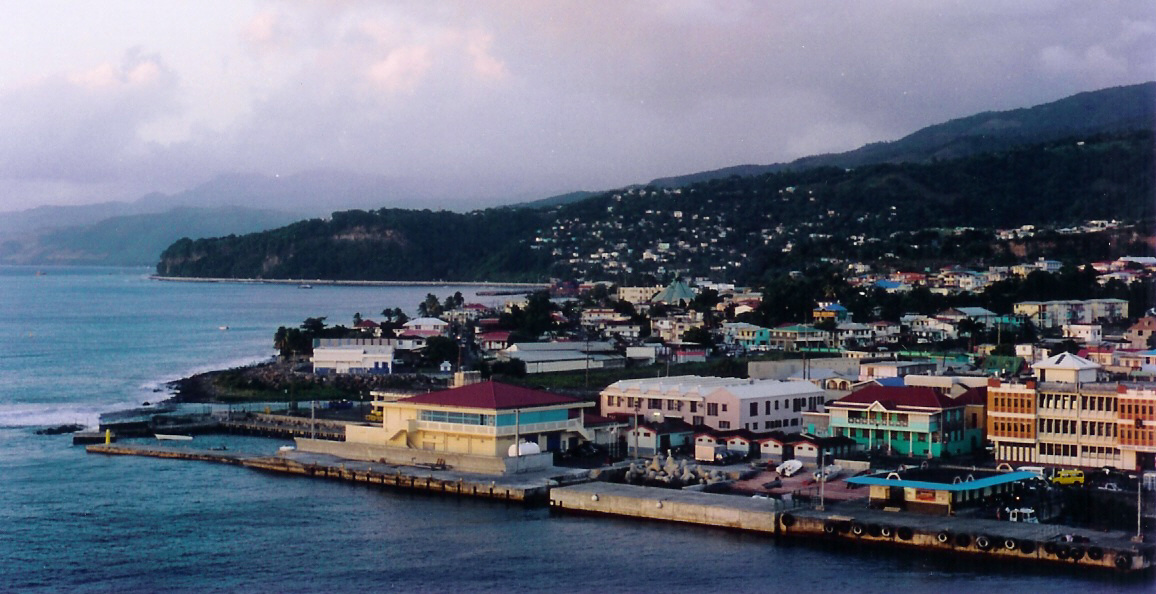
Roseau (Dominican Creole: Wozo) is the capital and largest city of Dominica, with a population of 14,725 as of 2011.[1] It is a small and compact urban settlement, in the Saint George parish and surrounded by the Caribbean Sea, the Roseau River and Morne Bruce. Built on the site of the ancient Island Carib village of Sairi, it is the oldest and most important urban settlement on the island of Dominica.
Key Information
It is on the west (leeward) coast of Dominica and has a combination of modern and colonial French architecture.
Roseau is Dominica's most important port for foreign trade. Some exports include bananas, bay oil, vegetables, grapefruit, oranges, and cocoa. The service sector is also a large part of the local economy. There are several private institutions registered in Dominica, like Ross University, International University for Graduate Studies, All Saints University, New World University, and Western Orthodox University.
There is a prominent diocese called Roman Catholic Diocese of Roseau.
History
[edit]
The city of Roseau sits on an alluvial fan formed hundreds of years ago as the Roseau River meandered across the area from what is now known as Newtown to its current location. Over the last 2,000 years, Amerindians migrating through the islands settled the area attracted by the nearby river. With the arrival of the Europeans in the 16th and 17th centuries, a small settlement was established by the French who, in their tradition of naming places after what they found there, used their name for the river reeds (called roseaux in French), that grew abundantly along its banks. A plan was created for the settlement that mirrored examples in France where streets extended from a central point – what is today the Old Market – and spread out to the rest of the settlement.
Conflict raged between the French and the British over the area on several occasions. In 1699, the French built a fort to protect Roseau. In 1770, the British built Fort Young in place of the previous fort.[2][3] In 1778, the French invaded Dominica, capturing Fort Young and Roseau and taking control of the island.[4] In 1784, Dominica was returned to British control under the Treaty of Paris.[4] The population of Roseau, in the census of June 1844, was 3,954.[5]
By the late 18th and early 19th centuries, the British set out plans for the city that included fortifications and government structures, the grid street system, and blocks and new urban areas to the north and south, known today as Potter's Ville and Newtown. Goodwill was established in the 1950s and Bath Estate in the early 1980s. Since then several new semi-urban settlements – such as Stock Farm, Castle Comfort, and Wall House – have been constructed around the existing ones. Some older settlements like Fond Cole and Canefield nowadays belong to the semi-urban area around Roseau.
The French influence can still be seen today, however, in its architecture and crooked streets that extend from the Old Market Plaza. Examples of the English influence are evident in architecture and street names.[6]
Climate and scenery
[edit]
Roseau's nearby scenery (mostly in its so-called valley) includes Boiling Lake, 10.5 km (6.5 mi) east, in the Morne Trois Pitons National Park, waterfalls, thermal springs, and scenic plateaus.
Morne Bruce provides panoramic views of most of downtown Roseau and north toward Woodbridge Bay deepwater port and Fond Cole. From Morne Bruce there are views of the Botanic Gardens at its base as well as the Caribbean Sea which look quite spectacular when cruise liners are in port.
Roseau's climate is a tropical monsoon climate, featuring relatively constant temperatures throughout the year with average high temperatures generally between 28 and 31 °C (82.4 and 87.8 °F) and average low temperatures between 19 and 23 °C (66.2 and 73.4 °F). Rainfall is common throughout the year, with the city seeing an annual average nearly 1,800 millimetres or 70 inches. Roseau features a noticeably drier stretch from February through April, though each of these months on average sees at least 45 millimetres or 1.8 inches of rain.
| Climate data for Roseau (Canefield Airport) 1982-2011 | |||||||||||||
|---|---|---|---|---|---|---|---|---|---|---|---|---|---|
| Month | Jan | Feb | Mar | Apr | May | Jun | Jul | Aug | Sep | Oct | Nov | Dec | Year |
| Record high °C (°F) | 33 (91) |
34 (93) |
36 (97) |
36 (97) |
36 (97) |
36 (97) |
35 (95) |
35 (95) |
36.3 (97.3) |
37 (99) |
35 (95) |
34 (93) |
37 (99) |
| Mean daily maximum °C (°F) | 29.5 (85.1) |
29.5 (85.1) |
30.1 (86.2) |
30.9 (87.6) |
31.8 (89.2) |
31.8 (89.2) |
31.5 (88.7) |
31.8 (89.2) |
31.7 (89.1) |
31.5 (88.7) |
31.1 (88.0) |
30.2 (86.4) |
31.0 (87.7) |
| Daily mean °C (°F) | 25.7 (78.3) |
25.6 (78.1) |
26.1 (79.0) |
26.9 (80.4) |
27.8 (82.0) |
28.1 (82.6) |
28.0 (82.4) |
28.0 (82.4) |
27.9 (82.2) |
27.6 (81.7) |
27.1 (80.8) |
26.2 (79.2) |
27.1 (80.8) |
| Mean daily minimum °C (°F) | 21.8 (71.2) |
21.6 (70.9) |
22.0 (71.6) |
22.9 (73.2) |
23.9 (75.0) |
24.5 (76.1) |
24.5 (76.1) |
24.2 (75.6) |
23.9 (75.0) |
23.7 (74.7) |
23.2 (73.8) |
22.3 (72.1) |
23.2 (73.8) |
| Record low °C (°F) | 16 (61) |
17 (63) |
17 (63) |
18 (64) |
19 (66) |
20 (68) |
21 (70) |
21 (70) |
20 (68) |
18 (64) |
18 (64) |
17 (63) |
16 (61) |
| Average rainfall mm (inches) | 108.3 (4.26) |
62.1 (2.44) |
49.0 (1.93) |
54.8 (2.16) |
92.0 (3.62) |
159.5 (6.28) |
251.4 (9.90) |
244.3 (9.62) |
253.7 (9.99) |
188.2 (7.41) |
194.2 (7.65) |
102.2 (4.02) |
1,759.7 (69.28) |
| Average relative humidity (%) | 71 | 68 | 65 | 64 | 64 | 67 | 72 | 73 | 71 | 73 | 74 | 72 | 70 |
| Mean monthly sunshine hours | 198.9 | 200.6 | 227.3 | 244.9 | 243.2 | 227.7 | 231.2 | 240.4 | 212.2 | 219.5 | 194.0 | 189.5 | 2,629.4 |
| Source 1: Dominica Meteorological Services[7] | |||||||||||||
| Source 2: NOAA (sun 1961–1990),[8] BBC Weather[9] | |||||||||||||
Architecture
[edit]The central district of Roseau is tightly packed with small and large houses and even larger modern concrete structures. There is little green or open space in the city; there is even less today, as many of the courtyards that were once commonplace are giving way to office space. The district is, however, framed in every direction by natural elements. The sea and the river provide water elements while the Botanical gardens and the Government House gardens frame the city with green space. These elements are rare in the Caribbean. No other centre in the region has such extensive botanical gardens with such central location, and the Roseau River is among the largest that flow through any Caribbean capital.
The urban structure of Central Roseau is based on an irregular grid system of miniature proportions, making it a highly illegible city. Even though the grid area is not extensive, it is relatively easy for a visitor to get lost. The grid area has some 80 blocks in an area of 30 hectares (74 acres). In comparison, the grid areas of Kingstown and Castries — capitals of Saint Vincent and Saint Lucia — have some 50 and 60 blocks in the areas of over 40 hectares (99 acres). The average block size in Central Roseau is thus some ⅓ hectare (1 acre), i.e., about half of the figure of Central Kingstown.
There are some fine examples of West Indian architecture in Roseau. The ones that stand out the most are the French Colonial style and the vernacular form. Much of the French influence can be found along King George V Street. Around the city there are good examples of the English influence in large colonial town houses and colonial public/government buildings.

The churches in Roseau are fine examples of Europe in Dominica with a bit of creolization. The Roman Catholic Cathedral stands prominent in Gothic Romanesque revival and the Anglican Church on Victoria Street in Georgian style.
City life
[edit]Because of the suburban sprawl, few people live in Central Roseau, but more of them commute daily. Motorized vehicles pour into the central district introducing a mode of point-to-point interaction in an environment that was created for multiple use. As elders said, first there were no streets but just a space between the buildings. The streets of Roseau, and especially those of its central district, are not only ways to move from place to place but they are places themselves. They are used as gardens, playing fields, and social meeting places.

The Botanical Gardens on the fringes of the central district are mostly used by children.
Sports and recreation
[edit]In Roseau, there are many opportunities for recreation. Many people seek the tranquility and cool of the Botanical Gardens as a getaway on Sunday afternoons and at lunch. It is a popular venue for local cricket matches and sports training. Football is popular; there are several pitches throughout the city (at Newtown, Potters Ville, and Bath Estate), as well as in the sports stadium at Windsor Park.
Sporting facilities and infrastructure
[edit]
There are dedicated sports facilities around the city. Private tennis courts are on High Street; netball and basketball courts abound in the major high schools. These are complemented by community facilities at Goodwill. A dedicated netball and basketball stadium is at Stockfarm near the Dominica State College.
In 2007, Windsor Park, a cricket stadium which is also home to the Dominica national football team, was completed with a donation of EC$33 million from the government of the People's Republic of China.
Elsewhere it is not uncommon to find that a section of the street, sidewalk or the beach has been adapted for makeshift games of cricket or football.
Other popular sports include netball, basketball, rounders and (to a much lesser extent) tennis.
Accommodations and infrastructure
[edit]There are no world-famous hotel chains in the city. The most famous is the Fort Young Hotel.[10] In addition there are several small family owned establishments in and on the outskirts of Roseau.
Dominica Broadcasting Corporation, the national radio station, and two private radio stations are in the capital.
Non-governmental organizations
[edit]Roseau is home to service clubs including, Kiwanis, Rotary and Lions. There are other organizations such as the local humane society and conservation society. ChildFund International USA has an office in Roseau from where it runs its child centered development programs for Dominica and Saint Vincent.
The Dominica Association of Industry and Commerce, Waitukubuli Ecological Foundation, Dominica Tourism Association and others are based in the city.
The city is home to several labour organizations including the Dominica Amalgamated Workers' Union, the Dominica Public Service Union, the Dominica Trade Union, the National Workers' Union and the Waterfront and Allied Workers' Union.
Transportation
[edit]As the most important town on the island and hub of all business activity, the city is a central point of the road networks on the island. It is an important link between northern, eastern, and southern bound traffic.
Roseau is served by Canefield Airport, a nearby small aircraft airport that provides direct links to nearby islands, as well as the larger Douglas–Charles Airport to the north. The ferry terminal provides direct links to the neighbouring Guadeloupe to the north and Martinique and St. Lucia to the south.
There are no rail or subway systems.
Education
[edit]Roseau has been the historical centre of education on the island. There are six secondary schools in the city as well as eight primary schools. A community college, the Dominica State College, is in Roseau. There are two private medical schools, All Saints School of Medicine and Ross University School of Medicine, and a private university, Western Orthodox University.
Embassies and consulates
[edit]Several embassies are in the city. They include the Brazilian, the Chinese, the Cuban, and the Venezuelan embassies, with a couple of other consulates around the city.
Notable people
[edit]- Dominica's most famous writer and novelist, Jean Rhys, was born in Roseau on 24 August 1890.
- NBA basketball player Garth Joseph was born in the town on 8 August 1973.
- Dame Mary Eugenia Charles, former prime minister and the first woman prime minister in the Caribbean, was instrumental in the development of the Organisation of Eastern Caribbean States and in the US invasion of Grenada in the 1980s.
- Clarissa Burton Cumbo (1903–1988), New York arts patron, was born in Roseau.
- Gordon Henderson of the cadence-lypso band Exile One.
- Henry Wilcoxon, film actor, was born in Roseau in 1905.
- Prince Ital Joe, musician, was born in Roseau in 1963.
- Alwin Bully, cultural administrator, playwright, actor and artist, was born in and died in Roseau.
Image gallery
[edit]-
A craft vendor in Roseau
-
Roseau in the morning
-
Roseau in the morning
See also
[edit]References
[edit]- ^ a b "2011 Population and Housing Census – preliminary results" (PDF). Central Statistical Office (Dominica). Archived from the original (PDF) on 25 October 2017. Retrieved 24 October 2017.
{{cite journal}}: Cite journal requires|journal=(help) - ^ About Dominica: Nature Island of the Caribbean : a Detailed Tourism-oriented Guide to Dominica. Voice Publishing Company. 1981. p. 4.
- ^ Gravette, Andrew Gerald (2000). Architectural heritage of the Caribbean: an A-Z of historic buildings. Signal Books. p. 168. ISBN 978-1-902669-09-0. Retrieved 22 June 2011.
- ^ a b Boromé, Joseph A. (1969). "Dominica during French Occupation, 1778-1784". The English Historical Review. 84 (330): 36–58. doi:10.1093/ehr/LXXXIV.CCCXXX.36. ISSN 0013-8266. JSTOR 562321.
- ^ The Cyclopaedia of Useful Knowledge. Vol. V (First ed.). London: Charles Knight. 1848. p. 503.
- ^ Niko Lipsanen, Naturalistic and existential realms of place in Roseau, Dominica. University of Helsinki, Department of Geography 2001.
- ^ "CLIMATOLOGY FOR CANEFIELD AIRPORT (1982-2011)" (PDF). Dominica Meteorological Services. December 2012. Archived (PDF) from the original on 22 December 2020. Retrieved 22 December 2020.
- ^ "Climate Normals for Melville Hall Airport 1961–1990". National Oceanic and Atmospheric Administration. Archived from the original on 31 October 2020. Retrieved 28 February 2013.
- ^ "Average Conditions Roseau, Dominica". BBC Weather. Retrieved 28 February 2013.
- ^ "Fort Young Hotel Best Hotel Dominica | Fort Young Hotel | Caribbean". www.fortyounghotel.com.
External links
[edit]
Media related to Roseau at Wikimedia Commons
Roseau travel guide from Wikivoyage- Commonwealth of Dominica Reunion 2008
- Roseau Photo Gallery
- Photo slideshow and travelogue from Roseau
- All Saints University
Roseau
View on GrokipediaGeography
Location and topography
Roseau is situated on the southwestern coast of Dominica, at approximately 15°18′N 61°23′W, within Saint George Parish.[7] The city occupies a narrow coastal plain—the island's only substantial flat expanse amid predominantly steep, volcanic terrain—encompassing about 2.1 square miles (5.4 km²).[8] This low-lying setting, with most urban areas at or near sea level and maximum elevations reaching 6 meters (20 feet), positions Roseau as a compact port hub directly abutting the Caribbean Sea and Roseau River.[9] The surrounding topography features abrupt rises into volcanic hills and ridges, including Morne Bruce to the east at around 144 meters (472 feet), part of the island's central mountain chain that peaks farther north at Morne Diablotins (1,447 meters).[10] These steep gradients, characteristic of Dominica's rugged, dissected volcanic landscape, constrain urban expansion to the plain while channeling heavy rainfall and river discharge toward the coast, exacerbating flash flood risks during intense precipitation events.[11][12] The configuration also creates a scenic amphitheater effect, with the flat urban core framed by lush, elevated hinterlands.[13]Climate and natural features
Roseau experiences a tropical maritime climate characterized by consistent warmth, high humidity, and substantial precipitation throughout the year. Average temperatures range from a low of 71°F (22°C) to a high of 88°F (31°C), with minimal seasonal variation due to the island's equatorial proximity and ocean influences.[14] Relative humidity typically exceeds 80%, contributing to an oppressive feel, while trade winds provide some moderation. Annual rainfall averages approximately 78 inches (2,000 mm), concentrated in the wet season from June to November, with monthly totals varying from 3.4 inches (87 mm) to nearly 10 inches (252 mm).[15][16] The city's position in the Caribbean hurricane belt exposes it to tropical storms and cyclones, with historical records indicating an average of about 40 tropical storms and 16 hurricanes affecting Dominica since systematic tracking began, including multiple impacts in some years.[17] Empirical cyclone data from the past 150 years show no evidence of increasing frequency in the region, with 20th-century landfalls lower than pre-1900 averages, attributable to natural variability in Atlantic storm patterns rather than unprecedented trends.[18] Intensity metrics, such as peak winds, have shown potential for higher extremes in recent projections tied to sea surface temperatures, but observed historical frequency aligns with long-term climatological norms.[19] Natural features of Roseau stem from Dominica's volcanic geology, which includes andesitic and rhyolitic rock formations and nine potentially active volcanic centers. The Roseau River, originating from inland highlands, traverses the city and supports local hydrology, while geothermal manifestations such as nearby hot springs and fumaroles arise from subsurface magmatic heat, enabling natural sulfur baths used historically for therapeutic purposes.[20][21] These features link causally to the island's tectonic setting on the Lesser Antilles arc, fostering fertile volcanic soils and adjacent biodiversity hotspots without navigable waterways due to steep gradients.[22]History
Pre-colonial and early colonial era
The region encompassing modern Roseau was settled by indigenous groups as early as approximately 3000 BCE by Ortoiroid hunter-gatherers, with subsequent Ceramic Age (ca. 400 BCE–1492 CE) populations introducing pottery and more structured agriculture before the Kalinago arrived around 1000 CE, displacing earlier inhabitants and dominating the island by the time of European contact.[23] [24] The Kalinago economy relied on coastal fishing using dugout canoes and nets, slash-and-burn agriculture cultivating crops such as cassava and yams, and hunting, supporting small villages like the one at the site of Roseau, originally known as Sairi to the locals.[24] Archaeological surveys confirm pre-colonial sites with evidence of these practices, including shell middens indicating intensive marine resource exploitation.[25] France formally claimed Dominica in 1635 amid declining Spanish influence in the Caribbean, dispatching Catholic missionaries as the initial European presence despite ongoing Kalinago resistance that delayed permanent settlements.[4] By the mid-17th century, French woodcutters and traders from Martinique and Guadeloupe established outposts at Roseau, renaming the Kalinago village after the dense stands of reeds (roseaux, specifically Phragmites species) thriving along the Roseau River, which facilitated early timber extraction for shipbuilding and export to neighboring French islands.[26] [27] Roseau quickly evolved into a modest trading hub under French administration, handling commodities like reeds for thatching and crafts alongside emerging slave imports to support small-scale plantations of coffee and indigo, though Kalinago raids limited expansion until the 18th century.[26] Tensions escalated during Anglo-French wars; in 1805, invading French forces torched much of the town in a failed bid to reclaim the island, destroying wooden structures and stalling development for years.[27]British colonial period and independence
Following the Treaty of Paris on February 10, 1763, which concluded the Seven Years' War, the island of Dominica was formally ceded by France to Great Britain, marking the start of stable British rule after prior contested control.[28] Roseau, already the principal settlement, was designated the colonial administrative capital, with the British laying out its central grid plan in 1768 to organize urban development amid ongoing threats from French forces.[29] To secure the harbor and town, the British constructed key fortifications, including Fort Young in 1770—named after administrator William Young—and the Morne Bruce Garrison overlooking Roseau, which served as primary defensive positions until the mid-19th century.[30] These measures reflected the strategic importance of Roseau as a Leeward Islands hub, though the colony faced recurrent invasions, such as the French capture of Dominica in 1778 and British recapture by 1783 under the Treaty of Versailles.[28] The colonial economy centered on export agriculture, initially emphasizing coffee, cotton, cacao, and small-scale sugar plantations rather than large monoculture estates due to Dominica's rugged terrain, which limited expansive sugar operations compared to flatter islands like Antigua.[31] Labor relied heavily on enslaved Africans imported via the transatlantic trade, whose numbers swelled the population—reaching over 20,000 slaves by the early 19th century, forming the majority demographic foundation that persists today.[32] Emancipation under the Slavery Abolition Act took effect in 1834, with full implementation by 1838, leading to a challenging post-slavery transition marked by labor shortages, peasant smallholdings, and economic stagnation; Dominica uniquely gained the first Black-majority elected legislature in the British Caribbean that year, granting limited representative governance to freed people.[4] By the late 19th century, the economy shifted toward lime juice and vanilla exports, but persistent underdevelopment fostered dependency on British subsidies and markets, with Roseau functioning as the export-processing and administrative nexus. Administrative reforms evolved from the 1763 legislative assembly, restricted to white planters, toward broader Crown Colony rule by 1865, centralizing power in governors based in Roseau while introducing town boards for local management, such as the 1869 Roseau Town Board for infrastructure oversight.[33] 20th-century Windward Islands federation attempts (1880–1958) and the 1958–1962 West Indies Federation briefly integrated Dominica administratively but highlighted local resistance to external control, paving the way for self-governance pushes.[27] In March 1967, under the West Indies Act, Dominica attained associated statehood status, assuming control over internal affairs while Britain retained responsibility for defense and foreign relations—a step toward autonomy amid rising nationalist demands for economic diversification beyond agriculture.[34] Full independence was declared on November 3, 1978, severing remaining British ties and establishing the Commonwealth of Dominica as a sovereign republic, with Patrick John serving as the first prime minister leading the Labour Party government.[35] This transition, approved by a 1978 referendum with nearly 70% support, ended over two centuries of colonial oversight but inherited structural dependencies, including a monocrop vulnerability later exposed in banana trade disputes.[36] Roseau's role as capital persisted, symbolizing continuity from colonial administration to national governance.Post-independence development and disasters
Following Dominica's achievement of independence from the United Kingdom on November 3, 1978, Roseau faced immediate challenges as the national capital. Less than a year later, on August 29, 1979, Hurricane David struck with sustained winds of 150 miles per hour, pounding the island for six hours and causing near-total devastation in Roseau. The storm resulted in 56 deaths, over 180 injuries, and left approximately 60,000 of Dominica's 80,000 residents homeless, with the capital's infrastructure— including homes, roads, and public buildings—largely leveled due to inadequate preparedness and the prevalence of wooden structures vulnerable to high winds.[37][38] This event triggered significant out-migration from Roseau and set back early post-independence economic stabilization efforts.[39] In the decades following Hurricane David, Roseau experienced modest urban expansion linked to the government's promotion of ecotourism starting in the 1980s, capitalizing on the island's natural assets to attract visitors and spur infrastructure improvements. The city grew rapidly during the 1980s and 1990s, with suburban development extending outward as tourism investments increased hotel capacity and visitor facilities, contributing to a rebound in regional economic activity with growth rates exceeding 12% in some early 1980s years.[40][41] Roseau's population stabilized around 15,000–16,000 residents by the late 20th and early 21st centuries, reflecting a balance between tourism-driven inflows and ongoing emigration trends amid limited arable land and job opportunities outside the capital.[42] Hurricane Maria, which made landfall on September 18, 2017, inflicted catastrophic damage on Roseau, destroying or severely impacting 95% of the nation's housing stock and 98% of roofs, with the capital's low-lying areas flooded by storm surge and landslides exacerbating structural failures in aging wooden buildings. Estimated recovery costs exceeded $1 billion, equivalent to over 200% of Dominica's GDP at the time, underscoring persistent vulnerabilities from Roseau's coastal topography, reliance on non-engineered construction, and the island's isolation limiting rapid external aid.[43][44] These factors, compounded by incomplete fortifications post-1979, halted urban progress and highlighted the causal role of geographic exposure in repeated setbacks for the city's development.Government and administration
Role as national capital
Roseau serves as the political, administrative, and judicial center of Dominica, housing the House of Assembly, the primary legislative body, along with the Office of the Prime Minister and key executive ministries.[45] The High Court of the Eastern Caribbean Supreme Court, which handles national judicial matters for Dominica, is also located in the capital.[45] This concentration of institutions enables centralized decision-making for the country's parliamentary democracy, where the Prime Minister leads the government and supervises cabinet operations.[46] The capital's population of approximately 16,500 represents about 25% of Dominica's national total of around 66,000, fostering a dense hub for governmental activities despite the island's small size.[42][47] Central Roseau functions as an electoral constituency within Saint George Parish, electing one member to the 21-seat House of Assembly through single-member district voting.[48] This district encompasses the urban core, reinforcing Roseau's role in representing national interests at the legislative level.[49] National policies and administrative functions are predominantly managed from Roseau-based ministries, including finance and planning, which oversee budget formulation and execution for the entire country.[50] Capital expenditures in recent budgets, such as those outlined for fiscal year 2025-2026 totaling hundreds of millions in Eastern Caribbean dollars, support infrastructure and services coordinated from this central location to address nationwide priorities like resilience and development.[51] The centralization effect amplifies Roseau's influence on resource allocation, though it also contributes to urban pressures from concentrated civil service operations.[52]
Local governance and public services
The Roseau City Council, established as the primary municipal authority, manages local affairs including waste collection, market regulation, and urban zoning within the city limits.[53] Elected every three years, the council passes by-laws for sanitation, public order, and infrastructure maintenance, but operates with constrained fiscal autonomy due to reliance on central government grants rather than substantial independent taxation powers.[54] This structure limits proactive investments, as evidenced by the council's dependence on national funding for major repairs following events like hurricanes.[33] Public utilities fall under specialized state-owned entities rather than direct council control. The Dominica Water and Sewerage Company (DOWASCO), formed in 1989, supplies potable water and sewerage services to Roseau residents from its operations centered in the city, serving urban households through a network prone to disruptions from the island's rugged terrain and tropical storms.[55] Similarly, Dominica Electricity Services (DOMLEC) provides power as the monopoly supplier, with frequent outages reported in Roseau due to geographic vulnerabilities, including a temporary interruption affecting select areas as recently as October 23, 2025.[56][57] Non-governmental organizations supplement core services amid funding shortages, operating community health clinics and youth programs in Roseau, such as those by the Social Centre for family support.[58] However, these efforts remain ad hoc and under-resourced, highlighting the council's self-funding constraints that prioritize essential maintenance over expanded welfare initiatives.[59]Demographics
Population trends and statistics
The 2011 Population and Housing Census recorded Roseau's population at 14,725 residents, representing about 21% of Dominica's total population of 71,293 at the time.[60] [61] Subsequent estimates indicate relative stability, with figures around 15,000 as of 2018 and projections holding near 14,500-15,000 into the mid-2020s, reflecting minimal net growth amid broader national trends of slight decline.[9] [42] Roseau exhibits high population density characteristic of compact urban settlements in small island nations, exceeding 7,000 persons per square mile when accounting for its core area of roughly 2-5 square kilometers including immediate environs, driven by topographic constraints and centralized services.[62] Post-independence from Britain in 1978, the city's population experienced slow expansion into the 1990s, peaking near 16,000, but shifted to stagnation or marginal contraction by the 2010s due to emigration pressures.[42] A notable outflow occurred following Hurricane Maria in September 2017, which prompted approximately one-fifth of Dominica's national population to depart the island within the ensuing month, with Roseau as the primary hub seeing disproportionate impacts from displacement and infrastructure damage.[63] Nationally, about 71% of Dominica's residents live in urban areas as of 2021, with the majority clustered in and around Roseau, underscoring its role as the dominant population center despite the island's overall rural character.[11] The median age in Dominica stands at 36.5 years, suggesting a demographic profile in Roseau influenced by a working-age majority, though tempered by out-migration of younger cohorts post-disasters.[11]Ethnic and cultural composition
The ethnic composition of Roseau mirrors the national profile of Dominica, with the 2011 census recording 84.8% of the population as being of African descent, reflecting the legacy of enslaved West Africans brought during the colonial era for plantation labor. Mixed-race individuals, often combining African, European, and indigenous ancestries, comprise approximately 9%, while the indigenous Kalinago (Carib) population stands at 3-4%, concentrated more in rural reserves but present in urban areas like Roseau through intermarriage and migration. Traces of European descent, primarily from French and British settlers, account for under 1%, alongside smaller groups of Syrian-Lebanese merchants and East Indian descendants from 19th-century indentured labor.[61][64]| Ethnic Group | Percentage (National, 2011 Census) |
|---|---|
| African descent | 84.8% [61] |
| Mixed | 9% [64] |
| Kalinago (Indigenous) | 3.8% [64] |
| European and other | 2.4% [64] |
Economy
Primary sectors and economic drivers
Roseau serves as Dominica's primary administrative and commercial hub, where the services sector dominates economic activity, encompassing government operations, retail trade, and financial services that collectively contribute the largest share to national GDP. Nationally, services account for approximately 69% of GDP, driven by public administration centered in the capital and ancillary activities like wholesale and retail distribution.[68] Government employment and related fiscal operations in Roseau underpin much of this, with light manufacturing—such as soap production and garment assembly—adding modest industrial output estimated at around 15% of national GDP.[69] The Port of Roseau functions as the country's principal gateway for international trade, handling the bulk of imports like refined petroleum (valued at $52.5 million in 2023) and facilitating exports of agricultural products including bananas, citrus, and cocoa, which historically formed the backbone of Dominica's primary sector output.[70] Although agriculture now represents about 14.8% of national GDP as of 2023, down from higher reliance on banana exports in prior decades, the port's role in processing and shipping these goods links rural production to global markets, with Roseau's waterfront facilities enabling efficient cargo turnover despite the island's rugged terrain limiting alternatives.[71] Dominica's Citizenship by Investment (CBI) program, administered from Roseau, has emerged as a critical revenue driver, generating approximately $232 million in fiscal year 2022/23—equivalent to 37% of GDP—through passport sales and associated fees that fund public infrastructure and services.[72] This influx supports economic stability in the capital, where program-related financial services and real estate transactions stimulate local commerce, though international assessments note risks of over-dependence on such non-tax revenues. The IMF projects national real GDP growth of 4.2% for 2025, bolstered by these drivers amid ongoing diversification efforts.[73]Tourism and investment programs
Roseau functions as the main gateway for tourists to Dominica's eco-tourism offerings, with nearby attractions like Trafalgar Falls, located about 20 minutes by car from the city, attracting visitors for hiking and natural hot springs.[2] The city's cruise port handles the majority of arrivals, supporting local vendors and guided tours that emphasize the island's rainforests and waterfalls. Prior to Hurricane Maria in September 2017, Dominica saw approximately 75,000 stay-over visitors annually, bolstering Roseau's economy through spending on accommodations and excursions.[74] Post-Maria recovery has seen tourism rebound, with total visitor numbers reaching 339,000 in 2023, a 37% increase from the prior year.[74] In Roseau, hotels such as Fort Young, situated in a historic 18th-century fort, reopened with 40 rooms by 2018, while new luxury properties like Cabrits Resort & Spa Kempinski opened in subsequent years to accommodate growing demand.[75] These developments have enhanced resilience, with eco-lodges and resorts promoting sustainable practices amid the island's focus on nature-based travel.[76] Dominica's Citizenship by Investment (CBI) program, launched in 1993, enables citizenship via minimum contributions of $100,000 to the Economic Diversification Fund or approved real estate investments exceeding $200,000.[77] The program generated $232 million in fiscal year 2022/23, comprising 37% of GDP and funding infrastructure upgrades, climate-resilient homes, hospitals, schools, and renewable energy projects in Roseau and beyond.[78] These revenues have supported post-disaster reconstruction, including tourism-related facilities, promoting economic independence over traditional aid dependency.[79] While CBI bolsters fiscal stability, the International Monetary Fund has cautioned against over-reliance, citing potential volatility from external demand fluctuations.[80] Sovereignty concerns, including risks of lax due diligence attracting undesirable applicants, have prompted regional reforms like the 2023 Six Principles for enhanced governance, yet the program's market-driven model continues to drive verifiable growth in tourism-enabling infrastructure.[81]Economic challenges and resilience strategies
Dominica's economy, centered in Roseau as the primary commercial hub, grapples with persistently high public debt exceeding 100% of GDP in 2024, exacerbated by recurrent natural disasters that strain fiscal resources.[82] Unemployment stands at approximately 13% as of 2024, reflecting structural labor market frictions amid limited industrial base.[83] The nation maintains heavy import dependency for foodstuffs, machinery, and energy, resulting in chronic trade deficits that amplify vulnerability to global price shocks.[84] Roseau's coastal location heightens exposure to hurricanes and flooding, which have historically inflicted GDP losses averaging among the highest globally for small island states, underscoring causal constraints from geography—steep terrain and isolation that hinder scalable agriculture or manufacturing diversification beyond niche exports.[85] To counter these pressures, Dominica has leveraged its Citizenship by Investment (CBI) program, which channels funds into resilience initiatives rather than perpetual subsidies or external aid dependency. The program, generating revenues through real estate and contributions, has financed the Climate Resilience and Recovery Plan (CRRP) 2020-2030, targeting sustainable infrastructure and economic buffers against disasters.[86] Empirical outcomes include job creation in construction and services, with CBI-linked projects boosting local employment and revenues without commensurate increases in public spending.[87] Critics question CBI's equity, arguing it benefits foreign investors over locals, yet data indicates tangible spillovers: enhanced fiscal space for debt management and private-sector-led growth, averting over-reliance on volatile aid flows that often carry strings from biased international institutions.[88] This approach prioritizes self-generated capital for diversification, such as eco-tourism adjuncts, over fatalistic climate narratives that could stifle investment. In Roseau, these strategies manifest in urban economic stabilization, fostering resilience without expanding welfare dependencies.[89]Infrastructure
Transportation networks
Roseau functions as the central hub for Dominica's maritime transportation, with the Roseau Cruise Ship Berth serving as the primary facility for cruise vessels and some ferry operations, while the adjacent Woodbridge Bay Port handles the majority of cargo imports and exports.[90] The port infrastructure supports vessels up to large cruise ships but is limited to one ship docking at the Roseau berth simultaneously, with additional capacity at Portsmouth for overflow.[91] Cargo operations face constraints due to the island's reliance on sea freight for essentials, exacerbated by occasional silting and weather-related disruptions in the deep-water harbor.[92] Air access to Roseau is provided primarily through Douglas-Charles Airport, located 46 kilometers northeast of the city, accessible via a approximately 50-minute drive on the Edward Oliver LeBlanc Highway.[93] This airport handles international and regional flights but has a single runway limiting larger aircraft, with Canefield Airport—about 10 kilometers north of Roseau—serving smaller chartered and domestic operations.[94] Transfer from the airport to Roseau typically involves taxis or minibuses, with fares around US$26 per person.[95] The road network radiating from Roseau consists of narrow, winding two-lane highways traversing mountainous terrain, prone to landslides and erosion, which connect the capital to northern towns like Portsmouth and the airport.[96] Public transportation relies on privately operated minibuses—identifiable by license plates starting with "H"—that depart frequently from Roseau's central stops, offering affordable fares from EC$1.50 to EC$10.25 depending on distance, though service diminishes at night and on Sundays.[95] Maintenance challenges persist due to frequent heavy rainfall and seismic activity, leading to periodic closures. Hurricane Maria in 2017 inflicted severe damage on roads, bridges, and port facilities around Roseau, destroying or impairing much of the network and halting maritime operations temporarily.[97] Reconstruction efforts, supported by international aid, have emphasized resilient designs, including upgraded access roads and bridges with improved materials to mitigate future flood and wind impacts, with notable progress in climate-proofing infrastructure by 2023 as part of Dominica's broader resilience strategy.[98] Despite these advances, full recovery remains ongoing, with vulnerabilities to tropical storms continuing to affect capacity and reliability.[43]Utilities, accommodations, and urban development
Roseau's electricity is supplied by Dominica Electricity Services Limited (DOMLEC), a vertically integrated utility historically reliant on diesel generators, which contributed to intermittent service and outages, particularly after hurricanes like Maria in 2017.[99][85] Upgrades since then include plans for underground transmission lines in urban areas to boost grid resilience against storms.[85] Hydroelectric facilities along the Roseau River generate 27.4% of the island's electricity, with geothermal projects advancing to further stabilize supply and reduce diesel dependence by targeting 100% renewable capacity.[100][101] Pilot solar microgrids and battery storage, initially deployed at schools, support broader resilience efforts adaptable to urban needs like Roseau's.[102] Water and sanitation services improved via the Roseau Water and Sanitation Project (1998–2003), which installed a new sewerage system serving the capital's core.[103] Post-Maria restorations prioritized Roseau, with supply resuming in central areas within weeks, though vulnerabilities to disruptions persist due to infrastructure exposure.[104] Accommodations in Roseau consist mainly of boutique hotels, guesthouses, and small resorts, with fewer than 20 primary options catering to around 1,000 beds island-wide pre-2020 expansions.[105] Post-2017 reconstruction emphasized eco-lodges integrating sustainable features like solar power and rainwater harvesting, such as those near Roseau Valley, to attract resilience-focused tourism investments.[106] Urban development post-Maria incorporates the 2020 Climate Resilience and Recovery Plan, enforcing updated building codes for elevated structures and flood-resistant materials to mitigate Roseau's high density and coastal exposure.[86][107] The Roseau Enhancement Project maps flood and fire risks, establishing a City Resilience Platform to guide infrastructure investments exceeding $100 million in resilient zoning and drainage.[108] These measures address population concentration in the 2.4 square kilometer urban core, prioritizing hazard avoidance over expansion.[109]Culture and society
Architecture and urban landscape
Roseau's built environment combines French Creole and British colonial architectural styles, prevalent in structures dating from the 18th and 19th centuries. Wooden townhouses and stone warehouses, often featuring arched gateways and Palladian-Georgian elements, characterize much of the historic core. [110] [111] The Cathedral of Our Lady of Fair Haven, a key Victorian-era landmark, originated as a simple wooden structure before evolving into a more durable form blending local and European influences. [112] Traditional wooden Creole houses dominate residential areas, constructed with light wood frames that offer flexibility but heighten vulnerability to hurricane-force winds and seismic activity. [113] These structures, common prior to major disasters, frequently sustained severe damage in events like Hurricane Maria in September 2017, underscoring their limitations in high-wind zones. Following Hurricane Maria, which inflicted extensive damage estimated at EC$2.51 billion across Dominica, rebuilding initiatives prioritized resilience through concrete block walls, steel reinforcements, and flat roofs designed to withstand Category 5 winds. [114] [115] Government buildings and model homes in Roseau incorporated these materials, shifting from traditional wood to hybrid systems that enhance structural integrity against both wind and earthquakes. [116] The urban landscape features a compact grid layout established by British planners in 1768, with irregular streets in the oldest southern sections transitioning to orderly blocks northward. [8] [117] Lacking skyscrapers, the low-rise skyline reflects seismic and volcanic risks, as Roseau lies in a high-hazard zone prone to pyroclastic flows and tremors from nearby centers like the Wotten Waven Caldera. [118] [20] Vibrant markets, such as the Old Roseau Market, integrate into this dense fabric, supporting pedestrian-scale functionality amid the city's flat coastal site constrained by surrounding hills. [119]Daily life and social dynamics
Daily routines in Roseau revolve around early-morning market activities, where vendors sell fresh fruits, vegetables, and fish at the Roseau Market and New Market, often starting at dawn to capitalize on local agricultural output from the island's volcanic soil.[120][121] The markets bustle with street food vendors offering prepared meals like fried fish and root crop dishes, reflecting a diet centered on locally grown produce amid repetitive but fresh options.[122][123] Workweeks primarily involve service sector jobs in the capital, with many residents commuting for trade, tourism support, or administrative roles, though agricultural ties persist through market participation.[124] Social interactions emphasize family networks, which underpin economic support via remittances from the large Dominican diaspora, estimated to include tens of thousands abroad, sustaining households despite high emigration rates driven by limited local opportunities.[125][126] This outward migration, linked to kin-based relationships, fragments communities but fosters transnational ties, with returning funds aiding daily survival in a context of visible poverty affecting a significant portion of the population living below international poverty thresholds.[127] Crime remains relatively low compared to regional neighbors, though violent incidents, including nine homicides recorded by October 2024, indicate emerging pressures from economic strain.[128][129] Leisure pursuits for locals often involve accessible natural sites, such as nearby rivers for bathing or short trips to beaches like Mero, providing low-cost recreation outside the workweek.[130] Religious observances, predominantly Catholic with Protestant elements, influence community gatherings, as seen in events like the Creole Festival sponsored by the Holy Ghost Catholic Church, blending faith with social bonding without overshadowing routine secular interactions.[131] Overall, these dynamics highlight resilient, kin-dependent patterns amid emigration's demographic toll and economic constraints.[132]
