Hubbry Logo
ShahsevanShahsevanMain
Open search
Shahsevan
Community hub
Shahsevan
logo
8 pages, 0 posts
0 subscribers
Be the first to start a discussion here.
Contribute something
Shahsevan
Shahsevan
from Wikipedia

The Shahsevan[a] (Azerbaijani: شاهسِوَن; Persian: شاهسون) are a number of Azerbaijani Turkish-speaking or Shahsevani dialect-speaking (sometimes considered to be its own dialect distinct from others like Azerbaijani[5]) Turkic groups that live in northwestern Iran, mainly inhabiting the districts of Mughan, Ardabil, Kharaqan and Khamsa.[6]

Key Information

History

[edit]

Background

[edit]

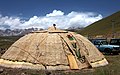
"Shahsevan" means "those who love the shah" in Turkic.[4] In the past, the Shahsevan had a tribal and pastoral nomadic lifestyle, moving during summer 100–200 km to the south on the Sabalan and nearby ranges, in the districts of Ardabil, Meshginshahr, and Sarab, and during the winter to the Mughan region.[6] They were a minority in this area, but like the settled majority (whom the Shahsevan call "Tat"), they were Shia Muslims and spoke Azerbaijani.[4][6] The Shahsevan lived in a frontier region that was easily accessible and frequently traversed, unlike tribes like the Bakhtiari and the Qashqai who live in the Zagros Mountains. Nader Shah (in 1736) and Agha Mohammad Khan Qajar (in 1796) both selected Mughan as the location for their coronation. The Shahsevan differ from other nomadic tribal groups in Iran in a number of ways, including their history and location on the frontier, as well as their social and economic structure. Their alachig is what makes them most recognizable. When Turkic tribes from Central Asia entered Western Asia in the 11th century, they left behind this type of settlement and other cultural remnants.[6]

Despite having a very extensively reported history since the early 18th-century, it is still unknown where the Shahsevan originated. Even though the ancestors of several of the tribes were of other origins such as Kurdish, Turkic identity and culture are predominate among them. Between the 16th and the 18th century, several tribal confederacies merged together to become the Shahsevan.[6]

Three distinctly different accounts of the Shahsevan's history existed by the 20th century. The most well-known was that they were a brand-new tribe created as a result of the Safavid shahs' tribal and military policies. This is based on a passage from John Malcolm's History of Persia that says that the Shahsevan were created by Shah Abbas I (r. 1588–1629) to quell the chaos caused by the rebellious Qizilbash chiefs, who a century earlier had assisted Shah Ismail I (r. 1501–1524) in establishing the Safavid dynasty.[6] However, neither contemporary European travellers nor Safavid records make mention of this story.[4][6] The Russian orientialist Vladimir Minorsky stated that "the known facts somewhat complicate Malcolm's story" and that "it may be doubted if a single regularly constituted tribe was ever founded by Shah Abbas under the name Shah-sewan."[4] British anthropologist Richard Tapper states that Malcolm's story "is based on a misreading of chronicle sources."[6] The Shahsevan are described as a personal militia and a royal guard in subsequent passages of Malcolm's book, and there is some proof that a military corps with the name Shahsevan existed in the middle of the 17th century.[6]

Statements such as shāhī-sēvan kardan are often used in the Safavid chronicle Tarikh-e Alam-ara-ye Abbasi of Iskandar Beg Munshi to mean "to make appeal to the faithful." During the 1581 and 1584 uprisings, Shah Mohammad Khodabandeh (r. 1578–1588) had already employed similar expressions; "Shah Mohammad", according to Iskandar Beg Munshi, "having launched the shāhī-sēvan (appeal), ordered that all those of the Turkoman tribe who were servants and partisans of this hearth should rally round His Majesty." These spur-of-the-moment appeals catered to the religious values of the followers of the Safavid dynasty, whose shahs not only claimed descent from the Twelve Imams, but also that they were their incarnations.[4]

Minorsky highlighted various publications by 19th-century Russian officials who documented the customs of the Shahsevan of Mughan. These customs, which diverge from Malcolm's account without refuting it, differ in some aspects but all agree that Anatolia was the original homeland of the Shahsevan, who left the place under the leadership of a certain Yunsur Pasha. They depict the Shahsevan tribes as being divided between beyzadä (descendants of the first immigrants) and commoners, and ruled by elbey/ilbegi (chieftains) descended from Yunsur Pasha. They make reference to the current royal appointment of leaders as well as an earlier royal grant of pastures in Ardabil and Mughan. These myths were most likely created by the chiefs in order to justify their power over ordinary citizens as well as their possession of the pastures, which are the most essential asset for all of their nomadic adherents.[6]

It is not possible to fully substantiate either the first or second versions of Shahsevan's origins. There are records of individuals and tribal groups in Mughan bearing the names of Shahsevan tribes in 16th-century sources. By the end of the 17th-century, Mughan and Ardabil was associated with the name Shahsevan, which was frequently used as a military title alongside Qizilbash tribal titles like Afshar and Shamlu. The Qizilbash Tekeli and the Kurdish Shaqaqi and Mughanlu were other notable tribes in the area. Until the 18th century, there is no conclusive proof of a Shahsevan tribe or confederacy.[6]

18th and 19th century

[edit]
Political map of the eastern part of the Southern Caucasus between 1795 and 1801

For few a years in the 1720s, Mughan and Ardabil served as one of the main places of confrontation as a result of the swift collapse of the Safavid dynasty to the Afghans at Isfahan as well as Ottoman and Russian incursions in northwest Iran. Years of calm had left the tribal communities of this frontier area unprepared for the political role that was suddenly forced upon them. In 1732, the Shahsevan were again under Iranian control due to the efforts of Nader Shah, who deported many tribes to his home province of Khorasan, including the Shaqaqi, Inallu, and Afshar. Nader Shah appears to have united and consolidated the tribes that remained in Mughan and Ardabil under the leadership of Badr Khan Shahsevan, one of his generals who took part in the wars in Khorasan and Turkestan.[6]

Badr Khan was possibly a son of Aliqoli Khan, and belonged to the Sari-khanbeyli family, which was most likely descended from the Afshars of Urmia. Later stories connect Badr Khan with Yunsur Pasha. The Sari-khanbeyli family was related to leading Shahsevan tribes such as the Qojabeyli, Isali, Balabeyli, Mast-Alibeyli, Ali-Babali, Polatli, and Damirchili. The names of many of the lower caste tribes, such Ajirli and Beydili, suggest a Shamlu origin. Badr Khan Shahsevan's son or brother Nazar Ali Khan Shahsevan presided over Ardabil and its district during the chaotic decades that followed after Nader Shah's death.[6]

During the Russo-Iranian wars of 1804–1813 and 1826–1828, Shahsevan territory constantly served as a battlefield. The conclusion of the wars led to the loss of the majority of their winter quarters, and many of them moving further south.[6]

The Shahsevan were allowed by Russia to have restricted access to their former pasturelands in Mughan for a number of decades after the Treaty of Turkmenchay in 1828, but they disregarded the restrictions.[6]

20th century

[edit]

In the early half of the 20th century, the Shahsevan achieved the height of their authority and prestige. Throughout the Iranian Constitutional Revolution of 1905–1911 and the years preceding up to Reza Khan's ascent, they took part in a number of significant events. A small number of Shahsevans joined the royalist forces occupying Tabriz during the winter of 1908–1909. The majority of the Shahsevan chiefs joined Rahimkhan Chalabianloo and Amir Ashayer Shatranlu in an alliance of tribes in eastern Azerbaijan during late 1909, declaring opposition to the Constitution and their intention to march to Tehran in order to reinstate the overthrown Mohammad Ali Shah Qajar. This occurred as the new nationalist government was struggling to take control of the nation. The Shahsevan pillaged Ardabil, gaining extensive news coverage in Europe, but were quickly defeated by nationalist forces from Tehran led by Yeprem Khan.[6]

The Shahsevan were among the first of the major tribal groups to be subdued and disarmed by Reza's army in the winter and spring of 1922–1923. The tribes were incorporated into the new nation-state by the Pahlavi dynasty as equal groups led by acknowledged and obedient chiefs.[6]

Urban areas dominated the Iranian Revolution of 1978–1979. The Shahsevan nomads themselves did not have much involvement, but established tribal members took part in protests at the Agro-Industry Company in Mughan and events in places like Mesghinshahr, Parsabad, Bileh Savar, and Germi. During these incidents, some former chieftains were killed, while others fled into exile. The Shahsevan were formally renamed Elsevan ("those who love the people (or tribe)") as part of the new regime's disapproval of anything having to do with royalty, but the new term was not universally embraced and by 1992 it was no longer in use. According to the Socio-economic Census of Nomads of 1986, the Shahsevan had about 6,000 families, just as they had in the mid-1960s, indicating a moderate return to pastoral nomadism among them, which was also occurring among other tribes in Iran at the time.[6]

Meanwhile, urbanization has continued progressing in Mughan as a result of the continuing expansion of numerous government-sponsored projects. According to Tapper; "By the end of the century, Shahsevan pastoral nomadism did not seem likely to survive much longer."[6]

Ethnography

[edit]

The tribal structure of the Shahsevens has a large number of different institutions, arranged in descending order. So the largest unit of the tribal structure will be the ethnic group, then the tribe, clan, gubak, ube and family.[7] The gubak in the Shahseven tribes is the main tribal unit that forms the basis of the clan. Typically, gubaks consist of 20-30 families, which are engaged in driving a common herd from pasture to pasture. The gubaks themselves can be collectively referred to as a small separate tribe.[8]

Ube also consists of several families with a joint household, but it is a smaller unit in relation to the gubak.[9]

Some sources say that the Shahsevens have 11 tribes and 90 Ube. According to another division, this tribal union can be considered as 32 Mesginshahr tribes and 13 Ardabil tribes, which, in turn, are divided into smaller units.[10]

The ethnographic group is managed by the Ilbeks. Ilbek is responsible for maintaining order and collecting taxes. In addition, a bek appointed by the Ilbeks is in charge of the local administration of the tribe. Aksakals (white-bearded) are the embodiment of the political, economic, religious and social elite.[11]

Culture

[edit]

The traditional occupation of the Shahsevens was nomadic cattle breeding (breeding of sheep, cattle as a draft force, camels and horses). In the summer they roamed in the Sabalan mountains, in the winter in the Mugan steppe. From the end of the 19th century, the Shahsevens began the transition to sedentary agriculture.

The traditional dwelling of the Shahsevens is Alachig.

Men's clothing - white or blue shirt, brown woolen trousers, Circassian coat, lamb hat, pistons . In winter, the Shahsevens wear long-sleeved lamb coats. They shave their heads, leaving curls on their temples, grow beards.

Women's costume - blue shirt, harem sirwal, arkhalig, blue chador, woolen stockings, chuvyaki, gold and silver jewelry. The woman's head is tied with a scarf.

Traditional food - pilaf, chowder, mutton, dairy products.

The Shahsevens preserve the tribal division and some pre-Muslim customs (including funeral ones).

The existence of rich pastures, as well as land suitable for breeding cattle and small ruminants, in conjunction with a climate suitable for animal husbandry, determined the main occupation of the Shahsevens. Thus, the basis of the economic component of the tribes is the breeding of cows, buffaloes, sheep, camels and goats[12]

Women of the Shahseven tribes are engaged in weaving kilim, jajim, horse blankets and khurjibs, which also plays the role of economic support for the tribe[13]

Language of the Shahsevanis

[edit]

The Shahsevani dialect is either considered to be a dialect of the Azerbaijani language,[14] or its own distinct Turkic dialect. According to Turkish Studies:[15]

According to gathered information, the main properties of phonetic and structural of Shahsavani's Turkish have been determined. The most important features that distinguish Shahsavani's Turkish from other Turkish dialects in Iran, is the use of extension -Im/-Um (first-person singular suffix) and the extension of -sIn / -sUn (second person singular suffix). Being decentralized of Shahsavans and having the minority of population in their area of living, lead their language to destruction, on the other hand the influence of other dialect on the Shahsavani's Turkish can be seen clearly. Thus, by taking these points into account, recording the specifications of Shahsavan's dialect is necessary.

Notes

[edit]
[edit]

References

[edit]

Sources

[edit]

Further reading

[edit]
Revisions and contributorsEdit on WikipediaRead on Wikipedia
from Grokipedia

The Shahsevan are Turkic-speaking tribal groups primarily engaged in nomadic pastoralism across the northwestern frontier districts of Iran, including Mughan, Ardabil, Kharqan, and Khamsa.
The name Shahsevan, meaning "friends of the shah," stems from traditions linking their ethnogenesis to Safavid-era policies in the 16th or 17th century, potentially as a deliberate confederation for border defense, though scholarly debates persist regarding alternative origins such as Anatolian migrations under figures like Yünsür Pasha or amalgamations of preexisting Qezelbāš tribes.
Historically, these tribes have maintained seasonal migrations between summer highlands in the Talysh Mountains and winter steppes, herding sheep and goats while participating in regional conflicts against Ottoman and Russian forces, with their confederate structure formalized under Nāder Shah in the 18th century and later challenged by Qajar and Pahlavi sedentarization efforts.
Socially organized into subtribes (tayfa), lineages (tira), and camps (oba), the Shahsevan exhibit a patrilineal system influenced by elder councils, including women's networks, and a culture marked by Shiʿi Islam, distinctive felt tents (alačıq), rug weaving, and oral genealogies that underscore their frontier identity.
By the late 20th century, full nomadism had declined sharply due to state policies and socioeconomic shifts, leaving several thousand households sustaining elements of pastoral mobility amid broader sedentism.

Origins and Early History

Pre-Qajar Background and

The Shahsevan's traces to the gradual coalescence of Turkic-speaking pastoralist groups in northwestern , with core lineages descending from Central Asian Oghuz migrations, including the 11th-century Ghuzz Turks who introduced distinctive cultural practices such as the alačıq felt tent adapted for mobile . While predominant Turkic identity emerged through linguistic dominance and inter-tribal dynamics, ethnographic evidence indicates incorporation of non-Turkic elements, such as Kurdish lineages in certain subgroups, reflecting amalgamations driven by marriage alliances and shared ecological pressures rather than centralized imposition. These processes unfolded amid broader post-Seljuk Turkic dispersals into the region, where highland-lowland gradients and variable rainfall patterns causally favored nomadic strategies, enabling groups to exploit dispersed pastures for sheep and while minimizing vulnerability to crop failures or overlord exactions. By the 16th century, Ottoman-Persian archival records and traveler accounts identify loose tribal clusters in the Mughan steppe and Ardabil vicinity, including Afšār, Šāmlu, Taklu, Šaqāqi, and Moḡānlu segments—precursors to later Shahsevan divisions—engaged primarily in transhumant pastoralism. These populations migrated seasonally between winter grazing on the Aras River plains and summer ranges on Mount Sabalan's slopes, leveraging the steppe's forage abundance and montane water sources to sustain herds numbering in the thousands per group, as inferred from comparable Safavid-era nomadic capacities. Such adaptations fostered resilient, kin-based networks suited to sparse-resource environments, where tribal fluidity allowed opportunistic shifts in allegiance amid intermittent warfare. In the 16th and 17th centuries under Safavid rule, these clusters inhabited a volatile buffering Persian domains from Ottoman incursions and nascent Russian advances, participating in localized vigilance and raiding to secure pastures and , though unified command structures remained absent. The "Shahsevan," denoting shah-loyalists, appears in this as a descriptor for pro-Safavid nomads rather than a formal tribal designation, highlighting causal ties between mobility and selective to central for protection against rivals. Pre-18th-century sources, including Minorsky's analysis of Safavid chronicles, confirm no evidence of confederative organization, underscoring as an emergent property of exploitation and inter-group accommodations in a decentralized periphery.

Formation as a Confederacy under the Qajars

The , upon consolidating power after 1796, strategically reorganized disparate Turkic nomadic groups in northwestern Iran into the Shahsevan confederacy to bolster frontier defenses amid escalating threats from Russian expansionism. Following the of 1804–1813 (culminating in the ) and 1826–1828 (), which ceded significant Caucasian territories including parts of , the Qajars faced the loss of winter pastures in the Mughan steppe to Russian control. To counter this, the state appointed loyal khans from families like the Sarı-khanbeyli to unify tribes such as the Inallu, Baghdadi, and Shamlu under the "Shahsevan" rubric—denoting "friends of the shah"—imposing a hierarchical structure centered on and Meshkin branches for coordinated military mobilization. Administrative measures included royal grants of pasture lands in Arasbaran (modern East Azerbaijan) and residual Mughan areas, exchanged for explicit military obligations, such as providing cavalry contingents for Qajar campaigns. For instance, the Inallu and Baghdadi tribes supplied irregular forces to the Persian army during 19th-century border skirmishes, while khans like Farajallah Khan (d. ca. 1830s) and Nazar Ali Khan actively supported anti-Russian efforts, including raids across the Aras River. These incentives fostered tribal cohesion by tying chiefly authority to state patronage, reducing inter-tribal feuds through shared access to resources and overriding local rivalries with centralized command under Qajar governors. Archival records from Qajar chronicles, corroborated by ethnographic studies, indicate this integration enhanced the confederacy's operational unity, enabling effective guerrilla tactics against Ottoman and Russian incursions without full sedentarization. The resulting loyalty to the Qajar court manifested in heightened raiding capacities, with Shahsevan horsemen exploiting the porous northwest frontier for captures from enemy territories, thereby subsidizing nomadic economies while serving geopolitical aims. This confederate framework persisted until Russian frontier closures in disrupted migration patterns, yet it demonstrably elevated the Shahsevan from fragmented pastoralists to a semi-autonomous bulwark, as evidenced by their disproportionate role in Qajar compared to other tribes. Such dynamics reflect causal state-tribe alliances driven by mutual security needs, rather than organic , with empirical data from period dispatches underscoring reduced desertions and improved mobilization rates post-reorganization.

Political and Military Role

Involvement in the Constitutional Revolution and World War I

During the of 1906–1911, Shahsevan tribes aligned with royalist forces opposed to the constitutionalist movement, engaging in raids and military support for Mohammad Ali Shah's efforts to suppress the nationalists. In the winter of 1908–1909, a contingent of Shahsevan horsemen participated in the royalist siege of , contributing to attacks on the constitutionalist defenders who held the city for eleven months against the shah's forces. These actions reflected tribal opportunism amid rivalries with settled populations and constitutionalist militias, as Shahsevan leaders leveraged the conflict to assert autonomy and settle scores from prior disputes over pastures and trade routes. Following the constitutionalists' victory and Mohammad Ali Shah's deposition in July 1909, Shahsevan tribes shifted to raiding constitutionalist-controlled areas, including the sacking of and Khalkhal in late 1909, which disrupted local governance and economy while the new Majles government struggled to consolidate authority. These incursions, involving plunder of towns and countryside, stemmed from resistance to centralizing reforms that threatened nomadic privileges, rather than ideological commitment, and exacerbated tribal-state tensions without broader coordination among Shahsevan factions. In (1914–1918), Shahsevan tribes navigated alliances with invading powers based on immediate gains, with divisions leading some groups to cooperate with Russian forces against Ottoman incursions into , while others joined Ottoman armies during their 1914–1915 invasions, conducting guerrilla operations in northwestern . This pragmatic fragmentation—wooed sequentially by Russian, Turkish, and British agents—allowed tribes to resist full subjugation but resulted in heavy losses to requisitioning armies, undermining viability. Post-war state policies intensified economic pressures, as the Iranian government enforced settlement on winter pastures in the Mughan steppe, depriving over two-thirds of Shahsevan nomads of access to traditional summer highlands and compelling reliance on diminished lowlands ill-suited for full herds. These reallocations, aimed at control amid foreign withdrawals, triggered further raids and livestock die-offs from overcrowding, directly linking wartime disruptions to long-term constraints on migration patterns essential for tribal sustenance.

Interactions with the State during the Pahlavi Era

During the early years of Pahlavi's rule, the Shahsevan confederacy faced systematic disarmament and subjugation as part of broader efforts to centralize state authority and dismantle tribal . In the winter and spring of 1922–1923, Reza Khan's (later ) army subdued and disarmed the Shahsevan tribes, executing or imprisoning several chiefs to enforce compliance. A brief revolt erupted in 1927 under Bahrām Qojabeyli in response to incursions, but it was swiftly suppressed. In the mid-1930s, Reza Shah intensified coercive policies through forced sedentarization campaigns, compelling Shahsevan nomads to abandon seasonal migrations and settle in fixed villages, often with minimal state support for or . These measures, enforced brutally via operations and confiscations, resulted in widespread economic destitution and social disruption, as livelihoods collapsed without viable alternatives; livestock herds diminished sharply due to confinement and lack of access, exacerbating among former herders. While these policies advanced state centralization by curbing tribal raiding and integrating peripheral groups into administrative control, they inflicted verifiable long-term harm, including demographic shifts toward urban migration and reduced nomadic viability, as evidenced by post-campaign destitution documented in ethnographic accounts. Following 's in amid Allied occupation, sedentarization policies were partially reversed, allowing many Shahsevan to resume migrations and reconstitute a loose confederacy, which briefly challenged state and Soviet influence in until the 1946 Azerbaijan crisis resolution. Under Mohammad Reza Shah, however, settlement remained a core objective, with renewed suppression of tribal reassertion in the post-World War II period. By the , state measures fragmented tribal organizations, nationalized , and restricted access to traditional routes, further eroding economies and compelling shifts to sedentary or mixed livelihoods. These interventions, including elements of the White Revolution's land reforms from onward, prioritized agricultural modernization and state oversight but disadvantaged nomads by limiting mobility and resource rights, contributing to ongoing livestock declines and the marginalization of remaining herders. By the late Pahlavi era, such policies had succeeded in subordinating the Shahsevan to national frameworks, yet at the cost of cultural erosion and economic precarity, with only around 6,000 nomadic families persisting into the 1980s per census data.

Geography and Demography

Traditional Territories and Migration Patterns

The Shahsevan confederacy's traditional territories centered on the Ardabil province in northwestern Iran, encompassing the Mughan steppe plains to the north and east—extending toward the Aras River and the Caspian lowlands—for winter grazing (qeshlaq), and the alpine pastures of Mount Sabalan's highlands for summer herding (yaylaq). These areas, characterized by arid steppes transitioning to montane meadows, supported transhumant pastoralism adapted to seasonal forage availability, with Mughan's flood-irrigated grasslands providing reliable winter feed during the wetter months from November to April. Seasonal migrations involved vertical movements of entire camps, typically spanning 150 miles (240 kilometers) between winter lowlands near the and Sabalan's elevations above 2,000 meters, where cooler temperatures and post-melt grasses sustained through the dry summer. Each leg of the biannual kooch (migration) lasted three to four weeks, relying on pack animals including camels for transporting tents, households, and gear across rugged terrain, as documented in mid-20th-century ethnographic observations of routes passing through Ardabil's valleys and avoiding settled farmlands. In the early , approximately 40,000 Shahsevan individuals undertook these annual cycles between Mughan and Sabalan, demonstrating the system's resilience in exploiting patchy, resource-scarce ecologies where sedentary yielded lower densities per . This transhumant pattern optimized survival in the region's , with migrations timed to spring thaws and autumn frosts, enabling herds to access nutrient-rich pastures unavailable year-round in fixed locales and minimizing through rotational use of distant ranges. Historical routes, such as those skirting Sabalan's northern slopes for about 60 kilometers before linking to western paths, reflected longstanding adaptations to topographic barriers and water sources, preserving nomadic efficiency amid environmental variability.

Population Estimates and Demographic Shifts

Estimates of the Shahsevan in the mid-20th century ranged from 100,000 to 120,000 individuals, comprising primarily Turkic-speaking nomads organized in 15,000 to 18,000 families. The nomadic core was reported at around 10,000 families during the , reflecting the confederacy's traditional migratory patterns between the Mughan and the Sabalan mountains. By the mid- and persisting into the Socio-economic of Nomads, the number of nomadic households stabilized at nearly 6,000, with average household sizes of 7-8 persons per tent-hut, indicating a nomadic of approximately 42,000 to 48,000. Demographic shifts accelerated from the 1930s onward due to state interventions favoring sedentarization. Reza Shah's policies enforced settlement, causing widespread economic distress among herders, though these were partially reversed after , permitting temporary returns to nomadism. Subsequent development programs in the and , including projects and pastureland conversions to —totaling over 100,000 hectares lost since the —drove further transitions, with tribes like the Ajirlu losing extensive winter grazing areas and shifting to tenant farming, , or urban wage labor. Annual migrations involving up to 40,000 individuals in the early incurred rising costs, hastening urbanization toward cities such as Parsabad, Shahabad, and . By the 1980s, approximations and scholarly analyses, including those drawing on Richard Tapper's fieldwork, suggest 70-80% sedentarization, as nomadic households declined amid these pressures, eroding pure identities through mixed economies and intermarriage with sedentary Azeri communities. Total population estimates have held around 100,000 into recent decades, with the settled majority preserving tribal affiliations but adapting to non-nomadic livelihoods.

Social Structure

Tribal Organization and Leadership

The Shahsevan maintain a decentralized confederate structure comprising approximately 40 tribes, or tayfa, varying in size from 50 to about 1,000 households each, further subdivided into sections (tira) and basic herding units (oba). This organization emerged from historical processes of tribal aggregation in northwestern , particularly in the Mughan and regions, where groups of diverse origins—including Turkic remnants like the Shamlu and Afshar, alongside Kurdish and other elements—coalesced under state directives from the Safavids onward. While not rigidly hierarchical, the confederacy historically featured paramount chiefs, known as il-begs or il-khanis, whose authority rested on a combination of hereditary descent claims, military prowess, and pragmatic alliances rather than absolute from subordinate units. Leadership claims often traced patrilineal descent to legendary figures such as Yünsür Pasha, a 16th-century Ottoman defector purportedly resettled by Shah Abbas I, with legitimacy reinforced through intermarriages with ruling dynasties and grants of pasture rights. Notable early leaders included Badr Khan, appointed around 1732 by to unify tribes in Mughan and , followed by successors like Nazar Ali Khan and Farajallah Khan in the Qajar period (late 18th to early 20th centuries), who navigated rivalries between - and Meshkin-based factions. By the , as central state control fluctuated, power devolved to warrior chiefs of prominent tribes, such as Nurullah and Bahram of the Qojabeyli, exemplifying how khans derived influence from control over resources, raiding capabilities, and temporary coalitions rather than fixed inheritance alone. Major tribes exerting outsized roles included the Qojabeyli, Isalu, Balabeyli, Mast-Alibeyli, and Shaqaqi, whose leaders mediated intra-confederate disputes over pastures and migration routes. The system incorporated segmentary principles akin to those observed in other nomadic groups, wherein loyalties aligned fluidly according to the scale of conflicts—balancing larger threats through broader tribal unity while permitting sectional feuds in peacetime—facilitated by shared descent ideologies and ritualized negotiations among elders. State critically underpinned leadership stability; Qajar rulers (1796–1925) bestowed titles, tax exemptions, and military roles to khans as border guardians against Russian and Ottoman incursions, yet this dependency exposed vulnerabilities, as seen in the deposition of chiefs during periods of centralizing reform. Under the from the 1920s, systematic suppression of nomadic hierarchies—through campaigns and forced sedentarization—eroded hereditary il-begs, replacing them with appointed elders (aqsaqal) by the and fragmenting the confederacy into autonomous tribal clusters without dynastic oversight.

Kinship Systems and Intra-Tribal Relations

The Shahsevan kinship system is patrilineal, with descent traced through male lines to form agnatic lineage groups known as göbak, which link households within larger tribal sections (tira). These lineages emphasize corporate responsibility for resources and mutual defense, fostering social cohesion essential for nomadic mobility and resource competition in arid pastures. of and tents follows patrilineal principles, divided equally among sons to maintain viable economic units amid environmental uncertainties. Tribal organization revolves around tayfa (clans or subtribes), each comprising 2 to over 20 sections and ranging from 50 to nearly 1,000 households; by the mid-20th century, approximately 40 such tayfa constituted the confederacy. Intra-tribal relations prioritize , with only about 1 in 10 marriages occurring between tribes, reinforcing alliances and minimizing disputes over women as symbols of group honor. Rivalries within and between tayfa are often resolved through strategic marriages or elder mediation by aq-saqal (white beards, senior men) and aq-birčak (elder women), preventing escalation into prolonged blood feuds that could disrupt seasonal migrations. Basic residential and units consist of camps (oba or oymaq), typically 3-5 households in summer for agile movement and 10-15 households in winter lowlands for shared protection and access. Each averages 7-8 members, often structured as joint families including a , his wife, married sons, their wives, and children, occupying one or adjacent alačıq (felt tent-huts). This setup optimizes labor division: men handle , , shearing, and tent erection, while women manage of kilims, storage bags, and blankets—skills vital for domestic needs and occasional —alongside childcare and dairy processing.

Economy and Livelihood

Pastoral Nomadism and Resource Management

The Shahsevan economy centered on sheep and , with sheep serving as the primary for products, , and production. constituted approximately 10% of flocks, primarily functioning as leaders to guide sheep during and migration. Household flocks were typically organized into multiple sub-flocks, with an optimal size of around 100 head of sheep and per sub-flock to maintain manageability and productivity. These herds were supplemented by camels for packing and tents during seasonal moves, and by horses for riding, , and occasional plowing in semi-sedentary contexts, enabling efficient transport across rugged terrain. Resource management relied on annual vertical , with winter grazing on lowland steppes in the providing abundant during milder seasons, followed by spring and summer ascents to highland pastures in the Talesh and Sabalan ranges for cooler conditions and fresh regrowth. This cyclical movement, spanning distances of 100-200 kilometers, allowed pastures to recover between uses, reducing risks of degradation in the arid, variable of northwest compared to fixed sedentary farming, which often proved less viable on marginal soils. Within seasonal camps, herders practiced localized by shifting sub-flocks between micro-pastures, balancing stocking densities against availability to sustain long-term herd health. Trade in pastoral products underpinned economic self-sufficiency, with —both sheep and —sold at regional and border markets near . In the mid-19th century, households marketed sheep at 2-5 qrans per batman (about 3-6 kg) and at 2 qrans per batman, alongside felts, , and , reflecting a robust pre-1930s exchange system integrated with settled communities and international caravans. This , documented in traveler accounts and local records, supported household accumulation of surplus for reinvestment in , demonstrating pastoralism's adaptability to ecological constraints while yielding higher effective outputs per than alternative land uses in the steppe-mountain .

Transition to Sedentary and Mixed Economies

Following the deposition of in 1941, many Shahsevan resumed seasonal migrations and activities, recovering some herds diminished by earlier forced settlements that had caused substantial animal losses through inadequate and . However, state policies under Mohammad Reza Shah, including pasture privatization and expansion of irrigated agriculture in the Moghan plain during the and , progressively restricted access to traditional lands, compelling a shift toward supplementary livelihoods. The land reforms of 1963 accelerated this transition by redistributing communal pastures to sedentary farmers and cooperatives, reducing Shahsevan flock sizes and prompting many households to adopt tenant farming or on marginal plots, often yielding low returns due to soil degradation and . By the , pastoral nomadism had sharply declined, with numbers falling amid competition from mechanized ; former nomads increasingly engaged in wage labor on estates or in nearby towns like Parsabad, marking a move from self-reliant herding to market-dependent mixed economies. Contemporary Shahsevan economies reflect diversified strategies, with a minority maintaining reduced transhumant supplemented by off-season or remittances from urban kin, while others have fully sedentarized into small-scale farming or seasonal labor in construction and services. These adaptations stem from state-driven sedentarization, which eroded pastoral autonomy and exposed households to economic volatility—evident in comparative cases like the Qashqai, where similar policies yielded without commensurate productivity gains—but also facilitated limited access to and services, albeit at the cost of cultural and ecological knowledge transmission. Empirical studies indicate that while herd reductions averaged over 50% in affected Iranian nomadic groups by the late Pahlavi era, mixed pursuits have sustained household viability amid ongoing land pressures, though without restoring pre-intervention self-sufficiency.

Culture and Identity

Language and Linguistic Features

The Shahsevan speak a Turkic dialect classified as a variant of South Azerbaijani, often termed Shahsevani, which some linguists treat as distinct from broader Azerbaijani due to unique phonological and morphological traits, such as the first-person singular extension -Im/-Um that differentiates it from neighboring Iranian Turkish varieties. This dialect incorporates Persian loanwords reflecting centuries of bilingual contact, particularly in administrative and pastoral terminology, while retaining core Turkic grammatical structures like agglutinative suffixes and vowel harmony typical of Oghuz languages. Bilingualism with Persian is prevalent among the Shahsevan, enabling communication with state institutions, , and sedentary populations, though the Turkic dominates intra-tribal discourse, kinship narratives, and resource negotiations. The lacks a standardized and remains predominantly oral, with transcriptions appearing mainly in ethnographic accounts rather than native traditions. In and lore, the preserves Turkic motifs of migration, heroism, and life, recited during communal gatherings to transmit genealogies and moral tales, thereby maintaining ethnic cohesion despite state-driven efforts post-1920s. surveys highlight enduring markers of Turkic identity, including conservative for nomadic practices (e.g., terms for assembly and herd management), which resist full assimilation into Persian dominance in Iranian .

Material Culture and Daily Practices

The Shahsevan traditionally utilize portable, hemispherical tents known as alačıq, constructed with frames of wooden poles and covered in black goat-hair felt for mobility and protection against harsh weather. These yurt-style structures, shorn and woven from their own , allow entire families to reside within during summer and winter camps, facilitating seasonal vertical migrations between high pastures and lowlands. Felt production involves communal male labor, using simple tools like knives for skin preparation and bodkins for assembly, as observed in ethnographic accounts of their adaptations. Women specialize in weaving essential flatweaves, including kilims for floor coverings and storage bags such as khorjins (saddlebags) and mafrash (sleeping bags), employing in slit-tapestry techniques with bold geometric patterns derived from tribal motifs like diamonds and hexagons for functional durability and load-bearing on camels and horses. These textiles, often featuring sumak wrapping for added strength, serve practical roles in transporting household items during migrations, with surviving examples from the late displaying polychromatic designs suited to nomadic utility. Daily practices revolve around management, with men conducting of sheep and , , and shearing to sustain the economy, while erecting and repairing tents and equestrian gear like customized saddles for long-distance travel. Tools such as iron knives for processing hides and simple saddles adapted for pack animals underscore their material efficiency in environments, evidenced by artifacts in collections dating to 1850–1900. Gender-divided tasks align with seasonal demands, enabling coordinated mobility without fixed settlements.

Customs, Rituals, and Oral Traditions

Shahsevan life-cycle rituals emphasize communal participation and reciprocity, with weddings featuring extended pre-ceremonial visits, exchanges, and week-long festivities that integrate the bride into the groom's household, often highlighted by women's-crafted trousseaux of rugs and textiles. Funerals involve ritual washing and burial overseen by a in village graveyards, followed by mandatory communal feasts on the third, seventh, and fortieth days post-death, as well as annual commemorations, reinforcing ties through shared mourning and provisioning. rites, viewed as a religious obligation despite Islam's limited overall ceremonial dominance, mirror wedding extravagance with guest contributions of food and funds, underscoring the rites' role in social bonding over strict doctrinal adherence. These practices overlay Shia Islamic formalities—such as clerical supervision—onto enduring pre-Islamic Turkic elements like elaborate feasting and gender-segregated gatherings, adapting nomadic exigencies for social cohesion. Oral traditions among the Shahsevan transmit tribal genealogies, migration narratives from , and accounts of under Safavid auspices, including variants attributing origins to figures like Yünsür Pasha and emphasizing 32 foundational tribes or qezelbāš lineages. These stories, documented from nineteenth-century leaders, recount battles, alliances, and pastoral entitlements, functioning to validate chiefly authority and pasture rights in the absence of written records, while preserving a Turkic ethnic identity amid Iranian integration. extends to songs and dances performed at gatherings, often with musicians, embedding historical events in performative memory. Hospitality norms dictate opulent reception of guests through segregated feasts in men's and women's tents, where elders deliberate community affairs, leveraging the practice to cultivate alliances and honor among interdependent nomadic factions. This mihman-navazi-like custom, integral to tribal , adapts Turkic reciprocity to mitigate conflicts over resources, as evidenced in ethnographic accounts of ritualized provisioning during migrations and ceremonies. The Shahsevan's public rituals overall exhibit unusual elaboration for Muslim nomads, prioritizing through these adaptive mechanisms.

Modern Developments and Challenges

Government Sedentarization Policies and Their Impacts

In the 1930s, Pahlavi pursued aggressive sedentarization policies aimed at dismantling nomadic tribal structures, including those of the Shahsevan in northwestern , to consolidate central authority and promote a unified national economy. These measures, enforced from around 1932 onward, involved systematic disarmament, seizure of arms and livestock, and compulsory relocation to designated villages, often in the Moghan plain, without preparatory agricultural training or land allocation suited to former pastoralists. The campaign prioritized state control over tribal autonomy, viewing nomadism as an obstacle to modernization and security, though it disregarded the of vertical migrations for sheep herding in the region's arid highlands and lowlands. The immediate impacts were profoundly disruptive, generating and social distress among the Shahsevan, as forced immobility severed access to seasonal pastures, leading to massive losses—estimates suggest herd reductions of up to 50-70% in affected tribes due to confiscations and —and widespread verging on famine-like conditions in settled encampments lacking viable alternatives. Socially, the policies eroded kinship-based and intra-tribal alliances, fostering dependency on state rations that proved insufficient and temporary. Following Reza Shah's abdication in September 1941 amid Allied occupation, the restrictions were largely lifted, enabling partial resumption of migrations by 1942-1943 and a revival of recovery, underscoring the policies' unsustainability and the nomads' adaptive resilience against coercive uniformity. Proponents, including Pahlavi officials, justified the approach as enhancing by curbing tribal raiding and integrating border populations, yet evidence indicates it primarily served authoritarian consolidation rather than genuine economic uplift, as settled nomads often reverted to semi-nomadic patterns when possible. Post-1979 Islamic Revolution policies maintained sedentarization pressures on the Shahsevan through land nationalization, expansion of mechanized into rangelands, and administrative incentives for village settlement, briefly accompanied by a to "Ilsevan" (implying "tribe-lovers" or egalitarian pastoralists) around 1980 to align with revolutionary rhetoric against monarchical . These efforts, coupled with post-war reconstruction prioritizing sedentary farming, shortened migration routes—reducing average annual distances from over 200 km in the mid-20th century to under 100 km by the —and diminished herd viability, with many households shifting to mixed or fully sedentary livelihoods amid pasture . While yielding benefits like improved access to roads, schools, and healthcare in settled areas, the outcomes included heightened rates among former s (often exceeding 40% in rural northwest by the 2000s) and cultural dilution, as rituals tied to mobility waned and migrated to urban centers. State narratives emphasize modernization gains and border stability, but anthropological analyses highlight nomad strategies of partial compliance—such as covert —to preserve pastoral , challenging claims of inevitable and revealing how policy-induced vulnerabilities amplified stressors on traditional systems.

Cultural Preservation, Tourism, and Contemporary Adaptations

Recent anthropological research has documented Shahsevan traditions amid socio-political and climatic pressures, emphasizing strategies that blend nomadic heritage with modern practices, such as vehicle-assisted during seasonal migrations. These studies highlight the resilience of customs while noting shifts toward hybridized livelihoods, where full persists among a minority despite widespread partial sedentarization. Nomadic tourism has gained traction since the early 2000s, particularly around annual migrations to Mount Sabalan's alpine pastures, where tour operators facilitate cultural exchanges involving traditional music, , and demonstrations. Such initiatives supplement incomes for participating families, with programs in promoting sustainable interactions that showcase and daily rituals. However, expansion risks commodification, as analyses of Shahsevan areas reveal potential drawbacks like cultural simplification and environmental impacts akin to those in settings. Debates on cultural authenticity center on the verifiable continuity of core practices versus evolving identities, with underscoring that while erodes some elements, community-led documentation and revenues support preservation efforts. Empirical data from northwest indicate that these adaptations enable economic viability without wholesale abandonment of tribal confederacy structures or oral traditions.

References

Add your contribution
Related Hubs
Contribute something
User Avatar
No comments yet.