


Community hub
Recent from talks
Contribute something
Nothing was collected or created yet.
Radiative forcing
View on Wikipedia![Warming contributions of various GHGs, agents, factors [name the year that the contributions pertain to] [*correct reference given under the 'Talk' tab*]. Plus, the figure is inaccurate; at least wrt. to methane.](https://en.wikipedia.org/wiki/File:Physical_Drivers_of_climate_change.svg)
Radiative forcing (or climate forcing[2]) is a concept used to quantify a change to the balance of energy flowing through a planetary atmosphere. Various factors contribute to this change in energy balance, such as concentrations of greenhouse gases and aerosols, and changes in surface albedo and solar irradiance. In more technical terms, it is defined as "the change in the net, downward minus upward, radiative flux (expressed in W/m2) due to a change in an external driver of climate change."[3]: 2245 These external drivers are distinguished from feedbacks and variability that are internal to the climate system, and that further influence the direction and magnitude of imbalance. Radiative forcing on Earth is meaningfully evaluated at the tropopause and at the top of the stratosphere. It is quantified in units of watts per square meter, and often summarized as an average over the total surface area of the globe.
A planet in radiative equilibrium with its parent star and the rest of space can be characterized by net zero radiative forcing and by a planetary equilibrium temperature.[4]
Radiative forcing is not a thing in the sense that a single instrument can independently measure it. Rather it is a scientific concept and entity whose strength can be estimated from more fundamental physics principles. Scientists use measurements of changes in atmospheric parameters to calculate the radiative forcing.[5]: 1–4
The IPCC summarized the current scientific consensus about radiative forcing changes as follows: "Human-caused radiative forcing of 2.72 W/m2 in 2019 relative to 1750 has warmed the climate system. This warming is mainly due to increased GHG concentrations, partly reduced by cooling due to increased aerosol concentrations".[1]: 11
The atmospheric burden of greenhouse gases due to human activity has grown especially rapidly during the last several decades (since about year 1950). For carbon dioxide, the 50% increase (C/C0 = 1.5) realized as of year 2020 since 1750 corresponds to a cumulative radiative forcing change (ΔF) of +2.17 W/m2.[6] Assuming no change in the emissions growth path, a doubling of concentrations (C/C0 = 2) within the next several decades would correspond to a cumulative radiative forcing change (ΔF) of +3.71 W/m2.
Radiative forcing can be a useful way to compare the growing warming influence of different anthropogenic greenhouse gases over time. The radiative forcing of long-lived and well-mixed greenhouse gases have been increasing in earth's atmosphere since the industrial revolution.[6] Carbon dioxide has the biggest impact on total forcing, while methane and chlorofluorocarbons (CFCs) play smaller roles as time goes on.[6] The five major greenhouse gases (water vapor, carbon dioxide, methane, nitrous oxide and ozone) account for about 96% of the direct radiative forcing by long-lived greenhouse gas increases since 1750. The remaining 4% is contributed by the 15 minor halogenated gases.
Definition and fundamentals
[edit]Radiative forcing is defined in the IPCC Sixth Assessment Report as follows: "The change in the net, downward minus upward, radiative flux (expressed in W/m2) due to a change in an external driver of climate change, such as a change in the concentration of carbon dioxide (CO2), the concentration of volcanic aerosols or the output of the Sun."[3]: 2245
There are some different types of radiative forcing as defined in the literature:[3]: 2245
- Stratospherically adjusted radiative forcing: "when all tropospheric properties held fixed at their unperturbed values, and after allowing for stratospheric temperatures, if perturbed, to readjust to radiative-dynamical equilibrium."
- Instantaneous radiative forcing: "if no change in stratospheric temperature is accounted for".
- Effective radiative forcing: "once both stratospheric and tropospheric adjustments are accounted for".
The radiation balance of the Earth (i.e. the balance between absorbed and radiated energy) determines the average global temperature. This balance is also called Earth's energy balance. Changes to this balance occur due to factors such as the intensity of solar energy, reflectivity of clouds or gases, absorption by various greenhouse gases or surfaces and heat emission by various materials. Any such alteration is a radiative forcing, which along with its climate feedbacks, ultimately changes the balance. This happens continuously as sunlight hits the surface of Earth, clouds and aerosols form, the concentrations of atmospheric gases vary and seasons alter the groundcover.
Positive radiative forcing means Earth receives more incoming energy from sunlight than it radiates to space. This net gain of energy will cause global warming. Conversely, negative radiative forcing means that Earth loses more energy to space than it receives from the Sun, which produces cooling (global dimming).
History
[edit]Transport of energy and matter in the Earth-atmosphere system is governed by the principles of equilibrium thermodynamics and more generally non-equilibrium thermodynamics. During the first half of the 20th century, physicists developed a comprehensive description of radiative transfer that they began to apply to stellar and planetary atmospheres in radiative equilibrium. Studies of radiative-convective equilibrium (RCE) followed and matured through the 1960s and 1970s. RCE models began to account for more complex material flows within the energy balance, such as those from a water cycle, and thereby described observations better.
Another application of equilibrium models is that a perturbation in the form of an externally imposed intervention can estimate a change in state. The RCE work distilled this into a forcing-feedback framework for change, and produced climate sensitivity results agreeing with those from GCMs. This conceptual framework asserts that a homogeneous disturbance (effectively imposed onto the top-of-atmosphere energy balance) will be met by slower responses (correlated more or less with changes in a planet's surface temperature) to bring the system to a new equilibrium state. Radiative forcing was a term used to describe these disturbances and gained widespread traction in the literature by the 1980s.[5]: 19–23
Related metrics
[edit]The concept of radiative forcing has been evolving from the initial proposal, named nowadays instantaneous radiative forcing (IRF), to other proposals that aim to relate better the radiative imbalance with global warming (global surface mean temperature). For example, researchers explained in 2003 how the adjusted troposphere and stratosphere forcing can be used in general circulation models.[7]
The adjusted radiative forcing, in its different calculation methodologies, estimates the imbalance once the stratosphere temperatures has been modified to achieve a radiative equilibrium in the stratosphere (in the sense of zero radiative heating rates). This new methodology is not estimating any adjustment or feedback that could be produced on the troposphere (in addition to stratospheric temperature adjustments), for that goal another definition, named effective radiative forcing has been introduced.[8] In general the ERF is the recommendation of the CMIP6 radiative forcing analysis [9] although the stratospherically adjusted methodologies are still being applied in those cases where the adjustments and feedbacks on the troposphere are considered not critical, like in the well mixed greenhouse gases and ozone.[10][11] A methodology named radiative kernel approach allows to estimate the climate feedbacks within an offline calculation based on a linear approximation [12]
Uses
[edit]
Climate change attribution
[edit]Radiative forcing is used to quantify the strengths of different natural and man-made drivers of Earth's energy imbalance over time. The detailed physical mechanisms by which these drivers cause the planet to warm or cool are varied. Radiative forcing allows the contribution of any one driver to be compared against others.
Another metric called effective radiative forcing or ERF removes the effect of rapid adjustments (so-called "fast feedbacks") within the atmosphere that are unrelated to longer term surface temperature responses. ERF means that climate change drivers can be placed onto a more level playing field to enable comparison of their effects and a more consistent view of how global surface temperature responds to various types of human forcing.[14]
Climate sensitivity
[edit]Radiative forcing and climate feedbacks can be used together to estimate a subsequent change in steady-state (often denoted "equilibrium") surface temperature (ΔTs) via the equation:
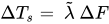
where is commonly denoted the climate sensitivity parameter, usually with units K/(W/m2), and ΔF is the radiative forcing in W/m2.[15] An estimate for is obtained from the inverse of the climate feedback parameter having units (W/m2)/K. An estimated value of gives an increase in global temperature of about 1.6 K above the 1750 reference temperature due to the increase in CO2 over that time (278 to 405 ppm, for a forcing of 2.0 W/m2), and predicts a further warming of 1.4 K above present temperatures if the CO2 mixing ratio in the atmosphere were to become double its pre-industrial value. Both of these calculations assume no other forcings.[16]


Historically, radiative forcing displays the best predictive capacity for specific types of forcing such as greenhouse gases. It is less effective for other anthropogenic influences like soot.[14]
Calculations and measurements
[edit]Atmospheric observation
[edit]Earth's global radiation balance fluctuates as the planet rotates and orbits the Sun, and as global-scale thermal anomalies arise and dissipate within the terrestrial, oceanic and atmospheric systems (e.g. ENSO).[17] Consequently, the planet's 'instantaneous radiative forcing' (IRF) is also dynamic and naturally fluctuates between states of overall warming and cooling. The combination of periodic and complex processes that give rise to these natural variations will typically revert over periods lasting as long as a few years to produce a net-zero average IRF. Such fluctuations also mask the longer-term (decade-long) forcing trends due to human activities, and thus make direct observation of such trends challenging.[18]

Earth's radiation balance has been continuously monitored by NASA's Clouds and the Earth's Radiant Energy System (CERES) instruments since year 1998.[20][21] Each scan of the globe provides an estimate of the total (all-sky) instantaneous radiation balance. This data record captures both the natural fluctuations and human influences on IRF; including changes in greenhouse gases, aerosols, land surface, etc. The record also includes the lagging radiative responses to the radiative imbalances; occurring mainly by way of Earth system feedbacks in temperature, surface albedo, atmospheric water vapor and clouds.[22][23]
Researchers have used measurements from CERES, AIRS, CloudSat and other satellite-based instruments within NASA's Earth Observing System to parse out contributions by the natural fluctuations and system feedbacks. Removing these contributions within the multi-year data record allows observation of the anthropogenic trend in top-of-atmosphere (TOA) IRF. The data analysis has also been done in a way that is computationally efficient and independent of most related modelling methods and results. Radiative forcing was thus directly observed to have risen by +0.53 W m−2 (±0.11 W m−2) from years 2003 to 2018. About 20% of the increase was associated with a reduction in the atmospheric aerosol burden, and most of the remaining 80% was attributed to the rising burden of greenhouse gases.[18][24][25]
A rising trend in the radiative imbalance due to increasing global CO2 has been previously observed by ground-based instruments. For example, such measurements have been separately gathered under clear-sky conditions at two Atmospheric Radiation Measurement (ARM) sites in Oklahoma and Alaska.[26] Each direct observation found that the associated radiative (infrared) heating experienced by surface dwellers rose by +0.2 W m−2 (±0.07 W m−2) during the decade ending 2010.[27][28] In addition to its focus on longwave radiation and the most influential forcing gas (CO2) only, this result is proportionally less than the TOA forcing due to its buffering by atmospheric absorption.
Basic estimates
[edit]Radiative forcing can be evaluated for its dependence on different factors which are external to the climate system.[29] Basic estimates summarized in the following sections have been derived (assembled) in accordance with first principles of the physics of matter and energy. Forcings (ΔF) are expressed as changes over the total surface of the planet and over a specified time interval. Estimates may be significant in the context of global climate forcing for times spanning decades or longer.[5] Gas forcing estimates presented in the IPCC's AR6 report have been adjusted to include so-called "fast" feedbacks (positive or negative) which occur via atmospheric responses (i.e. effective radiative forcing).
Forcing due to changes in atmospheric gases
[edit]
For a well-mixed greenhouse gas, radiative transfer codes that examine each spectral line for atmospheric conditions can be used to calculate the forcing ΔF as a function of a change in its concentration. These calculations may be simplified into an algebraic formulation that is specific to that gas.
Carbon dioxide
[edit]
A simplified first-order approximation expression for carbon dioxide (CO2) is:[31]
- ,

where C0 is a reference concentration in parts per million (ppm) by volume and ΔC is the concentration change in ppm. For the purpose of some studies (e.g. climate sensitivity), C0 is taken as the concentration prior to substantial anthropogenic changes and has a value of 278 ppm as estimated for the year 1750.
| Baseline concentration, C0 | Concentration change, ΔC | Radiative forcing change, ΔF (W m−2) | |
|---|---|---|---|
| 1979–1989 | 336.8 | +16.0 | +0.248 |
| 1989–1999 | 352.8 | +15.0 | +0.222 |
| 1999–2009 | 367.8 | +18.7 | +0.266 |
| 2009–2019 | 386.5 | +23.6 | +0.316 |
The atmospheric burden of greenhouse gases due to human activity has grown especially rapidly during the last several decades (since about year 1950). For carbon dioxide, the 50% increase (C/C0 = 1.5) realized as of year 2020 since 1750 corresponds to a cumulative radiative forcing change (delta F) of +2.17 W/m2.[6] Assuming no change in the emissions growth path, a doubling of concentrations (C/C0 = 2) within the next several decades would correspond to a cumulative radiative forcing change (delta F) of +3.71 W/m2.
The relationship between CO2 and radiative forcing is logarithmic at concentrations up to around eight times the current value.[32] Constant concentration increases thus have a progressively smaller warming effect. However, the first-order approximation is inaccurate at higher concentrations and there is no saturation in the absorption of infrared radiation by CO2.[33] Various mechanism behind the logarithmic scaling has been proposed but the spectrum distribution of the carbon dioxide seems to be essential,[34] particularly a broadening in the relevant 15-μm band coming from a Fermi resonance present in the molecule.[35][36][37]
Other trace gases
[edit]Somewhat different formulae apply for other trace greenhouse gases such as methane and N
2O (square-root dependence) or CFCs (linear), with coefficients that may be found for example in the IPCC reports.[38] A year 2016 study suggests a significant revision to the methane IPCC formula.[39] Forcings by the most influential trace gases in Earth's atmosphere are included in the section describing recent growth trends, and in the IPCC list of greenhouse gases.
Water vapor
[edit]Water vapor is Earth's primary greenhouse gas currently responsible for about half of all atmospheric gas forcing. Its overall atmospheric concentration depends almost entirely on the average planetary temperature, and has the potential to increase by as much as 7% with every degree (°C) of temperature rise (see also: Clausius–Clapeyron relation).[40] Thus over long time scales, water vapor behaves as a system feedback that amplifies the radiative forcing driven by the growth of carbon dioxide and other trace gases.[41][42]
Forcing due to changes in solar irradiance
[edit]Variations in total solar irradiance (TSI)
[edit]The intensity of solar irradiance including all wavelengths is the Total Solar Irradiance (TSI) and on average is the solar constant. It is equal to about 1361 W m−2 at the distance of Earth's annual-mean orbital radius of one astronomical unit and as measured at the top of the atmosphere.[43] Earth TSI varies with both solar activity and planetary orbital dynamics. Multiple satellite-based instruments including ERB, ACRIM 1-3, VIRGO, and TIM[44][45] have continuously measured TSI with improving accuracy and precision since 1978.[46]
Approximating Earth as a sphere, the cross-sectional area exposed to the Sun () is equal to one quarter the area of the planet's surface (). The globally and annually averaged amount of solar irradiance per square meter of Earth's atmospheric surface () is therefore equal to one quarter of TSI, and has a nearly constant value of .



Earth follows an elliptical orbit around the Sun, so that the TSI received at any instant fluctuates between about 1321 W m−2 (at aphelion in early July) and 1412 W m−2 (at perihelion in early January), and thus by about ±3.4% over each year.[47] This change in irradiance has minor influences on Earth's seasonal weather patterns and its climate zones, which primarily result from the annual cycling in Earth's relative tilt direction.[48] Such repeating cycles contribute a net-zero forcing (by definition) in the context of decades-long climate changes.
Sunspot activity
[edit]
Average annual TSI varies between about 1360 W m−2 and 1362 W m−2 (±0.05%) over the course of a typical 11-year sunspot activity cycle.[49] Sunspot observations have been recorded since about year 1600 and show evidence of lengthier oscillations (Gleissberg cycle, Devries/Seuss cycle, etc.) which modulate the 11-year cycle (Schwabe cycle). Despite such complex behavior, the amplitude of the 11-year cycle has been the most prominent variation throughout this long-term observation record.[50]
TSI variations associated with sunspots contribute a small but non-zero net forcing in the context of decadal climate changes.[46] Some research suggests they may have partly influenced climate shifts during the Little Ice Age, along with concurrent changes in volcanic activity and deforestation.[51] Since the late 20th century, average TSI has trended slightly lower along with a downward trend in sunspot activity.[52]
Milankovitch shifts
[edit]Climate forcing caused by variations in solar irradiance have occurred during Milankovitch cycles, which span periods of about 40,000 to 100,000 years. Milankovitch cycles consist of long-duration cycles in Earth's orbital eccentricity (or ellipticity), cycles in its orbital obliquity (or axial tilt), and precession of its relative tilt direction.[53] Among these, the 100,000 year cycle in eccentricity causes TSI to fluctuate by about ±0.2%.[54] Currently, Earth's eccentricity is nearing its least elliptic (most circular) causing average annual TSI to very slowly decrease.[53] Simulations also indicate that Earth's orbital dynamics will remain stable including these variations for least the next 10 million years.[55]
Sun aging
[edit]The Sun has consumed about half its hydrogen fuel since forming approximately 4.5 billion years ago.[56] TSI will continue to slowly increase during the aging process at a rate of about 1% each 100 million years. Such rate of change is far too small to be detectable within measurements and is insignificant on human timescales.
Total solar irradiance (TSI) forcing summary
[edit]| Δτ | Radiative forcing change ΔF (W m−2) | |
|---|---|---|
| Annual cycle | ±0.034 [47] | 0 (net) |
| Sunspot activity | ±5×10⁻⁴ [49] | ±0.1 [52][57] |
| Orbital shift | −4×10⁻⁷ [54] | −1×10⁻⁴ |
| Sun aging | +1×10⁻⁹ [56] | +2×10⁻⁷ |
The maximum fractional variations (Δτ) in Earth's solar irradiance during the last decade are summarized in the accompanying table. Each variation previously discussed contributes a forcing of:
- ,

where R=0.30 is Earth's reflectivity. The radiative and climate forcings arising from changes in the Sun's insolation are expected to continue to be minor, notwithstanding some as-of-yet undiscovered solar physics.[52][58]
Forcing due to changes in albedo and aerosols
[edit] | This article needs to be updated. (April 2024) |
Variations in Earth's albedo
[edit]A fraction of incident solar radiation is reflected by clouds and aerosols, oceans and landforms, snow and ice, vegetation, and other natural and man-made surface features. The reflected fraction is known as Earth's bond albedo (R), is evaluated at the top of the atmosphere, and has an average annual global value of about 0.30 (30%). The overall fraction of solar power absorbed by Earth is then (1−R) or 0.70 (70%).[59]
Atmospheric components contribute about three-quarters of Earth albedo, and clouds alone are responsible for half. The major roles of clouds and water vapor are linked with the majority presence of liquid water covering the planet's crust. Global patterns in cloud formation and circulation are highly complex, with couplings to ocean heat flows, and with jet streams assisting their rapid transport. Moreover, the albedos of Earth's northern and southern hemispheres have been observed to be essentially equal (within 0.2%). This is noteworthy since more than two-thirds of land and 85% of the human population are in the north.[60]
Multiple satellite-based instruments including MODIS, VIIRs, and CERES have continuously monitored Earth's albedo since 1998.[61] Landsat imagery, available since 1972, has also been used in some studies.[62] Measurement accuracy has improved and results have converged in recent years, enabling more confident assessment of the recent decadal forcing influence of planetary albedo.[60] Nevertheless, the existing data record is still too short to support longer-term predictions or to address other related questions.
Seasonal variations in planetary albedo can be understood as a set of system feedbacks that occur largely in response to the yearly cycling of Earth's relative tilt direction. Along with the atmospheric responses, most apparent to surface dwellers are the changes in vegetation, snow, and sea-ice coverage. Intra-annual variations of about ±0.02 (± 7%) around Earth's mean albedo have been observed throughout the course of a year, with maxima occurring twice per year near the time of each solar equinox.[60] This repeating cycle contributes net-zero forcing in the context of decades-long climate changes.
Interannual variability
[edit]
Regional albedos change from year to year due to shifts arising from natural processes, human actions, and system feedbacks. For example, human acts of deforestion typically raise Earth's reflectivity while introducing water storage and irrigation to arid lands may lower it. Likewise considering feedbacks, ice loss in arctic regions decreases albedo while expanding desertification at low to middle latitudes increases it.
During years 2000-2012, no overall trend in Earth's albedo was discernible within the 0.1% standard deviation of values measured by CERES.[60] Along with the hemispherical equivalence, some researchers interpret the remarkably small interannual differences as evidence that planetary albedo may currently be constrained by the action of complex system feedbacks. Nevertheless, historical evidence also suggests that infrequent events such as major volcanic eruptions can significantly perturb the planetary albedo for several years or longer.[63]
Albedo forcing summary
[edit]| Fractional variations (Δα) in Earth's albedo | Radiative forcing change ΔF (W m−2) | |
|---|---|---|
| Annual cycle | ± 0.07[60] | 0 (net) |
| Interannual variation | ± 0.001[60] | ∓ 0.1 |
The measured fractional variations (Δα) in Earth's albedo during the first decade of the 21st century are summarized in the accompanying table. Similar to TSI, the radiative forcing due to a fractional change in planetary albedo (Δα) is:
- .

Satellite observations show that various Earth system feedbacks have stabilized planetary albedo despite recent natural and human-caused shifts.[61] On longer timescales, it is more uncertain whether the net forcing which results from such external changes will remain minor.
Recent growth trends
[edit]


The IPCC summarized the current scientific consensus about radiative forcing changes as follows: "Human-caused radiative forcing of 2.72 [1.96 to 3.48] W/m2 in 2019 relative to 1750 has warmed the climate system. This warming is mainly due to increased GHG concentrations, partly reduced by cooling due to increased aerosol concentrations".[1]: 11
Radiative forcing can be a useful way to compare the growing warming influence of different anthropogenic greenhouse gases over time.
The radiative forcing of long-lived and well-mixed greenhouse gases have been increasing in earth's atmosphere since the industrial revolution.[6] The table includes the direct forcing contributions from carbon dioxide (CO2), methane (CH
4), nitrous oxide (N
2O); chlorofluorocarbons (CFCs) 12 and 11;[failed verification] and fifteen other halogenated gases.[66] These data do not include the significant forcing contributions from shorter-lived and less-well-mixed gases or aerosols; including those indirect forcings from the decay of methane and some halogens. They also do not account for changes in land use or solar activity.
Click at right to show/hide table
| |||||||||||||||||||||||||||||||||||||||||||||||||||||||||||||||||||||||||||||||||||||||||||||||||||||||||||||||||||||||||||||||||||||||||||||||||||||||||||||||||||||||||||||||||||||||||||||||||||||||||||||||||||||||||||||||||||||||||||||||||||||||||||||||||||||||||||||||||||||||||||||||||||||||||||||||||||||||||||||||||||||||||||||||||||||||||||||||||||||||||||||||||||||||||||||||||||||||||||||||||||||||||||||||||||||||||||||||||||||||||||||||||||||||||||||||||||||||||||||||||||||||||||||||
|---|---|---|---|---|---|---|---|---|---|---|---|---|---|---|---|---|---|---|---|---|---|---|---|---|---|---|---|---|---|---|---|---|---|---|---|---|---|---|---|---|---|---|---|---|---|---|---|---|---|---|---|---|---|---|---|---|---|---|---|---|---|---|---|---|---|---|---|---|---|---|---|---|---|---|---|---|---|---|---|---|---|---|---|---|---|---|---|---|---|---|---|---|---|---|---|---|---|---|---|---|---|---|---|---|---|---|---|---|---|---|---|---|---|---|---|---|---|---|---|---|---|---|---|---|---|---|---|---|---|---|---|---|---|---|---|---|---|---|---|---|---|---|---|---|---|---|---|---|---|---|---|---|---|---|---|---|---|---|---|---|---|---|---|---|---|---|---|---|---|---|---|---|---|---|---|---|---|---|---|---|---|---|---|---|---|---|---|---|---|---|---|---|---|---|---|---|---|---|---|---|---|---|---|---|---|---|---|---|---|---|---|---|---|---|---|---|---|---|---|---|---|---|---|---|---|---|---|---|---|---|---|---|---|---|---|---|---|---|---|---|---|---|---|---|---|---|---|---|---|---|---|---|---|---|---|---|---|---|---|---|---|---|---|---|---|---|---|---|---|---|---|---|---|---|---|---|---|---|---|---|---|---|---|---|---|---|---|---|---|---|---|---|---|---|---|---|---|---|---|---|---|---|---|---|---|---|---|---|---|---|---|---|---|---|---|---|---|---|---|---|---|---|---|---|---|---|---|---|---|---|---|---|---|---|---|---|---|---|---|---|---|---|---|---|---|---|---|---|---|---|---|---|---|---|---|---|---|---|---|---|---|---|---|---|---|---|---|---|---|---|---|---|---|---|---|---|---|---|---|---|---|---|---|---|---|---|---|---|---|---|---|---|---|---|---|---|---|---|---|---|---|---|---|---|---|---|---|---|---|---|---|---|---|---|---|---|---|---|---|---|---|---|---|---|---|---|---|---|---|---|---|---|---|---|---|---|---|---|---|---|---|---|---|---|---|---|---|---|---|---|---|---|---|---|---|---|---|---|---|---|---|---|---|---|---|---|---|---|---|---|---|---|---|---|---|---|---|---|---|---|---|---|---|---|---|---|---|---|---|---|---|---|---|---|---|
|
|

These data show that CO2 dominates the total forcing, with methane and chlorofluorocarbons (CFC) becoming relatively smaller contributors to the total forcing over time.[6] The five major greenhouse gases account for about 96% of the direct radiative forcing by long-lived greenhouse gas increases since 1750. The remaining 4% is contributed by the 15 minor halogenated gases.
It might be observed that the total forcing for year 2016, 3.027 W m−2, together with the commonly accepted value of climate sensitivity parameter λ, 0.8 K /(W m−2), results in an increase in global temperature of 2.4 K, much greater than the observed increase, about 1.2 K.[67][failed verification] Part of this difference is due to lag in the global temperature achieving steady state with the forcing. The remainder of the difference is due to negative aerosol forcing (compare climate effects of particulates), climate sensitivity being less than the commonly accepted value, or some combination thereof.[68]
The table also includes an "Annual Greenhouse Gas Index" (AGGI), which is defined as the ratio of the total direct radiative forcing due to long-lived greenhouse gases for any year for which adequate global measurements exist to that which was present in 1990.[6] 1990 was chosen because it is the baseline year for the Kyoto Protocol. This index is a measure of the inter-annual changes in conditions that affect carbon dioxide emission and uptake, methane and nitrous oxide sources and sinks, the decline in the atmospheric abundance of ozone-depleting chemicals related to the Montreal Protocol. and the increase in their substitutes (hydrogenated CFCs (HCFCs) and hydrofluorocarbons (HFC). Most of this increase is related to CO2. For 2013, the AGGI was 1.34 (representing an increase in total direct radiative forcing of 34% since 1990). The increase in CO2 forcing alone since 1990 was about 46%. The decline in CFCs considerably tempered the increase in net radiative forcing.
An alternative table prepared for use in climate model intercomparisons conducted under the auspices of IPCC and including all forcings, not just those of greenhouse gases.[69]
See also
[edit]

- Global dimming – Reduction in the amount of sunlight reaching Earth's surface
- Global warming potential – Potential heat absorbed by a greenhouse gas
References
[edit]- ^ a b c IPCC, 2021: Summary for Policymakers. In: Climate Change 2021: The Physical Science Basis. Contribution of Working Group I to the Sixth Assessment Report of the Intergovernmental Panel on Climate Change [Masson-Delmotte, V., P. Zhai, A. Pirani, S.L. Connors, C. Péan, S. Berger, N. Caud, Y. Chen, L. Goldfarb, M.I. Gomis, M. Huang, K. Leitzell, E. Lonnoy, J.B.R. Matthews, T.K. Maycock, T. Waterfield, O. Yelekçi, R. Yu, and B. Zhou (eds.)]. Cambridge University Press, Cambridge, United Kingdom and New York, NY, USA, pp. 3−32, doi:10.1017/9781009157896.001.
- ^ Rebecca, Lindsey (14 January 2009). "Climate and Earth's Energy Budget: Feature Articles". earthobservatory.nasa.gov. Archived from the original on 10 April 2020. Retrieved 3 April 2018.
- ^ a b c IPCC, 2021: Annex VII: Glossary [Matthews, J.B.R., V. Möller, R. van Diemen, J.S. Fuglestvedt, V. Masson-Delmotte, C. Méndez, S. Semenov, A. Reisinger (eds.)]. In Climate Change 2021: The Physical Science Basis. Contribution of Working Group I to the Sixth Assessment Report of the Intergovernmental Panel on Climate Change [Masson-Delmotte, V., P. Zhai, A. Pirani, S.L. Connors, C. Péan, S. Berger, N. Caud, Y. Chen, L. Goldfarb, M.I. Gomis, M. Huang, K. Leitzell, E. Lonnoy, J.B.R. Matthews, T.K. Maycock, T. Waterfield, O. Yelekçi, R. Yu, and B. Zhou (eds.)]. Cambridge University Press, Cambridge, United Kingdom and New York, NY, USA, pp. 2215–2256, doi:10.1017/9781009157896.022.
- ^ Lissauer, Jack Jonathan; De Pater, Imke (16 September 2013). Fundamental planetary science: physics, chemistry, and habitability. New York City. ISBN 978-0-521-85330-9. OCLC 808009225.
{{cite book}}: CS1 maint: location missing publisher (link) - ^ a b c National Research Council (2005). Radiative Forcing of Climate Change: Expanding the Concept and Addressing Uncertainties. The National Academic Press. doi:10.17226/11175. ISBN 978-0-309-09506-8.
- ^ a b c d e f g h i j
 This article incorporates public domain material from Butler, James H. and Montzka, Steven J. (2022). THE NOAA ANNUAL GREENHOUSE GAS INDEX (AGGI). NOAA/ESRL. Retrieved 7 March 2023.
{{citation}}: CS1 maint: multiple names: authors list (link) - ^ Shine, Keith P.; Cook, Jolene; Highwood, Eleanor J.; Joshi, Manoj M. (23 October 2003). "An alternative to radiative forcing for estimating the relative importance of climate change mechanisms". Geophysical Research Letters. 30 (20): 2047. Bibcode:2003GeoRL..30.2047S. doi:10.1029/2003GL018141. S2CID 59514371.
- ^ Sherwood, Steven C.; Bony, Sandrine; Boucher, Olivier; Bretherton, Chris; Forster, Piers M.; Gregory, Jonathan M.; Stevens, Bjorn (2015-02-01). "Adjustments in the Forcing-Feedback Framework for Understanding Climate Change" (PDF). Bulletin of the American Meteorological Society. 96 (2): 217–228. Bibcode:2015BAMS...96..217S. doi:10.1175/bams-d-13-00167.1. ISSN 0003-0007. S2CID 12515303. Archived (PDF) from the original on 2019-04-28. Retrieved 2019-12-16.
- ^ Forster, Piers M.; Richardson, Thomas; Maycock, Amanda C.; Smith, Christopher J.; Samset, Bjorn H.; Myhre, Gunnar; Andrews, Timothy; Pincus, Robert; Schulz, Michael (2016-10-27). "Recommendations for diagnosing effective radiative forcing from climate models for CMIP6" (PDF). Journal of Geophysical Research: Atmospheres. 121 (20): 12, 460–12, 475. Bibcode:2016JGRD..12112460F. doi:10.1002/2016jd025320. ISSN 2169-897X. S2CID 59367633. Archived (PDF) from the original on 2019-09-25. Retrieved 2019-09-25.
- ^ Stevenson, D. S.; Young, P. J.; Naik, V.; Lamarque, J.-F.; Shindell, D. T.; Voulgarakis, A.; Skeie, R. B.; Dalsoren, S. B.; Myhre, G. (2013-03-15). "Tropospheric ozone changes, radiative forcing and attribution to emissions in the Atmospheric Chemistry and Climate Model Intercomparison Project (ACCMIP)" (PDF). Atmospheric Chemistry and Physics. 13 (6): 3063–3085. Bibcode:2013ACP....13.3063S. doi:10.5194/acp-13-3063-2013. ISSN 1680-7316. S2CID 15347857. Archived (PDF) from the original on 2021-11-21. Retrieved 2019-09-04.
- ^ Checa-Garcia, Ramiro; Hegglin, Michaela I.; Kinnison, Douglas; Plummer, David A.; Shine, Keith P. (2018-04-06). "Historical Tropospheric and Stratospheric Ozone Radiative Forcing Using the CMIP6 Database" (PDF). Geophysical Research Letters. 45 (7): 3264–3273. Bibcode:2018GeoRL..45.3264C. doi:10.1002/2017gl076770. ISSN 0094-8276. S2CID 53471515. Archived (PDF) from the original on 2019-04-30. Retrieved 2019-12-16.
- ^ Soden, Brian J.; Held, Isaac M.; Colman, Robert; Shell, Karen M.; Kiehl, Jeffrey T.; Shields, Christine A. (2008-07-01). "Quantifying Climate Feedbacks Using Radiative Kernels". Journal of Climate. 21 (14): 3504–3520. Bibcode:2008JCli...21.3504S. CiteSeerX 10.1.1.141.653. doi:10.1175/2007jcli2110.1. ISSN 0894-8755. S2CID 14679991.
- ^ Forster, Piers M.; Smith, Christopher J.; Walsh, Tristram; et al. (2023). "Indicators of Global Climate Change 2022: annual update of large-scale indicators of the state of the climate system and human influence". Earth System Science Data. 15 (15): 2295–2327. Bibcode:2023ESSD...15.2295F. doi:10.5194/essd-15-2295-2023. hdl:20.500.11850/625497.
- ^ a b Nauels, A.; Rosen, D.; Mauritsen, T.; Maycock, A.; McKenna, C.; Rogelj, J.; Schleussner, C.-F.; Smith, E.; Smith, C. (2019-12-02). "ZERO IN ON the remaining carbon budget and decadal warming rates. The CONSTRAIN Project Annual Report 2019". constrain-eu.org. doi:10.5518/100/20. Archived from the original (PDF) on 2019-12-09. Retrieved 2020-01-20.
- ^ "IPCC Third Assessment Report - Climate Change 2001". Archived from the original on 30 June 2009.
- ^ "Atmosphere Changes". Archived from the original on 10 May 2009.
- ^ Rebecca, Lindsey (14 January 2009). "Climate and Earth's Energy Budget". earthobservatory.nasa.gov. Archived from the original on 21 January 2021. Retrieved 15 April 2021.
- ^ a b Kramer, R.J., H. He, B.J. Soden, L. Oreopoulos, G. Myhre, P.M. Forster, and C.J. Smith (2021-03-25). "Observational Evidence of Increasing Global Radiative Forcing". Geophysical Research Letters. 48 (7) e91585. Bibcode:2021GeoRL..4891585K. doi:10.1029/2020GL091585. hdl:11250/2788616. S2CID 233684244.
{{cite journal}}: CS1 maint: multiple names: authors list (link) - ^ "NASA's Earth Observing System homepage". NASA EOS Project Science Office. Archived from the original on 2021-03-18. Retrieved 2021-04-16.
- ^ Loeb, N.G., S. Kato, K. Loukachine, and N. Manalo-Smith (2005-04-01). "Angular Distribution Models for Top-of-Atmosphere Radiative Flux Estimation from the Clouds and the Earth's Radiant Energy System Instrument on the Terra Satellite. Part I: Methodology". Journal of Atmospheric and Oceanic Technology. 22 (4): 338–351. Bibcode:2005JAtOT..22..338L. doi:10.1175/JTECH1712.1.
{{cite journal}}: CS1 maint: multiple names: authors list (link) - ^ Loeb, N.G., F.G. Rose, S. Kato, D.A. Rutan, W. Su, H. Wang, D.R. Doelling, W.L. Smith, and A. Gettelman (2020-01-01). "Toward a Consistent Definition between Satellite and Model Clear-Sky Radiative Fluxes". Journal of Climate. 33 (1): 61–75. Bibcode:2020JCli...33...61L. doi:10.1175/JCLI-D-19-0381.1.
{{cite journal}}: CS1 maint: multiple names: authors list (link) - ^ Sherwood, S.C., S. Bony, O. Boucher, C. Bretherton, P.M. Forster, J.M. Gregory, and B. Stevens (2015-02-01). "Adjustments in the Forcing-Feedback Framework for Understanding Climate Change". Bulletin of the American Meteorological Society. 96 (2): 217–228. Bibcode:2015BAMS...96..217S. doi:10.1175/BAMS-D-13-00167.1. hdl:11858/00-001M-0000-0015-79FA-A. S2CID 12515303.
{{cite journal}}: CS1 maint: multiple names: authors list (link) - ^ Wielicki, B.A., R.D. Cess, M.D. King, D.A. Randall, and E.F. Harrison (1995-11-01). "Mission to Planet Earth: Role of Clouds and Radiation in Climate". Bulletin of the American Meteorological Society. 76 (11): 2125–2154. Bibcode:1995BAMS...76.2125W. doi:10.1175/1520-0477(1995)076<2125:MTPERO>2.0.CO;2.
{{cite journal}}: CS1 maint: multiple names: authors list (link) - ^ Sarah Hansen (12 April 2021). "UMBC's Ryan Kramer confirms human-caused climate change with direct evidence for first time". University of Maryland, Baltimore County. Archived from the original on 17 April 2021. Retrieved 17 April 2021.
- ^ "Direct observations confirm that humans are throwing Earth's energy budget off balance". phys.org. 26 March 2021. Archived from the original on 18 April 2021. Retrieved 17 April 2021.
- ^ "ARM Capabilities - Atmospheric Observatories". U.S. Department of Energy - Office of Science. Archived from the original on 2021-04-25. Retrieved 2021-04-25.
- ^ Feldman, D.R., W.D. Collins, P.J. Gero, M.S. Torn, E.J. Mlawer, and T.R. Shippert (2015-02-25). "Observational determination of surface radiative forcing by CO2 from 2000 to 2010". Nature. 519 (7543): 339–343. Bibcode:2015Natur.519..339F. doi:10.1038/nature14240. PMID 25731165. S2CID 2137527. Archived from the original on 2021-04-05. Retrieved 2021-04-25.
{{cite journal}}: CS1 maint: multiple names: authors list (link) - ^ Robert McSweeney (2015-02-25). "New study directly measures greenhouse effect at Earth's surface". Carbon Brief. Archived from the original on 2021-04-18. Retrieved 2021-04-25.
- ^ "The Study of Earth as an Integrated System". NASA. Archived from the original on 2016-11-02. Retrieved 2021-05-20.
- ^ a b Hansen, James E.; Kharecha, Pushker; Sato, Makiko; Tselioudis, George; et al. (3 February 2025). "Global Warming Has Accelerated: Are the United Nations and the Public Well-Informed?". Environment. 67 (1): 6–44. doi:10.1080/00139157.2025.2434494. Figure 3.
- ^ Myhre, G.; Highwood, E.J.; Shine, K.P.; Stordal, F. (1998). "New estimates of radiative forcing due to well mixed greenhouse gases". Geophysical Research Letters. 25 (14): 2715–8. Bibcode:1998GeoRL..25.2715M. doi:10.1029/98GL01908. S2CID 128895348.
- ^ Huang, Yi; Bani Shahabadi, Maziar (28 November 2014). "Why logarithmic?". J. Geophys. Res. Atmos. 119 (24): 13, 683–89. Bibcode:2014JGRD..11913683H. doi:10.1002/2014JD022466. S2CID 129640693.
- ^ Zhong, Wenyi; Haigh, Joanna D. (27 March 2013). "The greenhouse effect and carbon dioxide". Weather. 68 (4): 100–5. Bibcode:2013Wthr...68..100Z. doi:10.1002/wea.2072. ISSN 1477-8696. S2CID 121741093.
- ^ Romps, David M.; Seeley, Jacob T.; Edman, Jacob P. (2022-07-01). "Why the Forcing from Carbon Dioxide Scales as the Logarithm of Its Concentration". Journal of Climate. 35 (13): 4027–4047. Bibcode:2022JCli...35.4027R. doi:10.1175/JCLI-D-21-0275.1. ISSN 0894-8755.
- ^ Shine, Keith P.; Perry, Georgina E. (July 2023). "Radiative forcing due to carbon dioxide decomposed into its component vibrational bands†". Quarterly Journal of the Royal Meteorological Society. 149 (754): 1856–1866. Bibcode:2023QJRMS.149.1856S. doi:10.1002/qj.4485. ISSN 0035-9009.
- ^ Wordsworth, R.; Seeley, J. T.; Shine, K. P. (2024-03-01). "Fermi Resonance and the Quantum Mechanical Basis of Global Warming". The Planetary Science Journal. 5 (3): 67. arXiv:2401.15177. Bibcode:2024PSJ.....5...67W. doi:10.3847/PSJ/ad226d. ISSN 2632-3338.
- ^ Howlett, Joseph (2024-08-07). "Physicists Pinpoint the Quantum Origin of the Greenhouse Effect". Quanta Magazine. Retrieved 2024-08-12.
- ^ IPCC WG-1 Archived 13 December 2007 at the Wayback Machine report
- ^ Etminan, M.; Myhre, G.; Highwood, E. J.; Shine, K. P. (2016-12-27). "Radiative forcing of carbon dioxide, methane, and nitrous oxide: A significant revision of the methane radiative forcing". Geophysical Research Letters. 43 (24): 12, 614–12, 623. Bibcode:2016GeoRL..4312614E. doi:10.1002/2016gl071930. ISSN 0094-8276.
- ^ Gavin Schmidt (2010-10-01). "Taking the Measure of the Greenhouse Effect". NASA Goddard Institute for Space Studies - Science Briefs. Archived from the original on 2021-04-21. Retrieved 2021-05-24.
- ^ "It's Water Vapor, Not the CO2". American Chemical Society. Archived from the original on 2021-05-11. Retrieved 2021-05-20.
- ^ Lacis, Andrew A.; Schmidt, Gavin A.; Rind, David; Ruedy, Reto A. (15 October 2010). "Atmospheric CO2: Principal Control Knob Governing Earth's Temperature". Science. 330 (6002): 356–359. doi:10.1126/science.1190653. PMID 20947761. S2CID 20076916.
- ^ Gregg Kopp; Judith L. Lean (2011-01-14). "A new, lower value of total solar irradiance: Evidence and climate significance". Geophysical Research Letters. 38 (1): n/a. Bibcode:2011GeoRL..38.1706K. doi:10.1029/2010GL045777. S2CID 8190208.
- ^ "Solar Radiation and Climate Experiment". University of Colorado, Laboratory for Atmospheric and Space Physics. Archived from the original on 2021-05-19. Retrieved 2021-05-15.
- ^ "TSIS-1 Mission Overview". NASA. 28 November 2017. Archived from the original on 2021-07-18. Retrieved 2021-05-20.
- ^ a b Gregg Kopp (2014-04-24). "Solar variability, solar forcing, and coupling mechanisms in the terrestrial atmosphere". Journal of Space Weather and Space Climate. 4 (A14): 1–9. Bibcode:2014JSWSC...4A..14K. doi:10.1051/swsc/2014012. Archived from the original on 2021-05-06. Retrieved 2021-05-24.
- ^ a b Sophie Lewis (2021-01-02). "Earth reaches perihelion, closer to the sun than any other day". CBS News. Archived from the original on 2021-05-24. Retrieved 2021-05-24.
- ^ "The Seasons, the Equinox, and the Solstices". National Weather Service. Archived from the original on 2021-05-24. Retrieved 2021-05-20.
- ^ a b Claus Fröhlich & Judith Lean (2004-12-01). "Solar radiative output and its variability: evidence and mechanisms". The Astronomy and Astrophysics Review. 12 (4): 273–320. Bibcode:2004A&ARv..12..273F. doi:10.1007/s00159-004-0024-1. S2CID 121558685. Archived from the original on 2021-05-25. Retrieved 2021-05-24.
- ^ David H. Hathaway (2015-09-21). "The Solar Cycle" (PDF). Living Reviews in Solar Physics. 12 (12): 4. arXiv:1502.07020. Bibcode:2015LRSP...12....4H. doi:10.1007/lrsp-2015-4. ISSN 1614-4961. PMC 4841188. PMID 27194958. Archived (PDF) from the original on 2021-05-23. Retrieved 2021-05-24.
- ^ Lean, Judith; Rind, David (1999-01-01). "Evaluating sun–climate relationships since the Little Ice Age". Journal of Atmospheric and Solar-Terrestrial Physics. 61 (1–2): 25–36. Bibcode:1999JASTP..61...25L. doi:10.1016/S1364-6826(98)00113-8. ISSN 1364-6826. Archived from the original on 2021-05-10. Retrieved 2021-05-24.
- ^ a b c Gareth S. Jones, Mike Lockwood, Peter A. Stott (2012-03-16). "What influence will future solar activity changes over the 21st century have on projected global near-surface temperature changes?". Journal of Geophysical Research: Atmospheres. 117 (D5): n/a. Bibcode:2012JGRD..117.5103J. doi:10.1029/2011JD017013.
{{cite journal}}: CS1 maint: multiple names: authors list (link) - ^ a b Alan Buis (2020-02-27). "Milankovitch (Orbital) Cycles and Their Role in Earth's Climate". NASA Jet Propulsion Laboratory. Archived from the original on 2020-10-30. Retrieved 2021-05-24.
- ^ a b Marie-France Loutre, Didier Paillard, Françoise Vimeux, Elsa Cortijo (2004-04-30). "Does mean annual insolation have the potential to change the climate?". Earth and Planetary Science Letters. 221 (1–4): 1–14. Bibcode:2004E&PSL.221....1L. doi:10.1016/S0012-821X(04)00108-6. Archived from the original on 2021-05-14. Retrieved 2021-05-24.
{{cite journal}}: CS1 maint: multiple names: authors list (link) - ^ J. Laskar (1989-03-16). "A numerical experiment on the chaotic behaviour of the Solar System". Nature. 338 (6212): 237–238. Bibcode:1989Natur.338..237L. doi:10.1038/338237a0. S2CID 4321705. Archived from the original on 2021-03-11. Retrieved 2021-05-24.
- ^ a b "NASA Solar System Exploration - Our Sun". NASA. Archived from the original on 2021-05-15. Retrieved 2021-05-15.
- ^ "There Is No Impending 'Mini Ice Age'". NASA Global Climate Change. 2020-02-13. Archived from the original on 2021-05-28. Retrieved 2021-05-28.
- ^ "What Is the Sun's Role in Climate Change?". NASA. 2019-09-06. Archived from the original on 2021-05-26. Retrieved 2021-05-24.
- ^ Bida Jian, Jiming Li, Guoyin Wang, Yongli He, Ying Han, Min Zhang, and Jianping Huang (2018-11-01). "The Impacts of Atmospheric and Surface Parameters on Long-Term Variations in the Planetary Albedo". Journal of Climate. 31 (21): 8705–8718. Bibcode:2018JCli...31.8705J. doi:10.1175/JCLI-D-17-0848.1. S2CID 133651731.
{{cite journal}}: CS1 maint: multiple names: authors list (link) - ^ a b c d e f Graeme L. Stephens, Denis O'Brien, Peter J. Webster, Peter Pilewski, Seiji Kato, Jui-lin Li (2015-01-25). "The albedo of Earth". Reviews of Geophysics. 53 (1): 141–163. Bibcode:2015RvGeo..53..141S. doi:10.1002/2014RG000449. S2CID 12536954. Archived from the original on 2021-05-24. Retrieved 2021-05-24.
{{cite journal}}: CS1 maint: multiple names: authors list (link) - ^ a b "Measuring Earth's Albedo". NASA Earth Observatory. 21 October 2014. Archived from the original on 2021-05-06. Retrieved 2021-05-15.
- ^ "Landsat Science Team's Crystal Schaaf Discusses Albedo, Its Importance, and How It Can Affect Climate". U.S. Geological Survey. 2021-01-12. Archived from the original on 2021-05-24. Retrieved 2021-05-24.
- ^ Robock, Alan (2000-05-01). "Volcanic eruptions and climate". Reviews of Geophysics. 38 (2): 191–219. Bibcode:2000RvGeo..38..191R. doi:10.1029/1998RG000054. S2CID 1299888.
- ^ "The NOAA Annual Greenhouse Gas Index (AGGI)". NOAA.gov. National Oceanic and Atmospheric Administration (NOAA). 2024. Archived from the original on 5 October 2024.
- ^ "The NOAA Annual Greenhouse Gas Index - Figure 5". NOAA. 2020. Archived from the original on 2009-08-25. Retrieved 2009-07-30.
- ^
CFC-113, tetrachloromethane (CCl
4), 1,1,1-trichloroethane (CH
3CCl
3); hydrochlorofluorocarbons (HCFCs) 22, 141b and 142b; hydrofluorocarbons (HFCs) 134a, 152a, 23, 143a, and 125; sulfur hexafluoride (SF
6), and halons 1211, 1301 and 2402) - ^ Hansen, J.E.; et al. "GISS Surface Temperature Analysis: Analysis Graphs and Plots". Goddard Institute for Space Studies, National Aeronautics and Space Administration. Archived from the original on 2018-01-18. Retrieved 2018-01-25.
- ^ Schwartz, Stephen E.; Charlson, Robert J.; Kahn, Ralph A.; Ogren, John A.; Rodhe, Henning (2010). "Why hasn't Earth warmed as much as expected?" (PDF). Journal of Climate. 23 (10) (published 15 May 2010): 2453–64. Bibcode:2010JCli...23.2453S. doi:10.1175/2009JCLI3461.1. S2CID 14309074. Archived (PDF) from the original on 8 March 2021. Retrieved 24 September 2019.
- ^ Stocker, Thomas (24 March 2014). Climate change 2013 : the physical science basis: Working Group I contribution to the Fifth assessment report of the Intergovernmental Panel on Climate Change. Cambridge University Press. ISBN 978-1-107-66182-0. OCLC 1120509660. datafile Archived 2017-09-30 at the Wayback Machine

External links
[edit]- United States National Research Council (2005), Radiative Forcing of Climate Change: Expanding the Concept and Addressing Uncertainties, Board on Atmospheric Sciences and Climate
- NASA: The Atmosphere's Energy Budget


Radiative forcing
View on GrokipediaConceptual Foundations
Definition and Physical Principles
Radiative forcing quantifies the perturbation to Earth's top-of-atmosphere energy balance caused by changes in atmospheric constituents or surface properties, expressed as the change in net downward radiative flux (shortwave plus longwave) at the tropopause.[11] This metric assumes fixed sea surface temperatures, tropospheric temperatures, and other climate variables, while allowing stratospheric temperatures to adjust rapidly to radiative equilibrium, typically within months.[1] Positive forcing (e.g., from increased greenhouse gases) implies an energy surplus driving planetary warming until outgoing radiation increases to restore balance; negative forcing (e.g., from reflective aerosols) implies a deficit leading to cooling.[12] Values are computed as global and annual means in watts per square meter (W m⁻²), providing a standardized measure for comparing forcing agents independent of slower climate feedbacks like water vapor changes or ice-albedo shifts. The physical basis stems from planetary radiative equilibrium, where absorbed solar radiation—approximately 240 W m⁻² after averaging the solar constant (about 1361 W m⁻² over Earth's cross-section and subtracting planetary albedo (~0.3))—balances emitted longwave radiation from the surface and atmosphere.[3] A forcing agent alters this balance by modifying absorption, emission, or scattering of radiation: greenhouse gases trap outgoing longwave radiation, increasing downward flux; aerosols can reflect incoming shortwave or absorb it, reducing net absorption.[13] At the tropopause, the forcing isolates the direct radiative effect before tropospheric dynamical responses (e.g., convection) amplify or dampen it, ensuring comparability across agents.[14] This boundary avoids conflating surface fluxes with atmospheric adjustments, as tropopause-level flux changes directly link to global temperature response via ΔT ≈ λ ΔF, where λ is the no-feedback sensitivity parameter (~1.2 K per W m⁻² from blackbody physics).[15] Derivations from radiative transfer principles involve solving the Schwarzschild equation for photon transport, integrating absorption and emission coefficients over spectral bands, pressures, and temperatures.[16] For well-mixed gases like CO₂, forcing scales logarithmically with concentration due to saturation in strong absorption bands, shifting effective absorption to weaker wings: ΔF ≈ 5.35 ln(C/C₀) W m⁻² for CO₂ changes from preindustrial C₀ = 278 ppm. Such calculations use line-by-line models validated against observations, confirming forcing independence from surface temperature in the fixed-temperature approximation. Uncertainties arise from spectral data, vertical profiles, and cloud overlaps, but core principles hold across line-shape assumptions (e.g., Lorentzian broadening).[17]Historical Development
The concept of radiative forcing emerged from early investigations into the radiative balance of Earth's atmosphere, with foundational insights dating to the late 19th century. In 1896, Svante Arrhenius published calculations quantifying the temperature response to changes in atmospheric carbon dioxide concentration, estimating that doubling CO2 would increase global surface temperatures by 5–6 °C through enhanced absorption of infrared radiation, an effect akin to modern radiative forcing computations.[18] [19] These estimates relied on rudimentary laboratory data and assumed equilibrium radiative transfer, predating explicit formulations but establishing a causal link between greenhouse gas perturbations and net radiative imbalance at the surface.[20] Mid-20th-century advancements built on Arrhenius's work amid growing empirical evidence of anthropogenic CO2 increases. In 1938, Guy Stewart Callendar revisited Arrhenius's model, compiling global temperature and CO2 records to argue for a detectable 0.005 °C per decade warming driven by industrial emissions, implicitly incorporating radiative forcing by correlating CO2 rise with altered infrared trapping.[21] Post-World War II developments in radiative transfer theory, enabled by electronic computers, allowed more sophisticated modeling; for instance, in 1967, Syukuro Manabe and Richard Wetherald's radiative-convective equilibrium simulations quantified CO2 doubling's tropospheric warming while holding stratospheric temperatures fixed, refining the perturbation-response framework central to forcing estimates.[22] The term "radiative forcing" was formalized in the late 20th century to standardize climate impact assessments. The 1975 Charney Report on carbon dioxide and climate introduced equilibrium climate sensitivity as the temperature change per unit forcing (typically for doubled CO2), linking it to radiative perturbations at the tropopause.[23] The Intergovernmental Panel on Climate Change (IPCC) adopted and defined the concept in its 1990 First Assessment Report as the change in net downward radiative flux at the tropopause following instantaneous forcing and allowing stratospheric temperature adjustment, but excluding tropospheric and surface responses, to isolate direct agent effects from feedbacks.[11] This definition evolved through subsequent IPCC reports, incorporating agent-specific quantifications (e.g., +2.1 W m⁻² from well-mixed greenhouse gases since 1750 by 2001 estimates) and addressing uncertainties in aerosols and indirect effects.[22][24]Distinction from Feedbacks and Metrics
Radiative forcing quantifies the perturbation to the Earth's top-of-atmosphere (TOA) radiative energy balance caused by an external driver, such as increased greenhouse gas concentrations, excluding subsequent climate system responses like surface temperature changes.[1] This initial imbalance, typically measured in watts per square meter (W m⁻²), precedes feedbacks, which are amplifying or dampening effects arising from internal adjustments to warming, such as increased water vapor (positive feedback) or enhanced low-cloud cover (potential negative feedback).[25] The distinction ensures that forcing isolates the direct causal input, while feedbacks represent the system's endogenous sensitivity, allowing modular analysis of climate response where equilibrium surface temperature change approximates ΔT_s ≈ λ ΔF, with λ as the sensitivity parameter incorporating net feedback strength.[11] Climate feedbacks, by contrast, emerge after the forcing induces tropospheric and surface alterations, including lapse rate changes, albedo shifts from ice melt, and cloud-radiative effects tied to temperature gradients rather than the forcing agent itself.[26] For instance, water vapor feedback amplifies forcing by ~1.8 W m⁻² per Kelvin of warming due to the Clausius-Clapeyron relation, but this is excluded from forcing calculations to avoid conflating cause and response.[27] Rapid atmospheric adjustments, like stratospheric cooling or tropospheric circulation shifts occurring on timescales faster than ocean mixing (days to months), are sometimes incorporated into "effective radiative forcing" (ERF) to better predict temperature outcomes, but these are delineated from slower, temperature-mediated feedbacks involving deep ocean heat uptake or biosphere changes.[8] Among metrics, instantaneous radiative forcing omits all adjustments, yielding higher values (e.g., ~2.16 W m⁻² for doubled CO₂), while stratosphere-adjusted forcing accounts for thermal equilibrium in the stratosphere alone, reducing it to ~1.68 W m⁻²; ERF further includes tropospheric rapid responses, approximating ~1.5–2.0 W m⁻² depending on model ensembles.[28] These variants serve distinct purposes: traditional forcing compares agent efficacies linearly, but ERF correlates more strongly with simulated climate sensitivity across models, as it embeds non-feedback adjustments without surface temperature feedbacks.[8] Uncertainty in distinguishing adjustments from feedbacks arises from model divergences in cloud and aerosol responses, with ERF estimates for anthropogenic forcing ranging 1.0–2.5 W m⁻² since 1750, emphasizing the need for observational constraints like satellite-derived TOA fluxes.[25]Estimation Methods
Radiative Transfer Modeling
Radiative transfer modeling computes radiative forcing by solving the equations governing the propagation of solar and terrestrial radiation through the atmosphere, accounting for gaseous absorption, emission, and scattering. These models evaluate the difference in net downward radiative flux at the tropopause between unperturbed and perturbed atmospheric states, typically fixing tropospheric temperatures and water vapor profiles while permitting stratospheric temperatures to adjust to a new radiative equilibrium. This fixed dynamical heating approximation isolates the direct radiative perturbation from feedbacks like tropospheric warming.[29] Line-by-line (LBL) models achieve highest fidelity by explicitly resolving millions of individual molecular absorption lines from spectroscopic databases such as HITRAN or GEISA, integrating monochromatic fluxes over the full spectrum from ultraviolet to microwave. Used as benchmarks in intercomparisons like the Radiative Forcing Model Intercomparison Project (RFMIP), LBL codes such as LBLRTM demonstrate consistency across independent implementations, with forcing uncertainties for long-lived greenhouse gases below 5% for CO2 doublings yielding approximately 3.7 W m⁻² in clear-sky conditions.[29][30] Broadband approximations, including correlated-k distribution methods, accelerate computations by sorting and reweighting absorption coefficients within spectral bands, enabling their integration into general circulation models (GCMs) while retaining accuracy within 1-2% of LBL results for well-mixed gases.[30] Prominent models include the Rapid Radiative Transfer Model (RRTM), optimized for GCM time steps with validated longwave and shortwave schemes against LBL benchmarks, and MODTRAN, a moderate-resolution code originally developed for remote sensing that simulates band-averaged transmittances for forcing estimates. For instance, MODTRAN calculations for a CO2 doubling from pre-industrial levels produce a stratospheric-adjusted forcing of about 3.7 W m⁻², aligning with empirical parameterizations like ΔF = 5.35 ln(C/C₀) derived from similar spectral integrations.[31][32] These models incorporate vertical profiles of temperature, pressure, and composition from reanalyses or standard atmospheres (e.g., mid-latitude summer), with clear-sky assumptions for direct forcing or effective radiative forcing including cloud adjustments via double-call methods. Uncertainties arise from spectroscopic data (e.g., line intensities ±5-10%), continuum absorption in far-IR windows, and minor cloud-aerosol overlaps, but inter-model spreads for GHG forcing remain below 0.2 W m⁻² in recent benchmarks.[29][33] Validation against aircraft or satellite observations, such as from ARM sites, confirms model accuracy for clear-sky fluxes within 1-3 W m⁻², though GCM-embedded schemes require tuning to match LBL-derived forcings for historical simulations. Ongoing refinements address spectral gaps in water vapor continua and non-LTE effects in the upper atmosphere, ensuring robust quantification of forcing agents like CO2, where saturation in strong bands shifts sensitivity to weak peripheral lines.[34][30]Observational Approaches
Satellite-based measurements constitute the primary observational approach for estimating global radiative forcing, capturing top-of-atmosphere (TOA) fluxes of incoming solar shortwave radiation and outgoing longwave radiation to quantify perturbations in Earth's energy balance. The Earth Radiation Budget Experiment (ERBE), operational from 1984 to 1990, provided foundational broadband radiance data, enabling initial assessments of the planetary radiation budget with an accuracy of approximately 1% for monthly global means.[35] Its successor, the Clouds and the Earth's Radiant Energy System (CERES), launched in 1997 aboard NASA's Tropical Rainfall Measuring Mission and subsequent platforms like Terra and Aqua, delivers higher-precision observations with radiometric calibration stability better than 0.3% per decade, facilitating detection of forcing trends on the order of 0.1 W m^{-2}.[36] CERES data products, such as Energy Balanced and Filled (EBAF), adjust angular distribution models and incorporate geostationary imager data to produce gridded TOA fluxes at 1° resolution, supporting estimates of Earth's energy imbalance (EEI) as a direct indicator of net radiative forcing integrated over rapid adjustments.[37] To disentangle radiative forcing from climate feedbacks in these datasets, the radiative kernel technique is employed, which approximates the change in TOA flux due to external perturbations (e.g., greenhouse gas concentrations or aerosol optical depth) while holding state variables like temperature and humidity fixed, using precomputed kernel sensitivities from radiative transfer models. Applied to CERES observations from 2001 onward, this method isolates forcing signals; for example, kernel analysis of CERES-EBAF data from 2003 to 2018 indicated a global mean increase in effective radiative forcing of 0.21 ± 0.15 W m^{-2} per decade, consistent with rising anthropogenic influences.[38] More recent integrations combine CERES-derived EEI with machine learning to predict radiative responses to observed surface warming, yielding observationally constrained effective forcing estimates that align with model-based assessments within uncertainties of ±0.5 W m^{-2}.[10] These approaches prioritize TOA imbalances over surface measurements due to the former's direct linkage to global forcing definitions, though they require corrections for instrumental drift and cloud contamination, validated against ground truth from networks like the World Radiation Monitoring Center.[39] Ground-based and in-situ observations supplement satellite data, particularly for regional aerosol direct forcing, by measuring surface irradiance, aerosol optical properties, and vertical profiles via sun photometers and radiometers. Networks such as the Aerosol Robotic Network (AERONET) provide column-integrated aerosol data used to compute surface shortwave forcing efficiencies, with studies reporting values of -47.4 W m^{-2} τ^{-1} (where τ is aerosol optical depth) under clear-sky conditions in polluted regions.[40] Closure experiments, comparing measured fluxes to those simulated from concurrent optical and microphysical observations, refine these estimates; for instance, Saharan dust events have been quantified using broadband radiometers to derive longwave forcing offsets of up to +0.5 W m^{-2} at TOA.[41] However, ground-based methods are inherently local and less suited for global forcing due to sparse coverage, serving mainly for validation of satellite retrievals and parameterization of sub-grid processes like aerosol-cloud interactions.[42] Uncertainties in observational forcing arise from sampling biases (e.g., diurnal cycle undersampling in polar regions) and radiative transfer assumptions, typically ranging 10-20% for aerosol components but lower (<5%) for well-mixed greenhouse gases when corroborated across platforms.[43]Uncertainty Quantification
Quantification of uncertainties in radiative forcing estimates involves assessing ranges from radiative transfer models, multi-model ensembles, and observational constraints, often expressed as 5–95% confidence intervals derived from Monte Carlo simulations or inter-model spreads. The dominant source of uncertainty stems from aerosols, particularly aerosol-cloud interactions (ERFaci), which contribute the largest spread in total effective radiative forcing (ERF), while well-mixed greenhouse gas (GHG) forcings exhibit narrower ranges due to precise concentration measurements and radiative efficiencies.[27][44] Total anthropogenic ERF from 1750 to 2019 is assessed at 2.72 W m⁻² with a 5–95% range of [1.96–3.48] W m⁻², where aerosol contributions account for much of the variance.[25] For GHGs, uncertainties arise mainly from emission inventories, atmospheric lifetimes, and rapid adjustments like tropospheric temperature changes, but these are relatively low; for example, CO₂ ERF is 2.16 [1.90–2.41] W m⁻², reflecting ±10% uncertainty in radiative efficiency and concentration data. Methane (CH₄) and nitrous oxide (N₂O) forcings carry higher relative uncertainties (±20% and ±16%, respectively) due to indirect effects on ozone and stratospheric water vapor. Halogenated gases add 0.41 [0.33–0.49] W m⁻² with ±19–26% uncertainty from chemical adjustments. In contrast, aerosol ERF is -1.1 [-1.7 to -0.4] W m⁻², dominated by ERFaci at -1.0 [-1.7 to -0.3] W m⁻², stemming from model divergences in cloud microphysics, aerosol activation, and clean-sky condition representations.[25][45] Aerosol-radiation interactions (ERFari) contribute -0.3 [-0.6 to 0.0] W m⁻², with additional spread from vertical distribution and pre-industrial emission assumptions.[46][47]| Forcing Component | Best Estimate ERF (W m⁻², 1750–2019) | 5–95% Uncertainty Range (W m⁻²) | Primary Uncertainty Sources |
|---|---|---|---|
| Total GHGs | 3.84 | [3.46–4.22] | Emission estimates, radiative efficiencies |
| CO₂ | 2.16 | [1.90–2.41] | Concentration measurements, spectral line data |
| Aerosols (total) | -1.1 | [-1.7 to -0.4] | Cloud interactions, emissions variability |
| ERFaci | -1.0 | [-1.7 to -0.3] | Aerosol activation, clean conditions |
Forcing Agents
Greenhouse Gas Contributions
Greenhouse gases exert the primary positive forcing in the Earth's energy budget imbalance, with well-mixed long-lived greenhouse gases (WMGHGs) contributing an assessed effective radiative forcing (ERF) of approximately 3.3 W m⁻² from 1750 to 2019 relative to pre-industrial conditions.[50] This total arises predominantly from anthropogenic emissions, with carbon dioxide (CO₂) providing the largest share at 2.16 W m⁻² (likely range 1.82–2.50 W m⁻²), equivalent to about 65% of the WMGHG total.[50] Methane (CH₄) follows at 0.54 W m⁻² (0.43–0.65 W m⁻²), nitrous oxide (N₂O) at 0.21 W m⁻² (0.17–0.25 W m⁻²), and halogenated compounds (including chlorofluorocarbons and hydrofluorocarbons) at 0.41 W m⁻² (0.35–0.47 W m⁻²).[50] These estimates derive from radiative transfer models calibrated against spectroscopic data and atmospheric measurements, accounting for overlapping absorption bands and indirect effects like methane's influence on tropospheric ozone and stratospheric water vapor.[27] The logarithmic dependence of CO₂ forcing on concentration—approximated as ΔF = 5.35 × ln(C/C₀) W m⁻², where C is the current concentration and C₀ the pre-industrial value—explains its dominant role, as concentrations have risen from ~280 ppm to over 420 ppm by 2024.[27] Methane and N₂O exhibit near-linear forcing responses over observed ranges, but their shorter atmospheric lifetimes (decades for CH₄, over a century for N₂O) result in smaller cumulative effects despite rapid emission growth.[50] Halogenated gases, phased under the Montreal Protocol, peaked mid-century but continue contributing due to long persistence, with hydrofluorocarbons rising post-CFC restrictions.[27] Observations from networks like NOAA's Global Monitoring Laboratory confirm ongoing increases, with total LLGHG forcing rising 51.5% from 1990 to 2023, 81% attributable to CO₂.[51] Tropospheric ozone, while a greenhouse gas, is treated separately as a short-lived climate forcer with forcing linked to precursor emissions rather than direct concentration changes. Water vapor, the most abundant greenhouse gas, acts primarily as a feedback amplifying initial forcings rather than a direct agent, as its atmospheric abundance responds to temperature perturbations via the Clausius-Clapeyron relation. Stratospheric water vapor adjustments from CH₄ oxidation add a minor direct forcing component (~0.05–0.10 W m⁻²). Uncertainties in GHG ERF stem mainly from spectral line data and vertical profile assumptions, with 5–95% ranges typically ±10–20% for individual gases.[27] Recent updates to 2024 indicate continued growth, with the NOAA Annual Greenhouse Gas Index reaching 1.54 relative to 1990, implying total WMGHG forcing exceeding 3.5 W m⁻² from pre-industrial levels.[52]Carbon Dioxide Effects
The primary mechanism by which carbon dioxide (CO₂) exerts radiative forcing is through absorption of outgoing longwave radiation in its principal vibrational bands centered around 15 μm and weaker bands near 4.3 μm and 2.7 μm, reducing the flux escaping to space and thereby perturbing Earth's energy balance. This effect is quantified as a positive forcing, with the increase in atmospheric CO₂ concentration from pre-industrial levels of 278 ppm in 1750 to 422.7 ppm in 2024 contributing the dominant share of anthropogenic greenhouse gas forcing.[53][5] The logarithmic scaling of this forcing with concentration—ΔF = 5.35 × ln(C / C₀) W m⁻², where C is the current concentration and C₀ is the reference (pre-industrial) value—arises from the physics of molecular spectroscopy: strong central absorption lines saturate at lower concentrations, shifting marginal contributions to the unsaturated wings of the bands as levels rise, alongside minor shortwave absorption effects.[5][54] For 2024 concentrations, this yields a direct forcing of approximately 2.20 W m⁻² relative to 1750.[5] ![{\displaystyle \Delta F=5.35\times \ln { \over C_{0}}~~\,}][center] This formula, derived from line-by-line radiative transfer calculations across multiple models including shortwave effects, has an estimated uncertainty of ±10% for well-mixed conditions, primarily from spectroscopic data and vertical profile assumptions.[5] The forcing includes stratospheric temperature adjustment, which for CO₂ slightly reduces the instantaneous value due to enhanced emission from the cooling stratosphere, but the net adjusted forcing remains close to the surface-level perturbation.[5] CO₂'s well-mixed nature and atmospheric lifetime exceeding centuries ensure its forcing persists globally, with minimal regional variability beyond latitude-dependent profiles. Modal simulations, such as those using MODTRAN, confirm the integrated forcing for a doubling of CO₂ (to 560 ppm) at around 3.7 W m⁻², aligning with the formula's prediction of 5.35 × ln(2) ≈ 3.71 W m⁻².[5] Overlap with water vapor absorption partially masks CO₂'s central band effects in the troposphere, but CO₂ dominates in clear-sky conditions over arid regions and in the wings where water vapor is weaker, contributing uniquely to the total longwave opacity. Recent analyses indicate no significant state dependence in the forcing-concentration relationship under current climate conditions, though higher temperatures could modestly enhance it via pressure broadening of lines. Empirical validations from satellite observations of outgoing longwave radiation trends corroborate the model's predicted spectral fingerprint of CO₂ forcing, including reduced radiance in the 12–16 μm window.[55] The forcing's attribution to human activities is supported by isotopic ratios (depleted ¹³C/¹²C) and the correlation with fossil fuel emissions since the Industrial Revolution.[5]Other Trace Gases
Methane (CH₄), the second most important anthropogenic greenhouse gas after carbon dioxide, has increased from pre-industrial concentrations of approximately 0.73 ppm to 1.92 ppm by 2023, primarily due to emissions from agriculture (enteric fermentation and rice cultivation), fossil fuel extraction and use, and biomass burning.[4] Its effective radiative forcing (ERF) from 1750 to 2019 is assessed at 0.54 [0.43 to 0.65] W m⁻², with updates to 2023 yielding 0.565 W m⁻², reflecting both concentration rises and revised radiative efficiencies that account for enhanced absorption in the near-infrared spectrum.[27][4] Methane's lifetime of about 9–12 years results in a more rapid forcing response compared to longer-lived gases, though its indirect effects—such as ozone formation and stratospheric water vapor enhancement—amplify its total climate impact by roughly 50%.[27] Nitrous oxide (N₂O), emitted mainly from agricultural soil management, nitrogen fertilizer use, and industrial processes like nitric acid production, has risen from 0.27 ppm pre-industrially to 0.335 ppm in 2023.[4] Its ERF is 0.21 [0.18 to 0.24] W m⁻² for 1750–2019, updated to 0.223 W m⁻² by 2023, with low-confidence tropospheric adjustments adding about 7% to the instantaneous forcing.[27][4] N₂O's atmospheric lifetime exceeds 100 years, contributing persistently to forcing without significant natural sinks beyond stratospheric photolysis.[27] Fluorinated gases, including chlorofluorocarbons (CFCs), hydrochlorofluorocarbons (HCFCs), hydrofluorocarbons (HFCs), and other synthetic halocarbons used in refrigeration, aerosols, and foam blowing, exhibit high global warming potentials due to strong infrared absorption and long lifetimes (up to centuries for some CFCs).[27] Their combined ERF from 1750 to 2019 is 0.41 [0.33 to 0.49] W m⁻², with 2023 values comprising 0.301 W m⁻² from CFCs, 0.061 W m⁻² from HCFCs, and 0.051 W m⁻² from HFCs, reflecting phase-outs under the Montreal Protocol that have slowed but not reversed their forcing trend.[27][4] These gases' radiative efficiencies are updated to include tropospheric adjustments of +12% for major CFCs, though ongoing HFC emissions pose future risks absent further controls.[27] Tropospheric ozone (O₃), a short-lived climate pollutant formed from anthropogenic precursors like nitrogen oxides (NOₓ) and volatile organic compounds (VOCs), contributes an ERF of 0.47 [0.24 to 0.71] W m⁻² since 1750, driven by industrial and transport emissions.[27] This forcing lacks full rapid adjustment assessment due to modeling uncertainties but exceeds prior estimates owing to higher precursor levels. Stratospheric ozone depletion, largely from halocarbons, exerts a small opposing ERF of –0.05 [–0.15 to 0.05] W m⁻², with medium confidence.[27] Overall, other trace gases excluding CO₂ account for approximately 1.2 W m⁻² of total well-mixed GHG forcing in 2023, underscoring their cumulative role despite individual magnitudes smaller than CO₂.[4]Water Vapor Role
Water vapor constitutes the most abundant greenhouse gas in Earth's atmosphere, accounting for the majority of the natural greenhouse effect by absorbing and re-emitting longwave radiation, with its radiative influence exceeding that of all other greenhouse gases combined.[56] Unlike well-mixed gases such as carbon dioxide, whose atmospheric concentrations can persist for centuries due to long lifetimes, tropospheric water vapor has a short residence time of approximately 9 days, maintained in near-equilibrium by evaporation from oceans and land surfaces, condensation, and precipitation processes governed by temperature.[57] In the framework of radiative forcing, which quantifies external perturbations to Earth's energy balance prior to rapid adjustments like changes in water vapor, tropospheric water vapor changes are classified as a feedback rather than a primary forcing mechanism. This distinction arises because water vapor concentrations respond dynamically to initial temperature perturbations—such as those from anthropogenic CO₂ increases—rather than being independently driven by human emissions, which are negligible compared to the natural hydrological cycle's scale of about 5.17 × 10¹⁴ kg/year of evaporation. Direct anthropogenic water vapor additions, for instance from fossil fuel combustion (yielding roughly 2.6 × 10¹² kg/year globally), represent less than 0.001% of this cycle and dissipate rapidly without altering the equilibrium state.[58][59] The water vapor feedback operates positively: warming expands atmospheric moisture-holding capacity per the Clausius-Clapeyron equation (approximately 7% per Kelvin), enhancing evaporation and thus water vapor amounts, which further traps outgoing longwave radiation and amplifies surface warming by a factor of roughly 1.6 to 2.0, depending on the forcing scenario. Global climate models and observational analyses, including satellite-derived humidity profiles from instruments like AIRS, consistently estimate the water vapor feedback parameter at about +1.8 W/m²/K when combined with lapse rate effects, making it the dominant positive feedback in the climate system and contributing over 50% of the total equilibrium climate sensitivity. This feedback's strength is supported by paleoclimate records, such as those from ice cores showing correlated water vapor and temperature variations over glacial-interglacial cycles, though uncertainties persist in upper-tropospheric relative humidity trends, with some studies indicating potential underestimation in models due to convective processes.[56][60][61] Stratospheric water vapor, comprising a smaller fraction of total column water vapor (about 0.001% by mass), exhibits some forcing characteristics, as its trends can be influenced by tropospheric injections like methane oxidation or volcanic eruptions, exerting a radiative forcing of approximately +0.05 W/m² per decade increase in the 20th century; however, this is minor compared to tropospheric feedbacks and often treated separately in assessments due to slower adjustment times. Empirical constraints from reanalyses and chemistry-climate models affirm that excluding water vapor feedbacks would underestimate warming by at least half, underscoring its causal role in amplifying rather than initiating radiative imbalances.[62][27]Solar Irradiance Changes
Solar irradiance variations primarily manifest through fluctuations in total solar irradiance (TSI), the total amount of solar electromagnetic radiation incident on Earth per unit area at the top of the atmosphere, measured perpendicular to the incoming rays. TSI averages approximately 1361 W m⁻², but its changes directly alter the planetary energy budget, with radiative forcing calculated as ΔF ≈ ΔTSI / 4 to account for Earth's spherical geometry, yielding an effective incoming flux of about 340 W m⁻² under current conditions. Accounting for planetary albedo (A ≈ 0.29–0.30), the net shortwave forcing is roughly ΔF × (1 - A), though adjustments for rapid atmospheric responses reduce the effective radiative forcing (ERF) by 20–30%. These variations are small compared to anthropogenic forcings but have influenced past climate epochs.[63][27] Satellite observations since 1978, from instruments like ACRIM and SORCE, reveal an 11-year solar cycle with peak-to-trough TSI amplitude of about 1–1.3 W m⁻² (0.1% relative variation), corresponding to an ERF of approximately 0.2 W m⁻² after stratospheric and tropospheric adjustments. Spectral irradiance shows greater variability in ultraviolet (UV) bands (up to 10–50% in 200–400 nm), which preferentially heat the stratosphere and indirectly influence tropospheric circulation, though total forcing remains dominated by broadband changes. No significant long-term upward trend in TSI is evident over the satellite era; instead, a slight decline of ~0.1 W m⁻² per decade has been observed since the 1980s, uncorrelated with rising global temperatures.[64][27][65] Historical TSI reconstructions, derived from proxies such as sunspot numbers, ¹⁴C isotopes, and ¹⁰Be in ice cores, indicate net changes from 1750 to 2019 ranging from –0.5 to +0.6 W m⁻² in TSI, translating to an assessed solar ERF of 0.01 [–0.06 to +0.08] W m⁻² (medium confidence). Some models, like CHRONOS, estimate larger increases of 3.8–6.2 W m⁻² from the Maunder Minimum (1645–1715) to modern maxima, implying ERF up to ~1.5 W m⁻², but these are outliers rejected in consensus assessments due to proxy uncertainties and lack of corroboration from low-variability models like SATIRE. The assessed range reflects debates over quiet-Sun background trends and cycle scaling, with recent analyses suggesting minimal net forcing since pre-industrial times.[27][66][67] Over longer timescales, solar evolution drives gradual TSI increases of ~30% since Earth's formation and ~0.07–0.1 W m⁻² per century in the Holocene, but these are irrelevant to 1750–present forcing. Cyclic influences, including grand solar minima like the Maunder, correlate with regional cooling via reduced irradiance and amplified ozone/UV effects, though global impacts are muted by ocean heat capacity. In the industrial era, solar forcing is negligible relative to greenhouse gases (~2.7 W m⁻² anthropogenic ERF), explaining why post-1950 warming persists amid flat or declining TSI. Uncertainties stem from proxy calibration and spectral weighting, with peer-reviewed reconstructions favoring low-end estimates despite alternative models proposing higher variability.[27][66][68]Total Solar Irradiance Variations
Total solar irradiance (TSI) is the spatially and spectrally integrated solar radiative flux at Earth's mean orbital distance, measured at the top of the atmosphere. Satellite observations commencing in 1978, including missions such as ACRIM, SORCE, and TIM, have determined the contemporary mean TSI value at 1361 W/m².[69] These measurements reveal systematic variations tied to solar activity, with the 11-year Schwabe cycle producing peak-to-trough changes of approximately 1 W/m², equivalent to a 0.1% fractional variation.[70][63] The radiative forcing from these TSI fluctuations is calculated as ΔF ≈ (ΔTSI / 4) × (1 - A), where A ≈ 0.3 is Earth's Bond albedo, yielding an effective forcing amplitude of about 0.17 to 0.2 W/m² over the solar cycle.[71] This forcing modulates stratospheric temperatures and influences tropospheric circulation patterns, though its magnitude is small relative to anthropogenic greenhouse gas forcings.[72] Composite TSI records, harmonized across instruments by researchers like Fröhlich and Lean, ensure continuity and minimize calibration drifts between satellite eras.[70] Over the satellite era (1978–present), TSI has exhibited no statistically significant long-term trend in most reconstructions, though a recent analysis reports a modest decline of -0.15 W/m² per decade from 1980 to 2023, with 95% confidence interval -0.17 to -0.13 W/m² per decade.[73] Proxy-based extensions to earlier centuries, using sunspot numbers and cosmogenic isotopes, suggest TSI variations of up to 0.2–0.4% during grand minima like the Maunder Minimum (1645–1715), but these imply forcings below 0.3 W/m², insufficient to explain modern warming trends without amplification mechanisms of uncertain efficacy.[74] Sunspot records, strongly anticorrelated with TSI, provide a visual proxy for these cyclic and secular modulations.[75]Cyclic and Spectral Influences
The primary cyclic influence on solar irradiance arises from the 11-year Schwabe cycle, during which total solar irradiance (TSI) varies by approximately 1 W m⁻² from trough to peak.[76] This oscillation, driven by solar magnetic activity and sunspot numbers, corresponds to a radiative forcing amplitude of about 0.18 W m⁻² at the tropopause, accounting for planetary albedo.[71] Observations from satellites since 1978 confirm this periodicity, with cycle amplitudes ranging from 0.7 to 1.3 W m⁻² across recent cycles.[74] Spectral variations amplify the cycle's effects unevenly across wavelengths: ultraviolet (UV) irradiance below 400 nm fluctuates by 5–10% peak-to-peak, while visible (400–700 nm) and near-infrared (>700 nm) components change by less than 0.2%.[77] These disparities arise from facular brightening and sunspot darkening, with UV enhancements linked to chromospheric activity. Consequently, solar maximum conditions deposit more energy in the stratosphere via ozone absorption and photochemistry, elevating stratospheric temperatures by up to 2–3 K at 30–50 km altitude.[79] The stratosphere-troposphere coupling induced by these spectral changes can modulate tropospheric dynamics, though the net surface forcing remains dominated by TSI totals.[80] Model simulations indicate that UV-driven stratospheric heating alters planetary wave propagation, potentially shifting tropospheric jets poleward by 1–2° latitude during solar maxima, with associated sea surface temperature responses of ~0.1–0.2°C in extratropical regions.[81] However, global tropospheric temperature responses to the cycle average below 0.1 K, underscoring the cycle's minor role relative to anthropogenic forcings.[72] Longer-term modulations, such as the 80–90-year Gleissberg cycle, superimpose on the 11-year signal but exhibit even smaller amplitudes, with TSI variations under 0.5 W m⁻².[63]Long-Term Solar Evolution
Standard stellar evolution models predict that the Sun's luminosity has increased by approximately 30% over the past 4.6 billion years, from about 70% of its current value at the time of solar system formation to its present level of roughly 3.828 × 10²⁶ W.[82][83] This gradual brightening arises from progressive core contraction and rising central temperatures as hydrogen fuses into helium, enhancing nuclear reaction rates.[84] The rate of increase is nonlinear but averages around 1% per 110 million years, with the Sun being 20–25% fainter than today during the Archean Eon (3.8–2.5 billion years ago).[85][84] This luminosity evolution imposes a long-term positive radiative forcing on Earth's climate system, quantified as ΔF ≈ (ΔL/L) × (S/4), where S is the solar constant (approximately 1366 W/m²) and the division by 4 yields the global mean insolation. Over 4.6 billion years, the cumulative forcing from this increase totals about 100 W/m², equivalent to a top-of-atmosphere imbalance that would drive substantial planetary warming absent countervailing effects.[86] For the Archean period, the reduced luminosity alone generated a forcing deficit of roughly -50 to -85 W/m² relative to modern conditions, depending on the exact luminosity scaling and whether planetary albedo is factored into the net absorbed flux.[87][86] The faint young Sun paradox highlights the climatic implications: despite this negative forcing in Earth's early history, geological proxies indicate surface temperatures permissive of liquid water, suggesting compensating positive forcings from elevated greenhouse gas concentrations (e.g., CO₂ levels potentially 10–100 times higher than today) or lower albedo.[86][88] Resolution requires atmospheric adjustments that offset the solar deficit, with models showing that a combination of higher CO₂ partial pressures and methane could provide the necessary +50 W/m² or more to sustain habitable conditions.[86] Ongoing brightening continues this trend, projecting future forcings that will eventually overwhelm regulatory mechanisms, rendering Earth uninhabitable via runaway greenhouse effects within 1–2 billion years.[89]Albedo and Surface Modifications
Surface albedo, the fraction of incoming solar radiation reflected by the Earth's land and ocean surfaces, typically ranges from 0.05 for dark forests to 0.8 for fresh snow, with a global land average around 0.15 to 0.25 depending on vegetation, soil, and seasonal cover. Modifications to surface properties alter this reflectivity, changing the net shortwave radiation absorbed at the top-of-atmosphere and contributing to radiative forcing; a decrease in albedo of Δα exerts a positive forcing by increasing absorption, while an increase yields negative forcing. The global-mean instantaneous radiative forcing from surface albedo changes is approximated as ΔF ≈ -I₀ × (1 - α_p) × Δα or similar effective formulations, where I₀ is the mean incident solar flux (~340 W m⁻²), and α_p is planetary albedo (~0.3), yielding sensitivities around -100 W m⁻² per unit Δα after accounting for atmospheric transmission and cloud masking that reduce the effective solar input to the surface.[90][91] Natural fluctuations in surface albedo stem from seasonal and interannual variations in snow extent, sea ice coverage, vegetation phenology, and desert expansion. In the Northern Hemisphere, reductions in spring snow cover extent, which averaged a decline of about 2-3% per decade from 1981 to 2020, lower regional albedo by 0.05-0.1 locally, contributing positive radiative forcing estimates of 0.1-0.3 W m⁻² over affected areas, though global means are attenuated to <0.05 W m⁻² due to hemispheric asymmetry and cloud interactions. Arctic sea ice loss, with summer extent decreasing by ~13% per decade since 1979, exposes darker ocean surfaces (albedo ~0.06 versus ice ~0.5-0.7), generating local forcings up to 1-2 W m⁻² but a global contribution of ~0.2 W m⁻² for 1979-2011 changes when integrated over area. Vegetation shifts, such as boreal greening replacing high-albedo tundra with darker forests, reduce albedo by ~0.02-0.05, amplifying positive forcing by 0.1-0.5 W m⁻² regionally through enhanced absorption.[92][93][1] Anthropogenic surface modifications, primarily through land use and land cover changes since ~1750, have produced a net increase in global albedo of ~0.001-0.002, driven by widespread conversion of dark forests to brighter croplands and pastures, yielding an effective radiative forcing of -0.2 ± 0.1 W m⁻² (cooling effect) as the best estimate for 1750-2011. This masks a heterogeneous pattern: tropical deforestation darkens surfaces (albedo drop ~0.01-0.03, positive forcing ~0.1 W m⁻² regionally), while mid-latitude agriculture brightens them (albedo rise ~0.02-0.05, negative forcing), with the latter dominating globally. Urbanization introduces mixed effects, with dark impervious surfaces reducing albedo by ~0.1 locally (positive forcing up to 1-3 W m⁻² in cities), though reflective materials can reverse this; overall, post-1850 urban expansion contributed negligible net global forcing (<0.01 W m⁻²) due to small areal fraction (~1%). Black carbon deposition from biomass burning further lowers snow albedo by 0.01-0.05 in affected regions, adding positive forcing of ~0.05 W m⁻² globally since pre-industrial times. These estimates derive from satellite observations and models, with uncertainties from cloud-albedo interactions and rapid adjustments reducing magnitudes by 20-50%.[94][1][95]Natural Albedo Fluctuations
Natural fluctuations in Earth's planetary albedo arise primarily from variations in cryospheric extent, cloud cover modulated by climate oscillations, and transient surface changes from events like wildfires or biological activity in oceans. These alterations affect the fraction of incoming solar radiation reflected back to space, inducing radiative forcing that contributes to interannual and decadal climate variability rather than long-term trends. The global mean albedo, typically around 0.29-0.30, can vary by 0.001-0.005 annually due to such processes, corresponding to forcing magnitudes of ±0.1 to 1 W/m², though effects are often regionally confined and short-lived.[96] Seasonal and interannual changes in snow and ice cover represent a dominant natural driver of surface albedo variability, particularly in the Northern Hemisphere. Fresh snow exhibits albedo values of 0.80-0.90, sharply contrasting with underlying vegetation or soil at 0.10-0.30, thereby elevating planetary reflectivity during winter. Fluctuations in snow extent, influenced by natural temperature anomalies, have led to observed global albedo decreases of about 0.001 from 2002 to 2016, partly attributable to reduced snow persistence amid variable weather patterns; this equates to a positive radiative forcing of roughly 0.2-0.5 W/m² over affected regions. Arctic sea ice variability, driven by oscillations like the Arctic Oscillation, similarly modulates albedo, with ice-free ocean surfaces absorbing up to 90% more solar energy than ice-covered ones, amplifying local forcing during melt seasons.[97][98] Cloud cover variations tied to modes such as the El Niño-Southern Oscillation (ENSO) induce significant albedo perturbations through shifts in low-level marine stratocumulus decks. El Niño phases reduce cloudiness over subtropical oceans, lowering albedo by 0.01-0.02 regionally and yielding a global positive forcing of approximately 0.1-0.2 W/m², as diminished reflection increases absorbed shortwave radiation. Conversely, La Niña enhances cloud reflectivity, producing negative forcing of similar scale. These effects persist for 6-18 months, influencing Earth's energy imbalance and contributing to ENSO-driven temperature swings.[98] Volcanic eruptions and natural biomass burning episodically elevate albedo via surface ash deposition or, more substantially, stratospheric sulfate aerosols that enhance scattering, though the latter overlaps with aerosol forcing mechanisms. Post-eruption surface albedo increases from ash layers can persist months to years locally, with forcing estimates for major events like the 1991 Mount Pinatubo eruption reaching -0.5 to -1 W/m² from surface effects alone amid total aerosol-driven cooling of -2 to -3 W/m². Wildfires deposit light-absorbing black carbon on snow, reducing albedo by 5-15% in affected areas and exerting positive forcing of 0.1-0.3 W/m² regionally, countering any reflective ash benefits. Ocean biological productivity fluctuations, such as phytoplankton blooms, subtly raise marine albedo by 0.001-0.005 through increased surface scattering, but their net forcing remains minor at <0.05 W/m² globally.[1][99]Anthropogenic Land Use Impacts
Anthropogenic land use changes, including deforestation, agricultural expansion, and urbanization, alter surface albedo by modifying vegetation cover, soil exposure, and impervious surfaces, thereby influencing shortwave radiative forcing at the top of the atmosphere. These modifications typically increase global mean albedo through the replacement of low-albedo forests with higher-albedo croplands and grasslands, enhancing planetary reflectivity and producing a net cooling effect, though regional variations and non-albedo biogeophysical feedbacks introduce uncertainties.[94][100] Deforestation, particularly in tropical regions since the pre-industrial era, has been a primary driver, converting dense forests with broadband albedo values around 0.12–0.15 to grasslands or pastures with albedos of 0.18–0.25, resulting in local albedo increases of up to 0.05–0.10 during snow-free periods. This change boosts shortwave reflection, with modeled radiative forcing estimates from such transitions ranging from -0.2 to -0.5 W m⁻² regionally in deforested areas. Globally, integrated assessments of land cover change from 1750 to 2014 attribute a mean top-of-atmosphere radiative forcing of -0.15 ± 0.10 W m⁻² to albedo alterations alone, equivalent to a modest offset against greenhouse gas warming. However, climate models exhibit biases in simulating these sensitivities, often underestimating albedo responses by factors of 2–3 in CMIP5 ensembles, which amplifies uncertainties in historical forcing reconstructions.[101][94][100] Agricultural practices, such as irrigation and tillage, further modulate albedo through soil moisture and residue management; for instance, irrigated croplands can darken surfaces via wet soils, counteracting some grassland brightening, while residue retention in no-till systems maintains lower albedos akin to natural vegetation. These effects contribute a secondary negative forcing component, estimated at -0.05 to -0.10 W m⁻² in intensively farmed regions like the Midwest United States from 2000–2010. Urbanization, conversely, generally decreases albedo by introducing dark asphalt and concrete (albedo 0.05–0.15 versus rural 0.20–0.30), yielding positive radiative forcing of +0.07 W m⁻² per 1% urban expansion in simulations, with global historical contributions from 1700–2010 around +0.01 to +0.03 W m⁻² due to limited areal coverage. Future projections under shared socioeconomic pathways indicate urbanization could add +0.05 W m⁻² by 2100, though this remains dwarfed by other forcings.[102][103] The net anthropogenic land use albedo forcing is small and negative, on the order of -0.1 to -0.2 W m⁻² since pre-industrial times, but recent high-resolution analyses suggest prior estimates may overestimate cooling by neglecting dynamic atmospheric responses and spatiotemporally resolved changes, potentially reducing the magnitude to near zero in some datasets. This forcing interacts with carbon cycle effects, where albedo cooling partially offsets CO₂ emissions from land clearing, but empirical satellite observations confirm persistent but modest global albedo trends linked to these activities.[104][94]Aerosol Influences
Aerosols, microscopic solid or liquid particles suspended in the atmosphere from both natural sources such as volcanic eruptions, dust storms, and sea spray, and anthropogenic activities including combustion of fossil fuels, biomass burning, and industrial processes, perturb the Earth's radiative balance through direct and indirect mechanisms. Anthropogenic aerosol concentrations have risen significantly since the pre-industrial period (1750), contributing a net negative effective radiative forcing (ERF) that cools the climate by reflecting sunlight and altering cloud reflectivity, thereby masking approximately 20-50% of the warming from greenhouse gases. In the IPCC Sixth Assessment Report (AR6), the total anthropogenic aerosol ERF for 1750-2019 is assessed at -1.3 W m⁻² (90% confidence interval: -2.0 to -0.6 W m⁻²), dominated by sulfate, organic, and nitrate particles from sulfur dioxide and nitrogen oxide emissions. This cooling effect arises despite regional variations, with stronger influences over landmasses like Asia and Europe where emissions peaked mid-20th century before policy-driven declines reduced concentrations post-1980 in North America and Europe.[105][106] Direct radiative effects occur when aerosols interact with incoming solar shortwave radiation or outgoing longwave terrestrial radiation without intermediary processes. Scattering aerosols, such as sulfates and sea salt, primarily reflect shortwave radiation back to space, reducing net downward flux at the surface and tropopause by an estimated -0.51 W m⁻² (direct ERF from aerosol-radiation interactions, ERFari, in AR6 multimodel assessments). Absorbing aerosols like black carbon and mineral dust, however, warm the atmosphere by capturing radiation, with black carbon exerting a positive forcing of +0.2 to +0.5 W m⁻² globally, though this is often outweighed by scattering counterparts. Observation-based estimates from satellite data and ground measurements place the global mean direct aerosol radiative effect at -2.40 ± 0.6 W m⁻², highlighting uncertainties from aerosol optical depth retrievals and vertical distribution. Volcanic aerosols, such as those from the 1991 Mount Pinatubo eruption, provide transient examples, injecting stratospheric sulfate that cooled global temperatures by ~0.5°C for 2-3 years via a forcing of -3 to -4 W m⁻².[107][27][108] Indirect effects amplify aerosol influences by modifying cloud microphysical and macrophysical properties, primarily through aerosol-cloud interactions (ERFaci). Aerosols acting as cloud condensation nuclei (CCN) increase droplet number concentration in low-level clouds, reducing droplet size and enhancing shortwave reflectivity via the Twomey effect, which boosts cloud albedo and yields a cooling forcing of -0.2 to -1.0 W m⁻². Additional semi-direct effects from absorbing aerosols heat the atmosphere, potentially evaporating cloud droplets and decreasing coverage, while lifetime effects prolong precipitating clouds, further scattering radiation. AR6 estimates ERFaci at approximately -0.8 W m⁻², with very high uncertainty due to model discrepancies in simulating cloud responses and observational challenges in isolating aerosol signals from meteorology. Recent analyses indicate that declining anthropogenic emissions, particularly over oceans from shipping regulations since 2020, have reversed aerosol cooling trends, contributing to accelerated surface warming by reducing the masking effect. Natural aerosols, including biogenic organics and dust, exert baseline forcings but with lower variability than anthropogenic ones.[105][109][106] Overall, aerosol forcings exhibit high spatial heterogeneity, with cooling maxima over emission source regions and oceans, and substantial interannual variability from events like wildfires or El Niño-driven dust mobilization. Uncertainties stem from incomplete emission inventories, especially for biomass burning and secondary organic aerosols, and from general circulation models' struggles with subgrid processes, leading to ERF ranges spanning a factor of three across ensembles. As global aerosol emissions decline under air quality policies, the unmasking of underlying greenhouse forcing is projected to enhance warming rates, particularly in the coming decades.[110][27]Direct Radiative Effects
The direct radiative effects of aerosols arise from their interactions with incoming solar (shortwave) radiation and outgoing terrestrial (longwave) radiation, altering the planetary energy balance without modifying cloud properties. In the shortwave spectrum, aerosols primarily scatter sunlight, reducing the amount reaching the surface and exerting a cooling influence (negative forcing); absorbing aerosols, such as black carbon, instead trap energy in the atmosphere, producing a warming effect (positive forcing). Longwave interactions involve absorption and re-emission of infrared radiation, which generally yield small positive forcings for absorbing species but are minor compared to shortwave effects.[111][105] Major aerosol types exhibit distinct direct effects: sulfate and nitrate particles, largely from anthropogenic sulfur and nitrogen oxide emissions, dominantly scatter shortwave radiation, contributing substantial cooling; organic carbon scatters similarly but with some absorption; black carbon strongly absorbs shortwave radiation, leading to net warming, especially over bright surfaces like snow; mineral dust and sea salt primarily scatter, with dust showing mixed effects depending on composition and location. Globally, anthropogenic direct effects yield a net cooling, estimated at an effective radiative forcing from aerosol-radiation interactions (ERFari) of -0.35 W m⁻² (range -0.65 to -0.05 W m⁻²) from 1750 to 2014, with sulfate (-0.23 W m⁻²), organic carbon (-0.21 W m⁻²), and nitrate (-0.27 W m⁻²) driving negativity, partially offset by black carbon (+0.11 W m⁻²).[105][112] These effects peak in regions with high emissions, such as eastern and southern Asia, where negative forcings dominate due to sulfate and nitrate burdens, while absorbing aerosols like black carbon induce localized atmospheric heating and surface dimming, potentially stabilizing or destabilizing the atmosphere vertically. Uncertainties stem from aerosol optical properties, vertical profiles, and mixing states, with model spreads exceeding a factor of two for black carbon; observational constraints, including satellite aerosol optical depth trends, indicate stabilization post-2000 after mid-20th-century increases.[105][107] Recent emission reductions, such as SO₂ cuts in shipping (post-2020 IMO regulations), have diminished cooling by ~3.9 mW m⁻² globally from direct effects alone, highlighting sensitivity to policy-driven changes. While net global cooling offsets ~20-30% of greenhouse gas warming, regional heterogeneity—stronger in the Northern Hemisphere—complicates attribution, with high confidence in the sign but medium confidence in magnitude due to sparse in-situ data in source regions.[105][112]Indirect Effects on Clouds
Aerosols influence clouds indirectly by acting as cloud condensation nuclei (CCN), thereby modifying cloud droplet number concentration (Nd), effective radius (re), optical depth (τ), and liquid water path (LWP), which alter cloud albedo, lifetime, and coverage, affecting the shortwave radiation reflected to space.[113] These interactions produce a net cooling effective radiative forcing (ERF), as increased Nd enhances cloud reflectivity without proportionally increasing precipitation.[114] The Twomey effect, first described in 1977, quantifies the initial microphysical response where elevated aerosol levels increase Nd, reducing re and boosting τ for a given LWP, thereby raising cloud albedo and shortwave forcing by approximately 20-30% for susceptible clouds like marine stratocumulus.[115] Observational constraints from satellite data estimate the global Twomey forcing at around -0.75 W m-2, though this varies regionally and is sensitive to baseline cloud conditions.[116] This effect dominates in clean maritime environments where small perturbations in CCN yield large albedo changes, but it diminishes in polluted or precipitating clouds due to saturation of droplet activation.[115] The Albrecht lifetime (or second indirect) effect extends this by positing that smaller droplets inhibit warm rain formation via reduced collision-coalescence efficiency, suppressing drizzle, extending cloud persistence, and increasing LWP and coverage, which amplifies shortwave cooling.[117] Studies using A-Train satellite observations confirm enhanced cloud fraction and brightness in aerosol-influenced boundary layers, particularly under stable conditions, contributing an additional negative forcing estimated at 0.2-0.5 W m-2 globally.[118] However, some analyses indicate weaker LWP adjustments than microphysical changes, with rapid responses like convective invigoration potentially offsetting cooling in deeper clouds.[116] Incorporating rapid adjustments—such as shifts in thermodynamics and circulation—the total ERF from aerosol-cloud interactions (ERFaci) is assessed at -0.84 W m-2 (90% confidence interval -1.9 to -0.1 W m-2), representing the largest source of uncertainty in anthropogenic forcing due to challenges in disentangling causality from natural variability and model parametrizations.[27] Uncertainties stem from sparse clean-air baselines for isolating signals, inter-model spread in droplet activation schemes (up to 50% variance), and underrepresentation of organic aerosols or natural emissions like sea spray, which contribute 45% to historical forcing variability.[44][119] Recent modeling highlights that aerosol-induced circulation responses, such as stabilized boundary layers, can enhance ERFaci by 50-100% beyond fixed-sea-surface-temperature estimates.[114] Despite progress in satellite retrievals (e.g., from MODIS and CloudSat), persistent discrepancies between observed trends and simulations underscore the need for process-level validation.[120]Comparative Forcing Dynamics
Anthropogenic vs Natural Forcings
Anthropogenic radiative forcings, stemming from greenhouse gas emissions, aerosol alterations, land-use changes, and ozone precursors, have produced a net positive effective radiative forcing (ERF) of 2.72 W m⁻² (range: 1.96 to 3.48 W m⁻²) from 1750 to 2019, according to assessments integrating radiative transfer models and observations.[27] This net arises from strong positive contributions of well-mixed greenhouse gases at 3.84 W m⁻² (3.46 to 4.22 W m⁻²), including 2.16 W m⁻² from CO₂ alone, offset by negative aerosol effects at -1.1 W m⁻² (-1.7 to -0.4 W m⁻²) and land-use albedo increases at -0.20 W m⁻² (-0.30 to -0.10 W m⁻²).[27] Tropospheric ozone adds +0.47 W m⁻² (0.24 to 0.71 W m⁻²) from anthropogenic precursors.[27] Natural forcings over the same interval remain small by comparison, with solar irradiance variations yielding +0.01 W m⁻² (-0.06 to 0.08 W m⁻²), based on reconstructed total solar irradiance changes of about 0.1% since the Maunder Minimum.[27] Volcanic forcings are predominantly negative and transient, driven by stratospheric sulfate injections from eruptions; no net long-term ERF accumulates, but individual events like Pinatubo (1991) imposed temporary global coolings equivalent to -2 to -3 W m⁻² for 1–3 years.[27] In recent decades (1979–2015), volcanic ERF averaged near zero, with small-magnitude eruptions contributing -0.08 W m⁻² during 2005–2015 relative to quiescent baselines.[121] The divergence in magnitudes and persistence highlights anthropogenic dominance: from 2011 to 2019, GHG ERF rose by 0.59 W m⁻² due to emission-driven concentration increases, while natural forcings exhibited no comparable trend, with solar output declining post-2014 solar maximum and subdued volcanism.[27] [122] Aerosol ERF uncertainties remain substantial (medium confidence), potentially masking 0.5–1.0 W m⁻² in net forcing variability, but empirical energy budget constraints affirm anthropogenic forcings as the primary driver of the post-1950 top-of-atmosphere imbalance.[27]| Forcing Type | Key Components | ERF (W m⁻², 1750–2019, best estimate [5–95% range]) |
|---|---|---|
| Anthropogenic | GHGs, aerosols, land use, ozone | +2.72 [1.96–3.48][27] |
| Natural | Solar, volcanic | Solar: +0.01 [-0.06–0.08]; Volcanic: episodic ~0 net[27] |
Paleoclimate and Historical Context
Paleoclimate proxies indicate that greenhouse gas variations imposed substantial radiative forcings during glacial-interglacial transitions, amplifying smaller orbital perturbations. Antarctic ice cores, including records from Dome C, document atmospheric CO2 concentrations of about 180–190 ppm at the Last Glacial Maximum circa 20,000 years ago, increasing to 260–280 ppm during the subsequent interglacial, yielding a CO2 radiative forcing change of approximately 2.4 W/m² calculated via the relation ΔF = 5.35 ln(C/C₀).[123] Methane shifts from ~350 ppb to ~700 ppb added roughly 0.5 W/m², while dust and vegetation albedo changes contributed negative forcings of -0.5 to -1 W/m² during glacials.[124] These forcings, combined with ice sheet dynamics, explain much of the 4–7 °C global cooling at the LGM relative to pre-industrial conditions.[125] Milankovitch cycles—variations in Earth's orbital eccentricity, obliquity, and precession—provided the primary initial forcing, with global annual mean insolation changes limited to ~0.1 W/m² amplitude due to redistribution effects rather than net input alterations.[126] However, peak summer insolation at northern high latitudes fluctuated by up to 100 W/m² over 21,000–41,000-year cycles, sufficient to destabilize ice sheets and trigger deglaciations, after which greenhouse gas releases from oceans and land amplified the response. Empirical evidence from ice cores and sediments confirms this sequence, where orbital changes precede but do not fully account for temperature swings, with greenhouse forcings responsible for 40–50% of the variance in some models.[127] In the historical record spanning the Holocene to instrumental era, natural forcings predominated until the industrial period. Solar irradiance reconstructions link grand minima like the Maunder Minimum (1645–1715) to total solar irradiance reductions of ~0.2–0.24%, equating to a global radiative forcing of -0.1 to -0.3 W/m², which contributed to Little Ice Age cooling alongside sporadic volcanic forcings exceeding -2 W/m² for major eruptions.[128] [129] Proxy data show these natural forcings induced temperature anomalies of ~0.5–1 °C regionally, but global Holocene variability remained within ±0.5 °C of pre-industrial means, driven by solar and volcanic imbalances rather than sustained greenhouse trends.[130] Anthropogenic forcings since 1750 have shifted this balance, with long-lived greenhouse gases accumulating to produce a net positive effective radiative forcing of ~2.7–3.0 W/m² by 2020, offsetting aerosol cooling and exceeding Holocene natural rates by factors of 10–100 in decadal changes for CO2, CH4, and N2O combined.[4] [131] This rapid escalation contrasts with paleoclimate transitions, where full glacial-interglacial forcings unfolded over millennia, highlighting the unprecedented pace of modern alterations attributable to fossil fuel combustion and land use.[132]Interannual and Decadal Variability
Interannual variability in Earth's radiative forcing arises primarily from transient volcanic aerosol injections and coupled ocean-atmosphere phenomena like ENSO, which modulate cloud cover and atmospheric water vapor.[38] The 1991 eruption of Mount Pinatubo exemplifies volcanic impacts, delivering stratospheric sulfate aerosols that peaked at a global-mean effective radiative forcing of approximately -2.0 W/m² in mid-1992 before decaying over 2–3 years due to gravitational sedimentation and radiative removal.[133] Smaller eruptions, such as those clustered in 2005–2015, contributed a net forcing of -0.08 W/m² relative to quiescent periods.[121] ENSO drives fluctuations in top-of-atmosphere radiative fluxes via shortwave cloud adjustments and longwave water vapor changes, with observed standard deviations of 0.24 W/m² in longwave instantaneous forcing and 0.10 W/m² in shortwave aerosol-related components from CERES measurements spanning 2003–2018.[38] Decadal-scale variations stem mainly from the 11-year solar cycle and multiyear ocean circulation modes that alter cloud radiative effects. The solar cycle induces total solar irradiance changes of ~1 W/m² peak-to-trough (0.07–0.1% fractional variation), yielding a global radiative forcing amplitude of 0.1–0.2 W/m² after accounting for planetary averaging.[134] [135] This forcing manifests in stratospheric ozone and circulation responses that amplify surface impacts beyond direct irradiance.[136] Pacific multidecadal variability, potentially triggered by volcanic aerosol sequences, influences decadal cloud forcing through sea surface temperature patterns and teleconnections, contributing to net top-of-atmosphere flux anomalies on the order of 0.1–0.5 W/m².[137] CERES-derived Earth energy imbalance records confirm these timescales dominate natural fluctuations, with interannual-to-decadal standard deviations exceeding 0.5 W/m², underscoring the role of clouds in masking or amplifying external signals.[38]Applications and Interpretations
Climate Attribution
Climate attribution refers to the process of identifying and quantifying the contributions of specific radiative forcings to observed changes in Earth's climate system, particularly global surface temperature trends. Detection and attribution studies typically employ statistical methods and climate models to distinguish forced signals from internal variability, comparing simulations with all forcings to those excluding anthropogenic influences. Effective radiative forcing (ERF) serves as a key metric, linking perturbations in the energy balance to climate responses via equilibrium climate sensitivity.[138][139] In assessments of global mean surface temperature (GMST) rise from 1850–1900 to 2011–2020, anthropogenic forcings account for 0.8–1.3°C of the observed 0.95–1.20°C warming, with greenhouse gases (GHGs) providing the dominant positive contribution of approximately 1.0–2.0 W m⁻² ERF, offset partially by aerosol cooling effects of -0.5 to -1.0 W m⁻². Models driven solely by natural forcings, including solar irradiance variations and volcanic eruptions, simulate negligible warming or slight cooling over this period, failing to reproduce the observed upward trend.[140][141] This discrepancy underscores the causal role of anthropogenic RF, as natural factors alone cannot explain the post-1950 acceleration in warming, which aligns closely with cumulative GHG forcing.[142] Attribution extends to regional and extreme events, where GHG forcing enhances heatwaves and heavy precipitation probabilities, though uncertainties arise from model deficiencies in simulating natural variability and aerosol indirect effects. For instance, anthropogenic forcing has been linked to a 2–3°C cooling in the upper stratosphere since 1979, consistent with GHG-induced radiative changes rather than ozone depletion alone. However, some studies highlight persistent challenges, such as overestimation of low-frequency variability in models, potentially inflating attribution confidence to anthropogenic drivers.[138][143][141] Overall, while empirical fingerprints like tropospheric warming and stratospheric cooling support RF-based attribution, ongoing debates emphasize the need for improved observational constraints on transient climate response.[144]Equilibrium Climate Sensitivity
Equilibrium climate sensitivity (ECS) quantifies the long-term global mean surface temperature response to a doubling of atmospheric CO₂ concentration from pre-industrial levels, incorporating all climate feedbacks such as water vapor, lapse rate, clouds, and surface albedo changes.[27] It is formally defined as the equilibrium surface warming ΔT following a sustained increase in CO₂ from 280 ppm to 560 ppm, after the climate system reaches a new radiative balance.[145] ECS relates to radiative forcing via ΔT = λ ΔF, where ΔF is the effective radiative forcing for doubled CO₂ (approximately 3.9 W m⁻² in recent assessments) and λ is the climate feedback parameter, with no-feedback sensitivity yielding λ ≈ 0.8 K (W m⁻²)⁻¹ or about 3 K per doubling.[27][146] Estimates of ECS derive from three primary approaches: climate model simulations, paleoclimate proxies, and instrumental observations via energy budget constraints. The Charney Report in 1979 first established a range of 1.5–4.5 °C based on early models.[147] The IPCC Sixth Assessment Report (AR6) in 2021 assessed ECS as likely between 2.5–4.0 °C, with a best estimate of 3.0 °C and very likely 2–5 °C, narrowing the lower bound from prior reports by integrating multiple lines of evidence while excluding values below 2 °C as inconsistent with observed warming patterns and cloud feedback physics.[148][149] Observationally constrained estimates, using historical temperature, forcing, and ocean heat uptake data, often yield lower central values than process-based models, typically 1.5–2.5 °C, highlighting discrepancies attributed to incomplete treatment of spatial patterns in forcing and feedbacks or unaccounted variability.[146][150] For instance, Coupled Model Intercomparison Project Phase 6 (CMIP6) models exhibit a broader ECS range up to 5.6 °C, with high-sensitivity models overestimating recent warming rates unless adjusted for sea surface temperature pattern effects that temporarily reduce effective sensitivity.[151][152] Paleoclimate records from ice ages support ECS values around 2–4 °C but carry uncertainties from proxy calibrations and non-CO₂ forcings.[149] Uncertainties persist due to cloud feedbacks, which dominate spread in model ECS, and limitations in observational constraints over short records that capture transient rather than equilibrium responses.[153] Recent analyses suggest that while high ECS (>4 °C) remains possible, it is less consistent with mid-twentieth-century warming slowdowns and requires stronger positive feedbacks than empirically supported, prompting calls for refined diagnostics to reconcile model and observational divergences.[154][155] ECS informs projections of committed warming but underscores the need for empirical validation over reliance on ensemble means potentially inflated by structural model biases.[156]Limitations in Projections
Projections of future radiative forcing face substantial uncertainties stemming from incomplete knowledge of both anthropogenic and natural drivers, as well as challenges in modeling their interactions. Effective radiative forcing (ERF), which accounts for rapid atmospheric adjustments to perturbations, is central to these projections, yet estimates for components like aerosols exhibit very likely ranges exceeding ±1 W m⁻² due to difficulties in simulating microphysical processes and regional distributions.[27] Similarly, uncertainties in land-use change forcings arise from variable assumptions about deforestation rates and soil carbon dynamics, contributing to projected ERF spreads of 0.5–2 W m⁻² by 2100 across scenarios.[157] A primary limitation is the divergence in model responses to identical forcing inputs, with climate model ensembles revealing that structural differences—such as parameterization of convection and boundary layer processes—can amplify projection uncertainties by factors of 1.5–2 for global temperature changes linked to forcing.[158] Aerosol-cloud interactions, in particular, introduce indirect effects that are poorly constrained observationally, leading to ERF uncertainties that dominate total anthropogenic forcing variability in mid-century projections. Natural forcings, including solar irradiance cycles and volcanic eruptions, add unpredictable decadal-scale fluctuations; for instance, a major eruption could offset GHG forcing by 0.1–0.5 W m⁻² temporarily, but their timing and magnitude defy long-term forecasting.[159] Feedback mechanisms further complicate projections, as water vapor and lapse-rate feedbacks, while amplifying CO₂ forcing by approximately 1.5–2 times, exhibit model spreads that propagate into equilibrium climate sensitivity (ECS) estimates ranging from 1.5–4.5°C per CO₂ doubling in AR6 assessments.[27] Cloud feedback uncertainties, assessed at 0.0–0.5 W m⁻² K⁻¹ with low confidence in sign for low clouds, can shift projected forcing efficacy by up to 20%, particularly in high-emission scenarios where polar amplification alters stratocumulus regimes. Empirical constraints from paleoclimate data and instrumental records suggest some models overestimate ECS, implying projections may inflate warming risks beyond observed patterns, though institutional assessments like IPCC maintain broad ranges to encompass ensemble means.[160] Scenario dependence exacerbates this, as shared socioeconomic pathways (SSPs) embed optimistic or pessimistic emission trajectories without robust validation against policy realities, rendering near-term (2021–2040) forcing projections unreliable for adaptation planning.[161]Controversies and Criticisms
Discrepancies Between Models and Observations
Satellite measurements from the Clouds and the Earth's Radiant Energy System (CERES) reveal that Earth's energy imbalance (EEI), which reflects the net radiative forcing after rapid adjustments and partial temperature response, has intensified more rapidly than anticipated by Coupled Model Intercomparison Project Phase 6 (CMIP6) simulations. From 2001 to 2023, CERES observations indicate a stronger positive trend in EEI compared to the CMIP6 multimodel ensemble mean, with EEI values in 2023 exceeding those produced by the models despite similar forcings applied.[162] This divergence suggests potential underestimation in models of recent anthropogenic forcing enhancements, such as diminished aerosol cooling from pollution controls in regions like China and India, or inadequate representation of cloud adjustments that amplify the imbalance.[163] [164] Observation-based inferences of effective radiative forcing (ERF) further highlight model limitations. Applying machine learning to CERES TOA fluxes and surface temperatures yields an ERF increase of 0.71 ± 0.21 W/m² per decade over 2001–2024, a rate consistent with physical expectations but independent of model assumptions prone to biases in aerosol indirect effects and cloud radiative properties.[10] In contrast, CMIP6 models exhibit variability in ERF decomposition, often failing to replicate observed aerosol optical depth (AOD) declines over Asia in the late historical period, which contribute to underestimated aerosol forcing trends and thus overstated model-observation alignment in net forcing.[112] Discrepancies also manifest in aerosol-cloud interactions (ACI), where CERES-derived ERFaci totals -1.11 ± 0.43 W/m² (95% confidence interval), exceeding some model estimates due to challenges in simulating clean-sky conditions that amplify indirect cooling.[165] CMIP6 simulations frequently underestimate ACI magnitude under low-aerosol regimes, leading to less negative forcing and potential overprediction of net positive ERF.[44] Earlier CMIP5 assessments similarly overestimated ocean heat content accumulation, implying excessive net TOA forcing relative to CERES-constrained EEI trends during 1970–2012.[166] Spatial pattern effects exacerbate these issues, as CERES data from sequential periods (e.g., 2000–2010 vs. 2010–2020) show substantial unforced variability in cloud feedback, altering effective forcing estimates by up to 1 W/m² regionally—dynamics incompletely captured in models reliant on global-mean approximations.[167] Such pattern dependencies underscore how model physics, including convective organization and lapse rate feedbacks, diverge from observed TOA flux anomalies, complicating forcing attribution.[168] These observational-model gaps persist despite advances, with CERES trends in reflected shortwave radiation indicating unmodeled albedo reductions that boost EEI beyond forcing inputs alone.[169]Debates on Forcing Attribution
Debates on the attribution of radiative forcing center on the relative magnitudes and interactions of anthropogenic versus natural components in driving observed climate variations, with significant uncertainties arising from incomplete observational records and model discrepancies. Anthropogenic forcings, dominated by well-mixed greenhouse gases (contributing approximately +2.83 W m⁻² from 1750 to 2011) and offset by aerosols (estimated at -0.9 W m⁻² with high uncertainty), are contrasted against natural forcings like solar irradiance variations (peaking at +0.05 W m⁻² during the 20th century) and volcanic aerosols. Critics, including analyses from non-governmental assessments, contend that mainstream models undervalue natural forcings' role in multidecadal warming, arguing that solar cycles and ocean-atmosphere oscillations explain much of the pre-1950 temperature rise without invoking dominant anthropogenic effects.[170][1][134] A key contention involves solar forcing, where direct radiative changes are small but potential amplification via mechanisms like cosmic ray modulation of clouds or stratospheric ozone alterations could amplify impacts. Studies indicate that climate models may underestimate the observed 20th-century response to solar variability by a factor of 2–3, suggesting indirect effects contribute up to 0.3–0.5 W m⁻² equivalent forcing during grand solar maxima like the Modern Maximum (peaking around 1950). However, attribution analyses partitioning surface warming find solar contributions limited to less than 10% of post-1950 trends, with greenhouse gases accounting for over 100% when aerosol cooling is factored in, though skeptics highlight that such partitions rely on assumed efficacy factors where solar forcing has lower temperature response per W m⁻² than CO₂ due to stratospheric cooling effects.[171][172][173] Aerosol forcing attribution remains highly debated due to its dual direct and indirect (cloud-mediated) effects, with effective radiative forcing estimates ranging from -0.1 to -2.0 W m⁻², representing the largest source of uncertainty in total anthropogenic forcing. Observational constraints suggest aerosol-cloud interactions dominate this spread, particularly in clean marine environments where low aerosol burdens amplify sensitivity, yet models diverge on biomass burning and sulfate contributions, potentially overestimating cooling by ignoring rapid adjustments in circulation. This uncertainty complicates isolating greenhouse gas dominance, as aerosol reductions (e.g., post-1970s sulfur controls) may unmask warming, but attribution studies struggle with co-variability, leading some to argue that resolving aerosol efficacy could shift attributed warming fractions by 20–50%. Peer-reviewed critiques emphasize that institutional consensus favors strong negative aerosol forcing to bolster anthropogenic signals, potentially overlooking natural emission variability.[174][44][175][176]Uncertainties in Aerosol and Solar Components
Aerosols exert a net cooling effective radiative forcing (ERF) estimated at -1.1 W/m² (-1.7 to -0.4 W/m²) from 1750 to 2019, representing the largest source of uncertainty in total anthropogenic forcing due to complex direct scattering, absorption, and indirect cloud modification effects.[177] This range arises primarily from sulfate aerosol processes, biomass burning emissions, particle size distributions, and interactions with natural aerosols, which are difficult to isolate observationally amid regional variability and rapid atmospheric adjustments.[175] Aerosol-cloud interactions (ACI), including droplet activation and precipitation suppression, amplify uncertainty, particularly in clean-sky conditions where low aerosol burdens allow greater cloud susceptibility but challenge detection in satellite data.[44] Observational constraints remain limited by sparse vertical profiling and short-term campaigns, leading to model-observation discrepancies where global chemistry-transport models overestimate direct radiative effects compared to top-of-atmosphere measurements.[178] Recent emission reductions, such as in sulfate from shipping regulations post-2020, have reversed aerosol forcing trends toward less cooling, unmasking underlying greenhouse gas warming but introducing further parametric uncertainties in projections.[163] Solar radiative forcing from total solar irradiance (TSI) variations contributes a modest 0.05 to 0.1 W/m² over recent decades, dwarfed by greenhouse gases, yet historical reconstructions carry substantial uncertainty due to proxy-based scaling of sunspot numbers, cosmogenic isotopes, and tree-ring data before satellite era measurements in 1978.[134] The 11-year solar cycle modulates TSI by about 1 W/m² at the top of the atmosphere, but its climate impact is debated, with empirical analyses suggesting potential amplification via ultraviolet-driven stratospheric ozone changes and ocean-atmosphere coupling, though mainstream assessments like IPCC AR6 attribute minimal net forcing over the 20th century.[74] Critiques highlight underestimation in general circulation models, where balanced multi-proxy total solar activity indices imply stronger correlations with surface temperatures than TSI alone predicts, challenging attributions that downplay solar roles in multidecadal variability.[179] Uncertainties persist in distinguishing solar signals from internal climate modes like ENSO or volcanic forcings, compounded by sparse pre-1950 data and debates over cosmic ray-cloud links, which lack robust empirical support despite theoretical plausibility.[11] These gaps fuel controversies, as over-reliance on low solar forcing in equilibrium sensitivity estimates may overlook causal pathways evident in paleoclimate proxies, such as the Maunder Minimum's cooler epochs.[176]Recent Trends and Data
Post-2020 Observations
![ESSD Radiative Forcing 1750 to 2022][float-right] Post-2020 observations indicate a continued acceleration in effective radiative forcing, driven primarily by rising concentrations of long-lived greenhouse gases. The NOAA Annual Greenhouse Gas Index (AGGI) for 2023 reported a value of 1.51, reflecting a 51% increase in radiative forcing from these gases relative to 1990 levels, with a total forcing of approximately 3.49 W m⁻².[4] [180] This represents a 1.6% rise from 2022, consistent with uninterrupted emissions growth post-COVID recovery.[181] Satellite observations from NASA's CERES instrument reveal an intensifying Earth's energy imbalance (EEI), serving as an empirical proxy for net radiative forcing trends. By 2023, EEI reached 1.8 ± 0.5 W m⁻², more than double the 0.8 W m⁻² observed around 2005, exceeding multimodel CMIP6 projections by a factor of two.[164] [162] An independent analysis of CERES and other datasets estimated an effective radiative forcing trend of 0.71 ± 0.21 W m⁻² per decade from 2001 to 2024, with substantial increases since 2021 unoffset by negative feedbacks.[10] Regulatory changes, such as the 2020 IMO sulfur cap on shipping fuels, contributed a detectable positive forcing by reducing aerosol cooling. Machine learning applied to satellite data quantified this at +0.074 ± 0.005 W m⁻² globally, while multimodel assessments pegged the effective radiative forcing at 0.06 to 0.09 W m⁻².[182] [183] Concurrently, declining planetary albedo—linked to reduced low-cloud cover and sea ice loss—amplified shortwave absorption, further elevating net forcing in 2023–2024.[184] These observations underscore discrepancies between measured imbalances and model simulations, highlighting potential underestimation of forcing agents like tropospheric adjustments or aerosol reductions.[164]2023-2025 Developments
The Annual Greenhouse Gas Index, calculated by NOAA, reached 1.51 in 2023, reflecting a 51% rise in effective radiative forcing from human-emitted well-mixed greenhouse gases compared to 1990 levels.[4] The World Meteorological Organization reported that radiative forcing from long-lived greenhouse gases increased by 51.5% over the same period, with CO₂ responsible for about 81% of the total, driven by sustained emissions despite natural variability.[51] Effective radiative forcing estimates, derived from observation-based methods, showed a marked uptick after 2021, amplifying Earth's energy imbalance without a commensurate negative radiative response from rapid adjustments like cloud feedbacks until later years.[10] CERES satellite observations indicated the planetary energy imbalance peaked at around 1.8 W/m² in 2023—more than double the rate anticipated by many climate models—before declining in the second half of 2023 and into 2024, possibly due to evolving temperature patterns and the transition to La Niña conditions.[164] This observed acceleration in imbalance exceeded model projections, highlighting potential underestimations in forcing-response dynamics or aerosol reductions from policy measures.[164][39] The 2024 Indicators of Global Climate Change update, published in mid-2025, incorporated new data on effective radiative forcing components through 2023, confirming anthropogenic forcings as the primary driver of a human-induced warming estimate nearing 1.5°C above pre-industrial levels, with total ERF dominated by greenhouse gases offset partially by aerosols.[185] Atmospheric CO₂ surged by a record 3.5 ppm from 2023 to 2024—the largest annual increment since systematic monitoring began in 1957—intensifying forcing amid fossil fuel combustion and reduced carbon sinks.[186] Preliminary 2025 analyses, including updated aerosol effect evaluations in global models, suggest ongoing refinements to historical forcing attributions, though uncertainties in short-lived species persist.[187]References
- https://data.giss.[nasa](/page/NASA).gov/modelforce/solar.irradiance/