Hubbry Logo
Solo RiverSolo RiverMain
Open search
Solo River
Community hub
Solo River
logo
8 pages, 0 posts
0 subscribers
Be the first to start a discussion here.
Solo River
Solo River
from Wikipedia
Bengawan Solo
ꦧꦼꦔꦮꦤ꧀ꦱꦭ
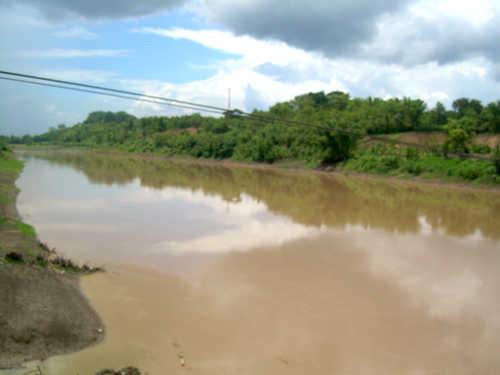
The Bengawan Solo passing through Bojonegoro
Location
Country Indonesia
ProvincesCentral Java, East Java
Cities/TownsSurakarta, Ngawi, Bojonegoro
Physical characteristics
SourceSouthern Mountains of East Java (Sewu Mountains)
 • locationSpecial Region of Yogyakarta, Central Java and East Java
2nd sourceMount Merapi and Mount Merbabu
 • locationBoyolali Regency
3rd sourceMount Lawu
 • locationKaranganyar Regency
4th sourceWestern region of Mount Wilis
 • locationPonorogo Regency
MouthJava Sea
 • location
Gresik Regency & Sedayulawas (Lamongan Regency)
 • coordinates
6°52′38″S 112°33′22″E / 6.877111°S 112.556167°E / -6.877111; 112.556167
Length600 km (370 mi)[1]
Basin size16,100 km2 (6,200 sq mi)[1]
Discharge 
 • average684 m3/s (24,155 cu ft/s)
Basin features
River systemBengawan Solo basin (DAS230217)[2]
LandmarksFort van den Bosch; Solo Safari Zoo; Kusuma Bhakti Heroes' Memorial Park; University of Surakarta
WaterbodiesGajah Mungkur Dam
BridgesSembayat Bridge; Karanggeneng Bridge; Laren Bridge; Tuban-Babat National Road Bridge; Oude Indië Spoorbrug bij Kléwér; Kanor - Rengel Bridge; Kaliketek Bridge; Lengkung Bojonegoro Bridge; Padangan Bridge; Solo-Cepu railroad Bridge;
Basin management & authorityBPDAS Solo;[2] BBWS Bengawan Solo[3]

The Solo River (known in Indonesian as the Bengawan Solo, with Bengawan being an Old Javanese word for river, and Solo derived from the old name for Surakarta[4]) is the longest river in the Indonesian island of Java. It is approximately 600 km (370 mi) in length.

Apart from its importance as a watercourse to the inhabitants and farmlands of the eastern and northern parts of the island, it is a renowned region in paleoanthropology circles. Many discoveries of early hominid remains (dating from 100,00 to 1.5 million years ago) have been made at several sites in its valleys, especially at Sangiran, including that of the first early human fossil found outside of Europe, the so-called "Java Man" skull, discovered in 1891.[5]

The Bengawan Solo was the crash site of Garuda Indonesia Flight 421 on January 16, 2002.[6]

History

[edit]
Vessels on the Solo River during the colonial period

Solo River was part of a massive river system that once existed in Sundaland. This drainage of the river system consisted of a major river in present-day Sumatra and Borneo, such as the Asahan River, Musi River and Kapuas River. The river system disappeared when Sundaland was submerged after sea level rise following the last Ice Age.[7]

The river played an important part in Javanese history. Its drainage basin is an important agricultural area, dominated by rice farming. The river transported fertile volcanic soil downstream, replenishing the soil. It also provided a link between Javanese port cities on the northern coast and the rice-growing hinterlands, with shallow vessels transporting rice to the ports to be sold.[8] This rice is Java's main commodity that was traded as part of the Spice trade.

Following the acquisition of much of Java by the Dutch colonial government, various cash crops were introduced to be planted across the river basin, such as coffee, sugar, and cotton. (see Cultivation System).

By the last years of the 19th century, river sedimentation in its original delta in Madura Strait started to disrupt vessel traffic in the port of Surabaya. The Dutch colonial government decided to divert the river flow away from the shipping lane into the Java Sea. They built a canal in the river's delta in the 1890s which still alters the river to this day.[9]

In 1891, Dutch paleoanthropologist Eugène Dubois discovered remains (a part of a skull and human-like femur bone and tooth) he described as "a species in between humans and apes".[5] He called his finds Pithecanthropus erectus ("ape-human that stands upright") or Java Man. Today, they are classified as Homo erectus ("human that stands upright").[10][5] These were the first specimens of early hominid remains to be found outside of Africa or Europe.

Course

[edit]

It passes through the major city of Surakarta (called Solo by the local inhabitants). An important early tributary to the Solo River is the Dengkeng River, which has its source on Mount Merapi.[11] After passing through Solo, the river flows northward around Mount LawuRegency and then turns eastward into East Java in the Ngawi Regency and Ngawi (town).

After Ngawi the river turns northward again, forming the boundary between Blora Regency of Central Java and Bojonegoro regency of East Java. From the town of Cepu in Blora, the river turns eastward and passes through Bojonegoro Regency's capital city. From there, it continues eastward through the Lamongan and Gresik Regencies. The last part of the river's basin (roughly starting from Bojonegoro regency) is mostly flat land.[12]

Bengawan Solo's delta is located near the town of Sidayu in the Gresik Regency. The present delta is redirected by a human-made canal.[12] The original delta flowed into the Madura Strait,[12] but in 1890 a 12-km canal was made by the Dutch East Indies authority to redirect the Solo River into the Java Sea.[12][13] This was done to prevent sedimentation of mud from filling the Madura Strait and thereby preventing sea access to the important port city of Surabaya.[12]

The Solo River Delta has a huge mud sedimentation flow that deposits 17 million tonnes of mud per year. This sedimentation in the delta forms a cape, which has an average longitudinal growth of 70 m per year.[13] This delta is known as Ujung Pangkah (Pangkah Cape).

Resource management

[edit]
The map depicts the Bengawan Solo River Region, which consists of 96 river basins, including the Bengawan Solo basin (number 034).

Brantas River Public Corporation or Perum Jasa Tirta I (PJT1) is responsible for managing the water resources of the Brantas and Bengawan Solo river basins in Indonesia.[14] It is a centralised effort to:

  • conserve the water resource quality and quantity in the Bengawan Solo and Brantas River basins
  • flood control
  • manage hydroelectric and other infrastructures along those rivers.

Before the centralised management efforts, there were reports of pollution along the Bengawan Solo.[15]

River modifications

[edit]

The river has several dams and modifications.

The Gondang Dam, East Java, is located on the Kali Gondang River, a sub-basin of the Bengawan Solo River,[16] at the village of Gondang Lor, in Sugio, a sub-district of Lamongan, Indonesia.[17] It was built in 1983–1987 and has a 6.6-hectare (16-acre) surface area and is about 29 meters in depth.[17] The main use of the dam is for irrigation and community water needs, especially in the dry season,[17] but many tourists come there for relaxing and fishing now. There is a camp site, pedalos and a small zoo. The manager of the dam is committed to implementing the programs of Sapta Pesona (Seven Charms).

Another dam known as the Gondang Dam near Karanganyar, Central Java, began construction in 2014 with a budget of Rp 636 billion and was constructed to increase the local water supply and add recreational opportunities.[18] The site size was estimated to be 88.25 hectares and was planned to hold a total volume of 10 million cubic meters.[18] The dam was completed in 2019 but not expected to be fully filled until 2020, and durian trees were grown near the site to attract tourists.[19] In 2023, the dam's community team held a durian festival at the site.[20]

In culture

[edit]

"Bengawan Solo", a song composed by Gesang Martohartono in 1940, poetically describes the river and has become famous across Asia.

See also

[edit]

References

[edit]

Further reading

[edit]
Revisions and contributorsEdit on WikipediaRead on Wikipedia
from Grokipedia
The Bengawan Solo River, known in Indonesian as Sungai Bengawan Solo and commonly referred to as the Solo River, is the longest river in , , measuring approximately 548 kilometers in length and draining a basin area of about 16,100 square kilometers across Central and provinces. Originating from the slopes of Mount Lawu in the west, it flows generally northward through densely populated agricultural heartlands before discharging into the near Gresik in the east. The river's basin holds profound paleontological significance, with sites such as yielding over half of the world's known fossils, dating from 1.5 million to 100,000 years ago, illuminating early hominid evolution in . Economically, it sustains for rice paddies and other crops vital to Java's , while historically facilitating and settlement, though recurrent flooding—exacerbated by from upstream and land-use intensification—has caused substantial disruptions, prompting ongoing interventions like channel straightening. Culturally, the river inspired Gesang Martohartono's enduring 1940 folk song "Bengawan Solo," which symbolizes Javanese resilience and has achieved pan-Asian popularity.

Physical Geography

Course and Length

The Solo River, locally known as Bengawan Solo, originates from the southern slopes of Mount Lawu volcano in Karanganyar Regency, Province, Indonesia, at elevations exceeding 1,000 meters. From its source, the river flows northward through the karst landscapes of the Sewu Mountains, passing key settlements including Wonogiri Regency and the city of (Solo), where it forms a significant urban waterway. After , it continues north, skirting the eastern flanks of Mount Lawu, before turning eastward to cross into Province at Ngawi Regency. In , the river maintains an easterly course through densely populated agricultural regions, traversing Bojonegoro Regency—a major oil-producing area—and Lamongan Regency, where it widens and meanders amid floodplains. The lower reaches feature extensive sediment deposition, contributing to deltaic formations before discharging into the via an in Gresik Regency, approximately 20 kilometers north of . This path spans both Central and provinces, supporting irrigation for vast rice paddies and influencing local hydrology. The river's total length measures approximately 600 kilometers, making it the longest in and draining a basin of about 16,100 square kilometers.

Hydrological Characteristics

The Bengawan Solo River drains a basin of approximately 16,100 km², the largest in Java, spanning Central and East Java provinces with a monsoonal climate influencing its hydrology. Precipitation peaks during the wet season (December–February), driving high runoff, while the dry season (May–October) features minimal rainfall and reduced flows reliant on baseflow from groundwater and volcanic-sedimentary aquifers. Discharge exhibits pronounced seasonal variability; at the Babat gauging station (1980–2010 data), monthly averages reached a high of 996.2 m³/s in and a low of 61.6 m³/s in , reflecting rainfall extremes of up to 426 mm () versus 20 mm (). Average flows in the lower reaches during wetter months () approximate 231 m³/s, with baseflow contributing about 57% of total discharge via a index of 0.49–0.67 depending on recession period (3–7 days). Flood events are frequent due to intense rainfall and land-use intensification, with peak discharges exceeding 1,500 m³/s for a 2-year and up to 3,249 m³/s in extreme cases like downstream at Napel. and land-cover changes have amplified variability, increasing median discharges by 15–25% in modeled scenarios while elevating flood risks in densely populated lower basins.

Basin and Tributaries

The Bengawan Solo River drains a basin covering approximately 16,100 square kilometers across Central and East Java provinces in Indonesia, making it the largest river basin on Java. The basin encompasses diverse topography, including volcanic highlands in the upper reaches and low-lying alluvial plains downstream, with the upstream area divided into the Upper Solo sub-basin (6,072 km²) and adjacent zones. Overall, the basin is administratively shared among 17 regencies and 3 cities, primarily in East Java but extending into Central Java. The basin's hydrology is influenced by tributaries originating from volcanic slopes of mountains such as Lawu and Merapi, contributing significant water and sediment loads. Major tributaries include the Madiun River, the longest and largest with a catchment area of 3,755 km², which joins the Solo near Ngawi after flowing through the city of Madiun. The Dengkeng River, an early tributary in the upper basin with a 830 km² catchment, and the Pacal River also feed into the main stem, enhancing discharge in the middle reaches. In the upper basin, the Wonogiri Reservoir regulates flows from five principal tributaries, mitigating floods and supporting across the sub-basin's 6,000+ km² extent. The sub-basin functions semi-independently before confluence, while the lower basin widens into sediment-rich deltas, with the Solo's total drainage integrating these inputs over its 600 km length. This structure underscores the basin's vulnerability to erosion and , driven by monsoon-influenced runoff from upstream volcanic terrains.

Geological and Paleontological Context

Formation and Sedimentology

The Bengawan Solo River, Java's longest river at approximately 600 km, occupies a basin shaped by tectonic and climatic dynamics in the tectonically active , where subduction-driven uplift and volcanism have influenced fluvial incision and deposition. The river's alluvial system overlies to formations such as the Kerek or Kalibeng, with terrace development commencing in the Early and intensifying during the due to episodic uplift, eustatic lowstands, and wetter paleoclimates enhancing erosion from volcanic highlands. These processes resulted in entrenched meandering channels and stacked terraces, such as the Ngandong and Sembungan levels, representing aggradational phases interrupted by downcutting events linked to regional and global sea-level fluctuations of up to 120 m during glacial maxima. Sedimentologically, Pleistocene terraces exhibit tripartite vertical successions reflecting fluvial depositional environments: basal units (up to 1.8 m thick) of subangular cobbles and pebbles from flows and channel bars, dominated by andesitic volcanics and limestones with embedded vertebrate fossils; overlying cross-bedded gravely sands (up to 4.3 m thick) indicative of point-bar accretion in meandering reaches; and capping muds (up to 2.4 m thick) from overbank suspension, often with carbonate nodules and features signaling vegetated . These sediments derive primarily from volcanic terrains in the upstream basin, yielding high values tied to ferrimagnetic minerals like , which facilitate provenance tracing to andesitic sources. alluvium, forming the modern , comprises fine-grained, easily erodible silts and clays, fostering the river's ephemeral with suspended concentrations ranging from 294 to 1,497 mg/L and rapid morphological shifts via erosion-deposition cycles at bends. The downstream delta exemplifies a mud-dominated, prograding elongate , where high supply overwhelms tidal reworking, building a single finger-like lobe into the through constructive deltaic processes. Point-bar sands from ancient channels, preserved as aquifers (e.g., 5–10 m thick in Ngloram-Cepu areas dating to ~600,000 years ago), highlight lateral migration and fining-upward sequences, while basin-wide fine sediments show consolidation challenges from variable discharge (24–446 m³/s), exacerbating risks in unconsolidated fills.

Fossil Sites and Discoveries

The Solo River valley and associated fluvial terraces in Central and , , have produced some of the most significant fossils outside , spanning from the Early to . These discoveries, primarily from riverbank exposures and terrace deposits, include skullcaps, femora, and other skeletal elements that document the species' morphology, longevity, and potential interactions with environmental changes in . Key sites such as Trinil, , Sambungmacan, and Ngandong highlight the river's role in preserving hominin remains amid volcanic and sedimentary processes. The earliest major find occurred at Trinil on the Solo River banks, where Dutch anatomist excavated a skullcap (Trinil 2), (Trinil 3), and molar between 1891 and 1894. These specimens, initially classified as Pithecanthropus erectus and later as , represent the first recognized archaic hominin fossils from , with the skullcap exhibiting a low vault and robust brow ridges typical of the species. Stratigraphic correlation places them in Middle Pleistocene deposits approximately 700,000 to 1 million years old, though recent analyses refine the context to a specific horizon about 10-15 meters apart in the section. Sangiran, located in the Solo River valley about 15 km north of , has yielded over 100 individuals since systematic excavations began in the 1930s. Notable early discoveries include 2, a partial cranium found in 1937 by G.H.R. von Koenigswald, and 4, featuring a and maxillary teeth. Later finds, such as 17 (discovered 1969), comprise a well-preserved adult male skull dated to 1.3-1.0 million years ago, showcasing thick cranial bones and reduced post-orbital constriction. These fossils, often eroded from lacustrine and volcanic sediments, illustrate evolutionary continuity with earlier Javan forms. Later Pleistocene sites along the Solo River terraces, including Sambungmacan and Ngandong, document potentially the final phases of in . At Sambungmacan on the river's south bank, an adult calotte (Sambungmacan 1) was recovered in 1973, followed by Sambungmacan 3, a calvaria found in 1977 near Poloyo village, both exhibiting archaic features like sagittal keeling. Ngandong, an abandoned river terrace 20 meters above the modern Solo, produced 12 calvaria and two tibiae in 1931-1933 from a single bone bed, interpreted as H. erectus remains possibly accumulated by volcanic flooding or predation. Uranium-series and electron spin resonance dating constrain these to 140,000-108,000 years ago, suggesting persistence of the species until the arrival of modern humans or climatic shifts. Recent offshore dredging in the paleo-Solo River valley beneath the has recovered two skull fragments among over 6,000 vertebrate fossils, dated to the late Middle Pleistocene and linking terrestrial terrace sites to submerged extensions of the river system during lowstands. These finds underscore the Solo's dynamic in fossil entrapment but remain preliminary pending full publication.

Implications for Hominin Evolution

The Solo River basin in , , has yielded some of the most significant fossils, illuminating the species' dispersal, adaptation, and persistence in . Excavations at Trinil along the riverbanks uncovered the type specimen of (Trinil 2 skullcap and femur) in 1891–1892 by , dated to approximately 1–0.7 million years ago, establishing early hominin presence on the island. Further upstream, the dome, eroded by Solo River tributaries, has produced over 100 H. erectus individuals since the 1930s, with the earliest dated to around 1.8 million years ago, indicating rapid migration from via mainland . These finds demonstrate H. erectus' ability to exploit insular environments, supported by associated fauna like stegodons and bovids in fluvial deposits. Downstream at Ngandong, 12 cranial specimens and , recovered in from a 20-meter terrace deposit, represent the latest known H. erectus in , with revised dating placing them between 140,000 and 70,000 years ago based on uranium-series and electron spin resonance analyses of associated teeth. Recent in the Solo River's submerged paleo-valley near Madura Strait (2025) retrieved over 6,000 vertebrate fossils, including two H. erectus skull fragments from a similar late Middle Pleistocene context (Marine Isotope Stage 6), alongside cut-marked bovid remains evidencing systematic hunting of prime-age prey. These Ngandong and Madura specimens exhibit robust cranial features continuous with earlier Javan H. erectus, such as thick vault bones and angular morphology, ruling out direct ancestry to Homo sapiens but suggesting regional . The Solo River fossils imply H. erectus maintained viable populations in for over 1.5 million years, adapting to volcanic landscapes, sea-level fluctuations, and isolation during Pleistocene lowstands that connected . This longevity challenges models of early , showing overlap with archaic dispersals of other hominins and potential competitive exclusion by incoming Homo sapiens around 50,000 years ago. No evidence supports interbreeding or cultural exchange at these sites, but the fossils underscore H. erectus' ecological success in tropical riverine niches, informing debates on cognitive and technological stasis versus in hominin diversification.

Historical Utilization

Prehistoric and Ancient Uses

The Solo River (Bengawan Solo) valley served as a key corridor for early hominin habitation during the Pleistocene, with river terraces providing access to water, aquatic resources, and . Sites such as Trinil, located directly on the riverbanks in , yielded the first fossils in 1891, dated to between 700,000 and 1,000,000 years ago, alongside evidence of tool use including freshwater mussel shells modified for cutting and engraving with zigzag patterns around 500,000 years ago. These artifacts indicate exploitation of riverine shellfish for tools and possibly symbolic behavior, while the terrace deposits preserve remains of hunted bovids, suggesting the river attracted prey for scavenging or active hunting by groups of . Further upstream, the Ngandong terrace, dated to approximately 140,000–117,000 years ago via optically stimulated , contains late crania and from a lowstand valley extending into what is now the submerged Madura Strait, reflecting use of the paleo-river system during glacial lowstands for migration across . Submerged extensions of the Solo River valley, exposed during Marine Isotope Stage 6 (around 140,000 years ago), reveal additional remains and over 6,000 stone artifacts, including flakes and cores, pointing to sustained occupation in fertile floodplains for resource gathering and lithic production before post-glacial inundation. These paleoenvironments, characterized by alluvial deposits cutting through highlands, supported diverse ecosystems that early humans leveraged for survival, with no evidence of advanced but clear reliance on fluvial habitats for mobility and subsistence. By the early historic period, corresponding to ancient Javanese kingdoms, the river transitioned to supporting settled communities and economic activities. Inscriptions from the 9th to 14th centuries, such as the Telang inscription (904 AD) and inscription (1358 AD), document settlements along segments known anciently as Semanggi and Wulayu, with archaeological evidence from sites like in Bojonegoro and Ngawi yielding , storage jugs, and nets indicative of riverside villages engaged in crafting and . During the Empire (13th–16th centuries), the Solo facilitated riverine transport for trade in commodities including , onions, candles, and , linking inland agricultural zones to coastal ports like Lamongan and Gresik, as referenced in ferry charters and the Karang Bogem inscription (1387 AD). These uses underscore the river's role in pre-colonial , though without large-scale systems, relying instead on natural flooding for cultivation in adjacent lowlands.

Colonial and Early Modern Developments

During the (1587–1755), the Bengawan Solo River facilitated territorial expansion eastward, supporting military campaigns and the establishment of settlements along its banks, which contributed to the kingdom's dominance in central and eastern . The river's fertile valley enabled intensive wet- cultivation, sustaining population growth and serving as a conduit for intra-island trade in commodities like rice, a key element of Java's pre-colonial economy. With the arrival of the (VOC) in the early , the river emerged as a primary for merchant vessels transporting spices and agricultural goods across , linking inland production areas to coastal ports. By the , under Dutch colonial administration, initial water management infrastructures were developed to harness the river for and flood control, laying the groundwork for expanded agricultural output amid growing export demands. In the late , Dutch engineers undertook ambitious interventions to address the river's , which threatened Surabaya's harbor by depositing sediments via its original Madura Strait delta. Around 1880, modifications to the upper Solo (Hulu Bengawan Solo) altered flow patterns, followed by the construction of a 12-km canal in 1890 to redirect the directly into the , reducing risks and enabling safer navigation. The Solo Valley irrigation works, initiated in 1893 as part of a broader program, aimed to systematically irrigate fields while accommodating plantations for export, reflecting a shift from exploitation-focused to welfare-oriented policies. These efforts involved dyke reinforcements, excavations, and networks, though the project faced suspension in 1898 and abandonment in 1903 due to technical challenges and fiscal constraints, influencing a transition to integrated technical-agricultural regimes by the . By the end of colonial rule in 1942, Dutch-built systems irrigated approximately 40% of Java's wet- fields, with the Solo basin exemplifying large-scale to boost productivity.

Post-Independence Infrastructure Changes

Following Indonesia's independence in 1945, the Indonesian government initiated several infrastructure projects on the Bengawan Solo River to address chronic flooding, expand for production, and improve water resource management in the densely populated region. These efforts built upon colonial-era foundations but emphasized multi-purpose dams and channel modifications under national development plans, particularly during the New Order era from the 1970s onward. Key initiatives were coordinated by emerging institutions like the Bengawan Solo River Basin Organization (BBWS Bengawan Solo), established to oversee basin-wide planning. The Wonogiri Multipurpose Dam, situated upstream in Wonogiri Regency, , represented a cornerstone project, with construction spanning 1973 to 1982 and reservoir completion in 1981. This earth-core rockfill dam, reaching 37 meters in height, impounds 730 million cubic meters of water for flood regulation, serving over 114,000 hectares across multiple districts, domestic supply, and 12 megawatts of generation. Supporting irrigation extensions, the Wonogiri Irrigation Project was finalized in 1987, followed by its expansion in 1990, which enhanced distribution networks and agricultural productivity in the mid-basin areas. Flood control measures intensified in the and with dams and mainstem alterations. The Ketro Dam, an earthfill structure 15 meters high on the Ketro River in Sragen Regency, , was constructed from 1975 to 1984, irrigating 400 hectares while aiding downstream flow regulation into the Bengawan Solo. In , the Gondang Dam on the Gondang River sub-basin was built between 1983 and 1987, primarily supporting for local amid recurrent seasonal floods. Channel included straightening meanders through shortcuts in Sukoharjo and regions from 1990 to 1994, alongside drainage pipelines implemented between 1995 and 2000, which shortened flow paths, reduced inundation durations, and protected urban areas like from overflows exceeding 2,500 cubic meters per second during peak events. Basin-scale efforts culminated in projects like the Upper Solo River Improvement Project, completed in 1994, which reinforced embankments and normalized channels to handle discharges up to 1,500 cubic meters per second for two-year return periods, and the River Urgent Flood Control Project in 1995, targeting contributions to mainstem flooding. These interventions, often funded through international loans from bodies like JICA and the World Bank, halved flood-prone areas in downstream reaches by the early , though sedimentation and upstream have necessitated ongoing maintenance and retrofits.

Economic and Societal Role

Agricultural Irrigation and Food Security

The Bengawan Solo River basin, spanning approximately 16,100 km², underpins a substantial portion of Java's irrigated , primarily through networks channeling river flow to paddy fields for cultivation. Reservoirs such as Gadjah Mungkur, completed in 1981, provide to over 23,600 hectares of farmland, supporting cycles and stabilizing yields in the upstream Wonogiri region. Larger schemes, including the Colo irrigation area covering 166,189 hectares across multiple provinces, rely on the river's discharge for technical and semi-technical systems that serve tens of thousands of farmers via water user associations (WUAs). These infrastructures, featuring over 200 farmer-managed pumping stations along the lower reaches, enable year-round water delivery despite seasonal variability, with pumping operations accounting for a significant share of farming demands during dry periods. Rice production in the basin constitutes a critical component of Indonesia's food security, as Java accounts for about 60% of the nation's total output, with the Solo watershed's fertile alluvial soils and irrigated extents fostering high-density farming. In districts like Sragen and Bojonegoro, river-sourced sustains household-level farming, where labor contributes substantially to local economies and caloric self-sufficiency, mitigating reliance on imports amid population pressures exceeding 140 million on . Empirical assessments indicate that without such systems, hydrological droughts in the upper basin could reduce yields by up to 20-30% in affected sub-watersheds, underscoring the river's causal role in buffering production shortfalls. However, the basin's dominance—occupying roughly 50% of East Java's paddy area in some segments—amplifies vulnerability, as evidenced by historical harvest failures during rainy-season floods in regencies bordering the river. Irrigation enhancements have demonstrably bolstered food resilience, with models integrating local water management practices showing potential to offset -induced losses through adaptive pumping and allocation prioritizing over competing uses. For instance, Gadjah Mungkur's multi-purpose operations allocate primary volumes to , enabling planting intensities above 200% in served areas and reducing drought-mitigated shortfalls in terraced fields. Yet, projections under climate scenarios forecast a 93.7% rise in annual damages to crops by 2075-2098, valued at 666 billion IDR on average, potentially eroding these gains unless sediment management and upstream conservation address reducing capacity by historical rates of 1-2% annually. Such dynamics highlight the river's dual-edged contribution: enabling surplus production for national staples while exposing systemic risks from over-dependence on rain-fed supplements and unmitigated upstream land-use changes.

Industrial and Urban Support

The Bengawan Solo River provides essential water resources for urban areas in and , serving as a primary source for municipal water supplies in cities such as . Local water companies, including PDAM in , rely on the river for household and public needs, though operations have faced interruptions due to events. For instance, in November 2019, industrial liquor waste blackened the river, forcing 's Toya Wening company to truck in alternative water for residents. Industrially, the river basin supports sectors, particularly and related , which draw for operations within Java's framework. The Bengawan Solo watershed hosts a significant portion of these activities, with 41.5% of Java's 253 industries located there, utilizing river despite reciprocal impacts. Public infrastructure developments in the basin aim to enhance industrial access, promoting alongside social well-being. Hydropower generation from the , operational since , bolsters energy supply for both urban and industrial demands, with a capacity of 12.4 MW producing 55,000 MWh annually. This facility, integral to the Bengawan Solo system, aids flood control and while contributing renewable electricity to the regional grid. Additional basin reservoirs support similar multifaceted roles, underscoring the river's foundational utility despite environmental pressures.

Transportation and Navigation Challenges

The Bengawan Solo River supports limited local transportation, primarily via small ferries and human-powered boats for crossing and short-distance travel, but commercial navigation is constrained by its morphology and hydrological variability. is feasible only during the , when s rise sufficiently for small craft, while dry-season shallows render much of the channel impassable even for these vessels. Local operators, such as fishermen and commuters in areas like Bojonegoro and Solo, rely on these boats despite risks from strong currents and high discharges, as evidenced by incidents including a 2011 sinking that claimed lives due to and sudden changes. Sedimentation poses the primary ongoing challenge, with the river carrying an annual load of approximately 23 million tons of from volcanic tributaries, leading to channel aggradation, meandering, and depth reductions that exacerbate shallow conditions and obstruct passages. In meandering sections, high sediment concentrations alter morphology, causing local scouring and deposition that unpredictably shift navigable paths and damage rudimentary like embankments. Periodic is required, particularly in the where sand bars at side-channel mouths have grown, retreating the main channel by 2.5 kilometers between 1977 and 2000 and clogging routes; historical efforts, such as the Dutch-engineered 13-kilometer canal diversion in 1893 to the , aimed to mitigate this but have not eliminated the need for maintenance. Flood events, occurring almost annually, further complicate by eroding banks, depositing , and rendering sections hazardous, while —including waste accumulation—covers surfaces during dry periods, impeding and endangering small-scale users like fishermen accessing coastal areas. These factors have diminished the river's role in transport since colonial eras, when it facilitated interior , shifting reliance to and rail networks amid inadequate basin-wide and limited modernization of waterways.

Environmental Dynamics

Flood Patterns and Mitigation Efforts

The Bengawan Solo River experiences recurrent flooding, primarily during the rainy season from October to April, with floods propagating sequentially from upstream areas like Surakarta to downstream regencies such as Bojonegoro, Tuban, and Lamongan. Historical records document major floods in 1966 (peak discharges of 4,000 m³/s at Wonogiri and 1,850 m³/s at Ngawi, causing 90 deaths and 1-2 m inundation in Surakarta), 1974, 1995, 2002, 2005, and 2007 (2 m inundation in Bojonegoro following 250 mm/day rainfall). Flood durations vary by location, lasting 1 day in Surakarta, 3 days in Karangnongko, 5 days in Bojonegoro, and 6 days in Babat after upstream peaks. Primary causes include intense upstream rainfall exceeding river channel capacities (e.g., 1,250 m³/s capacity versus 2,500 m³/s discharge in the Cepu-Bojonegoro segment), compounded by reducing storage (5.9 million m³/year in Wonogiri Dam from 1980-1993), land-use shifts ( declining from 18% to 16.7% and residential areas rising from 9% to 14.6% between 2005-2007, diminishing infiltration), and breaches. Flood-prone areas encompass over 1,634 km² for a 100-year event (depth >0.3 m), with increasing exposure from built-up expansion (1,715 km² in 1990 to 2,518 km² in 2020) and to 12.24 million by 2020, amplifying risks to (e.g., 7,000 ha rice fields inundated in Kanor, Bojonegoro) and settlements (212 km² exposed in 2020). Mitigation efforts combine structural and non-structural approaches. Structural measures include dams like Wonogiri, which reduce flood damages by 20-25% through regulated releases, and river channel improvements yielding 10-40% damage reductions; combined, these exceed 60% efficacy for , contents, and crops in modeled 100-year floods (estimated losses without controls: IDR 1,617 billion for , IDR 1,407 billion for contents, IDR 138 billion for ). Retarding basins, such as the Jabung Basin in Lamongan Regency, store peak flows, cutting flood-affected areas by 39.7-42.7% across 10-50 year return periods and economic losses from $9.55 million to $5.89 million for a 50-year event, though average depths decrease modestly (1.04 m to 1.00 m). Embankment reinforcements address breaches, while non-structural initiatives encompass early warning systems, platforms for the basin, and programs via partnerships like the Zurich-Indonesian Red Cross effort, emphasizing for preparedness in annual overflow zones. Land-use regulations aim to curb urbanization-driven exacerbation, though and upstream persist as challenges.

Pollution Sources and Measured Impacts

The primary sources of pollution in the Bengawan Solo River include untreated domestic , industrial effluents, and agricultural runoff. Domestic discharges from densely populated riparian communities contribute the largest pollution load, encompassing household , solid waste such as plastics and diapers, and from and operations. Industrial pollution, particularly from textile factories in upstream areas like Boyolali and Sukoharjo regencies, involves of chemical dyes, , and estrogenic compounds, exacerbating and toxicity. Agricultural activities along the basin release pesticides, fertilizers, and from rice paddies and farms, leading to nutrient overloads that promote algal blooms. Water quality assessments using Indonesia's Pollution Index (PI) and STORET system reveal widespread degradation. A 2021 monitoring of 29 points across the Bengawan Solo basin classified 17% as heavily polluted (PI > 10), 59% as moderately polluted (PI 7-10), and 24% as lightly polluted or better, with failures in parameters like biochemical oxygen demand (BOD), chemical oxygen demand (COD), total suspended solids (TSS), and dissolved oxygen (DO). Another evaluation from the same period found 58.4% of segments heavily polluted and 41.6% moderately so, with most sites exceeding Class II standards for raw water under Government Regulation No. 22/2021. Microplastic concentrations averaged 91.80 particles per liter in 2023-2024 samples, varying significantly by season and location due to rainfall-driven transport. Dry season conditions occasionally yield lightly polluted status (PI < 7), but wet season flushing amplifies contaminant mobilization. These pollutants have measurable ecological and human impacts, including reduced from oxygen depletion and toxic in , which compromises for riverside communities reliant on . Elevated estrogenic wastes have been linked to endocrine disruption in aquatic species, while heavy metal and organic loads pose health risks such as gastrointestinal illnesses from contaminated and use. Economically, has diminished agricultural yields—potentially by up to 20-30% in affected paddies—and prompted legal actions, including a 2025 Supreme Court ruling against textile polluters in , highlighting enforcement gaps despite regulatory frameworks. Overall river quality continues to decline, with only 73% of major Indonesian rivers like Bengawan Solo meeting basic standards as of 2022, driven by inadequate infrastructure.

Conservation Policies and Debates

The Bengawan Solo River Basin Organization (BBWS Bengawan Solo), established under Indonesia's Ministry of Public Works and Housing, oversees conservation through watershed management plans that emphasize reforestation, erosion control, and water quality monitoring. These policies mandate regular water quality assessments and permit reviews for activities potentially impacting the river, with efforts including community-led vegetation restoration in upstream areas to sustain hydrological balance. In 2023, upstream conservation initiatives incorporated local practices, such as traditional cultivation and techniques by farmers in areas like Beruk Village, to reduce landslides and preserve integrity. Nature-based solutions (NbS), including zones and restoration, have been piloted in the watershed since the early 2020s to address degradation, with stakeholder collaborations aiming to integrate ecological restoration into flood mitigation strategies. assessments using (MDS) from 2010 to 2022 indicate moderate progress in ecological dimensions, attributed to these policies, though overall watershed scores remain below 50% due to persistent anthropogenic pressures. Debates center on policy efficacy amid pollution from illegal textile waste discharges, which exceed regulatory limits and render sections of the river unsuitable for consumption, as reported by the Bojonegoro Environment Agency in 2023. Critics argue for basin-specific regulations, given the multi-provincial span causing coordination failures between central and local authorities, and advocate elevating the river's legal status to an subject—modeled on precedents like New Zealand's —to enforce stricter protections against industrial effluents. Proponents of NbS highlight gaps in implementation, such as limited funding and community buy-in, versus skeptics favoring engineered for faster and , reflecting tensions between short-term economic needs in textile-heavy regions and long-term ecological viability.

Cultural and Symbolic Dimensions

Representation in Music and Literature

The Solo River, known as Bengawan Solo, is immortalized in the kroncong song "Bengawan Solo," composed by Gesang Martohartono in September 1940. The lyrics poetically evoke the river's tranquil flow from its mountainous source to the sea, highlighting its vital role in sustaining agrarian life and evoking nostalgia for Java's landscapes. As the first widely popular song composed by an Indonesian in Bahasa Indonesia, it gained national stature during the Japanese occupation (1942–1945), symbolizing resilience and the independence struggle among revolutionaries. Post-World War II, the song transcended , achieving pan-East and Southeast Asian renown through adaptations in Japanese (as "Bungawan Solo" in 1947) and Chinese, often reinterpreted as a romantic ode while retaining its homage to the river's majesty. Gesang's original recording and subsequent covers by artists worldwide, including orchestral arrangements, have cemented its status as a cultural anthem, performed at events like Singapore's Beautiful in 2023. Its enduring appeal lies in blending personal reminiscence with the river's geographical and economic centrality, spanning over 600 kilometers as Java's longest waterway. Literary representations of the Bengawan Solo are comparatively sparse in documented works, with the river occasionally serving as a backdrop in regional narratives rather than a central motif. One example is the early 20th-century Indonesian novel Badjak Toewa dari Bengawan Solo, which portrays characters and tied to riverside communities, including tales of local figures like the martial artist Siswojo. Such depictions underscore the river's integration into Javanese oral traditions and everyday lore, though they lack the iconic prominence of the song in broader .

Role in Local Traditions and National Identity

The Bengawan Solo River holds a central place in Javanese through preserved traditions of riverine maritime activities, known historically as Semanggi and Wulayu, which encompass trading, transportation, and community practices along its banks during the colonial and post-independence eras. These elements represent "voices from below" in local oral histories, countering modern erasure and sustaining communal identity tied to the river's economic and social lifeline in pre-modern . The river inspires contemporary local festivities, such as the Bengawan Solo Festival held in areas like Ngawi, which features boat races, lantern releases, kite competitions, and duck-chasing events to celebrate its heritage and foster community bonds. These gatherings, documented as early as , revive traditional water-based rituals and promote environmental awareness, embedding the river in ongoing Javanese customs beyond agricultural or economic functions. On a national scale, the river symbolizes Indonesian resilience and unity via the 1940 kroncong song "Bengawan Solo," composed by Javanese musician Gesang Martohartono in to evoke the waterway's enduring beauty and the hardships of riverside life. Popularized during the Japanese occupation (1942–1945), the song transcended local Javanese roots to become a pan-Southeast Asian anthem of shared colonial struggle and post-war recovery, with recordings in and amplifying its reach. In , it endures as a unofficial emblem of , performed in orchestral arrangements and state events, linking regional Javanese traditions to broader archipelago pride without official anthem status.

References

Add your contribution
Related Hubs
User Avatar
No comments yet.