Hubbry Logo
VolvulusVolvulusMain
Open search
Volvulus
Community hub
Volvulus
logo
8 pages, 0 posts
0 subscribers
Be the first to start a discussion here.
Volvulus
Volvulus
from Wikipedia

Volvulus
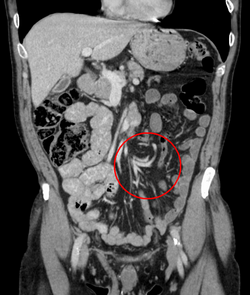
Coronal CT of the abdomen, demonstrating a volvulus as indicated by twisting of the bowel stock
SpecialtyGeneral surgery
SymptomsAbdominal pain, abdominal bloating, vomiting, constipation, bloody stool[1][2]
ComplicationsIschemic bowel[1]
Usual onsetRapid or more gradual[2]
Risk factorsIntestinal malrotation, enlarged colon, Hirschsprung disease, pregnancy, abdominal adhesions, chronic constipation[1][3]
Diagnostic methodMedical imaging (plain X-rays, GI series, CT scan)[1]
TreatmentSigmoidoscopy, barium enema, bowel resection[3]
Frequency2.5 per 100,000 per year[4][2]

A volvulus is a bowel obstruction resulting from a loop of intestine twisting around itself and its supporting mesentery.[1] Symptoms include abdominal pain, abdominal bloating, vomiting, constipation, and bloody stool.[1][2] Onset of symptoms may be rapid or more gradual.[2] The mesentery may become so tightly twisted that blood flow to part of the intestine is cut off, resulting in ischemic bowel.[1] In this situation there may be fever or significant pain when the abdomen is touched.[2]

Risk factors include a birth defect known as intestinal malrotation, an enlarged colon, Hirschsprung disease, pregnancy, and abdominal adhesions.[1] Long term constipation and a high fiber diet may also increase the risk.[3] The most commonly affected part of the intestines in adults is the sigmoid colon, with the cecum being the second most affected.[1] In children the small intestine is more often involved.[5] The stomach can also be affected.[6] Diagnosis is typically with medical imaging such as plain X-rays, a GI series, or CT scan.[1]

Initial treatment for sigmoid volvulus may occasionally occur via sigmoidoscopy or with a barium enema.[3] Due to the high risk of recurrence, a bowel resection within the next two days is generally recommended.[3] If the bowel is severely twisted or the blood supply is cut off, immediate surgery is required.[1] In a cecal volvulus, often part of the bowel needs to be surgically removed.[3] If the cecum is still healthy, it may occasionally be returned to a normal position and sutured in place.[1][3]

Cases of volvulus were described in ancient Egypt as early as 1550 BC.[3] It occurs most frequently in Africa, the Middle East, and India.[3][7][8] Rates of volvulus in the United States are about 2–3 per 100,000 people per year.[2][4] Sigmoid and cecal volvulus typically occurs between the ages of 30 and 70.[1][9] Outcomes are related to whether or not the bowel tissue has died.[2] The term volvulus is from the Latin "volvere"; which means "to roll".[3]

Signs and symptoms

[edit]

Regardless of cause, volvulus causes symptoms by two mechanisms:[10]

  • Bowel obstruction manifested as abdominal distension and bilious vomiting.
  • Ischemia (loss of blood flow) to the affected portion of the intestine.

Depending on the location of the volvulus, symptoms may vary. For example, in patients with cecal volvulus, the predominant symptoms may be those of small bowel obstruction (nausea, vomiting, and lack of stool or flatus), because the obstructing point is close to the ileocecal valve and small intestine. In patients with sigmoid volvulus, although abdominal pain may be present, symptoms of constipation may be more prominent.

Volvulus causes severe pain and progressive injury to the intestinal wall, with accumulation of gas and fluid in the portion of the bowel obstructed.[11] Ultimately, this can result in necrosis of the affected intestinal wall, acidosis, and death. This is known as a closed-loop obstruction because there exists an isolated ("closed") loop of bowel. Acute volvulus often requires immediate surgical intervention to untwist the affected segment of bowel and possibly resect any unsalvageable portion.[11]

Volvulus occurs most frequently in middle-aged and elderly men.[11] Volvulus can also arise as a rare complication in persons with redundant colon, a normal anatomic variation resulting in extra colonic loops.[12]

Sigmoid volvulus is the most common form of volvulus of the gastrointestinal tract.[13] and is responsible for 8% of all intestinal obstructions.[citation needed] Sigmoid volvulus is particularly common in elderly persons and constipated patients. Patients experience abdominal pain, distension, and absolute constipation.

Cecal volvulus is slightly less common than sigmoid volvulus and is associated with symptoms of abdominal pain and small bowel obstruction.

Volvulus can also occur in patients with Duchenne muscular dystrophy due to smooth muscle dysfunction.[citation needed]

Gastric volvulus causes nausea, vomiting, and pain in the upper abdomen. The Borchardt triad is a group of symptoms that help doctors identify gastric volvulus. The symptoms are intractable retching, pain in the upper abdomen, and inability to pass a nasogastric tube into the stomach.[14]

Complications

[edit]

Causes

[edit]

Midgut volvulus occurs in people (usually babies) who are predisposed because of congenital intestinal malrotation. Segmental volvulus occurs in people of any age, usually with a predisposition because of abnormal intestinal contents (e.g., meconium ileus) or adhesions. Volvulus of the cecum, transverse colon, or sigmoid colon occurs, usually in adults, with only minor predisposing factors such as redundant (excess, inadequately supported) intestinal tissue and constipation.[15]

Types

[edit]

Diagnosis

[edit]

After taking a thorough history, the diagnosis of colonic volvulus is usually easily included in the differential diagnosis. Abdominal plain x-rays are commonly confirmatory for a volvulus, especially if a coffee bean sign is seen. These refer to the shape of the air-filled closed loop of the colon, which forms the volvulus. Should the diagnosis be in doubt, a barium enema may demonstrate a "bird's beak" at the point where the segment of proximal bowel and distal bowel rotate to form the volvulus.[citation needed]

This area shows an acute and sharp tapering and looks like a bird's beak. If a perforation is suspected, barium should not be used due to its potentially lethal effects when distributed throughout the free intraperitoneal cavity. Gastrografin, which is safer, can be substituted for barium.[citation needed]

The differential diagnosis includes the much more common constricting or obstructing carcinoma. In approximately 80 percent of colonic obstructions, invasive carcinoma is found to be the cause. This is usually easily diagnosed with endoscopic biopsies.

Diverticulitis is a common condition with different presentations. Although diverticulitis may be the source of a colonic obstruction, it more commonly causes an ileus, which appears to be a colonic obstruction.[16] Endoscopic means can be used to secure a diagnosis, although this may cause a perforation of the inflamed diverticular area. CT scanning is the more common method to diagnose diverticulitis. The scan will show mesenteric stranding in the involved segment of edematous colon, which is usually in the sigmoid region. Microperforations with free air may be seen.[citation needed]

Ulcerative colitis or Crohn's disease may cause colonic obstruction. The obstruction may be acute or chronic, and after years of uncontrolled disease, it leads to the formation of strictures and fistulas. The medical history is helpful in that most cases of inflammatory bowel disease are well known to both the patient and doctor.

Other rare syndromes, including Ogilvie's syndrome, chronic constipation, and impaction, may cause a pseudo-obstruction.[17]

Treatment

[edit]
Volvulus with gangrene of the sigmoid

Sigmoid

[edit]

Treatment for sigmoid volvulus may include sigmoidoscopy. If the mucosa of the sigmoid looks normal and pink, a rectal tube for decompression may be placed, and any fluid, electrolyte, cardiac, kidney, or pulmonary abnormalities should be corrected. The affected person should then be taken to the operating room for surgical repair. If surgery is not performed, there is a high rate of recurrence.[10]

For people with signs of sepsis or an abdominal catastrophe, immediate surgery and resection are advised.

Cecal

[edit]

In a cecal volvulus, the cecum may be returned to a normal position and sutured in place, a procedure known as cecopexy.[1] If identified early, before presumed intestinal wall ischemia has resulted in tissue breakdown and necrosis, the cecal volvulus can be detorsed laparoscopically.[18] It has been associated to several diseases, including Huntington's disease.[19]

Other

[edit]

Laparotomy for other forms of volvulus, especially anal volvulus.

References

[edit]
[edit]
Revisions and contributorsEdit on WikipediaRead on Wikipedia
from Grokipedia
Volvulus is a serious medical condition characterized by the abnormal twisting of a segment of the gastrointestinal tract, most commonly the small or large intestine, around its mesentery, which can result in bowel obstruction and compromised blood flow to the affected tissue. This twisting disrupts the normal passage of intestinal contents and may lead to ischemia or infarction if not promptly addressed. Volvulus can affect various parts of the digestive system, including the sigmoid colon (the most frequent site in adults), cecum, small intestine, or even the stomach, with the specific type influencing clinical presentation and management. In adults, volvulus is often acquired and associated with risk factors such as chronic constipation, a redundant or elongated colon (), institutionalization, neurological or psychiatric disorders, and advanced age, which facilitate the mobility of bowel loops necessary for twisting. It is relatively rare in Western countries, accounting for approximately 2-3% of all bowel obstructions, but is more prevalent in certain regions like and the , where dietary factors and higher rates of sigmoid elongation contribute to incidence rates up to 50% of large bowel obstructions in some areas. In contrast, pediatric volvulus is typically congenital, arising from during fetal development, which predisposes the to twisting and is a in neonates. Symptoms of volvulus generally develop acutely and include severe , bloating or distension, , , and obstipation (inability to pass stool or gas), reflecting the obstruction and potential vascular compromise. If blood supply is interrupted, additional signs such as fever, bloody stools, or signs of (e.g., rebound tenderness) may emerge, indicating tissue . relies on clinical suspicion supported by , such as plain abdominal X-rays showing dilated loops or a "coffee bean" sign in sigmoid volvulus, and confirmatory CT scans to assess the extent of twisting and ischemia. Treatment is time-sensitive to prevent complications like bowel or ; initial management may involve nasogastric decompression and intravenous fluids, followed by endoscopic or sigmoidoscopic detorsion for stable cases, particularly sigmoid volvulus. Surgical intervention, such as resection of the affected segment and fixation (e.g., colopexy), is often required for recurrent or complicated volvulus, especially in cecal or small bowel cases, with or depending on patient stability. varies by timeliness of intervention and location; early diagnosis yields survival rates over 80%, but delays can increase mortality to 30-50% due to ischemic complications.

Overview and Epidemiology

Definition

Volvulus is defined as the abnormal twisting of a segment of the around its , resulting in mechanical and potential compromise of blood supply leading to ischemia. This rotation occurs along the mesenteric axis, distinguishing it from other forms of intestinal obstruction by its characteristic torsional mechanism that can rapidly progress to vascular occlusion if untreated. Volvulus is typically classified as a closed-loop obstruction, where the complete twist blocks both the proximal and distal ends of the affected bowel segment, creating a sealed compartment prone to distension and ischemia; in contrast, an open-loop or partial volvulus involves incomplete rotation that may allow some passage of contents but still risks progression. Unlike intussusception, which entails the telescoping of one bowel segment into another, or , which involves protrusion through a fascial defect, volvulus specifically hinges on mesenteric twisting without or external displacement. The condition can affect various anatomical sites within the , including the (particularly the or ), , , (gastric volvulus), and . Common types include sigmoid and cecal volvulus in adults, as well as midgut volvulus associated with in neonates.

Incidence and Demographics

Volvulus represents approximately 2-3% of all bowel obstructions in adults in Western countries. The annual incidence of small bowel volvulus is 1.7 to 5.7 cases per 100,000 adults in these regions. In contrast, sigmoid volvulus accounts for up to 50% of large bowel obstructions in regions such as parts of and , where high-fiber diets contribute to colonic elongation and increased risk. The age distribution of volvulus shows distinct peaks, with volvulus associated with occurring in neonates at an incidence of approximately 1 in 6,000 live births. Sigmoid volvulus, the most common type in adults, predominantly affects individuals over 60 years of age, often in the context of comorbidities like chronic constipation. Demographically, volvulus exhibits a higher in males, with a male-to-female ratio of about 2:1 overall, though this can reach 3:1 or higher for sigmoid cases. Regional variations are notable, as sigmoid volvulus predominates in low-resource settings with high-fiber dietary patterns, such as and , compared to cecal volvulus being more common in Western populations. The incidence of colonic volvulus has been increasing , with a reported annual increase of 5.53% based on data from 1998 to 2007, potentially reflecting aging populations and persistent risk factors.

Pathophysiology

Twisting Mechanisms

Volvulus involves the abnormal twisting of a bowel segment around its mesenteric pedicle, resulting in a closed-loop obstruction where the intestine rotates on the axis of its . This mesenteric rotation compresses the bowel lumen and vasculature at the point of torsion, preventing the passage of intestinal contents. The process typically requires a mobile segment of bowel capable of such axial rotation, distinguishing it from other forms of obstruction. Several anatomical factors predispose the bowel to this twisting. A narrow mesenteric base provides a fulcrum for , while redundant bowel loops allow excessive mobility and elongation that facilitate the twist. Abnormal fixation, such as a mobile unattached to the retroperitoneum, further enables the and terminal to pivot freely around the . These features are often congenital or acquired through chronic and bowel dilatation, creating conditions ripe for torsion. The dynamics of the twist produce characteristic imaging findings, such as the whirlpool sign, where the spiraling of engorged mesenteric vessels around the appears as a vortex on computed scans. Rotations commonly range from 180 to 720 degrees, with greater angles increasing the risk of vascular compromise; for instance, a 360-degree twist may fully occlude the , while 720 degrees represents an extreme but documented case. The direction of rotation varies by site: sigmoid volvulus typically occurs in a counterclockwise manner around the mesosigmoid, whereas cecal volvulus more often involves torsion of the ileocecal segment. This brief mention of ischemic risk underscores the mechanical basis for potential tissue damage, though detailed effects are addressed elsewhere.

Vascular and Ischemic Effects

In volvulus, the twisting of the bowel around its initially compromises venous outflow, as the more compressible veins are occluded before the arteries, leading to congestion and bowel wall . This increases intraluminal pressure, further exacerbating vascular compromise and eventually resulting in , which reduces oxygen delivery to the intestinal tissue. The progression disrupts normal and nutrient absorption while promoting bacterial translocation across the edematous mucosa. Ischemia in volvulus develops in stages, beginning with reversible changes in the early phase where timely detorsion can restore blood flow and prevent permanent damage. If untreated, however, the condition advances to irreversible ischemia, culminating in typically within 6-12 hours of complete vascular compromise, depending on the degree of torsion and collateral circulation. Elevated serum lactate levels serve as a key during this process, reflecting anaerobic due to tissue hypoxia and aiding in the assessment of ischemic severity. Histologically, early ischemia manifests as mucosal sloughing and submucosal hemorrhage, with progressive involvement of the muscularis and serosa layers. In severe cases, full-thickness occurs, characterized by of all bowel wall layers, inflammatory infiltration, and potential , underscoring the need for prompt intervention to avert systemic complications.

Causes and Risk Factors

Predisposing Anatomical Factors

Volvulus often arises from inherent structural abnormalities in the that increase intestinal mobility and susceptibility to twisting. Key anatomical variants include an elongated , which provides excessive length and mobility to segments of the bowel, facilitating rotation around a narrow base. Similarly, a redundant colon, such as dolichosigmoid characterized by an elongated attached to a narrow mesenteric pedicle, predisposes to sigmoid volvulus by allowing excessive looping and torsion. Incomplete cecal fixation, where the and right colon lack proper dorsal attachment to the posterior , further contributes to this risk by permitting abnormal movement. Hypermobility of the , present in an estimated 10-20% of the due to incomplete fixation of the and , is a significant predisposing factor for cecal volvulus, as it allows the to migrate and twist within the . Prior can also create predisposing anatomical changes through the formation of adhesions, which act as fixed points around which mobile bowel segments may twist, exacerbating the risk of volvulus. Rarer anatomical variants include those affecting the splenic flexure, where congenital absence or laxity of the phrenocolic, gastrocolic, and splenocolic ligaments allows excessive mobility of the left colon, leading to splenic flexure volvulus. Gastric volvulus similarly stems from , such as in where the stomach descends abnormally due to weakened gastrosplenic and gastrophrenic ligaments, enabling organoaxial or mesenteroaxial rotation. These structural factors can heighten the potential for vascular compromise during twisting, though the ischemic consequences are detailed elsewhere.

Acquired and Congenital Etiologies

Acquired etiologies of volvulus often stem from conditions that promote chronic bowel distension and impaired motility, leading to excessive lengthening or redundancy of intestinal segments that facilitate twisting. Chronic constipation, for instance, contributes to recurrent sigmoid volvulus by causing fecal overload, which elongates and dilates the colon over time. Similarly, , characterized by persistent colonic dilatation without organic obstruction, increases volvulus risk through similar mechanisms of redundancy and stasis. In endemic regions of , is a leading cause of acquired due to cruzi-induced destruction of autonomic neurons in the , resulting in aperistalsis and subsequent sigmoid volvulus as a frequent complication. High-fiber diets, while generally protective against many colonic disorders, can paradoxically elevate volvulus risk in susceptible individuals by promoting bulky stool formation and fecal loading, which overloads the and predisposes it to torsion. Congenital etiologies predominantly affect neonates and infants, arising from developmental anomalies that disrupt normal intestinal fixation or motility. , a failure of rotation during embryogenesis, accounts for the majority of neonatal volvuli, with up to 90% of such cases linked to this condition, as the incomplete fixation allows the to twist around a narrow mesenteric pedicle. , caused by aganglionosis in the distal bowel, leads to functional obstruction and colonic dilatation, occasionally culminating in sigmoid volvulus as a rare but serious complication, with a reported prevalence of approximately 0.66% among affected patients. In , ileus results from viscous intestinal secretions that obstruct the , potentially causing small bowel volvulus due to the heavy, adherent kinking the bowel; this occurs in about 20% of newborns and represents an early manifestation of the disease. Additional acquired risks include physiological states or iatrogenic factors that exacerbate bowel immobility or distension. elevates volvulus risk, particularly of the sigmoid or , due to uterine enlargement compressing the bowel and displacing intestinal loops, with reported maternal and fetal mortality rates exceeding 20% in affected cases. Psychiatric medications, such as neuroleptics, contribute by inducing and reduced through effects or , often in the context of institutional immobility, thereby increasing sigmoid volvulus incidence among elderly or neuropsychiatric patients. imbalances, particularly , may indirectly heighten risk by worsening colonic atony and stasis, though they more commonly arise as complications of prolonged obstruction. Recent research as of 2025 highlights rare genetic associations with recurrent volvulus, particularly in collagen disorders like Ehlers-Danlos syndrome (EDS), where laxity impairs mesenteric fixation and intestinal wall integrity, predisposing to repeated torsional events; vascular EDS subtypes show elevated risks, with volvulus noted in case series of chronic intestinal failure. These insights underscore the need for multidisciplinary management in such patients to mitigate recurrence.

Clinical Presentation

Signs and Symptoms

Volvulus typically presents with acute abdominal symptoms that raise suspicion for . Patients often experience a classic triad of colicky or severe , progressive , and , which may be bilious in cases involving small bowel volvulus. The onset of symptoms is usually sudden in acute volvulus, leading to rapid clinical deterioration, though subacute cases may feature intermittent episodes of pain and partial relief. Associated features include or obstipation due to mechanical blockage, and fever may develop if or ischemia occurs. Symptoms can vary by site of volvulus; sigmoid volvulus commonly causes pain in the left lower quadrant, while cecal volvulus is associated with right-sided abdominal discomfort. In small bowel volvulus, tends to be more prominent and bilious, reflecting proximal obstruction. If untreated, symptoms may progress to signs of , such as generalized tenderness and rigidity.

Acute vs. Chronic Features

Volvulus can manifest in acute or chronic forms, distinguished primarily by the rapidity of onset and potential for self-resolution. Acute volvulus typically presents with rapid onset of severe symptoms, including , pain, and , often progressing to bowel strangulation and ischemia if untreated, necessitating urgent intervention in the majority of cases. In contrast, chronic or recurrent volvulus involves intermittent or self-resolving twists, particularly common in the , where symptoms such as bloating and discomfort may persist over weeks without immediate life-threatening compromise. Without surgical fixation, recurrence rates for sigmoid volvulus following nonoperative decompression range from 50% to 90%, highlighting the need for vigilant monitoring in affected patients. Pediatric and adult presentations further underscore these temporal differences. In neonates, volvulus—often midgut-related—manifests acutely with bilious vomiting and signs of shock due to rapid obstruction and vascular compromise, typically within the first weeks of life. Adults, however, more frequently experience chronic or gradual distension with intermittent episodes, allowing for delayed recognition unless recurrence escalates. While both age groups may report as a core symptom, the acute pediatric form demands immediate evaluation to prevent .

Diagnosis

Clinical Assessment

The clinical assessment of volvulus begins with a thorough and to identify signs of and potential ischemia, guiding urgent management. Patients typically present with acute onset of cramping , progressive distention, , , and obstipation or , often lasting hours to days. A focused should inquire about predisposing factors such as chronic constipation, recent abdominal surgery, or institutionalization in the elderly, which increase risk for colonic volvulus; in neonates or children, inquire about congenital anomalies or recent travel to endemic areas for midgut volvulus associated with malrotation. Dehydration may be evident from reduced oral intake or fluid losses, and a history of intermittent symptoms suggests possible recurrent or chronic forms. On physical examination, the abdomen is markedly distended and tympanitic to percussion due to gas-filled bowel loops, with possible localized or diffuse tenderness indicating inflammation or ischemia. Bowel sounds may be hyperactive early in the obstruction or absent in advanced cases with ileus; guarding, rebound tenderness, or rigidity signals peritonitis from bowel compromise. Digital rectal examination often reveals an empty rectum, confirming distal obstruction, while palpation may detect a palpable closed-loop segment in sigmoid volvulus. Vital signs assessment is critical: tachycardia and hypotension suggest hypovolemic shock from third-space fluid losses or sepsis, while fever may indicate perforation; signs of dehydration include dry mucous membranes, reduced skin turgor, and oliguria. Differential diagnosis during assessment includes other causes of acute abdomen and obstruction, such as adhesions, incarcerated , or tumor-related blockage, differentiated by history of prior or gradual onset; or may mimic volvulus with localized but typically lack massive distention. Ischemic bowel from mesenteric or should be considered in patients with disproportionate to exam findings. These initial evaluations, often corroborated by patterns of colicky and as described in clinical presentations, prioritize rapid stabilization before confirmatory testing.

Imaging and Laboratory Tests

Imaging plays a central role in confirming the diagnosis of volvulus, with computed tomography (CT) serving as the gold standard modality due to its high sensitivity and specificity in identifying the characteristic features of bowel torsion and obstruction. Plain abdominal radiographs remain the initial imaging test, often revealing nonspecific signs of bowel obstruction but occasionally displaying pathognomonic features depending on the site of volvulus. For sigmoid volvulus, the classic "coffee bean" sign appears as a large, dilated loop of colon with an inverted U-shape, typically extending across the abdomen and containing minimal haustral markings, which is present in up to 75% of cases. In cecal volvulus, radiographs may show a markedly distended cecum in an abnormal position, such as the left upper quadrant, sometimes resembling a "kidney bean" configuration, along with small bowel dilation proximal to the obstruction; free intraperitoneal air indicates perforation and is a critical finding requiring urgent intervention. Contrast-enhanced CT provides definitive diagnosis by demonstrating the "whirl" sign, a swirling of twisted and vessels at the point of torsion, with variable sensitivity (57-73%) but high specificity (up to 100%) depending on the type of volvulus. Additional CT features include the identification of a transition point where the bowel caliber abruptly changes, indicating the site of obstruction, and assessment of bowel wall thickening or , which suggest ischemia. Intravenous contrast is routinely used to evaluate vascular compromise, while oral or rectal contrast may delineate the transition zone more clearly, though it is not always necessary; CT sensitivity for volvulus detection approaches 95% or higher in experienced settings. Water-soluble contrast enema can confirm sigmoid volvulus by showing the bird's sign at the site of obstruction, with diagnostic accuracy approaching 90%. For neonates and pediatric patients, is increasingly preferred as a first-line imaging tool to avoid , revealing the "" sign—a clockwise rotation of the around the on color Doppler, with high diagnostic accuracy in suspected volvulus. (MRI) is reserved for select cases, such as recurrent volvulus in younger patients or when radiation avoidance is prioritized, offering detailed visualization of mesenteric twisting and bowel viability without ; however, its use remains limited due to longer scan times and lower availability in acute settings. Laboratory tests complement imaging by assessing the severity of bowel compromise, with (elevated count, often >15,000/μL) indicating or . Metabolic acidosis with elevated serum lactate levels (>4 mmol/L) is a key marker of bowel ischemia, correlating with the need for urgent surgical intervention and poor prognosis if untreated. Serum may be elevated in cases involving pancreatic involvement or extensive ischemia, though it is nonspecific and less routinely monitored.

Treatment

Conservative and Endoscopic Approaches

Conservative management of volvulus, particularly sigmoid volvulus, is initially employed in hemodynamically stable patients without signs of or ischemia, often guided by imaging findings that confirm the and assess bowel viability. This approach aims to relieve obstruction and restore bowel function non-invasively before considering more definitive interventions. Endoscopic decompression represents the cornerstone of conservative therapy for sigmoid volvulus, typically performed via rigid sigmoidoscopy or flexible colonoscopy to achieve detorsion. During the procedure, a flatus tube or rectal tube is advanced through the scope to maintain decompression and prevent early recurrence, with success rates ranging from 70% to 90% in uncomplicated cases. However, endoscopic detorsion is contraindicated in patients with evidence of bowel ischemia, as it may exacerbate perforation risk. Supportive measures are essential adjuncts to endoscopic interventions, including intravenous fluid resuscitation to correct and imbalances, nasogastric suction to reduce proximal distension, and broad-spectrum antibiotics to mitigate the risk of bacterial translocation from compromised bowel mucosa. Recent advances include fluoroscopy-guided placement of self-expandable metal stents (SEMS) as a bridge in high-risk surgical patients with sigmoid volvulus, offering temporary relief of obstruction while optimizing comorbidities prior to , with technical success rates exceeding 90% in select benign cases.

Surgical Interventions

Surgical interventions for volvulus are typically reserved for cases where conservative or endoscopic management fails, or when there is evidence of bowel ischemia, , or , as delays beyond 24-72 hours can significantly increase mortality rates exceeding 30%. In settings, the primary goal is rapid detorsion to restore blood flow, followed by assessment of bowel viability; if is present, resection is mandatory to prevent and further complications. For sigmoid volvulus, viable bowel may undergo detorsion with sigmoidopexy to fix the colon and prevent recurrence, while necrotic segments require resection, often via Hartmann's procedure (sigmoid resection with end-colostomy) in unstable patients, though primary is increasingly favored in stable cases with lower mortality (around 10-15% versus higher with Hartmann's). Cecal volvulus, which has a lower success rate with non-operative reduction (15-20%), generally necessitates surgical exploration; viable bowel can be managed with detorsion and cecopexy, but resection via right hemicolectomy with ileocolic is preferred due to high recurrence risks otherwise. Gastric volvulus requires urgent detorsion and (anterior or anterior-posterior) to secure the , with resection limited to cases of or ; associated diaphragmatic hernias must be repaired concurrently. Laparoscopic approaches have become the preferred method for suitable candidates across volvulus types, offering reduced morbidity, shorter hospital stays (by 2-4 days), and faster recovery compared to open surgery, with conversion rates around 19% in reported series. By the early 2020s, laparoscopic techniques were employed in approximately 46% of elective sigmoid volvulus cases in specialized centers, with expanding adoption in emergencies where patient stability allows, particularly for detorsion and fixation procedures. Open remains standard for hemodynamically unstable patients or when extensive requires complex reconstruction. Elective surgeries address recurrent or high-risk cases, such as prophylactic cecopexy or sigmoid resection in patients with prior detorsion successes but elevated recurrence potential (43-75%). In pediatric patients, volvulus associated with is managed via Ladd's procedure, which involves counterclockwise derotation of the volvulus, division of anomalous to widen the mesenteric base, repositioning of the small bowel to the right and colon to the left, and often to prevent future diagnostic confusion. This operation, performed laparoscopically in most cases (with 3-4 small incisions), achieves success rates over 90% and is typically completed in about one hour, allowing feeding resumption within 2-3 days and hospital discharge in several days to two weeks. Complications such as or recurrent malrotation occur in less than 10% of cases, underscoring its role as the definitive treatment for this congenital etiology. In cases requiring moderate intestinal resection due to necrosis, a stoma may be created to divert the fecal stream and allow healing; closure of the stoma is typically performed after approximately 6 weeks to ensure proper healing of the intestine, stable tissues, and reduced inflammation for safe reconnection.

Prognosis and Prevention

Outcomes and Complications

The overall for volvulus ranges from 10% to 20%, varying by type and timeliness of intervention. In cases complicated by or , mortality exceeds 50%, primarily due to bowel and . For neonatal volvulus, early surgical intervention yields mortality rates of 5% to 10%, reflecting improvements in pediatric care. Common morbidities include following extensive resection, particularly in , which can lead to long-term nutritional dependencies and intestinal failure. Recurrence rates after conservative management or detorsion without surgical fixation range from 40% to 70%, often necessitating elective procedures to prevent repeated episodes. Delayed diagnosis significantly elevates the risk of bowel ischemia and associated complications, such as . Outcomes are generally superior in high-volume centers, where early intervention and specialized expertise reduce complication rates. In recent years, mortality rates in developed countries have been reported around 10-12% for sigmoid volvulus, attributed to advances in imaging and minimally invasive techniques. A 2025 study reported a of 11.3% for sigmoid volvulus. Recent trends as of 2025 show increased utilization of CT scans and C-reactive protein testing in evaluation, potentially improving outcomes. Untreated ischemia can progress to , further worsening .

Preventive Strategies

Preventive strategies for volvulus focus on mitigating risk factors in susceptible populations, such as those with chronic constipation, anatomical predispositions like , or residence in regions with dietary patterns that promote colonic elongation. In endemic areas where high-fiber diets contribute to and increased volvulus risk, moderation of fiber intake combined with promotion of regular bowel habits can help prevent colonic redundancy and stasis. Chronic constipation exacerbates this by leading to fecal overloading and colonic dilation, so establishing consistent routines through adequate hydration and is recommended to reduce the likelihood of twisting in the sigmoid or . For neonates at risk due to congenital malrotation—a condition that predisposes to midgut volvulus—routine ultrasound screening can identify abnormalities early, allowing for timely intervention to avert life-threatening twists. In cases of recurrent volvulus, prophylactic medical evaluation is essential to assess for underlying issues like elongated mesentery, guiding decisions on further management. Surgical prevention is considered for high-risk anatomies, particularly after episodes of sigmoid volvulus, where procedures like sigmoid colectomy are recommended to eliminate recurrence risk, outperforming non-resective options. Mesosigmoidoplasty, which shortens the mesosigmoid to stabilize the colon, or sigmoidopexy, which fixes the sigmoid to the , serve as alternatives in select patients unfit for resection, though they carry higher recurrence rates. Public health efforts for aging populations focus on managing chronic constipation through education on balanced diets, supervised use, and bowel health monitoring in care settings to reduce risks like volvulus. These efforts aim to address the rising prevalence in elderly individuals by fostering proactive habits that prevent colonic distension and twisting.

References

Add your contribution
Related Hubs
User Avatar
No comments yet.