Hubbry Logo
TomatilloTomatilloMain
Open search
Tomatillo
Community hub
Tomatillo
logo
8 pages, 0 posts
0 subscribers
Be the first to start a discussion here.
Tomatillo
Tomatillo
from Wikipedia

Tomatillo
Tomatillos
Scientific classification Edit this classification
Kingdom: Plantae
Clade: Tracheophytes
Clade: Angiosperms
Clade: Eudicots
Clade: Asterids
Order: Solanales
Family: Solanaceae
Genus: Physalis
Species:
P. philadelphica
Binomial name
Physalis philadelphica
Lam. (1786)
Synonyms

Physalis ixocarpa Brot.

Physalis ixocarpaMHNT

The tomatillo (Physalis philadelphica and Physalis ixocarpa), also known as the Mexican husk tomato, is a plant of the nightshade family bearing small, spherical, and green or green-purple fruit.[1] Tomatillos originated in Mexico and were cultivated in the pre-Columbian era.[2] A staple of Mexican cuisine, they are eaten both raw and cooked in a variety of dishes, notably salsa verde. The tomatillo is a perennial plant, but is generally grown for agriculture each year as if it were an annual.

Names

[edit]

The tomatillo (from Nahuatl, tomatl)[3] is also known as husk tomato,[4] Mexican groundcherry,[5] large-flowered tomatillo,[6] or Mexican husk tomato.[1] Some of these names, however, can also refer to other species in the genus Physalis.[3] Other names are Mexican green tomato and miltomate.

In Spanish, it is called tomate de cáscara (husk tomato), tomate de fresadilla (little strawberry tomato), tomate milpero (field tomato), tomate verde (green tomato), tomatillo (Mexico; this term means "little tomato" elsewhere), miltomate (Mexico, Guatemala), farolito (little lantern), or simply tomate (in which case the tomato is called jitomate from Nahuatl xitomatl).[1]

The tomatillo genus name Physalis is from New Latin physalis, coined by Linnaeus from Ancient Greek φυσαλλίς (physallís, "bladder, wind instrument"), itself from φυσιόω (physióō, "to puff up, blow up"), φυσώ (physṓ).[citation needed]

Ixocarpa means "slimy fruit", referencing a sticky or slimy coat often on a tomatillo before it ruptures from the calyx.[7]

Distribution

[edit]

Tomatillos are native to Central America and Mexico, having a wild growth range from Mexico to Costa Rica.[1][8][9][10] The plant is grown mostly in the Mexican states of Hidalgo and Morelos, and in the highlands of Guatemala[1] where it is known as miltomate. In the United States, tomatillos have been cultivated since 1863, with one dubbed "jamberry" in 1945 and others with the names "Mayan husk tomato" and "jumbo husk tomato".[3][1] Further distribution occurred in the Bahamas, Puerto Rico, Jamaica, and Florida.[1] By the middle of the 20th century, the plant was further exported to India, Australia, South Africa, and Kenya.[1]

The wild tomatillo and related plants are found everywhere in the Americas except in the far north, with the highest diversity in Mexico. In 2017, scientists reported on their discovery and analysis of Physalis infinemundi, a fossil Physalis found in the Patagonian region of Argentina, dated to 52 million years BP. The finding has pushed back the earliest appearance of the Solanaceae plant family and the Physalis genus of which the tomatillo is a part.[11]

Cultivation

[edit]

History

[edit]
Purple tomatillos (Physalis ixocarpa)
Green tomatillos (Physalis philadelphica)

Tomatillos were domesticated in Mexico before the coming of Europeans and played an important part in the culture of the Maya and the Aztecs, more important than the tomato.[3] The specific name philadelphica dates to the 18th century.[3][failed verification]

Production

[edit]

There is limited information about tomatillo production,[12] even though tomatillos are distributed and grown worldwide as a home-grown garden plant. Tomatillos are mainly cultivated in outdoor fields in Mexico and Guatemala on a large scale. Smaller crops are planted in many parts of the United States.[13] In Mexico, tomatillos are planted within a wide range of altitudes.[12]

Soil and climate requirements

[edit]

In general, tomatillo plants are tolerant of many different soil conditions. However, they do best in well-drained, sandy, fertile soil conditions with a pH between 5.5 and 7.3.[14] Tomatillo plants are cold sensitive.[15] They grow best at 25 to 32 °C (77 to 90 °F). Below 16 °C (61 °F), growth is very poor.[13] Tomatillo plants prefer full sun exposure and warm locations.[16]

Seedbed requirement and sowing

[edit]

Transplanting is the most common practice for planting tomatillo plants.[13] Transplants are produced in greenhouses or transplant beds.[17] Germination occurs at 20 to 27 °C (68 to 81 °F).[16] Transplanting occurs 6 to 8 weeks after seeding and when the risk of frost is past. Transplants produced indoors need to harden off in a warm, sunny place for a few days before being planted outside.[15] Direct outdoor seeding can only be done if no frost risk exists and soil temperature is higher than 15 °C (59 °F). Direct outdoor seeding leads to the shortening of the vegetation period.[15] Due to its branching growing pattern, a single plant requires sufficient growing space. Tomatillos are typically grown in rows 0.7 to 1.6 m (2 ft 4 in to 5 ft 3 in) apart.[13] Although tomatillo is a perennial plant, overwintering is difficult, so it is normally cultivated as an annual plant.[16]

Fertilization and field management

[edit]

Tomatillo plants can reach heights of 1.5 to 2 meters (5 to 6+12 ft).[citation needed] Due to their rapid and branching growth, it is recommended to stake them. Staking also facilitates later harvesting and prevents the fruit from touching the ground, which reduces damage to fruit and husk.[17] Staking can also reduce disease and slug damage.[13] Fertilization is recommended at a moderate level. An application of 40–90 kg/ha (36–80 lb/acre) of phosphorus is common. Other nutrients and fertilizers (N/ K) may be required depending on soil type and irrigation.[13] For non-commercial production, regular fertilization is recommended. Although tomatillo plants become more drought-tolerant as they age, regular watering is required.[13] Tomatillo plants require 25–38 mm (1–1+12 in) of water per week.[15] Water can come from rainfall or irrigation. Irrigation can be managed by drip, sprinkler, furrow, or watering can.[13] Irrigation frequency depends on weather and the crop's growth stage, ranging from once or twice a week to daily during hot weather.[13] Weeds are a serious challenge in tomatillo production and are especially important during the first few weeks. Plastic and organic mulches help to control weeds effectively.[15] Applications of plastic mulches also help to restrict soil water evaporation and modify microclimate,[12] thereby affecting tomatillo growth and yield.[12]

Harvest and postharvest treatment

[edit]

Tomatillos are harvested when the fruits fill the calyx.[12] This state is normally achieved 65 to 100 days after transplanting.[16] Fruit production continues for 1 to 2 months or until the first frost. Harvesting occurs regularly, typically every day, and is done by hand. A plant produces 60 to 200 fruits within a single growing season, with an average yield of about 20 tonnes per hectare (9 short tons per acre).[14] Tomatillos can be stored for up to three weeks in a cold and humid environment.[13]

Culinary uses

[edit]

Tomatillos can be harvested at different stages of ripeness. For salsa verde, harvesting may be done early when the fruit is sour with a light flavor. Tomatillos can be picked later when the fruits are seedier for a sweeter taste.[18] Tomatillos have diverse uses in stews, soups, salads, curries, stirfries, baking, cooking with meats, marmalade, and desserts.[1]

Tomatillos are a key ingredient in fresh and cooked Mexican and Central-American green sauces. The green color and tart flavor are the main culinary contributions of the fruit. Purple and red-ripening cultivars often have a slight sweetness, unlike the green- and yellow-ripening cultivars, so they generally are used in jams and preserves. Like their close relative, the Cape gooseberry, tomatillos have a high pectin content. Another characteristic is that they tend to have a varying degree of a sappy, sticky coating, mostly when used on the green side out of the husk.

Ripe tomatillos keep refrigerated for about two weeks. They keep longer with the husks removed and the fruit refrigerated in sealed plastic bags.[19] They may also be frozen whole or sliced.

Tomatillos can also be dried to enhance the sweetness of the fruit in a way similar to dried cranberries, with a hint of tomato flavor.[20] The tomatillo flavor is used in fusion cuisines for blending flavors from Latin American dishes with those of Europe and North America.[21]

Botany

[edit]

Description

[edit]

P. ixocarpa is often confused with P. philadelphica due to morphological similarities and the fact that neither species have had a clear type designation. Physalis ixocarpa and Physalis philadelphica have blue anthers that twist after opening, a yellow corolla with five blue-tinged spots or smudges, and a 10-ribbed calyx filled or burst by the berry. The two species differ in flower size and stigma type.[22]

P. philadelphica grow up to 15 to 60 cm (6 to 24 in) and have few hairs on the stem. The leaves have acute and irregularly separated dents on the side.[23] They are typically about one meter (3 ft) in height, and can be either compact and upright or prostrate with a wider, less dense canopy. The leaves are typically serrated and can be either smooth or pubescent.

Classification

[edit]

The tomatillo is a member of the genus Physalis, classified by Carl Linnaeus in 1753. Jean-Baptiste de Lamarck described the tomatillo under the name Physlis philadelphica in 1786. Other species, such as P. aeuata and P. violacea were described later. The tomatillo is also often classified as P. ixocarpa Brot.[24] However, P. philadelphica is the most important species economically.[25] The nomenclature for Physalis has changed since the 1950s. P. philadelphica was at one time classified as a variety of P. ixocarpa. Later, the classification of P. ixocarpa was revised under the species of P. philadelphica. Today, the name P. ixocarpa is commonly used for the domestic plant and P. philadelphica for the wild one.[citation needed]

Tomatillo plant with buds, pubescent stem and serrated leaves noticeable

Flower

[edit]

Flowers come in several colors: white, light green, bright yellow, and sometimes purple. Flowers may or may not have purple spots toward the center of the corolla. The anthers are typically dark purple to pale blue. Tomatillo plants are highly self-incompatible, and two or more plants are needed for proper pollination. Thus, isolated tomatillo plants rarely set fruit.[26]

Fruit

[edit]

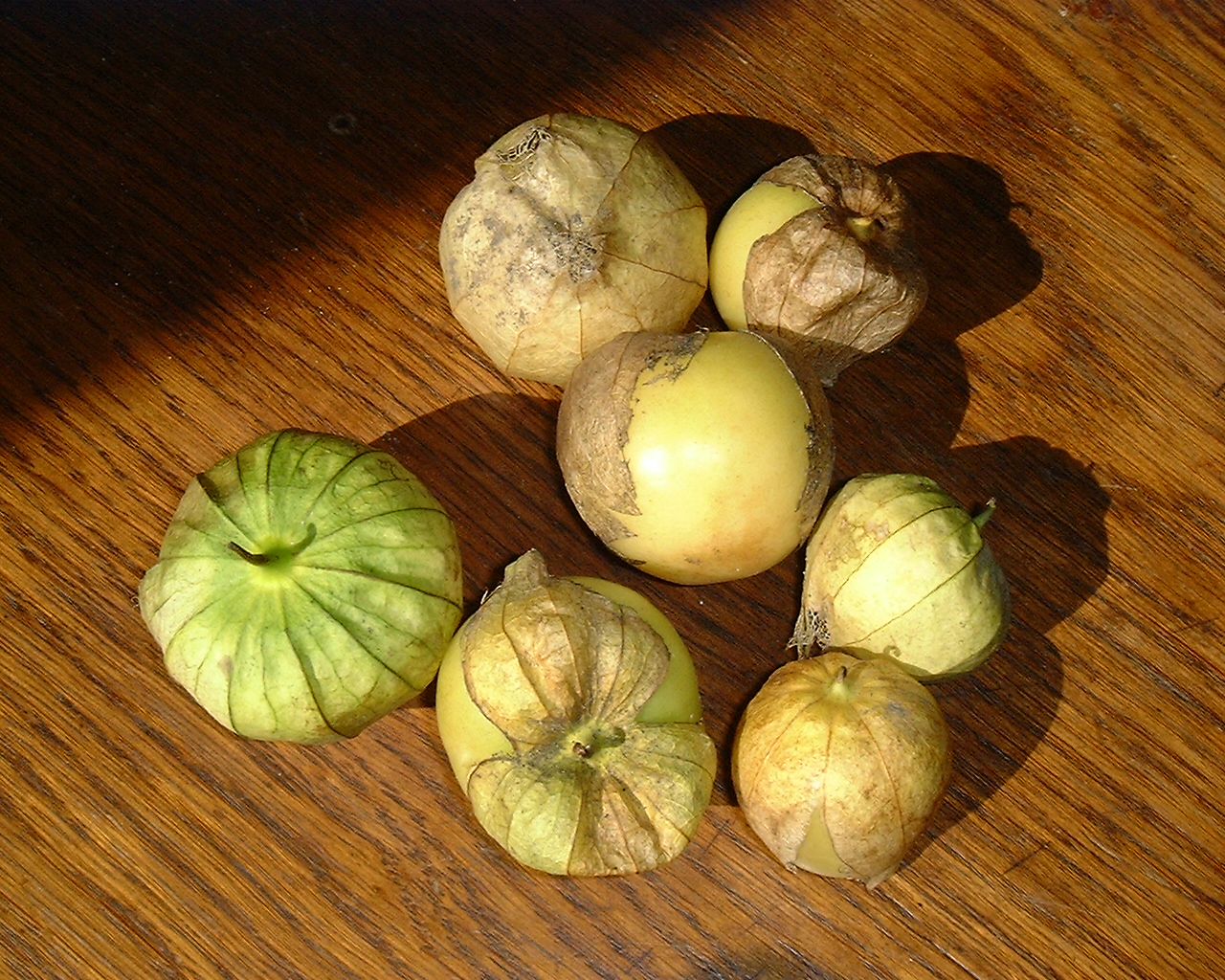
The tomatillo fruit is surrounded by an inedible, paper-like husk formed from the calyx. As the fruit matures, it fills the husk and can split it open by harvest time. The husk turns brown, and the fruit can be ripe in several colors, including yellow, green, or even purple. The freshness and greenness of the husk are quality criteria.

Flower types:

Varieties

[edit]

There are several varieties of tomatillos, with differences in tastes, traits, and ripening colors.[1][27][28] Some cultivars include Amarylla, Chupon, Gigante, Green Husk, Mexican, Pineapple, Purple de Milpa, Rio Grande Verde, and Yellow.

Genetic

[edit]

Self-incompatibility trait

[edit]

Although self-compatibility is common among wild populations, tomatillos carry self-incompatible traits. The plant, i.e., the fertile hermaphrodite, is not able to produce zygotes after self-pollination occurs.[29] This limits the ability to improve tomatillo production regarding the seed quality and the production of varieties.

The self-compatibility gene is situated in the chromosomes of the tomatillo and is not inherited through cytoplasm. Only heterozygous plants can be self-compatible as the trait is controlled by a dominant gene.[29] Tomatillo can thus produce seeds through self-pollination due to the involvement of self-compatibility traits, but the germination viability is different throughout the produced seeds. This suggests that not only incompatible pollen is involved but also inviability at the seedling stage.[25] A study in 2022 using a commercial cultivar found that it was self-compatible and demonstrated incompatibility only in some of the inter-specific hybrid pollinations that were attempted.[30]

Diseases

[edit]

Tomatillo is generally a resistant crop as long as its climatic requirements are met. However, as with all crops, mass production brings exposure to pests and diseases. As of 2017, two diseases affecting tomatillos have been documented, namely tomato yellow leaf curl virus and turnip mosaic virus. Symptoms of tomato yellow leaf curl virus, including chlorotic margins and interveinal yellowing, were found in several tomato and tomatillo crops in Mexico and Guatemala in 2006.[31] After laboratory tests, the virus was confirmed. Symptomatic plants were associated with the presence of whiteflies, which were likely the cause of this outbreak.[31]

Turnip mosaic virus was discovered in several tomatillo crops in California in 2011, rendering 2% of commercially grown tomatillo plants unmarketable, with severe stunting and leaf distortion.[32] The green peach aphid is a common pest in California, and since it readily transmits the turnip mosaic virus, this could be a threat to tomatillo production in California.[32]

See also

[edit]

References

[edit]
[edit]
Revisions and contributorsEdit on WikipediaRead on Wikipedia
from Grokipedia
The tomatillo (Physalis philadelphica), also known as the Mexican husk tomato or ground cherry, is an annual herbaceous plant in the nightshade family (Solanaceae) native to Mexico and Central America. The name "tomatillo" derives from the Nahuatl word tomatl, meaning "plump fruit with water" or "fat water." It features sprawling, indeterminate stems that grow 3–5 feet tall, with simple, alternate, heart-shaped leaves that are coarsely toothed and resemble those of eggplant. The plant produces solitary, star-shaped yellow flowers with fused petals in summer, followed by small, spherical fruits measuring 1–2 inches in diameter that develop inside a thin, papery, lantern-like husk derived from the calyx. These fruits are typically vibrant green when harvested for their tart, citrusy flavor with a slightly acidic tang, though some varieties ripen to purple or yellow; they are edible when fully developed and filling the husk, while all other plant parts contain toxic solanine alkaloids that can cause severe symptoms like vomiting if ingested. Domesticated in central as early as 900 BC, based on archaeological evidence from sites like , the tomatillo has been a staple in Mesoamerican agriculture and cuisine for millennia, spreading to via Spanish colonization but remaining most prominent in its native regions. It is the wild progenitor of modern cultivated varieties, which are grown commercially in and ; for example, 53,407 hectares were cultivated in in 2004, with average annual production exceeding 750,000 tons from 2015 to 2019, much of it processed into salsas and exported. Notable cultivars include 'Toma Verde' for green fruits, 'Purple de Milpa' for purple varieties, and 'Rendidora' for high-yielding plants adapted to . In cultivation, tomatillos are warm-season crops that thrive in full sun with well-drained soils, require support due to their vining habit, and benefit from multiple for cross-pollination given their low self-fertility. They mature in 60–75 days and are suitable for home gardens, though they can self-seed and become weedy in warm climates. Nutritionally, the fruits are low in calories and provide vitamins C and K, , and antioxidants. In and Central American cuisine, tomatillos are versatile, often forming the base of and other sauces, paired with chilies and herbs.

Overview

Description

The tomatillo (Physalis philadelphica) is an annual belonging to the family, known for its sprawling and branching growth habit. It typically reaches a height of 3 to 5 feet, forming a bushy structure that can spread widely and often requires support to prevent lodging. Native to and , the plant thrives in warm conditions and exhibits , continuing to produce throughout the season. The leaves of the tomatillo are heart-shaped to egg-shaped, measuring 2 to 4 inches in length, with slightly hairy surfaces and coarsely toothed margins; they are arranged alternately along the upright to sprawling stems. The plant bears small, solitary flowers that are star- or bowl-shaped, approximately 0.3 to 0.6 inches in diameter, often featuring dark purple spots at the center, and they emerge from the leaf axils during summer months. Tomatillo fruits develop within distinctive lantern-like husks that are papery, thin, and ribbed, inflating and splitting open as the matures. The fruits themselves are spherical, 1 to 2 inches in diameter, covered in a waxy skin, and range from green to purple when mature, though they may turn yellow if left to overripen; they possess an acidic, tangy flavor reminiscent of tomatoes or . Unlike the related groundcherry (), tomatillos feature larger fruits, thinner husks, and greater acidity, contributing to their distinct culinary profile.

Names and etymology

The term "tomatillo" originates from the Spanish language, formed as a diminutive of "tomate" with the suffix "-illo," which denotes something small, thus meaning "little tomato." This Spanish adaptation traces back to the Nahuatl word tomatl, spoken by the Aztecs and other Mesoamerican peoples, referring to a type of plump, round fruit used in stews and sauces. In English, tomatillos are commonly known as husk tomato, Mexican green tomato, or jamberry, reflecting their distinctive papery husk and green fruit resembling unripe tomatoes. In Spanish-speaking regions, particularly Mexico and Central America, names include tomate verde (green tomato), miltomate (derived from Nahuatl miltomatl, meaning field tomato), and tomate de cáscara (husked tomato), highlighting the fruit's encased structure and cultural significance in local agriculture. Upon introduction to following the Spanish conquests, the plant was classified botanically as by in his 1753 work , with the genus name drawn from the Greek physalis, meaning "bladder" or "bubble," in reference to the inflated, bladder-like husk surrounding the . Regional variations abound in , where the tomatillo holds a pre-Columbian legacy in Mesoamerican farming; it is referred to by numerous names across various indigenous languages and local vernaculars, underscoring its integral role in ancient diets and rituals.

Botany

Classification and genetics

The tomatillo, Physalis philadelphica, belongs to the kingdom Plantae, phylum , class Magnoliopsida, order , family , genus , and species P. philadelphica. This placement situates it within the nightshade family, alongside economically important relatives such as the tomato () and the cape gooseberry (), sharing evolutionary adaptations like fruits and . Domestication of P. philadelphica occurred in Mexico through a diffuse process involving multiple wild populations, rather than a single origin, with cultivated forms emerging from weedy and wild ancestors in central Mesoamerica. The species exhibits an estimated genome size of approximately 1.4 Gb (similar to close relatives like P. floridana), primarily diploid (2n=24), though artificial induction of autotetraploidy (4n=48, doubling DNA content) has been achieved via colchicine treatment, producing fertile plants. Recent chromosome-scale genome assemblies for related species like P. floridana (1.40 Gb, 2021) and advances in omics research (as of 2024) have enhanced understanding of genetic mechanisms, including those for fruit and husk development. Natural polyploidy influences are evident in related Physalis species, contributing to organ size variation during sequencing efforts. A key reproductive trait in P. philadelphica is its gametophytic system, which prevents by rejecting from genetically identical individuals, thus requiring cross-pollination for fruit set. This mechanism is governed by genes at the S-locus, where self-compatibility arises from a single dominant (S^c), allowing partial selfing in some cultivated lines but maintaining as the primary mode in wild populations. Compatible cross-pollination typically results in higher fruit set ratios compared to attempts, promoting through insect-mediated . Physalis philadelphica demonstrates hybridization potential with other Physalis species, such as P. peruviana, enabling the introgression of traits like enlarged husks and altered fruit flavors in breeding programs. These interspecific crosses, though sometimes rare in natural settings, have been documented and utilized to enhance cultivar variability without significant barriers in controlled environments. Wild populations of P. philadelphica maintain higher allelic diversity (total heterozygosity H_t ≈ 0.322) than cultivated ones (H_t ≈ 0.311), serving as a critical genetic for traits like resistance and environmental . However, loss and fragmentation in Mesoamerican regions threaten these gene pools by reducing population sizes and , potentially leading to erosion of unique alleles essential for improvement.

Growth morphology

The tomatillo (Physalis philadelphica) is an that completes its life cycle within 70 to 100 days from to , producing continuously until frost kills the . typically occurs in 7 to 10 days under warm conditions of 21 to 29°C, with optimal rates above 21°C and inhibition below 15°C or above 35°C. Vegetative growth follows, lasting about 4 to 6 weeks with primary shoot elongation, before transitioning to flowering around 6 to 8 weeks post-. The develops erect stems that primarily at distal nodes, reaching heights of 1 to 1.2 meters, with herbage ranging from glabrous to densely hairy; these simple, appressed, or gland-tipped hairs provide a sticky texture that deters pests. Below ground, a forms from an initial in seedlings, extending shallowly to 30 to 60 cm deep in mature and enabling moderate through efficient water uptake. Leaves emerge alternately along the stems, ovate to lanceolate in shape, with 2 to 6 cm length and irregular toothed margins; pubescence varies from sparse to dense, often increasing on older leaves for environmental protection including against UV radiation in sunny habitats. Tomatillo exhibits indeterminate growth, producing lateral branches that support multiple fruit clusters throughout the season, with overall height and compactness influenced by environmental factors such as day length—shorter photoperiods tending to promote more compact forms in related Solanaceae. Following heavy fruit production or exposure to frost, the plants undergo senescence, with leaves yellowing and stems dying back as the annual cycle concludes; extracted seeds maintain viability for 4 to 7 years when stored in cool, dry conditions.

Flowers and fruit development

The tomatillo (Physalis philadelphica) bears hermaphroditic flowers that emerge solitarily from leaf axils, featuring five yellow petals fused into a cup-shaped corolla approximately 7–15 mm long and 1–1.5 cm in diameter. The five stamens are attached to the corolla base and fuse to form a conical structure surrounding the style, with bluish-purple anthers (2.5–4 mm long) that release through poricidal dehiscence via narrow apical slits or pores. These flowers, marked by dark central blotches, typically measure about 1.3 cm across and open during warm daylight hours to attract pollinators. Pollination in tomatillos is primarily entomophilous, relying on bees such as bumblebees (Bombus spp.) that employ , vibrating the anthers at high frequencies (around 300–400 Hz) to extract from the poricidal structures. This mechanism is essential, as honeybees (Apis mellifera) are less efficient at it, often requiring multiple plants for cross-pollination to achieve optimal yields. The species exhibits partial governed by genetic mechanisms like gametophytic systems, which restrict and result in low success (0–20% fruit set in cultivated lines), with natural fruit set in wild stands typically ranging 20–48% under cross-pollination conditions. Following successful , the inferior rapidly enlarges, initiating development within 7–14 days as and expansion occur in the pericarp. The persistent calyx swells concurrently, forming a papery (lantern-like) that enlarges to 2–3 times the fruit's volume, providing protection and aiding dispersal; this husk turns from green to straw-brown at maturity. Full fruit maturation occurs 35–45 days after , with the green (1.5–5 cm ) filling the husk completely, though extended growth up to 60 days is possible under optimal conditions. During maturation, tomatillo fruits progress from firm, acidic green stages (pH 3.7–4.5, dominated by citric and malic acids) ideal for culinary uses like salsas, to softer yellow or purple variants with reduced acidity and sweeter flavor upon full ripeness. Each mature berry contains 200–270 flat, reniform seeds (2–3 mm long), embedded in a juicy pulp, with seed viability peaking at 45 days post-anthesis when germination rates exceed 80%. Environmental factors strongly influence these processes: tomatillos are day-neutral but flower prolifically at photoperiods of 12–14 hours; optimal fruit set requires daytime temperatures of 20–30°C (68–86°F), while extremes above 32°C (90°F) or below 13°C (55°F) trigger blossom drop and abortion due to disrupted pollen viability and ovule development.

Distribution and ecology

Native range and wild populations

The tomatillo (Physalis philadelphica), a member of the family, is native to and , with its primary center of origin in central extending southward to . The species exhibits its highest in the highlands of and , where pre-domestication evidence from archaeological sites in the Valley indicates human use of wild Physalis fruits dating back to approximately 900 BCE. In its natural settings, P. philadelphica persists as a , commonly colonizing disturbed habitats such as roadsides, agricultural fields, and urban edges across , where it grows as an annual herb up to 100 cm tall. Wild populations form dense stands in these environments, with feral groups capable of reaching high densities in favorable conditions, though exact figures vary by locale. The species has spread northward into the , including and , likely through by birds and inadvertent human transport, establishing naturalized populations possibly extending its native range. Following European contact, P. philadelphica was introduced to , where it now occurs in both wild and cultivated forms beyond its original distribution. Genetic studies of wild populations reveal greater variability than in domesticated lines, including a broader fruit size range of 12–60 mm in (approximately 0.5–2.4 inches), reflecting to diverse ecological pressures. fluctuate annually, often peaking with seasonal rainfall events like patterns in northern regions, which influence and establishment. Although not globally endangered and classified as Least Concern by the IUCN (assessed ), P. philadelphica faces localized declines in wild populations due to and in .

Habitat preferences

Tomatillos (Physalis philadelphica) naturally thrive in subtropical to temperate zones, particularly in regions characterized by warm, sunny conditions and moderate rainfall ranging from 600 to 1,100 mm annually, with an optimal range of 700 to 1,000 mm. The plant prefers daytime temperatures between 15 and 25°C, tolerating a broader range of 8 to 31°C, though it is sensitive to and prolonged cold below freezing, limiting its persistence in areas with harsh winters. In its native habitats, it often occupies ruderal and disturbed sites, functioning as a in , where it rapidly colonizes open, human-modified areas such as field edges and roadsides. Soil preferences for wild tomatillos center on well-drained loamy or sandy types that prevent waterlogging, with an optimal of 6.0 to 7.0 and tolerance extending to 5.0 to 8.0. The species adapts to moderately poor but performs best in soils with adequate retention without saturation, commonly found in moist thickets, pine-oak woodlands, and open disturbed ground. As a weedy annual, it frequently co-occurs with other pioneer plants, competing for resources in agroecosystems and fallow lands, including interactions with common field weeds that share similar disturbed niches. In native ecosystems, tomatillos play a supportive role by attracting insect pollinators, such as bees, which facilitate cross-pollination essential for fruit set in wild populations. The plant's altitudinal range spans from near sea level to approximately 2,300 meters in wild habitats across Mexico and Central America, with populations in higher elevations often adapted to cooler, more variable conditions within pine-oak forests. Ecologically, its fruits serve as a food source for wildlife, including birds and small mammals that consume ripe berries, while foliage may be browsed by herbivores like deer in open areas, though unripe parts contain toxic alkaloids deterring excessive consumption.

Cultivation

History and global production

The tomatillo (Physalis philadelphica), a member of the nightshade family, was domesticated in central as early as 900 BC, with evidence from the Valley, serving as a staple in and culture. Archaeological evidence, including seeds recovered from ancient sites in the American Southwest and , confirms its use by indigenous groups such as the and as early as AD 298, with semi-cultivation practices noted in and during the Basketmaker III and Pueblo I periods (AD 650–900). These findings from middens and historic sites underscore the plant's long integration into Native American foodways, where it was often dried or boiled for consumption. Following the Spanish conquest, tomatillos were introduced to in the alongside other . The plant spread more widely in the through immigrants to the , where it gained traction in home gardens and ethnic markets. Commercial production in the expanded post-1980s, coinciding with the industrialization of agriculture and rising demand for authentic ingredients like ; by the mid-1980s, demand drove significant exports from . Mexico remains the dominant global producer of tomatillos, accounting for the majority of output with an average of 754,000 metric tons annually between 2015 and 2019, primarily from states like , , and . In , national production reached 778,000 tons, representing about 4.7% of Mexico's total vegetable output. The cultivates tomatillos mainly in and , though detailed volume data is not separately tracked by federal statistics; production supports local and ethnic markets. Emerging cultivation has appeared in since the and in , where the plant adapts well to subtropical conditions. Mexico exports roughly 80% of its tomatillo crop, primarily to the , with value to that market reaching $475.78 million in 2023—a significant increase from $82.1 million in —highlighting its economic role in . These environmental pressures have spurred interest in drought-tolerant farming practices, though specific resilient varieties for tomatillos remain limited compared to major crops. The crop's economic importance continues to grow, fueled by increasing global interest in diverse, tangy flavors for salsas and sauces, with Mexico's exports underscoring a market valued in the hundreds of millions annually.

Environmental requirements

Tomatillos thrive in warm climates with full sun exposure of 6 to 8 hours daily, which is essential for optimal production and plant vigor. They require a frost-free of at least 90 days to reach maturity, as the plants are highly sensitive to and temperatures. Ideal daytime temperatures range from 21°C to 32°C (70°F to 90°F), with nighttime temperatures remaining above 13°C (55°F) to prevent chilling injury, which can stunt growth and reduce yields. For soil, tomatillos prefer fertile, well-drained loamy soils enriched with at least 3% to support development and retention. The optimal is 6.0 to 6.8, though they can tolerate slightly broader ranges; heavy clay soils should be amended with or sand to improve drainage and prevent waterlogging. Water requirements total 25 to 30 inches over the , with consistent of 1 to 1.5 inches per week to maintain without excess that could lead to husk cracking. systems are recommended to deliver water directly to the roots, minimizing foliar wetting and disease risk, while established plants exhibit some once rooted. Site selection should prioritize locations with good air circulation and protection from strong winds, as tomatillos are sprawling that benefit from trellising or staking to prevent and facilitate harvesting. are typically spaced 2 to 3 feet apart within rows that are 4 feet wide to allow for their bushy growth habit and improve light penetration. Tomatillos demand moderate , with requirements of 100 to 150 kg/ha to support vegetative growth, balanced by applications to enhance health and overall stability.

Planting and

Tomatillos are typically started from seeds in a controlled environment to ensure vigorous growth. Seeds should be sown indoors 6-8 weeks before the last expected , at a temperature of 20-25°C (68-77°F), in a sterile seed-starting mix, and covered to a depth of about 0.25 inches (0.6 cm). Alternatively, direct sowing can occur once temperatures reach at least 18°C (64°F), following the same depth guideline, though transplants generally yield better results in cooler climates. For transplanting, seedlings should be hardened off by gradually exposing them to outdoor conditions over 7-10 days to prevent transplant shock. Plant hardened seedlings outdoors after all danger of has passed, spacing them 18-24 inches (45-60 cm) apart in rows 3 feet (90 cm) apart, burying the stems deeply to encourage additional development along the stem. Using black around helps suppress weeds, retain , and warm the , particularly beneficial in cooler regions. Fertilization practices focus on balanced supply to support vegetative growth without excess foliage at the expense of . At planting, incorporate a balanced such as 5-10-10 NPK at a rate providing approximately 50 kg/ha (45 lb/acre) of , adjusted based on tests. Side-dress with , such as 21-0-0 at 1 per , around 4-8 weeks after or at flowering to promote set. Including micronutrients like calcium in the regimen, either through amendments or foliar sprays, helps prevent disorders such as blossom-end rot, which can occur due to uneven affecting calcium uptake. Ongoing field management involves practices to optimize plant health and yield. Prune lower leaves to improve airflow and reduce risk, and train vining on stakes or trellises if space is limited. Provide consistent of about 1 inch (2.5 cm) per week, preferably via drip systems to keep foliage dry and minimize ; adjust for rainfall and . Regularly scout for weeds and employ mulching or shallow for control, avoiding deep cultivation that could damage roots. Due to self-incompatibility, tomatillos require cross-pollination for reliable fruit set, so at least two plants should be grown in proximity. In open fields, native bees facilitate pollination, but in greenhouses, introducing bumblebees or manually shaking plants to mimic buzz pollination may be necessary.

Harvesting and storage

Tomatillos are typically ready for harvest 60-75 days after , when the fruits fully fill their papery husks and the husks begin to turn from green to tan, yellow-brown, or brown. Harvesting occurs continuously throughout the growing season, with pickings every 7-10 days as fruits mature in succession, allowing for extended production from a single planting. Fruits are hand-picked to minimize bruising, either by gently twisting them off the or using pruners or to clip stems, particularly in commercial fields where clusters may be cut together for efficiency. Yields generally range from 5 to 10 tons per acre under optimal conditions, depending on variety, soil fertility, and management practices. Immediately after , tomatillos should be cooled to 5-10°C (41-50°F) to prevent decay and maintain quality, with storage at 80-90% relative humidity extending to 3-4 weeks. Tomatillos are sensitive to below 5°C during prolonged storage, so temperatures in this range balance preservation with avoiding damage. For fresh market use, husks are removed prior to sale or consumption, as they protect the fruit from physical damage and help regulate moisture loss during handling and transport. Longer-term preservation involves drying the fruits at 52-57°C (125-135°F) until moisture-free or freezing them whole or processed, which can maintain quality for months. Retaining the husks during initial storage also shields fruits from external exposure, reducing premature ripening. High-quality tomatillos for fresh applications, such as salsas, are firm and bright green, with intact husks that fully enclose the fruit without splitting or discoloration. Overripe fruits turning yellow are less desirable for fresh use due to softer texture and milder flavor, though they may suit processing where such changes are less critical.

Uses

Culinary applications

Tomatillos are prized in culinary traditions for their tart, citrusy flavor, which stems from higher levels of citric and malic acids compared to tomatoes, imparting a bright, vegetal tang that is more acidic and less sweet. This profile makes them ideal for adding acidity to balance richer ingredients, and they can be used raw to preserve their sharp bite or cooked to mellow the tartness into a deeper, fruitier note. In , tomatillos form the base of numerous dishes, often blended raw into fresh salsas or roasted and puréed for sauces that enhance stews and s. Key preparations include , where husked tomatillos are boiled or roasted with cilantro, onions, garlic, and green chiles like jalapeños or serranos to create a vibrant, tangy served with tacos, chips, or grilled meats. They also feature prominently in verde, a hearty hominy-based simmered with or and green chiles, and in enchilada sauces like those for s suizas, where the tomatillos provide a creamy-tart foundation when blended with cream or crema. Pickled tomatillos appear in relishes, offering a crisp, acidic contrast in tacos or as a side. Preparation begins with removing the papery , followed by rinsing under warm water to eliminate the sticky, waxy residue that naturally coats the ; this step is essential to avoid bitterness. Cooking methods vary: softens them for purées in stews like pipián verde, a Oaxacan sauce thickened with pumpkin seeds and herbs; under a blackens the skins for intensified flavor in moles or salsas; and raw chopping suits quick salads or variants. These techniques are common across , Central American, and Southwestern U.S. cuisines, where tomatillos contribute to fusion dishes such as tomatillo shakshuka or green Bloody Mary cocktails. Beyond traditional uses, tomatillos have adapted to global palates, appearing in U.S. recipes like avocado-tomatillo for added zing or in Asian-inspired fusions such as tomatillo-coconut curries and stir-fries that leverage their for thickening sauces. They are also canned or preserved for year-round availability, allowing their tartness to brighten winter stews or relishes. As a staple in Oaxacan cooking, tomatillos underpin mole verde and regional salsas with chiles, while in Yucatecan and broader Mayan-influenced dishes, they echo ancient uses in tangy sauces and preserves, reflecting their deep cultural roots in Mesoamerican heritage.

Nutritional value and health aspects

Tomatillos are low in calories, providing 32 kcal per 100 g of raw fruit, with a composition of approximately 91.6% water, 1.9 g dietary fiber, 1.91 g protein, 5.84 g carbohydrates (including 3.93 g sugars), and 1.02 g fat. They offer notable vitamins and minerals, including 11.7 mg of vitamin C (about 13% of the daily value), 0.056 mg of vitamin B6, and 20 mg of magnesium per 100 g. Beta-carotene is present, contributing to the fruit's antioxidant profile. Tomatillos contain high levels of antioxidants, particularly withanolides (steroidal lactones) and polyphenols such as , with total polyphenols reaching up to 592 mg per 100 g in some varieties. These compounds provide effects, while beta-carotene supports eye health by protecting against . The content in tomatillos supports immune function by aiding production and acting as an . promotes digestion by facilitating regular bowel movements and maintaining gut health. Withanolides exhibit potential anti-cancer properties; for instance, a 2007 study demonstrated that ixocarpalactone A from tomatillos induced and inhibited proliferation in colon cancer cells. A 2021 study further showed that tomatillo-derived withanolides suppressed growth in HT1080 cells by targeting mutant IDH1 enzymes. Unripe tomatillos may contain traces of solanine, a glycoalkaloid common in the nightshade family, though levels are low and toxicity is minimal in ripe fruit. Oxalate content is low, at about 20 mg per 100 g, which is unlikely to pose a significant risk for individuals prone to calcium oxalate kidney stones even when consumed in moderate amounts. Conventional tomatillos may carry pesticide residues, similar to other solanaceous crops like tomatoes, potentially increasing exposure risks with frequent consumption. According to the Environmental Working Group's 2025 analysis of USDA data, tomatillos rank low for pesticide residues, with minimal detections compared to other produce. Tomatillos have a low to moderate , estimated at 35–51, making them suitable for due to their content and low sugar levels.

Pests and diseases

Common pests

Tomatillos, as members of the family, are susceptible to several insect pests that can impact health and yield. Flea beetles (Epitrix spp.) are among the most common early-season threats, particularly to seedlings, where adults chew small, irregular holes in leaves, leading to a sieved appearance and potential stunting of young . Their life cycle typically spans about 30 days, allowing for multiple generations in warm conditions, with adults overwintering in or debris and emerging in spring to feed and lay eggs near host . Hornworms (Manduca spp.), including the tomato hornworm () and tobacco hornworm (), pose a significant defoliation risk, rapidly consuming leaves and sometimes fruits, which can result in significant yield losses if populations remain unchecked. Each generation develops over 4-6 weeks, with larvae hatching from eggs laid on foliage and feeding voraciously through several instars before pupating in the . Aphids, particularly the green peach aphid (), cluster on stems and undersides of leaves, sucking sap and acting as vectors for plant viruses that may exacerbate damage from other stressors. Potato weevils (Trichobaris spp.), such as Trichobaris championi, target tomatillos in production areas, with larvae boring into stems and fruits, potentially causing post-harvest issues in storage by facilitating entry for secondary infections. Damage thresholds guide intervention; for instance, action is recommended when defoliation reaches 10% from pests like beetles or hornworms to prevent economic impact. (IPM) strategies prioritize non-chemical approaches, including the use of row covers to exclude adults during vulnerable stages and every three years to disrupt pest life cycles. or pyrethrin-based sprays provide targeted control for and beetles when populations exceed thresholds, while encouraging natural predators like ladybugs helps suppress aphid outbreaks biologically. The 2025 IPM guidelines for vegetable crops emphasize biological controls, such as releasing predatory insects, to minimize chemical use and sustain long-term pest suppression. These pests are more prevalent in humid regions like Mexico, the primary production area for tomatillos, where favorable conditions accelerate reproduction and increase infestation pressure. While insect pests primarily cause direct feeding damage, severe infestations can indirectly worsen viral disease transmission, as detailed in sections on major diseases.

Major diseases

Tomatillos (Physalis philadelphica) are susceptible to various diseases, many of which are shared with related solanaceous crops like tomatoes, due to similar environmental preferences and pathogen hosts. Fungal diseases predominate in humid conditions, while bacterial, wilt, nematode, and viral issues can arise from soil, insects, or contaminated tools. Effective management emphasizes prevention through crop rotation, sanitation, and cultural practices to minimize spread. Early blight, caused by the fungus , manifests as small, dark spots with concentric rings on lower leaves, progressing to yellowing and defoliation if untreated. It favors warm, wet weather and can reduce yields by stressing . Control involves removing infected debris, ensuring good airflow via staking and , and applying copper-based fungicides as a preventative measure. Late blight, incited by the oomycete , produces water-soaked lesions on leaves and stems that turn dark brown or black, often accompanied by a white, fuzzy sporulation on the undersides during cool, moist periods. This rapidly destructive disease can lead to plant collapse and fruit rot. Management requires immediate removal of affected plants, avoiding overhead , and using protective fungicides like in high-risk areas. Anthracnose, primarily from species, affects fruits with sunken, circular lesions that darken and may cover the surface, especially in warm, rainy conditions. It spreads via splashing water and infected seeds. To mitigate, start with disease-free seeds treated by hot water soaking, rotate crops on a three-year cycle, and incorporate post-harvest debris into soil for decomposition. Bacterial leaf spot, caused by species, appears as translucent spots with yellow halos that enlarge into irregular, dark-centered lesions, distorting leaves and reducing . It thrives in wet, warm environments and enters through wounds. Prevention includes using certified clean seeds, avoiding overhead watering, and promptly removing and destroying infected plants. Verticillium wilt, resulting from soilborne fungi dahliae or V. albo-atrum, causes yellowing and wilting of lower leaves, vascular discoloration, and , persisting in soil for years. Resistant varieties are limited, so focus on , with non-hosts like grains, and pre-plant in severe cases. Root knot nematodes (Meloidogyne species) induce on roots, leading to wilting, nutrient deficiencies, and poor vigor, particularly in sandy soils. They are managed by avoiding infested fields, planting nematode-suppressive cover crops like marigolds, and amending soil with to enhance beneficial microbes. Viral diseases, such as (TMV), tomato chlorosis virus (ToCV), and turnip mosaic virus (TuMV), cause mosaic patterns, leaf curling, chlorosis, and stunting, often vectored by or mechanical means. TMV persists on contaminated tools and smoke. Control relies on using virus-free seeds, rogueing infected early, controlling aphid vectors with , and practicing strict sanitation like tool disinfection.

References

Add your contribution
Related Hubs
User Avatar
No comments yet.