Hubbry Logo
Tony BarberTony BarberMain
Open search
Tony Barber
Community hub
Tony Barber
logo
8 pages, 0 posts
0 subscribers
Be the first to start a discussion here.
Tony Barber
Tony Barber
from Wikipedia

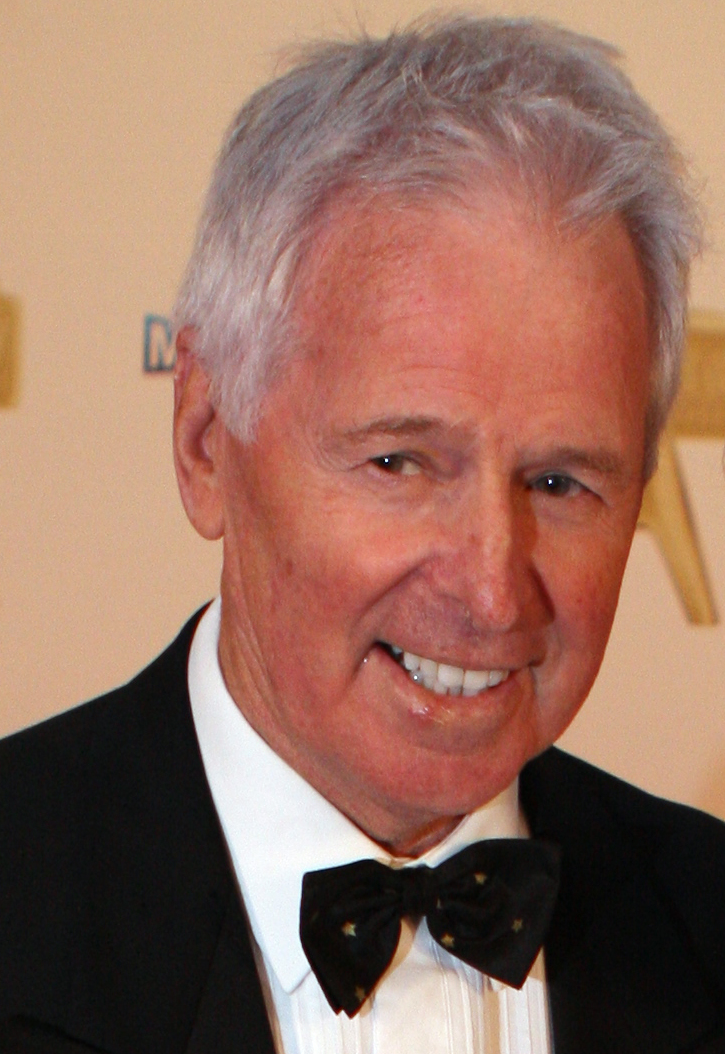
Anthony Ferraro Louis Barber OAM (born 28 March 1940) is a British Australian Gold Logie award-winning television game show host, radio announcer, singer and media personality, who has been active in the industry since the early 1960s.[2]

Key Information

Biography

[edit]

Early life

[edit]

Barber was born in Oldham, England in March 1940. He has said that he "owes much of his enthusiastic and driving personality to a loving Irish grandma and a whole street full of aunts who kept the spirits high during the dark years of World War II." He moved with his family to Australia in 1947 and was educated by the Sisters of Mercy and the Irish Christian Brothers.

He attended Britannia Royal Naval College in Dartmouth, graduating in 1960.

In his own words:

"The Sisters of so-called Mercy taught me to sing & dance, the brothers taught me to bob & weave. The navy taught me to play rugby."[3][4]

Radio

[edit]

Barber started his media career in 1961, as a cadet announcer at radio station 6GE in Geraldton, Western Australia.

By the end of 1962, Barber was a leading radio announcer in Perth, as well as the star of a weekly floor show at the Charles Hotel and another twice-weekly event at the Lido Coral Room where he performed impressions of Johnny Mathis and Paul Anka. Before leaving Western Australia for New South Wales he also appeared in a number of plays with the Scarborough players.

After moving to Sydney, Barber appeared at numerous hotel talent quests, a regular role as resident compere and vocalist at the Spellsons nitery in Pitt Street. This was in addition to holding down a regular job as an advertising executive, where at one point he cast himself as the "Cambridge Whistler", a central character in a 1960s cigarette commercial which brought him national recognition.

Television presenter

[edit]

It was at this point that the then head of the Seven Network, Bruce Gyngell, spotted Barber and was understood to have liked what he saw and suggested that he host a Reg Grundy show.[5]

While Barber is more noted for his role as host of Sale of the Century, his origins in television date back to the early 1970s when he hosted the then popular Seven Network game show The $25,000 Great Temptation.[6] The show was successful enough for the network that both daytime and prime time editions of the show were screened.

The show only faltered when in 1974, Seven decided to move the show from its 7:00 pm timeslot to the later 8:30 pm timeslot in an effort to attract viewers away from the then popular series Number 96 screening on the 0-10 Networks. Number 96 won the ratings battle and The $25,000 Great Temptation aired its last show in 1975. Barber then hosted the Australian version of Family Feud on the Nine Network from 1977 until 1979.[citation needed]

In 1980, the Reg Grundy Organisation, on the advice of its founder and producer, Reg Grundy, decided to revive the $25,000 Great Temptation format using the original international title, Sale of the Century. Screened nationally on the Nine Network, Barber hosted the show from 1980 until 1991, supported by a roster of co-hosts during his time including Victoria Nicolls (1980–82), Delvene Delaney (1982–85) and Alyce Platt (1986–91). Barber decided to leave the show in 1991 after being offered only a 12-month contract renewal period instead of his usual three-year deal; Platt left at the same time, he was replaced by Glenn Ridge as host, with co-host Jo Bailey.

Barber went on to host the short-lived Australian version of Jeopardy! on Network 10 in 1993. It has been said that its failure was partly due to placing it in the 6:00 pm timeslot against high-rating news bulletins of the day. Barber later stated in an interview that Jeopardy! was his favourite of all the game shows he hosted in his career. After Jeopardy, Barber succeeded John Burgess as host of Wheel of Fortune on the Seven Network in July 1996 following the show's relocation from Adelaide to Sydney as part of an attempted revamp. Also part of the revamp, in an attempt to win viewers back, the theme music that had been introduced the previous year was reinstated, the new set underwent minor changes and the former prize shop was reincarnated to an extent – contestants upon solving a puzzle were offered three prizes and one had to be selected. By the end of 1996, these changes together with the loss of the familiar Burgess as host resulted in poor viewing figures, and Barber decided to leave the show. Barber appeared at the beginning of the 1997 series premiere to hand the show over to Rob Elliott. During his time on TV, Barber estimates that he has hosted over 8,500 individual episodes of successful Grundy games.[7]

He hosted a small competition on the Australian Cable TV network Foxtel seven nights a week called TV1's Cash Trivia Challenge. On 14 March 2007, he returned to his roots, making an appearance as guest host on Temptation, alongside his former co-host Alyce Platt, during the Battle of the Network Shows series where the original hosts, Ed Phillips and Livinia Nixon appeared as contestants.

In August 2013, Barber was announced as a contestant on the upcoming series of Dancing with the Stars.[8] He then returned to Family Feud as a contestant on 21 November 2016 as part of All Star Family Feud hosted by Grant Denyer with Kerri-Anne Kennerley, Glenn Ridge, and John Burgess as team members. His team had won the game and he ended the episode with his signature sign-off catchphrase: "Keep smiling, and bye for now."[9]

Honours

[edit]

In June 1991 Barber received the Medal of the Order of Australia award "In recognition of service to the entertainment industry."[10]

Awards

[edit]

Discography

[edit]

Studio albums

[edit]
List of albums, with selected chart positions
Title Album details Peak chart
positions
AUS
[11]
Temptation
  • Released: August 1973
  • Format: LP
  • Label: RCA Victor (SP-119)
54
If You Feel Like Singing
  • Released: 1974
  • Format: LP, Cassette
  • Label: RCA Victor (SP-134)
-
Country Barber
  • Released: July 1975
  • Format: LP, Cassette
  • Label: RCA Victor (SP-158)
72
Country Barber
  • Released: July 1975
  • Format: LP, Cassette
  • Label: RCA Victor (SP-158)
72
I Believe
  • Released: November 1986
  • Format: LP, Cassette
  • Label: J & B Records (JB 275)
31
You'll Never Walk Alone
  • Released: December 1987
  • Format: LP, Cassette
  • Label: J & B Records (JB 315)
96
Love Changes Everything
  • Released: November 1989
  • Format: LP, Cassette, CD
  • Label: Hammard (HAM 200)
49
You Light Up My Life
  • Released: May 1992
  • Format: Cassette, CD
  • Label: J & B Records (JB 315)
39

Compilation albums

[edit]
List of compilations, with selected chart positions
Title Album details
The Best of Tony Barber
  • Released: 1979
  • Format: LP
  • Label: RCA Victor (SP-225)

Filmography

[edit]
Title Year Role
Homicide 1967 Dick Boyd - Gavin Jones
Temptation (TV series) 1970 as Himself - Host
Great Temptation (TV series) 1971 as Himself - Host
Buster Fiddess Memorial Concert (TV special) 1972 as Himself - Host
It's Time (video) 1972 as Himself
Logie Awards of 1973 (TV special) 1973 as Himself - Gold Logie Winner
Penthouse Club (TV series) 1972-1975 as Himself - Host - Himself
Name That Tune (TV series) 1975 as Himself
Family Feud (TV series) 1977-1980 as Himself - Host
Wheel of Fortune (TV series) 1981 as Himself - Host
Logie Awards of 1982 (TV Special) 1982 as Himself
The Don Lane Show (TV series) 1983 as Himself
Sale of the Century (TV series) 1980-1991 As Self - Host
Jeopardy! (TV series) 1992 as Self - Host
The Late Show (TV series) 1993 as Himself
Wedlocked (TV series) 1994 Tony Johnson
The Mick Molloy Show (TV series) 1999 as Himself
Fox Studios Australia: The Grand Opening(TV special) 1999 as Himself
Pizza (TV series) 2001 Rupert Packer
Rove Live (TV series) 2001 as Himself
Breakaway (TV series) 2003 as Himself - Host
Graham Kennedy: Farewell to the King (TV movie) 2005 as Himself
Good Morning Australia (TV series) 2005 Self - Presenter -Self, Guest
Temptation (TV series) 2007 Self - Host
Dancing with the Stars (TV series) 2013 Self - as Contestant
All Star Family Feud (TV series) 2016 as Himself - Contestant
Today 2020 as Himself - Guest
The Fame Game: mWhat Happens When the Applause Happens (TV special) 2022 as Himself

References

[edit]
[edit]

Further reading

[edit]
Revisions and contributorsEdit on WikipediaRead on Wikipedia
from Grokipedia
Anthony Ferraro Louis Barber OAM (born 28 March 1940) is an English-born Australian television host, radio announcer, and singer, best known for presenting the game show Sale of the Century on the Nine Network from 1980 to 1991. Emigrating from Oldham, Lancashire, to Australia in 1947 at age seven, Barber completed seven years of training as a naval officer before beginning his broadcasting career as a radio announcer in 1961 and moving into television hosting in the mid-1960s. Over his extensive career, he hosted more than 8,500 episodes of successful programs including Temptation, Family Feud, Wheel of Fortune, and Jeopardy!, contributing significantly to Australian entertainment and receiving the Gold Logie Award for Most Popular Personality on Australian Television in 1982. In 2007, he was awarded the Order of Australia Medal for service to the community through contributions to television and radio. While facing unsubstantiated rumors regarding relationships with female co-hosts such as Delvene Delaney and Alyce Platt, Barber consistently denied these claims, emphasizing professional boundaries amid the high visibility of his role.

Early Life

Childhood and Immigration

Tony Barber was born on 28 March 1940 in , , . His birth occurred amid the ongoing , with experiencing wartime , air raid precautions, and industrial demands supporting the Allied effort, as the region was a hub for textile and munitions production. Barber later attributed his resilient and enthusiastic personality to the hardships of this period, including the uncertainties and deprivations of childhood during the conflict. In 1947, at the age of seven, Barber emigrated with his from to as part of the British government's assisted migration program aimed at alleviating domestic overcrowding and labor shortages . The journey involved a voyage on a migrant ship, typical for the era's transoceanic , culminating in arrival at Harbour. This relocation reflected broader patterns of over 1 million British citizens moving to between 1945 and 1970, driven by promises of better opportunities amid Europe's recovery struggles. Upon settling in Sydney, the young Barber encountered initial difficulties adapting to Australia's distinct climate, landscape, and social norms, which contrasted sharply with the industrial grit of Lancashire. As a child navigating this transition, he experienced cultural dislocation common among postwar child migrants, including accents viewed as foreign and the shift from wartime austerity to suburban life, though specific family economic details remain undocumented in primary accounts. These early experiences in New South Wales laid the groundwork for his integration into Australian society before formal schooling began.

Education and Initial Aspirations

Barber completed his secondary education at Catholic schools in , including institutions run by and the Christian Brothers. These local schools provided a rigorous, discipline-oriented environment typical of mid-20th-century Australian Catholic , though Barber received no formal instruction in media, music, or broadcasting during this period. Following secondary school, in the late 1950s, Barber entered the Royal Australian Navy as an officer cadet, committing to seven years of training that emphasized seamanship, leadership, and military discipline. This included graduation from initial RAN programs and advanced instruction at in Dartmouth, , culminating in his commissioning as a naval officer by 1960. The choice reflected pragmatic aspirations for financial stability and structured career progression in post-war Australia, where naval service offered reliable employment and social mobility for working-class immigrants, rather than immediate pursuit of entertainment interests. Despite the navy's demanding regimen, Barber maintained a self-driven fascination with radio quizzes, music programs, and live performances, honed through personal listening and informal exposure rather than academic channels. This informal interest foreshadowed his entertainment ambitions, as he lacked specialized vocational training in broadcasting or the arts, relying instead on innate enthusiasm to transition from military service to media upon leaving the navy in 1960.

Music Career

Early Recordings and Breakthrough

Barber's entry into professional music came after migrating to Australia in the late 1950s, where he honed guitar skills largely through practical experience in amateur bands. By 1964, he had joined Billy Thorpe and the Aztecs as guitarist and songwriter, contributing to their cover of "Poison Ivy," recorded in June 1964 on the Linda Lee label, which topped Australian charts that year. His tenure with the group, spanning until late 1965, immersed him in the vibrant beat and garage rock scene, performing original material and covers amid the British Invasion's influence. Departing the to focus on solo pursuits, Barber signed with the Everybody's in late , leading to his debut single "Someday," initially issued there before re-release on Spin Records in backed with " Raining." The track, a self-penned pop tune with garage elements, achieved modest national , peaking at number 7 on Sydney charts and number 11 in Melbourne, reflecting the era's regional chart variations. This release signified his breakthrough as an independent artist, leveraging hands-on performance expertise without formal training, amid Australia's expanding independent landscape like Spin, which prioritized accessible pop over establishment norms. Follow-up singles reinforced his early , including "Wait By The Water" / "What Now" in 1966 and "Wondrous Place" / "No, No, No" in 1966, both on Spin, though they charted lower, underscoring the competitive 1960s singles market driven by talent and imported trends. These efforts highlighted Barber's shift from band collaborator to frontman, emphasizing original songcraft in a scene skeptical of rigid musical hierarchies.

Album Releases and Commercial Success

Barber released three studio albums on RCA Records during the 1970s, coinciding with his rising television profile from hosting game shows such as Great Temptation. These included Temptation in 1972, featuring covers of popular standards; If You Feel Like Singing in 1973, emphasizing easy-listening interpretations; and Country Barber in 1975, which incorporated country influences. Each achieved gold certification in Australia, denoting sales exceeding 20,000 units under pre-ARIA industry standards, driven by Barber's on-screen visibility rather than promotional subsidies or favoritism. The albums' success reflected market demand tied to Barber's persona as a charismatic host, with segments on his programs providing organic exposure that translated to physical without reliance on radio dominance. Post-1970s, Barber issued further releases like in on J&B , comprising inspirational and standards , but these did not replicate the earlier commercial peaks. Compilation albums emerged in the late and beyond, capitalizing on sustained fan interest; notable examples include The Best of Tony Barber (1979), aggregating key tracks from prior works. These retrospectives underscored enduring appeal among audiences familiar with Barber's multifaceted , evidenced by consistent catalog sales into subsequent decades.

Radio Career

Entry into Broadcasting

Barber transitioned into broadcasting in 1961, securing his initial role as a cadet announcer at 6GE in Geraldton, Western Australia, shortly after completing seven years of naval officer training. This opportunistic entry capitalized on his vocal abilities honed through prior singing and performance experiences, bypassing extensive formal qualifications in favor of demonstrable on-air presence in a field dominated by established personalities. Within , by late , had advanced to become Perth's , handling rotations and live segments that emphasized spontaneous interaction over scripted delivery. His quick ascent reflected a of charismatic delivery and , attributes that outweighed bureaucratic requirements amid the competitive commercial of the . Early duties encompassed blending record playback with ad-libbed commentary and occasional , fostering listener loyalty through engaging, unpolished style rather than polished production techniques. This foundational phase in Western Australia laid the groundwork for broader media pursuits, as Barber's self-taught proficiency in captivating broadcasts proved adaptable to the demands of regional stations seeking dynamic talent to compete for ratings.

Key Programs and Style

Barber's early radio programs centered on music and youth-oriented content, beginning with his role as a cadet announcer at 6GE in Geraldton, Western Australia, in 1961. By the end of 1962, he had advanced to become Perth's leading disc jockey, hosting a highly rated teen-time program at 6PM that featured contemporary music selections and lively audience interaction. These shows emphasized energetic delivery and quick transitions between tracks, appealing to younger listeners through informal banter and promotional tie-ins with local venues like the Charles Hotel floor shows where Barber also performed. In the and , while primarily known for television, Barber maintained involvement in commercial radio at stations including and , incorporating segments into formats that encouraged caller participation and trivia challenges. His programming style prioritized authenticity and listener engagement, often drawing from personal anecdotes and interactive quizzes reminiscent of British radio influences from his childhood era. This approach fostered a realism, with segments designed to mirror everyday conversational dynamics rather than scripted formality. Barber's irreverent humor, characterized by witty and unpolished commentary, occasionally provoked regulatory , including cautions from the Australian Broadcasting Standards for potentially breaching decorum guidelines. He consistently defended such elements as essential to genuine , arguing they sustained high retention by prioritizing relatable, unfiltered interaction over sanitized content. This tension highlighted broader debates in Australian between creative and institutional oversight, with Barber's defenses underscoring empirical listener feedback favoring bold .

Television Career

Debut and Game Show Hosting

Tony Barber debuted on Australian television in 1970 as the host of the game show Great Temptation on the Seven Network, co-hosted with Barbara Rogers. The daytime quiz format required contestants to answer general knowledge questions to accumulate cash prizes, with successful players advancing through rounds to compete for larger rewards. The program aired until 1975 and achieved strong viewership, contributing to Barber's recognition as a prominent host. In 1973, Barber received the TV Week Gold Logie Award for Most Popular Personality on Australian for his work on Great . This underscored the show's impact and Barber's engaging on-screen presence, which emphasized straightforward question-answering where outcomes depended directly on contestants' rather than production scripting. Barber transitioned to the Nine Network in 1980 to host Sale of the Century, a role he held until 1991. The show featured rapid-fire trivia rounds where contestants earned cash to bid on discounted prizes, maintaining a merit-based structure that rewarded accurate responses. Barber's signature entrance—energetically running to the podium at the program's start—became iconic, boosting its appeal and securing consistently high ratings as one of Australia's most successful quiz formats. Contemporaneous media dubbed him the "king of quiz" for sustaining viewer engagement through this high-energy, knowledge-driven entertainment.

Major Shows and Transitions

Following the conclusion of his 11-year tenure hosting Sale of the Century on the Nine Network in , Tony Barber transitioned to Network Ten in to host the Australian adaptation of , which premiered on and aired weekday evenings at 6:00 p.m. The program, produced by Organisation, featured contestants selecting clues from a category board for cash prizes but struggled with low ratings and was cancelled after approximately six months. This move exemplified Barber's versatility across networks amid a competitive landscape where viewer retention drove scheduling decisions. In 1996, Barber shifted to the Seven Network to host Wheel of Fortune, debuting on July 15 after replacing incumbent John Burgess in a bid to refresh the long-running word puzzle game show, which had aired on Seven since 1981. Broadcast at 5:30 p.m. weekdays, Barber's episodes emphasized fast-paced gameplay with spinning wheels and prize reveals, leveraging his established rapport with audiences to maintain the program's appeal during a period of host changes. These network hops—from Nine to Ten to Seven—highlighted Barber's sustained relevance in an industry reliant on ratings, where his prior success with quiz formats ensured continued bookings despite format risks. Barber's mid-career hosting also included minor voice and cameo roles tied to his presenting persona, such as appearances in television productions, though these remained ancillary to his primary live work. Over four decades, his engagements across Australia's three major commercial networks underscored adaptability to production shifts and audience preferences without reliance on a single outlet.

Controversies and Departures

Barber's hosting tenure on Sale of the Century (1980–1991) concluded amid contract negotiations in which Channel Nine offered him a one-year renewal rather than the multi-year extensions he had received previously, prompting his decision to depart on April 19, 1991. Rumors circulated that he had been effectively pushed out by network executives seeking a fresh face, but the exit stemmed from standard industry contract dynamics rather than performance failings or personal misconduct, with Barber opting not to sign the shorter term. The transition to host Glenn Ridge generated media headlines, yet Barber's overall ratings success during his 11-year run—peaking at over 1 million nightly viewers in the 1980s—underscored the departure as a business pivot, not a punitive measure. His , high-energy on-air , characterized by quick-witted banter and occasional ad-libs, elicited sporadic viewer complaints labeling it as brash or unpolished, particularly in later seasons. These critiques, often voiced in informal forums, contrasted with widespread for his authenticity amid scripted television norms, but lacked formal regulatory intervention from bodies like the Australian , indicating they remained minor and unsubstantiated relative to his positive reception. No emerged of advertiser pullouts, sponsor boycotts, or institutional biases driving these episodes, with Barber's style sustaining high without systemic backlash.

Later Career and Retirement

Post-Television Ventures

Following the conclusion of his tenure on Sale of the Century in 1991 and subsequent television roles, Tony Barber shifted focus to live entertainment formats, hosting quiz nights for corporate functions and charity events starting in the early 2000s. These engagements drew on his expertise in general knowledge trivia, echoing his early radio quiz work at stations like 2UE, and typically involved interactive sessions where participants competed for prizes in a format reminiscent of his broadcast style. Such events were organized sporadically for businesses and nonprofits, emphasizing team-building and entertainment without reliance on network production, and Barber noted their appeal in fostering "terrific fun" through accessible trivia challenges. Barber also corporate speaking opportunities and roles, leveraging his quick-witted for conferences and private functions. Agencies promoted him for these services, highlighting his to deliver engaging talks on insights and anecdotes, often combined with light-hearted elements to captivate audiences. These remained in , aligning with a pattern of selective participation that prioritized self-directed projects over sustained media commitments. In December 2021, Barber endorsed and participated in the launch of News Corp's Gains app, a digital platform featuring daily quizzes, crosswords, and multiplayer designed for personal and competitive use. This initiative extended his quiz legacy into mobile , with Barber promoting it as a modern outlet for enthusiasts, independent of traditional . The app's rollout included promotional appearances, such as trivia battles on programs like Today, underscoring Barber's ongoing but non-exclusive involvement in quiz-based pursuits.

Recent Activities and Public Appearances

In the 2020s, Tony Barber has adopted a low-profile consistent with voluntary semi-retirement, limiting engagements to selective appearances that affirm his historical contributions to Australian television without signaling a return to regular broadcasting. This approach counters narratives of abrupt disappearance, emphasizing instead a deliberate withdrawal from high-visibility roles following decades in the industry. On June 17, 2024, Barber reunited with longtime Sale of the Century co-host Victoria Nicholls for an interview on the TODAY program, where they reminisced about the show's production dynamics and cultural impact, but expressed no interest in reviving the format or mounting a professional comeback. The segment focused on nostalgic anecdotes, such as on-set improvisations and contestant interactions, highlighting the duo's professional rapport without commercial intent. In July 2025, the (NFSA) commemorated the 45th of 's Australian debut, featuring archival clips of Barber's hosting tenure from 1980 to 1991 and underscoring his as the program's enduring in . Media coverage of the event reinforced Barber's sustained recognition among audiences, with to his sports-themed entrance routine and steady presence amid format changes. Barber made a notable appearance at the 65th on , 2025, in , attending as a figure rather than a nominee or performer. No major new honors were bestowed during this period, yet these infrequent engagements—coupled with occasional updates—illustrate an organic legacy maintained through archival tributes and fan interest, absent aggressive self-promotion.

Personal Life

Family and Relationships

Tony Barber was first married to Helen Barber, who provided significant personal support during his early television . The couple had two daughters, and Barber has described himself during that period as a "happily married man" committed to . Helen Barber died from pancreatic cancer, an event that drew sympathy from colleagues such as former Sale of the Century co-host Victoria Nicolls. Following Helen's death, Barber remarried Kristine, a widowed family friend, in a union that expanded his family dynamics without public controversy. The couple resides in retirement in Flinders, Victoria, where Barber has noted the stability of family gatherings, occasionally involving nostalgic viewings of his past shows with children and grandchildren. In total, Barber reports having seven children and 19 grandchildren, reflecting a blended family structure maintained privately. Barber's personal relationships have remained free of publicized scandals or divorces, aligning with a conventional approach to private amid his in since emigrating from . He has consistently emphasized a "cleanskin" reputation, avoiding romantic entanglements with professional associates.

Health and Philanthropy

Barber, who turned 85 on March 28, 2025, has encountered significant health challenges over the years, including battles with cancer, strokes, and diabetes, as he disclosed in a 2018 interview. Despite these adversities, no major health crises have been publicly reported in recent years, and he has sustained limited professional output, such as releasing a performance showreel in 2024 featuring musical numbers. In philanthropy, Barber has contributed through entertainment industry initiatives, notably reprising his quiz-hosting for charitable causes in , as covered by Australian media. His efforts align with self-reliant support for peers in the sector, including appearances in like telethons that benefit children's causes, reflecting a of leveraging his for rather than institutional appeals.

Honours and Recognition

Awards Received

In 1973, Tony Barber won the TV Week Gold Logie Award for Most Popular Personality on Australian Television, recognizing his hosting of the game show Great Temptation, which had achieved strong ratings as a daily quiz program on the Seven Network. That same year, he received the Logie for Most Popular Male Personality in New South Wales, reflecting the show's regional popularity and viewer engagement metrics that outperformed competitors in key markets. These awards were determined by public votes through TV Week magazine readership, underscoring empirical audience preference over industry panel judgments. Barber also earned certifications for three gold albums released via RCA Records during the peak of his Great Temptation tenure, capitalizing on his on-screen charisma to extend into music sales exceeding 50,000 units each in the Australian market. Titles such as those tied to promotional singles demonstrated his crossover from television to recording artistry, with sales data validating broad commercial appeal amid the era's variety entertainment trends. No industry awards have been documented for Barber in the period from 2020 to 2025, consistent with his shift away from active television hosting and toward retrospective public appearances.

Order of Australia Medal

Anthony Louis Barber was appointed a Member of the (AM) in the General Division on 10 June 1991, as part of the Queen's , for service to the community through the industry. This level of the Order recognizes contributions of a standard worthy of particular note, evaluated through a rigorous process involving public nominations, independent assessment by the Council for the Order of Australia, and final approval by the Governor-General, emphasizing sustained impact over transient or politically motivated criteria. The award underscores Barber's four-decade career in Australian broadcasting, including hosting high-rating game shows that engaged broad audiences and supported the commercial television sector's growth from the 1960s onward. No evidence indicates the honour was influenced by diversity initiatives or quotas, which were not factors in the 1991 honours framework; selections prioritized verifiable service records and peer endorsements.

Legacy

Impact on Australian Entertainment

Tony Barber's tenure as host of Sale of the Century from July 14, 1980, to 1991 established a benchmark for quiz show longevity and viewer retention on Australian commercial television, with the program airing daily for 11 years under his leadership and achieving status as one of the country's most enduring formats produced by Reg Grundy Organisation for the Nine Network. The show's hybrid structure—integrating rapid-fire trivia with instant cash prizes and shopping sprees—drove consistent prime-time audiences, contributing to over 20 years of total run until 2001 and influencing subsequent Australian adaptations of imported game show concepts by emphasizing accessible, high-stakes gameplay. Barber's broader quiz hosting portfolio, including Great Temptation (1970–1974 on Seven Network) and Family Feud (1977–1984), spanned multiple commercial broadcasters and accounted for more than 8,500 episodes, enhancing the viability of low-cost, repeatable formats that prioritized contestant interaction over scripted content. These efforts supported commercial networks' expansion in the 1970s and 1980s by delivering reliable ratings in competitive slots, where imported and local quiz variants helped offset reliance on pricier drama or variety productions amid growing audience fragmentation. His trajectory modeled entertainer versatility, transitioning from 1960s radio disc jockey roles at stations like 6GE in Perth—where he became a top-rated DJ by 1962—and music releases into television quizzing, thereby bridging audio-visual entertainment sectors and enabling hosts to leverage vocal charisma across media for sustained commercial appeal. This cross-medium adaptability underscored quiz shows' role in cultivating multi-format talents, fostering a ecosystem where performers like Barber sustained viewer loyalty through familiar, energetic delivery rather than specialized acting credentials.

Critical Reception and Cultural Influence

Tony Barber's hosting on Sale of the Century (1980–1991) received strong public approval, evidenced by the program's top ratings in for the week ended , 1981, outperforming other network offerings. His quick-witted style and genial demeanor anchored the show's success, contributing to its status as a staple of Australian prime-time television and earning him a Gold Logie Award in 1981 for outstanding performance. While formal critical reviews from media outlets are sparse, contemporary accounts portrayed him as the "king of the quiz biz," highlighting his specialization in engaging family audiences through accessible trivia formats. Public reception has endured through nostalgic reminiscences, with often recalled as a defining figure of and Australian television, superior to successors like Glenn Ridge in viewer preferences for hosting energy and accuracy. Anecdotal evidence from audience forums underscores his role in fostering communal viewing habits, though isolated incidents, such as a contestant's on-set during (1970–1974), drew brief without impugning his conduct. Barber's four-decade career across networks like Seven and Nine solidified his reputation as "game show royalty," with no widespread criticisms emerging in archival or interview sources. Barber's cultural influence manifests in his embodiment of the golden age of Australian game shows, where he hosted concurrent day and prime-time editions of The Great Temptation, influencing the genre's emphasis on high-stakes trivia and prizes. The catchphrase "Let's go shopping!" from Sale of the Century became emblematic of consumerist excitement in quiz programming, embedding itself in collective memory and parody culture. As a versatile performer who transitioned from radio DJ to television icon, Barber shaped expectations for charismatic, authoritative hosts, with his trivia nights and MC services remaining sought after in corporate sectors decades later. His longevity across shows like Family Feud and Jeopardy underscores a lasting imprint on Australian entertainment, evoking era-specific nostalgia without reliance on modern adaptations.

References

  1. https://startsat60.com/media/[entertainment](/page/Entertainment)/nostalgia/a-look-back-at-the-classic-aussie-quiz-show-great-temptation
Add your contribution
Related Hubs
User Avatar
No comments yet.