


Community hub
0 subscribers8 pages, 0 posts
Recent from talks
All channels
Be the first to start a discussion here.
Be the first to start a discussion here.
Be the first to start a discussion here.
Be the first to start a discussion here.
Contribute something
Welcome to the community hub built to collect knowledge and have discussions related to Brushtail possum.
Nothing was collected or created yet.
Brushtail possum
View on Wikipediafrom Wikipedia
| Brushtail possums[1] | |
|---|---|

| |
| Common brushtail possum by John Gould, 1863 | |
Scientific classification 
| |
| Kingdom: | Animalia |
| Phylum: | Chordata |
| Class: | Mammalia |
| Infraclass: | Marsupialia |
| Order: | Diprotodontia |
| Family: | Phalangeridae |
| Genus: | Trichosurus Lesson, 1828 |
| Type species | |
| Didelphis vulpecula (Kerr, 1792)
| |
| Species | |
|
see text | |
The brushtail possums are the members of the genus Trichosurus in the Phalangeridae, a family of marsupials. They are native to Australia (including Tasmania) and some small nearby islands. Unique among marsupials, they have shifted the hypaxial muscles from the epipubic to the pelvis, much like in placental mammals, meaning that their breathing cycle is more similar to the latter than to that of other non-eutherian mammals.[2] In general, they are more terrestrially oriented than other possums, and in some ways might parallel primates.
The genus contains these species:
- Northern brushtail possum, T. arnhemensis
- Short-eared possum, T. caninus
- Mountain brushtail possum, T. cunninghami
- Coppery brushtail possum, T. johnstonii
- Common brushtail possum, T. vulpecula
Gallery
[edit]-
 Northern brushtail possum (T. arnhemensis)
 -
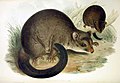 Short-eared possum (T. caninus)
 -
 Coppery brushtail possum (T. johnstonii)
 -
 Common brushtail possum (T. vulpecula)


.jpg)

References
[edit]
Wikimedia Commons has media related to Trichosurus.
- ^ Groves, C. P. (2005). "Genus Trichosurus". In Wilson, D. E.; Reeder, D. M (eds.). Mammal Species of the World: A Taxonomic and Geographic Reference (3rd ed.). Johns Hopkins University Press. pp. 49–50. ISBN 978-0-8018-8221-0. OCLC 62265494.
- ^ Reilly, S. M.; McElroy, E. J.; White, T. D.; Biknevicius, A. R.; Bennett, M. B. (2010). "Abdominal muscle and epipubic bone function during locomotion in Australian possums: Insights to basal mammalian conditions and eutherian‐like tendencies in Trichosurus". Journal of Morphology. 271 (4): 438–450. doi:10.1002/jmor.10808. ISSN 0362-2525. PMID 19862837.
_white_background.jpg) | This article about a diprotodont is a stub. You can help Wikipedia by expanding it. |
Brushtail possum
View on Grokipediafrom Grokipedia
The brushtail possum (Trichosurus vulpecula) is a medium-sized, nocturnal marsupial native to Australia, characterized by its grey-brown fur, bushy prehensile tail, pointed snout, large pointed ears, and body length of 32–58 cm, with males weighing up to 4.5 kg.[1][2][3]
As the most widespread and adaptable member of the genus Trichosurus in the family Phalangeridae, it inhabits a diverse range of environments from eucalypt forests and woodlands to urban areas across mainland Australia, Tasmania, and introduced populations in New Zealand.[3][4][2]
Primarily folivorous, it feeds on leaves, flowers, fruits, and buds, supplemented by insects, small vertebrates, and human food waste in suburban settings, using its specialized dentition and gut to process tough, toxic eucalypt foliage.[1][3][4]
Solitary and arboreal, these possums den in tree hollows, rock crevices, or building roofs during the day, emerging at night to forage and mark territories with scent glands and vocalizations, while breeding year-round with peaks in spring, gestation of about 17–18 days, and young remaining in the pouch for 4–5 months before riding on the mother's back.[2][3][4]
Although protected in Australia under legislation like the Biodiversity Conservation Act 2016, where populations are stable or increasing due to urban adaptation, it is considered an invasive pest in New Zealand, causing significant damage to native forests and biodiversity.[4][3][1]
Threats in its native range include habitat loss from urbanization and fire, predation by introduced foxes and cats, and competition for tree hollows, prompting conservation efforts such as feral predator control and possum translocations by organizations like the Australian Wildlife Conservancy.[2]
Taxonomy and Etymology
The scientific name Trichosurus vulpecula derives from Greek and Latin roots: "Trichosurus" combines "trichos" (hair) and "oura" (tail), alluding to the species' bushy, prehensile tail, while "vulpecula" is the diminutive of Latin "vulpes" (fox), reflecting its fox-like pointed snout and coloration.[5][6]Scientific Classification
The brushtail possum, scientifically known as Trichosurus vulpecula, belongs to the kingdom Animalia, phylum Chordata, class Mammalia, infraclass Marsupialia, order Diprotodontia, family Phalangeridae, genus Trichosurus, and species T. vulpecula.[7][3] The binomial name Trichosurus vulpecula was established by Robert Kerr in 1792, originally as Didelphis vulpecula.[7] Within the marsupial phylogeny, the brushtail possum is part of the Phalangeridae family, which includes other possums and cuscuses, and falls under the order Diprotodontia; this order diverged from other australidelphian marsupials approximately 50–55 million years ago during the late Paleocene to early Eocene, coinciding with the ongoing fragmentation of Gondwana.[8][9] The genus Trichosurus is distinguished from the related genus Phalanger (cuscuses) by features such as a bushier, more prehensile tail and enhanced arboreal adaptations like stronger grasping limbs, alongside a broader distribution primarily across mainland Australia and Tasmania rather than the more restricted range in New Guinea and nearby islands typical of Phalanger species.[10][11]| Taxonomic Rank | Classification |
|---|---|
| Kingdom | Animalia |
| Phylum | Chordata |
| Class | Mammalia |
| Infraclass | Marsupialia |
| Order | Diprotodontia |
| Family | Phalangeridae |
| Genus | Trichosurus |
| Species | T. vulpecula |
Subspecies and Evolution
The common brushtail possum (Trichosurus vulpecula) belongs to the family Phalangeridae, which originated in Australia approximately 34 million years ago during the late Eocene to early Oligocene, with the genus Trichosurus appearing in the fossil record by the late Miocene around 6 million years ago.[12][13] Intraspecific diversification within T. vulpecula began during the mid-Pliocene around 3.5 million years ago, driven by aridification events that fragmented habitats and promoted genetic divergence across the continent.[13] This evolutionary trajectory reflects adaptations to Australia's changing paleoenvironments, from wetter forests to expanding arid zones, shaping the species' broad ecological tolerance. Six subspecies of T. vulpecula are currently recognized, each associated with distinct geographic regions and exhibiting variations in morphology suited to local conditions. These include T. v. vulpecula in eastern Australia, T. v. arnhemensis in northern Australia, T. v. johnstoni in northern Queensland, T. v. eburacensis on Cape York Peninsula, T. v. hypoleucus in southwestern Australia, and T. v. fuliginosus in Tasmania.[14] Subspecies differ in body size, fur coloration, and coat density; for instance, T. v. hypoleucus displays paler fur adapted to arid southwestern environments, while T. v. fuliginosus has a darker, blackish coat in the cooler Tasmanian climate, and T. v. arnhemensis is smaller with shorter fur in northern tropical areas.[3][15] A 2025 genetic study using phylogenetics and ancestry analysis challenged prior assumptions of isolation between western and eastern populations, revealing unexpected gene flow and connectivity between Pilbara region possums in Western Australia and those in eastern Australia.[16] This connectivity suggests historical migrations or dispersals across formerly continuous habitats, potentially predating major aridification barriers, and indicates that Pilbara and Mid-West populations may represent a distinct lineage warranting recognition as a new subspecies.[17] These findings highlight ongoing evolutionary dynamics and underscore the need for updated conservation strategies to preserve genetic diversity amid habitat fragmentation.[18]Physical Description
External Features
The common brushtail possum (Trichosurus vulpecula) is a medium-sized marsupial with a head-body length ranging from 32 to 58 cm and a tail length of 24 to 40 cm. Adults weigh between 1.2 and 4.5 kg, with males typically larger than females, exhibiting sexual dimorphism in size.[3][19] Its fur is thick and woolly, providing insulation and camouflage, with the most common coloration being silver-grey on the upper body and lighter cream or yellowish underparts. Variations occur, including brown, black, or reddish hues, particularly on the shoulders of males, and a rare golden form with pale yellowish fur due to reduced melanin. The bushy tail is prehensile along its length, featuring a hairless underside for enhanced gripping and often a darker tip.[20][3][1] The head features large, pointed or rounded ears for acute hearing, a pointed snout with a pink nose and black markings around the eyes and across the muzzle, and prominent whiskers. The forelimbs end in sharp claws suited for climbing, while the hind feet include an opposable hallux (first toe) for grasping and fused second and third toes forming a grooming claw. Females possess a forward-opening pouch on the abdomen for carrying young.[3][21][22][11]Adaptations
The common brushtail possum exhibits several structural adaptations that facilitate its arboreal lifestyle, including a prehensile tail that aids in balance and grasping during climbing and leaping between trees.[11] The tail's distal portion is naked on the underside, enhancing grip on branches, while its proximal furred section provides insulation and camouflage.[23] Additionally, the hind feet feature a clawless opposable hallux (first toe), allowing secure attachment to vertical surfaces and limbs, complemented by syndactylous second and third toes that increase surface area for stability.[11] The forepaws have a partially opposable first digit, supporting precise manipulation of foliage and navigation through dense canopies, with strong, muscular limbs enabling leaps of up to several meters between trees.[24] Dietary adaptations in the common brushtail possum center on its hindgut fermentation system, which supports the breakdown of fibrous plant material, including eucalyptus leaves that comprise a significant portion of its diet.[25] The enlarged cecum and proximal colon host microbial communities that ferment cellulose and hemicellulose, extracting volatile fatty acids as an energy source despite the low nutritional quality of foliage.[26] For metabolizing toxic allelochemicals like terpenes and phenolics in eucalyptus, the possum relies on hepatic cytochrome P450 enzymes in the liver, which conjugate and excrete these compounds via urine, preventing accumulation and enabling consumption of otherwise deterrent plants.[27] This detoxification capacity is inducible, increasing with exposure to specific toxins, thus broadening dietary flexibility across varied habitats.[28] Sensory adaptations equip the common brushtail possum for nocturnal foraging and social interactions, with large, forward-facing eyes providing enhanced low-light vision through a high density of rod cells and a reflective tapetum lucidum layer.[1] This tapetum amplifies available light, allowing detection of prey and predators in dim forest understories. An acute sense of smell, facilitated by a well-developed olfactory epithelium and numerous vomeronasal receptors, enables location of food sources, mates, and territorial markers from distances of several meters.[29] For communication, the species produces a range of vocalizations including screeches, growls, and coughs, amplified by resonant oral and pharyngeal structures rather than a dedicated vocal sac, signaling aggression or mating interest to conspecifics.[30]Distribution and Habitat
Native Range
The common brushtail possum (Trichosurus vulpecula) is native to Australia, where it is distributed across much of the continent, including all mainland states and territories—Queensland, New South Wales, Victoria, South Australia, Western Australia, and the Northern Territory—as well as Tasmania and various offshore islands such as Barrow Island in Western Australia and Kangaroo Island in South Australia.[1][2] It is notably absent from the central desert regions, where extreme aridity limits its presence, but occurs along the eastern, northern, and western coastal fringes and inland areas with suitable vegetation.[19][4] Within its native range, the species occupies a diverse array of habitats, from semi-arid scrublands and open woodlands to wet eucalypt forests and rainforests, with a strong preference for sclerophyllous environments featuring eucalypts and other trees that provide hollows for shelter.[1][2] Brushtail possums typically den in tree hollows, dead branches, or trunks during the day, but they also utilize ground-based refuges such as fallen logs, rock crevices, and even hollow termite mounds when arboreal options are scarce.[2] The species has shown notable adaptability to urban settings, particularly in cities like Sydney, where it exploits rooftops, drains, and garden vegetation as substitutes for natural dens and foraging sites.[31] Historically, the brushtail possum's pre-colonial range extended more broadly across semi-arid and arid zones of Australia than it does today, encompassing a vast portion of the continent outside the core desert interiors.[32] Over the past two centuries, however, populations in these marginal arid areas have undergone significant contractions and local extinctions, driven primarily by prolonged droughts, rising temperatures, and increased predation pressure from introduced mammals.[33][34] Recent surveys in central Australia, such as those in Tjoritja National Park, indicate near-total disappearance from once-occupied rugged habitats, highlighting the species' vulnerability to climatic shifts in its peripheral ranges.[33]Introduced Populations and Impacts
The common brushtail possum (Trichosurus vulpecula) was deliberately introduced to New Zealand from Australia starting in 1837 by European settlers aiming to establish a commercial fur trade. Initial releases failed to establish viable populations, but a successful introduction occurred in 1858 near Riverton in Southland, from which the species spread rapidly across both the North and South Islands due to the absence of natural predators and abundant habitat. Over subsequent decades, multiple releases from Australian sources, primarily Tasmania and Victoria, bolstered the population, leading to widespread colonization by the mid-20th century. By the 1980s, estimates placed the population at 50–70 million individuals, though intensive management had reduced it to around 30 million by 2009, with ongoing control efforts likely resulting in further declines, though exact current numbers are unavailable as of 2024.[35][36][14][37] New Zealand's Predator Free 2050 programme seeks to eradicate possums nationwide by 2050 through sustained control measures.[38] Beyond New Zealand, the brushtail possum has shown notable adaptability within its native range, particularly in urbanizing areas of Australia. In cities such as Sydney, Brisbane, and other eastern coastal regions, populations have expanded into suburban and built environments, where individuals exploit artificial food sources like garden produce and refuse while using rooftops and trees for shelter. This urban proliferation has made the species one of the most commonly encountered native mammals in Queensland's towns and cities, highlighting its opportunistic behavior in human-modified landscapes.[1][39] In New Zealand, the brushtail possum functions as a major invasive species, exerting profound ecological pressures on indigenous biodiversity. It heavily browses native forests, consuming leaves, buds, flowers, and fruits of key canopy trees such as southern rātā (Metrosideros umbellata) and kamahi (Weinmannia racemosa), which can result in widespread defoliation, reduced regeneration, and altered forest structure. Possums also prey directly on vulnerable native fauna, including birds like the kōkako (Callaeas cinereus) and kererū (Hemiphaga novaeseelandiae), as well as eggs, chicks, and invertebrates such as giant wētā (Deinacrida spp.) and threatened land snails (Powelliphanta spp.). This predation and competition for nectar and fruit resources exacerbate declines in native bird and reptile populations that rely on similar food sources. Furthermore, possums serve as reservoirs and vectors for bovine tuberculosis (Mycobacterium bovis), facilitating transmission to cattle and deer, which imposes ongoing agricultural challenges.[35][36][40]Behavior
Activity and Locomotion
The common brushtail possum (Trichosurus vulpecula) exhibits a strictly nocturnal lifestyle, emerging from daytime resting sites such as tree hollows, dense foliage, or urban structures shortly after sunset and remaining active throughout the night until returning to dens before dawn.[3] This pattern is entrained by light-dark cycles, with activity onset triggered by declining light intensity, allowing the possum to avoid diurnal predators and diurnal human activity.[41] During the day, individuals rest immobile in sheltered dens to conserve energy and evade exposure. Peak foraging and movement typically occur in the early to mid-night hours, though activity levels can vary seasonally and with environmental factors like moonlight intensity, which may suppress terrestrial movements on brighter nights.[42] As a semiarboreal species, the brushtail possum is highly adapted for versatile locomotion, spending significant time in trees but also traversing the ground when necessary for foraging or den relocation. In arboreal settings, it climbs efficiently using sharp, curved claws on all limbs for gripping bark and a prehensile tail that provides balance and aids in anchoring to branches during navigation through the canopy.[3] The tail, bushy and muscular, functions as a fifth limb, wrapping around supports to facilitate precise movements and prevent falls. On the ground, possums employ a quadrupedal gait for steady progression and can execute vertical jumps of up to 1.5 meters to access low branches or escape threats, demonstrating agility in mixed habitats.[43] Sensory behaviors play a key role in the brushtail possum's nocturnal navigation and territorial maintenance, with adaptations favoring low-light conditions. Large eyes and sensitive whiskers enhance vision and tactile detection in dim environments, while the species actively avoids bright light to minimize predation risk.[41] For communication, individuals employ scent marking, using secretions from chest and cloacal glands as well as concentrated urine to delineate territories and signal reproductive status, particularly by males during breeding periods.[3] Vocalizations, including hisses, grunts, and guttural coughs, serve defensive and territorial functions, often emitted during encounters to deter intruders or assert dominance.[3] These behaviors underscore the possum's solitary nature, where individual activity cycles prioritize self-preservation over group interactions.[3]Social Interactions
Brushtail possums (Trichosurus vulpecula) exhibit a predominantly solitary lifestyle, with adults typically foraging and resting alone except for mother-joey pairs during the rearing period. Individuals maintain home ranges of 1–10 hectares, which overlap minimally between same-sex adults but more extensively with the opposite sex, facilitating occasional encounters without forming stable social groups. This asocial structure minimizes direct competition, though females with dependent young may share dens temporarily for protection.[44][45][46] Communication among brushtail possums relies on a combination of vocalizations, olfactory signals, and visual displays to convey territorial boundaries and social status. Vocal repertoire includes loud screeches and growls during agonistic encounters, as well as teeth-chattering to signal aggression or intimidation. Scent marking is achieved through sternal glands on the chest, which produce musky secretions rubbed onto trees, dens, and trails, with males marking more frequently during the pre-breeding season; urine and anal gland scents supplement this for reinforcing individual identity. Aggressive displays, such as open-mouthed threats exposing teeth, occur during disputes but are often resolved through avoidance rather than escalation.[44][47][46] Interspecific interactions are infrequent and generally non-aggressive, with rare fights between males primarily during the autumn rut over resources or mates, often stemming from personal rivalries rather than strict territorial defense. Females display higher tolerance toward one another, engaging in affiliative behaviors like allogrooming in shared dens. In urban environments with elevated densities (up to 4.3 individuals per hectare), brushtail possums show increased spatial overlap and cohabitation in artificial shelters, such as roof spaces, indicating behavioral plasticity that reduces overt conflict despite proximity.[44][48][46]Diet and Foraging
Primary Food Sources
The common brushtail possum (Trichosurus vulpecula) maintains an omnivorous diet dominated by folivory, with eucalyptus leaves forming the primary component in native Australian habitats, often comprising the majority of intake due to their abundance and nutritional profile despite containing defensive toxins.[49] This reliance on eucalyptus is supplemented by other plant materials such as flowers, fruits, bark, and fungi, which provide variety and essential nutrients like carbohydrates and water.[50] These plant sources form the vast majority of the diet in most wild populations.[51] Animal protein sources, including insects, bird eggs, chicks, and small vertebrates, constitute a minor portion of the diet, serving to meet higher protein needs during periods of nutritional stress or when plant quality is low.[52] Seasonal shifts influence composition, with fruits and flowers increasing in summer to exploit peak availability, while winter diets shift toward tougher leaves and bark for sustenance.[53] In urban settings, introduced populations expand their intake to include garden plants, vegetables, and garbage, adapting to anthropogenic food resources.[19] This dietary flexibility is facilitated by gut adaptations that enable detoxification of eucalyptus secondary compounds.[54]Foraging Strategies
The common brushtail possum is primarily nocturnal, emerging from its den shortly after dusk to forage for several hours each night, typically dedicating about 16% of its active period to feeding while allocating additional time to travel between food sources. This pattern allows individuals to cover distances of up to 2.5 kilometers in a single night, moving efficiently through tree canopies, lower forest strata, and occasionally the ground to locate resources. Foraging efficiency is enhanced by spatial memory, enabling possums to revisit productive trees and patches based on prior experiences, as demonstrated in studies of problem-solving behaviors where persistent individuals successfully exploit familiar high-quality sites. Due to their solitary nature, group foraging does not occur; instead, individuals maintain exclusive home ranges and avoid conspecifics during feeding to reduce competition.[19][55][56][2] Selective browsing forms a core tactic in natural habitats, where possums prioritize eucalypt leaves with higher nutrient profiles and lower concentrations of plant toxins, such as 1,8-cineole, to optimize energy intake while regulating toxin exposure through learned behavioral adjustments. This selectivity involves tasting and discarding less suitable foliage, ensuring a varied diet that mitigates the risks of overconsumption of defensive chemicals prevalent in preferred plants like certain Eucalyptus species. Food caching is not a typical strategy, with possums consuming resources immediately rather than storing them for later use. In altered environments, such as urban areas, possums demonstrate behavioral flexibility by targeting anthropogenic food sources, including raids on compost heaps, unsecured bird feeders, and discarded pet food, which supplement their diet with easily accessible, low-toxin options.[19][57][58][59] To minimize predation and other risks, foraging paths often avoid high-danger zones like roads, with individuals exhibiting heightened vigilance and reduced time at exposed sites, as evidenced by lower habitat use near roadways despite occasional crossings. This risk-sensitive approach integrates sensory cues—such as scanning for predators—with memory of safe routes, allowing possums to balance nutritional needs against environmental hazards in both native woodlands and human-modified landscapes.[60][61]Reproduction and Life Cycle
Breeding Patterns
The common brushtail possum (Trichosurus vulpecula) is polyestrous, exhibiting multiple breeding opportunities within a year, with peaks varying by region: many populations show a primary peak in autumn (March–May) and a secondary peak in spring (September–November) across its native range in Australia.[3][2] In milder climates, such as those in introduced populations in New Zealand, breeding shows variability, often with a main season in autumn (late March to early May) but can occur year-round or with additional spring breeding when environmental conditions are favorable.[62][63] The oestrous cycle typically lasts about 26 days, allowing females to potentially breed twice annually under optimal conditions, though birthing twice in one year is rare.[3][64] The mating system is promiscuous and polygynous, with females mating with multiple males and dominant males siring multiple offspring per season through competition for mates.[65] Males compete via vocalizations, including throaty warning calls to deter rivals and clicking sounds elicited by oestrous females, as well as physical confrontations and chases to establish access during the rutting period, which intensifies in autumn.[39][44] Following successful mating, gestation lasts 16–18 days, after which birth occurs.[64][66] Clutch size is typically one young per litter, reflecting the species' monovular nature, though twins occur rarely.[3][51] This reproductive strategy supports moderate population growth in suitable habitats while aligning with the possum's solitary lifestyle.[67]Development and Lifespan
The common brushtail possum (Trichosurus vulpecula) gives birth to a single, underdeveloped joey after a gestation period of approximately 17 days, with births occurring mainly from March to November in Australia, corresponding to the breeding seasons.[59] The joey, weighing about 2 grams at birth, crawls into the mother's forward-opening pouch and attaches to one of the two teats, where it remains for 4–5 months while completing its development.[59][19] During this pouch phase, the joey relies entirely on milk for nutrition, growing rapidly from a furless, blind neonate to a furred young capable of limited movement.[59] After emerging from the pouch at around 4–5 months, the joey continues to suckle intermittently while riding on the mother's back for protection and transport, a behavior that persists until weaning at 6–7 months.[68][19] Weaning marks the transition to solid foods, though the young remains dependent on the mother for guidance in foraging and navigation. Full independence is achieved at 9–10 months, when the joey establishes its own home range, often dispersing from the maternal territory to reduce competition.[19] Maternal care is provided solely by the female, with no involvement from males beyond mating; this includes carrying the joey on her back post-pouch and tolerating its return to the pouch for nursing until independence.[19][34] Sexual maturity is reached earlier in females, typically at 1 year of age, allowing them to breed in their first autumn following birth, while males mature at around 2 years.[51][68] In the wild, brushtail possums have an average lifespan of 4–8 years, though maximum longevity can reach 13 years under favorable conditions; high mortality occurs during juvenile dispersal due to predation, starvation, and vehicle collisions.[3] In captivity, lifespans are extended, with records up to 15.9 years, benefiting from protection from predators and consistent food availability.[68]Conservation Status
Threats and Population Trends
The common brushtail possum (Trichosurus vulpecula) faces multiple threats across its native Australian range, primarily driven by anthropogenic and environmental factors. Habitat fragmentation, resulting from land clearing for agriculture, urban development, and mining, has significantly reduced available forested and woodland areas, isolating populations and limiting dispersal. This is compounded by the loss of critical tree hollows used for shelter, which exacerbates vulnerability in fragmented landscapes. [2][34] Introduced predators, including foxes (Vulpes vulpes) and feral cats (Felis catus), pose a major risk through direct predation, particularly on juveniles, while dingoes (Canis dingo) may also prey on adults in some regions. Vehicle strikes are a notable cause of mortality, especially in urban and roadside habitats where possums cross roads during foraging. [69][70] Drought conditions further threaten populations by reducing food availability and water sources, leading to heightened stress and emigration from arid zones. Diseases, such as toxoplasmosis caused by the protozoan Toxoplasma gondii, represent an emerging threat, with possums exposed through contact with infected cats or contaminated environments in urban areas. Serological surveys indicate low but detectable prevalence in urban populations, potentially contributing to morbidity and mortality, particularly in stressed individuals. [71][72] Population trends for the common brushtail possum are classified as Least Concern by the IUCN Red List, based on a 2016 assessment, though the overall trend in Australia is decreasing due to cumulative pressures. Northern subspecies, such as T. v. arnhemensis, have experienced substantial declines, with the modelled geographic range contracting by 72% between historical (1840–1993) and recent (1993–2017) periods; the northern subspecies (T. v. arnhemensis) is listed as Vulnerable under the Environment Protection and Biodiversity Conservation Act 1999 (EPBC Act). These declines are most pronounced in central and northern Australia, where local extinctions have occurred in non-refuge habitats. [15] Monitoring efforts have revealed persistent but low-density populations in understudied western refugia, such as the Pilbara region of Western Australia. A 2025 study documented 47 additional records since 2000 in riverine and rocky habitats, underscoring the species' resilience in isolated areas but highlighting the need for ongoing surveys to track subtle declines. [73]Protection and Management
The common brushtail possum (Trichosurus vulpecula) is protected under wildlife legislation across all Australian states and territories, reflecting its native status and role in ecosystems. In Victoria, it is safeguarded by the Wildlife Act 1975, which prohibits harm or interference without authorization.[74] Similar protections apply in New South Wales under the Biodiversity Conservation Act 2016, in Queensland via the Nature Conservation Act 1992 (where it is listed as Least Concern), in South Australia through the National Parks and Wildlife Act 1972, in Tasmania with requirements for permits to handle or relocate individuals, and in Western Australia under the Biodiversity Conservation Act 2016.[4][21][75][76][43] Permits are generally required for trapping, relocation, or any management activities to ensure compliance with conservation goals.[76] Globally, the species is classified as Least Concern by the IUCN Red List, indicating a decreasing population trend overall despite some stable or increasing local populations in urban areas. Conservation efforts in Australia emphasize habitat enhancement to support brushtail possum populations amid urban expansion and fragmentation. Forest habitat restoration initiatives, such as reforestation and weed control in native woodlands, aim to bolster arboreal resources like tree hollows essential for shelter.[77] In urban environments, nest box programs provide artificial den sites to compensate for lost natural cavities; these are installed by community groups, government agencies, and researchers, with designs tailored to possum preferences for elevated, insulated structures.[78][79] Studies show high occupancy rates by brushtail possums in such boxes, particularly during cooler months, enhancing survival in modified landscapes.[80] Research initiatives further inform management, including a 2025 genetic study in Western Australia's Pilbara region that revealed unexpected phylogeographic diversity, identifying distinct subspecies and informing targeted conservation for isolated populations.[16] Internationally, the common brushtail possum is not listed under the Convention on International Trade in Endangered Species of Wild Fauna and Flora (CITES), as its populations do not meet criteria for trade regulation. However, trade is monitored due to its introduced status in regions like New Zealand, where it is managed as an invasive species, and occasional exports from Australia require compliance with national export controls.[15]Relationship with Humans
Cultural and Economic Uses
In traditional Aboriginal cultures of south-eastern Australia, the fur of the brushtail possum was highly valued for crafting cloaks that served multiple purposes, including as garments for warmth, blankets, mattresses, and carriers for infants. These cloaks were typically made by sewing together several possum pelts using kangaroo sinew as thread, with the furred side providing insulation and the scraped inner side often decorated with incised patterns signifying clan identity, totems, or personal stories. Brush-tailed possums were preferentially hunted for this purpose due to their abundant, thick fur, and the practice was integral to daily life and ceremonies before European colonization disrupted traditional economies.[81][82][83] The tradition of possum skin cloaks has experienced a revival in contemporary Aboriginal communities, symbolizing cultural resilience and identity, with modern cloaks worn at significant events such as National Sorry Day or parliamentary proceedings. In Australian wildlife education, the brushtail possum represents an iconic native marsupial, often highlighted in programs to illustrate adaptation to urban environments and the importance of biodiversity conservation. Its visibility in cities and national parks makes it a relatable entry point for teaching about Australia's unique fauna.[84][85][1] Economically, the brushtail possum played a central role in New Zealand's historical fur trade, following its introduction from Australia in 1837 specifically to establish a commercial pelt industry modeled after European fashions. By the mid-19th century, the trade expanded rapidly, with possum fur processed into garments, trimmings, and accessories, peaking in the early 20th century before declining due to synthetic alternatives, though a niche market persists for high-quality pelts in luxury goods.[86][87][88] Commercial harvesting of brushtail possums for meat remains limited but regulated in Tasmania, where licensed operations process the animals for export as a protein source, adhering to strict welfare and sustainability guidelines under state management plans. In New Zealand's Northland region and other areas, small-scale meat harvesting supplements the fur industry. The species also contributes indirectly to ecotourism in Australia, where sightings of brushtail possums in eucalypt forests and wildlife reserves enhance visitor experiences and educational tours focused on native biodiversity.[89][90][91] Due to its protected status as a native species across Australian states and territories, the brushtail possum is not commercially traded as a pet, with possession restricted to licensed rehabilitation or research purposes to prevent exploitation and ensure conservation.[4][76]Conflicts and Control Measures
In Australia, common brushtail possums frequently conflict with humans by raiding gardens for fruits, vegetables, and flowers, leading to significant damage in urban and suburban areas.[74] They also commonly nest in roof cavities of homes, causing noise, structural damage, and insulation contamination from droppings and urine.[92] In New Zealand, where brushtail possums are invasive, they cause extensive browsing damage to native forests by preferentially consuming leaves, buds, flowers, and fruits from trees such as rātā and kamahi, altering forest composition and hindering regeneration.[35] Additionally, possums serve as the primary wildlife reservoir and vector for Mycobacterium bovis, transmitting bovine tuberculosis to livestock through direct contact or shared environments, posing risks to the dairy and meat industries.[93] Control efforts in New Zealand have focused on large-scale culls using trapping, ground shooting, and aerial poisoning with sodium fluoroacetate (1080), which have reduced national possum populations from an estimated 60–70 million in the 1980s to approximately 30 million by 2009, representing a roughly 50% decline attributable to sustained management.[94][95] In some Australian states, such as Victoria, humane relocation is permitted only within 50 meters of the capture site on the same property to minimize stress and mortality risks, with euthanasia by licensed professionals required if on-site release is not feasible.[79] Preventive measures in both countries include installing floppy-topped wire fencing around gardens (60 cm high with 20 cm buried to deter digging) and metal collars on tree trunks to block access.[74] Chemical and ultrasonic repellents have proven largely ineffective against brushtail possums.[96] Ongoing research into fertility control, including immunocontraceptive vaccines targeting zona pellucida proteins and genetic tools for reproductive disruption, continues as a potential humane alternative to lethal methods, with trials adapting existing bait delivery systems. As of 2024, studies have highlighted emerging resistance to 1080 poison in some populations, prompting further genetic research for improved management.[97][37][98]References
- https://en.wiktionary.org/wiki/Trichosurus