Recent from talks
Nothing was collected or created yet.
Wombat
View on Wikipedia
| Wombat[1] Temporal range:
| |
|---|---|
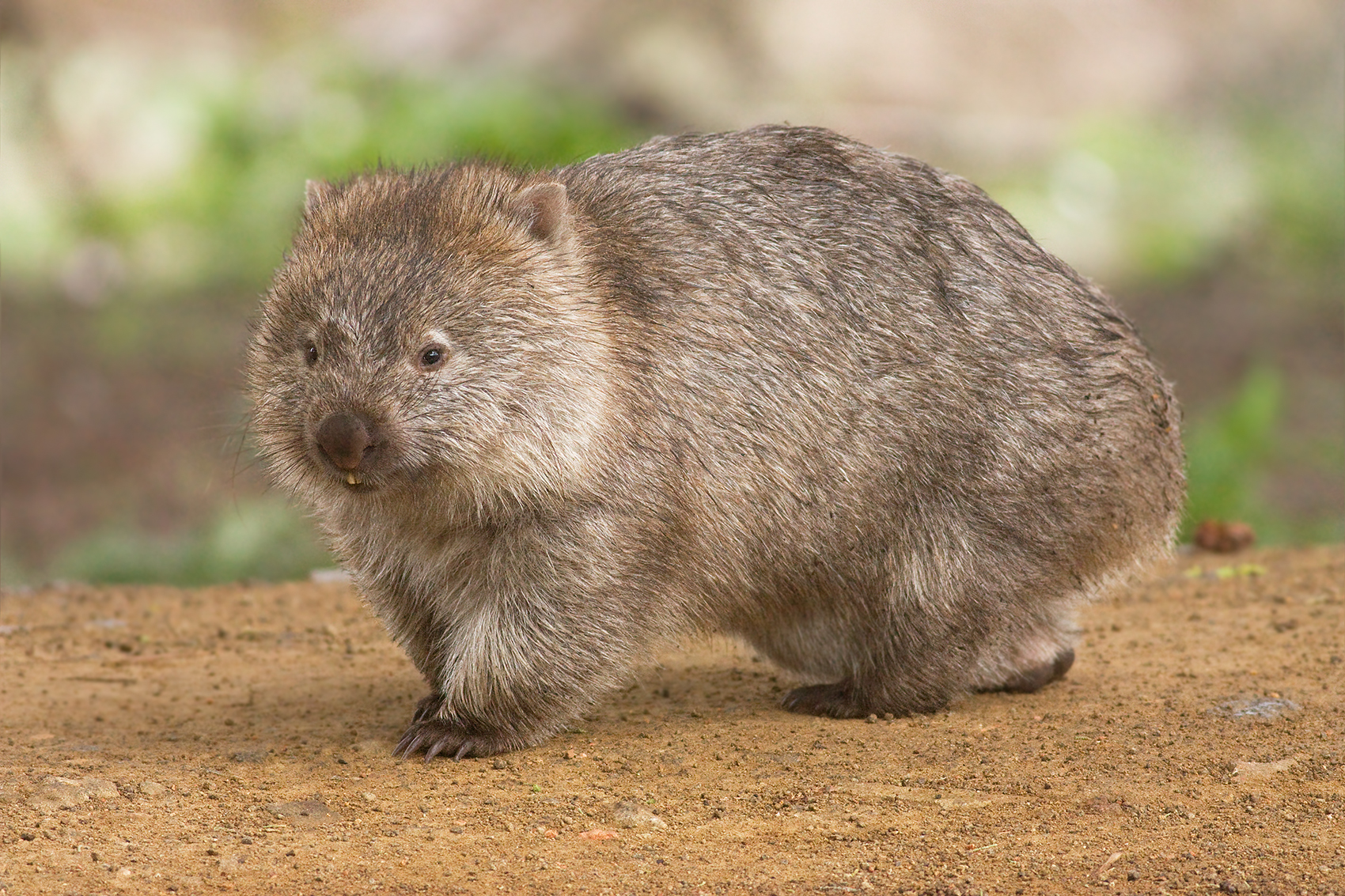
| Common wombat (Bass Strait) Maria Island, Tasmania | |
| Scientific classification | |
| Kingdom: | Animalia |
| Phylum: | Chordata |
| Class: | Mammalia |
| Infraclass: | Marsupialia |
| Order: | Diprotodontia |
| Superfamily: | Vombatoidea |
| Family: | Vombatidae Burnett, 1830 |
| Type genus | |
| Vombatus Geoffroy, 1803
| |
| Genera and species | |
Wombats are short-legged, muscular quadrupedal marsupials of the family Vombatidae that are native to Australia. Living species are about 1 m (40 in) in length with small, stubby tails and weigh between 20 and 35 kg (44 and 77 lb). They are adaptable and habitat tolerant, and are found in forested, mountainous, and heathland areas of southern and eastern Australia, including Tasmania, as well as an isolated patch of about 300 ha (740 acres) in Epping Forest National Park[2] in central Queensland.
Etymology
[edit]The name "wombat" comes from the now nearly extinct Dharug language spoken by the aboriginal Dharug people, who originally inhabited the Sydney area.[3] It was first recorded in January 1798, when John Price and James Wilson, Europeans who had adopted aboriginal ways, visited the area of what is now Bargo, New South Wales. Price wrote: "We saw several sorts of dung of different animals, one of which Wilson called a 'Whom-batt', which is an animal about 20 inches [51 cm] high, with short legs and a thick body with a large head, round ears, and very small eyes; is very fat, and has much the appearance of a badger."[4] Wombats were often called badgers by early settlers because of their size and habits. Because of this, localities such as Badger Creek, Victoria, and Badger Corner, Tasmania, were named after the wombat.[5] The spelling went through many variants over the years, including "wambat", "whombat", "womat", "wombach", and "womback", possibly reflecting dialectal differences in the Darug language.[3]
Evolution and taxonomy
[edit]Though genetic studies of the Vombatidae have been undertaken, evolution of the family is not well understood. Wombats are estimated to have diverged from other Australian marsupials relatively early, as long as 40 million years ago, while some estimates place divergence at around 25 million years.[6]: 10– Some prehistoric wombat genera greatly exceeded modern wombats in size. The largest known wombat, Phascolonus, which went extinct approximately 40,000 years ago,[7] is estimated to have had a body mass of up to 360 kilograms (790 lb).[8]
Characteristics
[edit]
Wombats dig extensive burrow systems with their rodent-like front teeth and powerful claws. One distinctive adaptation of wombats is their backward pouch. The advantage of a backward-facing pouch is that when digging, the wombat does not gather soil in its pouch over its young. Although mainly crepuscular and nocturnal, wombats may also venture out to feed on cool or overcast days. They are not commonly seen, but leave ample evidence of their passage, treating fences as minor inconveniences to be gone through or under.
Wombats leave distinctive cube-shaped faeces.[9] As wombats arrange these feces to mark territories and attract mates, it is believed that the cubic shape makes them more stackable and less likely to roll, which gives this shape a biological advantage. The method by which the wombat produces them is not well understood, but it is believed that the wombat intestine stretches preferentially at the walls, with two flexible and two stiff areas around its intestines.[10] The adult wombat produces between 80 and 100, 2 cm (0.8 in) pieces of feces in a single night, and four to eight pieces each bowel movement.[11][12] In 2019 the production of cube-shaped wombat feces was the subject of the Ig Nobel Prize for Physics, won by Patricia Yang and David Hu.[13][14]

All wombat teeth lack roots and are ever-growing, like the incisors of rodents.[15] Wombats are herbivores;[16][17][18] their diets consist mostly of grasses, sedges, herbs, bark, and roots. Their incisor teeth somewhat resemble those of rodents (rats, mice, etc.), being adapted for gnawing tough vegetation. Like many other herbivorous mammals, they have a large diastema between their incisors and the cheek teeth, which are relatively simple. The dental formula of wombats is 1.0.1.41.0.1.4 × 2 = 24.
Wombats' fur can vary from a sandy colour to brown, or from grey to black. All three known extant species average around 1 metre (3 ft 3 in) in length and weigh between 20 and 35 kg (44 and 77 lb).
Male wombats have penile spines, a non-pendulous scrotum, and three pairs of bulbourethral glands. The testes, prostate, and bulbourethral glands enlarge during the breeding season.[19] Female wombats give birth to a single young after a gestation period of roughly 20–30 days, which varies between species.[20][21] All species have well-developed pouches, which the young leave after about six to seven months. Wombats are weaned after 15 months, and are sexually mature at 18 months.[22]
A group of wombats is known as a wisdom,[23][24] a mob, or a colony.[25]
Wombats typically live up to 15 years in the wild, but can live past 20 and even 30 years in captivity.[26][27] The longest-lived captive wombat lived to 34 years of age.[27]
In 2020, biologists discovered that wombats, like many other Australian marsupials, display bio-fluorescence under ultraviolet light.[28][29][30]
-
Dentition, as illustrated in Knight's Sketches in Natural History
-
Wombat skeleton
-
Female reproductive tract
Ecology and behaviour
[edit]Wombats have an extraordinarily slow metabolism, taking around 8 to 14 days to complete digestion, which aids their survival in arid conditions.[22] They generally move slowly.[31] Wombats defend home territories centred on their burrows, and they react aggressively to intruders. The common wombat occupies a range of up to 23 ha (57 acres), while the hairy-nosed species have much smaller ranges, of no more than 4 ha (10 acres).[22]
Dingos and Tasmanian devils prey on wombats. Extinct predators were likely to have included Thylacoleo and possibly the thylacine (Tasmanian tiger). Their primary defence is their toughened rear hide, with most of the posterior made of cartilage. This, combined with its lack of a meaningful tail, makes it difficult for any predator that follows the wombat into its tunnel to bite and injure its target. When attacked, wombats dive into a nearby tunnel, using their rumps to block a pursuing attacker.[32] According to an urban legend, wombats sometimes allow an intruder to force its head over the wombat's back, and then use its powerful legs to crush the skull of the predator against the roof of the tunnel. However, there is no evidence to support this.[33]
Wombats are generally quiet animals. Bare-nosed wombats can make a number of different sounds, more than the hairy-nosed wombats. Wombats tend to be more vocal during mating season. When angered, they can make hissing sounds. Their call sounds somewhat like a pig's squeal. They can also make grunting noises, a low growl, a hoarse cough, and a clicking noise.[34]
Species
[edit]The three extant species of wombat[1] are all endemic to Australia and a few offshore islands. They are protected under Australian law.[35]
- Common wombat (Vombatus ursinus), which has three subspecies:[36]
- Vombatus ursinus hirsutus, found on the Australian mainland
- Vombatus ursinus tasmaniensis, found in Tasmania
- Vombatus ursinus ursinus, found on Flinders Island in the Bass Strait and Maria Island in the Tasman Sea.
- Northern hairy-nosed wombat or yaminon (Lasiorhinus krefftii), which is critically endangered[37]
- Southern hairy-nosed wombat (Lasiorhinus latifrons), the smallest of the three species
Human relations
[edit]History
[edit]Depictions of the animals in rock art are exceptionally rare, though examples estimated to be up to 4,000 years old have been discovered in Wollemi National Park.[38] The wombat is depicted in aboriginal Dreamtime as an animal of little worth. The mainland stories tell of the wombat as originating from a person named Warreen whose head had been flattened by a stone and tail amputated as punishment for selfishness. In contrast, the Tasmanian aboriginal story first recorded in 1830 tells of the wombat (known as the drogedy or publedina) the great spirit Moihernee had asked hunters to leave alone. In both cases, the wombat is regarded as having been banished to its burrowing habitat.[39] Estimates of wombat distribution prior to European settlement are that numbers of all three surviving species were prolific and that they covered a range more than ten times greater than that of today.[6]
After the ship Sydney Cove ran aground on Clarke Island in February 1797, the crew of the salvage ship Francis discovered wombats on the island.[40] A live animal was taken back to Port Jackson.[40] Matthew Flinders, who was travelling on board the Francis on its third and final salvage trip, also decided to take a wombat specimen from the island to Port Jackson. Governor John Hunter later sent the animal's corpse to Joseph Banks at the Literary and Philosophical Society[41] to verify that it was a new species. The island was named Clarke Island after William Clark.[42][43]
Wombats were classified as vermin in 1906, and a bounty was introduced in 1925.[6]: 103 This and the removal of a substantial amount of habitat have greatly reduced their numbers and range.[44]
Attacks on humans
[edit]In addition to being bitten, humans can receive puncture wounds from wombat claws. Startled wombats can also charge humans and bowl them over,[45] with the attendant risks of broken bones from the fall. One naturalist, Harry Frauca, once received a bite 2 cm (0.8 in) deep into the flesh of his leg—through a rubber boot, trousers and thick woollen socks.[46] A UK newspaper, The Independent, reported that on 6 April 2010, a 59-year-old man from rural Victoria state was mauled by a wombat (thought to have been angered by mange),[47] causing a number of cuts and bite marks requiring hospital treatment. He resorted to killing it with an axe.[48]
Cultural significance
[edit]Some farmers consider common wombats to be a nuisance due primarily to their burrowing behaviour. "Fatso the Fat-Arsed Wombat" was the tongue-in-cheek "unofficial" mascot of the 2000 Sydney Olympics. Since 2005, an unofficial holiday called Wombat Day has been observed on 22 October.[49]
Wombat meat has been a source of bush food from the arrival of Aboriginal Australians to the arrival of Europeans. Due to the protection of the species, wombat meat as food is no longer part of mainstream Australian cuisine, but wombat stew was once one of the few truly Australian dishes.[50] In the 20th century, the more easily found rabbit meat was more commonly used. (Rabbits are now considered an invasive pest in Australia.) The name of the dish is also used by a popular children's book and musical.[51]
Wombats have featured in Australian postage stamps and coins. The hairy-nosed wombats have featured mainly to highlight their elevated conservation status. The northern hairy-nosed wombat featured on an Australian 1974 20-cent stamp and also an Australian 1981 five-cent stamp. The common wombat has appeared on a 1987 37-cent stamp and an Australian 1996 95-cent stamp. The 2006 Australian Bush Babies stamp series features an AU$1.75-stamp of a baby common wombat, and the 2010 Rescue to Release series features a 60-cent stamp of a common wombat being treated by a veterinarian. Wombats are rarely seen on circulated Australian coins, an exception is a 50-cent coin which also shows a koala and lorikeet. The common wombat appeared on a 2005 commemorative $1 coin and the northern hairy-nosed wombat on a 1998 Australia Silver Proof $10 coin.[52]
Many places in Australia have been named after the wombat, including a large number of places where they are now locally extinct in the wild. References to the locally extinct common wombat can be found in parts of the Central Highlands of Victoria, for example the Wombat State Forest and Wombat Hill in Daylesford. Other significant places named after the wombat includes the town of Wombat, New South Wales and the suburb of Quoiba, Tasmania. Numerous less significant Australian places, including hotels, are named after the animals. Prominent sculptures of wombats include in South Australia: "The Big Wombat" at Scotdesco Aboriginal Community (Tjilkaba) and Wudinna visitor information centre, Adelaide Zoo and Norwood; New South Wales: Wombat, New South Wales; Victoria: Daylesford, Trentham, Victoria and Kinglake; Tasmania: Steppes State Reserve.
Wombats have also been a feature of Australian television. While wombats are not generally kept as pets, a notable depiction of a common wombat as a pet is Fatso from the Australian television show A Country Practice. The Brisbane television show Wombat was also named for the animals.
Australian literature contains many references to the wombat. Examples are Mr. Walter Wombat from the adventures of Blinky Bill and one of the main antagonists in The Magic Pudding by Norman Lindsay.
-
Side view of "Fatso the Fat-Arsed Wombat", an unofficial mascot for the 2000 Summer Olympics as he appeared on top of a pole outside Sydney's Stadium Australia
-
Wombat sculpture, Wombat Hill Botanic Gardens, Daylesford, Victoria
-
Wombat sculpture, Wombat, New South Wales, unveiled April 2002
Conservation
[edit]All species of wombats are protected in every Australian state.[53]
The northern hairy-nosed wombat is a critically endangered species under Queensland's Nature Conservation Act 1992, the Commonwealth Environment Protection and Biodiversity Conservation Act 1999, and on the International Union for Conservation of Nature's Red List of Threatened Species.[54] The biggest threats the species faces are its small population size, predation by wild dogs, competition for food because of overgrazing by cattle and sheep, and disease.[54] The only known wild populations of this species exist in two locations in Queensland, the Epping Forest National Park, and a smaller colony being established by translocating wombats to the Richard Underwood Nature Refuge at Yarran Downs.[54] This second colony is being created through the Xstrata reintroduction project, which is being funded by Xstrata, a Swiss global mining company.[55] From a low of just 35 wombats across the state when surveyed in the 1980s, the population had increased to a total of around 315 by May 2021.[56]
Despite its name, the common wombat is no longer as common as it once was, and is under significant threat.[57][58] However, in eastern Victoria, they are not protected, and they are considered by some to be pests, especially due to the damage they cause to rabbit-proof fences.[54][59] Opportunistic research studies have been conducted on the immune system of common wombats, which could be used as a tool for future conservation efforts.[60]
WomSAT, a citizen science project, was established in 2016 to record sightings of wombats across the country.[61][62][63] The website and mobile phone app can be used to log sightings of live or deceased wombats and wombat burrows. Since its establishment the project has recorded over 23,000 sightings across New South Wales, Victoria, Tasmania and South Australia.[64][65] More recently, the citizen science project has published findings on wombat roadkill[66] and sarcoptic mange incidence[67] across Australia.
References
[edit]- ^ a b Groves, C. P. (2005). "Order Diprotodontia". In Wilson, D. E.; Reeder, D. M (eds.). Mammal Species of the World: A Taxonomic and Geographic Reference (3rd ed.). Johns Hopkins University Press. pp. 43–44. ISBN 978-0-8018-8221-0. OCLC 62265494.
- ^ "Northern Hairy-nosed Wombat". Department of Sustainability, Environment, Water, Population and Communities. Australian Government. Retrieved 2 July 2011.
- ^ a b Butler, Susan (2009). The Dinkum Dictionary: The Origins of Australian Words. Text Publishing. p. 266. ISBN 978-1-921799-10-5.
- ^ Reed, Alexander Wyclif (1969). Place-names of New South Wales, their origins and meanings. Reed. p. 152.
- ^ "Common Wombat". Lady Wild Life. Archived from the original on 25 July 2008. Retrieved 1 September 2008.
- ^ a b c Barbara Triggs (13 July 2009). Wombats. Csiro Publishing. ISBN 978-0-643-09986-9.
- ^ Hocknull, Scott A.; Lewis, Richard; Arnold, Lee J.; Pietsch, Tim; Joannes-Boyau, Renaud; Price, Gilbert J.; Moss, Patrick; Wood, Rachel; Dosseto, Anthony; Louys, Julien; Olley, Jon; Lawrence, Rochelle A. (18 May 2020). "Extinction of eastern Sahul megafauna coincides with sustained environmental deterioration". Nature Communications. 11 (1): 2250. Bibcode:2020NatCo..11.2250H. doi:10.1038/s41467-020-15785-w. ISSN 2041-1723. PMC 7231803. PMID 32418985.
- ^ Louys, Julien; Duval, Mathieu; Beck, Robin M. D.; Pease, Eleanor; Sobbe, Ian; Sands, Noel; Price, Gilbert J. (November 2022). Hautier, Lionel (ed.). "Cranial remains of Ramsayia magna from the Late Pleistocene of Australia and the evolution of gigantism in wombats (Marsupialia, Vombatidae)". Papers in Palaeontology. 8 (6). Bibcode:2022PPal....8E1475L. doi:10.1002/spp2.1475. hdl:10072/420259. ISSN 2056-2799. S2CID 254622473.
- ^ Sample, Ian (19 November 2018). "Scientists unravel secret of cube-shaped wombat faeces". The Guardian. Retrieved 19 November 2018.
- ^ May, Natasha (29 January 2021). "Box seat: scientists solve the mystery of why wombats have cube-shaped poo". The Guardian. ISSN 0261-3077. Retrieved 31 January 2021.
- ^ Dvorsky, George (18 November 2018). "We Finally Know How Wombats Produce Their Distinctly Cube-Shaped Poop". Gizmodo. Archived from the original on 19 November 2018. Retrieved 19 November 2018.
- ^ "Mystery solved: this is how wombats do cube-shaped poo". Australian Geographic. 28 November 2018.
- ^ "The Ig Nobel Prize Winners". improbable.com. Improbable Research. August 2006. Retrieved 20 April 2020.
- ^ Yang, Patricia J.; Lee, Alexander B.; Chan, Miles; Kowalski, Michael; Qiu, Kelly; Waid, Christopher; Cervantes, Gabriel; Magondu, Benjamin; Biagioni, Morgan; Vogelnest, Larry; Martin, Alynn; Edwards, Ashley; Carver, Scott; Hu, David L. (2021). "Intestines of non-uniform stiffness mold the corners of wombat feces". Soft Matter. 17 (3): 475–488. Bibcode:2021SMat...17..475Y. doi:10.1039/D0SM01230K. PMID 33289747.
- ^ Fraser, Rebecca A.; Grün, Rainer; Privat, Karen; Gagan, Michael K. (November 2008). "Stable-isotope microprofiling of wombat tooth enamel records seasonal changes in vegetation and environmental conditions in eastern Australia". Palaeogeography, Palaeoclimatology, Palaeoecology. 269 (1–2): 66–77. Bibcode:2008PPP...269...66F. doi:10.1016/j.palaeo.2008.08.004. hdl:1959.4/45643.
- ^ Old, Julie M.; Vallin, Blaire L.; Thorley, Rowan K.; Casey, Fiona; Stannard, Hayley J. (2024). "DNA metabarcoding analysis of the bare-nosed wombat (Vombatus ursinus) diet". Ecology and Evolution. 14 (5) e11432. Bibcode:2024EcoEv..1411432O. doi:10.1002/ece3.11432. PMC 11103767. PMID 38770127.
- ^ Casey, Fiona; Vallin, Blaire L.; Wolfenden, Jack; Old, Julie M.; Stannard, Hayley J. (2024). "Nutritional composition of plants and preliminary assessment of nutrition in free-ranging bare-nosed wombats (Vombatus ursinus)". Australian Mammalogy. 46 (2). doi:10.1071/AM23013.
- ^ Casey, Fiona; Old, Julie M.; Stannard, Hayley J. (2023). "Assessment of the diet of the critically endangered northern hairy-nosed wombat (Lasiorhinus krefftii) using DNA metabarcoding". Ecology and Evolution. 13 (9) e10469. Bibcode:2023EcoEv..1310469C. doi:10.1002/ece3.10469. PMC 10485309. PMID 37693933.
- ^ Vogelnest, Larry; Woods, Rupert (18 August 2008). Medicine of Australian Mammals. Csiro Publishing. ISBN 978-0-643-09797-1.
- ^ Green, E; Myers, P (2006). "Lasiorhinus latifrons". Animal Diversity Web. University of Michigan Museum of Zoology. Retrieved 13 August 2010.
- ^ Watson, A (1999). "Vombatus ursinus". Animal Diversity Web. University of Michigan Museum of Zoology. Retrieved 13 August 2010.
- ^ a b c McIlroy, John (1984). Macdonald, D. (ed.). The Encyclopedia of Mammals. New York: Facts on File. pp. 876–877. ISBN 978-0-87196-871-5.
- ^ Britton, Ben. "Wombat". Animal Encounters. NatGeo Wild.
- ^ Woop Studios; Jay Sacher (2013), A Compendium of Collective Nouns: From an Armory of Aardvarks to a Zeal of Zebras, Chronicle Books, p. 213, ISBN 978-1-4521-2952-5
- ^ "Common wombat". National Geographic. 11 April 2010. Archived from the original on 9 March 2021. Retrieved 7 February 2023.
- ^ "Wombat". animals.sandiegozoo.org. Retrieved 7 February 2023.
- ^ a b "Common Wombat". Ballarat Wildlife Park. Retrieved 7 February 2023.
- ^ "'The platypuses were glowing': The secret light of Australia's marsupials". www.theguardian.com. 18 December 2020. Retrieved 29 December 2020.
- ^ "Scientists accidentally discover Australian marsupials glow in the dark". www.cnet.com. Retrieved 29 December 2020.
- ^ Giaimo, Cara (18 December 2020). "More Mammals Are Hiding Their Secret Glow". The New York Times. Retrieved 29 December 2020.
- ^ Marinacci, Peter. "Wombat Behavior". Wombania's Wombat Information Center. Retrieved 24 September 2020.
Wombats walk with a somewhat awkward, shuffling or waddling gait.
- ^ "Common Wombat". Department of Primary Industries, Parks, Water and Environment. Tasmanian Government. Retrieved 13 August 2010.
- ^ Boseley, Matilda (4 November 2020). "Wombats' deadly bums: how they use their 'skull-crushing' rumps to fight, play and flirt". The Guardian. ISSN 0261-3077. Retrieved 30 September 2023.
- ^ Marinacci, Peter. "Wombat Vocalizations". Wombania's Wombat Information Center. Retrieved 24 September 2020.
- ^ Humble, Gary (1 June 2006). "The Uncommon Wombat". Scribbly Gum. Australian Broadcasting Corporation. Retrieved 13 August 2010.
- ^ "Common Wombat". Department of Natural Resources and Environment Tasmania. 3 April 2024. Retrieved 6 June 2024.
- ^ "Lasiorhinus krefftii – Northern Hairy-nosed Wombat, Yaminon". Department of the Environment, Water, Heritage and the Arts. Australian Government. 12 February 2010. Retrieved 13 August 2010.
- ^ Totaro, Paola (2 July 2003). "Rock art find makes Stonehenge seem recent". Sydney Morning Herald.
- ^ James Woodford (30 January 2012). The Secret Life of Wombats. Text Publishing Company. p. 7. ISBN 978-1-921834-90-5.
- ^ a b Wells, R.T. (1989). "Volume 1B Mammalia" (PDF). In Walton, D.W. (ed.). Vombatidae. Richardson, B.J. AGPS Canberra/Department of the Environment, Water, Heritage and the Arts – Commonwealth of Australia. p. 4. ISBN 978-0-644-06056-1. Retrieved 30 December 2009.
- ^ Simpson, J. (16 January 2009). "The 'wombat' trail – David Nash". Transient Languages & Cultures. The University of Sydney. Archived from the original on 6 January 2010. Retrieved 30 December 2009.
- ^ Nash, M. "Maritime Archaeology Monograph and Reports Series No.2 – Investigation of a Survivors Camp from the Sydney Cove Shipwreck Archived 3 March 2016 at the Wayback Machine." Master of Maritime Archaeology Thesis. Department of Archaeology, Flinders University, South Australia. 2004. Accessed 30 December 2009.
- ^ Moore-Robinson, J. (1911). A Record of Tasmanian nomenclature, with dates and origins (PDF). The Mercury Printing Office – Hobart, Tasmania. p. 28. Retrieved 30 December 2009.
- ^ Thorley, Rowan; Old, Julie M. (2020). "Distribution, abundance and threats to bare-nosed wombats (Vombatus ursinus)". Australian Mammalogy. 42 (3): 249. doi:10.1071/AM19035.
- ^ Robinson, Georgina (7 April 2010). "Wombat combat: danger is their middle name". The Examiner. Retrieved 13 August 2010.
- ^ Underhill, David (1993). Australia's dangerous creatures (4th rev. ed.). Sydney: Reader's Digest Services. p. 368. ISBN 978-0-86438-018-0.
- ^ "Wombat bites Australian bush fire survivor". BBC News. 6 April 2010. Retrieved 9 April 2010.
- ^ "Australian Man Mauled in Rare Attack". The Independent. Reuters. 7 April 2010. Retrieved 7 April 2010.
- ^ Middleton, Amy (22 October 2009). "The day of the wombat". Australian Geographic. Archived from the original on 30 September 2013. Retrieved 13 August 2010.
- ^ 'International Recipes from Balmain'. The Canberra Times. Monday 19 December 1977. pg 10
- ^ Bishop, Rita. "Wombat Stew by Marcia K Vaughan: Teaching Notes" (PDF). Archived from the original (PDF) on 2 March 2014. Retrieved 20 November 2014.
- ^ "Ten Dollar". Blue Sheet Coin Values. Retrieved 19 March 2017.
- ^ "Wombats now protected all over Victoria after outrage over hunting lodge". 6 February 2020.
- ^ a b c d "About northern hairy-nosed wombats". Queensland Government. 7 October 2021. Retrieved 7 June 2024.
- ^ Todd Woody (12 March 2009). "Wombat Love". Time. Archived from the original on 16 March 2009. Retrieved 22 April 2011.
- ^ "Population milestone for northern hairy nosed wombat as its status is changed in line with international standards". Department of Environment, Science and Innovation (DESI), Queensland. 4 May 2021. Retrieved 7 June 2024.
- ^ Thorley, Rowan K.; Old, Julie M. (2020). "Distribution, abundance and threats to bare-nosed wombats (Vombatus ursinus)". Australian Mammalogy. 42: 249–256. doi:10.1071/AM19015.
- ^ Old, Julie M.; Sengupta, Chandni; Wolfenden, Jack (2018). "Sarcoptic mange in wombats – A review and future research directions". Transboundary and Emerging Diseases. 65, 399-407. 65 (2): 399–407. doi:10.1111/tbed.12770. PMID 29150905.
- ^ "Wombat, Vombatus ursinus". Parks & Wildlife Service, Tasmania. 21 May 2012. Archived from the original on 27 April 2013. Retrieved 23 January 2015.
- ^ Old, Julie M.; Hermsen, Eden M.; Young, Lauren J. (20 August 2019). "MHC Class II variability in bare-nosed wombats (Vombatus ursinus)". Australian Mammalogy. 42 (2): 135–143. doi:10.1071/AM19015. ISSN 1836-7402. S2CID 202014972.
- ^ "WomSAT". FeralScan.
- ^ "Mangy marsupials: wombats are catching a deadly disease, and we urgently need a plan to help them". The Conversation. 2015.
- ^ Skelton, Candice; Cook, Amelia; West, Peter; Old, Julie M. (2018). "Building an army of wombat warriors: developing and sustaining a citizen science project". Australian Mammalogy. 41 (2): 186–195. doi:10.1071/AM18018.
- ^ "WomSAT". FeralScan.
- ^ "2 biggest threats to wombats revealed in new data gathered by citizen scientists". The Conversation. 2023.
- ^ Mayadunnage, Sujatha; Stannard, Hayley J.; West, Peter; Old, Julie M. (2022). "Identification of roadkill hotspots and the factors affecting wombat vehicle collisions using the citizen science tool, WomSAT". Australian Mammalogy. 45 (1): 53–61. doi:10.1071/AM22001.
- ^ Mayadunnage, Sujatha; Stannard, Hayley J.; West, Peter; Old, Julie M. (2023). "Spatial and temporal patterns of sarcoptic mange in wombats using the citizen science tool, WomSAT". Integrative Zoology. 19 (3): 387–399. doi:10.1111/1749-4877.12776. PMID 37865949.
Further reading
[edit]- Will Cuppy, How to Attract the Wombat, with illustrations by Ed Nofziger, David R. Godiine, 2002, ISBN 1-56792-156-6 (Originally published 1949, Rhinehart).
- Jackie French, The Secret World of Wombats, with illustrations by Bruce Whatley, Harper Collins Publishers, 2005, ISBN 0-207-20031-9.
- Jackie French, Christmas Wombat, with illustrations by Bruce Whatley, Clarion Books, 2012, ISBN 978-0547868721.
- Barbara Triggs, Wombats, Houghton Mifflin Australia Pty, 1990, ISBN 0-86770-114-5. Facts and photographs of wombats for children.
- Barbara Triggs, The Wombat: Common Wombats in Australia, University of New South Wales Press, 1996, ISBN 0-86840-263-X.
- James Woodford, The Secret Life of Wombats, Text Publishing, 2002, ISBN 1-877008-43-5.
External links
[edit]- South Australian Government Faunal Emblem (official website)
- Rossetti's Wombat: A Pre-Raphaelite Obsession in Victorian England (Archived 5 June 2022 at the Wayback Machine)
- Man attacked by wombat—The Sydney Morning Herald
- Secret sex life of wombat
- Video of the most long-lived known captive wombat, Patrick
- Video of Christmas Wombat
- We need to have a conversation about wombats (The Oatmeal)
Wombat
View on GrokipediaEtymology
Linguistic Origins and Usage
The term "wombat" derives from the Dharug (also spelled Darug) language of the Eora people, indigenous to the Sydney region of Australia, where the animal was known by variants such as wambad, wombach, or womback.[9][10] This borrowing reflects early colonial interactions, with the word first recorded in written English on May 4, 1798, by John Price, a young servant to Governor John Hunter, during an expedition near the Hawkesbury River.[11] The orthography stabilized as "wombat" in subsequent European accounts, supplanting earlier descriptive terms like "badger" used by settlers unfamiliar with the marsupial's unique traits.[6] In English, "wombat" entered scientific nomenclature through publications such as those by George Shaw in 1800, who described Phascolomys ursinus (now Vombatus ursinus), formally establishing it as the common name for species in the family Vombatidae.[9] Its usage remains zoological, denoting the three extant species—the common wombat (Vombatus ursinus), southern hairy-nosed wombat (Lasiorhinus latifrons), and northern hairy-nosed wombat (Lasiorhinus krefftii)—characterized by burrowing habits and robust build, without extension to metaphorical or slang meanings in standard references.[10] In Australian Aboriginal contexts, regional dialects yielded similar onomatopoeic or descriptive terms tied to the animal's vocalizations or appearance, though Dharug's near-extinction post-colonization limited preservation of variants beyond colonial transcriptions.[11] Adopted into other languages via English, "wombat" appears as a loanword in French (vombat), German (Wombat), and Indonesian (wombat), retaining its referential specificity to the Australian marsupials without semantic shift.[12] This direct borrowing underscores the term's fidelity to its indigenous root, avoiding the interpretive distortions seen in some colonial-era faunal naming, where European analogies (e.g., "bear" or "groundhog") were initially applied before native terms prevailed.[6]Taxonomy and Evolution
Modern Classification
Wombats are classified within the marsupupial infraclass Marsupialia, specifically in the order Diprotodontia, which encompasses herbivores characterized by a single pair of incisors in the lower jaw and syndactylous hind feet.[2][13] The family Vombatidae, formerly known as Phascolomyidae, includes all living wombat species and is distinguished by burrowing adaptations and robust morphology adapted for fossorial life.[2] This family falls under the suborder Vombatiformes and superfamily Vombatoidea, reflecting phylogenetic analyses that position wombats as a distinct lineage among diprotodonts, supported by dental and skeletal traits like continuously growing incisors and reduced epipubic bones.[14] The modern taxonomy recognizes three extant species across two genera, based on morphological differences in rhinarium (bare vs. hairy-nosed) and geographic distribution, corroborated by molecular studies confirming monophyly of Vombatidae.[2][15] Genus Vombatus contains the common (or bare-nosed) wombat, Vombatus ursinus (described by Shaw in 1800), which exhibits three subspecies: V. u. ursinus (mainland southeastern Australia), V. u. hirsutus (Flinders Island), and V. u. tasmaniensis (Tasmania).[2] Genus Lasiorhinus includes the southern hairy-nosed wombat (L. latifrons) and the critically endangered northern hairy-nosed wombat (L. krefftii), both adapted to arid environments with hairy nasal regions aiding in sensory function.[15][2]| Taxonomic Rank | Classification |
|---|---|
| Kingdom | Animalia |
| Phylum | Chordata |
| Class | Mammalia |
| Infraclass | Marsupialia |
| Order | Diprotodontia |
| Suborder | Vombatiformes |
| Infraorder | Vombatomorphia |
| Superfamily | Vombatoidea |
| Family | Vombatidae |
| Genera | Vombatus, Lasiorhinus |
Fossil History and Ancestral Traits
The earliest known fossils attributable to the Vombatidae family date to the late Oligocene or early Miocene, approximately 26–25 million years ago, with Rhizophascolonus crowcrofti recovered from the Wipajiri Formation in South Australia.[16] This species exhibits dentition and cranial features intermediate between primitive diprotodontians and later vombatids, including rooted molars adapted for grinding vegetation, suggesting an early shift toward herbivory in forested paleoenvironments.[2] A contemporaneous giant relative, Mukupirna nambensis, from the Namba Formation in South Australia, represents a basal diprotodontian potentially sister to vombatids, weighing an estimated 200–360 kg—over four times the mass of modern wombats—and possessing shovel-like manual phalanges indicative of scratch-digging for foraging or shelter.[17][18] Its robust postcrania and hypsodont teeth imply adaptations to abrasive, fruit- and nut-rich diets in subtropical woodlands, with phylogenetic analyses placing it as an outgroup to crown vombatids, highlighting early divergence within Vombatiformes around 40 million years ago.[17] Gigantism in vombatoid lineages likely arose once and early, as confirmed by complete skull reconstructions of Pleistocene Ramsayia magna, which retain vombatid synapomorphies like bilobed premolars while scaling to rhinoceros-like proportions.[19][20] Miocene fossils from Riversleigh, Queensland, such as primitive vombatids around 15 million years old, reveal arboreal traits including elongated limbs and grasping extremities, contrasting with the derived terrestrial burrowing of extant species and indicating that fossoriality evolved secondarily in response to aridification and competition.[21][22] Ancestral traits retained in modern wombats include diprotodont dentition—a single pair of procumbent lower incisors opposing a reduced upper dental arcade, enabling efficient cropping of grasses and roots—along with syndactyly, wherein the second and third hind digits fuse into a grooming comb, a plesiomorphic feature shared across Diprotodontia for enhanced traction and hygiene.[23][24] Early vombatids also display hypsodont molars for processing silica-laden forage, a trait amplified from diprotodontian forebears to counter abrasive Pleistocene grasslands, while retaining marsupial hallmarks like epipubic bones stabilizing the pouch during locomotion.[25] These features underscore a phylogeny wherein vombatids derive from wynyardiid-like ancestors, with burrowing specializations (e.g., reinforced humeri) emerging post-Oligocene as adaptations to sclerophyllous habitats rather than primitive arborealism.[26]Physical Characteristics
Morphology and Adaptations
Wombats display a compact, robust morphology characterized by a barrel-shaped body, short limbs, and a broad head, adaptations that facilitate their burrowing and grazing habits. Adults typically measure 700-1200 mm in head-body length, with a stubby tail of minimal length, and weigh between 15 and 35 kg.[27][28] Their skeleton is sturdily constructed with short, thick limb bones, a massive dorsoventrally flattened skull, and a large broad sacrum, providing structural support for powerful digging forces.[29][30] The forelimbs are muscular and equipped with broad paws and flattened claws, enabling efficient soil excavation, while the hind limbs are shorter, weaker, and rotated inward in a pigeon-toed fashion for stability during burrowing.[30][4] Wombats possess rodent-like front teeth for gnawing through roots and obstacles, complemented by a single pair of upper incisors and hypsodont molars adapted to grind tough, abrasive vegetation.[1][31] The female's marsupial pouch opens rearward, preventing it from filling with dirt during digging activities.[32] Additional morphological features include small eyes and rounded ears suited to a nocturnal, subterranean existence, a short muscular neck, and powerful shoulders that enhance leverage in tunneling.[4][33] The femur exhibits dense bone structure, likely an adaptation to withstand the mechanical stresses of fossorial locomotion and burrow construction.[34] These traits collectively enable wombats to maintain extensive burrow systems exceeding 20 meters in length, shielding them from predators and extreme surface conditions.[1]Sensory and Physiological Features
Wombats possess limited visual acuity due to their small eyes positioned laterally on the head, which restricts their field of view and adaptation to low-light conditions despite their primarily nocturnal activity.[30] This sensory constraint is offset by an acute sense of smell, enabling them to detect food sources, navigate terrain, and identify territorial markers through scent trails.[6] Their hearing is also well-developed, aiding in predator detection and environmental awareness in dark burrow systems and forested habitats.[30] Observational data suggest these olfactory and auditory adaptations are critical for survival, as wombats forage and burrow with minimal reliance on sight.[28] Physiologically, wombats exhibit a low metabolic rate and elongated hindgut fermentation, allowing efficient extraction of nutrients and water from fibrous, low-quality grasses over a digestion period of up to 14 days.[28] This adaptation supports their existence in arid environments by minimizing energy expenditure and water loss, with bacterial fermentation in the caecum and colon breaking down cellulose that foregut fermenters cannot process as effectively.[35] A distinctive feature of their excretory system is the production of cube-shaped feces, resulting from uneven elasticity in the distal intestines that molds the waste into angular forms, facilitating territorial marking on elevated surfaces without rolling.[36] In reproduction, female wombats have a backward-facing pouch, an adaptation that prevents soil ingress during digging and protects the joey, with gestation lasting approximately 20-30 days before pouch development.[30] Their overall physiology includes a robust skeletal structure for burrowing and a relatively large brain relative to body size, correlating with complex spatial memory for extensive burrow networks.[30]Habitat and Distribution
Geographic Range
Wombats are endemic to Australia, with no native populations outside the continent.[37] The three extant species occupy distinct but overlapping regions, primarily in the southern and eastern portions, shaped by historical land clearing, predation, and habitat preferences for grasslands, woodlands, and sclerophyll forests.[6] The common wombat (Vombatus ursinus), also known as the bare-nosed wombat, has the broadest distribution, ranging from southeastern Queensland through New South Wales, most of Victoria, southeastern South Australia, and Tasmania, including larger Bass Strait islands.[37] It favors temperate eucalypt forests and mountainous areas but avoids dense rainforests, with populations fragmented due to past agricultural expansion; historical records indicate it was once more continuous across southern Australia.[4][38] The southern hairy-nosed wombat (Lasiorhinus latifrons) is confined to semi-arid shrublands and mallee eucalypt woodlands in southeastern Western Australia, southern South Australia, and patches extending toward the New South Wales border, receiving 200–500 mm of annual rainfall.[35] Its distribution is patchy, centered around the Nullarbor Plain and Murraylands, reflecting adaptation to drier environments compared to the common species.[39][40] The northern hairy-nosed wombat (Lasiorhinus krefftii) has the most restricted range, limited to approximately 300 hectares at Epping Forest National Park in east-central Queensland (120 km northwest of Clermont) and a translocated population at Richard Underwood Nature Refuge, both in open eucalypt woodlands on deep sandy soils along dry creek beds.[41] Formerly distributed across parts of New South Wales, Victoria, and broader Queensland, its current confinement stems from habitat loss and competition, rendering it critically endangered with fewer than 400 individuals.[42][43]Environmental Preferences and Adaptations
![Wombat burrow in Narawntapu][float-right] Wombats primarily inhabit regions of Australia with friable, well-drained soils conducive to burrowing, ranging from temperate forests to semi-arid grasslands depending on the species. The common wombat (Vombatus ursinus) prefers temperate to subalpine environments, including wet and dry forests, woodlands, coastal scrub, grasslands, and heathlands up to elevations of 1,800 meters, typically in areas with sufficient rainfall to sustain grassy forage.[44] In contrast, the southern hairy-nosed wombat (Lasiorhinus latifrons) occupies semi-arid shrublands, mallee woodlands, and open grasslands receiving 200 to 500 mm of annual rainfall, favoring deep sandy or loamy soils along the southern fringes of Australian deserts from southeastern Western Australia to southern New South Wales.[35] The northern hairy-nosed wombat (Lasiorhinus krefftii), now restricted to a single locality in Queensland's Epping Forest National Park, selects semi-arid zones with deep sandy soils near vegetated creek beds and gullies, historically extending to eucalypt forests in eastern Australia.[45] These preferences reflect adaptations to diverse climatic challenges, including temperature extremes and variable precipitation. All wombat species construct extensive burrow systems—sometimes exceeding 30 meters in length and comprising multiple chambers—to regulate body temperature, evade predators, and shelter from harsh weather; burrows maintain internal temperatures around 20–25°C even when surface conditions fluctuate widely, enabling survival in both cold winters and hot summers.[38] Fossorial traits, such as robust forelimbs with strong claws, flattened skulls for soil displacement, and a backward-facing pouch to exclude debris during excavation, facilitate rapid digging in preferred substrates, with common wombats capable of displacing up to 0.4 cubic meters of soil per night.[46] Nocturnal or crepuscular activity patterns further mitigate diurnal heat stress and predation risks, particularly in open habitats. Physiologically, wombats exhibit hindgut fermentation for extracting nutrients from fibrous, low-protein native grasses, coupled with efficient water conservation via concentrated urine and minimal sweating, allowing persistence in drought-prone areas where surface water is scarce.[46]Behavior and Ecology
Social Structure and Daily Patterns
Wombats exhibit a predominantly solitary social structure, with individuals typically occupying individual burrows and avoiding prolonged interactions outside of brief encounters during breeding or territorial disputes.[47] Home ranges, averaging 2.4 to 8.3 hectares for the common wombat (Vombatus ursinus), frequently overlap between neighbors of the same or opposite sex, facilitating potential mating opportunities while minimizing direct competition through spatial partitioning of resources.[28] Within these ranges, wombats defend core feeding areas aggressively, marking boundaries with scent from anal glands rubbed on trees and elevated surfaces, as well as by depositing distinctive cube-shaped fecal pellets on rocks and logs, aggregating them around prominent landscape features to signal occupancy and mark territory without intentionally constructing towers or pyramids; the non-rolling property of the cubic scat serves as an adaptive byproduct facilitating this marking.[48][49][50] Territorial defense involves vocal grunts, bluff charges, and bites targeted at the ears and rump of intruders, though outright fights are infrequent due to the energy costs in these robust, low-mobility marsupials.[6] Tolerance of overlapping ranges appears higher among females and during non-breeding periods, with males showing greater intolerance toward same-sex rivals; such behaviors maintain population densities without forming stable social groups akin to those in more gregarious herbivores.[47] Daily activity patterns are adapted to thermal regulation in arid Australian environments, rendering wombats primarily nocturnal or crepuscular, with peak foraging from dusk to dawn to exploit cooler temperatures and reduce predation risk.[4] They emerge from burrows around sunset, graze for 3 to 8 hours on grasses and roots—traveling up to 3 kilometers in a session—and retreat before midday, spending up to 80% of daylight hours resting underground to conserve water and evade heat stress exceeding 30°C.[6][47] In winter or cooler climates, individuals may shift to diurnal activity, basking in sunlight or grazing during daylight to maximize energy intake when nocturnal frost limits plant availability.[28] Variations occur across species and habitats; for instance, southern hairy-nosed wombats (Lasiorhinus latifrons) show more flexible crepuscular peaks influenced by lunar cycles and rainfall, but all maintain burrow-centric routines to buffer against diurnal extremes.[51]Diet, Foraging, and Digging Behaviors
Wombats are herbivorous grazers with diets dominated by native grasses, supplemented by sedges, forbs, roots, bulbs, and occasionally bark or fungi, varying by species and season.[5] The common wombat (Vombatus ursinus) prefers young grass shoots and perennial species such as Poa grasses, which constitute the bulk of its intake even in post-fire environments where forage recovery influences composition.[52] Bare-nosed wombats exhibit seasonal preferences, consuming mostly grasses but shifting toward forbs and dicots in drier periods, as revealed by DNA metabarcoding analyses.[53] Hairy-nosed species, including the northern (Lasiorhinus krefftii), prioritize grasses followed by legumes, adapting to low-nitrogen, high-fiber vegetation that demands efficient microbial fermentation in their hindgut for nutrient extraction.[54] Foraging occurs primarily at night or during crepuscular periods, with wombats emerging from burrows around sunset to graze for several hours, minimizing exposure to diurnal predators and extreme temperatures.[47] In cooler months or overcast conditions, activity may extend into daylight, but summer heat drives stricter nocturnality, conserving energy through selective feeding on available, nutrient-poor plants.[4] Individuals cover territories of 10-20 hectares while foraging, using keen senses of smell to locate food, and may travel up to 3 kilometers from burrows, though most feeding happens within 100-200 meters.[47] Digging behaviors underpin both shelter construction and supplementary food acquisition, facilitated by robust forelimbs, broad paws with thick claws, and continuously growing rodent-like incisors for soil displacement.[55] Wombats excavate extensive burrow systems—up to 30 meters long and 3.5 meters deep—using alternating strokes of one forefoot to loosen soil, then backing out to push debris rearward with their rumps, creating entrances often 1 meter wide.[47] These networks, comprising multiple chambers and entrances, provide thermal regulation, predator evasion, and occasionally foraging access to subsurface roots in arid soils like calcrete, where digging enhances water infiltration and soil aeration as a byproduct.[56] While primary burrowing is for habitation, opportunistic excavation during foraging yields tubers or rhizomes, reflecting adaptations evolved for survival in marginal habitats with sparse vegetation.[57]Reproduction, Development, and Lifespan
Wombats attain sexual maturity between 18 months and 2 years of age.[3][28] Breeding is opportunistic and not strictly seasonal, occurring whenever environmental conditions such as food availability permit, though births in some populations cluster during warmer months, for instance December to March in New South Wales highlands or October to January in Tasmania.[4][44] Females typically produce a single offspring following a gestation period of 20 to 30 days.[3][28] The newborn joey emerges in an embryonic state, weighing approximately 2 grams and measuring about 2 centimeters in length, lacking fur, eyes, and hind limbs.[58][59] It relies on instinctive behavior to crawl from the birth canal into the mother's backward-oriented pouch, where it latches onto a teat for nourishment and further development over 5 to 6 months.[28][3] During this pouch phase, the joey develops fur, opens its eyes, and gains mobility. Upon leaving the pouch, it may ride on the mother's back, continuing to suckle until weaning at around 12 to 15 months, achieving independence by 2 years.[44][60] In the wild, wombat lifespan averages 5 to 15 years, limited primarily by predation, disease, vehicle collisions, and habitat pressures, with many individuals perishing before age 5.[4][61] Captive wombats often exceed 20 years, with records reaching 30 years or more; for example, a bare-nosed wombat named Wain lived to at least 34 years in a Japanese zoo as of 2024.[62] Hairy-nosed species generally exhibit shorter wild lifespans of 10 to 12 years compared to the more resilient common wombat.[63]Species Accounts
Common Wombat (Vombatus ursinus)
The common wombat (Vombatus ursinus), also referred to as the bare-nosed wombat, is a robust marsupial species endemic to southeastern Australia, including Tasmania. It belongs to the family Vombatidae within the order Diprotodontia and is the sole extant member of its genus. Adults typically measure 70–120 cm in head-body length, with a short tail adding 2–3 cm, and weigh between 20 and 35 kg, though individuals up to 39 kg have been recorded. The species exhibits a stocky build with powerful forelimbs adapted for digging, coarse fur ranging from sandy to dark brown, and a naked, cartilaginous nose pad distinguishing it from hairy-nosed congeners.[28][4] This wombat inhabits a range of environments including eucalypt forests, woodlands, coastal heathlands, and temperate grasslands across New South Wales, Victoria, southern Queensland, South Australia, and Tasmania. Three subspecies are recognized: V. u. ursinus (mainland and Flinders Island), V. u. hirtipes (Tasmania), and V. u. lasiorhinus (historically South Australia, now possibly extinct). Populations favor areas with friable soils suitable for burrowing, avoiding arid interiors and dense rainforests. They construct extensive burrow systems, often up to 30 m long and 3 m deep, which serve as refuges from predators and extreme temperatures.[28][30] Nocturnal and solitary, common wombats maintain territories marked by scent and latrines, with individuals emerging at dusk to forage. They are herbivorous, consuming primarily native grasses, sedges, and forbs, supplemented by bark, roots, and moss during scarcity; selective feeding favors nutrient-rich plants, enabling survival on low-quality diets through hindgut fermentation. Digging behaviors not only procure food but also reshape landscapes, with burrows providing habitat for other species. Social interactions are limited, though brief aggressive encounters occur over resources.[28][6] Reproduction occurs opportunistically year-round, peaking in cooler months, with females giving birth to a single offspring after a 20–30 day gestation. The altricial joey resides in the backward-facing pouch for 6–9 months before emerging, achieving independence at 12–18 months. Sexual maturity is reached at 2–3 years, and lifespan in the wild averages 5–10 years, extending to over 30 in captivity. Parental care involves pouch development and den provisioning.[28][30] Classified as Least Concern by the IUCN, common wombat populations remain stable overall, estimated in the hundreds of thousands, though local declines occur due to habitat fragmentation, competition with livestock, and diseases like sarcoptic mange. Primary threats include vehicle collisions, which cause significant mortality—up to 80% of surveyed deaths in some studies—and mange outbreaks, exacerbated by stress and poor nutrition. Predation by introduced foxes and dogs affects juveniles, while illegal culling persists in agricultural areas despite legal protections under Australian wildlife acts. Management focuses on habitat preservation and mange treatment protocols, with citizen science aiding monitoring.[4][64][65]Southern Hairy-nosed Wombat (Lasiorhinus latifrons)
The Southern hairy-nosed wombat (Lasiorhinus latifrons) is a robust, fossorial marsupial endemic to Australia, distinguished by its broad snout fringed with silky grey-tan fur extending from the nostrils, in contrast to the bare-nosed common wombat. Adults measure approximately 90–100 cm in head-body length, weigh 20–32 kg, and possess short, powerful forelimbs with flattened claws adapted for extensive burrowing, as well as continuously growing rodent-like incisors for processing abrasive vegetation.[35][39] Males are typically larger than females, and the species exhibits a low metabolic rate enabling survival in arid conditions with minimal water intake, primarily derived from moisture in food sources like dew or rainfall.[35][6] This species occupies patchy distributions across semi-arid shrublands, mallee eucalypt woodlands, and grasslands in southern South Australia (including Eyre and Yorke Peninsulas and the Murray Mallee), southeastern Western Australia, and rarely southwestern New South Wales, where annual rainfall ranges from 200–500 mm. It requires friable, sandy-loam soils for constructing complex burrow systems—often interconnected warrens up to 30 m long and 3.5 m deep—that shelter multiple individuals, though each uses separate tunnels to minimize conflict. These habitats feature perennial grasses (Stipa spp.), forbs, sedges, and saltbush (Maireana spp.) scrub, which provide both forage and structural stability against erosion.[35][39][6] Behaviorally, southern hairy-nosed wombats are largely solitary and crepuscular or nocturnal, emerging to forage in mornings during summer or evenings in winter, with home ranges centered on warrens spanning a 150 m radius; territorial scent-marking via anal glands and feces maintains spacing among overlapping individuals. Their herbivorous diet consists primarily of grass shoots, forbs, and sedges, supplemented by browse from woody shrubs during droughts, with digestion facilitated by hindgut fermentation yielding cube-shaped feces containing about 50% water content for efficient moisture retention. Digging not only creates shelter but also aids foraging by exposing roots, though this exposes them to predation risks from dingoes and foxes, albeit limited by their burrowing prowess and nocturnal habits.[35][39] Reproduction is seasonal, peaking from September to December in response to post-winter rainfall, with females undergoing a 21–30 day gestation before birthing a single, altricial young that remains in the backward-facing pouch for 6–9 months, emerging to forage independently around 12–15 months while still suckling sporadically. Sexual maturity occurs at about 3 years, with lifespans reaching up to 14 years in the wild, constrained more by environmental factors like drought than predation.[35][39] Classified as Near Threatened by the IUCN due to fragmented subpopulations and isolation risks, the species maintains a relatively large overall population estimated in the tens of thousands, with some regional increases noted since 1980s surveys through improved monitoring, though declines persist from threats including sarcoptic mange outbreaks (causing 80–90% mortality in affected colonies), competition with introduced herbivores like rabbits and livestock for forage, habitat degradation from overgrazing, and vehicle strikes. Conservation measures include predator-proof fencing and feral ungulate control at sanctuaries such as Yookamurra in South Australia, alongside population tracking via burrow activity counts, emphasizing the need for habitat connectivity to buffer against aridification trends.[66][6][39][67]Northern Hairy-nosed Wombat (Lasiorhinus krefftii)
The Northern hairy-nosed wombat (Lasiorhinus krefftii) is a critically endangered Australian marsupial, recognized as one of the rarest terrestrial mammals globally, with a total population estimated at approximately 400 individuals as of the 2022 census.[68] This species inhabits semi-arid open eucalypt woodlands characterized by deep sandy soils suitable for extensive burrow systems and year-round availability of grasses, adaptations that enable survival in environments prone to drought and variable rainfall.[42] Physically, adults measure over 1 meter in length, weigh an average of 32 kg (up to 30-35 kg), and feature soft grey fur, longer pointed ears relative to bare-nosed wombats, a broad muzzle with fine sensory hairs, and chisel-like continuously growing incisors adapted for grinding fibrous vegetation.[42][43] Their lifespan exceeds 28 years in the wild, supported by robust burrowing capabilities that maintain stable microclimates.[42] Historically distributed across central and southern Queensland in vast tracts of grassland and woodland, the species' range contracted dramatically due to habitat clearance for pastoralism in the 19th and early 20th centuries, intensified competition for forage from introduced livestock (cattle and sheep) and rabbits, direct persecution (over 1,000 individuals shot in 1884 alone), and predation by dingoes and feral dogs.[43][69] By the 1980s, the population had plummeted to around 35 animals confined to Epping Forest National Park (2,750 hectares, protected since 1971); a second colony was established via translocation at Richard Underwood Nature Refuge (130 hectares) in 2009, reaching about 18 individuals by 2024, with a third site initiated that year using 15 translocated wombats.[70][43] Current threats include small population vulnerabilities such as inbreeding risks, disease susceptibility, and environmental stressors like droughts (which halted breeding in the early 1990s), floods, wildfires, and ongoing competition from invasive species, though fencing (e.g., a 20 km barrier at Epping Forest installed in 2002) has mitigated some predation and grazing pressures.[43][42] Nocturnal and largely solitary, these wombats occupy loose clusters of 4-5 individuals within burrow systems featuring up to 90 meters of interconnected tunnels reaching 3-3.5 meters deep, which provide thermal regulation (minimum 12°C) and protection from predators and extremes.[42] They emerge to forage for 2-6 hours nightly (longer in winter), covering up to 27 hectares per individual on a diet exclusively of native and introduced grasses like buffel grass, selected for their fibrous content that necessitates specialized dentition but results in minimal tooth wear.[42] Capable of speeds up to 40 km/h when threatened, they exhibit behaviors tied to resource availability, with digging reinforcing burrows and aiding soil aeration in their ecosystem.[42] Reproduction is opportunistic and rainfall-dependent, with females reaching maturity at about 2.5 years and males at 3 years; breeding peaks from November to April in wetter conditions, yielding 50-80% female participation and a single offspring per event, following a 21-day gestation and 8-10 months in the backward-facing pouch before weaning at around one year, with inter-birth intervals of about two years under favorable forage conditions.[42][71] Conservation management, coordinated by Queensland's Department of Environment, Science and Innovation, includes annual hair-sampling censuses since 2000, supplementary feeding and water during droughts, invasive species control, and translocation efforts, which have driven recovery from near-extinction lows without reliance on captive breeding due to poor success rates in related species.[42][43] The species is listed as critically endangered under Australia's Environment Protection and Biodiversity Conservation Act 1999 and Queensland's Nature Conservation Act 1992, with ongoing recovery plans emphasizing habitat security and population expansion to buffer against stochastic events.[42]Human Interactions
Historical Discovery and Exploitation
The term "wombat" derives from the Dharug language of Indigenous Australians in the Sydney region and was first recorded in writing by English settler John Price in 1798 during explorations in New South Wales.[11] Price provided the earliest European description of the animal, noting it as resembling a small bear-like creature approximately 20 inches high with short legs, a thick body, and large head, based on sightings and dung observed in 1797 near the Hawkesbury River.[2][72] Live wombats were first captured by Europeans in March 1798 on Cape Barren Island in Bass Strait, where a female specimen was obtained during a sealing expedition led by George Bass and Matthew Flinders; this animal was later preserved and shipped to England for study.[73] From the early 1800s onward, increasing numbers of preserved wombat specimens were transported to Europe, where they were distributed among scientific institutions and naturalists for anatomical examination and classification, contributing to early understandings of marsupial diversity.[73] Early European settlers in Australia exploited wombats primarily for food, with the meat described as palatable and comparable to beef or pork in colonial accounts, leading to widespread consumption during periods of food scarcity in the late 18th and early 19th centuries.[72] Wombat fur was also harvested for use in clothing and bedding, though less extensively than for other native mammals due to its coarse texture.[72] By the mid-19th century, as agricultural expansion conflicted with wombat burrowing habits, settlers increasingly viewed them as pests damaging crops and fences, resulting in organized hunting; for instance, in 1884, over 1,000 northern hairy-nosed wombats were shot on a single property in the New South Wales Riverina region as part of early vermin control efforts.[43] Bounties and unregulated shooting persisted into the 20th century in some areas, exacerbating population declines before conservation measures were enacted.[74]Conflicts, Including Attacks and Property Damage
Wombats occasionally exhibit defensive aggression toward humans when their burrows are threatened or when cornered, though such attacks remain rare relative to their population and human encounters. Documented incidents include a 2010 mauling of a 59-year-old man in rural Victoria by a bare-nosed wombat (Vombatus ursinus), which he killed with an axe after sustaining injuries; the animal had entered his property during post-bushfire recovery.[75][76] In 2016, a woman in Canberra suffered over 20 bites and lacerations, three requiring stitches, in the territory's first reported wombat attack, prompted by the animal charging her near a burrow.[77] Bites and claw punctures are common injury types, with wombats capable of charging at speeds up to 40 km/h and using their strong jaws or backward-facing hindquarters to crush threats against burrow walls.[78] Further cases highlight territorial behavior: in 2017, a wombat in Tasmania repeatedly attacked residents, hospitalizing one and leading to its euthanasia for public safety.[79] A 2023 incident involved a hand-reared wombat brutally attacking its caretaker at a wildlife sanctuary, attributed to matured territorial instincts overriding familiarity.[80] Juvenile wombats emerging from pouches around nine months old often display heightened aggression during independence.[47] While some sources describe wombats as non-vicious unless provoked, empirical reports confirm potential for serious injury, particularly from bare-nosed species defending core burrow areas.[81] Property damage primarily stems from wombat burrowing, which undermines fences, roads, and infrastructure. Landholders in New South Wales frequently report fence breaches where wombats excavate under barriers to access forage, necessitating post-damage gates installed along known paths.[38][82] Undetected burrows pose hazards to livestock, causing falls or entrapment, and can weaken road foundations, contributing to erosion in high-density areas.[38] In South Australia, rising wombat populations have led to burrows under urban structures, such as a 2025 case in Robe where one tunneled beneath the bowling club on the main street.[83] Garden trampling and crop access via fence gaps exacerbate conflicts for farmers, though wombats avoid heavily cultivated areas preferring native grasslands.[38] Mitigation often involves reinforced fencing or deterrence, as relocation is legally restricted in protected species contexts.[84]Cultural Representations and Misconceptions
In Australian Indigenous Dreamtime stories, wombats feature in narratives that convey moral lessons, such as the tale where Warreen the wombat, originally a man, refuses to help Mirram the kangaroo during a flood and is struck on the forehead with a stone club, resulting in the animal's characteristic flat head and burrowing habit as punishment for laziness.[85] Other accounts portray wombats as tricksters or creators imparting wisdom on resourcefulness and land connection, though some mainland traditions depict them as originating from figures of low value, reflecting practical views of their utility as food rather than reverence.[86] In 19th-century Britain, wombats captured the imagination of the Pre-Raphaelite Brotherhood, with poet and artist Dante Gabriel Rossetti keeping a pet wombat named Top in his London garden in 1869, which he mourned upon its death by requesting its taxidermy; this fascination stemmed from the animal's perceived stoic strength and placid demeanor, inspiring sketches and poetic references among the group.[87] During the 2000 Sydney Olympics, the character Fatso the Fat-Arsed Wombat emerged as an unofficial mascot created by comedians Roy Slaven and HG Nelson for their satirical TV segments, embodying Australian humor through its exaggerated, relatable form; despite official bans by the Australian Olympic Committee for promoting obesity, Fatso gained widespread popularity, with merchandise sales and public displays like a pole-mounted statue outside Stadium Australia, highlighting wombats as symbols of irreverent national identity.[88][89] Wombats appear in modern media, including children's literature like Mem Fox's Wombat Divine (1995), which anthropomorphizes the animal in a ballet story, and Indigenous comics such as The Wombat, a 1970s series featuring a sword-wielding war veteran protecting native fauna, representing efforts to incorporate Aboriginal themes in popular culture.[90] A persistent misconception holds that wombat populations undergo explosive booms, but empirical data indicate breeding occurs every two to three years with single joeys, limiting rapid increases and aligning with stable or declining trends in monitored areas.[91] Another myth suggests skewed sex ratios favoring males due to observed solitary females, yet studies confirm near 50:50 birth ratios, with visibility biases arising from behavioral differences rather than demographic imbalance.[92] Claims of wombats herding other animals into burrows during bushfires for protection lack verification, originating from anecdotal reports without causal evidence, as wombats primarily use burrows for their own thermoregulation and no systematic data supports interspecies rescue behavior.[93] Wombats are sometimes portrayed as perpetually docile, but they exhibit territorial aggression, using powerful hindquarters to crush threats against burrow walls, a defense mechanism substantiated by field observations rather than passive temperament.[94]Conservation and Management
Population Status and Trends
The common wombat (Vombatus ursinus) maintains a stable and abundant population across its range in southeastern mainland Australia, Tasmania, and introduced areas, classified as Least Concern by the IUCN with no evidence of significant decline. Recent estimates place the total population above 900,000 individuals, supported by widespread distribution and high local densities in suitable habitats.[95][64] The southern hairy-nosed wombat (Lasiorhinus latifrons) has shown overall population growth since surveys in the 1980s, with core colonies in South Australia, including the Nullarbor Plain, supporting hundreds of thousands of individuals based on burrow occupancy models estimating around 930,000 in that region alone. However, trends are uneven, with some peripheral colonies contracting or disappearing due to habitat variability and past declines from competition with introduced rabbits and historical culling, though numbers remain substantial at over 1 million nationally as of mid-2010s data.[96][97][98] The northern hairy-nosed wombat (Lasiorhinus krefftii), classified as Critically Endangered by the IUCN, has recovered from a low of approximately 35 individuals in the 1980s to around 400 as of the 2022 census, confined primarily to Epping Forest National Park in Queensland with a supplementary translocated population at Richard Underwood Nature Refuge. Conservation interventions, including habitat management and recent translocations to sites like Powrunna State Forest in 2025, have driven this modest increase, with the first wild-born offspring confirmed in new colonies signaling potential for further growth despite ongoing risks of stochastic events in small populations.[70][99][100]Primary Threats and Empirical Data
Sarcoptic mange, caused by the mite Sarcoptes scabiei, represents the most significant disease threat to common wombats (Vombatus ursinus), leading to severe population declines through skin lesions, secondary infections, behavioral changes, and increased mortality. Outbreaks have resulted in over 90% reductions in affected local populations, with empirical studies documenting density-independent declines driven by environmental transmission of mites surviving in burrows. Prevalence varies spatially and temporally, ranging from 3.1% to 37.5% across sites, with citizen science data from 2015–2019 indicating 31.2% of reported wombats infected, and site-specific rates up to 40.7% correlating with rainfall deficits and habitat features like low-lying pans. In Tasmania, mange incidence has contributed to localized extirpations, though populations elsewhere show resilience absent epizootics.[101][102][103][104][105] Habitat loss and fragmentation exacerbate threats across species, compounded by vehicle collisions and competition from introduced herbivores like rabbits and livestock, which degrade forage and burrow resources. For southern hairy-nosed wombats (Lasiorhinus latifrons), drought induces population fluctuations by reducing grass availability, with studies showing significant positive correlations between annual rainfall and burrow occupancy rates, as low precipitation limits reproduction and juvenile survival. Historical pastoralism has contracted ranges, with ongoing fragmentation isolating colonies and increasing vulnerability to stochastic events.[106][107][108] Northern hairy-nosed wombats (Lasiorhinus krefftii), numbering approximately 300 individuals confined to Epping Forest National Park as of recent surveys, face amplified risks from small population size, including inbreeding depression and sensitivity to environmental perturbations. Primary historical drivers of decline from thousands in the 19th century include overgrazing by cattle and sheep during droughts, which reduced habitat quality; current threats encompass floods eroding burrows, wildfires altering vegetation, and potential pathogens like toxoplasmosis from feral cats, though no major epizootics recorded. Population growth has averaged 10–15% annually since intensive management began in the 1980s, but remains precarious against climatic variability.[109][110][71][111]Management Strategies and Recent Interventions
Management strategies for wombats prioritize habitat protection, predator and competitor control, disease mitigation, and population monitoring, with non-lethal methods favored where populations conflict with human activities. In agricultural areas, techniques such as burrow marking, exclusion fencing with mesh or electric barriers, and installation of swing gates on runways aim to reduce crop damage without harming animals.[112] Programs like the Wombat Mitigation Program promote alternatives to culling, including fence repairs, wombat underpasses or walkways, and revegetation to sustain local populations while minimizing economic losses.[113] For the critically endangered northern hairy-nosed wombat (Lasiorhinus krefftii), interventions focus on translocation to expand range and reduce extinction risk from its single remnant population at Epping Forest National Park. The 2022 Recovery Action Plan outlines habitat management, threat control, and genetic monitoring to support growth from approximately 350 individuals.[114] In July 2024, 15 wombats were translocated to Powrunna State Forest, marking the third such effort to establish a semi-wild population in suitable sandy loam habitats with year-round grass cover.[115] A fourth translocation in July 2025 moved 11 more individuals from Epping Forest to Powrunna, enhancing genetic diversity and resilience against localized threats like drought or fire.[116] Ongoing management by Queensland's Department of Environment, Science and Innovation includes burrow inspections, dietary assessments, and feral herbivore exclusion to improve forage quality.[117][118] Southern hairy-nosed wombats (Lasiorhinus latifrons) benefit from feral ungulate control, such as goat and rabbit culling, on reserves to lessen grazing competition and habitat degradation during droughts.[39] In South Australia, humane burrow treatments for sarcoptic mange using flaps or flaps have been trialed, though efficacy varies with environmental factors.[119] Captive breeding protocols emphasize social housing compatible with their colonial burrowing, alongside health monitoring to bolster wild releases.[120] Common wombats (Vombatus ursinus), being abundant, face localized control in high-conflict zones, but broader strategies address mange prevalence through topical treatments and vaccination trials.[121] Population surveys in Tasmania documented a 61% increase from 1985 to 2023, informing sustainable density management via density estimates of 0.3–1.9 per hectare.[33][122] Community-led initiatives, including the Australian Wombat Fund's advocacy, have influenced guidelines prohibiting indiscriminate lethal control since 2025.[123]References
- https://en.wiktionary.org/wiki/wombat
