Hubbry Logo
United Nations Convention Against CorruptionUnited Nations Convention Against CorruptionMain
Open search
United Nations Convention Against Corruption
Community hub
United Nations Convention Against Corruption
logo
8 pages, 0 posts
0 subscribers
Be the first to start a discussion here.
United Nations Convention Against Corruption
from Wikipedia

United Nations Convention Against Corruption
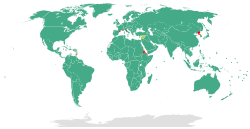
Signatories (yellow) and ratifiers (green) of the treaty; those who did not sign are in red.
Drafted31 October 2003
Signed9 December 2003
LocationMérida and New York
Effective14 December 2005
Condition30 ratifications
Signatories141
Parties192
DepositarySecretary-General of the United Nations
LanguagesArabic, Chinese, English, French, Russian and Spanish

The United Nations Convention Against Corruption (UNCAC) is the only legally binding international anti-corruption multilateral treaty. Negotiated by member states of the United Nations (UN) it was adopted by the UN General Assembly in October 2003 and entered into force in December 2005. The treaty recognises the importance of both preventive and punitive measures, addresses the cross-border nature of corruption with provisions on international cooperation and on the return of the proceeds of corruption. The UN Office on Drugs and Crime (UNODC) in Vienna serves as the Secretariat for the UNCAC. UNCAC's goal is to reduce various types of corruption that can occur across country borders, such as trading in influence and abuse of power, as well as corruption in the private sector, such as embezzlement and money laundering. Another goal of the UNCAC is to strengthen international law enforcement and judicial cooperation between countries by providing effective legal mechanisms for international asset recovery.

States Parties – countries that have ratified the convention – are expected to cooperate in criminal matters and consider assisting each other in investigations of and proceedings in civil and administrative matters relating to corruption. The Convention further calls for the participation of civil society and non-governmental organisations in accountability processes and underlines the importance of citizens' access to information.

Signatures, ratifications, and entry into force

[edit]

UNCAC was adopted by the United Nations General Assembly on 31 October 2003 by Resolution 58/4. It was opened for signature in Mérida, Yucatán, Mexico, from 9 to 11 December 2003 and thereafter at UN headquarters in New York City. It was signed by 141 countries. As of October 2023, there are 192 parties, which includes 187 UN member states, the Cook Islands, Niue, the Holy See, the State of Palestine, and the European Union.[1]

As of September 26, 2025, the 6 UN member states that have not ratified the convention are (asterisk indicates that the state has signed the convention):

Measures and provisions of the Convention

[edit]

UNCAC covers five main areas that includes both mandatory and non-mandatory provisions:

General provisions (Chapter I, Articles 1–4)

[edit]
United Nations Convention Against Corruption, 2003

The opening Articles of UNCAC include a statement of purpose (Article1), which covers both the promotion of integrity and accountability within each country and the support of international cooperation and technical assistance between States Parties. They also include definitions of critical terms used in the instrument. Some of these are similar to those used in other instruments, and in particular the United Nations Convention against Transnational Organized Crime (UNTOC), but those defining "public official", "foreign public official", and "official of a public international organization" are new and are important for determining the scope of application of UNCAC in these areas. UNCAC does not provide a definition of corruption. In accordance with Article 2 of the UN Charter, Article 4 of UNCAC provides for the protection of the national sovereignty of the States Parties.,[2][3]

Preventive measures (Chapter II, Articles 5–14)

[edit]

UNCAC recognizes the importance of prevention in both the public and private sectors. Chapter II includes preventive policies, such as the establishment of anti-corruption bodies and enhanced transparency in the financing of election campaigns and political parties. Anti-corruption bodies should implement anti-corruption policies, disseminate knowledge and must be independent, adequately resourced and have properly trained staff.

Countries that sign the convention must assure safeguards their public services are subject to safeguards that promote efficiency, transparency and recruitment based on merit. Once recruited, public servants should be bound by codes of conduct, requirements for financial and other disclosures, and appropriate disciplinary measures. Transparency and accountability in the management of public finances must also be promoted, and specific requirements are established for the prevention of corruption in the particularly critical areas of the public sector, such as the judiciary and public procurement. Preventing corruption also requires an effort from all members of society at large. For these reasons, UNCAC calls on countries to promote actively the involvement of civil society, and to raise public awareness of corruption and what can be done about it. The requirements made for the public sector also apply to the private sector – it too is expected to adopt transparent procedures and codes of conduct.[4]

Criminalization and law enforcement (Chapter III, Articles 15–44)

[edit]

Chapter III calls for parties to establish or maintain a series of specific criminal offences including not only long-established crimes such as bribery and embezzlement, but also conducts not previously criminalized in many states, such as trading in influence and other abuses of official functions. The broad range of ways in which corruption has manifested itself in different countries and the novelty of some of the offences pose serious legislative and constitutional challenges, a fact reflected in the decision of the Ad Hoc Committee to make some of the provisions either optional ("...shall consider adopting...") or subject to domestic constitutional or other fundamental requirements ("...subject to its constitution and the fundamental principles of its legal system...").[5] Specific acts that parties must criminalize include

  • active bribery of a national, international or foreign public officials
  • passive bribery of a national public official
  • embezzlement of public funds

Other mandatory crimes include obstruction of justice, and the concealment, conversion or transfer of criminal proceeds (money laundering). Sanctions extend to those who participate in and may extend to those who attempt to commit corruption offences.[6] UNCAC thus goes beyond previous instruments of this kind that request parties to criminalize only basic forms of corruption. Parties are encouraged – but not required – to criminalize, inter alia, passive bribery of foreign and international public officials, trading in influence, abuse of function, illicit enrichment, private sector bribery and embezzlement, and the concealment of illicit assets.

Furthermore, parties are required to simplify rules pertaining to evidence of corrupt behavior by, inter alia, ensuring that obstacles that may arise from the application of bank secrecy laws are overcome. This is especially important, as corrupt acts are frequently very difficult to prove in court. Particularly important is also the introduction of the liability of legal persons. In the area of law enforcement, UNCAC calls for better cooperation between national and international bodies and civil society. There is a provision for the protection of witnesses, victims, expert witnesses and whistle-blowers to ensure that law enforcement is truly effective.

Russia ratified the convention in 2006, but failed to include Article 20, which criminalizes "illicit enrichment". In March 2013, the Communist Party of the Russian Federation submitted a petition with 115,000 signatures to the State Duma in favour of doing so.[7] In 2015, however, no such law was yet in effect in Russia.

International cooperation (Chapter IV, Articles 43–49)

[edit]

Under Chapter IV of UNCAC, States Parties are obliged to assist one another in every aspect of the fight against corruption, including prevention, investigation, and prosecution of offenders. Cooperation takes the form of extradition, mutual legal assistance, transfer of sentences persons and criminal proceedings, and law enforcement cooperation. Cooperation in civil and administrative matters is also encouraged. Based on Chapter IV, UNCAC itself can be used as a basis for extradition, mutual legal assistance and law enforcement concerning corruption-related offences. "Dual criminality", which is a requirement that the relevant offence shall be criminalized in both the requesting and requested country, is considered fulfilled irrespective of whether the same terminology or category of offense is used in both jurisdictions. In case of a request for assistance involving non-coercive measures, States Parties are required to provide assistance even when dual criminality is absent subject only to the basic concepts of their legal systems. Chapter IV also contains other innovative provisions designed to facilitate international cooperation. For example, States Parties that use UNCAC as a basis for extradition shall not consider corruption-related offences as political ones; assistance can also be provided in relation to offences for which legal persons can be held responsible; and bank secrecy cannot be cited as a ground to refuse a request for assistance. In order to ensure speedy and efficient cooperation, each State Party is required to designate a central authority responsible for receiving MLA requests. Overall, Chapter IV provides a broad and flexible platform for international cooperation. However, its provisions do not exhaust all international cooperation issues covered by UNCAC, thus the purposes of UNCAC and provisions of other chapters also need to be taken into consideration.[8]

Asset recovery (Chapter V, Articles 51–59)

[edit]

The agreement on asset recovery is considered a major breakthrough and many observers claim that it is one of the reasons why so many developing countries have signed UNCAC.[9] Asset recovery is indeed a very important issue for many developing countries where high-level corruption has plundered the national wealth. Reaching an agreement on this Chapter involved intensive negotiations, as the legitimate interests of countries wishing to recover illicit assets had to be reconciled with the legal and procedural safeguards of the countries from which assistance will be sought.[10] Generally, in the course of the negotiations, countries seeking to recover assets sought to establish presumptions that would make clear their ownership of the assets and give priority for return over other means of disposal. Countries from which the return was likely to be sought, on the other hand, had concerns about the language that might have compromised basic human rights and procedural protections associated with criminal liability and the freezing, seizure, forfeiture and return of such assets.

Chapter V of UNCAC establishes asset recovery as a "fundamental principle" of the convention. The provisions on asset recovery lay a framework, in both civil and criminal law, for tracing, freezing, forfeiting and returning funds obtained through corrupt activities. The requesting state will in most cases receive the recovered funds as long as it can prove ownership. In some cases, the funds may be returned directly to individual victims.

If no other arrangement is in place, States Parties may use the Convention itself as a legal basis. Article 54(1)(a) of UNCAC provides that: "Each State Party (shall)... take such measures as may be necessary to permit its competent authorities to give effect to an order of confiscation issued by a court of another state party" Indeed, Article 54(2)(a) of UNCAC also provides for the provisional freezing or seizing of property where there are sufficient grounds for taking such actions in advance of a formal request being received.[11]

Recognizing that recovering assets once transferred and concealed is an exceedingly costly, complex and all-too-often unsuccessful process, this Chapter also incorporates elements intended to prevent illicit transfers and generate records that can be used where illicit transfers eventually have to be traced, frozen, seized and confiscated (Article 52). The identification of experts who can assist developing countries in this process is also included as a form of technical assistance (Article 60(5)).

Technical assistance and information exchange (Chapter VI, Articles 60–62)

[edit]

Chapter VI of UNCAC is dedicated to technical assistance, meaning support offered to developing and transition countries in the implementation of UNCAC. The provisions cover training, material and human resources, research, and information sharing. UNCAC also calls for cooperation through international and regional organizations (many of which already have established anti-corruption programmes), research efforts, and the contribution of financial resources both directly to developing countries and countries with economies in transition, and to the UNODC.

Mechanisms for implementation (Chapter VII, Articles 63–64)

[edit]

Chapter VII deals with international implementation through the CoSP and the UN Secretariat.

Final provisions (Chapter VIII, Articles 65–71)

[edit]

The final provisions are similar to those found in other UN treaties. Key provisions ensure that UNCAC requirements are to be interpreted as minimum standards, which States Parties are free to exceed with measures "more strict or severe" than those set out in specific provisions; and the two Articles governing signature, ratification and the coming into force of the convention.[5]

Conference of the States Parties

[edit]

Pursuant to article 63 of UNCAC, a Conference of the States Parties (CoSP) to UNCAC was established to improve the capacity of and cooperation between States Parties to achieve the objectives set forth in UNCAC, and to promote and review its implementation. UNODC acts as the secretariat to the CoSP. At its different sessions, besides regularly calling States Parties and signatories to adapt their laws and regulations to bring them into conformity with the provisions of UNCAC[12][13] the CoSP has adopted resolutions and has mandated UNODC to implement them, including through the development of technical assistance projects.[14]

The CoSP has established several subsidiary bodies to further the implementation of specific aspects of UNCAC. The Implementation Review Group,[15] focuses on the implementation review mechanism and technical assistance, the Working Group on Asset Recovery, the Working Group on Prevention,[16] as well as expert group meetings on international cooperation[17] meet regularly in the inter-sessional period.

  • The first session of the CoSP took place on 10–14 December 2006 at the Dead Sea, Jordan. In its resolution 1/1, States Parties agreed that it was necessary to establish an appropriate and effective mechanism to assist in the review of the implementation of UNCAC. An inter-governmental working group was established to start working on the design of such a mechanism.[18] Two other working groups were set up to promote coordination of activities related to technical assistance and asset recovery, respectively.
  • The second session was held in Bali, Indonesia, from 28 January to 1 February 2008. As to the mechanism for the review of implementation, the States Parties decided to take into account a balanced geographical approach, to avoid any adversarial or punitive elements, to establish clear guidelines for every aspect of the mechanism and to promote universal adherence to UNCAC and the constructive collaboration in preventive measures, asset recovery, international cooperation and other areas. The CoSP also requested donors and receiving countries to strengthen coordination and enhance technical assistance for the implementation of UNCAC, and dealt with the issue of bribery of officials of public international organizations.[19]
  • The third session of the CoSP took place in Doha, Qatar, from 9 to 13 November 2009. The CoSP adopted the landmark Resolution 3/1 on the review of the implementation of UNCAC, containing the terms of reference of the Implementation Review Mechanism (IRM).[20] In view of the establishment of the IRM, and considering that the identification of needs and the delivery of technical assistance to facilitate the successful and consistent implementation of UNCAC are at the core of the mechanism, the CoSP decided to abolish the Working Group on Technical Assistance and to fold its mandate into the work of the Implementation Review Group.[21] For the first time, the CoSP also adopted a resolution on preventive measures, in which it established the Open-Ended Intergovernmental Working Group on Prevention to further explore good practices in this field.[22] The CoSP was preceded and accompanied by numerous side events, such as the last Global Forum for Fighting Corruption and Safeguarding Integrity (in cooperation with businesses) and a Youth Forum.[23]
  • The fourth session of the CoSP took place in Marrakech, Morocco, from 24 to 28 October 2011. The Conference considered the progress made in the IRM and recognized the importance of addressing technical assistance needs in the Review Mechanism.[15] It also reiterated its support for the Working Groups on Asset Recovery[24] and Prevention[25] and established Open-Ended Intergovernmental Expert Group Meetings on International Cooperation to advise and assist the CoSP with respect to extradition and mutual legal assistance.[17]

Other sessions of the CoSP took place in Panama in 2013,[26] the Russian Federation in 2015,[27] Austria in 2017 and the United Arab Emirates in 2019.[28]

Implementation of the UNCAC and monitoring mechanism

[edit]

In accordance with Article 63(7) of UNCAC, "the Conference shall establish, if it deems necessary, any appropriate mechanism or body to assist in the effective implementation of the Convention".[29] At its first session, the CoSP established an open-ended intergovernmental expert group to make recommendations to the Conference on the appropriate mechanism. A voluntary "Pilot Review Programme", which was limited in scope, was initiated to offer the adequate opportunity to test possible methods to review the implementation of UNCAC, with the overall objective to evaluate efficiency and effectiveness of the tested mechanism(s) and to provide to the CoSP information on lessons learnt and experience acquired, thus enabling the CoSP to make informed decisions on the establishment of an appropriate mechanism for reviewing the implementation of UNCAC.

The CoSP at its third session, held in Doha in November 2009, adopted Resolution 3/1 on the review of the implementation of the convention, containing the terms of reference of an Implementation Review Mechanism (IRM). It established a review mechanism aimed at assisting countries to meet the objectives of UNCAC through a peer review process. The IRM is intended to further enhance the potential of the UNCAC, by providing the means for countries to assess their level of implementation through the use of a comprehensive self-assessment checklist, the identification of potential gaps and the development of action plans to strengthen the implementation of UNCAC domestically. UNODC serves as the secretariat to the review mechanism.[20]

The Terms of Reference contain procedures and processes for the peer review of the States Parties' implementation of the UNCAC, including the formation of an oversight body called the Implementation Review Group (IRG).

In July 2010 the IRG met for the first time in Vienna and adopted the guidelines for governmental experts[30] and the UNCAC secretariat – the UN Office on Drugs and Crime (UNODC) – in the conduct of a country review. The mechanism consists of a multi-stage peer review which involves the review of each State Party by two peers – one from the same UN region and one from another one. To cover all States Parties, the review process is divided into two five-year cycles where countries are randomly selected to be reviewed in each year of the cycle. The first cycle started in 2010 and covers Chapters III and IV of the convention. The second cycle was launched in November 2015 and is currently underway, covering Chapters II and V, reviewing corruption prevention measures and asset recovery. While the second cycle is scheduled to end in 2021, the process is facing substantial delays, more than three years into the second cycle, only 20 of the 184 countries had completed the review process by May 2019.

It has yet to be decided if and how the review mechanism will continue after the end of the five years foreseen for the second cycle, but if the first cycle is a guide, then the reviews will continue beyond the five years.

A country review process follows these phases:

  1. Self-assessment: UNODC informs the State Party that it is under review. The State Party identifies a focal point to coordinate the country's participation in the review and then fills out a standardised self-assessment checklist.
  2. Peer review: two reviewer States Parties – decided by lots[31] – provide experts to form a review team. The team conducts a desk review of the completed self-assessment checklist. It may require further information from the focal point and direct dialogue through conference calls, or a country visit if agreed by the country reviewed.
  3. Country review report and executive summary: with the assistance of UNODC, the expert review team prepares a country review report (80–300 pages). The report is sent to the focal point for approval. In cases of disagreement, the reviewers and the contact point engage in dialogue to arrive at a consensual final report, which is published in full only with the agreement of the country under review. The expert review team produces an executive summary of this report (7–12 pages), which is automatically published on the UNODC website.

UNCAC Coalition

[edit]

The UNCAC Coalition, established in 2006, is a global network of over 350 civil society organisations (CSOs) in over 100 countries, committed to promoting the ratification, implementation and monitoring of the UNCAC. The Coalition engages in joint action around common positions on the UNCAC, facilitates the exchange of information among members, and supports national civil society efforts to promote the UNCAC. Coalition members share views via the Coalition website and a mailing list and ad hoc working groups. The Coalition supports civil society organisations to engage in and contribute to the UNCAC review process, including through technical support.

The Coalition, directly and through its members, advocates for greater transparency and space for civil society participation in all UNCAC fora – the Conference of States Parties, the meetings of the Implementation Review Group, working groups and the review process on the national level. Furthermore, the Coalition seeks to advance discussions on key issues covered by the convention, including:

  • Access to information
  • Asset recovery
  • Beneficial company ownership transparency
  • Protection of whistleblowers and anti-corruption activists

It aims to mobilize broad civil society support for UNCAC and to facilitate strong civil society action at national, regional and international levels in support of UNCAC. The Coalition is open to all organizations and individuals committed to these goals. The breadth of UNCAC means that its framework is relevant for a wide range of CSOs, including groups working in the areas of human rights, labour rights, governance, economic development, environment and private sector accountability.

Challenges

[edit]

Ratification of UNCAC, while essential, is only the first step. Fully implementing its provisions presents significant challenges for the international community as well as individual States parties, particularly in relation to the innovative areas of UNCAC. For this reason, countries have often needed policy guidance and technical assistance to ensure the effective implementation of UNCAC. The results of the first years of IRM have shown that many developing countries have identified technical assistance needs. The provision of technical assistance, as foreseen in UNCAC, is crucial to ensure the full and effective incorporation of the provisions of UNCAC into domestic legal systems and, above all, into the reality of daily life.

See also

[edit]

References

[edit]
[edit]
Revisions and contributorsEdit on WikipediaRead on Wikipedia
from Grokipedia
The United Nations Convention against Corruption (UNCAC) is the only legally binding universal treaty designed to prevent and combat corruption in all its forms, covering preventive measures, criminalization of offenses, law enforcement, international cooperation, asset recovery, and technical assistance. Adopted by the UN General Assembly on 31 October 2003 at United Nations Headquarters in New York, it entered into force on 14 December 2005, ninety days after the thirtieth ratification. As of September 2025, UNCAC has 192 States Parties, encompassing nearly all UN member states and demonstrating broad international commitment to norms. The obliges parties to establish bodies, enhance transparency in , and facilitate mutual legal assistance, while emphasizing asset recovery as a core principle to return proceeds of to affected countries. Its Conference of the States Parties serves as the primary decision-making body, overseeing through peer-reviewed mechanisms, though full executive summaries of country reviews are often delayed or partially confidential. Despite its comprehensive scope and widespread , UNCAC's remains contested, with empirical studies showing mixed impacts on levels across signatories due to inconsistent domestic and the absence of punitive measures for non-compliance. Critics highlight limitations in its implementation process, which relies on voluntary participation and lacks independent verification, potentially undermining in high- jurisdictions. Nonetheless, UNCAC has facilitated notable achievements, including strengthened global asset recovery efforts and harmonized legal frameworks that enable cross-border investigations.

Historical Development

Origins in Global Anti-Corruption Efforts

The recognition of corruption as a transnational threat intensified in the , driven by of its role in economic instability and failures. High-profile scandals, including those exposed during the of 1997–1998, demonstrated how entrenched elite corruption and crony networks facilitated unsustainable debt accumulation, asset misallocation, and sudden , affecting economies from to . These events underscored causal mechanisms whereby corruption distorts competitive markets by favoring insiders, erodes in institutions, and amplifies vulnerabilities to external shocks, as foreign investors withdrew amid revelations of systemic graft. Cross-border dimensions of corruption, particularly in , highlighted the limitations of unilateral or domestic measures, as actors in one could exploit weak enforcement elsewhere to gain undue advantages. First-principles analysis reveals that such practices create negative externalities, including reduced and heightened inequality, by subverting merit-based allocation of resources and legal predictability essential for . Regional initiatives, such as the 1996 Inter-American Convention Against Corruption under the , addressed hemispheric concerns but lacked global reach. The Convention on Combating of Foreign Public Officials in International Business Transactions, signed in 1997 and entering into force in 1999, marked a pivotal precursor by mandating of bribes paid by firms from 38 mostly developed economies to foreign officials, targeting the "supply side" of transnational . However, its scope was confined to OECD members and excluded "demand-side" facilitation by recipient countries, prompting calls for a more comprehensive framework applicable to all nations. In parallel, resolutions in 1996—Resolution 51/59 adopting the International for Public Officials, and Resolution 51/191 endorsing the Declaration against and in International Commercial Transactions—affirmed 's threat to societal stability and urged international , setting normative foundations without binding obligations. These efforts reflected a consensus that fragmented approaches failed to counter 's migratory nature, paving the way for a universal instrument.

Negotiation and Adoption Process

The Ad Hoc Committee for the Negotiation of a Convention against Corruption, established by the , convened its first session in from 21 to 1 2002, with subsequent meetings held through 2003 to draft the convention's text. These open-ended intergovernmental sessions involved representatives from all 191 member states at the time, along with observer participation, focusing on reconciling diverse national legal traditions and priorities in anti-corruption frameworks. Key debates centered on the scope of criminalization provisions in what became Chapter III, balancing mandatory requirements—such as domestic and —with optional ones like trading in influence and illicit enrichment to accommodate varying jurisdictional capacities and versus civil law differences. A significant point of contention and eventual compromise involved Chapter V on asset recovery, where the and developing countries advocated for robust mechanisms to repatriate proceeds of to victim states, prioritizing the direct return of stolen assets over mere forfeiture in host jurisdictions. This emphasis addressed the causal flow of illicit funds from poorer nations to wealthier ones, ensuring that recovery efforts served rather than indefinite retention abroad. Negotiations progressed through seven sessions, culminating in consensus on the draft text by October 2003. The adopted the Convention against Corruption unanimously via resolution 58/4 on 31 October 2003 at its headquarters in New York, marking the completion of the drafting process without a recorded vote. The treaty opened for signature at a high-level in Mérida, , from 9 to 11 December 2003, hosted by the Mexican government, where over 100 states initially affixed their signatures, signaling broad early commitment.

Entry into Force and Initial Ratifications

The United Nations Convention Against Corruption (UNCAC) entered into force on 14 December 2005, ninety days after the deposit of the thirtieth instrument of , , approval, or accession, as required by Article 68(1). This threshold was met with the thirtieth deposit on 15 September 2005, marking the Convention's transition from adoption on 31 October 2003 to a binding international instrument. South Africa's ratification on 22 November 2004 played a pivotal role in building early momentum, particularly in , where it joined a wave of accessions reflecting regional priorities on amid high perceptions. Initial ratifications accelerated in and , with countries like (14 October 2004), (4 November 2004), and (18 September 2007, post-threshold but emblematic of regional speed) demonstrating swift uptake driven by alignment with domestic anti-corruption drives and international pressure. In contrast, some Western states, including (ratified 2 October 2007), proceeded more deliberately to reconcile the Convention's provisions with established national laws, such as those under systems requiring legislative adjustments. Between 2005 and 2010, ratifications surged, fueled by UN Office on Drugs and Crime advocacy, technical assistance programs, and peer pressure at the inaugural Conference of the States Parties in December 2006, which emphasized implementation readiness and regional workshops. This period saw over 100 additional accessions, predominantly from developing regions seeking enhanced international against illicit flows, though gaps persisted in holdouts prioritizing over .

Overall Ratification and Participation

As of October 2025, the Convention Against Corruption (UNCAC) counts 192 states parties, encompassing nearly all member states along with entities such as the , , the , and the State of Palestine, marking a high degree of global adherence since its in 2005. This near-universal participation reflects incentives including enhanced access to international financial assistance, compliance with donor conditions from bodies like the World Bank and IMF, and reputational benefits in forums. However, does not guarantee robust domestic implementation, as evidenced by persistent corruption indices in many parties despite formal accession. Regional patterns reveal disparities influenced by economic dependencies and geopolitical priorities. exhibits one of the highest ratification rates, with over 90% of sub-Saharan states parties, largely propelled by the convention's provisions on asset recovery (Chapter V), which address illicit financial outflows estimated at $88.6 billion annually from the continent, motivating participation to facilitate repatriation from jurisdictions like and the . In contrast, shows strong overall uptake but frequent reservations upon concerning mutual legal assistance and (Articles 46 and 44), reflecting sensitivities over cross-border enforcement that could implicate political elites or conflict with non-interference norms in states like and . and the approach full coverage, driven by alignment with regional instruments like the Criminal Law Convention on Corruption and the Inter-American Convention Against Corruption. The handful of non-parties—primarily microstates such as , , and , alongside isolated regimes like and —have forgone ratification citing preservation and potential incompatibilities with domestic legal frameworks that prioritize national over international oversight mechanisms. These opt-outs empirically correlate with low perceived external pressures, as small economies with minimal global financial integration face fewer aid conditionality demands, while sanctioned states like avoid commitments that could enable foreign scrutiny of internal . No major states remain outside, countering narratives of regional resistance; all have ratified, often with reservations on to safeguard commercial interests. Such holdouts underscore a causal tension between ratification's benefits for resource-poor nations seeking recovered assets and the risks of ceding control for entities valuing opacity.

Chapter I: General Provisions

Chapter I of the United Nations Convention Against Corruption (UNCAC) comprises Articles 1 through 4, which lay out the treaty's core objectives, terminology, applicability, and constraints on implementation to respect national sovereignty. These provisions frame the Convention as a framework for addressing corruption—defined structurally as a distortion of incentives and resource allocation in public and private spheres—through voluntary international alignment rather than supranational mandate. Adopted on October 31, 2003, by the UN General Assembly, the chapter emphasizes efficiency in prevention and enforcement without prescribing uniform domestic reforms. Article 1: Statement of purpose articulates three primary aims: to promote and strengthen measures for preventing and combating more efficiently; to facilitate international cooperation and technical assistance in this regard; and to foster , , and proper of affairs and . These goals target 's causal effects, such as undermining by favoring over productive activity, while avoiding overrides of national legal systems. The article does not mandate specific penalties or harmonization, allowing states to pursue these ends through tailored mechanisms consistent with their institutions. Article 2: Use of terms provides definitions for nine key concepts to ensure consistent interpretation across the Convention's 71 articles. "" encompasses legislative, executive, administrative, or judicial roles at national, regional, or levels, including those performing public functions or providing services. "Foreign public official" extends this to equivalent roles abroad, while "" broadly includes movable or immovable assets, rights, and interests. Other terms cover "," "," "proceeds of ," and specific acts like , enabling precise application to corruption's manifestations without expansive reinterpretation. Article 3: Scope of application mandates that the Convention apply to the prevention, investigation, and prosecution of offenses, as well as international cooperation, in accordance with its terms and subject to constitutional principles. States parties must integrate these elements into domestic laws and practices, extending obligations to their jurisdiction's full territory and, where applicable, to defense or personnel. This provision underscores a targeted scope on actionable —such as or —while permitting exclusions for matters like if constitutionally required, prioritizing empirical enforcement over ideological breadth. Article 4: Protection of requires states parties to implement obligations in ways consistent with their fundamental domestic legal principles and without prejudice to equality or . Implementation must not entail harmonization of laws that conflicts with constitutional rules or principles, reinforcing that the Convention serves as a facilitative tool rather than an instrument for external imposition. This safeguard addresses potential overreach, ensuring anti-corruption efforts align with national contexts where institutional variations affect corruption's prevalence and remedies.

Chapter II: Preventive Measures

Chapter II of the United Nations Convention Against Corruption (UNCAC) establishes a framework for States Parties to implement proactive institutional and systemic reforms aimed at preventing before it occurs, spanning Articles 5 through 14. These provisions emphasize the development of policies, dedicated oversight bodies, integrity standards in , transparency in and finances, and measures extending to the and prevention. Unlike requirements in subsequent chapters, these articles predominantly employ obligatory language qualified by phrases such as "in accordance with the fundamental principles of its legal system," affording significant discretion in implementation and rendering the measures more advisory than strictly enforceable. Article 5 mandates that each State Party develop and implement preventive policies, including periodic evaluation and periodic reporting where appropriate, while promoting participation by affected segments of and enhancing among government agencies. Article 6 requires the establishment or maintenance of independent bodies with mandates for prevention, , and enforcement coordination, though their and resources are to be ensured "as appropriate" to national circumstances. Empirical assessments of such bodies indicate mixed outcomes; for instance, dedicated agencies have correlated with modest reductions in perceived in some jurisdictions, but effectiveness hinges on from political interference, which implementation reviews often find lacking in practice. In the public sector, Articles 7 and 8 promote integrity through measures such as merit-based recruitment, adequate remuneration to deter inducements, and codes of conduct for officials that address conflicts of interest, asset declarations, and disciplinary sanctions. Article 7 specifically calls for systems to promote transparency and accountability in public administration, including simplified procedures to minimize discretion where possible. Article 9 addresses public procurement and financial management, requiring States Parties to promote transparency, competition, and objective criteria in procurement processes, alongside budgetary transparency and effective internal audits, with specific emphasis on preventing favoritism in contract awards. These fiscal transparency mandates aim to curb opportunities for graft, as evidenced by studies linking opaque procurement to higher corruption risks in developing economies, though overemphasis on procedural hurdles without corresponding enforcement can inadvertently increase administrative costs and delays. Article 10 encourages public reporting mechanisms, such as freedom of opinion and protections for whistleblowers, alongside active in to foster oversight. For the and under Article 11, States must adopt measures to ensure , impartiality, and effective internal controls, including training and selection based on merit. Article 12 extends preventive efforts to the , urging promotion of codes of conduct, accounting standards, and civil or administrative penalties for , recognizing that unchecked corporate malfeasance undermines ; however, implementation data from UNCAC reviews reveal uneven adoption, with risks that stringent private sector regulations may deter investment if not balanced against economic incentives. Article 13 bolsters societal involvement by requiring States to facilitate non-governmental monitoring and public education campaigns on corruption's harms. Finally, Article 14 links preventive measures to anti-money laundering efforts, obliging States to institute programs for financial institutions and professionals to detect and report suspicious transactions, in line with international standards like those of the . While these provisions have prompted harmonization of reporting thresholds—such as transaction thresholds below $10,000 in many jurisdictions—their non-binding flexibility limits uniform impact, as evidenced by persistent gaps in capacity noted in global implementation reviews, where preventive strategies often falter without complementary criminal deterrents. Overall, Chapter II's emphasis on systemic reforms reflects a causal understanding that corruption thrives on institutional weaknesses, yet underscores that standalone preventive measures yield limited reductions in indices without robust mechanisms.

Chapter III: Criminalization and Law Enforcement

Chapter III of the United Nations Convention Against Corruption requires states parties to establish criminal offenses for specified acts of corruption and to implement procedural and enforcement mechanisms to support investigation, prosecution, and adjudication. Articles 15 through 25 outline both mandatory and optional criminalization requirements, focusing on intentional conduct such as bribery and embezzlement, while Articles 30 through 42 address law enforcement tools, including sanctions, asset seizure, and witness safeguards. These provisions aim to deter corruption through domestic penal frameworks, though their effectiveness depends on national implementation. Mandatory offenses include bribery of national public officials under Article 15, which obliges states to criminalize the intentional promise, offering, giving, solicitation, or acceptance of an undue advantage to influence the performance of official functions or to obtain improper advantages. Article 16 similarly mandates criminalization of active bribery of foreign public officials and officials of public assemblies, involving the offering or giving of undue advantages to such officials for similar purposes, though passive bribery by foreign officials is optional. Article 17 requires criminalizing the intentional embezzlement, misappropriation, or diversion of public property by officials, extending to any other such diversion causing unjustified loss to public interests. Additional mandatory provisions cover money laundering of corruption proceeds under Article 23 and obstruction of justice, such as using threats to induce false testimony or interfere with official duties under Article 25. Optional criminalizations, phrased as requirements to "consider" adoption, include trading in influence (Article 18), abuse of functions (Article 19), illicit enrichment (Article 20), bribery in the private sector (Article 21), private sector embezzlement (Article 22), and concealment of proceeds (Article 24). Illicit enrichment under Article 20 targets significant, unjustifiable increases in a public official's assets, but a large majority of states parties, including all in Western Europe and North America, have not enacted it, limiting tools to prosecute unexplained wealth accumulation often linked to graft. These optional elements create implementation gaps, as states can forgo criminalizing prevalent corruption forms like private-sector influence peddling, resulting in uneven coverage and opportunities for offenders to exploit non-criminalized conduct. Law enforcement provisions in Articles 30-42 emphasize procedural robustness. Article 30 mandates sanctions proportionate to offense gravity, balancing immunities with prosecutorial needs and restricting early release for serious cases. Article 31 requires measures for freezing, seizing, and confiscating proceeds, instrumentalities, and related property, including access to financial records despite under Article 40. Article 32 obliges protection for witnesses, experts, and victims from retaliation, via physical safeguards, relocation, or identity non-disclosure, while Article 36 calls for specialized bodies with independence and resources. Articles 37-39 promote , including incentives for informants and private-sector reporting. Article 42 establishes territorial , with options for nationality-based or protective extensions. Despite these tools, weak mandatory elements permit evasion; for instance, optional provisions like Article 20's illicit enrichment are absent in many jurisdictions, undermining detection of systemic graft where direct evidence is scarce. Implementation reviews reveal legislative and operational shortfalls, such as inadequate programs due to resource limits and inconsistent application of specialized authorities, fostering in high-corruption contexts. This structure's flexibility, while respecting , causally enables persistent gaps, as non-adoption of optionals correlates with lower prosecution rates for indirect modalities.

Operational Mechanisms

Chapter IV: International Cooperation

Chapter IV of the United Nations Convention Against Corruption (UNCAC) establishes obligations for States Parties to engage in international to address transnational corruption offenses, emphasizing mechanisms such as , mutual legal assistance (MLA), and collaboration under Articles 43 to 49. Article 43 mandates in criminal matters in accordance with the subsequent articles, while allowing States Parties to extend to civil and administrative matters consistent with their domestic laws. This framework recognizes the cross-border nature of , where offenders often exploit jurisdictional gaps, but incorporates safeguards to preserve national , such as limited grounds for refusal based on essential interests or legal incompatibility. Article 44 on requires States Parties to treat offenses established under UNCAC—such as , , and trading in influence—as extraditable, either by incorporating them into existing extradition treaties or enacting domestic laws to enable surrender. Dual criminality is deemed satisfied if the underlying conduct is punishable as a under the laws of both the requesting and requested States, regardless of differing terminology or constituent elements, thereby reducing formal barriers while still hinging enforcement on substantive alignment of criminal prohibitions. However, may be refused for political offenses, though UNCAC explicitly states that no such offense under the Convention qualifies as political, narrowing this caveat to genuine ideological acts rather than masked as politics; other refusals remain possible for reasons like prior prosecutions, ongoing investigations, or risks to . Requests cannot be denied solely on grounds, addressing a common obstacle in cases. These provisions protect by permitting states to prioritize domestic stability but can create causal enforcement barriers in systems with divergent definitions of or where requested states lack political will to override internal protections. Article 45 governs mutual legal assistance, obliging States Parties to provide the widest measure of in gathering , executing searches, serving documents, and facilitating examinations for corruption-related investigations and prosecutions. Like , dual criminality requirements are waived if the conduct is criminalized in both jurisdictions, even if penalties or descriptions vary, promoting practicality over rigid equivalence. Refusals are confined to threats against , , ordre , or fundamental legal principles, with prohibitions on denying aid due to of banking or fiscal records; central authorities must be designated for efficient transmission of requests. Article 46 addresses transfer of persons, enabling movement to serve terms in countries under bilateral arrangements or domestic laws, subject to consent and considerations of justice. Mismatched legal systems pose ongoing challenges, as even deemed dual criminality fails if a requested state decriminalizes analogous conduct or enforces broad refusal grounds, limiting causal chains of across borders. Articles 47 and 48 facilitate targeted on seizure, confiscation, and . Article 47 requires assistance in identifying, tracing, freezing, and confiscating proceeds of offenses, aligning with provisional measures to prevent dissipation. Article 48 promotes direct between agencies, including joint investigations, undercover operations, and controlled deliveries, with States Parties encouraged to establish dedicated channels for real-time information exchange. Article 49 encompasses additional forms, such as collaborative training programs and non-criminal intelligence sharing, to build capacity without mandating procedural changes. At the 10th session of the of the States Parties in December 2023, resolutions urged strengthened information-sharing protocols to counter evolving threats, including those amplified by digital tools, though implementation varies due to technical and trust deficits among parties. These mechanisms underscore UNCAC's intent to dismantle safe havens for corrupt actors, yet empirical gaps in uniform application highlight how caveats and systemic divergences impede consistent enforcement.

Chapter V: Asset Recovery

Chapter V of the United Nations Convention Against Corruption (UNCAC), comprising Articles 51 through 59, designates the return of assets as a fundamental of the treaty, compelling states parties to provide the widest measure of to enable the tracing, freezing, , , and of proceeds derived from offenses. This chapter innovates by addressing asset recovery as a standalone objective, distinct from general criminal , and introduces mechanisms tailored to overcome barriers like the absence of criminal convictions or jurisdictional gaps in prosecuting corrupt officials who launder funds abroad. Article 51 explicitly prioritizes recovery efforts, requiring states to assist in identifying and locating such assets, while Article 54 encourages adoption of non-conviction-based (NCBC), permitting forfeiture of property upon civil proof of illicit origin rather than requiring a criminal against the offender— a provision designed to counter evasion tactics such as the death or flight of perpetrators. Article 55 facilitates international cooperation for , mandating assistance in tracing, provisional measures, and execution of foreign confiscation orders, with Article 56 providing for direct recovery of property through court orders independent of criminal proceedings. Central to is Article 57, which outlines disposal and return protocols: confiscated assets are returned to the state party with primary over the offense; absent such jurisdiction, to the requesting state bearing the burden of undue harm; or, as compensation to victims where direct return proves infeasible. Paragraph 5 of Article 57 allows for case-specific agreements between states, often invoked in practice to negotiate returns amid evidentiary disputes. Article 58 declares no impediment to cooperation, aiming to pierce financial opacity, while Article 59 urges bilateral or multilateral pacts to implement these provisions effectively. Notable successes illustrate the chapter's potential, such as Nigeria's recovery of Abacha-era funds, where over $1 billion in looted assets—traced to accounts in the United States, , and —were repatriated through mutual legal assistance and agreements under Article 57(5), including a 2014 U.S. forfeiture yielding $480 million and subsequent Liechtenstein transfers totaling hundreds of millions more by 2023. These cases leveraged NCBC-like tools and international tracing to return funds for public use, demonstrating causal efficacy when forum states (e.g., the U.S. Department of Justice) prioritize enforcement and requesting states provide credible claims. Empirically, however, recoveries remain limited relative to scale: the World Bank's Stolen Asset Recovery (StAR) Initiative reports cumulative returns of approximately $4.5 billion from grand cases between 2004 and 2020, a fraction—estimated below 1% annually—of the $1 trillion in annual illicit financial flows from developing countries, attributable to persistent hurdles like protracted litigation (averaging 5–10 years per case), incomplete tracing due to layered shell companies, and resistance from secrecy jurisdictions despite Article 58. Jurisdictional conflicts exacerbate this, as forum states often demand assurances against re-looting, leading to stalled processes; for instance, only 20–30% of identified assets advance to stages per UNODC assessments. Critiques highlight risks of political weaponization, where authoritarian requesting states invoke asset recovery to target dissidents' holdings under the guise of "politically exposed persons" scrutiny, prompting forum states to withhold absent independent verification—evident in hesitancy over cases from regimes with poor records, as noted in Basel Institute analyses of barriers. Such dynamics underscore that while UNCAC's framework enables recovery in principle, causal effectiveness hinges on credible in requesting states; otherwise, it may entrench by allowing corrupt elites to exploit bilateral asymmetries, with empirical data showing higher success rates (e.g., 40% of cases) in recoveries involving democratic victims versus opaque regimes. These limitations stem not from the text's deficiencies but from gaps, including insufficient domestic NCBC —implemented in fewer than 50 states parties as of 2023—and reliance on voluntary agreements prone to renegotiation.

Chapter VI: Technical Assistance and Information Exchange

Chapter VI of the United Nations Convention Against Corruption (UNCAC) establishes obligations for States Parties to provide technical assistance aimed at building capacity to prevent and combat , with a focus on training programmes, expert exchanges, and bilateral or multilateral cooperation. Article 60 mandates that States Parties afford each other the widest measure of assistance, particularly emphasizing training for personnel involved in efforts, such as , judicial officials, and preventive bodies, while also promoting the development of specialized curricula and joint programmes. This provision extends to cooperation in sharing expertise and resources, without imposing mandatory funding but encouraging voluntary contributions through international organizations. Article 61 specifically targets developing countries and those with economies in transition, requiring States Parties, to the extent possible, to initiate and support tailored initiatives that address local needs, such as legislative drafting, institutional strengthening, and awareness-raising for public officials. These programmes are intended to enhance implementation of UNCAC's preventive and enforcement measures, often delivered through partnerships with entities like the Office on Drugs and Crime (UNODC), which coordinates global technical assistance tied to the Convention. For instance, UNODC's hubs facilitate regional capacity-building, including workshops on asset recovery and , drawing on resources from developed States Parties. Article 62 promotes the gathering, sharing, and evaluation of data on patterns, trends, and best practices, obliging States Parties to collaborate in producing objective assessments of levels across countries. This includes exchanging information on effective strategies and disseminating findings through mechanisms like UNODC reports, which inform future assistance priorities. Such exchanges aim to identify systemic vulnerabilities, but empirical analyses indicate that technical assistance yields limited long-term results without sustained domestic political commitment, as external training alone often fails to overcome entrenched or institutional inertia. In practice, UNODC has operationalized these articles through initiatives like regional platforms to accelerate UNCAC implementation. In April 2023, UNODC launched a platform in , involving countries such as , the , , , , , and , focusing on tailored training to address gaps in chapters II through . This built on earlier efforts since 2017, providing workshops and expert support to fast-track legislative reforms and enforcement capacities in . However, studies on aid highlight risks of dependency, where repeated external interventions substitute for internal reforms, particularly in contexts lacking elite accountability, leading to superficial rather than systemic change. Effective outcomes correlate more strongly with recipient governments' political will to enforce measures independently than with the volume of assistance provided.

Chapter VII: Mechanisms for Implementation

Article 63 of the United Nations Convention Against Corruption (UNCAC) establishes the Conference of the States Parties (CoSP) as the Convention's primary decision-making body, tasked with promoting and reviewing , making recommendations to enhance cooperation, and adopting rules of procedure. The CoSP convenes in regular sessions at least once every biennium in or another agreed location, with extraordinary sessions possible upon request by a majority of States parties or the UN Secretary-General. It may establish subsidiary bodies, such as working groups, to address specific aspects, and decisions are typically made by consensus or majority vote. Article 64 assigns the Secretariat functions to the UN Secretary-General, primarily executed through the United Nations Office on Drugs and Crime (UNODC) in Vienna. The Secretariat organizes CoSP sessions, services its meetings, prepares and circulates reports on implementation, and facilitates technical assistance and information exchange among States parties. UNODC's role extends to coordinating subsidiary mechanisms, ensuring continuity in administrative support without independent enforcement powers. The CoSP oversees the Implementation Review Mechanism (IRM), a peer-review process established by its resolution in 2009 to assess UNCAC compliance through mandatory self-assessments and voluntary expert reviews by other States parties. Structured in two cycles per phase—the first (2010–2015) covering Chapters III and IV (criminalization, law enforcement, and international cooperation), and the second (2015–2020, extended) focusing on Chapters II and V (preventive measures and asset recovery)—the IRM emphasizes confidentiality, technical assistance, and non-punitive dialogue to encourage reforms. Country reviews culminate in executive summaries identifying gaps, with follow-up reliant on States parties' voluntary progress reports submitted to the CoSP. While the IRM's cooperative ethos aims to build capacity without coercive penalties, empirical assessments highlight its limitations in enforcing binding follow-up, as non-compliance yields no automatic sanctions and depends on political will, resulting in incomplete reporting by over 20% of States parties in recent cycles. In 2025, the Implementation Review Group (IRG), a CoSP , released reports on Chapter II progress, noting that as of June 20, 2025, responding States parties reported varied successes in preventive policies but faced challenges in institutional and transparency, with many advocating structured biennial progress reports to strengthen . These compilations underscore persistent implementation gaps, such as partial adoption of agencies, despite the mechanism's facilitation of over 1,000 technical assistance requests since .

Chapter VIII: Final Provisions

Article 65 mandates that States Parties implement the Convention through legislative, administrative, or other effective measures, taking into account the fundamental principles of their legal systems and constitutional frameworks. This provision emphasizes national sovereignty in adaptation, requiring periodic review of domestic laws to align with UNCAC obligations without prescribing uniform methods. Article 66 permits reservations to specific provisions at the time of , , approval, or accession, provided they are compatible with the Convention's object and purpose. Reservations must not undermine core anti-corruption objectives, such as of or asset recovery; for instance, the People's Democratic Republic of reserved on Article 66, paragraph 2, regarding dispute settlement compatibility, asserting it does not bind the state to compulsory procedures without consent. Such reservations can be withdrawn at any time via notification to the , promoting flexibility while allowing states to opt out of provisions conflicting with domestic law. By October 2025, reservations remain limited, with fewer than 20 states entering them, primarily on non-substantive articles like those on international cooperation or , enabling broad participation without full uniformity. Article 67 establishes the procedure for amendments, initiated by proposals from States Parties to the of the States Parties (CoSP), which adopts them by consensus or, failing that, by a two-thirds majority of States Parties present and voting. Amendments enter into force upon , acceptance, or approval by a specified number of States Parties, ensuring changes reflect collective agreement rather than unilateral imposition. No major amendments have been adopted as of 2025, preserving the original text's stability amid evolving global anti-corruption needs. Article 68 allows denunciation (withdrawal) through written notification to the Secretary-General, effective one year after receipt, after which the denouncing state ceases obligations but remains liable for prior breaches. No state has withdrawn from UNCAC by October 2025, reflecting its perceived value despite implementation challenges, though the provision safeguards against perceived overreach. Articles 69 through 71 cover (90 days after 30th , effective December 14, 2005), the Secretary-General as depositary for instruments, and authentic texts in , Chinese, English, French, Russian, and Spanish. These mechanisms have facilitated UNCAC's near-universal status, with 190 States Parties by 2025, but the opt-out flexibilities via reservations and potential withdrawal have arguably diluted enforcement uniformity by permitting tailored compliance over strict harmonization.

Implementation and Oversight

Conference of the States Parties

The Conference of the States Parties (CoSP) to the United Nations Convention against Corruption serves as the primary policymaking body, convened biennially under Article 63 of the Convention to review progress, adopt resolutions, and guide operational mechanisms. Established upon the Convention's in , it facilitates coordination among States parties on preventive measures, international cooperation, and asset recovery, with decisions requiring consensus to accommodate diverse national interests. The body's sessions have grown in scale, attracting delegations from over 190 States parties and observers, though high-level attendance varies, often prioritizing ministerial over head-of-state participation. The inaugural session occurred from 10 to 14 December 2006 at the Dead Sea in , where participants adopted initial rules of procedure and established subsidiary bodies, including the Open-ended Intergovernmental on Asset Recovery. Subsequent meetings have addressed evolving priorities, such as the tenth session held from 11 to 15 December 2023 in , , which reaffirmed commitments to strengthening frameworks amid global challenges like illicit financial flows. That session produced 12 resolutions and two decisions, focusing on thematic areas including the intersection of and , though consensus-driven processes limited binding outcomes. CoSP decisions have included directives to enhance the Implementation Review Mechanism (IRM), such as extending its mandate and improving review cycles to better assess compliance, as decided in prior sessions leading into the mechanism's second phase. Ahead of the eleventh session scheduled for 15 to 19 December 2025 in , , discussions have emphasized urgings to protect civic space in anti-corruption efforts, with UN experts calling for safeguards against restrictions on independent actors to ensure effective implementation. Analyses of CoSP effectiveness highlight its largely symbolic nature, with political divisions impeding transformative progress; for instance, the 2023 session maintained procedural consensus but yielded limited advancements on linkages due to concerns and powers. Attendance data from sessions indicate broad participation—over 2,000 attendees in 2023—but outcomes often reflect lowest-common-denominator agreements, correlating with persistent global levels as measured by indices like the , where average scores among States parties have shown minimal improvement since 2006. This pattern underscores causal limitations in voluntary compliance regimes lacking punitive mechanisms, rendering CoSP more a forum for than a driver of empirical reductions in corrupt practices.

Implementation Review Mechanism

The Implementation Review Mechanism (IRM), established under the Conference of the States Parties to UNCAC in 2009 and operational since 2010, functions as a confidential peer-review process to evaluate States Parties' compliance with the Convention's provisions. It involves States Parties submitting checklists, followed by targeted questionnaires from reviewing peers, culminating in country review reports that identify strengths, gaps, and recommendations. The mechanism emphasizes cooperative assistance over punitive measures, aiming to foster implementation through information exchange and capacity-building. The first phase comprises two cycles: Cycle 1, spanning 2010 to 2015, reviewed implementation of Chapters III ( and ) and IV (international cooperation), covering 95% of States Parties by its conclusion. Cycle 2, from 2015 onward, shifted focus to Chapters II (preventive measures) and V (asset recovery), with reviews ongoing into 2025 and achieving near-completion for initial submissions. Executive summaries of all completed reviews are published on the UNODC website, enabling public access to key findings while full reports remain at States Parties' discretion. Persistent challenges include incomplete review processes, with approximately 20-30% of States Parties in Cycle 2 failing to submit responses to peer questionnaires by mid-2024, leading to delays and provisional conclusions. Low participation rates stem from resource constraints and political sensitivities, exacerbating gaps in comprehensive assessments. A October 2024 report by the U4 Anti-Corruption Resource Centre urged reforms for greater transparency, including mandatory full-report publication and enhanced input, to address these shortcomings and improve follow-up on recommendations. Notwithstanding these hurdles, the IRM has identified specific implementation gaps—such as inadequate whistleblower protections and asset recovery frameworks in numerous reviews—and facilitated bilateral technical assistance agreements among peers. By 2020, over 170 States Parties had undergone at least one cycle, yielding insights into systemic barriers like weak enforcement in high- contexts. Empirical analyses, however, reveal limited statistical correlation between IRM review completion and subsequent shifts in scores, suggesting that peer assessments alone do not consistently drive measurable anti-corruption outcomes without domestic enforcement.

Role of Civil Society and NGOs

Article 13 of the UNCAC requires States Parties to promote the active participation of , non-governmental organizations (NGOs), and other non-public sector entities in the prevention and combating of , including through public education, awareness-raising, and involvement in processes. This provision recognizes that external actors can enhance transparency and by monitoring government actions and providing independent input, though implementation varies widely due to national legal frameworks and political contexts. The UNCAC Coalition, established in August 2006 as a global network of approximately 400 organizations across more than 120 countries, exemplifies organized NGO engagement under Article 13 by mobilizing advocacy at international, regional, and national levels to strengthen UNCAC compliance. The Coalition facilitates NGO input into UNCAC processes, such as submitting shadow reports and participating in consultative mechanisms, thereby amplifying perspectives on risks that state-led reviews may overlook. From June 2023 to June 2025, the Coalition's coordination committee prioritized advocacy for expanded access to the UNCAC Implementation Review Mechanism (IRM), including calls for mandatory publication of review documents and greater transparency in peer reviews to mitigate risks of state self-reporting biases. This included launching a in August 2024 on IRM reforms and supporting campaigns like the "Fit for Purpose" initiative to institutionalize NGO involvement in evaluating national progress. Such efforts aim to ensure that contributions inform binding recommendations, though participation remains voluntary, limiting systematic impact. In August 2025, a joint statement by human rights experts urged UNCAC States Parties to safeguard and expand civic space, emphasizing that optional civil society roles in IRM reviews contradict Article 13's intent and hinder effective monitoring. The experts highlighted tensions where state suppression of NGOs—through legal restrictions or reprisals—undermines UNCAC goals, as independent voices are essential for verifying empirical outcomes like reduced incidence. While NGOs can counter in public institutions, their own potential vulnerabilities to funding dependencies or selective agendas necessitate rigorous verification of their claims against primary .

Effectiveness and Empirical Impact

Measured Achievements and Case Studies

Following ratification of the United Nations Convention Against Corruption (UNCAC), numerous states parties enacted legislative reforms to align domestic laws with Chapter III provisions on criminalization, particularly regarding bribery of national and foreign public officials. Implementation reviews conducted under the UNCAC Mechanism indicate that a substantial majority of reviewed countries have adopted or amended penal codes to criminalize active and passive bribery, with over 100 states reporting partial or full compliance in self-assessments for Articles 15-16 by the end of the first review cycle in 2015, and continued progress noted in subsequent executive summaries. These reforms have enhanced prosecutorial tools, though direct causal links to UNCAC versus parallel domestic or bilateral pressures remain subject to debate among analysts, as pre-existing laws in some jurisdictions already addressed core offenses. A prominent involves 's response to the bribery scandal, where UNCAC's provisions on mutual legal assistance (Chapter IV) and asset recovery (Chapter V) facilitated cross-border cooperation. Following 's 2016 guilty plea , Peruvian authorities, leveraging UNCAC Article 46 requests, initiated investigations that resulted in over 50 charges against public officials, including former presidents, and the seizure of assets valued at tens of millions of dollars by 2023. In August 2022, the repatriated approximately $4 million in -related bribe proceeds to under non-conviction based confiscation, adhering to UNCAC principles and bilateral agreements, marking an early success in returning funds for victim compensation and infrastructure repair. UNCAC has supported global asset recovery efforts, with the Stolen Asset Recovery (StAR) Initiative—a joint UNODC-World Bank program aligned with UNCAC Chapter V—contributing to the repatriation of over $10.4 billion in stolen assets across cases as of recent database tallies. UNODC reports highlight policy adoptions in technical assistance recipient , such as enhanced non-conviction based forfeiture laws in at least four states aided by StAR in , enabling freezes and returns in corruption probes. While these outcomes demonstrate framework utility, empirical attribution to UNCAC is complicated by concurrent national enforcement actions and varying recovery rates, with StAR noting that only a fraction of estimated illicit flows (hundreds of billions annually) are reclaimed.

Quantitative Assessments of Corruption Reduction

The (CPI), published annually by since 1995, serves as a primary quantitative metric for assessing perceived public-sector corruption across countries, aggregating expert and business executive surveys on a scale from 0 (highly corrupt) to 100 (very clean). Following UNCAC's on December 14, 2005, the global average CPI score has shown minimal improvement, remaining stagnant around 41-43 through 2023, with over two-thirds of countries scoring below 50, indicating persistent serious corruption issues. This lack of substantive global progress, despite near-universal of UNCAC by 2023 (189 states parties), suggests limited causal impact from the convention on aggregate corruption levels, as perceptions have not declined but also failed to advance meaningfully amid widespread implementation efforts. Empirical studies evaluating UNCAC's quantitative effects reinforce this marginal influence, often attributing weak outcomes to the convention's non-mandatory provisions, which allow states significant discretion in . A analysis in the Notre Dame Journal of International & examined UNCAC's preventive, , and asset recovery measures, concluding that optional dilutes efficacy, resulting in inconsistent and negligible reductions in metrics across ratifying states. Similarly, a 2021 econometric thesis using from UNCAC signatories found no statistically significant association between and lowered levels as measured by CPI or control-of- indicators from the World Bank, highlighting gaps rather than structural flaws in the treaty text. Regionally, some quantitative gains appear linked to UNCAC-facilitated cooperation, particularly in , where select countries exhibited CPI improvements post-ratification through enhanced cross-border mechanisms. For instance, OECD assessments of reforms in and note modest score uplifts in nations like (CPI rising from 64 in 2005 to 76 in 2023) and (from 44 to 60), correlating with UNCAC-driven technical assistance and information exchange, though broader regional averages remain elevated due to uneven adoption. These localized advances, however, do not extrapolate to global trends, underscoring UNCAC's role as an enabler of targeted multilateral efforts rather than a standalone driver of systemic reduction. Despite the United Nations Convention Against Corruption (UNCAC) entering into force in , global illicit financial flows from developing countries have persisted at levels exceeding $1 trillion annually, according to estimates from organizations tracking trade misinvoicing and criminal proceeds, with little attributable decline linked to UNCAC implementation. These outflows, often tied to in public and resource extraction, represent 3-5% of GDP in affected nations and have shown no sustained reduction over the two decades following UNCAC's adoption, as evidenced by ongoing UNODC reports on illicit flows linked to and . The UNCAC's Implementation Review Mechanism (IRM), intended to assess compliance through peer reviews, operates in a largely confidential and non-binding manner, resulting in few tangible sanctions or actions against non-compliant states. As of , the IRM has produced executive summaries for over 160 countries but lacks coercive mechanisms, leading to recommendations that states frequently ignore without consequence, as highlighted in analyses of its structural limitations. This bureaucratic approach prioritizes reporting over accountability, failing to address root causes such as entrenched in autocratic regimes where political will for domestic reforms remains deficient. Even recent international recognitions, such as the UN Council's July 2025 resolution affirming 's role in human rights violations, have not translated into enhanced enforcement under UNCAC, with no observed uptick in global prosecutions or asset recoveries post-resolution. Over-reliance on universal norms overlooks incentives, where sustains ruling coalitions in low-accountability environments, perpetuating trends of stagnation or regression in corruption control as measured by cross-national indicators since 2005.

Criticisms and Controversies

Enforcement and Compliance Shortfalls

The Implementation Review Mechanism (IRM), established to assess UNCAC compliance through peer reviews, has encountered significant delays and incompleteness due to non-submission or late provision of self-assessment checklists by states parties. As of the second review cycle's conclusion in 2024, numerous countries failed to finalize executive summaries, undermining the mechanism's ability to identify and address gaps comprehensively. A U4 Resource Centre report from October 2024 emphasized that these shortfalls stem from inadequate follow-up processes and resource constraints, recommending platforms to match states with targeted technical assistance for report completion and reforms. Capacity shortages represent a core enforcement barrier, with many states parties reporting insufficient institutional, financial, and human resources for UNCAC obligations. UNODC analyses of IRM executive summaries reveal that a majority of reviewed states request technical assistance for criminalization, , and international cooperation provisions, particularly in developing regions where expertise in asset recovery and is limited. For example, implementation of Chapter IV on international cooperation lags due to gaps in mutual legal assistance frameworks and specialized training, exacerbating non-compliance in over half of assessed cases. Extradition under UNCAC Article 44 has yielded low success rates, with few documented cases of corruption-related transfers despite widespread . A 2018 Transparency International review of first-cycle IRM data found fragmented reporting and minimal instances of , attributing this to evidentiary challenges, dual criminality hurdles, and reluctance among states to prioritize over domestic political considerations. Overall, global outcomes for UNCAC offenses remain below 50% in reported instances, such as Indonesia's 45% rate, reflecting systemic enforcement weaknesses. Empirical evidence from corruption indices underscores persistent elite in UNCAC states parties. The 2023 (CPI) by indicates stagnant or worsening scores for 70% of signatories, with high-corruption nations showing minimal prosecution of senior officials despite treaty mandates. This correlates with inadequate enforcement resources, as elite networks often evade accountability through legal loopholes or , limiting UNCAC's impact on systemic two decades post-adoption.

Sovereignty Infringements and Political Abuses

Critics of the UNCAC contend that its asset recovery provisions, particularly Article 55 on the return of stolen assets, facilitate geopolitical maneuvering by enabling powerful states to impose freezes and seizures that undermine the of less influential nations. For example, sanctions have been integrated with UNCAC mechanisms to target assets linked to politically adversarial regimes, such as those in developing countries, while reciprocal claims against Western-held funds face procedural hurdles. This selective application risks transforming mutual legal assistance into a tool for exerting pressure rather than impartial restitution. The convention's structure permits reservations to specific articles, a mechanism invoked by numerous states to preserve national against perceived encroachments on domestic legal . Such opt-outs, including those related to or mutual assistance, highlight tensions where international mandates could override local systems, a concern articulated in analyses skeptical of UN-driven as supplanting state-level . From a perspective prioritizing national , these reservations underscore UNCAC's overreach, potentially eroding incentives for internal reforms by externalizing enforcement pressures. Specific implementations reveal these dynamics: China's engagement with the Implementation Review Mechanism (IRM) has drawn scrutiny for opacity, with restricted access to review documents limiting independent assessment of compliance and enabling political insulation from critique. In the United States, IRM self-assessments expose constraints, as the central government lacks authority to enforce UNCAC provisions uniformly across states, preserving subnational but constraining full alignment. These cases illustrate how UNCAC's framework can inadvertently politicize efforts, favoring state-centric interpretations over uniform global standards.

Bureaucratic Inefficiencies and Resource Allocation Issues

The Mechanism for the Review of Implementation of the United Nations Convention against Corruption (IRM) has incurred substantial costs, with regular budget expenditures totaling $26.63 million from 2010 to 2021, supplemented by $2.56 million in 2022 and additional extrabudgetary funds exceeding $14 million across review cycles through 2022. These resources support a peer-review involving lengthy self-assessment checklists, desk reviews by other states parties, and optional country visits, yet the mechanism has experienced persistent delays, completing reviews for only a subset of states parties years behind initial timelines. has highlighted that such inefficiencies stem partly from inadequate resource allocation for timely execution, resulting in uneven outputs where, by late 2013, fewer than 50 executive summaries had been published after over four years of operation. A core administrative flaw lies in the absence of formal follow-up procedures on recommendations, which risks rendering expenditures ineffective by failing to track or enforce improvements in domestic frameworks. The IRM's emphasis on —restricting public access to full reports unless states opt to release them—further diminishes transparency and accountability, imposing bureaucratic layers that prioritize procedural compliance over verifiable behavioral change. This structure, serviced by the UNODC secretariat, directs significant funds toward coordination and reporting rather than mechanisms with direct enforcement leverage, amplifying administrative overhead without addressing root causes like insufficient domestic political will. Efforts under UNCAC Article 13 to engage have been undermined by shrinking civic space, as documented in regional analyses; for instance, a 2022 submission to the IRM noted intensifying restrictions in the , including harassment and regulatory barriers that limit NGOs' ability to monitor and advocate for implementation. Such constraints divert resources from substantive reforms to navigating reprisals and diminished participation, perpetuating inefficiencies where international oversight cannot compensate for local gaps. Critics argue that UNCAC's multilateral , while promoting standards, often reallocates aid and voluntary contributions to secretariat operations at the expense of targeted, national-level .

References

Add your contribution
Related Hubs
User Avatar
No comments yet.