


Veria
View on WikipediaVeria (Greek: Βέροια or Βέρροια, romanized: Véroia or Vérroia; Aromanian: Veria[3]), officially transliterated Veroia, historically also spelled Beroea or Berea,[4] is a city in Central Macedonia, in the geographic region of Macedonia, northern Greece, capital of the regional unit of Imathia. It is located 511 kilometres (318 miles) north-northwest of the capital Athens and 73 km (45 mi) west-southwest of Thessaloniki.
Key Information


Even by the standards of Greece, Veria is an old city; first mentioned in the writings of Thucydides in 432 BC, there is evidence that it was populated as early as 1000 BC.[5] Veria was an important possession for Philip II of Macedon (father of Alexander the Great) and later for the Romans. Apostle Paul famously preached in the city, and its inhabitants were among the first Christians in the Empire. Later, under the Byzantine and Ottoman empires, Veria was a center of Greek culture and learning. Today Veria is a commercial center of Central Macedonia, the capital of the regional unit of Imathia and the seat of a Church of Greece Metropolitan bishop in the Ecumenical Patriarchate, as well as a Latin Catholic titular see.
The extensive archaeological site of Vergina (ancient Aegae, the first capital of Macedon), a UNESCO World Heritage Site containing the tomb of Philip II of Macedon, lies 12 km (7.5 mi) south-east of the city center of Veria.
History
[edit]Classical and Roman Veria
[edit]
The city is reputed to have been named by its mythical creator Beres (also spelled Pheres) or from the daughter of the king of Berroia who was thought to be the son of Macedon. Veria enjoyed great prosperity under the kings of the Argead Dynasty (whose most famous member was Alexander the Great) as an important city near the capital Aigai and then Pella; the city reached the height of its glory and influence in the Hellenistic period, during the reign of the Antigonid Dynasty. During this time, Veria became the seat of the Koinon of Macedonians (Κοινόν Μακεδόνων), minted its own coinage and held sports games named Alexandreia, in honor of Alexander the Great, with athletes from all over Greece competing in them.[6]
Veria surrendered to Rome in 168 BC. During the Roman Empire, Veria became a place of worship for the Romans. Diocletian made the large and populous city one of two capitals of the Roman province of Macedonia, eponymous in the civil Diocese of Macedonia. Within the city there was a Jewish settlement where the Apostle Paul,[7] after leaving Thessalonica, and his companion Silas preached to the Jewish and Greek communities of the city in AD 50/51 or 54/55. The Bible records:
As soon as it was night, the brothers sent Paul and Silas away to Berea. On arriving there, they went to the Jewish synagogue. Now the Bereans were of more noble character than the Thessalonians, for they received the message with great eagerness and examined the Scriptures every day to see if what Paul said was true. Many of the Jews believed, as did also a number of prominent Greek women and many Greek men. When the Jews in Thessalonica learned that Paul was preaching the word of God at Berea, they went there too, agitating the crowds and stirring them up. The brothers immediately sent Paul to the coast, but Silas and Timothy stayed at Berea. The men who escorted Paul brought him to Athens and then left with instructions for Silas and Timothy to join him as soon as possible.
— Acts 17:10–15
Recent Discoveries
[edit]In December 2021, archaeologists announced the discovery of an unfinished Roman-era statue of a young athletic man at Agios Patapios. The headless marble statue is about three feet tall. According to the Greece's Culture Ministry, the sculpture has similarities to statues of the Greek gods Apollo and Hermes.[8][9][10]
Byzantine Veria
[edit]


Under the Byzantine Empire Berrhoea continued to grow and prosper, developing a large and well-educated commercial class (Greek and Jewish) and becoming a center of medieval Greek learning; signs of this prosperity are reflected in the many Byzantine churches that were built at this time, during which it was a Christian bishopric (see below).

In the 7th century, the Slavic tribe of the Drougoubitai raided the lowlands below the city, while in the late 8th century Empress Irene of Athens is said to have rebuilt and expanded the city and named it Irenopolis (Ειρηνούπολις) after herself, although some sources place this Berrhoea-Irenopolis further east, towards Thrace.[11]
The city was apparently held by the Bulgarian Empire at some point in the late 9th century. The 11th-century Greek bishop Theophylact of Ohrid wrote that during the brief period of Bulgarian dominance, Tsar Boris I built there one of the seven cathedral churches built by him and refers to it as "one of the beautiful Bulgarian churches".[12] In the Escorial Taktikon of c. 975, the city is mentioned as the seat of a strategos, and it apparently was the capital of a theme in the 11th century.[11] The city briefly fell to Tsar Samuel of Bulgaria at the end of the 10th century, but the Byzantine emperor Basil II quickly regained it in 1001 since its Bulgarian governor, Dobromir, surrendered the city without a fight.[11] The city is not mentioned again until the late 12th century, when it was briefly held by the Normans (1185) during their invasion of the Byzantine Empire.[11]
After the Fourth Crusade (1204), it briefly became part of Boniface of Montferrat's Kingdom of Thessalonica, and a Latin bishop took up residence in the city.[13] In c. 1206, the city was taken by the Bulgarian ruler, Kalojan. Many inhabitants were killed while others, including the Latin bishop, fled. Kalojan installed Bulgarians as commandant and bishop, and resettled some of the leading families to Bulgaria.[13] After Kalojan's death in 1207, the city may have reverted to Latin rule, but there is no evidence of this; at any rate, by 1220 it had been occupied by the ruler of Epirus, Theodore Komnenos Doukas, for in that year the doux Constantine Pegonites is attested as governing the city in his name.[13] It changed hands again in 1246, being taken by the Emperor of Nicaea John III Doukas Vatatzes, and formed part of the restored Byzantine Empire after 1261.[11]
The 14th century was tumultuous: the area was pillaged by Karasid Turks in 1331,[14] and captured by the Serbian ruler Stephen Dushan in 1343/4, when it became part of his Serbian Empire. It was recovered for Byzantium by John VI Kantakouzenos in 1350, but lost again to the Serbians soon after, becoming the domain of Radoslav Hlapen after 1358.[11] With the disintegration of the Serbian Empire, it passed once more to Byzantium by ca. 1375, but was henceforth menaced by the rising power of the Ottoman Turks.[11]
According to a tradition preserved by Yazıcıoğlu Ali, the two younger sons of the Seljuk sultan Kaykaus II were settled by Emperor Michael VIII Palaiologos in Veria, and made its governors. One of their descendants converted to Christianity, and one of his progeny, a certain Lyzikos, in turn surrendered the city to the Ottoman Sultan (perhaps Bayezid I). After the Ottoman conquest he and his relatives were settled at Zichna. This story explains the presence of Gagauz people in Veria and its environs.[14] The Ottoman chroniclers report that the town was first captured in 1385, while the Byzantine short chronicles record the date as 8 May 1387.[14] The city changed hands several times over the next decades, until the final Turkish conquest around 1430.[11]
Ottoman Veria
[edit]
The Ottomans called Veria Karaferye ("black Veria"), because of its characteristic morning mist during the humid winter seasons.[15][14] In 1519 (Hijri 925) the town had 231 Muslim and 578 Christian households.[16] Under Ottoman rule, Veria was the seat of a kaza within the Sanjak of Salonica; by 1885, the kaza, along with Naoussa, included 46 villages and chiftliks.[14] The 17th-century traveller Evliya Çelebi reports that the city was peaceful, without walls or garrison; it had 4000 houses, 16 Muslim quarters, 15 Christian quarters, and 2 Jewish congregations. The city was a prosperous center of rice production.[14]
According to the 1881/82-1893 Ottoman General Census, the kaza of Veria (Karaferiye) had a total population of 25,034, consisting of 15,103 Greeks, 7,325 Muslims, 2,174 Bulgarians, 393 Jews, and 39 foreign citizens.[17] Veria was an important regional center of Greek commerce and learning, and counted many important Greek scholars as its natives (e.g. Ioannis Kottounios)

Modern Veria
[edit]The presence of a large, prosperous and educated bourgeoisie made Veria one of the centers of Greek nationalism in the region of Macedonia, and the city's inhabitants had an active part in the Greek War of Independence; important military leaders during the uprising included Athanasios Syropoulos, Georgios Syropoulos, Dimitrios Kolemis and Georgios Kolemis, among others;[18] however, as was the case with the rest of Northern Greece, eventually the uprising was defeated, and Veria only became part of modern Greece in 1912 during the Balkan Wars, when it was taken by the Hellenic Army on October 16, 1912 (October 16 is an official holiday in Veria, commemorating the city's incorporation to Greece), and was officially annexed to Greece following the signing of the Treaty of Athens in November 1913.[14]

World War II
[edit]During World War II, Veria was under Nazi occupation between 1941 and 1944. An important resistance movement developed in the city, with the left-wing EAM gaining the sympathy of the inhabitants; the people of Veria took part in resistance activities, such as sabotaging the railway, assassinating SS members, and burning Nazi war material. The town asked Prokopis Kambitoglou to become the Mayor of Veria during the occupation.[citation needed] His role in attempting to mitigate the oppression of the Germans was rewarded after the war by the award of the Order of the Phoenix in recognition of his efforts.[citation needed]
During the Occupation almost all of the Jewish community of the city was deported and exterminated by the Nazis.[19]

Postwar
[edit]Postwar Veria saw a significant rise in population, and a greatly improved standard of living. The 1980s and 1990s in particular were a period of prosperity, with the agricultural businesses and cooperatives in the fertile plains around Veria successfully exporting their products in Europe, the US and Asia. The discovery of the tomb of Philip II of Macedon in the nearby archaeological site of Vergina (ancient Aegae, the summer capital of the Argead Dynasty of Macedon, now a UNESCO World Heritage Site), also made Veria a tourist destination.
Veria has a significant immigrant population, mainly from countries of Central and Eastern Europe.
Ecclesiastical history
[edit]Berrhoea was a suffragan diocese of the Archbishopric of Thessalonica, in the sway of the Patriarchate of Constantinople.
The names of five of its bishops appear in extant contemporary documents:
- Gerontius took part in the Council of Sardica (c. 344),
- Lucas in the Robber Council of Ephesus (449),
- Sebastian in the Council of Chalcedon (451),
- Timothy in the synod convoked by Patriarch Menas of Constantinople in 536, and
- Joseph in the Council of Constantinople (869) that condemned Photius.[20][21]
The Byzantine emperor Michael VIII Palaiologos promoted the local see to an archbishopric after 1261, and it advanced further to the rank of a metropolitan see by 1300.[11]
Latin titular see
[edit]The diocese of Berrhoea was nominally restored in 1933 by the Catholic Church as the titular bishopric of Berrhœa (Latin) / Berrea (Curiate Italian).[22]
It has been vacant for decades, having the following incumbents:
- Cardinal Alfredo Ottaviani (Italian) (1962.04.05 – 1962.04.20)
- Pierre-Auguste–Marie–Joseph Douillard (1963.05.22 – 1963.08.20) as emeritate
- Federico Kaiser Depel, M.S.C. (1963.10.29 – death 1993.09.26)
Local government — municipality
[edit]The municipality Veria was formed at the 2011 local government reform by the merger of the following 5 former municipalities, that became municipal units:[23]
The municipality has an area of 796.494 km2, the municipal unit 359.146 km2.[24]
Geography
[edit]
Geology
[edit]Veria is located at 40º31' North, 22º12' East, at the eastern foot of the Vermio Mountains. It lies on a plateau at the western edge of the Central Macedonia plain, north of the Haliacmon River. The town straddles the Tripotamos (river), a Haliacmon tributary that provides hydroelectric power to the national electric power transmission network and irrigation water to agricultural customers of the Veria plain.
Climate
[edit] | This section includes a list of references, related reading, or external links, but its sources remain unclear because it lacks inline citations. (February 2021) |
Veria has a Mediterranean climate (Köppen climate classification Csa) that borders on a cold semi-arid climate (Köppen climate classification BSk). Since the city lies in a transitional climatic zone, its climate displays characteristics of continental, semi-arid and subtropical/Mediterranean climates. Summers (from April to October) are hot (often exceptionally hot) and dry (or mildly humid, with rainfalls that occur during thunderstorms), and winters (from mid-October to March) are wet and cool, but temperatures remain above or well above freezing (meteorological phenomenon of Alkyonides). Snow typically falls once or twice a season. Major temperature swings between day and night are seldom.
| Climate data for Veria | |||||||||||||
|---|---|---|---|---|---|---|---|---|---|---|---|---|---|
| Month | Jan | Feb | Mar | Apr | May | Jun | Jul | Aug | Sep | Oct | Nov | Dec | Year |
| Record high °C (°F) | 21.0 (69.8) |
24.0 (75.2) |
25.4 (77.7) |
31.0 (87.8) |
35.0 (95.0) |
39.0 (102.2) |
41.0 (105.8) |
42.1 (107.8) |
35.9 (96.6) |
33.5 (92.3) |
27.0 (80.6) |
25.6 (78.1) |
42.1 (107.8) |
| Mean daily maximum °C (°F) | 9.1 (48.4) |
10.8 (51.4) |
14.5 (58.1) |
19.4 (66.9) |
25.1 (77.2) |
29.5 (85.1) |
31.3 (88.3) |
30.9 (87.6) |
27.8 (82.0) |
21.6 (70.9) |
14.3 (57.7) |
10.1 (50.2) |
20.4 (68.7) |
| Daily mean °C (°F) | 4.6 (40.3) |
5.9 (42.6) |
9.4 (48.9) |
14.1 (57.4) |
19.6 (67.3) |
24.1 (75.4) |
25.7 (78.3) |
24.7 (76.5) |
21.1 (70.0) |
15.6 (60.1) |
9.5 (49.1) |
5.7 (42.3) |
15.0 (59.0) |
| Mean daily minimum °C (°F) | 0.6 (33.1) |
1.4 (34.5) |
4.4 (39.9) |
8.2 (46.8) |
12.8 (55.0) |
16.3 (61.3) |
18.0 (64.4) |
17.3 (63.1) |
14.1 (57.4) |
9.9 (49.8) |
5.3 (41.5) |
1.8 (35.2) |
9.2 (48.6) |
| Record low °C (°F) | −12.0 (10.4) |
−11.0 (12.2) |
−4.0 (24.8) |
4.0 (39.2) |
7.7 (45.9) |
14.6 (58.3) |
14.3 (57.7) |
13.5 (56.3) |
7.1 (44.8) |
1.1 (34.0) |
−3 (27) |
−5 (23) |
−12.0 (10.4) |
| Average precipitation mm (inches) | 44.5 (1.75) |
49.0 (1.93) |
56.4 (2.22) |
45.0 (1.77) |
42.0 (1.65) |
29.7 (1.17) |
14.1 (0.56) |
16.2 (0.64) |
16.1 (0.63) |
55.7 (2.19) |
68.1 (2.68) |
69.1 (2.72) |
505.9 (19.91) |
| Average precipitation days | 8.2 | 9.1 | 9.5 | 8.6 | 8.6 | 5.1 | 3.9 | 3.5 | 3.6 | 7.5 | 9.9 | 9.2 | 86.7 |
| Average relative humidity (%) | 76.4 | 73.0 | 73.2 | 68.3 | 64.2 | 57.9 | 57.5 | 62.8 | 66.8 | 73.1 | 77.1 | 78.2 | 69.0 |
| Mean monthly sunshine hours | 117.1 | 120.4 | 143.8 | 190.4 | 234.9 | 295.3 | 309.6 | 290.6 | 224.9 | 162.1 | 118.3 | 109.1 | 2,316.5 |
| Source: Hellenic National Meteorological Service, National Observatory of Athens | |||||||||||||
Economy
[edit]
The modern town has cotton and woolen mills and trades in wheat, fruit and vegetables. Lignite mines operate in the area. The largest wind farm in Greece is to be constructed in the Vermio Mountains by Acciona, S.A. It will consist of 174 wind turbines, which will be connected to the national electric power transmission network, generating 614 MW.
Transport
[edit]Road
[edit]Veria is connected to the motorway system of Greece and Europe through A2 Egnatia Odos, the Greek part of the European route E90. It is also connected to more than 500 local and national destinations via the national coach network (KTEL).
Rail
[edit]Veria is linked to Thessaloniki by the Thessaloniki-Edessa railway, with connections to Athens and Alexandroupoli.
Air
[edit]Thessaloniki International Airport "Macedonia" is the closest international airport, located 88 km (55 mi) east-northeast of Veria.
Culture
[edit]
The city has a number of Byzantine monuments, as well as post-Byzantine churches built on Byzantine foundations.[11] The most significant Byzantine monument is the Anastasis Church (Church of the Resurrection) with its "spectacular frescoes" from 1315, bearing comparison with some of the finest works of Palaiologan art in the main Byzantine centres of Thessaloniki and Constantinople.[11] Of the city's thirteen mosques, eight survive, including the Old Metropolis, which had been converted into the Hünkar Mosque, as well as the Orta Mosque, Mendrese Mosque, and the Mahmud Çelebi Mosque. Four other mosques, the Subashi, Bayir, Yola Geldi, and Barbuta mosques, are now used as private residences. The Twin Hamam also survives, as well as a number of Ottoman public buildings of the late 19th century. The city's famous bezesten, however, burned down in the great fire of 1864.[25]
Museums in Veria include the Archaeological Museum of Veroia, the Byzantine Museum of Veroia, the Folklore Museum of Veroia, a museum of modern Greek history and the Aromanian cultural museum.[26] There is also a 19th-century Jewish synagogue in the protected former Jewish neighbourhood in Barbuta.
The archaeological site of Aegae (Αἰγαί; modern name Vergina), a UNESCO World Heritage Site, lies 12 km (7 mi) south-east of the city centre of Veria.
Every summer (August 15 to September 15) the "Imathiotika" festivities take place with a cultural program deriving mainly from Veria's tradition. The site of Elia has an extensive view of the Imathia plain. Neighboring Seli is a well-known ski resort and a few kilometers outside the city is the Aliakmonas river dam.
Education
[edit]Veria has one of the largest public libraries in Greece. Originally a small single-room library with limited funds and material, it expanded into a four-story building offering multimedia, and special and rare editions. Veria's public library collaborates with many international organizations and hosts several cultural events. In 2010, it won the Access to Learning Award (ATLA) prize nominated by the Bill & Melinda Gates Foundation and the amount of $1.000.000. Since then, the library became a role model for other libraries in Greece.[27]
The Department of Spatial Planning and Development Engineering of Aristotle University of Thessaloniki was located in Veria since 2004, but in 2013 it was relocated to Thessaloniki.[28]
Twin towns — sister cities
[edit]Veria is twinned with:


Sports
[edit]Veria is home to many sports clubs. Most prominent is the handball team of Filippos Veria, competing in the first national division and which has won many championships (both national and international) over the last 40 years. The most famous is Veria NFC which competes in Gamma Ethniki (Greece's 3rd division). Veria also has two basketball teams, AOK Veria and Filippos Veria, which compete in the local and third national division respectively.
| Sport clubs based in Veria | |||
|---|---|---|---|
| Club | Founded | Sports | Achievements |
| Veria F.C. | 1960 | Football | Presence in A Ethniki (First division) |
| Veria NFC | 2019 | Football | Presence in Super League 2 (Second division) |
| Filippos Verias | 1962 | Handball, Basketball | Panhellenic titles in Greek Handball, one of the most successful Handball teams in Greece |
| GE Veria | Handball | Panhellenic titles in Greek Handball | |
| Pontioi Verias F.C. | 1984 | Football | Earlier presence in Beta Ethniki |
| AOK Veria | 1998 | Basketball | Earlier presence in A2 Ethniki women |
Notable locals
[edit]

- Anastasios Karatasos, Greek fighter in the Greek Revolution of 1821
- Sopater, kinsman of Saint Paul
- Demetrius Vikelas, Greek writer; the first president of the International Olympic Committee (IOC)
- Konstantinos Raktivan, liberal politician, lawyer, Greek Council of State's first president, member of the Academy of Athens, speaker of the Hellenic Parliament
- Ioannes Kottounios, Renaissance humanist and philosopher
- Kallinikos Manios, scholar
- Konstantinos Kallokratos, teacher and poet
- Patriarch Metrophanes of Alexandria, Patriarch of Alexandria
- Patriarch Nephon I of Constantinople, Ecumenical Patriarch (Constantinople)
- Sonia Theodoridou, Greek soprano
- Efthymios Varlamis, Greek architect, sculptor and painter
- Sedat Alp, Turkish archaeologist
- Michalis Chrysochoidis, Greek politician
- Yorgos Karamihos, Greek actor
- Mimis Papaioannou, Greek football player
- Kostas Tsartsaris, Greek professional basketball player
- Yiannis Arabatzis, footballer
- Pantelis Kafes, footballer
- Panagiotis Tsalouchidis, former football player
- Pavlos Kontogiannidis, actor, singer
- Dimitris Mavropoulos, actor and theatrical director
- Toli Hagigogu, pro-Romanian activist of the Macedonian struggle, publicist against the Hellenization of Aromanians (Vlachs) in Macedonia
- George Murnu, Romanian university professor, archaeologist, historian, translator, and poet
- Elie Carafoli, Romanian engineer and aircraft designer
- Ion Caranica, Romanian, activist of Iron Guard death squads
- Sterie Ciumetti, Romanian, activist of Iron Guard
- Kyriakos Amiridis, Greek diplomat
- Konstadinos Stefanopoulos, Olympic race walker
- Sofia Ifantidou, Olympic record holder in heptathlon javelin throw
- Maria Ntanou, Olympic cross country skier
- Alexandros Papatzikos, footballer
Gallery
[edit]-
 Altar of Saint Paul
 -
 Statue of St Paul
 -
 The Byzantine Church of the Resurrection
 -
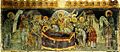 Dormition fresco (1315) by Georgios Kalliergis in the Church of the Resurrection
 -
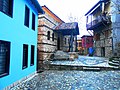 View of Barabuta, Jewish quarter
 -
 Sts Kiriqos and Ioulitta Byzantine church (14th)
 -
 Christ fresco by Georgios Kalliergis (1315) in the Church of the Resurrection
 -
 Fresco in the Old Metropolis (14th)
 -
 Saint Antonios church (19th)
 -

-
 Traditional dress
 -
 Aerial view of the city during dusk


See also
[edit]- List of settlements in Imathia
- List of Catholic dioceses in Greece
- Bereans, various Protestant sects named after the city
- Murder of Alex Meschisvili
References
[edit]- ^ "Municipality of Veria, Municipal elections – October 2023". Ministry of Interior.
- ^ "Αποτελέσματα Απογραφής Πληθυσμού - Κατοικιών 2021, Μόνιμος Πληθυσμός κατά οικισμό" [Results of the 2021 Population - Housing Census, Permanent population by settlement] (in Greek). Hellenic Statistical Authority. 29 March 2024.
- ^ Sterghiu, Hristu (10 January 2012). "Agenda aromână Retrospectiva 2011 II – 12.ian.10" (in Aromanian). Radio Romania International.
- ^
 Smith, William, ed. (1854–1857). "Berœa". Dictionary of Greek and Roman Geography. London: John Murray.
- ^ veria.gr Veria:Its history (greek) Archived March 6, 2008, at the Wayback Machine accessed June 1, 2008.
- ^ Λούκιος ή Όνος 34.15–17
- ^ (greek) hellasportal.gr,Apostle Paul preach in Veria[permanent dead link], accessed June 1, 2008.
- ^ "Unfinished Roman-era statue found in old Macedonian capital Veria". The Jerusalem Post. 28 December 2021. Retrieved 2022-02-19.
- ^ "Άγαλμα των αυτοκρατορικών χρόνων αποκαλύφθηκε σε σωστική ανασκαφή στο κέντρο της Βέροιας". www.culture.gov.gr. Retrieved 2022-02-19.
- ^ "Unfinished Sculpture Discovered at Agios Patapios – Archaeology Magazine". www.archaeology.org. 30 December 2021. Retrieved 2022-02-19.
- ^ a b c d e f g h i j k Gregory, Timothy E.; Ševčenko, Nancy Patterson (1991). "Berroia in Macedonia". In Kazhdan, Alexander (ed.). The Oxford Dictionary of Byzantium. Oxford and New York: Oxford University Press. pp. 283–284. ISBN 0-19-504652-8.
- ^ Migne, Jacques Paul. Patrologia Graeca, t. 126, col. 529.
- ^ a b c Nicol, Donald MacGillivray (1976). "Refugees, Mixed Population and Local Patriotism in Epiros and Western Macedonia after the Fourth Crusade". XVe Congrès international d'études byzantines (Athènes, 1976), Rapports et corapports I. Athens. pp. 3–33.
{{cite book}}: CS1 maint: location missing publisher (link) - ^ a b c d e f g Ménage, V. L. (1978). "Karaferye". In van Donzel, E.; Lewis, B.; Pellat, Ch. & Bosworth, C. E. (eds.). The Encyclopaedia of Islam, Second Edition. Volume IV: Iran–Kha. Leiden: E. J. Brill. pp. 600–601. OCLC 758278456.
- ^ History of Veria Municipality of Veria
- ^ GÖKBİLGİN, M. TAYYİB (1956). "KANUNÎ SULTAN SÜLEYMAN DEVRİ BAŞLARINDA RUMELİ EYALETİ, LİVALARI, ŞEHİR VE KASABALARI". Belleten. 20 (78): 264. eISSN 2791-6472. ISSN 0041-4255.
- ^ Kemal Karpat (1985), Ottoman Population, 1830–1914, Demographic and Social Characteristics, The University of Wisconsin Press, p. 134-135
- ^ Ανέκδοτα έγγραφα και άγνωστα στοιχεία για κλεφταρματολούς και για την επανάσταση (1821–1822) στη Μακεδονία και ιδιαίτερα στον Όλυμπο, Γεώργιος Χ. Χιονίδης, Βέροια 1979[permanent dead link]
- ^ "VEROIA". Archived from the original on 2022-12-14. Retrieved 2022-07-15.
- ^ Michel Lequien, Oriens christianus in quatuor Patriarchatus digestus, Paris 1740, Vol. II, coll. 69–74
- ^ Raymond Janin, v. 1. Berrhée in Dictionnaire d'Histoire et de Géographie ecclésiastiques, vol. VIII, 1935, coll. 885–887
- ^ Annuario Pontificio 2013 (Libreria Editrice Vaticana 2013 ISBN 978-88-209-9070-1), p. 838
- ^ "ΦΕΚ A 87/2010, Kallikratis reform law text" (in Greek). Government Gazette.
- ^ "Population & housing census 2001 (incl. area and average elevation)" (PDF) (in Greek). National Statistical Service of Greece. Archived from the original (PDF) on 2015-09-21.
- ^ Marge, Anastasia I.; Matskani, Anna S. (2007). Η οθωμανική αρχιτεκτονική στην πόλη της Βέροιας [The Ottoman architecture in the city of Veroia]. Αρχαιολογία και Τέχνες (in Greek) (105): 72–78. ISSN 1108-2402.
- ^ Λαογραφικό Μουσείο Βλάχων
- ^ "Bill & Melinda Gates Foundation: Access to Learning Award (ATLA)". Bill & Melinda Gates Foundation.
- ^ Athena plan News247.gr
- ^ a b "Twinnings" (PDF). Central Union of Municipalities & Communities of Greece. Archived from the original (PDF) on 2016-01-15. Retrieved 2013-08-25.
- ^ Merry, Bruce (2004). Encyclopedia of modern Greek literature. Greenwood Publishing Group. p. 239. ISBN 0-313-30813-6.
KOTTOUNIOS, IOANNES (1577–1658) Born at Beroia (Macedonia)

Sources
[edit]Ecclesiastical history
- Mansi, Sacrorum conciliorum nova et amplissima collection, passim
- Pius Bonifacius Gams, Series episcoporum Ecclesiae Catholicae, Leipzig 1931, p. 429
- Michel Lequien, Oriens christianus in quatuor Patriarchatus digestus, Paris 1740, vol. II, coll. 69–74
- Raymond Janin, lemma '1. Berrhée' in Dictionnaire d'Histoire et de Géographie ecclésiastiques, vol. VIII, 1935, coll. 885–887
Synagogue and Jewish history
- Μεσσίνας, Ηλίας. (2022). H Συναγωγή. Αθήνα: Εκδόσεις Ινφογνώμων. ISBN 978-618-5590-21-5
- Messinas, Elias. (2022). The Synagogue of Veroia | Η Συναγωγή της Βέροιας. Seattle: KDP. ISBN 979-884-6836-06-8
- Messinas, Elias. (2022). The Synagogues of Greece: A Study of Synagogues in Macedonia and Thrace: With Architectural Drawings of all Synagogues of Greece. Seattle: KDP. ISBN 979-8-8069-0288-8
Εxternal links
[edit]
 Veria travel guide from Wikivoyage
- Veroia Municipality (official website)
- GCatholic


Administrative division of the Central Macedonia Region | ||
|---|---|---|
| ||
| Regional unit of Chalkidiki |  | |
| Regional unit of Imathia | ||
| Regional unit of Kilkis | ||
| Regional unit of Pella | ||
| Regional unit of Pieria | ||
| Regional unit of Serres | ||
| Regional unit of Thessaloniki | ||
| ||

Veria
View on GrokipediaIn the 1st century AD, the Apostle Paul visited Veria twice, around 50–57 AD, preaching in the local synagogue to audiences described in historical and biblical traditions as more receptive and diligent in examining scriptures compared to those in nearby Thessaloniki.[3][4] The site of his preaching, known as the Bema of Apostle Paul, remains a key monument attracting pilgrims. Under Byzantine and Ottoman rule, Veria functioned as a hub of Greek Orthodox learning and culture, preserving architectural legacies including churches, a historic synagogue tied to a longstanding Jewish community, and the Byzantine Museum housing period artifacts.[2][5]
Economically, Veria relies heavily on agriculture, with production focused on cotton, wheat, fruits, vegetables, and livestock such as cattle, sheep, and poultry, supplemented by local lignite mining and commercial activities in the modern pedestrian center.[6][7] Proximity to ancient Aigai (Vergina), site of Macedonian royal tombs, enhances its appeal as a gateway to Hellenistic heritage, while natural features like the nearby river gorge and ski resorts contribute to tourism.[8] The city balances this historical depth with contemporary urban development, maintaining distinct traditional quarters amid its role as a regional administrative and economic node.[7]
History
Ancient and Classical Veria
Beroea, situated in the ancient district of Emathia at the foot of Mount Bermion and near the Aliakmon River, emerged as a significant Macedonian settlement by the mid-5th century BCE. The city is first documented in Thucydides' account of the Peloponnesian War, where Athenian forces under command attempted an unsuccessful siege around 432 BCE as part of broader operations against Macedonian cities.[9] Its location on a naturally fortified hill on the mountain's western slopes provided defensive advantages and proximity to timber, minerals, and water resources, underscoring its role in regional control.[10] During the consolidation of the Macedonian kingdom under the Argead dynasty, Beroea functioned as a key urban center in central Macedonia, contributing to the kingdom's administrative and military framework. Archaeological evidence, including substantial fortification walls, gates, and towers from the Hellenistic era, indicates urban expansion and defensive enhancements aligned with the strategic needs of the period following Philip II's unification efforts (359–336 BCE) and Alexander's campaigns (336–323 BCE).[2] These structures, visible in remnants east of modern Veria's Byzantine Museum, reflect Beroea's position as a bulwark in Emathia against potential incursions from the south and east.[9] Excavations reveal an orthogonal urban layout and public buildings consistent with Hellenistic planning, affirming Beroea's prominence as a secondary pole to the capital at Aigai in the kingdom's core territories. Artifacts from the 4th century BCE onward, housed in local collections, demonstrate economic ties through agriculture and trade, bolstered by the region's fertile plains and mountain passes.[10] This infrastructure supported Macedonia's rise as a Hellenistic power, with Beroea maintaining stability amid the kingdom's internal alliances and external conflicts prior to Roman intervention.Biblical Significance and Early Christian Period
Veria, known in antiquity as Berea or Beroea, gained biblical prominence during the Apostle Paul's second missionary journey around 50 CE. According to Acts 17:10-12, Paul and Silas fled persecution in Thessalonica and traveled approximately 70 kilometers westward to Berea, where Paul immediately began preaching in the local Jewish synagogue. The Berean Jews demonstrated a distinctive approach by receiving Paul's message with eagerness while daily searching the Old Testament Scriptures to verify his assertions regarding Jesus as the Messiah.[11][12] This methodical scrutiny—cross-referencing proclaimed doctrines against prior scriptural evidence—distinguished the Bereans as "more noble" than their Thessalonian counterparts, who had reacted with hostility without similar examination. As a result, a number of Berean Jews believed, along with many devout Greeks and not a few prominent women. The episode underscores an early Christian emphasis on rational discernment over uncritical acceptance, aligning with principles of evidence-based inquiry in assessing truth claims.[11][13] Opposition soon followed, as Jews from Thessalonica arrived and incited the crowds against Paul, compelling his escorts to convey him to Athens by sea while Silas and Timothy stayed behind to strengthen the nascent converts. This visit seeded an early Christian community in Berea, which historical records indicate developed into a bishopric subordinate to Thessalonica by the early centuries CE.[11][14] In modern Veria, tradition identifies the Bema of Apostle Paul—a stepped platform with an inscription from Paul's Epistle to the Thessalonians—as the approximate site of his synagogue preaching, though no direct archaeological evidence confirms the precise location. The monument serves as a focal point for commemorating the Bereans' legacy of scriptural verification, preserved in Orthodox Christian heritage without reliance on later hagiographic embellishments.[3][15]Roman and Byzantine Veria
Following the Roman victory over Macedonia at the Battle of Pydna in 168 BCE, Beroea was incorporated into the Roman province of Macedonia as a key regional center.[16] Archaeological evidence includes rural villae rusticae spanning the 1st century BCE to the 4th century CE, indicating agricultural prosperity and Roman estate management in the surrounding countryside.[17] Urban infrastructure featured the Decumanus Maximus, the principal east-west thoroughfare, with preserved segments of a 2nd-century CE paved road linking to the Via Egnatia, facilitating trade and military movement.[18][19] Administrative continuity persisted into the early Byzantine era, with Beroea maintaining its role amid imperial reorganizations. Defensive walls, originating in Hellenistic times, were reinforced during Byzantine periods to counter threats from Slavic migrations in the 6th-7th centuries and later Arab raids.[20] By the 11th to 14th centuries, the city emerged as a significant trade hub, ranking as the third most important urban center in the Byzantine Empire after Constantinople and Thessaloniki, benefiting from its position on revived commercial routes.[21] The Second Palaiologan Civil War (1341-1347) disrupted this prosperity, as factional strife enabled Serbian expansion under Stefan Dušan, who overran much of Macedonia and imposed economic strain through conquests and tribute demands on affected cities like Beroea.[22] Historical accounts note regional sieges and reconstructions in the aftermath, though specific records for Beroea emphasize broader imperial decline rather than localized battles. Byzantine-era artifacts and fortifications, preserved in local museums, attest to post-conflict resilience and cultural continuity.[23]Ottoman Veria
Veria fell to Ottoman forces around 1430, following the conquest of Thessaloniki, marking the end of intermittent Byzantine and Serbian control over the region.[24] Integrated into the Ottoman administrative structure as the kaza of Karaferye within the Sanjak of Thessaloniki, the town served as a regional center for tax collection and military provisioning, with local Christian populations initially comprising the majority—evidenced by 1519 tax registers listing 578 Christian households against 231 Muslim ones.[25] Over the subsequent centuries, Ottoman settlement policies and incentives for conversion gradually increased the Muslim share, though Greek Orthodox communities persisted amid pressures to adopt Islam for tax relief or social advancement.[26] The Ottoman economy in Veria relied heavily on agrarian extraction through the iltizam tax-farming system, where private contractors bid for rights to collect revenues from land, poll taxes, and monopolies, often exacerbating peasant indebtedness and leading to the consolidation of large ciftlik estates by local elites and absentee landlords by the eighteenth century.[27] [26] This system, reformed in 1691 to centralize poll-tax calculations but retaining farmed revenues, placed disproportionate burdens on Christian rayas, fostering resentment without spurring widespread industrialization or infrastructure development.[28] Greek cultural resilience manifested through the Orthodox Church's role in preserving liturgy, manuscripts, and community organization, with monasteries like Panagia Dovra continuing late Byzantine foundations to safeguard religious identity against Islamization incentives, though formal education occurred openly under ecclesiastical oversight rather than clandestine operations.[29] Resistance culminated in localized uprisings during the Greek Revolution, with Veria's revolutionaries coordinating with Naousa rebels in early 1822, capturing Ottoman garrisons before facing brutal suppression by imperial forces, including mass executions and village burnings that decimated the Christian population and reinforced Ottoman control until the Balkan Wars.[30] These events, documented in Ottoman sicils and firman collections, highlighted the interplay of economic grievances and Orthodox solidarity in fueling proto-nationalist stirrings, though the town's strategic position delayed full integration into independent Greece.[31]19th Century and Greek Independence
In the early 19th century, Veria participated in the initial phases of the Greek War of Independence through local uprisings against Ottoman authority. In 1822, revolutionaries in Veria and the nearby town of Naoussa launched revolts, coordinated with broader Macedonian efforts, where chieftains such as Anastasios Karatasos from Veria led irregular bands in guerrilla actions and disrupted Ottoman supply lines. These movements drew on longstanding klephtic traditions of resistance, but Ottoman reprisals, including massacres and reinforcements, quelled the insurrections by mid-1822, preventing sustained control and leaving Veria under Ottoman dominion for the remainder of the century.[31][32] Throughout the 19th century, Veria's Greek Orthodox majority maintained cultural resilience via churches, schools, and secret societies promoting philhellenism, amid a population structured in 16 mahalas (neighborhoods) under Ottoman millet system. Economic life centered on agriculture and trade, with feudal-like timar holdings dominating land use, though Greek merchants increasingly challenged Ottoman intermediaries. National awakening intensified in the late 1800s, positioning Veria as a focal point for Hellenic identity in Macedonia, preparatory to later conflicts.[33] Veria's effective integration into the Greek state occurred during the First Balkan War, with liberation on October 16, 1912, when Greek Army of the Crown Prince Constantine forces entered the town unopposed, receiving the formal handover from the Ottoman governor at the old courthouse. This event ended four centuries of Ottoman rule, enabling immediate administrative reforms such as the establishment of Greek municipal governance and educational institutions aligned with the national curriculum. The Treaty of Bucharest (1913) ratified Greek sovereignty over the region, including Veria.[34][35] Post-liberation demographic shifts accelerated under the 1923 Lausanne Convention's population exchange, expelling Veria's Muslim residents—estimated to include Turks and Circassians numbering several thousand—and resettling Greek Orthodox refugees from Anatolia, who comprised about 20% of the town's population by 1928. Agrarian reforms followed, transitioning from Ottoman communal and large-estate systems to state-distributed plots, particularly allotting lands to refugees and local smallholders via the Refugee Settlement Commission, boosting wheat and tobacco cultivation under modernized tenancy laws by the 1920s.[36][37]20th Century Conflicts and Modernization
During the Axis occupation of Greece from April 1941 to October 1944, Veria fell under German control as part of the central Macedonian zone, subjecting the local population to economic exploitation, forced labor requisitions, and food shortages that contributed to widespread famine across occupied Greece.[38] Bulgarian irredentist claims on Macedonian territories, rooted in historical assertions of ethnic kinship, influenced regional tensions but did not extend to direct occupation of Veria, which remained in the German administrative sphere unlike eastern districts such as Drama and Serres.[39] In March 1943, German forces intensified persecution by deporting Veria's Jewish community—numbering approximately 600 to 650 individuals at the war's outset—to Auschwitz via Thessaloniki, with only about 136 escaping to the mountains and 123 returning postwar, reflecting a near-total annihilation driven by Nazi racial policies rather than local collaboration.[40] [41] Greek resistance groups, including communist-led ELAS and royalist EDES factions, conducted sabotage operations across Macedonia to disrupt Axis supply lines, though specific verifiable incidents in Veria are sparsely documented amid broader regional efforts that destroyed over 1,000 bridges and derailed hundreds of trains nationwide by 1944. These actions, often ideologically motivated by anti-fascist unity but increasingly fractured by emerging communist ambitions, imposed reprisals on civilians, including village burnings and executions, exacerbating local hardships without dislodging occupation forces until Allied advances compelled German withdrawal. The Greek Civil War (1946–1949) brought further devastation to Veria and the Imathia prefecture, where communist Democratic Army of Greece (DSE) guerrillas exploited the Vermio Mountains' terrain for ambushes and supply raids, drawing royalist National Army countermeasures that included fortified positions and aerial bombardments, contributing to a national stalemate characterized by mutual atrocities and economic collapse exceeding wartime losses. Ideological divides, amplified by DSE's ties to Yugoslav and Bulgarian support until their 1948 rift with Tito, fueled guerrilla recruitment in rural areas but alienated urban populations, resulting in forced migrations as thousands fled leftist-controlled zones or faced purges, with Imathia's agricultural base disrupted by conscription and sabotage.[42] Government victory in 1949, bolstered by U.S. Truman Doctrine aid, ended hostilities but left lingering divisions, including the exodus of approximately 80,000 combatants and civilians to communist states. Postwar recovery in Veria centered on agricultural modernization, particularly cotton processing, as the Hellenic Cotton Organization promoted ginning technologies and seed improvements that boosted northern Greece's output from devastated lows to sustained yields supporting export quotas by the 1950s.[43] Local firms, such as the Ousoultzoglou ginning mill relocated to central Veria in 1955, exemplified infrastructural investments enabling mechanized separation of fibers from seeds, which drove urbanization as rural laborers shifted to processing hubs amid national electrification and road networks funded partly by Marshall Plan allocations totaling $376 million to Greece by 1952.[44] This transition, while fostering population growth from wartime displacements, overlooked initial inefficiencies from ideological purges excluding former leftists, yet causal factors like state-directed irrigation and market incentives underlay the Greek economic miracle's regional manifestations through 1973.[45]Post-2000 Developments
In the early 2000s, Veria benefited from European Union structural funds allocated following Greece's deeper integration into EU programs, supporting local infrastructure and cultural initiatives. The Municipality of Veria implemented multiple EU-funded projects aimed at fostering collaboration with regional authorities, including enhancements to public libraries and urban planning strategies.[46][47] By 2025, these efforts culminated in approved urban renewal projects for Veria's central areas, financed through regional development programs to improve public spaces and sustainability, with implementation advancing as of September.[48] The Seli ski resort on Mount Vermio's northern slopes, approximately 24 kilometers from Veria, underwent operational expansions in the post-2000 period to bolster year-round tourism, featuring 17 ski tracks spanning 14 kilometers and serving as Greece's oldest ski center with reliable snow cover up to 2,005 meters.[49][50] These developments aligned with EU priorities for rural tourism infrastructure, contributing to Veria's economic diversification amid national challenges. During Greece's sovereign debt crisis from 2008 to 2018, Veria's economy demonstrated relative resilience through its agricultural sector, particularly peach production in the surrounding Imathia plain, which supported export volumes despite austerity measures and reduced domestic demand.[51] Peach-related exports, including compote where Greece holds a leading global position, helped buffer local impacts, with the sector maintaining viability through international markets even as national GDP contracted.[52] Veria's population grew modestly to an estimated 43,673 by 2025, reflecting steady urban consolidation rather than stagnation seen elsewhere in Greece.[53] In the 2020s, Veria adapted to the COVID-19 pandemic by leveraging its agricultural base for localized recovery, aligning with national strategies that prioritized health measures while sustaining essential exports.[54] The 2025 Blossoming Peach Trees festival, held in March across Imathia's orchards near Veria, promoted agritourism through events like aerial views and cultural activities, drawing visitors to the pink-hued blooms and reinforcing the region's economic ties to seasonal fruit production.[55][56] This initiative highlighted ongoing efforts to integrate environmental assets with tourism amid post-crisis stabilization.[57]Religion and Ecclesiastical History
Orthodox Christian Heritage
Veria is the episcopal seat of the Metropolis of Veria, Naousa, and Campania, a diocese within the Church of Greece administering parishes across Imathia prefecture and emphasizing adherence to patristic teachings and Byzantine liturgical forms. Established as a metropolitan see during the Byzantine era, it upholds doctrinal rigor through synodal decisions and pastoral oversight, with the current metropolitan, Panteleimon Kalpakidis, elected in 2006 following theological studies in Oxford. Monastic foundations under the metropolis preserve Orthodox heritage, including the Skete of Timios Prodromos near Veria, founded around the 11th-14th century and noted for its continuous hesychastic tradition and relics from Byzantine saints.[58] The Monastery of Panagia Dovra, a male cenobium, safeguards post-Byzantine icons and manuscripts, functioning as a repository for artifacts linking to imperial-era artistry despite Ottoman depredations.[59] These sites host annual vigils and endowments derived from 19th-century philanthrpic bequests, sustaining iconographic restoration and theological education. The Orthodox institutions of Veria contributed to ethnic cohesion during Ottoman rule by resisting coercive mechanisms like devshirme, the empire's levy of Christian youths for Islamic military service, which Orthodox hierarchs across the Balkans condemned as violating canon law on child guardianship and faith transmission.[60] Clergy in Macedonian sees, including Veria's, facilitated crypto-Christian networks and hid families from recruiters, fostering resilience that informed 19th-century independence movements rooted in ecclesiastical autonomy. Contemporary data indicate sustained religiosity, with Greece registering 75% self-identification as religious among adults in 2014 surveys, higher than EU averages, and local parishes in Veria reporting consistent participation in feasts like the Dormition, where attendance exceeds 50% of nominal adherents per diocesan records.[61] This counters secular decline narratives, as endowments totaling millions in euros fund seminary programs and church repairs, reflecting causal ties between historical confessional identity and modern communal observance.[62]Biblical and Apostolic Connections
In the Book of Acts 17:10–15, dated to approximately 50 CE during Paul's second missionary journey, the apostle Paul and his companion Silas arrived in Beroea (modern Veria) by night, having been sent from Thessalonica to evade Jewish opposition. Paul immediately entered the local synagogue, customary for his ministry among diaspora Jews, and reasoned from the Hebrew Scriptures to demonstrate that the Messiah was Jesus.[12][13] The narrative portrays the Berean Jews as "more noble" than their Thessalonian counterparts, receiving Paul's message with readiness of mind while daily searching the Scriptures to ascertain the truth of his claims—a practice that yielded belief among many Jews, as well as prominent Greek women and men. This approach underscores a precedent for evidence-based scrutiny, prioritizing textual verification over uncritical acceptance, consistent with causal reasoning from primary sources.[13] Archaeological context supports the plausibility of such a synagogue community in 1st-century Beroea, a Macedonian city along branches of the Roman Via Egnatia road network, with evidence of Jewish presence inferred from the city's Hellenistic-Roman urban profile and later synagogue remains, though no artifacts directly confirm Paul's specific visit. Local tradition links the preaching site to a central "Bema of Apostle Paul" monument near the Clock Tower, and the extant synagogue—one of northern Greece's oldest—is posited by some to approximate the ancient locus, without conclusive excavation tying it to the apostolic era.[63][5] Facing renewed agitation from Thessalonian Jews who followed to Beroea, Paul was urged by locals to depart southward, escorted to the coast for a sea voyage to Athens, while Silas and Timothy stayed behind to sustain the nascent community. This itinerary coheres with documented Roman roadways enabling efficient overland travel from inland Beroea to Aegean ports, facilitating the mission's continuation amid persecution.[64][12] Subsequent patristic literature, such as Eusebius's accounts of early church expansions, references broader Macedonian apostolic activity drawing from Acts but offers no unique Beroean details beyond the scriptural record, reflecting the narrative's role in establishing traditions of verifiable faith origins without embellished hagiography.[65]Latin and Other Traditions
Following the Fourth Crusade's sack of Constantinople in 1204, Latin forces under Boniface of Montferrat established the Kingdom of Thessalonica, which encompassed much of Macedonia including Veria (ancient Beroea), leading to the imposition of a Latin ecclesiastical hierarchy over former Byzantine sees in the province.[66] The Latin Archdiocese of Thessalonica, erected as a metropolitan see suffragan to the Latin Patriarchate of Constantinople, oversaw dioceses such as Berrhoea, with Western prelates appointed to replace Eastern bishops in controlled territories.[67] This arrangement reflected the crusaders' policy of Latinizing church structures to consolidate rule, though enforcement varied by locale and faced local resistance.[68] Latin dominance in the region proved ephemeral; the Kingdom of Thessalonica collapsed in 1224 following defeat by Theodore Komnenos Doukas of Epirus, restoring Orthodox control over Veria and prompting the rapid lapse of Catholic institutions there.[69] No records indicate enduring Catholic communities or bishoprics in Veria post-reconquest, as subsequent rulers—Epirote despots and later Byzantines—reinstated Eastern Orthodox administration without tolerance for Western rites. The absence of archaeological or archival evidence for sustained Latin ecclesiastical activity underscores the transient nature of this influence, limited to the two-decade Frankish interlude. In the modern era, the Catholic Church nominally revived Berrhoea as a titular see in 1933, assigning it to non-residential bishops without establishing a local presence or parish in Veria.[66] Ecumenical engagements between the Vatican and Greek Orthodox authorities, including dialogues on primacy and doctrine documented in pontifical archives, have occurred at national levels but yielded minimal impact in Veria, constrained by unresolved schismatic differences originating in the 1054 Great Schism and exacerbated by the 1204 events. Local Orthodox dominance persists, with no verifiable Catholic congregations or conversions attributable to these efforts.Geography
Physical Features and Geology
Veria occupies a plateau position at the eastern foothills of Mount Vermion, where the mountain's elevations range from approximately 1,000 to over 2,000 meters, transitioning into the western margin of the Central Macedonian plain. This terrain configuration places the city at an elevation of about 128 meters above sea level, with the surrounding landscape featuring undulating slopes descending from the mountainous hinterland to flatter alluvial plains.[6] The Tripotamos River traverses the urban area, forming a key hydrological feature that drains the local catchment and influences sediment transport and water availability in the vicinity. Geological mapping of the Veria-Naousa region reveals a composition dominated by rocks of the Almopias subzone within the Axios ophiolite complex, including ultramafic units with distinct petrographic, geochemical, and physicomechanical properties suitable for regional engineering assessments.[70][71] The area exhibits moderate to high seismic potential due to underlying fault systems, as demonstrated by the magnitude 6.6 earthquake on May 13, 1995, centered approximately 10 km west of Aianí in Imathia prefecture, which highlighted vulnerabilities in local tectonics previously underestimated for low-risk zoning. Soils derive primarily from alluvial and colluvial deposits in the plain, contributing to fertility through nutrient-rich sediments that underpin regional primary production, though specific surveys note variability in depth and composition influenced by fluvial processes.[72][43]Climate and Environment
Veria experiences a Mediterranean climate, marked by hot, dry summers and mild, wet winters. The average high temperature in July reaches 32°C, with nighttime lows around 20°C, while January highs average 9°C and lows near 1°C. [73] Annual precipitation totals approximately 770 mm, concentrated primarily from October to March, supporting seasonal vegetation cycles typical of the region. [73] Recent meteorological records indicate a gradual warming trend consistent with broader patterns in Greece, where average temperatures have risen by about 1.5°C from 1991 to 2020, including fewer frost days and variable precipitation shifts. [74] [75] Data from the Hellenic National Meteorological Service reflect this slight increase in Veria's locality, though local agricultural practices have adapted through expanded irrigation systems to mitigate drier summer conditions without evidence of severe disruptions. [76] The environmental context features the nearby Mount Vermion range, which hosts mixed oak and pine forests alongside scrublands, fostering habitats for various avian and mammalian species. Conservation initiatives, including Natura 2000 designations in the Vermion area, aim to preserve biodiversity amid human activities, emphasizing habitat connectivity and species monitoring to counter pressures from urbanization and fire risks. These efforts prioritize empirical habitat assessments over speculative projections, focusing on sustainable land management to maintain ecological balance.Demographics
Population Trends
The population of Veria experienced stabilization in the interwar period due to the influx of refugees from Asia Minor and Eastern Thrace following the 1923 population exchange, with settlements in Macedonian prefectures like Imathia augmenting local numbers amid post-war recovery.[77] [37] By the late 20th century, census data recorded 37,858 residents in 1991, reflecting gradual urbanization and internal migration patterns.[53] Subsequent decades showed modest growth, reaching 42,508 in the 2021 ELSTAT census, a contrast to Greece's national population contraction driven by sub-replacement fertility and net emigration.[78] Projections estimate around 43,200 inhabitants by 2025, sustained by limited inflows and retention despite outflows.[79] This stability stems from Veria's role as a regional hub, though it masks underlying pressures like an aging demographic profile. Fertility rates in Veria align with national lows of approximately 1.3 births per woman as of 2023, exacerbating population aging and dependency ratios.[80] The post-2010 sovereign debt crisis accelerated youth emigration to urban centers such as Athens and Thessaloniki, with Greece losing over 500,000 residents net between 2010 and 2018, including from peripheral areas like Imathia; Veria's numbers held amid this due to return migration and family ties, but long-term risks of shrinkage persist without policy interventions.[81][82]Ethnic Composition and Migration
Veria's ethnic composition has long been dominated by Greeks, with historical minorities such as Vlachs (Aromanians) and traces of Slavic speakers undergoing significant assimilation into the Greek cultural and linguistic mainstream. Linguistic and historical analyses indicate that Vlach communities in Veria, present since Ottoman times, experienced identity conflicts in the early 20th century but were subject to state policies promoting integration, resulting in widespread adoption of Greek as the primary language and self-identification as ethnically Greek by the mid-20th century.[83][84] Similarly, Slavic linguistic remnants in the broader Macedonian region, including around Veria, have been Hellenized through education and administrative practices since Greek independence, with no distinct Slavic ethnic group maintaining separate institutional presence in the city today.[84] The 1923 Convention Concerning the Exchange of Greek and Turkish Populations, implemented under the Treaty of Lausanne, fundamentally homogenized Veria's demographics by mandating the relocation of approximately 1.5 million Greek Orthodox from Turkey to Greece and over 500,000 Muslims from Greece to Turkey, based on religious affiliation as a proxy for ethnicity. In Veria, this process removed the pre-existing Muslim (primarily Turkish-speaking) minority, while the city received a substantial influx of Greek refugees from Asia Minor, who formed the largest demographic group by the late 1920s and reinforced the Greek ethnic majority.[85] Post-World War II migration patterns in Veria have been characterized by internal Greek rural-to-urban outflows rather than significant ethnic diversification, with net immigration remaining minimal compared to Athens or Thessaloniki. Recent data from Greek migration authorities show limited third-country nationals settling in Imathia prefecture, primarily economic migrants from Albania, Bulgaria, and other Balkan states, alongside a small Roma community of predominantly Greek origin; these groups constitute under 5% of the local population and face no systemic integration barriers akin to those in major urban centers, owing to Veria's smaller scale and agricultural economy.[86][46] Claims of substantial unassimilated minorities in Veria often stem from outdated or ideologically driven narratives, contradicted by the absence of ethnic-based political mobilization or language preservation efforts locally.[87]Government and Administration
Local Governance Structure
The Municipality of Veria, formed in 2011 under Greece's Kallikratis administrative reform (Law 3852/2010), functions as the key local authority for the regional unit of Imathia, with its seat in the city of Veria. Governance centers on a directly elected mayor, municipal council, and municipal committee, all chosen every five years via proportional representation and majority vote systems. The current mayor, Konstantinos Vorgiazidis, has led since 2014, overseeing executive functions including service delivery and policy execution.[88][89] The municipal council, comprising members scaled to the municipality's population of approximately 70,000, holds authority over strategic decisions such as taxation, land use, and development plans, promoting decentralized decision-making for enhanced local responsiveness. The municipal committee assists by scrutinizing budgets, procurement, and quality-of-life initiatives, ensuring fiscal oversight and alignment with national standards. This structure emphasizes operational autonomy in areas like public safety, environmental management, and community services, distinct from centralized state roles.[89][46] Municipal operations, including water supply via the dedicated Municipal Water and Sewerage Enterprise (DEYAB) and solid waste handling, are funded through a mix of Central Autonomous Resources (derived from national taxes like income and VAT shares), local revenues from property fees and user charges, and EU co-financed programs for infrastructure upgrades. The 2023 elections underscored preferences for pragmatic, center-right governance, with the victorious administration prioritizing efficient resource allocation amid economic constraints.[89][90]Administrative Changes
Veria, known as Karaferye during Ottoman rule, was incorporated into the Kingdom of Greece as part of the territorial gains from the First Balkan War, which began on 8 October 1912 with the Balkan League's declaration of war against the Ottoman Empire.[91] This transition marked the end of over five centuries of Ottoman administration, with Greek forces securing control over Macedonian territories including Veria by late 1912.[28] Administrative formalization in the 1920s followed the Greco-Turkish population exchange under the 1923 Treaty of Lausanne, which exchanged approximately 1.6 million people and stabilized Greek sovereignty in the region by reducing minority populations and integrating refugees into local governance structures.[92] The Kallikratis Programme, established by Law 3852/2010 and implemented on 1 January 2011, represented a major decentralization reform that consolidated local government units nationwide to enhance administrative efficiency and fiscal sustainability.[89] For Veria, this involved merging the former Municipality of Veria with four adjacent entities—Kato Milias, Megas Alexandros, Makrychori, and Sfikia—into a single enlarged municipality encompassing five municipal units, reducing fragmentation and expanding the administrative area to approximately 352 square kilometers.[93] Empirical analyses of the reform's impact on Greek municipalities, including those like Veria, show benefits such as improved financial ratios, higher per-capita revenues, and better resource allocation, though initial implementation challenges included transitional costs.[94] As the capital of the Imathia regional unit within Central Macedonia, Veria's administrative framework post-Kallikratis supports decentralized handling of regional competencies, including coordination of EU structural and cohesion funds for infrastructure and development projects.[95] This structure, part of Greece's 13 regional units established under the 2010 reforms, allows Imathia to manage operational programs co-financed by the European Regional Development Fund, fostering local priorities in agriculture, tourism, and environmental initiatives with reduced direct central government oversight.[96]Economy
Agriculture and Primary Sectors
Veria's agricultural sector, centered in the Imathia prefecture, forms a cornerstone of the local economy, with the primary sector contributing approximately 11.5% to the regional GDP. Key crops include cotton, peaches, and wine grapes, cultivated across fertile plains irrigated by the Aliakmonas River, which supports irrigation for up to 130,000 hectares in the broader delta region. This water resource enables intensive farming practices, though untreated wastewater discharges have raised concerns about pollution impacting crop irrigation.[97][98][99] Cotton remains a historic staple, tracing roots to Ottoman-era cultivation in northern Greece and continuing as Greece's dominant fiber crop, with the country producing Europe's largest output at around 1.02 million 480-pound bales (approximately 222,000 metric tons of lint) forecasted for the 2025/26 marketing year. Imathia, including Veria's surrounding areas, accounts for a substantial share of this production through large-scale plantations, though yields fluctuate due to weather events like the 2023 rainstorms that reduced national output by 33%. Peaches supplement cotton as a high-value fruit crop, with Imathia positioned at the forefront of organized production in Greece; national peach and nectarine harvests reached about 700,000 tons in 2024, driven by late-May to late-summer cycles in the region.[43][100][101][102][103] Viticulture, particularly Xinomavro grapes for Naoussa PDO wines, thrives on Imathia's slopes of Mount Vermio at altitudes of 100-400 meters, yielding robust red varieties alongside smaller plantings of Roditis, Syrah, and Merlot. Local cooperatives enhance market access, but the sector faces pressures from EU subsidies offsetting competition with lower-cost imports and variable climate conditions affecting yields.[104][105][106]Industry and Commerce
Veria's industrial sector primarily consists of small to medium-sized factories engaged in food processing and textiles, sectors that derive inputs from the surrounding agricultural base in Imathia prefecture. Food manufacturing firms in Veria process local dairy, fruits, and other produce, contributing to the regional emphasis on low- to medium-technology industries.[107] Textile production, including clothing and related goods, persists in scattered facilities, reflecting Central Macedonia's historical concentration in labor-intensive manufacturing.[108] These operations employ a modest share of the local workforce, constrained by Greece's overall small manufacturing base compared to EU peers.[109] As the commercial hub of Imathia, Veria facilitates trade through central markets specializing in dairy products, agricultural goods, and traditional foodstuffs, serving both local consumers and regional distribution.[7] Its strategic location, approximately 70 kilometers west of Thessaloniki, enables efficient linkages to the port of Thessaloniki for exporting processed goods, supporting commerce in non-perishable items like textiles and packaged foods.[110] Following the 2008 financial crisis, industrial recovery in Veria has been gradual, with manufacturing output showing resilience amid national trends of modest growth in low-tech sectors.[111] Foreign direct investment remains limited, particularly in logistics, due to persistent bureaucratic obstacles; Greece's World Bank ease-of-doing-business ranking of 79 out of 190 economies in 2020 underscores regulatory hurdles like protracted property registration (ranked 156th).[112] [113] Despite proximity to major transport routes, these factors have slowed expansion of logistics hubs that could capitalize on Veria's position between agricultural interiors and export ports.[114]Services and Recent Growth
Veria's services sector, encompassing retail, finance, and tourism, has underpinned recent economic expansion as the administrative hub of the Imathia regional unit, supporting a municipal population of around 66,000 and the surrounding area's agricultural workforce. The tertiary economy benefits from the city's role in regional commerce, with retail outlets focusing on local produce, dairy markets, and traditional goods in the central shopping district.[21] Tourism has risen post-2010 amid Greece's broader recovery from the financial crisis, emphasizing Veria's Byzantine heritage including over 48 preserved churches and the Byzantine Museum, which draw cultural visitors alongside nearby Vergina archaeological sites.[115][23] In Central Macedonia, tourism-related activities contributed approximately 7% to regional GDP in 2023, reflecting sector maturation through alternative and heritage-focused promotion.[116] While specific visitor metrics for Veria remain limited in official tallies, the emphasis on sites like the Old Metropolis basilica aligns with regional efforts to leverage historical assets for inbound travel. Retail and financial services exhibit moderate growth, serving local needs amid national trends where services account for 73.2% of GDP. Digital adoption in these areas trails EU benchmarks, with Greece pursuing full digitization by 2030, though public services for businesses score above the EU average at 86.2 in recent assessments.[117][118] The sector demonstrated resilience in the early 2020s, as online retail purchases in Greece surged 77% in 2020 compared to 2019, per Eurostat, aiding continuity during pandemic restrictions.[119] ELSTAT data indicate sustained turnover increases in accommodation services, up 7.5% year-over-year in Q1 2025, supporting ancillary retail recovery.[120]Infrastructure and Transport
Road Networks
Veria integrates into Greece's national motorway system through junctions on the A2 (Egnatia Odos), a tolled east-west highway spanning northern Greece from Igoumenitsa to the Turkish border, which passes approximately 71 km west of Thessaloniki near the city. This access, via secondary local highways, supports regional trade by connecting Veria to ports and industrial zones in Epirus and Thrace.[121][122] The A1 motorway (E75), Greece's principal north-south route from Athens to Thessaloniki and beyond, links Veria through spurs and the legacy National Road 1 infrastructure, enabling efficient goods transport for the city's agricultural sector. Travel to Thessaloniki, 73 km away, typically takes about one hour by car under normal conditions, aiding daily commerce and logistics. Southward, the full Athens route spans roughly 500 km.[123][124] Post-2010 financial crisis austerity measures curtailed public infrastructure funding, leading to deferred maintenance on connecting national roads, including potholes and signage degradation on older segments serving Veria, though major motorways like the A1 and A2 have seen prioritized repairs under EU recovery funds. Urban streets in Veria feature a radial grid adapted from Ottoman-era planning, with EU-compliant upgrades such as roundabouts and speed limits enforced to mitigate congestion from local traffic volumes exceeding 20,000 vehicles daily.[125][126]Rail Connections
Veria is connected to the national railway network via its station on the Thessaloniki–Florina line, operated by Hellenic Train as part of the Thessaloniki Regional Railway system. This provides regional passenger services primarily to Thessaloniki, approximately 64 km to the east, with trains covering the distance in about 1 hour using diesel multiple units on non-electrified tracks. Services run three times daily in each direction, reflecting limited capacity compared to parallel road options like the Egnatia Odos motorway and KTEL bus routes, which offer higher frequencies and similar travel times.[127] The line traces its origins to the late 19th century, when the Thessaloniki–Bitola (Monastir) railway was constructed under the Ottoman Empire's Chemins de fer Orientaux concession to link Thessaloniki with interior Balkan routes. The section serving Veria opened as part of this network around 1894, facilitating freight and passenger transport amid Greece's early industrial growth, though it saw disruptions during the Balkan Wars and World Wars. Post-1940s reconstruction emphasized road development over rail expansion, contributing to the line's relative underuse for passenger traffic today, with annual ridership dwarfed by automotive alternatives amid Greece's car-centric infrastructure.[128] Current operations prioritize reliability over speed, with no electrification on the Veria branch—unlike the parallel Thessaloniki–Larissa mainline, which uses electric trains—and ongoing national reforms focus on safety upgrades and network unification rather than high-speed extensions to secondary routes like this one. Hellenic Train reports emphasize maintenance and digital ticketing enhancements, but cost-benefit analyses from infrastructure bodies highlight fiscal constraints limiting ambitious suburban expansions beyond core corridors.[129][130]Air Access and Regional Links
The primary air access for Veria is provided by Thessaloniki Macedonia International Airport (SKG), located approximately 70 kilometers to the east, which serves as the main hub for international and domestic flights to the Central Macedonia region and accommodates most visitors to Veria.[131][132] SKG handled over 6.5 million passengers in 2023, offering connections to major European cities and beyond, though Veria itself has no scheduled direct flights.[133] Veria has no local commercial airport or airfield, necessitating reliance on regional facilities with subsequent ground transfers. Kozani National Airport (KZI), about 40 kilometers southwest, provides limited domestic services as a secondary option but lacks significant international traffic.[134][131] Private charter operations to nearby airstrips occur sporadically for specialized events, including agritourism, but remain minimal in volume compared to scheduled services at SKG.[135]Culture and Heritage
Archaeological Sites and Museums
The Archaeological Museum of Veria, established in the 1960s and housed in a modern facility, displays artifacts spanning from the Neolithic era to Roman times, primarily from excavations in the Imathia region including the ancient city of Beroea (modern Veria). Key exhibits include Neolithic tools and pottery from the settlement at Nea Nikomedeia, dated to around 6000 BCE and recognized as one of Europe's earliest permanent farming communities; Iron Age grave goods; Archaic and Classical funerary stelae; Hellenistic jewelry, weapons, and coins associated with Macedonian royal mints; and Roman inscriptions such as gymnasiarchical laws regulating athletic training.[136][137][138] These holdings underscore Veria's role as a key Macedonian urban center from the 4th century BCE, with artifacts like grave stelae of local elites (e.g., Paterinos and Adea) providing evidence of social structures and continuity into the Roman period.[136] Excavations within Veria have uncovered elements of the ancient city's layout, including pit graves, cist graves, and rock-cut tombs from the Hellenistic and Roman eras, yielding pottery, terracotta figurines, and bronze items indicative of daily life and burial practices.[139] In 2021, digs in the historic center revealed an unfinished Roman statue, likely from the 2nd or early 3rd century CE, possibly depicting a deity or imperial figure, highlighting ongoing urban development over a Hellenistic-Roman forum or public space.[140] The Saint Patapios site, the city's only publicly accessible ancient excavation, exposes stratified layers from the 2nd century CE Roman phase through early medieval periods, with structural remains of buildings and artifacts demonstrating continuous habitation and adaptation of the urban fabric.[141] Nearby, in the Vermio Mountains foothills, 2010s surveys by the Ephorate of Antiquities identified burial mounds and Hellenistic-era tombs, including the Agios Athanasios painted tomb complex (excavated progressively since the 1990s but with recent conservation), featuring frescoes of mythological scenes and grave goods linking to Macedonian elite customs akin to those at Vergina.[139] These finds, housed partly in the Veria museum, include Macedonian-type pottery and metalwork verified through stratigraphic analysis and comparative typology with royal sites, affirming Veria's peripheral but integral position in the kingdom's necropoleis.[137] Authenticity of such discoveries is corroborated by radiocarbon dating and epigraphic cross-references to known Macedonian inscriptions, countering earlier unsubstantiated claims of non-local origins.[136]Festivals and Traditions
Veria's primary cultural festival preserving local folk customs is the Week of Tradition, a five-day event featuring traditional dances performed across the city and its municipal communities, typically held in the last week of July.[142] Organized by local cultural associations, it emphasizes participatory performances of dances tracing origins to Byzantine and Ottoman-era influences in Macedonian folklore, with groups from regional villages demonstrating authentic attire and rhythms without modern alterations.[142] The annual Spring Festival "Blossoming Peach Trees of Veria," launched in March, celebrates the region's peach orchards during their peak bloom from mid- to late March, spanning about 10-15 days.[143] Activities include guided tours of the pink-hued landscapes in Imathia Prefecture, photography contests, and promotions of local agricultural produce, drawing visitors to experience the natural spectacle akin to hanami traditions but rooted in Veria's fruit-growing economy.[144] The 2025 edition, announced by municipal authorities, featured ongoing events highlighting the peach as the "Tree of Life" for the area, with organized bike rides and cultural exhibits.[145] Religious traditions center on Orthodox Christian observances tied to the city's biblical heritage as ancient Beroea, particularly the Pavleia festival honoring Apostle Paul, who preached there circa 50-57 AD.[146] Culminating on June 29, Saint Paul's name day, it includes an archieratical vesper service at the Bema of Apostle Paul monument in the city center, where Paul addressed the Jewish community, alongside processions and liturgical events without interfaith syncretism.[3] These feasts underscore Veria's role in early Christian dissemination, with annual attendance reflecting community devotion rather than tourism metrics.[3]Education and Intellectual Life
Veria's intellectual tradition traces to the Ottoman period, when the city functioned as a hub for Greek Orthodox education, enabling communities to sustain Hellenic language and culture against assimilation efforts through clandestine and church-supported schools. This environment produced scholars like Ioannis Kottounios (1572–1634), a humanist who advanced studies in philosophy, medicine, and logic after training in Italy, exemplifying local resistance to cultural erosion via rigorous classical training.[147] Contemporary education in Veria follows Greece's centralized system, with secondary schools (lyceums) mandating classical studies including ancient Greek grammar, literature, and philosophy to instill historical continuity. The 5th Lyceum of Veria, for instance, integrates inclusive programs alongside core classical curricula, aligning with national efforts to balance heritage preservation and modern skills. Greece's adult literacy rate stands at 97.7% as of recent data, reflecting effective basic education access, though PISA 2022 scores for 15-year-olds—430 in reading, 430 in mathematics, and 442 in science—highlight performance gaps relative to OECD averages of 476, 472, and 485, respectively.[148][149][150] Higher education includes affiliations with the Aristotle University of Thessaloniki, which maintains extensions in Veria focused on agricultural sciences, enrolling approximately 2,000 students in programs tailored to the region's agrarian economy. These institutions emphasize practical agronomy and technology, supporting local development while drawing from Veria's scholarly legacy.[147]Sports and Leisure
Football and Major Teams
Veria's principal football club, Veria NFC, serves as the successor to the original Veria FC, which was founded in September 1960 through the merger of local amateur teams and first entered professional competition in the 1962–63 Beta Ethniki season.[151] The club progressed through Greece's divisional system, achieving promotion to the Super League in 2012 after securing second place in the Football League during the 2011–12 campaign. Its most prominent period occurred in the 2010s, when it competed in the top tier for five seasons, recording a 12th-place finish in 2012–13 and narrowly avoiding relegation through playoffs in 2013–14 after ending the regular season 15th. Subsequent declines stemmed from on-field struggles and off-field financial mismanagement, culminating in Veria FC's bankruptcy and dissolution in 2018, after which Veria NFC was formed to continue the legacy, starting in the lower divisions.[151] The club currently competes in Gamma Ethniki, Greece's third tier, as of the 2024–25 season.[152] Home matches are played at Veria Municipal Stadium, which has a capacity of approximately 7,000 spectators.[153] Veria NFC maintains a dedicated local fan base, known for embodying regional pride despite the club's challenges with funding and infrastructure, as evidenced by consistent attendance relative to the stadium's size during top-flight years.[154] The team's achievements remain modest, lacking major trophies but highlighting resilience in playoff survivals, such as the 2014 campaign where key wins preserved elite status amid competitive pressures.Other Sports and Facilities
Veria supports basketball through local clubs competing in regional and national lower divisions. AOK Veroias fields teams in the Greek D Basket League, focusing on community-level play.[155] Filippos Verias B.C., established in 1962, participates in Greek National League 2, with its senior men's team having reached higher tiers like A2 National in past seasons such as 2013–14.[156][157] These clubs emphasize youth development and local leagues, contributing to recreational participation amid Greece's broader trend of 44% weekly sports engagement among adults aged 15 and over.[158] Outdoor recreation centers on Vermio mountain, approximately 22 km west of Veria, which features two ski resorts: 3-5 Pigadia with 10 downhill slopes spanning height differences of 160 to 575 meters, and Seli National Ski Center offering varied tracks for alpine skiing and snowboarding.[159][160] These facilities attract thousands of seasonal visitors for winter sports, with Seli recording up to 5,000 daily during peak periods.[161] In summer, over 70 kilometers of marked E4 hiking trails traverse beech forests and ridges, supporting activities like mountaineering and mountain biking.[162][163] Municipal gyms, athletic fields, and community centers in Veria promote physical activity, particularly among youth, aligning with national initiatives like "Sports for All" that aim to increase accessibility to facilities and counter low activity levels reported in Greece, where only about 14% of adults meet WHO aerobic guidelines.[164] Local infrastructure includes multi-purpose venues for training in various sports, fostering health benefits evidenced by programs targeting sedentary populations.[165]International Relations
Twin Towns and Partnerships
Veria maintains a select number of twin town partnerships, typically limited to three to five active agreements as per municipal practices, prioritizing empirical benefits like cultural exchanges, tourism promotion, and access to cross-border EU programs for local economic development rather than expansive ideological networking.[166] These ties facilitate reciprocal visits, joint events, and practical cooperation, with documented instances including delegations from partner cities attending Veria's festivals to enhance regional visibility and trade links in agriculture and heritage tourism.[167]| Partner City | Country | Establishment Details | Key Activities and Benefits |
|---|---|---|---|
| Kazanlak | Bulgaria | Pre-2018, confirmed via bilateral listings | Participation in local festivals and cultural delegations, supporting heritage tourism exchanges.[168][166] |
| Užice | Serbia | Prior to 2017, with ongoing correspondence | Reciprocal mayoral visits, planting of friendship trees, and collaborative events fostering Balkan regional ties.[169][170] |
| Cava de' Tirreni | Italy | Formalized April 7, 2024, via town hall ceremony | Initial focus on Mediterranean cultural and economic dialogue, enabling EU-funded project eligibility.[171][172] |