


Community hub
Recent from talks
Contribute something
Nothing was collected or created yet.
Video rental shop
View on Wikipedia | This article needs additional citations for verification. (September 2024) |


A video rental shop/store is a physical retail business that rents home videos such as movies, prerecorded TV shows, video game cartridges/discs and other media content. Typically, a rental shop conducts business with customers under conditions and terms agreed upon in a rental agreement or contract, which may be implied, explicit, or written. Many video rental stores also sell previously viewed movies and/or new, unopened movies.
In the 1980s, video rental stores rented VHS and Betamax tapes of movies; however, most stores dropped Betamax tapes when VHS won the format war late in the decade. In the 2000s, video rental stores began renting DVDs, a digital format with higher resolution than VHS. In the late 2000s, stores began selling and renting Blu-ray discs, a format that supports high definition resolution.
Video rental stores have experienced a significant decline in the 21st century. Increasing accessibility of electronic medias in library circulation and widespread adoption of video on demand and video streaming services such as Netflix in the 2010s sharply reduced the revenues of most major rental chains, leading to the closure of most locations. Due to the precipitous drop in demand, few rental shops have survived into the present day. As of 2022, the small number of remaining stores tend to cater to film buffs seeking classic and historic films, art films, independent films, foreign language films, and cult films that are less available on streaming platforms.

History
[edit]1970s
[edit]The world's oldest business renting out copies of movies for private use was a film reel rental shop opened by Eckhard Baum in Kassel, Germany in the summer of 1975. Baum collected movies on Super 8 film as a hobby and lent pieces of his collection to friends and acquaintances. Because they showed great interest in his films, he came up with the idea of renting out films as a sideline.[1] Over the years, videotapes and optical discs were added to the range. As of April 2023, Baum still operates the business;[2] the business was portrayed in the June 2006 documentary film Eckis Welt by Olaf Saumer.[3]
The first professionally managed video rental store in the U.S., Video Station, was opened by George Atkinson in December 1977 at 12011 Wilshire Boulevard in Los Angeles. After 20th Century Fox had signed an agreement with Magnetic Video founder Andre Blay to license him 50 of their titles for sale directly to consumers, amongst them Butch Cassidy and the Sundance Kid, M*A*S*H, Hello, Dolly!, Patton, The French Connection, The King and I and The Sound of Music, Atkinson bought all the titles in both VHS and Beta formats, and offered them for rent.[4][5][6] Such stores led to the creation of video rental chains such as West Coast Video, Blockbuster Video, and Rogers Video in the 1980s.
Sony released its first commercially available video recorders in the United States on June 7, 1975;[7] the following year, on October 25, 1976, Universal and Disney filed a lawsuit against Sony in the case known as Sony Corp. of America v. Universal City Studios, Inc. The two studios tried to ban the sales of VCRs, and later the rental of movies, which would have destroyed the video rental business in the US. Justice Harry Blackmun sided with the studios, while Justice John Paul Stevens ruled in Sony's favor. Eventually, on January 17, 1984, the Supreme Court overruled the U.S. 9th Circuit Court of Appeals after Justice Sandra Day O'Connor changed her mind, leading to a 5-to-4 ruling.[8][9][10][11]
1980s
[edit]
Video games started being rented in video shops from 1982. Some of the earliest game cartridges available for rental included Donkey Kong, Frogger and E.T. the Extra-Terrestrial. However, not many stores made them available for rental at the time.[12] In Japan, in response to rental stores making pirated copies of games, video game companies, as well as the Recording Industry Association of Japan and trade associations, lobbied for an amendment to the Japanese Copyright Act that banned the rental of video games in Japan in 1984.[13] Some video game companies intentionally made their games more difficult to prevent them from being beaten during the rental period, in the hopes players would purchase games instead of renting.[14]
By mid-1985, the United States had 15,000 video rental stores; further, many record, grocery, and drug stores also rented videotapes.[15] By May 1988, the number of specialty video stores was estimated to be 25,000, in addition to 45,000 other outlets that also offered video rentals. Grocery stores in the US rented tapes for as little as $0.49 as loss leaders.[16] The press discussed the VCR "and the viewing habits it has engendered — the Saturday night trip down to the tape rental store to pick out for a couple of bucks the movie you want to see when you want to see it".[17] Video rental stores had customers of all ages and were part of a fast-growing business. By 1987, for example, Pennsylvania had 537 stores that primarily rented videotapes, with annual spending per resident of $10.50. By 1989, six years after its founding, Philadelphia's West Coast Video operated over 700 stores in the US, Canada, and the United Kingdom.[18] In 1987, home video market revenues for the year surpassed box office revenues.[19]
In the 1980s, it was common for shops to rent equipment—typically VHS recorders—as well as tapes. Some video shops also had adults-only sections containing X-rated videos. Some video stores exclusively sold X-rated suggestive films, often along with related sex shop items. To cope with the videotape format war of the 1970s and 1980s, some stores initially stocked both VHS and Betamax cassettes, while others specialized in one format or the other. During the 1980s, most stores eventually phased out their Betamax section and became all-VHS, contributing to the eventual demise of Beta as a home video format (nevertheless, the Beta form factor remained in use as a professional video format in broadcasting as Betacam).
1990s–2021
[edit].jpg)
In the late 1990s, DVDs began appearing in video rental stores. The format was smaller than tapes, allowing stores to stock more movies. As well, the thin, lightweight discs could be mailed, which made mail DVD services feasible. In the late 1990s, Netflix offered a per-rental model for each DVD but introduced a monthly subscription for DVDs concept in September 1999.[20] The per-rental model was dropped by early 2000, allowing the company to focus on the business model of flat-fee unlimited rentals without due dates, late fees (a source of annoyance for bricks and mortar video store customers), shipping and handling fees, or per-title rental fees.[21]
Rogers Video was the first chain to provide DVD rentals in Canada. Other chains and independent stores later transitioned to the newer format. Similarly, many video stores rented Blu-ray Disc movies after the high definition optical disc format war ended in the late 2000s.
Some firms rented DVDs from automatic kiosk machines such as Redbox. Customers selected a movie from a list using buttons, paid by credit card, and the movie popped out of a slot. While traditional brick and mortar video rental stores were closing at a high rate, Redbox moved into existing retail locations such as supermarkets, and placed kiosks within them or outside of them to gain access to that consumer base.[22] As well, with Redbox, consumers could rent the movie at one kiosk (for example, one near their work) and return it to any Redbox kiosk (for example, one near their home), thus increasing convenience. Redbox surpassed Blockbuster in 2007 in the number of US locations,[23] passed 100 million rentals in February 2008,[24] and passed 1 billion rentals in September 2010.[25]

Automatic DVD kiosks still required consumers to leave home twice, to rent the movie and return it. Widespread availability of video on demand (VOD) on cable TV systems and VHS-by-mail and DVD-by-mail services offered consumers a way of watching movies without having to leave home. Consumers preferred the convenience of choosing movies at home.
With the advent of the World Wide Web, Internet services which streamed content as Netflix became increasingly popular starting in the mid–2000s. All the new ways of watching movies greatly reduced demand for video rental shops, and many closed as a result.[26][27][28] In 2000, there were 27,882 stores renting videos open in the US,[29] by late 2015, the number was down to 4,445.[30] Over 86% of the 15,300 U.S. stores (specializing in video rentals) open in 2007 were reported to have closed by 2017, bringing the total to approximately 2,140 remaining stores.[26] The total income from brick and mortar rentals for 2017 was about $390 million.[31]
In 2018, the Blockbuster store in Bend, Oregon became the last Blockbuster store in the United States; in 2019, it became the world's last remaining retail store using the Blockbuster brand. A Netflix documentary about the store titled The Last Blockbuster was released in 2020.
In mid-June 2020, Malaysian video rental chain Speedy Video closed its 14 remaining shops in response to competition from satellite television and streaming platforms.[32][33] In Asia, video rental stores faced the additional challenge of dealing with rampant video piracy.[34][35]
On January 5, 2021, Glenview, Illinois-based Family Video announced it was closing all its remaining video rental stores.[36] The company was the last remaining video rental chain in the United States; its closing marked the end of large video rental chains.[37]
2020s–
[edit]
In the 2020s, some video stores facing the loss of their business model have adapted by becoming non-profit organizations that focus on preserving an archive of film heritage and educating people about cinema.[38] Operating as a non-profit enables a video store to use volunteer personnel and apply for foundation grants, which can make it feasible to operate with less rental revenue.[38] However, due to a rising interest in physical media among collectors, as well as nostalgic factors, a few independent video stores have remained open in North America.
Meanwhile, as of 2023, there are still more than 2,000 video rental stores in Japan, including Tsutaya and Geo. But like many other places, the number of stores in Japan is decreasing year by year.[39][40]
In 2022, CBC News reported that Ottawa still has two DVD rental stores: Movies n' Stuff (12,000 titles for rent and 40,000 more in storage) and Glebe Video International (18,000 titles for rent). Movies n' Stuff's owner, Peter Thompson, attributes the continued interest in video rental stores to the rising cost of streaming subscription services and patrons' desire for the personalized film recommendations he provides. [41]
On April 23, 2024, Chicken Soup for the Soul Entertainment, Redbox's parent, announced a $636.6 million loss in 2023, and warned that without any options to generate additional financing, the company may be forced to liquidate or pause operations, and seek a potential Chapter 11 bankruptcy protection filing. However, Chicken Soup for the Soul Entertainment did also report that Redbox's sales increased last year, seeing a 66% increase in annual revenue to $112.7 million.[42] On June 29, 2024, the company filed for Chapter 11 bankruptcy protection after missing a week of paying its employees and failing to secure financing.[43]
On July 10, 2024, a bankruptcy judge ordered to convert Chicken Soup for the Soul Entertainment's Chapter 11 bankruptcy into a Chapter 7 bankruptcy liquidation after accusing the company's previous CEO of misusing the business and failing to pay employees or support healthcare. Over 1,000 employees were laid off and over 26,000 Redbox kiosks will shut down permanently, marking the end of major physical video rental services in the United States.[44]
In 2025, Night Owl Video, the first dedicated video store in New York since the closure of Kim's Video in 2014, opened in Williambsurg, Brooklyn. Co-owner Aaron Hamel cited the want for a sense of community and the growing popularity physical media & the tangibility of browsing in-person as opposed to online. The store has also reported that VHS tapes are growing in popularity amongst horror film fans.[45]
Legacy and sociocultural impact
[edit]According to Daniel Herbert, a film professor at the University of Michigan, video rental stores "helped cement a local 'movie culture' and contribute to the social fabric of a community in small but meaningful ways", in that customers sought advice from staff on what film to rent or chatted with other customers about "what to watch and why."[46]
Film critic Collin Souter states that video stores gave "film lovers" a place "to congregate" and make "discoveries by browsing" the racks of film shelves, with the store providing a "film school, a social gathering, a place of cinematic discovery, date nights, and rites of passage."[47] He underscores the impact that video stores had by noting that when film director Quentin Tarantino, a former video rental store employee, learned that Video Archives in Hermosa Beach California (the store he had worked at) was closing, he bought the entire "inventory and recreated the store in his basement", as for him, "that place [was] a lifesaver."[47]
A 2018 article about video stores states that they are appealing because "people crave being together to pick entertainment" and the chance to "chat with a staff member" "who can be relied upon for reviews and recommendations and who truly love what they do"; at the same time, they are "part of a "community of like-minded individuals."[48] One argument for video stores is the element of investment; if "you're taking time to walk into a physical place, grab something and take it home, you'll be at least a little bit invested."[49]
As well, there is the "allure of browsing" the physical copies on the shelves (an appeal likened to the resurgence of interest in vinyl records in the 2020s).[48]

Such video rental stores as Toronto's Bay St Video have a larger selection than a streaming platform's movie list. The owner of Bay St Video states that they "have movies that go back to the beginning of filmmaking, from the first silent films ever made to stuff that was just in theatres – and everything in between. We have the history of cinema.” He calls the store's selection of films "libraryesque – almost like an archive or a museum.” [49] Benjamin Owens, the owner of Film is Truth, a non-profit video rental outlet, points out that video stores may carry a larger selection of films than streaming platforms; he notes that while the "largest streaming provider, Netflix, has only 6,000 titles", Film is Truth has over 20,000 titles.[38] An additional benefit that video stores provide to communities is that they give access to films to people with poor access to Internet and those who are not comfortable with adapting to online consumption.[38]
In 2010, Daniel Hanna, the owner of Toronto's Eyesore Cinema (an independent video shop) launched International Independent Video Store Day, which is held on the third Saturday of every October, to promote awareness of video rental stores and their unique contribution to film culture. [48]
Film professor Daniel Herbert says that the demise of the video store may affect independent film production. He states that studios lost a major channel for low-budget, feature-length indie movies when the large video store chains collapsed. Streaming services are less likely to produce this format, as they prefer binge-watching-oriented serials.[50] Richard Brody argues that between 1985 and 1995, there was "a generation of filmmakers that included Tarantino and Steven Soderbergh, whose first films, Reservoir Dogs and Sex, Lies, and Videotape, respectively, were financed" by the home video market.[51] Brody argues that for aspiring filmmakers, video stores they worked at became "launching pads of true outsiders", and provided "counter-programming" to film school training by valorizing "anti-academic values of disorder, spontaneity, and enthusiasm."[51]
Friday Night at the Video Store is a National Film Board documentary directed by Cédric Chabuel and Alexandra Viau that aims to "record and preserve a vestige of the brief existence" of five video store owners who "cling to their dream of keeping the video rental industry alive."[52]
In popular culture
[edit]The impact of video rental stores on popular culture is attested to by filmmakers' use of video stores as a setting for a number of films from the 1980s to the 2000s. Examples include Be Kind Rewind (2008), in which Jack Black and Mos Def play rental store staff in a shop scheduled for demolition; Clerks (1994), which depicts a day in the life of two bored, annoyed clerks, one that works in a video store; Speaking Parts (1989), a film directed by Atom Egoyan about a video rental store customer whose obsession with a minor actor pushes her to rent every film he has a bit part in; Remote Control (1988), a science fiction film about alien brainwashing scheme that uses a message hidden in a VHS tape, in which Kevin Dillon plays the role of a video store clerk; Air Doll (2009) a Japanese film about a blow-up doll that comes to life and begins working in a video rental store; Bleeder (1999), a Nicolas Winding Refn film in which Mads Mikkelsen plays a lonely video store clerk; and Watching the Detectives (2007), a film in which Cillian Murphy plays a video store clerk who is a film buff who tries to get his customers interested in cinema.
The decline of chain video stores was later addressed by the documentary film The Last Blockbuster (2020)[53] and the TV sitcom Blockbuster (2022), a fictionalized version of the same premise.[54]
Rental and copyright
[edit]Renting books, optical discs, tapes, and movies is covered by copyright law.[55] Copyright owners sometimes put warning notices on the packaging of products such as DVDs to deter copyright infringement such as copying of movies.
In Canada, movies are protected under the Canadian Copyright Act, so shifting from one format to another (e.g. "ripping" a digital copy of a rental DVD movie) is illegal.[56] In 2012, public school teachers were granted some exemptions for the exhibition of films, when the Canadian Parliament passed the Copyright Modernization Act. Teachers can show "copyrighted commercially available movies for educational purposes", so long as it is part of a "classroom curriculum related context."[56]
In the United States, Title 17 of the United States Code indicates that it is "illegal to reproduce a copyrighted work" such as a rented VHS tape or DVD movie.[57]
In some cases, consumer rights in Europe and the US are significantly broader than those described in copyright warning labels. In the U.S., with narrow exceptions for religious and educational purpsoses, a person who shows a rental video outside of a home must pay for an exhibition license.[58][59]
Gallery
[edit]-
 Vice & Video rentals and bar in Ohio
 -
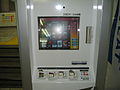 A DVD rental machine in Japan
 -

-



Top film rentals in the United States
[edit]Up until 1998
[edit]| Rank[60] | Title | Revenue | Inflation |
|---|---|---|---|
| 1 | Star Wars Special Edition | $270,900,000 | $530,600,000 |
| 2 | E.T. the Extra-Terrestrial | $228,160,000 | $446,910,000 |
1987–1992
[edit]| Rank[61] | Title |
|---|---|
| 1 | Top Gun |
| 2 | Pretty Woman |
| 3 | Home Alone |
| 4 | The Little Mermaid |
| 5 | Ghost |
| 6 | Beauty and the Beast |
| 7 | Terminator 2: Judgment Day |
| 8 | Forrest Gump |
| 9 | The Lion King |
| 10 | Dances with Wolves |
1993–1996
[edit]1997
[edit]| Rank | Title | Rentals | Revenue | Inflation |
|---|---|---|---|---|
| 1 | Jerry Maguire | 22,500,000 | $60,190,000 | $117,900,000 |
| 2 | Liar Liar | 20,910,000 | $57,410,000 | $112,450,000 |
| 3 | A Time to Kill | 18,770,000 | $50,710,000 | $99,330,000 |
| 4 | The First Wives Club | 17,820,000 | $47,840,000 | $93,710,000 |
| 5 | Ransom | 17,390,000 | $46,780,000 | $91,630,000 |
| 6 | Phenomenon | 17,260,000 | $46,240,000 | $90,570,000 |
| 7 | Scream | 16,500,000 | $44,910,000 | $87,970,000 |
| 8 | Michael | 15,820,000 | $42,510,000 | $83,270,000 |
| 9 | The Long Kiss Goodnight | 15,530,000 | $41,350,000 | $80,990,000 |
| 10 | Sleepers | 15,160,000 | $41,020,000 | $80,350,000 |
See also
[edit]
References
[edit]- ^ Schmid, Von Dorina (February 14, 2014). "Meine Videothek ist ein Kulturerbe – Gespräch mit dem Erfinder der ersten Videothek der Welt: Eckhard Baum (WS 2013/14)". Literaturhaus Nordhessen. Archived from the original on April 30, 2018. Retrieved June 21, 2020.
- ^ Steinbach, Jörg (September 19, 2015). "Film-Shop feiert heute Geburtstag". Kassel Live. Archived from the original on October 29, 2018. Retrieved June 21, 2020.
- ^ Filmklasse Kassel: entry on Eckis Welt, Kunsthochschule Kassel
- ^ Khanna, Derek (December 27, 2013). "A Look Back At How The Content Industry Almost Killed Blockbuster And Netflix (And The VCR)". TechCrunch. Archived from the original on December 28, 2013.
- ^ Jennifer Lane Burnell. "Industry History: entertainment merchants association". Entertainment Merchants Association. Archived from the original on August 6, 2011.
- ^ "1975 - 1979 | entertainment merchants association". Archived from the original on July 13, 2018. Retrieved February 17, 2016.
- ^ Betamax is born, June 7, 1975
- ^ Thirty years ago today, Sandra Day O'Connor saved the future of video
- ^ "A Look Back At How The Content Industry Almost Killed Blockbuster And Netflix (And The VCR)". December 28, 2013.
- ^ "What the 1984 Betamax ruling did for us all". Los Angeles Times. January 17, 2014. Archived from the original on February 26, 2023.
- ^ "Copyright Ruling Rings With Echo of Betamax (Published 2013)". The New York Times. Archived from the original on February 26, 2023.
- ^ "Specialty Dealers Differ On Value Of Video Game Rental". Billboard. Vol. 95, no. 1. Nielsen Business Media, Inc. January 8, 1983. pp. 31, 48. ISSN 0006-2510.
- ^ "Why You Can't Rent Games in Japan".
- ^ "A look at the early days of regional difficulty changes". Destructoid. January 19, 2019. Retrieved May 30, 2024.
- ^ De Atley, Richard (September 7, 1985). "VCRs put entertainment industry into fast-forward frenzy". The Free Lance-Star. Associated Press. pp. 12–TV. Archived from the original on April 4, 2020. Retrieved January 25, 2015.
- ^ Kleinfield, N. R. (May 1, 1988). "A Tight Squeeze at Video Stores". The New York Times. ISSN 0362-4331. Archived from the original on April 14, 2020. Retrieved February 8, 2019.
- ^ Sonasky, Steven (June 10, 1986). "VCRs give cable TV firms a common enemy". Boca Raton News. Knight-Ridder Newspapers. pp. 4D. Archived from the original on September 26, 2015. Retrieved January 25, 2015.
- ^ Hussie, Andrew; Kenna, Eileen (December 14, 1989). "Saturday Night Movies At Home". The Philadelphia Inquirer. Archived from the original on February 14, 2015. Retrieved February 14, 2015.
- ^ Herbert, Andrew. "Videoland: Movie Culture at the American Video Store". University of California Press, 2014, p. 17-18.
- ^ O'Brien, Jeffrey M. (December 1, 2002). "The Netflix Effect". Wired. Archived from the original on September 5, 2013.
- ^ Huddleston Jr., Tom (September 22, 2020). "Netflix didn't kill Blockbuster — how Netflix almost lost the movie rental wars". CNBC.
- ^ Dixon, Wheeler Winston (April 19, 2013). Streaming: Movies, Media, and Instant Access. University Press of Kentucky. p. 56. ISBN 978-0813142180 – via Google Books.
- ^ "Redbox surpasses Blockbuster in number of U.S. locations". Kioskmarketplace.com. November 26, 2007. Archived from the original on August 31, 2010.
- ^ "Redbox surpasses 100 million DVD rentals Redbox surpasses Blockbuster in number of U.S. locations". Kioskmarketplace.com, February 2008. Archived from the original on August 31, 2010.
- ^ "Redbox Hits One Billionth Rental". Gigaom.com. September 6, 2010. Archived from the original on October 26, 2011.
- ^ a b Stebbins, Samuel; Comen, Evan (December 28, 2017). "America's 24 dying industries include sound studios, textiles, newspapers". USA Today. Archived from the original on April 30, 2020. Retrieved June 21, 2020.
- ^ Robinson, Ragan (September 24, 2017). "Video stores still making a go at attracting business (answer poll)". Gaston Gazette. Archived from the original on November 9, 2010. Retrieved June 21, 2020.
- ^ Dawson, Jennifer (April 23, 2006). "The incredible shrinking video stores!". Houston Business Journal. Archived from the original on November 9, 2010. Retrieved June 21, 2020.
- ^ "Billboard". Nielsen Business Media, Inc. July 8, 2000 – via Google Books.
- ^ Brigg, James. "Video stores still 'alive and well' in Indy". The Indianapolis Star. Archived from the original on December 31, 2015. Retrieved June 21, 2020.
- ^ Bennett, Hugh (January 9, 2018). "DEG Releases Year-End 2017 Home Entertainment Report". Hugh's News. Archived from the original on March 21, 2018. Retrieved June 21, 2020.
- ^ Loheswar, R. (June 14, 2020). "After over three decades, Speedy Videos closing all stores in Malaysia permanently". The Malay Mail. Archived from the original on June 16, 2020. Retrieved June 21, 2020.
- ^ Daim, Nuradzimmah (June 14, 2020). "Speedy Video bids adieu, all stores to close". New Straits Times. Archived from the original on June 14, 2020. Retrieved June 21, 2020.
- ^ "Oz's Video Ezy hits new Asian markets". Variety. August 29, 2000. Retrieved April 6, 2021.
- ^ "INTERNATIONAL INTELLECTUAL PROPERTY ALLIANCE 2008 SPECIAL 301 REPORT - MALAYSIA" (PDF). Retrieved April 6, 2021.
- ^ "All Family Video Stores Closing | Family Video". Archived from the original on January 6, 2021. Retrieved January 8, 2021.
- ^ "The Rise and Fall of Video Rental Stores and Their Lasting Legacy | Capture Media Digitization Services". Capture. March 2, 2025. Retrieved October 7, 2025.
- ^ a b c d Wren, Clay (May 14, 2021). "Video stores aren't dead because of Film is Truth". www.westernfrontonline.com. The Front. Retrieved September 23, 2022.
- ^ "各種調査報告:JVA個人向けレンタルシステム加盟店数推移" [Various survey reports:Changes in the number of JVA individual rental system member stores] (in Japanese). JVA: Japan Video Software Association. Retrieved April 22, 2025.
- ^ Higashida, Yosuke (December 6, 2021). "動画配信に押されるレンタルビデオ店、ジムや古着店に生まれ変わる…コロナで拍車" [Video rental stores are being pushed out by video streaming services, but the coronavirus pandemic is spurring the shift to gyms and thrift stores.]. The Yomiuri Shimbun (in Japanese). Retrieved January 31, 2023.
- ^ Williams, Nicole (December 31, 2022). "The movie rental store lives — and it's not going anywhere". www.cbc.ca. CBC News. Retrieved December 31, 2022.
- ^ "Chicken Soup Reports $637 Million Loss for 2023, Preps Investors for Bankruptcy". NextTV. April 23, 2024. Retrieved April 23, 2024.
- ^ Hayes, Dade (June 29, 2024). "Redbox Owner Chicken Soup For The Soul Entertainment Files For Chapter 11 Bankruptcy Protection". Deadline Hollywood. Retrieved June 29, 2024.
- ^ Randles, Jonathan (July 10, 2024). "Redbox Owner to Be Liquidated Following Alleged Mismanagement". Bloomberg Law. Retrieved July 10, 2024.
- ^ "Williamsburg video store rewinds time with old school movie-buying experience rooted in nostalgia". ABC7 New York. April 16, 2025. Retrieved October 7, 2025.
- ^ Duggan, Joe (December 17, 2021). "Last call for what's likely Nebraska's last video store". Flatwater Free Press. Flatwater Free Press. Retrieved September 21, 2022.
- ^ a b Souter, Collin (February 12, 2021). "Farewell to the Video Store". www.rogerebert.com. Roger Ebert. Retrieved September 22, 2022.
- ^ a b c McGillivray, Kate (October 20, 2018). "The Secret Resilience of Toronto's Video Stores". www.cbc.ca/news. CBC. Retrieved September 22, 2022.
- ^ a b Trapunski, Richard (July 3, 2021). "Inside one of Toronto's last video stores". nowtoronto.com. Now. Retrieved September 22, 2022.
- ^ Unglesbee, Ben (December 17, 2020). "An existential moment for the last video store chain". www.retaildive.com/news. Retrieved September 23, 2022.
- ^ a b Brody, Richard (October 2, 2015). "The Video Store as Film School". www.newyorker.com. New Yorker. Retrieved September 23, 2022.
- ^ "Friday Night at the Video Store". www.nfb.ca. National Film Board. Retrieved February 2, 2023.
- ^ Levine, Daniel S. (March 14, 2021). "'The Last Blockbuster': Netflix Users Hilariously Point out Cruel Irony of Documentary". popculture.com. Archived from the original on October 29, 2022. Retrieved October 29, 2022.
- ^ Andreeva, Nellie (November 18, 2021). "Netflix Gets Last Laugh With Blockbuster Video Store Comedy Series Starring Randall Park". Deadline Hollywood. Archived from the original on November 18, 2021. Retrieved November 18, 2021.
- ^ "About Copyright Law". Motion Picture Licensing Corporation. Retrieved July 15, 2016.
- ^ a b "FAQs about Copyrights". www.acf-film.com. Audio Ciné Films Inc. Retrieved February 2, 2023.
- ^ Litman, Jessica D. (2007). "Lawful Personal Use". Texas Law Review. 85 (7): 1871–1920. Retrieved July 4, 2024.
- ^ Guo, Hong. "Research Guides: Copyright & Fair Use: Showing Movies in Class and on Campus". mtsac.libguides.com. Retrieved July 4, 2024.
- ^ "Copyright Guidelines for Showing Movies and Other Audiovisual Works : Washington and Lee University". Washington & Lee University. Retrieved July 4, 2024.
- ^ "Most Rented Video". The Guinness Book of Records 1999. Guinness World Records. 1998. p. 215. ISBN 978-0-85112-070-6.
- ^ Famighetti, Robert (1998). "Most Popular Movie Videos: All Time Top 10 Rentals". The World Almanac and Book of Facts, 1999. World Almanac Books. p. 178. ISBN 978-0-88687-832-0.
Source: Alexander & Associates/Video Flash, New York, NY (...) Rented Mar. 1, 1987-Dec. 30, 1997
- ^ Famighetti, Robert, ed. (1994). "Most Popular Movie Videos, 1993". The World Almanac and Book of Facts, 1995. World Almanac Books. p. 302.
- ^ Famighetti, Robert, ed. (1995). "Most Popular Movie Videos, 1994". The World Almanac and Book of Facts, 1996. World Almanac Books. p. 250.
- ^ "Most Popular Movie Videos". The World Almanac and Book of Facts, 1997. World Almanac Books. 1996. p. 284. ISBN 9780886878016.
- ^ Famighetti, Robert (1997). "Most Popular Movie Videos". The World Almanac and Book of Facts 1998. World Almanac Books. p. 250. ISBN 0886878217.
- ^ Alsop, Ronald J. (1998). "Home Video's Greatest Hits". The Wall Street Journal Almanac: 1999. New York City: Ballantine Books: 681. ISBN 9780345411020.
Source: Paul Kagan Associates, Inc.
- ^ "VidTrac's Top 100 Renting Video Titles for 1997". Video Software Dealers Association (VSDA). Archived from the original on June 13, 1998. Retrieved November 9, 2021.
Further reading
[edit]- Greenberg, Joshua M. From Betamax to Blockbuster: Video Stores and the Invention of Movies on Video. MIT Press, 2010.
- Herbert, Daniel. Videoland: Movie Culture at the American Video Store. Berkeley, CA: University of California Press, 2014.
- Roston, Tom. I Lost It at the Video Store: A Filmmakers' Oral History of a Vanished Era. Critical Press, 2015.

| International | |
|---|---|
| National | |
| Other | |
