Hubbry Logo
BongBongMain
Open search
Bong
Community hub
Bong
logo
8 pages, 0 posts
0 subscribers
Be the first to start a discussion here.
Bong
Bong
from Wikipedia

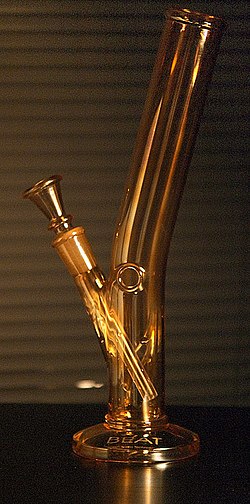
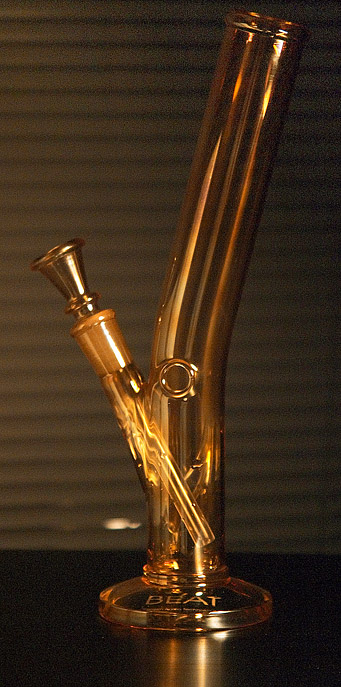
A bong with a circular carburetion port in the front of the bowl

A bong (also known as a water pipe) is a filtration device generally used for smoking cannabis, tobacco, or other herbal substances.[1] In the bong shown in the photo, the smoke flows from the lower port on the left to the upper port on the right.

In construction and function, a bong is similar to a hookah, except smaller and especially more portable. A bong may be constructed from any air- and water-tight vessel by adding a bowl and stem apparatus (or slide)[2] which guides air downward to below water level whence it bubbles upward ("bubbler") during use. To get fresh air into the bong and harvest the last remaining smoke, a hole known as the "carburetor", "carb", "choke", "bink", "rush", "shotty", "kick hole", or simply "hole", somewhere on the lower part of the bong above water level, is first kept covered during the smoking process, then opened to allow the smoke to be inhaled. On bongs without such a hole, the bowl and/or the stem are removed to allow air from the hole that holds the stem.

Bongs have been in use by the Hmong in Laos and Thailand, as well all over Africa, for centuries.[3] One of the earliest recorded uses of the word in the West is in the McFarland Thai-English Dictionary, published in 1944, which describes one of the meanings of bong in the Thai language as, "a bamboo waterpipe for smoking kancha, tree, hashish, or the hemp-plant". A January 1971 issue of the Marijuana Review also used the term.

Etymology

[edit]

The word bong is an adaptation of the Thai word bong or baung (Thai: บ้อง, [bɔ̂ŋ]), which refers to a cylindrical wooden tube, pipe, or container cut from bamboo, and which also refers to the bong used for smoking.

History

[edit]

Excavations of a kurgan in Russia in 2013 revealed that Scythian tribal chiefs used gold vessels 2400 years ago to smoke cannabis and opium. The kurgan was discovered when construction workers were clearing land for the construction of a power line.[4]

During the reign of Mughal emperor Akbar, physician Hakim Abul Fath invented the waterpipe in India, and discovered tobacco. Abul suggested that tobacco "smoke should be first passed through a small receptacle of water so that it would be rendered harmless".[5] Other sources also show evidence of the invention of the waterpipe in China during the late Ming dynasty (16th century), along with tobacco, through Persia and the Silk Road.[citation needed] By the Qing dynasty, it became the most popular method to smoke tobacco, but became less popular since the Republic era. While typically employed by commoners, the water pipe is known to have been preferred by Empress Dowager Cixi over snuff bottles or other methods of intake. According to the Imperial Household Department, she was buried with at least three water pipes; some of her collections can be seen in the Palace Museum.

The water pipe employed since the Qing dynasty can be divided into two types: the homemade bamboo bong commonly made and used by country people, and a more elegant metal version employed by Chinese merchants, urbanites, and nobility. Metal utensils are typically made out of bronze or brass, the nobility version of silver and decorated with jewels.

Use

[edit]
Diagram of a bong in operation

The water can trap some heavier particles and water-soluble molecules, preventing them from entering the smoker's airways.[6] The mechanics of a bong are compared to those of a laboratory gas washing bottle. The user puts their mouth at the top and places the cannabis in the tube, as shown in the picture.

Bongs are often either glass or plastic that use a bowl, stem, and water to produce smoke. Most glass bongs are made from heat resistant borosilicate glass, allowing the bong to withstand repeated use and heat exposure without breaking. After the bowl has been packed and water has been inserted into the bong, the substance is lit and the smoke is drawn through water to produce a smoother smoke than other methods of smoking do.[7] To smoke a bong, the smoker must inhale in the bong so bubbles containing smoke begin to come from the stem. Once the bong has a fair amount of smoke built up, either the carb is uncovered or the stem is separated from the bong, allowing the remaining smoke to be inhaled.

Sticker art in Sydney, 2025
A bong made from a plastic bottle of Gatorade. Sydney, 2022

However, a 2000 NORML-MAPS cannabis study found that "water pipes filter out more psychoactive THC than they do other tars, thereby requiring users to smoke more to reach their desired effect".[8] In the study, smoke from cannabis supplied by the NIDA was drawn through a number of smoking devices and analyzed. This study looked at the tar to cannabinoid ratio in the gas in output by various bongs, as well as unfiltered and filtered joints, and vaporizers. The results showed that only vaporizers produced a better tar to cannabinoid ratio than unfiltered joints, but that within the cannabinoids produced, even vaporizers warped the ratio of THC (the psychoactive component of the smoke) to CBN (capable of producing medical benefits but is not psychoactive) in favor of CBN. This showed an unfiltered joint had the best tar to THC ratio of all, and bongs were actually seriously detrimental in this respect.

MAPS[9] also reviewed a study that examined the effects and composition of water-filtered and non-filtered cannabis and tobacco smoke. It found that when alveolar macrophages were exposed to unfiltered smoke, their ability to fight bacteria was reduced, unlike exposure to water-filtered smoke. It also found substantial epidemiological evidence of a lower incidence of carcinoma among tobacco smokers who used water-pipes, as opposed to cigarettes, cigars, and regular pipes. "It appears that water filtration can be effective in removing components from cannabis smoke that are known toxicants... The effectiveness of toxicant removal is related to the smoke's water contact area."

Specially designed water pipes, incorporating particulate filters and gas-dispersion frits, would likely be most effective in this regard; the gas-dispersion frit serves to break up the smoke into very fine bubbles, thereby increasing its water-contact area.[9] These frits are commonly referred to as diffuser for the way that they diffuse (or disperse) the smoke as it exits the downstem, and usually consist of small holes or slats at the end of the downstem. This study suggests that a bong's smoke is less harmful than unfiltered smoke.

Adverse health effects

[edit]

Bongs that are cleaned regularly eliminates yeast, fungi, bacteria and pathogens that can cause several symptoms that vary from allergy to lung infection.[10]

Plastic bongs

[edit]

A 2011 article in High Times suggested that it is possible to imagine that a process of chemicals leaching into water occurring with "...a homemade water bottle bong where the bottle is routinely heated up."[11] It also reported that "According to Cancer Research UK, plastic bottles heated up to 60°C contain unhealthy levels of toxic chemicals."[11]

[edit]
A variety of bongs for sale, among other merchandise in Manhattan. For legal reasons, the products are labeled as "Tobacco Use Only".

In the United States, under the Federal Drug Paraphernalia Statute, which is part of the Controlled Substances Act, it is illegal to sell, transport through the mail, transport across state lines, import, or export drug paraphernalia.[12]

In countries where marijuana and hashish are illegal, some retailers specify that bongs are intended for use with tobacco in an attempt to circumvent laws against selling drug paraphernalia. While technically "bong" does not mean a device used for smoking mainly cannabis, drug-related connotations have been formed with the word itself (partly due to punning with Sanskrit bhangah "hemp"). Thus for fear of the law many head shops will not serve customers who use the word "bong" or "bongs", or any other word typically associated with illegal drug use.[13]

Some brand name bong manufacturers (notably RooR) have sought to curb the counterfeit market for their products by suing stores accused of selling fake merchandise.[14]

See also

[edit]

References

[edit]

Further reading

[edit]
[edit]
Revisions and contributorsEdit on WikipediaRead on Wikipedia
from Grokipedia
A bong is a device consisting of a water-filled chamber connected to a for holding combustible material such as or , through which smoke is drawn, filtered, and cooled before . The apparatus typically features a vertical tube or stem submerged in the , a carburetion hole for controlling , and a mouthpiece at the top, allowing users to produce larger volumes of smoother smoke compared to unfiltered pipes. The term "bong" originates from the Thai word baung (บ้อง), denoting a cylindrical tube used as a pipe, with the English usage emerging in the mid-20th century among American soldiers in during the era. Archaeological evidence indicates water pipes akin to bongs date back over 2,400 years, including gold examples from burials in employed for and , while ethnographic records suggest early adoption in African tribes and Central Asian societies for and ritualistic . In contemporary use, bongs have evolved from rudimentary or constructions to sophisticated designs, popularized in Western during the and through innovations like those by American glassblower Bob Snodgrass, emphasizing filtration efficiency and aesthetic variety despite ongoing legal restrictions in many jurisdictions. Culturally, beyond recreation, historical applications included in ancient societies, though modern associations often center on claims regarding smoke cooling, which empirical studies link to reduced respiratory irritation but not elimination of risks.

Etymology

Linguistic Origins and Evolution

The term "bong" derives from the Thai word bòng (บ้อง), referring to a cylindrical tube, pipe, or container typically fashioned from . This Thai usage dates to at least the and originally described simple bamboo implements, including those adapted for or cannabis-like substances in . Linguistic evidence supports this as the primary root, with no credible alternative origins predating or supplanting it in scholarly etymological analyses. In English, "bong" emerged as slang for a water-filtered smoking pipe in the United States during the 1960s, primarily through exposure via American Vietnam War veterans returning from Southeast Asia. These soldiers encountered local bamboo water pipes, adapting the Thai term directly into counterculture lexicon amid rising cannabis use. By the early 1970s, the word had proliferated in print and popular media, solidifying its association with glass or acrylic devices featuring a water chamber for cooling smoke, distinct from earlier hookah or chillum terminology. Subsequent evolution reflects and material shifts, with "bong" retaining its core phonetic form while encompassing innovations like percolator-equipped models by the and . No significant semantic drift has occurred; the term uniformly denotes the device's filtration mechanism across English dialects, though regional synonyms like "water pipe" persist in formal or legal contexts.

History

Ancient and Pre-Modern Origins

The earliest archaeological evidence of bong-like devices dates to the among the , nomadic tribes in the Eurasian steppes. Excavations in a burial mound near Sengileevskoye in uncovered two small solid-gold vessels, each approximately 10 cm tall, containing black residue that chemical analysis identified as combusted and . These artifacts, associated with elite chieftains, were used to vaporize psychoactive substances over open flames during funerary rituals, mirroring descriptions by of Scythian cannabis inhalation practices, though the gold items represent portable, proto-filtration tools rather than simple braziers. In , water pipes emerged independently as early cannabis smoking devices by the medieval period. Eleven ceramic pipe bowls recovered from caves in the , dated between 1100 and 1400 CE via radiocarbon analysis, yielded residue testing positive for cannabis-derived cannabinoids through . These one-piece water pipes, with submerged combustion chambers, indicate localized innovation for filtering harsh smoke, predating similar designs elsewhere in the continent and associating the technology with regional . Pre-modern developments in further diversified water pipe forms, with bamboo constructions documented in by the . Ethnographic records among Hmong communities in and describe single-user "baung" pipes—hollow bamboo tubes with gourd or clay water reservoirs—for tobacco and herbal smoking, evolving from rudimentary filtration needs in humid climates. In , precursors to communal hookahs appeared around the 16th century, attributed to physician Hakim Abu'l-Fath Gilani, who adapted shells and gourds to cool tobacco smoke, though these multi-hose variants diverged from the simpler bong archetype. Such devices spread via trade routes to Persia and the by the , incorporating clay and metal for durability, but retained core water-percolation mechanics traceable to earlier isolated inventions.

Introduction to the West and Modern Popularization

Bongs entered predominantly in the 1960s and 1970s, brought back by American soldiers from the who encountered bamboo water pipes in and by hippies traveling to and other Asian regions. This introduction aligned with the rise of the counterculture movement in the United States, where surged amid shifting social attitudes toward . Bongs became a staple in communities, valued for delivering smoother hits of smoke compared to joints or dry pipes, and symbolized resistance to conventional authority. Popularization accelerated with advancements in manufacturing, including the adoption of affordable glass and acrylic materials, enabling mass production and DIY adaptations like those using plastic bottles. By the late 1970s, glassblowing innovations by artisans such as Bob Snodgrass introduced colorful, functional designs that elevated bongs from rudimentary tools to collectible art pieces within cannabis subcultures. This era marked bongs' transition into mainstream smoking paraphernalia, particularly as cannabis advocacy grew, though legal restrictions limited open commercialization until later decriminalization efforts.

Design and Components

Core Structural Elements

A bong's core structural elements consist of the , downstem, chamber, , and mouthpiece, which together facilitate the and of through . Bowl: This removable component attaches to the downstem or chamber via a and holds the combustible material, such as ground or , often with a screen to retain and prevent particles from entering the smoke path. Downstem: A perforated tube that connects the bowl to the water chamber, directing smoke downward to bubble through the water for cooling and filtration; basic versions are simple glass tubes, while advanced ones incorporate slits or diffusers for enhanced diffusion. Water chamber (base): The foundational reservoir that holds approximately 1-2 inches of water, serving as the primary site for smoke filtration by trapping particulates and tar while cooling the vapor through bubbling. Neck: The vertical tube extending upward from the water chamber to the mouthpiece, allowing filtered to rise and providing space for optional features like notches to further cool the . Mouthpiece: The flared or straight opening at the top of the through which the user inhales the processed , designed for comfortable drawing without direct contact with unfiltered vapors. Optional elements like a carburetor hole on the chamber allow manual airflow control to clear residual smoke, though not all designs include it.

Variations and Innovations

Bongs have evolved through diverse structural modifications aimed at improving filtration, portability, or inhalation efficiency. Basic shape variations include beaker-style bases, which offer greater stability due to their wider footprint resembling laboratory glassware, and straight-tube designs providing a taller chamber for larger smoke volumes. Round-base bongs, with a spherical chamber, facilitate smoother draw paths compared to angular alternatives. Percolator innovations represent a key advancement in bong , introducing multiple diffusion stages to break smoke into smaller bubbles for enhanced cooling and . The diffused downstem, the simplest percolator, features slits or holes at the tube's end to disperse smoke directly into the base water. More complex types include the honeycomb percolator, a flat disc with dozens of small holes creating numerous fine bubbles to maximize water contact and reduce harshness; tree percolators, with branching arms each terminating in individual diffusion points for sequential ; and showerhead percolators, resembling a multi-slotted dome that mimics rainfall dispersion. Inline percolators use elongated tubes with side-facing slits for horizontal , while matrix percolators employ grid-like patterns for extensive bubble fragmentation. These percolators, popularized in the late amid advances in scientific , increase drag but demonstrably lower smoke temperature through empirical diffusion principles. Gravity bongs constitute a distinct variation leveraging rather than direct for smoke accumulation. Typically improvised from a submerged in —where lighting the bowl and raising the bottle draws into the chamber via vacuum—the design delivers concentrated hits by forcing rapid intake upon release. Origins trace to late 20th-century DIY adaptations among users, with bucket-style versions documented around the late 1990s, though earlier experimentation in the 1970s contributed to its development. Commercial iterations, such as the introduced in 2004, formalized the concept with durable acrylic components. Artisanal innovations in the and , led by glassblower Bob Snodgrass, introduced fuming techniques using gold or silver vapors to create heat-reactive color shifts in glass bongs, enhancing aesthetic appeal without altering core mechanics. Modular designs, allowing interchangeable percolators or stems, emerged in the to customize , reflecting ongoing refinements driven by user experimentation and precision.

Materials and Manufacturing

Traditional and Common Materials

Traditional bongs, originating in ancient civilizations, were primarily constructed from locally available natural materials such as in and or in . In , archaeological evidence indicates ceramic water pipes with underground stems dating to approximately 1400 BCE, designed to cool through filtration. Asian variants, particularly in and , utilized bamboo tubes as early as the , leveraging the plant's hollow structure for the chamber and stem, often combined with metal components for durability. Animal horns served as rudimentary vessels in early African designs, providing a natural airtight container for water and smoke passage. In pre-modern contexts, wood and clay were also employed across regions like and territories, where materials like wooden carvings or clay formed basic water pipes for ritualistic around 2400 years ago. These organic and earthen substances predominated due to their accessibility and heat resistance, though they lacked the precision of later innovations. Contemporary bongs most commonly feature , prized for its thermal shock resistance and neutrality in flavor preservation, with manufacturing peaking in the United States since the through artisans like Bob Snodgrass. Acrylic and variants, including improvised designs from bottles, offer affordability and portability but may leach chemicals when heated. provides flexibility and shatterproof qualities, gaining popularity for travel use since the early . persists as a nod to historical roots, valued for aesthetic molding and insulation, though prone to cracking under . Metal, such as , emerges in durable, portable models but risks altering smoke taste due to oxidation. remains dominant in high-end production for its purity, comprising the majority of commercial offerings as of 2023.

Production Methods and Quality Considerations

Glass bongs, the most prevalent type for high-quality production, are primarily crafted via glassblowing using borosilicate glass, valued for its thermal shock resistance and durability compared to soda-lime glass. The process commences with melting borosilicate rods or tubes—composed of silica sand, boric oxide, soda ash, and alumina—in a furnace at around 1,600°C until the material becomes malleable and glows. Artisans then gather molten on a blowpipe, blow air to form an initial bubble for the chamber, and shape components like the base, neck, mouthpiece, downstem, and using jacks, paddles, and shears. A spins the heated for precision and uniformity, particularly in attaching percolators, joints, and colored accents from additional rods. For intricate designs, techniques such as fuming or fritting incorporate metallic oxides for while maintaining structural integrity. Post-shaping, pieces undergo annealing in a heated to approximately 700°C, then slowly cooled to relieve internal stresses and prevent cracking under temperature fluctuations. Mass-produced variants may employ (CAD) for modular assembly, contrasting artisanal methods that prioritize hand-blown customization. Alternative production for non-glass bongs includes injection molding for acrylic and variants, which prioritizes affordability and shatter-resistance but may compromise on heat tolerance and flavor purity. Ceramic bongs involve or wheel-throwing followed by high-temperature firing. Quality hinges on material purity, with borosilicate ensuring low and chemical inertness to avoid leaching toxins during use. Thicker walls (typically 5-9mm) enhance impact resistance, while thorough annealing and leak-tested joints ensure functionality and longevity. Inferior production, such as inadequate annealing or thin , risks shattering from rapid heating or cooling, underscoring the importance of skilled craftsmanship over cost-cutting measures.

Use and Mechanics

Preparation and Operation

Preparation of a bong involves ensuring to prevent residue buildup, which can affect flavor, , and cannabinoid delivery. Some users perceive a stronger high from dirty bongs due to harsher, irritating hits caused by resin, tar, particulates, and toxins inducing coughing that mimics potency, or from reheating degraded resin releasing minimal cannabinoids; this may involve placebo effects from familiarity. However, clean bongs enable superior effects through better filtration without residue trapping THC and CBD, smoother hits permitting deeper inhales, and unrestricted airflow avoiding waste and dilution. Users typically rinse the device with warm and a cleaning solution like , or vinegar (including apple cider vinegar) whose acidity effectively dissolves resin and residue buildup, focusing on the , downstem, and chamber. After drying, the chamber is filled with to a level that submerges the downstem's slits or end by approximately 0.5 to 1 inch, allowing for without excessive resistance during . Water is the standard and recommended liquid; acidic liquids like vinegar are unsuitable substitutes, as bubbling smoke through them imparts a strong pungent, sour flavor and aroma that overpowers the material's natural taste, potentially increases harshness despite cooling, and exposes users to irritating acetic acid vapors (4-8% concentration) that can cause coughing, burning sensations, chest tightness, and shortness of breath, per chemical exposure data. Optional additions include cubes in the for further cooling, though this is not essential for basic operation. The is then packed with ground material, such as or , compacted evenly to ensure even burning without airflow blockage. Operation begins by sealing the mouthpiece with the to create an airtight fit, holding the bong stable with the non-dominant hand. A is applied to the while inhaling steadily through the mouthpiece, drawing air through the burning material to produce that travels down the stem, bubbles through the for cooling and particulate , and rises into the chamber. This process leverages negative pressure to force through the liquid medium, where absorbs some water-soluble components and reduces temperature via . Once the chamber fills with —typically indicated by visible — the is removed or a hole is uncovered, allowing a final deep to clear the into the lungs. follows, completing the cycle, with replaced after each use or session to maintain and efficacy.

Common Accessories

Common accessories facilitate preparation, enhance operation, and support maintenance of bongs. These include airtight storage jars or containers to preserve the freshness and potency of cannabis flower prior to grinding and use; a herb grinder, which breaks down cannabis into an even consistency for uniform burning and smoother inhalation; screens or gauzes, typically brass or metal, that prevent herbal material from entering the chamber; spare bowls or slides for switching materials or as backups; ash catchers that trap debris to maintain chamber cleanliness and provide additional filtration; diffused downstems or percolators that improve smoke dispersion, cooling, and filtration; cleaning kits comprising isopropyl alcohol, coarse salt, and pipe cleaners for residue removal; lighters or hemp wicks for ignition, with the latter minimizing butane flavor; and ice catchers, where compatible with the design, to hold ice for further smoke cooling.

Filtration and Delivery Mechanisms

![Bong diagram showing internal components][float-right] The primary mechanism in a bong involves the passage of through a -filled chamber via a downstem, which submerges the stream below the surface to create bubbles. As the bubbles rise, the traps larger particulate matter such as and , while also cooling the through to the liquid medium; this process increases the contact surface area between and , theoretically enhancing the removal of water-soluble compounds. However, empirical studies indicate that this is limited, primarily affecting coarse particles greater than 10 micrometers while allowing ultrafine particles (less than 0.1 micrometers) and most cannabinoids, including THC, to pass through largely unhindered, as these non-polar compounds do not dissolve readily in . Advanced is achieved through percolators, specialized diffusers integrated into the downstem or chamber that fragment the smoke into smaller bubbles, thereby multiplying the surface area for interaction with and promoting more uniform cooling and particulate capture. Common types include tree percolators, which employ multiple upright arms for ; honeycomb percolators, featuring a flat disc with numerous slits for broad dispersion; showerhead percolators with vertical slits simulating rainfall; inline percolators using horizontal slits along a tube; and matrix percolators combining grid-like structures for multi-stage bubbling. Each design increases resistance to , potentially improving for visible particulates but adding effort; a 2025 study confirmed that even with percolators, bong fails to significantly reduce fine particulate matter (PM2.5) emissions from smoke, undermining claims of substantial protection. Delivery of the filtered smoke occurs upon user inhalation, generating negative pressure that draws the cooled, bubbled smoke upward from the water chamber into the main tube and out the mouthpiece. Optional features like ice catches—indentations near the chamber top—allow ice cubes to further chill the rising smoke, reducing without additional . This mechanism ensures a smoother delivery compared to unfiltered pipes, though comparative analyses show bongs deliver comparable and toxin yields to cigarettes when adjusted for puff volume, with water serving more as a perceptual smoother than an effective purifier.

Health Considerations

Claimed Advantages and Empirical Evidence

Users of bongs claim that the water chamber filters out tar, particulates, and other harmful substances from or tobacco smoke, thereby reducing respiratory irritation and potential health risks compared to unfiltered methods like joints or . This perception stems from the visible bubbling action and smoother experience, with proponents asserting that water traps water-soluble toxins while preserving psychoactive cannabinoids like THC. Additionally, the cooling effect of the water is said to lower smoke temperature, minimizing throat and lung irritation and enabling larger, more efficient doses without coughing. Empirical studies, however, provide limited support for these filtration claims. A 1993 literature review indicated that water pipes could remove certain toxicants from marijuana smoke while retaining THC, but subsequent analyses revealed inefficiencies, such as disproportionate filtration of cannabinoids relative to tars, resulting in a higher tar-to-cannabinoid ratio—up to 30% more tar per unit of cannabinoid in bongs compared to unfiltered joints. This imbalance may compel users to inhale more smoke to achieve desired effects, potentially offsetting any benefits. More recent reinforces the inadequacy of bong . A 2025 study analyzing chemical compositions from smoked via bongs versus joints found minimal reduction in harmful compounds, with failing to significantly filter fine particulates or toxins despite cooling the smoke. Similarly, guidelines on lower-risk use note that while water pipes might decrease some burnt particles, they often increase overall and particulate intake, offering no clear evidence of over other methods. The cooling effect, though empirically verified to reduce immediate irritation, does not demonstrably lower long-term risks like exposure or damage, as users may compensate by inhaling deeper or more frequently. No peer-reviewed trials have established bongs as superior for mitigating combustion-related harms, such as those from polycyclic aromatic hydrocarbons or .

Documented Risks and Comparative Studies

Bong use, involving inhalation of combusted or smoke filtered through water, has been associated with acute respiratory effects including increased , production, and bronchial irritation, similar to other smoked forms of . Long-term use correlates with chronic bronchitis symptoms and damage to airway mucosa, with histopathological changes observed in heavy users' lungs, such as bullous lung disease. In heavily used and uncleaned bongs, thick resin accumulates, trapping tar, carcinogens, degraded plant matter, and combustion byproducts; re-vaporizing this resin delivers minimal additional THC but exposes users to extra contaminants, resulting in harsher inhalation that inflames airways, increased chemical exposure, and chronic respiratory issues like bronchitis and emphysema, with extreme buildup exacerbating particulate delivery to the lungs and heightening cancer risk similar to tobacco tar exposure. Cardiovascular risks include elevated and immediately post-use, alongside intoxication from incomplete , which reduces oxygen delivery and strains the heart. Infectious disease transmission heightens when bongs are shared, as evidenced by a 2024 case-control study in linking bong sharing to a significantly increased (adjusted OR 3.72) for active pulmonary among close contacts. Secondhand exposure to bong smoke generates high levels of fine particulate matter (PM2.5), with concentrations exceeding those from cigarettes, posing risks to bystanders including endothelial and vascular dysfunction. Comparative studies indicate that bongs do not substantially mitigate toxin exposure relative to unfiltered methods like joints. A 1999 analysis by the found that bongs delivered 30% more per unit of cannabinoids than unfiltered joints, as filtration disproportionately retains psychoactive THC while allowing tars to pass through more readily. This inefficiency persists across toxins; a 2025 examining profiles from three cannabis strains showed no unique compounds filtered exclusively by bongs versus joints, with failing to capture many harmful particulates or volatiles effectively. In contrast to cigarettes, waterpipe use (including bongs) exposes users to dramatically higher volumes, equivalent CO levels far exceeding single cigarettes, and comparable yields, amplifying overall inhalation burden. Versus , marijuana bong smoking imposes a similar particulate () load to the lungs when normalized for puff volume and depth, with deeper bong hits potentially exacerbating deposition in lower airways. These findings challenge assumptions of superior , as bongs facilitate larger, more frequent puffs, offsetting any minor particulate reduction from .

Material-Specific Hazards

Plastic and acrylic bongs, when heated by , can leach volatile organic compounds (VOCs) and other plasticizers into the smoke or water, potentially causing respiratory irritation or lung injury from inhaled byproducts. Lower-grade acrylic materials exacerbate this issue through thermal degradation, releasing toxins not present in inert alternatives like . authorities recommend avoiding for devices due to these documented chemical migration risks under heat exposure exceeding 60°C. Glass bongs, typically made from borosilicate for resistance, pose primarily mechanical hazards from breakage due to impact or uneven heating, which can generate fine or inhalable during use. Inhaled glass particles, even small ones, may abrade airway linings, induce , or lead to scarring in the lungs, with severity depending on and quantity. While high-quality does not chemically react with , compromised pieces increase particulate inhalation risks beyond those of intact designs. Ceramic bongs risk lead or heavy metal leaching if low-fired or glazed with non-food-safe materials, as repeated heating can mobilize contaminants into the vapor stream, mirroring pottery-related exposures. Properly vitrified, lead-free ceramics fired above 1000°C mitigate solubility of such toxins, but artisanal or unregulated pieces often fail leach tests analogous to FDA standards for cookware. Metal bongs or components, including aluminum stems or screens, may oxidize or alloy-leach elements like aluminum or under heat, contributing trace to inhaled aerosols and elevating cumulative burdens. This parallels broader concerns with metallic , where coatings or impure alloys amplify systemic absorption over prolonged use.

Cultural and Social Impact

Role in Cannabis and Tobacco Traditions

Bongs, as water-filtered smoking devices, trace their origins to ancient Eurasian cultures, where archaeological evidence from kurgans in reveals gold and wooden apparatuses used around 400 BC for inhaling vapors from heated and during ritualistic and possibly shamanistic practices. These early implements, often handheld and filled with water or embers, served not merely as tools but as conduits for and status symbols among tribal elites, with residue analysis confirming psychoactive herb use. Similar ceramic water pipes unearthed in , dating to the 12th-14th centuries AD, suggest parallel developments in African herbal smoking traditions, predating widespread Western adoption. In cannabis traditions, bongs evolved into central artifacts of subcultural rituals, particularly from the mid-20th century onward, as Southeast Asian bamboo "baung" pipes—lending the English term "bong" from Thai—influenced returning American soldiers post-Vietnam War, embedding the device in hippie and stoner communities by the 1960s and 1970s. This integration facilitated group sessions emphasizing communal bonding and altered states, with the water filtration enabling larger hits of combusted flower, aligning with cannabis's role in countercultural rebellion against authority; by the 1980s, bongs symbolized cannabis advocacy in events like California's Proposition 215 campaigns in 1996, though empirical data on ritual prevalence remains anecdotal rather than quantified. Unlike dry pipes, bongs' percolating chambers supported prolonged, shared use in settings from dormitories to festivals, fostering traditions of improvisation with household items like bottles during prohibition eras. For tobacco traditions, bongs and rudimentary water pipes appear in select non-Western contexts but lack the deep ceremonial embedding seen in cannabis rites; instead, tobacco smoking via water filtration historically centered on hookahs (or nargileh), originating in 16th-century Mughal as communal devices for flavored molasses-tobacco mixtures, spreading to Ottoman Persia and cultures for social gatherings emphasizing hospitality and conversation among men. These multi-hose systems, distinct from the straight-tube bong, enabled group inhalation of cooled smoke, with ethnographic accounts documenting their use in cafes from to as markers of leisure class status since the 1700s, though modern bong adaptations for loose pipe tobacco remain marginal and non-traditional in these regions. In African and Southeast Asian tobacco practices, simple water pipes akin to proto-bongs supplemented dry methods for harsher varietals, but without the gravitas of Scythian cannabis vaporization or hookah's social liturgy, reflecting tobacco's post-Columbian diffusion limiting ancient precedents. Cross-substance use persists today, with bongs occasionally employed for tobacco in informal Western settings, yet data indicate cannabis as the dominant medium, underscoring divergent cultural trajectories driven by plant availability and prohibition dynamics.

Representation in Media and Subcultures

Bongs have been emblematic of cannabis subcultures since the 1960s counterculture movement, where they symbolized rebellion against mainstream norms and facilitated communal rituals among hippies and later stoner communities. In these groups, bongs represented a laid-back ethos tied to cannabis use, often shared in social settings to foster camaraderie, evolving from underground defiance during prohibition eras to markers of normalized recreational practices amid legalization trends post-2010s. In film, bongs frequently appear in stoner comedies, such as Cheech and Chong's (1978), which popularized exaggerated depictions of and portrayed users as comically inept to satirize stereotypes. Later works like (1998) elevated the archetype with the Dude's relaxed persona, using bong scenes to embody anti-authoritarian coolness beyond mere . These portrayals often reinforced perceptions of enthusiasts as either harmless eccentrics or societal dropouts, with empirical analyses of media noting persistent framing of marijuana users as bumbling or marginal figures as late as 2018. Television has similarly featured bongs in niche programming, including the 2016 Comedy Central series Time-Traveling Bong, where the device serves as a for absurdist adventures, reflecting 's integration into comedic narratives. More recently, HBO Max's High Science (2023) anthropomorphizes a bong as an educational guide voiced by , blending humor with pseudoscientific tropes to explore lore, though critics highlight its reliance on over factual depth. Such representations underscore bongs' role as cultural shorthand for , yet they rarely delve into mechanical or health nuances, prioritizing over veracity.

Paraphernalia Prohibitions and Enforcement

In the , under 21 U.S.C. § 863 prohibits the sale, distribution, importation, exportation, or advertisement of , defined to include water pipes such as bongs when designed or intended for use in ingesting controlled substances like marijuana. This statute, enacted as part of the , imposes penalties of up to three years and fines for first-time offenders of such activities, with forfeiture of seized items upon . The hinges on factors like , residue presence, and user proximity, allowing authorities to classify common bong designs—such as those with carburetion holes or percolators—as if linked to illicit drug use. State-level prohibitions mirror but vary in severity, often treating simple possession as a punishable by fines up to $1,000 and jail time up to one year, as seen in statutes like Ohio Revised Code § 2925.14. Enforcement typically targets commercial sales and imports rather than personal possession, with U.S. Customs and Border Protection (CBP) seizing shipments valued at nearly $143,000 in prohibited bongs at in October 2020 alone, destined for despite state-level legality. Federal prosecutions focus on interstate commerce, as affirmed in cases where retailers faced charges for mailing or exporting items explicitly marketed for , even in legal states. Proving remains a core enforcement challenge, as vendors often label bongs as "tobacco water pipes" or generic smoking devices to evade classification, a practice upheld in some jurisdictions but contested in others through evidence like packaging or customer testimonials. Courts evaluate based on objective criteria under the federal Control Act precedents, but inconsistent application leads to selective raids on head shops, with over 1,000 such operations documented annually in the peak, declining amid resource shifts to harder drugs. Despite federal persistence, de facto tolerance in cannabis-legal states has reduced misdemeanor arrests for possession by up to 80% in places like post-2012, per state data, though importation violations persist. Internationally, prohibitions align with domestic drug policies; in , the Cannabis Act of 2018 permits accessory possession post-legalization but bans promotion and imposes fines up to $1 million for violations targeting minors. The enforces under the , treating bongs as Class B with possession penalties up to five years, though enforcement prioritizes supply chains, as in 2014 raids seizing thousands of items from wholesalers. In stricter regimes like Australia, state laws criminalize possession with fines exceeding AUD 2,200, emphasizing intent over form, while global treaties under the UN indirectly support such bans by classifying related equipment.

Shifts with Cannabis Legalization

In the United States, cannabis legalization at the state level, beginning with recreational sales in Colorado and Washington on January 1, 2014, has facilitated the open retail availability of bongs in smoke shops and dispensaries, shifting them from primarily underground or euphemistic marketing (e.g., as "tobacco accessories") to explicit cannabis consumption tools. This transition has spurred industry growth, with glass bongs—comprising 68% of consumer preferences in surveys—driving sales in high-legalization regions like California, where legalization has normalized production and distribution. Artisanal glassblowing has proliferated as legalization reduced legal risks for creators, leading to heightened innovation in designs such as percolators and modular components, with sales reported as stronger than pre-reform eras. Economically, the paraphernalia sector has integrated into the broader market, which reached $31.4 billion in adult-use and sales in , though specific bong revenue figures remain opaque due to bundled reporting; however, the overall smoking accessories market is projected to expand significantly through 2035 amid rising demand for durable, high-quality water pipes. has intensified competition, crowding the glass market and exerting downward pressure on prices, as mass-produced imports challenge custom artisans previously dominant in illicit networks. In states like and , retailer density reached 16.8 and 3.0 per 100,000 residents by 2022, respectively, often stocking bongs alongside products, reflecting a retail convergence that boosts accessibility but also exposes sellers to federal scrutiny under the , which still deems such items . Federally, no comprehensive shift has occurred, maintaining prohibitions on bong sales as despite state reforms, which has constrained interstate commerce and import vigilance while permitting tolerance in legal jurisdictions. This duality has fostered hybrid business models, with head shops evolving into quasi-dispensaries even in non-recreational states via hemp-derived products, though empirical data indicate persistent black-market dynamics in over-regulated areas like , indirectly sustaining informal bong trade. Usage patterns have also adapted, with studies showing bong consumption correlating with higher hit volumes per session compared to vaping but lower than joints, potentially amplified by legalization's normalization of home consumption setups.

Scientific and Empirical Debates

Filtration Efficacy Studies

A 1999 study sponsored by MAPS and NORML analyzed the efficiency of various devices, including bongs, in delivering cannabinoids while filtering . The research compared unfiltered joints to water pipes and found that the bong, considered the most effective water pipe tested, delivered cannabinoids with a -to-cannabinoid 30% higher than unfiltered joints, indicating that water filtration removed a greater proportion of psychoactive compounds than harmful . This suggests bongs may inadvertently reduce desired effects while failing to substantially mitigate exposure to respiratory irritants. Subsequent analyses of pipe filtration, primarily for but applicable to due to similar byproducts, have shown that bubbling through primarily cools it and captures some water-soluble particulates larger than 1 micrometer, but leaves finer aerosols and most gaseous toxins unfiltered. A 2015 study on water pipe metal exposure confirmed minimal reduction in like and during the water filtration stage, with over 90% passing through to the user. For specifically, empirical tests indicate traps negligible amounts of cannabinoids or relative to toxins, as these compounds are largely non-polar and evade aqueous dissolution. A September 2025 preprint using gas chromatography-mass spectrometry (GC-MS) directly assessed bong water's of smoke compounds, comparing bong-filtered versus smoke. Results indicated no significant reduction in measurable volatile organic compounds, cannabinoids, or in bong water, with detection limits suggesting less than 1% efficacy for most analytes; the authors concluded that "bong water does not seem to significantly filter out any compound from the smoke." This aligns with prior findings that perceptual smoothness from cooling does not equate to reduced harm, as ultrafine particles and polycyclic aromatic hydrocarbons persist. Overall, available empirical data challenges the notion of superior in bongs compared to direct methods, with studies consistently showing limited removal and potential losses in active compounds, though larger-scale peer-reviewed trials remain scarce. Claims of health benefits from bong use thus appear overstated relative to evidence, emphasizing combustion's inherent risks over device-specific mitigation.

Broader Controversies and Misconceptions

A persistent misconception holds that secondhand exposure to smoke from bongs poses minimal health risks compared to tobacco smoke, yet empirical measurements demonstrate otherwise. A 2022 published in quantified fine particulate matter (PM2.5) levels during simulated social bong smoking sessions, revealing peak concentrations up to four times higher than those from or use, with sustained elevations persisting for over an hour post-session. This challenges assumptions of reduced bystander harm, as smoke contains hundreds of toxicants and carcinogens, often at concentrations exceeding those in . Another controversy surrounds the relative efficiency of bong , with users believing it yields a "cleaner" hit by preferentially removing ; however, controlled analyses indicate water traps psychoactive cannabinoids like THC more effectively than tars, resulting in a higher -to-cannabinoid . A NORML-MAPS vaporizer study compared unfiltered joints to various water pipes, finding that bongs delivered approximately 30% more per unit of cannabinoids than joints, potentially necessitating increased consumption to achieve desired effects and thereby elevating overall exposure to harmful particulates. Subsequent reviews corroborate this imbalance, attributing it to THC's greater , which undermines claims of through larger, "filtered" inhalations. Bong water is often viewed as a hygienic buffer against respiratory irritants, but stagnant residue fosters bacterial proliferation, elevating infection risks that contradict notions of inherent . Case reports document severe outcomes, such as necrotizing pneumonia following bong use contaminated with biofilm-laden water, treatable only through prolonged antibiotics and supportive care. Epidemiological data further link shared bongs to heightened transmission, with odds ratios indicating significant adjusted risk in high-prevalence settings, emphasizing the need for regular cleaning to mitigate microbial hazards. Users commonly perceive a stronger high from uncleaned bongs due to harsher, more irritating hits from resin buildup, tar, particulates, and toxins, which induce coughing or a sensation mimicking greater potency, alongside minimal cannabinoids released from reheated degraded residue; this effect may also stem from placebo or familiarity with dirty devices making clean ones initially feel weaker. In contrast, empirical user consensus and filtration principles indicate that clean bongs enhance cannabinoid delivery by avoiding trapping of THC and CBD in residue, enabling smoother hits for deeper inhalation, unrestricted airflow, and reduced waste, thereby yielding more efficient psychoactive effects. Public perceptions increasingly frame daily , including via bongs, as safer than equivalents, but longitudinal surveys reveal this belief outpaces supporting evidence, correlating with rising use amid . A 2023 analysis of U.S. adult attitudes from 2017–2021 showed growing endorsement of cannabis smoke's relative safety for both primary and secondhand exposure, despite biochemical profiles indicating comparable dependence potential and cardiopulmonary strain as cigarette smoking. This disconnect fuels debates over , as self-reported intoxication intensifies with bong use—linked to larger bolus deliveries—without commensurate reductions in acute or .

References

Add your contribution
Related Hubs
User Avatar
No comments yet.