Hubbry Logo
Juniperus occidentalisJuniperus occidentalisMain
Open search
Juniperus occidentalis
Community hub
Juniperus occidentalis
logo
8 pages, 0 posts
0 subscribers
Be the first to start a discussion here.
Juniperus occidentalis
from Wikipedia

Juniperus occidentalis
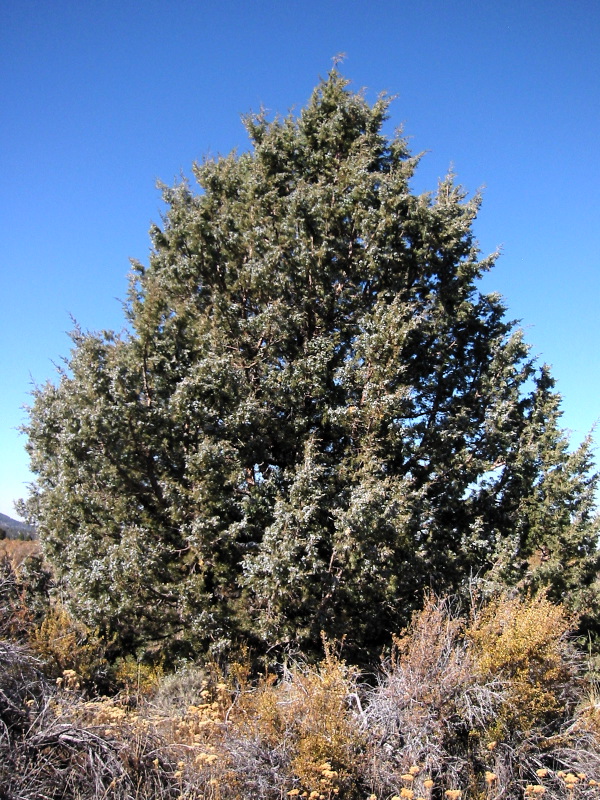
At Lava Beds National Monument
Scientific classification Edit this classification
Kingdom: Plantae
Clade: Tracheophytes
Clade: Gymnospermae
Division: Pinophyta
Class: Pinopsida
Order: Cupressales
Family: Cupressaceae
Genus: Juniperus
Species:
J. occidentalis
Binomial name
Juniperus occidentalis
Natural range in dark green (light green is J. grandis)

Juniperus occidentalis, known as the western juniper, is a shrub or tree native to the Western United States, growing in mountains at altitudes of 800–3,000 meters (2,600–9,800 ft) and rarely down to 100 m (330 ft). It is listed as Least Concern on the IUCN Red List because it is a widespread species with an increasing population.[1]

Description

[edit]

Juniperus occidentalis is a shrub or small tree 4–15 meters (13–49 ft) tall. Exceptionally tall specimens can be found in the John Day area of Oregon in excess of 26–28 m (85–92 ft) tall.

The shoots are of moderate thickness among junipers, at 1–1.6 millimeters (132116 in) diameter. The juvenile leaves (on young seedlings only) are needle-like and 5–10 mm (3161332 in) long. Arranged in opposite decussate pairs or whorls of three, the adult leaves are scale-like, 1–2 mm long (5 mm on lead shoots) and 1–1.5 mm broad. The cones are berry-like, 5–10 mm in diameter, blue-brown with a whitish waxy bloom,[2] and mature in about 18 months. The male cones are 2–4 mm long and shed their pollen in early spring. The plants are about half monoecious (with both sexes on the same plant) and half dioecious (producing cones of only one sex).

The cones contain 1–3 seeds, the majority of which germinate in springtime. In Oregon, where most of the species resides, seeds germinate in April and the foliage emerges in June.[3] Seed dispersal is conducted by water runoff, gravity, and animals.[3]

Taxonomy

[edit]

Further to the south, Juniperus grandis (the Sierra juniper) is sometimes treated as a variety of J. occidentalis (as J. occidentalis var. australis).[4][5] J. grandis is 12–26 m (39–85 ft) tall with a trunk up to 3 m (10 ft) in diameter. The cones are 5–9 mm (3161132 in) wide. Most plants are dioecious, but about 5–10% are monoecious. The two plants are also chemically distinct.[6] J. grandis can be found in California and westernmost Nevada, south of 40° 30' N latitude in the Sierra Nevada and San Bernardino Mountains. The oldest and largest specimen of J. grandis is 26 m (85 ft) tall and 3.88 m (12 ft 9 in) wide, perhaps 3,000 years old, and located in California's Stanislaus National Forest.[7]

Names

[edit]

Common names in English for this species include "western juniper", "sierra juniper", "western red cedar", and "yellow cedar". In the United States it is also occasionally called "pencil wood", likely for a common use.[8] In the Klamath language this tree is called q'eeLo.[9]

Distribution and habitat

[edit]

J. occidentalis can be found in the Western United States—specifically southeast Washington, eastern and central Oregon, southwest Idaho, northeastern California and extreme northwest Nevada, north of 40° 30' N latitude, east of the Cascade Range.

It usually occurs on dry, rocky sites where there is less competition from larger species like ponderosa pine and coast Douglas-fir. Annual precipitation can be as low as 20 centimetres (7+78 in).[2] In very exposed positions at high altitude, it can assume a krummholz habit, growing low to the ground even when mature with a wide trunk. Hybrids with J. osteosperma are occasionally found.

In the John Day area of Oregon, it competes for sunlight among ponderosa pines at the bottom of some deep side canyons. However, it more commonly reaches 4–15 m (13–49 ft) with a bushier growth habit on open and barren ground.

Ecology

[edit]

The cones are an important food for several birds, including American robin, Clark's nutcracker, phainopepla and cedar waxwing; these digest the fleshy cone scales and disperse the seeds in their droppings.

The plants often bear galls caused by the juniper tip midge, Oligotrophus betheli. These are violet-purple fading to brown, 1–2 cm (381316 in) in diameter, with dense modified spreading scale-leaves 6–10 mm (1438 in) long and 2–3 mm broad at the base.

Fire ecology

[edit]

In the past two decades, sagebrush steppe ecosystems have witnessed an expansion of juniper throughout the western U.S.[10] This alteration of vegetation change can be associated with the decreased fire frequency, overgrazing of livestock, and an alteration of climate that transformed into a more wet and mild climate.[10]

Fire scar data was collected and dated to display the expansion of western juniper. It started between 1875 and 1885, with a pinnacle rate of development between approximately 1905 and 1924.[10]

Since the 1990s use of prescribed fires to control expansion of the species has increased. The results of increased prescription fires show a positive effect on plant communities.[11]

Uses

[edit]

Like other junipers, J. occidentalis produces a crop of cones called a juniper berry. While original European gins used berries from J. communis, several distilleries—particularly in Bend, Oregon—have used local western juniper to flavor their gin.[12][13]

While not common as a lumber source, Oregon State University has sponsored research into the use of western juniper for commercial applications such as sign posts and guard rails.[14][15] Western juniper lumber is noted for its durability and high compression strength.[16]

References

[edit]

Further reading

[edit]
Revisions and contributorsEdit on WikipediaRead on Wikipedia
from Grokipedia
Juniperus occidentalis, commonly known as western , is a long-lived, coniferous or large in the family , characterized by its scale-like leaves, furrowed reddish-brown bark, and berry-like cones that turn blue-black upon maturity. It typically grows to heights of 4 to 21 meters (13 to 65 feet) with trunk diameters up to 2 meters (6.6 feet), though exceptional individuals can exceed 24 meters (78 feet), and features a rounded or irregular canopy in mature specimens. The is submonoecious, producing separate male and female cones on the same , with female cones containing 1 to 3 unwinged that require 1 to 2 years to mature and are primarily dispersed by birds, gravity, and water. Western can live over 1,000 years, with significant beginning around 50 to 70 years of age, though seed production declines in dense stands. Native to the semi-arid of the , J. occidentalis occupies approximately 9 million acres (3.6 million hectares) across south-central Washington, , southwestern , northeastern , and northwestern . It thrives at elevations from 180 to 2,770 meters (600 to 9,100 feet), most commonly between 610 and 1,830 meters (2,000 to 6,000 feet), in continental climates with hot, dry summers, cold winters, and annual precipitation of 180 to 500 millimeters (7 to 20 inches), primarily falling as winter snow or spring rain. The species prefers shallow, rocky soils derived from volcanic, sedimentary, or igneous parent materials, often with low and restrictive layers that limit deep rooting, and is commonly associated with , open ponderosa pine woodlands, and bunchgrass understories. Two varieties are recognized: J. occidentalis var. occidentalis (western ), which dominates lower elevations, and var. australis (Sierra ), a dioecious form found at higher elevations in the Sierra Nevada. Ecologically, western juniper plays a key role in arid ecosystems but has undergone rapid expansion since the late , driven by suppression, heavy , and shifts, converting open savannas into denser woodlands and reducing herbaceous cover by up to 80% in invaded areas. This encroachment decreases biodiversity, forage for wildlife like and sage-grouse, and surface water infiltration while increasing , intensity, and such as cheatgrass. efforts since the , including mechanical removal, prescribed , and herbicides, aim to restore habitats and enhance productivity, often yielding 2- to 9-fold increases in herbaceous biomass post-treatment. The wood is valued for durable fencing, posts, and fuel, while the aromatic berries have traditional uses in indigenous cultures and modern applications like flavoring ; it also provides critical winter browse and nesting for numerous and species.

Taxonomy

Classification

Juniperus occidentalis belongs to the kingdom Plantae, phylum Tracheophyta, class Pinopsida, order Pinales, family Cupressaceae, and genus Juniperus. The species was first described by William Jackson Hooker as Juniperus occidentalis Hook. in the Flora Boreali-Americana in 1838, based on specimens from the Pacific Northwest. The taxonomic history of J. occidentalis has involved several revisions, particularly in the 20th and 21st centuries, as morphological similarities with related junipers prompted ongoing reevaluations. In the 2010s, analyses of nuclear ribosomal DNA (nrDNA) and chloroplast DNA (cpDNA) provided genetic evidence distinguishing certain populations, leading to the separation of Juniperus grandis R.P. Adams as a distinct species encompassing Sierra Nevada lineages previously included under J. occidentalis. A key study by Adams and Kauffmann (2010) used nrDNA and cpDNA sequencing to assess genetic variation across J. occidentalis, J. grandis, J. californica, and J. osteosperma, revealing fixed single nucleotide polymorphisms (SNPs) that supported the species-level distinction of J. grandis from core J. occidentalis populations. Subsequent research by Adams (2013) examined hybridization zones in northwestern Nevada using terpene profiles and DNA markers, confirming limited gene flow between J. occidentalis and J. grandis despite occasional introgression, which reinforced their separation as independent taxa. Regarding infraspecific taxa, no varieties are currently accepted for J. occidentalis in major botanical databases. Historical designations, such as J. occidentalis var. gymnocarpa Lemmon (described in 1895), have been reduced to synonymy under J. monosperma (Engelm.) Sarg. based on morphological and distributional evidence.

Names and varieties

The scientific name Juniperus occidentalis derives from the genus Juniperus, the classical Latin name for the juniper tree, possibly originating from iuvenis (young) and pario (to bear), alluding to the plant's persistent production of young, berry-like cones, and the specific epithet occidentalis, meaning "western" in Latin, reflecting its distribution in western North America. Common names for J. occidentalis include western juniper as the primary English name and Sierra juniper, the latter historically applied to southern populations that are now often classified separately. Synonyms include Sabina occidentalis (Hooker) Antoine, Juniperus andina Nuttall, and Juniperus pseudocupressus Dieck. Regarding infraspecific taxa, J. occidentalis has no varieties accepted by the USDA Plants Database, which treats it as a single taxon, though historical classifications recognized var. australis (Vasek) A.H. Holmgren & N.H. Holmgren for southern populations distinguished by browner bark, larger seed cones (7–10 mm), and predominantly dioecious reproduction. Recent taxonomic revisions, based on molecular and morphological evidence, have reassigned var. australis to the distinct species Juniperus grandis (formerly J. occidentalis subsp. australis), while northern forms remain under J. occidentalis; regional morphological variants, such as narrow-crowned individuals in , are noted in the literature but not formally classified.

Description

Morphology

Juniperus occidentalis is an that grows as a or , typically reaching heights of 3–20 m, though occasionally up to 30 m, with a trunk of 30–100 cm or more. It is usually single-stemmed but can be multi-stemmed, forming dense woodlands or open stands; young trees exhibit a pyramidal , while mature individuals develop a rounded or irregular crown. The bark is initially smooth and pink-brown on young stems, becoming gray and flaking before developing into a fibrous, red-brown to brown texture that exfoliates in thin strips on older trees. Small branchlets, 5–10 mm in diameter, remain smooth, while larger ones peel in scales or flakes, contributing to the tree's distinctive appearance. Leaves transition from juvenile to adult forms. Juvenile leaves are needle-like or acicular, occurring in whorls of three and measuring 5–10 mm in length on seedlings and young . Adult leaves are scale-like, 0.5–2 mm long, tightly appressed and overlapping in four ranks, with ovate to elliptic abaxial glands that exude yellow or white and denticulate margins; they are dark green, sometimes glaucous-blue. The species is dioecious or monoecious, with separate cones. Male microstrobili are terminal, subglobose to ovoid-oblong, 2–5 mm long, yellow-green turning yellow-brown, and bear 12–16 microsporophylls. Female cones, resembling berries, are ovoid to subglobose, maturing in two years to 5–10 mm in diameter, blue to blue-black with a waxy bloom, fleshy and resinous, and typically contain 2–3 seeds per . Seeds are ovoid or semi-ovoid, 4–6 mm long, yellowish-brown, with shallow grooves and resinous pits, enclosed within the fleshy scales. The is hard and durable, featuring aromatic reddish-brown heartwood that resists decay, making it suitable for various uses despite short boles and rapid taper.

Growth and longevity

Juniperus occidentalis exhibits slow initial growth during germination and establishment phases. germinate primarily in spring, such as April in , but dormancy imposed by impermeable seed coats often delays this process unless overcome through or animal , which enhances viability. Establishment favors microsites with bare mineral soil, such as under big canopies where 47% of seedlings occur, compared to less than 1% in open interspaces; overall survival rates are high once established. Saplings demonstrate initial height growth of 3.00–4.01 cm per year over the first , reflecting to arid, rocky conditions. In maturity, annual height increments range from 8.99–16.69 cm for trees up to 100 years old, with dominant individuals in achieving about 16.8 cm yearly while suppressed trees grow at 8.9 cm; radial growth averages 0.5–1.0 mm annually under favorable conditions. Growth accelerates around age 15 and peaks by 80–100 years, when trees reach maximum heights of 5–15 m, though rates subsequently decline as stands close and competition intensifies. Diameter increments are modest, typically 0.3 inches (0.76 cm) in open stands, contributing to the species' compact, resilient form. The species is exceptionally long-lived, with individuals commonly exceeding 1,000 years and some verified specimens surpassing 1,500 years through dendrochronological analysis. The oldest known , located near , dates to approximately 1,600 years, highlighting its capacity for prolonged survival in semiarid environments. This longevity stems from narrow annual rings that record climatic variability, allowing precise reconstruction of past droughts via tree-ring studies. Environmental factors profoundly influence growth patterns, with ring widths narrowing during droughts to conserve resources, as observed in post-drought recovery analyses from sites. This resilience to water stress and poor soils underpins the tree's extended lifespan, enabling persistence in harsh, high-elevation habitats where other falter.

Distribution and habitat

Range

Juniperus occidentalis is native to the , occurring primarily in the states of Washington, , , , and . Its core distribution is centered in the Mountains of northeastern and the eastern foothills of the Sierra Nevada in , with scattered populations extending across the region. The species occupies approximately 9 million acres (3.6 million hectares) in this area, reflecting its adaptation to semi-arid montane environments. The elevational range of J. occidentalis spans from about 200 to 3,000 meters (650 to 9,800 feet), though it is most abundant in montane zones between 900 and 2,300 meters. In , it commonly grows between 900 and 2,300 meters, while in , populations are found from 900 to 3,050 meters. This primarily montane distribution aligns with its preference for upland sites east of the and Sierra Nevada. The northern boundary of J. occidentalis lies near Yakima in southeastern Washington, at approximately 46°37' N latitude, while the southern extent reaches around 34° N latitude, with rare occurrences noted further south. To the east, it extends into southwestern and central . Potential hybrid zones with Juniperus grandis occur in northwestern and parts of the Sierra Nevada foothills, where distributional overlaps facilitate interbreeding. Historically, prior to European settlement around 1850, J. occidentalis was largely confined to rocky outcrops, rimrock, and other low-productivity sites, covering an estimated 0.9 to 1 million acres where it was present or dominant. In the 20th and 21st centuries, its range has expanded significantly into former sagebrush steppe habitats, driven by changes in land management practices. For example, across its range, the area occupied by J. occidentalis woodlands has increased approximately tenfold since 1850, reaching 9 to 10 million acres by the late 20th century.

Environmental requirements

Juniperus occidentalis is adapted to semi-arid to arid climates with continental characteristics, featuring cool summers and cold winters. Mean summer temperatures typically range from 15 to 20°C, while winter lows can drop to -10°C or below, with extreme lows reaching -20°C. Annual amounts to 200–600 mm, primarily occurring as winter snow or rain, supporting a rarely exceeding 130 days. The species prefers well-drained, rocky or skeletal soils with low content, often shallow at 25–122 cm depths and derived from igneous, sedimentary, or metamorphic parent materials such as , , , , and substrates. Soil textures include sandy loams, coarse sands, and fine-textured types, with a range of 6–8, typically neutral to slightly alkaline. It avoids waterlogged conditions or heavy clay soils, where poor drainage limits establishment. Topographically, Juniperus occidentalis occupies exposed ridges, steep slopes, plateaus, mesas, and canyon bottoms from near to 3,050 m , across all aspects and slope positions. Mature individuals exhibit high once established, but seedlings depend on seasonal moisture in upper horizons for successful and early growth, often favoring microsites with slightly higher water availability. In terms of associated vegetation, it forms pure stands in woodlands and savannas or mixes with ponderosa pine (Pinus ponderosa) in forested ecotones and sagebrush (Artemisia tridentata) steppe communities, while also invading former bunchgrass-dominated grasslands within its range.

Reproduction and ecology

Reproductive biology

Juniperus occidentalis is primarily submonoecious, with most trees producing both male and female cones on the same plant, though the proportion varies by genetics, environment, and variety (var. australis is dioecious). Male cones develop in late summer and early fall, releasing pollen the following spring from March to May, with wind facilitating dispersal over distances sufficient for cross-pollination between trees up to several hundred meters apart. Pollination is anemophilous, relying entirely on wind, which results in low fertilization success rates due to the inefficiency of pollen capture on female cones. Female cones, often referred to as "berries" due to their fleshy, blue-black appearance at maturity, require 1-2 years to develop from to seed ripeness, typically maturing in late summer or fall of the second year. Each mature cone contains 1-6 , though 1-3 is more common, enclosed within the scaled, fleshy structure that aids in animal-mediated dispersal. Seed viability varies widely, often ranging from 20-50% in natural collections owing to factors like incomplete fertilization and predation, with fresh seeds exhibiting physiological that can persist for up to 10 years under dry storage conditions before potential declines significantly. Seed dispersal occurs primarily through gravity, with cones releasing seeds short distances downslope, supplemented by animal vectors that enhance spread. such as piñon mice ( truei) play a key role by caching uneaten seeds after consuming the fleshy cone tissue, often burying them at depths that promote survival and eventual germination. Secondary dispersal is provided by birds, including Townsend's solitaire (Myadestes townsendi), which ingest whole cones and deposit seeds via defecation over wider areas. Vegetative reproduction in J. occidentalis is rare in natural settings, with no widespread capacity for or , though limited layering of low branches in contact with soil or resprouting from the root crown following mechanical injury has been observed occasionally. This mode is not a primary means of and is far less common than via seeds.

Wildlife interactions

Juniperus occidentalis serves as a food source for numerous species, with its foliage providing browse for large herbivores such as and , particularly during winter and early spring when other forage is scarce. Smaller mammals, including North American porcupines, black-tailed jackrabbits, and mountain cottontails, also consume the foliage, though its nutritional value is limited due to high levels of volatile oils. The berry-like female cones are a vital winter for numerous species, including more than 50 bird species such as California scrub-jays, Steller's jays, Townsend's solitaires, American robins, , and thrushes, as well as mammals like coyotes, golden-mantled ground squirrels, yellow-pine chipmunks, dusky-footed woodrats, and North American deermice. The species offers essential cover and nesting opportunities in its woodlands. Open stands provide thermal and hiding cover for and , enhancing fawn survival during harsh winters when canopy cover reaches about 30% with trees around 15 feet tall. It supports nesting and perching for at least 27 bird species, including Lewis's woodpeckers, northern flickers, mountain chickadees, and mountain bluebirds, with old trees (>300 years) offering cavities for cavity-nesters like kestrels. Raptors such as golden eagles utilize the trees for perches and nesting sites in juniper-dominated landscapes. In open woodlands, J. occidentalis contributes to habitat for by maintaining a of shrub and grass layers suitable for ground-nesting. Juniperus occidentalis faces antagonistic interactions from several pests and pathogens, though its resinous foliage confers general resistance. Juniper mistletoe (Arceuthobium spp.) infects , potentially reducing growth and predisposing them to secondary attacks, with dense infestations observed in some populations. and bark beetles, including cypress/juniper bark beetles (Phloeosinus spp.), target stressed individuals, causing foliage damage and wood boring, respectively, but healthy often repel these effectively. As an , Juniperus occidentalis influences faunal communities through canopy shading that suppresses vegetation, reducing shrub and herbaceous cover after 30–50 years of establishment. This alteration decreases suitability for -dependent and small mammals, though berry production sustains populations of seed-eating like ground squirrels and woodrats in mature stands. diversity peaks in early- to mid-successional open woodlands but declines in dense phases due to diminished and nesting substrates. Birds and mammals that consume the berries play a key role in , spreading seeds across the landscape.

Fire adaptation

Juniperus occidentalis woodlands historically experienced frequent, low-severity surface fires with return intervals of 20 to 70 years on many sites, primarily ignited by lightning and Native American activities during mid-to-late summer. These fires maintained open woodland structures by limiting seedling establishment and promoting grass and shrub understories in sagebrush-steppe habitats. The exhibits low overall fire tolerance due to its thin, fibrous bark, which offers limited protection to the layer. Young and saplings are highly susceptible to mortality from even low-intensity surface fires, while mature individuals with thicker bark may survive low-severity burns but are typically killed by crown fires or high-intensity surface fires. Unlike some co-occurring , J. occidentalis does not resprout from the base or roots following top-kill, relying entirely on for recovery. Post-fire regeneration occurs primarily through by birds and gravity, with enhancing establishment by removing competing and exposing mineral soil suitable for . Seedlings establish slowly, often requiring nurse for protection, and stands may take 70 to 170 years to close depending on site moisture, limiting rapid recolonization. Fire exclusion policies implemented since the early 1900s, coupled with livestock grazing that reduced fine fuels, have enabled J. occidentalis expansion into former grasslands, resulting in dense, closed-canopy woodlands. This infilling decreases , alters nutrients, and accumulates ladder fuels, elevating the potential for uncharacteristic high-severity wildfires.

Conservation

Population dynamics

Prior to European settlement around 1850, Juniperus occidentalis occupied less than 10% of its potential range, primarily confined to refugia such as rocky outcrops, rimrock, and shallow, low-productivity soils where was less frequent. In these presettlement woodlands, densities were low, typically ranging from 1 to 7 per acre (approximately 2.5 to 17 per ), reflecting open stands with sparse understories adapted to harsh site conditions. Historical accounts indicate it was a minor component of the overall vegetation, limited by frequent and competitive exclusion in more productive areas. Since the mid-19th century, J. occidentalis populations have undergone rapid expansion, particularly in central and , where woodlands with greater than 10% canopy cover increased from about 0.5 million s in to over 2 million s by the . In alone, the occupied area grew from approximately 440,000 acres (178,000 s) in 1926 to more than 5 million acres (2 million s) by 2022, representing an roughly eleven-fold increase over nearly a century. This expansion accelerated geometrically since the 1950s, with establishment rates rising due to altered disturbance regimes, leading to denser stands that now dominate 2 to 3 million s across its range. Current densities in mature woodlands can reach up to 296 adult s per in closed-canopy sites, though they vary widely by successional stage and location. Genetic diversity within J. occidentalis populations is generally low, attributed to its dioecious or functionally dioecious —where trees often produce primarily male or female cones—and geographic isolation that limits . Diversity is higher among regional populations, with greater genetic differentiation between stands in , , and compared to within-site variation. Hybridization occurs in transition zones with J. grandis (Sierra juniper), particularly in northwestern , where overlapping ranges lead to intermediate forms identified through profiles and morphology. Monitoring efforts by the USDA Forest Service, including aerial surveys and ground inventories, document ongoing encroachment into communities at rates of approximately 0.8% to 1% annually in . Climate models project further population spread under warming scenarios, with elevated CO₂ and milder temperatures facilitating establishment at lower elevations and into former areas.

Threats and management

Juniperus occidentalis faces several human-induced threats primarily stemming from its expansion into ecosystems. The over-expansion of western juniper has displaced native and reduced understory vegetation diversity, altering habitat structure across arid landscapes in the . This encroachment also diminishes yield, as mature western juniper trees consume 45 to 69 times more than saplings or associated grasses, exacerbating drought conditions in regions like and . Furthermore, juniper expansion increases rates by reducing ground cover and altering hydrologic processes, leading to higher runoff and sediment loss. It intensifies behavior by accumulating fuels that promote crown fires, shifting from low-severity surface burns typical of sagebrush systems. may further stress juniper populations at their distribution margins through prolonged droughts and temperature shifts, potentially limiting regeneration while accelerating expansion in core areas. Globally, Juniperus occidentalis is assessed as of low conservation concern due to its widespread distribution and stable or increasing population trends. However, it is locally managed as an in parts of and , where expansion threatens sagebrush-dependent and rangeland productivity, prompting targeted control efforts. Management strategies for western juniper focus on controlling expansion to restore ecological balance. Prescribed burns are widely used to reduce juniper density, as they effectively kill seedlings and smaller trees while promoting recovery when timed appropriately. Mechanical thinning, including felling and mastication, targets mature stands to minimize fuel loads and erosion risks, often combined with follow-up burning for comprehensive control. Seed salvage from treated areas supports initiatives, ensuring in restoration projects. In , policies such as House Bill 2010 (2023) allocate funding for juniper removal grants to soil and water conservation districts, aiming to enhance and reduce hazards through sustainable harvest and treatment. Restoration efforts seek to maintain western juniper canopy cover at 10-30% to optimize , supporting a of habitats that benefits without full dominance. Protecting old-growth stands is prioritized for their role in , as these trees store significant and contribute to long-term atmospheric CO2 mitigation.

Uses

Traditional uses

Native American tribes in the and surrounding regions, such as the Paiute and , utilized Juniperus occidentalis for various medicinal purposes. Decoctions of the berries served as a and , particularly for treating menstrual cramps, , and coughs, while poultices of boiled twigs were applied to burns, boils, and rheumatic pains. The resins exhibited properties, often incorporated into washes or dressings for wounds and joint issues. Ceremonial applications of J. occidentalis included the use of branches and berries by groups like the Northern Paiute and for purification rituals. Berries were incorporated into rituals, such as offerings or incenses, and branchlets served as prayersticks among the to invoke protection and endurance. Practical uses encompassed both subsistence and crafting needs among and early settlers. The dense wood was prized for constructing bows by tribes including the Northern Paiute, , and Klamath, with staves harvested from living trees and often sinew-backed for hunting. It also provided fuel for cooking and heating, as well as material for cradleboards and other tools. Bark served for roofing dwellings and weaving baskets among the Paiute, while the berries were consumed as food—eaten raw, dried into flour, or mixed with pinyon nuts for winter sustenance.

Commercial applications

The wood of Juniperus occidentalis is valued for its natural rot resistance, making it suitable for durable outdoor applications such as fence posts and rails. Historically, in 19th-century mills, the straight-grained wood was harvested as stock for production due to its fine texture and workability. It has also been used for and exterior , leveraging its weather-resistant qualities. In the energy sector, J. occidentalis serves as a source of , prized for its high heat output and low ash content in rural heating applications. Thinnings from woodland management provide for pellets, with studies demonstrating favorable properties and combustion efficiency comparable to other softwoods. Additionally, the wood is processed into through , offering a for soil amendment in restoration projects while generating energy during production. Essential oils extracted from the foliage and berries of J. occidentalis are utilized in for their fresh, woody scent and potential purifying properties, often incorporated into blends for diffusion or topical use. These oils, distilled commercially in , contribute to niche markets in and wellness products. Berries have been employed in craft production in , providing an earthy, resinous flavor profile distinct from the more common J. communis. Beyond primary products, reclaimed J. occidentalis wood from operations is fashioned into rustic furniture and specialty items, capitalizing on its aromatic qualities and unique grain patterns. Sustainable harvest practices, supported by post-2022 initiatives like House Bill 3135, facilitate expanded removal through state-funded grants for conservation districts, emphasizing benefits alongside commercial output. Commercially, J. occidentalis utilization bolsters rural economies in and by generating jobs in harvesting, milling, and processing; these activities, often tied to habitat restoration, yield byproducts that offset costs and promote market development for underutilized wood resources.

References

Add your contribution
Related Hubs
User Avatar
No comments yet.