


Community hub
Recent from talks
Contribute something
Nothing was collected or created yet.
Art in the White House
View on Wikipedia

The White House's art collection, sometimes also called the White House Collection or Pride of the American Nation,[1] has grown over time from donations from descendants of the Founding Fathers to commissions by established artists.[2] It comprises paintings, sculptures, and other art forms.[3] At times, the collection grows from a president's specific request, such as when Ronald Reagan began collecting the work of naval artist Tom Freeman in 1986, a tradition that continued through the Obama years.[4]
History
[edit]The White House's Art collection was established by an Act of Congress in 1961 and grew extensively during the Kennedy Administration.[5] It now includes more than 65,000 objects if individual items are catalogued.[6] As of 2021, there are more than 500 pieces on view under the care of the White House Curator and the White House Historical Association,[7] and these are often complemented by those on loan from museums.[8][6][9]
Gallery
[edit]Official presidential and spousal portraits
[edit]-

-
 Portrait of Martha Washington by Eliphalet Frazer Andrews, 1878
 -

-
 Portrait of Abigail Adams by Gilbert Stuart, c. 1810–1815
 -
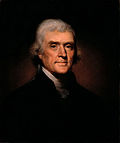 Portrait of Thomas Jefferson by Rembrandt Peale, 1800
 -
 Portrait of James Madison by John Vanderlyn, 1816
 -
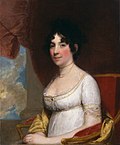 Portrait of Dolley Madison by Gilbert Stuart, 1804
 -

-
 Portrait of John Quincy Adams by George Peter Alexander Healy, 1858
 -
 Portrait of Louisa Adams by Gilbert Stuart, c. 1821−1826
 -
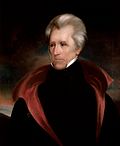 Portrait of Andrew Jackson by Ralph Eleaser Whiteside Earl, c. 1835
 -
 Portrait of Martin Van Buren by George Peter Alexander Healy, 1858
 -
 Portrait of William Henry Harrison by James Reid Lambdin, 1835
 -
 Portrait of Anna Harrison by Unknown, c. 1820
 -
 Portrait of John Tyler by George Peter Alexander Healy, 1864
 -
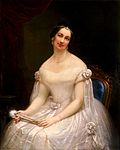 Portrait of Julia Tyler by Francesco Anelli, c. 1846−1848
 -
 Portrait of James Knox Polk by George Peter Alexander Healy, 1858
 -
 Portrait of Sarah Polk by George Dury, 1883
 -
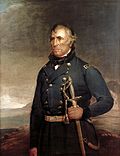 Portrait of Zachary Taylor by Joseph H. Bush, 1848
 -
 Portrait of Millard Fillmore by George Peter Alexander Healy, 1857
 -
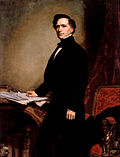 Portrait of Franklin Pierce by George Peter Alexander Healy, 1858
 -
 Portrait of James Buchanan by John Henry Brown, 1851
 -

-
 Portrait of Mary Todd Lincoln by Katherine Helm, 1925
 -
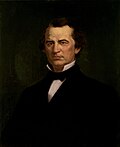 Portrait of Andrew Johnson by Eliphalet Frazer Andrews, 1880
 -
 Portrait of Ulysses S. Grant by Henry Ulke, 1875
 -
 Portrait of Rutherford B. Hayes by Daniel Huntington, 1884
 -
 Portrait of Lucy Webb Hayes by Daniel Huntington, 1881
 -
 Portrait of James A. Garfield by Calvin Curtis, 1881
 -
 Portrait of Chester A. Arthur by Daniel Huntington, 1885
 -
 Portrait of Grover Cleveland by Jonathan Eastman Johnson, 1891
 -
 Portrait of Frances Folsom Cleveland by Anders Zorn, 1899
 -
 Portrait of Benjamin Harrison by Jonathan Eastman Johnson, 1895
 -
 Portrait of Caroline Harrison by Daniel Huntington, 1894
 -
 Portrait of William McKinley by Harriet Anderson Stubbs Murphy, 1902
 -
 Portrait of Ida McKinley by Emily Drayton Taylor, 1899
 -
 Portrait of Theodore Roosevelt by John Singer Sargent, 1902
 -
 Portrait of Edith Roosevelt by Théobald Chartran, 1902
 -
 Portrait of William Howard Taft by Anders Zorn, 1911
 -
 Portrait of Helen Taft by Bror Kronstrand, 1910
 -
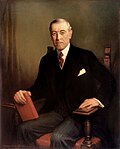 Portrait of Woodrow Wilson by Frank Graham Cootes, 1936
 -
 Portrait of Edith Wilson by Adolfo Müller-Ury, 1916
 -
 Portrait of Warren G. Harding by Edmund Hodgson Smart, 1923
 -
 Portrait of Florence Kling Harding by Philip de László, 1921
 -
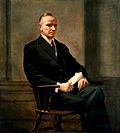 Portrait of Calvin Coolidge by Charles S. Hopkinson, 1932
 -
 Portrait of Grace Goodhue Coolidge by Howard Chandler Christy, 1924
 -
 Portrait of Herbert Hoover by Elmer Wesley Greene, 1956
 -
 Portrait of Lou Henry Hoover by Richard Marsden Brown, 1950
 -
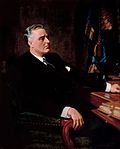 Portrait of Franklin D. Roosevelt by Frank O. Salisbury, 1947
 -
 Portrait of Eleanor Roosevelt by Douglas Chandor, 1949
 -
 Portrait of Harry S. Truman by Martha Greta Kempton, 1947
 -
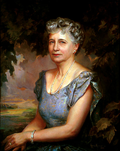 Portrait of Elizabeth Truman by Martha Greta Kempton, 1967
 -
 Portrait of Dwight D. Eisenhower by James Anthony Wills, 1967
 -
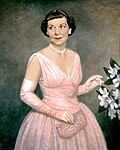 Portrait of Mamie Doud Eisenhower by Thomas Edgar Stephens, 1959
 -
 Portrait of John F. Kennedy by Aaron Shikler, 1970
 -
 Portrait of Jacqueline Bouvier Kennedy by Aaron Shikler, 1970
 -
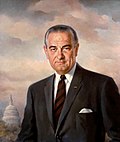 Portrait of Lyndon B. Johnson by Elizabeth Shoumatoff, 1968
 -
 Portrait of Lady Bird Johnson by Elizabeth Shoumatoff, 1968
 -
 Portrait of Richard Nixon by James Anthony Wills, 1984
 -
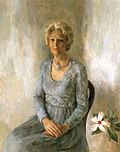 Portrait of Pat Nixon by Henriette Wyeth, 1978
 -
 Portrait of Betty Ford by Felix de Cossio, 1977
 -
 Portrait of Rosalynn Carter by George Augusta, 1984
 -
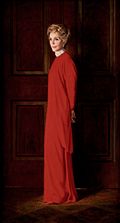 Portrait of Nancy Reagan by Aaron Shikler, 1987


.jpg)


.jpg)
.jpg)


.jpg)

.jpg)


Additional portraits
[edit]-
 Benjamin Franklin by Benjamin Wilson, 1759
 -
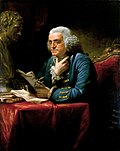
-
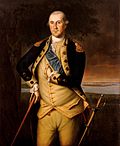 General Washington, Commander of the Continental Army by Charles Willson Peale, 1776
 -
 Benjamin Franklin by Gabriel de Saint-Aubin, 1777
 -
 Mrs. Richard Brinsley Sheridan by Gainsborough Dupont, c. 1785
 -
 Thomas Jefferson by John Trumbull, 1788
 -
 James Hoban by John Christian Rauschner, c. 1800
 -
 Anna Payne Cutts by Gilbert Stuart, c. 1804
 -
 Benjamin Henry Boneval Latrobe by Charles Willson Peale, c. 1804
 -
 George Washington by Gilbert Stuart, c. 1805
 -
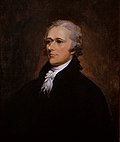 Alexander Hamilton by John Trumbull, c. 1805
 -
 Andrew Jackson by John Wesley Jarvis, c. 1817
 -
 Lucy Payne Washington Todd by Matthew Harris Jouett, c. 1817-1820
 -
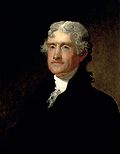 Thomas Jefferson by Matthew Harris Jouett, c. 1817-1827
 -
 Colonel William Drayton by Samuel Finley Breese Morse, 1818
 -
 John Quincy Adams by Gilbert Stuart, 1818
 -
 Monchousia (White Plume), Kansa by Charles Bird King, c. 1822
 -
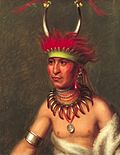 Shaumonekusse (Prairie Wolf), Oto by Charles Bird King, c. 1822
 -
 Hayne Hudjihini (Eagle of Delight), Oto by Charles Bird King, c. 1822
 -
 Petalesharro (Generous Chief), Pawnee by Charles Bird King, c. 1822
 -
 Sharitahrish (Wicked Chief), Pawnee by Charles Bird King, c. 1822
 -
 George Washington by Rembrandt Peale, c. 1823
 -
 John Marshall by John Wesley Jarvis, 1825
 -
 John James Audubon by John Syme, 1826
 -
 Martin Van Buren by Francis Alexander, c. 1830-1840
 -
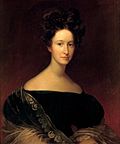 Emily Donelson by Ralph Eleaser Whiteside Earl, 1830
 -
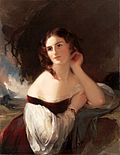 Fanny Kemble by Thomas Sully, 1834
 -
 Andrew Jackson by Miner Kilbourne Kellogg, c. 1840
 -
 John Tyler by James Reid Lambdin, 1841
 -
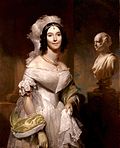 Portrait of Angelica Singleton Van Buren by Henry Inman, 1842
 -
 Daniel Webster by George Peter Alexander Healy, mid 19th-century
 -
 George Washington by Ernst Fischer, c. 1850-1852
 -
 James Buchanan by John Henry Brown, 1851
 -
 Abraham Lincoln by William F. Cogswell, 1869
 -
 Ulysses S. Grant by Unknown, late 19th-century
 -
 George Washington by Luis Cadena, 1877
 -
 John Adams by Edgar Parker, 1878
 -
 William Henry Harrison by Eliphalet Frazer Andrews, 1879
 -
 Caroline Lavinia Scott Harrison by Adolphe Yvon, c. 1880
 -
 Ulysses S. Grant by Thomas Le Clear, c. 1881
 -
 Thomas Jefferson by Eliphalet Frazer Andrews, 1884
 -
 The Blue Vase by Robert Lewis Reid, c. 1890-1910
 -
 Woman Standing With an Oar by Edmund Charles Tarbell, 1891
 -
 Ruth (Portrait of Ruth Harding) by Thomas Eakins, 1903
 -
 Young Mother and Two Children by Mary Cassatt, 1908
 -
 Rough Rider by Tadeusz Styka, c. 1909
 -
 Theodore Roosevelt by Fülöp László, 1910
 -
 Woodrow Wilson by Stephen Seymour Thomas, 1913
 -
 Abraham Lincoln by George Henry Story, c. 1915
 -
 Gypsy Girl with Flowers by Robert Henri, 1915
 -
 Woodrow Wilson by William Orpen, 1919
 -
 Warren G. Harding by Francis Luis Mora, 1930
 -
 Dwight D. Eisenhower by Thomas E. Stephens, 1960
 -
 Franklin D. Roosevelt by Elizabeth Shoumatoff, 1966


,_Oto_-_Google_Art_Project.jpg)
,_Pawnee_-_Google_Art_Project.jpg)


.png)


.jpg)


Landscape paintings
[edit]-

-

-
 Fairmount Waterworks - Philadelphia by Nicolino Calyo, c. 1834
 -
 Niagara Falls From the Canadian Side by Victor de Grailly, c. 1845
 -
 Eastport and Passamaquoddy Bay by Victor de Grailly, c. 1845
 -
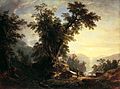 The Indian's Vespers by A. B. Durand, 1847
 -
 Rutland Falls, Vermont by Frederic Edwin Church, 1848
 -
 West Point Near Garrisons by Robert Havell, Jr., 1850
 -
 Capitol, Washington by Unknown, c. 1850-1860
 -
 View of Lake George by Andrew Andrews, c. 1850−1860
 -
 Niagara Falls by John Frederick Kensett, c. 1852−1854
 -
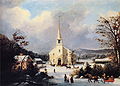 Going to Church by George Henry Durrie, 1853
 -
 Jones Inn, Winter by George Henry Durrie, 1853
 -
 Washington's Tomb at Mount Vernon by William Matthew Prior, c. 1853
 -
 Pastoral Landscape by Alvan Fisher, 1854
 -
 A Mountain Glimpse by Jasper Francis Cropsey, 1854
 -
 View of the City of Washington from the Virginia Shore by William MacLeod, 1856
 -
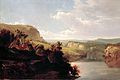 Lake Among the Hills (Lake Mohonk) by William Hart, 1858
 -
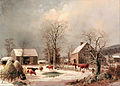 Farmyard in Winter by George Henry Durrie, 1858
 -
 Independence Hall in Philadelphia by Ferdinand Richardt, c. 1858-1863
 -
 Railway Station by Lefevre Cranstone, 1860
 -
 Hudson River Scene by Shepard Alonzo Mount, 1861
 -
 Washington, D.C. by Albert Bierstadt, c. 1863
 -
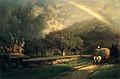 The Rainbow in the Berkshire Hills by George Inness, 1869
 -
 Cannonading on the Potomac by Alfred W. Thompson, c. 1869
 -
 Deer by a Lake by Jasper Francis Cropsey, 1870
 -
 Rocky Mountain Landscape by Albert Bierstadt, 1870
 -
 Nocturne by James Abbott McNeill Whistler, c. 1870−1877
 -
 Crossing the River Platte by Worthington Whittredge, c. 1871
 -
 A Day at the Seashore by William Hahn, c. 1872-1878
 -
 Old Ferryboat at McCall's Ferry by Herman Herzog, c. 1875-1880
 -
![Paysage avec clocher (Landscape with Bell Tower) by Paul Cézanne, c. 1875[a]](//upload.wikimedia.org/wikipedia/commons/thumb/2/23/Cezanne_-_Landscape_With_Tower.jpg/120px-Cezanne_-_Landscape_With_Tower.jpg)
-
![Maisons flottantes sur un fleuve (Houses Floating on a River) by Paul Cézanne, c. 1875-1877[a]](//upload.wikimedia.org/wikipedia/commons/thumb/6/61/Cezanne_-_Boathouse_on_a_River.jpg/120px-Cezanne_-_Boathouse_on_a_River.jpg)
-
 Autumn Landscape on the Hudson River by Jasper Francis Cropsey, 1876
 -
 In the White Mountains, New Hampshire by William Louis Sonntag, 1876
 -
 Castle Rock, Nahant, Massachusetts by Alfred Thompson Bricher, 1877
 -
 Storm Clouds by Albert Bierstadt, c. 1880
 -
 Old Faithful by Albert Bierstadt, c. 1881
 -
 The Mellow Autumn Time by Jasper Francis Cropsey, c. 1884-1897
 -
 Sand Dunes at Sunset, Atlantic City by Henry Ossawa Tanner, c. 1885
 -
![Hameau à Payennet près de Gardanne (Hamlet at Payennet, near Gardanne) by Paul Cézanne, c. 1886-1890[a]](//upload.wikimedia.org/wikipedia/commons/thumb/9/94/Cezanne_-_Mont_Sainte-Victoire_and_Hamlet_Near_Gardanne.jpg/120px-Cezanne_-_Mont_Sainte-Victoire_and_Hamlet_Near_Gardanne.jpg) Hameau à Payennet près de Gardanne (Hamlet at Payennet, near Gardanne) by Paul Cézanne, c. 1886-1890[a]
Hameau à Payennet près de Gardanne (Hamlet at Payennet, near Gardanne) by Paul Cézanne, c. 1886-1890[a] -
 New York Harbor and Battery by Andrew Melrose, c. 1887
 -
![Maison au bord de la Marne (House on the Marne) by Paul Cézanne, c. 1888-1894[a]](//upload.wikimedia.org/wikipedia/commons/thumb/1/1a/Cezanne_-_House_on_the_Marne.jpg/120px-Cezanne_-_House_on_the_Marne.jpg)
-
 Nevada Falls, Yosemite by Thomas Hill, 1889
 -
 Vernal Falls, Yosemite by Thomas Hill, 1889
 -
 Sitka Bay, Alaska by Theodore J. Richardson, 1889
 -
 Alaskan Landscape by Theodore J. Richardson, 1889
 -
 Landscape with Houses by Unknown, c. 1890
 -
![Sous-bois (Underwood) by Paul Cézanne, c. 1890-1892[a]](//upload.wikimedia.org/wikipedia/commons/thumb/e/e8/Cezanne_-_The_Forest.jpg/120px-Cezanne_-_The_Forest.jpg)
-
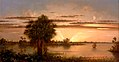 Florida Sunrise by Martin Johnson Heade, c. 1890-1895
 -
 Woodland Pool by George Inness, 1891
 -
 The Farm Landing by Edward Mitchell Bannister, 1892
 -
 The Three Tetons by Thomas Moran, 1895
 -
 Yosemite, Bridal Veil Falls by Thomas Hill, 1895
 -
 Under the Palisades, in October by Jasper Francis Cropsey, 1895
 -
 View of Pennsylvania Avenue From the Treasury Building Looking Toward the Capitol by Walter Paris, 1895
 -
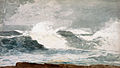 Surf at Prout's Neck by Winslow Homer, c. 1895
 -
 Revere Beach by Maurice Prendergast, c. 1896-1897
 -
 A Stroll by the Capitol by Walter Paris, 1897
 -
 Matinée sur la Seine, le beau temps (Morning on the Seine, good weather) by Claude Monet, 1897
 -
 A Glimpse of Lake Champlain by Alexander Helwig Wyant, late 19th century
 -
 Wild Flowers by E. Folsom, late 19th century - early 20th century
 -
 Sunny Hills, California by Thaddeus Welch, late 19th century - early 20th century
 -
 Thatcher's Island off Rockport, Massachusetts by Worthington Whittredge, early 20th century
 -
 Fording the Horse Herd by Charles Marion Russell, 1900
 -
 Shinnecock Hills, Long Island by William Merritt Chase, 1900
 -
 Seascape by Childe Hassam, 1900
 -
 Captain Bickford's Float by John Henry Twachtman, 1900
 -
 Boy Resting in the Woods by Unknown, c. 1900
 -
 Porch of the Maidens at the Erechtheum by Stanford White, c. 1900
 -
 Street Scene in Winter (Snowstorm, New York) by Childe Hassam, 1901
 -
 Colonial Cottage, Cos Cob by Childe Hassam, 1902
 -
 The Capitol at Night by Colin Campbell Cooper, 1902
 -
 The Red Mill, by Ernest Lawson by Ernest Lawson, c. 1904
 -
![Maisons sur la colline, Provence (Houses on the Hill) by Paul Cézanne, c. 1904-1906[a]](//upload.wikimedia.org/wikipedia/commons/thumb/a/a7/Cezanne_-_House_on_a_Hill.jpg/120px-Cezanne_-_House_on_a_Hill.jpg)
-
 Hall's Quarry by Carroll Sargent Tyson, Jr., 1906
 -
 Barn in Winter by N.C. Wyeth, c. 1907
 -
 Rough Sea at Bailey's Island, Maine by Frederick Judd Waugh, 1909
 -
 Cliffs of Green River, Wyoming by Thomas Moran, c. 1909-1910
 -
 Golden Gate, Lands End by Theodore Wores, c. 1911-1912
 -
 Lands End Looking Towards the Golden Gate by Theodore Wores, c. 1911-1912
 -
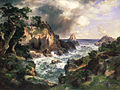 Point Lobos, Monterey, California by Thomas Moran, 1912
 -
 Princeton Landscape by Ellen Axson Wilson, c. 1913
 -
 Telegraph Hill - San Francisco by Childe Hassam, 1914
 -
 May Breezes by Robert Spencer, 1914
 -
 Gloucester Dock by Henry Hobart Nichols, 1915
 -
 Clove Pond by William James Glackens, c. 1916
 -
 Pavilion at Gloucester by William James Glackens, 1919
 -
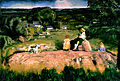 Three Children by George Bellows, 1919
 -
 Brooklyn Bridge, Winter by Guy C. Wiggins, c. 1920-1930
 -
 East River, New York by Guy C. Wiggins, c. 1920-1930
 -
 Carl Schurz Park by William James Glackens, c. 1922
 -
 Spring in the Valley by Willard Metcalf, c. 1924
 -
 September Evening, Mount McKinley, Alaska by Sydney Laurence, 1925
 -
 Kimberly Crest, Redlands, California by Colin Campbell Cooper, c. 1929
 -
 Mountain at Bear Lake—Taos by Georgia O'Keeffe, 1930


![Paysage avec clocher (Landscape with Bell Tower) by Paul Cézanne, c. 1875[a]](https://en.wikipedia.org/wiki/File:Cezanne_-_Landscape_With_Tower.jpg)
![Maisons flottantes sur un fleuve (Houses Floating on a River) by Paul Cézanne, c. 1875-1877[a]](https://en.wikipedia.org/wiki/File:Cezanne_-_Boathouse_on_a_River.jpg)


.jpg)


![Hameau à Payennet près de Gardanne (Hamlet at Payennet, near Gardanne) by Paul Cézanne, c. 1886-1890[a]](https://en.wikipedia.org/wiki/File:Cezanne_-_Mont_Sainte-Victoire_and_Hamlet_Near_Gardanne.jpg)

![Maison au bord de la Marne (House on the Marne) by Paul Cézanne, c. 1888-1894[a]](https://en.wikipedia.org/wiki/File:Cezanne_-_House_on_the_Marne.jpg)


![Sous-bois (Underwood) by Paul Cézanne, c. 1890-1892[a]](https://en.wikipedia.org/wiki/File:Cezanne_-_The_Forest.jpg)


.jpg)


.jpg)


.jpg)


![Maisons sur la colline, Provence (Houses on the Hill) by Paul Cézanne, c. 1904-1906[a]](https://en.wikipedia.org/wiki/File:Cezanne_-_House_on_a_Hill.jpg)


Marine paintings
[edit]-

-
 The First Naval Action in the War of 1812 by William John Huggins, 1816
 -
 Three-Masted British Barque by Henry Moses, c. 1820-1840
 -
 Mouth of the Delaware by Thomas Birch, 1828
 -
 Three-Master American Barque by William James Bennett, c. 1830-1840
 -
 View of the Harbor of Hong Kong by Unknown, c. 1847-1856
 -
 View of the Harbor at Canton by Unknown, c. 1847-1856
 -
 Laying of the Atlantic Cable by Unknown, c. 1850
 -
 View of Hong Kong by Unknown, c. 1853
 -
 View of Macao by Unknown, c. 1853
 -
 Boston Harbor by Fitz Hugh Lane, 1854
 -
 Sailing off the Coast by Martin Johnson Heade, 1869
 -
 Three-Masted American Barque Samar by Unknown, 1875-1890
 -
 Welcome by Carl Calusd, c. 1900-1909
 -
 The Presidential Yacht Mayflower by Alfred Addy, c. 1902-1929
 -
 Boston Harbor by Maurice Prendergast, c. 1907-1910
 -
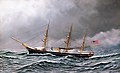 U.S.S. Galena by Antonio Jacobsen, 1909
 -
 U.S.S. Constitution by Gordon Grant, 1926


Still life paintings
[edit]-
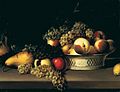 Fruit in a Chinese Export Basket by James Peale, 1822
 -
 Grapes and Apples by James Peale, c. 1825-1831
 -
 Still Life With Fruit by Severin Roesen, 1850
 -
 Still Life With Fruit, Goblet, and Canary (Nature's Bounty) by Severin Roesen, 1851
 -
 Floral Still Life with Nest of Eggs by Severin Roesen, c. 1851−1852
 -
 Still Life with Fruit by Rubens Peale, c. 1862
 -
![Still Life With Quince, Apples, and Pears by Paul Cézanne, c. 1885-1887[a]](//upload.wikimedia.org/wikipedia/commons/thumb/5/5f/Cezanne_-_Still_Life_With_Quince%2C_Apples%2C_and_Pears.jpg/120px-Cezanne_-_Still_Life_With_Quince%2C_Apples%2C_and_Pears.jpg)
-
 The Cincinnati Enquirer by William Michael Harnett, 1888
 -
![Still Life With Skull by Paul Cézanne, c. 1900[a]](//upload.wikimedia.org/wikipedia/commons/thumb/7/79/Cezanne_-_Still_Life_With_Skull.jpg/120px-Cezanne_-_Still_Life_With_Skull.jpg)
-
 Red Roses and Green Leaves by Martin Johnson Heade, c. 1903
 -
 Bouquet with Ferns by William James Glackens, c. 1920-1925


.jpg)
.jpg)


![Still Life With Quince, Apples, and Pears by Paul Cézanne, c. 1885-1887[a]](https://en.wikipedia.org/wiki/File:Cezanne_-_Still_Life_With_Quince,_Apples,_and_Pears.jpg)

![Still Life With Skull by Paul Cézanne, c. 1900[a]](https://en.wikipedia.org/wiki/File:Cezanne_-_Still_Life_With_Skull.jpg)


Historical and genre paintings
[edit]-
 To the Genius of Franklin by Jean-Honoré Fragonard, c. 1778
 -
 George Washington Triumphantly Entering Boston by Unknown, c. 1834
 -
 Emigrant Scene by William Henry Powell, 1837
 -
 A Hartford Family by Unknown, c. 1840-1850
 -
 Lighter Relieving the Steamboat Aground by George Caleb Bingham, 1847
 -
 George Washington Accepts the Surrender of British General Cornwallis by Jean Zuber et Cie, c. 1850
 -
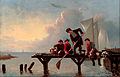 Boys Crabbing by William Ranney, 1855
 -
 Waiting for the Hour by William Tolman Carlton, 1863
 -
 The Republican Court in the Days of Lincoln by Peter Frederick Rothermel, c. 1867
 -
 The Peacemakers by George P.A. Healy, 1868
 -
 Liberty by Constantino Brumidi, 1869
 -
 Union by Constantino Brumidi, 1869
 -
 The Declaration of Independence of the United States of America, July 4, 1776 by Charles Édouard Armand-Dumaresq, c. 1873
 -
 Hands Up! -- The Capture of Finnigan by Frederic Remington, 1888
 -
 Flowering Dogwood by Caroline Harrison, c. 1889-1892
 -
 Butterfly by Albert Bierstadt, January 20, 1893
 -
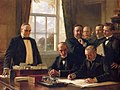 Signing of the Peace Protocol Between Spain and the United States, August 12, 1898 by Théobald Chartran, 1899
 -
 The Mosquito Net by John Singer Sargent, 1912
 -
 The Clock Room, Quai d'Orsay by Fülöp László, 1928


,_by_Theobald_Chartran.jpg)


Sculptures
[edit]-
 Giuliano de' Medici by Unknown, c. 1524-1534
 -
 Lorenzo de' Medici by Unknown, c. 1524-1534
 -
 Benjamin Franklin by Giovan Battista Nini, 1777
 -
 George Washington by Unknown, c. 1790
 -
 George Washington by Giuseppe Ceracchi, c. 1790-1794
 -
 Joel Barlow by Jean Antoine Houdon, c. 1804
 -
 Benjamin Franklin by the National Porcelain Factory of Sèvres, c. 1810
 -
 Amerigo Vespucci by Giuseppe Ceracchi, c. 1815
 -
 Christopher Columbus by Giuseppe Ceracchi, c. 1815
 -
 George Washington by Enoch Wood, 1818
 -
 Benjamin Franklin by Unknown, c. 1820
 -
 George Washington by Unknown, c. 1830-1850
 -
 Martin Van Buren by Hiram Powers, 1840
 -
 Daniel Webster by Unknown, Mid 19th-century
 -
 Henry Clay by Joel T. Hart, c. 1850-1860
 -
 Patrick Henry by Miskey Warner, c. 1860
 -
 John Bright by John Warrington Wood, 1864
 -
 The Buffalo Hunt by Theodore Baur, c. 1882-1886
 -
 Female with Cupid by Unknown, c. 1870
 -
 Diane De Gabies by Unknown, c. 1870
 -
 Classical Male and Female by Unknown, c. 1870
 -
 Classical Male Figure by Unknown, c. 1870
 -
 Angler by Sylvain Kinsburger, Late 19th-century
 -
 Abraham Lincoln by Charles Henry Niehaus, Late 19th-century
 -
 Benjamin Harrison by Charles Henry Niehaus, Late 19th-century
 -
 Neighboring Pews by John Rogers, 1883
 -
 Nathan Hale by Frederick William MacMonnies, c. 1890
 -
 The Bronco Buster by Frederic Remington, c. 1903
 -
 Horatio Nelson by Unknown, 1905
 -
 George Washington by the National Porcelain Factory of Sèvres, 1905
 -
 Benjamin Franklin by the National Porcelain Factory of Sèvres, 1905
 -
 Abraham Lincoln by Gutzon Borglum, 1908
 -
 Descending Night by Adolph Alexander Weinman, c. 1915-1923
 -
 Rising Day by Adolph Alexander Weinman, c. 1915-1923
 -
 Our Vanishing Wildlife by Alexander Pope Jr., c. 1915-1924
 -
 Appeal to the Great Spirit by Cyrus E. Dallin, c. 1916
 -
 Coming Through the Rye by Frederic Remington, 1918
 -
 Paolo Romano (Jennewein) by Carl Paul Jennewein, 1918
 -
 Women and Cherubs by the National Porcelain Factory of Sèvres, 1920
 -
 Fortunata by Andrew O'Connor, c. 1923
 -
 George Washington by Gyula Julius Bezeredi, 1923
 -
 Louis Kossuth by Gyula Julius Bezeredi, 1923
 -
 Gardener by Sylvia Shaw Judson, 1929
 -
 Timmy (Tiny Tim) by Laura Gardin Fraser, 1929


,_by_Carl_Paul_Jennewein.jpg)


,_by_Laura_Gardin_Fraser.jpg)
See also
[edit]References
[edit]- Notes
- Sources
- ^ "Art in the White House". clintonwhitehouse4.archives.gov. Retrieved 9 March 2021.
- ^ "Art for the President's House: An Historical Perspective (Early - Middle 1800's)". georgewbush-whitehouse.archives.gov. Retrieved 9 March 2021.
- ^ "Diversity in White House Art". WHHA (en-US). Retrieved 9 March 2021.
- ^ "Reagan to Obama: Naval Art in the White House". U.S. Naval Institute. 1 February 2009. Retrieved 9 March 2021.
- ^ Taubman, Howard (20 July 1967). "Art in the White House; Quality Portraits of the First Ladies And Americana Are Sought for Mansion (Published 1967)". The New York Times. Retrieved 9 March 2021.
- ^ a b Wecker, Menachem (5 February 2018). "Beyond the Golden Toilet: How Does Art End Up in the White House, and What Does It Tell Us About Our Leaders?". Artnet News. Retrieved 9 March 2021.
- ^ Kloss, William; Bolger, Doreen; Curry, David Park; Monkman, Betty; Wilmerding, John (1992). Art in the White House: A Nation's Pride. White House Historical Association. ISBN 978-0-8109-3965-3. Retrieved 9 March 2021.
- ^ Bednarz, Christine (31 October 2012). "When President Becomes Curator: Art in the White House". MutualArt. Retrieved 9 March 2021.
- ^ "Art in the White House". White House Historical Association. Retrieved 9 March 2021.
- ^ "LOESER WILL CALLS HARVARD UNSIGHTLY; Art Critic, Writing in 1924, Regretted New Buildings in "Yard" He Loved. MAKES IT RESIDUARY HEIR Bequest of $500,000, Contingent on Trust Fund to Wife and Daughter, Is Not for Construction. Harvard Is Residuary Legatee. Sister Gets Williams Estate". The New York Times. 7 April 1928. Retrieved 25 July 2022.
- ^ "WHITE HOUSE HANGS 2 CEZANNE PAINTINGS". The New York Times. 4 May 1961. Retrieved 25 July 2022.
External links
[edit]
| ||||||||||||
| Executive Residence |
|     | ||||||||||
| West Wing | ||||||||||||
| East Wing (demolished) | ||||||||||||
| Grounds | ||||||||||||
| Staff | ||||||||||||
| Annex | ||||||||||||
| Nearby streets | ||||||||||||
| Related | ||||||||||||
Art in the White House
View on GrokipediaHistorical Development
Origins in the Early Republic (1800–1860)
The White House's art collection originated modestly during its first occupancy in November 1800 by President John Adams, consisting primarily of a few presidential portraits and basic furnishings transferred from Philadelphia, with no dedicated acquisition policy or extensive holdings.[4] Early displays included a full-length portrait of George Washington by Gilbert Stuart, completed in 1796 and hung in the State Dining Room to symbolize continuity with the founding era.[5] President Thomas Jefferson, upon entering office in 1801, contributed limited art, favoring neoclassical influences; his own portrait by Rembrandt Peale, painted in 1800 while serving as vice president, later joined the collection through congressional purchase or donation.[6] The residence's public rooms featured sparse decoration, emphasizing functionality over aesthetics, as federal budgets prioritized construction over embellishment.[7] The War of 1812 disrupted early efforts, culminating in the British burning of the White House on August 24, 1814, which destroyed most interior contents, including artworks, books, and furnishings accumulated under Presidents Jefferson and James Madison.[8] First Lady Dolley Madison orchestrated the salvage of key items before evacuation, directing staff to remove the Gilbert Stuart Washington portrait—slashing it from its frame to facilitate transport—along with documents and a bust of the first president, preventing their loss amid the flames.[5][9] Surviving art was minimal, with the fire erasing nearly all accumulated pieces except those proactively secured, underscoring the fragility of the nascent collection.[10] Reconstruction under President James Monroe, who assumed office in 1817, prioritized restoration with French Empire-style furnishings purchased abroad, but art acquisitions remained focused on portraits rather than landscapes or sculptures.[11] Monroe commissioned his own likeness by Samuel F. B. Morse in 1819, displayed prominently to affirm executive authority post-war.[2] Congress began systematically commissioning or acquiring presidential portraits for the White House, including John Trumbull's depiction of John Adams (c. 1792–1793) and John Vanderlyn's of James Madison (1816), establishing a tradition of documenting leaders for public view.[7] By the Jackson administration (1829–1837), additional portraits like Ralph Eleaser Whiteside Earl's of Andrew Jackson (c. 1835) adorned state rooms, though the overall collection stayed limited to about a dozen works, reflecting fiscal constraints and a cultural emphasis on portraiture over decorative variety.[2] Through the 1840s and 1850s, under presidents from Martin Van Buren to James Buchanan, the practice continued with congressional funding for official likenesses—such as George Peter Alexander Healy's portraits of Van Buren (1858), James K. Polk (1858), and Franklin Pierce (1858)—often painted retrospectively and hung in the East Room or hallways.[2] No major expansions occurred; the collection totaled fewer than 20 paintings by 1860, confined to presidential and first lady portraits symbolizing republican virtue, with occasional donations from families or artists.[7] This era laid the foundation for future growth, prioritizing historical documentation amid a young nation's resource limitations, without institutional oversight or diverse genres.[2]Expansion During Reconstruction and Gilded Age (1861–1900)
During the Lincoln administration, artist Francis B. Carpenter worked in a White House studio to paint The First Reading of the Emancipation Proclamation by President Lincoln, depicting the president with his cabinet on July 22, 1862; the painting was later moved to the U.S. Capitol in 1877.[12] Following Lincoln's assassination, George Peter Alexander Healy completed a posthumous portrait of the president in 1869, which entered the White House collection and became a fixture in the State Dining Room.[13] Under Andrew Johnson, the collection saw the initiation of formal First Lady portraits with Julia Gardiner Tyler's donation of her 1848 likeness by Francesco Anelli.[12] The Grant administration marked a shift toward opulent Gilded Age aesthetics, with the installation of enormous crystal chandeliers in the East Room and Constantino Brumidi's allegorical ceiling paintings Liberty and Union in the Entrance Hall.[12] President Grant selected William F. Cogswell's posthumous portrait of Lincoln as the official White House version in 1869.[14] Rutherford B. Hayes expanded the portraiture by acquiring Eliphalet Frazer Andrews' 1878 posthumous portrait of Martha Washington and commissioning full-length copies of early presidents like Thomas Jefferson and Andrew Jackson by Andrews for the East Room cross hall.[12] Lucy Hayes advocated for these additions, including Edgar Parker's copies of John Adams, James Madison, and James Monroe, while Daniel Huntington painted her own portrait in 1881, the first commissioned First Lady image for the collection.[15][12] Chester A. Arthur's 1882 renovations, led by Louis Comfort Tiffany, focused on decorative enhancements like the Blue Room's shield-and-star ceiling and a glass screen in the Cross Hall, emphasizing Aesthetic Movement influences over new fine art acquisitions.[16] Grover Cleveland rearranged existing State Floor paintings, including presidential portraits, without major additions, though Eastman Johnson's 1891 portrait of him later joined the collection.[17][18] Benjamin Harrison's wife, Caroline, contributed by establishing a historic china collection and commissioning Theodore Kaufmann's Flowering Dogwood, alongside additions like Johnson's Cleveland portrait.[12] These efforts reflected a growing emphasis on historical commemoration and national symbolism amid post-Civil War reconciliation and economic expansion.[12]20th-Century Institutionalization (1901–1945)
The 1902 renovation of the White House under President Theodore Roosevelt marked a significant step toward institutionalizing the executive residence's art and furnishings as elements of national heritage rather than transient personal possessions. Architect Charles F. McKim of McKim, Mead & White led the effort, which involved dismantling Victorian-era accretions, restoring neoclassical architectural features, and systematically inventorying and repositioning existing artworks and decorative objects to align with a cohesive Colonial Revival aesthetic. This process uncovered and preserved numerous historical items previously overlooked or at risk of disposal, including paintings and sculptures accumulated since the early republic, thereby establishing precedents for treating such holdings as public assets subject to federal oversight rather than presidential whim.[19][20] First Lady Edith Roosevelt contributed to this emerging framework by initiating the display of first ladies' portraits in a dedicated Ground Floor corridor gallery following the renovation, fostering a tradition of curated historical representation that extended beyond mere presidential imagery. Her efforts complemented broader cataloging initiatives for White House silver, china, and fine arts, emphasizing preservation over stylistic experimentation and influencing subsequent administrations to view the collection as a semi-permanent ensemble reflective of American governance. During Roosevelt's tenure, official portraits such as John Singer Sargent's 1903 depiction of the president were added, reinforcing the convention of commissioned works entering the public domain upon completion.[21][22] Subsequent presidents from William Howard Taft through Franklin D. Roosevelt maintained this trajectory amid limited formal mechanisms, with acquisitions primarily consisting of donated or congressionally funded presidential portraits—such as those of Taft (1911), Wilson (1917), and Harding (1923)—that were integrated into state rooms to sustain historical continuity. The interwar years saw incremental growth through gifts of American landscape and historical genre paintings, often sourced from private donors or auctions, though without a dedicated acquisition policy; preservation efforts focused on protecting existing holdings during events like World War I mobilization under Wilson. By Roosevelt's administration (1933–1945), federal support for artists via New Deal programs indirectly bolstered awareness of contemporary American works, though White House additions remained conservative, prioritizing portraits and naval-themed pieces amid wartime austerity, with no evidence of systematic expansion beyond ad hoc donations. This era's practices, devoid of later congressional mandates, nonetheless solidified the collection's role as a curated symbol of executive continuity, averaging fewer than five major additions annually across administrations.[23][2]Postwar Growth and Professionalization (1946–2000)
Following the structural renovation of the White House from 1948 to 1952 under President Harry S. Truman, which necessitated the temporary storage of existing artworks, the collection saw incremental postwar acquisitions focused on historical American scenes. In 1947, the White House obtained George Peter Alexander Healy's The Peacemakers, a painting depicting President Abraham Lincoln with his military advisors at the end of the Civil War, emphasizing themes of national reconciliation.[24] This period maintained a core of presidential portraits and limited expansions, with art selection remaining largely informal and tied to presidential preferences rather than systematic curation.[2] The pivotal shift toward professionalization occurred during the Kennedy administration, when First Lady Jacqueline Kennedy initiated a comprehensive restoration emphasizing historical authenticity. In 1961, she established the Fine Arts Committee for the White House to advise on acquiring works of American fine art compatible with the residence's architecture and history, marking the first dedicated body for art procurement.[2] That same year, Congress passed legislation designating White House holdings as a permanent collection with museum status, prohibiting their removal or sale and formalizing preservation protocols.[25] These measures expanded the collection beyond portraits to include landscapes and historical paintings, with acquisitions such as Thomas Sully's works loaned or purchased for display.[3] Under President Lyndon B. Johnson, Executive Order 11145 in 1964 institutionalized the role of White House Curator and created the Committee for the Preservation of the White House, introducing professional standards for authentication, conservation, and documentation.[21] This framework enabled curatorial oversight, including cataloging and condition assessments, which professionalized management previously handled ad hoc by staff or volunteers. Subsequent administrations built on this: Presidents Richard Nixon and Gerald Ford facilitated loans from the Smithsonian Institution and National Gallery of Art, while Jimmy Carter and Ronald Reagan prioritized acquisitions of 19th-century American landscapes, growing the permanent holdings to over 500 works by the late 20th century.[2][26] By the Clinton administration in the 1990s, the collection's postwar evolution reflected a curated emphasis on representational American art, with the Fine Arts Committee reviewing proposals for purchases, gifts, and rotations to balance public display needs with preservation. This era solidified curatorial practices, including expert appraisals and climate-controlled storage, ensuring the collection's integrity amid increasing public and scholarly scrutiny.[2] The professional infrastructure reduced reliance on personal taste, prioritizing verifiable provenance and historical relevance over transient trends.[21]Composition of the Collection
Official Presidential and First Lady Portraits
The official portraits of U.S. presidents and first ladies form the foundational element of the White House's portraiture collection, capturing the likenesses of every chief executive from George Washington onward and most spouses since the late 19th century. These works, predominantly oil on canvas, are intended to preserve the historical record of presidential tenures and are displayed prominently in public rooms such as the East Room, Cross Hall, and Grand Foyer. The collection emphasizes dignified, formal representations, often seated or standing in classical attire, reflecting the gravity of the office.[27][1] The presidential portrait tradition commenced with Gilbert Stuart's 1796 Lansdowne portrait of George Washington, measuring 95 by 59 13/16 inches, which entered the White House collection shortly after the mansion's completion in 1800 through donation by the artist or subsequent owners. Early acquisitions relied on private gifts, purchases, or copies of existing works, as seen in John Trumbull's circa 1792–1793 portrait of John Adams and Rembrandt Peale's 1800 depiction of Thomas Jefferson. By the mid-19th century, artists like George Peter Alexander Healy produced multiple presidential likenesses, including those of James Monroe (1819 by Samuel F. B. Morse) and later figures such as John Quincy Adams (1858). Systematic commissioning evolved in the 20th century, with the White House Historical Association (WHHA) assuming a key role in funding and acquiring portraits starting in 1965, beginning with Eleanor Roosevelt's.[1][27] First ladies' portraits followed a parallel but delayed trajectory, with Lucy Webb Hayes becoming the first to have an official work painted expressly for the White House in the late 1870s, marking the initial paired presidential-spousal representations. Earlier examples, such as Eliphalet Frazer Andrews's 1878 portrait of Martha Washington or Gilbert Stuart's circa 1810–1815 rendering of Abigail Adams, were added retrospectively through donations or commissions. The WHHA has facilitated modern additions, including Sharon Sprung's 2022 portrait of Michelle Obama, unveiled alongside Barack Obama's by Robert McCurdy. Not all first ladies received contemporaneous portraits; some, like those of Millard Fillmore or Franklin Pierce, were created decades later by Healy in the 1850s.[12][27] Contemporary commissioning occurs toward the end of a presidency, with the outgoing president and first lady selecting an artist—often after reviewing portfolios—and providing sittings or photographs for reference. The process, which can span 18 months to several years, yields at least two versions: one for the White House permanent collection and another for the Smithsonian's National Portrait Gallery, funded by private contributions coordinated by the WHHA to avoid taxpayer expense. Artists are chosen for technical skill and interpretive style, as in Simmie Knox's selections for Bill Clinton (2002) and Hillary Clinton (2003), emphasizing realistic yet symbolic portrayals.[28][27] Unveiling ceremonies, instituted with Gerald and Betty Ford on May 24, 1978, involve the former occupants returning for a bipartisan event in the East Room, where the portraits are revealed and subsequently hung. This ritual underscores institutional continuity, though delays occur; for instance, the Obamas' White House portraits were unveiled on September 7, 2022, under President Joe Biden. The collection now encompasses over 40 presidential and roughly 30 first lady portraits, with ongoing additions ensuring representation of all administrations.[27][29]Historical and Political Figure Portraits
The White House art collection features portraits of non-presidential historical and political figures who played pivotal roles in the American founding, governance, and diplomacy, complementing the official presidential series by highlighting broader contributions to the republic's establishment and early development. These works, often acquired through private donations or purchases facilitated by organizations like the White House Historical Association, underscore continuity with the nation's origins and the influence of key statesmen, inventors, and allies. Unlike the standardized official portraits, these selections vary in style and provenance, frequently originating from the late 18th or early 19th centuries, and are displayed in rooms such as the Green Room or Treaty Room to evoke foundational principles of liberty and federalism.[2] A prominent example is the portrait of Benjamin Franklin by Scottish artist David Martin, completed in 1767 during Franklin's diplomatic tenure in London. This oil-on-canvas depiction, measuring 50 by 40 inches, captures Franklin at age 61, seated with quill in hand amid books and scientific instruments, symbolizing his multifaceted roles as diplomat, inventor, and signer of the Declaration of Independence. Commissioned originally by Maryland landowner Robert Alexander, the painting entered the White House collection through donation and was prominently displayed in the Green Room following renovations in the Kennedy administration, reflecting Franklin's enduring legacy in advancing Enlightenment ideals and colonial resistance to British rule.[30][31] Another significant piece is John Trumbull's portrait of Alexander Hamilton, painted circa 1805. This oil rendering portrays Hamilton, the first Secretary of the Treasury and architect of the federal financial system, in a three-quarter view emphasizing his intellectual vigor and administrative foresight. Trumbull, a Revolutionary War veteran and peer of Hamilton, completed the work posthumously after Hamilton's 1804 duel with Aaron Burr, drawing on earlier sketches; it was donated to the White House in the mid-20th century and has been exhibited to commemorate Hamilton's authorship of key Federalist Papers and establishment of institutions like the U.S. Coast Guard and national bank.[32] Such portraits, while fewer in number than presidential ones—estimated at a dozen or so major examples—have been curated to prioritize figures central to constitutional formation and economic stability, often sourced from estates of descendants or historical societies rather than commissioned anew. Their presence reinforces a narrative of American exceptionalism rooted in individual agency and institutional innovation, with acquisitions peaking during periods of national reflection, such as post-World War II restorations.[2]American Landscape and Genre Paintings
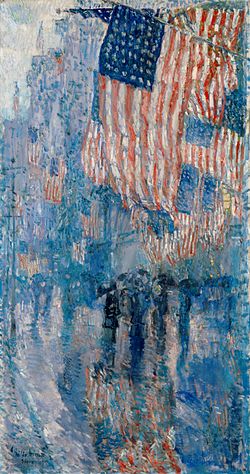
The White House art collection features American landscape and genre paintings that capture the nation's evolving vistas and daily activities, primarily from the 19th and early 20th centuries. These works, often acquired through gifts or purchases by the White House Historical Association, emphasize realism, romanticism, and impressionism in depicting rural scenes, rivers, and urban patriotism.[2] Genre paintings in the collection highlight everyday American labor and leisure, such as George Caleb Bingham's Lighter Relieving a Steamboat Aground (1847), an oil on canvas portraying flatboatmen aiding a grounded steamboat on the Mississippi or Missouri River, symbolizing western expansion and Manifest Destiny during the Whig era.[33][34] Displayed in the Green Room, it reflects Bingham's focus on midwestern river life and political themes.[35] Similarly, William Tylee Ranney's Boys Crabbing (1855), an oil on canvas, evokes romantic ideals of youthful adventure and democratic opportunity in coastal settings.[35] George H. Durrie's Farmyard in Winter (1858) offers a nostalgic view of an idealized rural farmstead under snow, underscoring agrarian traditions.[34] Landscape paintings provide serene and atmospheric representations of American terrain. Frederick Childe Hassam's The Avenue in the Rain (1917), an oil on canvas gifted by T.M. Evans, depicts a flag-draped Fifth Avenue in New York amid World War I rain, part of Hassam's series supporting Allied efforts; it is one of six Hassam works in the collection.[36][37] Henry Ossawa Tanner's Sand Dunes at Sunset, Atlantic City (c. 1885) innovatively mixes sand into the paint for texture, capturing hazy coastal dunes and marking the first acquisition of an African-American artist's work.[34] Georgia O'Keeffe's Bear Lake, New Mexico (1930) portrays the stark beauty of Taos Pueblo lands during her initial extended stay there.[34] These selections balance historical documentation with artistic innovation, curated for public rooms like the Green Room to evoke national identity.[2]Marine and Still Life Works
The White House art collection features a small but notable selection of still life paintings, primarily by 19th-century American artists known for their detailed renderings of natural objects, fruits, and everyday items, reflecting the era's interest in realism and abundance. These works were often acquired through gifts from the White House Historical Association or foundations in the mid-to-late 20th century to diversify the predominantly portrait-focused holdings.[37][38] Severin Roesen, a German-born painter active in the United States from 1848 to 1872, contributed Floral Still Life with Nest of Eggs (c. 1851–52), an oil-on-canvas depiction of overflowing fruits, flowers, and a bird's nest symbolizing fertility and prosperity; it was gifted to the collection in 1976.[37][38] Similarly, James Peale's Grapes and Apples exemplifies early American still life technique, showcasing translucent grapes and polished apples to highlight texture and light, acquired as part of efforts to represent foundational U.S. artistic traditions.[39] William M. Harnett's The Cincinnati Enquirer (1888), another oil on canvas, employs trompe-l'œil illusionism to portray a crumpled newspaper, evoking themes of ephemerality and American urban life; it entered the collection via the Armand Hammer Foundation in 1978.[37] Later acquisitions include Paul Cézanne's Still Life with Skull (c. 1895–1900), a Post-Impressionist oil depicting a human skull atop a book and cloth, donated in 1963 by industrialist Norton Simon to underscore memento mori motifs, though it has seldom been publicly displayed due to its stark subject matter and storage preferences.[40] Rubens Peale's Still Life with Fruit (c. 1862), featuring ripe produce in a naturalistic arrangement, further enriches this category, acquired during mid-20th-century redecoration to honor Peale family contributions to American genre painting.[41] Marine works, depicting seascapes, ships, and naval subjects, are less prominent in the permanent collection compared to portraits or landscapes, often appearing as historical or commissioned pieces tied to U.S. maritime heritage rather than pure seascapes. Franklin D. Roosevelt's personal passion for naval art, amassing over 5,000 maritime prints and paintings, influenced temporary displays but few transfers to the White House holdings.[42] A key example is Gordon Hope Grant's oil-on-canvas portrayal of USS Constitution (1926), illustrating the iconic frigate under sail, which entered the collection to commemorate early American naval prowess under the Naval Act of 1794.[43] Such pieces underscore causal links between art acquisition and presidential interests in national defense history, though the category remains subordinate to broader historical narratives.[44]Sculptures and Three-Dimensional Art
The White House collection of sculptures and three-dimensional art primarily consists of bronze busts of U.S. presidents and historical figures, displayed in public rooms such as the Oval Office, Cabinet Room, and corridors to evoke continuity of leadership.[2] These works, often acquired through gifts or commissions, number fewer than paintings but hold symbolic weight, with over a dozen presidential busts in permanent rotation as of 2025.[26] Notable examples include the 1908 bronze bust of Abraham Lincoln by Gutzon Borglum, featuring a contemplative pose that has been replicated for Oval Office display across administrations.[45] Other prominent busts represent founding figures and allies, such as the marble bust of George Washington by Jean-Antoine Houdon (modeled 1788, cast later), which underscores revolutionary heritage and has resided in the East Room since the 19th century.[2] The bronze bust of Winston Churchill, a 1971 gift from British Prime Minister Harold Wilson, was installed in the Oval Office by President George W. Bush in 2001, removed by President Obama in 2009 due to personal reservations about Churchill's imperialism, and reinstated by President Trump in 2017 to signal transatlantic alliance priorities.[46] Similarly, busts of Thomas Jefferson and Benjamin Franklin, crafted in the early 20th century, appear in diplomatic spaces to highlight Enlightenment influences on American governance.[47] Beyond busts, the collection incorporates figurative bronzes evoking American expansion and valor, including Frederic Remington's "The Bronco Buster" (modeled 1895, cast circa 1900), a dynamic depiction of a cowboy that became the era's most reproduced small sculpture and resides in a second-floor hallway.[48] Outdoor installations are rarer but include Pierre-Jean David d'Angers's bronze statue of Thomas Jefferson (1834), the sole full-figure presidential sculpture on the grounds, placed near the entrance to commemorate his authorship of the Declaration of Independence.[49] Modern additions reflect curatorial shifts, such as Isamu Noguchi's abstract bronze "Floor Frame" (1962), installed in the Rose Garden in November 2020 by First Lady Melania Trump to integrate mid-century abstraction.[50] The Jacqueline Kennedy Garden serves as a venue for temporary exhibitions of 20th-century American sculptures, initiated in 1993 under First Lady Hillary Clinton with works by artists like Alexander Calder and Louise Nevelson, emphasizing industrial materials and geometric forms to contrast the mansion's classical architecture.[51] In October 2025, a marble statue of George Washington (reproduction of a 1788 Houdon original, cast 1992) was added to the Rose Garden, prioritizing foundational icons amid renovations.[52] These pieces, preserved by the Committee on the White House, endure as tactile reminders of executive lineage, with relocations tied to presidential tastes rather than damage or ideology.[26]Modern and Contemporary Additions
The incorporation of modern and contemporary art into the White House collection began modestly in the late 20th century and accelerated in the 21st, with acquisitions emphasizing abstract, modernist, and representational works by American artists. These additions, often facilitated by first ladies and the White House Historical Association, numbered fewer than two dozen amid a permanent collection of over 500 pieces dominated by earlier periods.[53] Key examples include modernist landscapes and postwar abstractions, reflecting targeted efforts to include underrepresented voices without displacing core historical holdings.[54] Notable acquisitions span administrations, with specific pieces entering via gifts or purchases:| Artist | Work | Creation Year | Acquisition Year | Notes |
|---|---|---|---|---|
| Georgia O'Keeffe | Mountain at Bear Lake – Taos | 1930 | 1997 | Gift from Georgia O’Keeffe Foundation; modernist landscape displayed in Ground Floor Library.[54] |
| Jacob Lawrence | The Builders | 1947 | 2008 | Acquired under Laura Bush; depicts African American construction workers; installed in Green Room.[54] |
| Alma Thomas | Resurrection | 1966 | 2015 | First work by an African American woman artist; abstract color-field painting in Family Dining Room.[54] |
| Isamu Noguchi | Floor Frame | 1962 | 2020 | Bronze sculpture unveiled by Melania Trump; first by an Asian American artist; placed in Rose Garden.[50][55] |
| Carmen Herrera | Día Feriado (Holiday) | 2011 | 2025 | Geometric abstraction; first by a Latina artist; acquired under Jill Biden and displayed in East Wing.[56][57] |