


Community hub
Recent from talks
Contribute something
Nothing was collected or created yet.
Winged bean
View on Wikipedia
| Winged bean | |
|---|---|

| |
| Winged bean flowers, leaves, and seeds | |
Scientific classification 
| |
| Kingdom: | Plantae |
| Clade: | Tracheophytes |
| Clade: | Angiosperms |
| Clade: | Eudicots |
| Clade: | Rosids |
| Order: | Fabales |
| Family: | Fabaceae |
| Subfamily: | Faboideae |
| Genus: | Psophocarpus |
| Species: | P. tetragonolobus
|
| Binomial name | |
| Psophocarpus tetragonolobus | |
The winged bean (Psophocarpus tetragonolobus), also known as cigarillas, Goa bean, four-angled bean, four-cornered bean, manila bean, princess bean, star bean, kamrangi bean, pea, or dragon bean, is a tropical herbaceous legume plant.
Winged bean is widely recognised by consumers and farmers in South Asia and South East Asia for its variety of uses and disease resistance. Winged bean is nutrient-rich and all parts of the plant are edible. The leaves can be eaten like spinach, flowers can be used in salads, tubers can be eaten raw or cooked, and seeds can be used in similar ways as the soybean. The winged bean is an underutilised species but has the potential to become a major multi-use food crop in the tropics of Asia, Africa, and Latin America.[1]
Description
[edit]The winged bean plant grows as a vine with climbing stems and leaves, 3–4 m (10–13 ft) in height. It is an herbaceous perennial, but can be grown as an annual. It is generally taller and notably larger than the common bean. The leaves can be 15 cm (6 in) long.[2] The shape of its leaves ranges from ovate to deltoid, ovate-lanceolate, lanceolate, and long lanceolate.[1] The green tone of the leaves also varies. The stem is most commonly green, but sometimes boasts purple. The large flower is pale blue.
The bean pod may be smooth or rough, depending on the genotype. It is typically 15–22 cm (6–8+1⁄2 in) long, rectangular in cross-section[2] (though sometimes appearing flat), and has four wings with frilly edges running lengthwise. The skin is waxy and the flesh partially translucent in the young pods. The colour of the pods may be cream, green, pink, or purple. When fully ripe, the pod turns an ash-brown colour and splits open to release the seeds (beans). The seed shape is often round; oval and rectangular seeds also occur. Seeds may appear white, cream, dark tan, or brown, depending on growing and storage conditions.[1] The beans themselves are similar to soybeans in both use and nutritional content (being 29.8% to 39% protein).
Taxonomy
[edit]The winged bean belongs to the genus Psophocarpus, which is part of the legume family, Fabaceae.[1] Species in the Psophocarpus genus are perennial herbs grown as annuals.[3] Psophocarpus species have tuberous roots and pods with wings.[4] They can climb by twining their stems around a support.
Distribution and habitat
[edit]Most likely originating from New Guinea,[3] the species grows abundantly in the hot, humid equatorial countries of South and Southeast Asia, as well as tropical Africa.[2] It is widely known in Southeast Asia and Papua New Guinea, but only cultivated on a small scale.[1]
It tends to be found in open areas and old garden sites, less so in the forest.[2]
Ecology
[edit]Germination
[edit]Winged bean is a self-pollinating plant but mutations and occasional outcrossing may produce variations in the species.[1] The pretreatment of winged bean seeds is not required in tropical climate, but scarification of seeds has shown to enhance the germination rate of seedlings.[1] Seed soaking may also increase speed to germination, as is typical, and may be used in conjunction with scarification. Seedlings under natural field conditions have been reported to emerge between five and seven days.[1]
Winged bean can grow at least as fast as comparable legumes, including soy. Plants flower 40 to 140 days after sowing.[1] Pods reach full-length about two weeks after pollination. Three weeks after pollination, the pod becomes fibrous; after six weeks, mature seeds are ready for harvest.[4] Tuber development and flower production vary according to genotype and environmental factors. Some winged bean varieties do not produce tuberous roots.[1] The winged bean is a tropical plant, and will only flower when the day length is shorter than 12 hours, although some varieties have been reported to be day-length neutral.[1][5] All varieties of winged bean grow on a vine and must grow over a support. Some examples of support systems include: growing against exterior walls of houses, huts, buildings; supporting against larger perennial trees; stakes placed in the ground vertically; and structures made from posts and wires.[1]
Because the early growth of winged bean is slow, it is important to maintain weeds. Slow early growth makes winged bean susceptible to weed competition in the first four to six weeks of development.[1] Khan (1982) recommends weeding by hand or animal drawn tractor two times before the support system of the winged bean is established.[1]
Winged bean can be grown without added fertiliser as the plant has a bacterium on the nodules of the roots that fixes nitrogen and allows the plant to absorb nitrogen.[4] Factors that influence nitrogen fixation include, Rhizobium strain, interactions between strain and host genotype, available nutrients and soil pH.[1]
Growing conditions
[edit]
Although winged bean thrives in hot weather and favours humidity, it is adaptable.[1] The plant's ability to grow in heavy rainfall makes it a candidate for the people of the African tropics.[6]
Winged bean production is optimal in humidity, but the species is susceptible to moisture stress and waterlogging.[1] Ideal growing temperature is 25 °C.[1] Lower temperatures suppress germination, and extremely high temperatures inhibit yield.[1]
Even moderate variations in the growing climate can affect yield. Growing winged bean in lower temperatures can increase tuber production.[1] Leaf expansion rate is higher in a warmer climate. For the highest yields, the soil should remain moist throughout the plant's life cycle.[1] Although the plant is tropical, it can flourish in a dry climate if irrigated.[4] If the plant matures during the drier part of the growing season, yields are higher.[1]
Winged bean is an effective cover crop; planting it uniform with the ground suppresses weed growth.[1] As a restorative crop, winged bean can improve nutrient-poor soil with nitrogen when it is turned over into the soil.[1]
Composition
[edit]Nutrition
[edit]| Nutritional value per 100 g (3.5 oz) | |||||||||||||||||||||||||||||||||||||||||||||
|---|---|---|---|---|---|---|---|---|---|---|---|---|---|---|---|---|---|---|---|---|---|---|---|---|---|---|---|---|---|---|---|---|---|---|---|---|---|---|---|---|---|---|---|---|---|
| Energy | 1,711 kJ (409 kcal) | ||||||||||||||||||||||||||||||||||||||||||||
41.7 g | |||||||||||||||||||||||||||||||||||||||||||||
| Dietary fiber | 25.9 g | ||||||||||||||||||||||||||||||||||||||||||||
16.3 g | |||||||||||||||||||||||||||||||||||||||||||||
| Saturated | 2.3 g | ||||||||||||||||||||||||||||||||||||||||||||
| Monounsaturated | 6 g | ||||||||||||||||||||||||||||||||||||||||||||
| Polyunsaturated | 4.3 g | ||||||||||||||||||||||||||||||||||||||||||||
29.65 g | |||||||||||||||||||||||||||||||||||||||||||||
| |||||||||||||||||||||||||||||||||||||||||||||
| †Percentages estimated using US recommendations for adults,[7] except for potassium, which is estimated based on expert recommendation from the National Academies.[8] | |||||||||||||||||||||||||||||||||||||||||||||
Uses
[edit]Culinary
[edit]The entire winged bean plant is edible. The leaves, flowers, roots, and bean pods can be eaten raw or cooked; the pods are edible even when raw and unripe. The seeds are edible after cooking. Each of these parts contains vitamin A, vitamin C, calcium and iron, among other nutrients. The tender pods, which are the most widely eaten part of the plant, are best when eaten before they exceed 2.5 cm (1 in) in length. They are ready for harvest within three months of planting. The flowers are used to colour rice and pastry. The young leaves can be picked and prepared as a leaf vegetable, similar to spinach.[2][verification needed][9] The nutrient-rich, tuberous roots have a nutty flavour. They are about 20% protein; winged bean roots have more protein than many other root vegetables.[10] The leaves and flowers are also high in protein (10–15%).[10]
The seeds are about 35% protein and 18% fat. They require cooking for two to three hours to destroy the trypsin inhibitors and hemagglutinins that inhibit digestion.[10] They can be eaten dried or roasted. Dried and ground seeds make a useful flour, and can be brewed to make a coffee-like drink.
-
 Winged bean pods
 -
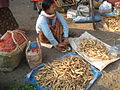 A young Burmese woman sells winged bean roots at a market in Mandalay
 -
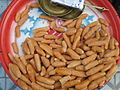 Boiled winged bean roots served as a snack in Burma
 -
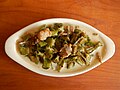 Ginataang sigarilyas, a Filipino dish of winged bean (sigarilyas) in coconut milk


The beans are rich not only in protein, but in tocopherols (antioxidants that facilitate vitamin-A utilisation in the body).[11] They can be made into milk when blended with water and an emulsifier.[12] Winged bean milk is similar to soy milk, but without the bean-rich flavour.[12] The flavour of raw beans is not unlike that of asparagus.
Smoked pods, dried seeds, tubers (cooked and uncooked), and leaves have been sold in domestic markets in South East and South Asia.[1] Mature seeds can command a high price.[4] In Nagaland the fruit is eaten raw as salad and called charkona in the Nagamese creole. In the Angami language it is called kedia rücü.[13]
As animal feed
[edit]Winged bean is a potential food source for ruminants, poultry,[1] fish, and other livestock.
For commercial fish feed, winged bean is a potentially lower-cost protein source. In Africa, fish meal is especially scarce and expensive.[14] The African sharptooth catfish, a highly valued food fish in Africa,[14] can eat winged bean. In Papua New Guinea highlands region where winged beans thrive, the husks are fed to domesticated pigs as a dietary supplement.
See also
[edit]
Notes
[edit]- ^ a b c d e f g h i j k l m n o p q r s t u v w x y z Khan, T. (1982). Winged Bean Production in the Tropics. Food and Agriculture Organization of the United Nations. p. 1.
- ^ a b c d e The Complete Guide to Edible Wild Plants. United States Department of the Army. New York: Skyhorse Publishing. 2009. p. 57. ISBN 978-1-60239-692-0. OCLC 277203364.
{{cite book}}: CS1 maint: others (link) - ^ a b Hymowitz, T; Boyd, J. (1977). "Ethnobotany and Agriculture Potential of the Winged Bean". Economic Botany. 31 (2): 180–188. doi:10.1007/bf02866589. S2CID 5944034.
- ^ a b c d e National Research Council (U.S.). (1975). Underexploited Tropical Plants with Promising Economic Value. 2nd Edition. U.S. National Academies.
- ^ "Winged Bean". www.echobooks.org. Archived from the original on 2014-05-14.
- ^ Village Earth. (2011). Appropriate Technology: Sustainable Agriculture. Appropriate Technology Library. Chapter: Tropical Legumes. Retrieved from http://villageearth.org/pages/sourcebook/sustainable-agriculture Archived 2018-01-17 at the Wayback Machine
- ^ United States Food and Drug Administration (2024). "Daily Value on the Nutrition and Supplement Facts Labels". FDA. Archived from the original on 2024-03-27. Retrieved 2024-03-28.
- ^ "TABLE 4-7 Comparison of Potassium Adequate Intakes Established in This Report to Potassium Adequate Intakes Established in the 2005 DRI Report". p. 120. In: Stallings, Virginia A.; Harrison, Meghan; Oria, Maria, eds. (2019). "Potassium: Dietary Reference Intakes for Adequacy". Dietary Reference Intakes for Sodium and Potassium. pp. 101–124. doi:10.17226/25353. ISBN 978-0-309-48834-1. PMID 30844154. NCBI NBK545428.
- ^ Axelson, Marta L et al. “Consumption and Use of the Winged Bean by Sri Lankan Villagers.” Ecology of food and nutrition 12.3 (1982): 127–137. Web.
- ^ a b c National Research Council. The winged bean : a high-protein crop for the tropics : report of an ad hoc panel of the Advisory Committee on Technology Innovation. Board on Science and Technology for International Development, 1981
- ^ National Research Council (U.S.), 1975
- ^ a b Yang, J., Tan, H. (May 2011). "Study on winged bean milk". 2011 International Conference on New Technology of Agricultural. pp. 814–817. doi:10.1109/ICAE.2011.5943916. ISBN 978-1-4244-9574-0. S2CID 22046459.
{{cite book}}: CS1 maint: multiple names: authors list (link) - ^ Liezietsu, Vizonyü (2020). Daru Nhako (Medicinal plants) (in njm) (1st ed.). Kohima: Ura Academy. pp. 78–79. ISBN 9788190453950.
{{cite book}}: CS1 maint: unrecognized language (link) - ^ a b Fagbenro, A. (1999). Comparative evaluation of heat-processed Winged bean Psophocarpus tetragonolobus meals as partial replacement for fish meal in diets for the African catfish Clarias gariepinus. Aquaculture 170 (1999), 297-305.
Sources
[edit]- National Research Council. The winged bean : a high-protein crop for the tropics : report of an ad hoc panel of the Advisory Committee on Technology Innovation. Board on Science and Technology for International Development, 1981
Further reading
[edit]- Venketeswaran, S., M.A.D.L. Dias, and U.V. Weyers. The winged bean: A potential protein crop. p. 445. In: J. Janick and J.E. Simon (eds.), Advances in new crops. Timber Press, Portland, OR (1990).
- Entry for the Winged Bean in the "Leaf for Life" website
- Verdcourt, B.; Halliday, P. (1978). "A revision of Psophocarpus (Leguminosae-Papilionoideae-Phaseoleae)". Kew Bulletin. 33 (2): 191–227. Bibcode:1978KewBu..33..191V. doi:10.2307/4109575. JSTOR 4109575.
- Kadam, S.S.; Lawande, K.M.; Naikare, S.M.; Salunkhe, D.K. (1981). "Nutritional aspects of winged bean (Psophocarpus tetragonolobus L.DC)". Legume Research. 4 (1): 33–42.
- Smartt, J (1984). "Gene pools in grain legumes". Economic Botany. 38 (1): 24–35. Bibcode:1984EcBot..38...24S. doi:10.1007/bf02904413. S2CID 24451884.
- Hettiarachchy, N.S. and Sri Kantha, S. Nutritive value of winged bean, Psophocarpus tetragonolobus. Nutrisyon (Philippines), 1982; 7: 40–51.
- Sri Kantha, S. and Erdman, J.W.Jr. Winged bean as an oil and protein source; a review. Journal of American Oil Chemists Society, 1984; 61: 215–225.
- Sri Kantha, S. and Erdman, J.W.Jr. Is winged bean really a flop? Ecology of Food and Nutrition, 1986; 18: 339–341.
- National Research Council (U.S). (1975). Underexploited Tropical Plants with Promising Economic Value. 2nd Edition. U.S. National Academies.
- G. J. H. Grubben. (2004). Vegetables: Volume 2 of Plant Resources of Tropical Africa. PROTA
- Village Earth. (2011). Appropriate Technology: Sustainable Agriculture. Appropriate Technology Library. Chapter: Tropical Legumes
- Yang, J., Tan, H. (2011). Winged Bean Milk. International Conference on New Technology of Agricultural, May 2011, 814–817.
- Khan, T. Winged Bean Production in the Tropics. Food and Agriculture Organization of the United Nations, 1982
- Hymowitz, T.; Boyd, J. (1977). "Origin, Ethnobotany and Agriculture Potential of the Winged Bean - Psophocarpus tetragonolobus". Economic Botany. 31 (2): 180–188. Bibcode:1977EcBot..31..180H. doi:10.1007/bf02866589. S2CID 5944034.
- Fagbenro, A. (1999). Comparative evaluation of heat-processed Winged bean Psophocarpus tetragonolobus meals as partial replacement for fish meal in diets for the African catfish Clarias gariepinus. Aquaculture 170 (1999), 297–305.
Winged bean
View on GrokipediaBotany and Taxonomy
Physical Description
The winged bean (Psophocarpus tetragonolobus) is a climbing, herbaceous perennial vine that twines up to 3–5 meters in length, supported by weak, ridged stems that require trellising for optimal growth.[7][8] Its leaves are trifoliate and compound-pinnate, consisting of three ovate to deltoid leaflets measuring 7.5–15 cm long, arranged alternately on the stems.[7][9] The flowers are pea-like (papilionaceous), measuring 2.5–3.5 cm wide, and range in color from blue to purple, occasionally white or red; they are borne in clusters of 2–10 per axillary raceme, with inflorescences up to 15 cm long.[7][8] The distinctive pods are elongated and four-angled, featuring four prominent longitudinal wings that expand the pod width to approximately 3 cm; pods typically measure 15–30 cm in length and contain 5–21 seeds, though commonly 6–10 per pod.[7][10] The seeds are round to square-shaped, 6–10 mm long, and vary in color from white and yellow to brown or black.[10] All major parts of the plant are edible, including the immature pods (harvested when young and tender, typically 10–20 cm long), mature seeds, young leaves and shoots, flowers, and tuberous roots in certain varieties.[9][7][4] The root system is extensive and fibrous, with some cultivars developing thickened tuberous roots up to 8–12 cm long and 2–4 cm in diameter; these roots form symbiotic nodules with Rhizobium bacteria, enabling nitrogen fixation.[7][11]Taxonomic Classification
The winged bean is scientifically classified as Psophocarpus tetragonolobus (L.) DC., belonging to the family Fabaceae, subfamily Faboideae, and tribe Phaseoleae.[12][13] This places it within the diverse legume family, known for nitrogen-fixing capabilities and pod-bearing structures. The basionym was originally described as Dolichos tetragonolobus L. in 1753, later transferred to the genus Psophocarpus by Augustin Pyramus de Candolle in 1825.[14] Notable synonyms include Dolichos tetragonolobus L. and Psophocarpus palustris Blanco, reflecting historical taxonomic revisions and regional variations in nomenclature.[14][15] The genus name Psophocarpus derives from the Greek words psophos (noise or rattle) and karpos (fruit), alluding to the characteristic rattling sound produced by dry seeds within mature pods.[16][17] The specific epithet tetragonolobus combines Greek roots tetra- (four), gonia (angle), and lobos (pod), describing the distinctive four-angled, winged pod structure.[18] The genus Psophocarpus comprises approximately nine species, most of which are native to Africa, with P. tetragonolobus being the only one widely cultivated for food and other uses.[19][13] Within P. tetragonolobus, varietal diversity includes tuberous forms like 'UPS 122', which develops edible underground tubers, contrasting with non-tuberous types such as 'UPS 31' that prioritize pod and leaf production.[20] As an underutilized tropical legume, the winged bean exhibits limited genetic breeding efforts, relying primarily on landraces and wild relatives for diversity, though recent genomic studies of over 130 global accessions highlight potential for hybridization to enhance traits like yield and disease resistance.[21][22]Geographic Distribution
Native Range
The winged bean (Psophocarpus tetragonolobus) is believed to be indigenous to the Malesia region of Southeast Asia, encompassing areas such as Papua New Guinea, Indonesia (including Irian Jaya), the Philippines, and extending westward to northeastern India and Myanmar, though its exact origins are debated with some evidence suggesting possible links to Africa.[8][23][24] This distribution aligns with centers of greatest genetic diversity observed in Indonesian and Papua New Guinean islands, where the species exhibits significant variation suggestive of its evolutionary origins. Although the true wild progenitor remains unknown or possibly extinct, the domesticated form's prevalence in these humid equatorial zones indicates long-term adaptation through human selection and cultivation. Genetic analyses reveal low overall sequence variation, indicative of a domestication bottleneck, alongside four distinct groups without strict geographic boundaries, suggesting multiple origins or extensive cross-breeding.[8][23][25] In its native habitats, the winged bean thrives in humid tropical lowlands, riverine environments, and secondary forests, typically at elevations from sea level up to 1,500–2,000 meters, though growth diminishes above 1,600 meters. These ecosystems, often characterized by high rainfall exceeding 2,500 mm annually and disturbed or fertile soils such as sandy loams and clays with pH 4.3–8.0, support the plant's climbing perennial habit and symbiotic nitrogen fixation. The species favors hot, humid conditions and tolerates a range of soil types, reflecting its adaptation to dynamic, moisture-rich tropical settings.[26][24][4] Historical evidence points to domestication foci in Burma (Myanmar) and Papua New Guinea, with the crop's spread likely facilitated by ancient human migrations and trade across Southeast Asia, though direct archaeological records are lacking.[8][23][25]Introduced and Cultivated Regions
The winged bean (Psophocarpus tetragonolobus) has been introduced and cultivated beyond its native range primarily in tropical and subtropical regions, where it serves as a versatile legume for local agriculture. In South and Southeast Asia, it has been widely adopted in countries such as India, Sri Lanka, and Thailand, where it is grown for its edible pods, leaves, and tubers in both home gardens and small-scale fields.[2] Similarly, in Africa, cultivation has expanded to nations including Nigeria, Uganda, and Ghana, often integrated into mixed cropping systems to enhance soil fertility through nitrogen fixation.[27][28][29] In Latin America, the crop has been established in Brazil and Puerto Rico, with research demonstrating its adaptability to local humid conditions for vegetable production.[20][30] Additionally, it thrives in the Pacific Islands, including areas beyond Papua New Guinea, and experimental trials have been conducted in Australia and Florida, USA, highlighting its potential in warm, frost-free environments.[31][9] Major production occurs in Indonesia, India, Thailand, and Papua New Guinea, where the crop supports subsistence farming and contributes to dietary diversity in humid tropical zones between approximately 20–30°N and S latitudes.[32] Despite this, winged bean remains underutilized globally, with estimated cultivated area under 100,000 hectares, though interest is growing in regions suitable for low-input tropical agriculture.[2] Its spread has been driven by its multipurpose uses, including as a green manure and food source, making it valuable for smallholder systems in Asia and Africa. The cultivation history of winged bean outside its origins gained momentum in the 1970s and 1980s, when international organizations, including the Food and Agriculture Organization (FAO) of the United Nations, promoted it as a "super crop" for food security in developing tropical countries due to its high nutritional value and ease of integration into existing farming practices.[33][34] This period saw targeted introductions to enhance protein availability in humid tropics, where the plant's ability to fix nitrogen and produce yields across multiple plant parts aligned with needs for sustainable, resilient agriculture in resource-limited settings.[31] Today, while commercial scale remains modest, its role in subsistence farming continues to expand, particularly in smallholder communities addressing malnutrition.[2]Ecology and Cultivation
Germination and Growth Cycle
The germination of winged bean (Psophocarpus tetragonolobus) seeds is hypogeal, with the cotyledons remaining below the soil surface during emergence.[35] Optimal germination occurs at soil temperatures between 25°C and 30°C, typically taking 5 to 10 days under favorable conditions. Many varieties produce hard seeds with impermeable coats that require scarification, such as mechanical nicking or acid treatment, to improve water uptake and achieve uniform germination rates above 80%.[36] Seed viability can be maintained for up to 2 years when stored in cool, dry conditions, though germination rates decline progressively after the first year in tropical environments.[37] The growth cycle of winged bean progresses through distinct phases, beginning with a vegetative stage lasting 4 to 6 weeks, during which the vine elongates rapidly from initial slow establishment to reach 3-5 meters in height with trifoliate leaves.[1] Flowering follows in 8 to 12 weeks for day-neutral varieties, producing clusters of blue to purple papilionaceous flowers, though it is generally a short-day plant, with traditional types responding to short days.[38][39] Pod development, or podding, occurs from 12 to 16 weeks, with four-angled pods maturing in about 3 weeks post-pollination and harvested at various stages for edible use.[1] In tuberous varieties, underground tuber formation begins after 6 to 9 months, yielding enlarged roots up to 25 cm long that store carbohydrates and can be harvested after the aerial parts senesce.[1] Winged bean exhibits primarily self-pollinating reproductive traits, facilitated by cleistogamous flowers, although outcrossing rates of up to 7.6% can occur via insect pollinators like bees, leading to genetic variability in populations.[40] Seed yields typically range from 1 to 2 tons per hectare under optimal cultivation, with 5 to 20 seeds per pod contributing to high productivity.[41] The plant reaches full maturity in 3 to 6 months when grown as an annual in temperate regions, but behaves as a perennial in tropical climates, producing multiple flushes of pods over 10 months or more from persistent roots.[42] As a legume, winged bean forms symbiotic associations with Bradyrhizobium species in root nodules, enabling biological nitrogen fixation that contributes 50 to 200 kg of nitrogen per hectare, thereby improving soil fertility for subsequent crops.[43] This process enhances the plant's growth without external nitrogen inputs and supports its role in low-input farming systems.[44]Environmental Requirements
The winged bean (Psophocarpus tetragonolobus) thrives in tropical and subtropical climates, with optimal growth occurring in humid lowland environments at mean annual temperatures of 24–27°C, though it tolerates a broader range of 18–30°C. It is frost-sensitive and performs best in USDA hardiness zones 9–12, where it can be grown as a perennial in zones 10–12 but typically as an annual elsewhere due to intolerance of temperatures below 3–5°C. High humidity levels above 70% are preferred, supporting vigorous vine growth, while annual rainfall of 1,000–2,500 mm is ideal, evenly distributed to avoid water stress during critical stages; it can tolerate 500–4,100 mm but benefits from a brief dry period for flowering and seed maturation.[45][4][46] For soil conditions, winged bean prefers well-drained, fertile loamy soils with a pH of 5.5–6.5, though it tolerates a wider range of 4.3–8.5 and can grow in poorer soils due to its nitrogen-fixing ability via root nodules. It performs poorly in waterlogged or heavy clay soils prone to stagnation, as root rot can occur, but rotation with cereals enhances soil fertility and yields by replenishing nitrogen levels. Altitude up to 2,000 m is suitable in tropical regions, with full sun exposure essential for optimal photosynthesis and pod development.[45][4][8] Agronomically, planting densities of 20,000–40,000 plants per hectare are recommended for vining varieties, often supported by trellising to maximize vertical growth and pod access, as the plant is a climbing legume reaching 3–5 m. While generally sensitive to day length as a short-day species, certain varieties are largely photoperiod insensitive, allowing flexible sowing without strict seasonal constraints in equatorial zones.[47][8][4][39] Yields typically range from 2–5 tons per hectare for green pods and 1–3 tons per hectare for dry seeds under good management, with the crop exhibiting moderate drought tolerance once established through deep roots, though supplemental irrigation is necessary for tuber development and high pod yields in drier periods.[4]Pests, Diseases, and Management
The winged bean (Psophocarpus tetragonolobus) faces several biotic threats that can significantly impact yield, particularly in tropical cultivation regions. Major insect pests include aphids (Aphis craccivora), which suck sap from leaves and pods, potentially transmitting viruses and causing up to 30-40% crop losses in legume vegetables. Pod borers (Maruca vitrata) damage flowers and pods by boring into them, leading to losses of up to 65% in susceptible genotypes during peak activity periods from September to November. Bean flies (Ophiomyia phaseoli) target seedlings, with larvae mining stems and leaves, resulting in stand reductions of up to 50% in affected fields. Other notable pests are tobacco caterpillars (Spodoptera litura), which defoliate plants with up to 38% leaf damage, and thrips (Megalurothrips distalis), which feed on flowers and buds, averaging 8.4 individuals per flower in vulnerable varieties. Nematodes such as Meloidogyne javanica, M. incognita, and M. arenaria cause root galling and tuber damage, contributing to 60-70% losses in tubers for certain cultivars.[48][49][50][51] Diseases pose additional challenges, with fungal pathogens prevalent in humid conditions. Anthracnose caused by Colletotrichum gloeosporioides produces brown necrotic spots on leaves, though it rarely reduces yield directly. Root and collar rots from Rhizoctonia solani and Macrophomina phaseolina lead to seedling mortality rates of up to 40% in affected areas, exacerbated by poor drainage. Pod rot associated with Fusarium proliferatum has been reported to cause wilting and decay in pods, marking a newly identified threat in some regions. Viral infections, including necrotic mosaic virus and ringspot mosaic virus, manifest as leaf distortion, yellow mosaics, and ringspots, affecting 9-100% of plants and causing 10-20% yield reductions. Powdery mildew (Erysiphe cichoracearum) and leaf spots further compromise foliage in dense plantings. Nematode infestations compound root issues, often mimicking rot symptoms in wet soils.[51][52][49][31] Effective management relies on integrated pest management (IPM) approaches tailored to tropical environments, emphasizing prevention due to the crop's relative pest resistance compared to other legumes. Cultural practices such as crop rotation, field sanitation to remove debris, and staking for better air circulation reduce disease incidence and pest buildup. Biological controls, including natural enemies like ladybugs for aphids, and trap crops help suppress populations without heavy reliance on chemicals. Limited chemical interventions, such as neem-based sprays, target aphids and borers effectively while minimizing environmental impact. Varietal screening has identified moderately resistant lines like EC-178309, with ongoing breeding efforts to enhance tolerance, though resistant varieties remain scarce. In recent years, a genomic toolkit including a chromosome-level genome assembly (published in 2024) has been developed, facilitating marker-assisted breeding to enhance resistance and adaptability.[21] Despite these strategies, research on winged bean pests and diseases is limited owing to its underutilization, underscoring the need for region-specific IPM in the tropics to sustain production.[49][48][42][51]Nutritional Composition
Macronutrients and Calories
The winged bean (Psophocarpus tetragonolobus) exhibits a nutrient-dense profile across its edible parts, with an overall composition dominated by water in fresh forms (approximately 78-86% depending on the part), followed by carbohydrates (4-44% on a dry weight basis for seeds and pods) and protein (up to 30% dry weight in seeds).[53][54] Caloric content varies significantly by part and preparation; raw pods provide about 49 kcal per 100 g, while dry seeds yield around 409 kcal per 100 g, primarily from carbohydrates and fats.[55][53] The immature pods, commonly consumed fresh, contain 6.95 g of protein, 5.32 g of carbohydrates (including 3.0 g of fiber), and 0.87 g of fat per 100 g, contributing to their low-energy profile suitable for vegetable use.[55] Leaves, eaten as greens, offer 5.9 g of protein and 14 g of carbohydrates per 100 g, supporting their role in fiber-rich diets.[56] Seeds, on a dry basis, are particularly protein-rich at 29.7%, with 41.7% carbohydrates (net ~16% after fiber) and 16.3% fats; they also contain essential amino acids like lysine and methionine at levels comparable to soybeans.[53][57] Tubers provide 11.6% protein (11.6 g per 100 g raw), 28.1% carbohydrates (largely starch), and 0.9 g fat per 100 g.[58]| Edible Part (Raw, per 100 g) | Calories (kcal) | Protein (g) | Carbohydrates (g) | Fat (g) | Fiber (g) | Water (%) |
|---|---|---|---|---|---|---|
| Immature Pods | 49 | 6.95 | 5.32 | 0.87 | 3.0 | 85.7 |
| Leaves | 74 | 5.9 | 14.0 | 1.1 | - | 76.9 |
| Mature Seeds (dry basis) | 409 | 29.65 | 41.71 (net ~16) | 16.32 | 25.9 | 8.3 |
| Tubers | 147 | 11.6 | 28.1 | 0.9 | - | 57.3 |
Micronutrients and Bioactive Compounds
The winged bean (Psophocarpus tetragonolobus) is notable for its content of various micronutrients across its edible parts, including pods, leaves, seeds, and tubers, which contribute to its nutritional value. Immature pods provide approximately 18.3 mg of vitamin C per 100 g, supporting immune function and antioxidant activity.[62] Leaves are particularly rich in vitamin A, derived primarily from beta-carotene, with levels reaching 8,090 IU per 100 g, promoting vision and skin health.[63] Thiamine (vitamin B1) is present at about 0.14 mg per 100 g in immature pods and higher in mature seeds at 0.92 mg per 100 g.[62][53] Folate content varies, with 66 mcg per 100 g in pods and 19 mcg per 100 g in tubers, aiding in red blood cell formation.[62][64] Minerals in winged bean are distributed unevenly but include essential elements for metabolic and structural functions. Potassium levels are substantial, at 223 mg per 100 g in immature pods and 510–620 mg per 100 g dry weight in tubers.[62][3] Iron content ranges from 1.5 mg per 100 g in pods to 6.5–10.5 mg per 100 g dry weight in tubers, supporting oxygen transport.[62][3] Calcium is present at 84 mg per 100 g in pods and 85–160 mg per 100 g dry weight in tubers, contributing to bone health, while phosphorus (37 mg per 100 g in pods) and magnesium (34 mg per 100 g in pods) aid in energy metabolism.[62][3] Bioactive compounds in winged bean, such as polyphenols and flavonoids, exhibit antioxidant properties that may protect against oxidative stress.[7] Isoflavones, including genistein, are present in the seeds and contribute to potential health benefits like reduced inflammation and antioxidant effects, though at lower levels than in soybeans.[65] Saponins, found in the seeds, offer antimicrobial and cholesterol-lowering potential but can act as antinutritional factors.[66] Extracts from pods have demonstrated anti-diabetic properties in preliminary studies, possibly due to inhibition of glucose absorption and enhancement of insulin sensitivity.[67][68] Antinutritional factors in winged bean, particularly in raw seeds, include trypsin inhibitors at 52–100 trypsin inhibitor units per mg of flour, which can impair protein digestion.[69] Phytic acid levels range from 0.78–1.20% of dry weight, binding minerals and reducing bioavailability.[70] These compounds are significantly mitigated by processing: boiling or soaking reduces trypsin inhibitor activity by 70–90%, and similar methods decrease phytic acid by up to 50%, improving overall nutrient utilization.[71][70]Culinary and Agricultural Uses
Human Consumption
The winged bean (Psophocarpus tetragonolobus) is valued in human diets across tropical regions for its versatile edible parts, which are prepared in diverse culinary traditions emphasizing freshness and nutritional benefits. Immature pods are commonly consumed as a vegetable in Southeast Asia, where they are stir-fried with garlic and spices or incorporated into curries for their crisp texture and mild, nutty flavor.[72] In mature form, pods are shelled to access the seeds, which serve as a protein-rich ingredient similar to soybeans.[2] Leaves and flowers contribute significantly to green vegetable intake, often harvested for their high yield potential of approximately 8 tons per hectare, making them a productive option for leafy greens.[73] Leaves are cooked like spinach in soups or stir-fries, while flowers add color and subtle sweetness to salads, such as the Thai yam thua pu, a spicy dressing-enhanced dish featuring blanched flowers and pods.[72] These parts provide a nutrient-dense addition to meals, supporting dietary diversity in resource-limited settings. Seeds are boiled, roasted, or ground into flour for porridges and baked goods, offering a gluten-free alternative with comparable protein to common legumes.[8] Tubers, though less commonly utilized, are boiled or roasted in traditional Papua New Guinean dishes, where their starchy texture resembles potatoes and they are seasoned simply with local herbs.[72] Culturally, the winged bean holds staple status in Indonesia, known locally as kacang botol and used in everyday stir-fries and salads, and in India as Goa beans, featured in pickled or curried preparations.[72] Promoted in the 1970s as a "one species supermarket" for its multi-part edibility, it has been advocated for food security in developing tropics due to its complete nutritional profile.[2] Proper processing is essential, as raw seeds contain antinutritional factors like trypsin inhibitors and hemagglutinins, which are largely inactivated by cooking methods such as boiling or autoclaving.[68] Globally adapted recipes include Japanese tempura-fried pods for a crispy snack and African stews where beans simmer in tomato-based sauces for hearty meals.[74][75]Animal Feed and Forage
The leaves and vines of the winged bean (Psophocarpus tetragonolobus) provide a nutritious forage option for livestock, particularly ruminants such as cattle and goats, with protein content ranging from 20% to 30% on a dry matter basis.[76] These plant parts can be utilized fresh as green manure, ensiled for storage, or directly grazed to supplement diets in tropical systems.[77] The forage exhibits good rumen degradability, typically 60-70%, which supports efficient digestion and nutrient absorption in herbivores.[78] The defatted seed meal obtained after oil extraction from winged bean seeds contains approximately 40% crude protein, serving as an effective supplement in formulated feeds for monogastrics like poultry and pigs.[5] This meal is nutritionally comparable to soybean meal in amino acid profile and digestibility, enabling partial or full substitution in diets without compromising growth performance.[79] Winged bean tubers are employed as a feed ingredient in certain tropical regions, particularly for pigs, where they contribute carbohydrates and moderate protein levels to the diet.[80] Feeding trials incorporating winged bean components have demonstrated improvements in animal growth performance.[81] Recent studies as of 2025 have shown that winged bean tubers can serve as a full substitute for corn in ruminant diets without affecting digestibility, blood urea nitrogen, or nitrogen balance, and may reduce methane production.[82] As a nitrogen-fixing legume, winged bean residues from forage or crop cycles enrich soil nitrogen levels in pastures, fostering long-term fertility and reducing fertilizer needs in livestock systems.[83] Despite these advantages, the plant remains underutilized in tropical animal husbandry across Africa and Asia, where it could address protein shortages in low-input farming.[2]Industrial and Other Applications
The seed oil extracted from winged bean seeds, yielding approximately 15-20% by dry weight, has been evaluated for biodiesel production due to its favorable fatty acid profile, including high levels of linoleic and linolenic acids.[84][85] This oil demonstrates stability suitable for industrial processing, such as in frying or as a base for spreads, while also contributing to cholesterol-lowering effects in nutritional contexts.[68] The tubers of the winged bean contain a high proportion of starch, approximately 25-30% on a dry matter basis in some varieties, which supports potential industrial applications as an energy source in processed products.[3][68] Leaf extracts of the winged bean possess antimicrobial properties attributed to flavonoids and other bioactive compounds, enabling their use in traditional remedies for wound healing through decoctions or lotions applied topically.[86][7] Methanol extracts from leaves exhibit both antibacterial and antifungal activities, supporting their role in infection treatment.[7] Seed proteins, rich in peptides, demonstrate anti-inflammatory potential by inhibiting angiotensin-converting enzyme, positioning them for use in nutritional supplements.[7] In traditional Asian medicine, various parts of the plant, including leaves, are employed to address digestive disorders such as hyperacidity and indigestion.[68] The winged bean holds economic potential as a cover crop for erosion control in tropical regions, enhancing soil fertility through nitrogen fixation by its fibrous root system, which can contribute up to 202 kg/ha of nitrogen when used as green manure.[2] Breeding efforts focus on developing higher-yielding varieties and those with improved climate resilience, including drought-tolerant accessions that survived severe conditions in historical trials, to expand its role in tropical agriculture and market growth.[2][87] Ongoing genetic research, including linkage mapping and diversity assessments, aims to boost tuber and seed yields while reducing anti-nutritional factors, supporting sustainable cultivation in humid tropics.[88]References
- https://en.wiktionary.org/wiki/tetragonolobus