Hubbry Logo
search
logo
1891539

Yield (engineering)

logo
Community Hub0 Subscribers
Read side by side
from Wikipedia

Stress–strain curve showing typical yield behavior for nonferrous alloys (stress, shown as a function of strain):
  1. True elastic limit
  2. Proportionality limit
  3. Elastic limit
  4. Offset yield strength
()

In materials science and engineering, the yield point is the point on a stress–strain curve that indicates the limit of elastic behavior and the beginning of plastic behavior. Below the yield point, a material will deform elastically and will return to its original shape when the applied stress is removed. Once the yield point is passed, some fraction of the deformation will be permanent and non-reversible and is known as plastic deformation.

The yield strength or yield stress is a material property and is the stress corresponding to the yield point at which the material begins to deform plastically. The yield strength is often used to determine the maximum allowable load in a mechanical component, since it represents the upper limit to forces that can be applied without producing permanent deformation. For most metals, such as aluminium and cold-worked steel, there is a gradual onset of non-linear behavior, and no precise yield point. In such a case, the offset yield point (or proof stress) is taken as the stress at which 0.2% plastic deformation occurs. Yielding is a gradual failure mode which is normally not catastrophic, unlike ultimate failure.

For ductile materials, the yield strength is typically distinct from the ultimate tensile strength, which is the load-bearing capacity for a given material. The ratio of yield strength to ultimate tensile strength is an important parameter for applications such steel for pipelines, and has been found to be proportional to the strain hardening exponent.[1]

In solid mechanics, the yield point can be specified in terms of the three-dimensional principal stresses () with a yield surface or a yield criterion. A variety of yield criteria have been developed for different materials.

Definitions

[edit]
Material Yield strength
(MPa)
Ultimate strength
(MPa)
ASTM A36 steel 250 400
Steel, API 5L X65[2] 448 531
Steel, high strength alloy ASTM A514 690 760
Steel, prestressing strands 1650 1860
Piano wire   1740–3300[3]
Carbon fiber (CF, CFK) 5650[4]
High-density polyethylene (HDPE) 26–33 37
Polypropylene 12–43 19.7–80
Stainless steel AISI 302 – cold-rolled 520 860
Cast iron 4.5% C, ASTM A-48[5] 172
Titanium alloy (6% Al, 4% V) 830 900
Aluminium alloy 2014-T6 400 455
Copper 99.9% Cu 70 220
Cupronickel 10% Ni, 1.6% Fe, 1% Mn, balance Cu 130 350
Brass 200+ ~ 550
Spider silk 1150 (??) 1400
Silkworm silk 500  
Aramid (Kevlar or Twaron) 3620 3757
UHMWPE[6][7] 20 35[8]
Bone (limb) 104–121 130
Nylon, type 6/6 45 75
Aluminium (annealed) 15–20 40–50[9]
Copper (annealed) 33 210
Iron (annealed) 80–100 350
Nickel (annealed) 14–35 140–195
Silicon (annealed) 5000–9000  
Tantalum (annealed) 180 200
Tin (annealed) 9–14 15–200
Titanium (annealed) 100–225 240–370
Tungsten (annealed) 550 550–620

It is often difficult to precisely define yielding due to the wide variety of stress–strain curves exhibited by real materials. In addition, there are several possible ways to define yielding:[10]

True elastic limit
The lowest stress at which dislocations move. This definition is rarely used since dislocations move at very low stresses, and detecting such movement is very difficult.
Proportionality limit
Up to this amount of stress, stress is proportional to strain (Hooke's law), so the stress-strain graph is a straight line, and the gradient will be equal to the elastic modulus of the material.
Elastic limit (yield strength)
Beyond the elastic limit, permanent deformation will occur. The elastic limit is, therefore, the lowest stress point at which permanent deformation can be measured. This requires a manual load-unload procedure, and the accuracy is critically dependent on the equipment used and operator skill. For elastomers, such as rubber, the elastic limit is much larger than the proportionality limit. Also, precise strain measurements have shown that plastic strain begins at very low stresses.[11][12]
Yield point
The point in the stress-strain curve at which the curve levels off and plastic deformation begins to occur.[13]
Offset yield point (proof stress)
When a yield point is not easily defined on the basis of the shape of the stress-strain curve an offset yield point is arbitrarily defined. The value for this is commonly set at 0.1% or 0.2% plastic strain.[14] The offset value is given as a subscript, e.g., MPa or MPa.[15] For most practical engineering uses, is multiplied by a factor of safety to obtain a lower value of the offset yield point. High strength steel and aluminum alloys do not exhibit a yield point, so this offset yield point is used on these materials.[14]
Upper and lower yield points
Some metals, such as mild steel, reach an upper yield point before dropping rapidly to a lower yield point. The material response is linear up until the upper yield point, but the lower yield point is used in structural engineering as a conservative value. If a metal is only stressed to the upper yield point, and beyond, Lüders bands can develop.[16]

Usage in structural engineering

[edit]

Yielded structures have a lower stiffness, leading to increased deflections and decreased buckling strength. The structure will be permanently deformed when the load is removed, and may have residual stresses. Engineering metals display strain hardening, which implies that the yield stress is increased after unloading from a yield state.

Testing

[edit]

Yield strength testing involves taking a small sample with a fixed cross-section area and then pulling it with a controlled, gradually increasing force until the sample changes shape or breaks. This is called a tensile test. Longitudinal and/or transverse strain is recorded using mechanical or optical extensometers.

Indentation hardness correlates roughly linearly with tensile strength for most steels, but measurements on one material cannot be used as a scale to measure strengths on another.[17] Hardness testing can therefore be an economical substitute for tensile testing, as well as providing local variations in yield strength due to, e.g., welding or forming operations. For critical situations, tension testing is often done to eliminate ambiguity. However, it is possible to obtain stress-strain curves from indentation-based procedures, provided certain conditions are met. These procedures are grouped under the term Indentation plastometry.

Strengthening mechanisms

[edit]

There are several ways in which crystalline materials can be engineered to increase their yield strength. By altering dislocation density, impurity levels, grain size (in crystalline materials), the yield strength of the material can be fine-tuned. This occurs typically by introducing defects such as impurities dislocations in the material. To move this defect (plastically deforming or yielding the material), a larger stress must be applied. This thus causes a higher yield stress in the material. While many material properties depend only on the composition of the bulk material, yield strength is extremely sensitive to the materials processing as well.

These mechanisms for crystalline materials include

Work hardening

[edit]

Where deforming the material will introduce dislocations, which increases their density in the material. This increases the yield strength of the material since now more stress must be applied to move these dislocations through a crystal lattice. Dislocations can also interact with each other, becoming entangled.

The governing formula for this mechanism is:
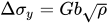
where is the yield stress, G is the shear elastic modulus, b is the magnitude of the Burgers vector, and is the dislocation density.

Solid solution strengthening

[edit]

By alloying the material, impurity atoms in low concentrations will occupy a lattice position directly below a dislocation, such as directly below an extra half plane defect. This relieves a tensile strain directly below the dislocation by filling that empty lattice space with the impurity atom.

The relationship of this mechanism goes as:
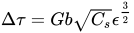
where is the shear stress, related to the yield stress, and are the same as in the above example, is the concentration of solute and is the strain induced in the lattice due to adding the impurity.

Particle/precipitate strengthening

[edit]

Where the presence of a secondary phase will increase yield strength by blocking the motion of dislocations within the crystal. A line defect that, while moving through the matrix, will be forced against a small particle or precipitate of the material. Dislocations can move through this particle either by shearing the particle or by a process known as bowing or ringing, in which a new ring of dislocations is created around the particle.

The shearing formula goes as:

and the bowing/ringing formula:
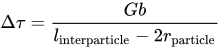
In these formulas, is the particle radius, is the surface tension between the matrix and the particle, is the distance between the particles.

Grain boundary strengthening

[edit]

Where a buildup of dislocations at a grain boundary causes a repulsive force between dislocations. As grain size decreases, the surface area to volume ratio of the grain increases, allowing more buildup of dislocations at the grain edge. Since it requires much energy to move dislocations to another grain, these dislocations build up along the boundary, and increase the yield stress of the material. Also known as Hall-Petch strengthening, this type of strengthening is governed by the formula:
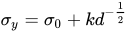
where

is the stress required to move dislocations,
is a material constant, and
is the grain size.

Theoretical yield strength

[edit]
Material Theoretical shear strength (GPa) Experimental shear strength (MPa)
Ag 1.0 0.37
Al 0.9 0.78
Cu 1.4 0.49
Ni 2.6 3.2
α-Fe 2.6 27.5

The theoretical yield strength of a perfect crystal is much higher than the observed stress at the initiation of plastic flow.[18]

That experimentally measured yield strength is significantly lower than the expected theoretical value can be explained by the presence of dislocations and defects in the materials. Indeed, whiskers with perfect single crystal structure and defect-free surfaces have been shown to demonstrate yield stress approaching the theoretical value. For example, nanowhiskers of copper were shown to undergo brittle fracture at 1 GPa,[19] a value much higher than the strength of bulk copper and approaching the theoretical value.

The theoretical yield strength can be estimated by considering the process of yield at the atomic level. In a perfect crystal, shearing results in the displacement of an entire plane of atoms by one interatomic separation distance, b, relative to the plane below. In order for the atoms to move, considerable force must be applied to overcome the lattice energy and move the atoms in the top plane over the lower atoms and into a new lattice site. The applied stress to overcome the resistance of a perfect lattice to shear is the theoretical yield strength, τmax.

The stress displacement curve of a plane of atoms varies sinusoidally as stress peaks when an atom is forced over the atom below and then falls as the atom slides into the next lattice point.[18]
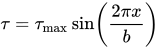
where is the interatomic separation distance. Since τ = G γ and dτ/dγ = G at small strains (i.e. Single atomic distance displacements), this equation becomes:

For small displacement of γ=x/a, where a is the spacing of atoms on the slip plane, this can be rewritten as:
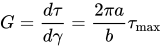
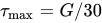
Giving a value of τmax equal to:

The theoretical yield strength can be approximated as .
Yield point elongation (YPE)

[edit]

During monotonic tensile testing, some metals such as annealed steel exhibit a distinct upper yield point or a delay in work hardening.[20] These tensile testing phenomena, wherein the strain increases but stress does not increase as expected, are two types of yield point elongation.

Yield Point Elongation (YPE) significantly impacts the usability of steel. In the context of tensile testing and the engineering stress-strain curve, the Yield Point is the initial stress level, below the maximum stress, at which an increase in strain occurs without an increase in stress. This characteristic is typical of certain materials, indicating the presence of YPE.[20] The mechanism for YPE has been related to carbon diffusion, and more specifically to Cottrell atmospheres.

YPE can lead to issues such as coil breaks, edge breaks, fluting, stretcher strain, and reel kinks or creases, which can affect both aesthetics and flatness. Coil and edge breaks may occur during either initial or subsequent customer processing, while fluting and stretcher strain arise during forming. Reel kinks, transverse ridges on successive inner wraps of a coil, are caused by the coiling process.[20]

When these conditions are undesirable, it is essential for suppliers to be informed to provide appropriate materials. The presence of YPE is influenced by chemical composition and mill processing methods such as skin passing or temper rolling, which temporarily eliminate YPE and improve surface quality. However, YPE can return over time due to aging, which is holding at a temperature usually 200-400 °C.[20]

Despite its drawbacks, YPE offers advantages in certain applications, such as roll forming, and reduces springback. Generally, steel with YPE is highly formable.[20]

See also

[edit]

References

[edit]
Revisions and contributorsEdit on WikipediaRead on Wikipedia
from Grokipedia
In materials engineering, yield refers to the stress level at which a material transitions from elastic deformation, where it returns to its original shape upon unloading, to plastic deformation, resulting in permanent shape change.[1] This critical property, known as yield strength or yield stress (denoted as σ_y), defines the boundary between recoverable and irrecoverable deformation and is essential for ensuring structural integrity in engineering applications.[2] Yield strength is typically determined through tensile testing, where a specimen is subjected to increasing uniaxial stress and its corresponding strain is measured to produce a stress-strain curve.[3] For ductile materials like mild steel, the curve may exhibit a distinct yield point, characterized by an upper yield strength followed by a drop to a lower yield strength before sustained plastic flow.[4] However, many engineering alloys and other materials lack a clear yield drop, so yield strength is conventionally defined using the 0.2% offset method: a line parallel to the elastic portion of the curve, offset by 0.002 strain, intersects the actual curve to specify the yield point.[2] This approach ensures a practical and reproducible measure, accounting for microscopic plastic events that precede macroscopic yielding.[5] The significance of yield strength lies in its role in materials selection and design, where engineers apply factors of safety to operating stresses to prevent yielding and maintain elastic behavior under load.[6] Balancing yield strength with other properties, such as ductility and toughness, is crucial for structural applications, as excessive strength can lead to brittleness, while insufficient yield resistance risks failure.[6] Yield strength varies widely across material classes—for instance, it ranges from about 50 MPa for some polymers to over 1000 MPa for high-strength steels—and is influenced by factors like composition, heat treatment, and temperature.[7] In multiaxial loading scenarios, yield criteria such as the von Mises or Tresca models extend the uniaxial yield strength to predict plastic onset in complex stress states.[8]

Fundamentals

Definitions

In materials engineering, yield refers to the stress level at which a material begins to deform plastically, marking the transition from reversible elastic deformation to irreversible plastic deformation.[1] This point indicates the onset of permanent shape change in the material when subjected to sufficient load.[9] Elastic deformation involves a temporary change in shape that fully recovers upon removal of the applied stress, as the material's atomic bonds stretch but do not break or rearrange.[10] In contrast, plastic deformation results in permanent alteration of the material's structure, where dislocations in the crystal lattice move and multiply, leading to lasting strain without recovery.[11] The concept of yield has roots in 19th-century metallurgy, with early systematic studies on yielding in ductile materials.[12] French engineer Henri Tresca provided early systematic insights in 1864 through experiments on ductile materials, proposing that yielding occurs when the maximum shear stress reaches a critical value.[12] On a stress-strain curve, which plots applied stress against resulting strain, the yield point is identified as the location where the curve deviates from its initial linear region, signaling the end of purely elastic behavior.[13] Yield strength serves as the quantitative measure of this transition stress.[1]

Yield Strength

Yield strength, denoted as σy\sigma_y, is defined as the stress at which a material begins to exhibit significant plastic deformation, specifically the stress corresponding to a 0.2% offset strain for materials lacking a distinct yield point.[14] This 0.2% offset method involves drawing a line parallel to the elastic portion of the stress-strain curve, offset by 0.002 strain, and identifying the intersection with the curve to quantify the onset of nonlinearity.[15] In ductile metals exhibiting a clear yield behavior, such as mild steel, the stress-strain curve may show an upper yield point followed by a drop to a lower yield point, where the upper point represents the initial maximum stress for yielding initiation and the lower point indicates the sustained stress during propagation.[16] Proof stress serves as an alternative measure, equivalent to the 0.2% offset yield strength, particularly for materials where plastic strain at a specified level (often 0.1% or 0.2%) defines the yield threshold.[17] Typical yield strengths vary widely by material class; for steels, values range from 250 MPa for mild structural grades to 1000 MPa for high-strength alloys.[18] Aluminum alloys exhibit lower values, typically 50–500 MPa, with pure aluminum around 30 MPa and heat-treated series like 6061 reaching up to 276 MPa.[19] Polymers generally have yield strengths in the 10–100 MPa range, such as nylon at approximately 50–80 MPa, reflecting their molecular chain structures compared to metallic lattices.[20] Yield strength decreases with increasing temperature due to enhanced atomic mobility, which facilitates dislocation motion and reduces the stress required for plastic deformation.[21] For instance, in body-centered cubic metals, this temperature dependence arises from thermal activation overcoming barriers like the Peierls stress, leading to a progressive drop in σy\sigma_y.[22]

Engineering Applications

Structural Engineering

In structural engineering, yield strength serves as a critical parameter for maintaining elastic behavior in materials under service loads, preventing permanent deformation and ensuring structural integrity. By designing components to operate below the yield point, engineers guarantee that structures recover fully after load removal, which is essential for long-term durability in buildings and bridges. Safety factors, typically ranging from 1.5 to 2.0 for building structures, are applied to the yield strength to account for uncertainties in loads, material variability, and construction tolerances, thereby providing a margin against yielding under expected conditions.[23][18] In beam design, yield strength directly limits the maximum allowable stress to avoid inelastic deformation, guiding the selection of cross-sections and materials for efficient load distribution. For steel beams, allowable bending stress is often set at 0.66 times the yield strength (Fy) for compact sections under allowable stress design (ASD), ensuring stresses remain well below the yield threshold even under combined dead, live, and environmental loads. This approach is fundamental in civil structures like girders and columns, where exceeding yield could initiate progressive failure.[24][25] High-yield strength steels, with minimum yields exceeding 50 ksi (345 MPa), enable the construction of slender, lightweight members in modern skyscrapers, reducing material volume while supporting immense gravitational and wind loads. For instance, One World Trade Center in New York utilizes high-strength structural steel with yield strengths up to 65 ksi in its core and perimeter columns, allowing the 1,776-foot tower to achieve exceptional height and stability. Similarly, in bridge applications, high-yield steels enhance span capabilities, as seen in long-span suspension bridges where they optimize cable and deck designs against tensile yielding.[26][27] To prevent failure modes such as buckling and collapse, designs incorporate yield-based limits to keep compressive and shear stresses below critical thresholds, often verified through finite element analysis. Buckling, a primary concern in slender elements like columns, is mitigated by ensuring Euler buckling loads exceed service demands by a factor tied to yield strength. The 1940 Tacoma Narrows Bridge collapse, though primarily wind-induced aeroelastic flutter, underscores the need for robust yield margins against dynamic loads; excessive torsional oscillations generated stresses approaching yield limits in the girders and cables, leading to catastrophic failure and highlighting the importance of comprehensive load considerations beyond static cases.[28][29] Integration of yield strength into standards like the American Institute of Steel Construction (AISC) Specification for Structural Steel Buildings ensures consistent application across projects. The AISC ASD provisions specify allowable stresses as fractions of Fy—such as 0.60 Fy for axial tension and 0.66 Fy for flexure—directly linking material properties to safe design values for buildings and bridges. These code-based approaches, as specified in ANSI/AISC 360-22, promote reliability by mandating yield-based checks for all load combinations, facilitating certification and regulatory compliance.[30]

Testing Methods

Experimental Techniques

Tensile testing serves as the primary experimental method for determining the yield strength of metallic materials under uniaxial loading conditions. This technique involves applying a controlled tensile force to a standardized specimen using a universal testing machine, which records the load and corresponding elongation to generate a stress-strain curve. The yield point is identified on this curve, often using the 0.2% offset method for materials without a distinct yield plateau. The ASTM E8/E8M standard governs this procedure for metals, specifying specimen geometries, testing speeds (typically 0.005 to 0.5 mm/s for yield determination), and reporting requirements to ensure reproducibility across laboratories.[31][32] For materials prone to tensile failure, compression testing provides an alternative to assess behavior under compressive loads. In this method, cylindrical or cubic specimens are subjected to axial compression between platens on a universal testing machine, measuring the stress-strain response until yielding, nonlinearity, or fracture occurs. This approach is particularly useful for certain alloys that yield in compression, as well as for brittle materials like ceramics and concrete, where tensile testing may induce premature cracking; for ductile alloys, the yield strength is determined from the deviation from linearity in the compressive stress-strain curve, while for brittle materials, it assesses the onset of nonlinear behavior or compressive strength. Standards such as ASTM E9 guide specimen preparation and testing parameters for metals, emphasizing friction reduction at contact surfaces to achieve uniform deformation.[33][34] Torsion testing evaluates shear yield strength by applying a twisting moment to tubular or solid specimens, which is critical for components like shafts experiencing torsional loads. The test uses a torsion testing machine to measure torque and angular displacement, plotting a shear stress-strain curve from which the shear yield point (often at 0.2% offset) is derived. This method reveals material behavior under pure shear, complementing tensile data via relations like the von Mises criterion, though it requires careful alignment to avoid bending artifacts. Standards such as ISO 7801 or ASTM A938 (for wires) outline procedures for torsional testing of metals.[35] Hardness testing offers a non-destructive approximation of yield strength through empirical correlations, especially for field assessments or when destructive testing is impractical. The Rockwell hardness test, for instance, indents the material with a ball or diamond penetrator under specified loads, yielding a hardness number that correlates linearly with yield strength for many steels and alloys (e.g., yield strength ≈ 3.3 × Rockwell C hardness in MPa for certain ranges). Such conversions are validated for work-hardened metals but vary by material class, requiring calibration against tensile data for accuracy.[36][37] Precise measurement of yield relies on instrumentation like extensometers and strain gauges attached to the specimen gauge length. Clip-on or non-contact extensometers track axial strain with resolutions down to 0.1% of full scale, enabling accurate plotting of the stress-strain curve and determination of the 0.2% offset yield by drawing a line parallel to the elastic modulus slope at 0.002 strain offset. Strain gauges, bonded directly to the surface, provide localized deformation data via electrical resistance changes, complementing extensometers for heterogeneous materials. These tools adhere to ASTM E83 calibration standards to minimize errors in low-strain regions critical for yield detection.[38][39] For dynamic yield assessment under high strain rates (e.g., 10² to 10⁴ s⁻¹), the split-Hopkinson pressure bar (SHPB) technique simulates impact loading by propagating a stress wave through input and output bars sandwiching the specimen. Incident, reflected, and transmitted waves are measured via strain gauges on the bars, allowing computation of the specimen's dynamic stress-strain curve and yield strength, which often exceeds quasi-static values due to strain-rate sensitivity. This method is widely used for metals and composites in applications like automotive crash simulations, with one-dimensional wave propagation assumptions validated for short specimens.[40][41] Challenges in these techniques include preventing necking in ductile materials during tensile testing, which localizes strain and obscures uniform yield behavior beyond the yield point. Video extensometers address this by optically tracking multiple points on the specimen surface without contact, enabling real-time monitoring of strain distribution and correction for necking onset through digital image correlation. Sample preparation is equally critical, with ASTM E8 mandating precise machining of dogbone-shaped specimens (e.g., 6 mm diameter gauge section for round bars) to ensure uniform stress fields and avoid surface defects that could initiate early yielding. Adherence to these standards, including edge finishing and dimensional tolerances within ±0.025 mm, directly impacts test reliability.[42][31]

Data Interpretation

In materials testing, the offset method provides a standardized approach to determine approximate yield strength when a distinct yield point is absent from the stress-strain curve. This involves constructing a line parallel to the initial linear elastic portion of the curve, offset by a strain of 0.2% (or 0.002 in dimensionless terms), and identifying the intersection point with the actual curve as the yield strength.[43] The 0.2% offset is the most commonly adopted value across various metals and alloys, as specified in standards like ASTM E8/E8M and ISO 6892-1, ensuring consistency in reporting for ductile materials without pronounced yielding.[44] This method approximates the onset of plastic deformation by accounting for minor deviations from perfect elasticity, though it may slightly overestimate or underestimate the true transition in highly elastic materials.[15] For materials exhibiting a clear yield point, such as mild steel, data interpretation focuses on identifying upper and lower yield points through visual and quantitative analysis of the stress-strain curve. The upper yield point marks the initial peak stress where plastic flow begins, often followed by a drop to the lower yield point, which sustains during localized deformation.[45] This behavior is characteristically linked to the formation and propagation of Lüders bands—visible bands of plastic deformation that traverse the specimen at constant stress, typically observed in low-carbon steels with interstitial solute atoms pinning dislocations.[46] In some alloys, a double-yield phenomenon appears, featuring two distinct yielding stages: an initial one due to phase transformations or twinning, followed by a second from conventional dislocation glide, as seen in certain metastable titanium alloys where the first yield reaches around 613 MPa.[47] Accurate identification requires high-resolution strain measurement to distinguish these points from noise or machine compliance effects.[48] Yield data from multiple test samples often exhibit variability due to microstructural differences, surface conditions, or minor compositional inhomogeneities, necessitating statistical analysis for reliable characterization. The Weibull distribution is widely applied to model this scatter in yield strength, providing parameters like the shape factor (Weibull modulus) that quantify the reliability and predictability of failure initiation.[49] For instance, a higher Weibull modulus indicates lower variability and greater consistency in yield values across samples, aiding in probabilistic design assessments for components under load.[50] This approach is particularly useful for brittle or semi-brittle materials where yield variability influences safety margins, with the cumulative distribution function allowing estimation of the probability of yielding below a specified stress.[51] Reporting interpreted yield data must adhere to established standards to ensure reproducibility and context, including confidence intervals that reflect measurement uncertainty and sample statistics. For example, a 95% confidence interval around the mean yield strength accounts for both experimental precision and material scatter, as outlined in guidelines for tensile testing uncertainties.[52] Environmental conditions, such as testing temperature, significantly influence interpreted values and must be explicitly stated; elevated temperatures generally reduce yield strength due to enhanced dislocation mobility, with models showing linear declines in normalized strength for structural steels above 200°C.[53] Standards like ISO 6892-1 require documentation of temperature, strain rate, and any preconditioning to contextualize the yield point, enabling valid comparisons across studies or applications.[54]

Theoretical Foundations

Theoretical Yield Strength

The theoretical yield strength represents the idealized maximum stress a perfect crystal can withstand before plastic deformation occurs, derived from atomic-scale models that consider the energy required to shear atomic planes. In the absence of defects, plastic deformation would necessitate breaking and reforming atomic bonds simultaneously across a slip plane, leading to an enormous stress level far exceeding observed values in engineering materials. This upper limit arises from the sinusoidal variation of interatomic forces, where the maximum restoring force defines the theoretical shear strength. The concept of dislocations, linear defects in the crystal lattice, was independently proposed in 1934 by G.I. Taylor, Egon Orowan, and Michael Polanyi to resolve the vast discrepancy between this theoretical maximum and the much lower yield strengths exhibited by real crystals. Their work established that plastic deformation proceeds via the collective motion of dislocations rather than wholesale atomic shearing, enabling deformation at stresses orders of magnitude below the ideal limit. This foundational insight shifted the understanding of yield from a brittle, bond-breaking process to one governed by defect dynamics. In dislocation theory, the yield strength is fundamentally limited by the motion of these defects under applied shear stress. For a perfect crystal without dislocations, the theoretical shear strength τmax\tau_{\max} is approximated as τmaxG/30\tau_{\max} \approx G/30, where GG is the shear modulus, reflecting the stress needed to displace one atomic plane over its neighbor by a distance comparable to the atomic spacing. For ideal crystals under certain bonding assumptions, this value can approach G/10\sim G/10. These estimates stem from models treating the crystal as a continuum with periodic potential, where GG typically ranges from 30 to 100 GPa for metals, yielding τmax\tau_{\max} on the order of several GPa. A key component of dislocation motion resistance is the Peierls-Nabarro stress, which quantifies the lattice friction arising from the periodic atomic potential that dislocations must overcome. The original Peierls-Nabarro model derives this as
τp=2G1νexp(2πwb), \tau_p = \frac{2G}{1 - \nu} \exp\left( -\frac{2\pi w}{b} \right),
where ν\nu is Poisson's ratio, ww is the dislocation core width (often on the order of several Burgers vectors bb), and bb is the magnitude of the Burgers vector. This exponential dependence makes τp\tau_p highly sensitive to w/bw/b; wide dislocations in close-packed metals experience low Peierls stress, facilitating easy glide at room temperature. In practice, theoretical yield strengths for metals range from 10 to 20 GPa, but actual values in polycrystalline materials are typically less than 1% of this due to the proliferation of dislocations and other defects that multiply and interact during deformation. Single-crystal whiskers, with minimal defects, can approach these theoretical limits; for instance, iron whiskers have exhibited shear strengths up to approximately G/10G/10, nearing 8 GPa. Grain boundaries further reduce the effective yield in polycrystals by impeding dislocation transmission, though this effect is secondary to intrinsic lattice resistance in defect-free models.

Yield Criteria

Yield criteria provide mathematical models to predict the onset of yielding in materials subjected to multiaxial stress states, extending the concept of uniaxial yield strength to complex loading conditions encountered in engineering components. These criteria are essential for designing structures where stresses arise from combined tension, compression, shear, and hydrostatic pressures, ensuring that the material remains within its elastic limit to avoid permanent deformation.[55] The Tresca yield criterion, also known as the maximum shear stress theory, posits that yielding occurs when the maximum shear stress in the material reaches the critical value observed in uniaxial tension. Formulated by Henri Tresca in 1864, it is expressed in terms of the principal stresses σ1σ2σ3\sigma_1 \geq \sigma_2 \geq \sigma_3 as yielding when 12max(σ1σ2,σ2σ3,σ3σ1)=σy2\frac{1}{2} \max(|\sigma_1 - \sigma_2|, |\sigma_2 - \sigma_3|, |\sigma_3 - \sigma_1|) = \frac{\sigma_y}{2}, where σy\sigma_y is the uniaxial yield strength. This criterion is conservative and particularly useful for materials where shear failure dominates, such as in certain brittle-ductile transitions.[12][56] In contrast, the von Mises yield criterion, or distortion energy theory, predicts yielding based on the accumulation of distortional strain energy, which is considered the primary driver of plastic deformation in ductile materials. Developed by Richard von Mises in 1913, it defines an effective stress σe=(σ1σ2)2+(σ2σ3)2+(σ3σ1)22=σy\sigma_e = \sqrt{\frac{(\sigma_1 - \sigma_2)^2 + (\sigma_2 - \sigma_3)^2 + (\sigma_3 - \sigma_1)^2}{2}} = \sigma_y at the onset of yield. This criterion is generally more accurate for ductile metals like steel and aluminum, as it aligns better with experimental data under multiaxial loading compared to Tresca./11%3A_Yield_Criteria/11.05%3A_Von_Mises_Criterion) In practical applications, such as the design of thin-walled pressure vessels, the von Mises criterion is commonly applied to evaluate combined hoop and longitudinal stresses. For a cylindrical vessel under internal pressure pp, the principal stresses are σh=prt\sigma_h = \frac{pr}{t}, σl=pr2t\sigma_l = \frac{pr}{2t}, and σr0\sigma_r \approx 0, leading to yielding when σe=32prt=σy\sigma_e = \frac{\sqrt{3}}{2} \frac{pr}{t} = \sigma_y. Comparisons between criteria reveal that von Mises typically predicts allowable loads up to 15% higher than Tresca for equivalent safety, making it preferred for optimizing ductile component designs while maintaining a safety margin.[57][58] Extensions of these criteria address materials sensitive to hydrostatic stress, such as soils and rocks. The Drucker-Prager criterion, introduced by Daniel Drucker and William Prager in 1952, modifies the von Mises form to incorporate pressure dependence: $ \sqrt{J_2} + \alpha I_1 - k = 0 $, where I1I_1 is the first stress invariant, J2J_2 the second deviatoric invariant, and α\alpha, kk are material parameters calibrated from triaxial tests. This model is widely used in geotechnical engineering for predicting yield in frictional materials like soils, where hydrostatic pressure influences shear strength.[59][60]

Strengthening Mechanisms

Work Hardening

Work hardening, also known as strain hardening, is a strengthening mechanism in metals where plastic deformation increases the yield strength by elevating the flow stress through interactions among dislocations. During deformation, dislocations multiply and tangle, creating barriers that impede further dislocation motion and require higher applied stress to continue yielding. This process raises the flow stress, as dislocations accumulate and form complex structures like tangles and cell walls that store strain energy.[61][62] The phenomenon is quantitatively described by the Hollomon equation, σ=σ0+Kϵn\sigma = \sigma_0 + K \epsilon^n, where σ\sigma is the flow stress, σ0\sigma_0 is the initial yield stress, ϵ\epsilon is the plastic strain, KK is the strength coefficient, and nn is the strain hardening exponent typically ranging from 0.1 to 0.5 for most metals. Work hardening progresses through distinct stages: Stage I (easy glide) features a low hardening rate due to minimal dislocation interactions in single slip systems; Stage II (linear hardening) exhibits a constant high rate from athermal storage of forest dislocations; and Stage III (saturation) shows a decreasing rate as dynamic recovery balances dislocation generation, leading to a plateau in hardening. In face-centered cubic (FCC) metals like copper, these stages are evident in single crystals, with Stage I prominent at low strains before transitioning to multi-slip dominated hardening in Stage II.[61][62] In engineering applications, work hardening is exploited through cold working processes to enhance material strength without altering composition. For instance, wire drawing of copper can increase its yield strength from an annealed value of approximately 70 MPa to over 400 MPa—more than doubling it—by inducing high dislocation densities at drawing strains around 1.9. This technique is widely used to produce high-strength wires for electrical conductors and structural components, balancing strength gains with ductility retention up to certain deformation limits.[63] The effects of work hardening can be reversed through annealing, which involves recovery and recrystallization to restore ductility and reset the microstructure. Recovery reduces stored energy via dislocation annihilation and rearrangement at lower temperatures, while recrystallization forms new strain-free grains at higher temperatures, eliminating the hardened state. These processes are thermally activated, with typical activation energies ranging from 100 to 200 kJ/mol, depending on the metal and purity, often linked to self-diffusion mechanisms.[64]

Solid Solution Strengthening

Solid solution strengthening is a mechanism by which the addition of solute atoms to a metal solvent enhances the material's yield strength by impeding dislocation motion through the creation of local elastic stress fields that distort the crystal lattice. These distortions arise from the size and modulus mismatches between solute and solvent atoms, forcing dislocations to bow around or cut through the solute obstacles, which requires additional applied stress. This process is particularly effective in single-phase alloys where solutes are uniformly distributed without forming second phases.[65] The quantitative description of this strengthening is captured in the Fleischer model, which treats solutes as discrete, strong pinning points for dislocations in a random distribution. The increase in critical resolved shear stress, Δτ, is given by
Δτϵ3/2c2/3, \Delta \tau \propto \epsilon^{3/2} c^{2/3},
where ε represents the misfit parameter (a measure of the atomic size difference between solute and solvent, normalized by the solvent lattice parameter) and c is the atomic fraction of the solute concentration. This relationship highlights that strengthening scales nonlinearly with both the degree of lattice distortion (via ε) and solute content (via c), with higher misfit solutes providing greater resistance to dislocation glide at low concentrations. The model assumes a square array of obstacles and applies primarily to dilute solutions where solute-solute interactions are negligible.[65] Solid solutions are classified into substitutional and interstitial types based on how solutes incorporate into the host lattice. Substitutional solutes, such as nickel atoms replacing copper in a Cu-Ni alloy, occupy lattice sites directly and produce relatively symmetric distortions, leading to moderate strengthening that is relatively stable across temperatures. In contrast, interstitial solutes, like carbon atoms occupying octahedral sites in body-centered cubic iron, generate highly asymmetric, tetragonal distortions due to their smaller size, resulting in more potent obstacle fields and a stronger temperature dependence of the strengthening effect—where the yield strength increment decreases more rapidly with increasing temperature owing to enhanced thermal activation of dislocations over these barriers.[66] Practical examples illustrate the efficacy of this mechanism in engineering alloys. In austenitic stainless steels, such as type 304 with approximately 18% Cr and 8% Ni, the substitutional additions of Cr and Ni provide solid solution strengthening that elevates the yield strength by 50-100% relative to ferritic or low-alloy steels, achieving typical values around 200-300 MPa in the annealed condition while maintaining ductility. Similarly, in brass alloys, zinc acts as a substitutional solute in copper, with additions up to 30 wt% Zn increasing the annealed yield strength from about 70 MPa for pure copper to approximately 200 MPa through lattice distortion effects.[67][68] The extent of solid solution strengthening is inherently limited by the equilibrium solid solubility of the solute in the solvent, as dictated by phase diagrams, beyond which second phases precipitate and alter the mechanism. For the Cu-Zn system, the α-phase solid solution accommodates a maximum of about 30 wt% Zn at typical processing temperatures, restricting further strengthening without phase separation.[68]

Precipitation Hardening

Precipitation hardening, also known as age hardening, is a strengthening mechanism that enhances the yield strength of certain alloys by forming fine, coherent precipitate particles within the matrix, which act as obstacles to dislocation motion. These precipitates, typically nanometer-sized and coherent with the surrounding crystal lattice, initially form during controlled heat treatment and impede slip by forcing dislocations to either shear through them (when small) or bow around them via the Orowan mechanism. In the Orowan bypassing process, dislocations bow between precipitates, leaving loops behind, which requires an additional shear stress Δτ ≈ Gb / L to overcome the obstacles, where G is the shear modulus, b is the Burgers vector, and L is the average inter-particle spacing on the slip plane.[69][70] The process begins with solution treatment, where the alloy is heated to a high temperature to dissolve solute atoms into a single-phase solid solution, followed by rapid quenching to room temperature to trap these atoms in supersaturated positions and prevent premature precipitation. Subsequent aging at an intermediate temperature allows for the diffusion-controlled nucleation and growth of precipitates; underaging produces fine, coherent particles that maximize strengthening, while overaging causes coarsening and loss of coherency, leading to reduced strength as dislocations more easily bypass larger particles. Peak yield strength is typically achieved when precipitate diameters reach 100-200 nm, balancing the transition from shearing to Orowan mechanisms.[71][72] A classic example is in aluminum-copper alloys, where θ' precipitates form during aging and can elevate the yield strength from about 50 MPa in the annealed state to over 400 MPa at peak aging, enabling applications in aerospace components. In nickel-based superalloys for turbine blades, ordered γ' (Ni₃Al) precipitates provide exceptional high-temperature strengthening, with yield strengths often exceeding 1000 MPa due to their stability and fine dispersion.[73][74] The kinetics of precipitation are mapped using time-temperature-transformation (TTT) diagrams, which illustrate the start and finish curves for sequential precipitate phases (e.g., GP zones to θ'' to θ' in Al-Cu) as a function of aging time and temperature, guiding optimal heat treatment to avoid under- or overaging.[75]

Grain Boundary Strengthening

Grain boundary strengthening, also known as Hall-Petch strengthening, enhances the yield strength of polycrystalline metals by reducing the average grain size, which impedes dislocation motion across grain boundaries.[76] This mechanism arises from the increased density of grain boundaries in finer-grained structures, acting as barriers to slip. The empirical relationship describing this effect, known as the Hall-Petch relation, was first established in the early 1950s through observations on mild steel and other metals.[77] The yield strength σy\sigma_y is given by
σy=σ0+kd1/2, \sigma_y = \sigma_0 + k d^{-1/2},
where σ0\sigma_0 is the friction stress for dislocation motion in a single crystal, kk is the Hall-Petch constant, and dd is the average grain diameter. For steels, kk is approximately 0.65 MPa m1/2^{1/2}.[78] This inverse square root dependence indicates that halving the grain size can increase yield strength by about 40%, providing a scalable approach to material design.[79] The underlying mechanism involves the pile-up of dislocations at grain boundaries during deformation. Within a grain, dislocations generated from sources such as Frank-Read sources multiply and accumulate at the boundary, creating a stress concentration that must exceed the critical resolved shear stress of the adjacent grain for transmission to occur.[76] The number of dislocations in the pile-up is proportional to the grain size, leading to higher local stresses in smaller grains and thus greater overall resistance to yielding. This barrier effect is most pronounced in the micrometer to sub-micrometer grain size regime. However, at nanoscale grain sizes around 10 nm, the relationship transitions to an inverse Hall-Petch behavior, where yield strength decreases with further grain refinement due to exhaustion of dislocation sources within the limited volume, promoting alternative deformation modes like grain boundary sliding.[80][81] Achieving fine grain sizes for effective grain boundary strengthening typically requires specialized processing techniques that refine microstructure without introducing unwanted phases. Severe plastic deformation (SPD) methods, such as equal-channel angular pressing (ECAP) or high-pressure torsion, impose large strains at low temperatures to subdivide grains into ultrafine structures with diameters of 1-10 μ\mum, enabling Hall-Petch strengthening while preserving bulk form.[82] Powder metallurgy routes, including mechanical alloying followed by consolidation, produce nanocrystalline powders that can be sintered into dense materials with grain sizes below 100 nm, further amplifying boundary effects.[83] These approaches are particularly valuable for metals like aluminum, copper, and titanium, where conventional thermomechanical processing yields coarser grains.[84] A notable example is nanocrystalline nickel, where electrodeposited or consolidated powders with average grain sizes of 20-50 nm exhibit yield strengths exceeding 1 GPa, compared to approximately 100 MPa for coarse-grained nickel with micron-sized grains.[85] This dramatic enhancement stems from the dense array of high-angle grain boundaries, though it often comes at the cost of reduced ductility, as the limited intragranular slip space promotes early void formation and fracture.[86] Such trade-offs highlight the need for balanced processing to combine grain boundary strengthening with other mechanisms for optimized performance.[87]

Advanced Phenomena

Yield Point Elongation

Yield point elongation (YPE) refers to the localized plastic deformation that occurs between the upper and lower yield points in the stress-strain curve of certain metals, manifesting as a distinct plateau of constant stress during tensile testing. This phenomenon is characterized by a strain of approximately 1-2%, arising from the propagation of Lüders bands across the material.[88] These bands represent regions of intense shear deformation that advance at a relatively constant velocity, leading to discontinuous yielding.[89] The underlying mechanism stems from the interaction between dislocations and interstitial solute atoms, primarily carbon and nitrogen in iron-based alloys. During or prior to deformation, these atoms form Cottrell atmospheres by diffusing to the core of dislocations, effectively pinning them in place and requiring an elevated stress—the upper yield point—to initiate unpinning. Once unpinned, a cascade of dislocation motion occurs, dropping the stress to the lower yield point and enabling rapid band propagation, typically observed at low strain rates on the order of 0.001 s^{-1}. This process was first theoretically described in the context of iron's yielding behavior.[90] Key characteristics of YPE include a serrated or plateau-like flow curve in the stress-strain response, with the effect being most pronounced in low-carbon steels containing less than 0.05% carbon, where sufficient interstitial solutes are available to form effective pinning atmospheres. The phenomenon can be suppressed through methods such as alloying with elements like titanium or niobium, which tie up carbon and nitrogen in stable precipitates, or by baking treatments that alter solute distribution and reduce free interstitial concentrations.[91][88] In practical terms, YPE poses challenges in metal forming processes, as the inhomogeneous deformation results in visible surface markings known as stretcher strains, particularly on exposed panels in automotive applications, compromising uniformity and aesthetics. Quantitatively, YPE is measured as the total strain accommodated during the yield plateau, equivalent to the difference between the strain at the lower yield point and the strain at the upper yield point. This effect is intrinsically linked to strain aging, where time-dependent solute diffusion enhances dislocation locking.[92][88]

Strain Aging

Strain aging is a time- and temperature-dependent phenomenon in metals where the yield strength increases due to the diffusion of solute atoms to dislocations introduced by prior plastic deformation. This process primarily involves interstitial solutes such as carbon (C) and nitrogen (N) in body-centered cubic (BCC) metals like α-iron, which migrate to form Cottrell atmospheres around dislocations, effectively pinning them and raising the stress required for further slip.[93] The pinning mechanism is associated with Snoek relaxation peaks, where interstitial atoms reorient in the stress field of dislocations, enhancing locking with an activation energy of approximately 80 kJ/mol for carbon diffusion in α-Fe.[94] Typical strength increases from this locking range from 10-50 MPa after several hours of aging at room temperature, depending on solute concentration and pre-strain level.[95] The phenomenon manifests in two main stages: static strain aging, which occurs after pre-straining when the material is held at temperature without further deformation, and dynamic strain aging, which happens concurrently with ongoing deformation. In static aging, solute diffusion to stationary dislocations leads to a progressive hardening effect, often resulting in the return of the yield point observed in tensile tests (as detailed in the yield point elongation section).[96] Dynamic aging, by contrast, causes repeated pinning and unpinning of mobile dislocations during straining, producing serrations in the stress-strain curve known as the Portevin-Le Chatelier (PLC) effect.[97] This serrated flow is prominent in alloys with sufficient solute diffusivity and dislocation density, typically at elevated temperatures or strain rates that match solute diffusion kinetics.[98] A key industrial application of strain aging is bake hardening in automotive steels, where pre-strained sheet metal is subjected to a low-temperature bake (around 170°C for 20-30 minutes) during paint curing, leveraging static aging to boost yield strength by about 50 MPa for improved dent resistance without sacrificing initial formability.[99] This process exploits controlled levels of free carbon or nitrogen to form Cottrell atmospheres during the bake, enhancing crash performance in vehicle panels.[100] To mitigate unwanted aging effects like reduced ductility or surface defects in forming operations, interstitial-free (IF) steels are engineered with ultra-low carbon (<0.005 wt%) and nitrogen (<0.006 wt%) contents, stabilized by microalloying elements such as titanium or niobium that precipitate solutes and prevent diffusion to dislocations.[101] In dynamic cases, the PLC effect exemplifies strain aging's role in unstable flow, observed in dilute aluminum-magnesium alloys and low-carbon steels during warm forming.[97]

References

User Avatar
No comments yet.