


Community hub
Recent from talks
Contribute something
Nothing was collected or created yet.
Alexander Korda
View on Wikipedia
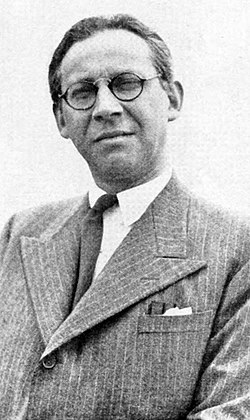
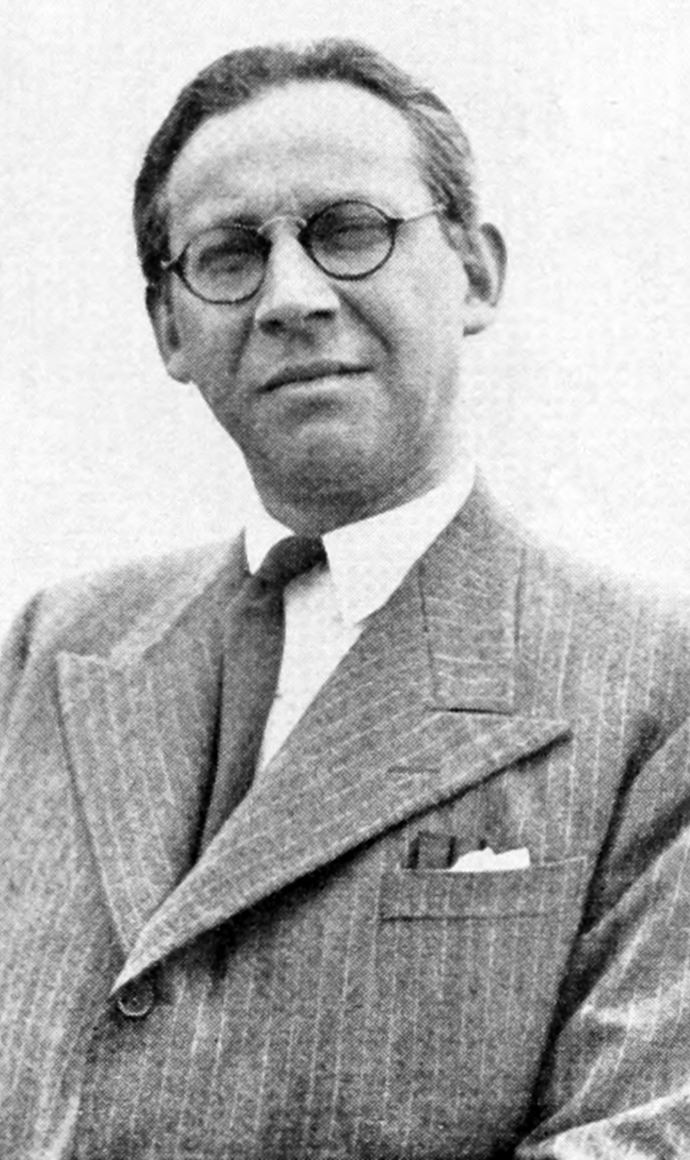
Sir Alexander Korda (/ˈkɔːrdə/; born Sándor László Kellner; Hungarian: Korda Sándor; 16 September 1893 – 23 January 1956)[1][2] was a Hungarian–born British film director, producer, and screenwriter, who founded his own film production studios and film distribution company.[3]
Key Information


Born in Hungary, where he began his career, he worked briefly in the Austrian and German film industries during the era of silent films, before being based in Hollywood from 1926 to 1930 for the first of his two brief periods there (the other was during World War II). The change led to a divorce from his first wife, the Hungarian film actress María Corda, who was unable to make the transition from silent films to "talkies" because of her Hungarian accent.
From 1930, Korda was active in the British film industry, and soon became one of its leading figures. He was the founder of London Films and, post-war, the owner of British Lion Films, a film distribution company. Korda produced many outstanding classics of the British film industry, including The Private Life of Henry VIII, Rembrandt, Things To Come, The Thief of Baghdad and The Third Man. In 1942, Korda became the first filmmaker to receive a knighthood.[4]
Personal background
[edit]Korda was born Sándor László Kellner into a Jewish family in Pusztatúrpásztó, Austria-Hungary.[5] His parents were Henrik Kellner and Ernesztina Weisz.[6][7][8] He had two younger brothers, Zoltan and Vincent, who also had careers in the film industry, often working with Alexander.
Early career in European silent film
[edit]Films in Hungary
[edit]After the death of his father, Korda began writing film reviews to support his family. He also changed the family name, deriving the new name Korda from the Latin phrase "sursum corda" ("lift up your hearts").[9]
Having been excused from military service in the Austro-Hungarian Army in the First World War, because he was short-sighted, Korda became an important figure in the Hungarian film industry, initially through his magazines Pesti Mozi, Mozihét and Világ. This led to invitations to write screenplays. His first script was for Watchhouse in the Carpathians (1914), which he also helped to direct.[10] He also made a film with Gyula Zilahy, The Duped Journalist (1914), and directed Tutyu and Totyo (1915), The Officer's Swordknot (1915) and Lyon Lea (1915).[11]
In 1916, Korda established his own production company, Corvin Film. Its first film was White Nights (1916), which was a big success. Korda went on to build Corvin into one of the largest film companies in Hungary with such productions as The Grandmother (1916), Tales of the Typewriter (1916), The Man with Two Hearts (1916), The One Million Pound Note (1916), Cyclamen (1916), Struggling Hearts (1916), The Laughing Saskia (1916), Miska the Magnate (1916), St. Peter's Umbrella (1917), The Stork Caliph (1917) (from the novel by Mihály Babits), and Magic (1917). Korda later regarded Harrison and Barrison (1917) as his best film. He also made Faun (1918), Man of Gold (1918), and Mary Ann (1918).
Under the shortlived Hungarian Soviet Republic Korda made Ave Caesar! (1919), White Rose (1919), Yamata (1919) and Neither at Home or Abroad (1919). His final Hungarian film was Number 111 (1919).
In October 1919 Korda was arrested during the White Terror that followed the overthrow of the Communist government, but was soon released. He then left Hungary for Austria. He never returned to his country of birth.[12]
Films in Vienna
[edit]
After leaving Hungary, Korda accepted an invitation from Count Alexander Kolowrat to work for his company Sascha-Film in the Austrian capital Vienna.[13] Korda worked alongside Kolowrat, who had attracted several leading Hungarian and German directors into his employment, on the historical epic The Prince and the Pauper (1920). The film was a major international success and inspired Korda with the idea of making "international films" with global box office appeal.[14]
Korda's next two films, Masters of the Sea (1922) and A Vanished World (1922), were both nautical-set adventures based on Hungarian novels.
By that stage, Korda had grown irritated with Kolowrat's interference with his work and left Sascha to make an independent film, Samson and Delilah (1922), set in the world of opera. The film was made on a lavish scale, with large crowd scenes. The lengthy shooting schedule lasted 160 working days. The film was unsuccessful.[15]
Films in Berlin
[edit]Korda left Vienna and travelled to Germany. He had frequent problems with money, and often had to receive support from friends and business associates, but in Berlin he raised funding for the melodrama The Unknown Tomorrow (1923). With backing from Germany's biggest film company, UFA, Korda returned to Vienna to make Everybody's Woman (1924). While he was there he began work on his next film, the historical Tragedy in the House of Habsburg (1924), which portrayed the Mayerling Incident. It earned back around half of its production costs.[16] He followed this with Dancing Mad (1925), another melodrama.
Korda cast his wife Maria Corda as the female lead in all his German-language films. To a large degree the success of his productions depended on her star power. Korda cast her again in A Modern Dubarry (1927), an update of the life of Madame Du Barry based on an original screenplay by Lajos Bíró. The film may have been intended to showcase Maria Corda's star potential to producers in Hollywood.[17]
Korda made his final German film, Madame Wants No Children (1926), for the Berlin-based subsidiary of the American studio Fox. Although made later, it was released before A Modern Dubarry.
In Hollywood and France
[edit]In December 1926 Korda and his wife sailed for the United States on board the steamer Olympic, with a view to Korda taking up a contract with the American studio First National.[18] In Hollywood both struggled to adapt to the studio system. Korda had to wait some time before gaining his first directorial assignment, The Stolen Bride (1927), a Hungarian-themed romance about a peasant's love for a countess.[19] The film starred the American actress Billie Dove rather than Korda's wife.
Following the moderate success of The Stolen Bride Korda worked on the comedy The Private Life of Helen of Troy (1927), replacing the previous director, George Fitzmaurice. The film retells the story of Helen of Troy, parodying the historical epics of the era by transforming the classical characters into everyday people with modern problems. The film was a significant success for Korda, with his wife playing the role of Helen. The film was his most satisfying work in the United States and provided the template for his later success in Britain.
After this film, however, Korda became pigeonholed as a director of female stars and exotic foreign locations. He was generally given similar assignments for the remainder of his first period in Hollywood.[20] His next few films were disappointments as his career lost its momentum: Yellow Lily (1928), Night Watch (1928) both with Dove, and Love and the Devil (1929) with Maria Korda (who now spelled her name with a K). The latter two, though still Silent films, had sound effects and music added to their soundtracks during Hollywood's transition to fully synchronized Sound films.
Korda's next film The Squall (1929), with a young Myrna Loy, was his first talkie and featured a Hungarian setting. Although, like many other directors, Korda had misgivings about the new technology, he quickly adapted to making sound films.
Korda's marriage was strained in Hollywood. The arrival of sound films wrecked his wife's career, as her heavy accent made her unemployable for most American films. Love and the Devil was the last of Korda's films she appeared in, and she made only two more films. She became increasingly resentful of the switch in their relationship, as her career was now over while Korda, who had once relied on her for the success of his films, was relatively flourishing. Their marriage collapsed, and they divorced in 1930.[21]
Korda made two more sound films at First National: Her Private Life (1929) and Lilies of the Field (1930), both of which were remakes of earlier silent films.
Korda grew more frustrated in Hollywood as he came to strongly dislike the studio system. He hoped to save up enough money to return to Europe and begin producing on a large scale there, but his lavish personal spending and the large amounts he lost in the Wall Street crash prevented this. When his producer, Ned Marin, moved from First National to the Fox Film Corporation Korda followed him. Korda's new contract gave him $100,000 a year.[22]
Fox
[edit]His first film for Fox, Women Everywhere (1930), cost slightly more than some of the programmers he had previously directed in the United States. He collaborated with several figures who would contribute to his future success in Britain. Korda was offered a series of scripts, all of which he disliked, before he finally agreed to make The Princess and the Plumber (1930).[23] Korda's reluctance to make the film led to his conflict with studio bosses, which brought to an end his first period in Hollywood.
Films in France
[edit]Korda went to France where he made The Men Around Lucy (1931) for Paramount. He also made Rive gauche (1931).
Korda had a success with Marius (1931) starring Raimu from the play by Marcel Pagnol. He followed it with the Swedish and German versions of Marius, respectively Longing for the Sea (1931), and The Golden Anchor (1932).
In Britain
[edit]


Korda relocated to London where he made Service for Ladies (1932) for Paramount. He produced Women Who Play (1932) for them.
London Films
[edit]Korda then decided to form his own company. In 1932 he founded London Films. Its first production was Wedding Rehearsal (1932). He then produced Men of Tomorrow (1932), co-directed by his brother Zoltan Korda, That Night in London (1932) starring Robert Donat, Strange Evidence (1933), Counsel's Opinion (1933), and Cash (1933).
The Private Life of Henry VIII
[edit]Korda had a huge hit with The Private Life of Henry VIII (1933), which he directed. It was nominated for the Academy Award for Best Picture, established Korda internationally and made a star of Charles Laughton.
After The Private Life of Henry VIII
[edit]Korda followed it with The Girl from Maxim's (1933), which he shot in English and French. He tried to repeat the success of Henry with The Private Life of Don Juan (1934) starring Douglas Fairbanks, which he directed, and The Rise of Catherine the Great (1934) which he did not. Neither did as well as Henry.
Korda produced a well-respected short, The Private Life of the Gannets (1934), and enjoyed a big success as producer of The Scarlet Pimpernel (1934). Also popular was Sanders of the River (1935) starring Paul Robeson and directed by his brother, and The Ghost Goes West (1936) starring Donat. His other credits as producer include Moscow Nights (1936) with Laurence Olivier, Men Are Not Gods (1936), and Forget Me Not (1936).
Korda directed Rembrandt (1936) with Laughton, which was a critical rather than a commercial success. Things to Come (1936), directed by William Cameron Menzies, has come to be regarded as a classic. It was written by H. G. Wells and Korda's The Man Who Could Work Miracles (1936) is based on a Wells short story. Korda also commissioned and financed the documentary Conquest of the Air (1936).
Denham
[edit]Korda bought property in Denham, Buckinghamshire, including Hills House, and built film studios on the property. London Film's Denham Film Studios was financed by the Prudential and opened in 1936. On 21 June 1936, Thurston Macauley, London correspondent to The New York Times, filed a story headlined "The Korda Workshop at Denham" describing the facility, located on 165 acres of woodland, field and river scenery suitable for filming, with 28 acres of buildings and a planned total of fifteen 250-foot by 130-foot sound stages (state of the art at the time). It was "not only the most up-to-date of all the world's studios" but a "complete community in itself" from foundry and blacksmith's shops to projection theatres, with "unusually good dressing and bathroom accommodations" and able to easily manage crowds of 500. Macauley pointed to the special construction designed to ensure that even dense fog would not penetrate the buildings and interfere with filming, a serious problem in Britain in the winter months. He concluded: "Hollywood, as well as the rest of the world, will be watching with interest what Korda does at Denham".[24]
Korda was naturalised as a British subject on 28 October 1936.[25] That same year Korda was an important contributor to the Moyne Commission, formed to protect British film production from competition, mainly from the United States. Korda said: "If American interests obtained control of British production companies, they may make British pictures here, but the pictures made would be just as American as those made in Hollywood. We are now on the verge of forming a British school of film-making in this country."[26]
Korda produced Fire Over England (1937) with Olivier and Vivien Leigh. He also attempted a version of I, Claudius with Laughton and Merle Oberon, but it was abandoned with only a few scenes shot.
Korda made Dark Journey (1937) with Conrad Veidt and Leigh, and had a big hit with Elephant Boy (1937) directed by his brother from a Rudyard Kipling story; it made a star of Sabu.
Korda also made some cheaper films: Farewell Again (1938), Storm in a Teacup (1938) with Leigh and Rex Harrison, The Squeaker (1937), Action for Slander (1937), Return of the Scarlet Pimpernel (1937) and Paradise for Two (1937).
Knight Without Armour (1937) with Donat and Marlene Dietrich was an expensive epic that failed to recoup its money. The Divorce of Lady X (1938) was a comedy with Olivier and Merle Oberon.
Korda had a big success with The Drum (1938), directed by Zoltan and starring Sabu. He produced South Riding (1938), The Challenge (1938), The Rebel Son (1939) and Prison Without Bars (1938).
During the Second World War Korda made more propaganda films, including Q Planes (1939), with Olivier, and The Lion Has Wings (1939). Korda had a massive hit with another adventure film directed by Zoltan, The Four Feathers (1939).
By 1939 Michael Powell had been hired as a contract director by Korda on the strength of The Edge of the World (1937). Korda set him to work on some projects such as Burmese Silver that were subsequently cancelled.[27] Nonetheless, Powell was brought in to save a film that was being made as a vehicle for two of Korda's star players, Conrad Veidt and Valerie Hobson. The film was The Spy in Black (1939), where Powell first met Emeric Pressburger. Korda also produced the comedy Over the Moon (1939) and the drama 21 Days (1939).
Korda soon ran into financial difficulties, and management of the Denham complex was merged with Pinewood in 1939,[28] becoming part of the Rank Organisation.
Sojourn in Hollywood
[edit]The outbreak of the Second World War in Europe meant that The Thief of Bagdad had to be completed in Hollywood, where Korda was based again for a few years. While he was in the United States he produced and directed That Hamilton Woman (UK title: Lady Hamilton) (1941) with Laurence Olivier and Vivien Leigh, and produced Lydia (1941) with Oberon. He also supervised Jungle Book (1942), a live-action version of Kipling's stories, directed by Zoltán Korda. He also had minor involvement in To Be or Not to Be (1942).
Return to Britain
[edit]Korda was appointed a Knight Bachelor, for his contribution to the war effort, in the 1942 Birthday Honours.[29] On 22 September 1942 he was knighted at an investiture ceremony at Buckingham Palace by George VI. He was the first film director to receive the honour.[2][4]
He returned to Britain in 1943 as production chief of MGM-London films, with a £35 million ten-year programme. The scheme ended after one year, one film and a £1 million loss to MGM.[30] The only film to come out of the deal was Perfect Strangers (1945), directed by Korda, and starring Robert Donat and Deborah Kerr.
British Lion Films
[edit]Via London Films Korda bought a controlling interest in British Lion Films. He produced A Man About the House (1947).
In 1948 London Films received an advance payment of £375,000, the largest single payment received by a British film company, for three films, An Ideal Husband (1947) (which Korda directed), Anna Karenina (1948) and Mine Own Executioner (1948). The company released three other films, Bonnie Prince Charlie (1948), The Winslow Boy (1948) and The Fallen Idol (1948).[31] The Winslow Boy and Fallen Idol were hits. An Ideal Husband and Anna Karenina had some acclaim, but lost money at the box office. Bonnie Prince Charlie was a fiasco. Korda was also badly hurt by the trade war between the British and American film industries in the late 1940s.[32] Korda did recover, in part due to a £3 million loan British Lion received from the National Film Finance Corporation.
In 1948 Korda signed a co-production deal with David O. Selznick.[33] This resulted in The Third Man (1949) which was a success both critically and financially.
London Films made several films with smaller budgets: The Cure for Love (1949), The Happiest Days of Your Life (1950), The Angel with the Trumpet (1950), My Daughter Joy (1950), State Secret (1950), The Wooden Horse (1950), Seven Days to Noon (1951), Lady Godiva Rides Again (1951), The Wonder Kid (1951), and Mr. Denning Drives North (1951). Korda also helped to finance Outcast of the Islands (1952), Home at Seven (1952), Who Goes There! (1952), The Holly and the Ivy (1952), The Ringer (1952), Folly to Be Wise (1953), Twice Upon a Time (1953), The Captain's Paradise (1953), and The Story of Gilbert and Sullivan (1953). Cry, the Beloved Country (1951), directed by Zoltan, was acclaimed. The Sound Barrier (1952) from David Lean was a hit. The Man Between (1953) was an attempt to repeat the success of The Third Man.
Korda then helped to make The Heart of the Matter (1954), Hobson's Choice (1954), The Belles of St. Trinian's (1954), and The Teckman Mystery (1954).
A draft screenplay of what became The Red Shoes was written by Emeric Pressburger in the 1930s for Korda and intended as a vehicle for Merle Oberon, whom Korda later married. The screenplay was bought by Michael Powell and Pressburger, who made it for J. Arthur Rank. During the 1950s Korda reportedly expressed interest in producing a James Bond film based upon Ian Fleming's novel Live and Let Die, but no agreement was ever reached.[34]
Final Films
[edit]In 1954 Korda received £5 million from the City Investing Corporation of New York, enabling him to continue producing films until his death.[33] His final films included The Man Who Loved Redheads (1955), Three Cases of Murder (1955), A Kid for Two Farthings (1955), The Deep Blue Sea (1955), Summertime (1955), and Storm Over the Nile (1955) a remake of The Four Feathers. His last films were Laurence Olivier's adaptation of Richard III (1955) and Smiley (1956).[35]
Personal life
[edit]Korda was married three times, first to the Hungarian actress María Corda in 1919. They had one son, Peter Vincent Korda, and divorced in 1930. In 1939 he married the film star Merle Oberon. They divorced six years later. He married, lastly, on 8 June 1953, Alexandra Boycun (1928–1966).
Death
[edit]Korda died of a heart attack at the age of 62 at his home in London in 1956.[5] He was cremated at Golders Green Crematorium in London,[5] his ashes finally being interred in February 1959 at Stoke Poges Memorial Gardens in Buckinghamshire.[36]
Legacy
[edit]Michael Korda, son of Vincent and thus nephew of Alexander, wrote a roman à clef about Merle Oberon, published after her death.[37] It was entitled Queenie. He also wrote a memoir, Charmed Lives (1979), about his father, his two uncles and the rest of their large extended family.
The Alexander Korda Award for "Outstanding British Film of the Year" is given by the British Academy of Film and Television Arts.
Filmography
[edit]The following films were directed by Korda.[38]
- 1914 The Duped Journalist
- 1914 Watchhouse in the Carpathians (as Korda Sándor)
- 1915 Lyon Lea (as Korda Sándor)
- 1915 The Officer's Swordknot (as Korda Sándor)
- 1915 Tutyu and Totyo (as Korda Sándor)
- 1916 A Dolovai nábob leánya
- 1916 Cyclamen
- 1916 Miska the Magnate (as Korda Sándor)
- 1916 Struggling Hearts (uncredited; also co-wrote)
- 1916 Tales of the Typewriter (as Korda Sándor; also wrote)
- 1916 The Grandmother (as Korda Sándor: also wrote)
- 1916 The Laughing Saskia
- 1916 The Man With Two Hearts (as Korda Sándor)
- 1916 The One Million Pound Note (also wrote)
- 1916 White Nights (a.k.a. Fédora; also co-wrote)
- 1917 Magic (as Korda Sándor)
- 1917 St. Peter's Umbrella
- 1917 Harrison és Barrison (also produced)* 1917 The Stork Caliph (as Korda Sándor; also produced)
- 1918 Faun (as Korda Sándor; also produced)
- 1919 Neither at Home or Abroad (as Korda Sándor; also produced)
- 1919 Ave Caesar! (as Korda Sándor)
- 1919 Man of Gold (as Korda Sándor)
- 1918 Mary Ann
- 1919 Number 111 (as Sándor Korda; also produced)
- 1919 White Rose (as Korda Sándor)
- 1919 Yamata (as Korda Sándor; also produced)
- 1920 The Prince and the Pauper
- 1922 A Vanished World
- 1922 Masters of the Sea
- 1922 Samson and Delilah (also produced and co-wrote)
- 1923 The Unknown Tomorrow (also produced and co-wrote)
- 1924 Everybody's Woman (a.k.a. Folly of Doubt)
- 1924 Tragedy in the House of Habsburg (also produced)
- 1925 Dancing Mad (also wrote)
- 1926 Madame Doesn't Want Children
- 1927 A Modern Dubarry
- 1927 The Private Life of Helen of Troy
- 1927 The Stolen Bride
- 1928 Yellow Lily
- 1928 Night Watch
- 1929 Her Private Life
- 1929 Love and the Devil
- 1929 The Squall
- 1930 Lilies of the Field
- 1930 The Princess and the Plumber
- 1930 Women Everywhere
- 1931 Längtan till havet
- 1931 Marius (as Alexandre Korda)
- 1931 Rive Gauche
- 1931 The Men Around Lucy (aka Die Männer um Lucie; also produced)
- 1932 Service for Ladies (also produced)
- 1932 The Golden Anchor
- 1932 Wedding Rehearsal (also produced)
- 1933 La dame de chez Maxim's (also produced)
- 1933 The Girl from Maxim's (also produced)
- 1933 The Private Life of Henry VIII (also produced)
- 1934 The Rise of Catherine the Great (uncredited; also produced)
- 1934 The Private Life of Don Juan (also produced)
- 1936 Rembrandt (also produced)
- 1936 The Man Who Could Work Miracles (director: some scenes – uncredited; also produced)
- 1939 The Lion Has Wings (uncredited; also produced)
- 1941 That Hamilton Woman (also produced)
- 1945 Perfect Strangers (a.k.a. Vacation From Marriage; also produced)
- 1947 An Ideal Husband (also produced)
- 1947 Mine Own Executioner (producer, uncredited co-director)
The following additional films were produced by Alexander Korda but not directed by him:
- 1919 Kutató Sámuel
- 1932 Men of Tomorrow
- 1932 That Night in London
- 1932 Women Who Play
- 1933 Cash
- 1933 Counsel's Opinion
- 1933 Strange Evidence
- 1934 The Private Life of the Gannets (documentary short)
- 1934 The Scarlet Pimpernel (also co-wrote)
- 1935 Moscow Nights (a.k.a. I Stand Condemned; uncredited)
- 1935 Sanders of the River
- 1935 The Ghost Goes West
- 1935 Things Are Looking Up (uncredited)[39]
- 1935 Wharves and Strays
- 1936 Conquest of the Air (updated for a 1940 re-release)
- 1936 Forget Me Not (uncredited)
- 1936 Men Are Not Gods
- 1936 Miss Bracegirdle Does her Duty (short)
- 1936 The Fox Hunt
- 1936 Things to Come
- 1937 Action for Slander (executive producer)
- 1937 Dark Journey (uncredited)
- 1937 Elephant Boy
- 1937 Farewell Again (a.k.a. Troopship; uncredited)
- 1937 Fire Over England (uncredited)
- 1937 I, Claudius (incomplete)
- 1937 Knight Without Armour
- 1937 Paradise for Two
- 1937 Return of the Scarlet Pimpernel (executive producer)
- 1937 Storm in a Teacup (uncredited)[39]
- 1937 The Squeaker (a.k.a. Murder on Diamond Row)
- 1938 Prison Without Bars
- 1938 South Riding
- 1938 The Challenge (uncredited)
- 1938 The Divorce of Lady X (uncredited)
- 1938 The Drum (a.k.a. Drums; executive producer uncredited)
- 1939 The Four Feathers
- 1939 Over the Moon
- 1939 Q Planes (a.k.a. Clouds over Europe)
- 1939 The Spy in Black (a.k.a. U-Boat 29)
- 1940 21 Days (a.k.a. 21 Days Together)
- 1940 The Thief of Bagdad
- 1941 Lydia (a.k.a. Illusions)
- 1941 Old Bill and Son (uncredited)
- 1941 The Great Awakening (a.k.a. New Wine; exec.producer uncredited)
- 1942 Jungle Book
- 1942 To Be or Not to Be (uncredited)[38]
- 1943 The Biter Bit (short)
- 1948 Anna Karenina
- 1948 Bonnie Prince Charlie
- 1949 The Third Man (also co-wrote; uncredited)
- 1950 Gone to Earth (U.S. version The Wild Heart; uncredited)
- 1951 Outcast of the Islands (exec.producer; uncredited)
- 1953 The Man Between (a.k.a. Berlin Story; exec.producer uncredited)
- 1955 A Kid for Two Farthings (uncredited)
- 1955 Richard III (uncredited)
- 1955 Storm Over the Nile (uncredited)
- 1955 The Deep Blue Sea
- 1956 Smiley (uncredited)
Unmade projects
[edit]Korda announced a number of projects which were never made, including:
- the life of T. E. Lawrence with Leslie Howard[40] later to be directed by Brian Desmond Hurst.
- the life of Nijinsky (1930s)[41]
- Cyrano de Bergerac with Charles Laughton (1930s–1940s)[42]
- Precious Bane with Robert Donat[43]
- Burmese Silver with Conrad Veidt (1930s)[44]
- the story of Pocahontas starring Merle Oberon (1939)[45]
- adaptation of Manon Lescaut for Merle Oberon[46]
- an adaptation of War and Peace by Leo Tolstoy to star Merle Oberon(1940s)[1]
- Velvet Coat, the life of Robert Louis Stevenson with Oberon and Robert Donat[47]
- an adaptation of Greenmantle by John Buchan[47]
- Lottie Dundass starring Vivien Leigh from the play by Enid Bagnold[48]
- an adaptation of The Wrecker by Robert Louis Stevenson[48]
- Habitation Enforced from the story by Rudyard Kipling[48]
- an adaptation of The King's General by Daphne du Maurier (late 1940s)[49]
- The Promotion of the Admiral from the novel by C. S. Forester starring Ralph Richardson directed by Powell and Pressburger (1940s)[50]
- A Tale of Two Cities with Gregory Peck[33]
- Tess of the d'Urbervilles with Jennifer Jones as Tess
- Around the World in Eighty Days
- The Magic Mountain by Thomas Mann
- Point Counter Point by Aldous Huxley
References
[edit]- ^ a b "Knighthood For Film Man From Hungary". The Barrier Miner. Broken Hill, NSW. 17 June 1942. p. 4. Retrieved 7 July 2012.
- ^ a b "Korda, Alexander (1893–1956)", BFI Screenonline.
- ^ Obituary Variety, 25 January 1956, p. 63.
- ^ a b "No. 35719". The London Gazette. 25 September 1942. p. 4175.
- ^ a b c "Korda, Sir Alexander [real name Sándor László Kellner] (1893–1956)". Oxford Dictionary of National Biography (online ed.). Oxford University Press. doi:10.1093/ref:odnb/34362. (Subscription, Wikipedia Library access or UK public library membership required.)
- ^ "Variety Club-Jewish Chronicle colour supplement '350 years'". The Jewish Chronicle. 15 December 2006. pp. 28–29.
- ^ "Sursum Korda". filmtett.ro. FILMTETT EGYESÜLET. 15 January 2005.
- ^ "Korda Sándor". hangosfilm.hu. HANGOSFILM.
- ^ Darien Library (22 March 2013), Meet the Author: Michael Korda, archived from the original on 11 December 2021, retrieved 16 April 2016
- ^ Kulik, p. 13
- ^ Kulik, p. 14
- ^ Kulik, pp. 26–27
- ^ Kulik, pp. 27–29
- ^ Kulik, pp. 30–31
- ^ Kulik, pp. 32–34
- ^ Kulik, p. 39
- ^ Kulik, p. 40
- ^ Kulik, pp. 41–42
- ^ Kulik, p. 45
- ^ Kulik, p. 48
- ^ Kulik, pp. 49–50
- ^ Kulik, p. 52
- ^ Kulik, pp. 54–55
- ^ "THE KORDA WORKSHOP AT DENHAM". The New York Times. Retrieved 29 July 2020.
- ^ "No. 34338". The London Gazette. 6 November 1936. p. 7118.
- ^ Quoted from terramedia website 2009
- ^ Powell, Michael. A Life in Movies: An Autobiography. London: Heinemann, 1986. ISBN 0-434-59945-X.
- ^ "Denham Studios", BFI Screenonline.
- ^ "No. 35586". The London Gazette. 5 June 1942. p. 2476.
- ^ "How to lose a cool £7 million". The Argus. Melbourne. 20 July 1954. p. 4. Retrieved 5 August 2012.
- ^ "THE STARRY WAY". The Courier-Mail. Brisbane. 13 March 1948. p. 2. Retrieved 6 July 2012.
- ^ "Film Industry Slipping Out of the Big Money". The Sunday Herald. Sydney. 1 January 1950. p. 7 Supplement: Features. Retrieved 7 July 2012.
- ^ a b c "Hollywood stars to make films in UK". The Argus. Melbourne. 20 May 1948. p. 4. Retrieved 7 July 2012.
- ^ Caplen, Robert A., Shaken & Stirred: The Feminism of James Bond, p. 73 (2010).
- ^ Vagg, Stephen (26 November 2024). "The Brief Movie Stardom of Colin (Smiley) Petersen". Filmink. Retrieved 26 November 2024.
- ^ Drazin, p. 359
- ^ Korda, Michael (1999). Another Life: A Memoir of Other People (1st ed.). New York: Random House. ISBN 0679456597.
- ^ a b "Alexander Korda Screen Credits". -B.F.I. Accessed 2016-01-10
- ^ a b "Alexander Korda".- Open University. Accessed 2015-12-29
- ^ "PICTURES AND PERSONALITIES". The Mercury. Hobart, Tas. 15 June 1935. p. 13. Retrieved 7 July 2012.
- ^ "Merle Oberon in Nijinsky Film". The Mail. Adelaide. 29 May 1937. p. 12. Retrieved 7 July 2012.
- ^ "No title". The Cairns Post. Qld. 12 August 1935. p. 3. Retrieved 7 July 2012.
- ^ "ROBERT DONAT TO STAR AS GHOST.—". The Western Champion. Barcaldine, Qld. 12 October 1935. p. 2. Retrieved 7 July 2012.
- ^ "UNITED ARTISTS". The West Australian. Perth. 17 February 1939. p. 3. Retrieved 7 July 2012.
- ^ "Pars About Players". The Mail. Adelaide. 4 February 1939. p. 14. Retrieved 7 July 2012.
- ^ "MERLE OBERON TELLS OF HER ROMANCE". The Australian Women's Weekly. 17 June 1939. p. 3. Retrieved 7 July 2012.
- ^ a b "BIG FILM PLANS FOR BRITAIN". The Advertiser. Adelaide. 18 December 1943. p. 5. Retrieved 7 July 2012.
- ^ a b c "KORDA PLANS BIG PROGRAMME". The Mercury. Hobart, Tas. 2 June 1945. p. 11. Retrieved 7 July 2012.
- ^ "Ambitious Korda plan launched". The Daily News. Perth. 6 September 1947. p. 22 Edition: FIRST EDITION. Retrieved 7 July 2012.
- ^ "GOSSIP AMONG STARS". The Argus. Melbourne. 23 December 1947. p. 9 Supplement: The Argus Woman's Magazine. Retrieved 7 July 2012.
Bibliography
[edit]- Drazin, Charles. Korda: Britain's Only Movie Mogul. Sidgwick & Jackson, 2002. ISBN 978-0283063503
- Kulik, Karol. Alexander Korda: The Man Who Could Work Miracles. Virgin Books, 1990. ISBN 978-0870003356
- Korda, Michael. Another Life: A Memoir of Other People. Random House Publishing Group, 1999. ISBN 978-0679456599
- Korda, Michael. Charmed Lives: A Family Romance. Random House, 1979. ISBN 9780394419541
- Tabori, Paul. Alexander Korda. Oldbourne, 1959.
External links
[edit]
- Alexander Korda at IMDb
- Alexander Korda at the BFI's Screenonline
- Alexander Korda at Virtual History

Alexander Korda
View on GrokipediaEarly Life and Background
Birth and Family
Alexander Korda was born Sándor László Kellner on September 16, 1893, in the rural village of Pusztatúrpásztó (now part of Túrkeve), located on the Great Hungarian Plain in Austria-Hungary.[4] He was the eldest of three sons in a modest Jewish family; his father, Henrik Kellner, worked as an overseer on a large estate, while his mother was Ernesztina Weisz.[1][5] The family's circumstances were humble, reflecting the socioeconomic challenges faced by many Jewish households in rural Hungary at the time.[1] Korda's younger brothers, Zoltán (born 1895) and Vincent (born 1897), would later follow him into the film industry, with Zoltán becoming a director and producer and Vincent an acclaimed art director.[1] The Kellner family maintained strong Jewish cultural traditions, which shaped the brothers' early sense of identity amid the broader context of Hungary's Jewish community.[6] Growing up in an isolated village, Korda experienced the rhythms of rural life on the vast plain, but the family's stability was disrupted around 1906 when his father died, plunging them into poverty.[1] As part of Hungary's Jewish minority, which comprised about 5% of the population by the late 19th century, Korda's upbringing occurred against a backdrop of emerging antisemitism in pre-World War I Hungary, where political rhetoric increasingly targeted Jews despite their integration into society.[7] This environment, marked by discriminatory attitudes in public discourse from the 1880s onward, likely influenced his early worldview and sense of cultural marginalization.[8] In 1909, following his father's death, the family relocated to Budapest, where Korda began pursuing education and journalism.[1]Entry into Film
In 1909, at the age of 16, Korda moved to Budapest to complete his secondary education and embark on an early career in journalism. There, he contributed to various newspapers, focusing on coverage of arts and theater, which provided him with insights into cultural trends that would later influence his filmmaking. He quickly established himself as a prominent film critic and theorist, editing and founding several movie journals that promoted the emerging medium in Hungary.[9][1][10] By 1914, Korda entered the film industry in Budapest as a scriptwriter and assistant director, initially contributing scenarios to early silent productions. This role allowed him to gain practical experience in pre-production and on-set operations during the nascent days of Hungarian cinema. His directorial debut followed that same year with the short film Watch-House in the Carpathians, marking his transition from behind-the-scenes work to helming projects.[11][10] In 1915, Korda directed his first feature-length film, Lea Lyon, expanding his repertoire amid the silent era's emphasis on expressive visuals and intertitle-driven narratives. Through these initial efforts, he mastered essential techniques such as montage editing, location shooting, and actor direction without dialogue, laying the groundwork for his innovative approach to storytelling in an era defined by technological limitations and artistic experimentation. Later in his career, Korda drew on familial support from his brothers Zoltán and Vincent, both of whom collaborated with him in production and design roles.[11][9]Early Career in Europe
Films in Hungary
Alexander Korda began directing films in Hungary in 1914, shortly after establishing himself as a film journalist and critic in Budapest. Between 1914 and 1919, he helmed approximately 25 productions, many produced under wartime conditions that restricted imports of foreign films from Allied countries, thereby stimulating domestic output. In 1917, Korda became the head and senior director of Corvin Film Studio, Hungary's largest at the time, where he oversaw the construction of a modern facility modeled on European standards and organized production along efficient, American-inspired lines to enable higher-volume filmmaking.[9][11][10] Among his notable Hungarian films were Nagymama (Grandmother, 1916), a literary adaptation; A Gólyakalifa (The Stork Caliph, 1917), a comedy; Mágia (Magic, 1917), emphasizing themes of desire and illusion; and Az Aranyember (The Man with the Golden Touch, 1918), an adaptation of Mór Jókai's novel that showcased dramatic storytelling and is the only complete surviving example of his Hungarian output. These works often incorporated national motifs and literary adaptations to appeal to middle-class audiences, reflecting Korda's focus on "literary" films that elevated cinema's artistic status.[11][9][10] Korda's productions innovated through structured dramaturgy and collaborations with emerging actors, including early work with actress María Corda, who debuted in his 1919 film Se Ki, Se Be (Neither In Nor Out) before their marriage in 1919. He pioneered professional approaches to adaptation and ensemble casting, though wartime resource shortages limited technical advancements.[9][11][10] The Hungarian Soviet Republic of 1919 nationalized the film industry, with Corvin placed under state control and Korda appointed artistic director, but this period of upheaval ended abruptly with the regime's fall. Amid the ensuing White Terror and rising antisemitic violence, Korda faced brief arrest in October 1919, after which he was released but compelled to flee Hungary for Vienna due to political instability.[9][10][12]Work in Vienna and Berlin
Following the collapse of the Hungarian Soviet Republic in 1919, Korda was forced to flee political persecution and relocated to Vienna, where he joined the Sascha-Film company as a director of historical costume dramas.[9] This move allowed him to adapt his experience from smaller Hungarian productions to the larger resources of the Austrian studio system, enabling more ambitious projects.[9] In Vienna, Korda directed several silent films between 1920 and 1922, including Prinz und Bettelknabe (The Prince and the Pauper, 1920), an adaptation of Mark Twain's novel featuring lavish period sets; Samson und Delila (Samson and Delilah, 1922), a biblical epic starring his wife María Corda; and Herren der Meere (Masters of the Sea, 1922), an adventure tale emphasizing spectacle.[11] These works often involved international co-productions blending Austrian and Hungarian talent, contributing to the development of a pan-European star system by prominently featuring actors like Corda to attract audiences across borders.[11] By 1923, Korda shifted to Berlin, where he established his own production company and collaborated with major studios such as Decla-Bioscop and UFA to produce urban dramas and comedies.[9] Notable successes included Das unbekannte Morgen (The Unknown Tomorrow, 1923), a melodrama exploring fate and modernity that incorporated expressionist visual techniques like stark lighting and distorted perspectives to heighten emotional tension.[11] Over his time in Vienna and Berlin, Korda was involved in around 20 films as director or producer, building his reputation as a versatile showman capable of blending artistic innovation with commercial appeal.[13] Amid these professional demands, Korda's personal life faced strain; his marriage to María Corda, begun in 1919 and marked by her starring roles in his films, dissolved in 1930 due to the pressures of their peripatetic careers and diverging paths in the industry.[14] This period solidified Korda's transition from director to influential producer, setting the stage for his later international ventures.[9]Hollywood and France Periods
Time at Fox
In late 1926, Alexander Korda arrived in Hollywood with a lucrative contract from First National Pictures, following his successful work in Europe, which positioned him as a promising talent for the American studio system.[15] His European background in silent filmmaking aided his initial adaptation to the faster-paced U.S. production environment. Korda's first project was directing The Stolen Bride (1927), a romantic drama starring his wife, María Corda.[13] He followed this with The Private Life of Helen of Troy (1927), a comedic take on the Trojan War legend also starring María Corda as Helen; the film replaced an earlier director and showcased Korda's flair for light historical drama but received mixed reviews for its uneven pacing.[16][17] Korda continued with Night Watch (1928) and The Yellow Lily (1928), the latter a First National production featuring Billie Dove and Clive Brook, which experimented with partial sound elements including synchronized music and effects, reflecting the industry's turbulent shift from silents to talkies during this period.[18] He also directed Love and the Devil (1929), The Squall (1929), his first all-talking picture, and Lilies of the Field (1930).[13] This transition posed significant challenges for Korda, including cultural adjustments to Hollywood's collaborative yet hierarchical workflow and technical hurdles in integrating sound without disrupting narrative flow, as many European directors struggled with the new medium's demands.[19] When producer Ned Marin transferred to Fox Film Corporation in 1929, Korda followed, securing a $100,000 annual contract to helm prestige projects amid the studio's expansion.[20] However, tensions arose over creative control and budget overruns, culminating in Korda's abrupt departure from Fox in early 1930 after completing The Princess and the Plumber (1930), a sound adaptation of an operetta that highlighted his growing interest in musical elements but failed to satisfy studio executives.[21] Contract disputes, including unrenewed terms and disputes over profit-sharing, marked the end of his brief Hollywood tenure, exacerbated by the films' underwhelming box-office returns.[21] Despite these setbacks, Korda's exposure to the American studio system's rigorous efficiency, large-scale marketing strategies, and emphasis on star-driven spectacles profoundly shaped his later independent productions, informing his approach to streamlined operations and global distribution.[19]Productions in France
Following the termination of his contract with Fox Film Corporation in Hollywood, where he had gained experience in early sound production, Alexander Korda relocated to Paris in 1930 to continue his career in the burgeoning European film industry.[22] There, he joined Paramount Pictures' expansive Joinville studios, a key facility for producing multilingual versions of films to serve international markets during the transition to talkies.[23] This period marked Korda's brief but significant engagement with French cinema, where he directed several productions emphasizing romance and dramatic narratives adapted for sound.[24] Korda's French output included around three notable films, all shot at Joinville and featuring collaborations with prominent French talent. He directed Marius (1931), a romantic drama based on Marcel Pagnol's acclaimed stage play, starring French actors such as Raimu, Pierre Fresnay, and Orane Demazis; Pagnol himself supervised the production, which also yielded German and Swedish language versions to broaden its appeal.[24] Similarly, Rive gauche (1931), another romance-drama adapted from Jacques Deval's play, showcased Korda's focus on sound adaptations while incorporating French performers like Meg Lemonnier and Henri Garat alongside international technicians.[11] He also helmed the German-language version Die Männer um Lucie (1931), a drama derived from the American film Laughter (1930), highlighting his expertise in bilingual filmmaking with actors including Liane Haid.[9] The global economic pressures of the Great Depression strained the French film sector, limiting budgets and market viability for independent or multilingual projects amid rising competition.[22] By late 1931, seeking more stable prospects under Britain's newly introduced quota system for domestic films, Korda departed France for London, effectively concluding his continental phase before establishing his influential British ventures.[1]Rise in British Cinema
Founding London Films
After a successful stint in France adapting to sound film production, Alexander Korda arrived in London in 1931 to supervise Paramount Pictures' British operations under the Cinematograph Films Act's quota requirements.[25] The positive reception of his initial Paramount project convinced him to establish his own independent venture, founding London Film Productions in 1932 with financial support from key investors, including contributions that enabled a focus on ambitious, high-quality British pictures designed to compete with Hollywood imports.[26] This move marked Korda's shift toward building a sustainable British film infrastructure, leveraging his European experience to prioritize narrative sophistication and technical polish over low-budget quota quickies.[27] The company's early operations were modest, utilizing rented facilities at existing British studios to produce films that met quota obligations while aspiring to broader appeal.[28] Korda adopted a business model centered on international distribution partnerships and aggressive talent acquisition, signing promising actors like Leslie Howard and later Charles Laughton to elevate production values, while involving family members such as his brother Zoltan Korda as a director and Vincent Korda as an art director to ensure creative cohesion. [29] This strategy aimed to position London Films as a gateway for British cinema in global markets, blending local stories with universal themes to attract overseas audiences and distributors.[30] London Films' inaugural release was Service for Ladies (1932), a light comedy directed by Korda and adapted from an earlier Hollywood script by Ernest Vajda about a headwaiter posing as royalty to woo an aristocrat, starring Leslie Howard in a role that highlighted Korda's knack for escapist elegance amid economic hardship.[27] This was swiftly followed by The Girl from Maxim's (1933), another Korda-directed musical comedy based on Georges Feydeau's farce, featuring Frances Day as a cabaret singer entangled in Parisian high-society pretense, which underscored the company's early emphasis on witty, stage-derived entertainments with crossover potential.[31] These projects exemplified Korda's vision of crafting polished, star-driven films that could fulfill domestic quotas while building a reputation for exportable British sophistication.[22]Breakthrough Film
Korda's breakthrough came with the production of The Private Life of Henry VIII (1933), a bold gamble on a historical subject during an era when period dramas were deemed unprofitable in Britain. He personally directed the film, casting Charles Laughton as the titular king for his commanding stage presence and ability to embody the monarch's bombastic personality and vulnerabilities. The script, co-authored by Korda's frequent collaborator Lajos Bíró and Arthur Wimperis, emphasized the king's tumultuous marriages through a mix of satire and pathos, focusing on the executions, romances, and domestic absurdities rather than political intrigue. Despite an initial budget of around £60,000, production costs escalated significantly due to elaborate costumes, sets, and Laughton's improvisational demands, forcing Korda to stake his personal finances and the viability of London Films on the project's completion.[32][33] Filming occurred at Welwyn Studios, the early facilities of London Film Productions, where Korda employed a fresh, exuberant style that blended comedy and drama to humanize historical figures in a way that subverted the solemn, spectacle-driven Hollywood biopics of the time. This approach treated Henry not as a distant icon but as a flawed, petulant everyman grappling with aging and loneliness amid his quest for a male heir, using witty dialogue and visual gags—like the king's infamous gluttony—to inject levity into the Tudor era's grim events. The result was a concise, 97-minute narrative that prioritized entertainment over accuracy, challenging the dominance of American historical films by proving British cinema could compete internationally with wit and intimacy rather than grandeur.[32] Released in the United Kingdom on August 17, 1933, and premiering in the United States on September 21, 1933, the film achieved immediate critical and commercial acclaim, grossing over £750,000 worldwide and becoming the first British sound film to succeed in the American market. It earned an Academy Award nomination for Best Picture—the only non-Hollywood entry that year—and Laughton's performance won him the Best Actor Oscar, cementing the film's status as a landmark. This success propelled Korda to the forefront of British cinema, elevating London Films from a fledgling outfit to a prestigious production house capable of drawing top international talent, including stars like Marlene Dietrich for subsequent projects such as The Rise of Catherine the Great (1934). The film's triumph not only recouped its overruns but also demonstrated Korda's vision for a vibrant, exportable British industry, inspiring a wave of historical entertainments.[34][32][35]Denham Studios Era
In 1936, Alexander Korda opened Denham Film Studios on a 165-acre site near London, financed through substantial backing from the Prudential Assurance Company that totaled over £1 million by the late 1930s, establishing it as Britain's largest and most advanced facility with the biggest sound stages in Europe.[36][26] Building on the momentum from the success of The Private Life of Henry VIII, the studio represented Korda's ambition to create a "British Hollywood" capable of rivaling international production centers.[36] Under Korda's leadership, Denham became a prolific hub for high-profile films, including the biographical drama Rembrandt (1936), the romantic comedy The Divorce of Lady X (1938)—one of the first British features in Technicolor—and the epic adventure The Four Feathers (1939).[36] These productions showcased Korda's emphasis on lavish sets and visual spectacle, such as the opulent interiors in Rembrandt and the vibrant color palette in The Divorce of Lady X, though they also highlighted the financial risks of such ambitious scale.[37] The studio employed over 2,000 staff at its peak and facilitated international co-productions, like the MGM collaboration on A Yank at Oxford (1938), fostering a collaborative environment that drew talent from across Europe and beyond.[36] This pre-war era marked Denham's zenith, where Korda's vision integrated innovative techniques, including early color experiments, to elevate British cinema's global standing.[26]World War II and Hollywood Sojourn
Wartime Efforts in Britain
As World War II erupted in 1939, Alexander Korda channeled his production company, London Films, into creating propaganda films to bolster British morale and counter Nazi aggression. His first major wartime effort was The Lion Has Wings (1939), a documentary-style feature that highlighted the strength of the Royal Air Force and the resilience of the British people, produced in just five weeks with funding from Korda's personal resources including his life insurance policy.[38] Directed collaboratively by Adrian Brunel, Brian Desmond Hurst, and Michael Powell, the film served as the first official propaganda release of the war, emphasizing national unity and defensive capabilities to reassure a public on the brink of invasion.[39] Building on this momentum, 49th Parallel (1941), a thriller depicting stranded Nazi submariners fleeing across Canada, underscored the ideological threat of fascism to democratic values; co-written and directed by Emeric Pressburger and Michael Powell, former collaborators with Korda, the film was partly funded by the British government and J. Arthur Rank to appeal to neutral American audiences, earning Academy Award nominations for Best Picture and Best Original Story.[40] These productions exemplified Korda's commitment to using cinema as a tool for wartime persuasion, aligning with the Ministry of Information's (MoI) objectives to foster resolve at home and support abroad. Denham Studios, which Korda had established in 1936 as a cornerstone of British filmmaking, played a pivotal role in the war effort despite partial requisition by the military. One stage was commandeered for storing supplies like sugar, yet the facility's remaining spaces continued film production, enabling morale-boosting content for the MoI even after Korda lost direct control in 1939 due to financial pressures.[41] This adaptation allowed Denham to contribute to propaganda efforts, including training films and features that promoted Allied solidarity, while avoiding full shutdown like many other studios. Korda's personal stake in the conflict deepened his involvement; as a Hungarian-Jewish émigré who had fled antisemitic pogroms in 1919, his heritage fueled a staunch anti-fascist outlook that motivated his advocacy for film as soft power against the Nazis. He positioned cinema as a means to expose totalitarian dangers and rally international opinion, often collaborating with figures like Winston Churchill, whom he had employed as a screenwriter in the 1930s.[12] In recognition of these services, Korda was knighted by King George VI in June 1942, becoming the first filmmaker to receive such an honor for contributions to the war effort through the industry.[1] The war imposed severe challenges on Korda's operations, including acute financial strains from disrupted distribution, bombing threats, and investor hesitancy amid economic rationing. Despite these hurdles, his determination—rooted in opposition to the fascism that persecuted Jews like himself—sustained productions that prioritized ideological impact over commercial viability.[29]Hollywood Interlude
In early 1941, Alexander Korda relocated from Britain to Hollywood, driven by the escalating dangers of the Blitz and the need to secure safer production facilities and funding amid World War II. This move allowed him to revive professional ties from his 1920s Hollywood experiences while partnering with studios such as MGM to sustain his London Films operations. Exiled in the U.S. alongside other British filmmakers, Korda focused on projects that incorporated anti-Nazi messaging to bolster Allied morale and influence American audiences, often in coordination with British intelligence efforts.[42] Korda also facilitated espionage operations, using his film company's European offices as covers for MI6 agents and coordinating intelligence activities, which drew FBI scrutiny for alleged foreign influence.[12] A cornerstone of this interlude was That Hamilton Woman (1941), which Korda produced and directed in collaboration with MGM, casting Vivien Leigh and Laurence Olivier as the ill-fated lovers Emma Hamilton and Horatio Nelson. The film subtly equated Napoleon's imperial ambitions with Hitler's expansionism, emphasizing themes of resistance to tyranny—"you cannot make peace with dictators; you have to destroy them"—and became a favorite of Winston Churchill, who reportedly viewed it multiple times. Korda also produced Lydia (1941), a reflective drama directed by Julien Duvivier and starring Merle Oberon, released through United Artists as part of his Hollywood output.[42][43] Furthering his wartime contributions, Korda served as executive producer on To Be or Not to Be (1942), Ernst Lubitsch's bold satire lampooning Nazi occupation in Poland, with Carole Lombard and Jack Benny leading the cast; his role was occasionally listed as uncredited amid the film's controversial reception. He provided uncredited guidance on additional propaganda-oriented war films, leveraging his network of British expatriates to align Hollywood productions with Allied objectives. These efforts highlighted Korda's adaptability, though they drew scrutiny from U.S. authorities investigating foreign influence in cinema.[44][42] As Allied fortunes improved in Europe by 1943, Korda elected to return to Britain, ending his Hollywood sojourn to refocus on domestic film leadership.Post-War Career
British Lion Films
In 1946, Alexander Korda's London Films acquired a controlling interest in the British Lion Film Corporation, a established British production and distribution company dating back to 1919, primarily to handle the distribution of London Films' output in the post-war era.[45] This move allowed Korda to consolidate his operations and leverage British Lion's existing network for releasing films domestically and abroad, marking a pivotal step in rebuilding his production empire after the disruptions of World War II.[26] Following wartime requisitioning and bomb damage to Korda's Denham Studios, British Lion played a central role in post-war reconstruction by acquiring Shepperton Studios in 1946, which was renamed British Lion Studios and became the new base for production activities.[26] This shift enabled the rebuilding of facilities damaged during the war, with Korda overseeing renovations to support high-quality filmmaking amid material shortages and economic constraints. Key activities under British Lion included forging international distribution deals, such as partnerships for films that achieved global success, while producing notable titles like An Ideal Husband (1947), a lavish adaptation of Oscar Wilde's play directed by Korda himself.[45] To stabilize the struggling British film industry in the face of post-war austerity, British Lion received significant financial support through loans from the National Film Finance Corporation (NFFC), established by the government in 1948 under the Cinematograph Films Act; a key £3 million loan in 1949 specifically aided production boosts and quota compliance.[45] These funds helped mitigate the effects of war damage and economic hardship, allowing Korda to sustain operations despite rising costs and limited resources.[26] Strategically, Korda directed British Lion toward a focus on quality over quantity, prioritizing prestige productions that could compete internationally rather than mass output, an adaptation to the era's rationing, currency restrictions, and audience shifts toward escapist cinema.[45] This approach, while ambitious, reflected Korda's vision for elevating British films through selective, high-impact projects amid the industry's broader recovery.[26]Final Productions
In the early 1950s, Alexander Korda's production output reflected both artistic ambition and mounting commercial pressures, with key projects including "The Sound Barrier" (1952), a drama about aviation pioneers directed by David Lean. The film, which dramatized the pursuit of supersonic flight, earned the Academy Award for Best Sound Recording at the 25th Academy Awards ceremony. This success highlighted Korda's continued influence in British cinema, though it came amid broader financial strains on London Films. Another notable late production was "Richard III" (1955), a lavish adaptation of Shakespeare's play starring and directed by Laurence Olivier, which showcased Korda's commitment to high-profile literary adaptations and international talent.[1] Earlier, the 1948 historical epic "Bonnie Prince Charlie," which Korda co-directed, proved a significant box-office disappointment, exacerbating the company's financial woes and contributing to a pattern of flops that diminished his output. By the mid-1950s, industry shifts further eroded Korda's position, with rising competition from television broadcasts and a flood of American imports drawing audiences away from British features, leading to reduced production scale. British Lion Films offered crucial distribution support for some of these late projects, helping to sustain releases amid the decline, though the company entered receivership in 1954 when the NFFC called in its loan.[1]Personal Life
Marriages and Relationships
Alexander Korda's first marriage was to Hungarian actress María Corda (born Mária Farkas), whom he met while working at the Corvin Film studio in Budapest. They wed in 1919, and their union was marked by close professional collaboration, with Corda starring in several of Korda's early silent films, including The Stolen Bride (1921) and A Modern Man (1922). The couple had one son, Peter Vincent Korda (1921–1988). They relocated from Hungary to Vienna and later to Germany and Hollywood amid political instability and career opportunities, but their marriage ended in divorce in 1930, coinciding with Korda's shift toward independent production in Britain. Korda's second marriage, to actress Merle Oberon, took place on June 3, 1939, at the town hall in Antibes, France, following years of professional association through his London Films company. Oberon had risen to prominence under Korda's production, starring in key roles such as Anne Boleyn in The Private Life of Henry VIII (1933), blending their personal and career lives amid Hollywood influences during Korda's transatlantic ventures.[46] The marriage was short-lived and childless, dissolving in 1945 after wartime separations and personal strains, though it remained tied to their shared film world.[47] His third and final marriage was to Alexandra Boycun, a 25-year-old Canadian of Ukrainian descent, on June 8, 1953, when Korda was 59; the low-profile union provided companionship in his later years until his death in 1956.[48] Unlike his previous marriages, this one had no evident professional overlaps, as Boycun maintained a private life away from the film industry, and it produced no children.[47] Throughout his life, Korda's marriages were deeply intertwined with his professional collaborations, particularly in the cases of his first two wives who featured prominently in his productions, with the first resulting in a son, while the others did not expand his immediate family amid his demanding career.[47]Family and Collaborations
Alexander Korda's family played a central role in his filmmaking endeavors, particularly through his brothers Zoltán and Vincent, with whom he co-founded and expanded London Films. Zoltán Korda, a skilled director, contributed to key productions such as The Drum (1938), bringing dynamic storytelling to the company's output. Vincent Korda, renowned as an art director, lent his visual expertise to ambitious projects like Things to Come (1936), enhancing the studio's reputation for innovative aesthetics. This familial collaboration not only strengthened London Films' creative and operational branches but also exemplified the interconnected Hungarian émigré influence in British cinema.[49][28] Beyond family, Korda cultivated influential professional relationships that shaped his career. His friendship with author H.G. Wells resulted in landmark adaptations, including the epic Things to Come (1936), where Wells contributed the screenplay to visualize futuristic themes. Similarly, Korda's close ties with Winston Churchill extended to wartime efforts, with Churchill serving as a historical advisor and screenwriter on several projects, leveraging Korda's studio for propaganda and morale-boosting films during World War II. These alliances underscored Korda's ability to bridge literature, politics, and cinema.[50] Korda also acted as a mentor to rising talents in the British film industry, providing crucial early opportunities that propelled their careers. In the 1950s, he produced films for director David Lean, including The Sound Barrier (1952), fostering Lean's work on significant projects. Likewise, Korda paired aspiring director Michael Powell with screenwriter Emeric Pressburger in 1939 for The Spy in Black, launching their iconic partnership and offering Powell a platform to hone his craft under Korda's production oversight. Such mentorships highlighted Korda's role in nurturing the next generation of filmmakers.[51][52] As a Jewish émigré from Hungary, Korda built an extensive network of collaborators fleeing Nazi persecution, integrating their talents into British cinema. He worked with Hungarian-Jewish writer Emeric Pressburger on multiple films and supported other Central European exiles, creating a hub for anti-Nazi voices in London Films. This community included indirect ties to figures like Fritz Lang, whose exile experiences paralleled Korda's, though Lang's primary collaborations occurred in Hollywood; Korda's efforts helped sustain a vibrant émigré ecosystem amid rising European fascism.[53]Death and Health
Korda's health declined in the 1950s amid the challenges of reviving his film production company after World War II.[2] He died on January 23, 1956, at the age of 62, from a heart attack—medically termed a myocardial infarction—at his home in Kensington Palace Gardens, London.[54][55] A private, non-denominational funeral service for close family and friends from the film industry was held on January 27, 1956, at Golders Green Crematorium in London.[22] A public memorial service followed on January 31, 1956, at St. Martin-in-the-Fields church, attended by prominent figures in British cinema, including Laurence Olivier, who delivered the eulogy.[22] Korda's remains were cremated, and his ashes were interred on February 25, 1959, at Stoke Poges Memorial Gardens in Buckinghamshire, in a service conducted by a Hungarian Reformed Church pastor.[22] Upon his death, control of his enterprises, including London Films, passed to his brothers Zoltan and Vincent Korda, though the company was liquidated shortly thereafter.[2]Legacy
Impact on British Film
Alexander Korda played a pivotal role in elevating the British film industry during the 1930s and 1940s by championing "Quality British" films that directly challenged Hollywood's dominance in the international market. Through his production company, London Films, Korda focused on high-production-value pictures that emphasized British themes, talent, and craftsmanship, such as The Private Life of Henry VIII (1933) and Rembrandt (1936), which garnered critical acclaim and commercial success abroad. This approach not only boosted national pride but also demonstrated that British cinema could compete on a global scale, influencing the industry's shift toward more ambitious storytelling and technical sophistication. Korda's infrastructure contributions left a lasting legacy, particularly through the establishment of Denham Studios in 1936, which became a central hub for British filmmaking and served as a vital training ground for post-war talents including directors like David Lean and Michael Powell. The studio's facilities enabled large-scale productions and fostered technical innovations, while Korda's support for protective measures, such as the quota system under the Cinematograph Films Act, helped protect and promote British films domestically and internationally. Denham had become a major production hub, contributing to the making of numerous films and fostering the industry's growth during and after World War II. In terms of genre innovations, Korda set new standards with his historical dramas and literary adaptations, which blended spectacle with intellectual depth and inspired the Ealing Studios era of the late 1940s and 1950s. Films like The Four Feathers (1939) and adaptations of works by H.G. Wells and others emphasized lavish sets, star performances, and narrative sophistication, paving the way for Ealing's socially conscious comedies and dramas by proving the viability of prestige pictures in Britain. This influence extended to stylistic elements, such as Korda's use of Technicolor and location shooting, which encouraged subsequent filmmakers to prioritize visual artistry over mere entertainment. Economically, Korda's ventures attracted significant foreign investment into British cinema, aiding the industry's recovery from wartime disruptions and the 1930s economic slump. His partnerships with American studios, including United Artists and MGM, brought in capital for major projects and facilitated distribution deals that increased box-office revenues for British exports, with London Films alone generating millions in earnings by the mid-1940s. This influx not only stabilized production companies but also supported the broader ecosystem, from equipment suppliers to theaters, helping to modernize the sector post-war.Awards and Honors
Alexander Korda received numerous accolades throughout his career, recognizing his pioneering contributions to British and international film production. In 1942, Korda was knighted by King George VI at Buckingham Palace, becoming the first film director to receive this honor for his services to the British film industry and efforts supporting the war effort. Korda's films earned several Academy Award nominations and wins, highlighting his role in elevating British cinema on the global stage. His breakthrough production, The Private Life of Henry VIII (1933), was nominated for Outstanding Production (now Best Picture) at the 6th Academy Awards, marking the first British film to receive this distinction.[56] Later, The Thief of Bagdad (1940) secured three Oscars at the 13th Academy Awards: Best Cinematography (Color) for Georges Périnal, Best Art Direction (Color) for Vincent Korda, Lawrence Williams, and John Bryan, and Best Special Effects for Lawrence Butler and Jack Whitney.[57] These victories underscored Korda's commitment to technical innovation and visual spectacle in fantasy filmmaking.| Film | Year | Award | Recipient(s) |
|---|---|---|---|
| The Private Life of Henry VIII | 1933 | Nomination: Outstanding Production | Alexander Korda (producer) |
| The Thief of Bagdad | 1940 | Win: Best Cinematography (Color) | Georges Périnal |
| The Thief of Bagdad | 1940 | Win: Best Art Direction (Color) | Vincent Korda, Lawrence Williams, John Bryan |
| The Thief of Bagdad | 1940 | Win: Best Special Effects | Lawrence Butler, Jack Whitney |
Filmography
Korda's filmography spans directing and producing roles across Europe, Hollywood, and Britain. The following tables list his major feature film credits chronologically, focusing on verified productions. Early Hungarian films (1912–1919) are summarized due to their volume; full details are available in specialized sources.[59][11]As director
| Year | Title | Notes |
|---|---|---|
| 1912 | A régi bánya (The Old Mine) | First feature film; Hungary |
| 1914–1919 | Various (e.g., The Man of Gold, White Rose) | Approximately 20 films; Hungary; established Corvin Film studio |
| 1920 | The Prince and the Pauper | Austria/Germany |
| 1921 | Marius | Germany (remake of French original) |
| 1923 | Tragedy in the House of Habsburg | Austria |
| 1927 | The Private Life of Helen of Troy | USA (First National) |
| 1932 | Wedding Rehearsal | UK (British Lion) |
| 1933 | The Private Life of Henry VIII | UK; breakthrough film; Academy Award for Best Actor (Charles Laughton) |
| 1934 | The Private Life of Don Juan | UK |
| 1936 | Rembrandt | UK; starring Charles Laughton |
| 1941 | That Hamilton Woman | USA/UK; starring Vivien Leigh and Laurence Olivier |
| 1945 | Perfect Strangers (Vacation from Marriage) | UK |
| 1947 | An Ideal Husband | UK |
As producer (selected major credits)
| Year | Title | Director | Notes |
|---|---|---|---|
| 1933 | Catherine the Great | Paul Czinner | UK |
| 1934 | The Scarlet Pimpernel | Harold Young | UK; starring Leslie Howard |
| 1935 | Sanders of the River | Zoltán Korda | UK |
| 1935 | The Ghost Goes West | René Clair | UK |
| 1936 | Things to Come | William Cameron Menzies | UK; based on H.G. Wells novel |
| 1936 | Elephant Boy | Zoltán Korda | UK; starring Sabu |
| 1937 | Knight Without Armour | Jacques Feyder | UK; starring Marlene Dietrich |
| 1938 | The Drum (Drums) | Zoltán Korda | UK |
| 1939 | The Four Feathers | Zoltán Korda | UK; adventure epic |
| 1939 | The Spy in Black | Michael Powell | UK |
| 1940 | The Thief of Bagdad | Ludwig Berger, Michael Powell, Tim Whelan | UK/USA; three Academy Awards |
| 1940 | The Lion Has Wings | Michael Powell, Emeric Pressburger | UK; propaganda film |
| 1942 | Jungle Book | Zoltán Korda | USA/UK; based on Kipling |
| 1942 | To Be or Not to Be | Ernst Lubitsch | USA |
| 1948 | The Fallen Idol | Carol Reed | UK |
| 1949 | The Third Man | Carol Reed | UK; produced via British Lion Films; Palme d'Or winner |
| 1950 | The Elusive Pimpernel (The Fighting Pimpernel) | Michael Powell, Emeric Pressburger | UK |
| 1955 | The Deep Blue Sea | Anatole Litvak | UK |
| 1956 | Storm Over the Nile | Terence Young | UK; remake of The Four Feathers |