Hubbry Logo
search
logo
1056878

Alexandre Ribot

logo
Community Hub0 Subscribers
Read side by side
from Wikipedia

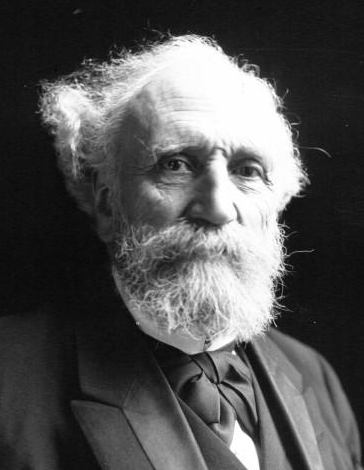
Alexandre-Félix-Joseph Ribot (French: [alɛksɑ̃dʁ ʁibo]; 7 February 1842 – 13 January 1923) was a French politician, four times Prime Minister.

Key Information

Early life and early career

[edit]

Ribot was born on 7 February 1842, in Saint-Omer. After graduating from the University of Paris, where he was lauréat of the faculty of law, he was admitted to the bar. He was secretary of the conference of advocates and one of the founders of the Sociéte de legislation comparée. In 1875 and 1876, he was director of criminal affairs and secretary-general at the ministry of justice.[citation needed]

Representative

[edit]

In 1877, he entered politics, becoming a member of the committee of legal resistance during the Broglie ministry; in 1878, he returned to the chamber as a moderate republican member for Boulogne, in his native département of Pas-de-Calais.[1]

His impassioned yet reasoned eloquence gave him an influence which was increased by his articles in the Parlement in which he opposed violent measures against the unauthorized congregations. He devoted himself especially to financial questions, and in 1882 was reporter of the budget. He became one of the most prominent republican opponents of the Radical party, distinguishing himself by his attacks on the short-lived Gambetta ministry. He refused to vote the credits demanded by the Ferry cabinet for the Tonkin expedition, and helped Georges Clemenceau overthrow the ministry in 1885. At the general election of that year he was a victim of the Republican rout in the Pas-de-Calais, and did not re-enter the chamber until 1887.[1]

Cabinet member

[edit]

After 1889, he sat for Saint-Omer. His fear of the Boulangist movement converted him to the policy of "Republican Concentration," and he entered office in 1890 as foreign minister in the Freycinet cabinet. He was named for his speeches and negotiation skills, such as in 1891, where his diplomacy led to the Franco-Russian Alliance. He retained his post in Émile Loubet's ministry (February–November 1892), and on its defeat he became president of the council (prime minister), retaining the direction of foreign affairs. The government resigned in March 1893 over the refusal of the chamber to accept the Senate's amendments to the budget. On the election of Félix Faure as president of the Republic in January 1895, Ribot was reappointed premier and minister of finance. On 10 June, he made the first official announcement of a definite alliance with Russia. On 30 October, due to mismanagement of the Second Madagascar expedition, the government was defeated, and he, along with all other government officials, resigned.[1]

After the fall of Jules Méline's ministry in 1898, Ribot tried in vain to form a cabinet of "conciliation." Ar the end of 1898, he was elected president of the commission of education, where he advocated for secular education; religious teaching policies from Pierre Waldeck-Rousseau on the religious teaching congregations split the Republican party, and Ribot was among the seceders.

In 1902, Ribot was elected the minister of Foreign Affairs. While in tenue, he canceled the Egypt's debt to France, at the cost of accessing its natural resources.[1] It was likely backed by his personal motivations.[2]

An adversary to the anti-clerical Combes, he helped bring about the fall of his cabinet, on 13 January 1905. Though, he recognized its improvements from the Concordat of 1801, and supported its Associations culturelles.[1]

He was re-elected deputy for Saint-Omer in 1906, and the same year, he became a member of the Académie Française in succession to the duc d'Audiffret-Pasquier. He was already a member of the Academy of Moral and Political Science. In justification of his policy in opposition, he published in 1905 two volumes of his Discours politiques.[1]

On 3 January 1909, Ribot was elected a member of the French Senate, and in February 1910, he was offered the Ministry for Foreign Affairs in the Monis cabinet, which he refused. After the formation of the Poincaré Government on 14 January 1912, Ribot took the place of Léon Bourgeois as president of the committee appointed to deal with the Franco-German treaty, which he went on to help negotiate. In 1913, he was an unsuccessful candidate for the presidency of the Republic, and on the fall of Louis Barthou's Government was invited by Poincaré, who was now President, to form a Cabinet, which he refused. In 1914, he became, with Jean Dupuy, leader of the Left Republican group which refused to accept the decisions of the Radical Socialist congress at Pau in October 1913.[3]

First Premiership

[edit]

On 9 June 1914, Ribot became Prime Minister and Minister of Justice, but ended on 10 June.[3]

World War I

[edit]

On 27 August 1914, during World War I, Ribot became Minister of Finance in Viviani's Ministry of National Defence, an office which he retained when, on 28 October 1915, Aristide Briand succeeded Viviani as Prime Minister.[3]

On 7 February 1916, Ribot visited London and held a conference with the Chancellor of the Exchequer at the Treasury. When Briand reconstituted his Cabinet in December 1916, Ribot retained his position. On the fall of the Briand Ministry, President Poincaré appointed him as Prime Minister. On 21 March, he declared his goals to be "to recover the provinces torn from us in the past, to obtain the reparations and guarantees due to France, and to prepare a durable peace based on respect for the rights and liberty of peoples". On 31 July, in a reply to the German Chancellor Georg Michaelis, he admitted that in 1917 an agreement had been made with Tsar Nicholas to erect the German territories on the left bank of the Rhine into an autonomous state, but denied that there had been any question of their annexation to France.[3]

Following the decision to dismiss Interior Minister Louis Malvy, his government resigned office on 2 September, but he accepted the Ministry of Foreign Affairs in the Painlevé cabinet constituted six days later. He resigned office finally on 16 October, owing to the violent criticism of his refusal to fall into the "trap" of German peace offers.[3]

Death and legacy

[edit]

Ribot left politics, and died in Paris on 13 January 1923, aged 80.[4] The Lycée Alexandre Ribot grammar school is named for him.

Cabinets

[edit]

Ribot's 1st Ministry, 6 December 1892 – 11 January 1893

Changes

  • 13 December 1892 – Pierre Tirard succeeds Rouvier as Minister of Finance.

Ribot's 2nd Ministry, 11 January 1893 – 4 April 1893

Ribot's 3rd Ministry, 26 January 1895 – 1 November 1895

Ribot's 4th Ministry, 9 June 1914 – 13 June 1914

Ribot's 5th Ministry, 20 March 1917 – 12 September 1917

Changes

  • 4 July 1917 – The office of Minister of Maritime Transports is abolished. Maurice Viollette remains Minister of General Supply.
  • 10 August 1917 – Charles Chaumet succeeds Lacaze as Minister of Marine.
  • 1 September 1917 – Théodore Steeg succeeds Malvy as Minister of the Interior

References

[edit]

Further reading

[edit]
[edit]
Revisions and contributorsEdit on WikipediaRead on Wikipedia
from Grokipedia
Alexandre-Félix-Joseph Ribot (7 February 1842 – 13 January 1923) was a French statesman of the Third Republic, serving as Prime Minister four times between 1892 and 1917.[1] A Moderate Republican who began his political career in 1877 after studying law, Ribot specialized in finance and foreign policy, holding ministerial posts that highlighted his expertise in managing economic and diplomatic challenges.[2] His governments, though often short-lived amid France's unstable parliamentary system—including one falling in the wake of the Panama Canal scandal and another overseeing the Madagascar expedition—demonstrated his commitment to republican stability and colonial interests.[1] During World War I, as Minister of Finance from 1914 to 1917 and briefly as Premier in 1917, Ribot played a key role in financing France's war effort and advocating for American intervention, reflecting his pragmatic approach to national defense and international alliances.[2][3] A Protestant who opposed anti-clerical policies targeting religious orders, Ribot embodied moderate conservatism in an era of ideological division.[1]

Early Life

Birth, Family, and Education

Alexandre-Félix-Joseph Ribot was born on 7 February 1842 in Saint-Omer, Pas-de-Calais, France, the son of Alexandre Ribot and Zoé Adélaïde Joseph, née Leducq.[4] His family maintained Orléanist sympathies, reflecting support for the Orléans branch of the Bourbon dynasty amid the political divisions of the July Monarchy's legacy.[5] In 1858, at age 16, Ribot moved to Paris to pursue advanced studies.[6] He enrolled in the Faculty of Law at the University of Paris, where he distinguished himself academically, earning the laureate distinction—a top honor for outstanding performance—in 1863.[7] The following year, in 1864, he received his doctorate in law, completing the rigorous requirements of the institution.[7] Upon graduation, Ribot inscribed himself at the Paris bar, qualifying him to practice as an avocat and marking the transition from student to legal professional.[7] This legal training provided the foundational expertise that later informed his administrative roles before entering politics.[8]

Initial Professional Career

After completing his legal studies at the Faculty of Law in Paris from 1860 to 1863, Ribot earned a licentiate in letters in 1861 and a doctorate in law in 1864.[9][4] That same year, he was admitted to the Paris bar and served as secretary of the Conférence des avocats du barreau de Paris, a prestigious role demonstrating early proficiency in legal advocacy.[9][4] In 1865, Ribot transitioned into the magistracy as a substitut du procureur (deputy prosecutor) at the tribunal of Douai, advancing to the same position in Paris by 1867.[9] By 1868, he was appointed juge (judge) at the Tribunal civil de la Seine, handling civil cases in the capital's primary court.[9] These roles established his reputation in judicial administration, focusing on criminal and civil matters amid the Second Empire's legal framework. Ribot remained in the judiciary until 1877, when he resigned to pursue elective office as a moderate republican deputy from Pas-de-Calais, marking the end of his pre-political legal practice.[8][9] His early career emphasized rigorous legal training and public service in prosecution and adjudication, without notable involvement in private advocacy beyond his initial bar admission.[10]

Entry into Politics

Election to the Chamber of Deputies

Alexandre Ribot entered the French Chamber of Deputies on April 7, 1878, winning a by-election in the 2nd circonscription of Boulogne-sur-Mer, Pas-de-Calais, following the invalidation of the seat held by incumbent deputy M. Dussaussoy.[11] [12] This partial legislative election occurred amid the consolidation of the Third Republic, where moderate republicans like Ribot sought to counterbalance both radical elements and lingering monarchist influences from the prior national elections of 1877.[11] Running on a platform emphasizing moderate republicanism combined with conservative fiscal and judicial principles—reflecting his background as a jurist and former director of criminal affairs at the Ministry of Justice—Ribot garnered 7,532 votes from 14,031 participating voters out of 18,676 registered in the circonscription.[11] His profession of faith highlighted opposition to excessive centralization and support for legal stability, positioning him against more opportunistic candidates in a district with strong local commercial interests tied to fishing and trade. While specific opponents are not detailed in parliamentary records, Ribot's victory margin indicated broad appeal among bourgeois and professional voters wary of radicalism.[11] [13] Ribot's election marked his transition from administrative roles to parliamentary influence, aligning him with the centre-left bloc in the Chamber during the IXe législature (1877–1881). He quickly distinguished himself by opposing amnesty for Communards and contributing to budget debates, establishing a reputation for rigorous, evidence-based argumentation rooted in his legal expertise.[11] He retained the seat in subsequent general elections of 1879 and 1881, serving continuously until losing in 1885 amid broader conservative setbacks, before regaining parliamentary office later.[5]

Early Parliamentary Roles and Positions

Ribot was first elected to the Chamber of Deputies on 7 April 1878, representing the second constituency of Boulogne-sur-Mer in Pas-de-Calais, securing 7,532 votes out of 14,031 voters.[11] As a member of the Centre Gauche parliamentary group, he aligned with moderate republicans and quickly oriented his legislative activity toward financial and administrative matters.[11] In his initial years, Ribot distinguished himself through service on key committees, particularly those addressing budgetary issues. He served as a member of the Budget Commission for several years and acted as rapporteur for the 1883 budget, presenting detailed analyses that highlighted his expertise in fiscal policy.[11] [4] By 1882, he had reported on the finance minister's budget proposal, establishing a pattern of involvement that continued as rapporteur for budget commissions annually from 1881 to 1888.[14] Additionally, he served as rapporteur for the law governing municipal mayors' appointments, contributing to debates on local governance structures.[11] Ribot's parliamentary interventions reflected his moderate stance, often opposing radical measures. In 1878, he spoke against an amnesty bill for Communards; in 1879, he critiqued proposals for greater freedom in higher education; and on 26 January 1880, he opposed legislation granting absolute rights to public meetings.[11] He engaged actively in discussions on press freedoms, labor unions in 1881, divorce reforms, and the reorganization of the judiciary in 1883, while later in 1885 voicing reservations on funding for the Tonkin expedition and broader colonial policies.[11] Alongside Louis-Marie-Antoine-Jules Dufaure, he co-founded the journal Le Parlement, which advocated for centrist republican positions.[11] Re-elected in subsequent ballots, including 21 August 1881 for Boulogne-sur-Mer and under the scrutin de liste system in 1885 and 1889 for Pas-de-Calais, Ribot maintained his seat until 1909, using these early terms to build influence through specialized financial scrutiny rather than broad oratory.[11]

Pre-War Governmental Service

Ministerial Appointments

Alexandre Ribot's initial entry into the French government occurred on March 17, 1890, when he was appointed Minister of Foreign Affairs in the fourth cabinet of Charles de Freycinet.[15] He continued in this role through the subsequent government of Émile Loubet, formed on February 27, 1892, retaining the foreign affairs portfolio until December 6, 1892, when he assumed the premiership while also overseeing the ministry.[15] This extended tenure, spanning over three years, positioned Ribot as a key architect of early diplomatic overtures toward Russia, laying groundwork for the 1892 military convention that formalized the Franco-Russian Alliance.[5] Ribot briefly returned to ministerial office in June 1914 as Minister of Justice, concurrently serving as President of the Council from June 9 to June 13 in a short-lived cabinet amid escalating European tensions.[15] This interim government collapsed rapidly due to parliamentary opposition, particularly from Radical Socialists, over its perceived conservatism on domestic reforms.[14] No further pre-war ministerial roles are recorded beyond these appointments, reflecting Ribot's selective engagement in executive positions prior to the premierships of 1892 and 1895.

Premierships of 1892 and 1895

Ribot formed his first cabinet on December 6, 1892, succeeding Émile Loubet's government amid the fallout from the Panama Canal corruption scandal, which had eroded public trust in financial oversight.[2] As President of the Council and Minister of Foreign Affairs, Ribot prioritized stabilizing the administration through moderate republican policies, focusing on budgetary discipline given his expertise in finance.[16] The short-lived term, lasting until early April 1893, encountered resistance in the Chamber of Deputies over fiscal matters, culminating in defeat on March 30, 1893, when the chamber rejected Senate amendments to the budget, particularly provisions related to liquor taxes.[17] Ribot's second premiership began on January 26, 1895, following the election of Félix Faure as president, with Ribot retaining the dual role of President of the Council and Minister of Finance to address ongoing economic pressures.[2] A pivotal foreign policy achievement occurred on June 10, 1895, when Ribot publicly confirmed the Franco-Russian military alliance, formalized in secret agreements since 1892, as a counterweight to the Triple Alliance and a step toward European balance amid rising German influence.[18] Domestically, his government authorized the Second Madagascar Expedition in mid-1895, deploying approximately 15,000 troops to enforce a protectorate over the Merina Kingdom, driven by colonial lobbies despite the high anticipated costs in lives and resources.[19] The expedition's execution exposed logistical failures and excessive expenditures, straining public finances and fueling parliamentary opposition.[2] By late October 1895, criticism mounted over the operation's mismanagement, including disease-related casualties exceeding combat losses, leading to a chamber vote of no confidence.[19] Ribot tendered his resignation on October 30, 1895, with the cabinet dissolving by November 1, marking the end of his term amid demands for accountability on colonial overreach and fiscal transparency.[20]

Political Positions and Controversies

Stance on Boulangism and Radicalism

Alexandre Ribot, a moderate republican, actively opposed the Boulangist movement during its peak in the late 1880s, viewing it as a dangerous populist challenge to the Third Republic's institutions. General Georges Boulanger's campaign, which garnered widespread support through nationalist rhetoric and promises of revenge against Germany following the Franco-Prussian War, threatened parliamentary stability by advocating constitutional revision and appealing to both monarchists and discontented republicans. Ribot's resistance to this movement, including his leadership of centrist republicans in the Chamber of Deputies, helped solidify his reputation as a defender of moderate republican governance.[21] [22] In 1889, Ribot contributed to the formation of anti-Boulangist coalitions, aligning with other Opportunist republicans to counter the general's electoral advances, such as his strong showing in Paris and other districts. This opposition extended to rejecting any alliances with Boulangists, as evidenced by his later declarations in government against such partnerships. By emphasizing pragmatic reform over Boulanger's demagoguery, Ribot helped mitigate the crisis, paving the way for the republic's consolidation after Boulanger's exile and suicide in 1891.[23] [24] Ribot maintained a critical distance from Radicalism, the more left-leaning faction within republicanism that prioritized aggressive anticlericalism, educational secularization, and social reforms often allied with socialists. As a proponent of the moderate Opportunist tradition under figures like Léon Gambetta, he attacked radical-led ministries for their ideological excesses and contributed to their downfall, such as aiding in the overthrow of Gambetta's short-lived administration in 1881–1882. This stance reflected his preference for centrist stability over the Radicals' push for transformative policies, leading him to oppose their parliamentary coalitions, including during the Dreyfus Affair era when radicals and socialists united in 1899. Ribot's governments, in turn, faced sharp rebukes from Radical Socialists, underscoring the ideological rift. [25]

Involvement in the Dreyfus Affair

Alexandre Ribot formed his first cabinet on January 26, 1895, shortly after Alfred Dreyfus's public degradation on January 5 and amid the ongoing implementation of his conviction for treason by the military court in December 1894.[26][27] As prime minister until June 3, 1895, Ribot's government oversaw the logistics of Dreyfus's deportation to the penal colony on Devil's Island, which commenced on February 22, 1895, without initiating any official review of the verdict despite emerging questions about the evidence.[26] His administration appointed Émile Zurlinden as minister of war, who later, in 1898, briefly served as military governor of Paris and endorsed the army's handling of the case before being dismissed amid growing scandal. Notably, Ribot included Ludovic Trarieux as justice minister, who privately harbored doubts about Dreyfus's guilt and would later co-found the Ligue des droits de l'homme in 1898 to advocate for revision, though no such action was taken under the Ribot government.[28] Ribot, a moderate republican prioritizing institutional stability and military authority, aligned with those skeptical of reopening the case, viewing challenges to the verdict as threats to national unity and army cohesion in the face of German rivalry.[25] This position reflected broader conservative reservations, where empirical loyalty to the judicial process outweighed preliminary evidentiary inconsistencies, such as handwriting disputes over the bordereau document. During the escalating public debate from 1897 onward, Ribot did not publicly champion Dreyfus's innocence, distinguishing himself from radical intellectuals and aligning instead with parliamentary figures wary of politicizing military judgments. By 1899, as the scandal intensified with Émile Zola's "J'accuse" and revelations implicating Major Ferdinand Walsin Esterhazy, Ribot entered opposition against the Waldeck-Rousseau cabinet, a coalition of radicals and socialists formed on June 22, 1899, explicitly to defend republican principles and facilitate Dreyfus's retrial.[27][25] He criticized this government's aggressive pursuit of revision, which culminated in the Rennes military court's rehearing in 1899 and Dreyfus's partial exoneration, as an overreach that empowered leftist factions and undermined moderate republican governance.[25] This stance contributed to Ribot's withdrawal from executive power during the subsequent "radical republic," lasting until after the affair's legal resolution in 1906, prioritizing causal preservation of elite consensus over concessions to populist or ideological pressures.[25]

World War I Contributions

Finance Ministry and War Economy Management

Alexandre Ribot was appointed Minister of Finance on August 26, 1914, in René Viviani's cabinet, a position he held continuously until March 20, 1917, through subsequent governments under Aristide Briand.[29] At age 72 upon taking office, Ribot prioritized financing the war effort without immediate heavy taxation, anticipating a short conflict, and relied instead on domestic bond issues and foreign loans.[2] [25] Ribot's strategy centered on short-term National Defense Bonds (bons de la défense nationale), nicknamed "ribotins," issued starting September 13, 1914, at 4% interest, which became the primary instrument for public borrowing.[30] A February 10, 1915, law increased the Treasury bond authorization limit to 3.5 billion francs, enabling rapid mobilization of funds.[29] France conducted four major long-term war loans between 1915 and 1918, with Ribot launching the first 5% tax-exempt, non-redeemable National Defense Loan on September 15, 1916, which remained outstanding until 1931.[31] Overall, approximately three-quarters of wartime expenditures were financed through debt rather than taxation or monetary creation.[32] As the war prolonged, Ribot introduced fiscal measures to supplement borrowing, including an extraordinary war profits tax effective July 1, 1916, targeting excess gains from wartime activities.[29] He oversaw the initial collection of the newly established general income tax in 1916, distributing declaration forms to broaden the tax base.[29] Ribot also negotiated international credits, particularly from Britain and later the United States, to support France's financial needs without depleting reserves.[33] In managing the broader war economy, Ribot implemented controls such as prohibiting gold and machine tool exports in July 1915 to preserve resources.[29] On July 30, 1916, he established a regulated economic regime for alcohol production and distribution.[29] Additional policies included sequestering enemy properties, providing state guarantees for maritime war risk insurance, compensating war damages, and enacting partial price controls on foodstuffs.[29] A March 13, 1917, law facilitated credit access for small and medium enterprises via popular banks, aiding industrial adaptation to wartime demands.[29] These measures sustained France's economic output amid mobilization, though the heavy debt reliance deferred inflationary pressures to the postwar period.[34]

1917 Premiership and Foreign Policy

Ribot assumed the premiership on March 20, 1917, following the collapse of Aristide Briand's cabinet on March 17 amid the fallout from the failed Nivelle offensive and ensuing army mutinies.[2] As president of the Council and Minister of Foreign Affairs, he formed a coalition government emphasizing stability and war continuation, retaining key figures like Paul Painlevé as Minister of War.[35] His administration prioritized restoring military discipline; on May 15, 1917, Ribot oversaw the dismissal of General Robert Nivelle as commander-in-chief and appointed General Philippe Pétain to replace him, a decision credited with quelling mutinies through improved troop welfare and defensive strategies rather than futile offensives.[35][2] In foreign policy, Ribot focused on bolstering Allied unity amid Russia's February Revolution and the entry of the United States into the war. On April 5, 1917, he addressed the Chamber of Deputies, hailing American intervention as a pivotal reinforcement of democratic solidarity and a guarantee of eventual victory, emphasizing shared historical bonds over mere military aid.[36] He coordinated with British and Italian counterparts at interparliamentary gatherings, such as the May 1917 Paris conference, where he assured delegates of an approaching climax to the conflict while paying tribute to U.S. resolve.[37] Ribot navigated deteriorating ties with post-Tsarist Russia, advocating continued support for the Provisional Government under Alexander Kerensky despite revolutionary instability, including secret diplomatic overtures to align war aims.[38] Ribot's tenure ended on September 7, 1917, when his government fell after the Chamber of Deputies rejected funding for Russian military credits, reflecting parliamentary frustration with Bolshevik threats to the Eastern Front alliance.[2] This episode underscored Ribot's commitment to unconditional Allied coordination, prioritizing empirical alliance maintenance over concessions to internal French dissent or Russian upheaval, though critics later argued it underestimated revolutionary dynamics.[35] His brief leadership stabilized France's war effort temporarily, bridging to Painlevé's successor cabinet while advancing diplomatic efforts toward a unified front.[39]

Later Career

Senate Service

Alexandre Ribot was elected to the French Senate on 3 January 1909 as representative for the Pas-de-Calais department, receiving 1,515 votes out of 1,924 cast.[40] His initial term aligned with a period of opposition activity prior to World War I, during which he contributed to parliamentary oversight on foreign and financial matters, drawing on his prior ministerial experience.[40] After resuming Senate duties following his 1917 premiership, Ribot was re-elected on 11 January 1920 for Pas-de-Calais.[40] In this postwar phase, despite advancing age, he maintained active involvement, particularly as vice-president of the Senate's Foreign Affairs Commission, where he influenced deliberations on international reconstruction and treaty implementation amid France's recovery efforts.[14][40] Ribot's Senate service concluded with his death on 13 January 1923, marking the end of a parliamentary career spanning over four decades.[40] Throughout, his contributions emphasized fiscal prudence and diplomatic realism, consistent with his earlier stances against expansive colonial spending and radical domestic reforms.[40]

Intellectual and Academic Recognition

Ribot obtained his licence ès lettres in 1861 and doctorate in law from the Faculty of Law of Paris in 1864, establishing his foundational academic credentials in jurisprudence.[9] His 1863 thesis for the licence en droit, published in Paris, examined Roman law principles, including the Senatus consultum Trebellianum and the doctrine of substitutions, reflecting early scholarly engagement with historical legal systems.[41] In 1869, Ribot co-founded the Société de législation comparée alongside Paul Jozon under the patronage of Édouard Laboulaye, an organization dedicated to advancing comparative legal analysis and influencing legislative reforms during the early Third Republic.[42] This initiative highlighted his intellectual role in bridging legal theory and practical policy-making. Ribot's contributions to political and moral sciences earned him election to the Académie des sciences morales et politiques in 1903, affirming his expertise as a jurist and statesman.[43] [40] Three years later, on 25 January 1906, he was elected to the Académie française by 25 votes to 5 over competitor Dorchain, succeeding the duc d'Audiffret-Pasquier and taking his seat in the assembly of Immortels.[8] These honors recognized not only his legal scholarship but also his broader intellectual influence on French governance and international relations law.[41]

Death and Legacy

Final Years and Death

Following his resignation as Prime Minister in September 1917 amid the fall of the Painlevé cabinet, Ribot, then aged 75, retired to private life and ceased active involvement in French politics.[25] He retained his Senate seat, to which he had been elected in 1909, but took no further role in legislative or governmental matters during the remaining years of his life.[25] In retirement, Ribot focused on personal reflection, producing writings that included diaries covering the war period up to 1922 and culminating in the posthumous release of his memoirs, Lettres à un ami: Souvenirs de ma vie politique, edited and published in 1924. Ribot died in Paris on 13 January 1923 at the age of 80.[25]

Achievements, Criticisms, and Historical Evaluation

Ribot's primary achievements centered on financial stewardship during World War I, where as Minister of Finance from August 1914 to March 1917, he orchestrated the issuance of bons de la Défense nationale, enabling the French government to raise substantial funds through public loans that totaled over 20 billion francs by war's end, sustaining military expenditures without immediate collapse of the franc.[5] He facilitated inter-Allied financial coordination, including credits from Britain and arrangements with American bankers like J.P. Morgan & Co. for procurement and loans exceeding $1.5 billion in equivalent value, which bolstered France's access to munitions and supplies amid domestic production shortfalls.[44] Earlier, Ribot's 1908 legislation established agricultural credit societies, providing low-interest loans to farmers and stabilizing rural economies in Pas-de-Calais and beyond.[6] Criticisms of Ribot often focused on his pre-war fiscal conservatism, including resistance to an income tax, which he deferred during the conflict citing wartime exigencies, potentially exacerbating post-war debt burdens that reached 250% of GDP by 1919.[45] Contemporaries faulted him for underestimating the war's length and costs, leading to initial budgeting errors that strained reserves in 1914-1915.[46] In Allied relations, his insistence on French autonomy in spending British advances created frictions, as noted in assessments of munitions procurement delays and uncoordinated fiscal policies with Britain.[47] Historical evaluations portray Ribot as a quintessential moderate republican of the Third Republic, embodying pragmatic liberalism against radical excesses, though often overshadowed by more charismatic figures like Clemenceau.[48] His war finance record is credited with averting fiscal crisis through bond drives and Allied leverage, yet critiqued for lacking bold reforms like taxation overhaul, contributing to France's interwar instability.[49] Recent scholarship reevaluates him as a defender of constitutional order and economic realism, whose tenure exemplified the elite's adaptive governance amid crisis, despite leaving no transformative doctrinal legacy.[50]

References

User Avatar
No comments yet.