Hubbry Logo
AllomoneAllomoneMain
Open search
Allomone
Community hub
Allomone
logo
8 pages, 0 posts
0 subscribers
Be the first to start a discussion here.
Allomone
Allomone
from Wikipedia

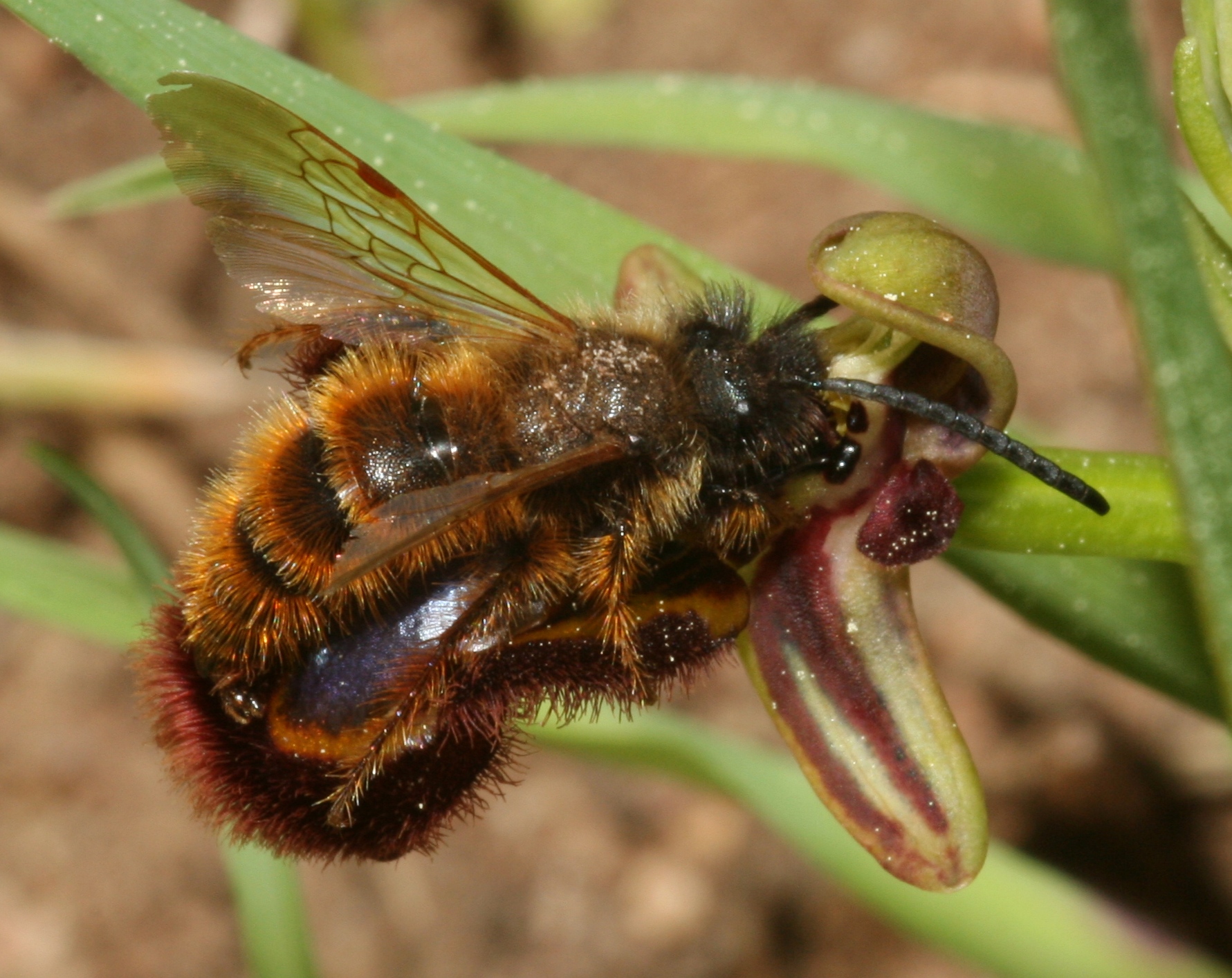
Dasyscolia ciliata on the flowers of Ophrys speculum

An allomone (from Ancient Greek ἄλλος allos "other" and pheromone) is a type of semiochemical produced and released by an individual of one species that affects the behaviour of a member of another species to the benefit of the originator but not the receiver.[1] Production of allomones is a common form of defense against predators, particularly by plant species against insect herbivores. In addition to defense, allomones are also used by organisms to obtain their prey or to hinder any surrounding competitors.[2]

Many insects have developed ways to defend against these plant defenses (in an evolutionary arms race). One method of adapting to allomones is to develop a positive reaction to them; the allomone then becomes a kairomone. Others alter the allomones to form pheromones or other hormones, and yet others adopt them into their own defensive strategies, for example by regurgitating them when attacked by an insectivorous insect.

A third class of allelochemical (chemical used in interspecific communication), synomones, benefit both the sender and receiver.[1]

"Allomone was proposed by Brown and Eisner (Brown, 1968) to denote those substances which convey an advantage upon the emitter. Because Brown and Eisner did not specify whether or not the receiver would benefit, the original definition of allomone includes both substances that benefit the receiver and the emitter, and substances that only benefit the emitter. An example of the first relationship would be a mutualistic relationship, and the latter would be a repellent secretion."[3]

Examples

[edit]

Disrupt growth and development and reduce longevity of adults e.g. toxins or digestibility reducing factors.

Disrupt normal host selection behaviour e.g. Repellents, suppressants, locomotory excitants.

Plants producing allomones

[edit]

Insects producing allomones

[edit]
  • The larvae of the berothid lacewing Lomamyia latipennis feed on termites which they subdue with an aggressive allomone. The first instar approaches a termite and waves the tip of its abdomen near the termite's head. The termite becomes immobile after 1 to 3 minutes, and completely paralysed very soon after this, although it may live for up to 3 hours. The berothid then feeds on the paralysed prey. The third instar feeds in a similar manner and may kill up to six termites at a time. Contact between the termite and the berothid is not necessary for subduing, and other insects present are not affected by the allomone.[4]
  • Bark beetles communicate via pheromones to announce a new food resource (i.e. dead trees, roots, living trees, etc.) ultimately resulting in the accumulation of a large concentration of bark beetles. Select species of bark beetles have the capability to emit pheromones that can negatively affect the behavioral response of another competing species of bark beetles when both species are attempting to inhabit the loblolly pine tree.[5] A certain molecular compound within the released pheromone of one species can interfere with a competing species' ability to respond its own species' pheromone in the environment. This interaction aides the emitter by decreasing its local bark beetle competition. A competitive interaction occurring between two species of bark beetles is seen when the pheromones of G. sulcates interferes with the behavioral feedback of G. retusus. The impact of interactions between competing species fighting for food and space within an environment is seen when observing the California I. pini. The I. pinihave two receptors in which one is used to receive the pheromone of their own species and the other receptor receives the pheromone of their competing species. The presence of these two receptors makes sure that pheromones from their own species, I. pini, are not being interrupted by their competing species, I. paraconfusus.
  • Arthropods that travel alone, like beetles and cockroaches, have evolved to emit pheromones when in the presence of ants in which the emitted pheromone is identical to the ant's alarm pheromone.[6] The alarm pheromone of the worker ants causes the ants to stop what they are doing and to return to their nest till the alarm pheromone ceases in their environment. This release of an ant alarm pheromone by an arthropod causes the ants to go into alarm and allows the arthropod to escape its predators before the ants are able to recruit more workers.

See also

[edit]

References

[edit]
Revisions and contributorsEdit on WikipediaRead on Wikipedia
from Grokipedia
An allomone is a semiochemical produced and released by an of one that influences the or of an organism from a different , conferring an adaptive advantage to the producer. The term "allomone" was introduced in 1970 by entomologist Thomas Eisner, biologist W. L. Jr., and ecologist H. Whittaker in their seminal paper on transspecific chemical messengers, distinguishing it from intraspecific pheromones and other allelochemicals like kairomones, which benefit the receiver instead. This classification falls within the broader field of chemical ecology, where allomones mediate interspecific interactions such as defense, deterrence, and resource competition. Allomones are diverse in function and origin, occurring across taxa including animals, , and microorganisms, and often serve defensive roles by repelling predators or . In animals, prominent examples include the pungent thiols in spray (Mephitis spp.), which overwhelm and deter potential predators through and aversion, providing a clear benefit to the emitter. Similarly, green lacewings ( spp.) produce skatole-rich glandular secretions as a repellent allomone against predators. In , secondary metabolites like and cyanogenic glycosides act as allomones by inhibiting feeding and digestion, thus protecting the producer from damage. Microbial allomones, such as antibiotics produced by bacteria like , suppress competing organisms to secure resources. These examples underscore allomones' evolutionary significance in shaping ecological relationships and inspiring applications in pest management and biomimicry.

Fundamentals

Definition and Characteristics

An allomone is a produced or acquired by an of one that, when it contacts an individual of another in the natural context, evokes in the receiver a behavioral or physiological reaction adaptively favorable to the emitter. This definition underscores the interspecific nature of allomones, as they function as semiochemicals bridging interactions between distinct , rather than within a single . Key characteristics of allomones include their adaptive value to the emitter, often enhancing survival or through elicited responses such as repulsion, attraction, or in the receiver. These substances can be volatile, facilitating detection over distances via airborne dispersal, or non-volatile, requiring physical contact for effect. Unlike pheromones, which are intraspecific signals that mediate communication and confer benefits within the same species, allomones are explicitly interspecific with the primary advantage to the producer. In chemical ecology, allomones represent an evolutionary adaptation shaped by , enabling organisms to influence interspecific dynamics such as predator-prey encounters or plant-herbivore interactions for the emitter's benefit. They form part of a broader category of semiochemicals, differing from kairomones (which benefit the receiver) and synomones (which benefit both emitter and receiver).

Classification and Types

Allomones are primarily classified by their functional roles rather than , owing to the vast diversity of compounds involved spanning terpenoids, alkaloids, and other secondary metabolites. The main categories include defensive allomones, which deter predators, herbivores, or pathogens; offensive or predatory allomones, which facilitate prey capture or subjugation; and competitive allomones, which suppress growth or reproduction in rival species to reduce competition for resources. This functional framework highlights how allomones mediate interspecific interactions to the emitter's advantage, as outlined in seminal reviews on chemical . In contrast to other semiochemicals, allomones are allelochemicals that exclusively benefit the emitting organism, often to the detriment of the receiver. Kairomones, by , provide an adaptive advantage to the receiver, such as prey odors that guide predators or parasites to their hosts. Synomones mutually benefit both emitter and receiver, exemplified by floral volatiles that attract pollinators while ensuring . These distinctions underscore the evolutionary pressures shaping chemical signaling across species boundaries, with allomones emphasizing unilateral gain for the producer. Allomones can also be typed by their immediate effect on the receiver: repellent types, like cyanogenic glycosides or secretions that ward off herbivores and predators; attractant types, such as paralytic venoms or lures deployed by predators to ensnare prey; and deceptive or neutral types, including chemical mimics that exploit receiver behaviors for the emitter's gain, as in scenarios. These effect-based subtypes often overlap with functional categories but emphasize behavioral outcomes. Classification is not always rigid, as some allomones exhibit context-dependent roles; for example, a volatile may act as an allomone by repelling attacking herbivores, while serving as a synomone by attracting their natural predators, thereby benefiting the through reduced damage. The same chemical can thus function differently depending on the receiver . Such multifunctionality arises from the chemical's interaction with diverse receivers in varying ecological settings.

Historical Development

Origin of the Term

The term "allomone" is derived from the Greek word allos, meaning "other," combined with the suffix "-mone" from "pheromone," signifying a chemical messenger or signal involved in interactions between different species involved in interspecific communication. It was coined by entomologist William L. Brown Jr., biologist Thomas Eisner, and ecologist Robert H. Whittaker in their seminal 1970 article published in BioScience, where they defined allomones as substances that evoke responses in recipient organisms of another species that benefit the emitter. This introduction addressed a terminological void in the study of allelochemicals—interspecific chemical signals—building directly on the concept of pheromones, which had been proposed a decade earlier by Peter Karlson and Martin Lüscher for intraspecific messengers excreted to influence the same species. The proposal distinguished allomones from kairomones, the latter benefiting the receiver regardless of the emitter's interests, with both terms introduced concurrently to classify transspecific chemical messengers in the nascent field of chemical ecology. Early adoption was rapid, as the framework facilitated precise descriptions in research on defensive chemicals in and shortly thereafter.

Key Milestones in Research

In the , research on allomones expanded beyond initial definitions, with Nordlund and Lewis refining the terminology for chemical stimuli in interspecific interactions, particularly in , and linking allomones to strategies in . This work emphasized how allomones benefit the emitter in contexts like parasitoid attraction, laying groundwork for applied ecological studies. During the and , significant progress occurred in identifying plant-derived allomones, such as volatile terpenoids released in response to herbivory, which attract to damaged plants. For instance, studies on tomato plants demonstrated that herbivore-induced volatiles, including terpenoids, elicit behavioral responses from like those targeting and caterpillars. Concurrently, Thomas Eisner's research illuminated insect defensive secretions as allomones, detailing chemical compositions and deterrent effects against predators in species like bombardier beetles and hemipterans. From the onward, genomic and metabolomic approaches advanced the understanding of allomone by identifying key genes, such as synthase genes responsible for volatile production in . These tools revealed regulatory pathways, enabling insights into how environmental cues trigger allomone synthesis across taxa. In ecological applications, research highlighted climate change impacts on allomone efficacy, showing altered volatile profiles—such as reduced emission of isoprenoids under elevated CO2 and levels—that disrupt predator attraction and dynamics. Recent milestones up to 2025 include the integration of to engineer allomones for agricultural use, such as modifying to overproduce specific volatiles for enhanced pest resistance via CRISPR-targeted pathways. Additionally, 2020s studies on microbial allomones have explored bacterial signals in symbiosis, identifying volatile organic compounds from that prime plant defenses against pathogens. These findings address historical gaps by shifting focus from insect-centric to broader taxa, including marine organisms where allomones like hydroxy lactones in serve defensive roles against herbivores.

Chemical Properties

Biosynthesis and Composition

Allomones are biosynthesized primarily as secondary metabolites derived from precursors in primary metabolism, such as , fatty acids, and isoprenoid units, through specialized enzymatic pathways that vary by and compound class. In , these pathways include the mevalonate (MVA) route in the for sesquiterpenes and the methylerythritol phosphate (MEP) pathway in plastids for monoterpenes and diterpenes, where isopentenyl diphosphate (IPP) and dimethylallyl diphosphate (DMAPP) serve as universal precursors condensed by prenyltransferases into geranyl diphosphate (GPP) or farnesyl diphosphate (FPP). The , branching from phosphoenolpyruvate and erythrose-4-phosphate, leads to aromatic compounds like phenolics, while the () pathway processes into green leaf volatiles (GLVs) such as (Z)-3-hexenal via hydroperoxide lyases. Alkaloids often arise from decarboxylation or , and toxins like cyanogenic glycosides are formed from aliphatic or aromatic (e.g., , ) through P450-mediated hydroxynitrile formation followed by glucosylation. The chemical composition of allomones exhibits remarkable diversity, encompassing volatile terpenoids like monoterpenes (e.g., (E)-β-ocimene, produced by terpene synthases acting on GPP) and sesquiterpenes (e.g., β-caryophyllene), as well as GLVs for rapid signaling. Non-volatile classes include alkaloids (e.g., pyrrolizidine derivatives) and phenolics synthesized via shikimate-derived phenylpropanoids, while toxins such as cyanogenic glycosides (e.g., dhurrin from ) feature a aglycone linked to a moiety, enabling HCN release upon . This structural variety allows allomones to target specific receptors or enzymes in interacting organisms, with volatiles often featuring unsaturated hydrocarbon chains for aerial dispersal and non-volatiles providing contact-based deterrence. In plants, biosynthesis occurs in specialized tissues like glandular trichomes or wounded cells, regulated by stress signals such as herbivore attack, which activate jasmonic acid (JA) signaling to upregulate LOX genes and terpene synthase expression, enhancing volatile emission within hours. In animals, particularly insects, allomones are produced via glandular secretions in structures like mandibular or defensive glands, often relying on the MVA pathway for terpenoids (e.g., IDS-type synthases yielding (E)-β-caryophyllene in ladybirds) or de novo alkaloid synthesis from amino acids, though sequestration of dietary plant compounds—such as iridoid monoterpenes or cyanogenic glycosides—is prevalent in species like burnet moths. This dietary acquisition modifies plant-derived precursors through host enzymes, enabling storage in hemolymph or glands without full endogenous synthesis. Regulation in insects involves neural or hormonal cues, contrasting plant JA pathways but similarly triggered by threats.

Modes of Release and Detection

Allomones are disseminated through diverse release mechanisms adapted to ensure effective transmission to recipient organisms. Passive volatilization represents a common mode, wherein volatile compounds evaporate directly from external surfaces, such as glandular openings or epidermal layers, allowing gradual into the surrounding medium. Active release involves directed expulsion, often via specialized exocrine glands that propel secretions through spraying or ejection, enabling rapid deployment over short distances. Contact-based transfer occurs when non-volatile allomones are applied directly onto surfaces or transferred during physical interactions, such as through cutaneous or salivary secretions. These processes are frequently triggered by external stimuli, including mechanical damage or proximity to potential interactors, optimizing emission timing for maximal impact. Detection of allomones relies on specialized chemosensory apparatuses that transduce chemical signals into neural responses. In the , allomone molecules interact with receptor proteins on sensory neurons, such as G-protein-coupled receptors in vertebrates or ionotropic glutamate-like receptors in , initiating cascades. These receptors are typically embedded in sensory structures like sensilla or epithelia, where accessory proteins—such as odorant-binding proteins—facilitate the transport of hydrophobic compounds through aqueous environments to binding sites. Response thresholds vary, with highly sensitive systems capable of detecting concentrations as low as picograms per liter, determined by receptor affinity and downstream amplification mechanisms. In vertebrates, the often supplements main olfactory detection for non-volatile cues, processing signals via distinct neural pathways to the . Environmental conditions profoundly shape the propagation and efficacy of allomone signals. Dispersion occurs primarily via airborne for volatile forms, facilitating long-range communication, or through dissolution in for aquatic settings, while soil-bound or contact allomones rely on direct migration. Degradation, mediated by photolysis, , or enzymatic breakdown, limits ; short-lived volatiles dissipate quickly due to dilution and oxidation, whereas compounds persist longer, influencing interaction scales from meters to ecosystems. Factors such as , , airflow, and medium pH modulate volatility, , and concentration gradients, thereby affecting detectability and response reliability. Evolutionary pressures have driven reciprocal adaptations in allomone release and detection, fostering specificity and efficiency in interspecific interactions. Emitters have refined release strategies to match environmental dispersal dynamics, while receivers have evolved receptor tuning for selective binding, minimizing with irrelevant signals. This co-evolution enhances adaptive outcomes, as seen in the alignment of emission profiles with sensory sensitivities, promoting ecological balance through refined chemical signaling networks. The volatility and inherent to allomone compositions further enable their integration into these sensory processes.

Biological Functions

Defensive Roles

Allomones serve as key chemical mediators in defensive strategies, primarily benefiting the emitter by deterring predators, herbivores, or other threats through repulsion and deterrence. These compounds encompass a range of mechanisms, including direct via irritants that induce or physiological harm, distastefulness through bitter or unpalatable substances that discourage consumption, and signaling that recruits conspecifics or natural enemies to counter attacks. In arthropods, for instance, volatile secretions often function as allomones to repel aggressors by interfering with their sensory orientation or eliciting avoidance behaviors. The benefits to the emitter are multifaceted, encompassing immediate reductions in predation risk and long-term enhancements in survival and reproductive fitness. Direct defenses minimize physical damage by causing predators to abort attacks, while indirect defenses—such as the emission of herbivore-induced volatiles (HIPVs) that attract parasitoids or predators of —leverage tritrophic interactions to eliminate threats without direct confrontation. These strategies have been shown to improve fitness in field conditions, as demonstrated by increased recruitment of natural enemies leading to lower herbivore populations. Physiological effects of defensive allomones vary, including neurotoxic disruption of neural signaling, cytotoxic tissue damage, or repellent actions that trigger escape responses in receivers; many exhibit dosage-dependent outcomes, where sublethal concentrations may signal danger and higher doses inflict lethal harm. From an evolutionary perspective, the deployment of defensive allomones involves significant trade-offs, as the metabolic and energetic costs of and release must be offset by gains. Constitutive or inducible production of these compounds can divert resources from growth or , potentially reducing overall fitness in low-threat environments, while ecological risks include unintended attraction of secondary predators or herbivores. Furthermore, prolonged exposure may drive resistance development in target organisms, necessitating ongoing coevolutionary arms races between emitters and receivers to maintain .

Predatory and Competitive Roles

In predatory contexts, allomones enable organisms to actively attract or incapacitate prey, enhancing foraging efficiency. Predators often release chemicals that mimic attractive signals to lure victims, such as food odors or sex pheromones, exploiting the receiver's sensory responses to draw them into range. For instance, certain assassin bugs, such as Pahabengkakia piliceps, collect and process resin from stingless bee nests to enhance the emission of volatile compounds, luring guard bees into striking range and increasing capture rates. Similarly, bolas spiders emit synthetic moth pheromones from a specialized gland, swinging a sticky "bolas" to ensnare approaching males, thereby boosting predatory success in low-prey-density environments. These luring mechanisms rely on sensory deception, where the allomone triggers involuntary approach behaviors in prey, often without immediate detection of danger. Allomones also facilitate immobilization during predation through paralytic or neurotoxic agents in venoms, which rapidly subdue captured prey to prevent escape or . Venoms from cnidarians and arthropods, for example, contain pore-forming s and neurotoxins that disrupt nerve function, leading to and facilitation. This offensive deployment benefits the predator by minimizing energy expenditure in handling resistant prey and ensuring a reliable source, as seen in sea anemones injecting cocktails to immobilize . In competitive roles, allomones inhibit rivals of different species, securing resources like space, nutrients, or mates. In plants, exemplifies this through root or foliar exudates that suppress neighboring growth, such as phenolic acids and terpenoids from that reduce seedling height by up to 54% under combined stress. These chemicals interfere with , , and root development, promoting the emitter's dominance in nutrient-limited soils. In animals, competitive allomones manifest as secretions that induce avoidance behaviors in heterospecific intruders, akin to territorial deterrence but targeting interspecific rivals to reduce overlap in areas. Mechanisms include behavioral repulsion via thresholds that signal occupancy, enhancing the emitter's access to contested resources. The ecological impacts of these predatory and competitive allomones profoundly shape community dynamics by altering interactions and abundances. In predation, allomone-mediated luring establishes hierarchies where efficient hunters reduce prey populations, cascading to lower trophic levels and influencing . Competitively, allelopathic suppression decreases rival density, favoring allelopathy-capable in succession patterns, as observed in Mediterranean forests where Pinus dominance limits Quercus regeneration. Collectively, these functions foster structured communities and facilitating stable predation chains that maintain balance.

Examples in Nature

In Plants

Plants produce a variety of allomones as chemical defenses against herbivores, including volatile organic compounds (VOCs) such as and aldehydes, which are released to repel attackers or signal for assistance, and non-volatile compounds like and that deter feeding through toxicity or reduced digestibility. , the largest class of secondary metabolites involved in plant defense, encompass over 22,000 structures like monoterpenoids and sesquiterpenoids that act as repellents or toxins to . , an from plants, disrupts insect nervous systems leading to and death, serving as a direct anti-herbivore mechanism. , polyphenolic compounds abundant in many species, bind to proteins in the herbivore's gut, inhibiting nutrient absorption and acting as feeding deterrents under alkaline conditions. These allomones mediate key interactions with herbivores through direct repellency, where volatiles like create an aversive odor or taste, and indirect defenses via tritrophic interactions, in which herbivore-damaged plants emit VOCs to attract carnivorous predators or parasitoids that attack the pests. For instance, in (Zea mays), herbivory by the (Spodoptera exigua) induces the emission of the homoterpene (E)-4,8-dimethyl-1,3,7-nonatriene (DMNT), which is triggered by signaling and serves to recruit parasitoids, enhancing the plant's protection. Similarly, black mustard (Brassica nigra) employs (AITC), derived from the hydrolysis of the by enzymes upon tissue damage, as a toxic repellent that deters generalist herbivores through its pungent, irritant properties. The production and efficacy of plant allomones vary influenced by environmental factors, including plant genotype, the specific , and abiotic stresses like or high temperatures, which can alter emission rates and profiles to optimize defense. Genotypic differences, for example, lead to varied volatile blends in response to the same , with resistant cultivars often producing stronger attractants for natural enemies. Chewing herbivores typically induce pathway volatiles like green leaf aldehydes, while sap-feeders trigger salicylic acid-dependent emissions, and abiotic stressors amplify overall VOC release to cope with compounded threats. In , these natural allomones support by breeding crops with enhanced VOC profiles to attract beneficial or by extracting compounds like and for biopesticides, offering eco-friendly alternatives that reduce reliance on synthetic chemicals.

In Animals

Allomones in animals are semiochemicals produced by one to influence the or of individuals from another , conferring a benefit to the , often through defense against predators or facilitation of predation. Unlike plant , which rely on passive volatile dispersal, animal allomones frequently involve active glandular secretions or targeted delivery mechanisms, leveraging mobility for precise deployment in dynamic environments. These compounds span diverse taxa, from to vertebrates and , and are typically noxious, toxic, or repellent to deter threats or lure prey. In , allomones play a prominent role in antipredator defenses, with many deploying irritant chemicals via specialized glands. Ladybird beetles (Hippodamia convergens), for instance, release methoxypyrazines such as 2-(5-ethyl-5-methyl-1,3-dioxan-2-yl)-5-methylpyrazine from their reflex blood when threatened, acting as a warning that repels predators like birds and while signaling unpalatability. Similarly, millipedes in the order Julida produce benzoquinones and s from repugnatorial glands, which oxidize on exposure to air, creating a pungent, irritating spray that deters and predators. A striking example is the (Brachinus spp.), which mixes and in a glandular reaction chamber, ejecting a boiling (near 100°C) with explosive force to scald and repel attackers. Vertebrate allomones often involve or secretions from anal or skin glands, enhancing survival in competitive or predatory contexts. (Mephitis mephitis) discharge thiols like (E)-2-butene-1-thiol and 3-methyl-1-butanethiol from anal glands, producing a potent, lingering odor that irritates eyes and mucous membranes of predators such as canids and felids, allowing escape. In amphibians, poison frogs (Dendrobatidae) sequester alkaloids such as pumiliotoxins and batrachotoxins into their skin glands from dietary arthropods, rendering them toxic to birds and snakes upon contact or ingestion. Mammals like the (Gulo gulo) utilize volatile compounds including , heptanal, and octanal from anal glands, which serve as territorial markers but also as defensive repellents against larger carnivores during confrontations. Marine animals demonstrate allomones adapted to aquatic environments, where nematocysts or glandular toxins facilitate prey capture and defense. Sea anemones (Actiniaria) deploy peptide toxins like actinoporins and from nematocyst capsules in their tentacles, paralyzing and crustaceans on contact while deterring grazers. These venoms, comprising over 17 molecular scaffolds, target ion channels to induce rapid immobilization, benefiting the anemone in both offensive and protective roles. Allomones also enable predatory strategies through chemical . spiders (Mastophora hutchinsoni) emit blends of sex pheromones, such as (Z)-11-hexadecenal, from glands to lure male s (Lacinipolia renigera), which are then ensnared by a sticky bola, inverting the typical dynamic to the spider's advantage. In social insects like (Rhinotermitidae), soldiers' frontal glands secrete iridoid monoterpenes and hydrocarbons as allomones, which deter and other invaders during nest breaches, complementing intraspecific trail pheromones. A key adaptive context for animal allomones is sequestration, where toxins from diet are accumulated and repurposed for defense, enhancing unpalatability without energetic cost to synthesis. Monarch butterflies (Danaus plexippus) sequester cardenolides like calotropin from milkweed (Asclepias spp.) hosts into their tissues, rendering larvae and adults emetic to birds, with levels correlating to host plant toxicity. This pharmacophagy extends to , as in some where sequestered alkaloids aid mutualistic interactions, and , where parasites exploit host allomones for protection. Such strategies underscore the evolutionary versatility of allomones across animal taxa, from solitary predators to colonial societies.

References

Add your contribution
Related Hubs
User Avatar
No comments yet.