Hubbry Logo
AlternatorAlternatorMain
Open search
Alternator
Community hub
Alternator
logo
8 pages, 0 posts
0 subscribers
Be the first to start a discussion here.
Alternator
Alternator
from Wikipedia

Alternators made in 1909 by Ganz Works in the power generating hall of a Russian hydroelectric station (photograph by Prokudin-Gorsky, 1911).[1]

An alternator (or synchronous generator) is an electrical generator that converts mechanical energy to electrical energy in the form of alternating current.[2] For reasons of cost and simplicity, most alternators use a rotating magnetic field with a stationary armature.[3] Occasionally, a linear alternator or a rotating armature with a stationary magnetic field is used. In principle, any AC electrical generator can be called an alternator, but usually, the term refers to small rotating machines driven by automotive and other internal combustion engines.

An alternator that uses a permanent magnet for its magnetic field is called a magneto. Alternators in power stations driven by steam turbines are called turbo-alternators. Large 50 or 60 Hz three-phase alternators in power plants generate most of the world's electric power, which is distributed by electric power grids.[4]

History

[edit]
In what is considered the first industrial use of alternating current in 1891, workers pose with a Westinghouse alternator at the Ames Hydroelectric Generating Plant. This machine was used as a generator producing 3,000-volt, 133-hertz, single-phase AC, and an identical machine 3 miles (4.8 km) away was used as an AC motor.[5][6][7]

Alternating current generating systems were known in simple forms from the discovery of the magnetic induction of electric current in the 1830s. Rotating generators naturally produced alternating current, but since there was little use for it, it was normally converted into direct current via the addition of a commutator in the generator.[8] The early machines were developed by pioneers such as Michael Faraday and Hippolyte Pixii. Faraday developed the "rotating rectangle", whose operation was heteropolar – each active conductor passed successively through regions where the magnetic field was in opposite directions.[9] Lord Kelvin and Sebastian Ferranti also developed early alternators, producing frequencies between 100 and 300 Hz.

The late 1870s saw the introduction of the first large-scale electrical systems with central generation stations to power Arc lamps, used to light whole streets, factory yards, or the interior of large warehouses. Some, such as Yablochkov arc lamps introduced in 1878, ran better on alternating current, and the development of these early AC generating systems was accompanied by the first use of the word "alternator".[10][8] Supplying the proper amount of voltage from generating stations in these early systems was left up to the engineer's skill in "riding the load".[11] In 1883 the Ganz Works invented the constant voltage generator[12] that could produce a stated output voltage, regardless of the value of the actual load.[13] The introduction of transformers in the mid-1880s led to the widespread use of alternating current and the use of alternators needed to produce it.[14] After 1891, polyphase alternators were introduced to supply currents of multiple differing phases.[15] Later alternators were designed for various alternating current frequencies between sixteen and about one hundred hertz for use with arc lighting, incandescent lighting, and electric motors.[16] Specialized radio frequency alternators like the Alexanderson alternator were developed as longwave radio transmitters around World War 1 and used in a few high power wireless telegraphy stations before vacuum tube transmitters replaced them.[citation needed]

Principle of operation

[edit]
Diagram of a simple alternator with a rotating magnetic core (rotor) and stationary wire (stator) also showing the current induced in the stator by the rotating magnetic field of the rotor.

A conductor moving relative to a magnetic field develops an electromotive force (EMF) in it (Faraday's Law). This EMF reverses its polarity when it moves under magnetic poles of opposite polarity. Typically, a rotating magnet, called the rotor, turns within a stationary set of conductors, called the stator, wound in coils on an iron core. The field cuts across the conductors, generating an induced EMF (electromotive force), as the mechanical input causes the rotor to turn.[citation needed]

The rotating magnetic field induces an AC voltage in the stator windings. Since the currents in the stator windings vary in step with the position of the rotor, an alternator is a synchronous generator.[3]

The rotor's magnetic field may be produced by permanent magnets or by a field coil electromagnet. Automotive alternators use a rotor winding, which allows control of the alternator's generated voltage by varying the current in the rotor field winding. Permanent magnet machines avoid the loss due to magnetizing current in the rotor, but are restricted in size due to the cost of the magnet material. Since the permanent magnet field is constant, the terminal voltage varies directly with the speed of the generator. Brushless AC generators are usually larger than those used in automotive applications.[citation needed]

An automatic voltage control device controls the field current to keep the output voltage constant. If the output voltage from the stationary armature coils drops due to an increase in demand, more current is fed into the rotating field coils through the voltage regulator (VR). This increases the magnetic field around the field coils, which induces a greater voltage in the armature coils. Thus, the output voltage is brought back up to its original value.[citation needed]

Alternators used in central power stations also control the field current to regulate reactive power and to help stabilize the power system against the effects of momentary faults. Often, there are three sets of stator windings, physically offset so that the rotating magnetic field produces a three-phase current, displaced by one-third of a period with respect to each other.[17]

Synchronous speeds

[edit]

One cycle of alternating current is produced each time a pair of field poles passes over a point on the stationary winding. The relation between speed and frequency is , where is the frequency in Hz (cycles per second). is the number of poles (2, 4, 6, ...), and is the rotational speed in revolutions per minute (r/min).[18] Old descriptions of alternating current systems sometimes give the frequency in terms of alternations per minute, counting each half-cycle as one alternation; so 12,000 alternations per minute corresponds to 100 Hz.[citation needed]
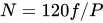
An alternator's output frequency depends on the number of poles and the rotational speed. The speed corresponding to a particular frequency is called the synchronous speed. This table[19] gives some examples:

Poles Rotation speed (r/min), giving...
50 Hz 60 Hz 400 Hz
2 3,000 3,600 24,000
4 1,500 1,800 12,000
6 1,000 1,200 8,000
8 750 900 6,000
10 600 720 4,800
12 500 600 4,000
14 428.6 514.3 3,429
16 375 450 3,000
18 333.3 400 2,667
20 300 360 2,400
40 150 180 1,200

Classifications

[edit]

Alternators may be classified by the method of excitation, number of phases, the type of rotation, cooling method, and their application.[20]

By excitation

[edit]

There are two main ways to produce the magnetic field used in the alternators: by using permanent magnets, which create their persistent magnetic field, or by using field coils. The alternators that use permanent magnets are specifically called magnetos.[citation needed]

In other alternators, wound field coils form an electromagnet to produce the rotating magnetic field.[citation needed]

A device that uses permanent magnets to produce alternating current is called a permanent magnet alternator (PMA). A permanent magnet generator (PMG) may produce either alternating current or direct current if it has a commutator.[citation needed]

Direct-connected direct-current (DC) generator

[edit]

This method of excitation consists of a smaller direct-current (DC) generator fixed on the same shaft as the alternator. The DC generator generates a small amount of electricity, just enough to excite the field coils of the connected alternator to generate electricity. A variation of this system is a type of alternator that uses direct current from a battery for initial excitation upon start-up, after which the alternator becomes self-excited.[20]

Direct-connected alternating-current (AC) generator

[edit]

This method of excitation consists of a smaller alternating-current (AC) generator fixed on the same shaft as the alternator. The AC stator generates a small amount of field coil excitation current, which is induced in the rotor and rectified to DC by a bridge rectifier built in to the windings where it excites the field coils of the larger connected alternator to generate electricity. This system has the advantage of not requiring brushes, which increases service life, although with a slightly lower overall efficiency. A variation of this system is a type of alternator that uses direct current from a battery for initial excitation upon start-up, after which the alternator becomes self-excited.[20]

Transformation and rectification

[edit]

This method depends on residual magnetism retained in the iron core to generate a weak magnetic field, which would allow a weak voltage to be generated. This voltage is used to excite the field coils so the alternator can generate stronger voltage as part of its build up process. After the initial AC voltage buildup, the field is supplied with rectified voltage from the alternator.[20]

Brushless alternators

[edit]

A brushless alternator is composed of two alternators built end-to-end on one shaft. Until 1966, alternators used brushes with rotating field.[21] With the advancement in semiconductor technology, brushless alternators are possible. Smaller brushless alternators may look like one unit, but the two parts are readily identifiable in the large versions. The main alternator is the larger of the two sections, and the smaller one is the exciter. The exciter has stationary field coils and a rotating armature (power coils). The main alternator uses the opposite configuration with a rotating field and stationary armature. A bridge rectifier, called the rotating rectifier assembly, is mounted on the rotor. Neither brushes nor slip rings are used, which reduces the number of wearing parts. The main alternator has a rotating field and a stationary armature (power generation windings).

Varying the amount of current through the stationary exciter field coils varies the 3-phase output from the exciter. This output is rectified by a rotating rectifier assembly mounted on the rotor, and the resultant DC supplies the rotating field of the main alternator and hence alternator output. The result is that a small DC exciter current indirectly controls the output of the main alternator.[22]

By number of phases

[edit]

Another way to classify alternators is by the number of phases of their output voltage. The output can be single-phase or polyphase. Three-phase alternators are the most common, but polyphase alternators can be two-phase, six-phase, or more.[20]

By rotating part

[edit]

The revolving part of alternators can be the armature or the magnetic field. The revolving armature type has the armature wound on the rotor, where the winding moves through a stationary magnetic field. The revolving armature type is not often used.[20] The revolving field type has a magnetic field on the rotor to rotate through a stationary armature winding. The advantage is that then the rotor circuit carries much less power than the armature circuit, making the slip ring connections smaller and less costly; only two contacts are needed for the direct-current rotor, whereas often a rotor winding has three phases, and multiple sections which would each require a slip-ring connection. The stationary armature can be wound for any convenient medium voltage level, up to tens of thousands of volts; manufacture of slip ring connections for more than a few thousand volts is costly and inconvenient.[citation needed]

Cooling methods

[edit]

Many alternators are cooled by ambient air, forced through the enclosure by an attached fan on the shaft that drives the alternator. In vehicles such as transit buses, a heavy demand on the electrical system may require a large alternator to be oil-cooled.[23] In marine applications water-cooling is also used. Expensive automobiles may use water-cooled alternators to meet high electrical system demands.[citation needed]

Specific applications

[edit]

Synchronous generators

[edit]

Most power generation stations use synchronous machines as their generators. The connection of these generators to the utility grid requires synchronization conditions to be met.[24] Synchronous generators provide several important system services. Their inherent rotational inertia slows the initial frequency decline after a sudden loss of generation, allowing turbine governors and other frequency-control reserves time to respond and restore balance. This role is increasingly significant as the share of non-synchronous generation, such as solar photovoltaics and many modern wind plants, grows in many power systems. [25]

Automotive alternators

[edit]
Alternator mounted on an automobile engine with a serpentine belt pulley (belt not present.)

Alternators are used in modern internal combustion engine automobiles to charge the battery and to power the electrical system when its engine is running.[26]

Until the 1960s, automobiles used DC dynamo generators with commutators. With the availability of affordable silicon-diode rectifiers, alternators were used instead.[27]

Diesel–electric locomotive alternators

[edit]

In later diesel–electric locomotives and diesel–electric multiple units, the prime mover turns an alternator which provides electricity for the traction motors (AC or DC).[28][29]

The traction alternator usually incorporates integral silicon diode rectifiers to provide the traction motors with up to 1,200 volts DC.[30]

The first diesel electric locomotives, and many of those still in service, use DC generators as, before silicon power electronics, it was easier to control the speed of DC traction motors. Most of these had two generators: one to generate the excitation current for a larger main generator.[31]

Optionally, the generator also supplies head-end power (HEP) or power for electric train heating. The HEP option requires a constant engine speed, typically 900 r/min for a 480 V 60 Hz HEP application, even when the locomotive is not moving.[citation needed]

Marine alternators

[edit]

Marine alternators used in yachts are similar to automotive alternators, with appropriate adaptations to the salt-water environment. Marine alternators are designed to be explosion proof (ignition protected) so that brush sparking will not ignite explosive gas mixtures in an engine room environment. Depending on the type of system installed, they may be 12 or 24 volts. Larger marine diesels may have two or more alternators to cope with the heavy electrical demand of a modern yacht. On single alternator circuits, the power may be split between the engine starting battery and the domestic or house battery (or batteries) by use of a split-charge diode (battery isolator) or a voltage-sensitive relay. Due to the high cost of large house battery banks, Marine alternators generally use external regulators. Multistep regulators control the field current to maximize the charging effectiveness (time to charge) and battery life. Multistep regulators can be programmed for different battery types. Two temperature sensors can be added: one for the battery to adjust the charging voltage and an over-temperature sensor on the actual alternator to protect it from overheating.[citation needed]

Aviation

[edit]

Radio alternators

[edit]

High-frequency alternators of the variable-reluctance type were applied commercially to radio transmission in low-frequency radio bands. These were used for transmitting Morse code and, experimentally, for transmitting voice and music. In the Alexanderson alternator, both the field winding and armature winding are stationary, and current is induced in the armature by the changing magnetic reluctance of the rotor (which has no windings or current-carrying parts). Such machines were made to produce radio frequency current for radio transmissions, although the efficiency was low.[32]

See also

[edit]

References

[edit]
[edit]
Revisions and contributorsEdit on WikipediaRead on Wikipedia
from Grokipedia
An alternator is an electrical generator that converts into (AC) by means of , typically operating as a synchronous machine where the rotor's rotates synchronously with the of the AC output. It consists of a stationary armature () winding and a rotating field (rotor) excited by , producing AC voltage that can be regulated for specific applications. Unlike DC generators, alternators offer higher efficiency, lighter weight, and better performance at varying speeds, making them essential for modern power systems. The development of the alternator traces back to the early , with French inventor constructing the first practical device in 1832, which generated AC but lacked rectification for practical use. Advancements accelerated in the late 1800s through the work of pioneers like , who demonstrated in 1831, and , whose AC polyphase system in the 1880s enabled efficient alternator designs for power distribution. By the early , alternators became central to electrical grids and industrial machinery, with significant refinements in rotor and stator configurations improving output stability and capacity. In automotive contexts, the alternator serves as the primary source of electrical power, driven by the engine's to generate AC that is rectified to DC for charging the battery and supplying components like lights, ignition systems, and . Introduced in vehicles during the , alternators replaced less efficient DC generators to handle growing electrical loads from accessories such as and stereos, providing output typically between 13.5 and 14.5 volts at 50-150 amperes. Key components include the rotor assembly, windings, rectifier diodes, and , ensuring stable power delivery even at idle speeds. Today, alternators are integral to , backup generators, and , underscoring their versatility in converting to usable .

History

Early Inventions and Developments

The foundational principles of alternator technology emerged in the early through experiments in . In 1831, demonstrated the phenomenon of by moving a near a coil of wire, inducing an , which laid the groundwork for generating mechanically. This discovery, detailed in his experimental researches, enabled the creation of early electrical generators by showing that a changing could produce voltage in a conductor. Building directly on Faraday's work, French instrument maker constructed the first practical (AC) generator in 1832. Pixii's hand-cranked device featured a rotating permanent near stationary coils, producing AC as the magnet spun, marking the initial invention of an alternator capable of continuous electrical output. Although rudimentary and requiring manual operation, this machine represented the first application of induction to generate usable , influencing subsequent designs. By the late 19th century, advancements shifted focus toward practical applications, particularly for lighting and power distribution. In the 1880s, the Anglo-American Brush Electric Light Corporation, founded on inventions by , developed early alternators integrated with transformers for arc lighting systems. These prototypes enabled efficient AC transmission over distances, powering public streetlights in cities like in 1879 and expanding commercially across the U.S. and Europe, with key patents emphasizing self-regulating dynamo-alternator hybrids for stable output. Brush's designs, such as those licensed in 1880, prioritized reliability for arc lamps, contributing to the commercialization of electrical generation. The transition from direct current (DC) generators to AC alternators accelerated in the late due to AC's superior efficiency for long-distance transmission, avoiding the issues inherent in DC systems. This shift was propelled by the "," where AC proved more scalable for industrial power grids, reducing energy losses and enabling higher voltages via transformers. Nikola Tesla's innovations in the further catalyzed this evolution; his polyphase AC system, patented in 1888 (U.S. Patent Nos. 381,968–381,970), introduced multiphase alternators that generated rotating magnetic fields for efficient power delivery. Tesla's work, licensed to Westinghouse Electric, demonstrated polyphase alternators' ability to support motors and transmission lines, establishing AC as the standard for electrical infrastructure.

Evolution in the 20th Century

The adoption of alternators in hydroelectric power generation marked a pivotal shift toward large-scale (AC) systems, beginning with the Adams Hydroelectric Generating Plant at , which commenced operation on August 26, 1895, using Westinghouse alternators to transmit power over long distances. This installation, featuring 10 two-phase alternators each rated at 5,000 horsepower (approximately 3,750 kVA) and 2,200 volts, demonstrated the feasibility of AC for efficient power distribution, overcoming limitations. By the , hydroelectric alternators had expanded globally, powering major projects in , such as Switzerland's water-rich facilities, and , where they supplied up to 40% of the ' electricity by the decade's end, driven by federal initiatives like the U.S. Army Corps of Engineers' authorization to construct numerous plants. World War II accelerated alternator innovations for military applications, particularly in powering and systems, where reliable AC generation was essential for electronic warfare equipment. Experimental alternators were developed by manufacturers like Delco-Remy to support electrical demands, including installations that required higher power outputs than traditional DC generators could provide. These advancements, tested in combat toward the war's later stages, improved system efficiency and reduced maintenance under harsh conditions, influencing postwar designs. In the mid-20th century, three-phase alternators became standardized for grid synchronization, enabling interconnected power networks that enhanced reliability and load sharing across regions. This standardization, solidified by the 1950s through international engineering consensus on 50/60 Hz frequencies, allowed alternators to operate seamlessly in synchrony, as seen in the expansion of supergrids that transmitted power over hundreds of miles. The three-phase configuration, with its balanced power delivery, was codified in utility practices, supporting the growth of national grids like those in the U.S. and . The saw the development of brushless exciters for alternators, eliminating slip rings and brushes to minimize in large-scale generators, particularly those exceeding 100 MVA. This innovation, leveraging rotating s and diodes, was first patented in the early but stemmed from wartime rectifier advances, reducing wear and improving reliability in continuous-operation environments like power plants. By the , high-speed alternators were introduced for gas turbine applications, matching the turbines' rotational speeds of 3,000–3,600 rpm to enable compact, efficient combined-cycle power generation. General Electric's packaged gas turbine-driven generators, launched in the early , integrated these alternators for rapid-response peaking plants, boosting overall system output by up to 50% through heat recovery. This era's designs emphasized cooling and direct-drive , setting precedents for modern utility-scale installations. Since the 2010s, variable-speed alternators integrated with advanced have become integral to hybrid wind and systems, enabling efficient power conversion and grid stability in fluctuating renewable conditions. These systems use power electronic converters, such as inverters, to match variable rotor speeds with fixed grid frequencies, improving overall energy capture by up to 5-10% compared to fixed-speed designs. This integration has facilitated the proliferation of distributed renewable hybrids, particularly in remote or off-grid applications, where full-power converters handle the AC-DC-AC transformation for seamless synchronization. In the 2020s, high-efficiency permanent magnet (PM) alternators have seen significant advancements for electric vehicles (EVs), leveraging rare-earth magnets like neodymium-iron-boron to achieve power densities exceeding 5 kW/kg and efficiencies over 95% at high speeds. These designs, often synchronous PM machines, reduce vehicle weight and extend range by minimizing copper losses and enabling compact integration with traction motors. Automotive manufacturers have adopted them in models like hybrid sedans, where they contribute to fuel economy gains of 20-30% in electrified powertrains. As of 2025, AI-driven monitoring systems for alternators in s employ algorithms to analyze real-time vibration, temperature, and electrical data, enabling that reduces downtime by 20-40%. These systems integrate IoT sensors with AI models for , forecasting failures in alternator windings or bearings before they impact grid reliability. In deployments, such as urban microgrids, AI optimizes alternator performance by adjusting excitation based on load predictions, enhancing overall system resilience. Compact and lightweight alternators, often under 10 kg with axial-flux PM designs, have been developed for drones and renewable microgrids, supporting high-power-to-weight ratios above 2 kW/kg for extended flight times and portable energy generation. In drone applications, these alternators pair with fuel cells or batteries for hybrid , while in microgrids, they enable resilient, modular power in remote setups like communities. Addressing post-2020 vulnerabilities, environmental trends emphasize rare-earth-free alternator designs, such as ferrite-based or reluctance machines, to mitigate risks from concentrated in geopolitically sensitive regions. These alternatives achieve 80-90% of PM efficiency while reducing dependency on , with U.S. Department of Commerce reports highlighting import disruptions that affected 70% of global supply. Initiatives like DOE-funded projects promote domestic manufacturing of these designs for wind turbines and EVs, lowering costs by 15-25% through diversified materials.

Principles of Operation

Electromagnetic Fundamentals

The operation of an alternator relies on fundamental principles of , particularly Faraday's of electromagnetic induction, which states that a changing through a circuit induces an (EMF) in that circuit. This is mathematically expressed as ε=dΦBdt\varepsilon = -\frac{d\Phi_B}{dt}, where ε\varepsilon is the induced EMF and ΦB\Phi_B is the linkage. In alternators, this induction occurs when a interacts with conductive windings, generating electrical power from mechanical rotation. A key mechanism driving charge motion within the conductors of an alternator is the , which acts on charged particles moving in a . The force is given by F=q(v×B)\mathbf{F} = q(\mathbf{v} \times \mathbf{B}), where qq is the charge, v\mathbf{v} is the of the charge, and B\mathbf{B} is the strength. This force causes electrons in the conductor to drift, establishing the induced current essential for alternator output. Alternators produce (AC), in which the direction and magnitude of the current periodically reverse, contrasting with (DC), where flow is unidirectional. AC output typically manifests as a , described by i(t)=Imsin(ωt+ϕ)i(t) = I_m \sin(\omega t + \phi), where ImI_m is the peak current, ω\omega is the , and ϕ\phi is the ; this form arises naturally from the of the in the device. The sinusoidal nature facilitates efficient transmission over long distances compared to DC, though alternators often include rectification for DC applications in systems like vehicles. Central to alternator design are the stator and rotor: the stator consists of stationary coils wound around a laminated iron core that captures the induced EMF, while the rotor features rotating magnets or field windings that generate the varying . These components ensure relative motion between the field and conductors, maximizing flux change without mechanical contact in the current path. Efficiency in alternators is limited by core losses, including hysteresis and eddy currents in the magnetic materials. Hysteresis loss occurs due to the energy dissipated in reversing the magnetic domains during each AC cycle, proportional to the area of the B-H loop and , while eddy current losses arise from induced circulating currents in the core, mitigated by lamination to increase resistance and reduce these paths. These losses collectively reduce output , often accounting for several percent of total power dissipation in typical designs.

AC Generation and Synchronization

In synchronous alternators, (AC) is generated by the relative motion between a produced by the and the stationary armature windings in the . This motion induces an (EMF) in the armature conductors according to Faraday's law of electromagnetic induction, where the changing linkage results in a sinusoidal voltage output. The magnitude of the induced EMF per phase for a sinusoidal is given by the equation E=4.44fNΦE = 4.44 f N \Phi, where EE is the (RMS) value of the induced EMF, ff is the frequency of the generated AC, NN is the number of turns in the armature winding per phase, and Φ\Phi is the flux per pole. The is created by exciting the field windings on the with (DC), which magnetizes the rotor poles to produce the necessary . In conventional synchronous machines, this DC excitation is supplied to the rotating field windings through slip rings mounted on the rotor shaft and carbon brushes that maintain electrical contact while allowing rotation. These components enable continuous DC supply from an external source, such as an exciter, ensuring the field strength remains stable during operation. In modern brushless excitation systems, an auxiliary alternator (exciter) mounted on the rotor shaft generates AC, which is rectified by diodes on the rotating assembly to supply DC to the main field windings, eliminating slip rings and brushes for lower maintenance. For alternators connected to an , is essential to prevent damaging currents from phase mismatches. The process involves adjusting the alternator's prime mover to match the grid's and phase sequence, while the excitation system is tuned to align the voltage magnitude. A synchroscope, an instrument that displays the phase angle difference between the alternator and grid voltages as a rotating pointer, guides operators to close the when the two systems are in phase (typically within 10 degrees) and frequencies are equal (within 0.1 Hz). Under load conditions, the armature current produces its own , which interacts with the main rotor field, leading to armature reaction. This effect distorts the original flux distribution in the air gap, shifting the and altering the induced EMF waveform, with demagnetizing impacts at lagging power factors and magnetizing effects at leading ones. Compensation for armature reaction is achieved by increasing the field excitation current to counteract the distortion, maintaining stable and minimizing harmonic content in the output. The power factor of an alternator's output, defined as the cosine of the angle between voltage and current phasors, determines its to supply reactive power alongside active power. At lagging power factors (common in inductive loads), the alternator absorbs reactive power, requiring higher excitation to sustain voltage; conversely, at leading power factors (capacitive loads), it supplies reactive power, potentially overexciting the field. Reactive power output, measured in volt-ampere reactive (VAR), is controlled via field current adjustments, enabling the alternator to support grid stability by providing or absorbing VAR as needed.

Synchronous Speeds and Performance Factors

The synchronous speed of an alternator, denoted as nsn_s in revolutions per minute (RPM), represents the rotational speed required for the to generate the desired and is calculated using the formula ns=120fpn_s = \frac{120 f}{p}, where ff is the electrical in hertz (Hz) and pp is the number of magnetic poles. This relationship ensures that the alternator's output aligns with grid standards, such as 60 Hz in or 50 Hz in , by adjusting the speed accordingly; for instance, a 2-pole alternator at 60 Hz operates at 3600 RPM. The number of pole pairs, which is half the total number of poles, significantly influences the alternator's torque production and operational stability, particularly in multi-pole configurations. In designs with more pole pairs, the torque per pole decreases for a given power output, allowing for smoother operation and reduced mechanical stress, while enhancing stability by distributing electromagnetic forces more evenly across the . This is crucial in large-scale alternators where higher pole counts enable lower speeds without sacrificing performance, contributing to better of oscillations during load variations. Frequency control in alternators is achieved primarily through precise regulation of the prime mover's speed, typically via governors that adjust fuel or steam input to maintain constant rotational velocity under varying loads. Any deviation in prime mover speed directly impacts the output frequency, necessitating automatic control systems to ensure grid synchronization and prevent frequency drift. Efficiency in synchronous alternators is influenced by several performance factors, including thermal limits that cap operating temperatures to safeguard insulation materials—often adhering to Class F standards with a maximum of 155°C to avoid degradation. curves, characterized by droop characteristics, describe how terminal voltage decreases linearly with increasing reactive power output, typically at a 3-5% droop rate to facilitate load sharing in parallel operation. These factors collectively determine the alternator's ability to maintain high , often exceeding 95% in modern designs, by balancing losses from copper, iron, and mechanical sources. Overload capacity refers to the alternator's ability to deliver power beyond its rated value for limited durations, such as 110% for 2 hours or 150% for short bursts, without exceeding thermal or mechanical limits, ensuring reliable operation during transient demands. The short-circuit ratio (SCR), defined as the ratio of the field current required for rated to that for rated armature current under short-circuit conditions, quantifies the alternator's against voltage fluctuations; a higher SCR (typically above 0.5) enhances grid stability by improving steady-state limits and reducing reactive power requirements during faults.

Classifications

By Excitation Method

Alternators, or synchronous generators, are classified by their excitation methods, which determine how the rotor's is established and maintained to induce voltage in the stator windings. These methods vary in complexity, control precision, maintenance requirements, and efficiency, influencing their suitability for different applications. The primary categories include self-excited, separately excited, brushless, and permanent magnet excitation systems. Self-excited alternators rely on residual magnetism in the poles to initiate voltage buildup. When the begins spinning, the residual induces a small AC voltage in the windings, which is rectified and fed back to the field winding via an automatic (AVR), gradually increasing the field strength and output voltage until it reaches the rated level. This method, also known as shunt excitation, is simple and cost-effective for standalone generators but can be sensitive to load variations and requires a stable initial residual . In separately excited alternators, the rotor field winding receives from an external DC , independent of the generator's output. This setup allows precise control of the excitation current through dedicated regulators, enabling rapid adjustments for voltage stability under varying loads or grid conditions. It is commonly used in large power plants where reliability and fine-tuned performance are critical, though it requires additional for the DC source. Brushless excitation systems eliminate the need for carbon brushes and slip rings by incorporating a rotating exciter on the rotor shaft. An AC exciter generates three-phase power, which is converted to DC by a assembly (typically diodes) mounted on the rotor, directly supplying the main field winding without physical contacts. A pilot exciter, often a small permanent generator (PMG), provides the initial AC to the main exciter, ensuring self-sustaining operation. This design reduces wear, maintenance, and sparking risks, making it prevalent in modern industrial and utility-scale alternators. Permanent magnet excitation employs rare-earth or ferrite magnets embedded in the rotor to produce a constant without any electrical input to the rotor. This method is particularly advantageous for low-speed, high-torque applications, such as wind turbines or hydro generators, where traditional excitation might struggle to build sufficient at reduced rotational speeds. It simplifies the design by removing field windings and , enhancing reliability in remote or variable-speed environments. DC-based methods (self-excited and separately excited) typically incur higher overall losses due to resistive heating in field windings and, in brushed variants, at slip rings. In contrast, AC-based brushless systems minimize these through the absence of brush losses, while permanent magnet approaches eliminate field current losses entirely. In automotive applications, wound-field alternators, such as self-excited or separately excited types, are preferred over permanent magnet generators due to their ability to adjust the field current for precise voltage regulation across varying engine speeds and loads, as well as the option to de-energize the field to minimize parasitic drag when charging is not required. Additionally, they are generally lower in cost, avoiding the expense of rare-earth magnets used in permanent magnet systems. While permanent magnet generators offer higher efficiency by eliminating field current losses, this benefit is more critical in applications like wind turbines and hybrid vehicles where maximum efficiency at variable speeds is prioritized.

By Number of Phases

Alternators are classified by the number of phases in their output, which determines the electrical configuration and suitability for various applications. Single-phase alternators produce a simple from a single set of windings, making them suitable for small-scale power needs such as household appliances and low-power devices. These systems feature a straightforward with minimal complexity, often incorporating split-phase arrangements to facilitate starting mechanisms in connected loads like . Three-phase alternators, the most prevalent type, generate three sinusoidal AC outputs displaced by 120 degrees, enabling balanced power delivery across industrial and utility scales. They commonly employ wye () or delta connections for the stator windings, where the wye configuration provides a neutral point for phase-to-neutral loads and higher voltage capability, while delta offers robustness against single-phase faults and direct line-to-line power transfer. A key advantage of three-phase systems is their efficiency in driving motors, as the produced minimizes the need for starting capacitors and reduces conductor material by approximately 25% compared to single-phase equivalents for the same power output. Polyphase alternators extend beyond three phases, with designs such as six-phase used in specialized high-power applications, including certain transmission systems and renewables, to enhance system stability and capacity. These configurations distribute the load across more phases, allowing for greater power handling without proportional increases in current, which is critical for long-distance grids. In multi-phase windings, distortion is mitigated through phase cancellation effects, where higher-order harmonics (such as triplens in three-phase) are naturally suppressed or redistributed, improving waveform quality and reducing losses in connected equipment. This sinusoidal AC output in polyphase systems supports smoother in and lower neutral currents compared to single-phase alternatives.

By Rotating Part

Alternators are classified by the rotating part, primarily distinguishing between designs where the field winding rotates while the armature remains stationary, and those where the armature rotates with a stationary field. The rotating field configuration, also known as the stationary armature type, is the predominant design in most modern alternators, particularly for high-power applications. In this setup, the carries the (DC) field winding, which generates a as it spins, inducing (AC) in the stationary armature windings. This arrangement facilitates direct connection of the high-voltage, high-current output from the stationary armature to external loads without the need for slip rings or brushes on the output side, simplifying and reducing maintenance. Additionally, the stationary armature allows for easier insulation against higher voltages and improved cooling, as heat is more straightforward without rotating components carrying the load current. In contrast, the rotating armature design, with a stationary field, is less common and typically employed in smaller, portable alternators or specialized low-power units. Here, the rotor consists of the armature windings that rotate within a stationary DC field produced by field coils on the . This configuration simplifies electrical connections, as the low-current DC excitation can be supplied directly to the stationary field without slip rings, and the AC output from the rotating armature can be rectified or connected via brushes if needed. However, it is limited to lower voltage and power ratings due to the challenges of insulating and cooling the rotating armature under high loads. Within these classifications, rotor designs further vary based on application speed and performance requirements, primarily salient pole and cylindrical (non-salient) types. Salient pole rotors feature projecting poles with concentrated field windings, creating a non-uniform air gap, and are suited for low-speed operations such as hydroelectric generators. Their larger and shorter axial enable higher extraction at slower rotational speeds, typically below 1000 rpm, making them ideal for hydro applications where water turbines dictate the pace. Cylindrical rotors, on the other hand, employ a smooth, slotted with distributed windings and a uniform air gap, designed for high-speed turbo-alternators driven by or gas turbines. This construction minimizes losses and ensures smooth airflow at speeds often exceeding 3000 rpm, supporting efficient operation in thermal power plants. The uniform air gap also contributes to a more sinusoidal voltage and reduced . To enhance stability during transient conditions, such as sudden load changes or , both rotor types often incorporate damper windings—short-circuited copper bars embedded in the pole faces or slots, functioning like a squirrel-cage . These windings generate induced currents that produce torques, mitigating rotor oscillations and improving overall machine stability without external connections. The of the rotor, influenced by its mass and design, further aids in maintaining synchronous speed during brief disturbances, though damper windings provide the primary electromagnetic effect.

By Cooling Methods

Alternators generate significant heat from electrical losses and mechanical , necessitating effective cooling to prevent insulation degradation and maintain . Cooling methods are selected based on unit size, environmental conditions, and application demands, with air, , and liquid systems being the primary approaches. These techniques dissipate heat primarily through and conduction, ensuring temperature rises remain within material limits, typically below 100-130°C for windings. Air cooling is the most common method for alternators, particularly in smaller and medium-sized units up to several megawatts. In open-ventilated (direct air) systems, ambient air is drawn through the machine by integral fans on the , absorbing heat from windings and core before exhausting to the atmosphere; this simple design suits clean environments but is unsuitable for dusty or polluted sites due to risks. Closed-cycle air cooling recirculates filtered air through the alternator and a water-cooled or , maintaining cleanliness in dust-prone environments while allowing higher power densities than open systems. Both variants rely on from rotor-mounted fans, achieving effective heat removal without additional media. Hydrogen cooling is employed in large turbo-alternators exceeding 100 MVA, leveraging hydrogen gas's superior thermal conductivity—approximately seven times that of air—and low density for enhanced cooling efficiency and reduced windage losses. The gas is circulated by axial fans through the air gap, stator ducts, and rotor ventilating paths, then cooled in external heat exchangers before re-entry; shaft seals and differential pressure systems maintain gas purity above 98% to avoid explosive mixtures with air. This method can increase a machine's rating by up to 30% compared to air cooling at the same size, though it requires specialized enclosures and monitoring for hydrogen purity and leakage. Liquid cooling addresses high heat densities in compact or high-output alternators, using or to directly contact windings or circulate through embedded tubes. cools rotor and stator windings via conduction in sealed units, providing lubrication alongside thermal management, while jackets or coils in the core offer higher capacity for stationary generators through external chillers. These systems enable ratings up to twice that of air-cooled equivalents in the same volume but demand corrosion-resistant materials and leak prevention. Cooling performance directly influences alternator ratings, with elevated ambient temperatures in hot climates causing to avoid overheating. For instance, alternator output may be reduced by 3% for every 10°C above 40°C, as higher inlet air temperatures diminish coefficients and elevate internal gradients. Manufacturers provide derating curves based on site conditions, ensuring safe operation by limiting continuous load to maintain insulation class temperatures. Modern alternator designs incorporate advanced forced cooling to support compact, high-efficiency configurations, utilizing high-speed axial fans for increased airflow rates and integrated heat exchangers for precise . These enhancements, often combined with computational dynamics-optimized ducting, allow smaller footprints in variable-speed drives and renewable-integrated systems while minimizing acoustic noise and energy penalties.

Applications

Stationary Power Generation

In stationary power generation, alternators, primarily synchronous generators, serve as the core components for producing bulk electricity in fixed installations such as thermal, hydroelectric, and plants. These generators convert from turbines into (AC) power, typically operating at ratings from hundreds to over 1,000 megavolt-amperes (MVA) to meet grid-scale demands. For instance, nuclear main generators often reach 983 MVA at 0.85 and 22,000 volts, while large thermal units commonly achieve around 600 MVA, enabling efficient integration into interconnected transmission networks. Paralleling these generators to the grid requires precise of voltage, , and phase angle to avoid disturbances, achieved through automatic synchronizers that monitor and adjust generator outputs before closing circuit breakers. Excitation systems in these synchronous generators are critical for maintaining stable voltage during base-load operations, where run continuously at near-full capacity to supply consistent power. These systems supply (DC) to the rotor field windings via automatic voltage regulators (AVRs), which sense terminal voltage deviations and adjust field current to counteract load changes, ensuring reactive power support and grid stability. In base-load scenarios, brushless or static excitation configurations predominate, providing rapid response times under IEEE-recommended models that limit voltage to 1.6-2.0 times rated field voltage for fault ride-through. For grid recovery after blackouts, diesel-driven alternators enable capabilities by independently generating initial power without external supply, bootstrapping larger plants back online. These units, often rated 10-50 MW, start using onboard batteries or and provide to excitation systems and station service, facilitating sequential restoration as per NERC guidelines. In coordinated strategies, multiple diesel sets are selected based on cranking power and load-stepping indices to minimize restoration time. Efficiency in large-scale synchronous generators is governed by standards like IEEE 115, which outlines procedures for determining performance, including summation-of-losses methods to calculate overall often exceeding 98% at full load. Key losses— (I²R in windings), iron (core hysteresis and eddy currents), mechanical (friction and windage), and stray—total 1-3% in units over 100 MVA, with ISO-aligned calorimetric measurements verifying compliance for minimal environmental impact. Three-phase configurations, as detailed in phase classifications, support balanced paralleling in these systems.

Automotive and Transportation

In automotive applications, alternators primarily serve to charge the vehicle's 12 V lead-acid battery and power electrical loads, operating within a regulated 14 V system to ensure stable output. These units incorporate diode rectifiers to convert the generated three-phase into suitable for battery charging and accessory operation. Typical output currents range from 50 A at low speeds to 140–150 A at higher speeds, providing sufficient power for , ignition, and systems without overburdening the . The predominant design in passenger cars and light trucks is the Lundell claw-pole alternator, featuring interleaved claw-shaped poles on the that create a compact, robust structure capable of withstanding high rotational speeds up to 15,000–18,000 RPM driven by the engine's accessory belt. This configuration enables efficient paths in a small , ideal for space-constrained engine compartments, while maintaining mechanical integrity under continuous high-RPM operation. Brushless variants, often using permanent magnets, offer similar compactness but are less common in standard vehicles due to higher costs associated with rare-earth magnets and the need for additional electronics for voltage regulation, as permanent magnet generators (PMGs) produce a fixed magnetic field that is harder to adjust. In contrast, wound-field alternators allow for easier voltage regulation by varying the field current, which can also be turned off to reduce drag when charging is not needed, thereby improving fuel efficiency despite a slight efficiency penalty compared to PMGs. PMGs excel in applications like wind turbines or hybrid vehicles, where maximum efficiency and compactness are prioritized over cost and simple regulation. In diesel-electric locomotives, traction alternators convert from the prime mover into electrical power for , typically generating three-phase at 480 to drive traction via inverters. These high-power units, often exceeding 1 MW output, employ multiple phases—commonly six or more—for smooth delivery and reduced ripple in the propulsion system, enabling efficient acceleration and sustained hauling of heavy freight loads. Hybrid and electric vehicles integrate regenerative alternators, often as belt-driven or integrated starter-generators, to recover during braking by operating the traction motor in generator mode and converting it to electrical energy for battery recharging. This process can recapture 10–30% of braking energy, depending on vehicle speed and battery state, thereby enhancing overall by 5–15% in systems. Vehicle environments demand specific adaptations for alternators to counter and electromagnetic interference (EMI). Vibration mitigation involves optimizing rotor claw chamfers and pole geometries to reduce electromagnetic radial forces, lowering noise and structural stress by up to 10 dB in claw-pole designs. For EMI, strategies include shielded windings, low dv/dt inverter controls, and ferrite filters on output lines to suppress conducted and radiated noise, ensuring compliance with automotive standards like CISPR 25 while protecting sensitive .

Marine and Aviation

In marine applications, alternators are engineered with corrosion-resistant materials such as 316L and specialized coatings to endure prolonged exposure to saltwater and high humidity on ships. These designs incorporate ingress protection (IP) ratings of IP65 or higher to safeguard against dust and water ingress, with IP66 or IP67 often recommended for components in engine rooms or exposed deck areas to prevent saltwater and ensure operational reliability. Manufacturers like Mecc Alte produce compact marine alternators that comply with international maritime standards, featuring durable construction for harsh offshore environments. Shaft-driven generators in systems are directly coupled to the main shaft, operating as alternators to supply primary electrical power while synchronized to the engine's variable RPM through frequency converters that maintain constant voltage and output. This setup, common in two-stroke diesel engines, enhances by leveraging propulsion power for electricity generation without auxiliary engines, as detailed in guidelines from MAN Energy Solutions for power take-off (PTO) configurations. -speed shaft generators from providers like ABB further optimize this synchronization, allowing seamless integration across a range of engine speeds for vessels such as tankers and ships. In , alternators prioritize lightweight construction to minimize weight, with FAA-certified models from Plane Power offering direct-replacement kits that reduce mass compared to traditional units while delivering reliable performance. These systems often employ constant-speed drives, such as hydromechanical units, to ensure stable alternator input speed despite varying engine RPM, producing that is rectified to a standard 28V DC output for onboard systems. is critical in electrical architectures, typically featuring multiple alternators connected to essential buses with automatic bus isolation and transfer mechanisms that activate upon primary failure to maintain power continuity without pilot intervention. High-reliability features in alternators include through amortisseur windings and improved rotor balancing to mitigate engine-induced oscillations, alongside over-speed via robust shaft designs capable of withstanding transient excesses. These elements, as seen in specialized 400 Hz alternators from Mecc Alte, ensure longevity and in demanding flight conditions.

Specialized and Emerging Uses

Radio alternators, specialized high-frequency designs, were developed in the early to generate directly suitable for radio transmission without the need for electronic modulation. These devices, such as the Alexanderson alternator invented by F. W. Alexanderson in 1904, operated at frequencies of 50 to 100 kHz and could produce up to 200 kW of power, enabling reliable long-distance radiotelegraph communication across oceans and to ships at sea. The alternator's output was coupled with tuned antenna circuits to efficiently radiate the signal, minimizing losses in early systems before vacuum tubes became prevalent. These machines featured high-speed rotors and designs to achieve the necessary frequencies, marking a pivotal advancement in continuous-wave radio technology. Micro-alternators, compact synchronous generators typically using permanent magnets, play a key role in portable power systems and small-scale harvesting. In portable generators, these units provide efficient, low-maintenance output for off-grid applications, often integrated into hand-carried or backpack-sized devices weighing under 30 kg while delivering 1-10 kW. For renewables, micro-alternators are employed in tidal energy converters, where they convert the from low-head microturbines into electrical power; for instance, modular tidal systems use permanent magnet synchronous generators rated at 1-5 kW to harness currents as low as 1 m/s in coastal waters. These designs prioritize high efficiency at low RPMs (under 1000) and corrosion resistance for submerged operation, contributing to scalable arrays that generate up to 100 kW per farm without large . Emerging applications of alternators in electric vehicles (EVs) focus on hybrid systems for , where integrated starter-alternators (ISAs) or 48V mild-hybrid setups supplement the main battery for low-voltage systems like and climate control. In mild-hybrid EVs, these compact alternators, often belt-driven or crankshaft-integrated, provide recovery and start-stop functionality, outputting 5-15 kW to maintain auxiliary loads without drawing heavily from the high-voltage traction battery. By 2025, advancements in carbide-based ISAs enable efficiencies over 95%, supporting the shift toward electrified powertrains while ensuring reliable 12V/48V supply. Regarding charging integrations, ongoing developments in dynamic inductive systems for EVs indirectly leverage alternator-derived in hybrid prototypes to stabilize onboard converters during high-speed charging trials, though full remains projected for post-2025 deployment. In and contexts, compact alternators power critical equipment in austere environments. For field hospitals, lightweight standby alternators, such as those in modular diesel gensets, deliver uninterrupted 50-500 kVA to support life-saving devices like ventilators and imaging systems during disasters or remote operations, featuring vibration-resistant designs for rapid setup in temporary structures. In applications, micro-alternators integrated into unmanned aerial vehicles (UAVs) or drones provide onboard generation for and payloads; for example, permanent magnet units under 5 kg generate 1-10 kW at high altitudes, enabling extended endurance in hybrid-electric configurations for and missions. These systems emphasize fuel flexibility and low acoustic signatures to meet operational stealth requirements.

References

Add your contribution
Related Hubs
User Avatar
No comments yet.