Hubbry Logo
Baro-BhuyanBaro-BhuyanMain
Open search
Baro-Bhuyan
Community hub
Baro-Bhuyan
logo
8 pages, 0 posts
0 subscribers
Be the first to start a discussion here.
Baro-Bhuyan
Baro-Bhuyan
from Wikipedia

The Baro-Bhuyans (or Baro-Bhuyan Raj; also Baro-Bhuians and Baro-Bhuiyans) were confederacies of soldier-landowners in Assam and Bengal in the late Middle Ages and the early modern period. The confederacies consisted of loosely independent entities, each led by a warrior chief or a landlord.[1] The tradition of Baro-Bhuyan is peculiar to both Assam and Bengal[2] and differ from the tradition of Bhuihar of Uttar Pradesh and Bihar[3]—in Assam this phenomenon came into prominence in the 13th century when they resisted the invasion of Ghiyasuddin Iwaj Shah[4] and in Bengal when they resisted Mughal rule in the 16th century.[5]

Baro denotes the number twelve, but in general there were more than twelve chiefs or landlords, and the word baro meant many.[6] Thus, Bhuyan-raj denoted individual Bhuyanship, whereas Baro-Bhuyan denoted temporary confederacies that they formed.[1] In times of aggression by external powers, they generally cooperated in defending and expelling the aggressor. In times of peace, they maintained their respective sovereignty. In the presence of a strong king, they offered their allegiance.[7] In general each of them were in control of a group of villages, called cakala, and the more powerful among them called themselves raja.[8] The rulers of the Bhuyanships belonged to different ethnic, religious or social backgrounds.[9][10]

In 13th century Brahmaputra Valley the system of Baro-Bhuyan Raj (confederacy) was formed from the petty chieftains—the remaining fragments of the erstwhile Kamarupa state.[1][11] They often resisted foreign invasions (Ghiyasuddin Iwaj Shah in the 13th century), removed foreign rule (Hussain Shah in the 16th century) and sometimes usurped state power (Arimatta in the 14th century). They occupied the region west of the Kachari kingdom in the south bank of the Brahmaputra river, and west of the Chutiya kingdom in the north bank. These included areas of Nagaon, Darrang and Sonitpur districts. Subsequently, the Baro Bhuyan rule ended in the 16th century as they were squeezed between the Kachari kingdom and the Kamata kingdom in the west and were slowly overpowered by the expanding Ahom kingdom in the east.

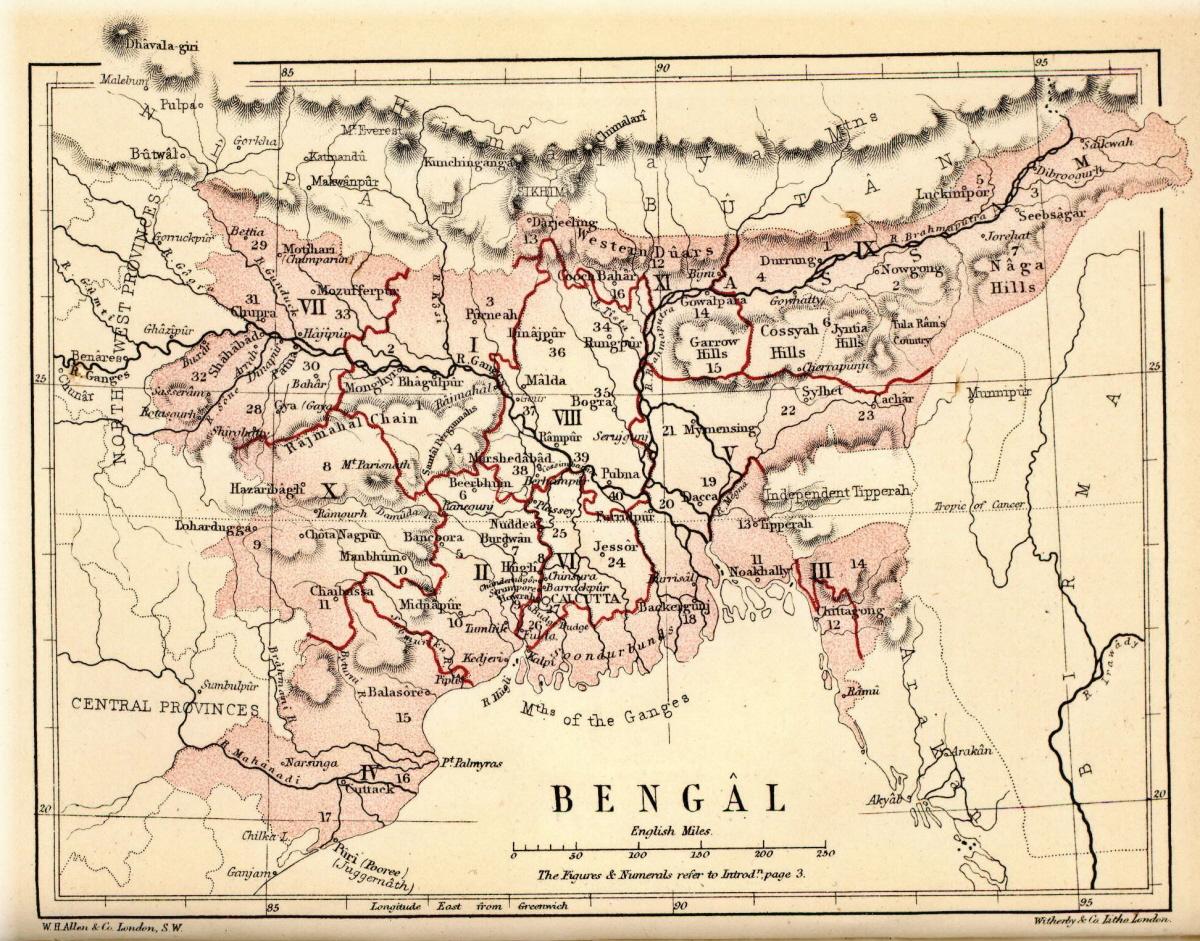
In Bengal, the most prominent Baro-Bhuyan confederacy was led by Isa Khan of Sonargaon in the 16th century, which emerged during the disintegration of the Bengal Sultanate in the region, as a resistance to the Mughal expansion.[12] They carved the land of Bhati and other areas of Bengal into twelve administrative units or Dwadas Bangla.[13] The Baro-Bhuyans gradually succumbed to the Mughal dominance and eventually lost control during the reign of emperor Jahangir, under the leadership of Islam Khan I, the governor of Bengal Subah.[14]

Baro-Bhuyans of Assam

[edit]

Epigraphic sources indicate that the Kamarupa state had entered a state of fragmentation in the 9th century[15] when the tradition of granting away police, revenue and administrative rights to the donee of lands became common.[16] This led to the creation of a class of landed intermediary between the king and his subjects—the members of which held central administrative offices, maintained economic and administrative links with in their own domain[17] and propagated Indo-Aryan culture.[18] This gave rise to the condition that individual domains were self-administered, economically self-sufficient and capable of surviving the fragmentation of central authority,[19] when the Kamarupa kingdom finally collapsed in the 12th century.

Amalendu Guha claims that the Baro-Bhuyan emerged in the 13th century from the fragmented remains of the Kamarupa chieftains.[1] Nevertheless, not all local Kamarupa administrators (samanta) became Bhuyans and many were later-day migrant adventurers from North India.[20] Though there exists many legendary accounts of the origin of the Baro Bhuyan these accounts are often vague and contradictory.[21]

Territorial extent of Baro-Bhuyans of Central Assam, whose territories were annexed by Suhungmung in the early 16th century. The Bhuyans of Lower Assam region were suppressed by the Koch king Biswa Singha in the same period.

The Adi Bhuyan group

[edit]

This original group is often referred to as the Adi Bhuyan, or the progenitor Bhuyans. The Adi-charita written in the late 17th century is the only manuscript which mentions the Adi-Bhuyan group.[22] However, Maheswar Neog has called the account as spurious or fabricated.[23]

Nevertheless, their presence is recorded in the Ahom Buranjis, where it is recorded that they were instrumental in ending the rule of the Kachari kingdom.[24] As a reward, the Ahom king Suhungmung (1497–1539) settled these Bhuyans (originally living in Rowta-Temoni) in Kalabari, Gohpur, Kalangpur and Narayanpur as tributary feudal lords.[25] Over time, these Bhuyans grew very powerful but they were later subjugated by the Ahom king Jayadhwaj Singha. The Saru Baro Bhuyan is a branch of the Bar Baro Bhuyan that split and went west.

By the mid 16th century, all the Adi Bhuyans power was crushed, and they remained satisfied with what service they could render to the Ahom state as Baruwas or Phukans, Tamulis or Pachanis. During the first expedition of Chilarai against the Ahom kingdom, they aligned with the Ahoms (which Chilarai lost), but during the second expedition they aligned with the Koches (which Chilarai won). Chilarai appointed Uzir Bamun, Tapashi Laskar and Malamulya Laskar as Rajkhowas in Uttarkula after he annexed the territories up to Subansiri River in 1563 AD.[26] This group was finally subjugated by Prataap Singha in 1623, who relocated them to the south bank of the Brahmaputra.[27] The Saru Bhuyans, who had moved west after the conflict with the Bor Baro-Bhuyans trace the genealogy of Candivara to Kanvajara, the eldest son of Sumanta, but this is not given credence.

The Later group

[edit]

The later Baro-Bhuyans had ensconced themselves between the Kachari kingdom in the east and the Kamata kingdom in the west on the south bank of the Brahmaputra River. According to Neog, the leader (shiromani) of the group, Chandivara, was originally a ruler of Kannauj, who had to flee due to Firuz Shah Tughlaq's 1353 campaign against Shamsuddin Ilyas Shah and reached Gauda, the domain of Dharmanarayana.[28] As a result of a treaty between Dharmanarayana and Durlabhnarayana of Kamata kingdom, a group of seven Kayastha and seven Brahmin families led by Candivara was transferred to Langamaguri, a few miles north of present-day Guwahati.[29] During the harvesting season in Lengamaguri, the Bhutiyas attacked and looted the country and in one instance the Bhutiyas captured Rajadhara, the son of Candivara. Candivara chased the Bhutiyas as far as Daimara between Maguri (near Changsari town) and Dewangiri (in Bhutan), killed few of them and released his son from captivity. In next four or five years, the people of Lengamaguri finding that Bhutiyas were planning an attack in retaliation decided to hand over Candivara as the person responsible for the massacre of the Bhutiyas.[30] The Bhutiyas chased Candivara as far as Rauta (in present-day Udalguri district) but had to suffer defeat at the hands of the Baro-Bhuyans.[31] Candivara and his group in search of a safe haven did not stay in Lengamaguri for long and moved soon to Bordowa in present-day Nagaon district with the support of Durlabhnarayana.[29] Among the descendants of Candivara was Srimanta Sankardeva.

After the death of Candivara, Rajadhara became the Baro-Bhuyan. A second group of five Bhuyans joined the Candivara group later.[29] In due course, members of these Bhuyans became powerful. Alauddin Husain Shah, who ended the Khen dynasty by displacing Nilambar in 1498, extended his rule up to the Barnadi river by defeating Harup Narayan who was a descendant of Gandharva-raya, a Bhuyan from the second group established by Durlabhnarayana at Bausi (Chota raja of Bausi), among others.[32] The Baro-Bhuyans retaliated and were instrumental in ending the rule of Alauddin Husain Shah via his son Shahzada Danyal. But very soon, the rise of Biswa Singha of the Koch dynasty in Kamata destroyed their hold in Kamrup[33] and squeezed those in the Nagaon region against the Kacharis to their east. They had to relocate to the north bank of the Brahmaputra in the first quarter of the 16th century, to a region west of the Bor Baro-Bhuyan group. The increasing Koch and Ahom conflicts further ate away at their independence and sovereignty.

Baro-Bhuiyans of Bengal

[edit]

At the end of the Karrani Dynasty (1564–1575), the nobles of Bengal became fiercely independent. Sulaiman Khan Karrani carved out an independent principality in the Bhati region comprising a part of greater Dhaka district and parts of Mymensingh district. During that period Taj Khan Karrani and another Afghan chieftain helped Isa Khan to obtain an estate in Sonargaon and Mymensingh in 1564. By winning the grace of the Afghan chieftain, Isa Khan gradually increased his strength and status and by 1571, he had become the ruler of Bhati.[34]

Bhati region

[edit]

Mughal histories, mainly the Akbarnama, the Ain-i-Akbari and the Baharistan-i-Ghaibi refers to the low-lying regions of Bengal as Bhati.

This region includes the Bhagirathi to the Meghna River is Bhati, while others include Hijli, Jessore, Chandradwip and Barisal Division in Bhati. Keeping in view the theatre of warfare between the Baro-Bhuiyans and the Mughals, the Baharistan-i-Ghaibi mentions the limits of the area bounded by the Ichamati River in the west, the Ganges in the south, the Tripura to the east; Alapsingh pargana (in present Mymensingh District) and Baniachang (in greater Sylhet) in the north. The Baro-Bhuiyans rose to power in this region and put up resistance to the Mughals, until Islam Khan Chisti made them submit in the reign of Jahangir.[12]

Isa Khan

[edit]

Isa Khan was the leader of the Baro Bhuiyans (twelve landlords) and a zamindar of the Bhati region in medieval Bengal. Throughout his reign he resisted the Mughal Empire invasion. It was only after his death, the region went totally under the Mughal emperors.[12]

The Jesuit mission who was sent to Bengal managed to identify that 3 of the chieftains were Hindus, they were Kandarpa Narayan Basu of Chandradwip, Bakla (Barisal), Kedar Ray of Bikrampur,[35] and Pratapaditya of Jessore, while the rest were Muslims during Isa Khan's rule. Nalini Kanta Bhattasali affirms that there were more than twelve Bhuiyans, with the word baro signifying a large number.[36][37]

Notable persons

[edit]
  1. Musa Khan of Sonargaon; inheritor of Isa Khan
  2. Khwaja Usman of Bokainagar, Mymensingh and later Uhar, Sylhet
  3. Bayazid of Sylhet[38]
  4. Majlis Qutb of Fatehabad
  5. Pitambar and Ananta of Chila-Jowar, Rajshahi
  6. Kedar Ray of Bikrampur[39]
  7. Bahadur Khan of Hijli[40]
  8. Pratapaditya of Jessore[41]
  9. Surendranath Sur of Khardah
  10. Bir Hambir of Bishnupur
  11. Bhavashankari of Bhurishrestha, and later Hoogly
  12. Fazal Gazi of Bhawal

Notes

[edit]

References

[edit]
Revisions and contributorsEdit on WikipediaRead on Wikipedia
from Grokipedia
The Baro-Bhuyans (also spelled Bara-Bhuiyans or Baro-Bhuiyans), literally meaning "twelve landlords," were confederacies of semi-autonomous zamindars and warrior chiefs who controlled territories in medieval , particularly in the eastern regions, and mounted prolonged resistance against Mughal imperial expansion from the late . Emerging in the power vacuum following the defeat of the by Mughal forces in 1576, these chieftains, many of Afghan descent, consolidated control over the marshy, riverine region encompassing areas like , , and . Under the leadership of of , who forged a unified front among the chiefs, the Baro-Bhuyans employed guerrilla tactics, , and exploitation of seasonal floods and monsoons to thwart multiple Mughal campaigns led by generals such as Khan Jahan and Shahbaz Khan between 1578 and the 1590s. Their defiance delayed the Mughals' full subjugation of for approximately four decades, until the confederacy's remnants were overcome by 1612 following Isa Khan's death in 1599 and the capture or defeat of key figures like Kedar Rai and . This era of localized resistance underscored the strategic difficulties posed by Bengal's deltaic geography to centralized conquest efforts and represented a notable assertion of regional prior to the province's integration into the .

Definition and Historical Context

Etymology and Structure of the Confederacy

The term "Baro-Bhuyan" combines "Baro," signifying the number twelve in Bengali and Assamese languages, with "Bhuyan" (or "Bhuiyan"), a title for landlord-chieftains who administered zamindari estates as warrior-administrators deriving authority from control over land revenue and peasant labor. The thus refers to "twelve Bhuyans," though historical records indicate the numeral was often symbolic rather than literal, with confederacies encompassing more or fewer chieftains depending on regional contexts and alliances. Organizationally, the Baro-Bhuyans operated as decentralized confederacies of semi-autonomous landowners, eschewing unified state structures in favor of loose alliances bound by pragmatic mutual defense pacts against centralized imperial threats, such as Mughal expansion under . These groups maintained independence through fortified estates, riverine mobility, and coordinated resistance, functioning as revenue intermediaries who extracted agrarian surplus from ryots while fielding private militias equipped for . Persian chronicles from the Akbar era, including Abul Fazl's Akbarnama, document their confederate resistance and zamindari roles, portraying them as fragmented yet resilient powers that delayed Mughal consolidation through adaptive coalitions. Local traditions and regional histories further verify this structure, emphasizing their evolution from post-Sultanate fragmentation into defensive networks without hierarchical overlords.

Emergence in Post-Sultanate Bengal and Ahom Assam

Following the defeat of the Bengal Sultanate's last independent ruler, , by Mughal forces under at the in 1576, centralized authority disintegrated in eastern amid persistent Afghan resistance and Mughal consolidation efforts. This created fragmented territorial estates, particularly in the Bhati region, where local zamindars and chieftains—many of Afghan ancestry who had served as officers under prior sultans—seized control as rulers. By the late 1570s, these figures coalesced into the Baro-Bhuyans, a loose confederacy of approximately twelve powerful landowners who exploited the power vacuum to assert autonomy over riverine districts, resisting full Mughal subjugation for decades. In parallel, across the Brahmaputra in Assam, Baro-Bhuyans emerged from medieval Indo-Aryan migrations, with non-Brahmin settlers establishing landholding clans as early as the 14th century in areas west of the river, beyond the core Ahom territories and adjacent to declining kingdoms like the Chutiyas and Kacharis. The Ahom kingdom, founded in 1228 and expanding westward by the 15th century, relied on these semi-autonomous Bhuyans as frontier brokers to manage peripheral zones prone to flooding and ethnic diversity, granting them vassal status for tribute and local defense rather than direct incorporation. This arrangement filled administrative gaps in rugged terrains where Ahom paiks (corvée laborers) struggled with sustained control, allowing Bhuyans to retain localized power until later integrations. The rise of Baro-Bhuyans in both regions stemmed from structural weaknesses in collapsing centralized states, where geographic features—dense river networks, annual inundations, and marshy lowlands—favored dispersed landholders adept at mobilizing boat-based forces and networks over lumbering imperial armies. In Bengal's post-Sultanate chaos, this enabled opportunistic consolidation amid 40 years of intermittent warfare; in Ahom , it supported a pragmatic delegation of authority to mitigate overextension during expansions that doubled the kingdom's territory by 1500.

Baro-Bhuyans in Bengal

Rise and Consolidation in the Bhati Region

The Bhati region in eastern Bengal, centered around Sonargaon, comprised marshy deltaic terrain intersected by numerous rivers and rivulets, which hindered overland military campaigns but enabled dominance through naval mobility and fortified riverine positions. This geography supported intensive agriculture in floodplains and control over vital trade conduits linking inland Bengal to coastal ports. Sher Shah Suri's invasion of in 1538 dismantled the existing Sultanate structure, creating a that allowed local zamindars to expand their influence amid the Sur Empire's unstable rule until 1556. In , chieftains capitalized on this disruption, transitioning from nominal subordinates to autonomous lords by exploiting the empire's focus on western frontiers and internal Afghan rivalries. By the mid-16th century, alliances emerged among zamindars of diverse origins—including Afghan settlers from earlier migrations, indigenous Bengali Hindu landholders, and elements of local Muslim gentry—pooling resources to administer parganas such as those in and surrounding districts. These coalitions secured revenue from agrarian output and river tolls, fostering a decentralized network that divided into administrative fiefs while coordinating mutual defense against external threats. This pre-Mughal consolidation, documented in contemporary chronicles like the Baharistan-i-Ghiyabi, established the Baro-Bhuyans as entrenched regional powers before Akbar's expansionist drives in the 1570s.

Leadership Under Isa Khan and Key Battles

Isa Khan (c. 1529–1599), the of Sarail in the region, consolidated leadership over the Baro-Bhuyans by declaring himself Masnad-i-Ala (supreme commander) around 1581–1582, unifying the twelve chieftains into a coordinated confederacy against Mughal incursions. This pact extended to alliances with neighboring and Afghan commanders such as Masum Khan Kabuli and Katlu Khan, enabling collective defiance of Mughal subahdars seeking to impose central authority in post-Sultanate . Isa Khan's elevation stemmed from his prior successes in regional power struggles, including control over estates, positioning him to orchestrate resistance amid the Mughals' campaigns following their 1576 conquest of from the . Early under his command, the confederacy demonstrated coordinated resolve in the 1578 confrontation at Bhawal (near modern Kastul, Sarail), where Isa Khan's forces repelled Mughal advances led by Khan Jahan, leveraging local terrain knowledge to disrupt enemy logistics. This engagement highlighted the Bhuyans' shift toward unified operations, contrasting prior fragmented defenses. Throughout 1578–1584, naval clashes intensified, with Isa Khan employing battleships for riverine superiority; in 1584, his forces, allied with Masum Khan Kabuli, deployed artillery and muskets to counterattack Shahbaz Khan's expeditions across , , , and Katrabo, forcing Mughal retreats. Palisade forts at sites like Katrabo, Kalagachhia, and Khizrpur served as defensive anchors, allowing ambushes that exploited the delta's waterways against less adaptable Mughal fleets. Further key battles underscored this defiance, including victories over Tarsun Khan at Bajitpur and engagements at Tokey against Shahbaz Khan, where the confederacy's decentralized yet pact-bound structure enabled rapid reinforcements. By 1586, sustained pressure prompted Emperor to grant temporary recognition of Isa Khan's zamindari over multiple parganas, a pragmatic concession amid stalled conquests rather than outright submission. These outcomes reflected causal advantages in and alliances, delaying Mughal dominance in until after Isa Khan's death, though internal dynamics later contributed to fragmentation.

Guerrilla Resistance and Mughal Campaigns

The Baro-Bhuyans in mounted prolonged guerrilla resistance against Mughal incursions from the late 1570s, leveraging the region's dense riverine networks and seasonal monsoons to conduct hit-and-run ambushes that disrupted larger imperial armies. These tactics proved effective in early clashes, such as the naval defeat inflicted by on Mughal forces under the subahdar in September 1584, where local knowledge of waterways allowed Bhuyan forces to outmaneuver and overwhelm the invaders. Mughal governors like Khan Jahan, who invaded the region in 1578, faced similar setbacks, as Bhuyan mobility prevented decisive engagements and forced repeated retreats during flood seasons. However, internal disunity among the confederacy undermined sustained opposition, with individual Bhuyans pursuing separate negotiations or submissions to preserve local amid mounting pressure. For instance, of , a prominent Bhuyan leader, initially resisted but shifted allegiances, refusing Mughal demands for support against other rebels, which isolated him and led to his targeted defeat in 1611. This fragmentation enabled piecemeal conquests, eroding the collective front by the early 1600s as some chieftains accepted Mughal oversight to avoid total subjugation. The decisive phase came under Islam Khan Chisti, appointed of in 1608, whose campaigns from 1608 to 1611 systematically dismantled remaining resistance through superior logistics and firepower. Deploying cannon-equipped boats to dominate waterways—countering the Bhuyans' traditional naval advantages—Islam Khan captured key strongholds, including and Khizrpur, forcing submissions from holdouts like Musa Khan, Isa Khan's successor. By 1612, surviving Bhuyans were integrated into the Mughal system as mansabdars, assigned ranks and revenues in exchange for loyalty, marking the end of organized guerrilla opposition in . This outcome highlighted the confederacy's tactical ingenuity but ultimate vulnerability to coordinated imperial strategy and internal divisions.

Baro-Bhuyans in Assam

The Adi Bhuyan Group and Early Autonomy

The Adi Bhuyans constituted the original group of twelve feudal lords in medieval Assam, emerging around the 14th century as petty chiefs who controlled territories on the south bank of the Brahmaputra River west of the Kachari kingdom and on the north bank west of the Chutiya kingdom. These domains formed a buffer zone east of the Kamata kingdom amid the fragmentation of Kamarupa's central authority, allowing the Bhuyans to exercise semi-independent rule over local affairs while navigating alliances against neighboring powers. Their origins blended indigenous elements with migrant Aryan influences, with lineages tracing migrations from regions like Kannauj, as exemplified by the forefathers of Srimanta Sankardeva, whose great-grandfather Chandibar settled in the area circa 1320. In their early phase, the Adi Bhuyans enjoyed considerable in and frontier stabilization, particularly in defending against incursions from hill tribes and rival lowland kingdoms, often functioning as vassals under expanding Ahom overlordship. This arrangement enabled them to maintain self-reliant administrative structures, including corvée-like labor mobilization akin to the Ahom model's emphasis on communal defense, as referenced in Ahom chronicles known as Buranjis. Notable among them were families like that of Sankardeva's father, Kusumvar Bhuyan, a Shiromani (chief) Bhuyan who held sway in the Bordowa region, underscoring their embedded role in regional elite networks prior to fuller Ahom integration. By rendering to Ahom kings, such as during campaigns against the Chutiyas, the Adi Bhuyans contributed to security while preserving localized authority until pressures mounted in the .

Later Groups and Integration with Ahom Kingdom

Following Ahom territorial expansions in the 16th and early 17th centuries, subsequent Bhuyan groups formed in western , particularly along the frontiers bordering the and later Mughal territories, where they managed local defenses and revenue collection amid ongoing conflicts. These groups maintained semi-autonomous roles initially, leveraging riverine positions to counter incursions, but faced pressures from Ahom efforts to consolidate control over border regions annexed from by the mid-17th century. Some rebelled against this encroachment, as seen in uprisings crushed by King Pratap Singha (r. 1603–1641), who reasserted royal authority over recalcitrant Bhuyans to prevent fragmentation. The process of integration accelerated during the Ahom-Mughal wars of the 1660s–1680s, including Mir Jumla's invasion (1662–1663), when Bhuyans supplied auxiliary troops but increasingly lost independent command as Ahom kings reorganized forces under centralized buras and phukans. By the 1680s, following victories like Itakhuli (1682), many Bhuyans were incorporated into the Ahom (mel) via land grants (khel) and reassigned followers to the paik corvée system, effectively dissolving the confederate model in favor of hierarchical loyalty to the king. This absorption reflected the exigencies of Assam's wet-rice economy, where unified state oversight of communal lands, dikes, and flood defenses—reforms pioneered under —was essential to sustain productivity in the Brahmaputra , rendering decentralized Bhuyan incompatible with scalable agricultural demands.

Military Strategies and Political Dynamics

Advantages of Riverine Terrain and Decentralized Alliances

The riverine landscape of the delta, with its intricate network of distributaries and annual inundations, provided a natural bulwark against Mughal incursions by rendering large-scale maneuvers infeasible. Mughal armies, reliant on mounted effective in the open plains of northern , encountered severe mobility constraints in this watery terrain, where flooded fields and shifting river channels bogged down horses and supply lines. The Baro-Bhuyans exploited this geography through specialized adaptations, deploying fleets of fortified war boats—known as gher or palisaded vessels—for amphibious raids and defensive formations that neutralized imperial flotillas. These vessels, combined with dispersed thanas (fortified outposts) along waterways, enabled that compensated for numerical inferiority against better-equipped foes. The decentralized structure of the Baro-Bhuyan confederacy further amplified these terrain-based advantages by preserving individual estate within a loose framework. Each bhuyan governed their (estate) independently, avoiding the rigid hierarchies that slowed centralized empires, while coordinating for joint operations such as riverine ambushes or resource pooling during threats. This permitted swift local mobilization—drawing on familiar waterways and levies—unencumbered by bureaucratic delays, allowing sustained harassment of Mughal foraging parties without exposing core holdings to decisive engagements. Contemporary Persian accounts, including those in Firishta's Tarikh-i-Firishta, document how seasonal floods exacerbated Mughal logistical breakdowns, stranding armies in swamps and disrupting grain transports, which extended Baro-Bhuyan resistance from the 1570s under until the final submissions around 1612—a span exceeding three decades. Such environmental impediments forced repeated imperial withdrawals during monsoons, buying time for bhuyans to regroup and reinforcing the viability of fragmented polities over monolithic conquest.

Internal Rivalries and Limitations Leading to Submission

Internal rivalries among the Baro-Bhuyans in exacerbated vulnerabilities to Mughal expansion, as individual chieftains prioritized personal survival over confederate solidarity. In 1578, Tila Ghazi of Talibabad and Ibrahim Naral, key members of the alliance, surrendered to Mughal forces under Khan Jahan, directly weakening Isa Khan's defensive posture and enabling Mughal advances into territory. These defections stemmed from localized power struggles and the allure of Mughal concessions, fragmenting the loose coalition that had previously coordinated guerrilla operations against imperial armies. The confederacy's structural limitations compounded these divisions, particularly the absence of centralized revenue collection, which prevented the mobilization of enduring large-scale forces beyond levies from individual estates. This decentralized model, effective for initial in riverine terrains, faltered against sustained Mughal campaigns that demanded prolonged engagements and logistical depth, as evidenced by the Bhuyans' inferior armament and resource exhaustion after decades of conflict from 1576 to 1612. Following Isa Khan's death in 1599, his successor Musa Khan inherited a depleted , unable to rally unified support amid escalating from generals like Islam Khan Chisti, whose adaptive alliances with local defectors accelerated submissions. In , analogous competitive dynamics among Bhuyan groups eroded autonomy, with chieftains vying for preferential integration into the Ahom administrative framework rather than mounting cohesive opposition. By the early , Ahom ruler Pratap Singha exploited these rivalries to subjugate remaining independent Bhuyans in 1623, relocating them southward and incorporating survivors as paiks (laborers-soldiers) under royal oversight, thus preempting broader confederate resistance through selective co-optation and military suppression. Mughal and Ahom imperatives alike thrived on such disunity, offering land grants to compliant leaders, which incentivized piecemeal capitulation over collective defiance.

Notable Figures and Their Roles

Isa Khan and Successors

Isa Khan, a Muslim Rajput chieftain born around 1529 in Sarail (present-day Brahmanbaria, Bangladesh), emerged as the preeminent leader of the Baro-Bhuyans in the Bhati region of Bengal during the late 16th century. His grandfather had served as a diwan under Sultan Hussain Shah, providing a foundation in local administration that Isa leveraged to consolidate power among the twelve landlords. Isa established his base in the riverine terrain of eastern Bengal, constructing fortified palisades and earthworks designed for defense against larger invading forces, including a notable stronghold near Sonargaon that served as a strategic hub for naval operations. These innovations emphasized mobility, ambushes in waterways, and alliances with local chieftains, allowing him to sustain autonomy from Mughal incursions between approximately 1576 and his death on September 27, 1599. While Isa formally acknowledged Mughal suzerainty through diplomacy—such as according Akbar ritual respect after a decisive naval victory over Mughal forces in 1584—his rule remained effectively independent, relying on pragmatic truces rather than outright conquest to delay imperial expansion. Upon Isa's death, his son Musa Khan inherited leadership of the Baro-Bhuyans, continuing the resistance against Mughal subjugation under Emperor . Musa, titled Masnad-i-Ali, maintained familial strongholds and employed similar guerrilla tactics, including hit-and-run raids from fortified riverine positions, to harass Mughal armies for over a decade. Facing intensified campaigns led by Islam Khan Chisti, Musa submitted on July 10, 1610, receiving a Mughal mansab rank and nominal titles while retaining reduced territories as a . This arrangement reflected opportunistic adaptation, as the family shifted from confederate defiance to integrated service within the empire, though it preserved local influence without achieving permanent sovereignty. Musa's tenure highlighted the limitations of decentralized resistance: initial successes prolonged Bhati autonomy but ultimately yielded to Mughal administrative pressures, culminating in his death from illness in April 1623 in , where he was buried in Bagh-i-Musa Khan. The lineage's post-submission role underscored tactical pragmatism over ideological intransigence, with Musa and his descendants holding jagirs under Mughal oversight but no longer mounting organized rebellion. Historical assessments view their efforts as extending regional self-rule through a mix of military ingenuity and diplomatic maneuvering, yet critiqued for lacking the cohesion needed for enduring independence, as alliances proved fragile against the empire's resource superiority. Isa's era, in particular, delayed Mughal consolidation in Bengal by nearly two decades, but familial succession under Musa marked the transition to vassalage, reflecting causal realities of imperial scale overpowering localized fortifications and naval skirmishes.

Other Prominent Leaders Across Regions

Kedar Rai, of Vikrampur, ranked among the key Baro-Bhuyans in , descending from Nim Rai, a migrant from who established local rule in the region during the . His tenure involved alliances against Mughal advances, yet personal disputes, including reported tensions with over familial matters, exemplified the confederacy's internal fractures that undermined broader coordination. Pratapaditya, ruling , mounted vigorous opposition to Mughal subjugation under , leveraging naval assets in riverine warfare to repel initial assaults before succumbing to the imperial campaign of 1611–1612, which culminated in his capture and execution. This resistance delayed consolidation in southeastern but highlighted the limitations of isolated efforts, as Mughal accounts detail how such chieftains prioritized territorial defense over pan-regional unity, facilitating piecemeal incorporation into the empire. In , Baro-Bhuyans comprised semi-autonomous warrior chiefs who asserted control in western territories prior to deeper Ahom integration, with some lineages linked to figures like the ancestors of reformer Sankaradeva, sustaining local amid shifting dynastic pressures. These leaders, while valorized in oral traditions for preserving against centralizing forces, faced critiques in historical records for parochial strategies that precluded enduring coalitions, mirroring Bengal's patterns of eventual submission driven by self-preservation.

Legacy and Historical Assessments

Impact on Regional Autonomy and Mughal Expansion

The prolonged resistance mounted by the Baro-Bhuyans in postponed comprehensive Mughal administrative control over the eastern delta regions until 1612, when the final chieftains under leaders like Musa Khan submitted to Islam Khan Chisti's campaigns. This four-decade span of intermittent warfare, commencing in the 1570s under , compelled Mughal commanders such as and Khan Jahan to deploy adapted riverine flotillas and fortified outposts, diverting substantial imperial resources from other fronts. Despite these adaptations, the feudal confederacy's decentralized structure proved insufficient against the Mughals' centralized fiscal-military apparatus, which mobilized larger standing armies and revenue extraction, culminating in the Bhuyans' piecemeal capitulation by Jahangir's reign. Post-submission, former Baro-Bhuyan territories in transitioned into Mughal subas and parganas, where compliant chieftains or kin were often retained as zamindars responsible for revenue collection, thereby embedding hybrid local elements into the imperial bureaucracy while subordinating military autonomy to Delhi's governors. This arrangement preserved vestiges of regional customs in land tenure but eroded the Bhuyans' independent martial capacities, as forts like were repurposed under Mughal oversight. In , the earlier assimilation of Baro-Bhuyan groups into the Ahom polity during the reinforced a layered feudal buffer in frontier districts such as Darrang and Kamrup, bolstering the kingdom's resilience against Mughal probes. This integration facilitated Ahom defensive strategies that contributed to checking Mughal advances beyond western Assam, as evidenced by the 1663 Ghilajharighat , which conceded peripheral territories but shielded the core from deeper penetration. Overall, while the Baro-Bhuyans temporarily upheld semi-autonomous enclaves through terrain-leveraged guerrilla tactics, their eventual incorporation underscores the fiscal-military state's superiority in sustaining prolonged campaigns, transforming resistant fiefdoms into administrative appendages without fully extinguishing local intermediaries.

Modern Interpretations and Debates on Effectiveness

In Bangladeshi , the Baro-Bhuyan confederacy, particularly under 's leadership, is often portrayed as a proto-nationalist bulwark against Mughal imperialism, with folk ballads and 19th-century literary revivals elevating figures like Isa Khan to symbols of indigenous resilience and autonomy. This narrative emphasizes their guerrilla tactics and temporary alliances as early assertions of Bengali , influencing modern cultural commemorations such as monuments and state-endorsed histories that frame the resistance as a foundational episode in formation. In contrast, broader South Asian historical assessments, including those in Indian scholarship, view the Baro-Bhuyans' efforts as marginal to the inexorable Mughal consolidation of , highlighting their ultimate submission by 1612 as evidence of feudal fragmentation rather than coherent opposition. Realist analyses underscore internal rivalries and betrayals—such as individual chieftains negotiating separate submissions—that undermined collective defense, rendering the confederacy vulnerable to Mughal divide-and-rule strategies. Debates center on whether the four-decade delay in Mughal dominance (circa 1574–1612) constituted effective resistance or a pyrrhic stand, given the empirical absence of lasting territorial control or institutional , unlike the Ahom kingdom's centralized survival against similar pressures. Nationalist glorification tends to romanticize unity and heroism, potentially overlooking causal factors like decentralized feudal structures that prioritized local power over scalable coordination, as evidenced by the confederacy's collapse amid successive defeats and defections. Such interpretations risk anachronistic projection of modern ethnic solidarity onto pre-modern alliances driven by pragmatic self-interest.

References

Add your contribution
Related Hubs
User Avatar
No comments yet.