
_Rio_Napo.jpg/250px-Red-tailed_boa_(Boa_constrictor_constrictor)_Rio_Napo.jpg)


_Rio_Napo.jpg/2000px-Red-tailed_boa_(Boa_constrictor_constrictor)_Rio_Napo.jpg)
Community hub
Recent from talks
Contribute something
Nothing was collected or created yet.
Boidae
View on Wikipedia
| Boidae Temporal range: Late Cretaceous to Present
| |
|---|---|
_Rio_Napo.jpg)
| |
| Boa constrictor (B. c. constrictor) | |
Scientific classification 
| |
| Kingdom: | Animalia |
| Phylum: | Chordata |
| Class: | Reptilia |
| Order: | Squamata |
| Suborder: | Serpentes |
| Superfamily: | Booidea |
| Family: | Boidae Gray, 1825[1][2] |
| Subfamilies | |
|
Boinae | |
The Boidae, commonly known as boas or boids,[3] are a family of nonvenomous snakes primarily found in the Americas, as well as Africa, Europe, Asia, and some Pacific islands. Boas include some of the world's largest snakes, with the green anaconda of South America being the heaviest and second-longest snake known; in general, adults are medium to large in size, with females usually larger than the males. Six subfamilies comprising 14-15 genera and 54-67 species are currently recognized.[3]
Description
[edit]Like the pythons, boas have elongated supratemporal bones. The quadrate bones are also elongated, but not as much, while both are capable of moving freely so when they swing sideways to their maximum extent, the distance between the hinges of the lower jaw is greatly increased.[4]

Both families share a number of primitive characteristics. Nearly all have a relatively rigid lower jaw with a coronoid element, as well as a vestigial pelvic girdle with hind limbs that are partially visible as a pair of spurs, one on either side of the vent. In males, these anal spurs are larger and more conspicuous than in females. A long row of palatal teeth is present, and most species have a functional left lung that can be up to 75% as large as the right lung.[4][5]
Boids are, however, distinguished from the pythons in that none has postfrontal bones or premaxillary teeth, and that they give birth to live young. When labial pits are present, these are located between the scales as opposed to on them. Also, their geographical distributions are almost entirely mutually exclusive. In the few areas where they do coexist, the tendency is for them to occupy different habitats.[4]

Formerly, boas were said to be found in the New World and pythons in the Old World. While this is true of boine boas, other boid species are present in Africa, much of southern Eurasia, Madagascar, New Guinea, and the Solomon Islands, so this is not accurate. However, they seem more abundant in evolutionarily isolated areas. South America was isolated until a few million years ago, with a fauna that included marsupials and other distinctive mammals. With the formation of the Panamanian land bridge to North America about three million years ago, boines have migrated north as colubrids (and various Nearctic mammals) have migrated south, as part of the Great American Interchange.
Distribution and habitat
[edit]Most species are found in North, Central, and South America, as well as the Caribbean, while a few are found in southeastern Europe and Asia Minor, North, Central and East Africa, Madagascar, the Arabian Peninsula, Central and Southwestern Asia, India and Sri Lanka, Indonesian islands (Moluccas, West Papua, Talaud, Sulawesi) and Papua New Guinea through Melanesia and Samoa.[2]
Feeding
[edit]Prey is killed by constriction; after an animal has been grasped to restrain it, a number of coils are hastily wrapped around it. Then, by applying and maintaining sufficient pressure, the snake prevents its prey from inhaling, so that it eventually succumbs to asphyxiation. Recently, the pressures produced during constriction have been suggested as the cause of cardiac arrest by interfering with blood flow, but this hypothesis has not yet been confirmed.
Larger specimens usually eat animals about the size of a domestic cat, but larger food items are not unknown: the diet of the green anaconda (Eunectes murinus) is known to include subadult tapirs. Prey is swallowed whole, and may take several days or even weeks to fully digest. Despite their intimidating size and muscular power, they are generally not dangerous to humans.
Contrary to popular belief, even the larger species do not crush their prey to death; in fact, prey is not even noticeably deformed before it is swallowed. The speed with which the coils are applied is impressive and the force they exert may be significant, but death is caused by suffocation, with the victim not being able to move its ribs to breathe while it is being constricted.[6][7][8]
Reproduction
[edit]Most species of boa are ovoviviparous, with females giving birth to live young. This is in contrast to the pythons, which lay eggs (oviparous).
Subfamilies
[edit]| Subfamily[3] | Taxon author[3] | Genera[3] | Species[3] | Common name | Geographic range[2] |
|---|---|---|---|---|---|
| Boinae | Gray, 1825[1] | 5 | 34 | true boas | Central and South America and the West Indies |
| Calabariinae[a] | Gray, 1858 | 1 | 1 | Calabar python | tropical West and Central Africa |
| Candoiinae[b] | Pyron, Burbink & Wiens, 2013 | 1 | 5 | bevel-nosed boas or keel-scaled boas | from Sulawesi through the Maluku Islands, New Guinea and Melanesia to Samoa and Tokelau |
| Erycinae | Bonaparte, 1831 | 3 | 18 | Old World sand boas | Southern and Southeastern Europe, Asia Minor, North, Central, West and East Africa, Arabia, Central and Southwest Asia, India, Sri Lanka, western Canada, the western United States, and northwestern Mexico |
| Sanziniinae | Romer, 1956 | 2 | 4 | Madagascan boas or Malagasy boas | Madagascar |
| Ungaliophiinae | McDowell, 1987 | 2 | 3 | neotropical dwarf boas | Central and South America from southern Mexico to Colombia |
Type genus = Boa – Gray, 1825[2]
Taxonomy
[edit]Pythons were historically classified as a subfamily of Boidae (called Pythoninae), but it was later determined that they are not closely related to boas despite having superficial similarities.[9]
Almost all of the non-boine boids are frequently elevated to their own full families: Calabariidae/inae, Candoiidae/inae, Charinidae/inae, Erycidae/inae, Sanziniidae/inae, and Ungaliophiidae/inae.[9] The taxonomy of boid snakes has been long debated, and ultimately the decision whether to assign a particular clade to a particular Linnaean rank (such as a superfamily, family, or subfamily) is arbitrary.
The subfamily Ungaliophiinae was formerly made up of four genera. Two of them (Tropidophis and Trachyboa) are actually more closely related to the American pipe snake (Anilius scytale) than to the boas, and are now placed in the family Tropidophiidae within the superfamily Amerophidia. The other two genera (Ungaliophis and Exiliboa) are the sister group of the Charina/Lichanura clade within Boidae.[9][10]
Gallery
[edit]-

-
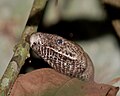 Chilabothrus type species; the Puerto Rican boa (C. inornatus)
 -
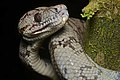 Corallus type species; the Amazon tree boa (C. hortulana)
 -
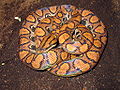 Epicrates type species; the rainbow boa (E. cenchria)
 -
 Eunectes type species; the green anaconda (E. murinus)
 -
 Candoia type species; the Pacific ground boa (C. carinata)
 -
 Calabaria type species; the Calabar python (C. reinhardtii)
 -
 Charina type species; the northern rubber boa (C. bottae)
 -
 Eryx type species; the javelin sand boa (E. jaculus)
 -
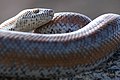 Lichanura type species; the desert rosy boa (L. trivirgata)
 -
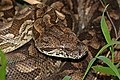 Acrantophis type species; Dumeril's boa (A. dumerili)
 -
 Sanzinia type species; the Madagascar tree boa (S. madagascariensis)
.jpg)


_male_head_Isalo.jpg)

See also
[edit]Notes
[edit]References
[edit]- ^ a b Gray, John Edward (1825). "A Synopsis of the Genera of Reptiles and Amphibia, with a Description of some new Species". Annals of Philosophy. 10 (3): 209–210.
- ^ a b c d McDiarmid, R.W.; Campbell, J.A.; Touré. T. 1999. Snake Species of the World: A Taxonomic and Geographic Reference Vol. 1. Herpetologists' League. 511 pp. ISBN 1-893777-00-6 (series). ISBN 1-893777-01-4 (volume).
- ^ a b c d e f "Boidae". Integrated Taxonomic Information System. Retrieved 14 July 2008.
- ^ a b c Parker, H.W.; Grandison, A.G.C. 1977. Snakes – A Natural History. Second Edition. British Museum (Natural History) and Cornell University Press. 108 pp. 16 plates. LCCCN 76-54625. ISBN 0-8014-1095-9 (cloth), ISBN 0-8014-9164-9 (paper).
- ^ Boidae Archived 2008-05-18 at the Wayback Machine at VMNH. Accessed 15 July 2008.
- ^ Mehrtens JM (1987). Living Snakes of the World in Color. New York: Sterling Publishers. ISBN 0-8069-6460-X.[page needed]
- ^ Stidworthy J (1974). Snakes of the World. Grosset & Dunlap. ISBN 0-448-11856-4.
- ^ Carr, Archie Fairly (1963). The Reptiles. Life Nature Library. New York: Time. LCCN 63012781.[page needed]
- ^ a b c Reynolds, RG; Niemiller, ML; Revell, LJ (2014). "Toward a Tree-of-Life for the boas and pythons: multilocus species-level phylogeny with unprecedented taxon sampling" (PDF). Molecular Phylogenetics and Evolution. 71: 201–213. doi:10.1016/j.ympev.2013.11.011. PMID 24315866. Archived from the original (PDF) on 2015-12-02. Retrieved 2018-05-14.
- ^ Pyron, R. A.; Reynolds, R. G.; Burbrink, F. T. (2014). "A Taxonomic Revision of Boas (Serpentes: Boidae)" (PDF). Zootaxa. 3846 (2): 249–260. doi:10.11646/zootaxa.3846.2.5. PMID 25112250. Archived (PDF) from the original on 2022-10-09.
Further reading
[edit]- Kluge, A.G. 1991. Boine Snake Phylogeny and Research Cycles. Misc. Pub. Museum of Zoology, Univ. of Michigan No. 178. PDF at University of Michigan Library. Accessed 8 July 2008.
External links
[edit]


Boidae
View on GrokipediaPhysical Characteristics and Biology
Morphology
Boidae, the family of true boas, exhibit a suite of distinctive anatomical features adapted for a constricting lifestyle, including specialized cranial elements that facilitate ingestion of large prey. The skull is characterized by elongated supratemporal and quadrate bones, which contribute to a wide gape essential for swallowing sizable meals. These bones allow for significant mobility in the jaw apparatus, enabling the snake to accommodate prey larger than the head diameter. Additionally, the lower jaw is relatively rigid compared to more advanced snake lineages, featuring a prominent coronoid element that supports the jaw musculature.[8][2] The cranium lacks postfrontal bones, a primitive trait distinguishing Boidae from some related groups, and the premaxilla bears 2-4 small teeth. Many species possess labial pits, specialized heat-sensing organs located between the scales of the upper lip, which detect infrared radiation from warm-blooded prey.[2][9][10] The postcranial skeleton retains vestiges of the pelvic girdle, manifested as anal spurs—small, claw-like structures derived from hindlimb remnants—most prominent in males and used in courtship. These spurs are absent or reduced in females, highlighting subtle sexual differences. The body is covered in imbricate scales, with dorsal scales typically smooth but occasionally weakly keeled in certain species, aiding in camouflage and movement through varied terrains. Ventral scales are broad and undivided, forming a single row that facilitates locomotion via rectilinear and lateral undulation. The head is covered in small, uniform scales rather than large shields, contributing to a less distinct cranial profile compared to colubrid snakes.[2][8] Size varies markedly across the family, from diminutive species like the Pacific ground boa (Candoia carinata), which rarely exceeds 1 m in length, to massive forms such as the green anaconda (Eunectes murinus), capable of reaching up to approximately 6 m in length and 110 kg in weight.[11][12][13] This range reflects adaptations to diverse prey sizes and habitats. Sexual dimorphism is pronounced in most species, with females generally attaining larger body sizes than males, often by 20-50%, an adaptation linked to the demands of viviparous reproduction.[11][12][13]Reproduction
Members of the Boidae family exhibit primarily ovoviviparous reproduction, in which females retain fertilized eggs internally until the embryos develop and hatch within the oviduct, resulting in live birth.[14] This mode is characteristic of most boine and pythonine species, with gestation periods typically lasting 4 to 8 months depending on environmental conditions and species.[14] For example, in the boa constrictor (Boa constrictor), gestation averages 5 to 8 months, while in the Brazilian rainbow boa (Epicrates cenchria), it is about 5 months.[15] Litters generally consist of 10 to 60 young, with an average of around 25 in many species, and offspring are born fully formed and independent.[14] Oviparity occurs rarely within the family, primarily in some erycine species such as sand boas of the genus Eryx and candoiine species such as those in the genus Candoia, where females lay eggs that hatch shortly after deposition; this trait represents a derived reversal from ancestral viviparity in Boidae.[16][2] Sexual maturity is reached at 2 to 4 years of age, varying by species and influenced by growth rates; for instance, boa constrictors mature at 2 to 3 years, while rubber boas (Charina bottae) take 3 to 5 years.[17] Males employ vestigial anal spurs to stimulate the female's cloaca during courtship, facilitating hemipenal insertion.[14] Mating behaviors in Boidae often involve male-male combat, where rivals raise their forebodies and attempt to pin each other down to gain access to receptive females, as observed in species like Epicrates assisi.[18] Males detect female pheromones via chemosensory cues, using their forked tongues to track scents, which helps in locating mates during the breeding season.[19] Females can store viable sperm in specialized oviductal regions for delayed fertilization, allowing ovulation to occur months after mating, as documented in species like the Amazon tree boa (Corallus hortulanus).[20] Parental care is minimal across the family, with newborns receiving no post-birth protection or provisioning from adults.[21] Litter size positively correlates with female body size in Boidae, as larger females produce more offspring due to greater reproductive capacity; this pattern holds in species such as Boa constrictor, where litter numbers increase with snout-vent length.[22]Feeding and Predation
Members of the Boidae family are primarily ambush predators that lie in wait for prey, often remaining motionless for extended periods to avoid detection before launching a rapid strike to seize and coil around the victim. This sit-and-wait strategy allows them to exploit both diurnal and nocturnal opportunities, with strikes occurring on the ground or in arboreal settings. Upon contact, the snake forms ventral-lateral coils around the prey's thorax, tightening the loops in response to the victim's exhalations and movements.[23][24] The constriction mechanism in Boidae does not involve crushing bones but instead applies escalating pressure to restrict blood flow, leading to cardiac arrest or asphyxiation within minutes. Boas detect the prey's heartbeat through sensory cues and modulate coil tension accordingly, increasing pressure up to approximately 189 mmHg when a pulse is present and releasing the coils shortly after it ceases, typically within 17-22 minutes.[24][25] This precise control ensures efficient subdual without unnecessary energy expenditure. Boidae exhibit a generalist diet comprising mammals, birds, and reptiles, with ontogenetic shifts from ectothermic prey in juveniles to endothermic prey in adults. Smaller species, such as treeboas in the genus Corallus, primarily consume lizards (e.g., Anolis spp.), frogs, birds, and small mammals, while larger forms like the boa constrictor (Boa constrictor) target opossums (Didelphis albiventris), kiskadees (Pitangus sulphuratus), and lizards (Ameiva ameiva). Giant species such as the green anaconda (Eunectes murinus) prey on substantial vertebrates including capybaras and caimans, with recorded prey masses reaching up to 93% of the snake's body weight.[26][23][11] Following constriction, prey is swallowed whole head-first, facilitated by highly flexible jaws that enable a gape sufficient for large items relative to the snake's size. Digestion occurs over 5-14 days, depending on meal size and temperature, during which powerful stomach acids break down bones, fur, and other indigestible components; metabolic rates peak within 14-20 hours post-feeding and remain elevated for the duration. Boidae can endure prolonged fasting periods of several months between meals—up to 96 days in observed cases—relying on stored fat reserves while upregulating digestive organs only upon feeding.[27][28] When threatened by predators, Boidae display defensive behaviors including body inflation, hissing, and agonistic strikes that often serve as bluffs without full commitment to biting. Larger individuals may coil and recoil rapidly to deter attackers, prioritizing escape over confrontation.[29]Distribution and Ecology
Geographic Range
The Boidae family, comprising non-venomous constricting snakes, has a predominantly Neotropical native distribution spanning from the western United States and Canada (for Erycinae genera like Charina and Lichanura) through northern Mexico, Central America, the Caribbean islands, and South America as far south as northern Argentina, with the subfamily Boinae showing particular dominance in this region.[2] Disjunct populations occur outside the Americas, including in Africa on Madagascar and the Seychelles (subfamily Sanziniinae), in Asia from India (subfamily Erycinae, genus Eryx) and the eastern Indonesian archipelago to Papua New Guinea and surrounding Pacific islands (subfamily Candoiinae, genus Candoia), and in southeastern Europe such as the Caucasus region (genus Eryx in subfamily Erycinae).[30][31][32] Endemism is a prominent feature of Boidae distributions, with over one-third of species restricted to islands or archipelagos, highlighting hotspots like the West Indies and Madagascar.[33] For instance, the genus Chilabothrus is endemic to the Caribbean, encompassing multiple island-restricted species across the Greater and Lesser Antilles, while the genus Sanzinia is confined to Madagascar, where species such as Sanzinia madagascariensis occupy forested regions.[33][34] Introduced populations of Boidae have established beyond their native ranges, notably Boa constrictor in southern Florida, USA, where it has become invasive and poses threats to native wildlife through predation and competition.[35] Similar invasive establishments occur in Puerto Rico, contributing to ecological disruptions in island ecosystems.[36] Biogeographic patterns within Boidae reflect a Neotropical core for Boinae, contrasted by Old World distributions of Sanziniinae and Candoiinae, which align with vicariance from Gondwanan fragmentation during the Late Cretaceous and Paleogene.[37] Altitudinally, species range from sea level to elevations up to approximately 1,400 m in the Andes for related taxa like Boa nebulosa, with Boa constrictor reaching up to 1,000 m.[38]Habitat and Behavior
Members of the Boidae family exhibit remarkable habitat diversity, adapting to a wide array of ecological niches across their global distribution. Terrestrial species, such as the boa constrictor (Boa constrictor), thrive in varied environments including savannas and semi-arid regions, while arboreal forms like the emerald tree boa (Corallus caninus) are specialized for life in the canopy of tropical rainforests. Semi-aquatic anacondas (Eunectes spp.), including the green anaconda (Eunectes murinus), predominantly inhabit wetlands, swamps, and slow-moving rivers where they can exploit aquatic prey resources. Fossorial species, exemplified by sand boas (Eryx spp.) in arid deserts and rubber boas (Charina bottae) in moist forest soils, spend much of their time burrowed underground, utilizing loose substrates for shelter and foraging.[39][40][41][42][43] Thermoregulation in Boidae relies heavily on behavioral strategies suited to their ectothermic physiology, with individuals shuttling between sun-exposed sites for basking and shaded or burrowed refugia to prevent overheating. In hot climates, species like rosy boas (Lichanura trivirgata) bask during cooler periods but retreat underground during peak heat to maintain optimal body temperatures. Fossorial taxa, such as rubber boas, exploit deep, loose soils for burrowing, which provides thermal stability by buffering against diurnal fluctuations. Nocturnal or crepuscular activity patterns further aid thermoregulation by minimizing exposure to midday solar radiation and desiccation risks in arid habitats.[44][4] Most boid species are solitary, interacting minimally outside of brief mating encounters, which reduces competition for resources in resource-limited environments. However, semi-aquatic anacondas occasionally form aggregations in drying pools or riverbanks during seasonal low water periods, potentially for thermoregulation or opportunistic foraging. In temperate regions, erycine boas like the rubber boa engage in rare communal hibernation, clustering in shared underground dens during winter to conserve heat and evade freezing temperatures. These social tendencies are exceptional within the family and are typically confined to specific environmental stresses.[45][46] Activity patterns among Boidae are predominantly crepuscular or nocturnal, particularly in warmer climates, allowing individuals to avoid excessive heat and predation while capitalizing on heightened prey activity at dawn and dusk. For instance, Puerto Rican boas (Chilabothrus inornatus) forage nocturnally in forested habitats, emerging from cover as temperatures cool. Temperate species, such as the rubber boa, exhibit seasonal shifts, with increased surface activity in spring and fall but prolonged inactivity or limited movements during extreme summer heat or winter cold. While long-distance migrations are uncommon, some populations in transitional zones display short-range seasonal displacements to optimal microhabitats for foraging or overwintering.[47][48][49] Boidae often engage in commensal interactions with other species, utilizing rodent burrows or rock crevices created by mammals for shelter without direct competition or harm. For example, fossorial erycines like Kenyan sand boas (Gongylophis colubrinus) opportunistically occupy abandoned rodent tunnels in desert soils, enhancing their survival in harsh environments. Human conflicts are generally low due to the secretive nature of most species, though invasive populations, such as boa constrictors in Florida, can lead to occasional encounters with pets or livestock, prompting localized management efforts.[50][42][51] Sensory capabilities in Boidae extend beyond their labial heat-sensing pits, with tongue flicking serving as a primary mechanism for detecting chemical cues in the environment. This behavior allows snakes like the rainbow boa (Epicrates cenchria) to sample airborne or substrate-bound pheromones, aiding in mate location, prey tracking, and habitat assessment via the vomeronasal organ. Additionally, these snakes rely on vibration detection through their jawbones and body scales to sense approaching prey or predators, particularly in low-visibility conditions such as dense vegetation or underground. This multimodal sensory strategy enhances foraging efficiency and predator avoidance in diverse habitats.[52][53]Taxonomy and Systematics
Taxonomic History
The family Boidae was established by John Edward Gray in 1825 to encompass a group of nonvenomous constricting snakes, initially including both boas and pythons under a single classification.[54] This early arrangement reflected limited understanding of their relationships, with distinctions emerging based on reproductive modes: boas noted for viviparity, contrasting the oviparity of pythons.[55] Throughout the 19th and 20th centuries, classifications underwent significant shifts as morphological studies refined the group's boundaries. Pythons were gradually separated from Boidae, culminating in their recognition as the distinct family Pythonidae by the late 20th century, driven by differences in cranial morphology, dentition, and reproduction.[56] Concurrently, non-boine lineages such as the erycines (sand and rubber boas) sparked debates over their status as subfamilies within Boidae or as independent families, with proposals varying based on vertebral and scale characters.[56] The advent of molecular phylogenetics in the 2000s transformed Boidae taxonomy by revealing deep paraphyly within the family. Studies employing mitochondrial DNA (e.g., cytochrome b) and nuclear genes demonstrated that traditional Boidae excluded key relatives like the African Calabar ground boa (Calabaria), rendering the group non-monophyletic.[6] For instance, analyses by Austin (2000) on Pacific boas and Burbrink (2004) on broader boid relationships highlighted biogeographic and genetic divergences that challenged prior groupings.[55][33] These findings prompted major revisions in 2013–2014, informed by comprehensive multilocus phylogenies covering over 80% of boid species. Pyron et al. (2013) elevated several lineages to family rank, including Calabaridae for Calabaria to resolve paraphyly, while restricting Boidae to core boine taxa.[57] Pyron et al. (2014) further refined this by revalidating subfamilies like Candoiinae and adjusting Ungaliophiinae, incorporating morphological corroboration from earlier works such as McDowell (1987).[56] From 2020 to 2025, taxonomic updates have focused on integrating new genetic data and field discoveries, with a 2018 checklist (updated through 2025 assessments) recognizing 66 species across 14 genera in the broader Booidea superfamily, emphasizing monophyly in Boidae proper.[58] Recent revalidations include expansions in genera like Chilabothrus, supported by phylogeographic studies revealing cryptic diversity.[33] Ongoing controversies persist regarding peripheral taxa, such as the placement of Ungaliophiinae, with some molecular evidence suggesting affiliation with Tropidophiidae based on shared cranial and vertebral traits, challenging Booidea boundaries.[59] Debates on superfamily Booidea limits continue, as phylogenies variably include or exclude dwarf boas and Old World lineages, awaiting resolution from expanded genomic datasets.[54]Subfamilies and Genera
The family Boidae is divided into six subfamilies, encompassing 14 genera and 66 species along with 33 subspecies, based on 2025 taxonomic assessments. This classification is supported by molecular phylogenies and morphological analyses that delineate distinct evolutionary lineages within the boas.[60] The subfamilies exhibit varied diagnostic traits, reproductive modes, and geographic distributions, reflecting their adaptation to diverse environments from tropical forests to arid regions. For instance, Boinae species are typically robust and viviparous, while some Erycinae are smaller and oviparous. Recent taxonomic revisions, such as the description of Boa atlantica in 2024, highlight ongoing refinements to species boundaries within the family. The following table summarizes the current breakdown:| Subfamily | Genera (examples) | Species Count | Key Diagnostic Traits | Primary Distribution |
|---|---|---|---|---|
| Boinae | 5 (e.g., Boa, Chilabothrus, Corallus, Epicrates, Eunectes) | 34 | Robust build, viviparous; includes large constrictors like anacondas | New World (Central/South America, Caribbean) |
| Candoiinae | 1 (Candoia) | 5 | Small to medium, blunt heads; semi-arboreal | Pacific islands (e.g., Fiji, Solomon Islands) |
| Erycinae | 3 (e.g., Eryx, Charina, Lichanura) | 18 | Small size, some oviparous; fossorial or terrestrial sand-dwellers | Old World (Asia, Africa), western North America |
| Sanziniinae | 2 (Acrantophis, Sanzinia) | 4 | Arboreal, keeled scales; viviparous tree boas | Endemic to Madagascar |
| Calabariinae | 1 (Calabaria) | 1 | Burrowing, reduced eyes; fossorial | Central/West Africa |
| Ungaliophiinae | 2 (Exiliboa, Ungaliophis) | 3 | Dwarf size, slender; viviparous | Central America (Mexico to Costa Rica) |