Hubbry Logo
BulbBulbMain
Open search
Bulb
Community hub
Bulb
logo
8 pages, 0 posts
0 subscribers
Be the first to start a discussion here.
Bulb
Bulb
from Wikipedia
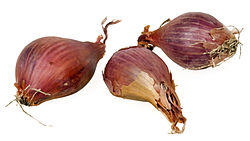
Shallot bulbs
Hippeastrum (amaryllis) bulb

In botany, a bulb is a short underground stem with fleshy leaves or leaf bases[1] that function as food storage organs during dormancy. In gardening, plants with other kinds of storage organ are also called ornamental bulbous plants or just bulbs.

Description

[edit]
Longitudinal section through bulb
Cross section of onion bulb

The bulb's leaf bases, also known as scales, generally do not support leaves, but contain food reserves to enable the plant to survive adverse conditions. At the center of the bulb is a vegetative growing point or an unexpanded flowering shoot. The base is formed by a reduced stem, and plant growth occurs from this basal plate. Roots emerge from the underside of the base, and new stems and leaves from the upper side. Tunicate bulbs have dry, membranous outer scales that protect the continuous lamina of fleshy scales.[2] Species in the genera Allium, Hippeastrum, Narcissus, and Tulipa all have tunicate bulbs. Non-tunicate bulbs, such as Lilium and Fritillaria species, lack the protective tunic and have looser scales.[3]

Bulbous plant species cycle through vegetative and reproductive growth stages; the bulb grows to flowering size during the vegetative stage and the plant flowers during the reproductive stage. Certain environmental conditions are needed to trigger the transition from one stage to the next, such as the shift from a cold winter to spring.[2] Once the flowering period is over, the plant enters a foliage period of about six weeks during which time the plant absorbs nutrients from the soil and energy from the sun for setting flowers for the next year. Vegetative bulbs may be planted like seeds and will sprout into plants. Bulbs dug up before the foliage period is completed will not bloom the following year but then should flower normally in subsequent years.[4]

Plants that form bulbs

[edit]

Plants that form underground storage organs, including bulbs as well as tubers and corms, are called geophytes. Some epiphytic orchids (family Orchidaceae) form above-ground storage organs called pseudobulbs, that superficially resemble bulbs.[citation needed]

Nearly all plants that form true bulbs are monocotyledons, and include:[4]

The only eudicot plants that produce true bulbs are just a few species in the genus Oxalis, such as Oxalis latifolia.[5][6]

Bulbil

[edit]

A bulbil is a small bulb, and may also be called a bulblet, bulbet, or bulbel.[7]

Small bulbs can develop or propagate a large bulb. If one or several moderate-sized bulbs form to replace the original bulb, they are called renewal bulbs.[7] Increase bulbs are small bulbs that develop either on each of the leaves inside a bulb, or else on the end of small underground stems connected to the original bulb.[7]

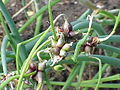
Some lilies, such as the tiger lily Lilium lancifolium, form small bulbs, called bulbils, in their leaf axils. Several members of the onion family, Alliaceae, including Allium sativum (garlic), form bulbils in their flower heads, sometimes as the flowers fade, or even instead of the flowers (which is a form of apomixis). The so-called tree onion (Allium × proliferum) forms small onions which are large enough for pickling.[citation needed]

Some ferns, such as the hen-and-chicken fern, produce new plants at the tips of the fronds' pinnae that are sometimes referred to as bulbils.

See also

[edit]

References

[edit]

Further reading

[edit]
Revisions and contributorsEdit on WikipediaRead on Wikipedia
from Grokipedia
A bulb is a specialized underground organ in certain , functioning as a storage structure for nutrients, , and reserves that allow the to endure during unfavorable conditions such as cold winters or dry summers, and to support rapid growth and flowering upon favorable seasons. It consists of a short, flattened stem known as the basal plate, from which emerge below and a central (the growing point for leaves and flowers) arises above, enveloped by overlapping layers of fleshy, modified leaves called scales that serve as the primary nutrient storage sites. True bulbs are primarily found in monocotyledonous plants within families such as Liliaceae and Amaryllidaceae (including the former Alliaceae), and they differ from similar geophytic structures like corms (solidified stems), rhizomes (horizontal stems), tubers (swollen roots or stems), and tuberous roots by their layered, leaf-derived scales. Bulbs are broadly categorized into two structural types: tunicate bulbs, where the scales are fused at their bases into a papery outer covering or "tunic" that protects the inner layers, as seen in onions (Allium cepa), garlic (Allium sativum), tulips (Tulipa spp.), and daffodils (Narcissus spp.); and imbricate (or non-tunicate) bulbs, featuring loose, overlapping scales without a protective tunic, exemplified by lilies (Lilium spp.) and snowdrops (Galanthus spp.). This distinction aids in propagation and cultivation, as tunicate bulbs can often be divided by peeling outer layers, while imbricate bulbs produce offsets or bulbils for reproduction. Bulbs play a crucial ecological and horticultural role, enabling growth cycles in temperate and Mediterranean climates, with many blooming in spring (e.g., hyacinths, ) or autumn (e.g., saffron crocuses, , though technically corms, often grouped with bulbs in contexts). They are propagated vegetatively through offsets, bulbils (small aerial bulbs), or division, and commercially, they support a global industry valued for ornamental displays in gardens, forcing for indoor blooms, and even edible uses in species like onions and leeks. Evolutionarily, bulbs represent an for survival in seasonal environments.

Definition and Structure

Description

A bulb is defined in botany as a short, underground stem, often referred to as the basal plate, surrounded by modified fleshy leaves called scales that function as primary storage organs for nutrients and water. These scales enable the bulb to support the plant's complete embryonic structure, including buds for future growth, during periods of inactivity. This structure distinguishes bulbs as a type of geophyte, adapted for subterranean persistence in various ecosystems. In plants, bulbs play a crucial role in survival by allowing the plant to endure adverse environmental conditions, such as winters, summer droughts, or seasonal aridity, through the accumulation of reserves like carbohydrates and minerals in the scales. Upon the return of favorable conditions, these reserves fuel rapid regrowth, ensuring the plant's reproductive and vegetative success without reliance on immediate external resources. This storage mechanism is particularly vital for monocotyledonous species in temperate and Mediterranean climates, where bulbs facilitate across fluctuating seasons. The basic life cycle of a bulbous begins with from the apex of the central , leading to the of leaves and sometimes flowers above ground during the active growing period. As the aerial parts senesce toward the end of the , nutrients are translocated back into the scales for storage, initiating a dormant phase where the bulb remains viable underground. This cycle repeats annually, with the bulb serving as a organ that regenerates the entire structure. Bulbs differ from other geophytes in their storage strategy, relying predominantly on modified leaves for reserves rather than or stems; for instance, rhizomes are horizontal, root-like stems that spread laterally, while corms are compact, solid stem bases without layered scales. Environmental triggers for dormancy and growth vary by species. For many spring-flowering bulbs, is induced in summer after flowering by rising temperatures and drying, while autumn cooling initiates root growth, winter chilling provides to break , and spring warming prompts and flowering.

Anatomy

The basal plate forms the foundational structure of a bulb, consisting of a shortened, flattened, and disc-like that anchors the organ in the soil. It serves as the attachment site for overlapping scales above and the emergence point for adventitious below, facilitating the bulb's stability and growth initiation. From this compressed stem base, the bulb's vascular connections originate, enabling nutrient flow to support post-dormancy development. Surrounding the basal plate are the scales, which are modified, fleshy leaves arranged in overlapping layers that envelop the central growing point. These scales primarily function as storage organs, accumulating and reserves that sustain the through dormancy and fuel rapid spring growth. Vascular tissues extend into the scales from the basal plate, allowing the translocation of stored carbohydrates and minerals during active phases. A , when present, comprises a dry, papery outer layer derived from modified scales that encases the fleshy interior, providing protection against , physical injury, and pathogens. This protective covering helps maintain the integrity of the inner scales' storage function. Adventitious roots develop from the lower surface of the basal plate, forming a fibrous system that anchors the bulb and absorbs and essential nutrients from the surrounding once dormancy ends. These roots connect via vascular tissues to the rest of the bulb, ensuring efficient uptake and distribution of resources to support emerging shoots. The shoot apex, located at the upper center of the basal plate, consists of a dormant housing the apical , which resumes activity to produce the flowering stem, leaves, and . This meristematic region integrates with the bulb's vascular network for nutrient supply during outgrowth. Throughout the bulb, vascular tissues—comprising for upward water and mineral transport and for downward carbohydrate movement—link the scales, basal plate, , and shoot apex, enabling coordinated nutrient cycling during growth periods. This interconnected system underscores the bulb's efficiency as a .

Types of Bulbs

Tunicate Bulbs

Tunicate bulbs are underground storage organs enclosed by a thin, papery covering called a , which is formed from the dried outer scales of modified leaves. These scales surround concentric layers of fleshy, nutrient-storing inner scales that provide reserves for the plant's growth and reproduction. The acts as a protective barrier, shielding the inner scales from mechanical injury and excessive moisture loss during or transport. As the bulb matures, its outer scales undergo , drying out and hardening to create the durable that encases the structure. This ensures the bulb's integrity in varying environmental conditions, allowing it to remain viable for extended periods. The resulting layered configuration, with the tunic as the outermost layer, enhances the bulb's resilience compared to unprotected forms. The protective qualities of the make tunicate bulbs easier to handle, store, and ship without damage, as the covering prevents and physical abrasion. This is particularly prevalent in plants from arid or cold climates, where seasonal dormancy demands robust safeguards against environmental stresses. Representative examples include the onion (Allium cepa), (Allium sativum), and (Tulipa spp.), all of which rely on this structure for survival and propagation in such habitats.

Nontunicate Bulbs

Nontunicate bulbs, also known as scaly or imbricate bulbs, are underground storage organs composed of loosely overlapping fleshy scales without a unified papery outer covering. Unlike tunicate bulbs, their scales are separate and succulent, giving the bulb a segmented, layered appearance that lacks protective sheathing. In terms of structure, the scales in nontunicate bulbs overlap in an imbricate fashion, similar to , and attach to a central basal plate that anchors the organ and supports and shoot development. Each scale functions as a modified capable of independent regeneration, allowing separated segments to form complete new bulbs under suitable conditions. This facilitates easy vegetative through scale division, a technique where individual scales are removed and treated to induce bulblet formation at the cut edges. The absence of a tunic provides nontunicate bulbs with flexibility in consistently moist environments, where they can readily absorb and nutrients via adventitious without relying on a barrier layer for retention. However, this structure also renders them vulnerable to drying out, necessitating careful handling and storage in cool, humid conditions to maintain scale integrity prior to planting. Representative examples include lilies ( spp.) and fritillaries ( spp.), both of which exhibit this scaly morphology and are propagated effectively through scale separation.

Reproduction and Propagation

Vegetative Reproduction

Vegetative reproduction in bulbs primarily occurs through the formation of daughter bulbs, or offsets, which arise from axillary buds at the basal plate or the bases of fleshy scales during the plant's active growth period. These offsets develop as small, genetically identical clones of the parent bulb, emerging from the modified stem tissue that constitutes the bulb's core structure. Offset production begins at the base of the mother bulb, where lateral buds proliferate and swell into miniature bulbs over successive seasons. As the offsets mature, they naturally detach or can be separated, establishing independent that continue the cycle of clonal expansion. This process is particularly evident in bulbs like those of tulips and daffodils, where offsets cluster around the depleted parent, forming dense clumps. In nontunicate bulbs, such as lilies, vegetative multiplication often involves bulblets forming at the bases of individual scales, which are loosely overlapping modified leaves; these bulblets can develop into new bulbs while still attached to the parent structure. The timing of offset and bulblet formation aligns with the post-flowering phase, when senescing leaves redirect photosynthates and nutrients to the underground storage organs, replenishing reserves and fueling daughter bulb development during . This asexual strategy confers genetic uniformity, preserving adaptive traits across generations, and facilitates rapid habitat colonization by enabling efficient, localized spread without reliance on pollinators or .

Bulbils

Bulbils are small, detachable propagules that function as miniature bulbs, typically forming in the axils of leaves, on inflorescences, or along stems in various plant species, and they produce genetically identical clones of the parent plant through . These structures commonly develop in the leaf axils of lilies, such as Lilium lancifolium, where they emerge from axillary meristems in the upper portions of the stem. In garlic (Allium sativum), bulbils form as clove-like units within the inflorescence umbel, replacing aborted flowers. Once mature, bulbils detach naturally or fall to the soil, where they germinate and develop into full-sized bulbs, allowing rapid establishment without the need for seed production or germination. Evolutionarily, bulbils represent an for enhanced survival and dispersal, particularly in unstable habitats or under conditions where sexual fails, by providing a reliable mechanism for clonal propagation and . For instance, in the tiger lily (), bulbils drop from leaf axils to form dense colonies of genetically uniform . Similarly, certain species, like Agave macroacantha, produce numerous bulbils on flowering stalks that detach and root, promoting widespread vegetative spread.

Bulbous Plants

Common Examples

Bulbous plants are predominantly found in monocotyledonous families, showcasing a wide diversity of ornamental and edible species. In the family, daffodils (Narcissus spp.) are iconic spring-blooming perennials with trumpet-shaped flowers, native to and , while snowdrops ( spp.) produce delicate white, drooping blooms in early spring, often emerging through in temperate woodlands. These tunicate bulbs highlight the family's adaptation for seasonal and nutrient storage. The family also features prominent bulbous genera, including lilies ( spp.), which produce large, fragrant flowers in a range of colors and are valued for their architectural stems and summer blooms across temperate zones. Tulips (Tulipa spp.), originating from , form colorful cup-shaped flowers on slender stems, representing a key example of bulbs that have been extensively hybridized for . The genus within encompasses economically significant edible bulbous plants, such as onions (Allium cepa), garlic (Allium sativum), and leeks (), which develop layered underground bulbs used worldwide for culinary and medicinal purposes due to their compounds. Among , underground bulbs are rare but occur in species of (wood sorrel) in the family, such as , a North American native that emerges from a small bulb in spring with violet flowers and clover-like leaves, demonstrating an unusual storage adaptation outside monocots. While true bulbs are characteristic of certain families, pseudobulbs—swollen sympodial stems that function similarly for water and nutrient storage but are not true bulbs—appear in orchids like spp., epiphytic or terrestrial tropical species that produce pseudobulbs supporting vibrant, long-lasting flowers. Globally, bulbous plants are most diverse and abundant in temperate regions of the , where seasonal climates favor their dormancy cycles, though tropical exceptions exist, such as Crinum spp. in , which thrive in subtropical and tropical environments with large, fragrant lily-like flowers.

Ecological Adaptations

Bulbous plants, classified as geophytes, exhibit as a key that enables in unpredictable environments by utilizing underground storage organs to shield against various stressors. The subterranean position of bulbs provides from herbivory, as many animals cannot access buried structures, thereby preserving nutrient reserves for future growth cycles. Additionally, this facilitates resilience to , where belowground buds regenerate post-disturbance, and to flooding, as the dormant state minimizes metabolic demands during prolonged submersion or waterlogged soils. These adaptations are particularly evident in geophytes inhabiting regions with seasonal extremes, allowing them to remain viable through adverse periods. In ecosystems, bulbs play a vital in nutrient cycling by mobilizing stored carbohydrates and minerals to fuel rapid early-season growth, often as spring ephemerals that emerge before canopy closure in forests or after winter in grasslands. This timely release supports not only the plant's own development but also provides essential and resources for early-emerging pollinators, enhancing interactions in nutrient-limited post-dormancy landscapes. Geophytes thus contribute to nutrient dynamics, recycling back into the system through leaf senescence after brief aboveground phases. Dispersal mechanisms in bulbous promote clonal population expansion, with offsets and bulbils facilitating spread via animal transport—such as carrying bulbils—or passive movement by in riparian habitats. This vegetative fosters dense, genetically uniform stands that stabilize soils and maintain population persistence in fragmented landscapes, while briefly linking to through occasional production in bulbils. Geophytes predominantly occupy habitats like temperate grasslands and forests, where seasonal climates with cold winters and dry summers favor their dormancy-growth cycle, thereby boosting local by occupying temporal niches unavailable to other life forms. In such environments, they enhance through ephemeral flowering displays that support specialized pollinators and herbivores. However, bulb-forming species face significant threats from , which damages underground organs and reduces regenerative capacity, and from , including altered precipitation patterns that disrupt cues and increase drought stress.

Cultivation and Uses

Growing Conditions

Bulb plants thrive in environments that mimic their natural and growth cycles, requiring specific , planting, and care practices to ensure healthy development and vibrant blooms. Well-drained is essential to prevent bulb rot, with sandy being ideal as it allows excess moisture to escape while retaining necessary ; a range of neutral to slightly acidic (6.0-7.0) supports optimal uptake. Poor drainage can lead to fungal infections, so incorporating like into heavy clay soils improves without compacting the zone. Planting depth and timing vary by species but generally follow a rule of burying the bulb at a depth two to three times its height to protect it from fluctuations and pests; for spring-blooming bulbs like tulips, fall planting ( to in temperate zones) allows roots to establish before winter . This timing ensures emergence in early spring, while summer-blooming bulbs such as lilies are planted in spring after the last . bulbs, with their protective layers, handle deeper planting better than nontunicate types, which may require shallower depths to avoid suffocation. During active growth, bulbs need moderate watering to keep consistently moist but not waterlogged, typically providing about 1 inch per week, while full sun exposure (at least 6 hours daily) promotes strong stems and colorful flowers; a dry dormancy period post-blooming is crucial, reducing water to mimic natural arid phases and prevent premature . In shaded conditions, growth may become leggy and blooms sparse, so is key for like daffodils that bright . Common cultivation challenges include pests such as bulb flies, whose larvae tunnel into the base causing collapse, and diseases like basal rot from fungi, which thrive in wet, warm soils and manifest as yellowing leaves and mushy bases; prevention involves every 2-3 years, inspecting bulbs for damage before planting, and applying organic mulches to regulate soil temperature. , including nematodes for fly control, minimizes chemical use while maintaining plant health. Forcing techniques enable indoor blooming by simulating winter conditions through , where bulbs like hyacinths are chilled at 35-48°F (2-9°C) for 10-15 weeks before potting in a cool, dark place to initiate rooting, followed by gradual warming to trigger flowers for holidays such as or . This method requires well-drained potting mix and consistent monitoring to avoid overwatering, ensuring synchronized blooms without stressing the bulb beyond recovery.

Economic and Cultural Significance

Bulbs, particularly onions and garlic from the Allium genus, serve as essential staples in global cuisine, providing flavor, nutrition, and versatility in dishes across cultures. India leads global onion production with approximately 30 million metric tons annually (as of 2025 estimates), while produces about 24.9 million metric tons, accounting for around 22% of worldwide output and underscoring its dominance in agricultural exports. Similarly, garlic production is heavily concentrated in , which yields over 20.6 million metric tons each year (as of 2023), representing more than 70% of the global supply and supporting its widespread use in culinary traditions from Asian stir-fries to Mediterranean sauces. The ornamental bulb trade has profoundly influenced economic history, most notably through in 17th-century , where speculative frenzy drove tulip bulb prices to extraordinary heights—equivalent to a skilled craftsman's annual wage for a single rare bulb—before collapsing in 1637 and marking one of the earliest recorded economic bubbles. Today, the remains the epicenter of the modern flower bulb industry, cultivating tulips, lilies, and other varieties on over 28,000 hectares of land (as of 2023) and exporting billions of bulbs annually, with flower bulb exports valued at more than €1 billion in recent years. The area for bulb cultivation in the increased by 21% from 2013 to 2023, reflecting expanding demand. Medicinally, garlic has been valued for centuries due to its properties, with historical uses dating back to ancient civilizations for treating infections, as evidenced by its application in wound dressings. The key compound , formed when garlic is crushed, exhibits broad-spectrum antibacterial activity against Gram-positive and , contributing to its enduring role in traditional and modern herbal remedies. Culturally, bulbs carry rich symbolism in art and literature; lilies, often depicted in religious paintings such as scenes, represent purity and the Virgin Mary's innocence, a motif rooted in Christian since medieval times. Daffodils, meanwhile, evoke rebirth and renewal in poetry, symbolizing the arrival of spring and new beginnings, as immortalized in William Wordsworth's famous to their joyful emergence from winter dormancy. The global flower bulb market exceeds $3 billion in value (as of 2023), driven by ornamental demand and supported by major exporters like the , while contributes through shipments of live plants, bulbs, and valued at over $107 million in 2024, including iris varieties prized for their vibrant hues and adaptability.

References

Add your contribution
Related Hubs
User Avatar
No comments yet.