Hubbry Logo
Captivity narrativeCaptivity narrativeMain
Open search
Captivity narrative
Community hub
Captivity narrative
logo
8 pages, 0 posts
0 subscribers
Be the first to start a discussion here.
Captivity narrative
Captivity narrative
from Wikipedia
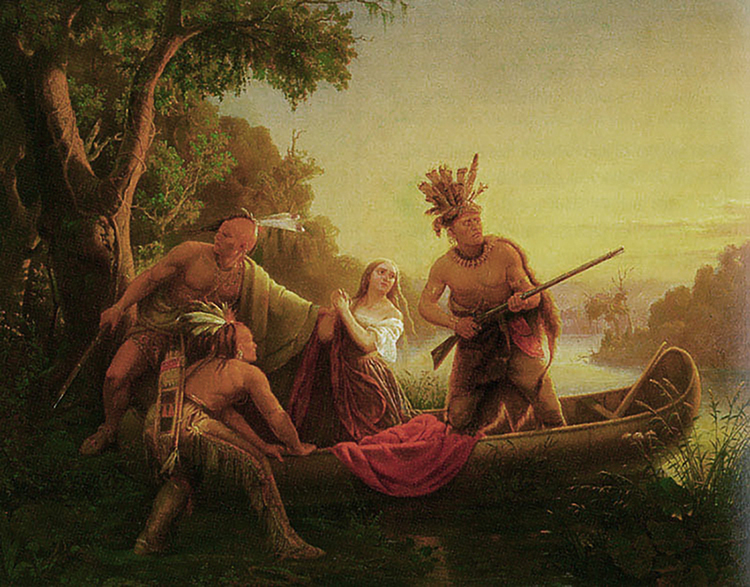
The Abduction of Daniel Boone's Daughter by the Indians, Charles Ferdinand Wimar, 1853

Captivity narratives are typically personal accounts of people who have been captured by an enemy, generally an enemy with a foreign culture. The best-known captivity narratives in North America are those concerning Europeans and Americans taken as captives and held by the Indigenous peoples of North America. These narratives have had an enduring place in literature, history, ethnography, and the study of Native peoples.

They were preceded, among English-speaking peoples, by publication of captivity narratives related to English people taken captive and held by Barbary pirates, or sold for ransom or slavery. Others were taken captive in the Middle East. These accounts established some of the major elements of the form, often putting it within a religious framework, and crediting God or Providence for gaining freedom or salvation. Following the North American experience, additional accounts were written after British people were captured during exploration and settlement in India and East Asia.

Since the late 20th century, captivity narratives have also been studied as accounts of persons leaving, or held in contemporary religious cults or movements, thanks to scholars of religion like David G. Bromley and James R. Lewis.

A famous example of a captivity narrative, that historians regard as one of the first of its kind, is the personal account of Mary Rowlandson. Mary Rowlandson was a colonial American woman who was captured by Native Americans [1][2] in 1676 during King Philip's War and held for 11 weeks before being ransomed. In 1682, six years after her ordeal, The Sovereignty and Goodness of God: Being a Narrative of the Captivity and Restoration of Mrs. Mary Rowlandson was published.

Certain North American captivity narratives related to being held among Native peoples were published from the 18th through the 19th centuries. There had already been numerous English accounts of captivity by Barbary pirates.

Other types of captivity narratives, such as those recounted by apostates from religious movements (i.e. "cult survivor" tales), have remained an enduring topic in modern media. They have been published in books and periodicals, in addition to being the subjects of film and television programs, both fiction and non-fiction.[3]

Background

[edit]
Elisa Bravo Jaramillo by Raymond Monvoisin

Because of the competition between New France and New England in North America, raiding between the colonies was frequent. Colonists in New England were frequently taken captive by Canadiens and their Indian allies (similarly, the New Englanders and their Indian allies took Canadiens and Indian prisoners captive). According to Kathryn Derounian-Stodola, statistics on the number of captives taken from the 15th through the 19th centuries are imprecise and unreliable, since record-keeping was not consistent and the fate of hostages who disappeared or died was often not known.[4] Yet conservative estimates run into the thousands, and a more realistic figure may well be higher. Between King Philip's War (1675) and the last of the French and Indian Wars (1763), approximately 1,641 New Englanders were taken hostage.[5] During the decades-long struggle between whites and Plains Indians in the mid-19th century, hundreds of women and children were captured.[6]

Many narratives included a theme of redemption by faith in the face of the threats and temptations of an alien way of life. Barbary captivity narratives, accounts of English people captured and held by Barbary pirates, were popular in England in the 16th and 17th centuries. The first Barbary captivity narrative by a resident of North America was that of Abraham Browne (1655). The most popular was that of Captain James Riley, entitled An Authentic Narrative of the Loss of the Brig Commerce (1817).[citation needed]

Jonathan Dickinson's Journal, God's Protecting Providence ... (1699), is an account by a Quaker of shipwreck survivors captured by Indians in Florida. He says they survived by placing their trust in God to protect them. The Cambridge History of English and American Literature describes it as, "in many respects the best of all the captivity tracts."[7]

Ann Eliza Bleecker's epistolary novel, The History of Maria Kittle (1793), is considered the first known captivity novel. It set the form for subsequent Indian capture novels.[8]

Origins of narratives

[edit]

New England and the Southern colonies

[edit]
Hannah Duston by Junius Brutus Stearns

American Indian captivity narratives, accounts of men and women of European descent who were captured by Native Americans, were popular in both America and Europe from the 17th century until the close of the United States frontier late in the 19th century. Mary Rowlandson's memoir, A Narrative of the Captivity and Restoration of Mrs. Mary Rowlandson, (1682) is a classic example of the genre. According to Nancy Armstrong and Leonard Tennenhouse, Rowlandson's captivity narrative was "one of the most popular captivity narratives on both sides of the Atlantic."[9] Although the text temporarily fell out of print after 1720, it had a revival of interest in the 1780s. Other popular captivity narratives from the late 17th century include Cotton Mather's "A Notable Exploit: Dux Faemina Facti," on the captivity of Hannah Duston, as well as his account of Hannah Swarton's captivity (1697), both well-known accounts of the capture of women during King William's War, and Jonathan Dickinson's God's Protecting Providence (1699).

American captivity narratives were usually based on true events, but they frequently contained fictional elements as well. Some were entirely fictional, created because the stories were popular. One spurious captivity narrative was The Remarkable Adventures of Jackson Johonnet, of Massachusetts (Boston, 1793).[citation needed] Another is that of Nelson Lee.

Captivity in another culture brought into question many aspects of the captives' lives. Reflecting their religious beliefs, the Puritans tended to write narratives that negatively characterized Indians. They portrayed the trial of events as a warning from God concerning the state of the Puritans' souls, and concluded that God was the only hope for redemption. Such a religious cast had also been part of the framework of earlier English accounts of captivity by Barbary pirates. The numerous conflicts between Anglo-American colonists and the French and Native Americans led to the emphasis of Indians' cruelty in English-language captivity narratives, which served to inspire hatred for their enemies.[10][page needed] In William Flemming's Narrative of the Sufferings (1750), Indian barbarities are blamed on the teachings of Roman Catholic priests.[10][page needed]

During Queen Anne's War, French and Abenaki warriors made the Raid on Deerfield in 1704, killing many settlers and taking more than 100 persons captive. They were taken on a several hundred-mile overland trek to Montreal. Many were held there in Canada for an extended period, with some captives adopted by First Nations families and others held for ransom. In the colonies, ransoms were raised by families or communities; there was no higher government program to do so. The minister John Williams was among those captured and ransomed. His account, The Redeemed Captive (1707), was widely distributed in the 18th and 19th centuries, and continues to be published today. Due to his account, as well as the high number of captives, this raid, unlike others of the time, was remembered and became an element in the American frontier story.[11]

During Father Rale's War, Indians raided Dover, New Hampshire. Elizabeth Hanson wrote a captivity narrative after gaining return to her people. Susannah Willard Johnson of New Hampshire wrote about her captivity during the French and Indian War (the North American front of the Seven Years' War).

In the final 30 years of the 18th century, there was a revival of interest in captivity narratives. Accounts such as A Narrative of the Capture and Treatment of John Dodge, by the English at Detroit (1779), A Surprising Account, of the Captivity and Escape of Philip M'Donald, and Alexander M'Leod, of Virginia, from the Chickkemogga Indians (1786), Abraham Panther's A Very Surprising Narrative of a Young Woman, Who Was Discovered in a Rocky Cave (1787), Narrative of the Remarkable Occurrences, in the Life of John Blatchford of Cape-Ann (1788), and A Narrative of the Captivity and Sufferings of Mr. Ebenezer Fletcher, of Newipswich, Who Was ... Taken Prisoner by the British (1798) provided American reading audiences with new narratives. In some accounts, British soldiers were the primary antagonists.

Nova Scotia and Acadia

[edit]
John Payzant (1749–1834) – captive taken at Lunenburg, Nova Scotia

Seven captivity narratives are known that were written following capture of colonists by the Mi'kmaq and Maliseet tribes in Nova Scotia and Acadia (two other prisoners were future Governor Michael Francklin (taken 1754) and Lt John Hamilton (taken 1749) at the Siege of Grand Pre. Whether their captivity experiences were documented is unknown).[12]

The most well-known became that by John Gyles, who wrote Memoirs of odd adventures, strange deliverances, &c. in the captivity of John Gyles, Esq; commander of the garrison on St. George's River (1736). He was captured in the Siege of Pemaquid (1689). He wrote about his torture by the Natives at Meductic village during King William's War. His memoirs are regarded as a precursor to the frontier romances of James Fenimore Cooper, William Gilmore Simms, and Robert Montgomery Bird.[13]

Merchant William Pote was captured during the siege of Annapolis Royal during King George's War and wrote about his captivity. Pote also wrote about being tortured. Ritual torture of war captives was common among Native American tribes, who used it as a kind of passage.[14]

Henry Grace was taken captive by the Mi'kmaq near Fort Cumberland during Father Le Loutre's War. His narrative was entitled, The History of the Life and Sufferings of Henry Grace (Boston, 1764).[15] Anthony Casteel was taken in the Attack at Jeddore during the same war, and also wrote an account of his experience.[16]

The fifth captivity narrative, by John Payzant, recounts his being taken prisoner with his mother and three siblings during the Raid on Lunenburg (1756) by the First Nations (Maliseet/Wolastoqiyik) in the French and Indian War.[17] On route to Quebec, John and his siblings were adopted by the First Nations in present-day New Brunswick but were reunited with their mother in Quebec about seven months later. In the spring of 1760, after the British victory at the Battle of the Plains of Abraham in 1759, the family sailed back to Nova Scotia.[18] In a separate event John Witherspoon was captured at Annapolis Royal during the French and Indian War and wrote about his experience.[19]

During the war Gamaliel Smethurst was captured; he published an account in 1774.[20] Lt. Simon Stephens, of John Stark's ranger company, and Captain Robert Stobo escaped together from Quebec along the coast of Acadia, finally reaching British-controlled Louisbourg and wrote accounts.[21][22]

During the Petitcodiac River Campaign, the Acadian militia took prisoner William Caesar McCormick of William Stark's rangers and his detachment of three rangers and two light infantry privates from the 35th. The Acadian militia took the prisoners to Miramichi and then Restogouch.[23] (They were kept by Pierre du Calvet who later released them to Halifax.)[24] In August 1758, William Merritt was taken captive close to St. Georges (Thomaston, Maine), and taken to the Saint John River and later to Quebec.[25]

North Africa

[edit]
British captain witnessing the miseries of Christian slaves in Algiers, 1815

North America was not the only region to produce captivity narratives. North African slave narratives were written by white Europeans and Americans who were captured, often as a result of shipwrecks, and enslaved in North Africa in the 18th and early 19th centuries. If the Europeans converted to Islam and adopted North Africa as their home, they could often end their slavery status, but such actions disqualified them from being ransomed to freedom by European consuls in Africa, who were qualified only to free captives who had remained Christians.[26] About 20,000 British and Irish captives were held in North Africa from the beginning of the 17th century to the middle of the 18th, and roughly 700 Americans were held captive as North African slaves between 1785 and 1815. The British captives produced 15 full biographical accounts of their experiences, and the American captives produced more than 100 editions of 40 full-length narratives.[27]

Conclusions

[edit]

This article references captivity narratives drawn from literature, history, sociology, religious studies, and modern media. Scholars point to certain unifying factors. Of early Puritan captivity narratives, David L. Minter writes:

First they became instruments of propaganda against Indian "devils" and French "Papists." Later, ... the narratives played an important role in encouraging government protection of frontier settlements. Still later they became pulp thrillers, always gory and sensational, frequently plagiaristic and preposterous.[28]

In its "Terms & Themes" summary of captivity narratives, the University of Houston at Clear Lake suggests that:

In American literature, captivity narratives often relate particularly to the capture of European-American settlers or explorers by Native American Indians, but the captivity narrative is so inherently powerful that the story proves highly adaptable to new contents from terrorist kidnappings to UFO abductions.

  • Anticipates popular fiction, esp. romance narrative: action, blood, suffering, redemption – a page-turner
  • Anticipates or prefigures Gothic literature with depictions of Indian "other" as dark, hellish, cunning, unpredictable
  • Test of ethnic faith or loyalty: Will captive "go native," crossing to the other side, esp. by intermarriage?[29]

The Oxford Companion to United States History indicates that the wave of Catholic immigration after 1820:

provided a large, visible enemy and intensified fears for American institutions and values. These anxieties inspired vicious anti-Catholic propaganda with pornographic overtones, such as Maria Monk's Awful Disclosures[.][30]

Alexandra Heller-Nicholas (quoted earlier) points to the presence of a "helpless" maiden, and a "hero" who rescues her.

Together, these analyses suggest that some of the common elements we may encounter in different types of captivity narratives include:

  • A captor portrayed as quintessentially evil
  • A suffering victim, often female
  • A romantic or sexual encounter occurring in an "alien" culture
  • An heroic rescue, often by a male hero
  • An element of propaganda

Notable captivity narratives

[edit]

15th–16th centuries

[edit]

17th century

[edit]

18th century

[edit]
  • John Williams (1709), The Redeemed Captive
  • Robert Drury (1729), Madagascar, or Robert Drury's Journal
  • John Gyles (1736), Memoirs of odd adventures, strange deliverances, &c. in the captivity of John Gyles, Esq; commander of the garrison on St. George's River
  • Thomas Pellow (1740), The History of the Long Captivity and Adventures of Thomas Pellow
  • John Peter Salling (1745), The Journal of John Peter Salling
  • Lucy Terry Prince (1746), "Bars Fight"
  • Nehemiah How (1748), A Narrative of the Captivity of Nehemiah How in 1745-1747
  • Jane Frazier (1756), Narrative of the Captivity of Jane Frazier[31]
  • William and Elizabeth Fleming (1756) A narrative of the sufferings and surprizing deliverances of William and Elizabeth Fleming, who were taken captive by Capt. Jacob, commander of the Indians, who lately made the incursions on the frontier of Pennsylvania, as related by themselves.[32]
  • Charles Stuart (1757, published in 1926) The Captivity of Charles Stuart, 1755-57[33]: 58 
  • Jacob Hochstetler (1758) "Examination of (Jacob) Hochstattler"[34]
  • Marie Le Roy and Barbara Leininger (1759), The Narrative of Marie Le Roy and Barbara Leininger, for Three Years Captives Among the Indians[35]
  • Mariana Hoeth (1760, published 1896) "The Surprise and Massacre at Frederic Hoeth's Plantation in 1755, and the Subsequent Fortunes of His Daughter, Mariana."[36]: 19–23 
  • Jean Lowry (1760), "A Journal of the Captivity of Jean Lowry and Her Children, Giving an Account of her being taken by the Indians, the 1st of April 1756, from William McCord's, in Rocky-Spring Settlement in Pennsylvania, With an Account of the Hardships she Suffered, &c."[37]
  • Ethan Allen (1779), A narrative of Colonel Ethan Allen's captivity, from the time of his being taken by the British, near Montreal, on the 25th day of September, in the year 1775, to the time of his exchange, on the 6th day of May, 1778 : containing voyages and travels ... Interspersed with some political observations
  • William Walton (1784), The Captivity of Benjamin Gilbert and His Family, 1780–83
  • Mercy Harbison (1792), The Capture and Escape of Mercy Harbison, 1792
  • Arthur Bradman (1794), A narrative of the extraordinary sufferings of Mr. Robert Forbes, his wife, and five children during an unfortunate journey through the wilderness, from Canada to Kennebeck River, in the year 1784, in which three of their children were starved to death
  • Susannah Willard Johnson (1796), A Narrative of the Captivity of Mrs. Johnson, Containing an Account of Her Sufferings During Four Years With the Indians and French
  • Ann Eliza Bleecker (1797), The History of Maria Kittle, novel
  • Venture Smith (1798), A Narrative of the Life and Adventures of Venture, a Native of Africa: But Resident above Sixty Years in the United States of America, Related by Himself.[38]
  • James Smith (1799), An Account of the Remarkable Occurrences ... in the years 1755, '56, '57, '58 & 59

19th century

[edit]
  • John R. Jewitt (1803–1805), A Narrative of the Adventures and Sufferings of John R. Jewitt, only survivor of the crew of the ship Boston, during a captivity of nearly three years among the savages of Nootka Sound: with an account of the manners, mode of living, and religious opinions of the natives
  • Hugh Gibson (1811), An Account of the Captivity of Hugh Gibson[39]
  • James Riley (1815), Sufferings in Africa
  • Robert Adams (1816), The Narrative of Robert Adams
  • Zadock Steele (1818), The Indian Captive; Or, A Narrative of the Captivity and Sufferings of Zadock Steele
  • John Ingles (c. 1824), The Story of Mary Draper Ingles and Son Thomas Ingles
  • Mary Jemison (1824), A Narrative of the Life of Mrs. Mary Jemison
  • William Biggs (1826), Narrative of the captivity of William Biggs among the Kickapoo Indians in Illinois in 1788
  • William Lay (1828), A Narrative of the Mutiny, on Board the Ship Globe, of Nantucket, in the Pacific Ocean, Jan. 1824 And the journal of a residence of two years on the Mulgrave Islands; with observations on the manners and customs of the inhabitants
  • John Tanner (1830), A Narrative of the captivity and adventures of John Tanner, thirty years of residence among the Indians, prepared for the press by Edwin James
  • Thomas Andros (1833), The Old Jersey Captive: Or, A Narrative of the Captivity of Thomas Andros...on Board the Old Jersey Prison Ship at New York, 1781
  • Maria Monk (1836), The Awful Disclosures of Maria Monk
  • Eliza Fraser (1837), Narrative of the capture, sufferings, and miraculous escape of Mrs. Eliza Fraser
  • Timothy Alden (1837), An Account of the Captivity of Hugh Gibson among the Delaware Indians of the Big Beaver and the Muskingum, from the latter part of July 1756, to the beginning of April, 1759[40]
  • Rachel Plummer (1838), Rachael Plummer's Narrative of Twenty One Months Servitude as a Prisoner Among the Commanchee Indians
  • Sarah Ann Horn with E. House (1839), A Narrative of the Captivity of Mrs. Horn, and Her Two Children, with Mrs. Harris, by the Camanche Indians
  • Herman Melville (1847), Omoo: A Narrative of Adventures in the South Seas
  • Christophorus Castanis (1851), The Greek Exile; or, A Narrative of the Captivity and Escape of Christophorus Plato Castanis, During the Massacre on the Island of Scio, by the Turks, Together with Various Adventures in Greece and America
  • Matthew Brayton (1860), The Indian Captive A Narrative of the Adventures and Sufferings of Matthew Brayton in His Thirty-Four Years of Captivity Among the Indians of North-Western America
  • Mary Butler Renville (1863), A Thrilling Narrative of Indian Captivity
  • Sarah F. Wakefield (1864), Six Weeks in the Sioux Tepees
  • Fanny Kelly (1871), Narrative of My Captivity among the Sioux Indians
  • John McCullough (1876), The Captivity of John McCullough,[41] originally published as A narrative of the captivity of John McCullough, ESQ, in 1832[42]
  • James Smith (1876), The Remarkable Adventures of Col. James Smith, Five Years a Captive Among Indians[41]
  • Gardner, Abbie (1885). History of the Spirit Lake massacre and captivity of Miss Abbie Gardner. Des Moines: Iowa Print. Co.
  • Pote, William (1896). The Journal of Captain William Pote, Jr., during his Captivity in the French and Indian War from May, 1745, to August, 1747. New York: Dodd, Mead & Company.

20th century

[edit]

Artistic adaptations

[edit]

In film

[edit]

In music

[edit]
  • Cello-rock band Rasputina parodied captivity narratives in their song "My Captivity by Savages", from their album Frustration Plantation (2004).
  • Voltaire's song "Cannibal Buffet", from the album Ooky Spooky (2007), is a humorous take on captivity narratives.

In poetry

[edit]

References

[edit]
[edit]
Revisions and contributorsEdit on WikipediaRead on Wikipedia
from Grokipedia
A captivity narrative is a of early featuring first-person accounts of colonists captured by Native American tribes during seventeenth- and eighteenth-century frontier conflicts, recounting experiences of physical hardship, cultural , and spiritual trials leading to redemption or . These narratives, often framed through Puritan religious lenses, emphasized divine providence in the captive's and contrasted Christian with indigenous "savagery," as exemplified by Mary Rowlandson's 1682 The Sovereignty and Goodness of God, which became a foundational text shaping colonial perceptions of Native Americans. Emerging from real events like King Philip's War, they proliferated as printed bestsellers, influencing public sentiment by portraying captors as cruel adversaries to justify expansionist policies and military campaigns against tribes. Notable examples include 's 1697 account of scalping her captors during escape, highlighting themes of violent retribution, and John Payzant's narrative of Mi'kmaq captivity, which underscored missionary efforts amid cultural clashes. While providing empirical glimpses into intercultural encounters, many narratives amplified atrocities for propagandistic effect, embedding biases that reinforced settler-colonial ideologies over balanced causal analysis of mutual hostilities.

Definition and Genre Characteristics

Core Elements and Structure

Captivity narratives typically follow a chronological divided into three primary phases: the separation through , the prolonged ordeal of torment during , and the eventual transformation via redemption or escape. This tripartite arc parallels ancient heroic journeys and biblical trials, framing the as a of and fortitude, with the often delivered in first-person account to convey immediacy and authenticity. The opening phase details the abrupt attack and abduction, usually amid frontier raids or conflicts, severing the captive from family and society; in colonial American instances, this frequently involved Native American warriors overwhelming Puritan settlements, as in Mary Rowlandson's 1682 account of the Lancaster raid on February 10. The middle section chronicles the torments of captivity, including forced marches—often termed "removes"—marked by starvation, exposure, violence, and cultural alienation, where captives grapple with assimilation pressures versus preservation of identity. Physical hardships, such as scant rations of horse blood or acorns, underscore survival instincts, while psychological elements highlight fears of torture or forced integration into captor societies. Resolution occurs through deliverance, commonly via ransom payments—averaging around 20 pounds in 17th-century New England cases—or daring escapes, sometimes invoking divine intervention as a narrative pivot toward spiritual renewal. Prefatory endorsements by ministers or authorities, such as Increase Mather's in Rowlandson's text, authenticate the tale and embed it within providential theology, while concluding reflections emphasize lessons in resilience and faith, reinforcing communal values. This formulaic yet adaptable structure lent the genre enduring appeal, evolving from factual Puritan testimonies to later literary variants.

Literary and Rhetorical Features

Captivity narratives are characterized by a first-person autobiographical structure that emphasizes personal authenticity and experiential immediacy, often dividing the account into sequential "removes" or stages of forced migration to underscore progressive hardship and disorientation. This episodic format, evident in Mary Rowlandson's 1682 A Narrative of the Captivity and Restoration of Mrs. Mary Rowlandson, mirrors the captive's physical and spiritual journey, blending chronicle-like reportage with introspective reflection to simulate unmediated testimony. The prose style typically favors plain, unadorned language rooted in Puritan conventions, prioritizing factual detail over embellishment to bolster credibility amid skepticism toward women's voices in print culture. Rhetorically, these texts deploy pathos through graphic depictions of physical torment, starvation, and cultural alienation, evoking reader sympathy while reinforcing cultural hierarchies between civilized Christians and "savage" captors. Biblical allusions and typological interpretations frame ordeals as providential trials akin to Job or the Israelites' exodus, with captives invoking scripture to interpret events as divine chastisement for communal sins—a jeremiadic strategy aimed at moral edification and social cohesion. Ethos is constructed via assertions of unaltered truth, often prefaced by ministerial endorsements, countering potential accusations of fabrication while serving propagandistic ends, such as justifying colonial expansion by portraying Native captors as embodiments of barbarism. In female-authored narratives, silence or reticence functions as a subversive trope, signaling embodied trauma and gendered restraint that amplifies unspoken horrors for interpretive inference. Literary devices include irony in the captive's reluctant adaptation to captor customs, which critiques yet humanizes the "other," and motifs of transformation through suffering that prefigure later genres like the sentimental novel. Early examples integrate gothic elements—shadowy wilderness perils and psychological dread—to heighten tension, blending sermon rhetoric with emerging narrative sensationalism for broader appeal beyond ecclesiastical audiences. Over time, rhetorical shifts in 19th-century variants, such as those by white women assimilated into Native societies, subvert anti-Indian invective, employing empathetic portrayal to advocate cross-cultural understanding rather than outright condemnation.

Historical Development

Early European and Mediterranean Examples

The earliest documented European captivity narratives emerged in the Mediterranean during the 16th century, amid conflicts between Christian Europe and the Ottoman-aligned Barbary corsairs of North Africa. These accounts detailed the abduction of sailors, merchants, and coastal inhabitants by pirates from ports such as Algiers, Tunis, and Tripoli, who sold captives into slavery for labor or ransom. One of the first such narratives is Balthasar Sturmer's Verzeichnis der Reise (1558), recounting his capture in 1548 while traveling from Venice to the Levant, his enslavement in Tripoli, and eventual escape or ransom after three years. These Barbary narratives proliferated in the late 16th and early 17th centuries, particularly among English captives, as corsair raids intensified following the Ottoman conquest of North African regencies. Between approximately and , an estimated ,000 to 1.25 million Europeans suffered enslavement in this system, with narratives emphasizing brutal conditions, forced conversions to , and the role of religious orders like the Trinitarians in negotiating redemptions. English examples include Okeley's Ebenezer, or a Small Monument of Great Mercy (1675), describing his 1639 capture off , sale in Algiers, and escape via Morocco, highlighting themes of divine providence amid cultural alienation. Prominent figures like Miguel de Cervantes provide another key example; captured in 1575 by Algerian corsairs while en route to Spain, he endured five years of captivity involving multiple escape attempts before ransom in 1580. His experiences, detailed in later works such as the Information for those who sea out adventures, informed portrayals of captivity in Don Quixote and underscored the psychological toll of enslavement under Ottoman vassals. These accounts often served dual purposes: personal testimony for ransom appeals and propaganda reinforcing European Christian identity against Islamic "infidels," though primary sources reveal pragmatic adaptations by captives, including temporary conversions for survival.

Colonial American Contexts

Captivity narratives in colonial America primarily documented experiences of English settlers captured by Native American groups during conflicts such as King Philip's War (1675–1678), which arose from escalating tensions over land encroachment and cultural clashes in New England. These accounts, often authored by Puritans, emphasized themes of divine providence amid suffering, portraying captivity as a trial testing faith, with survival attributed to God's intervention rather than solely human agency. Historians note that during King Philip's War alone, Native forces captured and sold several hundred English colonists into slavery, though most narratives focused on individual redemptions through ransom or escape. The foundational text, , recounts the 1676 abduction of from , during a raid that killed her brother-in-law and six others, including one of her children; she endured 11 weeks of forced marches, , and family separation before ransom release arranged by her for £20. Published in 1682 and reprinted multiple times in London and Boston, it sold widely, influencing Puritan sermons and justifying colonial militancy by depicting Native captors as instruments of divine punishment while highlighting their tactical warfare. 's , divided into 20 "removes" tracking her journey, details empirical hardships like consuming bear meat and horse liver for sustenance, underscoring the physical toll without romanticizing Native society. Later examples, such as the 1697 case of from , shifted toward themes of violent retribution; captured postpartum with her (who died en route) and nurse Mary Neff by Abenaki raiders allied with French interests, Duston orchestrated the and killing of 10 captors—including six children and the elderly captor—before escaping down the . Mather's 1697 Humiliations Follow'd with Deliverances publicized the event, framing it as heroic resistance, though Duston provided no personal account, and contemporary records confirm the scalps were presented for bounty rewards under Massachusetts law offering £50 per adult male scalp. This narrative, corroborated by town records and Mather's eyewitness interviews, reflects causal realities of frontier raids—retaliatory strikes amid ongoing Anglo- hostilities—rather than unprovoked savagery, yet amplified anti-Native propaganda in colonial print culture. These texts served sociopolitical functions beyond personal testimony, bolstering colonial resolve by enumerating Native atrocities—such as ritualistic killings and —while omitting symmetric English practices like enslavement of Pequot captives post-1637 war; empirical reveals narratives' selective focus reinforced expansionist policies, with over 1,000 English deaths in fueling demands for total subjugation. Scholarly reviews highlight authenticity via cross-verification with logs, though editorial interventions by ministers like Mather introduced providential glosses, prioritizing theological over neutral reportage. By the early , variants extended to Deerfield Massacre survivors like John Williams, whose 1707 account detailed French and Native captors' motives tied to imperial rivalry, evidencing captivity's in broader Atlantic conflicts rather than isolated tribal whims.

19th-Century Expansions and Variants

In the nineteenth century, the captivity narrative expanded westward alongside American settlement, incorporating accounts of captures by Plains and Southwestern Indian tribes during conflicts over territories. These narratives maintained traditional structures—detailing abduction, trials, cultural immersion, and redemption or —while emphasizing sensational of , , and psychological strain to to a growing readership amid like the of and subsequent wars. Publications such as G. Drake's Indian Captivities; or, Life in the (1851) compiled earlier and contemporary stories, reinforcing the 's in justifying expansion by portraying Native captors as barbaric. Prominent examples included women's ordeals, which highlighted gender-specific vulnerabilities and resilience. Ann Oatman, captured at age 13 in 1851 by Tonto Apache following the massacre of her Mormon pioneer in Arizona Territory, was traded to the Mohave, tattooed in tribal custom, and rescued in 1856; her dictated account, Life Among the Indians: Being an Interesting of the of the Oatman Girls (, edited by Royal B. Stratton), provided ethnographic details on Mohave while underscoring themes of providential . Similarly, Fanny Kelly's of My Among the Sioux Indians () described her six-month ordeal after a 1864 attack on her wagon train in Dakota Territory, including the murder of her son and her eventual ransom, blending factual reportage with moral reflections on divine intervention. Variants emerged through literary adaptations and thematic shifts, extending beyond strict Indian captivities. Barbary narratives, though rooted in earlier encounters, retained popularity via reprints and new tales of North African enslavement, such as accounts tied to the 1815 bombardment of Algiers, which echoed anti-Islamic sentiments and influenced perceptions of foreign threats. Fictionalized forms proliferated, including historical romances like Catherine Maria Sedgwick's Hope Leslie (1827), which wove captivity motifs into Puritan-Indian encounters for sentimental appeal, and anti-Catholic "convent exposures" like Maria Monk's Awful Disclosures of the Hotel Dieu Nunnery (1836), recasting religious institutions as sites of coerced confinement akin to tribal bondage. These adaptations often sensationalized events for commercial gain, with publishers amplifying ethnic stereotypes, though some, like Mary Jemison's dictated Narrative (1824, edited by James E. Seaver), explored transculturation and reluctant repatriation. Such evolutions reflected broader sociopolitical uses, including support for and abolitionist parallels, as in Harriet Jacobs's Incidents in the Life of a Slave Girl (), which framed Southern enslavement through captivity tropes. However, authenticity varied; many accounts relied on secondhand or , prioritizing over verbatim accuracy, as evidenced by Stratton's interpretive framing of Oatman's story.

Themes and Motifs

Religious Providence and Moral Lessons

In Puritan-influenced captivity narratives of colonial America, authors commonly framed abduction and as deliberate acts of , interpreting them as spiritual trials designed to and refine the elect's while underscoring God's absolute control over earthly . This theological lens drew from Calvinist doctrines emphasizing and covenant theology, where captivity symbolized communal or personal sin warranting correction, followed by redemption as proof of God's electing grace. Deliverance, often through improbable escapes or ransoms, reinforced the narrative of direct divine intervention, as seen in accounts where captives credited biblical promises—such as Deuteronomy 32:39, "I kill, and I make alive"—for their preservation amid famine, violence, and cultural alienation. Mary Rowlandson's A Narrative of the Captivity and Restoration of Mary Rowlandson (1682), the genre's foundational text, exemplifies these elements during . Captured on , 1676, from , by warriors under Metacom, Rowlandson chronicled her 11-week ordeal in 20 sequential "removes," each highlighting moments of despair mitigated by providential provision, such as finding broth or enduring wounds without . She portrayed her captors' actions not merely as but as instruments of God's chastisement for Puritan , urging readers to recognize "the wonderful " in her May 1676 ransom via John Hoar's negotiations. Moral lessons derived from such providence centered on humility, scriptural obedience, and vigilance against worldly distractions, positioning captivity as a microcosm of the soul's pilgrimage. Rowlandson warned of the dangers of self-reliance, noting how pre-captivity comforts bred complacency, and advocated prayer as the key to endurance, drawing over 60 Bible citations to model piety under duress. These narratives functioned didactically for Puritan audiences, promoting communal repentance and reinforcing the jeremiad tradition that viewed frontier losses as divine rebukes for moral lapses like materialism or covenant breaches. Even in non-Puritan contexts, such as captivities by North African corsairs, religious providence underscored moral fortitude against conversion pressures and ethical . Captives like Okeley, enslaved in from 1639 until his 1646 escape, attributed navigational and communal to God's "wonder-working providence," framing as a testament to steadfast over Islamic enticements. These accounts imparted lessons on resisting , with redemption symbolizing spiritual and a call to national piety, though scholarly analyses note occasional editorial embellishments to align personal trials with orthodox theology.

Cultural Encounters and Psychological Effects

Captivity narratives document captives' immersion in alien cultural practices, revealing stark contrasts in daily life, rituals, and social norms. In colonial American accounts, such as Mary Rowlandson's 1682 narrative of her capture by Narragansett during King Philip's War in 1676, observers detailed Native American resourcefulness in food preparation—like boiling horse remnants for broth—and ceremonial activities including powwows and victory dances. Elizabeth Hanson's 1724 relation similarly described scalping as a trophy custom and Native methods for producing walnut-milk from corn and nuts, highlighting adaptive subsistence amid frontier scarcity. These encounters, often filtered through colonial biases portraying captors as barbarous to rationalize expansion, nonetheless provided empirical glimpses into indigenous communal structures and warfare tactics otherwise scarce in European records. Psychological impacts included acute trauma from violent separations, physical deprivations, and identity threats, with narratives depicting stages of torment involving mental and spiritual trials. Rowlandson's account encodes this trauma through her over slain members and temptations toward assimilation, such as intermarriage offers, which tested resolve and fostered survivor-like changes in worldview. Prolonged exposure sometimes led to or bonds with captors, as in Eunice Williams' 1704 abduction by Mohawks from Deerfield, Massachusetts, where ritual resulted in full cultural assimilation, conversion to Catholicism, and lifelong rejection of repatriation efforts by her Puritan kin. Such cases illustrate causal mechanisms of psychological integration through dependency and social , distinct from modern pathologies like , though narratives' propagandistic edits—favoring tales of redemption over accommodation—may understate these shifts. In Mediterranean Barbary narratives, cultural clashes induced via unfamiliar Islamic rituals, segregations, and dietary norms like coarse and olives, provoking anxiety, disorientation, and defensive superiority complexes among Christian . Most resisted conversion or attire changes symbolizing identity erasure, employing repression and isolation for , though exceptions like James Leander Cathcart's 1790s Algerine experiences showed pragmatic yielding influence and eventual . Overall, these accounts, drawn from primary testimonies amid institutional biases toward , underscore resilience through or routine amid causal stressors of and power imbalance, without unsubstantiated claims of universal victimhood.

Survival Strategies and Human Resilience

Captives in historical narratives frequently employed physical compliance and adaptation as immediate survival tactics, recognizing that resistance often led to death while submission preserved life amid harsh conditions like forced marches and deprivation. In colonial American accounts, such as those from King Philip's War, individuals endured starvation, exposure, and violence by prioritizing endurance over confrontation, with Mary Rowlandson documenting her consumption of minimal rations like horse liver and acorns to sustain herself during her 11-week captivity beginning February 10, 1676. Psychological strategies complemented these, including reliance on religious faith to maintain mental fortitude; Rowlandson cited over 20 Bible verses as sources of solace, framing her ordeals as divine tests that bolstered her resilience. Human resilience manifested in opportunistic escapes and counter-violence when feasible, exemplified by Hannah Duston's 1697 abduction from Haverhill, Massachusetts, where, after being taken postpartum with her infant killed en route, she allied with companions to tomahawk and scalp 10 Abenaki captors—including six children—before fleeing down the Merrimack River on April 1. This act, corroborated in Cotton Mather's Magnalia Christi Americana (1702), highlighted calculated aggression as a survival mechanism, contrasting passive endurance and underscoring captives' capacity for rapid adaptation to lethal threats. In Mediterranean contexts, such as Barbary pirate seizures, captives navigated psychological fractures through relational tactics like forging bonds with guards or feigning conversion to Islam, enabling ransoms or releases, as seen in accounts from the 16th-18th centuries where physical torments were offset by strategic interpersonal maneuvers. These narratives reveal resilience not as innate heroism but as pragmatic responses to existential peril, with captives leveraging available resources—spiritual conviction, alliances, or weapons—to reclaim agency, though success rates varied; many perished, yet survivors' testimonies emphasized hope and routine as buffers against despair, fostering post-captivity reintegration. Scholarly analyses note that while some accounts may amplify ordeals for rhetorical effect, core tactics align with corroborated historical patterns of human adaptability under duress.

Authenticity and Historical Reliability

Evidence from Primary Sources and Corroborations

Primary sources for captivity narratives often include the captives' own accounts, supplemented by contemporaneous records from colonial authorities, military reports, and multiple eyewitness testimonies that align with described events. In the case of Mary Rowlandson's 1682 narrative of her capture during the February 10, 1676, raid on Lancaster, Massachusetts, details such as the attack's timing, the death of her six-year-old daughter, and the separation of family members correspond with broader documentation of Nipmuck and Narragansett actions in King Philip's War, as recorded in Increase Mather's 1677 A Relation of the Troubles Which Have Happened in New-England, By Reason of the Indians There. Rowlandson's release after 11 weeks, facilitated by ransom, is attested by Puritan ministers' prefaces in the published edition, confirming her return to Wampanoag territory near present-day Princeton, Massachusetts. Hannah Duston's 1697 escape from Abenaki captors following the Haverhill raid provides strong corroboration through official colonial records. After killing and scalping ten captors—including six adults and four children—Duston, along with companions Mary Neff and Samuel Leonardson, returned to Haverhill with the scalps and presented them to Massachusetts Bay Colony authorities. The General Court awarded them a £25 bounty in June 1697, despite the scalp bounty technically expiring, as evidenced in provincial legislative proceedings; this payment verifies the presentation of physical evidence from the killings. The Haverhill raid itself, resulting in 27 deaths and multiple captives, is documented in town and militia reports, aligning with Duston's reported journey of over 100 miles northward before her counterattack. Earlier Mediterranean examples, such as enslavements, draw support from diplomatic and naval records. The 1785 capture of the American schooner Maria off , with 21 crew taken to , is detailed in Thomas Jefferson's December 28, 1790, report to , listing captives like Captain John Stevens and corroborating narratives of forced labor and ransom negotiations totaling over $1,000 per man. U.S. treaties, such as the 1805 agreement with Tripoli, included provisions for redeeming 307 American prisoners, matching accounts in captivity memoirs like those of Jonathan Cowdery, a surgeon on the USS Intrepid, whose 1815 narrative aligns with naval logs of the 1804 Philadelphia frigate's capture and destruction. These records, from State Department archives, confirm patterns of enslavement, galley service, and redemption payments observed across multiple primary testimonies. Cross-verification among survivors' accounts further bolsters reliability; for instance, in the Deerfield raid, narratives from and his daughter Eleazer Williams share consistent details of the march to and Jesuit involvement, supported by French colonial dispatches. Such alignments, absent fabricated elements like anachronistic technologies, indicate core events' historical basis, though individual embellishments for rhetorical effect remain possible.

Instances of Exaggeration, Editing, and Propaganda

Captivity narratives often featured editorial interventions and rhetorical exaggerations to amplify themes of savagery and redemption, serving propagandistic aims such as justifying colonial warfare against Native Americans. Publishers and ministers frequently added prefaces, biblical allusions, or moral framing to align personal testimonies with Puritan ideology or political imperatives, sometimes altering details for dramatic effect. For instance, in the 1676 narrative of Doctor John Knight, captured during King Philip's War, core events derived from Knight's account, but scholars identify likely editorial additions that enhanced the portrayal of Indian cruelty, contributing to its acceptance as unvarnished truth despite inconsistencies. A prominent example of propagandistic exaggeration appears in Cotton Mather's 1697 retelling of Hannah Duston's 1697 escape, where Duston, a captive of Indians, and companions killed and scalped 10 captors, including women and children. Mather's Magnalia Christi Americana framed the act as providential justice, inflating its heroic dimensions to symbolize colonial defiance amid ongoing frontier conflicts, though contemporary affidavits confirm the killings but omit Mather's theological embellishments. This narrative fueled anti-Indian sentiment, portraying captors as irredeemable threats and captives as righteous avengers, a motif repeated to garner support for militia actions. Later printings and adaptations further sensationalized such stories; 19th-century versions of Duston's tale, detached from original contexts, exaggerated her as a folk heroine to reinforce ideologies, blending fact with mythic elements like superhuman resolve. Similarly, narratives from earlier wars, such as those during King William's War, incorporated hyperbolic depictions of torture and starvation to propagandize for English alliances against French-backed tribes, with editors stylizing raw testimonies into tools for mobilizing settlers and funding defenses. These manipulations prioritized causal narratives of cultural clash over nuanced intercultural exchanges, as evidenced by variances between captives' private letters and published editions.

Scholarly Debates on Objectivity

Scholars have long debated the objectivity of narratives, questioning whether they serve as reliable historical or are primarily subjective accounts shaped by religious , trauma, and editorial intervention. In Mary Rowlandson's 1682 narrative of her capture during (1675–1676), for instance, Puritan ministers like contributed prefaces and framing that emphasized , potentially altering the emphasis from raw to theological typology. This ministerial "pen holding" raised concerns about authenticity, as narratives were often repurposed for propaganda, with 18th-century reprints of Rowlandson's text shifting focus from to combative defiance against Native captors. Trauma further compromised objectivity, distorting memories through selective omission—such as Rowlandson's of despite contextual plausibility—and inconsistencies, like doubting reported while upholding Puritan of Indians. Counterarguments highlight the narratives' value as , where empirical often align with independent , suggesting a core of factual reliability beneath interpretive layers. Rowlandson's descriptions of specific Algonquian and migration routes during the , for example, corroborative accounts from colonial militias and Native oral histories, indicating that while framed typologically, the themselves reflect rather than wholesale . Scholars like Michelle Burnham note that transcultural exchanges in these texts—such as Rowlandson's interactions revealing Indian humanity—disrupt rigid Puritan biases, offering glimpses of unfiltered cultural despite sentimental overlays like grief-induced weeping. Richard Slotkin, in analyzing the genre's mythic role, acknowledges captivity accounts as rooted in real violence and survival, though mythologized to forge colonial identity, rather than dismissed as pure fiction. Critiques from postcolonial and sentimental perspectives emphasize inherent biases, arguing that narratives prioritize emotional over factual precision to justify . VanDerBeets contends that sensational elements, such as exaggerated in texts like The Affecting History of Frederic Manheim’s (), corrupt authenticity by evoking at the of accuracy. Others, like Castiglia, view sentimental agency in female captives as subversive yet still ideologically constrained, while debates persist over whether editorial politicization—evident in conflating Native and British threats during the Revolution—renders them unreliable for reconstructing unvarnished events. These tensions underscore a broader scholarly divide: narratives as propagandistic artifacts versus imperfect but verifiable primary sources, with modern analyses often amplifying colonial culpability at the potential cost of understating documented captor atrocities like scalping and ritual .

Sociopolitical Functions and Impact

Role in Colonial Propaganda and Expansionism

Captivity narratives functioned as instruments of colonial by systematically depicting Native American captors as cruel and uncivilized, thereby providing moral and cultural justification for European settlement and the displacement of . These accounts, often published with prefaces by religious or civic leaders, emphasized the savagery of Native practices while underscoring the redemptive potential of colonial resilience and , aligning with broader ideologies of territorial expansion. In the analysis of historian Richard Slotkin, captivity narratives contributed to the mythology of the by framing violent encounters as regenerative processes necessary for claiming land from Native Americans, a narrative that evolved from 17th-century Puritan texts to support 19th-century westward pushes. For instance, Mary Rowlandson's The Sovereignty and Goodness of God (1682), detailing her eleven-week captivity during (1675–1676), portrayed Algonquian captors' actions as diabolical, reinforcing Puritan calls for vigilance and conflict to secure colonial frontiers; its publication, endorsed by , amplified anti-Native sentiment to sustain settlement efforts amid ongoing warfare. The narrative of , captured by raiders in 1697 and who subsequently killed ten captors—including women and children—to escape, exemplifies this propagandistic . Mather's contemporaneous account in Magnalia Christi Americana (1702) celebrated her scalping of the dead as heroic retribution, a motif revived in the 19th century through monuments erected during accelerated western expansion, symbolizing justification for Indian removal policies like the 1830 Indian Removal Act by evoking a legacy of colonial triumph over perceived barbarism. By the early , reprinted and adapted narratives sustained support for expansionist policies, portraying Native resistance as an existential that necessitated subjugation or removal to and , thus embedding a causal link between individual tales and systemic territorial .

Shaping Perceptions of Frontier Conflicts

Captivity narratives frequently depicted Native American captors engaging in acts of torture, scalping, and forced marches, portraying frontier conflicts as existential struggles against inherent savagery. These accounts, such as Mary Rowlandson's 1682 narrative of her capture during King Philip's War (1675–1676), emphasized the brutality of Native raids on colonial settlements, reinforcing the perception among European settlers that indigenous warriors posed an unrelenting threat to civilized life. By detailing personal ordeals, including the killing of family members and starvation, the narratives amplified fears of annihilation, framing Native actions as gratuitous cruelty rather than retaliatory warfare stemming from territorial disputes. This portrayal influenced colonial and sentiment by justifying preemptive expeditions and alliances against Native tribes. For instance, narratives from the () , like those of John Payzant, highlighted alliances between Natives and European , stoking anti-Indian animus that supported British and later American expansionist efforts. Scholars note that these stories served as , stereotyping Natives as racially inferior obstacles to settlement, which garnered support for forts, militias, and treaties favoring land cessions. While some accounts acknowledged occasional Native —reflecting cultural practices like in wars—the dominant emphasis on overshadowed such nuances, embedding a victim-settler versus barbarian narrative in collective memory. In the context of westward expansion, 19th-century captivity tales further entrenched perceptions of frontier conflicts as moral battles against primitive foes, aligning with ideologies. Accounts like those involving Daniel Boone's abductions in the 1770s depicted border wars as defenses against relentless incursions, bolstering calls for policies enacted in the 1830s. from corroborated primary sources, including reports and logs, confirms patterns of Native raids involving captives, yet narratives often exaggerated for rhetorical effect, prioritizing settler resilience and divine favor over balanced of mutual hostilities driven by . This selective framing not only mobilized communities for defense but also rationalized the displacement of tribes, shaping enduring American views of the as a crucible testing civilizational superiority.

Contributions to American Identity and Mythology

Captivity narratives played a pivotal role in forging American identity by embedding motifs of personal trial, divine intervention, and triumphant return into the cultural fabric, portraying colonists as resilient protagonists in a divine errand into the wilderness. Mary Rowlandson's The Sovereignty and Goodness of God, recounting her capture by Narragansett forces on February 10, 1676, during King Philip's War and her subsequent 11-week ordeal, framed suffering as a providential test that affirmed Puritan doctrines of election and regeneration. This 1682 publication, one of the earliest and most reprinted captivity accounts—appearing at least nine times between 1770 and 1776—reinforced a collective self-image of Americans as God's chosen enduring exile akin to biblical Israelites. These narratives contributed to the mythology of the frontier as a forge for national character, emphasizing individualism and "regeneration through violence" where settlers confronted savage threats to emerge morally and spiritually renewed. Historian Richard Slotkin identifies this pattern as foundational to American lore, with captives' escapes symbolizing cultural vitality derived from subduing wilderness perils, influencing later archetypes of the self-reliant pioneer. Though often edited by ministers to amplify anti-Native sentiment and justify expansion—depicting indigenous captors as "hell-hounds" or barbarous foes—these stories elevated personal agency and providential deliverance as hallmarks of American exceptionalism. By the , narratives like those surrounding Daniel Boone's 1778 abduction by Indians mythologized the explorer as a archetype, blending with voluntary immersion to embody ideals of , , and that permeated national self-conception. During the , reprints of earlier accounts repurposed motifs to equate British rule with Indian-style subjugation, aiding the transition from colonial to republican identity rooted in liberation from tyranny. Overall, the supplied enduring symbols of perseverance against otherness, undergirding myths of and the transformative .

Notable Examples

17th-Century Narratives

The 17th-century captivity narratives in arose amid escalating conflicts between English colonists and Native American groups, particularly during (1675–1676) and subsequent hostilities like (1688–1697). These accounts, often authored or recounted by Puritan , depicted captures by tribes such as the Narragansett, , and , emphasizing physical hardships, cultural clashes, and as interpretive frameworks for and redemption. Mary Rowlandson's The Sovereignty and Goodness of God (1682) stands as the paradigmatic early example. On , 1676, during a raid on , Rowlandson, her six-year-old , and other members were captured by a of , Narragansett, and warriors amid the war's , which claimed over colonial lives in . Separated from her wounded husband and two other children (one killed in the assault), Rowlandson endured 11 weeks of captivity involving forced marches, scarcity of food, and cultural immersion, including eating bear meat and horse liver to survive. Ransomed for £20 on May 2, 1676, through negotiations involving Mohegan intermediaries, her narrative structures the experience into 20 "removes" chronicling geographic and spiritual progression, attributing endurance to biblical scripture and God's rather than solely human agency. Published anonymously but attributed to her, it sold widely, influencing Puritan theology by portraying captivity as a test of faith akin to biblical exiles. Another prominent late-17th-century account involves Hannah Duston of Haverhill, Massachusetts, captured on March 15, 1697, by Abenaki raiders during King William's War. Postpartum and with her week-old infant killed en route, Duston, accompanied by nurse Mary Neff and a boy captive Samuel Leonardson, traveled over 100 miles toward Quebec. On an island in the Merrimack River, the group seized an opportunity to tomahawk six sleeping captors—including an elder, two warriors, and three children—before scalping them as trophies and escaping by canoe, retrieving clothing and weapons. Rescued downstream, Duston received bounties of £25 from Massachusetts for the scalps. Though not penned by her, the episode was first documented in Cotton Mather's Magnalia Christi Americana (1702) and Increase Mather's sermon, framing it as retributive justice and heroic resistance, with Duston petitioning the colony for restitution of losses exceeding £21. This narrative, emphasizing violent agency over passive suffering, contrasted Rowlandson's piety and foreshadowed later frontier individualism. These narratives, while rooted in verifiable events corroborated by colonial records and ransoms, often amplified providential interpretations to affirm English settlement's moral legitimacy amid demographic shifts, with Native populations decimated by war, disease, and displacement—New England's Indigenous numbers falling from 60,000–70,000 pre-contact to under 10,000 by 1700. Earlier skirmishes, such as the Pequot War (1636–1638), yielded fragmentary accounts but lacked the sustained personal detail of Rowlandson or Duston, marking the genre's maturation in print culture for propagating resilience and justifying expansion.

18th-Century Accounts

The 18th-century captivity narratives built upon earlier precedents, often arising from conflicts such as , , and , where French-allied Native American tribes raided English colonial settlements. These accounts detailed captures by groups including , Mohawk, and , emphasizing physical hardships, cultural immersion, and eventual redemption or escape, frequently framed through Protestant or emerging ethnographic . Unlike some 17th-century works dominated by religious jeremiads, 18th-century narratives increasingly incorporated practical of frontier and Native , though many retained propagandistic elements to justify colonial expansion. A prominent early example is The Redeemed Captive Returning to Zion by John Williams, published in , recounting his capture during the Deerfield Raid on , , by French forces and their allies. Williams, minister of , was taken with over 100 villagers, including his ; his and one were killed en route, while he endured a 300-mile to , suffering and forced labor before in 1706. The narrative highlights divine intervention in his survival and critiques French Catholic influences, serving as anti-French propaganda amid ongoing colonial wars. Corroborated by contemporary records of the raid, which killed 47 and captured 112, it sold widely and influenced later accounts. John Gyles's Memoirs of Odd Adventures, Strange Deliverances, &c. in the Captivity of John Gyles, published in 1736, describes his abduction at age 11 in August 1689 from Pemaquid, Maine, by Maliseet and Mi'kmaq warriors allied with the French. Held for six years as a servant and interpreter, Gyles learned Native languages and customs, including hunting and warfare, before release in 1695. Dictated to a Boston merchant, the memoir provides one of the earliest detailed ethnographies of eastern Algonquian life from a captive's perspective, noting rituals like mourning wars and adoption practices, though filtered through colonial biases against "savagery." Its reliability is supported by Gyles's later role as a military interpreter, attesting to his linguistic proficiency gained in captivity. During the French and Indian War, Susanna Johnson's A Narrative of the Captivity of Mrs. Johnson, based on her manuscript and published posthumously around 1796, recounts her seizure on August 30, 1754, from Charlestown (No. 4), New Hampshire, by Abenaki raiders. Pregnant at the time, Johnson gave birth during the march to Quebec, where she was held with family members for nearly three years before partial ransom in 1757; her husband escaped earlier. The account details maternal ordeals, including nursing a child born in the wilderness, and interactions with French and Native captors, portraying Abenaki adoption customs while lamenting losses, such as her infant's death. Historical records confirm the raid's occurrence and captives' fates, underscoring the narrative's basis in verifiable events despite its emotional emphasis on Christian endurance. Colonel James Smith's An Account of the Remarkable Occurrences in the Captivity and Deliverance of Colonel James Smith, published in 1799, details his capture at age 18 in June 1755 near Bedford, Pennsylvania, by Caughnawaga Mohawk and other warriors during Braddock's expedition. Adopted into a Mohawk family and later transferred to Ottawa, Smith underwent ritual torture, adoption ceremonies, and immersion in woodland warfare, escaping in 1759 after four years. Unlike pious redemption tales, Smith's work offers pragmatic observations on Native governance, medicine, and tactics, reflecting his adaptation and respect for certain indigenous efficiencies, though critical of scalping and intertribal violence. Archival evidence of his later militia service and the 1755 context validates the core events, positioning the narrative as a bridge to 19th-century frontier literature. These accounts, while varying in tone, collectively reinforced colonial resolve against Native resistance, often exaggerating atrocities to garner support for warfare and settlement, yet providing invaluable primary data on intercultural encounters amid empirical scrutiny of their rhetorical flourishes.

19th- and 20th-Century Developments

In the 19th century, captivity narratives persisted amid ongoing frontier conflicts, particularly in the American Southwest and Texas, where they documented captures by Apache, Comanche, and other tribes. One prominent example is the account of Olive Oatman, who at age 13 was captured in 1851 near what is now Yavapai County, Arizona, during an attack by Tonto Apache warriors that killed her family; her younger sister Mary Ann died soon after, while brother Lorenzo survived separately. Oatman was traded to the Mohave tribe, who adopted her, tattooed her chin—a customary mark for women—and treated her as kin until her ransom in 1856 at Fort Yuma for provisions valued at several hundred dollars. The narrative, compiled by Rev. Royal B. Stratton from Oatman's recollections and published in 1857 as Captivity of the Oatman Girls, emphasized her hardships, cultural contrasts, and eventual reintegration into white society, though later analyses question Stratton's embellishments for sensational appeal. Another influential case involved , abducted at age nine in 1836 from Fort Parker, Texas, during a raid that killed several relatives and captives including , who separately published her own brief captivity account in 1838 detailing torture and forced labor before her release. Parker integrated fully into society, marrying chief , bearing three children—including future leader —and rejecting rescuers during her 1860 recovery by Texas Rangers after 24 years in captivity. Unlike self-authored earlier narratives, Parker's story emerged through third-party reports and family testimonies, highlighting failed assimilation efforts and her documented distress, including suicide attempts, underscoring the psychological toll of involuntary repatriation. By the late 19th century, as U.S. campaigns subdued Plains tribes—culminating in like the 1890 Wounded Knee —the traditional Indian captivity narrative waned, supplanted by fictionalized Western tales and . In the 20th century, the evolved into broader forms such as prisoner-of-war memoirs and accounts of ideological captivities, adapting motifs of ordeal, redemption, and cultural to modern contexts like Nazi or Soviet camps, though these diverged from the religious-providential framework of colonial originals. Scholarly interest revived post-1960s, reexamining narratives for insights into intercultural adaptation rather than mere propaganda, with Parker's and Oatman's stories inspiring films like Searchers (1956) and documentaries that prioritize empirical reconstruction over romanticization.

Legacy and Adaptations

Influence on Later Literary Genres

Captivity narratives established structural and thematic precedents for later genres by emphasizing first-person accounts of abduction, cultural alienation, endurance, and eventual liberation or transformation, elements that early American writers adapted into fictional forms. This influence is evident in the development of the sentimental novel, where captivity motifs of disrupted domesticity and female vulnerability appear in works like Ann Eliza Bleecker's Maria Kittle (1797), which mirrors the genre's arc of serene family life shattered by savage Indian attacks, bondage, and partial redemption through ransom or escape. In Gothic literature, captivity narratives contributed motifs of monstrosity, isolation, and the racial "other" as demonic threats, sharing sentimental appeals to evoke reader sympathy for protagonists amid terror and moral ambiguity. Charles Brockden Brown's Edgar Huntly (1799) incorporates these through the protagonist's frontier wanderings, cave entrapment, and killings that echo Indian savagery depicted in earlier narratives, blurring lines between captor and captive while critiquing settler violence. Similarly, Brown's Wieland (1798) draws on captivity-derived themes of familial destruction and psychological descent, portraying characters like Theodore Wieland as transforming into monstrous figures akin to captors in Puritan accounts such as Mary Rowlandson's 1682 narrative. The genre also prefigured slave narratives by providing a template for narrating unfreedom, trials, and reclamation of agency, with shared arcs of removal from society, wandering under duress, and return or redemption. Elizabeth Keckley's Behind the Scenes (1868) fuses this structure with slave narrative conventions, framing her enslavement and post-emancipation life in 15 chapters that parallel Rowlandson's captivity phases, while positioning figures like Mary Todd Lincoln as coercive captors to highlight racial power dynamics. This blending allowed slave authors to adapt captivity's observer role for critiques of bondage, evolving the form to address chattel slavery's unique brutalities during the antebellum and Reconstruction eras. Frontier and Western genres perpetuated captivity's core storyline of white settlers seized by Indigenous groups, sustaining themes of peril, cultural clash, and heroic recovery in 19th-century fiction and dime novels. This motif, rooted in colonial accounts, informed narratives of expansionist conflict, as seen in the enduring archetype of the rescued captive symbolizing American resilience against perceived savagery. Overall, these adaptations transformed the raw, empirical testimonies of captives into stylized explorations of identity, otherness, and national myth-making in American prose.

Modern Cultural Representations and Reinterpretations

In film, John Ford's The Searchers (), adapted from Alan Le May's novel, reinterprets the captivity narrative through the story of a family's abduction by warriors, inspired by the capture of , emphasizing themes of obsessive , cultural alienation, and racial animus in post-Civil War . The protagonist's five-year quest highlights the genre's tension between redemption and irreversible assimilation, with the captive's integration into Native portrayed as a psychological rupture rather than mere barbarism. Later adaptations, such as Michael Mann's The Last of the Mohicans (1992), draw on James Fenimore Cooper's 1826 novel—which itself fictionalizes 18th-century frontier captivities—to depict romanticized cross-cultural bonds amid Mohawk and French-allied raids during the 1757 siege of Fort William Henry, blending historical violence with individualized heroism. Kevin Costner's Dances with Wolves (1990) incorporates voluntary captivity motifs, portraying a Union soldier's immersion in Lakota society in 1863 as a critique of U.S. expansionism, though it idealizes Native lifeways in ways that diverge from primary accounts of mutual hostilities. In literature, Margaret Atwood's The Handmaid's Tale (1985) adapts structural elements of Puritan captivity accounts, such as Mary Rowlandson's 1682 narrative, to frame enforced reproduction under a theocratic regime as a modern ordeal of spiritual and bodily trial, underscoring literacy and recollection as tools of resistance. Contemporary works by Native authors, including Louise Erdrich's novels, repurpose the genre to humanize Indigenous captors and challenge Eurocentric depictions of savagery, integrating both benevolent and violent Native figures to reflect historical complexities rather than monolithic stereotypes. Academic reinterpretations frequently apply feminist frameworks to recast female captives as proto-feminists exercising agency amid trauma, as in analyses of 17th-century texts where domestic survival skills enable endurance, though such views often prioritize empowerment narratives over documented instances of coerced labor and mortality rates exceeding 50% in prolonged captivities. Postcolonial scholarship critiques the narratives as instruments of settler justification for dispossession, emphasizing Native perspectives on raids as retaliatory warfare following colonial encroachments, yet this lens can understate empirical data on preemptive Indigenous attacks, such as the 1675-76 King Philip's War that prompted Rowlandson's capture. These readings, prevalent in institutions with noted ideological tilts toward anti-colonial emphases, contrast with the originals' firsthand evidentiary value in chronicling intercultural violence. Television series like Stranger Things (2016–present) evoke Puritan captivity tropes in episodes featuring child abductions and underground ordeals, adapting the genre's motifs of isolation and otherworldly peril to explore suburban vulnerabilities, thereby updating frontier fears for Cold War-era anxieties. Modern parallels, such as the 2003 rescue of U.S. soldier Jessica Lynch from Iraqi custody, have been analogized to historical accounts in military histories, illustrating the narrative's persistence in framing geopolitical conflicts as trials of national resilience.

References

Add your contribution
Related Hubs
User Avatar
No comments yet.