Hubbry Logo
Cast bulletCast bulletMain
Open search
Cast bullet
Community hub
Cast bullet
logo
8 pages, 0 posts
0 subscribers
Be the first to start a discussion here.
Cast bullet
Cast bullet
from Wikipedia
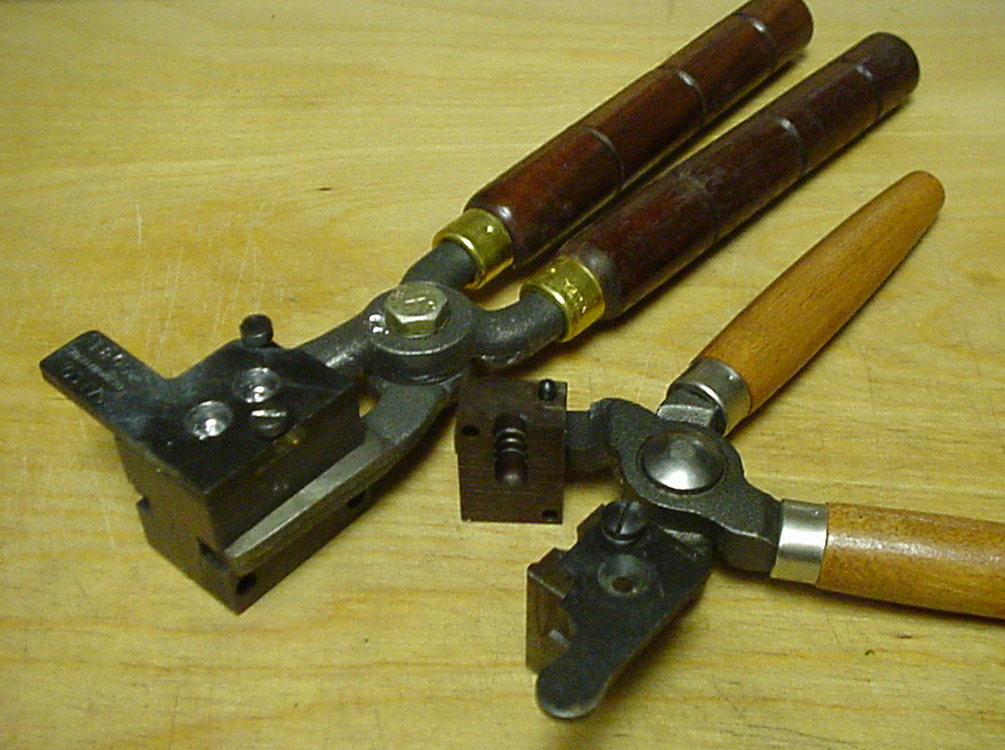
An open single-cavity bullet mold and a closed two-cavity mold.

A cast bullet is made by allowing molten metal to solidify in a mold. Most cast bullets are made of lead alloyed with tin and antimony, but zinc alloys have been used when lead is scarce. Most commercial bullet manufacturers use swaging in preference to casting, but bullet casting remains popular with handloaders.[1]

Firearms projectiles were being cast in the 14th century. Iron was used for cannon, while lead was the preferred material for small arms. Lead was more expensive than iron, but it was softer and less damaging to the relatively weak iron barrels of early muskets. Lead could be cast in a ladle over a wood fire used for cooking or home heating, while casting iron required higher temperatures. Greater density of lead allowed lead bullets to retain velocity and energy better than iron bullets of the same weight and initial firing velocity.[2]

Minié balls of the mid-19th century could be either cast or swaged.

Swaging, rather than casting, became a preferred manufacturing technique during the 19th century Industrial Revolution, but cast bullets remained popular in early rimmed black powder cartridges like the .32-20 Winchester, .32-40 Ballard, .38-40 Winchester, .38-55 Winchester, .44-40 Winchester, .45 Colt, and .45-70. Disadvantages became evident as loadings shifted to smokeless powder in the late 19th century. Higher velocity smokeless powder loadings caused lead to melt and be torn from soft bullets to remain in the barrel after firing in small deposits called leading. Manufacturers of high-velocity military ammunition modified their bullet swaging process to apply a thin sheet of stronger metal over the soft lead bullet.[3] Although it took several decades to devise bullet jacket alloys and manufacturing procedures to duplicate the accuracy of cast bullets at lower velocities, jacketed bullets are more accurate at the velocity of 20th century military rifle cartridges.[4] Jacketed bullets also function more reliably and are less likely to be deformed in the mechanical loading process of self-loading pistols and machine-guns.

Cast bullet advantages

[edit]
A pair of French, 19th century Duelling pistols. The set of accessories includes a small casting ladle and a bullet mold, so the owner may make their own bullets, Philadelphia Museum of Art (2009)

Bullet casting remained popular for shooters accustomed to older weapons. Firearms were often sold with a mould designed for that particular weapon, so individuals living in remote areas would be able to manufacture their own ammunition rather than relying upon undependable supplies from local merchants. The uniform fit of bullets from an individual mould offered superior accuracy when early manufacturing tolerances were comparatively large.[5]

These basic advantages remain true today. Moulds can be obtained to uniformly cast bullets of a diameter producing optimum accuracy in a specific firearm, and a firearm owner possessing such a mould can obtain a supply of those bullets independent of unreliable manufacturers and distributors. Bullets cast over a fireplace or stove from readily obtainable scrap materials still offer excellent performance in subsonic revolver cartridges, and more sophisticated casting techniques can produce bullets suitable for loading at velocities up to about 2,000 feet per second (610 m/s).[6] Recent advances in Cast Bullet Lubes have enabled shooters to be able to push cast bullets past 2,800 feet per second (850 m/s) in slow twist 30 cal rifles.[7]

Safety

[edit]

Although some bullet casting procedures can be accomplished with heating elements used for cooking, care must be taken to avoid contaminating food preparation areas and/or utensils with lead alloys. Most bullet casters prefer to use portable electric melting pots in areas with good ventilation. Molten metal can cause serious burns, and molten metal can be sprayed around the working area by violently expanding steam if it comes in contact with water from spilled drinks or other sources. Bullet casters should wear protective clothing including eye protection, and should carefully wash hands prior to eating, drinking, or smoking. Young children are especially vulnerable to lead poisoning and are unlikely to appreciate the danger of shiny molten metal and newly cast bullets. Bullet casting must be limited to times and locations when children are absent.[8]

Bullet shapes

[edit]

Cast bullets require a longer bearing surface than jacketed bullets to maintain an equivalent alignment with the bore of the firearm, because the softer cast bullet can be more readily deformed. The most successful cast bullet designs have a round or flattened nose rather than a long, unsupported ogive. Bullet designs with a forward diameter designed to be supported on the rifling lands work best in barrels rifled with wide lands and narrow grooves like the 2-groove M1903-A3 rifles. Forward bearing surfaces of full groove diameter provide more effective alignment in barrels with wide grooves and narrow lands, provided the chamber throat is long enough to accept such bullets.[9]

Gas checks

[edit]
Cast bullets as cast (left), fitted with a gas check (center) and sized & lubricated (right)

One of the earlier efforts to obtain better high-velocity performance involves placing a very shallow cup of copper alloy over the base of the bullet. This cup resembles a very short jacket and is called a gas check. Cast bullets require a smaller diameter at the base to accept the gas check. Some gas checks are designed to crimp onto the base of the bullet, while others have a looser fit.[10]

Bullet lubrication

[edit]

Tallow or Lard was used as a lubricant to ease the insertion of muzzle loaded bullets.[11] Elongated rifle bullets were designed to be cast with grooves encircling the bullet to provide a reservoir for lubricant. These lubricants softened the black powder fouling for easier removal and reduced the tendency of bullets to leave deposits of lead in the barrel as they were fired. The latter advantage continued to be significant with smokeless powder. Attempts to obtain satisfactory high-velocity performance with cast bullets have included experimentation with a variety of lubricant mixtures including such things as beeswax, carnauba wax, Japan wax, bayberry wax, paraffin, petroleum jelly, sperm oil, castor oil, stearyl alcohol, lauryl alcohol, graphite, molybdenum disulphide, mica, zinc oxide, Teflon, cup grease, lithium soap, water pump grease, and a variety of more modern lubricating materials.[12]

Bullet alloys

[edit]
Electric melting pot charged with automobile wheel weights in preparation for bullet casting. A small amount of solder will be added after the steel clips and slag have been skimmed from the melt.

Pure lead was used to cast hollow-base bullets for Civil War era muskets. These bullets were designed to load easily and then expand into the grooves of the rifling when fired. Pure lead is undesirably soft for casting bullets not requiring such expansion. Tin is a common alloying element. Lead alloyed with a small amount of tin fills out moulds more uniformly than pure lead. Tin also increases the hardness of cast bullets up to a maximum at about eight to ten percent tin. Tin is relatively expensive, so many modern alloys rely upon antimony to increase hardness while retaining the casting advantages of a minimal addition of tin. Linotype metal is a eutectic alloy of 3% tin, 12% antimony, and 85% lead. It is a very satisfactory alloy for casting most bullets.[13] However, bullets from Linotype alloy tend to be brittle, and not suitable for some game hunting.[citation needed]

Heat treating

[edit]

Heat treating can increase the hardness of commonly used lead alloys. The basic procedure is to rapidly cool, or quench, hot bullets. Some suggest this can be done by dropping hot bullets from the mold into a tub of water, but this procedure carries the risk of splashing water onto the mold or into the molten casting metal and causing a steam explosion.[14] An alternative procedure is to re-heat cast bullets (usually in a wire mesh basket) in a temperature-controlled oven and then remove and quench. The oven temperature should be less than the melting temperature of the bullet alloy. This temperature will vary with the concentrations of alloying elements, but is often in the range of 450 to 500 degrees Fahrenheit (232 to 260 degrees Celsius).[15]

Paper-patched bullets

[edit]
A selection of historic, British military ammunition. The center two are .577/450 Martini–Henry paper-patched rounds

As velocity increased and rifling was introduced a problem of lead remaining in the bore was of concern. One of the earlier attempts, which is still popular today with muzzle loaders and users of black powder rifles, prevents leading and obtains potentially better velocity and performance with cast projectiles involves application of a paper jacket. Patching is the hand process of applying paper jackets. The projectile is cast to a diameter that is usually that of the bore and needs to be brought up to groove diameter by a uniform number of paper wrappings. Some prefer a relatively strong paper precisely cut to wrap exactly twice around the bullet with no overlap where the ends meet. Others substitute a range of papers from wax doped rice paper used for rolling cigarettes through greased cooking paper, waxed confectionery paper bags, printer labels and even silicone impregnated baking paper. The width of the piece of paper is slightly longer than the bearing surface of the projectile, so some paper extends past the base and is folded or twisted under. Some projectile have a base cavity into which the twisted end fits. The paper patch is moistened slightly with water to make it more pliable and slightly sticky. The patch is carefully wrapped around the bearing surface of the bullet. The lip of paper extending past the base of the bullet is then twisted together, and may be pushed into a depression cast into the base of the bullet. The lubricant may be allowed to evaporate after the jacket has been applied, and a different lubricant may be applied after the formed paper has dried. Very good accuracy has been obtained with paper-patched bullets, but the assembly procedure is relatively labor-intensive. There is some question about whether the accuracy improvements result from the paper jackets or from the greater uniformity of shooting procedures by people with the patience to apply the patches. A small number of dedicated target shooters still load paper-patched bullets at velocities up to about 2,000 feet per second (610 m/s).[16]

Notes

[edit]

References

[edit]
Revisions and contributorsEdit on WikipediaRead on Wikipedia
from Grokipedia
A cast bullet is a for firearms made by pouring molten lead into a mold, where it solidifies to form the bullet's shape. These bullets are typically composed of lead alloyed with tin and to achieve desired and performance characteristics, such as a Brinell hardness number (BHN) of around 15 for common alloys like Lyman No. 2 (90% lead, 5% tin, 5% ). The practice of casting bullets dates back to the , originating with the use of lead balls in early muskets, and evolved significantly during the American pioneer era when frontiersmen added tin to alloys for better mold filling and consistency. By the , casting became essential for producing in the field, particularly for black powder firearms, and remains popular today among reloaders for handguns, rifles, and shotshells. In the manufacturing process, is melted in a pot or furnace at controlled temperatures (typically 700–800°F), fluxed to remove impurities, and poured into a multi-cavity mold using a ladle or automatic pourer; the mold is then cooled, the sprue (excess metal) is cut off, and bullets are inspected for defects before and . Key variables include consistency, pouring rate, and cooling to ensure uniformity and prevent issues like voids or incomplete fills. Cast bullets are primarily used in low- to moderate-velocity applications, such as .22 rimfire cartridges, revolver loads, and black powder , where they excel in target shooting, , and hunting with handguns or lever-actions due to their rounded or profiles that feed reliably and produce clean, visible holes in targets. They are unsuitable for high-velocity modern without gas , as speeds exceeding 1,000–3,000 feet per second can cause leading (lead deposits in the barrel) unless harder alloys and proper are employed. Notable advantages of cast bullets include their low cost—approximately one-tenth that of jacketed bullets—allowing for extended shooting sessions without significant expense, and their soft composition, which causes no barrel wear even over a lifetime of use. They also offer excellent accuracy in suitable firearms, with benefits like reduced compared to jacketed options and the ability to customize alloys for specific loads, making them ideal for 90% of recreational and competitive shooting needs.

Fundamentals

Definition and Characteristics

A cast bullet is a for firearms formed by pouring molten lead or a lead into a mold, where it solidifies into the desired shape before being removed as a solid . This results in a lead-based typically composed of alloys such as 90% lead with additions of tin and to enhance hardness and castability, distinguishing it from other bullet types by its homogeneous, non-jacketed construction. Key characteristics of cast bullets include their relative softness compared to jacketed bullets, with Brinell hardness numbers (BHN) generally ranging from 5 to 22 depending on the , making them malleable enough to conform to but susceptible to deformation at high velocities. They are highly customizable for various loads, including black powder cartridges that require expansion for proper or smokeless powder applications up to about 2,000-2,500 feet per second with appropriate lubrication. Common calibers include and , with typical weights spanning 100 to 300 grains to suit handguns, rifles, and shotguns. In firearms, cast bullets function by engaging the barrel's rifling through their soft material, which allows them to "obturate" or expand slightly under pressure for improved gas sealing, accuracy, and consistent velocity retention due to their high density. However, without proper lubrication—often applied via grooves filled with wax- or tallow-based compounds—they are prone to "leading," where lead residue builds up in the bore, potentially degrading performance. Unlike swaged bullets, which are formed by cold-pressing lead slugs into dies without melting, or jacketed bullets encased in copper for higher-velocity resistance, cast bullets rely on the melting and molding process for their form, emphasizing economy and versatility in reloading over extreme speed tolerance.

Historical Development

The development of cast bullets in the was closely tied to advancements in black powder rifles, where lead alloys were poured into simple iron or molds to produce projectiles suited for muzzle-loading firearms. Early designs evolved from spherical round balls used in muskets to conical shapes that engaged for greater accuracy and range. A pivotal innovation came in 1849 when officer Claude-Étienne Minié patented a hollow-based conical bullet, known as the , which expanded upon firing to seal the rifled barrel without requiring precise sizing during loading. This design, building on earlier work by Henri-Gustave Delvigne in the 1820s and 1830s, allowed for faster reloading and was widely adopted during the (1861–1865), where both Union and Confederate forces cast millions of s on-site using portable molds, revolutionizing with effective ranges up to 500 yards. By the mid-19th century, patents for improved mold designs, such as those for multi-cavity gang molds, emerged to meet military demands, enabling soldiers to produce bullets in the field when supplies were scarce. The late 1800s marked a transition as cartridges gained prominence, challenging traditional cast bullet designs due to higher velocities that caused leading and in barrels. Adapting to this shift, handloaders modified cast bullets for revolvers and early repeating rifles, incorporating features like grease grooves for lubrication to mitigate issues with powders like No. 2 introduced in the 1890s. John H. Barlow's 1884 founding of the Ideal Manufacturing Company played a key role, producing standardized molds and publishing the first Ideal Handbook in 1888, which detailed cast designs compatible with emerging smokeless loads for cartridges like the . This period saw the evolution from round balls to conical profiles, with bullets like the Keith semi-wadcutter emerging in the early to balance expansion and accuracy in smokeless environments. In the , cast bullets experienced a hobbyist revival, particularly in the and , as post-World War II interest in surged with the availability of affordable casting kits from companies like Lyman and RCBS. Innovations such as multi-cavity molds by Hensley & Gibbs in the 1930s–1950s allowed enthusiasts to produce high volumes for target shooting and , while figures like promoted heavy cast loads for revolvers. The Sporting Arms and Ammunition Manufacturers' Institute (SAAMI), established in , contributed to standardization by defining cartridge dimensions and pressure limits that included provisions for cast bullet loads, ensuring safe interchangeability across firearms by the mid-century. This era solidified cast bullets' role in recreational shooting, with publications like the guiding a growing community of reloaders.

Production Process

Casting Techniques

The primary technique for producing cast bullets involves melting a lead-based in a dedicated pot, such as a lead pot or bottom-pour furnace, to achieve a molten state suitable for pouring. The is heated to temperatures typically ranging from 650°F to 750°F, depending on its composition, to ensure it flows smoothly without excessive oxidation. Once molten, the is fluxed to remove impurities and , promoting a clean melt that results in void-free bullets. Fluxing is performed by adding materials like , paraffin, or commercial products such as Marvelux, which are stirred into the melt to lift oxidized particles to the surface for skimming. This step is repeated every 10 to 20 pours to maintain metallurgical purity, as unremoved can cause surface defects or incomplete cavity fills. Pouring the molten alloy into the mold follows fluxing and is critical for achieving uniform bullet formation. The alloy, maintained at 100°F above its liquidus temperature to ensure complete mold fill-out, is transferred either via a ladle in top-pour methods or directly from the pot's spout in bottom-pour systems. Top-pour techniques involve dipping a ladle into the melt and pouring steadily into the mold's sprue hole until it overflows, which suits smaller batches but requires precise control to avoid air entrapment. In contrast, bottom-pour methods use gravitational flow from the pot's base valve, providing consistent pressure and fill rates, particularly advantageous for multi-cavity molds where uniform distribution is essential. Bottom-pour is generally preferred for production efficiency, as it minimizes variations in alloy velocity and reduces the risk of incomplete bullets in complex designs. After pouring, the bullets cool naturally within the mold for 10 to 30 seconds, allowing the to solidify and contract without distortion. Ejection occurs once the sprue has hardened, typically by tapping the mold handle or using a to release the bullets onto a soft surface like a cloth, preventing surface damage. immediately follows, checking for defects such as wrinkles (indicating insufficient ), incomplete fills (from poor fluxing or low temperature), or voids, which are discarded to ensure quality. Bullet s play a key role here, as those with tin content lower the effective and enhance flow during cooling, though detailed alloy properties are addressed elsewhere.

Molds and Equipment

Cast bullet molds are essential tools for producing lead bullets through the process, available in various types tailored to different user needs. Single-cavity molds, often made from aluminum, are ideal for beginners due to their simplicity, lightweight design, and faster heating and cooling cycles, which facilitate easier handling and quicker production of test bullets. Brands like Lee Precision specialize in these aluminum molds, which are CNC-machined for precise cavity roundness and typically allow bullets to be used as cast without additional sizing. In contrast, multi-cavity iron molds, such as those from Lyman, support higher production volumes and offer greater durability for extended use, with cherry-cut cavities on iron blocks ensuring consistent bullet quality over time. Supporting equipment enhances the efficiency and safety of mold use. Melting pots come in electric models, like the Lyman furnace, which provide controlled temperatures for consistent melting without an open flame, or gas-fired options such as furnaces for faster heat-up in larger operations. Ladles, typically made of or steel, are used to pour molten into the mold, with designs featuring angled spouts for precise control. dies, often lubricated push-through or collet-style units, resize cast bullets to exact diameters post-casting, ensuring proper fit in barrels. Safety gear is crucial, including heat-resistant gloves to protect against burns, protective aprons to shield clothing and skin from splashes, and safety glasses to guard against molten metal debris. Proper mold maintenance extends tool life and ensures accurate casting. Cleaning involves removing residue from sprue plates using and soft abrasives, followed by inspection to keep alignment pins free of buildup. Aligning cavities requires lubricating hinge pins and sprue plate screws with bullet lube or to prevent binding and promote smooth operation. New molds should be seasoned by applying a thin layer of bullet lube to cavities and them lightly with a to create a , reducing lead during initial casts. Selection of molds depends on specific requirements like compatibility, production volume, and material properties. For common and calibers such as .30 or .45, molds are designed with matching cavity sizes, while single-cavity options suit low-volume hobbyists and multi-cavity for bulk production. Aluminum molds are preferred for their rapid cooling, which minimizes defects in smaller runs, whereas iron provides superior longevity for high-volume needs despite slower thermal response. molds offer a durable alternative with rust resistance and balanced cooling, though they are heavier and less common in standard production lines.

Design Features

Bullet Shapes and Profiles

Cast bullets are designed in a variety of geometric shapes and profiles to optimize performance in specific firearms and applications, balancing factors such as feeding reliability, accuracy, , and pressure management. Common shapes include the round nose (RN), which features a smooth, curved tip that promotes reliable feeding in semi-automatic pistols and reduces the risk of jamming during chambering. The flat nose (FN) design, with its broad, flat meplat, enhances safety in lever-action by preventing primer in tubular magazines and improves expansion upon impact for better terminal effects. (WC) bullets, characterized by a cylindrical body and flat front, excel in target shooting by producing clean, sharp holes in paper for precise scoring, though their shape limits range due to higher drag. Profiles such as the semi-wadcutter (SWC) integrate a flat with a conical or radiused nose and a sharp , combining the clean-cutting benefits of a with improved accuracy and feeding over longer distances, making it a versatile choice for revolvers. Hollow base designs feature a concave rear that expands to engage grooves, aiding in lower-pressure loads like black powder cartridges for better gas sealing and accuracy. These profiles influence ballistic behavior; for instance, a longer —the curved transition from the bullet's nose to its body—reduces aerodynamic drag, improving retention and flatness, particularly in secant ogive forms where the radius can extend to twice that of a tangent for minimal drag. The length of the bearing surface, the portion of the bullet in direct contact with the barrel, significantly affects by influencing and buildup; typical lengths range from 0.3 to 0.5 inches, where longer surfaces can elevate chamber for the same charge, necessitating careful load development to avoid . In cast bullets, this is evident in designs like the Keith-style SWC for , where extended bearing bands enhance stability but require adjusted charges to maintain safe pressures around 900 fps. Customization of shapes often involves adjusting meplat diameter to suit specific loads and firearms; a meplat sized to 65-75% of the diameter maximizes energy transfer and penetration. Gas checks may be added to certain profiles like hollow bases to further stabilize high-velocity loads, though their primary role lies in base protection.

Gas Checks

A gas check is a small metal cup, typically made of , , or aluminum, that is crimped onto the base of a cast bullet to create a seal against hot gases. This component protects the soft lead base from direct exposure to high-temperature gases, which could otherwise cause melting or erosion. Installation occurs post-casting using a bullet sizing press or dedicated seating tool, where the is pushed onto the 's heel with a slight of approximately 0.001 to 0.002 inches before being crimped securely during the sizing operation. The is often lightly lubricated prior to attachment to facilitate smooth seating and prevent damage to the check. Gas checks provide key benefits by reducing base deformation in high-velocity loads exceeding 1,200 fps, where unprotected lead can soften and lead to inconsistent . They minimize lead fouling in the barrel by preventing gas from eroding the bullet base and depositing particles, thereby extending barrel life and improving accuracy through better gas sealing. Common types include standard push-on (or slip-on) designs that rely on for retention and seated (or crimp-on) varieties that require mechanical deformation for a tighter hold. Gas checks are particularly compatible with harder alloys, such as 1:20 tin-lead mixtures, which inherently resist deformation better and may require them only for velocities above 1,200 fps, whereas softer alloys benefit more broadly to avoid leading.

Lubrication Methods

Lubrication is essential for cast to reduce between the bullet and the barrel during firing, thereby preventing the formation of molten lead deposits known as leading. This process minimizes barrel , enhances accuracy, and extends barrel life by creating a barrier that limits metal-to-metal contact and heat buildup. Proper also aids in gas sealing behind the bullet, reducing residue accumulation. Several application techniques exist for lubricating cast bullets, each suited to different workflows and equipment. Conventional groove lubing involves using a sizer-lubricator tool, such as the Lyman 4500, to force into the bullet's grooves during in a single operation; this method is ideal for precise control and is commonly used for both and bullets. Pan lubing entails standing bullets base-down in a shallow pan, melting the lubricant in a double boiler, pouring it over the grooves to fill them, and allowing it to cool before removal, a traditional approach effective for larger quantities in black powder applications. Tumble lubing applies a lubricant like Lee Liquid Alox by tossing bullets in a container to achieve an even coating, followed by drying, which is convenient for bullets designed with tumble-lube grooves and avoids the need for heating equipment. As a dry alternative, involves tumbling clean bullets with powder (e.g., Harbor Freight red powder) to electrostatically adhere it, then baking at 350°F for 15 minutes to form a hard, non-messy that eliminates traditional lubricant residue. Common lubricants vary by application, with softer formulations preferred for black powder loads to provide consistent performance at lower velocities, such as commercial products like SPG beeswax-based lube. For smokeless powder, harder lubes are used to withstand higher pressures and velocities up to 3,000 fps, including the NRA's 50/50 Alox-beeswax mix or 50/50 beeswax-carnauba blends that offer good and minimal smoke. Other options include Lyman Ideal Lubricant for low-velocity target loads and synthetic mixtures like beeswax with white lithium grease for versatility. Softer lead alloys benefit from these lubricants to compensate for increased leading tendency, with full details on alloy interactions covered in the Bullet Alloys section. Lubricant thickness is applied as a thin, even film, typically sufficient to fill 1-3 grooves on the without excess, aiming for approximately 0.001-inch coverage to ensure effective friction reduction while avoiding inconsistencies. Placement focuses on the grease grooves or cannelures along the 's body, with any overflow under the base wiped off to prevent contamination; for some designs, may extend slightly to the if the rides the bore. Excess lube can lead to velocity variations, so careful application during or pouring is critical.

Materials and Treatments

Bullet Alloys

Cast bullets are primarily made from lead-based alloys, with and tin as the key alloying elements to enhance and castability, respectively. The base material is typically lead alloyed with 2-6% antimony, which increases the Brinell hardness number (BHN) to a range of 10-20, suitable for most and applications without excessive leading or bore fouling. Tin additions of 1-5% improve the alloy's fluidity during casting, reducing defects like wrinkles or incomplete fills, while maintaining a balance between malleability and durability. Common alloy ratios vary by intended use; for soft black powder loads, a 1:20 tin-to-lead ratio (approximately 4.8% tin) yields a BHN of around 8-10, providing sufficient at low velocities without over-stressing the bore. For general-purpose casting, recycled wheel weights offer a convenient source, typically containing about 4% and trace tin (0.5%), resulting in an as-cast BHN of 9-13 that performs well in mid-range loads. However, as of 2025, lead wheel weights are being phased out due to environmental regulations and replaced by non-lead alternatives like in many areas, requiring casters to sort and verify lead content. A standard commercial option like Lyman #2 —90% lead, 5% tin, 5% —achieves a BHN of 15, making it versatile for both target shooting and . Key properties of these alloys include their and , measured on the Brinell scale using a standardized indenter test that quantifies resistance to deformation. Pure lead melts at 621°F (327°C) with a BHN of about 5, but raises the melting point slightly to 600-700°F while boosting hardness; for instance, a 2% tin and 6% alloy melts around 650°F and reaches 18 BHN. Lead for these alloys is commonly sourced from recycled materials like range scrap—recovered bullets containing pre-alloyed and tin—or wheel weights, which provide a cost-effective supply with inherent hardening elements. Commercial ingots from suppliers ensure consistency, often refined to minimize contaminants. Purity is verified through specific gravity testing via the , where pure lead has a specific gravity of 11.34; alloys with higher or tin show slightly lower values (e.g., 11.2-11.3), allowing casters to confirm composition before use.

Heat Treating

Heat treating cast bullets involves post-casting processes to enhance and durability, primarily through controlled heating and rapid cooling of lead-antimony alloys. This treatment alters the microstructure, allowing softer alloys to achieve higher Brinell Hardness Numbers (BHN) suitable for elevated velocities without excessive deformation. One common method is water , where bullets are heated to 450–500°F in an oven and then immediately plunged into room-temperature water for rapid cooling. This process can elevate the BHN of wheelweight alloys, which start at approximately 9 BHN as-cast, to 28–30 BHN. For optimal results, bullets are sized without prior to heating and dried overnight after to prevent . Oven methods provide a controlled alternative, typically involving heating bullets at 450°F for 30–60 minutes, followed by either or . yields a BHN of 22–25 for similar alloys after stabilization, making it suitable for batch processing where uniformity is prioritized over maximum hardness. These techniques are most effective on alloys containing and trace , as pure lead or tin-heavy mixes respond poorly. Following , an aging process occurs at , where stabilizes over 2–6 weeks due to natural . This period relieves internal stresses and ensures uniform BHN throughout the bullet, with full stabilization often taking up to 4 weeks. Without adequate aging, measured may initially appear inconsistent. The primary effects of include increased tensile strength, enabling bullets to withstand higher pressures and velocities while reducing barrel leading from material smearing. However, exceeding a BHN of approximately 30 risks and cracking, particularly if overheating causes slumping or if is uneven, potentially leading to bullet fragmentation upon firing. Proper and selection mitigate these issues, ensuring reliable performance.

Specialized Variants

Paper-Patched Bullets

Paper-patched bullets feature a smooth-sided lead core that is cast to approximately the rifle's bore (land-to-land), which is typically 0.003 to 0.008 inches smaller than the groove , and then wrapped post-casting with thin to achieve the final matching the groove dimensions for a precise fit. The , often 0.003 to 0.004 inches thick and sourced from materials like 70- to 80-lb bond or kraft , is moistened, cut to a precise width using templates, and wound tightly around the core—usually twice—before being rolled smooth and secured at the base by twisting or folding. The patch is then lightly oiled with a mixture such as and to aid in handling and provide during firing, after which the is loaded without additional grease grooves on the lead. This design originated in the mid- to late , gaining popularity in precision match rifles such as the Sharps for black powder cartridge loads, where it enabled long-range target shooting and buffalo hunting with heavy slugs like the 700-grain .50-90. In these applications, the paper patch expanded under gas pressure to seal the bore effectively while the engraved the soft lead core directly, and the patch material would either whirl off or strip away cleanly at the muzzle to preserve stability. The primary advantages of paper-patched bullets include superior gas sealing that minimizes blow-by and , enhanced accuracy without the need for grease grooves on the bullet body, and greater flexibility in adapting casts to varying calibers or barrel dimensions through adjustable patching thickness. This construction also reduces leading in the barrel compared to bare lead, allowing for consistent performance in black powder environments. In contemporary shooting, paper-patched bullets remain a staple in Black Powder Cartridge Rifle (BPCR) competitions, where enthusiasts employ specialized patching tools like brass sizing gauges and mandrels to ensure uniformity, often using 70-lb weight paper for its balance of strength and thinness. These loads, typically featuring conical cores, continue to deliver tight groups—such as 2-inch at 200 yards— in replica or antique rifles like the Sharps, emphasizing the enduring appeal of this method for precision and long-range events.

Sizing and Swaging

Sizing and swaging are post-casting processes used to refine cast bullets, ensuring precise dimensions, uniformity, and compatibility with firearm chambers. Sizing involves forcing cast bullets through a hardened die to slightly reduce their , typically by 0.001 to 0.002 inches, which corrects minor variations from the and achieves the exact size needed for optimal barrel engagement. This step is essential for maintaining consistent performance, as oversized bullets can fail to chamber reliably, particularly in semi-automatic where precise fit is critical to prevent feeding issues. The sizing process commonly employs tools like the Lyman 4500 Lube Sizer, a manual lever-operated device that combines resizing, , and optional gas check installation in a single operation. Bullets, cast from lead-tin-antimony , are placed base-down into a sizing die, and the handle is pulled to push the bullet through, compressing it to the die's bore diameter while a top punch aligns the base and prevents deformation. is integrated during sizing by applying a soft or wax-based —such as Alox or Lyman-specific formulas—into the bullet's grooves via a heated reservoir, reducing friction and leading in the barrel without excess buildup that could contaminate powder charges. Star sizer-lubricators, like the Lyman 4500, feature adjustable push rods and ratchet mechanisms to control lubricant pressure and bullet depth, ensuring even application and removal of casting imperfections such as wrinkles or voids. Swaging, in contrast, uses high-pressure compression to form or refine bullets from soft lead or unsized , often producing custom shapes like hollow points without the need for molds. This cold-forming technique applies 10,000 to 50,000 psi via a and precision dies, where punches from both ends force the material to flow and fill the die cavity, expanding it slightly to the final while shortening the proportionally. Tools such as Corbin's presses and diamond-lapped die sets (e.g., core swage or lead swage dies) enable the creation of uniform bullets from lead wire or rough cast slugs, bleeding off excess material as sprue for clean results. ensures chamber fit and structural integrity for specialized applications, such as hollow-point designs that enhance expansion upon impact, and is particularly valuable for alloys too hard for traditional but suitable for cold forming.

Performance and Usage

Advantages Over Jacketed Bullets

One primary advantage of cast bullets over jacketed alternatives is significant cost savings, particularly for reloaders who produce their own. Home casting using recycled lead from sources such as range scrap or purchased ingots—as lead weights are increasingly unavailable due to regulatory phase-outs—can yield hundreds of bullets per pound of material, resulting in costs as low as $0.02 to $0.15 per bullet (as of 2025) when amortizing equipment over high volumes. In contrast, jacketed bullets typically cost $0.25 or more per unit due to their complex process involving swaged lead cores and jackets. This disparity makes cast bullets especially appealing for high-volume , where the use of inexpensive recycled materials further reduces expenses without compromising basic functionality. Cast bullets also offer superior customization options, allowing reloaders to tailor weight, hardness, composition, and shape to specific loads and applications. Manufacturers provide a wide array of molds—over 35 designs for .38/.357 calibers alone—enabling precise fits for throats and bores, which enhances accuracy in custom loads. This flexibility is ideal for enthusiasts developing specialized , such as for or precision target shooting, where commercial jacketed bullets may not match exact specifications. In terms of performance, cast bullets excel in low-velocity applications, producing lower for reduced shooter fatigue during extended sessions. For instance, in , the use of plain lead bullets with fast-burning powders generates a gentle push rather than sharp , facilitating faster follow-up shots and compliance with rules prohibiting gas-checked designs. Additionally, their softer composition and lower pressures minimize barrel wear in these subsonic or mild loads compared to the higher friction and heat from jacketed bullets at similar velocities. Environmentally, cast bullets produce less copper residue in barrels, avoiding the fouling associated with jacketed designs that can degrade accuracy over time. Moreover, they leverage recyclable lead from scrap sources, promoting material reuse and reducing the need for new , which contrasts with the non-recyclable aspects of copper jacketing in some contexts.

Safety Considerations

Handling cast bullets involves significant risks primarily related to lead exposure, which can occur through of fumes during the process or absorption from direct contact with the metal or residues. When lead alloys for , vapors and fumes containing lead particles are released, particularly if the temperature exceeds safe levels or ventilation is inadequate; proper exhaust systems or well-ventilated areas are essential to minimize risks. Additionally, lead can be absorbed through the during handling of raw alloys, molds, or finished bullets, necessitating thorough after contact and avoiding eating or smoking in the area to prevent . These precautions align with guidelines from occupational health authorities emphasizing and isolation of activities to protect against chronic , which affects neurological, renal, and cardiovascular systems. In the loading process, cast bullets may exhibit different pressure curves than jacketed due to obturation; always use load data specific to cast bullets, often starting with reduced charges to account for potential pressure variations. Hard alloys, intended for higher velocities, may not obturate (expand) as effectively as softer ones, altering pressure dynamics and risking case ruptures or firearm damage if loads exceed safe limits; gas checks, while enabling higher speeds, require careful powder selection to avoid excessive pressure buildup. Recommended velocity limits for plain-base cast bullets without gas checks are typically under 1,200 fps to prevent gas cutting and related pressure spikes, varying by alloy hardness, lubrication, and firearm, with chronograph testing advised to verify loads stay within published maximums. Improper heat treating of alloys can introduce risks like cracking under pressure, though detailed mitigation is covered in alloy preparation sections. During firing, leading—deposition of lead residue in the barrel—can occur from incomplete sealing or excessive , resulting in accuracy degradation or, in severe cases, partial barrel obstruction that poses a catastrophic risk if undetected. This buildup is mitigated by regular cleaning with specialized bore solvents designed to dissolve lead without damaging , and by selecting appropriate hardness and to minimize from the outset. Best practices for overall safety include wearing to guard against molten metal splashes or tool failures, maintaining a dedicated and loading area separate from living spaces to contain contaminants, and using a to monitor velocities and pressures during load development, ensuring all components remain within manufacturer-specified safe parameters.

References

Add your contribution
Related Hubs
User Avatar
No comments yet.