Hubbry Logo
ChanchalChanchalMain
Open search
Chanchal
Community hub
Chanchal
logo
8 pages, 0 posts
0 subscribers
Be the first to start a discussion here.
Chanchal
Chanchal
from Wikipedia

Chanchal is a census town in Malda district in the state of West Bengal, India. It is the headquarters of the Chanchal subdivision.

Key Information

Geography

[edit]
Map
About OpenStreetMaps
Maps: terms of use
16km
9.9miles
B
A
N
G
L
A
D
E
S
H
B
I
H
A
R
J
H
A
R
K
H
A
N
D
d
Punarbhaba
River
c
Tangon River
b
Ganges River
a
Mahananda
River
H
Jagjivanpur
H Jagjivanpur (H)
H Jagjivanpur (H)
H
Pandua
H Pandua, Malda (H)
H Pandua, Malda (H)
R
Gazole
R Gazole Town (R)
R Gazole Town (R)
R
Samsi
R Samsi, Malda (R)
R Samsi, Malda (R)
R
Ratua
R Ratua (R)
R Ratua (R)
R
Pukhuria
R Pukhuria (R)
R Pukhuria (R)
R
Pipla Kasimpur
R Pipla Kasimpur (R)
R
Mashaldaha
R Mashaldaha (R)
R Mashaldaha (R)
R
Malatipur
R Malatipur, Malda (R)
R
Kharba
R Kharba (R)
R Kharba (R)
R
Khanta
R Khanta (R)
R Khanta (R)
R
Harishchandrapur
R Harishchandrapur (R)
R
Daulatnagar
R Daulatnagar (R)
R Daulatnagar (R)
R
Araidanga
R Araidanga (R)
R Araidanga (R)
R
Singhabad
R Singhabad (R)
R Singhabad (R)
R
Pakuahat
R Pakuahat (R)
R Pakuahat (R)
R
Maheshpur
R Maheshpur, Malda (R)
R
Hatimari
R Hatimari (R)
R Hatimari (R)
R
Habibpur
R Habibpur, Malda (R)
R
Bulbulchandi
R Bulbulchandi (R)
R Bulbulchandi (R)
M
Old Malda
M Old Malda (M)
M Old Malda (M)
M
Malda
M Malda, West Bengal (M)
CT
Sahapur
CT Sahapur, Malda (CT)
CT
Rangabhita
CT Rangabhita (CT)
CT Rangabhita (CT)
CT
Kendua
CT Kendua, West Bengal (CT)
CT
Kachu Pukur
CT Kachu Pukur (CT)
CT Kachu Pukur (CT)
CT
Jhangra
CT Jhangra, Malda (CT)
CT
Chhatinamor
CT Chhatinamor (CT)
CT Chhatinamor (CT)
CT
Bandhail
CT Bandhail (CT)
CT Bandhail (CT)
CT
Baksinagar
CT Baksinagar (CT)
CT Baksinagar (CT)
CT
Chanchal
CT
Aiho
CT Aiho (CT)
CT Aiho (CT)
Cities, towns and locations in the northern portion of Malda district (including Chanchal subdivision and Old Malda, Habibpur, Bamangola and Gazole CD blocks)
M: municipal town, CT: census town, R: rural/ urban centre, F: Facility, H: historical centre
Owing to space constraints in the small map, the actual locations in a larger map may vary slightly

Area overview

[edit]

The area shown in the adjacent map covers two physiographic regions – the Barind in the east and the tal in the west. The eastern part is comparatively high (up to 40 metres above mean sea level at places) and uneven. The soils of the eastern region are “hard salty clays of a reddish hue and the ground is baked hard as iron.” It lies to the east of the Mahananda River. The area lying to the west of the Mahananda River, the tal, is a flat low land and “is strewn with innumerable marshes, bils and oxbow lakes.” The tal area is prone to flooding by local rivers.[3] The total area is overwhelmingly rural.[4][5] There are two important historical/ archaeological sites in the area – Pandua and Jagjivanpur.[6]

Note: The map alongside presents some of the notable locations in the area. All places marked in the map are linked in the larger full screen map.

Location

[edit]

Chanchal is located at 25°23′N 87°59′E / 25.39°N 87.99°E / 25.39; 87.99.[7] Chanchal is the headquarter of the Chanchal subdivision. Also, the headquarter of the Chanchal–I CD block is here.[8]

There is an announcement that Chanchal and Gazole would be amongst the 22 new municipalities to be formed in West Bengal.[9] The matter has also been reported in the press, but till November 2018, there has been no formal announcement or notification.[10]

Climate

[edit]

Chanchal has three distinct seasons: summer, winter and monsoon. In summer the temperature sometimes reaches 45 degree Celsius. Winters are generally chilled and cool and sometimes temperature goes below 3 degree Celsius. During the monsoons (between June and September), the town is lashed by moderate to heavy rains.

History

[edit]

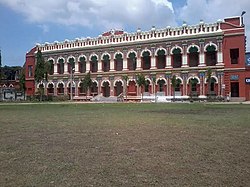
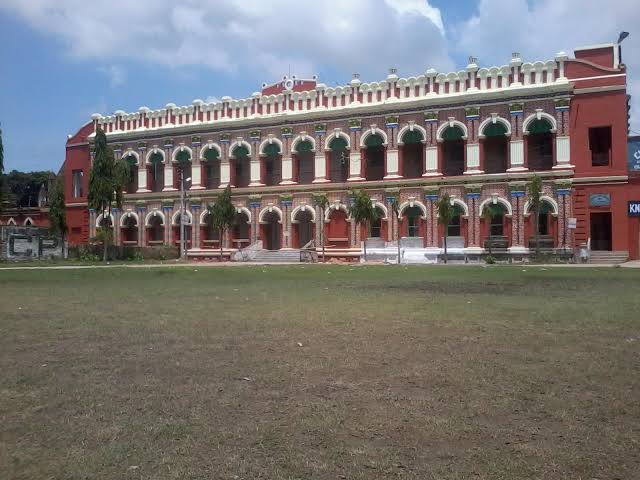
It was the home of Raja Saratchandra Rai Bahadur, who built the Chanchal palace. The King was married to Queen Dakshyani. One part of the palace was transformed into a government college in 1969.The other part of the Palace is now Chanchal Subdivisional Court.[citation needed]

Chanchal Raj Bari
Chanchal Sub-Divisional Court and Chanchal College

Demographics

[edit]

According to the 2011 Census of India, Chanchal had a total population of 5,570, of which 2,287 (51%) were males and 2,743 (49%) were females. Population in the age range 0–6 years was 634. The total number of literate persons in Chanchal was 4,936 (78.04% of the population over 6 years).[11]

Infrastructure

[edit]

According to the District Census Handbook, Maldah, 2011, Chanchal covered an area of 1.7896 km2. The protected water-supply involved overhead tank, tube well/ borewell. It had 900 domestic electric connections, 400 road lighting points. Among the medical facilities it had 1 family welfare centre, 1 maternity & child welfare centre. Among the educational facilities, it had 1 primary school, 1 middle school, 1 secondary school, 1 higher secondary school, 1 general degree college. Among the social, cultural and recreational facilities it had 1 cinema theatre, 1 public library.[12]

Civic administration

[edit]

Police station

[edit]

Chanchal police station under West Bengal police has jurisdiction over Chanchal I and Chanchal II CD blocks.[13][14]

CD block HQ

[edit]

The headquarters of Chanchal I CD block is at Chanchal.[13][15][16]

Transport

[edit]

Chanchal is on National Highway 31.[17]

Roadways

[edit]

Chanchal is connected by bus services like NBSTC and private buses to cities like Balurghat, Berhampore, Siliguri, Kolkata, Asansol, Raiganj, Malda, Dinhata, Suri, Ranaghat through National Highway 31 (India).

Education

[edit]

Healthcare

[edit]
Chanchal Super Speciality Hospital

Chanchal Super Speciality Hospital at Chanchal Roy Para, Chanchal (with blood bank and other digital facilities) is a major medical facility. There are primary health centres in Chanchal I CD Block at Kharba (with 10 beds) and Singia (Nadishik PHC) (with 10 beds).[18]

Notable people

[edit]

References

[edit]
Revisions and contributorsEdit on WikipediaRead on Wikipedia
from Grokipedia
Chanchal is a and the administrative headquarters of the Chanchal subdivision in , , . Located approximately 50 kilometers north of the district headquarters in English Bazar, it lies near the and is connected by National Highway 34 and State Highway 10. As of the 2011 census, Chanchal has a population of 5,570, with 2,827 males and 2,743 females, and a rate of 78.04 percent. It is classified as a Class V town and serves as a key urban center in the predominantly rural Chanchal-I . Historically, Chanchal is notable as the seat of the Chanchal zamindari estate, established under British rule, with the family of receiving the title of Raja in 1911. The town's Chanchal Rajbari, a two-storied heritage building constructed by the zamindars, reflects its colonial-era significance and has been repurposed in part for educational institutions like Chanchal College, founded in 1969 to serve the backward, minority-concentrated region of North Malda. The area was part of the ancient , contributing to Malda district's rich archaeological heritage, though Chanchal itself developed primarily as an administrative and agrarian hub during the 19th and 20th centuries. Economically, Chanchal's economy is agriculture-dominated, with key activities including cultivation of , , and on approximately 86 hectares of net sown area in surrounding locales, supported by covering about 60.8 hectares. Non-farm sectors include small-scale industries such as , wooden furniture making, rice milling, and beedi production, employing a where 31.76 percent are workers, including 26.68 percent main workers and 5.08 percent marginal workers. Infrastructure features metalled roads, domestic connections for around 900 households, and basic amenities like primary health centers, schools from pre-primary to senior secondary levels, and a , underscoring its role in . The town's density of 3,112 persons per square kilometer over 1.79 square kilometers highlights its compact urban character amid the broader subdivision's rural expanse.

Geography

Location and Area

Chanchal is a located in the of , , serving as the headquarters of the Chanchal subdivision. It lies within the Chanchal-I and functions as an administrative center for the surrounding rural areas. Geographically, Chanchal is positioned at approximately 25°23′N 88°00′E. The town covers an urban area of 1.7896 km², supporting a relatively dense settlement pattern characteristic of census towns in the region. The town is situated within the Chanchal-I , adjacent to Chanchal-II block to the south, Ratua-II block to the southeast, and Gazole block to the west. It maintains close proximity to the , which flows nearby and influences local geography, as well as National Highway 81, facilitating connectivity to major towns like Malda. The town is situated primarily in the Barind tract, a elevated lateritic region, with tal (low-lying marshy) areas in the vicinity.

Topography and Hydrology

Chanchal's is divided into two primary : the Barind tract in the east, consisting of an elevated plateau with undulating and elevations exceeding 37 meters, and the tal region in the west, a low-lying with flat landscapes sloping gently from north to south at elevations between 21 and 27 meters. This division influences local drainage patterns and settlement distribution, with the Barind's higher ground offering relative protection from waterlogging compared to the tal's flood-prone lowlands. The of Chanchal is dominated by the and its tributaries, such as the Tangan and Fulahar, which traverse the region from northeast to southwest, entering through the tri-junction of Chanchal-I, Ratua-II, and Gazole blocks. These waterways provide critical surface water resources for via canals, supporting cycles in the fertile lowlands, though the river's low gradient of approximately 1:21,000 to 1:25,000 contributes to seasonal flooding during monsoons, inundating the tal areas and depositing nutrient-rich sediments. Flood events, as recorded in during 1998 and 1999, highlight the river's role in both agricultural enhancement and vulnerability to water-related hazards. Soil characteristics in Chanchal reflect its physiographic diversity, featuring predominantly fertile types derived from riverine deposits that sustain . In the eastern Barind region, soils are deep clay loams classified as hard, reddish older with low organic content, suitable for limited single-crop cycles due to poorer retention. Conversely, the western tal region hosts newer soils varying from sandy loams to clay loams, which are more fertile and responsive to inundation, enabling diverse cultivation without extensive fertilization in riverine chars.

Climate

Chanchal, located in the of , experiences a characterized by high temperatures, significant seasonal rainfall, and influenced by its position in the Gangetic plains. The region falls under the classification, with distinct hot summers, a pronounced season, and relatively mild winters. Average annual is approximately 1,600 mm, primarily received during the southwest period. Summer, spanning to May, brings intense heat with maximum temperatures frequently exceeding 40°C and reaching record highs of 47.0°C, as observed in Malda on , 1988. Winters, from to , are cooler and drier, with minimum temperatures occasionally dropping below 4°C, including a recorded low of 3.9°C in the district. The flat of the surrounding plains contributes to relatively uniform microclimates across Chanchal, with minimal elevation-driven variations. The season dominates from to , delivering moderate to heavy rainfall averaging around 343 mm in alone, accounting for over 70% of the annual total and creating humid conditions with temperatures between 25°C and 33°C. Post-monsoon months of October and November see lighter precipitation, transitioning to dry winter weather with negligible rainfall. Chanchal's proximity to the exposes it to occasional cyclonic influences, increasing vulnerability to storms and associated heavy rains during the pre- and post-monsoon periods.

History

Historical Background

Chanchal's historical roots lie in the pre-colonial era of , where the region formed part of the ancient kingdoms of Gour and Pundrabardhana, which served as prominent capitals during successive dynasties. From the Mauryan Empire's provincial center at Pundranagar around the BCE to the in the CE, and later under the Pala (8th–11th centuries CE) and Sena dynasties (11th–12th centuries CE), the area experienced cultural and political influences from Buddhist and Hindu rulers. Muslim conquest began in 1204 CE with Bakhtiyar Khilji, integrating the territory into the and subsequent Mughal administration until the mid-18th century. The region's strategic position along ancient trade routes facilitated commerce in , , and spices, contributing to 's role as a key node in and overland networks. Under British colonial rule, Chanchal was incorporated into the newly formed in 1813, carved from outlying areas of the Purnea, Dinajpur, and to address administrative and security challenges in the region. A separate was established at English Bazar in 1832, and full magisterial authority followed in 1859, solidifying the 's independence within the . Chanchal contributed significantly to the colonial economy through and cultivation; European planters operated numerous factories in by the late , though the industry declined sharply by the early due to changing global markets and resistance. , a major revenue source for the British, saw local consumption supported by 14 licensed shops in the by 1910–11, generating substantial excise revenue while tying the area's to imperial demands. The Chanchal estate, one of the largest zamindari holdings in northern , came under the Court of Wards management in , reflecting the zamindari system's role in colonial land revenue collection. Post-independence, , encompassing Chanchal, was allocated to under the Radcliffe Award of August 17, 1947, amid the partition of Bengal, and integrated into the newly constituted state of in 1950. The States Reorganisation Act of 1956 prompted further administrative restructuring, designating Chanchal as a subdivision headquarters to enhance local governance and judicial oversight, as reflected in the expansion of the Malda Sessions Division to include the Chanchal sub-division that year. This period marked a transition from colonial extraction to state-led development, with lingering influences from pre-independence figures such as Raja Saratchandra Rai Bahadur, titled in 1911 for his contributions to education and healthcare in the region.

Key Figures and Events

Raja Sarat Chandra Roy (1865–1946), also known as Raja Saratchandra Rai Bahadur, was a prominent 19th- and early 20th-century zamindar of the Chanchal estate in Malda district, overseeing approximately 68,008 acres across the parganas of Gourhand, Hatinda, Rokanpur, and later Laskarpur. Adopted by Rani Siddheshwari Devi, he assumed control of the estate at age 16 in 1881 and was conferred the title 'Raja' by the British government in 1911 in recognition of his welfare initiatives for local raiyats. Roy is credited with constructing the Chanchal Rajbari palace in 1912, a heritage structure that symbolized the estate's prominence and served as his residence; he was married to Rani Dakshayani. His contributions extended to social infrastructure, including the establishment of the Chanchal Siddheswari Institution in 1888 as a high English school in memory of his mother, which received affiliation from Calcutta University in 1899, and the founding of the Rani Dakshayani Girls' School in 1943 to promote women's education. Additionally, he set up the Ishwar Chandra Charitable Hospital with 12 beds and supported health centers in areas like Sambalpur and Samsi, alongside donations such as Rs. 500 to the English Bazar library in 1937. The Chanchal zamindari estate was abolished under the West Bengal Estates Acquisition Act, 1953, which ended the intermediary landlord system and facilitated land redistribution in the region. A significant post-independence event was the establishment of Chanchal College on August 26, 1969, in a portion of the former Chanchal palace, transforming part of the heritage building into an undergraduate institution affiliated with the to provide higher education in northern Malda. The college's location in the palace underscores the site's enduring role in local development, with the remaining sections now housing a sub-divisional court. Chanchal, as part of , experienced profound impacts from the 1947 , which triggered mass migrations across the border between August 12 and 15, 1947, as the allocated most of Malda—including Chanchal—to while placing the neighboring Nawabganj subdivision in . This led to an influx of Hindu refugees from into Malda and outflows of Muslims to the new state, reshaping the region's demographics and economy amid communal tensions. During the colonial era, Chanchal's local markets developed amid broader trade booms in Malda, driven by the English 's focus on , , and exports from the onward, with the Roychoudhuris of Chanchal—Raja Roy's family—emerging as influential zamindars facilitating regional . The area's parganas contributed to the district's status at Old Malda's , a key trade hub, enhancing local market growth through agricultural surpluses and export linkages.

Demographics

Population Composition

According to the , the of Chanchal recorded a total of 5,570, with 2,827 males and 2,743 females. The stood at 970 females per 1,000 males, slightly higher than the district average of 944. Children in the age group of 0-6 years numbered 634, comprising 11.38% of the total , with 332 boys and 302 girls, resulting in a child of 910 females per 1,000 males. The of Chanchal exhibited a decadal growth rate of 18.3% between 2001 and 2011, rising from 4,708 residents in 2001 to the 2011 figure. India's national of 2021 was postponed due to the , with the next enumeration planned to commence in 2027. Demographically, Chanchal's residents are predominantly Bengali-speaking, consistent with the linguistic profile of where Bengali accounts for over 98% of the . In terms of religious composition, form the at 67.88%, followed by at 31.76%, with negligible proportions of (0.02%), Jains (0.34%), and others.

Literacy and Social Indicators

According to the , the overall literacy rate in Chanchal stood at 78.04%, with males recording 82.00% and females 73.99%. This figure reflects a gender disparity of about 8 percentage points, though it surpasses the district average of 61.73% for Malda. Recent assessments, including those from the (NFHS-5, 2019-21), indicate gradual improvements in literacy across , particularly among younger cohorts, driven by expanded access to programs. Social development indicators highlight ongoing challenges in equity and basic services. The child sex ratio (ages 0-6) was 910 girls per 1,000 boys in Chanchal town, while the subdivision average was approximately 948. Scheduled castes comprised 16.50% of the , with scheduled tribes at 0.07%. Access to improved sanitation facilities covered about 85% of households by the late 2010s, bolstered by initiatives that declared open defecation-free in 2019, though rural gaps in usage persist. The working-age population (15-59 years) accounts for roughly 65% of Chanchal's population. Gender distribution shows near parity overall ( of 970). The (NFHS-5, 2019-21) reports the district child improved to approximately 935. Migration trends reveal significant rural-to-urban outflows from , primarily of young males seeking employment in sectors like and in neighboring states such as and , contributing to temporary labor shortages in local farming.

Economy

Primary Sectors

The economy of Chanchal is predominantly agrarian, with agriculture serving as the primary sector and employing the majority of the rural population. The subdivision's fertile alluvial soils, derived from the surrounding river systems, support a range of field crops suited to the subtropical climate. Main crops include paddy (in Aus, Aman, and Boro varieties), jute, wheat, potatoes, maize, and vegetables such as brinjal and cauliflower, cultivated across extensive farmlands. While mango orchards are a hallmark of Malda district's horticulture, contributing significantly to its export-oriented production, cultivation in Chanchal remains limited compared to central blocks, with emerging pockets supported by targeted financing. Irrigation in Chanchal relies on a combination of sources and from the and its tributaries, which facilitate canal-based and during dry periods. Shallow tube wells, power sets, and low-lift pumps are prevalent, covering substantial areas in Chanchal I and II blocks—for instance, 685 units of shallow tube wells and pump sets in Chanchal I as of 2019. This infrastructure enables cycles, though dependence on monsoons influences seasonal , with peak labor demand during kharif sowing and harvesting. Livestock rearing, particularly and buffaloes, supplements agricultural incomes through and draft power, with financing available for crossbred cows and mini- units in the blocks. Fisheries thrive along riverine stretches of the Mahananda, supporting livelihoods via pond-based scientific and traditional capture methods. , involving mulberry cultivation for silk production, is a notable allied activity, with about 300 units (each 0.20 hectares) in Chanchal I and 155 units in Chanchal II, leveraging the region's humid conditions. Land use in Chanchal mirrors the district's pattern, with approximately 70% of the area under arable cultivation as of , reflecting high agricultural intensity amid flood-prone and drought-vulnerable terrains. Net sown area district-wide stands at 259,921 hectares, underscoring the sector's dominance in rural employment and output.

Trade and Commerce

Chanchal's local markets revolve around weekly haats, which serve as essential platforms for trading agricultural produce, including mangoes, paddy, , pulses, and vegetables. Key venues such as Chanchal Hat, Bhava Hat, Imampur Hat, and Mallickpara Hat in Chanchal-I block attract farmers, traders, and buyers from surrounding areas, operating on designated days like Tuesdays and Thursdays for some markets. These haats not only facilitate direct sales but also connect rural producers to broader supply chains, with daily bazaars like Ashapur Bazar handling routine transactions. The mango trade forms a of Chanchal's , positioning the subdivision as a vital hub within . High-quality varieties like Fazli, Himsagar, and Lakshmanbhog are traded locally before being shipped to major centers such as for northern Indian distribution and for eastern markets and ports, supporting both domestic consumption and exports to countries including the UAE, , and . In 2023, Malda's mango exports alone reached over ₹80 . Climatic variability reduced output to 2.2 lakh tonnes in 2024. Small-scale industries in Chanchal complement agricultural trade through handloom weaving, particularly silk-based textiles, where Malda contributes approximately 70% of West Bengal's silk output via traditional sericulture practices. Food processing units focus on mango products, producing items like pulp, juice, jam, and pickles to extend shelf life and add value, with clusters in nearby English Bazar exemplifying this activity. Souvenir crafts, including bamboo weaving and silk accessories, provide niche employment and sales opportunities at local markets and fairs. Emerging eco-tourism potential, highlighted by sites like Adina Deer Park and nearby wetlands, is fostering new commercial avenues through guided tours and homestays, though development remains nascent. In terms of , approximately 39% of 's main workers are involved in non-agricultural activities, including , , and services, reflecting a gradual shift from primary sectors. This segment drives local GDP through market linkages and value-added processing, with the mango economy alone generating substantial seasonal jobs in trading and logistics.

Administration

Civic Bodies

Chanchal forms a key part of the Chanchal subdivision in , , which is one of the two subdivisions in the district alongside Malda Sadar. The subdivision is headed by a Sub-Divisional (SDO) stationed at the subdivision office in Chanchal, overseeing administrative functions including revenue collection, land records, and coordination of development initiatives across the region. This office facilitates local governance by integrating efforts from various departments to support rural and urban development planning. The Chanchal subdivision encompasses six (CD) blocks: Chanchal I, Chanchal II, Ratua I, Ratua II, Harishchandrapur I, and Harishchandrapur II, covering a total of 49 gram panchayats and 508 inhabited villages. Chanchal specifically serves as the headquarters for the Chanchal I and Chanchal II CD blocks, which together include 15 gram panchayats—eight in Chanchal I and seven in Chanchal II—and approximately 193 villages. These blocks handle grassroots-level administration, focusing on agricultural support, , and welfare programs under the oversight of block development officers. Local governance in Chanchal and its surrounding areas is primarily managed through elected gram panchayats, which operate at the village cluster level to implement schemes related to , , and . Above them, panchayat samitis at the block level coordinate broader development , such as budgeting for local projects and monitoring scheme execution, ensuring alignment with district-level priorities. The Chanchal town itself, classified as a and the second-largest urban center in , lacks a dedicated and is integrated into the administrative framework of the Chanchal I CD block for civic services and urban-rural coordination.

Law and Order

The Chanchal Police Station, operating under the , maintains jurisdiction over the Chanchal-I and Chanchal-II community development blocks in . These blocks include 8 gram panchayats in Chanchal-I and 7 in Chanchal-II, covering a predominantly bounded by neighboring police stations in Ratua, Itahar, Harishchandrapur, and Abadpur. The Chanchal subdivision has four police stations in total. Under the oversight of local civic bodies such as the Sub-Divisional Officer, the police focus on initiatives to address local needs. The Sub-Divisional Court in Chanchal, housed in the former palace of the local , serves as the key judicial for the subdivision. Established to provide accessible , it handles both civil and criminal cases through dedicated benches, including the Additional Chief Judicial Magistrate, Judicial Magistrate (Senior Division), and Judicial Magistrate (Junior Division). Policing efforts in Chanchal are centered on mediating rural and disputes as well as enhancing measures due to the district's proximity to the border. Border-related concerns, such as and infiltration, are managed in coordination with the at the district level.

Infrastructure

Utilities

Chanchal's water supply is primarily managed by the Public Health Engineering Department (PHE) under the , with the local civic bodies overseeing distribution and maintenance. The system relies on a combination of overhead tanks, tube wells, and piped schemes, drawing from the and sources to serve households across the subdivision. According to 2011 Census data, all villages in Chanchal I have access to , while 98.89% of villages in Chanchal II block do, indicating near-universal coverage at the time; recent augmentation projects under the Jal Jeevan Mission, such as the Ground Water Based Augmentation of Chanchal Piped Water Supply Scheme for Chanchal-I and the Based Piped Water Supply Scheme for Chanchal-II block, remain ongoing as of 2025 to further expand . Electricity provision in Chanchal falls under the State Electricity Distribution Company Limited (WBSEDCL), with a dedicated Chanchal Division handling domestic connections, commercial supply, and lighting. As of 2011 data, the had around 900 domestic connections and 400 lights; post-2020 grid modernization efforts under the World Bank-supported Electricity Distribution Grid Modernization Project have included upgrades like Distribution Systems (HVDS) in , including Chanchal, to enhance reliability. Sanitation services in Chanchal have seen substantial improvements through the (Gramin), with ongoing local efforts toward open defecation-free (ODF) status supported by community-led programs that include solid and disposal systems. Nationally, over 95% of villages were declared ODF Plus as of December 2024.

Public Facilities

Chanchal offers a range of public amenities focused on social interaction, recreation, and essential services, primarily centered in the and surrounding villages of the subdivision. The town features one cinema theatre, providing limited but accessible entertainment options for residents. Additionally, one in the supports community reading and information access, with further libraries available in villages such as Lakshmanpur, Talgram, and across Chanchal-I and Chanchal-II blocks as of 2011. Community centers and auditoriums serve as hubs for local gatherings, with one / hall in the and multiple community centers in villages including Bhingol, Magura, Pukhuria, and Babupur. These facilities host various events and promote social cohesion. fields and grounds are available in areas like Aladipur, Shimultala, Maharajpur, and Salalpur, offering spaces for outdoor activities and community sports, though dedicated parks are not prominently documented. Public infrastructure includes the Chanchal Sub as a central hub for postal services, supplemented by post offices in 16 villages across 98 villages in Chanchal-I block, ensuring widespread coverage for mail and financial transactions. Banking facilities are present in the , with at least 11 bank branches in the Chanchal area as of October 2025, including those serving Chanchal-I block villages such as Talgram, facilitating savings, loans, and daily financial needs. Markets function as vital public hubs, with weekly haats in locations like Talgram providing spaces for trade and social exchange. In early 2025, public venues in Chanchal hosted a fair, organized as part of district-wide initiatives to raise awareness on rights and services, demonstrating the adaptive use of local facilities for contemporary community events.

Transport

Road Network

Chanchal's road infrastructure is centered on National 81 (NH 81), a primary corridor that traverses the town and links it to Malda town approximately 50 km south, facilitating access to regional hubs including via interconnected routes. State highways and district roads extend connectivity from Chanchal to adjacent administrative blocks, including Ratua, Harishchandrapur, and Gazole, with key segments maintained under the Department (). For instance, roads such as the Chanchal to Kharba to Churamonghat route and links to nearby rural areas are categorized as major district roads (MDRs), supporting intra-district travel. The local road network within Chanchal comprises a grid of paved urban and rural roads under jurisdiction, including segments like the Bhaluka Road and connections to railway stations, ensuring for daily and local commerce. Recent post-2020 upgrades have focused on strengthening these links, such as the construction of a link road from Harishchandrapur to Chanchal and improvements to the Jitarpur Shiv Mandir to Sahurgachhi route in Chanchal-II block, aimed at enhancing durability and .

Connectivity

Chanchal's transport connectivity is predominantly road-based, with bus services serving as the primary link to regional hubs in . The North Bengal State Transport Corporation (NBSTC) operates regular bus routes from Chanchal to major destinations including , , and Malda, facilitating daily commuting and travel needs for residents. These services run multiple times a day, providing affordable and reliable options for inter-city movement, with journey times varying from 2-3 hours to Malda, 6-8 hours to , and about 5 hours to depending on traffic and vehicle type. In addition to state-run buses, private operators such as D.K. Traders and others offer scheduled services on similar routes, often with air-conditioned options for enhanced comfort, particularly on the longer hauls to and . These private buses complement NBSTC's network, increasing frequency and availability, especially during peak travel periods. Locally within Chanchal and surrounding areas, auto-rickshaws provide essential short-distance transport, operating on metered or fixed fares for intra-town and nearby village connectivity. Chanchal lacks a dedicated railway station, making rail travel dependent on nearby facilities; the closest major station is Malda Town, approximately 50 km away, accessible via road in about 1-1.5 hours. This road linkage utilizes the existing network of state highways and local roads to connect to the rail hub.

Education

Primary and Secondary Education

Primary and secondary education in Chanchal is provided through a limited number of government institutions catering to the local population. As per the 2011 Census of India, the town features one primary school, one middle school, one secondary school, and one higher secondary school, serving the educational needs from early childhood through higher secondary levels. These schools are primarily government-aided, equipped with basic infrastructure such as classrooms, libraries, and playgrounds, though advanced facilities remain limited. Instruction is conducted mainly in the Bengali medium, aligning with the regional linguistic context and promoting accessibility for local students. This setup supports core subjects like language, mathematics, science, and social studies, emphasizing conceptual development over specialized programs. Challenges in the sector include limited individualized attention in larger classes. Post-2020, digital initiatives have been integrated into these schools as part of West Bengal's broader efforts to modernize education, including access to online platforms and virtual learning tools to address pandemic-related disruptions. Under the , secondary schools in the region have begun incorporating elements to align with local agrarian needs.

Higher Education

Chanchal's primary institution for higher education is Chanchal College, established on August 26, 1969, within the historic heritage building of the former Chanchal Palace. Affiliated with the , the college provides undergraduate degrees in , , and , focusing on subjects such as Bengali, English, , physics, chemistry, mathematics, and accountancy to meet regional educational needs. It serves approximately 1,600 students, drawing from the rural and minority-concentrated areas of North Malda. Complementing degree programs, vocational training options in Chanchal emphasize practical skills aligned with local industries, including through initiatives like the nearby Malda , which offers farmer training in crop management and extension services. training is supported district-wide by the Directorate of Textiles, with demonstration farms and technical service centers in Malda promoting mulberry cultivation and silkworm rearing for . By 2025, Chanchal College has expanded its infrastructure to include two modern computer laboratories equipped with updated software and technology, enhancing and among students.

Healthcare

Hospitals and Clinics

The primary healthcare infrastructure in Chanchal is anchored by the Chanchal Super Speciality Hospital, a government-operated facility in Chanchal I block, , . Established as part of the state's initiative to expand advanced medical services, this five-storied hospital is designed for 300 beds across 80,000 square feet but currently operates with approximately 100 beds, supporting a range of super specialty departments. The hospital is equipped with a dedicated centre that tests, stores, and supplies for transfusions, particularly during emergencies, and operates daily updates on platforms like e-Raktkosh for public access. It also provides round-the-clock emergency services, including support and critical care, to address urgent patient needs in the region. Complementing the main hospital, Chanchal hosts several private clinics, , and diagnostic centers that offer outpatient care, basic inpatient services, and specialized diagnostics. Approximately five such operational facilities exist, including Dishari Diagnostic & , which provides 24-hour services, and Milki & Diagnostic Centre, focusing on general and lab testing. Since 2020, the hospital has undergone developments as part of 's broader program to construct and upgrade 300- to 500-bedded super speciality hospitals, enhancing for multi-specialty care to improve regional access.

Public Health Services

The services in Chanchal subdivision focus on outreach and preventive care through rural under the West Bengal Department of Health and Family Welfare. Primary Health Centers (PHCs) in Chanchal I are located at Kharba and Singia (also referred to as Nadishik PHC), providing essential services such as routine vaccinations, antenatal and postnatal care for , and basic outpatient consultations to nearby villages. These PHCs contribute to broader programs, including drives targeting children and pregnant women, as well as sanitation campaigns under the state's initiatives to promote hygiene and reduce waterborne diseases in rural areas. The services cover the subdivision's population of approximately 410,000 as of the 2011 census, with partnerships involving the Health Department for resource allocation and training of local health workers. In response to the from 2020 to 2023, temporary response centers were set up at PHCs and local facilities in Chanchal for drives, testing, and isolation, aligning with the statewide immunization rollout that administered doses to frontline workers and the general population. efforts continued into subsequent years.

Culture and Society

Cultural Life

Chanchal's cultural life is deeply rooted in the syncretic traditions of West Bengal's , where Hindu and Muslim communities coexist harmoniously, fostering a blend of festivals and social practices that reflect communal unity. , the most prominent Hindu festival, is celebrated with grandeur in the subdivision, particularly in areas like Paharpur, where migrant workers organize grand Ashtami feasts and processions featuring elaborate pandals and cultural performances. A unique 350-year-old tradition sees the local Muslim community lighting the path for the Goddess Durga's idol during its return journey from the Paharpur Temple, symbolizing interfaith solidarity. Eid, marking the end of , brings vibrancy through prayers at local Eidgahs and community feasts, with events like those at Sonar Bangla Park emphasizing shared joy and traditional attire. These festivals highlight the demographic diversity, with Hindus and Muslims participating in each other's celebrations to strengthen social bonds. The harvest season, central to Chanchal's agrarian identity, inspires fairs and events that celebrate the region's famed produce. The annual Malda Mango Festival, held in nearby English Bazar but drawing participants from Chanchal's orchards, showcases over 100 varieties through tastings, exhibitions, and cultural stalls, underscoring the fruit's role in local economy and rituals. Complementing these are annual cultural programs at the Ambedkar Town Hall, which host folk performances, music recitals, and community gatherings, serving as a hub for preserving regional heritage. Linguistically, Bengali dominates daily communication and literature in Chanchal, enriched by influences from the significant Muslim population, evident in bilingual , poetry recitals, and educational settings. Arts thrive through folk music traditions, particularly , a mystic genre blending spiritual lyrics with and instruments; local programs in venues like Kaliganj feature Baul singers performing at haats (markets) and festivals, echoing Bengal's wandering minstrel legacy. Cuisine revolves around seasonal mango-based dishes, such as aam shotto (sweet mango preserve) and aam (spicy mango relish), prepared during harvest and shared at family meals or fairs, reflecting simple yet flavorful Bengali-Malda culinary customs. Community events like the 2025 Fair, held specifically in Chanchal, further promote cultural exchange through stalls offering local crafts, foods, and awareness programs on traditions.

Notable Individuals

Nihar Ranjan Ghosh, born on August 11, 1955, is a prominent Indian serving as the Member of (MLA) for the Chanchal constituency since 2021, representing the All India Trinamool Congress (AITC). He secured a decisive victory in the 2021 Assembly elections with 115,966 votes, defeating his nearest rival by a margin of 67,338 votes, and has focused on local infrastructure and agricultural development in the region. Ghosh's tenure has emphasized post-independence regional growth, including enhancements to road networks and support for mango cultivation, contributing to Chanchal's economic stability. Asif Mehbub, born in 1982, is a former MLA from Chanchal, representing the from 2011 to 2021. A fine arts graduate from , Mehbub gained popularity through his articulate advocacy for community welfare and in the Muslim-majority constituency. During his terms, he prioritized initiatives for youth employment and flood mitigation, influencing local development efforts post-independence by bridging urban-rural divides in . Ujjwal Saha serves as the president of the Malda Mango Merchants' Association and the state president of the All India Mango Exporters Association, playing a key role in advocating for Chanchal's mango trade sector. In 2025, he led efforts for the first export of chemical-free Malda mangoes to the , targeting varieties like and promoting sustainable farming practices among local growers. Saha's work has boosted regional exports to markets including , , and , enhancing economic opportunities for Chanchal's farming communities and underscoring post-independence agricultural advancements. In education, Prof. Sri Ajit Biswas, as Teacher-in-Charge of Chanchal College since 2005, has overseen the institution's growth as a hub for higher learning in north Malda, fostering access to undergraduate programs in arts, science, and commerce for local youth. His leadership has supported post-independence educational expansion, preparing students for regional roles in administration and agriculture. As of 2025, Shri Ritwick Hazra, a West Bengal Civil Service (Executive) officer, holds the position of Sub-Divisional Officer (SDO) for Chanchal, overseeing administrative development and public services in the subdivision. His role has advanced community initiatives, including disaster management and infrastructure projects, continuing the legacy of post-independence governance in the area.

References

Add your contribution
Related Hubs
User Avatar
No comments yet.