Hubbry Logo
Check valveCheck valveMain
Open search
Check valve
Community hub
Check valve
logo
8 pages, 0 posts
0 subscribers
Be the first to start a discussion here.
Check valve
Check valve
from Wikipedia
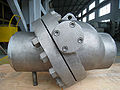
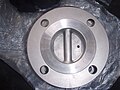
Tilting-disc inconel check valve
Check valve symbol on piping and instrumentation diagrams. The arrow shows the flow direction.
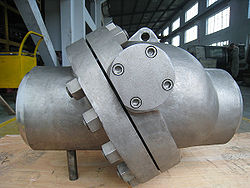
Vertical lift check valve

A check valve, non-return valve, reflux valve, retention valve, foot valve, or one-way valve is a valve that normally allows fluid (liquid or gas) to flow through it in only one direction.[1]

Check valves are two-port valves, meaning they have two openings in the body, one for fluid to enter and the other for fluid to leave. There are various types of check valves used in a wide variety of applications. Check valves are often part of common household items. Although they are available in a wide range of sizes and costs, check valves generally are very small, simple, and inexpensive. Check valves work automatically and most are not controlled by a person or any external control; accordingly, most do not have any valve handle or stem. The bodies (external shells) of most check valves are made of plastic or metal.

An important concept in check valves is the cracking pressure which is the minimum differential upstream pressure between inlet and outlet at which the valve will operate. Typically the check valve is designed for and can therefore be specified for a specific cracking pressure.

Technical terminology

[edit]
Cracking pressure
Refers to the minimum pressure differential needed between the inlet and outlet of the valve at which the first indication of flow occurs (steady stream of bubbles). Cracking pressure is also known as unseating head (pressure) or opening pressure.[2]
Reseal pressure
Refers to the pressure differential between the inlet and outlet of the valve during the closing process of the check valve, at which there is no visible leak rate. Reseal pressure is also known as sealing pressure,[3] seating head[4] (pressure) or closing pressure.[5]
Back pressure
a pressure higher at the outlet of a fitting than that at the inlet or a point upstream

Types

[edit]

Ball check valve

[edit]
Forward through a hole pushes away a ball that was blocking the far side of the hole, allowing flow to occur. The motion of the ball compresses a spring.
Backward flow pushes a ball against a hole, preventing outward flow through the hole. A spring expands to help hold the ball in place.
A ball check valve in the open position to allow forward flow and closed position to block reverse flow

A ball check valve is a check valve in which the closing member, the movable part to block the flow, is a ball. In some ball check valves, the ball is spring-loaded to help keep it shut. For those designs without a spring, reverse flow is required to move the ball toward the seat and create a seal. The interior surface of the main seats of ball check valves are more or less conically tapered to guide the ball into the seat and form a positive seal when stopping reverse flow.

Ball check valves are often very small, simple, and cheap. They are commonly used in liquid or gel minipump dispenser spigots, spray devices, some rubber bulbs for pumping air, etc., manual air pumps and some other pumps, and refillable dispensing syringes. Although the balls are most often made of metal, they can be made of other materials; in some specialized cases out of highly durable or inert materials, such as sapphire. High-performance liquid chromatography pumps and similar high pressure applications commonly use small inlet and outlet ball check valves with balls of (artificial) ruby and seats made of sapphire[6] or both ball and seat of ruby,[7] for both hardness and chemical resistance. After prolonged use, such check valves can eventually wear out or the seat can develop a crack, requiring replacement. Therefore, such valves are made to be replaceable, sometimes placed in a small plastic body tightly fitted inside a metal fitting which can withstand high pressure and which is screwed into the pump head.[citation needed]

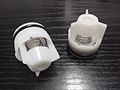
A disassembled poppet check valve

There are similar check valves where the disc is not a ball, but some other shape, such as a poppet energized by a spring. Ball check valves should not be confused with ball valves, which are a different type of valve in which a ball rotating on a pin acts as a controllable rotor to stop or direct flow.

Diaphragm check valve

[edit]

A diaphragm check valve uses a flexing rubber diaphragm positioned to create a normally-closed valve. Pressure on the upstream side must be greater than the pressure on the downstream side by a certain amount, known as the pressure differential, for the check valve to open allowing flow. Once positive pressure stops, the diaphragm automatically flexes back to its original closed position.[8] This type is used in respirators (face masks) with an exhalation valve.

Swing check valve

[edit]
Swing check valve opening and closing

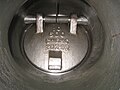
A swing check valve (or tilting disc check valve) is a check valve in which the disc, the movable part to block the flow, swings on a hinge or trunnion, either onto the seat to block reverse flow or off the seat to allow forward flow. The seat opening cross-section may be perpendicular to the centerline between the two ports or at an angle. Although swing check valves can come in various sizes, large check valves are often swing check valves. A common issue caused by swing check valves is known as water hammer. This can occur when the swing check closes and the flow abruptly stops, causing a surge of pressure resulting in high velocity shock waves that act against the piping and valves, placing large stress on the metals and vibrations in the system. Undetected, water hammer can rupture pumps, valves, and pipes within the system.[9]

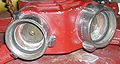
The flapper valve in a flush-toilet mechanism is an example of this type of valve. Tank pressure holding it closed is overcome by manual lift of the flapper. It then remains open until the tank drains and the flapper falls due to gravity. Another variation of this mechanism is the clapper valve, used in applications such firefighting and fire life safety systems. A hinged gate only remains open in the inflowing direction. The clapper valve often also has a spring that keeps the gate shut when there is no forward pressure. Another example is the backwater valve (for sanitary drainage system) that protects against flooding caused by return flow of sewage waters. Such risk occurs most often in sanitary drainage systems connected to combined sewerage systems and in rainwater drainage systems. It may be caused by intense rainfall, thaw or flood.

Butterfly check valve

[edit]
Large butterfly check valve for a water pump

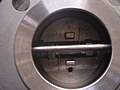
A butterfly check valve is a variant on the swing check valve, having two hinged flaps which act as check valves to prevent backwards flow. It should not be confused with the similarly named butterfly valve, which is used for flow regulation and does not have a one-way flow function.

Stop-check valve

[edit]

A stop-check valve is a check valve with override control to stop flow regardless of flow direction or pressure. In addition to closing in response to backflow or insufficient forward pressure (normal check-valve behavior), it can also be deliberately shut by an external mechanism, thereby preventing any flow regardless of forward pressure.

Lift-check valve

[edit]

A lift-check valve is a check valve in which the disc, sometimes called a lift, can be lifted up off its seat by higher pressure of inlet or upstream fluid to allow flow to the outlet or downstream side. A guide keeps motion of the disc on a vertical line, so the valve can later reseat properly. When the pressure is no longer higher, gravity or higher downstream pressure will cause the disc to lower onto its seat, shutting the valve to stop reverse flow.

In-line check valve

[edit]

An in-line check valve is a check valve similar to the lift check valve. However, this valve generally has a spring that will 'lift' when there is pressure on the upstream side of the valve. The pressure needed on the upstream side of the valve to overcome the spring tension is called the 'cracking pressure'. When the pressure going through the valve goes below the cracking pressure, the spring will close the valve to prevent back-flow in the process.[10]

Duckbill valve

[edit]

A duckbill valve is a check valve in which flow proceeds through a soft tube that protrudes into the downstream side. Back-pressure collapses this tube, cutting off flow.

Pneumatic non-return valve

[edit]

Pneumatic non-return valves provide the ability to lock the valve, hence preventing flow in either direction. This may be used if for example a site with hazardous materials should be protected from flood water, however it is also important that the materials can't leak, for example during transfer between vessels.

Reed valve

[edit]

A reed valve is a check valve formed by a flexible flat sheet that seals an orifice plate. The cracking pressure is very low, the moving part has low mass allowing rapid operation, the flow resistance is moderate, and the seal improves with back pressure. These are commonly found in two stroke internal combustion engines as the air intake valve for the crankcase volume and in air compressors as both intake and exhaust valves for the cylinder(s). Although reed valves are typically used for gasses rather than liquids, the Autotrol brand of water treatment control valves are designed as a set of reed valves taking advantage of the sealing characteristic, selectively forcing open some of the reeds to establish a flow path.[11]

Flow check

[edit]

A flow check is a check valve used in hydronic heating and cooling systems to prevent unwanted passive gravity flow. A flow check is a simple flow lifted gravity closed heavy metal stopper designed for low flow resistance, many decades of continuous service, and to self-clean the fine particulates commonly found in hydronic systems from the sealing surfaces. To accomplish self cleaning, the stopper is typically not conical. A circular recess in a weight that fits over a matching narrow ridge at the rim of an orifice is a common design. The application inherently tolerates a modest reverse leakage rate, a perfect seal is not required. A flow check has an operating screw to allow the valve to be held open, the opposite of the control on a stop-check valve, as an aide for filling the system and for purging air from the system.[12]

Multiple valves

[edit]

Multiple check valves can be connected in series. For example, a double check valve is often used as a backflow prevention device to keep potentially contaminated water from siphoning back into municipal water supply lines. There are also double ball check valves in which there are two ball/seat combinations sequentially in the same body to ensure positive leak-tight shutoff when blocking reverse flow; and piston check valves, wafer check valves, and ball-and-cone check valves.

Applications

[edit]

Pumps

[edit]
The check valves on this steam locomotive are located under the small cover between the chimney and the main dome.

Check valves are often used with some types of pumps. Piston-driven and diaphragm pumps such as metering pumps and pumps for chromatography commonly use inlet and outlet ball check valves. These valves often look like small cylinders attached to the pump head on the inlet and outlet lines. Many similar pump-like mechanisms for moving volumes of fluids around use check valves such as ball check valves. The feed pumps or injectors which supply water to steam boilers are fitted with check valves to prevent back-flow.

Check valves are also used in the pumps that supply water to water slides. The water to the slide flows through a pipe which doubles as the tower holding the steps to the slide. When the facility with the slide closes for the night, the check valve stops the flow of water through the pipe; when the facility reopens for the next day, the valve is opened and the flow restarts, making the slide ready for use again.[13]

Industrial processes

[edit]

Check valves are used in many fluid systems such as those in chemical and power plants, and in many other industrial processes.

Typical applications in the nuclear industry are feed water control systems, dump lines, make-up water, miscellaneous process systems, N2 systems, and monitoring and sampling systems.[14] In aircraft and aerospace, check valves are used where high vibration, large temperature extremes and corrosive fluids are present. For example, spacecraft and launch vehicle propulsion propellant control for reaction control systems (RCS) and Attitude Control Systems (ACS) and aircraft hydraulic systems.[15][16]

Check valves are also often used when multiple gases are mixed into one gas stream. A check valve is installed on each of the individual gas streams to prevent mixing of the gases in the original source. For example, if a fuel and an oxidizer are to be mixed, then check valves will normally be used on both the fuel and oxidizer sources to ensure that the original gas cylinders remain pure and therefore nonflammable.

In 2010, NASA's Jet Propulsion Laboratory slightly modified a simple check valve design with the intention to store liquid samples indicative to life on Mars in separate reservoirs of the device without fear of cross contamination.[17]

Domestic use

[edit]

When a sanitary potable water supply is plumbed to an unsanitary system, for example lawn sprinklers, a dish washer or a washing machine, a check valve called a backflow preventer is used to prevent contaminated water from re-entering the domestic water supply.

Some types of irrigation sprinklers and drip irrigation emitters have small check valves built into them to keep the lines from draining when the system is shut off.

Check valves used in domestic heating systems to prevent vertical convection, especially in combination with solar thermal installations, also are called gravity brakes.

Rainwater harvesting systems that are plumbed into the main water supply of a utility provider may be required to have one or more check valves fitted to prevent contamination of the primary supply by rainwater.

Hydraulic jacks use ball check valves to build pressure on the lifting side of the jack.

Check valves are commonly used in inflatables, such as toys, mattresses and boats. This allows the object to be inflated without continuous or uninterrupted air pressure.

History

[edit]

Frank P. Cotter developed a "simple self sealing check valve, adapted to be connected in the pipe connections without requiring special fittings and which may be readily opened for inspection or repair" 1907 (U.S. patent 865,631).

Nikola Tesla invented a deceptively simple one-way valve for fluids in 1916, called a Tesla valve. It was patented in 1920 (U.S. patent 1,329,559).

Images

[edit]

See also

[edit]

References

[edit]
[edit]
Revisions and contributorsEdit on WikipediaRead on Wikipedia
from Grokipedia
A check valve, also known as a non-return valve or one-way valve, is a self-actuated mechanical device designed to permit the flow of fluids—such as liquids or gases—in a single direction while automatically preventing in the opposite direction. These valves operate without external controls, relying on the and of the flowing medium to open a movable internal component, such as a disc, , or , and to close it against reverse , often assisted by , springs, or . By blocking , check valves protect equipment like pumps and compressors from damage, maintain system , and ensure the integrity of processes involving unidirectional flow. Check valves are essential components in systems, including pneumatic and hydraulic applications—particularly in parallel hydraulic pump configurations, where check valves on each pump discharge prevent reverse flow from the common high-pressure line into idle, failed, or lower-pressure pumps, protecting against mechanical damage (e.g., reverse impeller rotation or backspin), preventing pressure loss, ensuring flow directionality, and maintaining system stability and efficiency. They do not directly prevent overpressurization, which is typically managed by pressure relief valves; however, by preventing backflow, they can indirectly mitigate related pressure surges like water hammer. Their design typically features a two-port body with an and outlet, a sealing element that responds to differential —opening when forward flow exceeds a threshold (often as low as 5 psi in pneumatic systems) and sealing tightly otherwise. Common types include swing check valves, which use a hinged for larger pipelines; check valves, featuring a free-floating suitable for smaller lines under 2 inches; check valves, where a lifts with flow; and diaphragm check valves, employing a flexible for low- or sanitary applications. Materials such as , , , or PVC are selected based on the fluid's corrosiveness, , and requirements, ensuring durability and compatibility. While simple and low-maintenance, these valves can introduce drops and may require careful sizing to avoid issues like sticking or incomplete closure in systems with solids or pulsating flows. In practice, check valves find widespread use across industries to safeguard operations and enhance efficiency. They are integral to and systems for preventing contamination, in HVAC setups for directing flow, and in industrial processes like , power generation, and chemical handling to protect pumps and maintain clean supplies. Specialized variants, such as check valves for media or Y-pattern stop check valves for boilers, address niche demands, while selection criteria emphasize factors like pipe size, , and accessibility to ensure optimal performance and longevity. Overall, their role in preventing reverse flow underscores their importance as fundamental elements in reliable .

Fundamentals

Definition and Purpose

A check valve is a mechanical device that permits , such as liquids or gases, to flow in one direction while automatically preventing in the opposite direction. This one-way functionality is achieved without external controls, relying on the 's and motion to open and close the . Check valves, also known as non-return or reflux valves, are essential components in and systems across various industries. The primary purpose of a check valve is to safeguard equipment and processes by blocking reverse flow, which can cause damage such as water hammer—a sudden surge in pipelines—or contamination in water supplies. By maintaining directional flow, these valves help preserve system , protect pumps from overload, and ensure operational safety. In potable water systems, check valves comply with standards like NSF/ANSI 61 to prevent back-siphonage of contaminants into supplies. Common applications include pipelines where check valves mitigate water hammer by rapidly closing to stop fluid reversal, and in automotive engines where they direct exhaust gases outward while blocking re-entry into the . These uses highlight the valve's role in enhancing efficiency and reliability in both simple and complex fluid-handling setups.

Operating Principles

Check valves operate based on the principle of unidirectional flow control, where a movable closure element—such as a disc, , or flap—responds to the differential across the to permit forward flow while blocking reverse flow. In the forward direction, the upstream fluid generates a that displaces the closure element from its , allowing the medium to pass through. This displacement occurs when the forward overcomes any inherent closing biases, ensuring the remains closed against backpressure without external actuation. The core physics governing operation is the pressure differential (ΔP), which drives the motion of the closure element through a basic force balance. The opening force arises from ΔP acting over the effective seat area A, expressed as F_pressure = ΔP × A; the valve cracks open when this exceeds opposing forces like spring preload F_spring and gravitational component F_gravity on the element, i.e., ΔP × A > F_spring + F_gravity. The minimum ΔP required to initiate flow, termed the cracking pressure, typically ranges from 1 to 5 psi in standard designs, varying with element mass, spring stiffness, and orientation. During forward flow, the closure element lifts or shifts proportionally to the flow rate, achieving partial to full opening (often up to 85° for hinged types) as velocity increases, which minimizes resistance while maintaining stability. In reverse flow, the elevated downstream pressure reverses the force balance, pressing the element against the seat to form a tight seal and prevent backflow. Leakage in the closed state is minimized and governed by standards like API 598, which define maximum allowable rates—such as no visible leakage for soft-seated valves or up to 72 drops per minute (≈4.5 ml per minute, with 1 ml ≈ 16 drops) for a 24-inch metal-seated valve in liquid seat tests—to ensure reliable isolation. Check valves are inherently passive devices, relying on without external power, but variations include spring-assisted configurations that enhance responsiveness. These springs provide consistent closing force independent of or installation angle, enabling quicker reseating (often in milliseconds) and lower cracking pressures in horizontal or vertical orientations, which is critical for applications demanding rapid backflow prevention.

Technical Terminology

In engineering contexts, a check valve is commonly referred to by several synonyms, including non-return valve (NRV), one-way valve, reflux valve, and retention valve, all of which describe a device that permits fluid flow in a single direction while preventing reverse flow. Regional variations in nomenclature also exist; for instance, "clack valve" is a term frequently used in the , particularly in and applications, whereas "check valve" predominates in engineering standards and documentation. Key technical terms associated with check valves include cracking pressure, which is defined as the minimum upstream pressure differential required to initiate flow through the valve by overcoming the closing mechanism, typically ranging from 0.5 to 5 psi depending on design. Closing pressure, also known as resealing pressure, refers to the backpressure needed to ensure the valve closes tightly and maintains seal integrity against reverse flow, often requiring a specific differential to fully the internal components. The is the precise contact surface within the valve body where the movable element rests to achieve closure and prevent . In certain designs, such as poppet check valves, the serves as the primary movable element—a piston-like or disc-shaped component that lifts to allow forward flow and drops or is pushed back to seal against the . Standardized terminology in the industry includes pressure classes defined by ASME B16.34, which establishes pressure-temperature ratings for valves, including check valves, across classes such as 150, 300, 600, 900, 1500, 2500, and 4500 to ensure safe operation under specified conditions. For sizing purposes, the (Cv) quantifies a check valve's capacity to pass fluid, representing the flow rate in U.S. gallons per minute of water at 60°F through a fully open valve with a 1 psi pressure , aiding in system design and performance prediction. A common misconception is that check valves function as full shutoff valves providing leakage; in reality, they are designed to minimize but not eliminate , with allowable leakage rates specified under standards like API 598, which permits controlled leakage (e.g., up to 36 drops per minute (≈2.25 ml per minute, with 1 ml ≈ 16 drops) for a 12-inch metal-seated valve in liquid seat tests) to balance sealing with operational reliability.

Types

Swing Check Valves

Swing check valves utilize a hinged disc or flap mounted on a pivot arm within the body, allowing the disc to swing open freely in the direction of forward flow while closing to prevent . This design typically features a full-bore configuration with the positioned at the top of the body, enabling the disc to rotate up to a 90-degree arc during operation. Common variants include standard full-body types and compact wafer-style designs, where the is sandwiched between pipe flanges for space-constrained installations. In operation, the valve opens when upstream exceeds the cracking , permitting low-velocity fluids to pass with minimal obstruction as the disc swings away from the flow path. Closure is achieved through in horizontal orientations or backflow , which forces the disc back to its seat; however, without spring assistance, rapid closure in certain conditions can generate water hammer effects. These valves perform best in applications with steady, low-velocity flows, as the swinging motion ensures smooth transition without significant . Key advantages of swing check valves include their low , resulting from the unobstructed flow path when open, which supports efficient operation across a range of sizes. Their simple construction—comprising primarily the body, disc, hinge, and seat—makes them cost-effective, particularly for large-diameter installations up to 48 inches. Additionally, they offer reliable sealing and ease of maintenance, with features like bolted covers allowing access without full disassembly. Swing check valves find unique applications in horizontal piping systems, such as lines, processing, and power generation, where their design accommodates unidirectional flow in sizes from 2 to 48 inches. They are also suitable for vertical upward flow orientations, ensuring effective prevention in these setups. The API 594 standard specifically addresses wafer-style swing check valves, defining requirements for face-to-face dimensions, wall thickness, and pressure ratings to ensure compatibility in compact, high-integrity systems like those in oil and gas pipelines. Despite their benefits, swing check valves have limitations, including unsuitability for vertical downward flow, where impedes disc closure, and a propensity for slamming or water hammer in non-assisted designs under varying flow conditions.

Lift Check Valves

Lift check valves feature a piston-like disc that moves vertically along a body-guided stem or internal guides to permit unidirectional flow. The disc lifts off its when inlet pressure exceeds outlet pressure, allowing fluid passage, and reseats through or spring assistance when flow reverses or stops, preventing . This guided ensures precise alignment and reduces compared to pivoting designs. In operation, lift check valves excel in environments with pulsating flows, such as those in or systems, due to their rapid response to pressure fluctuations—often closing in under 0.1 seconds with spring assistance. The vertical lift minimizes seat wear by avoiding lateral sliding, promoting longevity in clean fluid applications. The lift force on the disc can be expressed as Flift=(PinPout)×AdiscF_{\text{lift}} = (P_{\text{in}} - P_{\text{out}}) \times A_{\text{disc}}, where PinP_{\text{in}} and PoutP_{\text{out}} are inlet and outlet s, and AdiscA_{\text{disc}} is the disc area, highlighting the direct dependence on pressure differential for opening. They are particularly suited for systems, where maintaining forward flow prevents condensate buildup and system inefficiency. Key advantages include tight sealing capabilities, achieving bubble-tight shutoff in soft-seated variants per 598 standards, which ensures zero detectable leakage under test conditions. These valves handle high pressures effectively, with ratings up to 2500 psi in forged steel constructions, making them reliable for demanding industrial setups. Available in sizes from 1/2 to 12 inches, they come in inline patterns for straight-through flow or angle patterns for compact installations in tight spaces. However, lift check valves exhibit higher pressure drops than alternatives like swing types, with typical flow coefficients (Cv) ranging from 10 to 100 for common sizes, leading to increased energy requirements in high-volume systems. This limitation arises from the restricted annular flow path around the lifted disc, necessitating careful sizing for applications prioritizing low head loss.

Ball Check Valves

Ball check valves feature a simple design consisting of a that seats against a conical or flat orifice within the valve body to prevent . The , typically made from materials such as , , rubber, or , lifts or rolls away from the when forward exceeds the cracking pressure, allowing unidirectional flow through the orifice. The , often constructed from metal, , or rubber, ensures a tight seal when the returns under , reverse flow, or spring assistance. In operation, the ball's movement provides a self-cleaning action as it rotates or rolls, dislodging debris and preventing buildup, which contributes to low maintenance requirements. This design is particularly effective in vertical installations where an optional spring can assist in closing the against low-pressure differentials. The opens automatically with forward flow and closes to block reverse flow, making it suitable for applications involving viscous or fluids where the ball's motion handles particulates without clogging. Key advantages include their compact size, low cost, and ability to manage dirty or contaminated effectively, with flow coefficients (Cv) typically ranging from 5 to 50, indicating moderate flow capacity. Variants are available in threaded or flanged connections, with sizes commonly spanning 1/8 to 6 inches to accommodate diverse systems. A unique application is in IV lines, where the valve's low cracking pressure and reliable sealing prevent in delivery. Pressure drop across the valve can be calculated using the formula ΔP=(QCv)2×SG\Delta P = \left( \frac{Q}{C_v} \right)^2 \times SG, where QQ is the flow rate in gallons per minute, CvC_v is the , and SGSG is the specific gravity of the . However, limitations arise in high-velocity flows, where the may chatter, leading to wear or instability.

Diaphragm Check Valves

Diaphragm check valves feature a flexible elastomeric or diaphragm that serves as the primary sealing element, flexing to open or close over a or contoured within the valve body. This design eliminates the need for internal moving parts like hinges, balls, or pistons that could contact the media, allowing the diaphragm to isolate the process from the valve's mechanical components. The diaphragm typically spans the flow path, sealing against the seat in the closed position to prevent . In operation, forward pressure from the upstream side deforms the diaphragm, lifting it away from the to permit unidirectional flow without relying on springs or . When flow reverses or stops, the diaphragm returns to its seated position due to elastic recovery or differential pressure, creating a tight seal. This mechanism provides inherent self-cleaning action, as the flexing motion helps dislodge particulates or solids, making these valves suitable for handling slurries and media with . The cracking pressure, or minimum upstream pressure required to open the valve, can be adjusted by varying the diaphragm's thickness or material properties. Key advantages include bubble-tight, leak-proof performance in low-pressure applications up to 150 psi, along with excellent resistance due to the diaphragm's material selection, such as EPDM, PTFE, or Viton, which can withstand aggressive chemicals. These valves are available in sizes ranging from 1/4 inch to 12 inches, offering compact footprints for space-constrained installations. Variants include straight-through designs for minimal flow restriction and restricted types for higher cracking pressures or specific flow control needs. In applications, diaphragm check valves ensure sterility by providing a barrier that prevents media exposure to internal components, facilitating hygienic processing in pharmaceutical and bioprocessing systems. Despite these benefits, diaphragm check valves have limitations, including suitability for low-temperature environments typically from -20°F to 200°F, beyond which the elastomeric material may stiffen or degrade. Additionally, repeated flexing cycles can lead to diaphragm fatigue, reducing in high-cycle operations, though proper material selection can mitigate this to some extent.

Duckbill Valves

Duckbill valves are a type of check valve featuring a flexible, one-piece elastomeric component shaped like a duck's bill, consisting of two opposing lips that form a tapered . The design utilizes a soft, resilient material such as rubber or , which allows the lips to flex and invert under backpressure to create a tight seal. This enables the valve to function without any moving mechanical parts, relying solely on for operation. In operation, forward flow causes the lips to spread open at a low cracking , typically around 1-2 inches of , permitting unimpeded passage of fluids or gases. Under reverse flow or back, the lips invert and compress more tightly against each other—the so-called "duckbill effect"—enhancing the seal and preventing even as increases. This variable sealing capability allows the to handle differential pressures without adjustment, maintaining efficiency across fluctuating conditions. Unlike rigid check valves, the elastomeric membrane provides dynamic flexibility, similar to but distinct from full-diaphragm designs by focusing on lip inversion for sealing. Key advantages of duckbill valves include their resistance to clogging in wastewater applications, as the flexible lips seal around suspended solids or debris without jamming, ensuring reliable flow in slurry or effluent systems. They effectively manage pulsations and variable flows with minimal head loss, reducing energy requirements in pumping operations. Available in sizes ranging from 1 to 24 inches, these valves offer versatility for various pipeline diameters while requiring no maintenance due to the absence of hinges or seats that could corrode or bind. The duckbill valve was first patented in the for use in marine sewage systems on boats and mobile homes, where the design addressed prevention in dynamic environments. This , filed in and granted in , introduced the resilient conical member with slits forming engaging lips to handle solids-laden waste without mechanical failure. The valve's ability to maintain a seal under backpressures up to ratios of 10:1 in forward-to-reverse flow variations highlights its adaptability without needing external controls. Unique applications include storm drains for flood control and prevention during heavy rainfall or tidal surges, where submersion and debris-laden water demand non-clogging performance. In medical ventilation, duckbill valves are employed in devices like CPAP machines and resuscitators to ensure one-way , minimizing rebreathing of CO2 and contamination risks. Despite these benefits, duckbill valves are limited to low-pressure systems, typically up to 20 psi, beyond which the elastomeric material may deform or fail. Exposure to light accelerates rubber degradation, necessitating protection from sunlight in outdoor installations to extend .

Other Specialized Types

The stop-check valve integrates the functions of a check valve and a , allowing automatic prevention of while providing manual control to regulate or halt flow entirely through stem adjustment that positions a freely moving disc. This design enables the disc to "float" independently, closing under reverse pressure to protect systems like from or , and permits full shutoff for maintenance or isolation. In applications, stop-check valves are essential for safety, installed between the boiler outlet and main header to block reverse flow in multi-boiler setups, as mandated by the ASME Boiler and Code Section I. Reed valves consist of thin, flexible metal reeds or petals that open under forward pressure to permit flow and seal against a curved seat to block reverse flow, serving as high-speed check valves in dynamic systems. They are widely used in two-stroke engines to control the of fuel-air mixture into the , opening and closing hundreds of times per second in with motion for efficient high-speed operation. In compressors, reed valves similarly manage gas flow during rapid cycles, though their design limits them to applications with intermittent rather than sustained open states. These valves trace their use to early engine designs but became prominent in two-stroke configurations for their simplicity and responsiveness. Pneumatic non-return valves, also known as check valves for air systems, are air-operated devices that ensure unidirectional flow of gases while minimizing friction to maintain system in pneumatic circuits. They automatically block reverse flow to protect components like actuators from pressure loss or contamination, often featuring low-cracking pressures suitable for applications. A butterfly variant employs a rotating disc that aligns with flow to open and pivots to seal against reverse pressure, providing low-friction operation ideal for gas handling in industrial . Flow check valves represent a hybrid that combines traditional check functionality with integrated inline sensors for real-time flow monitoring, enabling detection of anomalies like reverse flow or blockages without separate . These devices use embedded or sensors to provide on , often in backflow prevention assemblies for or process lines. While effective for , their specialized construction results in higher costs and sensitivity to specific media velocities and types, limiting broad applicability. Specialized check valves like these often incur elevated manufacturing and installation expenses due to their tailored mechanisms, and their performance is highly dependent on velocity and medium properties, requiring precise system matching.

Design and Configurations

Materials and Construction

Check valves are constructed using a variety of materials selected for their durability, resistance, and compatibility with the intended media. The body is commonly made from for general-purpose applications due to its cost-effectiveness and strength, for enhanced toughness, for non-corrosive environments like systems, and such as 316 SS (ASTM A351 Grade CF8M) for superior resistance in aggressive conditions. Valve seats typically feature metal for high-pressure or abrasive services or soft elastomers like EPDM for sealing in water-based systems up to 300°F or Viton for chemical resistance in temperatures exceeding 400°F. Internal components, such as discs or pistons, often incorporate PTFE linings or seals to minimize friction, enhance flow efficiency, and provide chemical inertness in corrosive fluids. Construction methods include for larger bodies to achieve complex shapes economically and for smaller, high-pressure valves to ensure uniform grain structure and superior strength. Connection types vary by application: threaded ends for small-diameter installations, flanged ends conforming to ANSI Class 150–2500 for pipeline integration, and designs for compact, space-saving setups between flanges. For sour service environments containing , materials and hardness levels must comply with NACE MR0175/ISO 15156 to prevent sulfide stress cracking. Material selection prioritizes compatibility with the process media, including levels, , and temperatures up to 1200°F for high-performance alloys like Incoloy or Hastelloy, while abrasion-resistant options such as hardened stainless steels or ceramics are chosen for handling to extend . Relevant standards ensure reliability: API 6D governs design, manufacturing, and testing for pipeline check valves up to Class 2500, emphasizing full-port configurations for oil and gas transport. For food and pharmaceutical applications, valves must use FDA-compliant materials like and elastomers meeting 21 CFR 177 to prevent contamination. Exotic alloys such as Hastelloy C-276 are employed for handling strong acids like hydrochloric or sulfuric, offering exceptional pitting and resistance. Lifecycle performance is verified through endurance testing per ISO 15761, requiring up to 5,000 cycles for small and check valves to simulate operational wear.

Multiple Valve Assemblies

Multiple valve assemblies incorporate several check valves to achieve enhanced reliability, redundancy, and flow control in demanding systems. A duplex configuration features two parallel check valve units, enabling isolation of one valve for inspection or repair while the other sustains flow, thereby minimizing operational interruptions. Triplex setups, common in multi-cylinder pumps, utilize three check valves—one per —to manage sequential and discharge, ensuring balanced pressure and preventing during reciprocating cycles. Back-to-back arrangements position two check valves with opposing orientations, connected outlet-to-outlet, to block reverse flow from either direction while permitting forward flow in the intended path, often applied in hydraulic circuits for precise isolation. These assemblies operate by leveraging individual valve independence; parallel duplex or triplex designs equalize manifold pressures and facilitate maintenance without full system shutdown, while back-to-back setups maintain directional integrity under varying loads. In , multiple check valves on pump discharges prevent and ensure reliable water delivery, as mandated by NFPA 20, which requires listed check valves installed before circulation relief valves. Sequencing in reciprocating pumps relies on these valves to time discharges, coordinating flow to avoid surges and sustain continuous output. Key advantages include built-in redundancy that mitigates single-point failures in , such as parallel paths in duplex assemblies that uphold operation during component servicing. assemblies, a series variant of multiple setups, provide layered protection suitable for continuous zones. However, these configurations demand greater installation space due to additional components and incur elevated costs from the complexity of fabrication and testing.

Applications

Pumping and Compression Systems

In pumping systems, check valves are essential for protecting equipment and ensuring reliable operation by preventing backflow and maintaining fluid dynamics. Foot valves, installed at the inlet of pumps, serve as strainers and one-way barriers to hold the pump's prime, keeping the suction line filled with fluid and avoiding the need for re-priming after shutdowns. Discharge check valves on s prevent backspin by blocking reverse flow when the pump stops, which could otherwise cause damage, motor overload, or during restarts. These valves are used in systems governed by industry standards such as 610 for safe startup against closed valves and overall system integrity. In parallel hydraulic pump systems, where multiple pumps discharge into a common high-pressure line, check valves are installed on each pump's discharge line to prevent reverse flow from the common line into idle, failed, or lower-pressure pumps. This protects the pumps from mechanical damage (e.g., reverse impeller rotation or backspin), prevents pressure loss, ensures flow directionality, and maintains system stability and efficiency. Check valves do not directly prevent overpressurization, which is typically managed by pressure relief valves, but by preventing backflow they can indirectly mitigate related pressure surges such as water hammer. In diesel fuel systems, check valves are typically installed on the supply line from the fuel tank to the filter, oriented with the flow direction from tank to filter, either before or after the priming bulb. Priming bulbs often incorporate built-in check valves at the inlet and outlet; a separate check valve is added only if the system experiences air locks or the bulb fails to maintain pressure. In compression systems, check valves safeguard against reverse airflow, particularly in reciprocating compressors where they maintain pressure differentials and prevent damage from fluid or gas reversal during cycles. In compressors, reed valves act as specialized check valves, opening for during the downstroke and closing to seal discharge during the upstroke, ensuring efficient compression without leakage or flutter. For example, in HVAC refrigerant compressors, check valves on discharge lines block refrigerant , preserving system pressure and efficiency while avoiding compressor overload from equalization when units cycle off. Check valves address key operational challenges in these systems, such as preventing dry running by retaining in the casing and line, which mitigates overheating, seal failure, and mechanical in centrifugal setups. Proper sizing is critical, accounting for head to minimize ; valves are often rated for heads up to 1000 feet (approximately 432 psi) to handle deep-well or high-lift applications without excessive energy loss. In oilfield submersible s, multiple check valves are typically installed in the drop pipe to limit upon shutdown, reducing water hammer, pipe stress, and risks in deep wells. Swing and lift check valves are commonly selected for these dynamic environments due to their low cracking and compatibility with varying flow rates.

Industrial Processes

In chemical processing plants, check valves play a vital role in maintaining unidirectional flow to prevent the of chemicals into sensitive such as pumps, reactors, and mixers, thereby avoiding hazardous reactions or damage. Diaphragm check valves are particularly favored in these environments due to their flexible diaphragms, often made from corrosion-resistant materials like PTFE, which isolate the valve body from aggressive fluids and provide a tight seal against leaks. This design ensures reliable operation in handling corrosives, such as acids or solvents, while minimizing contamination risks from incompatible substances mixing. In wastewater treatment plants (Estaciones Depuradoras de Aguas Residuales, EDAR), check valves are essential for preventing backflow in pumping systems, pipelines, and treatment processes. They protect equipment from damage due to reverse flow, water hammer, and solids accumulation. Common types include swing check valves, wafer check valves, flanged check valves, and ball check valves, often designed with full-port features to handle solids-laden wastewater, corrosion-resistant materials, and non-slam operation for reliable performance in harsh, abrasive conditions. In the oil and gas sector, check valves are essential for upholding pipeline integrity by automatically closing to block reverse flow, protecting upstream equipment and preventing environmental leaks during system ruptures or shutdowns. Swing check valves compliant with API 6D standards, which specify design, testing, and performance requirements for high-pressure pipelines, are widely used to ensure low pressure drops and full-bore flow in long-distance transport systems. Duckbill check valves, with their flexible rubber flaps, find application in venting systems to allow air or gas escape while preventing backflow of hydrocarbons or contaminants, offering low headloss and tight sealing in low-pressure scenarios. Power generation facilities rely on check valves to safeguard steam lines and coolant circuits, where stop-check valves—combining non-return and manual shutoff functions—prevent backflow in boiler circulation and steam headers, isolating units during maintenance or emergencies per ASME Boiler and Pressure Vessel Code standards. In nuclear power plants, these valves are integrated into systems to ensure one-way flow of or gases, blocking reverse movement that could contaminate clean zones with radioactive materials and withstanding conditions typical of pressurized water reactors, such as pressures up to 2,250 psi (155 bar) and temperatures up to 345°C. Refineries employ check valves to halt backflow between processing stages, such as separation and treatment, thereby stabilizing operations and averting surges that could lead to or spills. For enhanced in explosive atmospheres, explosion-proof check valves certified to ATEX Directive 2014/34/EU are utilized, featuring robust housings and springs that contain potential ignitions from backflow-induced sparks or static, applicable in zones with flammable gases or dusts. Industrial check valves are engineered to accommodate high flow rates, with larger models (e.g., 8-inch ) handling over 1,000 gallons per minute (GPM) at minimal pressure drops of 0.3 psi, supporting efficient throughput in large-scale without significant loss. Additionally, modern designs incorporate sensors for position and flow monitoring, enabling seamless integration with programmable logic controllers (PLCs) to provide real-time diagnostics, alerts, and automated responses in hazardous process environments.

Domestic and Plumbing Uses

In domestic systems, check valves serve as essential backflow preventers to safeguard potable water supplies from contamination, particularly in lines connected to faucets and setups. According to the 2024 (UPC), backflow prevention devices, including check valves, are required for fixtures like faucets where potential reverse flow could introduce contaminants, such as in pull-out kitchen faucets or outdoor hose bibs that might connect to non-potable sources. For residential systems drawing from municipal water, reduced pressure zone (RPZ) assemblies—comprising multiple check valves with a —are mandatory in many U.S. states to prevent fertilizers, pesticides, or soil-borne hazards from entering the supply, as enforced by local codes aligned with UPC Section 603. Check valves are also integral to household appliances, where they prevent reverse flow that could lead to operational failures or flooding. In washing machines, inline check valves installed in drain hoses ensure wastewater flows only outward, avoiding siphoning back into the machine or home during pump cycles. Similarly, sump pumps in basements or crawl spaces rely on spring-loaded or swing check valves in discharge lines to halt after pumping, thereby reducing the risk of water re-entering the sump basin and causing flooding during power outages or pump failures. These applications prioritize simple, affordable designs, often using or PVC construction that costs under $50 per unit, making them accessible for routine residential installations. In and venting systems, specialized check valves like duckbill types are employed to block the escape of odors and gases while allowing air or to vent properly. These elastomeric, one-way valves are commonly fitted into vent stacks or sewage ejector lines in homes, preventing sewer gases such as and from entering living spaces, especially in basements with below-grade fixtures. Maintenance for domestic check valves focuses on periodic inspection; for instance, system backflow preventers require annual testing by certified professionals to verify functionality and compliance with local regulations, ensuring no degradation from or changes compromises system integrity.

History

Ancient and Early Developments

The earliest known precursors to check valves emerged in ancient civilizations for managing water flow in irrigation and distribution systems. Ancient Egyptians used simple check valves carved in stone for drainage systems around 1500 BC. These simple designs relied on basic materials to allow forward flow while blocking reverse movement, marking an initial step toward automatic flow regulation. The Romans advanced these during their extensive aqueduct and from the onward, employing plug valves to control flow in water supply systems. These devices, often integrated into conduits, supported urban water distribution for , fountains, and households. Such innovations demonstrated early recognition of flow control's importance in , though they remained largely manual or gravity-dependent rather than fully . During the in the , sketched flap-style check valve designs for mechanical pumps, inspiration from studies of flow to create hinged or metal discs that opened with forward and closed against reversal. These conceptual drawings laid groundwork for more reliable pump mechanisms, emphasizing in applications. The brought formalized developments amid the , with the first design patented by John Warren and John C. Chapman in 1871, featuring a spherical element to seal against in systems. Early swing check valves also appeared in steam engines, using pivoted discs to regulate and exhaust, enhancing in locomotives and factories; prior to this era, no specific patents for check valves existed, as earlier designs were artisanal and undocumented. This shift from manual, material-based controls to patented, automatic mechanisms via industrial advancements enabled broader adoption in mechanical systems.

Modern Innovations

During the 1940s, the U.S. Navy commissioned Durabla to develop the Basic-Check valve for cryogenic applications in the , creating an all-stainless steel, spring-assisted design that prevented reverse flow in extreme low-temperature environments. This classified innovation addressed critical needs for secure fluid handling in nuclear research, featuring a restrictor mechanism and calibrated spring to maintain precise pressure differentials. Following , declassification in the early 1950s allowed commercialization of the Basic-Check, leading to widespread adoption in chemical processing, power generation, and systems. In 1907, Frank P. Cotter patented a simple self-sealing check valve, marking an early documented advancement in one-way flow control. The 1950s also saw the introduction of advanced elastomers like Viton, a developed by , which revolutionized check valve seals for chemical resistance in corrosive environments. Viton's ability to endure temperatures up to 200°C and resist oils, fuels, and acids enabled check valves to operate reliably in petrochemical and pharmaceutical applications, reducing leakage and extending service life. By the 1960s, spring-loaded check valves gained prominence for mitigating water hammer, with designs that used assisted closure to close rapidly before flow reversal, minimizing shock waves in piping systems. In the 1970s, the () evolved its standards with the first publication of API 594 in 1976, standardizing design, dimensions, and testing for flanged, wafer, and butt-welding check valves to ensure interchangeability and safety in oil and gas operations. This framework promoted uniform performance metrics, influencing global manufacturing practices. Advancing into the , smart check valves integrated sensors for real-time monitoring of position, , and flow, enabling and automated adjustments in industrial processes. These innovations, often featuring discrete controllers, improved system efficiency by detecting anomalies like partial closures early. The 2020s brought additive manufacturing to the forefront, with 3D-printed check valves using composite materials for custom geometries and , particularly in biomedical and microfluidic applications. This approach allowed for lightweight, corrosion-resistant designs tailored to specific flow requirements, reducing production times and material waste. DFT's SCV (Silent Check Valve) variant, a spring-assisted model, exemplifies ongoing refinements for water hammer prevention, offering tight shutoff in liquid, gas, and steam services across 1/2- to 3-inch pipes. As of , sustainability trends include the use of bio-based polymers in valve construction to reduce environmental impact, with projections for growth in eco-friendly materials.

Advantages, Limitations, and Maintenance

Benefits and Selection Criteria

Check valves offer several key benefits in fluid systems due to their passive . They operate automatically without requiring external power or control signals, relying solely on fluid differentials to open and close, which enhances system reliability and eliminates the need for actuators or electrical inputs. Their compact and lightweight construction, often achieved through or inline designs, allows for space-efficient installation in tight configurations while reducing overall system weight. By preventing , check valves protect pumps, compressors, and other equipment from reverse flow damage, spikes, and , thereby extending equipment lifespan and minimizing . This backflow prevention also leads to cost savings by avoiding repairs, reducing energy losses from inefficiencies, and lowering operational expenses associated with equipment failures. Compared to powered valves, such as or motorized types, check valves are generally more cost-effective upfront and over the lifecycle due to their simplicity and lack of , though they provide less precise flow regulation or capabilities. Selection of a check valve begins with matching the valve to the system's media characteristics, including and corrosivity, to ensure proper operation and durability; for instance, ball check valves suit viscous fluids, while corrosion-resistant materials like are chosen for aggressive media. Flow rate requirements guide the choice of valve size via the flow coefficient CvC_v, calculated using the formula for liquids: Q=CvΔPSGQ = C_v \sqrt{\frac{\Delta P}{SG}}
Add your contribution
Related Hubs
User Avatar
No comments yet.