Hubbry Logo
Cucurbita maximaCucurbita maximaMain
Open search
Cucurbita maxima
Community hub
Cucurbita maxima
logo
8 pages, 0 posts
0 subscribers
Be the first to start a discussion here.
Cucurbita maxima
Cucurbita maxima
from Wikipedia

Cucurbita maxima
Scientific classification Edit this classification
Kingdom: Plantae
Clade: Tracheophytes
Clade: Angiosperms
Clade: Eudicots
Clade: Rosids
Order: Cucurbitales
Family: Cucurbitaceae
Genus: Cucurbita
Species:
C. maxima
Binomial name
Cucurbita maxima
Subspecies
  • C. maxima subsp. andreana
  • C. maxima subsp. maxima
Synonyms[1]
  • Cucumis rapallito Carrière
  • Cucumis zapallito Carrière
  • Cucurbita farinae Mozz. ex Naudin
  • Cucurbita maxima var. triloba Millán
  • Cucurbita maxima var. turgida L.H.Bailey
  • Cucurbita maxima var. zapallito (Carrière) Millán
  • Cucurbita maxima var. zipinka Millán
  • Cucurbita pileiformis M.Roem.
  • Cucurbita rapallito Carrière
  • Cucurbita sulcata Blanco
  • Cucurbita turbaniformis M.Roem.
  • Cucurbita zapallito Carrière
  • Pepo maximus Peterm.
  • Pileocalyx elegans Gasp.

Cucurbita maxima, one of at least five species of cultivated squash, is one of the most diverse domesticated species.[2] This species originated in South America from the wild subspecies Cucurbita maxima subsp. andreana over 4,000 years ago.[3] Cucurbita maxima, known for modern varieties as Hubbard, Delicious, Marblehead, Boston Marrow, and Turks Turban, originated in northern Argentina near the Andes or in certain Andean valleys.[4] Secondary centers of diversity include India, Bangladesh, Myanmar, and the southern Appalachians.

Different squash types of this species were introduced into North America as early as the 16th century. By the American Revolution, the species was in cultivation by Native American tribes throughout the present-day United States. By the early 19th century, at least three varieties are known to have been commercially introduced in North America from seeds obtained from Native Americans.[5]

Types

[edit]

Subspecies andreana

[edit]
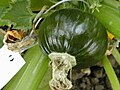
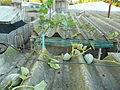
Cucurbita maxima subsp. andreana fruits (top), plant in the middle of the season (middle) and fruits left at the end of the season (bottom). The opaque ones are fruits left on earlier seasons from a different plant on the same place.
Different fruit types of C. maxima subsp. andreana from Argentina[6]

As of October 2024, Cucurbita andreana is accepted as a separate species by some sources,[7] and a subspecies of C. maxima by others.[8] It was first formally described by Charles Victor Naudin in 1896, in Revue Horticole.[8] It is native to Argentina and Uruguay and is the ancestor of the domesticated forms. C. andreana fruits are smaller and not palatable.[5][3] It hybridizes readily with individuals of other C. maxima subspecies.

C. maxima subsp. andreana has notably different calcium levels than individuals of other C. maxima subspecies.[9] C. andreana has yellow flowers and bright green striped fruit. Extrafloral nectaries are present in C. maxima but not necessarily in C. andreana.[10]

Cultivars

[edit]
A Pink Banana squash, cut, with seeds removed, with a U.S. quarter for size comparison
A buttercup squash
A cut open blue hubbard squash
A golden Hubbard squash
  • Arikara squash weighs from four to eleven pounds with a teardrop or round shape with a mottled orange and green color pattern. It is used both for its eating qualities and as decoration. This variety traces its ancestry to the Arikara tribe of the Dakotas, among whom its cultivation predates white settlement.[citation needed]
  • Banana squash has an elongated shape, with light blue, pink, or orange skin and bright orange flesh.
  • Boston marrow is sweet, narrow at one end, and bulbous at the other.[11]
  • Buttercup squash has a turban shape (a flattish top) and dark green skin, weighs three to five pounds, and features dense, yellow-orange flesh. Not to be confused with butternut squash.
  • Candy roaster squash is a landrace developed by the Cherokee people in the southern Appalachians. A United States Department of Agriculture accession in 1960 notes that Candy Roasters had been grown for more than 100 years as of that date.[12] It is variable in size and shape with more than 40 distinct forms according to one authority.[13] Candy roasters consistently feature fine-textured orange flesh, while varying in size (from 10 lbs to more than 250 lbs); shape (including round, cylindrical, teardrop, and blocky); and color (pink, tan, green, blue, gray, and orange).[14] An article in the 1925 Charlotte Observer newspaper of Charlotte, North Carolina provides an account of two candy roaster varieties at a Cherokee fair that were both of similar shape and size to a Catawba watermelon, one being colored like a citron melon and the other "pumpkin color".[15]
  • Hubbard squash usually has a tear-drop shape and is often used as a replacement for pumpkins in cooking. According to one source,[16] the name comes from Bela Hubbard, settler of Randolph Township, Ohio, in the Connecticut Western Reserve. Other sources conclude that this variety came to Marblehead, Massachusetts via Captain Knott Martin where Elizabeth Hubbard brought it to the attention of her neighbor, a seed trader named James J. H. Gregory. Gregory subsequently introduced it to the market using Hubbard as the eponym. Gregory later bred and released the Blue Hubbard, a variety with bluish-gray skin. Another variety, the Golden Hubbard, has a bright orange skin. Gregory advertisements for Hubbard squash had begun by 1859.[17][18][19] The Hubbard squash, including questions regarding the name, is the subject of a children's ditty, "Raising Hubbard Squash in Vermont".[20]
  • Jarrahdale pumpkin is a pumpkin with gray skin that is nearly identical to Queensland Blue (though has more water content when roasted) and Sweet Meat varieties.
  • JAP (or Kent) Pumpkin is the most common "pumpkin" eaten in Australia (known in other countries as a winter squash) it has a mottled/stripy dark green and cream skin. The flesh is a bright orange and the vines have been known to grow up to 15 fruit on them of at least 2 kg each. Known to grow in a wide variety of climates, it is favoured by backyard growers. Is as its best when roasted, the skin, flesh, and seeds are all edible.
  • Kabocha is a Japanese variety with dark green skin and bright golden-orange flesh.
  • Lakota squash is an American variety.
  • Nanticoke squash was grown by the Nanticoke people of Delaware and Eastern Maryland. It is one of only a few surviving Native American winter squashes from the Eastern woodlands.[21]
  • Turban squash, also known as "French turban", predates 1820 and is closely related to the buttercup squash.[22]

Uses

[edit]

Buttercup squash, a common cultivar, can be roasted, baked, and mashed into soups, among a variety of filler uses, much like pumpkin. It is extremely popular, especially as a soup, in Brazil, Colombia, and Africa.

All giant pumpkins (over 300 pounds or 140 kilograms) are of this species, including the largest pumpkins ever documented, which have attained a size of 2,749.0 pounds (1,246.9 kg) as of 2023.[23]

The seed of C. maxima is used in treating parasites in animals.[24]

Cultivation

[edit]

Since this plant requires a fair amount of hot weather for best growth, it has not become very well established in northern Europe, the British Isles, or in similar areas with short or cool summers.[4]

The ideal soil pH range for cultivation ranges from 6.0 to 6.8.

Recommended spacing can vary depending on the specific variety, but generally, plants are spaced around 3–5 feet apart in rows that are approximately 6–10 feet apart. Planting depth of around 1–2 inches.

Fertilization should be carried out based on soil test results and specific crop nutrient requirements.[25]

Many cultivars of Cucurbita maxima have been developed. Only long-vining plants are known in this species.[4] As in C. pepo, plants exist with a "bush habit" that is particularly evident in young plants, but older plants grow in the wild-type vining manner.[26]

[edit]

References

[edit]
[edit]
Revisions and contributorsEdit on WikipediaRead on Wikipedia
from Grokipedia
Cucurbita maxima is a species of annual in the gourd family , native to , encompassing regions such as , , , , and . It is renowned for producing large, edible fruits classified as winter squashes or pumpkins, which are harvested mature in the fall and characterized by hard rinds, diverse shapes, and colors ranging from orange and green to blue and cream. The plant exhibits rapid growth as a warm-season climber using tendrils, features coarse, prickly leaves over 6 inches long, and bears monoecious yellow flowers 3 to 6 inches across that bloom in summer. Domesticated in with archaeological evidence dating back to around 7000 B.C. in sites like the Ica Valley of , C. maxima represents one of the oldest cultivated crops in the , alongside . Its cultivation spread throughout the by the time of European arrival in the , after which it was introduced to , , and other regions, leading to further diversification in secondary centers such as China-Japan and India-Myanmar. The species is notable for its , which has enabled the development of the "mammoth" group of cultivars, capable of yielding the largest fruits in the plant kingdom—up to 600 kg in weight—through mechanisms like and hormonal regulation of cell expansion. Widely grown today in USDA hardiness zones 3a to 11b, C. maxima thrives in full sun on well-drained, loamy soils with high and a of 6.0 to 8.0, propagated by and spaced 12 inches to 3 feet apart after the last frost. Key varieties include the Hubbard group (e.g., blue-gray skinned types), Buttercup (sweet, fiberless flesh), group (elongated fruits), and Turbaniformis (turban-shaped). The fruits are a nutritious staple, rich in , vitamins A and C, , proteins, and antioxidants, supporting culinary uses in , soups, and , while seeds provide oil and medicinal benefits like properties.

Taxonomy

Classification

Cucurbita maxima belongs to the kingdom Plantae, phylum Tracheophyta, class Magnoliopsida, order , family , genus Cucurbita, and species maxima, with the binomial authority attributed to Duchesne (1786). This classification positions it within the diverse family, which includes other economically important genera like (cucumbers and melons). The genus encompasses approximately 13 species native primarily to the , of which five are domesticated: C. argyrosperma, C. ficifolia, C. maxima, C. moschata, and C. pepo. Phylogenetic analyses using sequences and other molecular markers confirm C. maxima within the domesticated of the genus, distinct from wild relatives through shared ancestry and independent domestication events. C. maxima is distinguished from closely related domesticated species like C. pepo and C. moschata by both genetic and morphological characteristics. Genetically, genotyping-by-sequencing reveals significant differences in (SNP) profiles, with C. maxima exhibiting markedly fewer filtered SNPs (approximately 1,599) compared to around 30,000 in C. pepo and C. moschata, reflecting lower intraspecific variation and distinct evolutionary histories. Morphologically, C. maxima features a softly corky fruit peduncle without enlargement or ridges at the attachment point, contrasting with the hard, pentagonal peduncle of C. pepo and the hard, rounded or angled peduncle of C. moschata. These traits, combined with differences in shape and characteristics, aid in taxonomic identification despite occasional hybridization challenges. The karyotype of C. maxima consists of 2n = 40 chromosomes, a trait shared across the Cucurbita genus but resulting from an ancient allotetraploidization event that distinguishes it from diploid cucurbit relatives in other genera (typically 2n = 20 or 22). Genome sequencing supports this polyploid origin, with unbiased fractionation of duplicated genes post-polyploidy contributing to karyotype stability. The specific epithet maxima alludes to the notably large fruit size characteristic of the species.

Etymology and nomenclature

The scientific name Cucurbita maxima derives from the Latin genus , referring to a and likely originating from curvitas (crookedness), alluding to the often curved or irregular shape of gourd fruits, as established by in (1753). The specific epithet maxima means "largest" in Latin, highlighting the notably large fruit size characteristic of this species compared to other gourds. The binomial Cucurbita maxima was first validly published by French botanist Antoine Nicolas Duchesne in his 1786 work Essai sur l'histoire naturelle des courges, where he distinguished it from other cucurbits based on morphological traits like fruit size and rind texture. This description built upon Linnaeus's broader classification of the genus Cucurbita, which encompassed various domesticated and wild gourds under a Linnaean framework emphasizing reproductive and vegetative characteristics. Common names for C. maxima reflect its culinary and ornamental uses, with "winter squash" denoting its hard rind suitable for long storage, while "pumpkin" is applied in some contexts, particularly to round orange-fruited varieties. Specific cultivar groups include "Hubbard squash," named after , from whom 19th-century seedsman James J. H. Gregory obtained the seeds and popularized the variety. In South America, regional names such as "zapallo" prevail, derived from the Quechua indigenous term zapallu or sapallu, used by Andean peoples to describe these large-fruited squashes. Nomenclaturally, C. maxima has faced synonymy challenges, with the wild ancestor Cucurbita andreana Naudin (1856) sometimes treated as a due to hybridization potential, though current maintains them as distinct. Historical confusion arose with C. ficifolia Bouché (1837), another South American , owing to overlapping morphologies and early European introductions, leading to misidentifications in 19th-century floras until clarified by morphological and genetic studies. These issues underscore the role of C. maxima in post-Linnaean refinements of cucurbit , emphasizing peduncle texture and traits for delimitation. Culturally, naming in the reflects pre-Columbian , where Quechua terms like zapallu integrated C. maxima into indigenous and , influencing Spanish colonial nomenclature upon European contact. This linguistic legacy persists in modern South American varieties, distinguishing C. maxima from related species like C. moschata.

Description

Plant morphology

Cucurbita maxima is an annual herbaceous trailing that can reach lengths of 3–10 m, depending on the variety and growing conditions, climbing or sprawling via branched tendrils that aid in support and attachment. The exhibits a vigorous growth habit, with stems that are angular, grooved, and covered in soft hairs or prickles, typically dark green in color and non-aromatic. The leaves are large, alternate, and simple, measuring 15-25 cm in length and width, with an orbicular to reniform shape and a cordate base supported by a distinct petiole. They feature 5-7 shallow lobes with palmate venation, coarsely toothed or entire margins, and a rough, prickly texture on the upper surface, while the underside is pubescent or fuzzy. The is fibrous and extensive, moderately deep, enabling efficient water uptake from the . Overall size shows variability, with wild forms tending toward more compact growth and cultivated varieties displaying enhanced vigor and larger dimensions due to .

Reproductive biology

Cucurbita maxima is monoecious, producing both staminate (male) and pistillate (female) flowers on the same . The flowers are large and solitary, typically in color with a of 8–15 cm (3–6 inches), emerging from the axils. Staminate flowers feature three anthers that release sticky, heavy , while pistillate flowers possess a three-lobed stigma and an inferior . Flowering begins 35-60 days after and continues more or less continuously, with a male-to-female flower ratio of approximately 10:1, though this can vary by and conditions. The species exhibits protandry, where male flowers open and release before female flowers become receptive, favoring cross-pollination over despite self-compatibility. Pollination in C. maxima is primarily entomophilous, relying on vectors due to the flower's deep corolla and characteristics that preclude effective wind dispersal. Key include honey bees (Apis mellifera and A. cerana japonica), bumble bees (Bombus diversus), and sweat bees (), which visit flowers from dawn until midday when they close. These bees transfer from staminate to pistillate flowers, with visitation rates varying by geographic location and time of day; for instance, honey bees dominate early morning visits in Japanese populations. In agricultural settings, is often employed to ensure seed set in hybrid cultivars, particularly when natural activity is insufficient, achieving comparable yields to open . Following successful , development proceeds in C. maxima, resulting in a pepo—a fleshy, indehiscent characterized by a hard rind enclosing a central cavity filled with pulp. The matures over 90-120 days from planting, though this can extend to 140 days in cooler climates, with optimal development requiring to initiate formation and pulp expansion. Fruits vary widely in and due to , but all feature a persistent peduncle that enlarges and becomes corky at maturity. Seeds of C. maxima are flat, oval-shaped, and measure 1-2 cm in length, with 200-500 per depending on and size. They possess a high oil content, ranging from 40% to 50% of their dry weight, primarily composed of unsaturated fatty acids like linoleic and oleic acids, making them nutritionally valuable. The seeds lack significant and are enclosed in a thin hull in most s. Parthenocarpy, the development of seedless fruits without fertilization, is rare in C. maxima and not widely reported in standard cultivars, though isolated instances may occur in certain domesticated lines or under specific environmental conditions. This trait is more commonly associated with other Cucurbita species like C. pepo.

Distribution and ecology

Native range and wild relatives

Cucurbita maxima is native to the Andean region of , with its natural distribution spanning from in the north to northern , , and in the south, and centered primarily in and . This warm-temperate origin reflects the species' adaptation to diverse elevations and climates within the , where it evolved alongside other early cultigens. The wild progenitor of domesticated C. maxima is generally accepted to be Cucurbita andreana (formerly classified as C. maxima subsp. andreana), a species native to southern , northern , and . Phylogenetic analyses of mitochondrial gene sequences confirm close genetic relationships, with shared haplotypes indicating direct descent, and highlight hotspots in humid lowland areas of Bolivia and warmer temperate zones of northwestern Argentina as key centers of origin. These wild populations exhibit morphological similarities to domesticated forms, such as vining growth and small, bitter fruits, underscoring their role in the species' evolutionary history. Archaeological evidence for early of C. maxima dates to around 7000 B.C. in sites such as the Ica Valley of , suggesting human selection began in the Andean region during the mid-Holocene. In its native habitats, C. maxima and its progenitor C. andreana have become rare due to habitat loss from , , and the historical of megafaunal dispersers, which stranded these plants in fragmented ecosystems. Conservation efforts focus on ex situ germplasm collections, such as those maintained by the USDA Unit, and protection in South American reserves to preserve for breeding disease-resistant cultivars. Global strategies, including those from the , emphasize monitoring populations and integrating them into crop improvement programs to mitigate ongoing threats.

Habitat and environmental adaptations

Cucurbita maxima thrives in a variety of habitats characterized by moist, fertile soils, often in disturbed areas such as meadows, fields, and shores of rivers or lakes. It is particularly suited to subtropical and warm-temperate zones, where it can occupy wetlands, savannas, shrublands, and edges. In its native South American range, including the , the species occurs from up to approximately 1,750 meters , though some populations extend to 3,000 meters in broader distributions. These preferences reflect its adaptation to environments with moderate to high rainfall, typically 600–1,000 mm annually, though it tolerates 450–2,700 mm. The plant exhibits notable physiological adaptations that enhance its resilience in fluctuating environments. is facilitated by a moderately deep and extensive horizontal root proliferation near the surface, allowing access to subsurface during dry periods. It demonstrates heat resistance, with optimal growth between 20–27°C and tolerance up to around 35°C, beyond which physiological disruptions like altered flower development may occur. Certain lines show photoperiod insensitivity, enabling consistent flowering and growth across a wide range of latitudes without dependence on day length cues. Ecologically, C. maxima functions as a pioneer species in secondary succession, colonizing disturbed habitats created by natural or anthropogenic factors, such as post-megafaunal landscapes in its native range. It interacts closely with pollinators, primarily bees including bumble bees and honey bees, which visit flowers for nectar and pollen, ensuring effective cross-pollination in outcrossing populations. Seed dispersal is aided by rodents, which cache seeds from fruits, promoting propagation in patchy environments, a mutualism that echoes its historical reliance on megafauna for long-distance spread. Despite these adaptations, C. maxima remains vulnerable to frost, with exposure below 0°C causing severe damage to vines and fruits due to its tropical origins. poses additional risks, including altered flowering times and reduced flower size under warming conditions, as observed in experimental elevations to 23°C, potentially disrupting synchronization with pollinators. Recent studies highlight how temperatures exceeding 35°C can impair sex expression and development, exacerbating yield variability in natural populations.

Varieties

Subspecies

Cucurbita maxima is classified into two : C. maxima subsp. maxima, the domesticated form, and C. maxima subsp. andreana, its wild progenitor. andreana represents the wild form native to the southern region, including northern , , and lowland areas of , where it grows in diverse habitats with high that serves as a valuable resource for breeding programs aimed at enhancing disease resistance and adaptability in cultivated squashes. Its fruits are small, typically measuring 5-10 cm in diameter and weighing under 100 g, with bitter flesh rendering them inedible. In contrast, subspecies maxima encompasses the domesticated lineages, featuring large fruits often exceeding 1 kg in weight, supported by morphological traits such as thick, hard rinds and extensive vine growth that enable worldwide cultivation. These domesticated forms exhibit reduced compared to the wild subspecies due to , yet they maintain key adaptations from their wild . The distinction between these subspecies was initially proposed in morphological classifications during the 1970s, with significant contributions from Michael Nee in his 1990 synthesis, which highlighted their close relationship based on shared traits and distributions. Genetic studies, including analyses of haplotypes, have confirmed this proximity, showing no differences between the two, while chloroplast DNA studies indicate close affinity; simple sequence repeat (SSR) markers have further validated the high intraspecific diversity and hybrid compatibility. Subspecies andreana faces conservation challenges, assessed as vulnerable in its native range due to habitat degradation, climate change, and limited populations, with medium priority for further action; this has prompted efforts to maintain ex situ collections in germplasm banks, which currently provide moderate representation for preservation and utilization in crop improvement. This wild progenitor played a pivotal role in the domestication history of C. maxima, with archaeological evidence indicating early selection in over 4,000 years ago.

Notable cultivars

Cucurbita maxima encompasses a wide array of cultivars, with over 100 recognized varieties grouped primarily by morphology into categories such as elongate (e.g., banana-shaped), globular or flattened (e.g., buttercup-like), and turban-shaped, reflecting significant diversity in size, color, and flavor developed through centuries of selection. This diversity stems from the species' origins in , where wild forms were domesticated over 4,000 years ago, leading to modern cultivars adapted for storage, culinary use, and ornamental purposes. The Hubbard group represents one of the earliest and most iconic cultivars, originating in 19th-century , possibly named after of , who shared seeds around 1840; these squashes feature gray to blue-green, bumpy rinds and dense orange flesh ideal for long-term storage, weighing 2–6 kg with an elliptical shape. Similarly, the Buttercup group, developed in 1925 at from a cross between 'Essex Hybrid' and 'Quality' varieties, produces compact, turban-shaped fruits (1.6–1.7 kg) with dark green rinds striped in gray and sweet, dry orange-yellow flesh high in beta-carotene, making it a staple for and pureeing. Kabocha cultivars, a Japanese adaptation of C. maxima introduced in the 1860s–1870s from American varieties like Hubbard, are prized for their dense, starchy flesh with a nutty, sweet potato-like flavor; fruits are typically round to , 1.5–5.3 lbs, with dark green or rinds, and modern hybrids such as 'Delica' (developed in 1964) emphasize uniformity and early maturity. For exhibition purposes, the Atlantic Giant cultivar, an open-pollinated strain of C. maxima selected since the for extreme size, can produce fruits exceeding 1,000 kg under optimal conditions, though its flesh is fibrous and less palatable, highlighting for spectacle over edibility. Breeding efforts in C. maxima have historically relied on open-pollinated heirlooms like Hubbard and types, but since the 2010s, hybrid development has focused on disease resistance, particularly to powdery mildew (Podosphaera xanthii) and (Pseudoperonospora cubensis), incorporating genes from wild relatives and landraces to create resilient, GMO-free lines suited to trends. These advancements maintain nutritional variations, such as elevated beta-carotene in orange-fleshed cultivars like Buttercup, while preserving diversity through seed-saving initiatives.

Cultivation

Requirements and practices

Cucurbita maxima thrives in warm climates with daytime temperatures ranging from 20 to 30°C and requires full sun exposure for at least 6 to 8 hours daily, as it is highly frost-sensitive and cannot tolerate temperatures below 10°C. The prefers well-drained, fertile loamy soils rich in , with a between 6.0 and 6.8 to support optimal nutrient uptake and root development. Poor drainage or heavy clay soils can lead to , so incorporating or raised beds is recommended for improved and moisture retention. Seeds should be direct-sown after the last when soil temperatures reach at least 15 to 18°C, typically in or early summer, at a depth of 2.5 to 5 cm in hills or rows. spacing varies by but generally requires 1 to 2 meters between and 1.5 to 2.5 meters between rows to accommodate sprawling vines, which can extend up to 3 to 6 meters. For space-limited gardens, trellising vining varieties can promote vertical growth, reducing ground contact and improving air circulation while supporting fruit development with slings for heavier specimens. Fertilization begins with high-nitrogen applications at planting to encourage vegetative growth, transitioning to potassium-rich fertilizers during fruit set to enhance rind quality and yield; soil testing is essential to apply rates such as 50 to 100 kg/ha of based on crop needs. Watering should maintain consistent , providing 25 to 50 mm per week through to avoid waterlogging, which predisposes plants to fungal issues, especially during flowering and fruit enlargement. Fruits are harvested 80 to 120 days after planting, once the rind hardens to resist fingernail penetration and develops a dull, mature color, ensuring long-term storage viability. Commercial yields typically range from 20 to 50 tons per under optimal management, influenced by , , and . World production of pumpkins, squash, and gourds (including Cucurbita maxima) was 22.8 million tonnes in 2022, according to FAO data, with producing 7.3 million tonnes, 1.1 million tonnes, and the 1.0 million tonnes.

Pests, diseases, and management

Cucurbita maxima, commonly known as or , is susceptible to several key pests that target its vines, stems, and flowers. The (Melittia cucurbitae) is a primary threat, with its larvae tunneling into the plant's stems shortly after egg-laying by adult moths in early summer, leading to sudden wilting, stem girdling, and plant death if unchecked. This pest particularly affects vining like C. maxima due to their sprawling growth habit, which exposes stems to oviposition. Cucumber beetles, including the striped () and spotted () , feed on foliage, , and flowers, causing direct damage while vectoring ; adults chew irregular holes in leaves and transmit the Erwinia tracheiphila during feeding. These beetles are attracted to C. maxima cultivars such as 'Blue Hubbard', which can be used strategically as trap crops to divert them from main plantings. Fungal diseases pose significant challenges to C. maxima production, with powdery mildew caused by Podosphaera xanthii being widespread and appearing as white, powdery patches on leaf surfaces that reduce and stunt growth, often leading to premature defoliation in humid conditions. , incited by Pseudoperonospora cubensis, manifests as angular yellow lesions on upper leaf surfaces bounded by veins, progressing to brown with purplish-gray sporulation on the undersides, severely impacting yield by impairing development. , primarily from f. sp. cucurbitacearum, causes vascular discoloration, yellowing of lower leaves, and sudden wilting, especially under warm soil temperatures above 25°C, though C. maxima shows variable susceptibility compared to other cucurbits. Breeding efforts have incorporated resistance genes like PM-0 for powdery mildew into C. maxima lines, enhancing tolerance in commercial varieties. Effective management of these threats in C. maxima relies on (IPM) strategies that combine cultural, biological, and chemical controls to minimize impacts while preserving beneficial insects. Crop rotation with non-host plants for at least two to three years disrupts pest and pathogen life cycles, reducing vine borer and buildup in soil. Resistant cultivars, such as those derived from PM-0 for powdery mildew or interspecific hybrids (C. maxima × C. moschata) for , provide genetic protection and are widely adopted in breeding programs. Organic options include applications, which deter adult cucumber beetles and squash vine borers by disrupting feeding and reproduction when sprayed on foliage during early infestation stages. Floating row covers exclude pests from young plants until flowering, after which they are removed to allow , complemented by perimeter trap crops like 'Blue Hubbard' to concentrate beetle pressure away from primary fields. Emerging issues in the 2020s include viral diseases such as squash mosaic virus (SqMV), transmitted by cucumber beetles, which causes mottled leaves, stunted growth, and deformed fruits in C. maxima, with infections rising due to expanded vector ranges. Climate-driven changes, including warmer temperatures and prolonged growing seasons, have intensified pest pressure by enabling multiple generations of borers and beetles, as observed in North American cucurbit fields since 2020. These shifts underscore the need for adaptive IPM, such as enhanced monitoring and diversified rotations, to sustain C. maxima yields amid evolving biotic stresses.

Uses

Culinary and nutritional aspects

Cucurbita maxima fruits are widely utilized in culinary preparations due to their versatile flesh, which can be roasted, baked, boiled, or pureed for use in soups, stews, pies, and side dishes. The edible seeds are often roasted for snacks or pressed to extract oil, while the flowers can be stuffed, fried, or added to salads and soups. These large fruits enable bulk preparation in recipes like hearty winter soups, with proper storage in cool, dry conditions allowing them to remain viable for up to 6 months after . Nutritionally, the cooked flesh of C. maxima varieties, such as and Hubbard squashes, provides approximately 37 kcal per 100 g, along with 0.89 g , 8.85 g carbohydrates, and 2.9 g . It is notably high in (558 µg per 100 g from beta-carotene), (9.9 mg per 100 g), and (350 mg per 100 g), contributing to its low of around 50-60, which supports stable blood sugar levels. The seeds stand out for their nutrient density, containing about 33% , 31% unsaturated fats (primarily linoleic and oleic acids), and significant (up to 7.8 mg per 100 g), making them a valuable addition to diets for their and properties. Varietal differences influence culinary outcomes; for instance, denser, sweeter cultivars like yield creamy textures ideal for roasting or pureeing, while some larger field types may be more watery and better suited for soups after draining. Processing methods such as or pureeing enhance shelf life and convenience, particularly for baked goods where the flesh replaces canned . In , C. maxima features prominently in , a staple blending pureed flesh with spices. Andean traditions incorporate smaller varieties, known as zapallitos, in dishes like stews () and stuffed preparations, reflecting indigenous uses from regions like and . Modern applications include seed oil production for dressings and supplements, valued for its high content.

Ornamental and industrial applications

Cucurbita maxima is prominently featured in ornamental , particularly through cultivars like the Atlantic Giant, which are selectively bred for their enormous size in competitive growing events. These giant pumpkins have achieved world records, such as the 2,819.3-pound specimen grown by brothers Ian and Stuart Paton in the in 2025, certified by the Great Pumpkin Commonwealth. Previous records include 2,749 pounds by Travis Gienger in 2023, highlighting the species' capacity for rapid size increase through breeding and intensive cultivation. Beyond competitions, smaller varieties serve as fall decorations and jack-o'-lanterns, with large carving pumpkins averaging $6.21 retail in October 2024, contributing to seasonal aesthetic displays. In industrial applications, seed oil extracted from C. maxima via cold pressing is valued for its high content of γ-tocopherol (599.33 mg/kg) and unsaturated fatty acids like linoleic (46.67%) and oleic (28.19%), offering properties and oxidative stability suitable for and pharmaceuticals. The oil's bioactive compounds, including sterols and tocopherols, support product innovation in skincare formulations that promote and anti-aging effects. Rind and peel by-products provide sources, with potential for biodegradable films and other sustainable materials, though commercial craft applications remain emerging. Additionally, waste oil from C. maxima shows potential, achieving yields up to 91.5% through microwave-assisted , presenting a option from agricultural residues. Other non-culinary uses include animal , where C. maxima waste—such as pulp (133.53 g/kg carbohydrates), peels (206.78 g/kg carbohydrates), and seeds (274.85 g/kg protein)—enhances , boosting production by up to 6 kg/day in fed 17% and improving omega-3 levels in and . In , seeds exhibit anti-parasitic properties due to compounds like cucurbitine, effectively reducing gastrointestinal burdens in animal models, with ethanol extracts inhibiting egg hatching and worm motility . Recent biotechnological advancements, such as / editing post-2015, enable precise trait modifications in cucurbit crops including C. maxima-related squash, facilitating studies on shoot-root communication and disease resistance via efficient root transformation systems. The ornamental market for C. maxima drives significant economic value, with U.S. production across 68,000 acres yielding 1.4 billion pounds and generating over $274 million in 2024, largely from fresh carving and decorative pumpkins in states like ($40 million) and ($32 million). This sector supports sustainable industrial uses by valorizing by-products, though gaps persist in scaling and applications for broader economic impact.

References

Add your contribution
Related Hubs
User Avatar
No comments yet.