


Community hub
Recent from talks
Contribute something
Nothing was collected or created yet.
Utility cycling
View on Wikipedia


Utility cycling encompasses any cycling done simply as a means of transport rather than as a sport or leisure activity. It is the original and most common type of cycling in the world.[1] Cycling mobility is one of the various types of private transport and a major part of individual mobility.
Overview
[edit]
Utility or "transportational" cycling generally involves traveling short and medium distances (several kilometres, not uncommonly 3–15 kilometres one way, or somewhat longer), often in an urban environment.[citation needed] It includes commuting (i.e. going to work, school or university), going shopping and running errands, as well as heading out to see friends and family or for other social activities.
It also includes economic activity such as the delivering of goods or services. In cities, the bicycle courier is often a familiar feature, and cargo bikes are capable of competing with trucks and vans particularly where many small deliveries are required, especially in congested areas. Velotaxis can also provide a public transport service like buses and taxicabs.
Utility cycling is known to have several social and economic benefits. Policies that encourage utility cycling have been proposed and implemented for reasons including: improved public health,[2][3][4] individual health and employers' profits[5] a reduction in traffic congestion and air pollution,[4] improvements in road traffic safety,[4] improved quality of life,[3] improved mobility and social inclusiveness,[3] and benefits to child development.[3]
In the Chinese city of Beijing alone, there are an estimated four million bicycles in use (it has been estimated that in the early-1980s there were approximately 500 million cyclists in China).[6][7] As of 2000, there were an estimated 80 million bicycles in Japan, accounting for 17% of commuter trips,[8] and in the Netherlands, 27% of all trips are made by bicycle.[3][9]
Cycling has been considered
[in] economic and social terms, [influencing] or [impacting] upon transport, mobility, environment and climate change, the economy and tourism. ... As a means of transport over short distances, cycling brings certain economic, environmental and health-related benefits.
Cycling mobility can be contrasted with mass automobility for which it is an immediate competitor in cities and for shorter distances.
Cities are a hotbed for experimenting with new bicycle-based forms of mobility like bicycle sharing, electric bicycles and transport of bulky goods with cargo bikes.[10] After decades of relative stagnation in bicycle development, new technologies and materials are tried to further improve upon the environmental footprint of the bicycle.[11] Even though it is recognized that cycling - the one foremost active mobility besides walking - is the most sustainable kind of mobility and means of transportation, in some countries, cycling is still the mode of transport for the poor; in others, cycling is seen fit only for leisure purposes.[12] In a 2010 document requested by the European Parliament Committee on Transport and Tourism that mobility not only entails the ability to travel, but also encompasses, more importantly, the possibility for the traveller to decide when and where to travel.[13] In terms of this flexibility and cost, bicycles rank among the top choices for shorter distances, up to several kilometers.
History
[edit]The development of the safety bicycle was arguably the most important change in the history of the bicycle. It shifted their use and public perception from being a dangerous toy for sporting young men to being an everyday transport tool for men—and, crucially, women—of all ages. By the start of the 20th century, cycling had become an important means of transportation, and in the United States an increasingly popular form of recreation. Bicycling clubs for men and women spread across the U.S. and across European countries. Cycling steadily became more important in Europe over the first half of the twentieth century, but it dropped off dramatically in the United States between 1900 and 1910. Automobiles became the preferred means of transportation. Over the 1920s, bicycles gradually became considered children's toys, and by 1940 most bicycles in the United States were made for children. In 2008, the Bicycle Commuter Benefit Act became law as part of the bailout bill. According to census data, men are the primary beneficiaries, since, a decade later, men overwhelmingly made up the majority of bicycle commuters.[14] For most of the twentieth century, the great majority of cycling in the UK took place on roads. Cycling is one of the modes of transport for student transport.
The bicycle and the cyclist's equipment
[edit]
Utility bicycles have many standard features to enhance their usefulness and comfort. Chain guards and mudguards, or fenders, protect clothes and moving parts from oil and spray. Skirt guards prevent long coats, skirts, and other trailing clothes and items catching in the wheel. Kickstands help with parking. Front-mounted wicker or steel baskets for carrying goods are often used. Rear luggage carriers can be used to carry items such as school satchels.
Panniers or special luggage carriers (including waterproof packing bags) enable the transport of goods and are used for shopping. Parents sometimes add rear-mounted child seats and/or an auxiliary saddle fitted to the crossbar to transport children. Trailers of various types and load capacities may be towed to greatly increase cargo capacity. In many jurisdictions bicycles must be fitted with a bell; reflectors; and, after dark, front and rear lights.
The use by cyclists of vests or armbands fluorescent in daylight or reflective at night can increase a cyclist's conspicuity, although these are not an alternative to a legally compliant lighting system. A report on the promotion of walking and cycling (Hydén, et al., 1999) discussed safety clothing and equipment and stated that "there is no doubt that both pedestrian reflectors and bicycle helmets are reducing the injury risk of their users quite considerably",[15] although this assertion is not universally accepted.

Factors that influence levels of utility cycling
[edit]Many different factors combine to influence levels of utility cycling.[16] In developing economies, a large amount of utility cycling may be seen simply because the bicycle is the most affordable form of vehicular transport available to many people. In wealthier countries, where people can have the choice of a mixture of transport types, a complex interplay of other factors influences the level of bicycle use. In emerging economies and middle-income countries many people ambition to own cars, resulting in less cycling, more air pollution, and worse health.[17]
Factors affecting cycling levels may include: town planning (including quality of infrastructure: cyclist "friendly" vs. cyclist "hostile"), trip-end facilities (particularly secure parking), retail policy, marketing the public image of cycling, integration with other transport modes, cycle training, terrain (hilly vs. flat), distance to destinations, levels of motorized transport and climate as well as cost. In developed countries cycling has to compete with, and work with, alternative transport modes such as private cars, public transport and walking. Thus cycling levels are not influenced just by the attractiveness of cycling alone, but also by what makes the competing modes more or less attractive.
In developed countries with high utility cycling levels, utility cyclists tend to undertake relatively short journeys. According to Irish 1996 Census data, over 55% of cycling workers travelled 3 miles (4.8 km) or less, 27% 5 miles (8 km) or less and only 17% travelled more than 5 miles in their daily commute. It can be argued that factors that directly influence trip length or journey time are among the most important in making cycling a competitive transport mode. Car ownership rates can also be influential. In New York City, more than half of all households do not own a car (the figure is even higher in Manhattan, over 75%), and walk/bicycle modes of travel account for 21% of all modes for trips in the city.[18] E-bike use was shown to increase the distance cycled for commuting as well as the amount of physical activity among E-bike users in seven European cities.[19]
Decisions taken by various levels of government, as well as local groups, residents' organizations and public- and private-sector employers, can all affect the so-called "modal choice" or "modal split" in daily transport. In some cases, various factors may be manipulated in a manner that deliberately seeks to encourage or discourage various transport modes, including cycling.


The League of American Bicyclists has designated a set of five criteria[21][22] for evaluating the friendliness of a town or city to bicycles. These criteria are classified under the headings of: Engineering, Encouragement, Evaluation and Planning, Education, Enforcement.
Town planning
[edit]Trip length and journey times are key factors affecting cycle use. Town planning has a decisive effect on key destinations, schools, shops, colleges, health clinics, public transport interchanges and so on remain within a reasonable cycling distance of the areas where people live. The urban form can influence these issues, compact and circular settlement patterns tending to promote cycling. Alternatively, the low-density, non-circular (i.e., linear) settlement patterns characteristic of urban sprawl tends to discourage cycling. In 1990, the Dutch adopted the "ABC" guidelines, specifically limiting developments that are major attractants to locations that are readily accessible by non-car users.[23]

Settlements that provide a dense road network consisting of interconnected streets tend to be viable utility cycling environments. By contrast, other communities may use a cul-de-sac based, housing estate/housing subdivision model where minor roads are disconnected and only feed into a street hierarchy of progressively more "arterial" type roads. Such communities may discourage cycling by imposing unnecessary detours and forcing all cyclists onto arterial roads, which may be perceived as busy and dangerous, for all trips regardless of destination or purpose.[24]
There is evidence that people who live in such estates are heavier than people who live in places where walking and cycling are more convenient. It is also reported that the extra motor-traffic such communities generate tends to increase overall per-capita traffic casualty rates. Designs that propose to resolve the contradiction between the cul-de-sac and the traditional interconnected network, such as the Fused Grid, have been proposed and built with varying levels of success.[25] Particular issues have arisen with personal security and public order problems in some housing schemes using "back alley" or "back garden" type links. The UK Manual for Roads (2007) states: "The basic tenet is 'public fronts and private backs'. Ideally, and certainly, in terms of crime prevention, back gardens should adjoin other back gardens or a secure communal space. ... If streets are bounded by back-garden fences or hedges, security problems can increase, drivers may be encouraged to speed, land is inefficiently used, and there is a lack of a sense of place."[24]: p56
Cycling infrastructure
[edit]Cycling infrastructure attempts to maximise cyclists safety against the other road users. The risk of collision with other road users remains high due to speed differences and poor visibility. Infrastructure such as segregated cycle lanes, advance stop lines, cycle routes and networks, roundabout design, speed management, and the use of colour all provide varying degrees of separation and protection from other road users.[26] There is, however, a lack of published evidence identifying a change in rates of collisions after implementation of cycling infrastructure.[26]

Cycling is a common mode of transport in the Netherlands, with 36% of the people listing the bicycle as their most frequent mode of transport on a typical day[27][nb 1] as opposed to the car by 45% and public transport by 11%. Cycling has a modal share of 27% of all trips (urban and rural) nationwide.[30]
This high modal share for bicycle travel is enabled by unusually flat topography, excellent cycling infrastructure such as cycle paths, cycle tracks, protected intersections, ample bicycle parking and by making cycling routes shorter, quicker and more direct than car routes.
In the countryside, a growing number of inter-city bicycle paths connect the Netherlands' villages, towns and cities: some of these paths are part of the Dutch National Cycle Network, a network of routes for bicycle tourism which reaches all corners of the nation.[31]
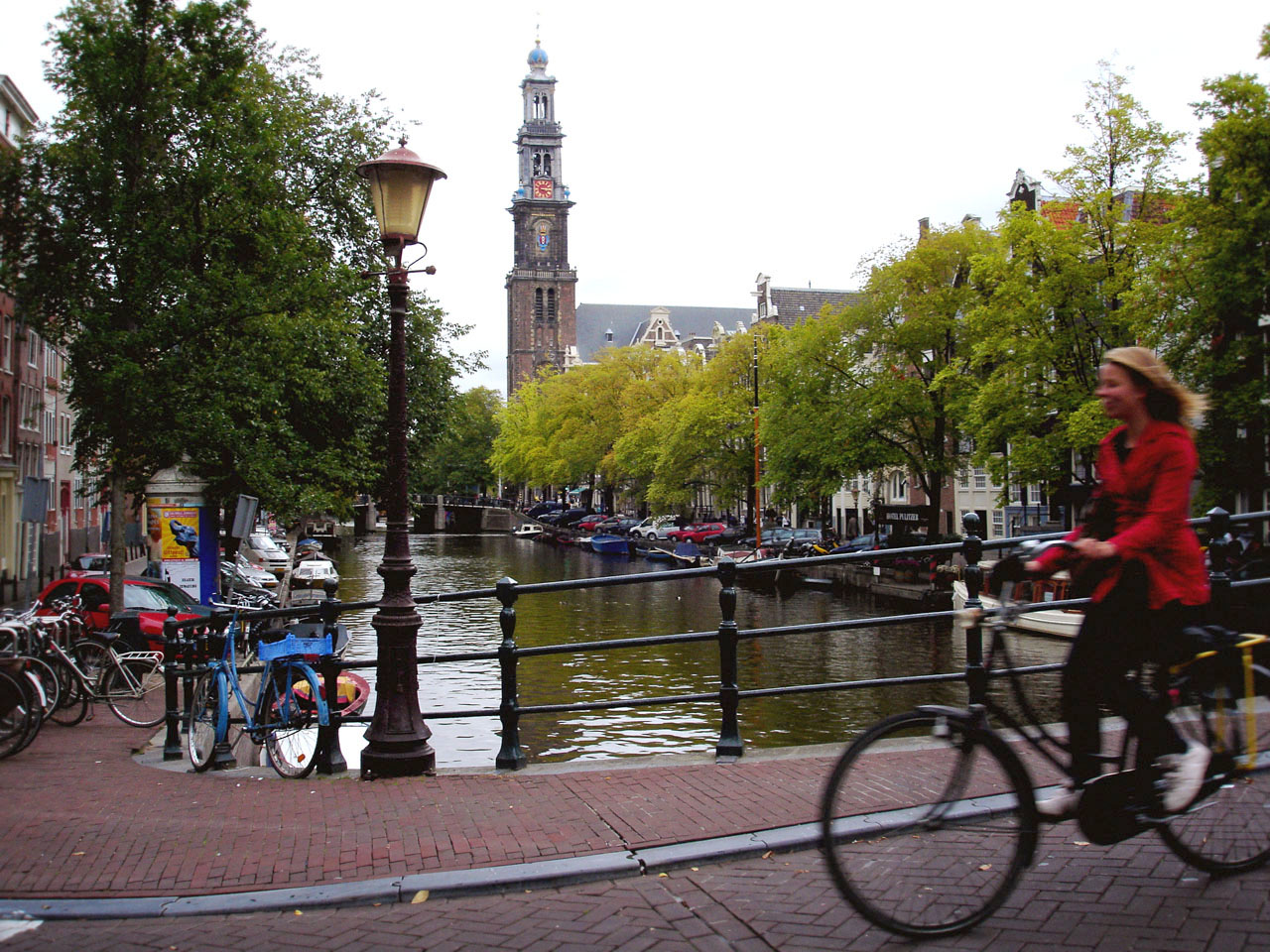
In cities modal share for bicycles is even higher, such as Amsterdam which has 38%.[32]
Cycling infrastructure attempts to maximise cyclists safety against the other road users. There is, however, a lack of published evidence identifying a change in rates of collisions after implementation of cycling infrastructure.[26] In their programmes for the parliamentary elections, almost all Dutch political parties add paragraphs in which they vow to enhance facilities for bicycle commuting. The political party GroenLinks even promotes a principle called "Groen Reizen" (green travelling), in which the choice to use bicycles and public transportation plays a key role.[33]
Marketing: the public image of cycling
[edit]As with other activities, cycling can be promoted by marketing. Promotors may include official agencies and authorities.
Positive marketing of cycling
[edit]Two themes predominate in cycling promotion 1) the benefits for the cyclist and 2) the benefits for society and the environment that may occur if more people choose to cycle. The benefits for the cyclist tend to focus issues like reduced journey times in congested urban conditions and the health benefits which the cyclist obtains through regular exercise. Societal benefits focus on general environmental and public health issues. Promotional messages and tactics may include:
- financial savings on transportation
- keeping travel times predictable; in peak traffic, cycling can be the fastest way of moving around town
- ensuring best use of the space available (during trips and also while parked), therefore reducing congestion on the roads
- reminding people of the advantages in terms of health and of effectiveness of using the bicycle
- making maps of journeys that can be completed by bicycle
- reduction of CO2 and harmful emissions by fewer people driving motor vehicles[34][35]
- reducing demand for oil-based fuels
- the safety in numbers effect if more people cycle
- reduced noise pollution in urban areas
- amusement
- cyclist health[36]
- lowering the risk of cardiovascular disease (when practised for more than a quarter of an hour a day at a moderate pace) and therefore improvement of individual and public health
- using cycling to tackle the obesity crisis facing rich countries
- the financial savings for society if general health improves
Further following positive aspects are:[13]
- transport efficiency - cycling is the fastest and most flexible mode for 'door to door' travel, like in bicycle commuting.
- environmental benefits - most energy efficient means of transport, with the least pollution.
- health and fitness issues - 4 hours of cycling per week or approximately 10 km of cycling per day, equivalent to the average cycle trip to and from work, is an adequate level of exercise.
- economic and social impacts - cycling provides transport to segments of the population who would not otherwise be able to travel independently for reasons of age (student transport), poverty, insufficient public transport infrastructure, etc.
Negative marketing of utility cycling
[edit]Various interests may wish to create a negative image of utility cycling on public roads for a variety of reasons. Some governments, wishing to promote private car use, have organized and funded publicity designed to discourage road cycling. Official road safety organisations have been accused of distributing literature that emphasizes the danger of cycling on roads while failing to address attitudinal issues among the drivers of motor vehicles who are the main source of road danger.[37][38][39] Some road safety authorities have been accused of having a deliberate policy of discouraging cycling as a means of reducing bicyclist casualty statistics. In 2003, Shanghai police officials released statements blaming cyclists for "gridlock" in the city and promoting plans to ban cyclists from the city streets.[40] Starting in the 1970s, the authorities in the city of Jakarta declared "war" on the "becak" or Indonesian cycle rickshaw blaming them for traffic congestion among other things.[41]
As with other sellers of consumer goods, the car industry's marketing efforts frequently try to associate the use of their product with a perception of increased social status. Observers in some car-focused cultures have noted a tendency to perceive or portray people who use bicycles as members of a social "out-group" with attributed negative connotations.[42] In such cultures, such attitudes are displayed in attacks on cyclists in the media. Common themes include blanket descriptions of cyclists as a group who do not pay taxes, who break the law and who have no, or reduced, "right" to use public roads.[43]
Negative aspects are:
- lack of or inadequacy of road and parking infrastructures - roads are built for cars and bicycle paths are often in worse condition than roads. Cycling infrastructure and bicycle-friendliness is generally neglected in favor of a car-centric infrastructure.
- cyclists' safety and security - the common space for cars and bicycles on the road is not complemented by the same rights and significantly higher risk of accidents for cyclists.
- weather conditions - rain and snow impact the unsheltered cyclist more than car drivers.
- poor intermodality - because of lack of transport facilities for the bicycles themselves (in trains, buses, etc.) for longer distances.
Retail policy
[edit]If significant use of bicycles for shopping trips is to be achieved, sufficient retail services must be maintained within reasonable cycling distances of residential areas. In countries like Denmark, the Netherlands and Germany the high levels of utility cycling also includes shopping trips e.g. 9% of all shopping trips in Germany are by bicycle.[44] It is arguable that this is related to policies that favour access to retail services by non-motorised modes. The Danish 1997 Planning Act requires that planning shall encourage a diverse mix of retail shops in small and medium-sized towns and in individual districts of large cities and ensure that retail trade uses will be placed in locations to which people have good access by walking, bicycling and public transport. From the mid-1970s the Netherlands has had policies in place to severely restrict the growth of large out-of-town retail developments.[23] Germany has had federal planning regulations in place to restrict retail uses to designated areas since the 1960s. In addition, since the 1970s federal regulations have been in place specifying that developments above a certain size (1,200 m2) be assessed regarding potential adverse effects. These federal regulations are further strengthened by regionally adopted regulations. This includes regulations specifying that new retail centers be limited to selling products not readily provided by shops at inner city/town center locations.[23] In Denmark, the Netherlands, and Germany, this approach not restricted to planning guidelines and is also supported by a ban on below-cost selling.[45] This supports smaller shops by preventing large multiples from engaging in predatory pricing practices by aggressively discounting key goods to use as so-called loss leaders.
Alternative retail policies
[edit]From the 1980s to mid-1990s the UK operated a system of laissez-faire with regard to retail policy. The "great car economy" philosophy of the Thatcher government directly favored the growth of out-of-town retail centers at the expense of established retail services in British towns and cities. The UK Town and Country Planning Association cites research by the New Economics Foundation that notes a continuing process of change in retail provision.[46]
- General stores are closing at the rate of one per day.
- Between 1997 and 2002, specialized stores, including butchers, bakers, fishmongers, and newsagents, closed at the rate of 50 per week.
- Nearly 30,000 independent food, drink, and tobacco retailers, or over 40%, have been lost over the past decade.
It is arguable that in such a retail/planning policy environment use of bicycles ceases to be a viable option for many shoppers and access to a private motor-car or public transport becomes a necessary prerequisite for access to basic services.
Cycle training
[edit]Cycle training is another measure that is advocated as a means of maintaining or increasing levels of cycle use. The training involves teaching existing or potential cyclists bike handling, various roadcraft or "cyclecraft" skills (vehicular cycling) and educating them on the safe, lawful use of the roads. Bicycle training schemes can be differentiated according to whether they are aimed at children or adults.
In the UK, the now superseded National Cycle Proficiency scheme was focused on primary schoolchildren aged 8 and above. In this, children would start by gaining an off-road certificate working up to their on-road certificate by the age of ten. Initial training and examination took place on simulated road layouts within school playgrounds. This approach has now been supplemented by the new National Standard for cycle training which is more focussed on practical on-road training.[47] This is part of Cycling England's portfolio of practical assistance to local authorities and other bodies, aimed at achieving their aim of "More cycling, more safely, more often".[48]
In the United States, the League of American Bicyclists Smart Cycling 101/201 courses, based on the Effective Cycling program, has modules aimed at all ages from children to adult beginners to more experienced adults. It is argued that such schemes do not just build confidence in the students but also make it more likely that parents will let their children cycle to school. Cycle training may also be offered in an attempt to overcome cultural unfamiliarity with cycling or perceived cultural obstacles to bicycle use. In the Netherlands, some cycle training courses are targeted at women from immigrant communities, as a means of overcoming such obstacles to cycling by women from developing countries.[49]
User associations
[edit]
As with other walks of life, utility cyclists may form associations in order to promote and develop cycling as an everyday form of transport. The European Cyclists' Federation is the umbrella body for such groups in Europe. These associations may lobby various institutions to encourage political support or to oppose measures that they judge counter-productive, such as to oppose the introduction of compulsory bicycle helmet legislation.
Free bicycle/short term hire schemes
[edit]Local bike-sharing schemes, a business which blossomed at the turn of the 21st century, are more oriented to utility cycling than other bike rentals.
Influence of technology
[edit]Modern bicycle technology supports the shift towards utility cycling:
- easy-running thick tires or damped springs allow cycling over curbs
- dynamo, brakes, and gears improved and increased the riding safety, allowing usage also for elderly
- electric support was further developed in motorized bicycle or electric power-assist system and eases the take up for untrained
See also
[edit]- 15 minute city – Urban accessibility concept
- Active mobility – Unmotorised transport powered by activity
- Bicycle carrier – Device attached to an automobile or bus for transporting bicycles
- Bicycle culture – Culture supporting the use of bicycles
- Bicycle trailer – Cargo accessory for bicycles
- Bicycle transportation planning and engineering
- Bicycle-friendly – Urban planning prioritising cycling
- Boda-boda – Type of motorcycle or bicycle with a space for a passenger or for carrying goods
- Car dependency – Concept that city layouts favor automobiles over other modes of transportation
- City bicycle – Bicycle for practical use (commuting, transport)
- Critical Mass – Group cycling advocating cycling friendly policy
- Cyclability – Degree of the ease of cycling
- Cycle racing – Competitive physical activity using bicycles
- Cycle touring – Holidays with bicycles
- Cycling advocacy – Activities promoting cycling
- Cycling infrastructure – Facilities for use by cyclists
- Fuel efficiency – Form of thermal efficiency
- Human-powered transport – Transport of goods and/or people only using human muscles
- Outline of cycling – Overview and topical guide
- Police bicycle – Bicycle used by police
- Quadracycle – Four-wheeled vehicle with pedals
- Right to mobility – Right to move in a safe, accessible, equitable and sustainable manner
- Shared space – Roads unsegregated by travel mode
- Tricycle – Three-wheeled self-powered vehicle
- Urban vitality – Intensity of use of an urban area
- Vehicular cycling – Practice of riding bicycles on roads while obeying roadway rules
- Walkability – How accessible a space is to walking
- Xtracycle – American bicycle company
References
[edit]- ^ Herlihy, David (2004). Bicycle: the History. Yale University Press. pp. 2. ISBN 0-300-10418-9.
- ^ Schantz P, Salier Eriksson, J, Rosdahl, H. 2020. Perspectives on exercise intensity, volume and energy expenditure in habitual cycle commuting. Front. Sports Act. Living 2:65
- ^ a b c d e "Cycling in the Netherlands" (PDF). Rijkswaterstaat (Dutch Ministry of Transport, Public Works and Water Management). Archived from the original (PDF) on 6 July 2007. Retrieved 26 April 2008.
- ^ a b c Ogilvie, David; Matt Egan; Val Hamilton; Mark Petticrew (22 September 2004). "Promoting walking and cycling as an alternative to using cars: systematic review". British Medical Journal. 329 (7469). BMJ Publishing Group: 763–0. doi:10.1136/bmj.38216.714560.55. PMC 520994. PMID 15385407.
- ^ TNO, the Dutch institute for applied scientific research. More bicycling to work lowers sickness absence and saves employers 27 millions euro [1] accessed 1 February 2009
- ^ China ends 'bicycle kingdom' as embracing cars, China Daily, 2004-11-11 (Accessed 2007-01-26)
- ^ Chinese look to bicycle to cure car headache, Irish Times 2006-06-17
- ^ A Study on Measures to Promote Bicycle Usage in Japan, Hirotaka Koike, Akinori Morimoto, Kaoru Itoh, Department of Civil Engineering, Utsunomiya University Velomondial Conference Proceedings, Amsterdam 2000
- ^ Rietveld, Piet; Vanessa Daniel (August 2004). "Determinants of bicycle use: do municipal policies matter?". Transportation Research Part A: Policy and Practice. 38 (7). Elsevier: 531–550. Bibcode:2004TRPA...38..531R. doi:10.1016/j.tra.2004.05.003.
- ^ a b "Cycling mobility in the EU". European Parliament Think Tank. 20 May 2015.
- ^ Coelho, Margarida C.; Almeida, Diogo (2015). "Cycling Mobility – A Life Cycle Assessment Based Approach". Transportation Research Procedia. 10. Elsevier BV: 443–451. doi:10.1016/j.trpro.2015.09.094. ISSN 2352-1465.
- ^ "International Cycling Conference 2017" (PDF). Umweltbundesamt. 2017.
- ^ a b "The Promotion of Cycling" (PDF). ECF. 2010. Archived from the original (PDF) on 8 August 2022. Retrieved 23 August 2022.
- ^ Gene Balk (26 September 2018). "Seattle bike commuting hits 10-year low, census data show". The Seattle Times. Retrieved 10 January 2019.
Also in the new census data: 78 percent of Seattle bike commuters are male. Men make up the majority of cyclists in every major city, but Seattle has the most lopsided gender balance among the top 10 cities. The one coming closest to gender parity, with women making up nearly 40 percent of its bike commuters, is Minneapolis.
- ^ Hydén, C.; Nilsson, A.; Risser, R. (15 January 1999). WALCYNG:How to enhance WALking and CYcliNG instead of shorter car trips and to make these modes safer. Transport research : Fourth framework programme : Urban transport : DG VII -- 75. Office for Official Publications of the European Communities. ISBN 92-828-4942-2.
- ^ Grégory Vandenbulcke-Plasschaert, 2011. Spatial analysis of bicycle use and accident risks for cyclists. Thèse présentée en vue de l'obtention du grade de Docteur en Sciences, Université Catholique de Louvain, Louvain-la-Neuve, November 2011, 318 pages.
- ^ Sabyrbekov, Rahat; Overland, Indra (21 September 2020). "Why Choose to Cycle in a Low-Income Country?". Sustainability. 12 (18): 7775. Bibcode:2020Sust...12.7775S. doi:10.3390/su12187775. ISSN 2071-1050.
- ^ Putative source according to the 1995 Nationwide Personal Transportation Survey
- ^ Castro, A (2019). "Physical activity of electric bicycle users compared to conventional bicycle users and non-cyclists: Insights based on health and transport data from an online survey in seven European cities". Transportation Research Interdisciplinary Perspectives. 1 100017. Bibcode:2019TrRIP...100017C. doi:10.1016/j.trip.2019.100017. hdl:10044/1/77527.
- ^ www.stadtlogistik.info
- ^ "bicyclefriendlycommunity.org" (PDF). Archived from the original (PDF) on 29 February 2008. Retrieved 10 November 2007.
- ^ "Virgin Vacations – 11 Most Bicycle Friendly Cities in the World". virgin-vacations.com.
- ^ a b c Legislative Tools for Preserving Town Centres and Halting the Spread of Hypermarkets and Malls Outside of Cities: Land Use Legislation and Controls of Conflicts of Interest in Land Use Decision Making, by Ken Baar, PhD Institute for Transportation and Development Policy, New York NY 10001, 2002
- ^ a b Manual for Streets, ISBN 978-0-7277-3501-0 UK Department for Transport, 2007
- ^ Durning 1996 cited in Safe Travels, Evaluating Mobility Management Traffic Safety Impacts by Todd Litman & Steven Fitzroy Victoria Transport Policy Institute, 1250 Rudlin Street, Victoria, BC, V8V 3R7, CANADA
- ^ a b c Mulvaney, Caroline A; Smith, Sherie; Watson, Michael C; Parkin, John; Coupland, Carol; Miller, Philip; Kendrick, Denise; McClintock, Hugh (10 December 2015). Cochrane Injuries Group (ed.). "Cycling infrastructure for reducing cycling injuries in cyclists". Cochrane Database of Systematic Reviews. 2015 (12) CD010415. doi:10.1002/14651858.CD010415.pub2. PMC 8629647. PMID 26661390.
- ^ Quality of Transport report (PDF) (Report). European Commission. December 2014. p. 11. Archived (PDF) from the original on 8 September 2015. Retrieved 29 December 2016.
- ^ "Why is cycling so popular in the Netherlands?". BBC News. Archived from the original on 7 March 2014.
- ^ Future of Transport report (PDF) (Report). European Commission. March 2011. p. 8. Archived (PDF) from the original on 7 March 2014. Retrieved 11 July 2015.
- ^ "Cycling in the Netherlands" (PDF) (Press release). The Netherlands: Ministry of Transport, Public Works and Water Management. Fietsberaad (Expertise Centre for Cycling Policy). 2009. Archived from the original (PDF) on 14 May 2009. Retrieved 9 July 2014.
- ^ "The Netherlands, a great destination for cycling holidays". Nederland Fietsland website. Archived from the original on 11 February 2015. Retrieved 14 December 2013.
- ^ "Cycling facts and figures". I amsterdam website. Archived from the original on 12 May 2014. Retrieved 9 May 2014.
- ^ Gene Balk (26 September 2018). "Seattle bike commuting hits 10-year low, census data show". The Seattle Times. Retrieved 10 January 2019.
Also in the new census data: 78 percent of Seattle bike commuters are male. Men make up the majority of cyclists in every major city, but Seattle has the most lopsided gender balance among the top 10 cities. The one coming closest to gender parity, with women making up nearly 40 percent of its bike commuters, is Minneapolis.
- ^ Brand, Christian (2021). "The climate change mitigation effects of daily active travel in cities". Transportation Research Part D: Transport and Environment. 93 102764. Bibcode:2021TRPD...9302764B. doi:10.1016/j.trd.2021.102764. hdl:10230/53376.
- ^ Brand, Christian (2021). "The climate change mitigation impacts of active travel: Evidence from a longitudinal panel study in seven European cities". Global Environmental Change. 67 102224. Elsevier. Bibcode:2021GEC....6702224B. doi:10.1016/j.gloenvcha.2021.102224. hdl:10044/1/89043.
- ^ Mueller, Natalie (2015). "Health impact assessment of active transportation: A systematic review". Preventive Medicine. 76. Elsevier: 103–114. doi:10.1016/j.ypmed.2015.04.010. hdl:10044/1/56553. PMID 25900805. S2CID 26016523.
- ^ Government helmet campaign could frighten cyclists off the road, Cheltenham cyclist, Summer 2003
- ^ Two-headed ministry threatens future of cycling Archived 30 October 2007 at the Wayback Machine Cycle Campaign Network News, Issue No. 65 July 2003
- ^ CTC submission to Choosing Health? A consultation on action to improve people's health Archived 30 October 2007 at the Wayback Machine, CTC submission to the Wanless review, Cyclists Touring Club, 2004
- ^ Travel: Bike ban for Shanghai, CNN.Com Tuesday, 9 December 2003 (Accessed 28 October 2007)
- ^ The Becak: A Re(d)ordered Cycle Rebecca Lemaire, School of Oriental and African Studies, London, April 2000
- ^ Drivers' perceptions of cyclists, Basford, Reid, Lester, Thomson and Tolmie, TRL Report TRL549, Transport Research Laboratory, 2002
- ^ Anti-cyclist media bias Wheels of Justice (Accessed 2 December 2007)
- ^ Shopping by bike Archived 7 December 2020 at the Wayback Machine, BUND Freunde der erde, Landesverband Berlin e.V (Accessed 28 October 2007)
- ^ The Groceries Order – Essential for Competition, Consumer Choice and Value, The Retail Grocery, Dairy And Allied Trades' Association, RGDATA, Dublin, Ireland, 2005
- ^ Planning for Accessible and Sustainable Retail, The Town and Country Planning Association, July 2005
- ^ Bikeability – The new National Standard for Cycle Training, Cycling England, 2006 (Accessed 2007-02-22)
- ^ More people cycling, more safely, more often, Cycling England, 2006 (Accessed 2007-02-22)
- ^ Get on your bike! Bicycle- and traffic lessons for foreigners in Tilburg, the Netherlands, Angela van der Kloof, Centre for Foreign Women, Velomondial Conference Proceedings, Amsterdam 2000
Notes
[edit]Bibliography
[edit]
- Paul Niquette, A Certain Bicyclist: An Offbeat Guide to the Post-Petroleum Age – Editor: Seven Palms Press (1985) – ISBN 0-912593-04-0
- Robert Hurst, The Art of Urban Cycling: Lessons from the Street – Editor: Falcon; 1st edition (1 July 2004) – ISBN 0-7627-2783-7, ISBN 978-0-7627-2783-4.
| General and technical | |
|---|---|
| Utility and slow recreation | |
| Sports-related cycling and fast-paced recreation | |
| Health, safety and infrastructure |
|
| Other | |
| Lists | |

| In-roadway bikeways |
| ||||||
|---|---|---|---|---|---|---|---|
| Right-of-way paths |
| ||||||
| Health, safety and infrastructure |
| ||||||
| Design guidelines |
| ||||||
| International | |
|---|---|
| National | |

Utility cycling
View on GrokipediaDefinition and Scope
Core Characteristics
Utility cycling entails the use of bicycles primarily for practical transportation needs, such as commuting, shopping, errands, or goods delivery, rather than for exercise, leisure, or competition.[12] This form of cycling prioritizes functionality and integration into daily routines, often in urban or suburban environments where short- to medium-distance trips predominate, with studies indicating that over 80% of such journeys exceed 5 km.[13] Unlike recreational cycling, it emphasizes reliability and efficiency for real-world tasks, enabling cyclists to carry loads or navigate mixed traffic without specialized athletic performance.[14] Central to utility cycling are bicycles designed for durability and versatility, featuring robust frames, cargo racks, fenders, and integrated lighting to accommodate payloads, inclement weather, and extended use. These adaptations support low-effort operation and practicality, such as hauling groceries or work materials, which enhances accessibility for diverse users including families and delivery workers.[15] Economically, it offers advantages like reduced costs compared to motorized alternatives for urban commutes, alongside benefits in speed and maneuverability in congested areas.[14] Adoption patterns reveal utility cycling's reliance on supportive infrastructure, such as dedicated paths or low-stress routes, to minimize conflicts with vehicles and promote habitual use.[16] User demographics often include employed adults favoring it for its independence and health co-benefits, though barriers like weather or security influence participation rates.[13] Overall, its characteristics foster sustainable mobility by offsetting external costs of cars, including emissions and congestion, in contexts where infrastructure enables seamless incorporation into multimodal travel.[17]Distinction from Other Cycling Types
Utility cycling is distinguished from recreational, sport, and touring cycling by its primary emphasis on practical transportation for daily necessities such as commuting to work, school, or shopping, rather than leisure, competition, or extended travel. Recreational cycling typically involves rides for enjoyment, fitness, or social purposes, often on weekends or non-routine paths, with participants prioritizing scenery or exercise over efficiency in replacing motorized trips.[18][19] In contrast, utility cycling integrates into habitual mobility patterns, aiming to substitute short car journeys with bicycle trips for environmental, health, or cost benefits, as evidenced by its higher prevalence in dense urban settings like the Netherlands where it accounts for over 25% of all trips in cities such as Amsterdam.[20] Sport cycling, encompassing disciplines like road racing, track events, and mountain biking, focuses on athletic performance, speed, and technical skill, utilizing lightweight frames, aerodynamic geometries, and specialized components such as clipless pedals and high-pressure thin tires on road bikes for velocities exceeding 30 km/h on pavement, or full suspension and wide knobby tires on mountain bikes for off-road traction and obstacle navigation.[21][22] Utility bicycles, however, prioritize durability, load capacity, and all-weather reliability with features like enclosed chain guards, fenders, integrated lights, and rear racks capable of supporting 20-50 kg payloads, enabling upright postures for better traffic awareness and stability at moderate speeds of 15-20 km/h typical in mixed urban traffic.[18] This design sacrifices the power transfer efficiency of sport bikes for versatility in carrying passengers, groceries, or tools without frequent stops. Touring cycling shares some utility traits in its emphasis on self-supported travel but diverges by targeting long-distance, multi-day expeditions across varied terrains, often spanning hundreds of kilometers with bikes featuring reinforced frames, multiple bottle cages, and pannier mounts for camping gear, rather than the routine, localized functionality of utility cycling.[23] Empirical studies confirm these behavioral differences, showing utility cyclists engage in more frequent but shorter trips influenced by proximity to destinations, while recreational and sport riders select routes for challenge or pleasure, with utility modes correlating more strongly with built environment factors like bike lanes than individual fitness levels.[24][25]Historical Development
Origins and Early Adoption (19th-Early 20th Century)
The safety bicycle, introduced in the late 1880s, marked the technological foundation for utility cycling by providing a stable, accessible design suitable for everyday errands and commuting, supplanting earlier high-wheeled penny-farthings that were impractical for routine use. British inventor John Kemp Starley patented the Rover safety bicycle in 1885, featuring equal-sized wheels, a chain-driven rear sprocket, and a diamond-shaped frame, which lowered the center of gravity and reduced accident risks compared to prior models.[26] Scottish veterinarian John Boyd Dunlop's invention of pneumatic tires in 1888 further enhanced practicality by absorbing road shocks, allowing bicycles to navigate unpaved urban streets more comfortably and efficiently.[27] By the early 1890s, mass production drove widespread adoption in urban centers of Europe and the United States, where bicycles served as affordable personal transport for workers, deliveries, and short-haul commerce. In the United States, safety bicycle sales exceeded one million units annually by 1895, with commuting to workplaces and schools becoming commonplace amid the era's bicycle boom, which also spurred demands for improved roads to accommodate practical ridership.[28] [29] In Europe, particularly Britain and Germany, working-class individuals increasingly used bicycles for daily tasks, transitioning from elite leisure pursuits; for instance, carrier tricycles designed by James Starley as early as 1877 facilitated goods transport, evolving into bicycle-based delivery systems by the 1890s.[30] Into the early 20th century, utility cycling persisted despite emerging automobiles, with bicycles retaining utility in densely populated cities for cost-effective mobility. U.S. federal initiatives, such as the 1893 establishment of the Office of Road Inquiry with a $10,000 budget, reflected bicyclists' advocacy for infrastructure supporting commuter and errand use, influencing early paved road networks.[28] In continental Europe, adoption grew among postal services and tradespeople; by 1900, bicycles outnumbered horse-drawn carts for urban errands in parts of the Netherlands and Germany, where flat terrain favored their efficiency for short-distance hauls.[31] This era's patterns laid groundwork for bicycles as a democratizing transport mode, accessible to non-elites without reliance on animal power or public transit.Mid-20th Century Expansion in Europe
Following World War II, utility cycling maintained a dominant role in European urban transport amid fuel shortages, destroyed roadways, and economic reconstruction, particularly in the Netherlands, Denmark, and Germany. In the Netherlands, bicycles comprised approximately 70-80% of traffic modal share in cities like Amsterdam until the early post-war years, serving as essential for commuting and errands due to limited alternatives.[32] This reliance stemmed from causal factors including wartime devastation reducing car availability and rationing constraining motorized travel, thereby sustaining high bicycle usage into the late 1940s and 1950s.[33] In Denmark, bicycles and public transport dominated urban mobility immediately after 1945 through the late 1950s, with cycling facilitating daily utility needs in flat, dense settlements where short trips predominated.[34] German cities similarly saw bicycles as a primary post-war transport mode, filling gaps left by bombed infrastructure and scarce fuel, though usage began declining with economic recovery and rising car ownership by the mid-1950s.[31] Empirical data from this era indicate bicycle fleets expanded to meet demand; for instance, the Netherlands registered over three million bicycles by the mid-1930s, with post-war production sustaining per capita ownership rates above one bike per person into the 1950s.[33] Infrastructure efforts during the 1950s included extensions of pre-war cycle paths in the Netherlands and Germany, often as employment relief projects, though prioritization shifted toward automobiles as prosperity grew.[35] Despite these developments, modal shares for utility cycling peaked pre-1950 and gradually eroded with mass motorization, dropping 6% annually in some Dutch areas by the 1960s, yet remaining higher than in other regions due to geographic suitability and cultural entrenchment.[36] Sources like government transport reports provide robust evidence, contrasting with less reliable anecdotal accounts that overstate uniform expansion without acknowledging the impending decline driven by socioeconomic shifts.[37]Late 20th to 21st Century: Global Variations and E-Bike Emergence
In the late 20th century, utility cycling displayed pronounced global disparities shaped by post-war motorization trends, urban planning, and policy interventions. In the Netherlands, sustained investments in segregated cycle paths and traffic calming measures preserved high adoption rates, with bicycle journeys comprising 27% of all trips by the early 2000s, supported by an expanded network reaching approximately 29,000 km of dedicated infrastructure.[38][39] Similarly, Denmark's Copenhagen implemented a comprehensive bikeway plan in the 1980s, constructing 240 km of cycle lanes and prioritizing cyclist safety, which stabilized modal shares at around 20-30% in urban areas amid broader European declines.[40] In contrast, China experienced a peak in utility cycling during the 1980s and 1990s, with bicycle ownership surging to 523 million units by 1996 and over 60% of Beijing commuters relying on bikes in the 1980s, driven by affordability and dense urban form; however, rapid economic growth and automobile proliferation caused a sharp decline, reducing urban bike modal shares to below 20% by the early 2000s.[41][42] In the United States, utility cycling remained negligible, with bicycle commuters numbering about 488,000 in 2000—less than 0.5% of workers—reflecting sprawling suburbs, highway-centric infrastructure, and cultural preference for cars.[43] Globally, average bicycle modal shares across 60 countries hovered below 5% during this period, underscoring the dominance of motorized transport in most regions.[44] Entering the 21st century, revival efforts in various locales combined infrastructure upgrades with technological innovations, particularly the emergence of electric bicycles (e-bikes). Modern e-bikes, featuring pedal-assist motors and rechargeable batteries, first achieved commercial viability in the mid-1990s, with Yamaha releasing the world's initial production model in 1993, enabling assisted propulsion for practical trips without full motorization.[45] This technology addressed key barriers to utility cycling, such as physical exertion, distance, and topography, thereby broadening participation beyond fit, young adults. In China, e-bike adoption exploded post-2000, filling the void left by declining traditional bicycle use; by the late 2000s, millions of units were sold annually, with e-bikes comprising over 90% of two-wheeled vehicle sales in urban areas and sustaining utility modes like commuting and delivery amid motorization pressures.[46] In Europe, e-bikes similarly catalyzed growth in utility cycling, substituting car trips in flat, infrastructure-rich nations like the Netherlands, where they expanded cyclist demographics to include older adults and families, contributing to stable or rising modal shares into the 2010s.[46][47] By 2020, e-bikes accounted for a significant portion of new bicycle sales in countries like Germany and the Netherlands, with global sales reaching tens of millions annually and market value exceeding $40 billion, driven by urban density, environmental policies, and subsidies.[48] However, outcomes varied: while e-bikes promoted sustainable mobility in dense European contexts, in China they sometimes served as an intermediate step toward scooter or car ownership, highlighting context-dependent causal effects on long-term utility cycling.[46] Overall, e-bikes extended the viability of bicycles for freight, errands, and intermodal trips, fostering incremental global shifts toward non-motorized transport in policy-supportive environments.Equipment and Technology
Utility Bicycle Designs
Utility bicycles prioritize durability and practicality for everyday transportation, featuring robust steel or aluminum frames capable of supporting rider weights up to 120 kg plus cargo loads of 20-50 kg without compromising structural integrity.[49][50] These frames often adopt a step-through or low-entry design to facilitate mounting and dismounting, especially when carrying groceries or children, contrasting with the diamond frames common in sportier models.[51][2] Key ergonomic elements include upright handlebars and padded saddles that promote a relaxed posture, reducing strain during commutes of 5-15 km on mixed urban surfaces.[52][2] Tires are typically 26-28 inches in diameter, wide (35-50 mm) for stability and vibration absorption, and reinforced with puncture-resistant layers to handle potholes, debris, and wet conditions prevalent in city riding.[53][52] Drivetrains emphasize low maintenance, with internal gear hubs (e.g., 3-8 speeds from brands like Shimano Nexus) enclosed to shield against grime and rain, outperforming external derailleurs in reliability for stop-start traffic; single-speed or coaster brake setups appear in simpler models for flat terrains.[50][51] Braking systems commonly integrate roller or drum brakes on hubs for consistent performance in all weather, supplemented by V-brakes or hydraulic discs on higher-end variants for steeper inclines.[54][49] Integrated utility features distinguish these designs, such as factory-mounted rear racks rated for 25-40 kg, front baskets, full fenders to deflect water and mud, and chain guards preventing trouser cuff snags.[2][53] Dynamo-powered LED lights ensure visibility without battery dependence, while bells and reflective elements enhance safety in dense traffic.[54] Modern iterations incorporate e-assist motors (250-500W) with 300-500 Wh batteries for hill climbing and extended range up to 50-80 km per charge, maintaining pedal-centric propulsion compliant with regulations like EU's pedelec standards.[49][2] Cargo-oriented utility designs extend frames forward or rearward, as in long-tail or front-loader configurations, supporting payloads exceeding 100 kg via reinforced tubing and lower centers of gravity for balance; examples include box-framed models derived from 1970s Danish prototypes, evolving to carry 2-4 passengers or equivalent freight.[53][30] These adaptations trace to 19th-century delivery tricycles but matured in 20th-century European urban needs, prioritizing payload efficiency over velocity.[30]Cyclist Accessories and Safety Gear
Bicycle helmets constitute a primary safety gear for utility cyclists, with systematic reviews indicating they reduce the risk of head and brain injuries by 48-60% across various crash severities and user ages, based on analyses of over 100 studies involving real-world collisions.[55] However, observational data reveal potential risk compensation, where helmeted cyclists experience closer overtaking distances by motorists—averaging 0.23 standard deviations less space in controlled UK trials—possibly due to perceived reduced vulnerability.[56] Additionally, experimental perception studies have found that helmets, alongside safety vests, increase the likelihood of cyclists being rated as "less human" by observers, which may subtly influence driver behavior despite enhanced conspicuity.[57] Visibility-enhancing accessories are critical for utility cycling, particularly in mixed traffic or low-light conditions common to commuting and errands. Front and rear lights, mandated in many jurisdictions for nighttime use, combined with reflectors, extend detection distances for drivers; randomized trials demonstrate that dynamic lighting and retroreflective materials can increase cyclist conspicuity by up to 67% in simulated night scenarios.[58] High-visibility clothing or vests further amplify this effect, with field studies showing reflective apparel raises driver recognition rates from near zero to over 60% at typical approach speeds.[59] Reflectors alone have correlated with lower nighttime crash rates in multivariate safety analyses controlling for exposure factors.[60] Practical accessories for utility purposes include load-carrying systems like rear panniers and front baskets affixed to racks, which enable stable transport of goods such as groceries or parcels by distributing weight low and away from the rider's center of gravity, supporting payloads of 20-40 kg on appropriately designed utility frames. Fenders or mudguards, often full-coverage models for upright postures, shield cyclists and drivetrains from road spray, thereby minimizing component wear and cleaning requirements in wet climates, as evidenced by user-reported reductions in maintenance intervals during inclement weather riding.[61] Security gear, notably U-locks and heavy-duty chains, addresses theft risks inherent to unattended urban utility bikes; market analyses and resistance testing identify U-locks as superior for frame-to-fixed-object securing due to their hardened steel construction, deterring casual theft more effectively than cables, which succumb rapidly to bolt cutters in vulnerability assessments.[62] Bells or horns provide audible signaling for navigation in dense traffic, promoting avoidance of collisions through proactive alerts.[63]Factors Influencing Adoption
Environmental and Geographical Conditions
Geographical conditions, particularly terrain, impose inherent constraints on utility cycling adoption by affecting the physical effort required for travel. Flat topography facilitates efficient bicycle use for practical purposes, as minimal elevation changes align with the bicycle's mechanical advantages for level-ground propulsion. Steep gradients, conversely, demand disproportionate energy input, deterring regular utility trips without technological aids like e-bikes. Analyses of commuting patterns indicate that regions with pronounced topography exhibit lower cycling propensities, even after accounting for infrastructure variations, underscoring terrain's role as a baseline barrier.[64] Climatic factors, including temperature and precipitation, directly modulate daily and seasonal cycling volumes through their impact on comfort, safety, and perceived effort. Precipitation serves as a potent suppressant, with empirical data showing reductions in cycle trips ranging from 1.5% daily to over 10% hourly during rain events. In a longitudinal study of commuters, the absence of precipitation elevated the odds of bicycle commuting by 91%, highlighting its causal deterrent effect. Temperature exhibits a nonlinear influence: moderate increases, such as 1°C within habitable ranges, correlate with 2-3% higher cycling activity, but extremes—below freezing or exceeding 30°C—curtail usage due to hypothermia risks, dehydration, or excessive perspiration.[65][66][65] Long-term climate patterns amplify these dynamics, with temperate zones featuring consistent mild weather supporting sustained high adoption rates, while seasonal extremes in continental or polar-adjacent regions depress year-round utility cycling. Cross-metro comparisons reveal that annual temperature variances account for up to 3% of differences in cycling modal shares, independent of policy interventions. Wind speed further compounds effects in exposed geographies, reducing speeds and increasing fatigue, though its influence varies by urban density. These environmental realities establish a physiological ceiling on adoption, necessitating adaptive measures like weather-resistant gear or heated paths to approach maximal potential in suboptimal locales.[67][68]Socioeconomic and Cultural Elements
Utility cycling adoption correlates positively with income levels in many high-income Western contexts, where higher earners exhibit greater participation rates for transport purposes. A study of UK adults found a gradual increase in utility cycling across income quintiles, with the highest quintile reporting the most frequent use, potentially due to greater access to suitable infrastructure and equipment in affluent areas.[69] In contrast, lower-income groups in these settings often face barriers such as poorer neighborhood conditions and higher perceived risks, though they may cycle more for leisure.[69] However, patterns reverse in contexts of transport disadvantage, where socioeconomically disadvantaged individuals rely on cycling to mitigate costs and accessibility issues, as evidenced by scoping reviews highlighting its role among low-SES populations.[70] In low- and middle-income countries, utility cycling prevails due to bicycles' low acquisition and maintenance costs relative to motorized vehicles, fostering higher ownership rates. Historical analyses classify such nations into types where bicycle prevalence outstrips cars, driven by economic necessities rather than choice, with modal shares remaining elevated even as incomes rise unless supplanted by motorization.[44] For example, in developing economies like Ghana's Tamale metropolis, factors including low income and limited alternatives promote adoption, though gender and education also modulate usage.[71] In high-income developing nations such as Qatar, despite affluence, cycling modal shares remain negligible (under 1%), attributed to cultural preferences for cars and inadequate infrastructure over economic barriers.[72] Cultural norms profoundly shape utility cycling, with normalization in select European nations enabling high adoption across demographics. In the Netherlands and Denmark, cycling integrates seamlessly into daily routines, yielding modal shares exceeding 20% in urban areas and gender parity in commuting, reflecting historical policies and societal acceptance of bicycles as practical, status-neutral transport.[73] Conversely, in car-dominant cultures like the United States, cycling rates skew lower (national average 0.6% for commuting), with disparities by ethnicity—whites showing higher mode shares than minorities—and persistent gender gaps favoring males.[73] Cross-cultural comparisons reveal that in high-cycling countries, commute and non-commute trip rates align closely, indicating embedded utility, while in low-cycling ones, recreational use predominates, underscoring attitudinal barriers like perceived inconvenience or low prestige.[74] In the Global South, structural factors amplify cultural uptake, positioning cycling as a resilient, community-oriented mode amid rapid urbanization.[75]Policy and Regulatory Frameworks
In the Netherlands, national policies initiated in the 1970s, following public campaigns against traffic fatalities, emphasized segregated cycling infrastructure and integration into urban planning, with the 1993 National Cycle Policy allocating funds for over 35,000 km of bike paths by 2017, contributing to cycling comprising 27% of all trips.[32] Similarly, Denmark's 1993 national cycling promotion program provided municipal grants for infrastructure upgrades, resulting in cycling modal shares exceeding 30% in cities like Copenhagen and Odense by the early 2000s, as evidenced by before-after studies showing increased bicycle kilometers traveled post-intervention.[76] These frameworks prioritize "cycling-inclusive" planning, embedding bicycles in multi-modal transport strategies rather than isolated car-centric policies.[77] At the European Union level, the 2017 European Declaration on Cycling urges member states to allocate at least 15% of transport budgets to active mobility, with €3.21 billion from structural funds invested in cycling projects during the 2021-2027 period, a 30% increase from prior cycles, though implementation varies and effectiveness depends on local enforcement.[78][79] In contrast, U.S. federal policies remain limited; the Qualified Bicycle Commuting Reimbursement Allowance, allowing up to $20 monthly tax-free employer subsidies, was suspended from 2018 to 2025 under the Tax Cuts and Jobs Act, correlating with stagnant national commuting shares below 1%, though bills like the 2025 Bicycle Commuter Act propose reinstatement with inflation-adjusted benefits up to $81 monthly.[80][81] Regulatory standards for electric bicycles (e-bikes), increasingly integral to utility cycling, differ globally: the EU's EN 15194 certification limits pedelecs to 250W motors and 25 km/h assisted speed without licensing requirements, facilitating adoption in urban areas, while U.S. classifications (Class 1-3) allow up to 750W and 45 km/h in some states but impose state-specific registration and helmet mandates that may constrain use.[82][83] Empirical analyses indicate such regulations boost e-bike market penetration where aligned with infrastructure, as in China’s 2025 updates permitting slow-speed models up to 25 km/h without plates, supporting micromobility growth.[84] Mandatory helmet laws, implemented in over 20 countries including Australia (mandatory since 1990s) and parts of Canada, have been linked to reduced cycling participation; a meta-analysis of jurisdictions with youth helmet mandates found drops in bicycle use by 10-30% post-enactment, potentially offsetting injury reductions through lower overall exposure and health benefits from reduced physical activity.[85][86] Comprehensive policy packages combining infrastructure subsidies and promotion, rather than isolated regulations, show stronger causal links to modal shifts: 14 international case studies reported average cycling increases of 40-100% in cities with bundled interventions, though isolated subsidies like lotteries yield only short-term gains of 18-36% in frequency.[87][88] These outcomes underscore that policy success hinges on addressing causal barriers like safety perceptions and connectivity, beyond symbolic measures.[89]Infrastructure and Urban Integration
Key Infrastructure Elements
Key infrastructure elements for utility cycling encompass facilities that prioritize safety, directness, and connectivity to support practical trips such as commuting and errands. These include separated cycle tracks, which physically isolate bicycles from motorized traffic using barriers like curbs or bollards, reducing collision risks on busy urban arterials.[90] Separated tracks are particularly effective for utility purposes, as they accommodate steady speeds and cargo loads without interference from vehicles exceeding 30 km/h.[91] On-street bicycle lanes, marked by painted lines and often buffered with stripes or parking, provide dedicated space on roadways where full separation is infeasible. Buffered lanes enhance perceived safety for cyclists carrying loads, though they require minimum widths of 1.5 meters to prevent encroachment by passing vehicles.[92] Contraflow lanes allow bidirectional cycling on one-way streets, improving access to destinations in dense grids.[93] Bicycle parking infrastructure, including secure racks and enclosed lockers, addresses end-of-trip needs by preventing theft and weathering, critical for utility users leaving bikes unattended at workplaces or shops. Vertical racks and automated systems in high-density areas optimize space, with studies indicating that accessible, well-lit parking correlates with sustained commuting rates.[94] Intersection treatments, such as protected crossings and dedicated signal phases, mitigate conflicts at junctions, where utility cyclists face peak risks. Mixing zones or advanced stop lines position bikes ahead of turning vehicles, while protected lanes extending through intersections maintain separation. Network cohesion ensures continuous, direct routes linking origins to destinations, with signage and wayfinding aiding navigation for non-recreational trips.[95]Empirical Effectiveness and Case Studies
Empirical studies demonstrate a positive association between dedicated cycling infrastructure and increased utility cycling participation. A systematic review of infrastructural interventions found that additions like separated bike lanes and paths promote cycling uptake, with effect sizes varying by intervention type and context, though methodological limitations such as reliance on cross-sectional data temper causal claims.[96] In U.S. cities, panel regression analyses of citywide bikeway expansions revealed a statistically significant increase in bicycle commute modal share, with each additional kilometer of bikeways correlating to higher utilitarian trips after controlling for population and income factors.[97] Safety outcomes also improve with targeted infrastructure. Cycle tracks exhibit the lowest bicyclist injury risk—approximately one-ninth that of mixed-traffic routes—based on exposure-adjusted data from route-based studies, outperforming painted lanes or shoulders.[98] High-cycling-mode-share cities, often featuring extensive segregated networks, show reduced fatality rates for all road users, attributed to behavioral adaptations like lower vehicle speeds and heightened awareness, though "safety in numbers" effects complicate isolating infrastructure's role from volume increases.[99] Case Study: Copenhagen, DenmarkCopenhagen's investment in separated cycle tracks since the 1970s has elevated bicycle modal share for commuting to over 40% in the city center by 2020, with infrastructure comprising 400+ km of dedicated paths.[100] Peak-hour cycle traffic volumes exceed 10,000 cyclists per hour on key arterials, sustaining utility trips amid dense urban flows; injury rates per billion km cycled declined 30% from 1990 to 2010 alongside modal share growth from 20% to 36%.[101] This effectiveness stems from continuous, protected networks minimizing car-bicycle conflicts, though cold weather reduces winter utility use.[102] Case Study: Amsterdam and Utrecht, Netherlands
Amsterdam maintains a bicycle modal share exceeding 30% for short urban trips, supported by 500 km of bike paths and priority signaling, where utility cycling dominates daily commutes.[102] Utrecht's transformation included elevating rail tracks into a 7-km tunnel by 2016, reallocating space to a conflict-free bike street handling 30,000 daily cyclists, boosting local modal share to 50%+ and reducing door-to-door commute times.[103] National infrastructure growth from 9,300 km in 1978 to over 35,000 km by 2017 correlates with stable 27% national bike share, emphasizing maintenance and connectivity for sustained utility adoption over mere lane additions.[32] These cases highlight causal links via longitudinal data, contrasting with flatter trajectories in less-networked peers, yet flat terrain and cultural norms confound pure infrastructure attribution.[104]
Economic Costs, Benefits, and Critiques
Utility cycling incurs upfront infrastructure costs, including the construction of dedicated bike lanes and paths, which can range from $100,000 to $500,000 per kilometer depending on urban density and design features such as protected barriers.[105] [106] Maintenance expenses for cycling facilities are typically lower than for motorized roadways, often 10-20% of equivalent road upkeep due to minimal wear from lighter bicycle traffic.[107] However, these investments may yield low utilization in areas with sparse cycling adoption, leading to underused assets and opportunity costs for alternative public expenditures.[108] For individuals, utility cycling reduces personal transport expenses, with commuters potentially saving approximately $1,500 annually by substituting car trips, factoring in fuel, parking, and vehicle maintenance avoided.[109] These savings accrue from bicycles' negligible fuel and operational costs, estimated at under $0.10 per kilometer versus $0.50 or more for automobiles.[106] Broader economic activity emerges from cyclists' local spending patterns, as shorter trips encourage patronage of neighborhood businesses, though empirical quantification varies by city scale.[110] Societal benefits include monetized health gains from increased physical activity, with models projecting 3.00 in healthcare and productivity savings per dollar invested in cycling promotion, primarily through reduced obesity-related illnesses and sick days.[111] Congestion relief from modal shifts lowers road maintenance and delay costs, while air pollution reductions yield environmental damages avoided, valued at 0.50 per kilometer cycled in urban simulations.[107] [112] Job creation in bicycle-related sectors, such as manufacturing and tourism, adds further value, with studies estimating 10-20 indirect jobs per million dollars in infrastructure spending.[110] Cost-benefit analyses of utility cycling often report favorable ratios, such as 5:1 or higher in health-dominant models for cities with supportive geography, as simulated in system dynamics frameworks incorporating mode shift and injury offsets.[111] Tools like the World Bank's CyclingMAX facilitate site-specific evaluations, projecting net present values positive under moderate uptake scenarios.[113] Yet, these projections hinge on assumptions of sustained behavioral change, which empirical data from low-density regions frequently underdelivers.[114] Critiques highlight methodological flaws in many analyses, including overreliance on generalized health valuations without accounting for baseline fitness levels or substitution effects from other exercises, potentially inflating benefits by 20-50%.[115] In contexts of car dependency or adverse weather, infrastructure yields diminish, rendering investments economically marginal compared to public transit expansions, as evidenced by stalled mode shares in sprawling U.S. suburbs despite subsidies.[108] [116] Pro-cycling advocacy sources, such as industry reports, may underemphasize deadweight losses from subsidies that crowd out unsubsidized transport options, prioritizing ideological goals over rigorous causal attribution.[114]Health, Safety, and Risk Assessment
Documented Health Benefits
Regular participation in utility cycling, defined as using bicycles for commuting and errands rather than recreation, correlates with reduced all-cause mortality in multiple cohort studies. In a 2024 cohort analysis of 82,297 Scottish adults followed from 2001 to 2018, bicycle commuters exhibited a 47% lower risk of all-cause mortality (hazard ratio [HR] 0.53, 95% CI 0.38–0.73) compared to non-cyclists, after adjusting for confounders including age, sex, socioeconomic status, and baseline health.[117] A 2017 UK Biobank study of over 263,000 participants similarly reported a 41% reduction in all-cause mortality for cycle commuters versus those using motorized transport.[118] Dose-response relationships indicate benefits scale with duration; meta-analyses show approximately 17% lower mortality risk at 100 minutes of weekly cycling, rising to 30% at 570 minutes.[7] Utility cycling also lowers cardiovascular disease (CVD) incidence and related outcomes. The Scottish study documented a 24% reduction in CVD hospitalizations (HR 0.76, 95% CI 0.64–0.91) and 30% lower CVD medication prescriptions (HR 0.70, 95% CI 0.63–0.78) among cyclists.[117] Across 12 studies involving nearly 700,000 participants, cycling for transport was linked to lower CVD and coronary heart disease risk in 11 cases, with statistically significant reductions in six.[7] A Danish cohort of 52,000 adults further associated regular commuter cycling with primordial prevention of clinical CVD risk factors, including improved blood pressure and lipid profiles.[119] Cancer mortality decreases with utility cycling, as evidenced by a 51% risk reduction (HR 0.49, 95% CI 0.30–0.82) in the Scottish cohort, alongside 24% fewer cancer hospitalizations (HR 0.76, 95% CI 0.59–0.98).[117] Type 2 diabetes incidence falls by about 20%, per a 14-year Danish follow-up of over 50,000 adults comparing new cyclists to non-cyclists.[7] Mental health benefits include a 20% lower rate of psychotropic prescriptions (HR 0.80, 95% CI 0.73–0.89).[117] Systematic reviews confirm enhanced cardiorespiratory fitness from sustained moderate-intensity effort in utility contexts, though benefits derive primarily from observational data establishing associations rather than randomized trials.[120]Safety Risks and Accident Data
In the United States, utility cycling, which often involves urban commuting on shared roadways, carries elevated risks of collisions with motor vehicles, the primary cause of severe injuries and fatalities among cyclists. In 2022, there were 1,105 bicyclist fatalities, representing 2.6% of all traffic deaths, with an estimated 46,195 nonfatal injuries reported in police data; however, emergency department records indicate substantial underreporting, estimating over 2 million nonfatal injuries from 2007 to 2016.[121][122] Of these fatalities, 83% occurred in urban areas, 51% in dark conditions, and only 29% at intersections, highlighting midblock overtaking and failure-to-yield scenarios as dominant risks.[121] Common accident causes in urban utility cycling include motorists striking cyclists from behind or during right turns (right-hook collisions), dooring (where parked drivers open doors into oncoming cyclists), and intersections where drivers fail to detect cyclists due to visibility issues or speed differentials.[122] Midblock crashes are twice as likely to result in fatal or serious injuries compared to intersection crashes, exacerbated by higher vehicle speeds on major roads, where 65% of fatalities occur excluding interstates.[123][122] Head injuries predominate in fatal cases, with 62% involving the head; alcohol impairment contributes to 37% of fatal crashes, and males account for 86% of deaths, with peak rates among those aged 55-64.[122][121] Per distance traveled, bicycling exhibits a higher fatality risk than motor vehicle travel: approximately 79 fatalities per billion miles bicycled in the US, compared to 7-12 per billion vehicle miles traveled.[122] For commuting specifically, exclusive bicycle commuters face a 67% higher hazard ratio for first-time injury-related hospital admissions relative to non-active commuters, with studies linking urban bike commuting to a 45% elevated risk of hospitalization for injuries versus other modes.[124][125] Infrastructure factors amplify risks, as multi-use paths and sidewalks show higher crash rates than dedicated bike lanes, while major arterials pose greater hazards than minor roads due to traffic volume and speed.[126]| Metric | Bicyclists (US, recent data) | Motor Vehicles (US, comparative) |
|---|---|---|
| Fatalities per billion miles | ~79[122] | 7-12 per billion VMT |
| Urban fatality share | 83% (2022)[121] | Lower proportion in urban crashes |
| Injury rate (commuting context) | 67% higher HR for hospital admission vs. non-active modes[124] | Baseline for comparison |