Hubbry Logo
Hardware storeHardware storeMain
Open search
Hardware store
Community hub
Hardware store
logo
8 pages, 0 posts
0 subscribers
Be the first to start a discussion here.
Hardware store
Hardware store
from Wikipedia
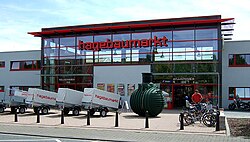
A German Hardware store
A hardware store in China. The style and products offered in this Haikou City store are typical of hundreds of thousands of hardware stores throughout the country.
A hardware store in Telluride, Colorado c. 1903

Hardware stores (in a number of countries, "shops"), sometimes known as DIY stores, sell household hardware for home improvement including: fasteners, building materials, hand tools, power tools, keys, locks, hinges, chains, plumbing supplies, electrical supplies, cleaning products, housewares, tools, utensils, paint, and lawn and garden products directly to consumers for use at home or for business. Many hardware stores have specialty departments unique to its region or its owner's interests. These departments include hunting and fishing supplies, plants and nursery products, marine and boating supplies, pet food and supplies, farm and ranch supplies including animal feed, swimming pool chemicals, homebrewing supplies and canning supplies.[1][2][3][failed verification]

Australia and New Zealand

[edit]
Mitre 10 MEGA store interior in Pakenham, Australia

In Australia hardware stores specialise in home décor and include large selections of paint. There are three major hardware companies in Australia: Bunnings, Mitre 10 and Home Hardware. Home Hardware is a retailers' co-operative and has many banners which store owners trade under.

Since the acquisition of Bunnings by Wesfarmers in 1994, the big-box store concept has changed how new hardware stores are built. In 2004, Mitre 10 built its first supercentre Mitre 10 MEGA with an average store size of 13,500 m2. These were later either closed or turned into large-concept Mitre 10 stores. In 2011 Masters Home Improvement entered the market and opened more than 49 stores, with an average footprint of 13,500 m2. Masters Home Improvement, which was the second-largest hardware chain in Australia, closed in December 2016.[4]

Bunnings also operates in New Zealand, competing against Mitre 10 New Zealand and Hammer Hardware. The Australian Bunnings and Mitre 10 Mega format have also been introduced to New Zealand.[5]

Canada

[edit]

Home Hardware, Rona, Canac, BMR Group and Réno-Dépôt are Canadian hardware retailers. Aikenhead's Hardware became the Canadian unit of The Home Depot in 1994. Canadian Tire, Central, Kent Building Supplies, Lowe's and many smaller chains also sell hardware in Canada.

China

[edit]

Most hardware stores in China, whether in the city or rural areas, are small, family-owned, non-franchise companies. They provide similar products to Western hardware stores, including plumbing and electrical supplies, tools, and some housewares. They do not normally carry lumber, fishing supplies, gardening products, or boating supplies. Some rural hardware stores supply animal feed, such as chicken feed.

Common to most non-Western countries, China has specialty hardware stores, dedicated to selling products in a particular category. These stores are usually grouped together in a shopping district. Examples are groups of stores that specialize in:

  • Chain, carrying different sizes of chain, couplings, lifting hooks, cutters, etc.
  • Generators and compressors, selling parts, hoses, plus products and tools related the maintenance and repair of generators and compressors.
  • Tubing and metal rods of various sizes and materials.
  • Large power tools, with accessories.
  • Electrical wire and wire rope, electrical switches, fuse boxes, wire rope sockets, clamps, and thimbles.

Europe and the Middle East

[edit]
A hardware store in France
K-Rauta hardware store in Alajärvi, Finland
Praxis Amsterdam-Zuidoost big box store
Dedeman store in Timișoara, Romania

European-based stores include:

United Kingdom

[edit]
B&Q Warehouse store, Grimsby

In the United Kingdom, hardware stores can also be known as DIY stores and home improvement stores.[citation needed] The biggest chain is B&Q, followed by Wickes. Trade counter retailers are also popular, including Screwfix and Toolstation, where customers collect their order from a desk.[6][failed verification]

India

[edit]

In India hardware stores are mostly small businesses, with no major store chains that carry a large selection of products. Stores lack ample floor space compared to their Western counterparts, but are usually stocked with a wide variety of items.

Indian hardware stores are similar to hardware stores around the world, offering products from several categories such as plumbing, machinery, household, gardening, manufacturing, cobbler, carpenter, and electrical.

Pakistan

[edit]

Hardware stores in Pakistan vary from small family-owned shops to large wholesale markets. Major cities like Karachi, Lahore, and Islamabad have well-established hardware markets catering to contractors, electricians, and DIY enthusiasts.

Some of the well-known hardware markets in Pakistan include:

  • Lighthouse Market (Karachi) – Specialises in electrical supplies, plumbing, and tools.
  • Hall Road (Lahore) – A hub for electronic and hardware supplies.
  • Rawalpindi Saddar Market – Offers a wide range of construction and industrial hardware.

Many stores import tools and materials from China, the UAE, and Europe, while local manufacturers also contribute to the supply chain. The rise of e-commerce platforms like Daraz and OLX Pakistan has also enabled online hardware sales.

United States

[edit]
Advertisement for hardware dealers from Neville's Macon Directory and Advertiser for 1869 - 1870

Larger hardware stores may also sell building supplies including lumber, flooring, roofing materials and fencing. Such stores are often referred to as home improvement centers or home centers.

There may be fewer hardware stores in the US now than in the past, but according to the US Census Bureau, there were still 14,300 hardware stores in the US in 2005, employing on average 10 employees each.[7] Despite competition from large chain stores (commonly referred to as big-box or destination hardware stores, e.g., The Home Depot, Lowe's and Menards) new hardware stores in the US continue to open.[8][needs update]

There are four major nationwide wholesale suppliers to hardware stores. All four report more than US$1 billion in annual sales.[9][full citation needed] Two of them operate as retailers' cooperatives: Do It Best Corp, from Fort Wayne Indiana, and Ace Hardware from Oakbrook Illinois.[9][full citation needed] Hardware store owners purchase stock in these suppliers and may choose to include the name of the cooperative in the advertised name of the store.

A typical Home Depot store

Hardware stores also purchase from a variety of regional wholesalers and specialty manufacturers. Some hardware stores operate rental businesses which can offer equipment from construction tools to inflatable playhouses. The major hardware cooperatives provide brand name rental advertising and support for hardware store owners including Just Ask Rental, Party Central, Grand Rental Station and Taylor Rental, all four of which are brands owned by the True Value Company.

Unique services in hardware stores

[edit]

Part of the popularity of American hardware stores is the range of services they provide. Most retail outlets only sell goods, while some hardware stores custom-make or repair a large variety of household items. It is common for a hardware store in the US to repair broken windows and screens, repair power equipment such as lawn mowers, re-key entry locks, make copies of house keys and car keys, re-wire lamps and vacuum cleaners, sharpen knives and cutting tools, make minor repairs to faucet and shower parts, repair kerosene heaters and cut and thread plumbing pipe.

Hardware industry trade association

[edit]

The North American Retail Hardware Association (NRHA[10]) is a membership organization that provides training and resources for hardware store owners and publishes a trade magazine in print and online.

See also

[edit]

References

[edit]
[edit]
Revisions and contributorsEdit on WikipediaRead on Wikipedia
from Grokipedia
A hardware store is a retail establishment primarily engaged in selling a general line of new hardware items, including tools, , fasteners, supplies, electrical goods, , and related products for , repair, and projects. These stores cater to both professional tradespeople and do-it-yourself (DIY) enthusiasts, offering items such as hand tools, power tools, , , screws, locks, and equipment. In many regions, they are also known as DIY stores or centers, distinguishing them from general merchandise retailers by their focus on durable, functional goods rather than . Hardware stores originated in the as sections within general stores that stocked a mix of "hard" (metal and durable) and "soft" ( and perishable) goods, but they began to specialize and diverge around the turn of the , transforming cluttered storerooms into organized "scientific salesrooms" with curated displays and expert advice. By the mid-20th century, many formed cooperatives like Hardware Wholesalers (1945) and Cotter & Co. (1948), which evolved into major buying groups such as and to compete with emerging big-box chains. The number of independent U.S. hardware stores peaked at around 26,000 in 1972 but declined to 14,000 by 1996 due to competition from large retailers like Home Depot and , though the sector has since stabilized with a focus on niche, community-oriented operations. Today, the U.S. hardware stores industry generates approximately $45.2 billion in annual revenue, with a modest growth rate of 1.9% in 2025, driven by steady demand for home renovation amid housing market fluctuations and rising DIY trends. In November 2024, acquired out of bankruptcy, further consolidating cooperative buying power among independents. Beyond commerce, these stores often serve as vital community hubs, fostering social connections through knowledgeable staff, workshops, and events that promote mechanical skills and local engagement in an era of disposable consumer goods. Major players include national chains like and independent stores that emphasize personalized service, while the industry continues to adapt to and sustainable materials.

Overview and History

Definition and Characteristics

A hardware store is a retail outlet specializing in the sale of tools, building materials, fasteners, plumbing supplies, electrical items, and various products essential for , repair, and tasks. These establishments cater to a diverse range of needs, from basic household fixes to more complex projects, by stocking items like nails, screws, hand tools, and supplies. Key characteristics of hardware stores include a broad assortment of merchandise designed for do-it-yourself (DIY) projects, professional trade work, and everyday household maintenance, often arranged in an accessible layout to facilitate quick purchases. They typically employ knowledgeable staff with expertise in areas such as , , and electrical systems, who offer personalized advice to help customers select appropriate products and troubleshoot issues. Primarily physical retail spaces, many hardware stores have incorporated extensions for browsing, ordering, and delivery to enhance customer convenience. Modern hardware stores trace their roots to general merchandise outlets that began incorporating hardware goods in the 19th and early 20th centuries. Hardware stores distinguish themselves from big-box home centers, which operate on a massive scale with store sizes often exceeding 100,000 square feet and prioritize high-volume, shopping, by maintaining more modest footprints—generally 2,000 to 20,000 square feet—and emphasizing individualized . In contrast to specialty shops that concentrate on niche areas like or , hardware stores provide a comprehensive general line of basic hardware across multiple categories. Their primary target customers are homeowners tackling personal projects, contractors requiring reliable supplies, and hobbyists pursuing recreational builds.

Historical Development

The origins of hardware stores trace back to the in , where ironmongers operated as specialized merchants dealing in iron goods, tools, and hardware imported from regions like the in . In colonial America, these evolved from general merchandise stores and trading posts that sold ironmongery alongside other essentials, with hardware largely imported from due to colonial restrictions. By the mid-18th century, such establishments in places like connected local economies to Atlantic trade networks, stocking items like forged iron tools and fasteners essential for farming and building. The 19th century marked the emergence of dedicated hardware stores amid industrialization and urbanization in the United States and United Kingdom. As factories enabled mass production of standardized goods like nails and screws, stores shifted from custom blacksmith services to retailing machine-made hardware, catering to growing construction demands in expanding cities. Urbanization further fueled this growth, as populations swelled in industrial centers, increasing the need for builders' supplies and domestic tools. In the , key milestones reshaped hardware stores, beginning with the post-World War II suburban expansion in the , which spurred a DIY culture among homeowners in new single-family developments. In 1950, nearly two million single-family homes began construction, driving demand for affordable tools and materials that stores began stocking in greater variety, often through community repair clinics. The 1970s–1980s saw the rise of chains amid economic shifts like and housing market fluctuations, as lowered costs and enabled larger formats to compete with independents. The 1929 severely impacted small businesses, as reduced consumer spending and business failures led to widespread closures among family-run operations during the . The transition to modern formats accelerated with the rise of automobiles in the early , allowing stores to relocate from urban cores to roadside or suburban sites for easier customer access via car. Hardware stores began to diverge from general stores around the turn of the . This shift, combined with , facilitated the move from predominantly family-owned independents to corporatized models by mid-century, as chains offered in inventory and distribution.

Products and Inventory

Core Product Categories

Hardware stores typically stock a wide array of products essential for home maintenance, repairs, and construction projects, organized into several core categories. These include tools, which encompass hand tools like hammers and screwdrivers, power tools such as drills and saws, and garden tools including pruners and shovels; building materials, featuring , , and roofing supplies; fasteners and hardware, such as screws, , hinges, and locks; plumbing and electrical supplies, comprising , wires, fixtures, and outlets; and household and safety items like adhesives, ladders, and fire extinguishers. Products within these categories are often sub-categorized by project type, such as DIY home repairs versus larger tasks, or by compatibility, for example, metal versus wood fasteners, to facilitate easier selection for specific applications. in hardware stores distinguishes between staples, which are year-round essentials like basic tools and fasteners that maintain steady demand, and seasonal items that fluctuate with weather and holidays, such as snow shovels and ice melt in winter or grills and fertilizers in summer. To cater to diverse customers ranging from hobbyists to professionals, stores offer products across quality tiers: economy-grade options for occasional use, like basic manual screwdrivers; mid-range items such as cordless drills with standard batteries; and professional-grade tools, exemplified by heavy-duty, brushless cordless drills designed for frequent, demanding applications.

Sourcing and Supply Management

Hardware stores primarily source their inventory from manufacturers, wholesalers, and distributors to ensure a diverse range of products such as tools, fasteners, and building materials. Manufacturers like provide direct production of specialized items, offering customization and stable supply at lower costs for bulk orders, while wholesalers such as Grainger facilitate access to a broad catalog of industrial supplies. Distributors act as intermediaries, providing flexible ordering and logistical support, often through established networks that connect stores to multiple brands. Selection of suppliers typically involves evaluating factors like minimum order quantities, pricing, quality, and delivery reliability. Trade shows and supplier catalogs play a crucial role in the sourcing process, enabling store owners to discover new products, negotiate deals, and build relationships with vendors. Major events like the National Hardware Show in the United States and the International Hardware Fair in , , allow retailers to inspect samples, attend demonstrations, and network directly with manufacturers and distributors. Catalogs from wholesalers, often available digitally or in print, serve as key tools for browsing inventory options, comparing specifications, and placing orders efficiently without physical visits. Effective inventory management in hardware stores relies on practices like just-in-time (JIT) stocking, which minimizes holding costs by ordering frequently from reliable suppliers to match demand without excess stock. Specialized software systems integrate with point-of-sale tools to provide real-time tracking of stock levels, automate reordering, and analyze turnover rates, helping retailers identify fast-moving items like seasonal tools and reduce waste from slow sellers. These technologies enhance profitability by optimizing and ensuring product availability, with turnover rates improved through data-driven adjustments to purchasing patterns. Supply chain challenges for hardware stores include frequent disruptions from raw material shortages, particularly metals like and , exacerbated by global events such as trade tensions and labor shortages in transportation. For example, in 2022, 62% of industry respondents cited shortages as the primary issue, leading to delayed deliveries and volatility that strain operations. As of May 2025, independent hardware retailers continue to face economic uncertainty, with looming new tariffs and consumer expected to reach 3% in late 2025 contributing to volatility. To counter competition from retailers, stores employ pricing strategies like dynamic adjustments and promotional matching, balancing competitive web prices with in-store premiums for immediate access and expert advice, though this requires ongoing monitoring to maintain margins. Sustainability has become integral to sourcing, with hardware stores increasingly shifting toward eco-friendly suppliers that use recycled materials to reduce environmental impact. For instance, fasteners made from recycled or biodegradable polymers are gaining traction, as they lower the demand for virgin resources and minimize production emissions while maintaining . This trend aligns with broader industry efforts to meet demand for products and comply with regulations on sustainable practices.

Operations and Services

Store Layout and Customer Experience

Hardware stores typically adopt a grid-based layout with aisles organized by product categories to optimize and efficiency. High-demand items like hand tools and fasteners are often positioned near the entrance to draw in customers immediately, while bulky goods such as , , and large equipment are placed toward the rear to utilize vertical space efficiently and encourage exploration of additional sections. Product categories like and electrical supplies directly influence these decisions, creating dedicated areas that streamline the path. Clear overhead and color-coded further support intuitive , with directional markers and department labels ensuring customers can locate items without frustration. Enhancing the overall , hardware stores incorporate interactive elements such as in-store product demonstrations, where staff conduct hands-on sessions to illustrate tool functionality and application. Dedicated help desks staffed by knowledgeable associates provide expert guidance on project selection and , fostering trust and informed purchasing decisions. programs, such as points-based rewards for purchases, incentivize repeat visits by offering discounts and exclusive perks, while the expertise of on-site personnel remains a key differentiator in assisting DIY enthusiasts and professionals alike. The essential product knowledge for counter staff includes familiarity with common building materials such as lumber and types of wood, plumbing fittings, electrical supplies, paints, fasteners (screws, nails, bolts), tools, and drywall and insulation. Key terms encompass dimensions (e.g., 2x4 lumber), grades, and compatibility (e.g., fittings for PVC versus copper pipes). To promote inclusivity, hardware stores implement adaptations including aisles maintained at a minimum width of 36 inches to accommodate wheelchairs and mobility aids, alongside clear, high-contrast labeling on shelves and for . Integration with online platforms enables seamless buy-online-pick-up-in-store options, allowing customers to reserve items digitally and collect them curbside or inside, bridging physical and virtual shopping experiences. Store scale influences layout variations significantly: small independent outlets prioritize compact, personalized arrangements that maximize staff-customer interactions in a cozy environment, whereas larger chain formats employ expansive, zoned designs to showcase vast inventories across multiple departments. Regardless of size, both emphasize impulse purchases near checkouts—featuring small, affordable items like batteries, tape, and gloves—to capture spontaneous sales and contribute substantially to overall revenue.

Specialized Services

Hardware stores commonly offer a range of specialized services that extend beyond mere product sales, providing practical assistance for home maintenance and repair tasks. These include key cutting, where duplicate keys for locks, vehicles, and other devices are produced on-site using precision machinery; tool sharpening for blades, knives, and chainsaws to restore cutting efficiency; paint mixing to create custom colors from base tints matched to customer specifications; and glass cutting for custom sizes of plexiglass, mirrors, or standard suitable for windows or frames. In addition to these hands-on services, many hardware stores provide equipment rental options, enabling customers to access heavy-duty items like power tools, ladders, tillers, and even trucks or trailers for short-term projects without the commitment of ownership. Professional support further enhances the through delivery services for bulky items, expert installation advice on products such as shelving or fixtures, and referrals to trusted contractors for larger jobs. Some locations also handle custom fabrication, such as screen repairs for windows and doors, using specialized tools to mend or replace mesh and frames. These services function as key profit centers for hardware retailers, particularly independents, by generating higher margins than standard merchandise sales. Dedicated service areas within the store layout support efficient delivery of these offerings, minimizing disruptions to the shopping experience. Over time, the scope of services has evolved to incorporate environmentally focused initiatives, such as battery recycling programs in partnership with organizations like Call2Recycle, which allow customers to responsibly dispose of rechargeable and single-use batteries, promoting sustainability and compliance with waste regulations.

Regional Variations

North America

In , the hardware store landscape is dominated by large-scale big-box retailers, particularly in the United States, where chains like The Home Depot and have shaped the industry since the late 1970s. The Home Depot pioneered the big-box format in 1978, offering vast selections of tools, , and supplies under one roof to cater to both professional contractors and do-it-yourself (DIY) enthusiasts. , originally a smaller chain founded in 1921, expanded into the big-box model during the 1980s and 1990s to compete, growing from regional outlets to a national presence with revenues surpassing $900 million by 1980. This shift toward massive, warehouse-style stores revolutionized retail by emphasizing low prices, wide inventory, and one-stop shopping, leading to the decline of many traditional small retailers. However, independent hardware stores maintain a vital niche, especially in urban areas, where co-operatives like provide personalized service, local expertise, and specialized products that big-box chains often overlook. In , hardware stores adapt to the country's bilingual and climatically diverse environment, with key chains like emphasizing products suited to harsh winters, such as snow tires, ice melt, shovels, and heavy-duty heating equipment. Founded in , has evolved into a multifaceted retailer offering automotive, sporting goods, and items, with sales influenced by seasonal weather patterns that boost demand for cold-weather essentials. Bilingual services are particularly prominent in , where stores like Patrick Morin and BMR provide French-English staff support and signage to serve francophone customers, ensuring accessibility in a region governed by language laws. These adaptations reflect Canada's regional variations, contrasting with the more uniform big-box dominance south of the border. Regulatory frameworks significantly influence inventory in North American hardware stores, as stringent building codes mandate compliance for electrical and plumbing products to ensure safety and durability. In the , the International Building Code and state-specific standards require items like UL-listed wiring and fixtures meeting requirements, prompting stores to prioritize certified stock to meet contractor and homeowner needs. Similarly, codes enforce water-efficient and lead-free materials, shaping selections toward code-compliant pipes and fittings. The home improvement sector, encompassing hardware retail, exceeded $522 billion in value in 2023, driven by these regulatory demands and ongoing residential . Culturally, hardware stores embody the DIY ethos prevalent in suburban America, where widespread homeownership and accessible tools encourage weekend projects like deck building and kitchen remodels, fostering self-reliance among middle-class families. This contrasts with Canada, where while DIY remains popular, greater reliance on professionals for licensed tasks—such as electrical and plumbing work under provincial regulations—shifts some demand toward contractor supplies and advisory services in stores. In both countries, the sector supports a blend of amateur and expert users, but the US suburban focus amplifies big-box appeal for impulse buys and project inspiration.

Europe and Middle East

Hardware stores in exhibit significant diversity in formats and operations, shaped by national preferences and regulatory frameworks. In the , the sector emphasizes do-it-yourself (DIY) culture, with major chains like , part of the Group, dominating the market through extensive offerings in products and tools. Independent stores also thrive, providing localized services alongside national players like and , catering to a strong consumer base engaged in home renovation projects. In contrast, features large-scale, efficiency-focused retailers such as , founded in 1960, which operate expansive warehouse-style stores prioritizing streamlined layouts and for both professionals and hobbyists. Other prominent chains like OBI and Hornbach similarly underscore operational efficiency, contributing to 's position as a leader in the European DIY market. European hardware stores must adhere to stringent EU-wide regulations on product safety and taxation, which influence inventory and pricing strategies. Power tools and machinery are governed by the (2006/42/EC), mandating compliance with mechanical, electrical, and standards to protect consumers and workers. Chemicals and hazardous substances fall under Regulation (EC) No 1907/2006 and the Classification, Labelling and Packaging (CLP) Regulation (EC) No 1272/2008, requiring retailers to ensure proper labeling, risk assessments, and safe handling to minimize health and environmental risks. Value-added tax (VAT), with a minimum standard rate of 15% across EU member states, is included in retail prices, elevating costs for hardware items like tools and materials compared to pre-tax pricing in non-VAT systems, thereby affecting consumer affordability and store competitiveness. Post-Brexit adjustments have reshaped the hardware sector, introducing disruptions and barriers that increase costs for European-sourced , yet the DIY market has demonstrated resilience with steady consumer spending on home projects amid economic pressures. In the , particularly in the (UAE) and , hardware stores adapt to a diverse and harsh desert climate by stocking specialized inventory for and cooling needs. Mega-stores and superstores like and Binja provide comprehensive selections of building materials, power tools, and air-conditioning components, serving the large expat community involved in rapid urban development projects. Emphasis is placed on desert-adapted supplies, such as heat-resistant insulation, sand-proof fixtures, and HVAC spare parts from suppliers like Desert Master, reflecting the region's focus on climate-resilient . Market trends in the broader highlight growth in and , driven by ongoing booms. 's hardware and building materials sector is projected to reach in 2025, with a 3.93% annual growth rate fueled by investments and a 4.2% expansion in the industry. In , the market is expected to generate in 2025, supported by historical surges in residential and commercial building, despite recent economic headwinds.

Asia-Pacific

In , rapid has significantly transformed the hardware retail landscape, with the DIY and hardware store market experiencing robust growth driven by expanding urban populations and increased housing development. As more rural residents migrate to cities, demand for affordable tools and building materials has surged to support both personal improvements and the sector, where low-cost hardware remains essential for small-scale production and assembly lines. Traditional markets, often informal and community-based, are gradually transitioning to modern formats through state-supported initiatives that promote standardized retail chains, such as Orderbid , which operates neighborhood-focused stores offering accessible hardware for everyday urban needs. India's hardware retail sector remains highly fragmented, dominated by numerous small, independent shops reminiscent of kirana-style outlets that cater to local communities with a mix of tools, fasteners, and basic building supplies. These traditional stores, often family-run and located in bustling urban and semi-urban areas, coexist with emerging organized chains like , which provides a broader range of products including hardware essentials in larger, more structured formats. A key emphasis in Indian hardware stores is on monsoon-resistant materials, such as waterproof plywood like Sainik 710 and specialized paints from brands like , designed to withstand heavy rainfall, humidity, and termite risks prevalent during the seasonal monsoons. In and , holds a dominant position in the hardware retail market, generating approximately $18.97 billion in revenue in 2024—five times that of its closest competitor—and focusing heavily on outdoor and products to meet the region's demands. This emphasis aligns with local needs, including regulations in bushfire-prone areas, where stores stock ember-resistant plants, wide-leaf species for reduced fire fuel, and sprinkler systems compliant with standards like AS 2118.1 to help homeowners create defensible spaces around properties. Economic drivers in the hardware sector include the integration of platforms in and , where online sales of products are accelerating alongside overall retail , enabling consumers to access tools and materials through apps and marketplaces. Population growth, particularly in densely populated nations like and , continues to fuel sector expansion, with the DIY home improvement market projected to grow at a of 5.73% from 2025 to 2030, reaching $8.49 billion amid rising urban demands. Colonial influences from the British era have subtly shaped modern formats in countries like and , introducing structured retail concepts that evolved into today's hybrid models.

Other Regions

In , hardware stores known as ferreterías play a central role as community hubs, particularly in and , where they supply materials for informal construction projects that often lack official permits or standardized . These stores cater to local needs in urban and peri-urban areas, providing tools, paints, and building supplies for repairs and expansions in informal settlements, where residents rely on affordable, readily available goods to address housing shortages. Many ferreterías depend on imported products, such as fasteners, electrical components, and basic tools, sourced primarily from and to meet demand driven by self-built or incrementally constructed homes. In , the hardware retail landscape features a mix of formal chains and transitioning markets, with South Africa's Builders Warehouse standing out as a prominent retailer offering construction equipment, materials, and DIY supplies across multiple outlets in the country and neighboring nations. In , traditional open-air markets have historically dominated hardware sales, but rapid and government-led infrastructure projects—such as road networks and housing developments—are prompting a shift toward formalized stores that provide structured and better access to quality building materials. This evolution supports growing activity, though challenges persist in integrating informal vendors into modern retail formats. Pakistan's hardware sector is characterized by vibrant bazaar-style souks, such as those in Karachi's Bolton Market and Jodia Bazaar, where wholesalers and retailers offer a wide array of tools and fittings in bustling, open environments that facilitate direct bargaining and bulk purchases. In , markets like Shahalam serve as key distribution points for low-cost hardware imports from , including hand tools, fixtures, and machinery components tailored for textiles and sectors, enabling small-scale farmers and manufacturers to maintain operations affordably. These souks thrive on high-volume trade, with Chinese goods dominating due to their competitive pricing and availability via established import routes. Across these regions, hardware stores face common hurdles, including high import tariffs that inflate costs for essential goods and the proliferation of products, which undermine trust and safety in construction materials. In and , substandard fakes—such as and tools—pose risks to informal builds, while in , they compete with genuine imports in souks. Despite these issues, growth is bolstered by s from migrant workers, which fund home construction and renovations; for instance, in , these inflows support "remittance houses" built with store-sourced materials, in and they drive household investments in durable goods, and in they fuel a booming market reliant on affordable hardware.

Major Chains and Market Leaders

The hardware store industry is dominated by a few global leaders, with The Home Depot and Lowe's Companies, Inc. standing out as the largest players in North America and beyond. The Home Depot reported fiscal 2024 revenue of $159.5 billion, marking a 4.5% increase from the previous year, driven by its extensive network of over 2,300 stores primarily in the United States, Canada, and Mexico. Lowe's, its closest competitor, achieved $83.67 billion in net sales for the same fiscal year, a 3% decline amid softer consumer spending, operating more than 1,700 stores focused on home improvement essentials. Kingfisher plc, a major European operator under brands like B&Q and Castorama, generated £12.78 billion in sales for the year ended January 31, 2025, supporting its presence across the UK, France, Poland, and Turkey through strategic international expansions. Regional giants further shape local markets with tailored dominance. In and , , owned by , leads with A$18.97 billion in revenue for fiscal 2024, operating around 310 stores and emphasizing do-it-yourself (DIY) products through its warehouse-style format. , part of the Adeo Group, maintains a strong footprint in and with operations in over 15 countries, including , , , where it reported consolidated group revenue exceeding €30 billion in 2024, bolstered by its focus on home decoration and renovation services. In , has rapidly expanded to over 1,500 stores across , , , , and beyond as of mid-2025, achieving trailing twelve-month revenue of approximately $1.11 billion through affordable hardware and lifestyle goods. These chains employ key strategies to sustain market influence, including via private-label brands, strategic acquisitions, and retail approaches. The Home Depot exemplifies by developing exclusive brands like tools and Hampton Bay furnishings, while pursuing acquisitions such as SRS Distribution in 2024 for $18.3 billion to control building materials supply chains and enhance pro . prioritizes integration, investing in seamless online-to-store experiences like buy-online-pickup-in-store and tools. In the , the top five chains, including Home Depot and , collectively control about 40% of the , with Home Depot at 17.1% and at 15.2%, enabling in sourcing and pricing. The rise of these major chains has intensified competition for independent hardware stores, prompting widespread consolidations to remain viable. Independents, which comprise roughly 60% of hardware outlets but face margin pressures from big-box pricing, have increasingly joined cooperatives like or , with notable mergers such as 's 2024 acquisition of True Value's operations, completed in November 2024, to pool resources and negotiate better supplier terms. This consolidation trend, accelerated by chains' aggressive expansion, has reduced the number of standalone independents by an estimated 10-15% over the past decade while fostering hybrid models that blend local service with chain-level efficiencies.

Challenges and Future Directions

Hardware stores face intense competition from platforms, with Amazon holding the largest market share in online hardware and tool sales in the United States. This shift has pressured traditional brick-and-mortar operations, as online retailers capture a growing portion of the market for tools and supplies. Additionally, the industry grapples with labor shortages, particularly in skilled trades like and , projected to hinder sector growth by 2030. on building materials has further strained margins, with prices rising amid ongoing economic pressures. These challenges are occasionally exacerbated by disruptions, such as those from global events. Sustainability has emerged as a critical shift, driven by consumer demand for eco-friendly products and stringent regulations. Hardware stores are increasingly stocking green alternatives, including low-emission paints and recycled materials, to meet preferences for sustainable options. Initiatives like zero-waste store models aim to reduce packaging and promote reusable goods, aligning with broader environmental goals. In the European Union, regulations such as the Ecodesign for Sustainable Products Regulation (ESPR) mandate improved product circularity and recyclability, while the Carbon Border Adjustment Mechanism (CBAM) imposes taxes on high-carbon imports like steel, affecting supply costs for retailers. Looking ahead, technology integration offers promising directions for hardware stores. (AR) tools enable virtual try-ons, allowing customers to visualize fixtures or tools in their spaces before purchase, enhancing decision-making. (AI) is revolutionizing inventory management by predicting demand through data analysis, reducing stockouts and overstock. Post-pandemic, hybrid models combining in-store experiences with online ordering have gained traction, providing flexibility for customers. The global market, encompassing hardware retail, is projected to reach $1 trillion by 2030, fueled by and DIY trends. To adapt, hardware stores are forming partnerships with online platforms to enable seamless sales, bridging physical and digital channels. Emphasizing experiential retail—through interactive displays and personalized consultations—helps differentiate from pure , fostering customer loyalty and higher foot traffic.

References

Add your contribution
Related Hubs
User Avatar
No comments yet.