Hubbry Logo
David RouzerDavid RouzerMain
Open search
David Rouzer
Community hub
David Rouzer
logo
8 pages, 0 posts
0 subscribers
Be the first to start a discussion here.
David Rouzer
David Rouzer
from Wikipedia

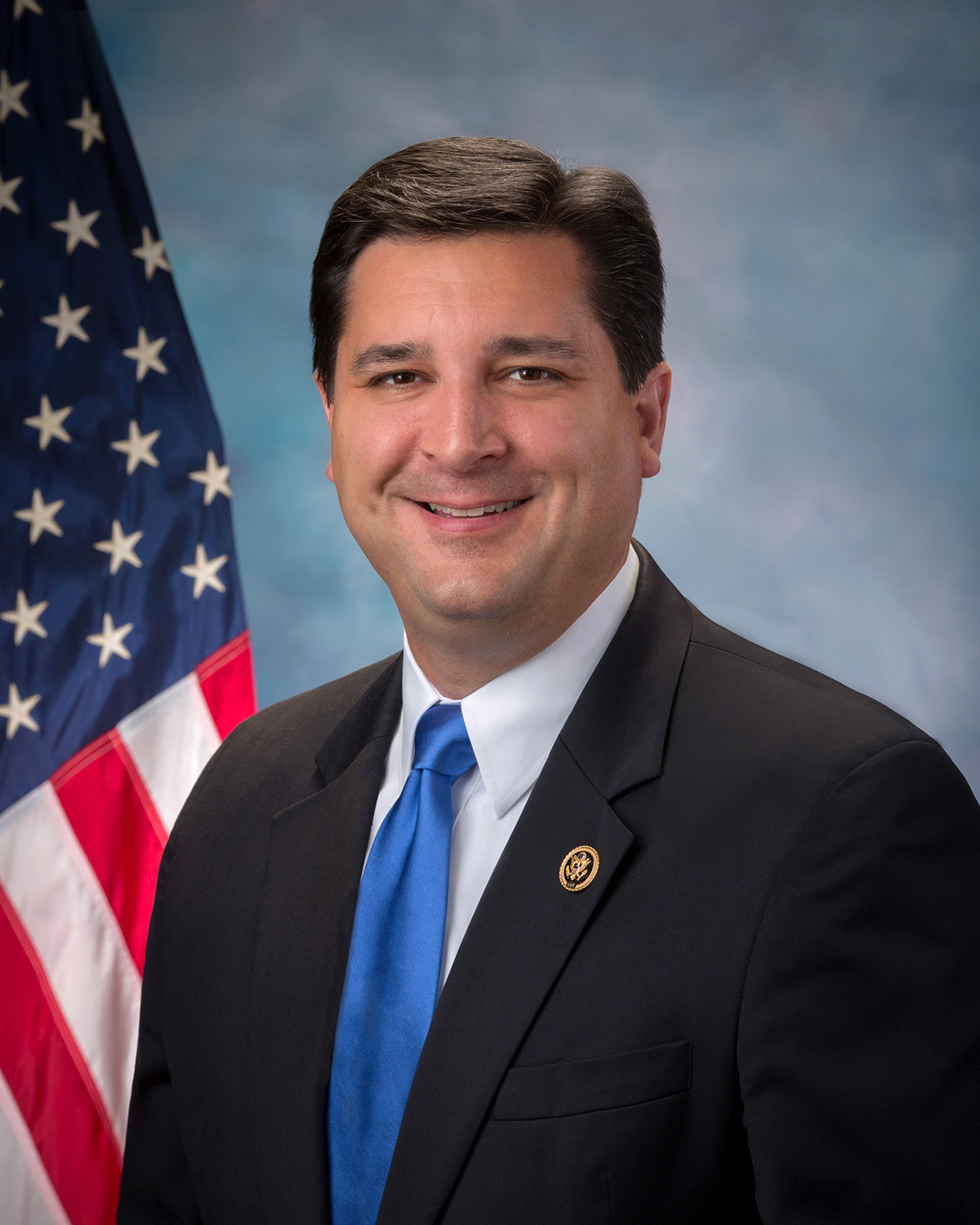
David Cheston Rouzer (/ˈrzər/ ROW-zər; born February 16, 1972) is an American politician who is the U.S. representative for North Carolina's 7th congressional district. Previously he was a Republican member of the North Carolina General Assembly, representing Johnston County and Wayne County in the 12th district of the North Carolina Senate.

Key Information

Early life, education, and business career

[edit]

Rouzer was born at Landstuhl Army Medical Center in Landstuhl, West Germany (now Germany), where his father was based, in 1972.[1] He was raised in Durham, North Carolina, where he attended Northern High School.

Rouzer attended North Carolina State University, where he was a member of the Phi Delta Theta fraternity. In 1994, he earned a Bachelor of Arts degree in agricultural business management, agricultural economics, and chemistry.[1] Rouzer is also a graduate of the Fund for American Studies' Institutes on Business and Government Affairs and American Economic and Political Systems.[2][3]

Rouzer has been a small business owner of The Rouzer Company and the Warehouse Distribution. From 2001 to 2002, he was assistant to the dean at the North Carolina State University College of Agriculture and Life Sciences. From 2005 to 2006, he was an associate-rural administrator for the U.S. Department of Agriculture.[4]

Early political career

[edit]
Rouzer with Jesse Helms in 2000

From 1996 to 2001, Rouzer was a legislative aide and Senior Policy Adviser for U.S. Senators Jesse Helms and Elizabeth Dole. In 2000, he ran for North Carolina Commissioner of Agriculture and lost the Republican primary.

North Carolina Senate

[edit]

Elections

[edit]

In 2008, incumbent Republican state senator Fred Smith decided to retire in order to run for governor of North Carolina. Rouzer ran for Smith's old seat and defeated Nena Reeves in the Republican primary, 68%–32%.[5] In the general election, he defeated Kay Carroll, 52%–48%.[6] In 2010, he was reelected with 70% of the vote.[7]

Issues

[edit]

He worked on strengthening laws allowing youths to obtain driver's licenses. He was also a proponent of the 2012 "sea-level rise" legislation that sought to mandate that only historical data be used to predict future trends.[8]

Rouzer favors repealing the Affordable Care Act. In his 2012 campaign he released a TV ad in which his grandmother promised that he would not cut Medicare if elected.[9] He believes immigrants should be fluent in English before being granted U.S. citizenship. He is pro-life.[8]

Tenure

[edit]

In his four years, he has sponsored 17 bills that have become signed into law.[10]

Committee assignments

[edit]
Standing/Select Committees
  • Agriculture/Environment/Natural Resources (Co-chairman)
  • Appropriations on Natural and Economic Resources (Co-chairman)
  • Finance
  • Health Care
  • Insurance
  • Judiciary I
  • Program Evaluation
  • Select Committee on UNC Board of Governors
Non-Standing Committees
  • Agriculture and Forestry Awareness Study Commission (Chairman)
  • Consolidated Environmental Commission Committee
  • Joint Legislative Task Force on Diabetes Prevention and Awareness
  • Environmental Review Commission (Chairman)
  • Joint Legislative Oversight Committee on Information Technology
  • Joint Regulatory Reform Committee (Chairman)
  • Revenue Laws Study Committee
  • Joint Select Committee on Tornado Damage Response[11]

Rouzer is a member of the Republican Study Committee.[12]

U.S. House of Representatives

[edit]
Rouzer with President Donald Trump in 2020

Elections

[edit]

2012

[edit]

After Republican-controlled redistricting, Rouzer gave up his State Senate seat to run in the newly redrawn North Carolina's 7th congressional district and challenge incumbent Democratic U.S. Representative Mike McIntyre. His home in Johnston County had been drawn into the district; it had previously been in the 2nd District. In the Republican primary, Rouzer defeated both 2010 nominee Ilario Pantano and Randy Crow, but won just four of the district's twelve counties: Johnston (82%), Sampson (49%), Lenoir (43%), and Hoke (38%).[13][14] His margin in Johnston County, the second-largest in the reconfigured district, was enough for him to win.

The redrawn 7th is much more conservative and Republican than its predecessor. Roll Call rates the election as leans Republican.[15]

After an official tabulation showed that Rouzer had lost the election to McIntyre by 655 votes, Rouzer asked for a recount on November 21, 2012. After the recount, Rouzer conceded the race to McIntyre on November 28. It was the closest House race in the country. Mitt Romney carried the district with 56% of the vote.

2014

[edit]

Rouzer ran for the 7th district again in 2014. McIntyre retired rather than face a rematch. Most pundits believed that with McIntyre's retirement, the seat would be an easy GOP pickup. Even before his near miss in 2012, the 7th had been trending Republican for some time.

Rouzer won the general election with almost 60% of the vote. Upon taking office in January 2015, he became only the second Republican to represent a significant portion of eastern North Carolina in the House since Reconstruction.

2016

[edit]

After court-ordered redistricting, Rouzer's district was made slightly more compact. It lost most of its share of Johnston County and was pushed slightly to the east, picking up all of Wilmington–long the district's largest city–as well as Goldsboro. Rouzer was unopposed for the Republican nomination and defeated Democrat J. Wesley Casteen in the general election with 60.9% of the vote.

2018

[edit]

Rouzer won a third term to Congress with 55.5% of the vote over Democratic nominee Kyle Horton and Constitution Party nominee David Fallin, his narrowest margin of victory so far. Before the election, he sold his home in Benson and bought one in Wilmington, saying it was "a reflection of where I spend the vast majority of my time."[16]

2020

[edit]

Rouzer defeated Democratic nominee Christopher Ward with about 60% of the vote.[17]

Tenure

[edit]

Rouzer was sworn into office on January 3, 2015, for the 114th Congress. As of May 2019, he had sponsored 24 pieces of legislation during his tenure, of which 2 became public law.[18] He also coauthored (with U.S. Senator Thom Tillis) a provision to the John D. Dingell Jr. Conservation, Management, and Recreation Act that gave authority to the United States Secretary of the Interior to designate a World War II Heritage city each year. The provision went into effect when the legislation was signed into law by President Donald Trump in 2019. Wilmington was expected to be among the first designated Heritage Cities.[19]

In December 2020, Rouzer was one of 126 Republican members of the House of Representatives to sign an amicus brief in support of Texas v. Pennsylvania, a lawsuit filed at the United States Supreme Court contesting the results of the 2020 presidential election, in which Joe Biden defeated Trump.[20] The Supreme Court declined to hear the case on the basis that Texas lacked standing under Article III of the Constitution to challenge the results of an election held by another state.[21][22][23]

Political positions

[edit]

Committee assignments

[edit]

For the 119th Congress:[24]

Caucus memberships

[edit]

Texas vs. Pennsylvania

[edit]

After the 2020 presidential election, Rouzer was among 126 House Republicans who supported Texas v. Pennsylvania, a December 2020 lawsuit that asked the Supreme Court to overturn Biden's electoral victories in Georgia, Michigan, Pennsylvania and Wisconsin.[30][31] North Carolina Attorney General Josh Stein joined other State Attorneys General in opposing Texas's suit, saying "This suit seeks to overturn the will of the people by throwing out the votes of tens of millions of Americans."[32] The Supreme Court denied Texas's motion for lack of standing under Article III of the Constitution.[33] On January 6, 2021, Rouzer was one of 147 Republican lawmakers who objected to the certification of electoral votes from the 2020 presidential election just hours after a mob of Trump supporters stormed the U.S. Capitol forcing an emergency recess of Congress.[34]

References

[edit]
[edit]
Revisions and contributorsEdit on WikipediaRead on Wikipedia
from Grokipedia
David Rouzer (born February 16, 1972) is an American Republican politician and agricultural businessman serving as the U.S. representative for since 2015. Born at a U.S. military medical center in , , to American parents, he was raised in , and graduated from with degrees in agricultural business management, , and chemistry. Prior to entering , Rouzer worked as a staffer for Senators and , held senior roles at the U.S. Department of Agriculture managing programs, and founded his own agricultural consulting firm. He previously served two terms in the (2009–2012), where he was ranked among the most effective pro-business legislators. In , Rouzer has focused on , transportation , and rural economic issues, serving on the House Committees on (including as vice chair of the General Farm Commodities, Risk Management, and Credit Subcommittee), Transportation and (chairman of the Highways and Transit Subcommittee), and , , and . His legislative efforts include advancing bills to streamline permitting for projects, enhance maritime , and promote fairness in disaster assistance distribution. A founding member of the Congressional and co-chair of others, Rouzer has earned recognition for conservative policy advocacy while representing a district encompassing coastal and rural areas vulnerable to hurricanes and agricultural challenges. He objected to the certification of the 2020 presidential election results from and , joining 146 other House Republicans in support of procedural challenges.

Early Life and Career

Upbringing, Education, and Family

David Rouzer was born on February 16, 1972, at in , , where his father was stationed as part of the U.S. military. He was raised in , in a Southern Baptist household that instilled strong moral values. During summers, Rouzer worked on his family's near Four Oaks, , developing a strong through manual labor such as tobacco farming; the earnings from this work helped fund his college education. Rouzer graduated from Northern High School in Durham. He then attended , earning three bachelor's degrees in 1994: one in agricultural business management, one in , and one in chemistry. Rouzer has remained unmarried and has no children, as reported in biographical profiles through at least 2016. His family background emphasized agricultural roots and Christian principles, influencing his early perspectives on and .

Business and Professional Experience

Prior to entering elected office, David Rouzer began his professional career in 1995 as Coordinator for the Helms for Campaign. From 1996 to 2000, he served as to U.S. Senator (R-NC), followed by a role as Senior Policy Adviser to Helms from 2001 to 2002. In 2001–2002, Rouzer worked as Assistant to the Dean and Director of Commodity Relations at State University's College of Agriculture and Life Sciences. He then advanced to Senior Policy Adviser for U.S. Senator (R-NC) from 2003 to 2005, where he contributed to legislative strategy on and rural issues. From 2005 to 2006, Rouzer held a senior-level presidential appointment as Associate Administrator for at the U.S. Department of , overseeing a program exceeding $1.2 billion and a portfolio surpassing $5 billion for rural investments. In 2006, Rouzer founded The Rouzer Company, a providing strategic , , and services, primarily to small businesses in the agricultural sector. He served as Principal of the company from 2006 onward, assisting clients with matters and operational growth. In 2009, he became Principal of R&C Distributors LLC, focusing on distribution and related business activities. These private-sector roles emphasized practical support for agricultural enterprises, drawing on his academic background in agricultural business management.

North Carolina State Senate

Elections

Rouzer first ran for the North Carolina State Senate in 2008, seeking the District 12 seat covering portions of Johnston and Wayne counties. He faced no opposition in the Republican primary held on May 6, 2008. In the general on November 4, 2008, Rouzer lost to Democratic incumbent Kay Carroll, who received 44,261 votes (51.9 percent) to Rouzer's 40,971 votes (48.1 percent). In , Rouzer sought the same seat amid a national Republican midterm surge. Unopposed in the Republican primary on May 4, , he defeated Democratic nominee Jody McCleod in the general election on November 2, , securing 40,242 votes (69.7 percent) to McCleod's 17,525 votes (30.3 percent). This victory enabled Rouzer to serve one term from January 2011 to January 2013. He did not seek re-election in 2012, instead pursuing the U.S. House seat for .

Legislative Record

During his tenure in the North Carolina State Senate representing District 6 from 2011 to 2013, David Rouzer emphasized legislation aimed at reducing regulatory burdens and promoting economic growth. He co-sponsored Senate Bill 22 (2011), which prohibited state agencies from adopting administrative rules that impose new costs on regulated entities without explicit legislative authorization, targeting administrative overreach in areas like environmental and occupational regulations. Rouzer also supported Senate Bill 781 (2012), the Regulatory Reform Act, which eliminated or modified over 1,000 outdated rules across departments including environment, , and labor, while establishing periodic reviews to prevent regulatory creep and improve the state's business climate. Rouzer sponsored Senate Bill 663 (2011), directing a study of guidelines to assess their adequacy and enforcement, particularly for low-income families and non-custodial parents in rural districts. As a member of the Appropriations Committee and co-chair of the Appropriations Subcommittee on Natural and Economic Resources, he contributed to budget priorities favoring infrastructure, agriculture, and tax relief, aligning with the Republican-led assembly's overhaul of unemployment insurance and reductions that lowered the state rate from 6.9% to 2.5% by 2014. His efforts earned him consistent high rankings among pro-business legislators, based on metrics from organizations tracking bill passage and economic impact. In agriculture policy, Rouzer advocated for measures akin to the federal AgJOBS framework, sponsoring state-level initiatives to expand guest worker programs for farm labor shortages in eastern North Carolina's and crop sectors. He voted in favor of broader Republican priorities, including and , without notable deviations on party-line votes during the 2011-2012 sessions.

Committee Assignments

In the North Carolina State Senate, David Rouzer served on the Agriculture/Environment/Natural Resources Committee as co-chairman during his tenure from 2011 to 2014, overseeing legislation related to farming, conservation, and natural resource management critical to the state's rural economy. He also co-chaired the Appropriations Subcommittee on Natural and Economic Resources, influencing budget allocations for environmental and development initiatives. Rouzer chaired the Pensions and Retirement Committee, addressing public and fiscal of retirement systems. Additionally, he co-chaired the bipartisan Joint Legislative Regulatory Committee, established in 2011 to review and streamline state regulations, with appointments including Senate co-chair alongside Sen. Harry Brown. As chair of the Environmental Review Commission, Rouzer led evaluations of departmental environmental policies and permitting processes, including oversight of the Department of Environment and Natural Resources. These roles positioned him to advance conservative priorities such as regulatory reduction and resource protection without expanding government mandates.

U.S. House of Representatives

2014 Election

Rouzer, a former , sought the Republican nomination for , an open seat following the retirement of long-serving Democratic incumbent , who had defeated Rouzer by fewer than 700 votes in the 2012 general election. The district had been redrawn after the 2010 census to include more Republican-leaning areas, shifting it from a competitive seat to one rated as safely Republican by political analysts. In the Republican primary on May 6, 2014, Rouzer prevailed over New Hanover County Commission Chairman Woody White and businessman Chris Andrade, capturing a of the vote with strong establishment support, including endorsements from national GOP groups in the campaign's final weeks. Rouzer faced Democrat Jonathan Barfield, a New Hanover County commissioner, and Libertarian John Wesley Casteen in the general election on November 4, 2014. He won decisively with over 58 percent of the vote, flipping the district to Republican control for the first time in decades and reflecting the midterm wave favoring GOP candidates.

Re-elections and District Changes

Rouzer secured re-election to a second term in , defeating Democratic challenger Rick Catlin by a margin of approximately 22 percentage points with all precincts reporting. In 2018, amid a Democratic midterm wave, he won a third term against Democrat Kyle Horton, receiving 55.5% of the vote to Horton's 42.8%, a narrower 12.7-point margin that reflected national trends favoring opposition gains. Rouzer was re-elected to a fourth term in 2020, defeating Democrat Christopher Ward with 60.3% of the vote to Ward's 39.7%. Following the 2020 census, the Republican-controlled enacted new congressional maps in early 2022 after legal challenges, reconfiguring the 7th district to encompass a broader expanse of rural southeastern counties, including portions near Fayetteville, while retaining coastal areas like Wilmington; this adjustment strengthened the district's Republican tilt without forcing Rouzer to relocate. Under the redrawn boundaries, Rouzer won a fifth term in 2022 against Democrat Charles Graham, capturing 57.7% of the vote to Graham's 42.3%. He secured a sixth term in , defeating Democrat Marlando Pridgen in the same district configuration.

Tenure and Key Contributions

David Rouzer assumed office in the U.S. on January 3, 2015, following his victory in the 2014 election for . He has secured re-election in each cycle thereafter, including narrow victories in 2018 and 2022 amid district boundary changes and competitive races, maintaining his position through the 119th as of 2025. Throughout his tenure, Rouzer has emphasized , regulatory reform, and support for and , sponsoring 95 bills and cosponsoring over 1,600 others by mid-2025. Rouzer's legislative efforts have centered on streamlining permitting processes to expedite and . In March 2023, components of his proposals were integrated into H.R. 1, the Lower Energy Costs Act, to enable responsible utilization of domestic natural resources by reforming environmental review timelines. Similarly, H.R. 7023, the Creating Confidence in Clean Water Permitting Act, which he introduced, passed the in March 2024, aiming to reduce duplicative regulations under the Clean Water Act while preserving environmental protections. In June 2025, elements of his bills were advanced within H.R. 3898, the Promoting Efficient Review for Modern Today (PERMIT) Act, further targeting delays in federal permitting for critical projects. On fiscal matters, Rouzer supported the Rescissions Act of 2025, which passed the House in June 2025 and codified $9.4 billion in cuts to unauthorized or wasteful spending programs. He also backed House budget resolutions, such as the February 2025 measure requiring $1.5 trillion in mandatory savings over a decade alongside increased funding for border security and defense. While few of his sponsored bills have enacted as standalone laws, his work has influenced broader packages through committee amendments and advocacy, reflecting a consistent push for limited government intervention.

Committee Assignments and Caucus Involvement

In the 119th (2025–2027), David Rouzer serves on the House Committee on Transportation and Infrastructure, chairing its Subcommittee on Highways and Transit and serving as a member of the Subcommittee on Railroads, Pipelines, and Hazardous Materials. He also holds positions on the House Committee on Agriculture, acting as vice chair of the Subcommittee on General Farm Commodities, Risk Management, and Credit, while serving as a member of the Subcommittee on Commodity Markets, Digital Assets, and Rural Development and the Subcommittee on Forestry. Additionally, Rouzer was appointed to the House Committee on Science, Space, and Technology for the 119th , with membership on the Subcommittee on Research and Technology and the Subcommittee on Environment. Rouzer maintains involvement in several bipartisan and Republican caucuses, reflecting priorities in health care, trade, international relations, and regional issues. He is a founding member and co-chair of the Congressional Primary Care Caucus, which advocates for policies strengthening primary care access and workforce development. As a founding member of the Supply Chain Caucus, he focuses on enhancing domestic manufacturing resilience and addressing supply chain vulnerabilities exposed by global disruptions. Rouzer co-chairs the Congressional UK Caucus, promoting transatlantic cooperation on trade, security, and economic ties. He is also a founding member of the Congressional Coastal Communities Caucus, addressing challenges like erosion, flooding, and infrastructure needs for coastal districts. Furthermore, Rouzer participates in the Main Street Caucus, emphasizing pragmatic fiscal conservatism and infrastructure investment.

Political Positions

Economic Policy and Fiscal Conservatism

David Rouzer has championed fiscal conservatism through support for tax reductions and spending restraints aimed at curbing federal deficits and promoting private-sector growth. He endorsed the Tax Cuts and Jobs Act of 2017, which lowered the corporate tax rate from 35% to 21% and included individual tax relief provisions, arguing these measures boosted economic activity in North Carolina's 7th district. Rouzer has repeatedly urged Congress to make these tax cuts permanent, warning that their expiration would impose the largest tax increase in U.S. history and hinder investment. On federal spending, Rouzer voted for the Fiscal Responsibility Act of 2023, which projected $2.1 trillion in deficit reduction over six years through spending caps and rescissions of unspent funds, while safeguarding defense, veterans' benefits, Social Security, and Medicare. He also supported the Limit, Save, Grow Act of 2023, which sought to limit discretionary spending growth to 1% annually, reclaim $30 billion in unobligated funds, and tie debt ceiling adjustments to fiscal reforms. These positions reflect his opposition to unchecked borrowing, as he has advocated linking debt limit increases to budgetary reforms to avert crises. Rouzer backed the House budget resolution passed on February 25, 2025, which directed $1.5 trillion in savings over 10 years and instructions for deficit reduction via and program efficiencies. His record earned an 82% conservative rating from in the 115th , based on votes against appropriations bills expanding non-defense spending. In statements, he prioritizes and incentives for small businesses and job creators to sustain U.S. economic , viewing excessive intervention as a barrier to the .

Agriculture and Rural Development

David Rouzer has prioritized and in his legislative work, reflecting 's status as a leading agricultural state where the sector generates over $100 billion annually and supports rural economies through crops such as , , soybeans, sweet potatoes, and . Prior to entering , Rouzer gained experience in the field by working at the U.S. Department of Agriculture's office, State University's College of and Life Sciences, and as staff for Senators and , both of whom championed farm interests. As a member of the House Committee on Agriculture and vice chair of its Subcommittee on General Farm Commodities, Risk Management, and Credit, Rouzer oversees policies on row crops, agricultural credit, risk management tools like , and the farm safety net. He has advocated for strengthening these programs to enhance farm competitiveness against foreign producers, including through trade reforms and investments in the safety net. In May 2024, Rouzer supported the committee's approval of H.R. 8467, the Farm, Food, and National Security Act, which incorporates North Carolina-specific priorities such as improved , animal disease prevention, and rural economic opportunities while emphasizing as a imperative. Rouzer has introduced targeted legislation to bolster rural sectors, including a bipartisan bill in August 2023 to establish an Office of within the USDA to advocate for farm-based tourism businesses, which contribute to rural diversification. During the 2024 farm bill markup, he successfully offered an to eliminate duplicative permitting for approved pesticides near waterways, reducing regulatory burdens on farmers without compromising environmental standards. He has also backed rural initiatives, such as the Agricultural & Rural Road Improvement Program Act, to address transportation challenges in underserved areas. Additionally, Rouzer has opposed overly restrictive rules that could disrupt farm labor availability, arguing they impose undue costs on agricultural operations. These efforts align with Title VI of farm bills, which funds rural development programs for , health improvements, and .

Environmental Regulation and Energy

Rouzer advocates for an "all-of-the-above" that prioritizes domestic production across fossil fuels, nuclear, and renewables to achieve and reduce reliance on foreign oil imports. This approach reflects his emphasis on in North Carolina's coastal districts, where supports jobs in , fisheries, and . In environmental regulation, Rouzer has consistently supported measures to streamline permitting processes under laws like the Clean Water Act, arguing that excessive bureaucracy hinders infrastructure projects and economic activity without commensurate environmental benefits. For instance, in June 2024, as Chairman of the House Transportation and Infrastructure Committee's Water Resources and Environment Subcommittee, he advanced legislation incorporating North Carolina-specific priorities for flood control and harbor maintenance, which passed the House. Earlier, in December 2015, he successfully attached an amendment to an appropriations bill that exempted certain Southeastern manufacturers from stringent EPA emission rules, protecting regional industries from what he described as overreach. Rouzer has opposed federal initiatives perceived as mandating costly transitions away from fossil fuels. He voted against H.R. 9, the Climate Action Now Act of 2019, which sought U.S. recommitment to the and related climate targets. Similarly, he opposed the 2022 , citing its potential to increase energy costs through subsidies skewed toward intermittent renewables over reliable sources. The League of Conservation Voters, an environmental advocacy organization, has given him lifetime and annual scores below 10% for alignment with their priorities, including votes to limit EPA authority on LNG exports and reform oil and gas leasing. On energy development, Rouzer supports expanding offshore activities in North Carolina's coastal waters, including both wind and traditional hydrocarbons. In March 2022, he praised the Bureau of Ocean Energy Management's announcement of wind energy areas off Wilmington, projecting up to 1.3 gigawatts of capacity to power 500,000 homes while generating state revenue for infrastructure. He has advocated for revenue-sharing from such projects and co-sponsored earlier to enable offshore oil and gas revenue distribution to coastal states. In March 2024, his permitting reform bill, aimed at accelerating energy infrastructure approvals, passed the as part of Republican-led "Energy Week" initiatives. These positions balance economic opportunities with pragmatic , prioritizing verifiable local impacts over global regulatory frameworks.

Immigration and Border Security

David Rouzer has consistently advocated for enhanced border security measures, emphasizing the construction of a wall, increased personnel for U.S. Customs and Border Protection, and stricter enforcement of laws to prioritize and public safety. He has criticized the Biden administration's policies for contributing to a that endangers communities nationwide, arguing that lax enforcement undermines legal processes. In the 118th Congress, Rouzer supported H.R. 2, the Secure the Border Act of 2023, which he described as essential legislation to resume border wall construction, hire additional Patrol agents with retention bonuses, deploy advanced technology, end catch-and-release practices, and limit asylum claims filed at the . The House passed the bill on May 11, 2023, by a vote of 219-213, with Rouzer voting in favor. Provisions in the act aimed to mandate the use of for employment eligibility and restrict federal funds for noncitizen benefits, reflecting Rouzer's view that comprehensive reforms are needed to address systemic failures in . Rouzer introduced the Creating Obstacles Necessary to Tamp down Illegal Immigration, Narcotics, and Cartel Entry and Reduce (CONTAINER) Act on March 1, 2024, and reintroduced it on January 17, 2025, to authorize border states to install temporary physical barriers, such as shipping containers, on federal lands adjacent to the U.S.-Mexico border without requiring permits from federal agencies. This legislation responds to perceived federal inaction, enabling states like Texas to bolster defenses against illegal crossings, drug trafficking, and human smuggling by cartels. He backed S. 5, the Laken Riley Act, passed by the House on January 23, 2025, which requires Immigration and Customs Enforcement to detain undocumented immigrants charged with or convicted of theft-related offenses, aiming to prevent crimes like the 2024 murder of nursing student Laken Riley by an illegal immigrant in Georgia. Rouzer has also opposed Department of Justice lawsuits against state initiatives, questioning their motives in a October 20, 2023, inquiry with colleagues regarding actions against Greg Abbott's barriers and razor wire deployments. In May 2022, he accused Secretary of dereliction of duty amid escalating southern encounters exceeding 2 million annually under the Biden administration.

Electoral Integrity and 2020 Election Challenges

Rouzer voiced concerns regarding the integrity of the 2020 presidential election, emphasizing the need for states to address allegations of irregularities before certifying results. On December 2, 2020, he posted an update on his official page acknowledging ongoing disputes in battleground states and supporting legal challenges to ensure transparency in . In a January 4, 2021, statement, Rouzer announced his intent to object to the votes from and during the joint session of , arguing that "voters deserve to have full faith that their vote was counted as cast" and citing unanswered questions about election procedures in those states. These objections aligned with broader Republican efforts to scrutinize state election administration amid claims of procedural anomalies, such as changes to ballot handling rules and observer access issues, though federal courts had dismissed most related lawsuits for lack of evidence of widespread sufficient to alter outcomes. Rouzer's position contrasted with North Carolina Senator , who supported certification without objection, highlighting intra-party divisions on the matter. During the January 6, 2021, certification proceedings—interrupted by the Capitol breach—Rouzer joined eight other North Carolina House Republicans in voting to reject Pennsylvania's electors after debate resumed, but the objection failed on a bipartisan vote of 145-282. In subsequent years, Rouzer has advocated for enhanced election security measures, including support for voter ID requirements and audits to prevent future disputes, framing these as essential to maintaining public confidence in democratic processes without endorsing unsubstantiated narratives. His actions drew from Democrats, who labeled the objections an attempt to undermine certified results, while aligning with constituents in his district who polled skeptically of the election's conduct.

Controversies and Criticisms

Election Challenges and Lawsuit Support

In December 2020, Rouzer joined five other Republican House members—Dan , , , , and Richard Hudson—in signing an amicus brief supporting , a lawsuit filed by seeking to invalidate the 2020 presidential results in Georgia, , , and on grounds of alleged voting irregularities, unequal treatment of ballots, and violations of state laws. The U.S. dismissed the case later that day, ruling that Texas lacked standing to challenge the election administration of other states. Rouzer cited concerns over insufficient evidence of fair elections in key battleground states, including discrepancies in voter turnout data exceeding registered voters in some districts and restricted access to observe ballot counting, as justification for supporting the legal challenge; he argued these issues warranted delaying certification until resolved through state legislatures or courts. On January 4, 2021, he publicly stated his intention to vote against certifying the results during the of , emphasizing the need for transparency and in the electoral process amid ongoing disputes. During the January 6, 2021, certification proceedings—interrupted by the Capitol riot—Rouzer voted to sustain objections to Arizona's and Pennsylvania's electors, aligning with 121 other House Republicans who questioned the validity of those states' results based on claims of procedural irregularities and statistical anomalies in mail-in voting. These positions drew protests from local Democratic groups in his district, who organized drive-by demonstrations on January 13, 2021, accusing him of undermining , though Rouzer maintained his actions upheld constitutional checks rather than denied the election outright. Rouzer has continued to advocate for election integrity measures, including support for the Electoral Count Reform Act of 2022, which clarified procedures for certifying electors to prevent future ambiguities, and in October 2023, he endorsed House Speaker Mike Johnson, who had also objected to the 2020 certification, highlighting shared priorities on securing elections against potential fraud. No federal courts ultimately sustained the specific challenges Rouzer backed, with over 60 lawsuits related to 2020 irregularities dismissed or withdrawn for lack of evidence or jurisdiction.

Policy Disputes with Environmental Groups

Rouzer has drawn criticism from environmental advocacy groups for sponsoring and supporting bills that prioritize regulatory streamlining over expanded protections for waterways. In April 2024, he introduced legislation to reform water permitting processes under the Clean Water Act, which more than 40 organizations, including the Southern Environmental Law Center, opposed in a joint letter, arguing it would hinder the Agency's ability to update standards and enforce pollution controls. The bill aimed to expedite permits for infrastructure projects, reflecting Rouzer's view that excessive litigation and delays burden , but detractors contended it favored industry interests at the expense of ecological safeguards. As chair of the Transportation and Infrastructure Subcommittee on Water Resources and Environment, Rouzer played a key role in advancing resolutions to the Biden administration's 2023 "Waters of the " (WOTUS) rule, which extended federal jurisdiction over ephemeral streams and isolated wetlands. The approved such a measure under the in March 2023, with Rouzer defending it as restoring clarity and limiting overreach that he argued imposed undue costs on farmers and developers without proportional environmental gains. Environmental groups, including those aligned with the League of Conservation Voters (LCV), condemned the effort as a rollback of protections, potentially endangering downstream water quality for millions. The LCV's 2024 scorecard rated Rouzer at 0% for pro-environment votes on such issues, highlighting his consistent opposition to measures expanding federal oversight. Rouzer's positions on coastal have also sparked disputes, particularly regarding offshore oil and gas along North Carolina's Atlantic seaboard. In September 2019, he voted against a House bill to prohibit new offshore leases on the Outer Continental Shelf's Atlantic portion, prioritizing and economic opportunities for coastal communities over risks of spills and habitat disruption cited by opponents. Critics, including local environmentalists, accused him of favoring industry donors—who contributed over $85,000 to his campaigns by 2017—amid state-level opposition to from and sectors. Rouzer has maintained that responsible , conducted beyond visual sightlines, could generate revenue without significant ecological harm, a stance echoed in his support for rescinding Obama-era moratoriums. These conflicts underscore broader tensions between Rouzer's emphasis on to foster growth in and sectors and environmental groups' demands for stringent protections, often framed through lenses that prioritize imperatives over verifiable local impacts.

Responses to Partisan Attacks

Rouzer has faced partisan criticism from Democrats and progressive groups primarily over his objections to the 2020 electoral certification, his opposition to measures, and his sponsorship of bills perceived as favoring industry over environmental protections. In response to accusations of complicity in the , 2021, Capitol breach—stemming from his planned objection to electors from states like and —Rouzer immediately condemned the violence on at 4:44 p.m. that day, stating he was secure and denouncing the mob. He later elaborated in a public statement that "the assault on Wednesday is not reflective of our " and expressed shock at the events, while maintaining his objection was grounded in concerns over election integrity raised by over a third of Americans. Rouzer rejected calls for resignation from outlets like the StarNews, attributing such demands to partisan overreach rather than substantive evidence of wrongdoing, and described the subsequent effort as a "knee-jerk reaction grounded in anger." Regarding attacks on his gun rights stance, including protests by Wilmington-area Democrats in March 2021 condemning his voting record amid concerns over police brutality and mass shootings, Rouzer has consistently defended Second Amendment protections as constitutional imperatives. Following the , he opposed House Democrats' proposed restrictions, arguing they represented an unconstitutional infringement on law-abiding citizens exploited for political gain. In critiquing a subsequent bipartisan measure, Rouzer highlighted risks of red flag laws lacking and inefficient resource allocation, prioritizing targeted enforcement over broad mandates. He has supported resolutions overturning ATF rules on braces, framing them as defenses of against bureaucratic overreach. On environmental policy disputes, where groups like the opposed his co-sponsored water permitting reforms in April 2024 as prioritizing "polluter profits," Rouzer countered by introducing the Defense of Environment and Property Act in 2021 to curb federal overreach and safeguard private land rights. His positions, including past support for limiting state-mandated sea-level rise projections amid debates over , reflect a broader emphasis on empirical cost-benefit analysis over regulatory expansion, often dismissing critic claims as ideologically driven rather than data-based. These responses underscore Rouzer's pattern of invoking constitutional limits, immediate condemnation of unlawful acts, and advocacy for policy alternatives grounded in conservative principles amid left-leaning media portrayals that amplify demands for his accountability without equivalent scrutiny of opposing viewpoints.

References

Add your contribution
Related Hubs
User Avatar
No comments yet.