Hubbry Logo
DetectiveDetectiveMain
Open search
Detective
Community hub
Detective
logo
8 pages, 0 posts
0 subscribers
Be the first to start a discussion here.
Detective
Detective
from Wikipedia
Detective
Occupation
Activity sectors
Criminal investigation
Description
CompetenciesCriminological knowledge, knowledge of the law, literacy and numeracy, reasoning skills and social skills
Education required
Secondary or tertiary education
Fields of
employment
Law enforcement or private investigation
Related jobs
Police officer, private investigator, bounty hunter
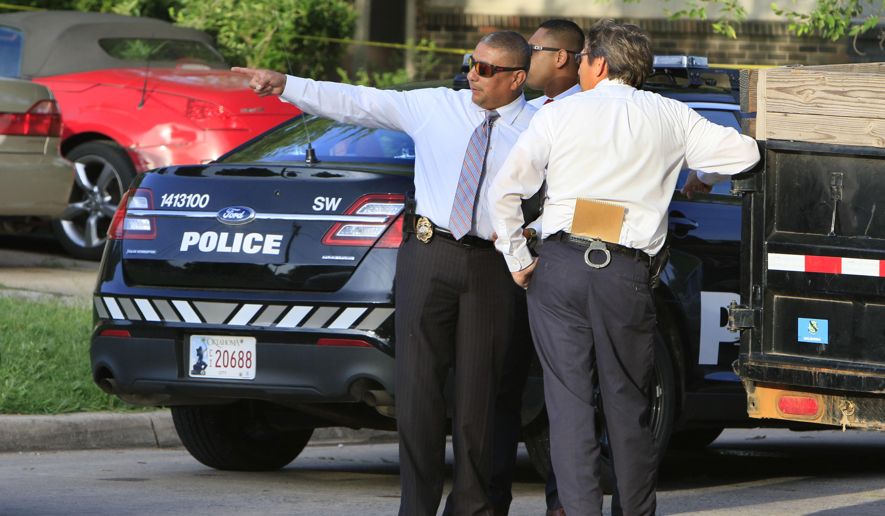
Police detectives investigating a homicide in Oklahoma City, Oklahoma, United States

A detective is an investigator, usually a member of a law enforcement agency. They often collect information to solve crimes by talking to witnesses and informants, collecting physical evidence, or searching records in databases. This leads them to arrest criminals and enable them to be convicted in court.[1] A detective may work for the police or privately.

Overview

[edit]
H Division, of police detectives, including Frederick Abberline (left, with cane), at Leman Street police station, of the London Metropolitan Police, two years before the Jack the Ripper serial killer murders of 1888. Photograph circa 1886

Informally, and primarily in fiction, a detective is a licensed or unlicensed person who solves crimes, including historical crimes, by examining and evaluating clues and personal records in order to uncover the identity and/or whereabouts of criminals.

In some police departments, a detective position is obtained by passing a written test after a person completes the requirements for being a police officer. In many other police systems, detectives are college graduates who join directly from civilian life without first serving as uniformed officers. Some argue that detectives do a completely different job and therefore require completely different training, qualifications, qualities, and abilities than uniformed officers.[2] The other side says that a detective who has worked as a uniformed officer will excel as a private detective due to their knowledge about standard police procedures, their contact network and their own experience with typical problems.[3]

Some are not public officials, and may be known as a private investigator, colloquially referred to, especially in fiction, as a "PI" or "private eye", "private ducky" or "shamus".

Organization

[edit]

The detective branch in most large police agencies is organized into several squads and departments, each of which specializes in investigation into a particular type of crime or a particular type of undercover operation, which may include: homicide, robbery, burglary, auto theft, organized crimes, missing persons, juvenile crime, fraud, narcotics, vice, criminal intelligence, aggravated assault/battery, sexual assault, computer crime, domestic violence, surveillance, and arson, among others.

In police departments of the United States, a regular detective typically holds the rank of "Detective". The rank structure of the officers who supervise them (who may or may not be detectives themselves) varies considerably by department. In some Commonwealth police forces, detectives have equivalent ranks to uniformed officers but with the word "Detective" prepended to it; e.g. "Detective Constable" (DC) or "Detective Sergeant" (DS).[4][5][6]

Private detectives

[edit]

In some countries[which?], courts and judicial processes have yet to recognize the practice of private detectives. In Portugal, presented proof loses significance when private detectives collect it.[clarification needed] Even under these circumstances, the practice is in demand and governed by a code of conduct.[7]

Citizen detectives

[edit]

A citizen detective, also known as an amateur detective, is an individual who devotes their time and expertise to aid in the solving of crime, without compensation or expectation of reward.[8] Citizen detectives are private citizens that have no real professional relationship with law enforcement and lack any rational-legal authority whatsoever. The reasons why a private citizen might try to solve a crime vary from trying to ensure justice for a friend or relative, a strong dislike for crime and support for law and order, or just recreational enjoyment.

As with other kinds of detectives, citizen detectives try to solve crimes in multiple ways such as searching a crime scene, interviewing and/or interrogating suspects and witnesses, doing surveillance on persons of interest, collecting evidence, acting as sources for local news, giving anonymous tips to the police and at times even making citizen's arrests while a crime is being committed. Citizen detectives can also help law enforcement by becoming witnesses for prosecutors, participating in local neighborhood watch groups, acting as citizen observers for law enforcement, or even aiding the police in searching for and arresting suspects as a posse. However, there have been cases of citizen detectives unintentionally compromising investigations if they lack real crime solving skills or even committing acts against suspected criminals that could be deemed vigilantism in nature.

History

[edit]
Allan Pinkerton (pictured here circa 1861) was, in 1850, a detective of the Chicago Police Department and, in 1851, the founder of the Pinkerton Detective Agency.

Before the 19th century, there were few municipal police departments, though the first had been created in Paris as early as 1667. As police work went from being done by appointed people with help from volunteers to being done by professionals, the idea of dedicated detectives did not come up right away. The first private detective agency was founded in Paris in 1833 by Eugène François Vidocq, who had headed a police agency in addition to being a criminal himself. Police detective activities were pioneered in England by the Bow Street Runners and later by the Metropolitan Police Service in Greater London.[9] The first police detective unit in the United States was formed in 1846 in Boston.[10]

Techniques

[edit]

Street work

[edit]
Edward Bonney, an American bounty hunter and amateur detective from Iowa who in 1845 infiltrated the "Banditti of the Prairie", wrote the 1850 book The Banditti of the Prairies: or, The murderer's doom, a tale of Mississippi Valley and the Far West; woodcut from 1850.

Detectives have a wide variety of techniques available in conducting investigations. However, the majority of cases are solved by the interrogation of suspects and the interviewing of witnesses,[11] which takes time. Detectives may also use their network of informants, which they have built up over the years. Informants often have connections with people a detective would not be able to approach formally. Evidence collection and preservation can also help in identifying a potential suspect(s).

Criminal investigation

[edit]
Detectives of the West Midlands Police in the United Kingdom surrounded by electronic devices seized as evidence

Investigation of criminal activity is conducted by the police. Criminal activity can relate to road use such as speeding, drunk driving, or to matters such as theft, drug distribution, assault, fraud, etc. When the police have concluded their investigation, a decision on whether to charge somebody with a criminal offence will (depending on legal jurisdiction) often be made by prosecuting counsel having considered the evidence produced by the police.

In criminal investigations, once a detective has suspects in mind, the next step is to produce evidence that will stand up in a court of law. One way is to obtain a confession from the suspect; usually, this is done by developing rapport and, at times, by seeking information in exchange for potential perks available through the attorney's office, such as entering for a lesser sentence in exchange for usable information. In some countries, detectives may lie, mislead and psychologically pressure a suspect into an admission or confession as long as they do this within procedural boundaries and without the threat of violence or promises outside their control. This is not permitted in England and Wales, where interview of suspects and witnesses is governed by the Police and Criminal Evidence Act 1984 and its extensive Codes of Practice.

Forensic evidence

[edit]

Physical forensic evidence in an investigation may provide leads to closing a case. Forensic science (often shortened to forensics) is the application of a broad spectrum of sciences to answer questions of interest to the legal system. This may be in relation to a crime or to a civil action. Many major police stations in a city, county, or state, maintain their own forensic laboratories while others contract out the services.

Records investigation

[edit]

Detectives may use public and private records to provide background information on a subject. Police detectives can search through files of fingerprint records. Police maintain records of people who have committed felonies and some misdemeanors. Detectives may search through records of criminal arrests and convictions, photographs or "mug shots" of persons arrested, hotel registration information, credit reports, answering machine messages, phone conversations, surveillance camera footage, and technology used for communication.

Worldwide

[edit]

United Kingdom

[edit]

Before 2017, prospective British police detectives must have completed at least two years as a uniformed officer before applying to join the Criminal Investigation Department. Since 2017, applicants from outside the police force have been able to apply directly for positions as trainee detectives.[12] UK Police must also pass the National Investigators' Examination in order to progress to subsequent stages of the Initial Crime Investigators Development Program in order to qualify as a detective.[13]

United States

[edit]
Detective escorting gangster Meyer Lansky to the 54th Street police station in New York City in 1958

Before becoming a police detective, one must attend a law enforcement academy, which provides the officer with a foundation of education with 16 to 24 college units. After graduation from the law enforcement academy, the officer undergoes job training with a field training officer for a period specified by the law enforcement agency and continues to work while on a probationary period, ranging from one to two years.

During the probationary period, the officer is assigned to look for evidence. During this time, the officer is supervised and mentored by a sergeant with years of experience. Some police officers go to a two-year or four-year college or university to get a degree in criminal justice or the management of criminal justice. You can get a concentration or a certificate in a specialized field of criminal investigation at some colleges.

Through years of on-the-job training or college education, officers may participate in a competitive examination, testing their knowledge, skills and abilities regarding criminal investigation, criminal procedure, interview and interrogation, search and seizure, collection and preservation of evidence, investigative report writing, criminal law, court procedure, and providing testimony in court. Competitive examinations are conducted by selected senior law enforcement officials. Following testing, a list of results is provided by the department. At the department's discretion, some or all of the officers on the list are promoted to the rank of detective. Some departments have classes of detectives which increase the detective's rank after successful experience.

Private investigators are licensed by the state in which they work (some states do not require licensing, but most do). In addition to the state examination, applicants testing for a private investigation license must also meet stringent requirements, which include college education, a range of two to four years of full-time investigation experience and the successful adjudication of a criminal and civil background check conducted by state investigators. Private investigators are licensed to conduct civil and criminal investigations in the state in which they are licensed, and are protected by statutes of that state. In states requiring licensing, statutes make it unlawful for any person to conduct a criminal investigation without a license, unless exempted by the statute (i.e., law enforcement officers or agents, attorneys, paralegals, claims adjusters).

Vietnam

[edit]

In Vietnam, private detective work is not yet officially recognized by law but is developing due to the demands of modern society.[14] Detective service companies primarily offer investigation and surveillance services for individuals and businesses in matters such as marriage, business fraud, information retrieval, or tracking subjects.[15] The detective profession in Vietnam still lacks a clear legal framework and can easily fall into legal grey areas.[16][17] However, many detective companies have made efforts to provide professional services, adhering to ethical standards and legal regulations to build trust with clients.

See also

[edit]

References

[edit]
Revisions and contributorsEdit on WikipediaRead on Wikipedia
from Grokipedia
A detective is a investigator, typically employed by a or operating as a private individual, responsible for examining crimes through collection, interviews, interrogations, and case reconstruction to identify and apprehend offenders. Unlike uniformed patrol officers, detectives often work in plain clothes and focus on in-depth investigations rather than immediate response to incidents. The role of the detective emerged in the 18th century as a response to rising urban crime rates that required specialized investigative skills beyond basic policing. In , the , established in 1749 by , served as early thief-takers and precursors to organized detective work, conducting inquiries into thefts and other offenses. The Sûreté Nationale, founded in 1812 by in France, is regarded as the world's first formal detective unit within a police force. In , the of was created in 1842 with a small team of inspectors and sergeants dedicated to crime detection. In the United States, detective bureaus began forming in the 1840s, starting with in 1846, followed by units in and by the 1850s. Private detectives developed concurrently, with French ex-convict —who had previously founded the Nationale in 1812—founding the first private detective agency, Le Bureau des Renseignements, in in 1833; this pioneering firm provided investigative services to individuals and businesses, employing innovative techniques like undercover operations and informant networks. Today, detectives in public service handle a wide range of cases, from homicides and narcotics to financial and cyber threats, while private investigators assist with civil matters like background checks, , and missing persons searches. The profession demands skills in forensics, legal knowledge, and ethical judgment, often requiring years of patrol experience for advancement to detective ranks.

Introduction

Definition

A detective is a professional investigator tasked with examining crimes, collecting , and resolving cases through systematic inquiry, often employing to draw conclusions from observed facts and empirical methods to verify them. This role centers on uncovering hidden truths to support legal proceedings, distinguishing it from general duties. Key attributes of a detective include sharp to notice subtle details, analytical thinking to interpret , and persistence in pursuing leads despite obstacles. Unlike uniformed police officers, who primarily enforce laws, maintain order, and respond to immediate threats, detectives specialize in in-depth investigations after initial incidents, focusing on solving complex puzzles rather than routine patrols. The term "detective" derives from the Latin detectivus, meaning "uncovered" or "exposed," reflecting the profession's essence of revealing concealed information. It entered English usage in the early 19th century, around , initially as a shorthand for "detective police" to describe those skilled in detecting . In the modern context, detectives conduct both criminal investigations—such as homicides or thefts—and civil inquiries, like or missing persons cases, to aid judicial outcomes. This scope excludes intelligence agents, who prioritize assessing potential threats to through predictive analysis rather than resolving specific past crimes.

Societal Role

Detectives play a pivotal role in the system by investigating , gathering , and facilitating case resolutions that contribute to public safety and deterrence. Through their efforts in clearing cases, detectives help reduce overall rates by identifying perpetrators and preventing ; for instance, higher clearance rates are associated with lower future offending as resolved cases signal effective . In 2023, the national clearance rate for homicides was approximately 58 percent, according to data from the FBI's Uniform Crime Reporting Program, demonstrating that a majority of such serious crimes are solved annually despite challenges in complex investigations. This resolution work not only brings closure to victims' families but also supports broader reduction, as studies indicate that adding police officers can prevent between 0.06 and 0.1 homicides per officer. In cultural contexts, detectives are often idealized in media, influencing public perceptions of law enforcement and justice. The archetype of the brilliant, deductive detective, exemplified by , has shaped expectations for rapid, intuitive crime-solving, leading audiences to anticipate near-perfect outcomes from real investigations that may not align with practical realities. Television crime dramas further amplify this by portraying detectives as highly effective, which studies show boosts public views of police efficacy but can create unrealistic demands for swift resolutions. However, these depictions also highlight ethical dilemmas, underscoring the need for robust oversight to maintain integrity in high-stakes roles. Beyond criminal cases, detectives, particularly private investigators, contribute to society by aiding civil matters and non-criminal inquiries, enhancing fairness in various domains. In detection, private investigators often uncover financial discrepancies and gather evidence for civil litigation, supporting businesses and individuals in recovering losses from deceptive practices. For missing persons cases, they conduct dedicated searches, including interviews and , filling gaps where public resources are limited and frequently locating individuals when official efforts stall. These contributions extend justice to non-penal contexts, with private investigation services projected to grow due to increasing demand for such specialized assistance. Detectives encounter significant challenges that impact their societal effectiveness, including burnout from prolonged stress and constraints in underfunded agencies. Law enforcement officers, including detectives, reported unprecedented fatigue and burnout levels in 2024 surveys, driven by high caseloads and emotional tolls, leading to higher turnover rates that exacerbate staffing shortages. limitations, such as budget shortfalls, result in overworked personnel and delayed responses, with U.S. agencies facing an average staffing deficit of nearly 10 percent as of 2025, which hinders investigative capacity and . A confirms strong associations between burnout, post-traumatic stress, and diminished performance among officers, emphasizing the need for wellness programs to sustain their role.

Types

Law Enforcement

Law enforcement detectives operate within government police forces, serving as specialized investigators who focus on solving crimes through systematic inquiry and evidence gathering. These professionals are typically embedded in dedicated bureaus or divisions, distinguishing them from uniformed patrol officers by their emphasis on in-depth investigations rather than immediate response to incidents. In major agencies, such as the (NYPD), detectives form the core of the Detective Bureau, which handles the prevention, detection, and investigation of serious crimes, often complementing patrol efforts. Organizationally, detectives are placed in specialized units tailored to crime types, including squads for murders and assaults, units, and divisions for digital offenses. For instance, the NYPD's Squads investigate homicides and firearm-related serious assaults, providing additional resources to precinct-level detectives. In the (FBI), special agents conducting detective-like work are organized under the Criminal Investigative Division, with operations spanning 56 field offices focused on federal crimes such as and public corruption. Ranks within these structures vary by agency but commonly include detective as a positional title, progressing to supervisory roles like detective or ; in many U.S. police forces, a detective oversees investigative teams and reports to a commanding . The primary duties of detectives involve conducting official inquiries into reported crimes, gathering physical and testimonial , and collaborating with forensic teams to build prosecutable cases. They interview witnesses, analyze crime scenes, and coordinate with experts in areas like or to reconstruct events and identify suspects. Ultimately, detectives prepare detailed reports and packages for prosecutors, ensuring compliance with legal standards to support trials; this is evident in local departments like the Turlock Police Department, where detectives enforce state and local laws through comprehensive investigations. In federal contexts, FBI special agents perform similar tasks, including and collection for over 200 categories of federal offenses. Law enforcement detectives possess significant authority, including the power to obtain search warrants, make arrests based on probable cause, and access official resources like databases and inter-agency support. In the U.S., local detectives operate under state laws granting them arrest powers equivalent to patrol officers, while FBI special agents have nationwide federal jurisdiction to execute warrants, carry firearms, and detain suspects in cases like cybercrime or organized crime. The Metropolitan Police Service (Scotland Yard) similarly empowers its Criminal Investigation Department detectives with authority to investigate serious crimes across Greater London, maintaining extensive criminal records and collaborating internationally on high-threat cases. High-profile cases illustrate the impact of coordinated detective efforts, particularly in solving serial crimes. For example, FBI special agents in the 1990s led the investigation into the Unabomber, , by analyzing bomb fragments, linguistic forensics from his manifesto, and public tips, resulting in his 1996 arrest after a 17-year manhunt. Similarly, in the case, FBI-supported DNA analysis in 2013 confirmed as the perpetrator of 11 murders from 1962–1964, closing a decades-old serial killing investigation through with local forensics teams. These efforts highlight how detectives integrate resources to address complex, multi-jurisdictional threats.

Private Investigators

Private investigators, also known as private detectives, operate as independent professionals or firms hired by individuals, businesses, or attorneys to conduct investigations outside the scope of public law enforcement. Unlike police officers, they lack official and focus on civil matters, providing services on a contractual basis for fees determined by the case's complexity and duration. This distinction allows them to pursue inquiries that may not warrant official intervention, such as personal disputes or corporate , while adhering to stricter privacy and legal constraints. In the United States, private investigators must meet state-specific licensing requirements, which typically include being at least 18 to 25 years old, passing a , completing relevant training or experience (often 2,000 to 6,000 hours), and obtaining a surety bond to protect clients from misconduct. For instance, many states mandate a $10,000 bond, as seen in New York where it covers the two-year license term and ensures compliance with regulations. Fee structures vary, but clients commonly pay hourly rates averaging $75 to $125 as of 2024, with retainers for longer cases; less complex tasks like initial consultations may cost $100 to $300 flat. Common clients include individuals suspecting , who seek discreet , and corporations addressing or internal , often requiring comprehensive reports for legal proceedings. Among the most frequent cases handled by private investigators are background checks to verify histories or personal credentials, asset searches to locate hidden in or recovery scenarios, and investigations uncovering staged accidents or exaggerated claims. These often involve reviewing , interviewing witnesses, and employing tools like GPS trackers attached to vehicles for real-time monitoring, provided they comply with anti-stalking laws prohibiting unauthorized placement on . Such methods enable efficient evidence gathering without direct confrontation, distinguishing private work from more resource-intensive public probes. The profession traces its roots to pioneers like , a Scottish immigrant who founded the Pinkerton National Detective Agency in in 1850, initially focusing on railroad security and counterfeiters before expanding into labor disputes. In the late 19th century, Pinkerton's agency provided guards and intelligence to break strikes in coal, iron, and lumber industries across states like and , notably during the 1877 railroad strikes where agents infiltrated unions to undermine organizing efforts. This era marked the shift toward corporate clients and highlighted the agency's controversial role in suppressing worker movements, influencing modern private investigation's commercial orientation. Private investigators face significant challenges due to their lack of powers, limiting them to gathering for clients to present to authorities rather than effecting detentions themselves, which underscores their role as information providers rather than enforcers. Ethical dilemmas arise from potential invasions, such as prolonged that could border on if not carefully managed, requiring strict adherence to laws like the for background checks and prohibitions on or hacking. These boundaries demand ongoing training to balance client needs with legal risks, including civil lawsuits for unlawful practices, ensuring the profession's integrity amid evolving standards.

Amateur and Citizen

Amateur detectives, also known as citizen sleuths, encompass non-professional individuals who voluntarily investigate crimes, often driven by personal interest rather than formal authority. In the , such figures included community members and early female investigators who assisted in cases through informal inquiries. Modern examples feature online communities like Reddit's r/UnresolvedMysteries, where users have contributed to resolutions by analyzing and photos, such as in the 1974 (body found in 1975), where forum discussions contributed to identifying the victim after more than 40 years, though the perpetrator remains unknown. These amateurs differ from private investigators by lacking professional licensing or financial incentives, focusing instead on efforts. Motivations for amateur involvement typically stem from , a sense of , or the intellectual thrill of puzzle-solving, with many expressing for victims' families and a desire to contribute to community safety. Hobbyists often view detective work as an engaging pastime, similar to participating in online forums for unresolved mysteries, while others are spurred by exposure to like podcasts. A key tool enabling these efforts is (OSINT), which involves freely accessible data from , public databases, and search engines to trace connections without specialized equipment. However, amateur sleuthing carries significant legal risks, including accusations of , , or evidence tampering, as untrained individuals may interfere with official investigations. In the 2017 Delphi murders case, online amateurs provided tips to authorities in that contributed to suspect 's , but their activities also led to the spread of unverified theories and graphic content sharing, prompting warnings about potential criminal charges for doxxing or . The impact of amateur detectives is dual-edged: positively, crowdsourced efforts have accelerated identifications, as seen in the bombing where users helped pinpoint suspect photos from public surveillance, aiding the FBI's rapid apprehension. Negatively, such involvement often amplifies , leading to wrongful accusations and harm; for instance, in the 2022 University of Idaho murders, online sleuths falsely targeted innocent individuals like journalism professor Anne Taylor-Klaus, resulting in harassment, job loss threats, and emotional distress for families. While these contributions can supplement professional work, they underscore the need for caution to avoid obstructing .

Historical Development

Early Origins

The earliest precursors to detective work can be traced to ancient civilizations where officials systematically investigated crimes, particularly thefts. In during (c. 2686–2181 BCE), there was no formalized police force; local leaders relied on personal guards to protect elites and handle basic order, with viziers overseeing general justice but without the systematic investigative practices for crimes like tomb robberies that emerged in later eras. These practices emphasized accountability and restitution, with fines up to three times the value of stolen goods imposed on perpetrators. Similarly, in the from the CE, the —initially grain collectors under (81–96 CE)—evolved into a unit that spied on citizens, intercepted communications, and investigated potential treason, functioning as the empire's . Their role expanded under (117–138 CE) to monitor officials and allies, blending surveillance with targeted eliminations to maintain imperial control. In other ancient contexts, such as medieval Islamic caliphates, (judges) conducted inquiries into crimes using witness testimonies and evidence, laying early foundations for judicial investigations. Medieval Europe saw the development of community-based systems to address crime, laying groundwork for organized inquiry. In , the role of constables emerged as local enforcers responsible for maintaining order and pursuing suspects, formalized by the Statute of Winchester in 1285 under Edward I. This legislation mandated the establishment of watch systems, requiring towns to appoint for nightly patrols and constables in each hundred to inspect arms and present offenses to justices, aiming to suppress robberies through collective vigilance and "" pursuits. These measures shifted responsibility from feudal lords to communal structures, promoting proactive detection over reactive punishment. By the , detective-like practices began professionalizing in response to urban crime waves. In , the were established in 1749 by magistrate as a paid group of constables attached to the court, specializing in investigations by gathering , pursuing fugitives across counties, and using early reward systems to encourage informants. Numbering initially just six to twelve men, they represented a departure from unpaid , employing systematic methods like detailed crime reports published in Fielding's gazette to aid public cooperation. These foundational developments were profoundly shaped by Enlightenment ideals, which championed rational inquiry and over and divine judgment in resolving disputes. Thinkers like and Kant advocated skepticism toward unexamined traditions, influencing legal reforms to prioritize logical investigation and human reason in uncovering truth. This intellectual shift underscored the transition from mystical explanations of crime to methodical, evidence-based approaches in early detective practices.

Modern Evolution

The professionalization of detective work accelerated in the amid industrialization and , transitioning from ad hoc inquiries to formalized agencies. In the United States, established the Pinkerton National Detective Agency in 1850 in , initially focusing on railroad security but expanding to criminal investigations, including high-profile cases like the foiling of an assassination plot against . This agency pioneered systematic private detective operations, employing undercover tactics and centralized intelligence gathering that influenced subsequent law enforcement models. Concurrently, in the , the formed the (CID) at in 1878 under Superintendent C. E. Howard Vincent, replacing the earlier to create a dedicated plainclothes unit of 30 officers for complex crime solving. This structure emphasized specialization and chain-of-command efficiency, setting a for modern police detectives worldwide. The 20th century introduced federal oversight and scientific rigor to detective practices, driven by rising interstate crime and global conflicts. The (FBI) was founded on July 26, 1908, as the Bureau of Investigation under Attorney General Charles Bonaparte, initially comprising special agents to probe federal violations like antitrust cases and land fraud. By the under , it evolved into a premier investigative force, incorporating forensic capabilities to address Prohibition-era gangsters and wartime espionage. Following , forensic laboratories proliferated, with establishing the world's first dedicated crime lab in , , in 1910, applying principles like the exchange of to link suspects to scenes. This innovation inspired similar facilities in , , and the by the , including the FBI's Technical Laboratory in , which standardized scientific analysis in investigations. The further shaped detective methodologies through advancements in and developed by intelligence agencies, which law enforcement later adapted for and probes. In colonial contexts, 19th- and early 20th-century detective work adapted European models to imperial needs, often prioritizing control over indigenous populations. British authorities established detective branches in colonies like and , drawing from Scotland Yard's framework to investigate political dissent and economic crimes, such as the 1905 formation of the in Bombay. These adaptations blended local informants with imported techniques, facilitating the spread of professionalized policing across the empire. Post-World War II, international standards emerged to harmonize detective cooperation, with Interpol's revival in 1946 promoting standardized protocols for cross-border investigations, including and evidence sharing among 196 member countries as of 2025. The 21st century integrated digital and technologies into detective workflows, amplified by security threats and the . The , 2001 attacks spurred a boom, leading to the FBI's expansion of cyber units like the Cyber Division in 2002 to analyze electronic evidence in terrorism cases, processing terabytes of data from seized devices. By 2024, AI tools such as Palantir's Gotham platform enabled law enforcement to integrate disparate datasets for , aiding in for crime hotspots and suspect identification without direct . Post-2020, remote investigation trends surged due to pandemic restrictions, with agencies adopting virtual platforms for interviews, secure data sharing, and drone surveillance to sustain casework, a shift that persisted in hybrid models for efficiency. These evolutions underscore detective work's adaptation to technological and global challenges up to 2025.

Investigative Methods

Surveillance Techniques

Surveillance techniques form a of detective work, enabling the discreet monitoring of suspects to gather actionable without alerting targets. Traditional methods, such as stakeouts, involve investigators establishing fixed points to monitor activities over extended periods, often using inconspicuous vehicles or vantage points to blend into the environment. Tailing, or mobile , requires following a subject on foot or by vehicle while maintaining distance to avoid detection, employing techniques like using multiple teams for handoffs to sustain coverage. Undercover operations allow detectives to infiltrate groups or pose as associates, gathering information through direct interaction while minimizing exposure of their . Equipment in traditional surveillance includes basic optical tools like for distant observation and, where legally authorized, to intercept communications. necessitate judicial warrants to ensure compliance with laws, typically obtained through demonstrations in , and are used to capture real-time audio in serious investigations. These methods prioritize physical presence and human judgment, though they demand patience and adaptability to counter evasion tactics by suspects. Digital has expanded these capabilities, incorporating (CCTV) analysis where detectives review footage from public or private cameras to track movements and identify patterns. tracking involves monitoring public profiles and posts for clues, associations, and behavioral indicators, often using tools to compile timelines without direct access to private accounts. GPS devices, attached covertly to vehicles or assets, provide real-time , enabling precise mapping of a suspect's itinerary while reducing the need for constant physical tailing. By 2025, drone usage in urban tracking has become more prevalent, with deploying unmanned aerial vehicles equipped with high-resolution cameras for overhead in densely populated areas, enhancing safety by minimizing officer exposure during high-risk operations. Best practices in emphasize maintaining the chain of custody for all collected , documenting every handling step from acquisition to presentation to prevent tampering claims and ensure admissibility. This includes timestamped logs, secure storage, and limited access protocols, particularly for digital recordings. Ethical considerations focus on minimizing intrusion, such as limiting to relevant activities and avoiding unnecessary invasions, to balance investigative needs with civil protections. Detectives must adhere to legal boundaries, obtaining warrants for intrusive methods and conducting regular reviews to assess proportionality. Historical and modern case studies illustrate these techniques' impact. In the 1972 Watergate scandal, operatives conducted illegal surveillance by planting wiretaps and bugs at the headquarters, which ultimately exposed a broader conspiracy leading to President Nixon's resignation after FBI investigation. More recently, in a 2025 cyberstalking case, a serial offender in was sentenced to nine years in prison after federal agents used digital surveillance, including analysis of online communications and IP tracking, to uncover a 16-year pattern of against multiple victims, demonstrating the evolution toward technology-driven detection.

Evidence Analysis

Evidence analysis forms a cornerstone of detective investigations, involving the systematic collection, preservation, and scientific examination of physical and to establish facts and support legal proceedings. Detectives collaborate with forensic experts to ensure that is handled in ways that maintain its from to , minimizing risks of degradation or . This process not only aids in identifying suspects but also corroborates or refutes witness statements and other investigative leads. Collection protocols begin with securing the to prevent unauthorized access and environmental interference, followed by detailed through and systematic bagging of items. According to NIST's Organization of Scientific Area Committees (OSAC) standards, must be collected and preserved to maintain by preventing and tampering, with individual items packaged and sealed separately to avoid cross-contamination. involves capturing comprehensive images of the scene, including overall layouts, close-ups of in situ, and scale references, using techniques that preserve spatial relationships for later reconstruction. Bagging employs breathable materials for biological samples and airtight containers for , with all handlers wearing protective gear like gloves and masks to eliminate transfer of extraneous materials. Key forensic disciplines applied by detectives include fingerprinting, DNA analysis, and ballistics, each leveraging specialized techniques for identification and reconstruction. In fingerprinting, Systems (AFIS) enable rapid searching and matching against vast databases containing millions of records, such as the FBI's Next Generation Identification (NGI) system, which processes latent prints from crime scenes against criminal and civil submissions. DNA analysis relies on (PCR) amplification to replicate minute genetic material, allowing profiling of short tandem repeats (STRs) with high discriminatory power; this process yields match probabilities often exceeding 1 in 10^15 for unrelated individuals, establishing near-certain identification when profiles align. Ballistics examination involves trajectory calculations to trace bullet paths, applying kinematic equations such as v=u+atv = u + at, where vv is final velocity, uu is initial velocity, aa is acceleration due to gravity, and tt is time, often combined with for precise reconstruction of shooting angles and distances. Digital evidence recovery requires forensic tools to extract and verify data from devices without alteration, using hashing algorithms like MD5 to generate unique checksums that confirm file integrity throughout the chain of custody. For instance, MD5 produces a 128-bit hash value serving as a digital fingerprint, allowing investigators to detect any modifications post-acquisition, though it is often paired with stronger algorithms like SHA-256 due to known collision vulnerabilities. In fraud cases involving cryptocurrencies, blockchain tracing employs analytical platforms to follow transaction flows across public ledgers, mapping wallet addresses and fund movements to identify illicit transfers, as utilized by agencies like INTERPOL for real-time pattern detection. Evidence from surveillance techniques may provide initial digital leads, such as video timestamps correlating with device logs. For evidence to influence case outcomes, it must meet admissibility criteria, particularly the Daubert standard in U.S. federal courts, which requires judges to evaluate the scientific reliability of methods through factors like testability, peer review, error rates, and general acceptance in the relevant community. Under Daubert v. Merrell Dow Pharmaceuticals, Inc. (1993), expert testimony on forensic analyses, such as DNA or ballistics results, is admissible only if based on sufficiently rigorous principles and applied reliably to the facts. This gatekeeping role ensures that detective-derived evidence withstands scrutiny, preventing pseudoscientific claims from misleading juries.

Interrogation and Profiling

Interrogation techniques employed by detectives focus on eliciting truthful information from suspects through structured psychological approaches. The , developed in the 1940s, is a widely used accusatorial method in the United States consisting of a nine-step process: positive , theme development, handling denials, overcoming objections, and retention of the suspect's , handling the suspect's passive mood, presenting an alternative question, having the suspect orally relate various details of the offense, and converting an oral to a written one. This approach often involves confrontation with evidence and minimization of the offense to encourage confession, though it has faced for potentially leading to false confessions. In contrast, the PEACE model, adopted by UK police forces since the early 1990s, serves as an ethical, information-gathering alternative emphasizing five stages: planning and preparation, engaging and explaining, account, closure, and evaluation. This non-confrontational framework prioritizes rapport-building and open-ended questioning to obtain accurate accounts without . Criminal profiling, or Criminal Investigative Analysis as formalized by the FBI, aids detectives in predicting offender characteristics based on behaviors and patterns. The FBI's model distinguishes between organized offenders, who exhibit premeditation, control, and social competence—often leaving minimal —and disorganized offenders, characterized by impulsivity, poor planning, and chaotic scenes, typically linked to lower socioeconomic backgrounds or mental health issues. Profiles are constructed using demographic data, , and to narrow suspect pools, with the organized/disorganized dichotomy originating from FBI studies in the analyzing serial murder cases. This behavioral supports investigative prioritization but relies on corroboration from other methods, such as , to validate predictions. Psychological tools enhance and statements by targeting physiological and cognitive responses. Polygraphs, or lie detectors, measure involuntary physiological changes including , , respiration, and skin conductivity to infer during relevant questioning, though their accuracy is debated and admissibility limited in courts due to error rates around 10-15% in controlled studies. Cognitive interviewing, developed in the , improves recall through techniques like mental reinstatement of , reporting all details without censorship, changing perspectives, and recalling events in reverse order, yielding 35-50% more accurate information than standard interviews. Modern advancements incorporate technology into these practices, with AI-driven emerging as a tool for real-time deception detection in interviews by 2025. These systems process verbal and nonverbal cues—such as tone, word choice, and facial micro-expressions—to gauge emotional inconsistencies, achieving up to 87% accuracy in multimodal models outperforming traditional methods alone. However, neuro-linguistic programming (NLP), which claims to detect lies via eye movements and language patterns, has been critiqued as pseudoscientific, lacking empirical support and showing no reliable correlation with in controlled tests.

Powers and Regulations

Detectives, particularly those within agencies, possess specific legal powers to conduct investigations, including the authority to obtain search warrants based on as required by the Fourth Amendment to the U.S. Constitution, which mandates that warrants be supported by or affirmation and particularly describe the place to be searched and items to be seized. detectives also hold authority when there is to believe a has been committed, allowing them to detain suspects in accordance with constitutional standards to prevent flight or further harm. Additionally, in criminal investigations, detectives may utilize powers through prosecutorial channels or administrative subpoenas to compel the production of documents or testimony, facilitating evidence gathering without direct judicial oversight in certain cases. Regulatory frameworks impose strict limits on detective actions to protect individual rights, such as the ruling by the U.S. in 1966, which requires to inform suspects of their right to remain silent and to have an attorney present during custodial interrogations to safeguard against under the Fifth Amendment. In Europe, the General Data Protection Regulation (GDPR), effective from 2018, regulates the processing of , including activities, by mandating lawful bases for data collection and imposing fines for unauthorized intrusions into privacy, thereby restricting how detectives handle electronic monitoring and . These regulations ensure that investigative powers are exercised proportionately, with training often emphasizing compliance to avoid procedural violations. Liability for remains a critical regulatory aspect, where detectives can face civil suits for actions like , which occurs when a detention lacks and results in unlawful restraint, potentially leading to damages under tort law. Internationally, frameworks such as the , adopted in , address detective accountability by promoting measures to prevent corrupt practices in investigations, including asset recovery and international cooperation to combat bribery and . A key distinction exists between public law enforcement detectives and private investigators: while public detectives wield sovereign powers like and warrants backed by state authority, private investigators operate under civil law constraints, lacking arrest powers and relying on client contracts for , with their actions subject to the same data protection and privacy regulations but without governmental enforcement privileges.

Training Requirements

Becoming a detective in generally requires completing a program, which typically lasts 6 to 12 months and provides foundational in areas such as procedures, firearms handling, defensive tactics, and . After gaining as a patrol officer—often 2 to 5 years—candidates undergo specialized detective , such as the 59-day Criminal Investigator Program offered by the , focusing on investigative techniques like interviewing and evidence collection. For private investigators, entry paths vary by jurisdiction but may involve 100 or more hours of specialized in , legal principles, and methods, along with 2 to 5 years of verifiable in related fields, though can substitute in some cases. Key skills for detectives are developed through targeted courses in , which cover criminal behavior analysis; basic forensics, including evidence handling like DNA sample collection without contamination; and report writing to ensure clear, admissible documentation. Certifications such as the Professional Certified Investigator (PCI) from ASIS International require 3 to 5 years of investigative experience, including case management, and emphasize skills in fraud detection and legal compliance. Training also incorporates practical exercises in analytical thinking and , essential for processing crime scenes and building cases. Ongoing education is mandatory to maintain certification and adapt to emerging threats, with many programs requiring 20 to 40 hours of continuing (CPD) annually or equivalent over multi-year cycles, covering topics like legal updates and tactical skills. Recertification often involves proof of these hours every 2 to 3 years, ensuring detectives remain proficient in evolving areas such as analysis. As of 2025, training increasingly incorporates AI tools for evidence analysis and cybersecurity to address rising digital threats, alongside mandatory modules on and cultural competency following international policing reforms. Barriers to entry include rigorous tests, such as and assessments, to ensure candidates can handle demanding fieldwork. Comprehensive background checks are also required, screening for criminal history, , and employment gaps, with up to 80% of disqualifications stemming from these evaluations. Global variations exist in training duration, with some countries mandating 2-year associate degrees or equivalent programs in before specialization, compared to shorter academy-based paths elsewhere.

Global Perspectives

United Kingdom

In the United Kingdom, the origins of professional detective work trace back to the , established in 1749 by magistrate as London's first organized group of paid investigators to combat rising crime through proactive pursuits and information networks. This legacy influenced the development of modern detective forces, particularly following the Serious Organised Crime and Police Act 2005, which created the (SOCA) to centralize efforts against major criminal networks, integrating intelligence from various agencies and marking a shift toward specialized, cross-jurisdictional investigations. SOCA's formation addressed fragmented responses to , paving the way for its evolution into the in 2013, which continues to support regional detective operations. Detective structures in the UK operate within a decentralized system comprising 43 territorial police forces in , plus separate forces in and , each maintaining a (CID) for serious crime inquiries. The Service, responsible for , exemplifies this with its CID comprising specialized units for , , and counter-terrorism, led by detective ranks from to Chief Superintendent. Detectives, who are plain-clothes officers without arrest powers distinct from uniformed police, progress through a structured mirroring uniformed ranks but prefixed with "Detective," emphasizing investigative expertise over general duties. Progression to detective roles, particularly as a Detective Constable, is facilitated by the , the professional body for standards and , which oversees including the Detective Constable Entry Programme and the Investigation Career Pathway. Aspiring detectives undergo rigorous assessments, including the National Investigators' and practical in evidence handling, typically starting as Police Constables before specializing, with direct entry routes available for qualified candidates to accelerate to full detective status within two years. A hallmark of UK detective practice is the PEACE model for investigative interviewing, a non-confrontational framework developed in the 1990s to promote ethical, rapport-based suspect and witness engagements, comprising Planning and Preparation, Engage and Explain, Account, Closure, and Evaluation stages. This model, mandated by the , prioritizes obtaining reliable accounts over coercive tactics and has been credited with reducing miscarriages of justice. Complementing this, detectives heavily rely on , with approximately 6 million cameras deployed nationwide as of 2024, enabling real-time monitoring and evidential reconstruction in urban investigations. Contemporary challenges for detectives include post-Brexit disruptions to data-sharing with counterparts, where the UK lost real-time access to key databases like the and European Criminal Records Information System, complicating cross-border pursuits and requiring bilateral agreements that have yet to fully restore pre-2020 capabilities. In response to rising cyber threats, 2023 saw the expansion of cyber-detective units through the Serious and Organised Crime Strategy, establishing a network of Regional Cyber Crime Units within the Regional Organised Crime Units framework to enhance local capabilities in and online fraud detection.

United States

Detective operations in the United States operate within a decentralized framework shaped by federalism, encompassing federal agencies, state and local police departments, and licensed private investigators. At the federal level, the Federal Bureau of Investigation (FBI) conducts major criminal investigations through its Criminal Investigative Division, focusing on violations of federal laws such as violent crimes, cyber threats, and public corruption. Similarly, the Drug Enforcement Administration (DEA) employs special agents to investigate drug trafficking and related offenses, often through undercover operations and task forces coordinated with local law enforcement. State and local entities, such as the New York City Police Department's (NYPD) Detective Bureau, handle the majority of investigations into homicides, robberies, and other crimes within their jurisdictions, comprising specialized squads for narcotics, vice, and major crimes. Private investigators, regulated at the state level, supplement public efforts by conducting civil and criminal inquiries; for instance, California's Bureau of Security and Investigative Services requires applicants to demonstrate at least 6,000 hours of compensated investigative experience or equivalent education before licensing. A hallmark of U.S. detective work is the strict enforcement of constitutional protections, particularly Miranda rights, which must be read to suspects during custodial interrogations to safeguard against under the Fifth . Detectives heavily rely on , exemplified by the FBI's (CODIS), a national database containing over 20 million offender and forensic profiles as of 2025, enabling cross-jurisdictional matches for unsolved cases. In high-risk operations, such as arrests of armed suspects or warrant executions, detectives integrate with Special Weapons and Tactics () teams; for example, FBI units support tactical entries and hostage resolutions during federal investigations. Historically, the Pinkerton National Detective Agency, founded in 1850, pioneered professional investigative techniques in the U.S., influencing modern practices through its use of undercover agents and centralized intelligence during the Civil War and industrial era. Post-9/11, the USA PATRIOT Act of 2001 expanded federal investigators' powers by enhancing surveillance tools, such as roving wiretaps and access to business records via Letters, to combat while raising privacy concerns. Contemporary challenges include debates over in investigative practices, intensified by the 2020 killing of , which sparked nationwide protests and led to federal scrutiny of departments for discriminatory patterns in stops, searches, and arrests. Additionally, the adoption of AI in —tools that forecast crime hotspots based on historical data—has prompted ethical concerns about perpetuating racial disparities, with calls for regulatory oversight to ensure fairness in deployment. This armed, constitutionally constrained system contrasts with the United Kingdom's more unified, less militarized approach to detective work.

Other Regions

In , detective practices vary significantly across countries, reflecting cultural and systemic priorities. In , keisatsu, or police detectives, operate within a highly structured system under the National Police Agency, placing a strong emphasis on through community-oriented policing rather than solely on solving reported crimes. This approach, exemplified by the widespread koban neighborhood police stations, contributes to Japan's notably low crime rates, with detectives focusing on proactive measures like public education and surveillance to deter offenses before they occur. In , investigations remain tightly state-controlled by the Ministry of Public Security's criminal investigation departments, a structure reinforced after the 1986 Doi Moi economic reforms that modernized legal procedures while maintaining Communist Party oversight. Post-reform updates to the Criminal Procedure Code have enhanced investigative efficiency in a crime control model, prioritizing rapid detection and prosecution under procuratorial supervision to align with goals. In , detective work integrates judicial oversight and federalized structures distinct from Anglo-American models. France's Police Judiciaire, the criminal investigation branch of the National Police and Gendarmerie, conducts inquiries under the close supervision of the juge d'instruction for serious offenses, ensuring impartiality through this independent who authorizes searches, interrogations, and evidence collection. This system balances police autonomy with judicial control to prevent miscarriages of justice. In , the Landeskriminalämter (LKA), state-level criminal police offices, lead detective operations for major crimes such as and homicides, coordinating with the federal Bundeskriminalamt for cross-border cases. The within these LKAs emphasizes forensic analysis and inter-agency collaboration, reflecting where states handle most investigations to address regional threats effectively. Detective practices in and often grapple with resource constraints, high violence, and institutional hurdles. In , the (EFCC) spearheads economic crime investigations, but faces persistent corruption allegations within its ranks, political interference, and evidentiary challenges that undermine case prosecutions. These issues, compounded by limited forensic capabilities, hinder effective detective work in a context of widespread graft. In , homicide detectives within civil and military police units confront extreme violence levels, with approximately 40,000 homicides annually as of 2024 driven by and gang conflicts, straining investigative capacities amid underfunding and threats to personnel. Specialized units focus on ballistic tracing and , yet clearance rates remain low due to the scale of urban violence. Emerging trends in global detective collaboration highlight Interpol's role in addressing transnational threats, particularly in 2025 initiatives targeting and environmental crimes. Across , Interpol's Africa Joint Operation against (AFJOC) has facilitated arrests and asset recoveries through multi-country task forces, responding to a sharp rise in digital fraud and affecting the region. Additionally, partnerships with UNODC emphasize investigations into climate-related offenses, such as trafficking networks that exacerbate , with joint operations disrupting illegal trade routes from to .

References

Add your contribution
Related Hubs
User Avatar
No comments yet.