Dormancy
Dormancy
Main page
2242707

Dormancy

logo
Community Hub0 subscribers
Read side by side
from Wikipedia
During winter dormancy, plant metabolism comes to a virtual standstill, due in part to low temperatures that slow chemical activity.[1]

Dormancy is a period in an organism's life cycle when growth, development, and (in animals) physical activity are temporarily stopped. This minimizes metabolic activity and therefore helps an organism to conserve energy. Dormancy tends to be closely associated with environmental conditions. Organisms can synchronize entry to a dormant phase with their environment through predictive or consequential means. Predictive dormancy occurs when an organism enters a dormant phase before the onset of adverse conditions. For example, photoperiod and decreasing temperature are used by many plants to predict the onset of winter. Consequential dormancy occurs when organisms enter a dormant phase after adverse conditions have arisen. This is commonly found in areas with an unpredictable climate. While very sudden changes in conditions may lead to a high mortality rate among animals relying on consequential dormancy, its use can be advantageous, as organisms remain active longer and are therefore able to make greater use of available resources.

Animals

[edit]

Hibernation

[edit]

Hibernation is a mechanism used by many mammals to reduce energy expenditure and survive food shortages over the winter. Hibernation may be predictive or consequential. An animal prepares for hibernation by building up a thick layer of body fat during late summer and autumn that will provide it with energy during the dormant period. During hibernation, the animal undergoes many physiological changes, including decreased heart rate (by as much as 95%) and decreased body temperature.[2] In addition to shivering, some hibernating animals also produce body heat by non-shivering thermogenesis to avoid freezing. Non-shivering thermogenesis is a regulated process in which the proton gradient generated by electron transport in mitochondria is used to produce heat instead of ATP in brown adipose tissue.[3] Animals that hibernate include bats, ground squirrels and other rodents, mouse lemurs, the European hedgehog and other insectivores, monotremes and marsupials. Although hibernation is almost exclusively seen in mammals, some birds, such as the common poorwill, may hibernate.

Diapause

[edit]

Diapause is a predictive strategy that is predetermined by an animal's genotype. Diapause is common in insects, allowing them to suspend development between autumn and spring, and in mammals such as the roe deer (Capreolus capreolus, the only ungulate with embryonic diapause[citation needed]), in which a delay in attachment of the embryo to the uterine lining ensures that offspring are born in spring, when conditions are most favorable.

Aestivation

[edit]

Aestivation, also spelled estivation, is an example of consequential dormancy in response to very hot or dry conditions. It is common in invertebrates such as the garden snail and worm but also occurs in other animals such as lungfish, salamanders, desert tortoises, and crocodiles.

Brumation

[edit]

While endotherms and other heterotherms are described scientifically as hibernating, the way ectotherms such as lizards become dormant in cold conditions is very different, and a separate term was coined for it in the 1920s: brumation.[4] It differs from hibernation in the metabolic processes involved: energy is stored in glycogen in addition to or in place of fats, and periodic water intake is required.[5]

Reptiles generally begin brumation in late autumn (more specific times depend on the species). They often wake up to drink water and return to "sleep". They can go for months without food. Reptiles may eat more than usual before the brumation time but eat less or refuse food as the temperature drops. However, they do need to drink water. The brumation period is anywhere from one to eight months depending on the air temperature and the size, age, and health of the reptile. During the first year of life, many small reptiles do not fully brumate, but rather slow down and eat less often. Brumation is triggered by a lack of heat and a decrease in the hours of daylight in winter, similar to hibernation.[citation needed]

Plants

[edit]

In plant physiology, dormancy is a period of arrested plant growth. It is a survival strategy exhibited by many plant species, which enables them to survive in harsh conditions and climates where part of the year is unsuitable for growth, such as winter or dry seasons.

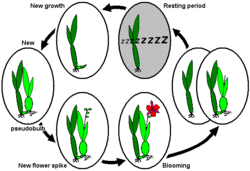
Many plant species that exhibit dormancy have a biological clock that tells them when to slow activity and to prepare soft tissues for a period of freezing temperatures or water shortage. On the other hand, dormancy can be triggered after a normal growing season by decreasing temperatures, shortened day length, and/or a reduction in rainfall. Chemical treatment on dormant plants has been proven to be an effective method to break dormancy, particularly in woody plants such as grapes, berries, apples, peaches, and kiwis. Specifically, hydrogen cyanamide stimulates cell division and growth in dormant plants, causing buds to break when the plant is on the edge of breaking dormancy.[citation needed] Slight injury of cells may play a role in the mechanism of action. The injury is thought to result in increased permeability of cellular membranes.[citation needed] The injury is associated with the inhibition of catalase, which in turn stimulates the pentose phosphate cycle. Hydrogen cyanamide interacts with the cytokinin metabolic cycle, which results in triggering a new growth cycle.[citation needed] The two adjacent images show two particularly widespread dormancy patterns amongst sympodially growing orchids:

Seeds

[edit]

When a mature and viable seed under a favorable condition fails to germinate, it is said to be dormant. Seed dormancy is referred to as embryo dormancy or internal dormancy and is caused by endogenous characteristics of the embryo that prevent germination (Black M, Butler J, Hughes M. 1987). Dormancy should not be confused with seed coat dormancy, external dormancy, or hardheadedness, which is caused by the presence of a hard seed covering or seed coat that prevents water and oxygen from reaching and activating the embryo. It is a physical barrier to germination, not a true form of dormancy (Quinliven, 1971; Quinliven and Nichol, 1971).

Seed dormancy is desired in nature, but the opposite in the agriculture field. This is because agricultural practice desires rapid germination and growth for food whereas in nature, most plants are only capable of germinating once every year, making it favorable for plants to pick a specific time to reproduce. For many plants, it is preferable to reproduce in spring as opposed to fall even when there are similar conditions in terms of light and temperature due to the ensuing winter that follows fall. Many plants and seeds recognize this and enter a dormant period in the fall to stop growing. The grain is a popular example in this aspect, where they would die above ground during the winter, so dormancy is favorable to its seedlings but extensive domestication and crossbreeding has removed most dormancy mechanisms that their ancestors had.[6]

While seed dormancy is linked to many genes, abscisic acid (ABA), a plant hormone, has been linked as a major influencer to seed dormancy. In a study on rice and tobacco plants, plants defective in zeaxanthin epoxidase gene, which are linked to ABA-synthesis pathway. Seeds with higher ABA content, from over-expressing zeaxanthin epoxidase, led to an increased dormancy period while plants with lower numbers of zeaxanthin epoxidase were shown to have a shorter period of dormancy. A simple diagram can be drawn of ABA inhibits seed germination, while gibberellin (GA, also plant hormone) inhibits ABA production and promotes seed germination.[6][7]

Trees

[edit]

Typically, temperate woody perennial plants require chilling temperatures to overcome winter dormancy (rest). The effect of chilling temperatures depends on species and growth stage.[8] In some species, rest can be broken within hours at any stage of dormancy, with either chemicals, heat, or freezing temperatures, effective dosages of which would seem to be a function of sublethal stress, which results in stimulation of ethylene production and increased cell membrane permeability.

Dormancy is a general term applicable to any instance in which a tissue predisposed to elongate or grow in some other manner does not do so.[9] Quiescence is dormancy imposed by the external environment. Correlated inhibition is a kind of physiological dormancy maintained by agents or conditions originating within the plant, but not within the dormant tissue itself. Rest (winter dormancy) is a kind of physiological dormancy maintained by agents or conditions within the organ itself. However, physiological subdivisions of dormancy do not coincide with the morphological dormancy found in white spruce (Picea glauca) and other conifers.[10] Physiological dormancy often includes early stages of bud-scale initiation before measurable shoot elongation or before flushing. It may also include late leaf initiation after shoot elongation has been completed. In either of those cases, buds that appear to be dormant are nevertheless very active morphologically and physiologically.

Dormancy of various kinds is expressed in white spruce [11] White spruce, like many woody plants in temperate and cooler regions, requires exposure to low temperature for a period of weeks before it can resume normal growth and development. This "chilling requirement" for white spruce is satisfied by uninterrupted exposure to temperatures below 7 °C for 4 to 8 weeks, depending on physiological condition.[9][12]

Tree species that have well-developed dormancy needs may be tricked to some degree, but not completely. For instance, if a Japanese maple (Acer palmatum) is given an "eternal summer" through exposure to additional daylight, it grows continuously for as long as two years. Eventually, however, a temperate-climate plant automatically goes dormant, no matter what environmental conditions it experiences. Deciduous plants lose their leaves; evergreens curtail all new growth. Going through an "eternal summer" and the resultant automatic dormancy is stressful to the plant and usually fatal. The fatality rate increases to 100% if the plant does not receive the necessary period of cold temperatures required to break the dormancy. Most plants require a certain number of hours of "chilling" at temperatures between about 0 °C and 10 °C to be able to break dormancy (Bewley, Black, K.D 1994).

Short photoperiods induce dormancy and permit the formation of needle primordia. Primordia formation requires 8 to 10 weeks and must be followed by 6 weeks of chilling at 2 °C. Bud break occurs promptly if seedlings are then exposed to 16-hour photoperiods at the 25 °C/20 °C temperature regime. The free growth mode, a juvenile characteristic that is lost after 5 years or so, ceases in seedlings experiencing environmental stress.[13][14]

Bacteria

[edit]

Many bacteria can survive adverse conditions such as temperature, desiccation, and antibiotics by forming endospores, cysts, or general states of reduced metabolic activity lacking specialized cellular structures.[15] Up to 80% of the bacteria in samples from the wild appear to be metabolically inactive[16]—many of which can be resuscitated.[17] [18]

Such dormancy is responsible for the high diversity levels of most natural ecosystems.[19]

Bacteria enter a state of reduced metabolic activity not only during stress, but also when a bacterial population has reached a stable state.[20] Many bacteria are capable of producing proteins called hibernation factors which can bind to and inactivate their ribosomes, pausing protein production, which can take more than 50% of a cell's energy usage.[21]

A 2014 study[22] has characterized the bacterial cytoplasm as a glass forming fluid approaching the liquid-glass transition, such that large cytoplasmic components require the aid of metabolic activity to fluidize the surrounding cytoplasm, allowing them to move through a viscous, glass-like cytoplasm. During dormancy, when such metabolic activities are put on hold, the cytoplasm behaves like a solid glass, 'freezing' subcellular structures in place and perhaps protecting them, while allowing small molecules like metabolites to move freely through the cell, which may be helpful in cells transitioning out of dormancy.[22]

Viruses

[edit]

Dormancy, in its rigid definition, does not apply to viruses, as they are not metabolically active. However, some viruses such as poxviruses and picornaviruses, after entering the host, can become latent for long periods of time, or even indefinitely until they are externally activated. Herpesviruses, for example, can become latent after infecting the host, and after years they can activate again if the host is under stress or exposed to ultraviolet radiation.[23]

See also

[edit]

Citations

[edit]
  1. ^ Capon, Brian (2005). Botany for gardeners. Timber Press: Timber Press. p. 146. ISBN 978-0-88192-655-2. Retrieved 2009-09-12.
  2. ^ Bert B. Boyer, Brian M. Barnes (1999). "Molecular and metabolic Aspects of Mammalian Hibernation" (PDF). www.colby.edu. Archived from the original (PDF) on 2020-01-25. Retrieved 2017-08-22.
  3. ^ Kozak, Leslie P; Young, Martin E (2012). "Heat from calcium cycling melts fat". Nature Medicine. 18 (10): 1458–1459. doi:10.1038/nm.2956. PMID 23042344. S2CID 5177743.
  4. ^ "Reptilian Brumation". Archived from the original on 2012-03-04. Retrieved 2007-12-25.
  5. ^ "Hibernating Mammals and Brumating Reptiles: What's the Difference?". 20 January 2014.
  6. ^ a b Barrero, José M.; Jacobsen, John V.; Talbot, Mark J.; White, Rosemary G.; Swain, Stephen M.; Garvin, David F.; Gubler, Frank (January 2012). "Grain dormancy and light quality effects on germination in the model grass Brachypodium distachyon". New Phytologist. 193 (2): 376–386. Bibcode:2012NewPh.193..376B. doi:10.1111/j.1469-8137.2011.03938.x. PMID 22039925.
  7. ^ Koornneef, Maarten; Bentsink, Leónie; Hilhorst, Henk (2002-02-01). "Seed dormancy and germination". Current Opinion in Plant Biology. 5 (1): 33–36. Bibcode:2002COPB....5...33K. doi:10.1016/S1369-5266(01)00219-9. hdl:11858/00-001M-0000-0012-36A6-C. ISSN 1369-5266. PMID 11788305. S2CID 27054888.
  8. ^ Fuchigami, L. H., Nee, C. C., Tanino, K., Chen, T. H. H., Gusta, L. V., and Weiser, C. J. 1987. "Woody Plant Growth in a Changing Chemical and Physical Environment". Proc. Workshop IUFRO Working Party on Shoot Growth Physiology, Vancouver, British Columbia, July 1987, Lavender, D. P. (Compiler & Ed.), University of British Columbia, Forest Science Department, Vancouver, British  : 265–282.
  9. ^ a b Nienstaedt, H (1966). "Dormancy and dormancy release in white spruce". Forest Science. 12: 374–384.
  10. ^ Owens, John N.; Molder, Marje; Langer, Hilary (1977-11-01). "Bud development in Picea glauca. I. Annual growth cycle of vegetative buds and shoot elongation as they relate to the date and temperature sums". Canadian Journal of Botany. 55 (21). Canadian Science Publishing: 2728–2745. Bibcode:1977CaJB...55.2728O. doi:10.1139/b77-312. ISSN 0008-4026.
  11. ^ Romberger, J. A. 1963. "Meristems, Growth, and Development in Woody Plants". USDA, Forestry Service, Washington DC, Technical Bulletin 1293. 214 p.
  12. ^ Nienstaedt, H (1967). "Chilling requirements in seven Picea species". Silvae Genetica. 16 (2): 65–68.
  13. ^ Logan, K. T.; Pollard, D. F. W. 1976. "Growth acceleration of tree seedlings in controlled environments at Petawawa". Canadian Forestry Service, Petawawa Forest Experiment Station, Chalk River, Ontario, Information PS-X-62.
  14. ^ Logan, K. T. (1977). "Photoperiodic induction of free growth in juvenile white spruce and black spruce". Bi-monthly Research Notes. 33 (4). Canadian Department of Fishing & Environment, Canadian Forestry Service, Ottawa, Ontario: 29–30.
  15. ^ Sussman, AS; Douthit, HA (1973). "Dormancy in microbial spores". Annual Review of Plant Physiology. 24: 311–352. doi:10.1146/annurev.pp.24.060173.001523.
  16. ^ Cole, JJ (1999). "Aquatic microbiology for ecosystem scientists: New and recycled paradigms in ecological microbiology". Ecosystems. 2 (3): 215–225. Bibcode:1999Ecosy...2..215C. doi:10.1007/s100219900069. S2CID 40867902.
  17. ^ Choi, JW; Sherr, EB; Sherr, BF (1996). "Relation between presence-absence of a visible nucleoid and metabolic activity in bacterioplankton cells". Limnology and Oceanography. 41 (6): 1161–1168. Bibcode:1996LimOc..41.1161C. doi:10.4319/lo.1996.41.6.1161.
  18. ^ Tirumalai M, Ali S, Fox GE, Widger W (2025). "Tersicoccus phoenicis (Actinobacteria), a spacecraft clean room isolate, exhibits dormancy". Microbiol Spectr. e0169225. doi:10.1128/spectrum.01692-25. PMC 12403811. PMID 40788184.
  19. ^ Jones, SE; Lennon, JT (2010). "Dormancy contributes to the maintenance of microbial diversity". Proceedings of the National Academy of Sciences USA. 107 (13): 5881–5886. Bibcode:2010PNAS..107.5881J. doi:10.1073/pnas.0912765107. PMC 2851880. PMID 20231463.
  20. ^ Prossliner, Thomas; Skovbo Winther, Kristoffer; Sørensen, Michael Askvad; Gerdes, Kenn (2018-11-23). "Ribosome Hibernation". Annual Review of Genetics. 52 (1): 321–348. doi:10.1146/annurev-genet-120215-035130. ISSN 0066-4197. PMID 30476446.
  21. ^ Samorodnitsky, Dan (2024-06-05). "Most Life on Earth is Dormant, After Pulling an 'Emergency Brake'". Quanta Magazine. Retrieved 2024-06-12.
  22. ^ a b Parry, BR (2014). "The Bacterial Cytoplasm Has Glass-like Properties and Is Fluidized by Metabolic Activity". Cell. 156 (1–2): 183–194. Bibcode:2014APS..MARJ16002P. doi:10.1016/j.cell.2013.11.028. PMC 3956598. PMID 24361104.
  23. ^ Jordan MC, Jordan GW, Stevens JG, Miller G (June 1984). "Latent herpesviruses of humans". Annals of Internal Medicine. 100 (6): 866–880. doi:10.7326/0003-4819-100-6-866. PMID 6326635.

General and cited references

[edit]
Revisions and contributorsEdit on WikipediaRead on Wikipedia
from Grokipedia
Dormancy is a reversible physiological state in which organisms temporarily reduce or suspend their metabolic activity to survive periods of environmental stress, such as extreme temperatures, desiccation, or nutrient scarcity.[1] This adaptation enables the preservation of genetic information and cellular integrity without active growth or reproduction, distinguishing it from death or permanent quiescence.[1] Across the tree of life, dormancy manifests in diverse forms tailored to specific taxa and ecological niches. In microorganisms, it often involves the production of resilient structures like endospores in bacteria, which can endure harsh conditions for millennia while maintaining viability. For instance, Bacillus species form these spores in response to nutrient limitation, creating microbial "seed banks" that facilitate long-term persistence in fluctuating environments.[2] In plants, dormancy is prominently observed as seed dormancy, an innate dormancy mechanism that inhibits germination even under favorable conditions until specific cues like cold stratification or scarification break it.[3] This ensures seedlings emerge at optimal times, enhancing survival rates.[3] Animals exhibit dormancy through strategies like hibernation, torpor, and diapause, which allow energy conservation during seasonal hardships. Hibernation, seen in mammals such as bears and ground squirrels, involves profound metabolic depression and lowered body temperature to minimize energy expenditure over winter.[4] Diapause, a developmental arrest common in insects and other invertebrates, suspends growth or reproduction in response to photoperiod or temperature signals, as in the overwintering eggs of mosquitoes.[5] In trees and perennial plants, dormancy synchronizes with seasonal cycles, where buds enter a protected state during autumn to withstand cold, resuming growth in spring upon warming cues.[6] Ecologically, dormancy plays a crucial role in population dynamics by buffering against disturbances, promoting dispersal, and maintaining biodiversity through temporal staggering of life cycles.[1] It forms ecological seed banks—reservoirs of dormant individuals that can revive under improved conditions—thus stabilizing communities amid climate variability.[2] Evolutionarily, dormancy likely originated early in life's history, possibly as a chemical stabilization mechanism, and has driven diversification by enabling survival in extreme habitats, from deep-sea vents to polar regions.[1] With ongoing climate change, shifts in dormancy cues may alter phenology and species interactions, posing challenges to ecosystems.[7]

General Principles

Definition and Characteristics

Dormancy is a temporary state in which organisms enter a reversible phase of minimized metabolic activity and suspended growth or development to survive adverse environmental conditions, thereby enhancing long-term viability.[1] This adaptive strategy allows organisms to conserve resources and withstand stresses such as extreme temperatures, desiccation, or nutrient scarcity without succumbing to death.[8] Unlike permanent states like senescence, dormancy preserves the potential for resumption of normal functions once conditions improve.[1] Key characteristics of dormancy include significantly reduced respiration and energy expenditure, often accompanied by slowed or halted cellular processes while maintaining cellular integrity and viability.[8] For instance, metabolic rates can drop by 90-99% in small hibernating mammals relative to basal levels, enabling prolonged survival on stored reserves.[9] The state is inherently reversible, with organisms reactivating metabolism and growth upon sensing favorable cues, ensuring no irreversible damage occurs.[1] These traits distinguish dormancy from mere inactivity, as it involves coordinated physiological adjustments that protect against environmental insults.[7] A critical distinction exists between quiescence and dormancy proper: quiescence represents a direct, reversible arrest in response to immediate environmental stress, such as low water availability inhibiting seed germination, whereas dormancy involves an anticipatory, internally regulated suspension with built-in barriers that prevent activation even under seemingly suitable conditions. This internal programming in dormancy ensures timing aligns with predictable seasonal cycles, adding a layer of adaptive precision.[7] Evolutionarily, dormancy serves as a pivotal adaptive trait that has facilitated the origin, diversification, and persistence of life across fluctuating environments by buffering against stochastic extinctions and promoting dispersal of viable propagules.[1] Observed in diverse taxa from microorganisms to vertebrates, it underscores a conserved mechanism for enduring unpredictable stresses, contributing to ecological resilience and species longevity.[1]

Triggers and Regulation

Dormancy in organisms is initiated and maintained through a combination of exogenous and endogenous triggers, which collectively ensure survival under adverse conditions. Exogenous triggers are direct environmental cues that signal the onset of stress, such as temperature extremes, drought, changes in photoperiod, and nutrient scarcity, prompting physiological adjustments across plants, animals, and microorganisms.[10] These cues often act as immediate sensors, with low temperatures or prolonged darkness, for instance, inhibiting metabolic activity to prevent energy depletion.[11] In contrast, endogenous triggers involve internal physiological and genetic timers that synchronize dormancy with seasonal or developmental cycles, independent of immediate external changes but calibrated by prior exposures.[12] This distinction allows organisms to anticipate unfavorable periods, with exogenous factors providing rapid responses and endogenous mechanisms ensuring precise timing.[10] Hormonal regulation plays a central role in transducing these triggers into sustained dormancy states. In plants, abscisic acid (ABA) accumulates in response to stress signals like drought or cold, promoting dormancy by inhibiting growth processes and enhancing stress tolerance through gene expression networks.[13] Similarly, in animals, melatonin acts as a key seasonal regulator, rising during shorter photoperiods to induce torpor or diapause by modulating metabolic and reproductive pathways.[14] In microorganisms, particularly bacteria, cyclic di-GMP serves as a second messenger that shifts cellular behavior toward persistence, reducing replication and increasing resistance to antibiotics or starvation by altering biofilm formation and motility.[15] These hormones integrate exogenous cues with endogenous rhythms, maintaining low metabolic rates until conditions improve. At the genetic and molecular level, dormancy is controlled by stress-response pathways and circadian clock components. Clock genes such as PER and TIM form feedback loops that align dormancy entry with photoperiodic changes, repressing growth-related transcription during unfavorable times in both animals and plants.[16] The target of rapamycin (TOR) signaling pathway, responsive to nutrient availability, suppresses anabolic processes under scarcity, linking energy status to dormancy induction and promoting longevity-like states.[17] These mechanisms ensure coordinated downregulation of metabolism, with TOR inhibiting translation and clock genes fine-tuning temporal responses to prevent premature reactivation.[18] Dormancy release occurs when opposing signals overcome these barriers, often through prolonged environmental shifts. Vernalization, a cold-requiring process, epigenetically silences dormancy-promoting genes like FLC in plants, allowing growth resumption upon warming, while similar chilling fulfills release requirements in animal and microbial systems.[19] Rehydration serves as a critical trigger for desiccation-induced dormancy, reactivating enzymes and metabolic pathways in seeds and bacteria by restoring cellular water balance and diluting inhibitors.[20] These release mechanisms reverse hormonal and genetic controls, transitioning organisms back to active states with minimal lag.[21]

Dormancy in Animals

Hibernation

Hibernation is a form of seasonal dormancy characterized by profound torpor in certain endothermic animals, primarily mammals and some birds, during periods of cold and food scarcity in winter. In this state, body temperature drops to within a few degrees of ambient levels, often approaching 2–4°C in small mammals, while metabolic rate, heart rate, and other physiological functions are drastically suppressed to conserve energy.[22] This adaptation allows hibernators to survive extended periods without feeding by relying on stored fat reserves, distinguishing it from shorter daily torpor bouts. Prior to entering hibernation, animals undergo a preparation phase involving hyperphagia, a period of excessive feeding to accumulate substantial fat deposits that serve as the primary energy source throughout torpor. Physiological adjustments also occur, including a reduction in thyroid hormone levels, which helps suppress metabolism and facilitate the transition to low-energy states. These pre-hibernation changes, driven by environmental cues like shortening photoperiods, ensure the animal can endure months of inactivity without external resources.[23] During hibernation, hibernators experience repeated cycles of torpor bouts lasting days to weeks, interrupted by periodic arousals to euthermic temperatures (around 37°C) for several hours, presumably to restore physiological balance and eliminate metabolic wastes. Heart rate plummets to as low as 2–5 beats per minute, and oxygen consumption decreases by approximately 90–99%, reflecting the minimal energy demands of this hypometabolic state. These arousals, which consume up to 80% of the total hibernation energy budget, are essential but energetically costly.[24][25] Classic examples include the thirteen-lined ground squirrel (Ictidomys tridecemlineatus), which hibernates for up to 7–8 months in northern regions, and black bears (Ursus americanus), which enter a milder form of hibernation lasting 4–7 months with less extreme temperature drops but similar metabolic suppression. While hibernation provides key benefits such as efficient energy conservation for winter survival, it also poses risks including temporary immune suppression to reduce energy expenditure and potential bone density challenges, though many hibernators exhibit adaptations that mitigate significant loss in bone strength during prolonged immobility.[22][26][27]

Diapause

Diapause represents a mandatory or facultative suspension of growth and development at specific life stages, such as eggs, larvae, or pupae, primarily in insects and certain crustaceans, allowing survival through periods of environmental adversity. This hormonally mediated arrest differs from other dormancy forms by its precise timing to unfavorable seasons, often synchronized with photoperiod cues that integrate environmental signals through neuroendocrine pathways.[28] Induction of diapause is highly sensitive to photoperiod, where shortening day lengths suppress the release of key hormones like juvenile hormone (JH) and ecdysone, preventing further development or reproduction. In many species, low JH titers maintain the diapause state by downregulating insulin signaling, while ecdysone suppression halts metamorphic processes, as observed in beetles like Colaphellus bowringi.[28] This endocrine regulation ensures diapause entry aligns with predictable seasonal challenges, such as winter in temperate regions. Diapause manifests in various types, including embryonic (e.g., in eggs of the silkworm Bombyx mori), larval (e.g., in larvae of the European corn borer Ostrinia nubilalis), pupal (e.g., in pupae of flesh flies like Sarcophaga crassipalpis), and reproductive (e.g., in adults of the monarch butterfly Danaus plexippus during migration). In the monarch butterfly, reproductive diapause is facultative, triggered by autumn photoperiods, leading to suppressed ovarian development and enhanced lipid reserves for long-distance flight to overwintering sites.[28] These types reflect adaptations to life cycle stages most vulnerable to seasonal stress. During diapause, metabolic rates decline dramatically, often by 90% or more, accompanied by behavioral quiescence and increased tolerance to stressors like desiccation and cold. Gene expression shifts include upregulation of heat shock proteins (HSPs), such as HSP70 and HSP90, which stabilize cellular proteins and enhance cryoprotection, as demonstrated in diapausing flesh fly pupae. Energy conservation occurs through lipid accumulation and reduced feeding, with adipokinetic hormones mobilizing stored trehalose for osmotic balance under low temperatures.[28] Termination of diapause requires specific environmental cues, typically prolonged exposure to cold temperatures that accumulate over weeks or months to break the arrest. This chill accumulation resets hormonal balances, restoring JH and ecdysone levels to resume development, as seen in post-diapause emergence of insects in spring.[28] In some cases, additional signals like increasing photoperiod reinforce termination, ensuring synchronization with favorable conditions.[29]

Aestivation

Aestivation, also known as estivation, is a form of summer dormancy observed primarily in ectothermic animals, where individuals enter a state of reduced metabolic activity to survive periods of high temperatures, drought, and desiccation.[30] This hypometabolic strategy involves behavioral adaptations such as burrowing into soil or mud, or encasing the body in a protective mucus cocoon or seal to minimize water loss and exposure to environmental stressors.[30] Unlike other dormancy forms, aestivation is triggered specifically by heat and aridity rather than cold, allowing animals in seasonal or tropical environments to conserve energy and water during unfavorable hot-dry periods.[31] Physiologically, aestivation features a profound depression in metabolic rate, often reducing it to 10-30% of the standard resting level, which extends survival time by limiting energy expenditure and preventing dehydration.[31] In some species, such as African lungfish, metabolic suppression can exceed 70%, coupled with the accumulation of urea as an osmoprotectant to maintain cellular hydration and detoxify ammonia waste without frequent urination.[32] These adaptations include downregulated glycolysis, reduced protein synthesis, and enhanced antioxidant defenses to counteract oxidative stress from prolonged inactivity.[30] Prominent examples include the African lungfish (Protopterus spp.), which burrow into riverbeds and form a mucus-lined cocoon during the dry season, remaining dormant for up to several years until water returns.[30] Land snails, such as the milk snail (Otala lactea), seal their shells with a calcium-rich epiphragm and lower their metabolic rate below 30% to endure desiccation.[30] Amphibians like the African clawed frog (Xenopus laevis) and burrowing frogs (Cyclorana spp.) embed in mud aestivation chambers, tolerating up to 30-40% body water loss while suppressing activity.[30] The duration of aestivation is closely linked to the length of drought, ranging from weeks in amphibians to months or years in lungfish.[31] From an evolutionary perspective, aestivation represents a conserved adaptation to arid and semi-arid climates, enabling ectotherms to exploit ephemeral habitats by bridging dry intervals without migration.[31] This strategy has independently evolved across diverse taxa, including fish, amphibians, and mollusks, highlighting its role in enhancing survival in fluctuating tropical and desert ecosystems.[30] Aestivation concludes with reawakening triggered by environmental cues such as rainfall, cooling temperatures, or increased humidity, which prompt metabolic reactivation, urea excretion, and resumption of normal behaviors.[30]

Brumation

Brumation refers to a state of winter dormancy observed in many reptiles, such as snakes, lizards, and turtles, as well as certain amphibians, characterized by prolonged inactivity and suppression of metabolic processes in response to cold temperatures. Unlike true sleep, animals in brumation remain alert to environmental stimuli and may periodically rouse for limited activity, particularly on warmer days.[33] This adaptation allows ectothermic (poikilothermic) species to conserve energy when prey is scarce and temperatures limit mobility.[34] As autumn progresses and ambient temperatures decline below approximately 15°C, reptiles and amphibians begin preparations for brumation by seeking out protective hibernacula, such as underground burrows, rock fissures, or submerged sites in water bodies.[35] For instance, timber rattlesnakes (Crotalus horridus) aggregate in communal dens within rocky outcrops or caves starting in early October, where they cluster to share body heat and maintain microclimates above freezing.[35] These sites provide insulation against extreme cold, and animals often fast in the weeks prior, relying on previously accumulated energy reserves rather than building extensive fat stores as seen in mammalian hibernators.[33] During brumation, physiological processes slow dramatically due to the direct influence of low environmental temperatures on ectothermic metabolism, following the Q10 temperature coefficient, which typically indicates a twofold reduction in metabolic rate for every 10°C decrease.[33] In squamate reptiles, standard metabolic rates can drop by up to 70% at 12°C compared to summer levels, with the Q10 value increasing from about 4.4 in active seasons to 7.7 in winter, reflecting heightened thermal sensitivity.[33] Heart rates also decline substantially; for example, in some lizards and turtles, rates can halve or reduce further, from around 20-30 beats per minute in mild conditions to 5-10 beats per minute or less during deep cold exposure.[36] Unlike mammals, there is no active regulation of body temperature to achieve profound hypothermia; instead, metabolic depression predominates, enabling survival on minimal energy without significant fat mobilization.[33] Examples of brumation include alligators (Alligator mississippiensis), which retreat to swampy burrows or underwater, and various lizards like the western rattlesnake (Crotalus oreganus), which utilize subterranean refugia while occasionally emerging on mild winter days.[35] In amphibians, species such as certain frogs partially bury in mud or leaf litter, tolerating near-freezing conditions through supercooling. However, inadequate hibernacula depth poses risks, including tissue freezing and mortality if temperatures fall below -2°C to -5°C without sufficient insulation, as seen in exposed snakes or turtles.[35] Brumation differs from mammalian hibernation in lacking controlled endothermic torpor, resulting in no periodic deep hypothermia or complex arousal cycles; instead, arousal is more opportunistic and tied to ambient warming, allowing sporadic activity without full metabolic reactivation.[33] This shallower dormancy reflects the ectothermic reliance on passive thermal conformity rather than active physiological suppression independent of temperature.[36]

Dormancy in Plants

Seed Dormancy

Seed dormancy refers to the temporary inhibition of embryo growth and germination in viable seeds under otherwise favorable conditions, ensuring that seedlings emerge only when environmental factors support survival and establishment.[37] This adaptive trait prevents premature germination during dispersal or unfavorable periods, such as drought or winter, and is distinct from quiescence, where germination is simply delayed by current conditions.[38] Seed dormancy is classified into several types based on underlying mechanisms. Physical dormancy (PY) arises from an impermeable seed coat that blocks water uptake, common in species like legumes and malvaceous plants.[39] Physiological dormancy (PD), the most prevalent type across angiosperms, involves internal inhibition of embryo growth, often mediated by high levels of abscisic acid (ABA) and low gibberellic acid (GA), as seen in model species like Arabidopsis thaliana.[40] Morphological dormancy (MD) occurs when the embryo is underdeveloped and requires time to mature before germination can proceed, typically in temperate woodland herbs.[39] Combinational dormancy integrates multiple mechanisms, such as PY combined with PD (PY+PD), allowing nuanced responses to complex environments.[39] Dormancy is broken by specific environmental or artificial cues that counteract inhibitory mechanisms. For PY, scarification—mechanical abrasion or chemical treatment of the seed coat—allows water imbibition, as applied to hard-coated crop seeds.[41] PD is often released through stratification, involving exposure to cold, moist conditions that degrade inhibitors over weeks or months, mimicking winter.[40] In fire-prone ecosystems, smoke-derived karrikins activate germination signaling pathways, requiring GA synthesis and light, as demonstrated in diverse post-fire flora.[42] Examples illustrate dormancy's ecological roles, such as in desert annuals like those in the Sonoran Desert, where seeds form long-lived soil banks persisting for decades and germinating en masse after rare rains to exploit brief windows of productivity.[38] Agriculturally, persistent dormant seed banks of weeds like Amaranthus species challenge control efforts, as viable seeds can remain viable for years, necessitating strategies like tillage or herbicide timing to induce and deplete banks.[43] Evolutionarily, seed dormancy provides a bet-hedging advantage by synchronizing germination with seasonal optima, reducing risk in variable climates and promoting diversification, particularly through PD as an adaptive hub.[38]

Bud Dormancy

Bud dormancy in plants refers to the cessation of growth in apical and lateral buds, a survival strategy in perennial species that enables them to endure adverse environmental conditions such as winter cold or summer drought. This dormancy is categorized into ecodormancy, where unfavorable external factors like low temperatures or water scarcity directly inhibit bud outgrowth; endodormancy, characterized by internal physiological constraints that prevent growth even under favorable conditions; and paradormancy, arising from inhibitory signals from other plant parts.[44][45] The mechanisms regulating bud dormancy involve hormonal and environmental cues. In paradormancy and early endodormancy, correlative inhibition occurs through auxin transport from the shoot apex, which suppresses lateral bud activity by promoting the expression of dormancy-promoting genes and limiting nutrient allocation to subordinate buds. Endodormancy release typically requires a chilling period, often quantified as 400 to 2000 hours below 7°C depending on the species, which satisfies the plant's vernalization-like requirement and triggers epigenetic changes that allow growth resumption.[46][47][48] Examples of bud dormancy are prominent in temperate trees and storage organs. In apple trees (Malus domestica), apical and lateral buds enter endodormancy in autumn, requiring around 800 to 1700 chilling hours for synchronized spring budbreak and flowering. Potato tubers (Solanum tuberosum) exhibit similar bud dormancy after harvest, where paradormant influences from the apical bud and hormonal balances maintain quiescence for weeks to months, preventing premature sprouting during storage. Paradormancy can also stem from competition among buds or between vegetative and reproductive organs, prioritizing resource allocation to the main shoot.[48][49] Physiologically, dormant buds undergo adaptations for protection and stasis. Scales and bud coverings seal the meristem, reducing water loss and conferring resistance to desiccation and freezing temperatures down to -30°C in some species, while metabolic rates drop to minimize energy use. Post-chilling, dormancy breaks with hormonal shifts—such as increased gibberellins and cytokinins—leading to cell division, bud swelling, and outgrowth when combined with warming temperatures.[50] Climate change poses challenges to bud dormancy by reducing winter chilling accumulation through milder temperatures, potentially delaying or desynchronizing budbreak and bloom timing in crops like apples, which could shorten growing seasons and increase vulnerability to late frosts. In regions like California, historical data show a decline in chill hours by up to 20% over recent decades, exacerbating uneven flowering and yield variability.[51][52]

Dormancy in Microorganisms

Bacterial Dormancy

Bacterial dormancy encompasses adaptive strategies where cells enter low-metabolic states to endure adverse conditions, such as nutrient scarcity, oxidative stress, or antibiotic exposure. These states include endospore formation, the viable but non-culturable (VBNC) condition, and persister cells, enabling long-term survival without replication.[53] Unlike active growth phases, dormant bacteria exhibit reduced transcription, translation, and energy production, preserving viability for reactivation when conditions improve.[54] Endospore formation represents a highly resistant dormancy mechanism primarily in Gram-positive bacteria, such as Bacillus and Clostridium species. This process unfolds in seven morphological stages: axial filament formation, where chromosomes segregate and align along the cell's long axis (stage I); asymmetric septation that divides the cell into a forespore and mother cell (stage II); engulfment of the forespore by the mother cell (stage III); cortex formation with peptidoglycan layers around the forespore (stage IV); coat assembly for structural protection (stage V); and maturation with dipicolinic acid (DPA) accumulation complexed with calcium ions to confer heat and desiccation resistance (stage VI).[55][56] The mother cell ultimately lyses to release the mature endospore (stage VII), which can remain viable for decades under extreme conditions like high temperatures or radiation.[57] This sporulation is genetically regulated by sigma factors and response regulators, ensuring precise coordination.[58] The VBNC state involves a reversible metabolic slowdown without morphological changes like sporulation, allowing bacteria to persist in non-growth conditions while retaining viability and potential pathogenicity. In this state, cells maintain low-level respiration and membrane integrity but fail to form colonies on standard media, often detected via viability stains or molecular assays.[59] VBNC formation occurs across diverse species, including Escherichia coli and Vibrio cholerae, and differs from persister cells, which are transient subpopulations tolerant to antibiotics due to halted metabolism but capable of regrowth post-treatment.[60] Unlike irreversible death, VBNC cells can resuscitate upon nutrient replenishment or stress relief.[61] Common triggers for bacterial dormancy include nutrient depletion and starvation, which activate stringent response pathways via (p)ppGpp alarmone to downregulate growth.[62] Oxidative stress from reactive oxygen species or hypoxia similarly induces dormancy, as seen in Mycobacterium tuberculosis, where low oxygen and nitric oxide exposure prompt non-replicating persistence, contributing to latent tuberculosis infections affecting billions worldwide.[53] Antibiotic exposure selectively enriches persister and VBNC subpopulations, while environmental cues like temperature shifts or osmolarity changes can initiate endospore formation in Bacillus subtilis.[63] These dormancy mechanisms have significant applications in food preservation and medicine. Endospores from pathogens like Clostridium botulinum resist thermal processing, necessitating advanced inactivation strategies such as high-pressure or pulsed electric fields to ensure food safety.[64] In clinical contexts, persister cells and VBNC states underlie antibiotic tolerance in chronic infections, such as tuberculosis, prompting research into revival inhibitors or phage therapies to target dormant populations and improve treatment efficacy.[65]

Fungal Dormancy

Fungal dormancy encompasses quiescent states in spores or hyphal structures that enable these eukaryotic microorganisms to endure environmental stresses including desiccation, ultraviolet radiation, and nutrient scarcity.[66] This dormancy is metabolically quiescent, with low respiration rates and minimal macromolecular synthesis, allowing long-term viability.[67] Key dormant structures include conidia, asexual spores adapted for short-term dispersal and survival; chlamydospores, thick-walled, melanized cells derived from hyphal segments that provide robust protection; and sclerotia, compact aggregates of hardened hyphae enriched with nutrient reserves for extended persistence.[68][69][70] Mechanisms underlying fungal dormancy involve structural and biochemical adaptations that minimize damage from stressors. Thick cell walls, often multilayered and melanized, act as barriers against physical and chemical insults while maintaining structural integrity.[71] Low intracellular water content, typically below 10-20% in dormant spores, suppresses enzymatic activity and prevents ice crystal formation during freezing.[67] Additionally, accumulation of trehalose, a non-reducing disaccharide, stabilizes proteins and membranes under desiccation by forming protective glasses or hydration shells, enhancing tolerance to dehydration and oxidative stress.[72] Representative examples illustrate dormancy's role in fungal survival and pathogenesis. In Aspergillus species, conidia persist in soil as dormant propagules, germinating only when moisture and nutrients become available to initiate growth or infection.[73] Rust fungi, such as Puccinia spp., form teliospores as overwintering dormant structures that endure harsh conditions before producing basidiospores to infect crops, contributing to significant agricultural losses.[74] Sclerotia in pathogens like Sclerotinia sclerotiorum can remain viable in soil for up to a decade, serving as reservoirs for disease outbreaks in plants.[75] Ecologically, fungal dormancy facilitates persistence in extreme habitats, such as Antarctic soils, where spores and sclerotia withstand subzero temperatures, prolonged desiccation, and limited nutrients, enabling recolonization during brief favorable periods.[76] This adaptation underscores fungi's role in nutrient cycling and microbial community resilience in polar ecosystems.[77]

Dormancy in Viruses

Viral Latency

Viral latency refers to a reversible state of non-productive infection in which the viral genome persists within the host cell either as an episome or integrated into the host genome as a provirus, without active replication or production of infectious virions.[78] This dormancy allows the virus to evade host immune detection while maintaining long-term persistence, enabling potential reactivation under specific conditions.[79] In eukaryotic viruses such as herpesviruses, latency is characterized by highly restricted gene expression, often limited to non-coding RNAs or a few latency-associated transcripts that support genome maintenance without triggering immune responses.[80] Mechanisms of viral latency involve epigenetic silencing of the viral genome, including histone modifications like methylation that condense chromatin and repress transcription, as well as interference by host microRNAs (miRNAs) that target viral transcripts for degradation or translational inhibition.[81] For instance, in herpes simplex virus type 1 (HSV-1), the viral genome establishes latency in sensory neurons, where latency-associated transcripts (LATs) and associated miRNAs promote silencing of lytic genes through epigenetic changes and evasion of apoptosis.[82] Induction of latency often serves immune evasion during initial infection or under stress signals, such as nutrient limitation or cellular differentiation, while reactivation can be triggered by external stimuli including ultraviolet (UV) light exposure, hormonal fluctuations, or immunosuppression.[80] In HSV-1, UV irradiation can trigger reactivation from latency, leading to viral gene expression and lesion formation.[83] In bacteriophages, latency manifests as lysogeny, where the viral genome integrates into the bacterial chromosome as a prophage and is maintained by repressor proteins that inhibit lytic genes.[84] The lambda phage exemplifies this through its CI repressor protein, which binds operator sites to autoregulate its expression and silence lytic promoters, ensuring stable propagation during host cell division.[85] This state persists until environmental cues, such as DNA damage, induce the SOS response, cleaving the repressor and shifting to the lytic cycle.[85] Pathological implications of viral latency include associations with oncogenesis, where persistent genomes can disrupt host cell regulation upon reactivation or through latent gene products.[86] Epstein-Barr virus (EBV), for example, establishes latency in B lymphocytes via episomal persistence and expression of latent membrane proteins that promote cell proliferation, contributing to cancers such as Burkitt's lymphoma and nasopharyngeal carcinoma.[87] These latency programs hijack host signaling pathways, underscoring the virus's role in malignant transformation while remaining dormant for extended periods.[88]

Viral Persistence

Viral persistence refers to the long-term survival of a virus within a host organism, characterized by the virus's ability to evade immune clearance and maintain infection without causing immediate host cell destruction or overt disease. This form of viral dormancy allows the virus to reside in a quiescent or low-replicative state, often alternating between periods of minimal activity and reactivation. Unlike acute infections that are rapidly resolved, persistent viruses employ strategies to suppress host antiviral responses, ensuring their continued presence over months, years, or even a lifetime.[89] Key mechanisms of viral persistence involve modulation of the host immune system to prevent effective antiviral activity. Viruses can down-regulate major histocompatibility complex (MHC) class I and co-stimulatory molecules on infected cells and antigen-presenting cells, such as dendritic cells, thereby impairing T cell recognition and activation. Additionally, persistent viruses induce T cell exhaustion or tolerance, where antiviral T cells become dysfunctional and fail to eliminate infected cells, a process that is reversible upon removal of the viral antigen. Non-cytolytic infection strategies further contribute, as viruses alter host cell functions—such as neurotransmitter or hormone production—without lysing the cell, allowing prolonged intracellular residence. These mechanisms collectively enable the virus to curtail innate and adaptive immune responses, synonymous with evasion of immunologic surveillance.[90][90][90][90] In the context of dormancy, viral persistence represents a survival adaptation where the virus enters a metabolically subdued state, minimizing replication to avoid detection while preserving the potential for future propagation. This differs from strict latency by often involving low-level, ongoing viral gene expression or intermittent production of infectious particles, rather than complete transcriptional silencing. Persistence can occur in various host tissues, including immunologically privileged sites like the central nervous system, further shielding the virus from immune effectors.[89][89] Representative examples illustrate these principles across virus families. The lymphocytic choriomeningitis virus (LCMV) persists in mice by inducing T cell exhaustion, leading to lifelong infection without clearance. Hepatitis B virus (HBV) establishes chronic persistence in hepatocytes through restricted antigen expression and immune suppression, contributing to liver cirrhosis and hepatocellular carcinoma in humans. Human retroviruses, such as HIV, maintain persistence via integration into host genomes and establishment of reservoirs in resting immune cells, despite antiretroviral therapy. These cases highlight how persistence facilitates viral transmission and chronic pathology while embodying a dormant phase in the viral life cycle.[90][89][89][90]

References

User Avatar
No comments yet.