Hubbry Logo
FermilabFermilabMain
Open search
Fermilab
Community hub
Fermilab
logo
8 pages, 0 posts
0 subscribers
Be the first to start a discussion here.
Contribute something
Fermilab
Fermilab
from Wikipedia

Fermi National Accelerator Laboratory (branded as Fermilab), located in Batavia, Illinois, near Chicago, is a United States Department of Energy national laboratory specializing in high-energy particle physics.

Key Information

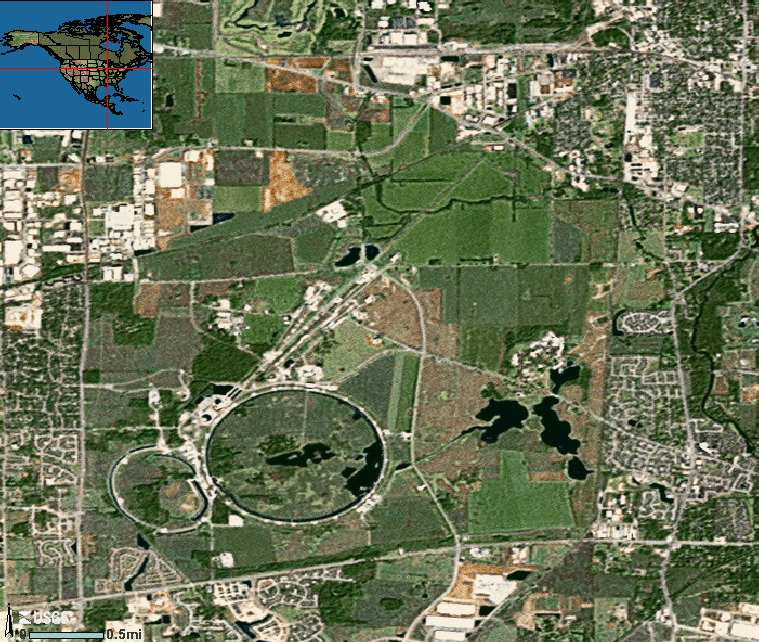
Fermilab's Main Injector, two miles (3.3 km) in circumference, is the laboratory's most powerful particle accelerator.[2] The accelerator complex that feeds the Main Injector is under upgrade, and construction of the first building for the new PIP-II linear accelerator began in 2020.[3] Until 2011, Fermilab was the home of the 6.28 km (3.90 mi) circumference Tevatron accelerator. The ring-shaped tunnels of the Tevatron and the Main Injector are visible from the air and by satellite.

Fermilab aims to become a world center in neutrino physics. It is the host of the multi-billion dollar Deep Underground Neutrino Experiment (DUNE) now under construction.[4] The project has suffered delays and, in 2022, the journals Science and Scientific American each published articles describing the project as "troubled".[5][6] Ongoing neutrino experiments are ICARUS (Imaging Cosmic and Rare Underground Signals) and NOνA (NuMI Off-Axis νe Appearance). Completed neutrino experiments include MINOS (Main Injector Neutrino Oscillation Search), MINOS+, MiniBooNE and SciBooNE (SciBar Booster Neutrino Experiment) and MicroBooNE (Micro Booster Neutrino Experiment).

On-site experiments outside of the neutrino program include the SeaQuest fixed-target experiment and Muon g-2. Fermilab continues to participate in the work at the Large Hadron Collider (LHC); it serves as a Tier 1 site in the Worldwide LHC Computing Grid.[7] Fermilab also pursues research in quantum information science.[8] It founded the Fermilab Quantum Institute in 2019.[9] Since 2020, it also is home to the SQMS (Superconducting Quantum Materials and Systems) Center.[10]

Due to serious performance issues over the period of a decade, the Department of Energy established new management for Fermilab on January 1, 2025.[11][12][13] Fermilab is currently managed by the Fermi Forward Discovery Group, LLC (FFDG). This consortium is led by the 2007-2024 management group, the Fermi Research Alliance (FRA), with Amentum Environment & Energy, Inc., and Longenecker & Associates as new additions. Due to the management crisis, the Director of the Laboratory, Lia Merminga, resigned on January 13, 2025 and is temporarily replaced by Acting Director Young-Kee Kim, from the University of Chicago.[14]

Fermilab is a part of the Illinois Technology and Research Corridor. Argonne National Laboratory, which is another US DOE national laboratory located approximately 20 miles (30 kilometers) away.

Asteroid 11998 Fermilab is named in honor of the laboratory.

History

[edit]
Robert Rathbun Wilson Hall

Weston, Illinois, was a community next to Batavia voted out of existence by its village board in 1966 to provide a site for Fermilab.[15]

The laboratory was founded in 1969 as the National Accelerator Laboratory;[16] it was renamed in honor of Enrico Fermi in 1974. The laboratory's first director was Robert Rathbun Wilson, under whom the laboratory opened ahead of time and under budget. Many of the sculptures on the site are of his creation. He is the namesake of the site's high-rise laboratory building, whose unique shape has become the symbol for Fermilab and which is the center of activity on the campus.

After Wilson stepped down in 1978 to protest the lack of funding for the lab, Leon M. Lederman took on the job. It was under his guidance that the original accelerator was replaced with the Tevatron, an accelerator capable of colliding protons and antiprotons at a combined energy of 1.96 TeV. Lederman stepped down in 1989 and remained director emeritus until his death. The science education center at the site was named in his honor.

Laboratory directors

[edit]

Since its founding in 1967, Fermilab has been led by 7 directors.[17]

No. Image Director Term start Term end Refs.
1 Robert Rathbun Wilson 1967 May 31, 1978
2 Leon M. Lederman June 1, 1979 June 30, 1989 [18]
3 John Peoples July 1, 1989 June 30, 1999 [19]
4 Michael S. Witherell July 1, 1999 June 30, 2005 [20]
5 Piermaria Oddone July 1, 2005 June 30, 2013 [21][22]
interim Jack Anderson July 1, 2013 September 2, 2013
6 Nigel Lockyer September 3, 2013 April 17, 2022 [23][24]
7 Lia Merminga April 18, 2022 January 13, 2025 [25][26][27]
interim Young-Kee Kim January 13, 2025 present [28]

Accelerators

[edit]

Tevatron

[edit]

Prior to the startup in 2008 of the Large Hadron Collider (LHC) near Geneva, Switzerland, the Tevatron was the most powerful particle accelerator in the world, accelerating protons and antiprotons to energies of 980 GeV, and producing proton-antiproton collisions with energies of up to 1.96 TeV, the first accelerator to reach one "tera-electron-volt" energy.[29] At 3.9 miles (6.3 km), it was the world's fourth-largest particle accelerator in circumference. One of its most important achievements was the 1995 discovery of the top quark, announced by research teams using the Tevatron's CDF and detectors.[30] It was shut down in 2011.

Fermilab Accelerator Complex

[edit]

Since 2013, the first stage in the acceleration process (pre-accelerator injector) in the Fermilab chain of accelerators[31] takes place in two ion sources which ionize hydrogen gas. The gas is introduced into a container lined with molybdenum electrodes, each a matchbox-sized, oval-shaped cathode and a surrounding anode, separated by 1 mm and held in place by glass ceramic insulators. A cavity magnetron generates a plasma to form the ions near the metal surface. The ions are accelerated by the source to 35 keV and matched by low energy beam transport (LEBT) into the radio-frequency quadrupole (RFQ) which applies a 750 keV electrostatic field giving the ions their second acceleration. At the exit of RFQ, the beam is matched by medium energy beam transport (MEBT) into the entrance of the linear accelerator (linac).[32]

The next stage of acceleration is a linear particle accelerator (linac). This stage consists of two segments. The first segment has five drift tube cavities, operating at 201 MHz. The second stage has seven side-coupled cavities, operating at 805 MHz. At the end of linac, the particles are accelerated to 400 MeV, or about 70% of the speed of light.[33][34] Immediately before entering the next accelerator, the H ions pass through a carbon foil, becoming H+ ions (protons).[35]

The resulting protons then enter the booster ring, a 468 m (1,535 ft) circumference circular accelerator whose magnets bend beams of protons around a circular path. The protons travel around the Booster about 20,000 times in 33 milliseconds, adding energy with each revolution until they leave the Booster accelerated to 8 GeV.[35] In 2021, the lab announced that its latest superconducting YBCO magnet could increase field strength at a rate of 290 tesla per second, reaching a peak magnetic field strength of around 0.5 tesla.[36]

The final acceleration is applied by the Main Injector [circumference 3,319.4 m (10,890 ft)], which is the smaller of the two rings in the last picture below (foreground). Completed in 1999, it has become Fermilab's "particle switchyard"[37] in that it can route protons to any of the experiments installed along the beam lines after accelerating them to 120 GeV. Until 2011, the Main Injector provided protons to the antiproton ring [circumference 6,283.2 m (20,614 ft)] and the Tevatron for further acceleration but now provides the last push before the particles reach the beam line experiments.

Proton improvement plan

[edit]

Recognizing higher demands of proton beams to support new experiments, Fermilab began to improve their accelerators in 2011. Expected to continue for many years,[41] the project has two phases: Proton Improvement Plan (PIP) and Proton Improvement Plan-II (PIP-II).[42]

PIP (2011–2018)

The overall goals of PIP are to increase the repetition rate of the Booster beam from 7 Hz to 15 Hz and replace old hardware to increase reliability of the operation.[42] Before the start of the PIP project, a replacement of the pre-accelerator injector was underway. The replacement of almost 40 year-old Cockcroft–Walton generators to RFQ started in 2009 and completed in 2012. At the Linac stage, the analog beam position monitor (BPM) modules were replaced with digital boards in 2013. A replacement of Linac vacuum pumps and related hardware is expected to be completed in 2015. A study on the replacement of 201 MHz drift tubes is still ongoing. At the boosting stage, a major component of the PIP is to upgrade the Booster ring to 15 Hz operation. The Booster has 19 radio frequency stations. Originally, the Booster stations were operating without solid-state drive system which was acceptable for 7 Hz but not 15 Hz operation. A demonstration project in 2004 converted one of the stations to solid state drive before the PIP project. As part of the project, the remaining stations were converted to solid state in 2013. Another major part of the PIP project is to refurbish and replace 40 year-old Booster cavities. Many cavities have been refurbished and tested to operate at 15 Hz. The completion of cavity refurbishment is expected in 2015, after which the repetition rate can be gradually increased to 15 Hz operation. A longer term upgrade is to replace the Booster cavities with a new design. The research and development of the new cavities is underway, with replacement expected in 2018.[41]

PIP-II
Prototypes of SRF cavities to be used in the last segment of PIP-II Linac[43]

The goals of PIP-II include a plan to delivery 1.2 MW of proton beam power from the Main Injector to the Deep Underground Neutrino Experiment target at 120 GeV and the power near 1 MW at 60 GeV with a possibility to extend the power to 2 MW in the future. The plan should also support the current 8 GeV experiments including Mu2e, Muon g−2, and other short-baseline neutrino experiments. These require an upgrade to the Linac to inject to the Booster with 800 MeV. The first option considered was to add 400 MeV "afterburner" superconducting Linac at the tail end of the existing 400 MeV. This would have required moving the existing Linac up 50 metres (160 ft). However, there were many technical issues with this approach. Instead, Fermilab is building a new 800 MeV superconducting Linac to inject to the Booster ring.

Construction of the first building for the PIP-II accelerator began in 2020.[3] The new Linac site will be located on top of a small portion of Tevatron near the Booster ring in order to take advantage of existing electrical and water, and cryogenic infrastructure. The PIP-II Linac will have low energy beam transport line (LEBT), radio frequency quadrupole (RFQ), and medium energy beam transport line (MEBT) operated at the room temperature at with a 162.5 MHz and energy increasing from 0.03 MeV. The first segment of Linac will be operated at 162.5 MHz and energy increased up to 11 MeV. The second segment of Linac will be operated at 325 MHz and energy increased up to 177 MeV. The last segment of linac will be operated at 650 MHz and will have the final energy level of 800 MeV.[44]

As of 2022, the estimated PIP-II accelerator start date for the accelerator is 2028.[45] The project was approved for construction in April 2022 with an expected cost to the Department of Energy of $978M and with an additional $330M in contributions from international partners.[46]

Experiments

[edit]

Discoveries by Fermilab experiments

[edit]

The following particles were first directly observed at Fermilab:

Fermilab's CDF detector

In 1999, physicists at on the KTeV experiment were also the first to observe direct CP violation in kaon decays.[51]

The DØ experiment and CDF experiment each made important contributions to the observation of the Higgs Boson, announced in 2012.[52]

Evolution of the post-Tevatron experimental program

[edit]

Fermilab dismantled the CDF (Collider Detector at Fermilab)[53] experiment to make the space available for IARC (Illinois Accelerator Research Center).[54]

Fermilab physicists continue to play a key role in the world-wide collider program. The LHC Physics Center (LPC) at Fermilab is a regional center of the Compact Muon Solenoid Collaboration (the experiment is housed at CERN). The LPC offers a vibrant community of CMS scientists from the US and plays a major role in the CMS detector commissioning, and in the design and development of the detector upgrade.[55] Fermilab is the host laboratory for USCMS,[56] which includes researchers from 50 U.S. universities including 715 students. Fermilab hosts the largest CMS Tier 1 computing center, handling approximately 40% of global CMS Tier 1 computing requests. On February 9, 2022, Fermilab's Patricia McBride (physicist) was elected spokesperson of the CMS collaboration.[57]

During this time-frame, the laboratory also established a new program in research in cutting-edge information science, including the development of quantum teleportation technology[58] for the quantum internet and increasing the lifetime of superconducting resonators[59] for use in quantum computers.

On-site program in the 2020s

[edit]

The on-site program in the 2020s is largely focused on the Intensity Frontier of particle physics, especially neutrino physics and rare physics searches using muons. A program exploring nucleon structure is also continuing.

List of recent past, ongoing, and planned experiments running on-site

[edit]

LBNF/DUNE

[edit]

Fermilab strives to become the world leader in neutrino physics through the Deep Underground Neutrino Experiment at the Long Baseline Neutrino Facility. Other leaders are CERN, which leads in Accelerator physics with the Large Hadron Collider (LHC), and Japan, which has been approved to build and lead the International Linear Collider (ILC). Fermilab will be the site of LBNF's future beamline, and the Sanford Underground Research Facility (SURF), in Lead, SD, is the site selected to house the massive far detector. The term "baseline" refers to the distance between the neutrino source and the detector. The far detector current design is for four modules of instrumented liquid argon with a fiducial volume of 10 kilotons each.

According to the 2016 Conceptual Design Report, the first two modules were expected to be complete in 2024, with the beam operational in 2026. The final modules were planned to be operational in 2027.[72] In 2022, the cost for two far detector modules and the beam, alone, had risen to $3B. This led to a decision by the Department of Energy Office of Science to phase the experiment.[5] Phase I would consist of two modules, to be completed in 2028–29, and the beamline, to be completed in 2032. The installation of phase II, the remaining two far detector modules, is not yet planned and will be at a cost above the $3B estimate for phase I.[5]

A large prototype detector constructed at CERN took data with a test beam from 2018 to 2020. The results show that ProtoDUNE performed with greater than 99% efficiency.[73]

LBNF/DUNE program in neutrino physics plans to measure fundamental physical parameters with high precision and to explore physics beyond the Standard Model. The measurements DUNE will make are expected to greatly increase the physics community's understanding of neutrinos and their role in the universe, thereby better elucidating the nature of matter and anti-matter. It will send the world's highest-intensity neutrino beam to a near detector on the Fermilab site and the far detector 800 miles (1300 km) away at SURF.

About other neutrino experiments

[edit]

The MiniBooNE detector was a 40-foot (12 m) diameter sphere containing 800 tons of mineral oil lined with 1,520 phototube detectors. An estimated 1 million neutrino events were recorded each year. SciBooNE sat in the same neutrino beam as MiniBooNE but had fine-grained tracking capabilities. The NOνA experiment uses, and the MINOS experiment used, Fermilab's NuMI (Neutrinos at the Main Injector) beam, which is an intense beam of neutrinos that travels 455 miles (732 km) through the Earth to the Soudan Mine in Minnesota and the Ash River, Minnesota, site of the NOνA far detector. In 2017, the ICARUS neutrino experiment was moved from CERN to Fermilab.[74][75]

Muon g−2

[edit]

Muon g−2: (pronounced "gee minus two") is a particle physics experiment to measure the anomaly of the magnetic moment of a muon to a precision of 0.14 ppm, which will be a sensitive test of the Standard Model.

Muon g−2 building (white and orange) which hosts the magnet

Fermilab is continuing an experiment conducted at Brookhaven National Laboratory to measure the anomalous magnetic dipole moment of the muon.

The magnetic dipole moment (g) of a charged lepton (electron, muon, or tau) is very nearly 2. The difference from 2 (the "anomalous" part) depends on the lepton, and can be computed quite exactly based on the current Standard Model of particle physics. Measurements of the electron are in excellent agreement with this computation. The Brookhaven experiment did this measurement for muons, a much more technically difficult measurement due to their short lifetime, and detected a tantalizing, but not definitive, σ discrepancy between the measured value and the computed one.

The Brookhaven experiment ended in 2001, but 10 years later Fermilab acquired the equipment,[76] and is working to make a more accurate measurement (smaller σ) which will either eliminate the discrepancy or, hopefully, confirm it as an experimentally observable example of physics beyond the Standard Model.

Transportation of the 600 ton magnet to Fermilab

Central to the experiment is a 50 foot-diameter superconducting magnet with an exceptionally uniform magnetic field. This was transported, in one piece, from Brookhaven in Long Island, New York, to Fermilab in the summer of 2013. The move traversed 3,200 miles over 35 days, mostly on a barge down the East Coast and up the Mississippi.

The magnet was refurbished and powered on in September 2015,[77] and has been confirmed to have the same 1300 ppm (0.13%) p-p basic magnetic field uniformity that it had before the move.[78]: 4 

The project worked on shimming the magnet to improve its magnetic field uniformity.[78] This had been done at Brookhaven,[79] but was disturbed by the move and had to be re-done at Fermilab.

In 2018, the experiment started taking data at Fermilab.[80] In 2021, the laboratory reported that results from initial study involving the particle challenged the Standard Model, with the potential for discovery of new forces and particles.[81][82]

In August 2023, the Fermilab group said they may be getting closer to proving the existence of a new force of nature. They have found more evidence that sub-atomic particles, called muons, are not behaving in the way predicted by the current theory of sub-atomic physics.[83]

Delays, cost overruns, safety failures, and management turmoil in the 2010s and 2020s

[edit]

Starting in the 2010s, delays and cost over-runs led to substantial concerns about mismanagement of the laboratory.

Oversight issues that developed between 2014 and 2024

[edit]

In 2014, the Particle Physics Project Prioritization Panel ("P5") recommended[84] three major initiatives for construction on the Fermilab site. Two were particle physics experiments: the Deep Underground Neutrino Experiment and Mu2e. The third was the PIPII accelerator upgrade described above. P5 also recommended Fermilab participation in LHC at CERN.

As of 2022, two P5-recommended Fermilab projects had suffered substantial delays:

  • The Deep Underground Neutrino Experiment with the enabling Long Baseline Neutrino Facility was proposed to P5 as a $1B project; the cost estimate in 2021 dollars was more than $3B, with far detector operations beginning 2029 and full operation by 2032.[85]
  • The Mu2e experiment was to produce preliminary results in 2020,[86] but this is now delayed until 2026.[87]

Even smaller experiments, below the cost-level of individual P5 approval, that were proposed at the time of the 2014 P5 suffered considerable delay. The Short-Baseline Near Detector (SBND) that was proposed in 2014 [88] with a $10M cost scale was originally scheduled for data taking in spring 2018,[89] but is now scheduled to begin in autumn 2023.[88]

The Department of Energy raised flags as early as Fiscal Year (FY) 2019. Each year, the US Department of Energy Office of Science reviews and grades the national laboratories in its portfolio on eight performance metrics.[90] Fermilab has received the lowest grades among the national laboratories in FY2019, 2020, 2021 and 2022. A rare C grade was assigned for project management in 2021, reflective of the delays and cost overruns.[91] In an article in the journal Science, James Decker, who was principal deputy director of DOE's Office of Science from 1973 to 2007, stated that the performance evaluation for 2021 was "one of the most scathing I have seen".[11]

In 2020, the high-energy physics community expressed concern that the cost of major projects at Fermilab have led to diversion of funds from the high-energy physics core research program, harming the health of the field.[92][93] Congress increased the annual HEP budget from less than $800 million by about $250M to more than $1 billion—a 30% increase that went mainly to support large projects at Fermilab.[94]

The Fermilab project delays led to substantial change in leadership in 2022.[5] In September 2021, Nigel Lockyer, Director of Fermilab, resigned.[95] Lockyer was replaced by Lia Merminga, head of the PIP II project.[96] On March 31, 2022, James Siegrist, associate director for High Energy Physics in the Department of Energy Office of Science, who had overseen the response to the P5 report, stepped down.[97] In September 2022, it was announced that deputy director for Research Joseph Lykken would step down, to be replaced by Yale Professor Bonnie Fleming, who previously served as Deputy Chief Research Officer for the neutrino program at Fermilab.[98] Regina (Gina) Rameika joined the DOE's Office of Science as the associate director for the Office of High Energy Physics in his place on November 7, 2022, moving from her role as spokesperson of the DUNE Experiment.[99]

Although these replacements represent a substantial turn-over of the top ranks, the new management was drawn from the 2014-2022 management team and Fermilab has continued to suffer turmoil since this change-over. In particular, new issues arose with regard to safety and access of employees, visitors and contractors.

On May 25, 2023, a contractor fell 23 ft while attempting to secure reinforcing bars on a wall for the new PIP II project site.[100] The contractor was air-lifted to hospital in an accident considered the worst on site in decades.[101] A DOE-appointed Accident Investigation Board concluded that the incident was preventable and "recommended a long list of managerial and safety controls needed to prevent a recurrence of such an accident."[100] As a result of the accident, the $1B PIP II project that is crucial for the success of the DUNE Experiment was delayed.[100]

On September 1, 2023, Chief Research Officer Bonnie Fleming announced that the Fermilab accelerator system was temporarily shut down for safety reasons.[102] On September 9, 2022, DOE issued order DOE O 420.2D entitled "Safety of Accelerators". This document establishes the accelerator-specific safety requirements for DOE-funded accelerators and their operations. While other national labs continued operations while working to bring their safety requirements into compliance, Fermilab chose to suspend operations until the lab was fully compliant with the new order. The Fermilab Main Accelerator resumed running after the DOE O 420.2D implementation was complete, in late spring, 2024.

In mid-2024, Fermilab faced a budget shortfall. This resulted in an initial furlough of employees and closure of its operations and public access for one week in August.[103] The need for a furlough was surprising since the budget grew "a hefty 7.6% to $739 million" [103] in fiscal year (FY) 2024. According to the journal Science, the crisis stemmed from poorly managed growth: "from 2022 to 2023 alone, [laboratory staff] grew by 176 members, or 9%, to 2160."[103] The furlough did not fully address the budget deficit, and in November, 2.5% of the workforce was laid off.[104] Despite this, Tracy Marc, head of Fermilab's media services, told WTTW News that "the overall financial health of the laboratory remains intact and is being managed".[105]

2024 Whistleblower Report

[edit]

On July 15, 2024, a report containing allegations of cover-ups at the laboratory was uploaded to the arXiv physics preprint server.[13] The allegations, which were also reported in the press,[103][106][107] included:

  • "The alleged sexual assault of the NOvA and DUNE collaborator who filed and won her 2022 lawsuit in the UK [after it] was dismissed by FNAL staff."
  • "A cover-up of a case of guns on site in 2023, with promotion of the perpetrator and pretextuous firing of the witness."
  • "A cover-up of an attempt at badly hurting with an industrial vehicle a female electrician by a ... male employee."
  • "A cover-up of Beryllium windows blasting, with subsequent promotion of the person in charge."
  • "A hostile work environment, where constructive criticism is most often ignored and retaliated against."

The report also recounted a litany of complaints concerning day-to-day running of the laboratory that have been reported in this article, above, as well as a new claim of "PIP-II contingency overruns within one year from CD3 approval" that could potentially impact the LBNF/DUNE program.

For credibility, the report provided detailed eye-witness accounts to support the allegations.[13] Beyond that, some information was previously publicly reported. For example, the first allegation concerning an egregious case of sexual harassment was reported in The Guardian[108] and the fact that the claimant had submitted a complaint to Fermilab which took no action appeared in court documents.[109] Scientists expressed fear of retribution by Fermilab leadership.[103] In order for the whistleblowers to remain anonymous, the report was uploaded to the arXiv preprint server by Giorgio Bellettini, a respected leader in the field of particle physics who served as spokesman of the collaboration for the Collider Detector at Fermilab twice.[110] A second signed letter of support from William Barletta of the Massachusetts Institute of Technology was also included.

The report was delivered to the deputy director for Operations of the DOE Office of Science Dr. Juston Fontaine and the DOE Under Secretary for Science and Innovation Geraldine Richmond in June 2024.[13] It was released to the public one month later, after DOE officials did not respond.[13] On July 29, 2024, Fermilab Director Lia Merminga issued a terse response to concerned scientists, saying: "The [whistleblower] document asserts various challenges at Fermilab, some of which are inaccurate, and others of which [the Fermi Research Alliance] has been working hard to address for some time."[107] At an All Hands Meeting, Merminga allegedly also told scientific staff to "stop whining."[103]

New Management in 2025 by the Fermi Forward Discovery Group, LLC

[edit]

In view of the many issues facing the laboratory, in January 2023, the DOE announced a two-year process to rebid the contract for the management of the laboratory[111] due to the performance issues.[11] The DOE announcement of the competition explained: "the purpose of this contract competition is to solicit and award a new M&O contract that will result in improved contractor performance and efficiencies at FNAL. DOE expects that this competition will elicit new and innovative approaches for planning the Laboratory's future."[112] At an informational meeting for potential bidders on March 1, 2023, the presentation slides expanded upon issues under "Major Challenges/Risks" including highlighting the concern: "The Laboratory continues to have challenges in Financial Management and Acquisition Management. Audits repeatedly highlight the same deficiencies and control failures year after year. Any corrective actions implemented have resulted in little to no progress. Significant procurement issues have hindered the laboratory's ability to successfully deliver efficient and effective business systems/resources to enable the Science Mission. Substantial concerns remain regarding the ability to expend Government funds in an effective, efficient, and compliant manner."[113] The myriad issues facing a new contractor were listed in January 2024 in the news section of the journal Nature.[114]

On October 1, 2024, the Department of Energy awarded the contract to operate Fermi National Accelerator to the newly-formed Fermi Forward Discovery Group, LLC (FFDG).[115]   The FFDG represents an incremental change in management from the previous decade because the group includes the past management team for the laboratory, the FRA,[116] that consisted of the University of Chicago and the Universities Research Association (URA). There are two additions: Amentum Environment & Energy, Inc., which specializes in advanced engineering, and Longenecker & Associates, which specializes in project management. [117]   Thus, the selection left the scientific and human resources management unchanged, but did strengthen expertise to deliver large projects. 

The FFDG assumed management of Fermilab operations on January 1, 2025, with a five-year contract. On January 13, 2025, Director Lia Merminga resigned.[118][119] No reason was provided, however reporters from the American Institute of Physics (AIP) hypothesized[120] the final straw was the failing 2024 "report card" from the Department of Energy[121] publicly released just as the FFDG assumed management. The AIP reported: "[In 2024,] the Department of Energy gave the lab its lowest marks since the current lab appraisal process began in 2006. The lab failed to meet expectations in five out of eight categories, including two C+ grades in program management and contractor leadership and a C in business systems. (The DOE Office of Science defines a B+ grade and above as meeting expectations.)"[120]

Young-Kee Kim, Albert A. Michelson Distinguished Service Professor of Physics at the University of Chicago, is serving as Acting Director during the search for a replacement .[118] Kim previously served as Deputy Director of Fermilab from 2006-2013.[122]

Site

[edit]

Access

[edit]

Fermi National Accelerator Laboratory (aka Fermilab) was founded in 1967 as an open science research laboratory, and, to this day, does not conduct classified research. The initial plans called for Fermilab to employ a guard force "...to control movement of personnel onto the site when tests are being conducted" as noted in the December 1971 Environmental Statement and "..to enforce the site boundary". Early leadership moved toward greater public openness allowing for ease of scientific collaboration and public enjoyment to include the relocated bison herd.

In the late 2010s and early 2020s, the management of Fermilab began to introduce severe restrictions on access to the Fermilab site by the public and by scientists. By spring 2023, the restrictions had become so onerous that more than 2500 physicists and visitors to the laboratory signed an "open petition to elected representatives to reopen Fermilab."[123] The petition stated that: "The access policy changes undermine critical aspects of the scientific process as well as the basic functioning of Fermilab. Hosting research meetings, interviewing prospective employees, collaborating with scientists outside the lab, and enacting our famously impactful education programs have all been hindered." With respect to the general public, the petition stated: "Today, the general public is only permitted to access the main road, and with ID requirements that are becoming increasingly stringent, soon its doors will be closed to tourists and even to some immigrants. We can no longer drive or bike around the premises freely. The dog park, Wilson Hall with its exhibits on the top floor, and other areas are no longer generally accessible. Fishing and other activities open to the public have been canceled." The petition emphatically requested that access policies be reverted to the open laboratory model that governed the laboratory prior to 2020.

In May 2023, Director Lia Merminga posted a response to the petition on the Fermilab website,[124] noting that some areas on site remain open to the public during specific hours with ID access requirements. Merminga's response justifies the new restrictions because the lab "manage[s] a large amount of non-public information"---reasoning that conflicts with the petition that points out that the lab is fully tax-payer funded, does no classified research, and has a government mandate to publish all of its scientific results. Further coverage of the petition and the management response appeared in the magazines Physics Today[125] and Physics World.[126]

In keeping with Real ID requirements for DOE facilities, all unescorted adult visitors entering the site must present a government-issued photo ID compliant with the Real ID Act.[127] Up-to-date specifics about access can be found on the Fermilab website.[128]

Architecture

[edit]
Interior of Wilson Hall

Fermilab's first director, Robert Wilson, insisted that the site's aesthetic complexion not be marred by a collection of concrete block buildings. The design of the administrative building (Wilson Hall) was inspired by St. Pierre's Cathedral in Beauvais, France,[129] though it was realized in a Brutalist style. Several of the buildings and sculptures within the Fermilab reservation represent various mathematical constructs as part of their structure.

The Archimedean Spiral is the defining shape of several pumping stations as well as the building housing the MINOS experiment. The reflecting pond at Wilson Hall also showcases a 32-foot-tall (9.8 m) hyperbolic obelisk, designed by Wilson. Some of the high-voltage transmission lines carrying power through the laboratory's land are built to echo the Greek letter π. One can also find structural examples of the DNA double-helix spiral and a nod to the geodesic sphere.

Wilson's sculptures on the site include Tractricious, a free-standing arrangement of steel tubes near the Industrial Complex constructed from parts and materials recycled from the Tevatron collider, and the soaring Broken Symmetry, which greets those entering the campus via the Pine Street entrance.[130] Crowning the Ramsey Auditorium is a representation of the Möbius strip with a diameter of more than 8 feet (2.4 m). Also scattered about the access roads and village are a massive hydraulic press and old magnetic containment channels, all painted blue.

Wildlife

[edit]

In 1967, Wilson brought five American bison to the site, a bull and four cows, and an additional 21 were provided by the Illinois Department of Conservation.[131][132] Some fearful locals believed at first that the bison were introduced in order to serve as an alarm if and when radiation at the laboratory reached dangerous levels, but they were assured by Fermilab that this claim had no merit. Today, the Fermilab bison herd is a popular attraction that draws many visitors[133] and the grounds are also a sanctuary for other local wildlife populations.[134][135] A Christmas Bird Count has occurred at the lab every year since 1976.[136]

Working with the Forest Preserve District of DuPage County, Fermilab has introduced barn owls to selected structures around the grounds.[137]

Tritium on site

[edit]

During running, particle beams produce tritium, an isotope of hydrogen consisting of a proton and two neutrons that is weakly radioactive with a half-life of 12.3 years. This can bind with oxygen to form tritiated water. Tritium levels measured on site are low compared to federal health and environmental standards. Fermilab monitors tritium leaving the site in surface and sewer water, and provides an FAQ sheet for those who want to learn more.[138]

At an informational meeting for potential bidders for the management contract, held on March 1, 2023, the presentation slides indicated that although the rate of tritium leaving site is below the required standards, there is sufficient tritium contamination on site to represent a "challenge".[113] In particular, tritium produced in the NuMI beamline that sends neutrinos to experiments in Minnesota has been pumped into the industrial water cooling system that is used for equipment across the Fermilab campus. As a result, it is concluded that now "tritium contamination is largely throughout the research complex."[113]

See also

[edit]

References

[edit]
[edit]
Revisions and contributorsEdit on WikipediaRead on Wikipedia
from Grokipedia

Fermi National Accelerator Laboratory, known as Fermilab, is a national laboratory specializing in and accelerator technology. Located on a 6,800-acre site in , approximately 45 miles west of , it is managed by Fermi Forward Discovery Group under contract with the DOE Office of Science. Established in 1967 as the National Accelerator Laboratory following a 1963 recommendation for a new proton accelerator, it was renamed in 1974 to honor .
The laboratory's proton-antiproton collider, operational from 1983 until its decommissioning in 2011, was the world's highest-energy during much of its run and enabled landmark discoveries, including the top quark in 1995 by the CDF and DØ experiments, as well as precise measurements that tested and refined the of . Fermilab also contributed to earlier findings, such as the bottom quark in 1977 via fixed-target experiments. Transitioning to the intensity frontier after the era, Fermilab now emphasizes physics, with major initiatives including the () utilizing the Long-Baseline Neutrino Facility to investigate oscillations and potential that could explain the universe's matter dominance. Ongoing efforts also encompass the experiment probing flavor anomalies and accelerator upgrades like PIP-II to support high-intensity beams for domestic and international experiments.

Founding and Historical Development

Establishment and Initial Vision (1960s)

In the early 1960s, the U.S. high-energy physics community sought a next-generation proton accelerator to surpass existing facilities, such as Brookhaven National Laboratory's Alternating Gradient Synchrotron, which operated at 33 GeV. The Atomic Energy Commission (AEC) initiated studies, leading to the 1963 Ramsey Panel recommendation for constructing a 200 GeV proton synchrotron to enable deeper probes into subatomic structure, motivated by emerging theories like the quark model and experimental needs for higher energies following discoveries such as the Ω⁻ particle in 1964. Following a competitive process involving proposals from multiple regions, the AEC announced on December 7, 1966, the choice of a 6,800-acre site in Weston, , near Batavia in DuPage County, due to its central location facilitating collaboration with Midwestern universities, ample land for expansion, and lower costs compared to coastal alternatives. The village of Weston was subsequently dissolved to clear the site. The National Accelerator Laboratory (NAL) was formally established on June 15, 1967, with congressional approval earlier that year, marking the creation of a dedicated national facility for high-energy physics research under AEC oversight. Physicist , on leave from , was appointed as the founding director on February 28, 1967, bringing expertise in accelerator from his prior work. Wilson's initial vision emphasized building the world's highest-energy proton accelerator efficiently and innovatively, proposing in 1965 a for the 200 GeV machine—scalable to 400–500 GeV—that incorporated cost-saving techniques like separate function magnets, aiming for completion under a $250 million budget to sustain U.S. leadership in amid international competition. This approach sought to foster groundbreaking experiments on fundamental particles and forces, integrating scientific rigor with architectural beauty to attract top talent and public appreciation.

Construction and Early Operations (1967-1970s)

The National Accelerator Laboratory (NAL), later renamed Fermilab, commenced operations on June 15, 1967, on a 6,800-acre site near , selected for its flat terrain suitable for constructing a large . was appointed director on March 1, 1967, tasked with overseeing the development of a 200 GeV accelerator complex under budget constraints imposed by the Atomic Energy Commission. Wilson, drawing from his experience at Cornell's , emphasized efficient construction techniques and innovative magnet designs to achieve the project's goals. Construction accelerated following the official groundbreaking for the linear accelerator (linac) on December 1, 1968, marking the start of the accelerator infrastructure build-out. The linac became operational in 1970, serving as the initial stage for proton acceleration. The Proton Booster was completed on December 21, 1970, and reached its design energy of 8 GeV by May 21, 1971, enabling higher-intensity beams for subsequent rings. Concurrently, the Main Ring—a 4-mile proton —was constructed from 1969 to 1971, incorporating Wilson's cost-saving approach of using reusable tunnel-boring equipment and standardized magnet components. Early operations in the focused on commissioning the accelerator chain and establishing experimental facilities. The Main Ring attained its 200 GeV design energy in March 1972, allowing protons to be delivered to initial fixed-target experiments via three beamlines in the Meson Area, Area, and High Energy Physics Area. By 1972, university researchers began utilizing the beams, marking the transition to active investigations. Wilson Hall, the laboratory's iconic central administrative building designed with architectural input from Wilson himself, was also under construction during this period, symbolizing the lab's integration of scientific and aesthetic principles. These efforts positioned NAL as a premier facility for high-energy physics, completed on schedule and under the initial $350 million budget despite ambitious scope.

Expansion and Key Milestones (1980s-1990s)

In the 1980s, Fermilab focused on completing and commissioning the Tevatron accelerator, originally conceived as the Energy Doubler to achieve higher energies using superconducting magnets. The installation of the final of 774 superconducting magnets occurred on March 18, 1983, marking the culmination of a multi-year effort to implement this technology on a large scale. The Tevatron reached an initial world-record energy of 512 GeV on July 3, 1983, doubling the capabilities of prior accelerators like the Main Ring. By 1985, the Antiproton Source was completed, enabling the production and accumulation of antiprotons essential for collider operations, with the first antiprotons circulated in the Tevatron on October 12. The transitioned to collider mode in the mid-1980s, facilitating proton-antiproton collisions for high-energy physics experiments. The Collider Detector at Fermilab (CDF) recorded its first collisions in 1985, initiating a era of precision measurements in particle interactions. These developments expanded Fermilab's research capacity, supporting fixed-target experiments initially and paving the way for collider runs that probed deeper into fundamental particle properties. During the 1990s, infrastructure upgrades further enhanced performance. The linear accelerator (Linac) was upgraded to its design energy of 400 MeV on September 4, 1993, improving beam quality for injection into subsequent rings. Groundbreaking for the Main Injector, a new synchrotron intended to replace the aging Main Ring as the primary proton injector for the Tevatron, took place on March 22, 1993, with construction commencing shortly thereafter and the facility dedicated on June 1, 1999. This project, spanning much of the decade, increased beam intensity and efficiency, supporting higher luminosity collisions. A pinnacle achievement came in 1995 with the discovery of the top quark by the CDF and DZero collaborations using data from Run I (1992–1995). On March 2, 1995, Fermilab announced the observation of this heaviest known elementary particle, with a measured mass of approximately 199 GeV/c² and production cross-section aligning with predictions, confirming the sixth quark flavor after nearly two decades of searches. This milestone validated theoretical frameworks and underscored the Tevatron's role in advancing , with both experiments reporting evidence at probabilities exceeding five sigma.

Leadership and Governance

Laboratory Directors and Their Tenures

Fermi National Accelerator Laboratory, commonly known as Fermilab, has been directed by a series of physicists who oversaw its development from a nascent accelerator facility into a premier center for research. The directors are appointed by the Fermi Research Alliance, LLC, under oversight from the U.S. Department of Energy. The following table lists the laboratory directors and their tenures:
DirectorTenure
1967–1978
1978–1989
John Peoples Jr.1989–1999
Michael S. Witherell1999–2005
Piermaria Oddone2005–2013
Nigel Lockyer2013–2022
Lia Merminga2022–2025
Following Lia Merminga's departure on January 13, 2025, Young-Kee Kim has served as interim laboratory director.

Management Contractors and Organizational Evolution

The management and operation of Fermilab has been entrusted by the U.S. Department of Energy (DOE) to non-profit consortia since the laboratory's inception, with contracts typically awarded through competitive processes and structured in five-year base terms with extension options. From 1967 to 2006, the Universities Research Association (URA), a non-profit consortium representing over 90 U.S. research universities, served as the prime management and operating contractor, overseeing the laboratory's construction, initial accelerator development, and early research programs. In November 2006, the DOE awarded a $1.575 billion to the Fermi Research , LLC (FRA), a formed as a partnership between URA and the , effective , 2007; this arrangement succeeded URA's direct role and incorporated the University of Chicago's operational expertise to enhance administrative efficiency and scientific oversight. FRA managed Fermilab through multiple renewals, focusing on major projects such as the upgrades and experiments, until the agreement expired on December 31, 2024. On October 1, 2024, following a competitive bidding process initiated in 2023, the DOE selected the Fermi Forward Discovery Group, LLC (FFDG)—a new entity led by URA and the in collaboration with additional partners including Longenecker & Associates—for a five-year, potentially $5 billion contract effective January 1, 2025, after a 90-day transition period. This shift marked the first change in primary contractors in nearly two decades, driven by DOE evaluations emphasizing improved performance in budget management, safety protocols, and project execution amid prior operational challenges. The evolution of these arrangements underscores a DOE strategy of periodic reassessment to align management structures with advancing scientific priorities, such as international collaborations and next-generation accelerators, while maintaining non-profit to prioritize research integrity over commercial interests. Under FFDG, Fermilab's organizational framework continues to emphasize university-led , with integrated support for over 1,800 employees and annual budgets exceeding $600 million as of 2024.

Oversight by the Department of Energy

The Fermi National Accelerator Laboratory (Fermilab) operates under the stewardship of the (DOE), with direct oversight provided by the Office of through the Fermi Site Office (FSO) located in . The FSO manages the laboratory's Management and Operating (M&O) contract, evaluates contractor performance against key performance indicators, ensures compliance with federal regulations, and serves as the federal landlord for the 6,800-acre site, handling property management and environmental responsibilities. This structure aligns with DOE's broader mandate to advance fundamental scientific research while maintaining fiscal accountability and safety standards, as Fermilab's annual budget, exceeding $600 million in recent fiscal years, derives primarily from congressional appropriations allocated via the Office of for high-energy physics programs. DOE oversight encompasses rigorous reviews of scientific priorities, operational efficiency, and , including annual performance evaluations and independent audits by the DOE Office of Inspector General. For instance, the FSO conducts program implementation oversight, acquisition reviews, and stewardship activities to mitigate issues such as cost overruns in major projects like the Long-Baseline Neutrino Facility, which have prompted enhanced scrutiny. and worker protection fall under DOE's purview, with the FSO issuing assessments on work planning, hazard controls, and emergency preparedness; a 2019 DOE review, for example, examined subcontracting practices to curb potential waste and abuse. Environmental compliance is similarly enforced, requiring Fermilab to adhere to DOE directives on site remediation and resource conservation, including energy efficiency initiatives funded through DOE programs. In response to documented performance challenges, including delays in flagship experiments and inefficiencies identified in federal reviews, DOE initiated a competitive rebidding process for the contract in 2023, culminating in the award of a potential $5 billion, 10-year agreement to the Fermi Forward Discovery Group, LLC, on October 1, 2024, effective for operations starting in 2025. This transition followed a decade of concerns over contractor execution, as noted in DOE evaluations, aiming to restore and align with national priorities in . High-level engagement underscores this accountability; U.S. Secretary of Energy Chris Wright visited Fermilab on July 24, 2025, affirming DOE's commitment to the lab's role in scientific discovery while emphasizing efficient resource use amid fluctuating budgets, such as the proposed 9.3% funding reduction for fiscal year 2026.

Accelerator Infrastructure

Pre-Tevatron Accelerators

The pre-Tevatron accelerator chain at Fermilab formed the foundational infrastructure for high-energy physics experiments, delivering protons from initial ionization to energies exceeding 200 GeV for fixed-target collisions. This sequence included the Cockcroft-Walton pre-accelerator for ion production, the linear accelerator (Linac) for initial relativistic boosting, the Booster for intermediate acceleration, and the Main Ring as the primary storage and acceleration ring. Designed under laboratory director , these components achieved operational milestones in the early 1970s, enabling Fermilab to surpass prior U.S. accelerators like Brookhaven's Alternating Gradient in proton energy. The Cockcroft-Walton pre-accelerator, the chain's entry point, generated negative hydrogen ions (H⁻) from ionized hydrogen gas to minimize beam loss during subsequent acceleration. The first unit arrived from Switzerland in fall 1969, with a second added in October 1977 and the original replaced in summer 1979. Operating at low voltages (around 750 kV), it stripped electrons upon injection into the Linac to produce protons while preserving beam emittance. The Linac, Fermilab's first major accelerator, provided the initial high-energy boost to approximately 200 MeV. Groundbreaking occurred on December 1, 1968, with construction completing by late 1969; the first 200 MeV beam was achieved exactly two years later on December 1, 1970. Spanning about 500 feet (152 meters) in length, it used conventional radiofrequency cavities to accelerate H⁻ ions, which were then converted to protons via a stripping foil. This injector fed directly into the Booster, supporting early experiments and serving as a for applications like cancer therapy. The Booster synchrotron acted as an intermediate rapid-cycling ring, ramping proton energy from 200 MeV to 8 GeV at 15 pulses per second. Beam injection began in October 1970, with full completion on December 21, 1970, and design energy reached on May 21, 1971. Its 1,500-foot (457-meter) circumference housed conventional magnets, accelerating eight batches per cycle to fill the Main Ring efficiently. The Booster's design addressed the need for higher intensity over the Linac alone, enabling sustained operations for downstream acceleration and beam extraction. The Main Ring, a conventional with a 6.28 km (3.9-mile) , served as the complex's workhorse for fixed-target physics until the Tevatron's commissioning. for its tunnel took place on October 3, 1969, the last of its magnets was installed on April 16, 1971, and initial 200 GeV operation began on March 1, 1972. Energies later escalated to 300 GeV by July 16, 1972, and 500 GeV by May 14, 1976, through incremental upgrades. Protons from the Booster were injected stochastically, accelerated, and extracted for experiments probing particle interactions, establishing Fermilab's early leadership in physics.

Tevatron Era and Shutdown (1983-2011)

The , Fermilab's flagship proton- collider, entered operation in 1983 as the world's first large-scale accelerator employing superconducting magnets, enabling higher energies than conventional designs. Initial low-energy proton- collisions were recorded on October 13, 1985, at 800 GeV per beam, with full-energy collisions at 1.8 TeV center-of-mass energy achieved by November 30, 1986. The accelerator's 6.3-kilometer ring utilized niobium-titanium superconducting dipoles operating at 4.2 K to reach beam energies of up to 980 GeV. Collider Run I commenced on August 31, 1992, following fixed-target operations, and concluded on February 20, 1996, delivering data at 1.8 TeV to the Collider Detector at Fermilab (CDF) and D0 experiments. This period culminated in the discovery of the top quark, the heaviest known with a of approximately 173 GeV/c², announced jointly by CDF and D0 on March 2, 1995, after analyzing collisions exhibiting the quark's distinctive decay signatures. Extensive upgrades, including the 1999 completion of the Main Injector synchrotron and enhancements to antiproton production and luminosity, paved the way for Run II, which began on March 1, 2001, at an increased center-of-mass energy of 1.96 TeV and targeted luminosities exceeding 3 × 10³² cm⁻² s⁻¹. Over the decade, Run II amassed datasets enabling precise measurements of top quark properties, searches for the Higgs boson, and studies of CP violation in B mesons, while setting limits on new physics beyond the Standard Model. The shut down on September 30, 2011, after 26 years of collider activity, following a U.S. Department of Energy directive driven by annual operating costs of about $80 million amid constrained federal budgets and the Large Hadron Collider's superior 14 capability, which had initiated proton collisions in 2009. This transition redirected Fermilab's resources toward and experiments, though data analysis continued to yield results, such as improved evidence in 2012.

Modern Accelerator Complex and Upgrades

Following the 's shutdown on September 30, 2011, Fermilab reoriented its accelerator complex toward delivering high-intensity proton beams for fixed-target experiments in physics and precision studies, rather than colliding particle beams. The repurposed infrastructure centers on a chain beginning with a linear accelerator (linac) that produces negatively charged hydrogen ions, stripped to protons upon injection into the 8 GeV Proton Booster . Protons from the Booster feed into the 8 GeV ring and the 120 GeV Main , which accelerate and store beams for delivery to production targets. The Main Injector supports beamlines such as the Neutrinos at the Main Injector (NuMI) facility, generating beams for experiments like NOvA, and a dedicated production line for the experiment. To meet the demands of next-generation experiments requiring beam powers exceeding current capabilities of approximately 700 kW, Fermilab initiated the Proton Improvement Plan-II (PIP-II) upgrade. Approved by the U.S. Department of Energy in fiscal year 2020, PIP-II replaces the existing 400 MeV linac with a new 800 MeV superconducting radio-frequency (SRF) linac, increasing the injection energy into the Booster to enable higher proton throughput while mitigating effects and beam loss. This upgrade, housed in a 730-foot underground enclosure, integrates international contributions including cryomodules from , the , and , and aims to deliver over 1.2 MW of beam power from the Main Injector, with potential scalability to multi-megawatt levels for the (DUNE). Construction of PIP-II advanced significantly by December 2024, with completion of the subproject for early-stage facilities, including site preparation and utility installations; full accelerator commissioning is targeted for the late . Complementary enhancements include upgrades to the Booster and Main Injector for improved reliability and intensity, as well as the Accelerator Complex Evolution (ACE) strategy, which outlines paths to achieve 2 MW beam power without entirely new rings by optimizing existing components post-PIP-II. These developments position Fermilab's complex as a cornerstone for intensity-frontier physics, supporting global collaborations in probing properties and fundamental symmetries.

Core Research Programs and Experiments

Neutrino Physics Initiatives

Fermilab's neutrino physics initiatives leverage the laboratory's accelerator complex to generate high-intensity beams for studying phenomena, mass hierarchy, , and potential sterile neutrinos. The primary beamlines include the Neutrinos at the Main (NuMI) facility, which produces beams from 120 GeV protons, and the Booster Beam (BNB), utilizing 8 GeV protons for shorter-baseline studies. The NOvA experiment employs the NuMI beam to investigate muon-to-electron oscillations over a baseline of 810 kilometers to a 14-kiloton far detector in Ash River, . Operational since 2014, NOvA has accumulated data exceeding 13 × 10²⁰ protons on target in mode by 2020, providing constraints on mixing parameters and contributing to joint analyses with experiments like T2K as of 2025. As Fermilab's flagship long-baseline initiative, the (DUNE) will direct an upgraded NuMI beam—enhanced by the PIP-II accelerator upgrade—1,300 kilometers to massive liquid argon detectors at the in . Under construction since approval in 2015, with underground excavation completed in October 2024, DUNE aims to resolve neutrino mass ordering, measure the CP-violating phase, and detect or signals, with first neutrino beam expected in the late . The Short-Baseline Neutrino (SBN) Program utilizes the BNB to search for eV-scale sterile s through anomalies in short-baseline oscillations, deploying three liquid argon time projection chambers: MicroBooNE (active 2015–2021, 89-ton fiducial volume), SBND (operational from 2024, 112-ton active mass at 110 meters baseline), and (data-taking since 2021, 476-ton active mass at 600 meters). This configuration enables precise measurement of over a million interactions to test models beyond three-neutrino mixing, addressing discrepancies from experiments like LSND. Historically, Fermilab's DONUT experiment confirmed the tau neutrino in 2000 using a dedicated beam, establishing the third neutrino flavor. Ongoing upgrades, including PIP-II set to deliver 1.2 MW beam power by the mid-2020s, support these initiatives' pursuit of precision measurements essential for understanding the standard model's shortcomings.

Muon and Precision Frontier Experiments

The Muon g-2 experiment (E989) at Fermilab measures the anomalous magnetic dipole moment of the muon, aμ=(gμ2)/2a_\mu = (g_\mu - 2)/2, where gμg_\mu is the muon's gyromagnetic ratio, to probe discrepancies between experimental values and Standard Model predictions. The setup employs a 1.45 T superconducting storage ring magnet, originally used at Brookhaven National Laboratory for measurements from 1997 to 2001 that reported a 3.7 sigma deviation from theory. Fermilab's version, operational since 2018, generates a higher-intensity muon beam via pion decay in a proton beam target, followed by beam cooling and injection into the ring for precession frequency analysis. Initial data from Run 1, released in April 2021, yielded aμ=0.00116592061(41)a_\mu = 0.00116592061(41) with a 4.2 sigma tension against theory, hinting at new physics contributions to hadronic vacuum polarization or other beyond-Standard-Model effects. Subsequent runs improved precision, but refined calculations of hadronic effects diminished the discrepancy. The final result, announced June 3, 2025, from all data sets combines to aμ(exp)=0.00116592059(22)a_\mu^\text{(exp)} = 0.00116592059(22), achieving 0.2 uncertainty and aligning with updated expectations within 1-2 , thus not confirming new physics but constraining theoretical inputs. This measurement relies on precise tracking of spin via decay detection, with systematic uncertainties controlled through calibration and beam dynamics simulations. The Mu2e experiment targets neutrinoless coherent conversion of to electrons in aluminum nuclei (μNeN\mu^- N \to e^- N), a charged flavor violation (CLFV) process suppressed to below 105410^{-54} in the but potentially enhanced in extensions like or leptoquarks. It utilizes Fermilab's 8 GeV proton beam at 8 kW average power to produce via a target, which decay to polarized negative captured and stopped in an aluminum stopper; conversion electrons emerge monochromatic at 104.97 MeV. The apparatus includes a production , transport solenoids with S-shaped muon beamline for pion extinction, and a detector with straw tube tracker and to identify signal events amid backgrounds from muon decay and cosmic rays. Designed for 3×10183 \times 10^{18} protons on target over three years, Mu2e aims for a single-event sensitivity of 6×10176 \times 10^{-17}, improving prior limits by four orders of magnitude and probing new physics scales up to 10610^6 TeV. Construction advances include prototype testing and cosmic ray veto detectors to suppress atmospheric backgrounds; full operations are projected post-2027 pending DOE approval. The Muon Campus accelerator infrastructure, featuring the Delivery Ring for beam delivery, supports both g-2 and Mu2e, enabling high-flux muon sources essential for Intensity Frontier precision tests. These efforts complement neutrino programs by exploring muon-specific anomalies for indirect evidence of heavy new particles or forces.

Legacy Collider Physics and International Partnerships

Fermilab's legacy in collider physics is epitomized by the proton- collider, which operated from October 13, 1985, to September 30, 2011, delivering over 10 fb⁻¹ of integrated luminosity at a center-of-mass energy of 1.96 TeV. This facility enabled pioneering studies of high-energy particle collisions, testing the through precision measurements of and properties, searches for new , and contributions to understanding electroweak symmetry breaking. The collider's design innovations, including stochastic cooling for beams and advanced detectors, set benchmarks for subsequent accelerators. Central to this program were the Collider Detector at Fermilab (CDF) and DØ experiments, which amassed vast datasets from collisions to investigate phenomena such as the 's properties and rare decay processes. CDF, operational from 1985, utilized a multilayered detector with vertex tracking and cesium iodide to reconstruct collision events with high precision. DØ complemented this with its own uranium-liquid argon and fiber tracking system, enabling complementary analyses. These experiments produced enduring results, including limits on supersymmetric particles and forward-backward asymmetries in production that spurred theoretical advancements. International partnerships were integral to the Tevatron's success, with CDF and DØ each involving over 1,200 physicists from more than 80 institutions across dozens of countries at their peaks. Collaborations began early; for instance, Russian scientists contributed to Fermilab experiments starting in the , providing expertise in particle detection and beam instrumentation despite geopolitical tensions. Spanish institutions participated in detector upgrades and data analysis during the Tevatron era, fostering long-term ties that extended to programs. These global teams, representing nearly 100 languages, shared responsibilities for hardware fabrication, software development, and result interpretation, enhancing the robustness of findings through diverse perspectives and resources. The legacy extended beyond shutdown, as data informed joint analyses with LHC experiments; in March 2014, CDF, DØ, ATLAS, and CMS combined results to provide early evidence for production in association with . Such cross- efforts underscored Fermilab's role in sustaining international momentum in physics, with ongoing data reanalysis yielding refined measurements, like the CDF's 2022 report on mass. This collaborative framework not only amplified scientific output but also built institutional bridges that influence current Fermilab initiatives.

Scientific Achievements and Impacts

Major Discoveries from Tevatron Experiments

The Tevatron, a proton-antiproton operating at a center-of-mass energy of 1.96 TeV from 1983 to 2011, hosted the CDF and D0 experiments that yielded the discovery of the top quark on March 2, 1995. Both collaborations independently observed top-antitop quark pair production decaying primarily to W bosons and bottom quarks, with CDF reporting 17 candidate events and D0 reporting 12, confirming the sixth quark predicted by the at a mass of approximately 176 GeV/c². This marked the first direct observation of the heaviest known , validating quark sector completeness and enabling subsequent studies of its properties, such as spin correlations and production cross-sections exceeding 7 pb. Tevatron experiments also advanced Higgs boson searches by analyzing up to 10 fb⁻¹ of data, providing evidence for its production and decay into bottom quark pairs at a 2.5σ significance in July 2012, prior to the LHC confirmation. These results excluded Standard Model Higgs masses between 147 and 180 GeV at 95% confidence level and complemented LHC efforts by probing distinct decay channels, such as H → b¯b, where Tevatron sensitivity was higher due to proton-antiproton initial states favoring heavy quark production. Precision electroweak measurements from data refined and properties, including a 2022 CDF analysis yielding a mass of 80.4335 ± 0.0094 GeV, deviating from predictions and prompting scrutiny of electroweak sector completeness. Cross-section measurements for and production, such as σ(W) × BR(W→eν) = 2780 ± 13 pb and σ(Z) × BR(Z→ll) = 249.9 ± 1.6 pb, aligned with perturbative QCD calculations within uncertainties, testing vector fusion and diboson processes like WW and WZ. These results, derived from leptonic decays in high-luminosity runs, constrained parton distribution functions and informed global fits of fundamental parameters.

Post-Tevatron Contributions to Particle Physics

Following the Tevatron's shutdown on September 30, 2011, Fermilab redirected its efforts toward the intensity and precision frontiers of , emphasizing high-intensity beams and precise measurements of rare processes to probe the Standard Model's limitations. This shift enabled experiments leveraging upgraded accelerator capabilities, such as the Main Injector, to produce intense beams for studies and muon anomaly determinations. The experiment, relocated to Fermilab after operations at , utilized a superconducting transported to the site in 2015 and commenced beam delivery in 2018. Initial data from the first running period, analyzed and released on April 7, 2021, measured the 's anomalous (g-2) with a precision of 0.46 parts per million, revealing a 4.2 standard deviation discrepancy with predictions. Subsequent data sets reinforced this tension, but the final measurement announced on June 3, 2025, achieved a record precision of 127 —surpassing the design goal of 140 ppb—while aligning more closely with refined theoretical calculations, reducing the discrepancy to approximately 1.9 sigma and diminishing indications of new physics. In neutrino physics, the NOvA experiment, which began data collection in September 2014 using a beam directed 810 kilometers to a far detector in Ash River, Minnesota, provided early evidence for muon-to-electron oscillations in 2015 and has since refined measurements of parameters, including delta_CP constraints. Recent analyses from June 2024 data further probed mass hierarchy and , adding to unresolved tensions in data across experiments. Complementary short-baseline experiments like MicroBooNE, operational from 2015 to 2021, searched for and anomalous appearances, yielding null results that constrained models of light mixing at the 10^-3 level. The (DUNE), with Fermilab as the host laboratory producing the beam via the Long-Baseline Neutrino Facility, advanced toward full operations through milestones including the ProtoDUNE detectors at and a prototype far detector module at Fermilab that recorded its first on August 12, 2024. This setup aims to deliver definitive measurements of mass ordering, , and potential supernova using massive liquid argon time-projection chambers, with underground detectors under construction at . These efforts, supported by international collaborations exceeding 1,400 scientists, position Fermilab as a leader in addressing core questions about matter-antimatter asymmetry and beyond-Standard-Model physics.

Broader Technological and Computing Innovations

Fermilab has developed foundational software tools for high-energy physics , notably contributing to the framework, a C++-based system for petabyte-scale , statistical , and visualization, which integrates mathematical functions and supports interoperability with languages like Python. This framework, co-developed with , has enabled efficient processing of massive datasets from experiments and remains a standard in simulations and analysis pipelines. Additionally, Fermilab's event processing framework supports , reconstruction, and for intensity frontier experiments, adapting to evolving hardware like grid and resources. In , Fermilab pioneered grid infrastructure through FermiGrid, a system of clustered nodes that aggregates resources for collaborative task completion across experiments, facilitating access to handling, storage, and services. This evolved into contributions to global networks like the Open Grid, supporting petabyte-scale workflows for and experiments. Fermilab also operates a major CMS Tier-1 facility, managing substantial portions of -intensive operations for the collaborations. These advancements in scalable have addressed the exponential growth in volumes, from terabytes in early runs to exabytes today, influencing broader paradigms. Beyond software, Fermilab's accelerator technologies have spurred innovations in superconducting materials and radiofrequency systems, earning multiple IR-100 awards since 1980 for applications in , beam diagnostics, and high-power sources adaptable to industrial uses like metal additive . In , Fermilab leads the Superconducting Quantum Materials and Systems Center (SQMS), funded by the U.S. Department of Energy with $115 million starting in 2020, to advance fault-tolerant via superconducting qubits and materials, including demonstrations of high-fidelity in 2020. Recent patents, granted in 2025, cover devices and next-generation accelerator components, bridging fundamental research to practical technologies in sensing and computing. These efforts exemplify Fermilab's role in , with over 20 patents and licenses issued in the alone, fostering applications in medical accelerators and precision instrumentation.

Site Operations and Environmental Management

Physical Layout, Access, and Architecture

Fermi National Accelerator Laboratory spans a 6,800-acre campus in Batavia, Illinois, situated about 40 miles west of Chicago in DuPage and Kane counties. The site's core infrastructure centers on underground accelerator rings, including the 4-mile circumference Main Injector, with surface-level buildings housing detectors, cryogenics facilities, and experimental halls distributed across the terrain. Public access occurs primarily through the east-side Batavia Road gate as of May 2025, due to construction of a new welcome center, with the traditional main entrance at Road and Street serving as an alternative alongside a secondary Batavia Road entry. Visitors reach the site via Interstate 88, exiting at Farnsworth Avenue and proceeding north three miles to the Lederman Science Center, which provides exhibits and serves as an entry point for guided tours available daily without charge. Access to restricted areas, such as upper floors of Wilson Hall, requires pre-approval, while open areas include trails and the site cafeteria. Wilson Hall, the laboratory's 16-story central building completed between 1971 and 1974, functions as the administrative and symbolic hub, designed by founding director Robert Rathbun Wilson after an open architectural competition. Its design evokes Gothic cathedrals like in , featuring a dramatic atrium, high ceilings, and integrated artwork to inspire scientific inquiry, while accommodating labs, offices, and computing facilities overlooking the accelerator enclosures. The structure emphasizes durability for research needs, with recent expansions like the adjacent Integrated Engineering Research Center enhancing cross-disciplinary capabilities since 2025.

Wildlife Habitat and Ecological Preservation

Fermilab's 6,800-acre site in , encompasses a diverse array of habitats, including restored tallgrass prairies, oak savannas, woodlands, wetlands, and buttonbush swamps, alongside areas used for and laboratory infrastructure. This ecological mosaic supports significant , with management practices aimed at enhancing native species and ecosystem services such as , flood control, , and recreation. The laboratory's ecological efforts are guided by federal statutes, , and Department of Energy directives, which mandate natural resource stewardship on federal lands. A cornerstone of Fermilab's preservation initiatives is the restoration of Midwest tallgrass prairie, which has transformed much of the site into a functional approximation of pre-settlement ecosystems lost to agriculture and development. Over 4,000 acres are managed for biodiversity, including the introduction and maintenance of a bison herd initiated in 1969 by founding director Robert R. Wilson to symbolize regional natural history. The herd, numbering around 50 animals, grazes an 800-acre pasture overlying underground accelerator rings, aiding prairie maintenance through natural grazing that mimics historical ecological processes. Calving seasons, such as the births of two calves on April 21, 2025, underscore ongoing herd health and reproductive success under managed conditions. Wildlife conservation at Fermilab targets species including ospreys, green snakes, bats, bumblebees, and mammals like deer and coyotes, with programs to monitor populations and protect habitats. Efforts include creating habitat corridors to connect remnant natural areas, improving ecosystem connectivity amid fragmented landscapes. The Ecological Land Management (ELM) Plan, approved in 2025, employs best practices to preserve historically significant areas, support protected species, and integrate ecological data into site operations. Annual environmental reports and monitoring programs track compliance and impacts, ensuring preservation aligns with laboratory activities. These initiatives contribute to broader goals of enhancement and sustainable on DOE property.

On-Site Hazards: Tritium and Safety Protocols

, a radioactive of with a of approximately 12.3 years, is produced at Fermilab primarily through neutron interactions with materials in high-energy particle accelerators, such as reactions and in cooling water or beam pipes. These processes generate low levels of as a of proton beam operations, particularly in facilities like the Main Injector and beam lines. While emits low-energy beta that poses minimal external hazard due to its short in tissue, internal exposure risks arise from , , or absorption through if contaminated water or air is involved, potentially leading to increased cancer risk over prolonged high-dose exposure. Fermilab's operations have resulted in detectable concentrations in on-site and effluents since at least 2005, though all measured levels remain well below U.S. Department of Energy (DOE) and Environmental Protection Agency (EPA) regulatory limits for and . A notable instance of tritium migration occurred in 2006, when leaks from a self-leveling structure in an experimental area released into a site creek, prompting immediate investigation and repair by Fermilab's environmental team. Subsequent monitoring confirmed no off-site migration beyond permitted discharges to the Batavia wastewater treatment plant, where annual averages in 2019 were approximately 1,000 picocuries per liter—far below the DOE's 20,000 picocuries per liter standard. No has been detected in municipal supplies or sanitary sewers serving nearby communities, as verified through routine sampling. Fermilab's National Pollutant Discharge Elimination System (NPDES) permit, reissued in 2008, mandates quarterly monitoring of at six outfalls, ensuring compliance with effluent limits and preventing uncontrolled releases. Safety protocols at Fermilab emphasize prevention, detection, and mitigation of hazards through a multi-layered program established over 50 years ago, which includes weekly sampling of , wells, and air across the 6,800-acre site. On-site measures include capturing accelerator cooling water for extraction via catalytic exchange and isotopic separation processes, reducing discharge volumes by up to 90% since 2016 initiatives. Workers handling potential sources, such as deuterium- generators used in experiments, follow Fermilab Radiological Control Manual protocols requiring personal , surveys, and restricted access zones with airborne monitoring. In the event of anomalies, such as elevated readings in sediment or ponds, protocols dictate immediate isolation, sampling, and remediation, as implemented in 2024 for Booster Pond spoils containing trace . Atmospheric emissions are continuously monitored and maintained below the 20 curies per year DOE limit, with solid waste from processing disposed of as low-level radioactive material per guidelines. These protocols, overseen by the DOE Fermi Site Office, prioritize keeping exposures as low as reasonably achievable (ALARA principle), with annual reports confirming no adverse health impacts to personnel or the public.

Management Challenges and Controversies

Historical Cost Overruns and Delays

The initial construction of the Fermi National Accelerator Laboratory (originally the National Accelerator Laboratory) from 1968 to 1972 avoided major cost overruns through rigorous design efficiencies and budgetary constraints enforced by founding director , who prioritized cost-effective engineering to maintain congressional funding amid economic pressures of the era. The main accelerator ring reached operational status in 1972, roughly on the planned timeline, though funding disbursements lagged, with $93 million of the approved construction budget still unreceived by early 1971 despite formal approval in July 1969. Subsequent major upgrades maintained this fiscal restraint. The collider, operational from 1983 to 2011, was built for $120 million, with significant investments in luminosity enhancements during its active period but no reported exceedances of allocated funds. The Main Injector synchrotron, a $230 million project spanning six years from the early 1990s, completed construction in 1999 without budget shortfalls or schedule slips, enabling enhanced performance and neutrino capabilities. This contrasted with broader Department of Energy trends in the 1990s, where numerous high-energy physics initiatives elsewhere suffered substantial overruns disrupting planning. By the 2000s, Fermilab leadership emphasized its avoidance of typical managerial pitfalls, with then-director Michael Witherell noting in 2000 that the laboratory had sidestepped the "big managerial problems and cost overruns" plaguing comparable facilities. However, retrospective audits revealed persistent vulnerabilities in cost accounting and documentation. A 2023 Department of Energy Inspector General review of fiscal year 2018 claims by managing contractor Fermi Research Alliance, LLC—totaling $413.9 million—questioned $159.5 million in indirect costs as unsupported due to noncompliance with federal Cost Accounting Standards, $14.9 million in subcontract costs as unresolved pending further verification, and $2.5 million in direct expenditures (including undocumented purchases, excessive subsistence, and holiday pay) as unallowable or unreasonable. These deficiencies risked improper reimbursements and highlighted systemic gaps in internal controls, even absent overt project-level overruns.

Safety Incidents and Regulatory Violations (2010s-2020s)

In 2019, a tote containing tritiated leaked approximately three ounces during from Fermilab to a disposal facility in , , due to failed package and non-compliance with packaging standards. The Division of and Control issued a Notice of Violation on June 19, 2019, citing Fermilab's failure to maintain proper . Fermilab responded by implementing , including individually banding and bracing totes during shipment, applying sealant to collars, and updating loading checklists to verify . On May 25, 2023, an contracted for the Proton Improvement Plan-II (PIP-II) linear accelerator project fell approximately 23 feet from a Doka Framax Xlife form wall while securing a template, striking a cross brace en route to landing on a and sustaining serious injuries including head trauma that required airlifting to a . The immediate cause was the worker's failure to connect personal equipment to compliant points, despite available options such as anchors or aerial lifts; root causes included inadequate , insufficient subcontractor oversight by Fermi Research Alliance (FRA), lack of verified fall protection training, and unapproved work commencement without a defined scope or controls. The incident halted the $1 billion PIP-II project for investigation. The U.S. Department of Energy (DOE) issued Enforcement Letter WEL-2024-03 to FRA on July 10, 2024, documenting violations of 10 CFR Part 851 Worker Safety and Health Program requirements, specifically deficiencies in subcontractor safety oversight, failure to enforce 100% fall protection, inadequate training records, and allowing work without approved hazard controls. The DOE investigation identified lapses in integrated safety management, such as poor communication between FRA and subcontractors (e.g., no radios for supervision) and assumptions of worker proficiency without verification. FRA's subsequent corrective actions, including enhanced hazard planning flow-down, training verification, and post-job safety reviews, were deemed sufficient by DOE, resulting in no further enforcement. Recommendations from the accident board emphasized mandatory anchor point usage, clearer subcontractor responsibilities, and improved oversight protocols to prevent recurrence.

Whistleblower Revelations and 2024 Crisis Report

In July 2024, a group of anonymous current and former Fermilab employees released a titled "Preparing Fermilab to Carry Out the P5 Plan: An Assessment by Whistleblowers from Fermilab," alleging that the laboratory was in a profound operational and cultural crisis that threatened its ability to execute the U.S. Project Prioritization Panel (P5) recommendations from December 2023. The report, prefaced by former Fermilab affiliate Giorgio Bellettini and MIT professor , attributed the crisis to entrenched management failures under the Fermi Research Alliance (FRA), the lab's operating contractor, including ineffective leadership, retaliation against critics, and a toxic work environment marked by low morale and high distrust among staff. It warned that without a comprehensive overhaul, including replacement of Laboratory Director Lia Merminga, Fermilab risked becoming "doomed" and unable to fulfill its scientific mandate. The whistleblowers detailed multiple safety lapses and unaddressed personnel risks, citing incidents such as a 2023 case where firearms were found on , including a loaded carried by an employee who was subsequently promoted despite prior HR reports. Another example involved a 2022 where a male employee allegedly rammed a female with an industrial , leading to injury and an Equal Employment Opportunity Commission (EEOC) retaliation settled for $100,000 after the victim claimed reprisal for her complaint. The report also accused management of dismissing and allegations, including a 2018 case and a high-profile by Christopher Backhouse against a , who endured fake profiles depicting her as a sex worker, unwanted service sign-ups, and public dissemination of her contact information; Backhouse settled a for £50,000 in damages but faced no apparent internal repercussions at Fermilab. Whistleblowers further claimed retaliation, such as the termination of an employee who raised concerns about potential beryllium window failures in accelerators, contributing to broader staff survey results showing pervasive unhappiness and eroded trust in leadership. Financial mismanagement emerged as a core allegation, with the report describing "budget insolvency" driven by chronic shortfalls, procurement inefficiencies, and chaotic business operations that hampered scientific progress. These issues manifested in DOE performance evaluation and measurement plan (PEMP) ratings that penalized FRA, including a $1 million fee reduction in 2023, and contributed to delays in projects like the Deep Underground Neutrino Experiment (DUNE), which received a "C" rating from DOE in 2021 due to overruns. The crisis peaked with a planned full operational shutdown from August 26 to September 8, 2024, later scaled back to limited operations amid budget constraints, exacerbated by the unexplained early 2024 departures of the chief operating officer, chief financial officer, and comptroller without replacements. Fermilab leadership responded by affirming that it had been addressing concerns for two years through measures like a 2022 staff climate survey and an upcoming "culture of excellence" initiative, while emphasizing ongoing efforts to rebuild trust. The U.S. Department of Energy (DOE), overseeing the lab, cited these revelations alongside prior safety incidents—such as a May 2023 fall during proton absorber installation—and poor contractor performance in declining to fully renew FRA's management and operating () contract, awarding it instead to the Fermi Forward Discovery Group (led by the with new partners Longenecker & Associates and ) effective January 1, 2025. Critics, including the whistleblowers, argued this change was insufficient, as it retained core leadership amid ongoing project cost escalations from $1.5 billion to $3.3 billion. The report's emergence coincided with DOE's contractor review process, influencing scrutiny but stopping short of immediate director-level changes.

Reforms Under New Management (2024-2025)

On October 1, 2024, the U.S. Department of Energy awarded a new management and operating contract for Fermilab to the Fermi Forward Discovery Group, LLC (FFDG), a consortium led by the and the Universities Research Association, effective January 1, 2025. This followed a competitive two-year process to replace the prior contractor, Fermi Research Alliance, LLC, amid documented performance shortfalls including budget mismanagement and safety lapses identified in Department of Energy evaluations. The transition period commenced on October 1, 2024, with FFDG assuming full operational control to prioritize enhanced project execution, risk mitigation, and alignment with high-energy physics priorities such as the . The management shift occurred against a backdrop of internal critiques, including a July 2024 whistleblower report alleging systemic failures in leadership, safety protocols, and financial oversight, which prompted calls for structural overhaul to avert operational "doom." A subsequent March 2025 Department of Energy report card rated Fermilab's prior management poorly on cost control and incident response, noting an "underwhelming" handling of whistleblower concerns, while acknowledging partial improvements in site access but persistent infrastructure vulnerabilities from events in August-September 2024. FFDG's framework emphasizes accountability through revised performance metrics, including expanded accelerator operations targeting 5,180 hours annually and deferred maintenance reductions, as outlined in fiscal year 2025 planning documents. Some Fermilab physicists expressed skepticism, arguing the continuity of University of Chicago leadership represented "zero change" despite the new entity. In parallel, laboratory director Lia Merminga resigned effective January 13, 2025, shortly after the contractor transition, with Fermilab deputy director Young-Kee Kim appointed as interim director to ensure continuity during the leadership search. Kim, a senior scientist with prior roles in strategic planning, committed to stabilizing operations and advancing core missions like neutrino research, amid ongoing scrutiny of the lab's decade-long performance trajectory. Early indicators under the new regime include contract modifications in January 2025 tying funding to graded performance on operational goals, though comprehensive outcomes remain pending as of mid-2025.

References

Add your contribution
Related Hubs
Contribute something
User Avatar
No comments yet.