Hubbry Logo
FerrocementFerrocementMain
Open search
Ferrocement
Community hub
Ferrocement
logo
8 pages, 0 posts
0 subscribers
Be the first to start a discussion here.
Ferrocement
Ferrocement
from Wikipedia
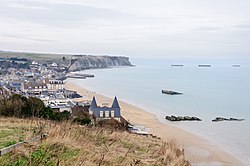
Mulberry harbour remains at Arromanches
Lambot's original 1848 bateau in the Brignoles Museum in France.
Ferrocement hull under construction
A particularly fair ferrocement vessel, the staysail schooner "Rich Harvest"

Ferrocement or ferro-cement[1] is a system of construction using reinforced mortar[2] or plaster (lime or cement, sand, and water) applied over an "armature" of metal mesh, woven, expanded metal, or metal-fibers, and closely spaced thin steel rods such as rebar. The metal commonly used is iron or some type of steel, and the mesh is made with wire with a diameter between 0.5 mm and 1 mm. The cement is typically a very rich mix of sand and cement in a 3:1 ratio; when used for making boards, no gravel is used, so that the material is not concrete.

Ferrocement is used to construct relatively thin, hard, strong surfaces and structures in many shapes such as hulls for boats, shell roofs, and water tanks. Ferrocement originated in the 1840s in France and the Netherlands and is the precursor to reinforced concrete. It has a wide range of other uses, including sculpture and prefabricated building components. The term "ferrocement" has been applied by extension to other composite materials, including some containing no cement and no ferrous material.[citation needed]

The "Mulberry harbours" used in the D-Day landings were made of ferrocement, and their remains may still be seen at resorts like Arromanches.

Definitions

[edit]

Cement and concrete are used interchangeably but there are technical distinctions and the meaning of cement has changed since the mid-nineteenth century when ferrocement originated. Ferro- means iron although metal commonly used in ferro-cement is the iron alloy steel. Cement in the nineteenth century and earlier meant mortar[3] or broken stone or tile mixed with lime and water to form a strong mortar.[4] Today cement usually means Portland cement,[5] Mortar is a paste of a binder (usually Portland cement), sand and water; and concrete is a fluid mixture of Portland cement, sand, water and crushed stone aggregate which is poured into formwork (shuttering). Ferro-concrete is the original name of reinforced concrete (armored concrete) known at least since the 1890s and in 1903 it was well described in London's Society of Engineer's Journal[6] but is now widely confused with ferrocement.

History

[edit]

Ferrocement was independently developed by two French inventors: Joseph-Louis Lambot and Joseph Monier. In 1848, Lambot constructed a boat using a cement and iron mesh system,[7] which he later exhibited at the Exposition Universelle in 1855 under the name ferciment. Although he patented the method in Belgium the same year, the patent applied only within that country.

Joseph Monier, initially a gardener, patented his version of reinforced cement in July 1867 for manufacturing urns, planters, and cisterns—traditionally made of fragile and costly ceramics. In 1875, he expanded his patent to include structural applications such as bridges, creating one of the first steel-reinforced concrete bridges. The structure's exterior was styled to resemble rustic timber, an early example of faux bois (fake wood) concrete.

In the first half of the 20th century, Italian engineer Pier Luigi Nervi advanced the use of ferrocement (Italian: ferro-cemento) in architectural and structural design.

Ferroconcrete has relatively good strength and resistance to impact. When used in house construction in developing countries, it can provide better resistance to fire, earthquake, and corrosion than traditional materials, such as wood, adobe and stone masonry. It has been popular in developed countries for yacht building because the technique can be learned relatively quickly, allowing people to cut costs by supplying their own labor. In the 1930s through 1950s, it became popular in the United States as a construction and sculpting method for novelty architecture, examples of which are the Cabazon Dinosaurs and the works of Albert Vrana.

Construction formwork

[edit]

The desired shape may be built from a multi-layered construction of mesh, supported by an armature, or grid, built with rebar and tied with wire. For optimum performance, steel should be rust-treated, (galvanized) or stainless steel. Over this finished framework, an appropriate mixture (grout or mortar) of Portland cement, sand and water and/or admixtures is applied to penetrate the mesh. During hardening, the assembly may be kept moist, to ensure that the concrete is able to set and harden slowly and to avoid developing cracks that can weaken the system. Steps should be taken to avoid trapped air in the internal structure during the wet stage of construction as this can also create cracks that will form as it dries. Trapped air will leave voids that allow water to collect and degrade (rust) the steel. Modern practice often includes spraying the mixture at pressure (a technique called shotcrete) or some other method of driving out trapped air.

Older structures that have failed offer clues to better practices. In addition to eliminating air where it contacts steel, modern concrete additives may include acrylic liquid "admixtures" to slow moisture absorption and increase shock resistance to the hardened product or to alter curing rates. These technologies, borrowed from the commercial tile installation trade, have greatly aided in the restoration of these structures.[8] Chopped glass or poly fiber can be added to reduce crack development in the outer skin. (Chopped fiber could inhibit good penetration of the grout to steel mesh constructions. This should be taken into consideration and mitigated, or limited to use on outer subsequent layers. Chopped fibers may also alter or limit some wet sculpting techniques.)

Economics

[edit]

The economic advantage of ferro concrete structures is that they are stronger and more durable than some traditional building methods.[citation needed] Ferro concrete structures can be built quickly, which can have economic advantages.[9]

In India, ferro concrete is used often because the constructions made from it are more resistant to earthquakes.[citation needed] Earthquake resistance is dependent on good construction technique.

In the 1970s, designers adapted their yacht designs to the then very popular backyard building scheme of building a boat using ferrocement. Its big attraction was that for minimum outlay and costs, a reasonable application of skill, an amateur could construct a smooth, strong and substantial yacht hull. A ferro-cement hull can prove to be of similar or lower weight than a fiber reinforced plastic (fiberglass), aluminium, or steel hull.[citation needed]

There are basically three types of methods of ferrocement. They are following

  1. Armature system: In this method the skeleton steel is welded to the desired shape on either of sides of which are tied several layers of stretched meshes. This is strong enough, so that mortar can be filled in by pressing for one side and temporarily supporting from the other side. Filling in of mortar can also be administered by pressing in the mortar from both the sides. In this method the skeletal steel (bars) are at centre of the section and as such they add to the dead weight of without any contribution to strength.
  2. Closed mould systems: Several layers of meshes are tied together against the surface of the mould which holds them in position while mortar is being filled in. The mould may be removed after curing or may remain in position as a permanent part of a finished structure. If the mould is to be removed for reuse, releasing agent must be used.
  3. Integrated mould system: Using minimum reinforcement any integral mould is first to be considered to act as a framework. On this mould layers of meshes are fixed on either side and plastering is done onto them from both sides. As the name suggests, the mould remains permanently as an integral part of the finished structure. (e.g. double T-sections for flooring, roofing, etc.) Precaution should be taken to have firm connection between the mould and the layers filled in later, so that finished product as a whole integral structural unit.

Advantages

[edit]

The advantages of a well built ferro concrete construction are the low weight, maintenance costs, and long lifetime in comparison with purely steel constructions.[10] However, meticulous building precision is considered crucial, especially with respect to the cementitious composition and the way in which it is applied in and on the framework, and how or if the framework has been treated to resist corrosion.

When a ferro concrete sheet is mechanically overloaded, it will tend to fold instead of break or crumble like stone or pottery. As a container, it may fail and leak but possibly hold together. Much depends on the techniques used in the construction.

Using the example of the Mulberry Harbours, pre-fabricated units could be made for ports (such as Jamestown on St Helena) where conventional civil engineering is difficult.

Disadvantages

[edit]

The disadvantage of ferro concrete construction is the labor-intensive nature of it, which makes it expensive for industrial application in the western world. In addition, threats to degradation (rust) of the steel components is a possibility if air voids are left in the original construction, due to too dry a mixture of the concrete being applied, or not forcing the air out of the structure while it is in its wet stage of construction, through vibration, pressurized spraying techniques, or other means. These air voids can turn to pools of water as the cured material absorbs moisture. If the voids occur where there is untreated steel, the steel will rust and expand, causing the system to fail.

In modern practice, the advent of liquid acrylic additives and other advances to the grout mixture create slower moisture absorption over the older formulas, and also increase bonding strength to mitigate these failures. Restoration steps should include treatment to the steel to arrest rust, using practices for treating old steel common in auto body repair.

Insurance issues

[edit]

In the 1960s in Australia, New Zealand, and the UK, amateur boatbuilders turned to ferrocement to build larger hulls on limited budgets. However, many underestimated the high fitting-out costs of larger vessels. As a result, some projects remained unfinished or were poorly completed—often overweight and crudely built. In some cases, owners insured their unsellable boats and deliberately sank them to claim compensation. Due to such frauds, insurers became cautious, and today even well-built ferrocement boats face difficulties obtaining third-party coverage, while comprehensive insurance is rarely available.[citation needed]

See also

[edit]

References

[edit]
[edit]
Revisions and contributorsEdit on WikipediaRead on Wikipedia
from Grokipedia
Ferrocement is a consisting of a thin layer of mortar reinforced with multiple layers of closely spaced wire or rods, typically without coarse aggregates, enabling the creation of strong, lightweight, and watertight structures in complex shapes. This , with thicknesses generally ranging from 10 to 25 millimeters, provides high tensile strength, , and impact resistance due to its dense pattern and fine mortar matrix. The origins of ferrocement trace back to 1848, when French inventor and gardener Joseph-Louis Lambot constructed the first known ferrocement boat—a placed in a at his estate in Miraval, —to protect it from rot. Lambot patented the technique as "ferciment" in 1855, describing it as a method for combining iron wire mesh with hydraulic cement for durable objects like planters and seats. Further developments occurred in the late , with applications in small boats and architectural elements in , including early examples in and . The material gained significant traction in the 20th century through the innovations of Italian engineer , who in the 1940s experimented with ferrocement for prefabricated elements and thin-shell structures, patenting techniques for curved and vaulted forms that minimized material use. Nervi's post-World War II projects, such as the Torino Esposizioni pavilions (1947–1953), showcased ferrocement's potential for large-scale, aesthetically innovative architecture, integrating it into his "Nervi system" of structural . By the , ferrocement had been adopted globally for low-cost construction in developing regions, though interest waned in the 1970s due to rising labor costs and competition from conventional ; however, renewed interest has emerged in the for sustainable and innovative applications. Ferrocement's defining characteristics include its versatility for molding into curved or folded forms without extensive , reliance on readily available materials like and wire mesh, and suitability for unskilled labor in hand-plastering or shotcreting applications. It offers advantages such as economic efficiency, reduced weight compared to traditional (with a around 2400 kg/m³), excellent watertightness for containment, and resistance to cracking under impact or , making it ideal for seismic-prone areas. However, proper curing (14–28 days) and protective coatings are essential to prevent of the , as inadequate maintenance can lead to or reduced . Its compressive can reach up to 70 MPa in optimized mixes, supporting applications where thin sections suffice without heavy loads. Common applications of ferrocement span maritime, architectural, and infrastructural uses, including hulls, tanks (such as 47 m³ capacity structures in rural settings), silos, dome roofs, wall panels, and irrigation channels. In modern contexts, it is employed for low-cost housing in developing countries, repair of existing elements, and decorative or sculptural features due to its moldability. Notable historical examples include Nervi's wave-like ferrocement vaults in exhibition halls and early 20th-century zoo enclosures, demonstrating its enduring role in innovative, resource-efficient building.

Fundamentals

Definition and Principles

Ferrocement is a consisting of a thin shell of mortar reinforced with closely spaced layers of continuous wire or small-diameter rods embedded throughout its volume. This construction results in a high of , typically exceeding 2.5 in²/in³, which distinguishes it from conventional by enabling finer distribution of tensile elements and a mortar-dominant matrix that carries most of the compressive loads. The term "ferro" derives from the integration of () within the cementitious binder, creating a synergistic where the provides tensile capacity and the mortar imparts . The core engineering principles of ferrocement revolve around effective tensile through the mesh layers, which arrest and control crack under load. Unlike traditional , where discrete bars handle tension primarily in one direction, the closely spaced, multi-directional in ferrocement distributes stresses more uniformly, limiting crack widths to microscopic levels and enhancing without significant loss of integrity. The mortar matrix, rich in and fine aggregates, dominates the volume and provides the primary resistance to compression, while the 's high bond surface area ensures load transfer and prevents . Key characteristics of ferrocement include its ability to form thin sections, typically ranging from 10 to 50 mm in thickness, allowing for lightweight structures with a high strength-to-weight ratio comparable to that of in and compression. This thin profile, combined with the material's inherent moldability, enables versatility in fabricating curved or complex geometric shapes that would be challenging or uneconomical with conventional , which relies on thicker sections and localized bar . Overall, ferrocement's design emphasizes a balanced composite action where the mortar's compressive dominance and the mesh's tensile distribution yield superior crack resistance and impact toughness relative to its low self-weight.

Materials and Composition

Ferrocement primarily utilizes in the form of closely spaced wire meshes or small-diameter rods to provide tensile strength, embedded within a mortar matrix that delivers compressive capacity and protects against . Common types of include woven wire mesh such as hexagonal or square patterns, , and welded-wire fabric, often supplemented by skeletal rods for structural framing. Wire diameters typically range from 0.64 to 2.00 mm, with mesh openings spaced between 6.4 and 50 mm, though finer spacings of 13 mm are common for optimal mortar infiltration and bond. To mitigate , reinforcements are frequently galvanized or coated with , although galvanizing may slightly reduce tensile yield strength to 310–450 MPa. The mortar in ferrocement is a rich, fine-aggregate mix designed for high workability and strong to the , distinguishing it from conventional by its higher proportion and lack of coarse aggregates. Composition generally includes (ASTM C150 Type I or II) with a higher content than in conventional , well-graded silicious as fine aggregate (maximum size 2.36 mm per ASTM C33), and a water- of 0.35–0.5 to ensure flow without segregation. Optional admixtures such as water reducers (ASTM C494), pozzolanic materials like fly ash (ASTM C618), or air-entraining agents (ASTM C260) enhance workability, , and resistance to environmental factors. Key properties include a 28-day of 35–50 MPa and robust bond strength to , achieved through the mortar's dense matrix that fully encapsulates the , preventing moisture ingress and . The layering system integrates multiple meshes within the mortar to form a monolithic composite, typically employing 2–6 layers of distributed uniformly through the thickness, with each mortar layer applied at 3–10 mm to ensure complete encapsulation. This configuration, often with meshes tied to skeletal rods, promotes even stress distribution and enhances crack control by allowing the mortar to infiltrate all voids around the . Quality control in ferrocement production focuses on verifying material compatibility and composite integrity through standardized tests. Mortar workability is assessed via the slump test, targeting 25–50 mm to balance flow and cohesion during application. Mesh tensile strength is evaluated to confirm yield values of at least 310 MPa, while the overall composite ranges from 2.1–2.3 g/cm³, reflecting the mortar's dominance (over 95% by ) and reinforcement fraction.
Material ComponentKey SpecificationsTypical Properties
Steel MeshDiameter: 0.64–2.00 mm; Spacing: 6.4–25 mm; Coatings: Galvanized/Tensile yield: 310–450 MPa
Mortar: Higher than conventional ; : ≤2.36 mm; w/c: 0.35–0.5Compressive strength: 35–50 MPa; Density: 2.1–2.3 g/cm³
Layering2–6 layers; Mortar per layer: 3–10 mmFull encapsulation for resistance
Quality TestsSlump: 25–50 mm; Tensile (): ≥310 MPaEnsures bond and workability

Historical Development

Invention and Early Applications

The origins of ferrocement trace back to 1848, when French inventor and Joseph-Louis Lambot developed the technique while seeking a durable for garden structures on his estate in Miraval, . Lambot created the first documented ferrocement structure—a small reinforced with iron mesh embedded in a mixture—which he tested successfully on local ponds. This innovation marked the earliest practical application of what would later be termed ferrocement, predating broader developments. In 1855, Lambot patented his method under the name "ciment armé" (armed cement) and exhibited the intact boat at the Paris Exposition Universelle, where it garnered attention for its lightweight strength and watertightness. Building on Lambot's foundation, other French pioneers advanced ferrocement in the 1850s and 1860s, adapting it for practical utilities. François Coignet, a builder and industrialist, experimented with iron bar- for pipes, basins, and structural elements during the 1850s, constructing early examples like the first house in 1853 that demonstrated improved tensile resistance over plain . Similarly, gardener Joseph Monier patented iron-wire reinforcements in for horticultural containers in 1867, followed by applications in pipes and basins by 1868, emphasizing the material's suitability for curved, thin-walled forms. These contributions, primarily in , shifted ferrocement from experimental novelty to viable engineering tool, influencing subsequent patents. By the late , ferrocement saw initial applications across , particularly for small-scale, non-structural uses that leveraged its moldability and economy, including in and . Common examples included water tanks for rural storage, ornamental garden features like fountains and statues, and modest boats or barges for inland waterways, with constructions appearing in , , , and canal systems by the . These projects highlighted ferrocement's advantages in creating seamless, corrosion-resistant surfaces for liquid containment and lightweight vessels. However, adoption remained limited due to the absence of standardized guidelines, which hindered reliable scaling, and intense competition from emerging framing and plain methods that offered perceived simplicity. Early ferrocement faced significant challenges that curtailed its widespread use, including vulnerability to where the thin mortar cover failed to fully protect the iron from ingress, leading to expansion and cracking in exposed environments. Engineers expressed considerable toward the material, viewing it as unproven compared to established techniques like or , which benefited from longer track records and codified practices. Without rigorous testing protocols or theoretical frameworks for load-bearing behavior, many professionals dismissed ferrocement as suitable only for minor, decorative roles rather than .

Modern Advancements and Adoption

In the 1920s and 1940s, Italian engineer revived interest in ferrocement through innovative applications that showcased its potential for large-scale, thin-shell structures. Nervi employed ferrocement techniques in projects such as airplane hangars at and , where thin shells achieved spans up to 50 meters, demonstrating the material's scalability and efficiency in wartime construction. His work on thin-shell roofs, including prefabricated ferrocement elements for exhibition halls, further highlighted the material's versatility for architectural forms, influencing post-war engineering practices. Following World War II, ferrocement saw expanded growth in diverse applications, particularly in boat building and affordable housing. In the 1960s and 1970s, ferrocement yachts became popular among amateur builders due to the material's low cost and moldability, with notable designs like those by Al Mason enabling durable vessels up to 40 feet in length that remain in service today. Simultaneously, international organizations promoted ferrocement for low-cost housing in developing countries; the International Labour Organization (ILO) and United Nations programs emphasized its suitability for rural shelters, enabling rapid construction with local labor and materials. Standardization efforts advanced with the formation of the American Concrete Institute (ACI) Committee 549 in 1974, which issued its first state-of-the-art report in 1982, providing guidelines that codified design and construction practices for broader adoption. From the 1980s to 2025, research has focused on enhancing ferrocement's performance through hybrid composites, advanced modeling, and sustainability improvements. Studies on hybrid ferrocement incorporating fiber-reinforced polymers and meshes have shown increased by up to 50% compared to traditional variants, enabling lighter and more ductile structures. Finite element modeling has become integral for optimizing designs, simulating behaviors under complex loads to predict crack patterns and improve seismic resilience in shells and panels. Sustainable variants using recycled aggregates and fibers from waste materials have reduced embodied carbon by 20-30% while maintaining structural integrity, aligning with standards. The 2025 International Conference on , Science, and Technology of Ferrocement Construction, held in , underscored these advancements by featuring presentations on disaster-resilient applications, such as earthquake-resistant panels that outperform conventional in cyclic loading tests. Globally, ferrocement has achieved widespread adoption in resource-constrained regions, particularly for essential infrastructure. In , especially , it supports rural housing programs, where precast panels enable affordable, earthquake-resistant homes in seismic zones III-V, reducing construction costs by 25% over brick alternatives. In , ferrocement is commonly used for water storage tanks, with designs in and providing durable reservoirs up to 200 cubic meters that withstand environmental stresses in arid areas. Experimental applications in seismic zones, such as unreinforced walls with ferrocement overlays, have demonstrated enhanced in-plane shear capacity, promoting its use in vulnerable earthquake-prone areas worldwide.

Design and Engineering

Structural Mechanics

Ferrocement exhibits composite action in which the cement mortar matrix primarily resists compressive stresses, while the closely spaced layers of wire carry tensile loads, enabling efficient load distribution in thin sections. This interaction relies on strong bond between the mortar and , preventing slippage and ensuring monolithic under loading. Due to the layered and often anisotropic arrangement of the meshes, ferrocement displays properties, with differing and strength in the directions parallel and to the mesh layers. The tensile capacity of ferrocement is governed by the equation ft=σsVsf_t = \sigma_s \cdot V_s, where ftf_t is the tensile strength, σs\sigma_s is the yield strength of the , and VsV_s is the volume of in the composite. Shear is typically evaluated using a analogy model, treating the structure as an assemblage of elements where diagonal compression struts in the mortar interact with tensile ties provided by the , though experimental validation remains limited for complex geometries. Ferrocement members should meet the intent of ACI 318 serviceability requirements, with deflection controlled by the material's flexibility rather than specific ratios such as span/360 under live load for beams, per ACI 549.1R-18 guidelines. Common failure modes in ferrocement include crack propagation through the mortar due to excessive tensile strains, delamination at mesh-mortar interfaces from poor bonding or corrosion, and buckling in thin shells under compressive or in-plane loads. In curved or shell structures, the influence of geometry is significant: membrane stresses dominate in shallow curvatures, promoting ductile failure, whereas bending stresses in sharper curvatures can lead to localized cracking or collapse. Validation of structural models relies on standardized testing methods, including flexural tests on beams with span-to-depth ratios of at least 20 to assess moment capacity and , tensile tests on dog-bone specimens to measure direct tensile strength, and impact tests to evaluate absorption under dynamic loads. These experimental results are often used to calibrate finite element analysis models, which account for orthotropic properties and nonlinear behavior to predict performance in complex geometries like shells or panels.

Reinforcement and Thickness Design

The design process for ferrocement reinforcement and thickness commences with load analysis, encompassing dead loads from self-weight, live loads based on intended use, and environmental loads such as wind, seismic, or water pressure, following general principles adapted for thin composites per ACI 549.1R-18. The ratio, expressed as the volume VfV_f of within the composite, is selected in the range of 0.5% to 5% to balance tensile strength, , and material efficiency, with higher ratios applied for demanding tension zones. Layer configuration typically incorporates skeletal bars ( 6-12 mm) for primary longitudinal and transverse tension, supplemented by 2-10 layers of fine wire mesh (0.5-1.5 mm ) for secondary , ensuring uniform stress distribution and crack control through even spacing across the section depth. Thickness determination relies on empirical guidelines tied to structural demands and , often iterating from required moment or shear capacity using formulas like the nominal moment strength Mn=Tsi(dic)M_n = \sum T_{si} (d_i - c), where TsiT_{si} is the yield force of the ii-th layer, did_i its effective depth, and cc the depth found by equilibrium. Thickness must be sufficient to accommodate layers and provide adequate mortar cover (typically 2 mm net or 2x wire ), preventing and ensuring constructability, with common values around 20 mm for flat panels and 10-25 mm overall depending on application. ACI 549.1R-18 emphasizes design based on load requirements rather than a fixed minimum. Finite element software such as or SAP2000 facilitates advanced modeling by treating ferrocement as orthotropic shell elements, allowing simulation of stress distribution, deflection under combined loads, and iterative optimization of reinforcement layouts. International standards like adaptations of Eurocode 2 for thin reinforced cementitious systems guide design by modifying conventional provisions for mesh efficiency and volume fraction effects, emphasizing serviceability limits on crack width (≤0.3 mm). In optimization examples, multi-layer configurations with 4-8 mesh layers and varying wire densities have been employed for marine structures like hulls, enhancing impact resistance by distributing localized stresses and providing redundancy against puncture, as validated in experimental studies on ferrocement panels under .

Construction Techniques

Formwork and Molding

In ferrocement construction, provides the necessary support to shape the thin composite structure during mortar application, with options categorized as temporary or permanent based on whether they are removed post-curing. Temporary , often constructed from reusable materials like panels or , is suitable for flat walls or simple curves and allows for easy disassembly after the mortar sets, promoting cost efficiency in repetitive builds. Permanent , such as integral molds integrated into the final structure, eliminates removal steps and can serve as an inner liner, though it requires durable materials to withstand long-term exposure. Flexible molds, including sheeting draped over frames or spaced wooden boards, are particularly advantageous for curved surfaces like domes, as they adapt to compound curvatures with minimal material, enabling seamless shaping without extensive bracing. Molding techniques typically commence with armature construction, where a skeletal framework of closely spaced steel rods (spaced at 75-150 mm intervals) forms the core to define the structure's and support subsequent layers. Wire is then attached to this armature using ties, staples, or clamps, creating a multi-layer envelope—often 2 to 8 layers—that ensures even mortar distribution and tensile strength. For hollow sections like or U-shaped beams, double-layer molding employs inner and outer placements within a closed mold, with mortar layered between to achieve wall thicknesses of 20-50 mm, facilitating the production of , watertight tubular elements without internal supports. This method leverages the mold's confinement to maintain shape during curing, ideal for prefabricated components in infrastructure. Essential tools and setup elements include clamps and wire ties to secure the rigidly against the , preventing displacement under mortar pressure, and spacers (typically 10-20 mm plastic or metal pieces) to maintain precise separation between mesh layers and mold faces for uniform thickness. In marine or watertight applications, seals are achieved through mold coatings or to avoid leakage, ensuring the mortar's low water-cement ratio (under 0.40) bonds effectively without voids. Pre-assembly involves aligning the armature and on a stable base, with checks for continuity to avoid breaks that could compromise integrity. Common errors, such as mesh misalignment from inadequate ties, can result in uneven and structural weaknesses, while insufficient compaction during setup may cause air voids or bulging in curved molds. These issues are mitigated by rigorous pre-assembly inspections, including visual verification of tie density (every 150-300 mm) and test fittings to confirm dimensional accuracy before proceeding. Proper execution of these steps ensures the formwork supports high-quality ferrocement fabrication with minimal defects.

Plastering, Curing, and Finishing

Plastering in ferrocement construction involves applying cement mortar in multiple thin layers over the wire mesh armature to ensure complete encapsulation and uniform distribution. The preferred method is hand troweling, where mortar is forced through the mesh openings using trowels or floats to achieve 100% coverage without voids. Alternatively, wet-mix can be sprayed for larger surfaces, but hand application allows better control for thin sections. Layers are typically 3-5 mm thick each, applied in successive passes—often 4-8 layers total—starting from one side and progressing to the opposite to build up the required thickness while maintaining workability. Mortar must be applied within one hour of mixing to prevent initial set, and continuous plastering sessions are recommended to avoid cold joints. Curing is critical to develop the mortar's strength and prevent surface cracking in ferrocement due to its thin profile and high surface-to-volume ratio. Moist curing methods, such as fogging with sprays, covering with wet burlap or bags under sheeting, or using soaker hoses, should begin immediately after the final plastering layer sets—typically within 24 hours. The process lasts 14-21 days to achieve adequate hydration, with continuous moisture retention essential to reach approximately 80% of the 28-day . Optimal temperatures during curing range from 10-30°C (50-86°F) to control hydration rates and minimize thermal cracking; in hot weather, retarders may be added to the mortar mix, while protective coverings prevent rapid drying. If is scarce, damp coverings or curing compounds can substitute, but wet methods yield superior results for durability. Finishing ferrocement surfaces focuses on achieving a durable, aesthetic exterior while protecting the from environmental exposure. After curing, surfaces are smoothed with wood floats or textured using brushes or rollers for architectural appeal, ensuring at least 2-3 mm of cover over the outermost layer. Common treatments include applying waterproof sealants, resins, or bituminous coatings to enhance resistance to moisture ingress and . Defects such as —voids from incomplete mortar consolidation—are repaired by chipping out loose material, cleaning the area, and patching with a compatible mortar mix applied in thin layers, followed by re-curing for 7 days. Quality assurance in plastering, curing, and finishing ensures structural integrity and performance through visual inspections and testing protocols. Complete mesh encapsulation is verified during plastering by checking for mortar penetration and absence of exposed wires. Post-curing, non-destructive tests like the rebound (Schmidt ) assess surface hardness and estimate , correlating rebound numbers to mortar quality per ASTM C805 standards. Destructive sampling, such as core extraction for compressive testing (ASTM C39), confirms ≥5000 psi (34.5 MPa) at 28 days, with minimal voids indicating effective processes. These measures help identify issues early, ensuring the ferrocement achieves its designed tensile and flexural properties.

Applications

Architectural and Residential Uses

Ferrocement has been widely employed in architectural applications for creating thin-shell roofs, domes, and facades, leveraging its ability to form complex curvatures with minimal material thickness, typically under 25 mm. These structures, such as hyperbolic paraboloid and shells, provide efficient load distribution and aesthetic appeal through fluid, organic forms that integrate seamlessly with modern design. For instance, the Husain Doshi Gufa in , , features a ferrocement shell roof that withstood the without cracking, demonstrating its structural reliability in curved architectural elements. A seminal example is Pier Luigi Nervi's in , completed in 1957, where 1,620 prefabricated ferrocement panels, each 2.5 cm thick, formed the disposable for a shallow spherical dome roof spanning 59 meters in diameter. This innovative use of ferrocement, patented by Nervi in 1950, allowed for rapid on-site casting of the shell and ribs, enabling completion in under 35 days while achieving expressive architectural geometry supported by 36 Y-shaped frames. Design considerations in such projects emphasize the material's malleability for aesthetic integration, often using computational form-finding tools like Rhino Vault to optimize curves for both visual impact and structural efficiency, reducing weight by up to 45% compared to . Insulation layers can be incorporated into ferrocement panels to enhance thermal performance, making them suitable for energy-efficient architectural facades. In residential applications, ferrocement serves as a versatile material for components, including precast wall panels, partitions, and septic tanks, offering lightweight alternatives to traditional . Precast panels, typically 4 ft by 3 ft, are fabricated off-site with and layered mortar, then erected on-site to form walls and partitions that reduce time and labor needs. Septic tanks constructed from ferrocement provide watertight, corrosion-resistant enclosures for residential management, built using metal cages plastered with mortar in multiple layers for durability and ease of on-site assembly. These elements are particularly beneficial in low-income , where ferrocement's high tensile strength-to-weight ratio supports methods. Notable residential projects include Indian rural and urban programs from the through the , where ferrocement slabs and panels have been adopted for cost-effective roofing and walling in initiatives addressing slum shortages and . A 2021 of a ferrocement farmhouse in Kirkatwadi village near utilized 2-inch-thick slabs with chicken mesh , topped with tiles for weatherproofing, highlighting the material's suitability for sustainable, prefabricated residential structures. In seismic-prone areas, ferrocement's superior cracking behavior and enhance resilience; for example, hollow ferrocement columns and cavity walls provide earthquake resistance while maintaining and insulation in low-rise homes. Modern eco-homes exemplify ferrocement's ongoing relevance, such as Anupama Kundoo's Full Fill Homes prototype unveiled in , which uses modular, Lego-like ferrocement blocks assembled in six days to create flexible, low-impact for underserved communities. These hollow blocks double as storage and furniture, withstand mild earthquakes and strong winds, and promote sustainability through recycled materials and minimal resource use, with potential for added insulation to improve in residential settings.

Marine, Industrial, and Specialized Structures

Ferrocement has been extensively applied in marine environments due to its high strength-to-weight ratio, watertightness, and resistance to when properly protected. In boat , ferrocement hulls were pioneered in the mid-20th century for yachts and commercial vessels, with notable examples including 30- to 60-foot private sailboats and up to 180-foot ships built in countries like the , , and . These vessels benefit from the material's ability to be molded into hydrodynamic shapes, providing rigidity and ease of repair in remote areas. For instance, in developing nations, 12-meter boats constructed in during the 1970s cost approximately $330, offering 50% lower expenses than wooden alternatives while demonstrating superior stability and longevity exceeding 20-30 years. Barges and piers also leverage ferrocement's durability; a barge developed in exhibited yield strengths over 6,000 psi, suitable for river and coastal transport in , such as Thailand's Chao Phya River barges. Corrosion resistance is enhanced through impermeable coatings like or marine paints, which prevent ingress of saltwater, particularly important given the thin 1/8-inch cover over reinforcement mesh. In wave-impacted conditions, ferrocement structures exhibit strong performance, with impact resistance approaching that of marine plywood at appropriate thicknesses and superior for energy absorption. Experimental tests on 1/2-inch panels showed leakage rates of 6 gallons per hour under a 2-foot head before critical , while sandwich constructions with fiber-reinforced overlays improved resistance by 8-10 times. This makes ferrocement ideal for piers and floating docks, where it withstands repeated wave action with minimal cracking if mortar mix maintains low water-to-cement ratios and crack widths below 50 microns. With proper , such as periodic coating inspections, marine ferrocement applications can achieve service lives of 50 years or more, as evidenced by low permeability and shrinkage characteristics that prolong exposure to harsh saline environments. Industrial applications of ferrocement capitalize on its cost-effectiveness and resistance to heavy loads in agriculture and infrastructure. Grain storage silos, such as those in holding 4-10 tons, cost around $121 in 1969 and achieve less than 1% annual grain loss by providing airtight, pest-resistant enclosures. In agriculture, these silos and similar structures like animal feed bins demonstrate longevity through watertight seals and minimal maintenance needs. Storage tanks for water or chemicals, exemplified by New Zealand designs ranging from 200 to 5,000 gallons, come with 25-year guarantees and indefinite service life when coated appropriately. Bridges and flood barriers further highlight industrial utility; ferrocement panels have been used for pedestrian bridges and retaining walls that resist lateral flood forces, with applications in channels and hydraulic gates showing high toughness against . Specialized structures employ ferrocement for its versatility in creating complex, space-efficient forms under extreme conditions. In disaster relief, core shelters using ferrocement panels, as promoted by organizations like EcoSur, enable of 15-square-meter units in just three days, providing rapid, durable housing that families can expand into permanent residences. These have been implemented in post-disaster reconstructions, such as in after 2010 earthquakes, offering resistance to seismic and weather impacts while using local labor. Artistic sculptures and folded plate structures also utilize ferrocement for its moldability; rustic designs mimicking natural stone or wood, developed since the early , achieve aesthetic durability through fine mesh reinforcement and layers, as detailed in historical analyses of garden ornaments and public installations. Overall, these niche uses underscore ferrocement's impact resistance—absorbing energies without —and potential for 50+ years of service with routine upkeep. As of 2025, recent innovations include green ferrocement incorporating pozzolanic wastes for reduced environmental impact in low-cost housing and disaster-resilient structures.

Performance Evaluation

Advantages

Ferrocement offers exceptional versatility in due to its to be molded into complex, curved shapes such as domes, shells, and hulls with thin sections typically under 25 mm thick, enabling efficient use of materials and thinner sections compared to traditional reinforced (RCC) structures. This formability stems from the continuous wire mesh embedded in mortar, which allows for seamless, one-piece without the need for extensive joints or heavy . The material's high strength-to-weight ratio provides significant structural benefits, with allowable tensile strength reaching up to 10 MPa and ultimate values as high as 34 MPa, far surpassing plain while maintaining a low self-weight that minimizes foundation requirements and facilitates easier transportation and assembly. This lightweight nature, combined with compressive strengths ranging from 28 to 69 MPa, results in durable, impact-resistant elements suitable for load-bearing applications like roofs and walls. In terms of cost and labor efficiency, ferrocement construction leverages readily available materials like , , and wire , while requiring minimal skilled labor and , leading to overall savings of approximately 27% in initial costs compared to RCC in low-technology settings. The technique's reliance on manual plastering over pre-assembled allows for on-site adaptability and of modular panels, further reducing expenses through material optimization and simplified logistics. Durability is a key advantage, with ferrocement exhibiting superior crack resistance and watertightness due to its dense mortar matrix and multi-layered , which distributes stresses evenly and prevents propagation under or impact. It also demonstrates effective fire resistance, maintaining structural integrity post-exposure and serving as a protective jacket for underlying elements, owing to its non-combustible composition. Additional benefits include aesthetic flexibility, as the smooth, moldable surface supports decorative finishes without additional cladding, and for prefabricated components that enhance speed and uniformity in architectural and marine applications.

Disadvantages and Mitigation Strategies

One primary limitation of ferrocement is its , particularly during the plastering phase, which requires continuous application of mortar layers over the and demands a large number of workers to maintain a steady supply of materials. This process is more time-consuming than conventional (RCC) methods due to the manual tying of rods and as well as the need for skilled workmanship to ensure uniform coverage. To mitigate this, mechanized spraying techniques, such as wet-mix , can be employed to accelerate mortar application and reduce manual labor requirements, while training specialized teams enhances efficiency and . Corrosion vulnerability represents another key challenge, as the thin mortar cover over the wire mesh can lead to exposure of the reinforcement to environmental factors like and salts, especially in marine or aggressive settings, resulting in expansion and structural degradation. If the mesh is not fully encapsulated during construction, this issue exacerbates, potentially causing spalling and reduced . Mitigation strategies include ensuring complete mortar encapsulation through careful application, using corrosion-resistant materials like mesh, and incorporating systems where exposure risks are high. Insurance and regulatory challenges arise from ferrocement's relative novelty compared to traditional materials, often leading to higher premiums and requirements for special approvals from building authorities due to perceived risks. Adherence to established standards, such as those outlined in ACI 549.1R-18, facilitates and acceptance by regulators and , promoting wider adoption by demonstrating compliance with , , and criteria. Ferrocement structures can exhibit brittleness under localized point loads or impacts, where thin sections are prone to puncture or cracking from sharp objects or collisions, limiting their suitability for high-impact applications. Repairs are further complicated by the intricate layout and thin profiles, making it difficult to access damaged areas without invasive methods. To address these, hybrid reinforcement approaches—combining wire with additional bars or —improve impact resistance and , while injections effectively seal cracks and restore integrity in affected zones. Modern mitigations, such as incorporating additives into the mortar matrix, further enhance tensile properties and retard crack propagation, reducing overall brittleness.

Economic and Environmental Aspects

Cost Analysis and Economics

Ferrocement construction typically involves lower material costs compared to reinforced concrete (RCC), primarily due to its thinner sections and reduced volume of cement mortar required. While ferrocement uses wire mesh as reinforcement, which can account for 10-20% of total material expenses, the overall cement consumption is often 30-50% less than in RCC in many applications because of the absence of coarse aggregates and the material's efficiency in thin sections. For instance, in water tank construction, ferrocement requires approximately 97 bags of cement versus 95 for RCC, but with significantly less aggregate (0.616 m³ versus 6.675 m³) and steel (487 kg versus 687.8 kg), leading to total material costs that are 20-30% lower for small-scale projects under 100 m². Labor economics in ferrocement favor regions with abundant unskilled or semi-skilled workers, as the process demands higher man-hours for plastering and installation but eliminates the need for heavy machinery, cranes, or extensive associated with RCC. This labor-intensive approach reduces equipment rental costs and is particularly advantageous in developing countries where labor is inexpensive, enabling overall construction savings of 35-54% for single-story structures when compared to RCC methods. In a comparative study of single-story buildings, ferrocement labor and materials combined for a total cost of BDT 46,538, versus BDT 102,229 for RCC, highlighting its suitability for in low-resource settings. Lifecycle cost analysis reveals ferrocement's long-term economic benefits through durability and minimal maintenance needs, often resulting in lower operational expenses over 20-50 years. Structures built with ferrocement exhibit reduced dead loads by at least 50%, which lowers foundation costs and subsequent repair frequency, contributing to lifecycle savings compared to RCC. For applications, can be achieved in 5-10 years through energy efficiency and reduced upkeep, as the material's resistance to and cracking minimizes interventions like repainting or patching. In comparisons to alternatives, ferrocement proves more economical than for curved or thin-shell structures, where steel's higher material and fabrication costs (often 20-30% more) are offset by ferrocement's moldability and lower weight. Versus RCC, it excels in applications like shells and panels under 100 , offering 15-30% total savings due to material efficiency, though RCC may be preferable for larger, load-bearing elements requiring less manual labor. Roofing examples demonstrate ferrocement at ₹82 per versus ₹125 for RCC, underscoring its cost edge for specialized forms.

Sustainability and Future Prospects

Ferrocement's environmental benefits stem primarily from its efficient use of materials, resulting in lower and CO2 emissions compared to traditional structures. Due to its thin , ferrocement requires significantly less and aggregate, leading to reduced life cycle energy consumption and environmental impact; for instance, ferrocement water storage tanks exhibit lower and CO2 emissions than equivalent reinforced (RCC) tanks. The steel wire mesh used in ferrocement is recyclable at the end of its life cycle, supporting and minimizing waste in a framework. Additionally, ferrocement's adaptability to local materials, such as sand and cement sourced nearby, decreases transportation distances and associated emissions, enhancing its suitability for sustainable in developing regions. Despite these advantages, ferrocement faces sustainability challenges related to its mortar composition, which relies heavily on —a material whose production accounts for substantial global CO2 emissions, approximately 0.6–0.9 tons per ton of . This high content can elevate the overall of ferrocement elements, particularly in large-scale applications. Mitigations include partial replacement of with pozzolanic wastes like brick powder, ceramic tile powder, or fly ash, which can substitute up to 15% of by weight while maintaining structural integrity and reducing CO2 emissions by a corresponding 15%. Further reductions are achievable through geopolymer-based mortars, which leverage industrial by-products such as fly ash to cut CO2 emissions by 30–70% compared to ordinary mixes, offering a viable low-carbon alternative for ferrocement. Looking ahead, ferrocement holds strong potential in advancing practices, as evidenced by post-2020 research emphasizing waste integration to lower resource demands and emissions. Recent studies from 2025 demonstrate that incorporating construction and demolition wastes into ferrocement slabs not only diverts materials from landfills but also aligns with standards by promoting reduced cement use and lighter structures that lower transport-related emissions. Ongoing investigations into pozzolanic enhancements continue to address carbon challenges, positioning ferrocement as a key material for climate-resilient and eco-efficient designs in .

References

Add your contribution
Related Hubs
User Avatar
No comments yet.