Hubbry Logo
FlavoproteinFlavoproteinMain
Open search
Flavoprotein
Community hub
Flavoprotein
logo
8 pages, 0 posts
0 subscribers
Be the first to start a discussion here.
Flavoprotein
Flavoprotein
from Wikipedia
Flavoprotein
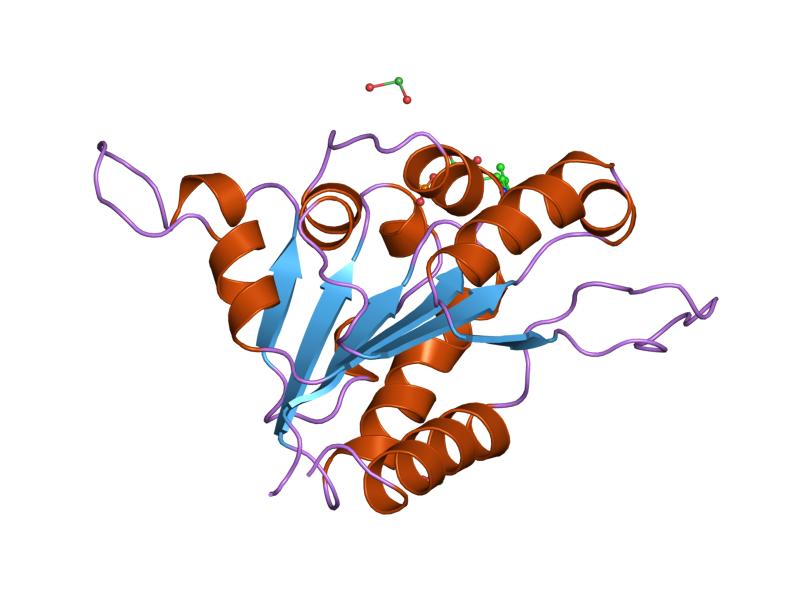
the fmn binding protein athal3
Identifiers
SymbolFlavoprotein
PfamPF02441
InterProIPR003382
SCOP21e20 / SCOPe / SUPFAM
Available protein structures:
Pfam  structures / ECOD  
PDBRCSB PDB; PDBe; PDBj
PDBsumstructure summary

Flavoproteins are proteins that contain a nucleic acid derivative of riboflavin. These proteins are involved in a wide array of biological processes, including removal of radicals contributing to oxidative stress, photosynthesis, and DNA repair. The flavoproteins are some of the most-studied families of enzymes.

Flavoproteins have either FMN (flavin mononucleotide) or FAD (flavin adenine dinucleotide) as a prosthetic group or as a cofactor. The flavin is generally tightly bound (as in adrenodoxin reductase, wherein the FAD is buried deeply).[1] About 5-10% of flavoproteins have a covalently linked FAD.[2] Based on the available structural data, FAD-binding sites can be divided into more than 200 different types.[3]

90 flavoproteins are encoded in the human genome; about 84% require FAD and around 16% require FMN, whereas 5 proteins require both.[4] Flavoproteins are mainly located in the mitochondria.[4] Of all flavoproteins, 90% perform redox reactions and the other 10% are transferases, lyases, isomerases, ligases.[5]

Discovery

[edit]

Flavoproteins were first mentioned in 1879, when they isolated as a bright-yellow pigment from cow's milk. They were initially termed lactochrome. By the early 1930s, this same pigment had been isolated from a range of sources, and recognised as a component of the vitamin B complex. Its structure was determined and reported in 1935 and given the name riboflavin, derived from the ribityl side chain and yellow colour of the conjugated ring system.[6]

The first evidence for the requirement of flavin as an enzyme cofactor came in 1935. Hugo Theorell and coworkers showed that a bright-yellow-coloured yeast protein, identified previously as essential for cellular respiration, could be separated into apoprotein and a bright-yellow pigment. Neither apoprotein nor pigment alone could catalyse the oxidation of NADH, but mixing of the two restored the enzyme activity. However, replacing the isolated pigment with riboflavin did not restore enzyme activity, despite being indistinguishable under spectroscopy. This led to the discovery that the protein studied required not riboflavin but flavin mononucleotide to be catalytically active.[6][7]

Similar experiments with D-amino acid oxidase[8] led to the identification of flavin adenine dinucleotide (FAD) as a second form of flavin utilised by enzymes.[9]

Examples

[edit]

The flavoprotein family contains a diverse range of enzymes, including:

References

[edit]
[edit]
Revisions and contributorsEdit on WikipediaRead on Wikipedia
from Grokipedia
Flavoproteins are a class of enzymes that incorporate flavin cofactors—primarily (FMN) or (FAD), both derived from (vitamin B₂)—as prosthetic groups essential for their catalytic activity in reactions. These proteins function as versatile electron carriers and catalysts, facilitating processes such as oxygen reduction, substrate oxidation, and electron transfer within metabolic pathways like the , fatty acid β-oxidation, and the mitochondrial . Over 120 genes in the encode flavoproteins (with approximately 90% functioning as enzymes and several involved in uptake and transformation), as per recent genomic databases; they play critical roles in cellular energy production, cofactor biosynthesis (e.g., and ), hormone synthesis (e.g., steroids and thyroxine), and one-carbon metabolism. Structurally, flavoproteins typically bind their flavin cofactors non-covalently (in about 90% of cases), though some form covalent linkages via residues like or , enabling fine-tuned potentials and stability. Common structural motifs include the Rossmann fold for binding and the flavin/TIM-barrel for FMN, with conserved segments in the polypeptide chain that form the and cofactor-binding pocket; over 50% of human flavoproteins have had their three-dimensional structures determined by . The flavin moiety's isoalloxazine ring allows it to cycle through oxidized, semiquinone, and reduced states, supporting two-electron transfers crucial for their function. Flavoproteins are implicated in numerous human diseases, with mutations in a significant portion (around 60%, based on analyses up to 2013) of the enzymatic ones linked to disorders such as mitochondrial complex I deficiency, porphyrias, glutaric acidemia type II, and thyroid hormone metabolism defects, often disrupting cofactor binding or efficiency. Prominent examples include (Complex II of the respiratory chain), which oxidizes succinate to fumarate using covalently bound and transfers electrons to ubiquinone, and , which catalyzes degradation to while reducing oxygen to . Their broad distribution across prokaryotes and eukaryotes underscores their evolutionary conservation and fundamental importance in life.

Overview

Definition and Characteristics

Flavoproteins are a diverse class of enzymes that incorporate flavin cofactors—primarily (FMN) or (FAD), both derived from (vitamin B₂)—to facilitate oxidation-reduction reactions central to cellular . These proteins bind the cofactors tightly, often non-covalently, enabling them to act as electron carriers in processes that underpin aerobic metabolism. Flavoproteins are ubiquitous in aerobic organisms, where they integrate into pathways like the mitochondrial to support ATP production and maintain . In humans, the encodes approximately 121 flavoproteins (as of 2025), with roughly 84% dependent on and 16% on FMN, though five enzymes utilize both cofactors. Structural analyses have revealed over 200 distinct FAD-binding motifs, reflecting the evolutionary diversity of these proteins in accommodating the cofactor for efficient function. Notably, the majority of human flavoproteins are localized to mitochondria, highlighting their pivotal role in and related processes. These enzymes fulfill essential functions beyond core , including electron shuttling between dehydrogenases and respiratory complexes, catalytic roles in pathways such as the and β-oxidation, mitigation of through radical scavenging, contributions to photosynthetic electron transport in and , and participation in by handling oxidative lesions.

Occurrence in Organisms

Flavoproteins are highly prevalent in aerobic organisms, where they play critical roles in oxygen-dependent reactions, such as in respiratory chains and of . In contrast, they are relatively rare in strict anaerobes, as these environments lack molecular oxygen and thus do not require the specialized flavin-mediated handling of or aerobic . This distribution reflects the adaptation of flavoproteins to facilitate efficient energy production and survival in oxygen-rich conditions. Flavoproteins are ubiquitously distributed across all domains of life, including eukaryotes, , and . In eukaryotes, they are particularly abundant in mitochondria and chloroplasts, where they support key processes like the and . The evolutionary conservation of flavoproteins underscores their ancient origins, with their presence across diverse taxa highlighting a conserved mechanism for in response to increasing oxygenation levels approximately 2.4 billion years ago. Notably, five flavoproteins utilize both FMN and as cofactors, illustrating functional versatility. Flavoproteins also exhibit higher abundance in energy-intensive tissues such as the liver and , which rely heavily on mitochondrial activity for .

Molecular Structure

Flavin Cofactors

Flavin cofactors are derivatives of , known as vitamin B2, which serves as the essential precursor for these redox-active molecules central to flavoprotein function. The two main flavin cofactors, (FMN) and (FAD), both incorporate the tricyclic isoalloxazine ring system as the core responsible for capabilities. itself consists of the isoalloxazine ring attached to a side chain, with FMN formed by esterification of a group to the terminal alcohol of this chain, and FAD resulting from the attachment of an AMP unit to FMN via a linkage. These cofactors exhibit characteristic chemical properties that facilitate their biological roles, including a bright pigmentation arising from absorption maxima around 370 nm and 450 nm in their oxidized forms, strong under light, and high water solubility due to the polar and moieties. The additional AMP component in promotes tighter association with protein scaffolds through enhanced hydrophobic and electrostatic interactions compared to the smaller FMN. Both FMN and can cycle through oxidized, semiquinone radical, and fully reduced states, supporting versatile one- or two-electron chemistry. Under standard biochemical conditions ( 7, 25°C), the two-electron potentials (E°') are approximately -0.219 V for both the FMN/FMNH₂ and FAD/FADH₂ couples versus the , allowing flavins to mediate electron transfers with a range of biological partners. These potentials reflect the inherent reactivity of the isoalloxazine ring, which can accommodate semiquinone intermediates for single-electron processes. Biosynthesis of FMN and occurs post-translationally from dietary or microbial , first via at the 5'-position of the chain by to yield FMN, followed by of FMN's with ATP by FAD synthetase (also known as FMN adenylyltransferase) to generate FAD. This pathway ensures cofactor availability across organisms, with serving as the key exogenous precursor.

Protein-Flavin Interactions

Flavins in flavoproteins are primarily bound to the protein through non-covalent interactions, which include hydrogen bonds, van der Waals forces, and hydrophobic contacts that position the isoalloxazine ring in the . These interactions stabilize the cofactor and modulate its reactivity by influencing the electronic environment, as demonstrated in quantum mechanical/molecular mechanical studies of bifurcating electron-transferring flavoproteins where hydrogen bonds to specific oxygen atoms (e.g., O2 and O4) tune semiquinone stability. Approximately 90% of flavoproteins feature non-covalent binding, allowing for cofactor exchange under certain conditions. In contrast, covalent binding occurs in about 10% of flavoproteins, where the flavin is linked to residues such as , , , or , often at the 8α position of or FMN. This mode, observed in over 20 characterized enzymes, involves post-translational modifications that tether the cofactor via single or dual attachments, enhancing overall protein stability and preventing dissociation during . Covalent flavinylation typically requires specific or assembly factors and is self-catalyzed in many cases. A key structural motif for flavin binding is the Rossmann fold, a β-α-β repeating unit that accommodates the dinucleotide portion of or the mononucleotide of FMN, with the group interacting via conserved motifs like GXGXXG. This fold predominates in FAD-binding sites (about 50% of cases) and exhibits variations across families, such as elongated or bent FAD conformations in reductase-like versus p-cresol methylhydroxylase domains, as identified in structural analyses of over 30 non-redundant FAD-binding proteins. FMN-binding sites more commonly adopt a (βα)₈ fold, as seen in certain dehydrogenases, where the cofactor's anchors to the barrel's core. Bioinformatics surveys reveal diverse binding site architectures, with at least four major FAD-binding fold families and numerous sequence-structure variations adapting to specific enzymatic needs. Stability of the bound flavin is maintained by hydrophobic pockets that shield the reactive isoalloxazine ring from aqueous solvent, reducing unwanted side reactions and preserving the cofactor's integrity during cycling. For instance, residues like , , and form apolar environments around substrates and flavins in dehalogenases and . Additionally, pH-dependent states influence flavin reactivity; at neutral , deprotonated forms predominate in active sites, while acidic conditions can stabilize intermediates or alter binding affinity. Covalent attachments further bolster stability by raising the flavin's by 100-200 mV compared to non-covalent counterparts, as evidenced in vanillyl-alcohol where histidyl-FAD linkage shifts the midpoint potential from -65 mV to +55 mV, facilitating efficient .

Biochemical Mechanisms

Redox Reactions

Flavoproteins facilitate reactions through flavin cofactors that enable both one- and two- transfers, serving as versatile mediators between reducing agents like NAD(P)H and various substrates or acceptors. In two-electron processes, the flavin typically accepts a from the substrate, reducing it to the form (FADH₂ or FMNH₂), while one-electron transfers involve the formation of semiquinone intermediates, allowing the to couple reactions with mismatched electron stoichiometries. This dual capability arises from the flavin's isoalloxazine ring, which can stabilize radical states and adjust reactivity based on the protein microenvironment. The core mechanism often begins with hydride transfer from the substrate to the oxidized flavin, as exemplified by the reaction: Substrate-H2+E-FADSubstrate+E-FADH2\text{Substrate-H}_2 + \text{E-FAD} \rightarrow \text{Substrate} + \text{E-FADH}_2 where E denotes the enzyme. The reduced flavin then donates electrons to acceptors such as molecular oxygen (O₂) or quinones, regenerating the oxidized form and completing the catalytic cycle. In oxidases, this can lead to direct reduction of O₂ to H₂O₂ or H₂O, while in dehydrogenases, the flavin bridges NAD(P)H oxidation to substrate reduction without oxygen involvement. The protein scaffold modulates these steps by positioning residues that stabilize transition states or direct electron flow, ensuring efficient turnover. The potentials of bound flavins are finely tuned by the protein environment, spanning approximately -0.40 V to +0.06 V versus the , which enables flavoproteins to overcome thermodynamically unfavorable spans between donors and acceptors. For instance, hydrogen-bonding networks and electrostatic interactions from nearby can shift potentials to favor either oxidation or reduction, as seen in enzymes like flavodoxins where low potentials (-0.40 V) support anaerobic . This tunability is critical for physiological roles, allowing flavins to act as "electron sinks" or "buffers" in diverse metabolic contexts. Semiquinone intermediates in one-electron transfers exist in anionic () or neutral (radical) forms, with stability dictated by the protein's charge distribution; anionic semiquinones predominate in many oxidoreductases due to at N(1), exhibiting distinct around 390 nm, while neutral forms absorb near 570 nm and are more common in certain flavodoxins. Incomplete reduction of the flavin by O₂ can generate (O₂⁻•) as a , particularly when the reduced flavin reacts directly with oxygen, a process observed in enzymes like where the semiquinone form promotes O₂ reduction over full four-electron transfer to water. This superoxide production highlights the flavin's role in generation, influencing cellular .

Electron Transfer Processes

Flavoproteins play a central role in multi-step chains by facilitating the movement of s between donors such as NADH and acceptors like ubiquinone or , often through intra-protein quantum tunneling or transient inter-protein docking interactions. In these processes, the flavin cofactor serves as an intermediary, accepting s from upstream donors and passing them to downstream components, enabling efficient coupling in biological systems like the mitochondrial respiratory chain. Quantum tunneling models describe this electron flow, where the probability decreases exponentially with , making short-range transfers predominant. A prominent example occurs in Complex I of the , where the (FMN) cofactor oxidizes NADH and transfers the resulting electrons via a series of iron-sulfur clusters to , bridging the initial hydride donation to reduction over distances optimized for rapid kinetics. Similarly, flavoprotein (ETF) acts as a soluble hub, docking with multiple acyl-CoA dehydrogenases to collect electrons and deliver them to ETF-ubiquinone oxidoreductase (ETF-QO), which then reduces through its FAD and [4Fe-4S] cluster. These docking events position the flavins within tunneling range, typically 10-14 Å from adjacent centers, ensuring transfer rates on the order of milliseconds. The kinetics of these transfers are distance-dependent, with optimal electron tunneling occurring over edge-to-edge distances of approximately 10-14 Å between flavin and other cofactors, as observed in ETF-QO where the FAD-to-[4Fe-4S] distance is 8.5-12.4 Å. Flavin semiquinones, as stabilized one-electron intermediates, are crucial for these processes, enabling single-electron transfers and preventing unproductive radical recombination by modulating redox potentials during chained reactions. In the electron transport chain, a small subset of flavoproteins, including those in Complexes I and II as well as ETF-QO, handles a significant portion of electron flux, underscoring their specialized role in energy conservation.

Classification

By Cofactor Type

Flavoproteins are classified primarily by the type of flavin cofactor they incorporate, which influences their binding affinity, redox potential, and suitability for specific cellular environments. The two main cofactors are flavin mononucleotide (FMN) and flavin adenine dinucleotide (FAD), with a smaller subset utilizing both in a dual-cofactor arrangement. This classification reflects differences in cofactor structure—FMN lacks the adenine dinucleotide moiety of FAD—leading to distinct binding modes and reactivities; FMN typically binds non-covalently via electrostatic and hydrophobic interactions in simpler protein scaffolds, while FAD often engages in more stable, sometimes covalent attachments that support higher catalytic turnover. FMN-dependent flavoproteins, comprising about 16% of flavoproteins, are generally associated with soluble enzymes that facilitate low-potential transfers in anaerobic or iron-limited conditions. These proteins often feature a β-α-β fold for FMN binding and are prevalent in prokaryotes, where they serve roles in sensing. For instance, flavodoxins are small, acidic FMN-binding proteins (14–23 kDa) that act as electron carriers with tunable reduction potentials, substituting for in bacteria like during low-iron stress to mediate one-electron transfers in processes such as . In bacterial systems, FMN is also favored in light-sensing domains, such as BLUF (blue-light sensing using flavin) sensors, where its photochemical properties enable rapid in response to environmental cues. FAD-dependent flavoproteins dominate, accounting for approximately 84% of flavoproteins, and are typically involved in high-turnover within membrane-bound complexes, benefiting from FAD's enhanced thermodynamic stability due to its additional and groups. FAD binding often occurs in Rossmann folds, enabling efficient two-electron transfers, and can be covalent in about 10% of cases for greater retention under . These enzymes are more common in eukaryotes, where supports oxidases that catalyze oxygen-dependent ; representative examples include , which uses FAD to oxidize glucose while reducing O₂ to H₂O₂ in fungal and mammalian systems, and , which generates in . This prevalence of FAD in complex organisms suggests an evolutionary from simpler FMN-based systems in prokaryotes to FAD for handling diverse, high-flux metabolic demands. Dual-cofactor flavoproteins, which require both FMN and , are rare, with only five such enzymes identified in humans, representing less than 1% of the flavoproteome. These diflavin reductases feature modular domains where accepts electrons from NADPH, followed by intramolecular transfer to FMN for delivery to downstream partners, enabling sequential redox tuning. Examples include oxidoreductase (POR), which supports and by transferring electrons from FMN to proteins, and methionine synthase reductase (MTRR), involved in metabolism. In , assimilatory sulfite reductase exemplifies this class, using FMN-FAD coordination for production in . This dual setup enhances versatility but is evolutionarily conserved only in specialized pathways.

By Functional Role

Flavoproteins are categorized by their functional roles, predominantly as oxidoreductases that facilitate diverse reactions in cellular , with structural analyses revealing more than 200 distinct FAD-binding site types across known enzymes. These enzymes exhibit pH optima typically ranging from 5 to 9, influenced by their specific catalytic environments and substrate interactions. The majority fall into classes such as oxidases, dehydrogenases/reductases, and electron transferases, with additional specialized roles in and ; overall, about 90% are classified as oxidoreductases. Flavoprotein oxidases act as terminal electron acceptors, directing electrons from reduced flavin to molecular oxygen (O₂) and generating (H₂O₂) as a byproduct, which can serve signaling or functions. A representative example is , which oxidizes neurotransmitters like serotonin and , playing a critical role in neuronal regulation. These enzymes are structurally diverse but share a conserved mechanism for O₂ activation at the flavin site, enabling efficient two-electron transfer without free radical intermediates in many cases. Dehydrogenases and reductases among flavoproteins catalyze substrate dehydrogenation, abstracting hydride or hydrogen atoms to form reduced flavin, which then reduces cofactors like NAD(P)⁺ or other acceptors. exemplifies this class, initiating β-oxidation by dehydrogenating thioesters to trans-2-enoyl-CoA. Reductases, conversely, utilize reduced flavin to transfer electrons to substrates such as ferric ions or bonds, as seen in NADH:cytochrome b5 reductase, which supports and reduction. These functions highlight the versatility of flavin in one- or two-electron transfers, often tuned by protein-flavin interactions. Electron transferases operate primarily as soluble shuttles, non-covalently exchanging s between dehydrogenase complexes and the respiratory chain without direct substrate catalysis. The electron-transferring flavoprotein (ETF), a heterodimeric FAD-containing protein, accepts electrons from matrix s during and , subsequently passing them to ETF:ubiquinone for entry into the . This role is essential for integrating multiple catabolic pathways, with ETF's bifurcating capability allowing efficient handling of high-energy electrons. Beyond these core categories, flavoproteins fulfill specialized functions such as hydroxylases, which activate O₂ for substrate monooxygenation to introduce hydroxyl groups, exemplified by phenol hydroxylase in degradation. Flavin-dependent luciferases couple flavin oxidation to the emission of blue-green light in bioluminescent reactions, aiding in symbiotic signaling or predation avoidance. Cofactor preferences, such as for most oxidases and dehydrogenases, align with these roles but vary across classes.

Biological Importance

Roles in Metabolism

Flavoproteins play essential roles in catabolic processes, particularly in the breakdown of fatty acids and to generate . In beta-oxidation, acyl-CoA dehydrogenases, which are FAD-containing flavoproteins, catalyze the initial dehydrogenation step of fatty esters, transferring electrons to flavoprotein (ETF), a soluble dimeric flavoprotein that serves as a mobile electron carrier. This electron transfer links beta-oxidation to the mitochondrial respiratory chain, facilitating the oxidation of dietary and stored fats for ATP production. Similarly, in the tricarboxylic acid (TCA) cycle, functions as Complex II of the (ETC), a membrane-bound flavoprotein that oxidizes succinate to fumarate while reducing ubiquinone, thereby integrating TCA cycle activity with . In catabolism, D-amino acid oxidase (DAAO), a peroxisomal FAD-dependent flavoprotein, selectively oxidizes s to their corresponding imino acids, producing and , which enables the utilization of these as nutrients. Although primarily catabolic, flavoproteins indirectly influence anabolic pathways such as by modulating cellular states through their roles in energy metabolism. Most human flavoproteins are localized in mitochondria and contribute to respiration by transferring electrons into the ETC, ultimately driving ATP synthesis via oxidative phosphorylation. Defects in these proteins, such as mutations in ETF subunits, lead to metabolic disorders like glutaric aciduria type II (also known as multiple acyl-CoA dehydrogenase deficiency), characterized by impaired fatty acid and amino acid oxidation, resulting in hypoketotic hypoglycemia, metabolic acidosis, and accumulation of acylcarnitines. Additionally, certain flavoproteins, including monooxygenases, participate in xenobiotic detoxification by hydroxylating foreign compounds, enhancing their solubility and facilitating excretion through phase I metabolism.

Implications in Health and Disease

Dysfunction of flavoproteins is implicated in numerous human genetic diseases, with mutations in approximately 60% (54) of flavoprotein genes linked to pathological conditions. These disorders often arise from impaired flavin cofactor binding, stability, or catalytic activity, leading to disrupted and metabolic pathways. In mitochondrial diseases, for instance, deficiencies in transporters such as SLC25A32 cause impaired import into mitochondria, resulting in energy dysmetabolism and -responsive characterized by and weakness during physical exertion. Another prominent inborn error is multiple acyl-CoA dehydrogenase deficiency (MADD), caused by in genes encoding flavoprotein (ETF) subunits (ETFA or ETFB) or ETF dehydrogenase (ETFDH), which disrupts and oxidation, leading to lipid storage , metabolic , and potentially life-threatening crises in severe cases. Overactivity or dysregulation of certain flavoproteins exacerbates by generating (ROS) as byproducts of their reactions. (MAO), an FAD-dependent flavoprotein involved in catabolism, produces during breakdown, contributing to ROS accumulation in neurons and neurodegeneration in . This oxidative damage promotes , mitochondrial dysfunction, and neuronal loss, underscoring the pathological role of flavoprotein-mediated ROS in neurodegenerative disorders. Therapeutic interventions targeting flavoprotein defects often leverage riboflavin supplementation to restore cofactor availability and enzyme function. High-dose (10-50 mg/kg/day) has shown efficacy in alleviating symptoms of riboflavin transporter deficiencies and MADD by increasing mitochondrial levels, thereby improving exercise tolerance and preventing metabolic . In cancer, inhibitors of flavoproteins such as NADPH oxidases, which rely on for ROS production, are under investigation to disrupt tumor and progression, though challenges remain in specificity. Recent 2020s studies have also explored flavoproteins' contributions to , particularly flavin monooxygenases (FMOs) in that modify antibiotics, leading to efforts to develop FMOs as therapeutic targets to overcome resistance mechanisms.

History

Early Discoveries

The initial recognition of flavoproteins began with the observation of a distinctive yellow pigment in biological materials during the late 19th century. In 1879, English chemist Alexander Wynter Blyth isolated a water-soluble, fluorescent yellow substance from cow's milk whey, which he named lactochrome due to its association with milk (lacto-). This pigment, later identified as riboflavin, represented the first documented extraction of a flavin compound, though its biological significance remained unclear at the time. Advancements in the early linked this yellow coloration to enzymatic activity in . In the early , German biochemist Otto Warburg and his collaborator Elisabeth Christian isolated a "yellow enzyme" from bottom during studies on oxidative processes, noting its role in hydrogen transfer and its characteristic light-reversible bleaching upon exposure to visible light, which hinted at a novel distinct from known iron-based catalysts. This discovery shifted focus from purely -dependent respiratory mechanisms, as the yellow enzyme's activity persisted without iron, though early interpretations often conflated it with heme proteins due to overlapping functions in oxidation. Warburg's work laid the groundwork for recognizing flavins as essential cofactors in non-heme enzymes. A pivotal milestone occurred in 1935 when Swedish biochemist Hugo Theorell, working in Warburg's laboratory, successfully crystallized the "old yellow enzyme" from yeast and demonstrated that it consisted of a protein apoenzyme bound to (FMN), the phosphorylated form of . This separation confirmed the flavin's role as a dissociable coenzyme, enabling reversible reactions. That same year, was structurally elucidated and recognized as vitamin B2 through synthetic efforts by Paul Karrer and , establishing its nutritional importance. Theorell's contributions to flavin-enzyme interactions earned him the Nobel Prize in Physiology or Medicine in 1955.

Key Developments

In the mid-20th century, significant advances in flavoprotein research built on early biochemical insights, with the identification of () as a key cofactor occurring through studies on D-amino acid oxidase. Otto Warburg and Walter Christian first demonstrated in 1938 that this enzyme contained a responsible for its activity, later confirmed as , marking the recognition of flavoproteins as a distinct class of enzymes. By the 1950s, further structural elucidation of by Alexander Todd solidified its role in flavoprotein catalysis, enabling broader investigations into mechanisms. The 1970s introduced structural biology milestones, exemplified by the first of flavodoxin from pasteurianum, resolved at 2.5 resolution, which revealed the non-covalent binding of (FMN) and its conformational flexibility during . This work, extended to species, provided atomic-level insights into flavin orientation and protein-flavin interactions, influencing subsequent studies on pathways. In the and , genomic sequencing efforts began uncovering flavoproteomes across organisms, culminating in the 2003 that identified approximately 90 genes encoding flavoproteins, highlighting their prevalence in metabolic and signaling processes. The 1998 in Physiology or Medicine, awarded to , Louis J. Ignarro, and for discoveries on as a signaling , underscored the flavin-dependent nature of enzymes, which utilize FAD and FMN for in NO production. Advancements in the 2010s leveraged cryo-electron microscopy (cryo-EM) to determine high-resolution structures of flavoprotein-containing complexes, such as mitochondrial from lipolytica at 3.2 Å in 2019, illuminating the FMN binding site and reduction mechanisms critical for energy production. Bioinformatics tools further mapped over 200 distinct flavin binding sites across protein families, as detailed in Lienhart et al.'s 2013 analysis of the human flavoproteome and Hanukoglu's 2017 study on conserved interfaces in adrenodoxin reductase-like enzymes. Into the 2020s, research on synthetic flavoproteins has progressed, with engineered systems like covalent flavin attachment via hijacking enabling novel applications in biocatalysis.

Examples

Metabolic Enzymes

Succinate dehydrogenase (SDH), also known as Complex II of the , is a key flavoprotein that catalyzes the oxidation of succinate to fumarate in the tricarboxylic acid (TCA) cycle while transferring electrons to ubiquinone. The is a heterotetramer composed of four subunits: SDHA (the flavoprotein subunit containing covalently bound ), SDHB (iron-sulfur protein), and the membrane-anchoring subunits SDHC and SDHD. The covalent attachment of to a residue in SDHA is essential for its catalytic activity, enabling the two-electron oxidation of succinate and subsequent through iron-sulfur clusters to ubiquinone. This dual role in the TCA cycle and underscores SDH's central position in aerobic . Acyl-CoA dehydrogenases constitute a of FAD-dependent flavoproteins that initiate the beta-oxidation of s by dehydrogenating thioesters, producing trans-2-enoyl-CoA and reduced FAD (FADH2). These s exhibit specificity for chain lengths: short-chain acyl-CoA dehydrogenase (SCAD) prefers C4-C6 chains, medium-chain acyl-CoA dehydrogenase (MCAD) targets C4-C12 (optimal at C6-C10), long-chain acyl-CoA dehydrogenase (LCAD) handles C12-C20, and very long-chain acyl-CoA dehydrogenase (VLCAD) acts on C14 and longer chains. Each forms a homotetramer with FAD bound non-covalently in a Rossmann fold, facilitating transfer from the alpha-carbon of the substrate to FAD. Electrons from FADH2 are shuttled to the flavoprotein (ETF), serving as a universal soluble in mitochondrial oxidation and related pathways. Xanthine oxidase (XO), a molybdenum-flavin iron-sulfur , plays a pivotal role in by catalyzing the of hypoxanthine to and to , the terminal product of purine degradation. The is a homodimer, with each subunit containing a cofactor (molybdopterin), two [2Fe-2S] clusters, and an prosthetic group arranged linearly for sequential : from the center (site of substrate oxidation) through the iron-sulfur centers to , where reduced flavin reacts with O2 to generate anion. This oxygen-dependent mechanism distinguishes XO from the NAD+-dependent xanthine form, contributing to production under physiological and pathological conditions. Deficiencies in or its dehydrogenase (ETFDH), as well as in specific like MCAD, lead to multiple acyl-CoA dehydrogenase deficiency (MADD), characterized by impaired and oxidation that manifests as recurrent metabolic crises including , , and . These disorders highlight the critical integration of flavoprotein-mediated in maintaining metabolic during energy demands.

Respiratory Proteins

Flavoproteins play a pivotal role in by facilitating within the mitochondrial (ETC), contributing to the generation of the proton motive force essential for ATP synthesis. In particular, these proteins handle the oxidation of NADH and other substrates, channeling electrons to downstream carriers like ubiquinone while enabling proton translocation across the . This process not only supports but also minimizes (ROS) production under certain conditions. NADH dehydrogenase, also known as Complex I, is a key in the ETC where (FMN) serves as the initial from NADH. The FMN accepts electrons from NADH in the , reducing to FMNH₂ before transferring them sequentially to iron-sulfur (Fe-S) clusters and ultimately to ubiquinone. This is coupled to the pumping of four protons per NADH oxidized, harnessing the redox to establish the that drives ATP production via . The mammalian form of Complex I is a massive L-shaped assembly comprising 45 subunits, with 14 core subunits conserved across species that house the FMN and Fe-S clusters, while accessory subunits provide structural stability and regulatory functions. Mutations in genes encoding Complex I subunits, including those associated with the FMN-binding flavoprotein fraction, frequently lead to mitochondrial disorders such as , a severe neurodegenerative condition characterized by impaired . Electron transfer flavoprotein:ubiquinone oxidoreductase (ETF-QO) is another essential FAD-containing flavoprotein that integrates β-oxidation and catabolism into the ETC. ETF-QO receives electrons from the reduced flavoprotein (ETF), which acts as a soluble carrier for multiple matrix dehydrogenases, and transfers them to ubiquinone in the via its FAD cofactor and a [4Fe-4S] cluster. This FAD-mediated process links non-NADH-generating dehydrogenases directly to the respiratory chain, supporting efficient flow without proton pumping at this step, thereby contributing to the overall reduction of ubiquinone for downstream complexes.

References

Add your contribution
Related Hubs
User Avatar
No comments yet.