Hubbry Logo
George TenetGeorge TenetMain
Open search
George Tenet
Community hub
George Tenet
logo
8 pages, 0 posts
0 subscribers
Be the first to start a discussion here.
George Tenet
George Tenet
from Wikipedia

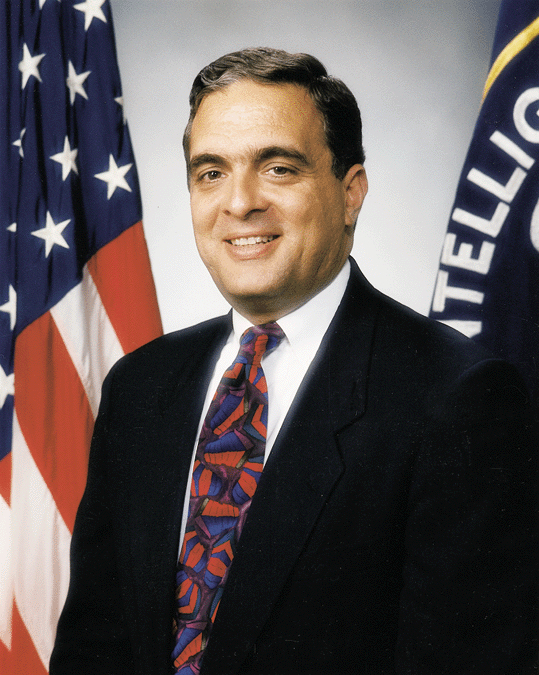
George John Tenet (born January 5, 1953) is an American intelligence official and academic who served as the Director of Central Intelligence (DCI) for the United States Central Intelligence Agency, as well as a Distinguished Professor in the Practice of Diplomacy at Georgetown University.

Key Information

Tenet held the position as the DCI from July 1997 to July 2004, making him the second-longest-serving director in the agency's history—behind Allen Dulles—as well as one of the few DCIs to serve under two U.S. presidents of opposing political parties. He played a key role in overseeing intelligence regarding weapons of mass destruction in advance of the Iraq War. A 2005 Inspector General's report found that Tenet bears "ultimate responsibility" for the United States intelligence community's failure to develop a plan to control al-Qaeda in the lead-up to 9/11.[2] Tenet has been criticized for personally authorizing the CIA's use of brutal and ineffective torture techniques during his tenure, in contravention of international law,[3][4][5] something which he has repeatedly denied.[6]

In February 2008, he became a managing director at investment bank Allen & Company.

Early life and education

[edit]

George John Tenet was born on January 5, 1953, in Flushing, New York City, the son of Greek immigrants Evangelia and John Tenet.[7][8] His father was from the ethnic Greek community of Himarë, in Albania, and worked in a coal mine in France before arriving in the United States via Ellis Island, just before the Great Depression. His mother was from Epirus, Greece, and had fled from the communists by stowing away on a Royal Navy submarine.[9][10]

Tenet was raised in Little Neck, Queens, where as a teenager, he and his older brother Bill worked as busboys in their family's diner, the Twentieth Century Diner. Despite Bill and George being fraternal twins, they had very different personalities; in his book Ghost Wars, Steve Coll described Bill as "reserved, precise, and studious" (he would later become a cardiologist) and George as "loud, sloppy, and boisterous".[9] Because of his tendency to talk a lot, he was known as "the mouthpiece". He was also interested in the news; the host of a local current affairs host sent him an autograph in response to Tenet's letters, calling him "the future editorial page editor of The New York Times".[9] He played basketball and softball for his Greek Orthodox church, where he was also an altar server.[11]

Tenet attended Public School 94, where he was president of his sixth grade class;[11] Junior High School 67; and Benjamin N. Cardozo High School.[12][13] In high school he played soccer and edited the school newspaper, graduating in 1971.[11] After studying at the State University of New York at Cortland,[14] Tenet graduated from the Georgetown University School of Foreign Service in 1976 with a Bachelor of Science in Foreign Service (B.S.F.S.) and received a Master of International Affairs degree from Columbia University in 1978.[12][15]

Early career

[edit]

Tenet's first job after graduating from Columbia University[16] was research director of the American Hellenic Institute from 1978 to 1979. Next, he worked for the Solar Energy Industries Association as Director of International Programs until 1982. He then began working for the Senate, first as a legislative assistant and later as legislative director to then–Pennsylvania Senator H. John Heinz III from 1982 to 1985. He was a staff member of the Senate Select Committee on Intelligence (SSCI) from 1985 to 1988, then Staff Director of the SSCI from 1988 to 1993.[17] Tenet joined President-elect Bill Clinton's national security transition team in November 1992.[18] Clinton appointed Tenet Senior Director for Intelligence Programs at the National Security Council, where he served from 1993 to 1995.[17]

Tenet was implicated in an illegal wiretapping case brought by Richard Horn. The CIA invoked the state secrets privilege to force dismissal of the case. It was later reopened and settled out of court, but during the court proceedings, the judge ruled that several people including Tenet committed fraud.[19]

CIA career

[edit]

Tenet was appointed Deputy Director of Central Intelligence in July 1995. After John Deutch's abrupt resignation in December 1996, Tenet served as acting director. This was followed by the reluctant withdrawal of Anthony Lake, after it became apparent to Lake that his nomination had been successfully blocked by Republicans in Congress.[20] Tenet was then officially appointed Director on July 11, 1997, after a unanimous confirmation vote in the Senate.

While the Director of Central Intelligence has been replaced by an incoming administration since Jimmy Carter replaced DCI George H. W. Bush, Tenet served through the end of the Clinton administration and well into the term of George W. Bush. In 1999, Tenet declined to reveal the overall budget for intelligence operations (including the CIA) which was a departure from his release the previous two years. This later led to criticism from government transparency advocates.[21]

Tenet embarked on a mission to re-energize the CIA, which had experienced a relative loss of status following the end of the Cold War. The number of agents recruited each year had fallen to an all-time low, a 25% decline from the Cold War peak. Tenet appealed to the original mission of the agency, which had been to "prevent another Pearl Harbor", i.e. to predict where danger might come from in the post–Cold War world. Tenet focused on potential problems such as "the transformation of Russia and China", "rogue states" like North Korea, Iran, and Iraq, and terrorism.[22]

1999 bombing of the Chinese embassy in Belgrade

[edit]

On May 7, 1999, during the Kosovo War, U.S. bombers accidentally struck the Chinese embassy in Belgrade, Serbia with five JDAM precision guided bombs, killing three Chinese reporters and injuring 20 others.[23] In testimony before a congressional committee, Tenet later admitted the strike was the only one in the campaign organized and directed by his agency, though he still claimed it was not deliberate.[24][25] Later analysis has suggested that a 100-yard (91 m) error in a military targeting database maintained by the Pentagon was not corrected or updated in a timely manner and that other systems intended to prevent such incidents failed to perform as expected. As a result of this and other incidents, systematic changes were made to pre-strike Rules of Engagement for U.S. pilots, including checklists verifying target information and coordinates. China has never accepted the United States' version of events, although Tenet in a published work noted in a bit of black humor that in the prelude to the bombing of Iraq, China had, through unofficial channels, provided the Agency with the exact GPS coordinates of their Embassy in Baghdad so as to ensure the CIA knew the precise location.[26]

Israeli–Palestinian ceasefire

[edit]

In 2001, Tenet brokered a short-lived Israeli-Palestinian ceasefire.[27][28]

Opposition to release of Pollard

[edit]

Tenet strongly opposed releasing convicted spy Jonathan Pollard, going so far as threatening to resign if then President Clinton pardoned him.[29][30]

Al-Qaeda and the War on Terror

[edit]

By 1999, al-Qaeda had emerged as a significant terrorist threat. The 1998 bombings of two U.S. African embassies were the latest in a string of attacks on American interests in the west Indian Ocean region. In 2000, the USS Cole was bombed in Aden in an attempt to sink her, killing 17 naval personnel.

Bin Laden Plan

[edit]

In 1999, Tenet put forward a "Plan" for dealing with al-Qaeda. In preparation, he selected new leadership for the CIA's Counterterrorist Center (CTC). He placed Cofer Black in charge of the CTC, and Richard Blee in charge of the CTC's Bin Laden unit. Tenet assigned the CTC to develop the Plan. The proposals, brought out in September, sought to penetrate Qaeda's "Afghan sanctuary" with U.S. and Afghan agents, in order to obtain information on and mount operations against Bin Laden's network. In October, officers from the Bin Laden unit visited northern Afghanistan. Once the Plan was finalized, the Agency created a "Qaeda cell" (whose functions overlapped those of the CTC's Bin Laden unit) to give operational leadership to the effort.

The CIA concentrated its inadequate financial resources on the Plan, so that at least some of its more modest aspirations were realized. Intelligence collection efforts on bin Laden and al-Qaeda increased significantly from 1999 onward. "By 9/11", said Tenet, "a map would show that these collection programs and human [reporting] networks were in place in such numbers as to nearly cover Afghanistan" although Bin Laden's inner circle was not included.[31][32][33][34]

Contrary to the 2005 Inspector General's report, George Tenet had in fact reported the potential threat to then national security advisor Condoleezza Rice during an urgent meeting on July 10, 2001, in which his team informed her that "There will be significant terrorist attacks against the United States in the coming weeks or months."[35]

Predator drone

[edit]

The CIA experimented with a small remote-controlled reconnaissance aircraft, the Predator, to try to spot Bin Laden in Afghanistan. A series of flights in autumn 2000, overseen by CTC officials and flown by USAF drone pilots from a control room at the CIA's Langley headquarters, produced probable sightings of the al-Qaeda leader.[36][37]

Cofer Black and others became advocates of arming the Predator with adapted Hellfire anti-tank missiles to try to kill Bin Laden and other al-Qaeda leaders in targeted killings. But there were both legal and technical issues. Tenet in particular was concerned about the CIA moving back into the business of targeted killing. A series of live-fire tests in the Great Basin Desert in Nevada in summer 2001 produced mixed results.

Tenet advised cautiously on the matter at a meeting of the Cabinet-level Principals Committee on September 4, 2001. If the Cabinet wanted to empower the CIA to field a lethal drone, Tenet said, "they should do so with their eyes wide open, fully aware of the potential fallout if there were a controversial or mistaken strike". National Security Adviser Condoleezza Rice concluded that the armed Predator was required, but not ready. It was agreed to recommend to the CIA to resume reconnaissance flights. The "previously reluctant" Tenet then ordered the Agency to do so. The CIA was authorized to "deploy the system with weapons-capable aircraft".[38][39][40][41]

September 11 attacks

[edit]
George Tenet on September 11, 2001

After the September 11 attacks, many observers criticized the Intelligence Community for numerous "intelligence failures" as one of the major reasons why the attacks were not prevented.[42]

Tenet testified before a public hearing of the 9/11 Commission investigating 9/11, that he did not meet with Bush in August 2001, the month before the September 11 attacks. The evening after the hearings, a CIA spokesman corrected Tenet's testimony, stating that Tenet did indeed meet with Bush twice in August.[43] Tenet in his memoir writes of his memorable visit to Bush at Bush's ranch in Crawford, Texas, in August 2001.[20]

In August 2007, a report written by the CIA inspector general was made public (it was originally written in 2005 but kept classified). The 19-page summary states that Tenet knew the dangers of al-Qaeda well before September 2001, but that the leadership of the CIA did not do enough to prevent any attacks and that Tenet personally "bears ultimate responsibility" for the intelligence community's failure to develop a plan to counter al-Qaeda.[2] Tenet reacted to the publication of this report by calling it "flat wrong", citing in particular the planning efforts of the prior two years.[2]

Tenet immediately increased the size and capability of the CIA's special operations component housed in the Special Operations Group of the Special Activities Division. This force had been allowed to diminish under the early Clinton administration. These paramilitary officers were the first to enter both Afghanistan and Iraq. Once in these countries these officers organized and led the Northern Alliance against the Taliban in Afghanistan and the Kurds against Ansar Al-Islam and Saddam's forces in Iraq. The rebuilding of this capability and the successful deployment of these elite commandos is considered one of Tenet's greatest achievements in the Global War on Terror.[44][45] The increased use of paramilitary officers led to fatalities in their ranks. The first of these was Johnny Micheal Spann, a former Marine Corps officer killed during the Battle of Qala-i-Jangi on 25 November 2001. Tenet personally informed CIA staff of Spann's death.[46]

Worldwide Attack Matrix

[edit]

Tenet considered his Al-Qaeda plan to have placed the CIA in a better position to respond after the September 11 attacks. As he put it:[47]

How could [an intelligence] community without a strategic plan tell the president of the United States just four days after 9/11 how to attack the Afghan sanctuary and operate against al-Qa'ida in ninety-two countries around the world?

Tenet (left, in pink tie) briefs President George W. Bush in the Oval Office along White House Chief of Staff Andrew Card and Vice President Dick Cheney (with back to camera).

This was at a meeting of the restricted National Security Councilor "war council"—at Camp David on September 15, 2001. Tenet presented the Worldwide Attack Matrix, a blueprint for what became known as the War on Terror.[42] He proposed firstly to send CIA teams into Afghanistan to collect intelligence on, and mount covert operations against, al-Qaeda and the Taliban. The teams would act jointly with military Special Operations units. "President Bush later praised this proposal, saying it had been a turning point in his thinking."[48]

Waterboarding and enhanced interrogation techniques (EITs)

[edit]

During Tenet's directorship, President Bush authorized the CIA to use waterboarding and other forms of torture (euphemistically referred to as "Enhanced Interrogation Techniques") during interrogations of Khalid Sheikh Mohammed, Abu Zubaydah and Abd al-Rahim al-Nashiri, all suspected Al Qaida members.[49][50] CIA directors George Tenet, Porter Goss, and Michael Hayden provided inaccurate and misleading information to members of the U.S. Congress, the White House and the Director of National Intelligence about the program's effectiveness and the number of prisoners that the CIA held.[51] [page needed]

Iraq WMD controversy

[edit]

According to a report by veteran investigative journalist Bob Woodward in his book Plan of Attack, Tenet privately lent his personal authority to the intelligence reports about weapons of mass destruction (WMDs) in Iraq.[52] At a meeting in December 2002, he assured Bush that the evidence that Iraq had WMDs amounted to a "slam dunk case". After several months of refusing to confirm this statement, Tenet stated that it was taken out of context. He indicated that it was made pursuant to a discussion about how to convince the American people to support invading Iraq.[53] The search following the 2003 invasion of Iraq by U.S.-led Coalition forces yielded no significant WMDs.[citation needed]

In September 2002, the Senate Intelligence Committee met with Tenet in a closed-door session. Senator Bob Graham requested a National Intelligence Estimate (NIE) on Iraq. Tenet responded by saying "We've never done a National Intelligence Estimate on Iraq" and resisted the request to provide one to Congress. Graham insisted "This is the most important decision that we as members of Congress and that the people of America are likely to make in the foreseeable future. We want to have the best understanding of what it is we're about to get involved with." Tenet refused to do a report on the military or occupation phase, but reluctantly agreed to do a NIE on the weapons of mass destruction. Graham described the Senate Intelligence Committee meeting with Tenet as "the turning point in our attitude towards Tenet and our understanding of how the intelligence community has become so submissive to the desires of the administration. The administration wasn't using intelligence to inform their judgment; they were using intelligence as part of a public relations campaign to justify their judgment."[54]

Congress voted to support the Iraq war based on the NIE that Tenet provided in October 2002. However, the bipartisan Senate Intelligence Committee Report on Prewar Intelligence released on July 7, 2004, concluded that the key findings in the 2002 NIE either overstated, or were not supported by, the actual intelligence. The Senate report also found the US Intelligence Community to suffer from a "broken corporate culture and poor management" that resulted in a NIE which was wrong in almost every respect.[55]

Resignation

[edit]

Citing "personal reasons," Tenet submitted his resignation to President Bush on June 3, 2004. Tenet said his resignation "was a personal decision and had only one basis—in fact, the well-being of my wonderful family—nothing more and nothing less."[56] He officially left on July 11, exactly seven years after being appointed by Clinton.[57] Former DCI Stansfield Turner said, "I think the president feels he's in enough trouble that he's got to begin to cast some of the blame for the morass that we are in in Iraq on to somebody else and this was one subtle way to do it."[58] However, Bush voiced support for Tenet's efforts, stating, "I'm sorry he's leaving. He's done a superb job on behalf of the American people."[57]

James Pavitt, Tenet's Deputy Director for Operations at the CIA, announced his own resignation the following day. That led to speculation that the exit of both senior intelligence officials was related to the controversy over the September 11 attacks, alleged Iraqi WMDs, and the decision to go to war with Iraq.[56] After Tenet left, John E. McLaughlin served as acting director[56] until Porter Goss was sworn to the position on September 24, two days after the Senate approved him.[59] Tenet's seven-year term as Director of Central Intelligence was the second-longest in US history, after Allen Dulles.[60]

Human Rights Watch and The New York Times Editorial board have called for the prosecution of Tenet "for conspiracy to torture as well as other crimes."[61][62]

Later life

[edit]
President Bush awarding the Presidential Medal of Freedom to Tenet on December 14, 2004

On December 14, 2004, President George W. Bush awarded Tenet the Presidential Medal of Freedom, along with Tommy Franks and Paul Bremer. Bush said that Tenet "was one of the first to recognize and address the growing threat to America from radical terrorist networks."[63] However, Bush's decision was met with some criticism: Democratic Senator Carl Levin said, "I don't think [he] served the president or the nation well." Democratic Senator John Kerry said through spokesperson David Wade, "My hunch is that George Bush wasn't using the same standard when honoring Tenet and Bremer that was applied to previous honorees."[64]

Tenet spent three years as Distinguished Professor in the Practice of Diplomacy and Senior Research Associate in the Institute for the Study of Diplomacy at his former university, the Georgetown School of Foreign Service. His official teaching began in the Fall term, 2005.[65]

In October 2006, Tenet joined British defense contractor Qinetiq as an independent non-executive director. Chairman John Chisholm noted Tenet's "extraordinary track record and experience in the fields of intelligence and security."[66] He stepped down from the board in October 2007 (his old position was taken by retired U.S. Navy Admiral Edmund Giambastiani)[67] as well as the board of forensic software company Guidance Software in November.[68] He joined Qinetiq's North America board as well as becoming managing director of investment bank Allen & Company. The secretive bank did not announce Tenet's appointment, and it was unknown until it was leaked in February of the following year.[67] Tenet is also on the boards of directors of L-1 Identity Solutions, a biometric identification software manufacturer.[69] Along with a number of other notable Greek Americans, he is a member of the advisory board of The Next Generation Initiative, a foundation aimed at teaching students public affairs skills.[70]

Memoir

[edit]

In April 2007, Tenet released his memoir titled At the Center of the Storm: My Years at the CIA which was written with Bill Harlow. He appeared on 60 Minutes on April 29, 2007, offering much criticism of the Bush administration. The book was the top-selling book in sales in the first week after publication.

In his book The One Percent Doctrine, journalist and author Ron Suskind claims that Abu Zubaydah, once said to be al-Qaida chief of operations, was a low-level functionary and mentally ill.[71] In his memoirs, Tenet commented as follows:[72]

A published report in 2006 contended that Abu Zubaydah was mentally unstable and that the administration had overstated his importance. Baloney. Abu Zubaydah had been at the crossroads of many al-Qa'ida operations and was in position to—and did—share critical information with his interrogators. Apparently, the source of the rumor that Abu Zubaydah was unbalanced was his personal diary, in which he adopted various personas. From that shaky perch, some junior Freudians leapt to the conclusion that Zubaydah had multiple personalities. In fact, Agency psychiatrists eventually determined that in his diary he was using a sophisticated literary device to express himself. And, boy, did he express himself.

Critics pointed out a factual error in Tenet's book. On the book's first page, Tenet tells of a conversation with then-Pentagon advisor Richard Perle on September 12, 2001, in which Tenet claims Perle told him in person that "Iraq had to pay for the attack". But the conversation could not have occurred on that day, because Perle was stranded in Paris, France, on September 12 and did not return to Washington until three days later. Perle later stated that the two men indeed crossed each other one morning, as claimed by Tenet, but only later in the same week and not on September 12. But Perle insisted that he and Tenet exchanged no words in that encounter.[73][74]

Personal life

[edit]

Tenet is married to A. Stephanie Glakas-Tenet.[a] They have one son, John Michael.[14]

Recognition

[edit]

In 1998, Tenet received the Golden Plate Award of the American Academy of Achievement.[76]

In 2018, Tenet received the Washington Institute's Scholar-Statesman Award.[77]

See also

[edit]

Footnotes

[edit]

General bibliography

[edit]
[edit]
Revisions and contributorsEdit on WikipediaRead on Wikipedia
from Grokipedia
George John Tenet (born January 5, 1953) is an American intelligence official who served as the 18th (DCI) from July 11, 1997, to July 11, 2004, making him the longest-tenured individual in that role and the last to hold it before the position's abolition following the 9/11 attacks. Appointed initially under President as acting DCI in December 1996 and confirmed unanimously by the , Tenet continued in the post through the George W. Bush administration, becoming the first after intelligence reforms centralized authority under the new . Tenet's tenure was marked by efforts to strengthen capabilities, including repeated warnings about threats in the late 1990s and early 2000s, though the CIA under his leadership faced criticism for failing to prevent the , 2001, attacks despite issuing alerts like the August 2001 titled "Bin Ladin Determined to Strike in ." He oversaw the agency's expansion post-9/11, including enhanced collection and the use of rendition and against suspected terrorists, which later drew scrutiny for legal and ethical concerns. A defining controversy arose from Tenet's assurance to President Bush in December 2002 that evidence of Iraqi weapons of mass destruction (WMD) constituted a "" case, contributing to the intelligence underpinning the 2003 ; subsequent investigations, including the 2004 Select Committee on report, found the CIA's assessments overstated the threat due to flawed analysis and unverified sources, with no WMD stockpiles ultimately discovered. Tenet resigned in 2004 amid these intelligence failures and received the from Bush shortly thereafter, a decision that amplified debates over accountability in the intelligence community. In his 2007 , Tenet defended the agency's pre-war judgments while acknowledging analytic shortcomings but attributed misuse of his "" remark to administration figures seeking to justify the war.

Early Years

Childhood and Family

George John Tenet was born on January 5, 1953, in Flushing Hospital, Queens, New York, to Greek immigrant parents John and Evangelia Tenet. His father had emigrated from what is now , with Greek ethnic roots, and worked in a French coal mine before arriving in the United States, while his mother hailed from , . The family settled in the working-class neighborhood of Little Neck, , embodying the immigrant experience of building stability amid post-World War II opportunities. Tenet has a fraternal twin brother, William—born six minutes earlier—who pursued a career as a cardiologist in New York. The brothers grew up under strict but loving parental guidance in a household that valued family solidarity and self-reliance, with their father operating the 20th Century Diner (later known as Scobee Diner) on Northern Boulevard. As teenagers, George and William worked as busboys at the diner, gaining firsthand experience in the demands of small business ownership during an era of economic competition and urban grit in Queens. This environment, rooted in their parents' journey from modest origins to establishing a family enterprise, instilled in Tenet an appreciation for resilience and practical realism forged through daily labor and immigrant determination. The family's Greek Orthodox involvement, including religious classes and altar boy service, further connected them to their heritage, offering early glimpses into cultural narratives of historical adversity and geopolitical shifts in the Mediterranean amid the broader context.

Education

Tenet graduated from Georgetown University's School of Foreign Service with a in Foreign Service in 1976. The program's curriculum emphasized international politics, , and , providing foundational training in global affairs relevant to subsequent roles. In 1978, he received a from Columbia University's School of International and Public Affairs. This graduate degree focused on advanced analysis of and policy, equipping him with skills in strategic assessment that aligned with demands.

Pre-CIA Career

Legislative and Policy Roles

George Tenet began his Washington career in intelligence oversight as a staff member for the Senate Select Committee on Intelligence (SSCI) in the mid-1980s, initially working under Senator (D-VT) to direct oversight of negotiations and covert operations. His roles involved analyzing classified intelligence activities, providing bipartisan assessments of agency performance, and contributing to committee inquiries into operational failures. This period exposed him to the mechanics of congressional scrutiny over the intelligence community, including the joint SSCI-House investigation into the Iran-Contra affair in 1986-1987, where the committee examined unauthorized covert actions and inter-branch coordination breakdowns, fostering Tenet's understanding of systemic vulnerabilities in executive intelligence handling. From 1989 to 1993, Tenet served as staff director of the SSCI under Chairman (D-OK), overseeing a team that monitored the and other agencies during the transition from priorities. In this capacity, he coordinated reviews of covert programs, budget allocations, and emerging threats, emphasizing reforms to enhance accountability amid revelations of past abuses like Iran-Contra. His tenure bridged partisan lines, building on prior experience with Republican Senator III (1982-1985), which provided insights into diverse congressional perspectives on and efficacy. Following the SSCI, Tenet transitioned to executive policy roles, joining President Bill Clinton's transition team in 1993 before becoming Special Assistant to the President and Senior Director for Intelligence Programs at the from 1993 to 1995. There, he advised on restructuring the intelligence community in the post-Cold War era, focusing on reallocating resources from Soviet-focused operations to non-proliferation, regional conflicts, and , while navigating interagency coordination challenges. This position honed his expertise in aligning legislative oversight with executive policy, preparing him for subsequent intelligence leadership without direct agency operational involvement.

Initial Intelligence Involvement

In July 1995, President appointed George Tenet as Deputy Director of , a position he was confirmed for by the on July 3, following his prior role as Special Assistant to the President and Senior Director for Intelligence Programs on the . Serving under Director John Deutch, Tenet focused on administrative stabilization of the CIA, which faced significant challenges from post-Cold War budget reductions initiated during the administration, including real cuts to intelligence spending that contributed to low morale and workforce reductions. These cuts, part of a broader "" reallocation, had led to the agency enduring seven directors in five years by late 1996, exacerbating operational inefficiencies and employee dissatisfaction. As Deputy Director, Tenet worked to address these issues through internal efficiency measures, prioritizing non-partisan management to rebuild trust and streamline processes amid fiscal constraints, without delving into operational overhauls that would later define his full tenure. Following Deutch's on December 16, 1996, Tenet assumed the role of Acting , continuing these groundwork efforts to maintain agency functionality during the leadership transition. In this interim capacity through July 1997, he implemented targeted administrative reforms aimed at enhancing and morale recovery, focusing on bureaucratic streamlining to counteract the demoralizing effects of prior downsizing rather than new strategic initiatives.

CIA Directorship

Appointment and Agency Reforms

George Tenet was sworn in as the 18th (DCI) on July 11, 1997, following unanimous confirmation after serving as Acting DCI since December 1996. His seven-year tenure, ending on July 11, 2004, marked the second-longest in CIA history, surpassed only by Allen Dulles's eight-year service from 1953 to 1961. Nominated by President and retained by President , Tenet's leadership bridged Democratic and Republican administrations, providing institutional stability amid transitions in executive power. Upon assuming the role, Tenet confronted a CIA diminished by post- budget reductions, which had reduced overall intelligence funding by approximately 25% from peak Cold War levels and eroded (HUMINT) capabilities through staff attrition and recruitment shortfalls. He advocated for reversing these cuts by testifying before on the need for enhanced resources, emphasizing that underfunding had left gaps in clandestine collection against emerging threats. These efforts contributed to incremental restorations and staffing growth, with the agency adding personnel focused on field operations to rebuild its core HUMINT infrastructure. Tenet also drove internal reforms to integrate emerging technologies, including the 1999 establishment of , a arm funded by CIA resources to invest in private-sector innovations for applications such as data analytics and secure communications. This initiative aimed to address technological lags from the 1990s, when fiscal constraints had limited upgrades to analytical and support systems. Combined with expanded HUMINT —prioritizing case officers proficient in critical languages—these measures enhanced the agency's capacity for human-sourced , providing empirical foundations for operational resilience in subsequent years.

Pre-9/11 Counterterrorism Operations

In December 1998, following al-Qaeda's bombings of U.S. embassies in and on August 7, Tenet issued a CIA-wide directive declaring an all-out effort against Usama bin Ladin and his network, framing it as a de facto war requiring the agency's full mobilization. This initiative encompassed the "Bin Ladin Plan," a comprehensive strategy for intelligence collection, disruption operations, and potential capture or elimination of bin Ladin, navigating legal constraints under prohibiting assassinations by emphasizing rendition and precision targeting. Tenet championed the deployment of MQ-1 Predator unmanned aerial vehicles for real-time surveillance of bin Ladin in , with initial unarmed flights commencing in September 2000 under CIA control, yielding valuable imagery despite harsh weather and technical limitations. He pushed for arming the Predators with Hellfire missiles by early 2001 to enable direct strikes, overcoming interagency debates and Department of Defense hesitations regarding reliability and adherence to U.S. policy against political assassination, though operational approval was granted only post-9/11. Throughout 2000 and 2001, Tenet oversaw the delivery of numerous Presidential Daily Briefs to President alerting to al-Qaeda's intent for spectacular attacks, including the August 6, 2001, briefing "Bin Ladin Determined To Strike in US," which cited FBI investigations of bin Ladin-linked operatives in the U.S., patterns of threats, and surveillance of federal buildings. To bolster these efforts, Tenet reallocated resources aggressively, expanding CIA counterterrorism personnel by approximately 50% from 1998 to 2001, prioritizing stations in , , and the , and dedicating over one-third of the Directorate of Operations' budget to al-Qaeda-related activities by mid-2001. In June 2001, Tenet mediated the "Tenet Plan," a U.S.-brokered and security framework accepted by and the Palestinian Authority on June 12, mandating an immediate halt to violence, Palestinian prevention of attacks from territories, Israeli withdrawal from reoccupied areas within seven days, and like resumed security coordination to pave the way for political negotiations. Concurrently, Tenet opposed proposals to release convicted Israeli spy , who had compromised U.S. intelligence assets in 1985, threatening resignation as he had under President Clinton in 1998 and arguing that clemency would demoralize the intelligence community, encourage further allied , and signal U.S. vulnerability given Israel's repeated intelligence breaches against partners.

September 11 Attacks and Immediate Aftermath

![CIA Director George Tenet in PEOC on 9/11](./assets/CIA_Director_George_Tenet_Listens_to_President_Bush's_Address_in_the_President's_Emergency_Operations_Center_PEOCPEOC Prior to the September 11, 2001, attacks, the CIA under Tenet's direction had gathered significant indicators of al-Qaeda's intent to strike the United States, including a July 5, 2001, briefing to President Bush featuring the Worldwide Attack Matrix—a compilation of over 40 ongoing terrorist plots tracked by the agency. Tenet described the summer of 2001 as a period of heightened urgency, with warnings such as his August 23 CIA memorandum stating that "Bin Ladin [was] poised for attack" based on signals intelligence and fragmented human reporting. Despite these efforts, systemic issues contributed to the failure to prevent the attacks, including inadequate human intelligence penetration of al-Qaeda's compartmentalized cells, over-reliance on signals intelligence that al-Qaeda evaded through couriers and low-tech methods, and insufficient information sharing with the FBI on identified hijackers like Khalid al-Mihdhar and Nawaf al-Hazmi. Defenders of the CIA's pre-9/11 posture, including Tenet, emphasized al-Qaeda's operational secrecy and the agency's successes in disrupting earlier plots, such as the 2000 millennium attacks, amid Clinton administration-era resource constraints that limited counterterrorism funding despite repeated requests. In the immediate aftermath of the attacks, which killed 2,977 people, Tenet coordinated from the CIA's Counterterrorism Center (CTC), pivoting the agency toward aggressive disruption of networks. President Bush directed Tenet on September 17, 2001, to develop plans to "roll up" , granting CIA paramilitary teams unprecedented authority to deploy to and expend up to $1 million per operation without prior approval to support allies against forces harboring the group. The first CIA team, code-named Jawbreaker, arrived in on September 26, 2001, marking the agency's vanguard role in the U.S. response and facilitating the rapid fall of by November. Post-attack enhancements to the CTC included a surge in personnel from to over 1,000 by mid-2002 and expanded allocations, addressing pre-9/11 under-resourcing that had hampered recruitment of linguists and analysts specialized in al-Qaeda's Afghan-Pakistani networks. Internal critiques highlighted persistent challenges in collection against al-Qaeda's adaptive tactics, while proponents noted the CTC's role in preventing subsequent domestic plots through enhanced fusion of signals and foreign liaison reporting. These measures reflected a doctrinal shift toward proactive covert action, though debates persisted over whether earlier investments in human sources could have yielded actionable preemption of the 9/11 plot.

Iraq Threat Assessment and WMD Intelligence

During George Tenet's tenure as , the U.S. intelligence community, including the CIA, compiled assessments indicating that Saddam Hussein's regime retained weapons of mass destruction (WMD) capabilities or was actively reconstituting them following the 1991 . Post-war inspections by the (UNSCOM) uncovered extensive Iraqi deception, including concealment of chemical and biological agents, undeclared facilities, and obstruction of inspectors, which fueled suspicions of ongoing programs. From 1991 to 2003, evidence accumulated from sources, such as defectors reporting retained expertise and dual-use procurement patterns, of suspect sites, and on illicit imports, suggesting active chemical, biological, and nascent nuclear efforts. The Iraqi regime's systematic denial and evasion tactics, documented in over 20 instances of non-compliance with UN resolutions by 2002, reinforced the view that Saddam maintained ambiguity to deter adversaries and project power. A pivotal element in biological weapons assessments was reporting from the defector known as Curveball, who in 2000 claimed Iraq operated mobile bioweapons labs, information shared via German intelligence and incorporated into CIA analyses despite limited direct access or verification. This, combined with historical precedents like Iraq's undeclared VX nerve agent production exposed in the 1990s, contributed to the October 2002 National Intelligence Estimate (NIE), which judged with high confidence that Iraq possessed chemical and biological stockpiles and was reconstituting its nuclear program. In a December 21, 2002, briefing to President George W. Bush, Tenet described the intelligence case against Iraq's WMD as a "slam dunk," referring specifically to the strength of evidence on delivery systems and overall presentation for public consumption rather than the existence of stockpiles themselves, a nuance often misrepresented in subsequent accounts. The assessment reflected interagency consensus, drawing on data from multiple sources, though reliant on inferences from Saddam's pattern of post-1991 concealment, which UNSCOM had repeatedly confronted. Post-invasion investigations by the , culminating in the 2004 Duelfer Report, found no large-scale WMD stockpiles but confirmed Saddam's intent to rebuild programs once sanctions eased, preservation of scientific expertise, and ongoing dual-use infrastructure that could support rapid reconstitution. The report highlighted Saddam's strategic to maintain regional deterrence, aligning with pre-war on his regime's of evasion, though it exposed flaws in source vetting, particularly Curveball's fabrications admitted in 2011. Critics, often from media and academic outlets with documented institutional biases toward downplaying threats from authoritarian regimes, have amplified narratives of "failure" or manipulation, yet first-principles examination of —defectors' corroborated details on past programs, anomalies, and Saddam's obstructions—substantiates the rationale for heightened perception given the risks of unchecked proliferation in a destabilizing . The absence of stockpiles did not negate the empirical basis for preemptive concern, as Saddam's track record, including support for terrorist networks, underscored potential for WMD enablement.

Enhanced Interrogation Program

Following the , 2001, attacks, CIA Director George Tenet authorized the agency's Detention and Interrogation Program, which incorporated (EITs) such as , stress positions, and for high-value detainees, based on legal guidance from Department of Justice (OLC) memoranda issued in August 2002 determining that these methods did not constitute under U.S. law. Tenet personally sought and obtained approval for applying EITs, including , to shortly after his capture on March 28, 2002, resulting in 83 applications over August 2002, and to (KSM) after his arrest on March 1, 2003, involving 183 applications in a single month. CIA internal assessments credited EITs with yielding actionable intelligence that disrupted specific terrorist threats, including information from KSM identifying as a key operative and detailing his network, which contributed to U.S. efforts targeting al-Zarqawi's activities prior to his death in 2006, as well as corroborating details on Jose Padilla's involvement in a radiological "" plot, aiding his on , 2002. Declassified operational cables documented causal chains where EITs prompted detainee cooperation leading to these outcomes, with agency reviews concluding the techniques, when used in compliance with guidelines, accelerated intelligence gains in time-sensitive contexts that traditional methods had not elicited. Tenet later defended the program in a 2007 , stating it "saved lives" by extracting critical information from resistant subjects unwilling to cooperate otherwise. Critics, including the 2014 Senate Select Committee on Intelligence study—conducted under Democratic leadership without interviews of CIA interrogators or full access to operational context—argued EITs produced no unique intelligence preventing attacks and sometimes yielded fabricated information, though the CIA rebuttal highlighted the study's selective document review and failure to account for counterfactual scenarios where withheld cooperation might have enabled plots. Empirical evaluations prioritized by agency metrics emphasized compliance monitoring via the 2004 CIA report, which found techniques effective for breaking detainee resistance when integrated with psychological assessments, outweighing ethical debates by focusing on verifiable threat disruptions over unsubstantiated claims of systemic unreliability.

Other Notable Operations and Engagements

During the 1999 bombing campaign in , known as Operation Allied Force, the CIA under Tenet provided critical intelligence support, including targeting data for airstrikes against Yugoslav Federal Republic forces. This contributed to the eventual withdrawal of Yugoslav troops and the deployment of international peacekeepers, though the operation also highlighted intelligence shortcomings. CIA covert assistance bolstered capabilities prior to the air campaign, aiding in the disruption of Serbian supply lines and command structures, with empirical success measured by the acceleration of Milosevic's capitulation on , 1999. Post-conflict, agency efforts shifted to regional stabilization, enforcing the terms and mitigating ethnic violence spillover into and Bosnia-Herzegovina. A notable error occurred on , 1999, when CIA-supplied coordinates for a munitions depot in inadvertently targeted the Chinese embassy, resulting in the deaths of three Chinese journalists and injuries to twenty others. Tenet testified that the incident stemmed from multiple failures, including outdated maps, unverified on facility relocation, and inadequate cross-checking between CIA and Defense Department systems, with no indications of intentional malice. The bombing provoked anti- protests in and diplomatic tensions, but US investigations confirmed it as an unintended consequence of flawed data handling rather than deliberate policy. Tenet also oversaw the expansion of operations, whereby the CIA captured and transferred dozens of suspected militants to third-country detention sites for interrogation outside judicial oversight. By 2000, Tenet reported that such renditions had dismantled terrorist cells and averted specific attacks, with over 70 pre-9/11 cases yielding actionable intelligence on networks. However, subsequent disclosures revealed instances of overreach, including wrongful seizures that strained alliances and prompted legal challenges, such as European probes into complicity and compensation claims for erroneous detentions. In the , Tenet conducted to de-escalate violence, notably in June 2001 when he mediated a ten-day cease-fire between Israeli forces and Palestinian groups amid the Second . His efforts facilitated the first high-level security summit in months, establishing coordination mechanisms that temporarily reduced suicide bombings and incursions, earning bipartisan regional acknowledgment for bridging distrust. Tenet's involvement dated to 1996, focusing on intelligence-sharing protocols rather than political accords. Tenet firmly opposed the 1998 clemency bid for , a former naval intelligence analyst convicted in 1987 of for , threatening resignation to President Clinton on grounds that Pollard's leaks compromised classified sources and methods, endangering ongoing operations. This position, echoed by intelligence assessments of Pollard's damage report detailing exposure of identities and capabilities, influenced Clinton's ultimate denial of release on November 11, 1998, prioritizing over diplomatic concessions.

Resignation and Transition

Factors Leading to Departure

Tenet's resignation as was announced by President on June 3, 2004, following a private meeting the previous evening, with Tenet citing personal reasons after seven years in the role. He emphasized the cumulative toll of the position, including the desire to spend more time with family and address burnout from an unrelenting operational tempo since the September 11, 2001, attacks. The decision came amid intensifying institutional pressures, including Senate Select Committee on Intelligence hearings and a forthcoming report critiquing the CIA's prewar assessments on Iraq's weapons of mass destruction programs, a classified version of which was presented to Tenet days earlier. These strains reflected broader tensions within the intelligence community: pre-9/11 lapses drew sustained scrutiny, while post-invasion findings of no active Iraqi WMD stockpiles fueled debates over analytic rigor and collection gaps, amplified by media coverage often skeptical of Bush administration policies. Internal CIA reforms, initiated under Tenet to enhance capabilities and integrate technology, clashed with the demands of rapid agency expansion—recruitment surged from about 17,000 personnel in 2001 to over 20,000 by 2004—straining resources and oversight amid heightened global threats. Critics, including voices from academia and mainstream outlets with documented left-leaning institutional biases, framed Tenet's departure as scapegoating for systemic failures, yet empirical indicators of agency resilience, such as uninterrupted high-value target captures in operations through 2004, underscored sustained capabilities rather than collapse. The interplay of these factors—exhaustive congressional probes, public recriminations over disputes, and the exhaustion of leading a transformed agency—culminated in Tenet's exit, effective July 11, 2004, without evidence of direct pressure but reflective of the causal burdens on long-tenured in crisis-driven environments. This period highlighted not individual culpability but the inherent challenges of aligning production with exigencies under imperfect information, where collection shortfalls predated Tenet's tenure and persisted structurally.

Handover to Successor

, former chairman of the House Permanent Select Committee on Intelligence, was nominated by President on August 10, 2004, to replace Tenet as Director of the , following Deputy Director John McLaughlin's tenure as acting director after Tenet's departure on July 11, 2004. Goss's nomination aimed to restore stability amid the agency's focus on post-9/11 operations, with Bush emphasizing Goss's intelligence oversight experience. The confirmed Goss on September 24, 2004, by a vote of 77-17, enabling the handover to proceed with briefings on active priorities such as support for operations in , where the agency tracked escalating activities involving improvised explosive devices and foreign fighters. This transition underscored efforts to sustain momentum, including networks and targeted collection, without reported operational halts. Amid the handover, CIA leadership navigated congressional and executive debates on intelligence restructuring, particularly proposals to establish a (DNI) for enhanced coordination of analysis across agencies, which influenced the agency's push to embed post-9/11 gains like fused intelligence products into permanent frameworks. The Intelligence Reform and Terrorism Prevention Act, enacted December 17, 2004, formalized such changes by creating the DNI and , reflecting transitional priorities to institutionalize interagency information sharing on threats like affiliates.

Post-Directorship Life

Memoir and Public Reflections

In April 2007, Tenet published At the Center of the Storm: My Years at the CIA, co-authored with former CIA spokesman Bill Harlow, which detailed his tenure and defended the agency's pre-9/11 efforts, including repeated warnings to the Bush administration about an imminent attack described as "spectacular." The memoir argued that the CIA had issued over 100 specific alerts between January and September 2001, attributing post-attack critiques to failures in policy response and interagency coordination rather than intelligence collection deficiencies. On , Tenet described the 2002 as a product of interagency consensus reflecting the best available evidence at the time, emphasizing that claims of politicization overlooked the involvement of multiple U.S. intelligence components and foreign services in validating Saddam Hussein's WMD programs. Tenet used the book to rebut portrayals in Bob Woodward's Plan of Attack, particularly the depiction of his December 2002 "" comment to President Bush as an overconfident assurance of Iraq's WMD stockpiles sufficient to justify . He clarified that the phrase referred to the overall evidentiary package for —including political, military, and delivery-system —rather than WMD existence alone, and claimed witnesses from the meeting corroborated this against Woodward's anonymously sourced account. This rebuttal highlighted tensions over selective sourcing in journalistic reconstructions, where Tenet positioned named testimonies as more reliable than unattributed narratives that amplified administration blame while minimizing community's shared judgments. In promotional interviews, such as on CBS's and CNN's , Tenet stressed the CIA's apolitical professionalism, rejecting accusations of agency complicity in misleading the public by noting that Iraq assessments drew from like defector reports and , not pressure. He acknowledged personal errors, including inadequate caveating of uncertain intel in public statements, but countered politicization claims by pointing to declassified documents showing rigorous internal debates and the absence of evidence for fabricated reporting. Critics, including some congressional reviews, argued the selectively emphasized warnings and consensus to deflect from CIA analytical overreach, yet Tenet's disclosures advanced transparency by revealing operational details previously classified, though media amplification of distortions—such as the "" as war's causal trigger—persisted despite contradictory primary evidence.

Academic and Advisory Positions

Following his resignation from the CIA in July 2004, George Tenet joined Georgetown University's School of Foreign Service as in the Practice of and Senior in the Institute for the Study of , beginning in the fall semester of that year. Tenet, a 1976 alumnus of the same school, leveraged his extensive experience in intelligence and to engage with students and faculty on topics including strategy and diplomatic practice. This appointment allowed him to influence emerging policymakers through academic channels, drawing on his prior roles in shaping U.S. intelligence assessments. Tenet maintained his Georgetown affiliation through at least 2007, during which period he contributed to research and educational initiatives focused on operations and international affairs. In advisory capacities outside academia, he provided counsel to entities on security matters, emphasizing practical approaches to and cyber threats informed by his CIA tenure, though specific engagements remained limited to non-board consulting roles. These positions extended Tenet's post-government impact by bridging operational insights with policy-oriented analysis, without direct involvement in structures.

Business and Security Sector Roles

In April 2025, George Tenet was appointed Executive Chairman of CHAOS Industries, a firm developing advanced defense and technologies. In this capacity, he oversees board activities, delivers strategic direction on and expansion, and draws on his background to address emerging threats in military tech sectors. On April 22, 2025, Tenet joined the board of directors at , a cybersecurity company emphasizing zero-trust segmentation for breach containment. His involvement bolsters the firm's focus on applications, including AI-enhanced defenses against cyber intrusions, informed by his prior leadership in U.S. operations. Tenet extended his advisory influence through public engagements, such as his participation in the World Tour in in September 2025, where he addressed cybersecurity professionals on the imperatives of resilient intelligence amid dynamic global threats. These roles underscore his application of operational experience from the to private-sector innovations in containment strategies and secure tech ecosystems.

Personal Life and Recognition

Family and Private Interests

George Tenet married A. Glakas-Tenet, with whom he has one son, John Michael. The family has maintained a low public profile, particularly after Tenet's departure from government service in 2004. Born to parents who immigrated from , Tenet has demonstrated ties to Greek heritage through early professional involvement, including serving as research director for the American Hellenic Institute from 1978 to 1979. The family resides in the , area.

Awards and Honors

On December 14, 2004, President awarded George Tenet the , the highest civilian honor in the United States, in recognition of his leadership as in combating terrorist threats. The award citation specifically commended Tenet for being among the first to identify and counter the rising danger from radical terrorist networks, enhancing U.S. capabilities that contributed to disrupting plots and mitigating risks to in the post-9/11 era. This bipartisan recognition underscored Tenet's service spanning the and Bush administrations, focusing on empirical advancements in operations that supported successes. In 2003, Tenet received the William Oliver Baker Award from the Intelligence and National Security Alliance, honoring his ethical leadership and contributions to through excellence. Additionally, in 2018, The Washington Institute for Near East Policy presented Tenet with its Scholar-Statesman Award, jointly with former CIA Director Michael Hayden, acknowledging his strategic insights and public service in matters. These honors reflect formal acknowledgments of Tenet's role in fostering practices that empirically advanced detection and response.

Overall Legacy Assessment

Tenet's directorship from July 1997 to July 2004 is credited with rebuilding the CIA's (HUMINT) apparatus after post-Cold War budget cuts and leadership instability had diminished clandestine capabilities. He oversaw a significant expansion in the Directorate of Operations, increasing recruitment and hiring of case officers to bolster espionage and covert action resources, which enhanced the agency's ability to penetrate adversarial networks. This revitalization proved pivotal in the post-9/11 surge, where CIA operations under his leadership disrupted numerous plots, including captures of high-value targets like in March 2003 and intelligence that thwarted attacks on U.S. interests, as detailed in declassified testimonies emphasizing denied safe havens and neutralized networks. Controversies, particularly the Iraq WMD assessments and (EITs), dominate critiques but reflect systemic intelligence challenges rather than deliberate misrepresentation. The October 2002 , reflecting interagency consensus under Tenet, asserted Iraq's possession of chemical and biological weapons based on defector reports and historical programs, though post-invasion findings revealed flawed sourcing like Curveball's unverified claims; declassified documents confirm the judgments stemmed from available , not politicized fabrication, countering narratives of outright invention. On EITs, approved by Tenet in 2002 for detainees like , CIA reviews cite gains such as intelligence on structures and plots from Khalid Sheikh Mohammed's interrogations, contributing to broader disruptions, though the 2014 Senate report highlights methodological flaws, coerced fabrications, and legal violations without unique actionable intel unattainable otherwise. Ultimately, Tenet's legacy underscores a pragmatic orientation toward existential threats from authoritarian regimes and jihadist networks, fostering agency resilience through risk-tolerant operations that neutralized regime capabilities in and degraded al-Qaeda's operational tempo, even amid errors amplified by hindsight and institutional biases favoring domestic restraint over . This approach, evidenced by sustained HUMINT investments and post-9/11 successes, prioritized causal threats—Saddam's prior WMD use and al-Qaeda's attack history—over fears of overreach, yielding a more robust intelligence posture against non-state and state-sponsored dangers.

References

Add your contribution
Related Hubs
User Avatar
No comments yet.