Recent from talks
Nothing was collected or created yet.
Healfdene
View on WikipediaThis article needs additional citations for verification. (June 2015) |
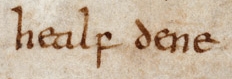
Halfdan (Old Norse: Halfdan, Old English: Healfdene, Medieval Latin: Haldānus: "half Dane") was a late 5th and early 6th century legendary Danish king of the Scylding (Skjöldung) lineage, the son of king named Fróði in many accounts, noted mainly as the father to the two kings who succeeded him in the rule of Denmark, kings named Hroðgar and Halga in the Old English poem Beowulf and named Hróar and Helgi in Old Norse accounts.
Key Information
Various accounts
[edit]According to the Chronicon Lethrense and Saxo Grammaticus' Gesta Danorum (Book 2), Halfdan had two brothers named Ro and Skat who also sought the throne. Both were killed by Halfdan. Saxo adds that his brothers' supporters were hanged and that Halfdan continued to reign with great cruelty, but that he reigned long and died peaceably in extreme old age.
The Ynglinga saga gives Halfdan (in this work also son of a king named Fróði) a brother named Fridleif and says both were great warriors but that Halfdan was the better of the two. This might have been a lead-in to a feud between the brothers if Snorri had been dealing with Danish matters rather than Swedish matters.
Snorri here only tells us that Halfdan attacked King Aun of Sweden and drove him into exile into Götaland. Halfdan then ruled Sweden for twenty years until he died in Uppsala of sickness and was buried in a mound.
According to Ynglinga saga, a Danish king named Fróði the Bold aided Aun's successor Egil against the rebelling thrall Tunni. This may be Froda the Heathobard of Beowulf who becomes Fróði the slayer of Halfdan in other Norse traditions which do not make his end peaceful.
In the Saga of Hrolf Kraki, this Fróði is Halfdan's younger brother but in the Latin epitome to the Skjöldunga saga the younger brother, here a half-brother, is named Ingjalldus and this Ingjalldus is later father of a son named Frothi. Since in Beowulf Froda is father of a son named Ingeld, it is usually considered that the names have accidentally been interchanged in the tradition behind the Skjöldunga saga. In the Saga of Hrolf Kraki, Fróði brother of Halfdan is ruler of a separate kingdom. Halfdan was calm and good-natured but Fróði was cruel and vicious. Fróði attacked Halfdan's hall by night and burned it. Halfdan was killed in the battle and Fróði took over his country and his widow.
But eventually Halfdan's sons in turn killed Fróði to avenge their father's death. Thus the tradition in Beowulf of a feud between the Danes and Heathobards in which Fróda king of the Heathobards was slain appears in Norse texts as a family feud in which Halfdan's brother Fróði kills Halfdan and Halfdan's sons kill Fróði.
Children of Halfdan
[edit]The poem Beowulf mentions Healfdene as follows:
| Beowulf 59–63 | Gummere's translation |
|---|---|
Ðǣm fēower bearn | forðgerīmed |
Then, one after one, there woke to him, |
There is obviously something wrong with line 62. A name of a daughter has dropped out, a daughter who was the wife of someone whose name ends in -ela and who was a Heatho-Scylfing, a battle-Scylfing. It is likely enough that at some time in copying the poem a scribe was unable to make out the exact spelling of these names and so left the text blank at that point to be fixed up later. It was never fixed up and so the names were lost in later copies.
Surviving Scandinavian texts know nothing about Heorogar though they speak much of the other two sons. Two sources also mention Halfdan's daughter. According to the Latin epitome of the Skjöldung saga, the sons of Halfdanus are called Roas and Helgo and their sister Sigyna is married to a certain Sevillus. In Hrólf Kraki's Saga, Halfdan's eldest child is his daughter Signy who is married to a certain Jarl Sævil. Then Hróar and Helgi are born.
Friedrich Kluge (1896) accordingly suggested that the line be restored as hyrde ic þ Sigeneow wæs Sæwelan cwen, rendering the Norse names in Old English forms. But Kluge has been seldom followed by editors or translators, in part because Sævil in Hrólf Kraki's Saga is in no way connected with Sweden so far as is told. Since the only certain Swedish (Scylfing) royal name ending in -ela that has come down to us is Onela, more often -ela is expanded instead to Onela. By Old English poetic rules of alliteration the name of the daughter must also begin with a vowel. The choice is usually the name Yrs or Yrse, since Scandinavian tradition speaks much of Yrsa the granddaughter of Halfdan and wife of King Adils of Sweden. This assumes great shifting of names and roles, since Adils is the Eadgils of Beowulf, the enemy of Onela. Onela appears in Norse texts as Áli. Accordingly, many editors and translators prefer to simply note that the line is corrupt. But modern commentary sometimes refers to the marriage of Onela and Yrsa without indicating that this exists only through somewhat dubious conjectural emendation.[1]
If the tradition of Halfdan/Healfdene being slain by Fróði/Froda is an old one, it might be that the Beowulf poet knew that tale and that Heorogar (Healfdene's eldest son in Beowulf) was imagined Heorogar to have died with Halfdan. Unfortunately the Beowulf poet skims over all such matters.
| Family tree of the Scyldings (Kings of the Danes), Heathobards and Scylfings (Kings of the Swedes), according to Beowulf | ||||||||||||||||||||||||||||||||||||||||||||||||||||||||||||||||||||||||||||||||||||||||||||||||||||||||||||||||||||||||||||||||||||||||||||||||||||||||||||||||||||||||||||||||||||||||||||||||||||||||||||||||||||||||||||||||||||||||||||||||||||||||||||||||||||||||||||||||||||||||||||||||||||||||||||||||||||||||||||||||||||||||||||||||||||||||||||||||||||||||||||||||||||||||||||||||||||||||||||||||||||||||||||||||||||||||||||||||||||||||||||||||||||||||||||||||||||||||||||||||||||||||||||||||||||||||||||||||||||||||||||||||||||||||||||||||||||||||||||||||||||||||||||||||||||||||||
|---|---|---|---|---|---|---|---|---|---|---|---|---|---|---|---|---|---|---|---|---|---|---|---|---|---|---|---|---|---|---|---|---|---|---|---|---|---|---|---|---|---|---|---|---|---|---|---|---|---|---|---|---|---|---|---|---|---|---|---|---|---|---|---|---|---|---|---|---|---|---|---|---|---|---|---|---|---|---|---|---|---|---|---|---|---|---|---|---|---|---|---|---|---|---|---|---|---|---|---|---|---|---|---|---|---|---|---|---|---|---|---|---|---|---|---|---|---|---|---|---|---|---|---|---|---|---|---|---|---|---|---|---|---|---|---|---|---|---|---|---|---|---|---|---|---|---|---|---|---|---|---|---|---|---|---|---|---|---|---|---|---|---|---|---|---|---|---|---|---|---|---|---|---|---|---|---|---|---|---|---|---|---|---|---|---|---|---|---|---|---|---|---|---|---|---|---|---|---|---|---|---|---|---|---|---|---|---|---|---|---|---|---|---|---|---|---|---|---|---|---|---|---|---|---|---|---|---|---|---|---|---|---|---|---|---|---|---|---|---|---|---|---|---|---|---|---|---|---|---|---|---|---|---|---|---|---|---|---|---|---|---|---|---|---|---|---|---|---|---|---|---|---|---|---|---|---|---|---|---|---|---|---|---|---|---|---|---|---|---|---|---|---|---|---|---|---|---|---|---|---|---|---|---|---|---|---|---|---|---|---|---|---|---|---|---|---|---|---|---|---|---|---|---|---|---|---|---|---|---|---|---|---|---|---|---|---|---|---|---|---|---|---|---|---|---|---|---|---|---|---|---|---|---|---|---|---|---|---|---|---|---|---|---|---|---|---|---|---|---|---|---|---|---|---|---|---|---|---|---|---|---|---|---|---|---|---|---|---|---|---|---|---|---|---|---|---|---|---|---|---|---|---|---|---|---|---|---|---|---|---|---|---|---|---|---|---|---|---|---|---|---|---|---|---|---|---|---|---|---|---|---|---|---|---|---|---|---|---|---|---|---|---|---|---|---|---|---|---|---|---|---|---|---|---|---|---|---|---|---|---|---|---|---|---|---|---|---|---|---|---|---|---|---|---|---|---|---|---|---|---|---|---|---|---|---|---|---|---|---|---|---|---|---|---|---|---|---|---|---|---|---|---|---|---|---|---|---|---|---|---|---|---|---|---|---|---|---|---|---|---|---|---|---|---|---|---|---|---|---|---|---|---|---|---|---|---|---|---|---|---|---|---|---|---|---|---|---|---|---|---|---|---|---|---|---|---|---|---|---|---|---|---|---|---|---|---|---|---|---|---|---|---|---|---|---|---|---|---|---|---|---|---|---|---|---|---|
| ||||||||||||||||||||||||||||||||||||||||||||||||||||||||||||||||||||||||||||||||||||||||||||||||||||||||||||||||||||||||||||||||||||||||||||||||||||||||||||||||||||||||||||||||||||||||||||||||||||||||||||||||||||||||||||||||||||||||||||||||||||||||||||||||||||||||||||||||||||||||||||||||||||||||||||||||||||||||||||||||||||||||||||||||||||||||||||||||||||||||||||||||||||||||||||||||||||||||||||||||||||||||||||||||||||||||||||||||||||||||||||||||||||||||||||||||||||||||||||||||||||||||||||||||||||||||||||||||||||||||||||||||||||||||||||||||||||||||||||||||||||||||||||||||||||||||||
Other traditions of Harold, Fróði and Halfdan
[edit]A similar story is told in the Gesta Danorum (Book 7) of two brother kings named Harold and Fróði in which the envious Fróði has his brother Harold killed by treachery. Harold leaves two sons behind named Harald and Halfdan, and the story of their vengeance on their uncle Fróði for killing their father Harald is almost identical to that found in Norse texts about Hróar and Helgi's vengeance on their uncle Fróði for killing their father Halfdan.
The Chronicon Lethrense indeed says that some call Halfdan's son Ro (that is Róar/Hrothgar) Halfdan instead.
As to this second Halfdan, Saxo has much to say about him, including his slaying of Siward king of Sweden and his battles against Erik son of his uncle Fróði by Signe, this Erik now the rightful king of Sweden. After many battles Halfdan gained the upper hand, Erik was bound with chains and left in a wild place for beasts to consume, and Halfdan became king of both Denmark and Sweden. Saxo relates further warlike exploits. Finally, this Halfdan died childless and left his kingdom to his friend King Ungvin of Götaland (see Geatish kings).
It is likely that more than one Halfdan has been confused with one another and with other kings, not to speak of simple invention by story tellers.
See also
[edit]References
[edit]- ^ Kluge, Friedrich (1896). "Der Beowulf und die Hrolfs Saga Kraka". Englische Studien (22): 144–145.
| The family tree of legendary Kings of the Danes, according to the Gesta Danorum (Books I to VII) | |||||||||||||||||||||||||||||||||||||||||||||||||||||||||||||||||||||||||||||||||||||||||||||||||||||||||||||||||||||||||||||||||||||||||||||||||||||||||||||||||||||||||||||||||||||||||||||||||||||||||||||||||||||||||||||||||||||||||||||||||||||||||||||||||||||||||||||||||||||||||||||||||||||||||||||||||||||||||||||||||||||||||||||||||||||||||||||||||||||||||||||||||||||||||||||||||||||||||||||||||||||||||||||||||||||||||||||||||||||||||||||||||||||||||||||||||||||||||||||||||||||||||||||||||||||||||||||||||||||||||||||||||||||||||||||||||||||||||||||||||||||||||||||||||||||||||||||||||||||||||||||||||||||||||||||||||||||||||||||||||||||||||||||||||||||||||||||||||||||||||||||||||||||||||||||||||||||||||||||||||||||||||||||||||||||||||||||||||||||||||||||||||||||||||||||||||||||||||||||||||||||||||||||||||||||||||||||||||||||||||||||||||||||||||||||||||||||||||||||||||||||||||||||||||||||||||||||||||||||||||||||||||||||||||||||||||||||||||||||||||||||||||||||||||||||||||||||||||||||||
|---|---|---|---|---|---|---|---|---|---|---|---|---|---|---|---|---|---|---|---|---|---|---|---|---|---|---|---|---|---|---|---|---|---|---|---|---|---|---|---|---|---|---|---|---|---|---|---|---|---|---|---|---|---|---|---|---|---|---|---|---|---|---|---|---|---|---|---|---|---|---|---|---|---|---|---|---|---|---|---|---|---|---|---|---|---|---|---|---|---|---|---|---|---|---|---|---|---|---|---|---|---|---|---|---|---|---|---|---|---|---|---|---|---|---|---|---|---|---|---|---|---|---|---|---|---|---|---|---|---|---|---|---|---|---|---|---|---|---|---|---|---|---|---|---|---|---|---|---|---|---|---|---|---|---|---|---|---|---|---|---|---|---|---|---|---|---|---|---|---|---|---|---|---|---|---|---|---|---|---|---|---|---|---|---|---|---|---|---|---|---|---|---|---|---|---|---|---|---|---|---|---|---|---|---|---|---|---|---|---|---|---|---|---|---|---|---|---|---|---|---|---|---|---|---|---|---|---|---|---|---|---|---|---|---|---|---|---|---|---|---|---|---|---|---|---|---|---|---|---|---|---|---|---|---|---|---|---|---|---|---|---|---|---|---|---|---|---|---|---|---|---|---|---|---|---|---|---|---|---|---|---|---|---|---|---|---|---|---|---|---|---|---|---|---|---|---|---|---|---|---|---|---|---|---|---|---|---|---|---|---|---|---|---|---|---|---|---|---|---|---|---|---|---|---|---|---|---|---|---|---|---|---|---|---|---|---|---|---|---|---|---|---|---|---|---|---|---|---|---|---|---|---|---|---|---|---|---|---|---|---|---|---|---|---|---|---|---|---|---|---|---|---|---|---|---|---|---|---|---|---|---|---|---|---|---|---|---|---|---|---|---|---|---|---|---|---|---|---|---|---|---|---|---|---|---|---|---|---|---|---|---|---|---|---|---|---|---|---|---|---|---|---|---|---|---|---|---|---|---|---|---|---|---|---|---|---|---|---|---|---|---|---|---|---|---|---|---|---|---|---|---|---|---|---|---|---|---|---|---|---|---|---|---|---|---|---|---|---|---|---|---|---|---|---|---|---|---|---|---|---|---|---|---|---|---|---|---|---|---|---|---|---|---|---|---|---|---|---|---|---|---|---|---|---|---|---|---|---|---|---|---|---|---|---|---|---|---|---|---|---|---|---|---|---|---|---|---|---|---|---|---|---|---|---|---|---|---|---|---|---|---|---|---|---|---|---|---|---|---|---|---|---|---|---|---|---|---|---|---|---|---|---|---|---|---|---|---|---|---|---|---|---|---|---|---|---|---|---|---|---|---|---|---|---|---|---|---|---|---|---|---|---|---|---|---|---|---|---|---|---|---|---|---|---|---|---|---|---|---|---|---|---|---|---|---|---|---|---|---|---|---|---|---|---|---|---|---|---|---|---|---|---|---|---|---|---|---|---|---|---|---|---|---|---|---|---|---|---|---|---|---|---|---|---|---|---|---|---|---|---|---|---|---|---|---|---|---|---|---|---|---|---|---|---|---|---|---|---|---|---|---|---|---|---|---|---|---|---|---|---|---|---|---|---|---|---|---|---|---|---|---|---|---|---|---|---|---|---|---|---|---|---|---|---|---|---|---|---|---|---|---|---|---|---|---|---|---|---|---|---|---|---|---|---|---|---|---|---|---|---|---|---|---|---|---|---|---|---|---|---|---|---|---|---|---|---|---|---|---|---|---|---|---|---|---|---|---|---|---|---|---|---|---|---|---|---|---|---|---|---|---|---|---|---|---|---|---|---|---|---|---|---|---|---|---|---|---|---|---|---|---|---|---|---|---|---|---|---|---|---|---|---|---|---|---|---|---|---|---|---|---|---|---|---|---|---|---|---|---|---|---|---|---|---|---|---|---|---|---|---|---|---|---|---|---|---|---|---|---|---|---|---|---|---|---|---|---|---|---|---|---|---|---|---|---|---|---|---|---|---|---|---|---|---|---|---|---|---|---|---|---|---|---|---|---|---|---|---|---|---|---|---|---|---|---|---|---|---|---|---|---|---|---|---|---|---|---|---|---|---|---|---|---|---|---|---|---|---|---|---|---|---|---|---|---|---|---|---|---|---|---|---|---|---|---|---|---|---|---|---|---|---|---|---|---|---|---|---|---|---|---|---|---|---|---|---|---|---|---|---|---|---|---|---|---|---|---|---|---|---|---|---|---|---|---|---|---|---|---|---|---|---|---|---|---|---|---|---|---|---|---|---|---|---|---|---|---|---|---|
|
Kings of the Danes are in bold and marked with a crown (♕). Kings of the Swedes are marked with a dagger (†). Superscript numbers before a name indicate in which books of Gesta Danorum the individual is mentioned.
Name spellings are derived from Oliver Elton's 1905 translation, The First Nine Books of the Danish History of Saxo Grammaticus, via Wikisource. | |||||||||||||||||||||||||||||||||||||||||||||||||||||||||||||||||||||||||||||||||||||||||||||||||||||||||||||||||||||||||||||||||||||||||||||||||||||||||||||||||||||||||||||||||||||||||||||||||||||||||||||||||||||||||||||||||||||||||||||||||||||||||||||||||||||||||||||||||||||||||||||||||||||||||||||||||||||||||||||||||||||||||||||||||||||||||||||||||||||||||||||||||||||||||||||||||||||||||||||||||||||||||||||||||||||||||||||||||||||||||||||||||||||||||||||||||||||||||||||||||||||||||||||||||||||||||||||||||||||||||||||||||||||||||||||||||||||||||||||||||||||||||||||||||||||||||||||||||||||||||||||||||||||||||||||||||||||||||||||||||||||||||||||||||||||||||||||||||||||||||||||||||||||||||||||||||||||||||||||||||||||||||||||||||||||||||||||||||||||||||||||||||||||||||||||||||||||||||||||||||||||||||||||||||||||||||||||||||||||||||||||||||||||||||||||||||||||||||||||||||||||||||||||||||||||||||||||||||||||||||||||||||||||||||||||||||||||||||||||||||||||||||||||||||||||||||||||||||||||||
Healfdene
View on GrokipediaName and Identity
Etymology
The name Healfdene in Old English is a compound formed from the elements healf ("half") and Dene ("Danes" or "Danish people"), yielding the meaning "Half-Dane."[2] This etymology reflects a descriptive or ethnic connotation, possibly indicating mixed heritage or affiliation with the Danes.[3] The term appears in the Old English epic Beowulf as the name of a Danish king within the Scylding dynasty.[2] The Old Norse equivalent is Hálfdanr (or Halfdan), derived from hálfr ("half") and Danr ("Dane"), mirroring the Old English structure and meaning.[3] This form is attested in various Norse sagas and poetic traditions, where it denotes multiple figures of Scandinavian royalty or nobility, underscoring its widespread use in medieval Germanic naming practices.[4] In Latin medieval sources, the name appears as Haldānus or Haldan, adapting the Germanic elements to Roman orthography while preserving the core significance.[3] Linguistically, both Healfdene and Hálfdanr trace to Proto-Germanic origins in *Halbadaniz, a compound of *halbaz ("half") and *danaz ("Dane"), highlighting shared roots across early Germanic languages.[3] Beyond literary contexts, the name Healfdene is employed in the Anglo-Saxon Chronicle to refer to the ninth-century Viking leader Halfdan Ragnarsson, illustrating its application to historical Scandinavian figures in English records.[4]Legendary Role
Healfdene is positioned within the legendary Scylding (Skjöldung) lineage as a Danish king active during the late 5th to early 6th century, succeeding figures like Beaw and preceding his sons in a dynasty that symbolizes the origins of Danish royal authority. This placement anchors him in a pseudo-historical framework of early Germanic monarchy, where he embodies the transition from mythical founders like Scyld Scefing to more defined heroic rulers. His era reflects the consolidation of power among Danish tribes amid broader Scandinavian dynamics.[5] As king of Denmark, Healfdene's rule is characterized by martial prowess and territorial ambition, including a brief extension of his dominion over Sweden for twenty years, as recounted in the Ynglinga saga. During this period, he displaced the Swedish king Aun (On), maintaining control from Uppsala until his death by sickness. This episode portrays him as a unifier of Danish and Swedish elements in legend, though his primary base remained in Denmark.[6] Healfdene's narrative is deeply embedded in the Germanic Heroic Age, a legendary epoch aligned with the historical Migration Period (c. 400–600 CE), when tribal migrations, conflicts, and cultural exchanges reshaped Northern Europe. His stories evoke the era's themes of kingship through conquest, feuds with neighboring groups like the Heathobards, and the establishment of royal centers such as Lejre, linking pseudo-history to archaeological evidence of fortified settlements and gold hoards from the period. This context underscores his role in preserving oral traditions of Danish ascendancy.[5] The legendary Healfdene of the 5th–6th centuries must be distinguished from semi-historical Viking figures like Halfdan Ragnarsson, a 9th-century leader of the Great Heathen Army who invaded England, as the former remains confined to pre-Viking mythic cycles without verifiable historical corroboration.[7]Primary Sources
Account in Beowulf
In the Old English epic Beowulf, Healfdene appears as a pivotal figure in the genealogy of the Scylding dynasty, succeeding his father Beaw as king of the Danes following the death of the legendary founder Scyld Scefing.[8] He is depicted as a high-ranking ruler who governed effectively during his lifetime, characterized as aged yet formidable in warfare, fostering prosperity and joy among the Scyldings.[8] His leadership underscores the poem's ideal of a benevolent monarch who maintains social harmony through strength and wisdom.[9] Healfdene's family plays a central role in the narrative's exploration of succession and inheritance; he fathered four children—sons Heorogar, Hrothgar, and Halga, along with a daughter (name not preserved), who married the Swedish king Onela—ensuring the continuity of the royal line.[8] Upon his natural death in old age, the throne passed to his heirs, with Hrothgar emerging as the most renowned successor, who later builds the mead-hall Heorot.[8] This peaceful transition highlights the stability of Healfdene's rule, contrasting with later dynastic conflicts. Through Healfdene's portrayal, Beowulf emphasizes the Scylding dynasty's foundational prominence in Danish lore, linking heroic lineage to the themes of kingship, legacy, and communal well-being that permeate the poem.[9] His reign serves as a benchmark for successful governance, influencing the expectations placed on subsequent rulers like Hrothgar amid threats from monsters and rivals.Accounts in Norse Sagas
Note that Norse texts feature several kings named Halfdan, with varying degrees of correspondence to the Beowulf figure. In the Gesta Danorum by Saxo Grammaticus, Healfdene (Halfdan) is depicted as the eldest son of King Fróði (Frode), succeeding him as king. Halfdan's reign is marked by cruelty, including the murder of his brothers Ro and Skat to consolidate his power over the Danish throne. He dies peacefully of old age, an ironic end for a ruler known for violence, after which his realm is divided among his sons: Ro founds Roskilde and inherits part of Denmark, while Helgi (Helge) receives maritime domains.[10] In the Ynglinga saga, part of Snorri Sturluson's Heimskringla, a Halfdan is presented as the elder son of King Frodi (son of Danr the Proud), a great warrior who, with his brother Fridleif, raided Sweden but did not rule there. He is associated with Danish expansion in Scandinavia.[11] In the Saga of Hrólfr Kraka, Halfdan is portrayed as a benevolent Danish king whose rule is disrupted by a familial feud with his envious brother Fróði, who embodies the aggressive Heathobard traditions from earlier Danish conflicts. Fróði launches a treacherous attack, slaying Halfdan in his hall and usurping the throne, an event that sparks alliances and battles as Halfdan's sons, Hróarr (Hrothgar) and Helgi (Halga), seek refuge and plot revenge. This narrative internalizes the broader Danes-Heathobards enmity as a sibling rivalry, culminating in the sons' eventual slaying of Fróði to restore the lineage.[12] The lost Skjöldunga saga, known through Arngrímur Jónsson's Latin epitome, similarly centers on Halfdan's fatal feud with Fróði, his Heathobard-aligned brother, who kills him in a bid for power, leading to battles and strategic alliances formed by Halfdan's surviving sons. Helgi and Hróarr avenge their father by defeating Fróði, reclaiming Danish territories and highlighting themes of dynastic strife and martial prowess unique to this tradition. The Chronicon Lethrense, a 12th-century Latin chronicle of Danish kings, recounts Halfdan succeeding his father Ro alongside his brother Helgi as king of Denmark from Lejre, without mention of internal purges.[13] These Norse accounts expand on the concise portrayal in Beowulf, emphasizing fraternal betrayals and vengeful successions over poetic heroism.[10]Family and Succession
Parentage and Siblings
In the Old English poem Beowulf, Healfdene is the son of Beaw (also known as Beowulf), who was himself the son of the Scylding dynasty's founder, Scyld Scefing.[14] In Norse legendary traditions, Healfdene—rendered as Hálfdan in Old Norse sources—is most frequently identified as the son of a king named Fróði, a figure associated with peace and prosperity in early Danish rule. This parentage appears prominently in Snorri Sturluson's Ynglinga saga (c. 1220s), part of the Heimskringla, where Fróði Mikilláti succeeds his father Dan as king of Denmark and fathers two sons: the elder Hálfdan and the younger Fridleif. Both are depicted as exceptional warriors, though Hálfdan surpasses his brother in prowess and leadership; Hálfdan later inherits the throne, conquers parts of Sweden, and rules for decades before his death.[6] The Chronicon Lethrense, a late-12th-century Latin chronicle compiling the history of Danish kings buried at Lejre, presents a variant genealogy in which Hálfdan is the son of Ro (son of Dan) and has a brother Helgi; no Fróði is mentioned as parent.[13] Saxo Grammaticus's Gesta Danorum (c. 1200) reinforces the Fróði parentage in Book 2, describing Frode—renowned for his just laws and conquests—as the father of three valorous sons: Hálfdan, Ro, and Skat. Driven by equal ambition, the siblings clash after their father's death, with Hálfdan killing Ro and Skat in combat and purging their followers to claim sole kingship over Denmark. However, traditions vary, as seen in the Hrólfs saga kraka (c. 14th century), where Hálfdan and Fróði are instead full brothers, with the envious and cruel Fróði murdering Hálfdan to seize power, prompting Hálfdan's sons to seek refuge and vengeance. In some accounts, such as variants in the Skjöldunga saga fragments, Fróði appears as Hálfdan's half-brother or predecessor, reflecting the fluid and conflicting sibling roles across saga narratives.[10][15]Children and Descendants
Healfdene is described in the Old English poem Beowulf as the father of four children: the sons Heorogar, Hroðgar, and Halga, along with an unnamed daughter.[14] These sons succeed him as rulers of the Danes, with Heorogar as the eldest, followed by Hroðgar and the "good" Halga.[9] In the Norse traditions, particularly Hrólfs saga kraka, Healfdene (Halfdan) has two sons, Hróarr (corresponding to Hroðgar) and Helgi (corresponding to Halga), who play central roles in avenging their father's death and restoring Danish rule.[16] Heorogar does not appear prominently in the Scandinavian accounts, suggesting a possible omission or variant in the legendary transmission.[17] Healfdene's daughter is unnamed in Beowulf but, based on a conjectural emendation of a damaged manuscript passage, noted as the queen of Onela, a Swedish king of the Scylfings, implying a diplomatic marriage alliance.[14] This figure is conjecturally identified in modern scholarship with Yrse or Yrs from Norse sources, though evidence is indirect and debated, as Yrs is more explicitly the daughter (and lover) of Helgi in Hrólfs saga kraka and Gesta Danorum. In the Norse sagas, a daughter named Signy (or Sigyn) is Halfdan's eldest child and is married to the noble Sævil (or Sevillus in Latin accounts), serving as an advisor to her brothers in their quests.[16] Among Healfdene's descendants, Hroðgar fathers two sons, Hreðric and Hroðmund, who are positioned as potential heirs to the Danish throne but face threats from internal rivalries.[14] Through Halga, the lineage continues prominently in Norse tradition to Hrólfr Kraki (Hrothulf in Beowulf), who becomes a celebrated Danish king and nephew (or son in some variants) of Hroðgar, embodying the dynasty's heroic legacy.[19] Upon Healfdene's death, succession in Beowulf passes to his sons, with Hroðgar emerging as the primary king of the Danes after Heorogar's brief rule.[9] In the Norse sagas, Hróarr and Helgi jointly inherit and divide the Danish realm after overthrowing their uncle Frodi, with Hróarr later extending influence to Northumberland while Helgi consolidates power in Denmark; some accounts link Helgi to conquests or alliances in Sweden, reflecting divided realms across traditions.[16]Variations and Legacy
Conflicting Traditions
Accounts of Healfdene's death vary significantly across medieval sources, reflecting divergent narrative emphases in Anglo-Saxon and Scandinavian traditions. In the Old English epic Beowulf, Healfdene is depicted as ruling the Danes for fifty winters before passing away peacefully in old age, allowing his son Hrothgar to succeed him without strife.[20] Similarly, Saxo Grammaticus's Gesta Danorum portrays Halfdan—Healfdene's Norse counterpart—as a long-reigning king who, despite his warlike life, dies naturally from old age.[10] These accounts emphasize a stable succession and the king's virtuous end, aligning with heroic ideals of enduring rule. In contrast, the Saga of Hrolf Kraki presents a more violent demise, where Halfdan is murdered by his envious brother Fróði during a feast, who then usurps the Danish throne and forces Halfdan's young sons into hiding. This fratricidal act ignites a cycle of vengeance that drives much of the saga's plot, highlighting themes of betrayal and retaliation central to later Icelandic storytelling. Such discrepancies underscore how the same figure could embody either paternal stability or tragic victimhood depending on the textual tradition. The feud involving Healfdene and figures associated with the Heathobards or Fróði further illustrates these conflicts. Beowulf minimally references an ongoing Danish-Heathobard enmity, stemming from the death of the Heathobard king Froda in battle against the Danes—possibly under Healfdene's leadership—leading to persistent vengeance that Hrothgar later seeks to quell through his daughter Freawaru's betrothal to the Heathobard prince Ingeld.[20] The sagas, however, transform Fróði from an external enemy into Halfdan's treacherous sibling, whose murder of Halfdan sparks an internal familial feud rather than an inter-tribal one, amplifying personal treachery over collective warfare. Disagreements also extend to the extent of Healfdene's realm. Beowulf and Gesta Danorum confine Halfdan's rule to Denmark, portraying a unified Scylding kingdom without Swedish territories.[20][10] The Ynglinga saga, however, expands his domain to include Sweden, recounting how Halfdan conquers the Swedish king On and governs both realms jointly for twenty-five years until his death from illness in Uppsala.[6] These inconsistencies likely arose from the evolution of oral traditions across Germanic-speaking regions, where stories adapted to local audiences and political contexts before being committed to writing.[21] Additionally, later Scandinavian texts may have reinterpreted pagan elements to align with moral frameworks emphasizing divine order and retribution, while Anglo-Saxon versions retained more secular heroic tones.Modern Interpretations
Modern scholars debate the historicity of Healfdene, proposing tentative links to chieftains of the 5th- and 6th-century Migration Period in Denmark, particularly through associations with the royal center at Lejre, which archaeological excavations since the late 1980s have identified as a major power site from around 500 CE onward. In January 2025, a well-preserved gold-plated helmet fragment from the pre-Viking period was discovered at Lejre, further confirming its role as a significant hub in the Late Germanic Iron Age.[22] However, no direct archaeological or documentary evidence substantiates Healfdene as a specific historical figure, leading many to view him primarily as a legendary construct within the Scylding dynasty.[17] In cultural interpretations, Healfdene embodies the archetype of ideal kingship in Germanic heroic literature, characterized by generous patronage, stable succession, and the establishment of communal order, as reflected in the Beowulf poet's portrayal of the Scylding line's prosperity under his rule.[23] This motif has influenced modern fantasy, notably J.R.R. Tolkien's depiction of the Rohirrim kings in The Lord of the Rings, where the House of Eorl parallels the Scyldings' lineage and themes of heroic kingship, including mead-hall culture and dynastic continuity akin to Heorot's legacy.[24] Significant gaps persist in the legends surrounding Healfdene, including limited etymological analysis in primary sources of his name—interpreted as "half-Dane" but rarely explored beyond surface-level onomastics—and the underexplored role of female lineage influences, such as maternal connections in Norse variants that may have shaped the dynasty's mythic structure.[17] Recent 21st-century scholarship has examined textual variants in Norse sagas and comparative mythological studies linking figures like Halfdan to broader Indo-European motifs of divine kingship, highlighting how saga traditions may preserve kernels of pre-Christian oral history amid ongoing adaptations across medieval Europe.References
- https://en.wiktionary.org/wiki/Healfdene
- https://en.wiktionary.org/wiki/Halfdanr
- https://www.[jstor](/page/JSTOR).org/stable/27702888

