Hubbry Logo
YuleYuleMain
Open search
Yule
Community hub
Yule
logo
8 pages, 0 posts
0 subscribers
Be the first to start a discussion here.
Contribute something
Yule
Yule
from Wikipedia

Yule
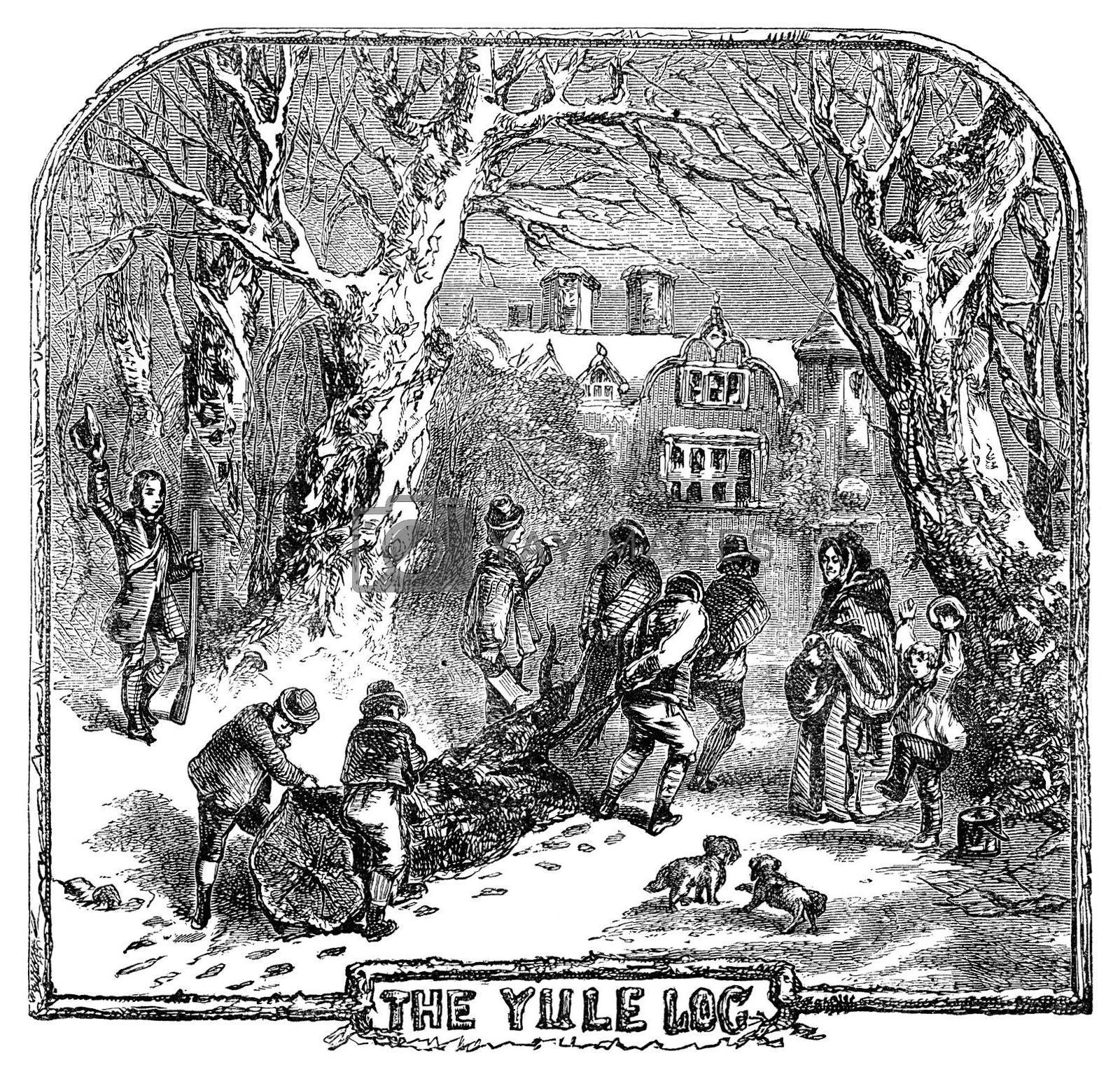
Hauling a Yule log in 1832
Also calledYuletide, Yulefest
Observed byVarious Northern Europeans, Germanic peoples, Heathens, Wiccans, Neopagans, LaVeyan Satanists
TypeCultural, Germanic pagan, modern pagan
SignificanceWinter festival
DateSee § Date of observance
FrequencyAnnual
Related toMidwinter, Christmastide, Christmas

Yule is a winter festival historically observed by the Germanic peoples that was merged with Christmas during the Christianisation of the Germanic peoples. In present times adherents of some new religious movements (such as Modern Germanic paganism) celebrate Yule independently of the Christian festival. Scholars have connected the original celebrations of Yule to the Wild Hunt, the god Odin, and the heathen Anglo-Saxon Mōdraniht ("Mothers' Night"). The term Yule and cognates are still used in English and the Scandinavian languages as well as in Finnish and Estonian to describe Christmas and other festivals occurring during the winter holiday season. Furthermore, some present-day Christmas customs and traditions such as the Yule log, Yule goat, Yule boar, Yule singing, and others may have connections to older pagan Yule traditions.

Etymology

[edit]

The modern English noun Yule descends from Old English ġēol, earlier geoh(h)ol, geh(h)ol, and geóla, sometimes plural.[1] The Old English ġēol or ġēohol and ġēola or ġēoli indicate the 12-day festival of "Yule" (later: "Christmastide"), the latter indicating the month of "Yule", whereby ǣrra ġēola referred to the period before the Yule festival (December) and æftera ġēola referred to the period after Yule (January). Both words are cognate with Gothic 𐌾𐌹𐌿𐌻𐌴𐌹𐍃 (jiuleis); Old Norse, Icelandic, Faroese and Norwegian Nynorsk jól, jol, ýlir; Danish, Swedish, and Norwegian Bokmål jul, and are thought to be derived from Proto-Germanic *jehwlą-.[2][3] Whether the term existed exterior to the Germanic languages remains uncertain, though numerous speculative attempts have been made to find Indo-European cognates outside the Germanic group, too.[a] The compound noun Yuletide ('Yule-time') is first attested from around 1475.[4]

The word is applied in an explicitly pre-Christian context primarily in Old Norse, where it is associated with Old Norse deities. Among many others (see List of names of Odin), the god Odin bears the name Jólnir ('the Yule one'). In Ágrip, composed in the 12th century, jól is interpreted as coming from one of Odin's names, Jólnir, closely related to Old Norse jólnar, a poetic name for the gods. In Old Norse poetry, the word is found as a term for 'feast', e.g. hugins jól (→ 'a raven's feast').[5]

It has been thought that Old French jolif (→ French joli), which was borrowed into English in the 14th century as 'jolly', is itself borrowed from Old Norse jól (with the Old French suffix -if; compare Old French aisif "easy", Modern French festif = fest "feast" + -if), according to the Concise Oxford Dictionary of English Etymology[6] and several other French dictionaries of etymology.[7][8] But the Oxford English Dictionary sees this explanation for jolif as unlikely.[9] The French word is first attested in the Anglo-Norman Estoire des Engleis, or "History of the English People", written by Geoffrey Gaimar between 1136 and 1140.[8]

Germanic paganism

[edit]

Attestations

[edit]

Months, heiti and kennings

[edit]
Illustration of an ancient Nordic Yule festival (Die Gartenlaube, 1880)

Yule is attested early in the history of the Germanic peoples; in a Gothic language calendar of the 5–6th century CE it appears in the month name fruma jiuleis, and, in the 8th century, the English historian Bede wrote that the Anglo-Saxon calendar included the months geola or giuli corresponding to either modern December or December and January.[10]

While the Old Norse month name ýlir is similarly attested, the Old Norse corpus also contains numerous references to an event by the Old Norse form of the name, jól. In chapter 55 of the Prose Edda book Skáldskaparmál, different names for the gods are given; one is "Yule-beings" (Old Norse: jólnar). A work by the skald Eyvindr skáldaspillir that uses the term is then quoted: "again we have produced Yule-being's feast [mead of poetry], our rulers' eulogy, like a bridge of masonry".[11] In addition, one of the numerous names of Odin is Jólnir, referring to the event.[12]

Heitstrenging

[edit]

Both Helgakviða Hjörvarðssonar and Hervarar saga ok Heiðreks provide accounts of the custom of heitstrenging. In these sources, the tradition takes place on Yule-evening and consists of people placing their hands on a pig referred to as a sonargöltr before swearing solemn oaths. In the latter text, some manuscripts explicitly refer to the pig as holy, that it was devoted to Freyr and that after the oath-swearing it was sacrificed.[13]

Saga of Hákon the Good

[edit]

The Saga of Hákon the Good credits King Haakon I of Norway who ruled from 934 to 961 with the Christianization of Norway as well as rescheduling Yule to coincide with Christian celebrations held at the time. The saga says that when Haakon arrived in Norway he was a confirmed Christian, but since the land was still altogether heathen and the people retained their pagan practices, Haakon hid his Christianity to receive the help of the "great chieftains". In time, Haakon had a law passed establishing that Yule celebrations were to take place at the same time as the Christians celebrated Christmas, "and at that time everyone was to have ale for the celebration with a measure of grain, or else pay fines, and had to keep the holiday while the ale lasted".[14]

Haakon planned that when he had solidly established himself and held power over the whole country, he would then "have the gospel preached". According to the saga, the result was that his popularity caused many to allow themselves to be baptized, and some people stopped making sacrifices. Haakon spent most of this time in Trondheim. When Haakon believed that he wielded enough power, he requested a bishop and other priests from England, and they came to Norway. On their arrival, "Haakon made it known that he would have the gospel preached in the whole country." The saga continues, describing the different reactions of various regional things.[14]

A description of heathen Yule practices is provided (notes are Hollander's own):

Old Norse text[15] Hollander translation[16]
Þat var forn siðr, þá er blót skyldi vera, at allir bœndr skyldu þar koma sem hof var ok flytja þannug föng sín, þau er þeir skyldu hafa, meðan veizlan stóð. At veizlu þeirri skyldu allir menn öl eiga; þar var ok drepinn allskonar smali ok svá hross; en blóð þat alt, er þar kom af, þá var kallat hlaut, ok hlautbollar þat, er blóð þat stóð í, ok hlautteinar, þat var svá gert sem stöklar; með því skyldi rjóða stallana öllu saman, ok svá veggi hofsins utan ok innan, ok svá stökkva á mennina; en slátr skyldi sjóða til mannfagnaðar. Eldar skyldu vera á miðju gólfi í hofinu ok þar katlar yfir; ok skyldi full um eld bera. En sá er gerði veizluna ok höfðingi var, þá skyldi hann signa fullit ok allan blótmatinn. It was ancient custom that when sacrifice was to be made, all farmers were to come to the heathen temple and bring along with them the food they needed while the feast lasted. At this feast all were to take part of the drinking of ale. Also all kinds of livestock were killed in connection with it, horses also; and all the blood from them was called hlaut [sacrificial blood], and hlautbolli, the vessel holding the blood; and hlautteinar, the sacrificial twigs [aspergills]. These were fashioned like sprinklers, and with them were to be smeared all over with blood the pedestals of the idols and also the walls of the temple within and without; and likewise the men present were to be sprinkled with blood. But the meat of the animals was to be boiled and served as food at the banquet. Fires were to be lighted in the middle of the temple floor, and kettles hung over the fires. The sacrificial beaker was to be borne around the fire, and he who made the feast and was chieftain, was to bless the beaker as well as all the sacrificial meat.

The narrative continues that toasts were to be drunk. The first toast was to be drunk to Odin "for victory and power to the king", the second to the gods Njörðr and Freyr "for good harvests and for peace", and third, a beaker was to be drunk to the king himself. In addition, toasts were drunk to the memory of departed kinsfolk. These were called minni.[16]

Academic reception

[edit]

Significance and connection to other events

[edit]

Scholar Rudolf Simek says the pagan Yule feast "had a pronounced religious character" and that "it is uncertain whether the Germanic Yule feast still had a function in the cult of the dead and in the veneration of the ancestors, a function which the mid-winter sacrifice certainly held for the West European Stone and Bronze Ages." The traditions of the Yule log, Yule goat, Yule boar Sonargöltr, Yule singing, and others possibly have connections to pre-Christian Yule customs, which Simek says "indicates the significance of the feast in pre-Christian times."[17]

Scholars have connected the month event and Yule period to the Wild Hunt (a ghostly procession in the winter sky), the god Odin (who is attested in Germanic areas as leading the Wild Hunt and bears the name Jólnir), and increased supernatural activity, such as the Wild Hunt and the increased activities of draugar—undead beings who walk the earth.[18]

Mōdraniht, an event focused on collective female beings attested by Bede as having occurred among the heathen Anglo-Saxons when Christians celebrated Christmas Eve, has been seen as further evidence of a fertility event during the Yule period.[19]

Date of observance

[edit]

The exact dating of the pre-Christian Yule celebrations is unclear and debated among scholars. Snorri in Hákonar saga góða describes how the three-day feast began on "Midwinter Night", however this is distinct from the winter solstice, occurring approximately one month later. Andreas Nordberg proposes that Yule was celebrated on the full moon of the second Yule month in the Early Germanic calendar (the month that started on the first new moon after the winter solstice), which could range from 5 January to 2 February in the Gregorian calendar. Nordberg positions the Midwinter Nights from 19 to 21 January in the Gregorian calendar, falling roughly in the middle of Nordberg's range of Yule dates. In addition to Snorri's account, Nordberg's dating is also consistent with the account of the great blót at Lejre by Thietmar of Merseburg.[20]

Contemporary traditions

[edit]

Relationship with Christmas in Northern Europe

[edit]

In modern Germanic language-speaking areas and some other Northern European countries, yule and its cognates denote the Christmas holiday season. In addition to yule and yuletide in English,[21] examples include jul in Sweden, Denmark, and Norway, jól in Iceland and the Faroe Islands, joulu in Finland, Joelfest in Friesland, Joelfeest in the Netherlands and jõulud in Estonia.[citation needed]

Modern paganism

[edit]

As contemporary pagan religions differ in both origin and practice, these representations of Yule can vary considerably despite the shared name. Some Heathens, for example, celebrate in a way as close as possible to how they believe ancient Germanic pagans observed the tradition, while others observe the holiday with rituals "assembled from different sources".[22] Heathen celebrations of Yule can also include sharing a meal and gift-giving.[citation needed]

In most forms of Wicca, this holiday is celebrated at the winter solstice as the rebirth of the Great horned hunter god,[23] who is viewed as the newborn solstice sun. The method of gathering for this sabbat varies by practitioner. Some have private ceremonies at home,[24] while others do so with their covens:

Generally meeting in covens, which anoint their own priests and priestesses, Wiccans chant and cast or draw circles to invoke their deities, mainly during festivals like Samhain and Yule, which coincide with Halloween and Christmas, and when the moon is full.[25]

LaVeyan Satanism

[edit]

Some members of the Church of Satan and other LaVeyan Satanist groups celebrate Yule at the same time as the Christian holiday in a secular manner.[26]

See also

[edit]
  • Dísablót, an event attested from Old Norse sources as having occurred among the pagan Norse
  • Julebord, the modern Scandinavian Christmas feast
  • Koliada, a Slavic winter festival
  • Lohri, a Punjabi winter solstice festival
  • Saturnalia, an ancient Roman winter festival in honour of the deity Saturn
  • Yaldā Night, an Iranian festival celebrated on the "longest and darkest night of the year".
  • Nardoqan, the birth of the sun, is an ancient Turkic festival that celebrates the winter solstice.

References

[edit]
[edit]
Revisions and contributorsEdit on WikipediaRead on Wikipedia
from Grokipedia

Yule, known in as jól, is a Germanic/Norse festival observed around the (December 21–23), marking the sun's rebirth, by Norse and other northern European peoples, featuring communal feasting, animal sacrifices known as , and symbolic practices to ensure the sun's return and communal prosperity. The term derives from the Proto-Germanic root jehwlą, reconstructed as denoting a period of festivity or the season itself, with cognates appearing in ġēol and Gothic calendars as early as the 4th century. Historical attestations, including mentions in Norse sagas and the , describe jól as lasting several nights—often three or up to twelve—with customs such as toasting to , peace, and victory (til árs ok friðar), though primary pre-Christian sources are limited and many details emerge from medieval Christian-era texts. A defining involved burning a massive , typically from oak or ash, over multiple days to ward off darkness, with its ashes spread for agricultural blessing, a practice echoed in later European . During , Yule customs were syncretized with , influencing terms like "Yuletide" and elements such as decorations and wassailing, while retaining pagan undertones in Scandinavian jul celebrations.

Etymology and Terminology

Linguistic Origins

The English term "Yule" originates from ġēol or ġēola, attested in texts such as the as the name for the feast or the month of (specifically ġēola for the Yule month). This form appears in pre-Christian contexts referring to a pagan observance later associated with after . Cognates exist across , including jól (used for the Norse winter festival involving feasting and sacrifices) and giuli or giule, denoting the corresponding winter period. Linguists reconstruct the Proto-Germanic ancestor as jehwlą or jehwla, a neuter noun likely signifying "Yule-time," "festivity," or a specific celebration, with attestations extending to Gothic jiuleis for the "Yule-month" in fragmentary calendars. The term's distribution in all major Germanic branches indicates a common prehistoric origin predating the divergence of East, West, and North Germanic around the 2nd–5th centuries CE. Proposed semantic links include a connection to feasting or the turning of the solar "," though these remain speculative without direct attestation; the core denotation appears tied to seasonal observance rather than a or astronomical term. The beyond Proto-Germanic is obscure, with no clear Indo-European cognates identified, suggesting possible pre-Germanic substrate influence or independent development within early Germanic tribal dialects by the BCE. Scholarly consensus favors jehwlą as denoting a festive period rather than deriving from words for "" or "," rejecting folk etymologies linking it to (Iovis) due to lack of phonological or contextual fit. This reconstruction aligns with linguistic evidence from and early medieval glosses, where the term consistently marks the darkest time of year before solar renewal. The term Yule derives from Proto-Germanic jehwlą or a related form jehwulo-, denoting a or celebration, with s appearing across . In Old Norse, it manifests as jól (plural, indicating festivities), which persists in modern Scandinavian forms such as Danish, Norwegian, and Swedish jul, referring to the season. Gothic records the jiuleis for the month of . Compound terms like Yuletide (Old English ġēola-tīd, meaning "Yule-time") extend the reference to the broader period. In ancient Germanic calendars, Yule aligned with the winter solstice vicinity, though exact timings varied by regional reckoning. The Anglo-Saxon calendar, as documented by Bede in the 8th century, designated Ēāre ġēola (Yule of the Mothers, or December) and Ēōra ġēola (Yule of the Boars, or January), framing the solstice season across these two months. Old Norse sources associate jól with a multi-day observance, potentially spanning 12 days around the solstice, tied to lunar or solar markers rather than fixed Gregorian dates. These references underscore Yule's role as a midwinter marker, distinct from but overlapping with later Christian calendrical imports.

Historical Practices in Germanic Paganism

Literary Attestations

The term denoting Yule appears in a Gothic calendar from the fragment, dating to the CE, where the month corresponding to or is named fruma jiuleis, indicating an early Germanic awareness of a period. This attestation, preserved in a , reflects pre-Christian temporal divisions among East Germanic speakers, though the text itself serves Christian liturgical purposes. In Anglo-Saxon sources, 's De Tempore Ratione (completed 725 CE) identifies Giuli—the precursor to Yule—as the designation for both and in the native calendar, linking it to the when "the night of the mothers" (modraniht) marked the sun's return and lengthening days. , drawing on earlier traditions, positions Giuli as the year's opening months in the pre-Christian reckoning, emphasizing its role in rather than detailed ritual descriptions. Old Norse texts provide more explicit references to Yule (jól) as a festive observance. Snorri Sturluson's Prose Edda (c. 1220 CE), in the Skáldskaparmál (chapter 55), lists "Yule-beings" (jólnar) among kennings for the gods, suggesting divine associations with the season's rituals, though Snorri's euhemeristic framework interprets these through a post-conversion lens. Similarly, Snorri's Heimskringla (c. 1230 CE), particularly the Ynglinga Saga, records Yule as a major sacrificial feast by the 9th century, with the first dated instance around 840 CE involving royal participation in blots (sacrifices) and communal drinking. The Saga of Haakon the Good within Heimskringla details 10th-century Norwegian practices, including mandatory ale-brewing for Yule and horse sacrifices, which King Haakon I (r. 934–961 CE) sought to suppress in favor of Christian fasting, highlighting tensions between pagan continuity and conversion. Later Icelandic sagas, such as Svarfdæla Saga, casually reference Yule postponements for or conflict, underscoring its status as the premier annual gathering for feasting and oaths on the sacrificial boar (sonargǫltr). These medieval compilations, while composed centuries after , preserve oral traditions from the , with linguistic evidence tracing jól to Proto-Germanic jeulą, denoting a yoking or turning point aligned with solstice rites. No contemporary pagan texts survive, rendering these accounts reliant on skaldic and saga filtered through monastic scribes.

Archaeological and Linguistic Evidence

The earliest linguistic attestations of Yule (*jehwlą in Proto-Germanic, denoting a "festival" or "celebration") appear in fragmented calendars, indicating a midwinter observance spanning months rather than a single day. In a Gothic lunisolar calendar preserved in the Codex Ambrosianus A (c. 5th–6th century CE), the term *jiuleis marks the Yule period, with *fruma jiuleis referring to the preceding November, suggesting a two-month festival framework among East Germanic tribes. This aligns with Bede's 8th-century description in De Temporum Ratione of Anglo-Saxon ġēola as dual midwinter months (ǣrra ġēola for December and æftera ġēola for January), framing Yule as a protracted seasonal rite tied to the lunisolar year. Old Norse sources extend this, using jól for a winter feast, often linked to sacrificial terminology like blót (offering), as in 9th-century skaldic poetry such as Haraldskvæði, where jól drekka implies ritual drinking. These terms reflect a shared Germanic lexical for feasting and sacrifice, distinct from solar solstice motifs, with jól sometimes denoting excess or omen-laden events (e.g., hugins jól, "raven's feast," evoking carrion from rituals). Direct archaeological evidence for Yule-specific rituals is scarce, as no inscriptions or artifacts unambiguously label midwinter practices as jól or equivalent. However, sites provide contextual support for feasting and sacrifice inferred from texts: a 9th-century fragment from the Oseberg ship burial in depicts a fenced (), consistent with locations for described in Yule-related sagas. Excavations at , , reveal large halls and ritual deposits dating to the 6th–10th centuries CE, aligning temporally with chronicler Thietmar of Merseburg's 1010s account of sacrifices there every nine years, potentially echoing periodic Yule . Broader Germanic bog finds and settlement faunal remains indicate heightened winter animal slaughter, but attributions to Yule remain inferential without calendrical markers.

Core Rituals and Beliefs

The central ritual of Yule in , particularly as attested in Norse traditions, was the , a sacrificial offering to the gods involving the slaughter of animals such as horses, boars, and other livestock. Blood from the victims was collected and sprinkled on temple idols, walls, and participants to sanctify the space and invoke divine favor, while the meat was consumed in communal feasts. In the Saga of Hákon the Good by , the midwinter at Lade is described as requiring the brewing of ale for toasts and the sacrifice of horses, whose meat formed the basis of the feast, emphasizing communal obligation under pagan law. A prominent element of the was the sonargǫltr, or sacrificial boar dedicated primarily to , the god of fertility and prosperity. Participants laid hands on the boar's bristles to swear solemn oaths (heitstrenging) for the coming year, binding vows of honor, revenge, or alliances before its slaughter and consumption. This practice appears in the Hervarar saga ok Heiðreks, where King Heiðrekr offers the boar to , underscoring its role in ritual oaths during Yule eve. Feasting extended over multiple days, often three, with mandatory drinking rituals like "jól drekka" (drinking Yule), where free men were expected to consume substantial ale—up to four gallons each—to honor the gods and dead ancestors. Underlying beliefs centered on propitiating deities for survival through winter hardship and success in the agricultural and martial cycles. Sacrifices targeted for victory in conflicts, for bountiful harvests and peace, and Thor to avert plagues or ensure health, reflecting a pragmatic where offerings secured divine intervention against , defeat, or illness. Yule marked rather than the solstice, aligned with the of the second Yule month in a , symbolizing renewal through communal bonds and ancestral remembrance rather than solar rebirth. These practices, preserved in 13th-century texts like Snorri's , derive from oral traditions but were recorded post-Christianization, potentially influenced by the authors' agendas to portray as orderly yet antithetical to .

Debates on Timing and Significance

Proposed Dates of Observance

Scholars propose that the pre-Christian observance of Yule (Old Norse jól) in , particularly among the Norse, occurred during according to the lunisolar , corresponding roughly to mid-January in the modern . This timing is derived from Snorri Sturluson's , specifically the Saga of Haakon the Good, which describes the festival as a three-day event commencing on "Midwinter Night" (mýdvanct nact or hökunótt), the longest night, before Christian kings like Haakon I (r. c. 934–961 CE) decreed its alignment with in late to facilitate conversion. In the Old Norse system, midwinter followed the winter nights (vetrnætr) by about three lunar months, placing jól around the of the jólmánaðr (Yule month), often January 19–21 when retrojected to Gregorian dates, emphasizing renewal after the solstice rather than the solstice itself. Alternative proposals, including common modern associations, link Yule more directly to the (December 21–23), viewing it as a solar celebrating the sun's return and rebirth, based on etymological ties to words for "" or cycle and parallels with other Indo-European rites. However, this solar alignment lacks direct attestation in primary Germanic sources and is critiqued as a modern reconstruction influenced by 19th-century and Neopaganism, rather than empirical evidence from sagas or , which prioritize lunar reckoning. Anglo-Saxon evidence from Bede's De Temporum Ratione (c. 725 CE) identifies geóla as a December– calendrical period, potentially indicating a broader two-month observance encompassing solstice to mid-, though without specifying peaks. The festival's duration varied in descriptions, typically three days in Norse accounts but extending to twelve in some later Germanic traditions, reflecting adaptive lunar adjustments rather than a fixed solar date. shifted observance to onward, as seen in Haakon's laws requiring ale-brewing and feasting "at the same time as ," evidencing an original disconnect from the solstice. These proposals underscore Yule's roots in agrarian and lunar cycles for sacrifice () and communal feasting, prioritizing post-solstice stability over the solstice's .

Connections to Solar Cycles and Other Festivals

The observance of Yule in pre-Christian Germanic societies aligned closely with the , typically falling within the darkest weeks of the year when daylight began to lengthen after in the , symbolizing the sun's gradual return and renewal of life amid winter's hardship. This temporal connection stemmed from practical astronomical observations in high-latitude regions, where the solstice marked a critical seasonal pivot influencing and , though primary sources like Gothic calendars from the attest to Yule as a extended period spanning two lunar months rather than a precise solstice . Historians such as note that while the solstice provided a natural anchor for festivities, explicit evidence of worship in Yule practices is scarce, with rituals more focused on communal feasting and offerings to ensure fertility and ward off chaos, as described in later Norse texts like Snorri Sturluson's Prose Edda. Parallels exist with other midwinter observances across Indo-European cultures, driven by shared environmental pressures rather than direct diffusion, such as the Roman (December 17–23), which emphasized feasting, role reversals, and gift-giving to honor the agricultural god Saturn amid pre-solstice darkness, but lacked the solstice-specific timing of Germanic Yule. In Scandinavian variants like Norse Jól, Yule incorporated fire-based rites, including the burning of large logs to mimic the sun's rebirth, echoing broader solar symbolism in festivals like the Persian Yalda or Celtic Meán Geimhridh, where evergreens and lights combated symbolic death of light—elements attributable to convergent adaptations to northern winters rather than proven cultural borrowing. Scholarly analyses caution against overemphasizing these links, as archaeological finds (e.g., solstice-aligned structures in ) predate Germanic Yule and reflect general human attunement to solar cycles, not unique pagan solar cults. Critiques of solstice-Yule equivalence highlight that Bede's 8th-century De Temporum Ratione places Anglo-Saxon Yule months from late to late , potentially predating the solstice and prioritizing lunar calendars over strict solar alignment, underscoring Yule's role as a (sacrifice) season for prosperity over explicit heliolatry. This distinction persists in modern reconstructions, where Neopagan interpretations amplify solar motifs, yet historical records prioritize anthropomorphic gods like or in Yule lore, with solar elements emerging more prominently in post-conversion .

Christianization and Syncretism

Process in Northern Europe

The of , encompassing and , unfolded gradually from the late 10th to the 12th centuries, driven by royal decrees, missionary efforts, and political pressures rather than conversions from below. In , King declared the state religion around 965 AD, marking an early adoption influenced by trade and alliances with the , though pagan practices lingered in rural areas until the . Norway's process intensified under King Håkon I (r. 934–961 AD), who, after in , mandated Christian laws including attendance at but retained some pagan festivals to ease resistance; his efforts faltered amid revolts, as chronicled in Snorri Sturluson's . I Tryggvason (r. 995–1000 AD) escalated enforcement through destruction of pagan temples, execution of resisters like Raud the Strong, and edicts banning sacrifices, converting Norway and the Orkneys by tying to . Specific to Yule ( Jól), emerged as kings reframed the midwinter —feasts and offerings to gods like for fertility and solstice renewal—as compatible with Christian observance to avert backlash. Håkon I decreed Yule's start on , shortening it to three days of ale-brewing and horse-meat avoidance in favor of bread and Christian feasting, per accounts, preserving communal rites while prohibiting overt pagan rituals. I outlawed traditional and renamed the period Kristmesse (Christ's Mass) in some regions, yet the term Jól endured, with practices like log-burning and extended hospitality redirected toward Nativity celebrations; archaeological evidence from runestones and church sites shows hybrid symbols, such as crosses overlaid on solar motifs, indicating pragmatic blending over eradication. II Haraldsson (r. 1015–1028 AD) further entrenched this by building churches near former sites and legalizing Yule under Christian auspices, though enforcement varied, allowing folk customs to persist covertly. In , settled by Norse pagans in the , conversion occurred via consensus at the assembly in 1000 AD, prompted by Olaf I's trade embargoes and threats of ; law-speaker Thorgeir Thorkelsson proposed as official to prevent strife, stipulating private pagan worship and exposure of unwanted infants as concessions. Yule's integration mirrored Norway's: public blóts ceased, but Jól naming and solstice feasting continued, with sagas noting survivals like elf-offerings reframed as ; by the 11th century, ecclesiastical records document Yule ales blessed by priests, evidencing causal adaptation where pagan social structures—kinship feasts—aided church hierarchy's embedding. Sweden's shift lagged, with Olof Skötkonung's around 1008 AD yielding partial ; pagan temples endured until the 1080s, and Yule rituals blended into Jul through royal edicts mirroring Danish models, as inferred from legal codes prohibiting but tolerating folk variants. This top-down process, often coercive yet strategically accommodative, prioritized political consolidation over doctrinal purity, with empirical persistence of Yule elements—evidenced in medieval laws and —stemming from Christianity's tactical overlay on ingrained seasonal cycles rather than wholesale or suppression. Resistance, including revolts and clandestine rites, underscores that reflected incomplete hegemony, not seamless merger, as artifacts reveal dual-faith amulets until circa 1100 AD.

Integration into Christmas

The of from the 8th to 11th centuries involved the gradual overlay of pagan Yule observances with the feast of , particularly in Germanic and Scandinavian regions where Yule marked the period. Missionaries and local rulers, such as Olaf II of Norway around 1015–1028, permitted the retention of familiar rituals like feasting and fire-lighting to facilitate conversions, reinterpreting them within a Christian context of celebrating Christ's birth as the "." This preserved Yule's temporal span, aligning its approximate 12-day duration—from late to early January—with the Christian Octave of extending to Epiphany on January 6. A key surviving element is the , a large or other hardwood log selected in pagan Germanic tradition and burned continuously over the Yule period to symbolize the sun's return and ward off winter spirits, with ashes later spread for fertility. Adopted into Christian households by the medieval period, the log was lit on using remnants from the prior year's fire, sustaining the hearth through the and accompanied by prayers or carols. The custom, rooted in pre-Christian Nordic practices, persisted in rural and into the before declining with chimney modernization, though it inspired the French bûche de Noël from the onward. Yule's terminology endured in Northern European languages, with "Yule" evolving into modern Scandinavian words for Christmas—such as Norwegian jul and Swedish jul—reflecting linguistic continuity despite theological shifts. Decorative practices like boughs and , used in Yule to invoke protection and renewal, blended into Christmas wreaths and garlands, though their ubiquity across Indo-European cultures tempers claims of exclusive Yule provenance. Feasting and communal gatherings, central to Yule's agrarian renewal themes, paralleled Christian nativity banquets but drew from widespread customs rather than uniquely pagan mandates. Assertions of wholesale pagan dominance in Christmas often overlook this broader cultural convergence and the deliberate Christian reframing during evangelization.

Evaluation of Pagan Influence Claims

Claims that Yule exerted significant influence on Christmas often center on the adoption of midwinter timing, feasting, the Yule log, and evergreen decorations as evidence of direct pagan-to-Christian syncretism in Germanic regions. However, historical analysis reveals that such parallels are frequently superficial, with limited pre-Christian evidence for specific Yule rituals and stronger indications of independent Christian developments or medieval folk innovations. The term "Yule" (from Old English geōl or Old Norse jól) persisted in Scandinavian languages for Christmas after Christianization around the 10th-11th centuries, reflecting linguistic retention rather than unbroken ritual continuity, as conversion processes emphasized replacing pagan practices with Christian liturgy. The December 25 date for was established in the by 336 CE, predating widespread by centuries and aligning more closely with theological calculations of Christ's conception than with solstice festivals like Yule, which lack precise dating in pagan sources beyond general associations. Bede's 8th-century De Temporum Ratione describes Anglo-Saxon geola as a month name linked to December-January but provides no detailed festival rituals, suggesting Yule was not a formalized solstice event with the elaborate customs later attributed to it. Archaeological evidence for Yule-specific practices, such as boar sacrifices or log burnings, is scant and post-dates Christian influence, with Norse sagas like the Ynglinga Saga (13th century) recording traditions through a Christian lens, potentially romanticizing or inventing pagan elements. Customs invoked as Yule-derived, including the Yule log and wassailing, emerge in records from the 12th century onward, primarily in Christian contexts without explicit pagan attribution; for instance, the Yule log tradition appears in French and English folklore as a household hearth practice, not tied to verified pre-Christian solstice rites. Historian Ronald Hutton, in The Stations of the Sun (1996), argues that British and northern European Christmas elements largely stem from medieval ecclesiastical feasts and agrarian cycles rather than direct pagan survivals, critiquing 19th-century antiquarian claims—often amplified by modern neopagan narratives—as speculative and lacking primary sources. While syncretism occurred during Northern Europe's late conversion, with missionaries adapting familiar terms like jól to facilitate acceptance, causal evidence for Yule imposing core rituals on Christmas is weak, overshadowed by Roman and Byzantine Christian precedents. Popular assertions of pagan dominance, frequently disseminated in non-academic media and , overstate influence by conflating temporal proximity with causation, ignoring that many "pagan" interpretations rely on secondary etymologies or Victorian-era reconstructions rather than contemporaneous texts. Empirical scrutiny favors viewing as a Christian that absorbed localized folk elements post-conversion, with Yule's role confined to nominal and seasonal overlap rather than substantive transfer.

Modern Revivals and Critiques

Neopagan Reconstructions

In modern Germanic Neopaganism, known as Heathenry or Ásatrú, Yule is reconstructed as a festival honoring ancestral gods, wights, and the returning light, typically spanning from the on to early , drawing on sparse Eddic and references to blots and feasts. Practitioners perform blóts—symbolic offerings of mead, ale, or food poured out to deities such as , Thor, and —and sumbels, ceremonial toasts invoking oaths and kinship bonds, often in kindred groups or s to foster community resilience during the darkest season. Organizations like emphasize Yule's role in the ritual year, with some kindreds extending observances to twelve days mirroring medieval Icelandic jól accounts, incorporating hearth fires, of heroic lays, and warding against chaotic forces like trolls or through or iron talismans. Wiccan and other eclectic Neopagan traditions adapt Yule as the final sabbat of the , centered on the solar rebirth myth where the pregnant births the Oak King, symbolizing light's victory over darkness, celebrated precisely on the solstice with bonfires, boughs, and a ritually kindled to represent continuity from ancient hearth cults. Rituals often include circle castings, invocations to guardians, and in -infused waters for omens, blending inferred Celtic-Germanic motifs with modern , as outlined in foundational texts by figures like . These practices, while invoking solstice astronomy, prioritize experiential over strict historicity, with groups like the incorporating deity-specific days, such as candle-lighting for on the third night amid crafts evoking folk continuity. Reconstructions vary by kindred or coven emphasis: folkish Ásatrú variants stress ancestral purity and martial blots akin to Viking-age horse sacrifices referenced in Ynglinga Saga, whereas universalist Heathenry integrates inclusive sumbels for diverse practitioners, reflecting post-1970s revival dynamics in the U.S. and . Common elements across traditions include feasting on boar-shaped pastries nodding to Yule boar lore in Scandinavian eddas, and evergreen decorations as evergreen resilience symbols, though these draw more from 19th-century revivals than direct archaeological attestation.

Historical Accuracy Concerns

Historians emphasize that pre-Christian Yule (Old Norse Jól, Anglo-Saxon Geóla) is poorly documented, with surviving accounts primarily from Christian-era sources like Bede's De Temporum Ratione (c. 725 AD), which describes it as a two-month period from late to without specifying solstice rituals, and Snorri Sturluson's (c. 1220s), which mentions feasting and horse sacrifices under kings like Hákon Haraldsson (c. 934–961 AD) but offers scant detail on observances. These texts, compiled centuries after conversion, reflect oral traditions filtered through Christian lenses, raising questions about their fidelity to pagan practices. A primary concern is the misalignment between modern revivals and attested timing; Yule likely centered on (possibly the after the shortest day or early ), not the itself, as Germanic calendars prioritized lunar or agricultural markers over astronomical precision. Claims of solstice-specific rebirth symbolism, common in neo-pagan circles, derive more from 19th-century occult revivals and figures like than from archaeological or textual evidence, which shows no widespread Germanic solstice cult. Specific traditions invoked in reconstructions, such as the , lack pre-Christian attestation; the earliest descriptions appear in 17th-century folk accounts, with pagan origins first proposed by Henry Bourne in 1725, unsupported by medieval sources. Similarly, elements like Yule goats or wild hunts, while rooted in later Scandinavian , show no direct links to Jól rituals and were often Christianized or regional customs. , in analyzing British calendars, concludes that such features represent medieval innovations or 19th-century inventions rather than unbroken pagan continuity. Neo-pagan Yule often amalgamates Norse elements with unrelated Celtic, Wiccan, or Druidic motifs—such as Oak King versus Holly King battles or invocations—lacking empirical basis in Germanic sources and reflecting 20th-century over historical fidelity. This , while culturally vibrant, prioritizes appeal over verifiable , as primary prioritizes communal feasting, oaths, and offerings amid scarce records of esoteric symbolism. Scholars caution that romanticized views, amplified by nationalist folklore collections (e.g., Grimm brothers, 1810s–1850s), inflate Yule's uniformity across tribes, ignoring regional variations and the oral tradition's mutability.

Contemporary Cultural Adaptations

Elements of the ancient Yule festival persist in contemporary holiday customs, particularly through adaptations in across and . The , originally a large or log burned over multiple days to ward off winter's chill, has been transformed in modern times into the bûche de Noël, a rolled filled with cream and iced to resemble bark, popularized in during the 19th century and now enjoyed globally as a festive . In regions without fireplaces, a televised "" video of a crackling , first broadcast by in New York in 1966, has become a seasonal staple, streamed annually to evoke the ritual's warmth. In , where Yule (Jól or Jul) directly influences national observances, adaptations emphasize figures and symbols. Sweden's (Gävlebocken), a 13-meter-tall erected annually in since 1966 by local broker Stig Gavlén as a marketing , represents the ancient (julbock) associated with Thor's chariot or sacrificial rites; it attracts tourists but faces repeated attempts, with 13 successful burnings recorded by 2023, turning the event into a quirky modern spectacle. In , the 13 Yule Lads (Jólasveinar), mischievous troll offspring of mountain trolls from 17th-century compiled by Jón Árnason in the 1860s, visit children nightly from December 12 to 24, leaving small gifts or rotten potatoes in windowsill shoes based on behavior, fostering family anticipation in a sanitized, child-friendly adaptation of once-fearsome figures. Other Yule-derived practices, such as hanging for kissing—traced to Druidic reverence for the plant's winter vitality—and wassailing with spiced cider to bless orchards, continue in Anglo-American rituals, blending pagan symbolism with secular merriment. These adaptations reflect a cultural where empirical seasonal needs for light and community amid winter darkness drive enduring customs, often detached from original pagan cosmologies.

References

Add your contribution
Related Hubs
Contribute something
User Avatar
No comments yet.