Hubbry Logo
CistusCistusMain
Open search
Cistus
Community hub
Cistus
logo
8 pages, 0 posts
0 subscribers
Be the first to start a discussion here.
Contribute something
Cistus
Cistus
from Wikipedia

Cistus
Cistus monspeliensis
Scientific classification Edit this classification
Kingdom: Plantae
Clade: Tracheophytes
Clade: Angiosperms
Clade: Eudicots
Clade: Rosids
Order: Malvales
Family: Cistaceae
Genus: Cistus
L. (1753)
Species[1]

34; see text

Synonyms[1]
  • Halimiocistus Janch. (1925)
  • Halimium (Dunal) Spach (1836)
  • Ladanium Spach (1836)
  • Ladanum Raf. (1838), nom. illeg.
  • Ledonia Spach (1836)
  • Libanotis Raf. (1838), nom. illeg.
  • Rhodocistus Spach (1836)
  • Stegitris Raf. (1838)
  • Stephanocarpus Spach (1836)
  • Strobon Raf. (1838)

Cistus (from the Greek kistos) is a genus of flowering plants in the rockrose family Cistaceae, containing about 20 species (Ellul et al. 2002). They are perennial shrubs found on dry or rocky soils throughout the Mediterranean region, from Morocco, Spain, Italy, Greece, through to the Middle East, and also on the Canary Islands.

Cistus, with its many hybrids and cultivars, is commonly encountered as a garden flower.

The common name rockrose (rock rose in the UK) is applied to the species, a name also shared by the related genera Helianthemum and Tuberaria, all in the family Cistaceae. The common name gum cistus is applied to resin-bearing species, especially C. ladanifer. Sometimes known as 'Pheasant's Compromise'

Description

[edit]
Evergreen leaves of a Cistus species (Cistus monspeliensis)

The leaves are evergreen, opposite, simple, usually slightly rough-surfaced, 2–8 cm long. In a few species (notably C. ladanifer), the leaves are coated with a highly aromatic resin called labdanum.

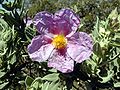
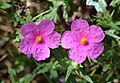
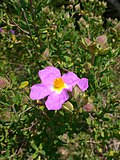
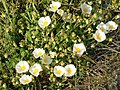
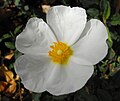
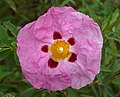
They have showy 5-petaled flowers ranging from white to purple and dark pink, in a few species with a conspicuous dark red spot at the base of each petal.

Taxonomy

[edit]

Phylogeny

[edit]

Cistus and Halimium form a cohesive and the most derived clade within Cistaceae.[2] Plants of the World Online and World Flora Online treat Halimium as a synonym of Cistus.[3][4] Molecular phylogenetic analyses conducted between 2005 and 2011 confirm that Cistus species divide into two well-defined clades, neither of which was fully resolved internally. The first clade consists of those with purple and pink flowers (the "purple pink clade" or PPC). The second clade consists of those with white flowers or, in the case of Cistus parviflorus, pale pink flowers (the "white or whitish pink clade" or WWPC).[2][5][6][7] Although the flower colour of C. parviflorus is anomalous, it has very short styles, otherwise characteristic of WWPC species. A hybrid origin has been suggested.[5] A simplified cladogram is shown below:[8]

Species-level cladogram of Cistus species.

  Halimium spp.  


  Halimium spp.  

PPC  
     

  Cistus crispus  


  Cistus heterophyllus  


  Cistus albidus  

  Cistus creticus  

  WWPC  
  Purple
  Pink
  Clade
  White
  Whitish Pink
  Clade
Species-level cladogram of Cistus species, based on plastid and nuclear DNA sequences.[5][2][6][7]

Within the purple pink clade (PPC), C. crispus is consistently the first diverging species. C. albidus, C. creticus and C. heterophyllus form a well supported clade. Seven species endemic to the Canary Islands form a polytomy, resolved differently in different analyses, in which subtaxa of some species do not always cluster together. Within the white and whitish pink clade (WWPC), there is weak support for a clade consisting of C. clusii and C. munbyi; the other species either formed part of a polytomy or resolved differently in different analyses. Halimium and Cistus were regularly shown to be paraphyletic with respect to one another.[7]

Species

[edit]

The following species are recognised in the genus Cistus:[1][7]

[edit]

Hybrids

[edit]

In addition a large number of hybrids have been recorded, including:[1][9]

Ecology

[edit]

They are thermophilous plants, which require open, sunny places. This plant genus is peculiar in that it has developed a range of specific adaptations to resist summer drought and frequent disturbance events, such as fire and grazing. In addition, it can form both ectomycorrhizas and arbuscular mycorrhizas. More than 200 ectomycorrhiza-forming fungal species belonging to 40 genera have been reported so far to be associated with Cistus.[19] As with many other Cistaceae, the species of Cistus have the ability to form mycorrhizal associations with truffles (Tuber) and are thus able to thrive on poor sandy soils or rocks. Cistus ladanifer has been found to have mycorrhizal associations with Boletus edulis, Boletus rhodoxanthus, and Laccaria laccata.[20]

Cistus are the only host of Cytinus hypocistis, a small parasitic plant that lives on the roots and is noticeable only for a short period of time when in flower. The presence of the parasite does not seem to harm the host population.

Cistus species are used as food plants by the larvae of some Lepidoptera species including Coleophora confluella and Coleophora helianthemella, the latter recorded on Cistus monspeliensis.

Various Cistus species are known to emit volatile oils, rendering the plants flammable. Their emission of these essential oils is a genetic adaptation for the species intended to actually promote flammability and even cause spontaneous combustion.[21] Cistus plants are therefore considered pyrophytes, or plants which rely upon fire as a part of their life cycle to encourage spread within their biome. Cistus seeds are resistant to the fires allowing them to germinate once fires have subsided and allowing them to benefit from an environment with less competition from other species.[22]

Cultivation

[edit]

Cistuses are suitable for sunny gardens with a nearly frost-free Mediterranean climate. The hardiest of the species is C. laurifolius, which survived the hard frost at Royal Botanical Gardens at Kew in 1895 that eliminated all the cistuses save this and two white-flowered natural hybrids, C. × corbariensis, already grown by John Tradescant the Elder, and C. × loretii, a 19th-century introduction.[23]

Cultivars

[edit]

Cultivars (those marked agm have gained the Royal Horticultural Society's Award of Garden Merit) include:

  • C. × aguilarii 'Maculatus' agm[24]
  • C. × argenteus 'Peggy Sammons'[25] - pink flowers, grey-green leaves[26]
  • C. × bornetianus 'Jester' agm[27]
  • C. × cyprius agm[28]
  • C. × cyprius var. ellipticus 'Elma' agm[29]
  • C. × dansereaui 'Decumbens' agm[30]
  • C. × dansereaui 'Jenkyn Place' agm[31]
  • C. × florentinus - white flowers
  • C. 'Gordon Cooper' agm[32]
  • C. × hybridus - pink buds, white flowers
  • C. × laxus 'Snow White' agm[33]
  • C. × lenis 'Grayswood Pink' agm[34]
  • C. × obtusifolius 'Thrive' agm[35]
  • 'C. 'Paladin' - large white flowers, dark green leaves
  • C. × pulverulentus 'Sunset' agm[36]
  • C. × purpureus agm[37] - pink petals with dark blotches near centre[26]
  • C. × skanbergii[38] - small pink flowers
  • C. 'Snow Fire' agm[39]
  • ×Halimiocistus 'Ingwersenii' agm[40]
  • ×Halimiocistus sahucii agm[41]
[edit]

References

[edit]

Bibliography

[edit]
[edit]
Revisions and contributorsEdit on WikipediaRead on Wikipedia
from Grokipedia
Cistus is a genus of approximately 34 species of evergreen shrubs, commonly known as rockroses, in the rockrose family Cistaceae, native to the Mediterranean region including southern Europe, North Africa, and the Canary Islands. These plants are characterized by their opposite, simple leaves, which are often aromatic and covered in glandular hairs, and by their showy, short-lived flowers that resemble roses, featuring five broadly wedge-shaped petals in shades of white, pink, or purple, along with numerous stamens. Typically growing to heights of 0.5 to 2.5 meters, species of Cistus thrive in dry, rocky, or sandy soils and full sun, exhibiting adaptations such as fire resistance that allow them to regenerate quickly after wildfires, making them key components of Mediterranean maquis shrublands. The genus is divided into subgenera based on flower color, with subgenus Cistus featuring purple-flowered species and subgenera Leucocistus and Halimioides bearing white flowers, and it includes notable taxa like Cistus ladanifer, valued for its resinous exudate known as labdanum used in perfumery, and Cistus salviifolius, a common ornamental. While primarily wild in their native habitats, many Cistus species are cultivated worldwide for their drought tolerance, ornamental blooms, and potential medicinal properties derived from their rich essential oils and polyphenols, which exhibit antioxidant and antimicrobial activities.

Description

Morphology

Cistus species are shrubs that typically attain heights of 0.5 to 2.5 meters, exhibiting a dense, bushy growth habit well-suited to rocky terrains. These shrubs feature erect stems with numerous densely branched lateral shoots, forming compact thickets that enhance their resilience in challenging environments. The foliage emits a characteristic aromatic scent derived from essential oils secreted by glandular trichomes, contributing to the plant's overall ecological adaptations. Stems of Cistus are woody at the base, transitioning to more herbaceous tissues in the upper portions, which supports vigorous branching and renewal after disturbance. In several species, such as C. ladanifer, the bark is notably sticky due to resinous , while others display peeling characteristics that reveal underlying tones. This structural variation aids in protection against and herbivores in Mediterranean climates. The leaves are simple, arranged oppositely along the stems, and generally measure 2 to 8 cm in length, providing a foundational vegetative cover. They exhibit morphological diversity, ranging from lanceolate to ovate shapes, with margins that may be entire, toothed, or undulate, and surfaces often rough due to dense coverage. Coloration varies from grey-green, often associated with pubescent varieties, to darker green in smoother forms, frequently rendered sticky by resin glands that produce . This resin production underscores the genus's chemical defenses, though detailed composition is addressed elsewhere.

Flowers and Reproduction

The flowers of Cistus are typically arranged solitary or in terminal or axillary cymes, measuring 3–10 cm in diameter. They exhibit actinomorphic symmetry and a hypogynous structure, featuring five sepals (with the outer ones often smaller), five petals in , , or hues—sometimes accented by basal spots—and numerous stamens surrounding a superior composed of 3–5 carpels (up to 12 in species like C. ladanifer). The style is long and straight, terminating in a discoid stigma with 5–12 lobes. Flowering occurs primarily from spring to early summer, varying by species and region—for instance, mid-April to mid-June for C. creticus and June to August for C. albidus—producing ephemeral blooms that last 1–3 days per flower, often opening in response to morning light and contributing to prolific, synchronized displays across populations. Pollination in Cistus is entomophilous, relying on insects such as bees and butterflies attracted to nectar and abundant pollen; species like C. albidus produce higher quantities of these rewards, drawing a diverse array of visitors including those with elevated nutritional demands, while the genus generally exhibits self-incompatibility to promote cross-pollination. Reproduction is predominantly sexual through seed production, with fruits forming as dehiscent, loculicidal capsules that split into 5–12 valves upon maturity, releasing numerous small, polyhedral —often hundreds per capsule, such as 318–1,185 in C. ladanifer. Some hybrids within the may incorporate apomictic elements, facilitating asexual seed formation alongside sexual modes.

Taxonomy

Phylogenetic Relationships

Cistus belongs to the family Cistaceae, within the subfamily Cistoideae, where it forms a closely related group with the genera Halimium and based on and nuclear DNA phylogenies. These genera share Mediterranean origins and exhibit similar shrubby habits adapted to dry environments, with molecular analyses revealing intergeneric hybridization and in some lineages. Molecular phylogenetic studies utilizing nuclear ITS and trnL-trnF and matK sequences have resolved Cistus into two primary monophyletic s: the (PPC), characterized by species with purple to pink flowers such as C. ladanifer, and the White/Whitish Pink Clade (WWPC), including white-flowered species like C. monspeliensis. Complementary analyses with cpDNA markers trnL-trnF and trnS-trnG confirm this bipartition, with the PPC showing rugulate or microreticulate and the WWPC displaying more variable striato-reticulate to reticulate ornamentation. These s reflect evolutionary divergence in floral pigmentation and pollination strategies, with the PPC often associated with specialized insect pollinators. The evolutionary history of Cistus traces to Miocene diversification in the Mediterranean Basin, coinciding with the emergence of xeric habitats during the climatic shifts toward aridity. Fossil pollen records, including Helianthemum-type grains from Upper Miocene deposits (approximately 11 million years ago) in , provide evidence for early Cistoideae presence, while macrofossils like Cistinocarpum roemeri constrain the family crown age to around 28 million years ago in the . Adaptations to xeric conditions, such as fire-stimulated and drought-tolerant foliage, likely drove within these clades during the Pliocene-Pleistocene, enabling of post-fire scrublands. Taxonomic revisions informed by post-2000 DNA studies have expanded the recognized species count from approximately 20 in early molecular phylogenies to 34 accepted species today, incorporating genetic evidence for cryptic diversity and resolving previous morphological ambiguities.

Recognized Species

The genus Cistus comprises 34 accepted species, primarily evergreen shrubs endemic to the Mediterranean Basin. Species diversity is highest in the western Mediterranean, with 14 concentrated in the and northwestern Africa, reflecting the region's geological and climatic history. Diagnostic traits among include variations in flower color (ranging from to or ), leaf pubescence (from glabrous to densely hairy), and content (notably high in certain taxa like C. ladanifer). Prominent species include L., known as gum rockrose, a highly resinous shrub producing gum, distributed from across southwestern to . Cistus monspeliensis L. features white flowers with yellow basal spots and is widespread across and the Mediterranean, often in sandy or rocky soils. Cistus salviifolius L., or sage-leaved rockrose, is characterized by aromatic, sage-like leaves and white flowers, extending from to northwestern . Cistus creticus L., the Cretan rockrose, is notable for its pink to purple flowers and is primarily found in central and regions, including and associated islands. Recent nomenclature updates have refined species boundaries, such as the description of Cistus asper Demoly & R.Mesa in 2005, separated from related taxa in the C. salviifolius group based on distinct morphological features like leaf indumentum and floral structure, supported by genetic analyses within phylogenetic clades.

Hybrids

Hybrids within the genus Cistus are common due to the close phylogenetic relationships among and their overlapping distributions in the Mediterranean region, with more than half of the approximately 34 accepted taxa classified as nothospecies of hybrid origin. These hybrids often arise naturally where parental co-occur, exhibiting intermediate morphological traits such as leaf shape, flower color, and structure, though evidence for widespread reticulate evolution or is limited, as all Cistus maintain a diploid chromosome number of 2n = 18. Natural hybridization contributes to taxonomic complexity but does not appear to drive major events in the genus. Prominent natural hybrids include Cistus × incanus L., a cross between C. albidus L. and C. crispus L., which forms part of a complex hybrid swarm in Mediterranean habitats, particularly in regions like southern where up to 16 nothotaxa have been documented. Another example is C. × florentinus Lam., resulting from C. monspeliensis L. × C. salviifolius L., which can comprise up to 10% of populations in overlap zones and displays blended traits like white to pale pink flowers and sticky foliage. These natural hybrids often show hybrid vigor, including improved adaptability to varied microhabitats, though fertility can vary, with some producing viable offspring that perpetuate swarms while others exhibit reduced pollen viability. Cultivated hybrids have been developed primarily for horticultural purposes since the in , with early breeding efforts by figures like Émile Bornet at Villa Thuret in , , between 1860 and 1875, leading to numerous named forms valued for ornamental traits. Examples include C. × purpureus Lam., a cross of C. ladanifer L. × C. creticus L. subsp. eriocalyx, featuring striking purple-pink flowers with crimson blotches and growing to 1.5–2 m tall, originally documented in gardens as early as 1819. C. × skanbergii Lojac., derived from C. monspeliensis × C. parviflorus Lam., is a compact (0.5–1 m high) with soft gray-green leaves and abundant light pink flowers, selected for its dense habit and drought tolerance in cultivation. Other notable cultivated hybrids, such as C. × hybridus Pourr. (syn. × corbariensis), combine C. populifolius L. × C. salviifolius and demonstrate enhanced cold hardiness, tolerating temperatures down to -12°C in trials, alongside intermediate white flowers and mounding growth. Overall, over 100 historical names for Cistus hybrids, varieties, and species were recorded by 1830, reflecting extensive 19th- and 20th-century European breeding focused on colors, compact forms, and resilience, though many modern cultivars remain fertile and propagate readily, while others, particularly intersubgeneric crosses, are sterile.

Distribution and Habitat

Geographic Range

The genus Cistus is primarily native to the Mediterranean Basin, encompassing southwestern Europe from and eastward to , as well as from to , and the . This distribution reflects the genus's adaptation to the region's diverse scrublands and rocky terrains, with the majority of species concentrated in these core areas. Beyond the main Mediterranean range, Cistus exhibits isolated populations in the , including and , and extends to other parts of such as . The genus is native to , including western such as and the regions, with no native presence in the , though some have been introduced outside their natural range. Species distribution shows distinct regional patterns, with western endemics such as C. ladanifer predominantly occurring in the , while eastern species like C. creticus are more common in and the . Across the , populations occupy altitudinal ranges from up to approximately 2,000 meters, often in montane scrub habitats. The current distribution of Cistus stems from post-glacial colonization events following the last Ice Age, facilitated by long-distance that allowed expansion from southern refugia into northern and eastern parts of the Mediterranean. Human-mediated introductions have further extended the beyond its native range, notably in where at least one species has naturalized, and in where C. ladanifer has become invasive in certain ecosystems.

Environmental Preferences

Cistus species are adapted to Mediterranean-type climates, featuring hot, dry summers with temperatures often exceeding 35°C and occasionally reaching 40°C, contrasted by mild, wet winters where most precipitation occurs. Annual rainfall in their natural habitats typically ranges from 300 to 800 mm, concentrated in the cooler months, which supports their growth while imposing seasonal stress during summer. This climatic is prevalent across the Mediterranean Basin, where Cistus forms key components of ecosystems. In terms of soil, Cistus prefers well-drained, nutrient-poor substrates such as rocky, sandy, or gravelly soils, with a range of 5.5 to 8.0 that encompasses both acidic siliceous and alkaline types. They exhibit strong intolerance to waterlogging and heavy clay soils, which can lead to in poorly aerated conditions. Some species, like , show particular affinity for serpentine-derived soils, while others favor outcrops, reflecting their versatility in oligotrophic environments. These plants commonly occupy scrubland terrains, including garigue and maquis formations, often on exposed slopes, coastal dunes, or rocky outcrops that enhance drainage and mimic their evolutionary niche. Regarding tolerances, Cistus demonstrates remarkable resistance through deep systems that access subsurface water and resinous leaf coatings that reduce and protect against . Additionally, certain are frost-hardy down to -10°C, enabling persistence in higher-altitude or continental margins of their range.

Ecology

Biological Interactions

Cistus species engage in various biotic interactions that influence their reproduction, survival, and community dynamics in Mediterranean ecosystems. Pollination is primarily facilitated by insects from the orders Hymenoptera, such as bees, and Diptera, including hoverflies, which visit flowers for nectar and pollen. Coleoptera also contribute occasionally, though less dominantly. In self-incompatible species like Cistus libanotis, cross-pollination by these vectors is essential for successful seed set, as autogamy fails to produce viable offspring. Seed dispersal in Cistus occurs mainly through ballistic mechanisms, where mature capsules dehisce explosively in late summer to mid-autumn, propelling seeds up to several meters from the parent plant. Some species exhibit , with seeds bearing that attract , such as Goniomma kugleri, which them to nests for elaiosome consumption before discarding the intact seeds, enhancing dispersal distance and placement in nutrient-rich microsites. Cistus seeds form persistent banks, remaining viable for decades and enabling recruitment after disturbances like , where or heat cues stimulate . Symbiotic relationships further support Cistus nutrient acquisition and ecosystem integration. Arbuscular mycorrhizal associations with Glomus species, such as Glomus intraradices, improve uptake in nutrient-poor soils, enhancing plant growth and drought tolerance. Ectomycorrhizal symbioses occur with Tuber truffles, including Tuber melanosporum, where fungal hyphae colonize roots to facilitate water and nutrient exchange, potentially aiding cultivation in Cistus-dominated habitats. However, Cistus also faces parasitic interactions, notably with the root holoparasite Cytinus hypocistis, which penetrates host roots to extract water and nutrients, reducing fruit production and seed viability in infested plants. Herbivory impacts Cistus foliage and reproductive structures, serving as both a pressure and a potential facilitator of diversity. Larvae of several in the Coleophora, such as Coleophora bilineella, mine leaves or feed on seeds of Cistus hosts like Cistus monspeliensis, potentially limiting seed output but also influencing through selective pressure. In overgrazed Mediterranean shrublands, goats browse Cistus shrubs, particularly Cistus ladanifer, consuming leaves and twigs, which can suppress shrub dominance and promote understory diversity, though excessive may hinder regeneration.

Environmental Adaptations

Cistus exhibit remarkable through a combination of structural and physiological adaptations suited to the seasonal of Mediterranean environments. Their sclerophyllous leaves, characterized by thick, leathery cuticles and reduced surface area, minimize rates and loss during prolonged dry periods. Additionally, many produce resinous exudates that coat foliage, forming a protective barrier against and excessive , enabling survival in water-limited habitats. Physiologically, Cistus employ strategies, shedding portions of their canopy in summer to reduce demand while maintaining photosynthetic capacity in remaining leaves. Fire represents a key environmental driver in Cistus habitats, and these shrubs display pyrophytic traits that facilitate post-disturbance regeneration. The flammable foliage and volatile resins promote rapid crown s, clearing competing and creating open conditions for seedling establishment. Unlike serotinous , Cistus lacks woody cones for aerial storage; instead, it relies on persistent banks that accumulate over years. is triggered by cues, including shock that scarifies impermeable coats and smoke-derived chemicals like karrikins, which stimulate growth and enhance vigor in ash-enriched soils. This ensures population recovery following frequent wildfires typical of their range. Cistus demonstrates resilience to heat and salinity stresses prevalent in coastal and exposed sites. In high-temperature regimes, such as geothermal areas, species like maintain through enhanced thermal dissipation and defenses, preventing damage from . Regarding salinity, coastal Cistus populations tolerate salt spray via leaf succulence and compartmentalization, accumulating Na+ in vacuoles to avoid cytoplasmic . In nutrient-poor, oligotrophic soils, Cistus achieves efficiency through conservative resource use and symbiotic associations. These shrubs exhibit low demands, recycling nutrients via slow and high resorption proficiency from senescing leaves, which supports growth in low-fertility substrates like post-fire sands. Associations with arbuscular mycorrhizal fungi enhance and uptake, improving acquisition from sparse pools without direct fixation, thereby bolstering establishment in degraded or acidic terrains. This suite of traits underscores Cistus' role as a pioneer in harsh, low-input ecosystems.

Phytochemistry and Uses

Chemical Composition

The chemical composition of Cistus species is characterized by a diverse array of bioactive compounds, primarily produced in glandular trichomes, which serve as specialized sites for the synthesis and secretion of secondary metabolites. These include terpenoids, phenolics, and resins, with variations across species influenced by environmental factors and genetic differences. Among the major classes, labdane diterpenes are prominent, particularly in the resinous known as from C. ladanifer, where they constitute the primary component of the , comprising up to approximately 75% of the processed absolute derived from the . itself yields around 7-10% of the plant's dry weight through extraction processes, with key labdane derivatives such as oxo-labdenoic acid and labdanolic acid identified as dominant. , including derivatives of and such as myricitrin and quercetin glycosides, along with phenolic acids like , form another significant group, contributing to the polyphenolic profile observed across like C. incanus and C. creticus. These and phenolic acids are present in varying concentrations, often methylated forms in resinous . Essential oils extracted from Cistus leaves and aerial parts are rich in monoterpenes and sesquiterpenes, with typically accounting for 10-30% of the oil composition in many species, providing a characteristic woody aroma. Species-specific variations are notable; for instance, C. creticus exhibits higher proportions of sesquiterpenes, including oxygenated forms like viridiflorol and ledol, alongside labdane diterpenes such as manoyl oxide, which can dominate the oil profile. These volatile compounds arise from over 120 identified constituents, with hydrocarbons and oxygenated sesquiterpenes often exceeding 25-30% collectively in oils. Extraction methods for these compounds include for essential oils, yielding 0.03-0.19% w/w from dried material, and solvent extraction (e.g., or alkaline methods) for resins and polyphenolic fractions. Infusions and solvent extracts of Cistus leaves show total phenolic content ranging from 50-200 mg equivalents per gram, depending on preparation and species, with higher values in ethanolic extracts of C. albidus reaching over 112 mg/g. Biosynthetically, terpenoids such as labdane diterpenes and monoterpenes/sesquiterpenes are derived from the in the and the methylerythritol phosphate pathway in plastids, while and phenolic acids originate from the leading to phenylpropanoids. Glandular trichomes on leaves and stems act as the primary production and accumulation sites for these metabolites, secreting resins like ladano in species such as C. creticus and C. ladanifer.

Traditional and Modern Applications

Cistus have been employed in across the Mediterranean region for centuries, particularly in Greek and Moroccan folk practices. Infusions prepared from leaves and flowers of such as C. incanus and C. salviifolius were commonly used to alleviate colds, fever, and respiratory infections, as well as digestive issues like and gastrointestinal spasms. In Moroccan traditions, decoctions of C. albidus and C. creticus addressed respiratory disorders and symptoms, while poultices from C. crispus treated wounds and skin inflammations. Similarly, Greek teas from C. incanus served as remedies for colds and digestive ailments, reflecting their longstanding role since antiquity in ethnomedicinal systems. The resinous labdanum gum, derived from C. ladanifer and related species, held significant value in ancient Egyptian practices, where it was incorporated into incense blends like kyphi for ritual and medicinal purposes, and applied in wound dressings due to its antimicrobial and anti-inflammatory properties. In contemporary applications, extracts from Cistus exhibit notable antimicrobial effects, particularly against gram-positive bacteria; for instance, aqueous extracts of C. incanus demonstrate a minimum inhibitory concentration (MIC) of 0.5 mg/mL against methicillin-resistant Staphylococcus aureus (MRSA), while essential oils from C. creticus show an MIC of 2 mg/mL against S. aureus. These properties support their use in antioxidant supplements, where polyphenolic-rich infusions from C. incanus display high radical-scavenging capacity, equivalent to over 100 mg Trolox equivalents per gram dry weight in ferric reducing antioxidant power (FRAP) assays, aiding in oxidative stress management. Labdanum absolute remains a staple in the perfume industry, contributing its warm, amber-like resinous notes to a substantial portion of oriental fragrances as a fixative and base accord. Pharmacological studies further validate these uses, with ethanolic extracts of C. creticus inhibiting activation (IC50 77.5 μg/mL), thereby reducing pro-inflammatory production and supporting applications. For , methanolic extracts of C. salviifolius inhibit α-glucosidase with an IC50 of approximately 58 μg/mL, potentially delaying absorption and mitigating postprandial . Recent studies as of 2025 have also explored antiviral potential, with C. ladanifer extracts showing activity against through inhibition of viral entry and replication. Industrially, essential oils from Cistus species are integrated into cosmetics for their astringent, regenerative, and antimicrobial benefits, promoting skin healing, reducing wrinkles, and balancing sebum in anti-aging formulations. Additionally, shrub biomass from fire-prone Mediterranean shrublands, such as C. laurifolius in , is harvested for production, yielding pellets and milled material that meet ISO standards for residential and industrial combustion while reducing fuel loads.

Cultivation

Growing Conditions

Cistus species require full sun exposure, ideally at least six hours of direct per day, to promote healthy growth and prolific flowering. They demand well-drained soil to avoid root issues, and in heavier soils, incorporating grit or sand during planting enhances drainage. These shrubs are hardy in USDA zones 8 through 10, though in cooler parts of zone 8 or areas with winter rainfall, providing shelter or raised beds protects against excessive moisture. Watering should be moderate during the first to establish roots, after which Cistus become highly drought-tolerant and require minimal supplemental in most climates. Overhead watering is best avoided, as it can lead to fungal infections on foliage and stems. These preferences align closely with their native Mediterranean habitats of arid, rocky terrains. For optimal preparation, aim for a neutral to slightly alkaline (6.0–8.0) with low levels, as fertile soils can encourage leggy growth and reduce flowering. Avoid organic amendments like , which retain too much moisture; instead, top-dress with a layer of to suppress weeds, conserve moisture, and replicate natural conditions. Cistus plants exhibit strong resistance to deer browsing, attributed to their resinous, aromatic foliage that deters herbivores. However, they remain vulnerable to caused by species in poorly drained or waterlogged soils, emphasizing the importance of and drainage.

Propagation and Varieties

Cistus plants are primarily propagated vegetatively through semi-ripe cuttings taken during summer, which root reliably under controlled conditions like a maintained at 10–15°C, yielding success rates of 50–75% depending on the . The use of (IBA) as a rooting hormone can further improve outcomes, with reported rooting percentages around 70% in treated semi-hardwood cuttings. Seeds offer another viable method, typically sown in spring after to break physical , achieving rates of 50–80% when simulating post-fire conditions through heat shock at 80–100°C. For species that sucker, such as certain forms of Cistus ladanifer, propagation by root division is possible during dormancy, though it is less common than cuttings due to slower establishment. Grafting is rarely employed in Cistus cultivation, as it provides minimal advantages over other techniques. Sterile hybrids, which do not produce viable seeds, must be propagated vegetatively to maintain desirable traits. Numerous cultivars have been developed since the 1800s, with over 100 registered variations selected for attributes like flower color, bloom size, and hardiness to suit diverse garden conditions. Notable examples include 'Silver Pink' (C. × argenteus), a compact evergreen shrub reaching 75 cm tall with lance-shaped leaves and pale pink, white-centered flowers up to 8 cm across, which has earned the Royal Horticultural Society's Award of Garden Merit for its reliability. Another popular cultivar is C. × pulverulentus 'Sunset', featuring spreading growth to 60 cm high and eye-catching cerise-pink flowers with yellow centers, also holding AGM status for its vibrant summer display.

References

Add your contribution
Related Hubs
Contribute something
User Avatar
No comments yet.