Hubbry Logo
Herb ScoreHerb ScoreMain
Open search
Herb Score
Community hub
Herb Score
logo
8 pages, 0 posts
0 subscribers
Be the first to start a discussion here.
Herb Score
Herb Score
from Wikipedia

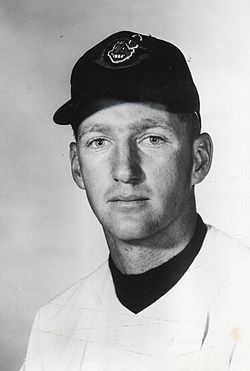
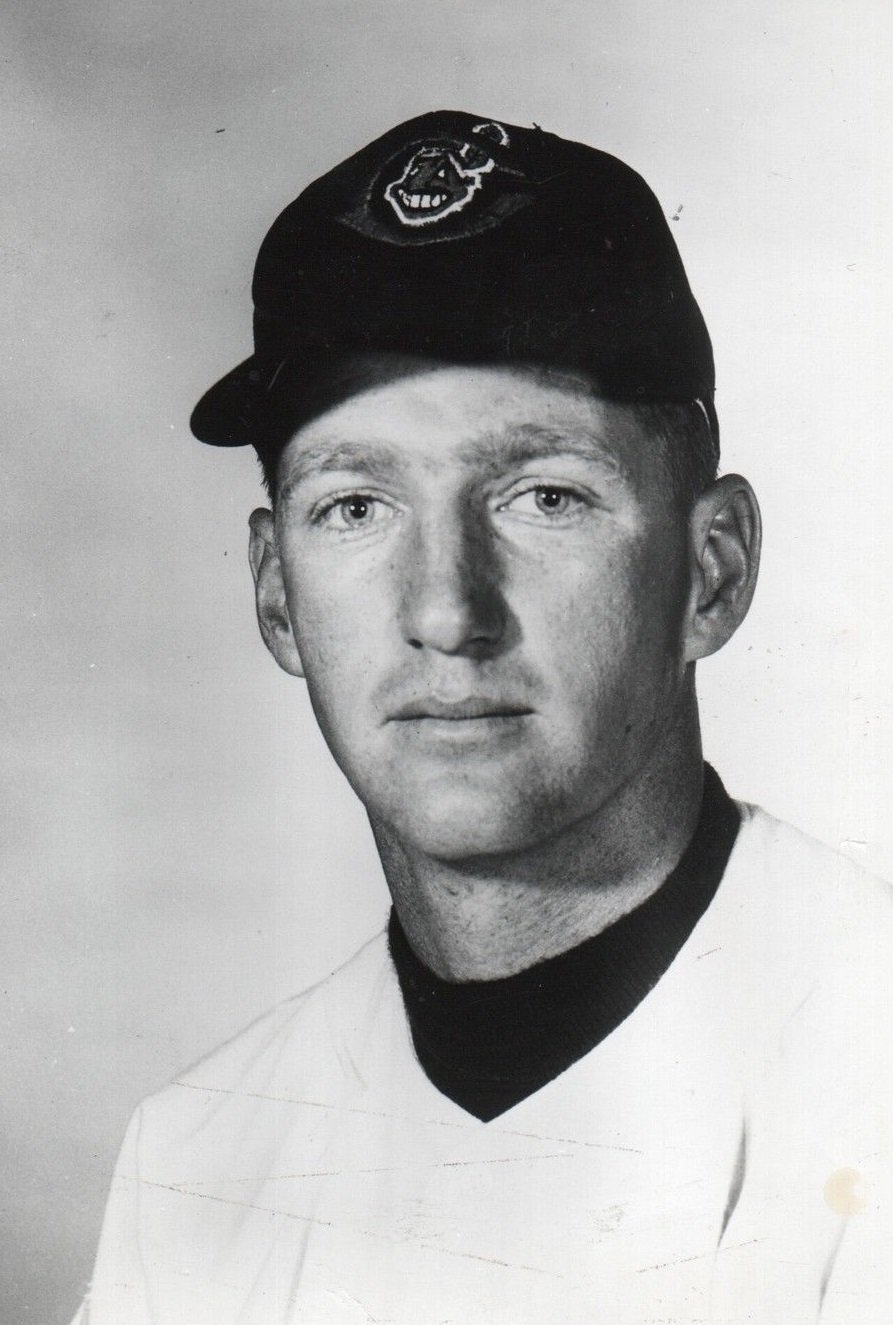
Herbert Jude Score (June 7, 1933 – November 11, 2008) was an American professional baseball pitcher and announcer in Major League Baseball (MLB). He pitched for the Cleveland Indians from 1955 through 1959 and the Chicago White Sox from 1960 through 1962. He was the American League (AL) Rookie of the Year in 1955, and an AL All-Star in 1955 and 1956. Due to an on-field injury that occurred in 1957, he retired early as a player in 1962.[1] Score was a television and radio broadcaster for the Cleveland Indians from 1964 through 1997. He was inducted into the Cleveland Indians Hall of Fame in 2006.

Key Information

Early life

[edit]

Herb Score was born in Rosedale, New York in 1933. He was given the middle name "Jude" after St. Jude, to whom his mother prayed during her pregnancy.[2] At 3, he was run over by a truck and later had rheumatic fever.[3] As a child, he started playing CYO basketball and baseball at Holy Name of Mary parish in Valley Stream, New York, where he made his First Communion and Confirmation.[2]

As a teenager, he moved with his family to Lake Worth, Florida. In 1952, he threw six no-hitters for the Lake Worth Community High School baseball team, when the school won its only state baseball championship.[3]

On June 7, 1952 (his 19th birthday), he signed a baseball contract with the Cleveland Indians. He was sent to Indianapolis of the American Association where he made 10 pitching starts. In 1953, he moved to Cleveland's Class A affiliate, Reading (Pennsylvania) of the Eastern League. At Reading, he became a roommate and lifetime friend with Rocky Colavito, a near future Cleveland Indians home run hitter and right fielder from the Bronx, New York.[4] For the 1954 season, both were promoted to Triple-A Indianapolis. Score won The Sporting News Minor League Player of the Year Award and began to be referred to as "left-handed Bob Feller".[5]

MLB playing career

[edit]

Cleveland Indians (1955–1959)

[edit]

In 1955, Score came up to the major leagues (with Colavito) as a rookie with the Cleveland Indians at the age of 21. He quickly became one of the top power pitchers in the American League, no small feat on a team that still included Feller, Bob Lemon, and other top pitchers, going 16–10 with a 2.85 earned run average in his first year.[6] He appeared on the cover of Sports Illustrated magazine on May 30, 1955.[5] Score struck out 245 batters in 1955, a major league rookie record that stood until 1984, when it was topped by Dwight Gooden (Score, Gooden, Grover Cleveland Alexander, Don Sutton, Gary Nolan, Kerry Wood, Mark Langston, and Hideo Nomo were the only eight rookie pitchers to top 200 strikeouts in the 20th century). It was the first time in major league history that a regular starting pitcher averaged over one strikeout per inning.[7]

In 1956, Score improved on his rookie campaign, going 20–9 with a 2.53 earned run average and 263 strikeouts, while reducing the number of walks from 154 to 129, and allowed only 5.85 hits per 9 innings,[6] which remained a franchise record until it was broken by Luis Tiant's 5.30 in 1968.

Injury from Gil McDougald's line drive

[edit]

On May 7, 1957, during the first inning of a night game against the New York Yankees at Municipal Stadium in Cleveland, Score threw a low fastball to Gil McDougald with Jim Hegan catching. McDougald lined the pitch to the mound and struck Score in the face, breaking Score's facial bones and injuring his eye. The ball caromed to third baseman Al Smith, who threw McDougald out before he rushed to the pitching mound to aid Score. McDougald, seeing Score hit by the baseball and then lying down and injured, also ran immediately to the pitching mound, instead of first base, to help Score. McDougald reportedly vowed to retire if Score permanently lost his sight in one eye as a result of the accident. Score eventually recovered his 20/20 vision, though he missed the rest of the season.

He returned early in the 1958 season.[5] Though many believe he feared being hit by another batted ball, and thus changed his pitching motion, Score rejected that theory. Score would tell Cleveland sportswriter Terry Pluto (for The Curse of Rocky Colavito) that, in 1958, after pitching and winning a few games and feeling better than he'd felt in a long time, he tore a tendon in his arm while pitching on a damp night against the Washington Senators and sat out the rest of the season.

In 1959, he shifted his pitching motion in a bid to avoid another, similar injury. "The reason my motion changed", Score told Pluto, "was because I hurt my elbow, and I overcompensated for it and ended up with some bad habits." As a result of the changes Score made in his pitching delivery, his velocity dropped and he incurred further injuries. Score pitched the full 1959 season, going 9–11 with a 4.71 earned run average and 147 strikeouts.[6]

In the book The Greatest Team Of All Time (Bob Adams, Inc, publisher. 1994), Mickey Mantle picked Score as the toughest American League left-handed pitcher he faced (before the injury). Yogi Berra picked Score for his "Greatest Team Of All Time".

Chicago White Sox (1960–1962)

[edit]

Score was traded to the Chicago White Sox by Cleveland on April 18, 1960, for pitcher Barry Latman.[8] Score's roommate, Colavito, was traded to the Detroit Tigers the previous day.[4] Score was reunited on the Chicago team with some former Indians players and manager Al Lopez.[5] Score pitched parts of the following three seasons before retiring. He finished with a major league career record of 55–46, a 3.36 earned run average, and 837 strikeouts over eight seasons in 85813 innings pitched.[6]

Broadcasting career

[edit]

Score retired from playing baseball in 1962. Beginning in 1964, he was employed as a television and radio play-by-play announcer with the Cleveland Indians for the next 34 years, first on television from 1964 to 1967, and then on radio from 1968 to 1997, the longest career for an Indians play-by-play announcer. Score was revered by the Indians fans for his announcing style, including a low voice and a low-key style, as well as a habit of occasionally mispronouncing the names of players on opposing teams. Score's final Major League Baseball game as an announcer was Game 7 of the 1997 World Series.[9]

Retirement and death

[edit]

On October 8, 1998, while driving to Florida after being inducted into the Broadcasters Hall of Fame[10] the night before, Score was severely injured in a traffic accident.[11] He pulled into the path of a westbound tractor-trailer truck near New Philadelphia, Ohio, and his car was struck in the passenger side.[12][13] He suffered trauma to his brain, chest, and lungs. The orbital bone around one of his eyes was fractured, as were three ribs and his sternum. He spent over a month in the intensive care unit, and was released from MetroHealth Hospital in mid-December.[14][15] He was cited for failure to stop at a stop sign.[16]

He went through a difficult recovery, but managed to throw out the first pitch at the Indians' Opening Day on April 12, 1999.[17] He suffered a stroke in 2002, and died on November 11, 2008, at his home in Rocky River, Ohio, after a lengthy illness.[12][18] He is interred at Lakewood Park Cemetery in Rocky River. The Indians wore a memorial patch on their uniform during the 2009 season to honor him.

Awards and honors

[edit]

Baseball

[edit]

High school

[edit]

Professional

[edit]

Broadcasting

[edit]
  • Cleveland Association of Broadcasters Hall of Fame (class of 1996) [22]
  • Cleveland Press Club Journalism Hall of Fame (class of 1998)[23]
  • Ohio Broadcasters Hall of Fame (class of 1998)[24]

See also

[edit]

References

[edit]
[edit]
Revisions and contributorsEdit on WikipediaRead on Wikipedia
from Grokipedia
Herbert Jude Score (June 7, 1933 – November 11, 2008) was an American professional pitcher and radio broadcaster, renowned for his promising early career with the Cleveland Indians and his long tenure as a beloved voice of the team. Born in , New York, Score grew up in after his family relocated, attending Lake Worth High School in Lake Worth where he excelled in . On his 19th birthday in 1952, he signed a $60,000 bonus contract with the Cleveland Indians, bypassing college to pursue a professional career. Score made his debut on April 15, 1955, as a left-handed standing 6 feet 2 inches tall and weighing 185 pounds. In his rookie season of 1955, Score posted a 16–10 record with a 2.85 () and a league-leading 245 strikeouts, earning the of the Year and an selection. He followed with an even stronger 1956 campaign, going 20–9 with a 2.53 and 263 strikeouts—leading the for the second straight year—while also earning another nod and receiving votes for the . Over his MLB playing career, which spanned 1955 to 1962 primarily with the Indians before a trade to the in 1960, Score compiled a 55–46 record, a 3.36 , 837 strikeouts, and 858.1 innings pitched across 150 games. Score's ascent was dramatically halted on May 7, 1957, when he was struck in the right eye by a line drive from of the New York Yankees, resulting in a broken , vision impairment, and a prolonged recovery that derailed his dominance. Subsequent arm issues, including an elbow injury in 1958, further limited his effectiveness, leading to his retirement as a player after the 1962 season. Transitioning seamlessly to broadcasting, Score joined the Cleveland Indians television broadcast team in 1964 as a color commentator, moving to radio in 1968 and later becoming the lead play-by-play voice. He served in that role for 34 seasons until his retirement in 1997, earning acclaim for his insightful and enthusiastic style that endeared him to fans across Ohio. Score was inducted into the Cleveland Indians Hall of Fame in 2006 and received honors from several broadcasting organizations, including the Ohio Broadcasters Hall of Fame. Later in life, Score survived a serious car accident in 1998 that fractured his orbital bone, ribs, and sternum, from which he recovered enough to throw out a the following year. He passed away at age 75 in , leaving behind his wife Nancy and three children.

Early Life and Amateur Career

Childhood and Early Challenges

Herbert Jude Score was born on June 7, 1933, in , , to parents Anne Score, a devout Catholic, and Herbert A. Score, a police officer assigned to traffic duty in . He was the oldest of three children, with two younger sisters, Helen and Anna Mae. At the age of three, Score suffered a near-fatal accident when he was struck and run over by a delivery , which crushed both of his legs below the and caused severe injuries. He miraculously recovered without , though the incident left lasting physical effects. A few years later, around the sixth grade, Score contracted , which weakened his heart and left him bedridden for ten months, causing him to miss an entire year of school. Doctors advised against any strenuous , warning that he might never lead a normal life or participate in sports like other children. In 1949, when Score was sixteen, his —having separated from his father—relocated the family to Lake Worth, , seeking a milder climate to aid his ongoing recovery from the health ordeals and to secure a job at a local bank; the relocation was prompted by Score's health needs as well as those of his younger sister Anna Mae. The harsh New York winters had exacerbated his conditions, and the move was motivated in part by these medical concerns. Initially, Score showed little interest in or other athletics due to his frailty and the persistent effects of his illnesses, preferring quieter pursuits. However, his Anne actively supported his rehabilitation, including treatments with emerging penicillin therapy. This period of adversity and gradual encouragement marked a foundational challenge in Score's early years, setting the stage for his later transition to high school baseball as a means of overcoming his physical limitations.

High School Achievements

Herb Score attended Lake Worth High School in Lake Worth, Florida, where he developed into a standout baseball talent. After overcoming childhood health issues that had previously limited his physical activities, Score transitioned to pitching and quickly demonstrated exceptional ability on the mound. During his high school career, Score pitched six no-hitters, showcasing his overpowering and establishing himself as one of 's premier high school pitchers. These performances were instrumental in leading the school to the 1952 Florida State Baseball Championship, a landmark achievement that highlighted his dominance and control despite occasional wildness. On his 19th birthday, June 7, 1952, Score signed a professional contract with the Indians for a $60,000 bonus, a substantial sum that reflected his immense potential as scouted by talent evaluator Cy Slapnicka. This signing marked the end of his amateur career and propelled him directly into without further high school eligibility under the era's rules.

Professional Playing Career

Minor Leagues (1952–1954)

Herb Score signed a professional contract with the Cleveland Indians on June 7, 1952, his 19th birthday, immediately following his high school graduation, and was assigned to their Triple-A affiliate, the of the American Association. In his debut professional season, the young left-hander struggled with control, compiling a 2–5 record with a 5.23 over 62 , during which he issued 62 walks—more than his 61 strikeouts—highlighting areas for development in his raw talent. Following his challenging rookie year, Score was demoted to Class A Reading in the Eastern League for the season, where he showed marked improvement in command and effectiveness. With the Reading Indians, he achieved a 7–3 record and a 4.68 across 98 , striking out 104 batters while recording two shutouts, which helped solidify his potential as a future major league starter. This performance earned him a quick promotion back to Triple-A for 1954. Score's 1954 campaign with the marked a , as he dominated the American Association with a 22–5 record, a league-leading 2.62 , and 330 strikeouts in 251 , shattering the circuit's single-season strikeouts record—a mark that stood for decades. His exceptional season, which included five shutouts and 21 complete games, led all pitchers in victories and strikeouts, establishing him as one of baseball's premier prospects and prompting widespread anticipation for his major league arrival. For his outstanding performance, Score was honored as Minor League Player of the Year.

Cleveland Indians (1955–1959)

Herb Score made his debut on April 15, 1955, for the Cleveland Indians, pitching a complete-game 7-3 victory over the Detroit Tigers at Briggs Stadium, where he allowed seven hits, struck out nine, and walked nine. Building on his dominant performances, Score quickly established himself as a premier artist in the majors during his rookie year. In 1955, Score posted a 16-10 win-loss record with a 2.85 over 227 , leading the with 245 strikeouts—a record that stood until Dwight surpassed it in 1984. His exceptional control of the and devastating earned him the of the Year award from the , as well as selection to the . Score's campaign highlighted his potential as the cornerstone of the Indians' pitching staff, fanning more than 200 batters for the first time in league history by a . Score built on his rookie success in 1956, earning another nod while leading the league with 263 strikeouts and achieving a 20-9 record with a 2.53 over 249⅓ . He shared the team lead in wins with fellow aces and , solidifying his role as one of the American League's top pitchers and finishing 19th in voting. Score's performance declined in 1958 and 1959 due to persistent arm soreness that curtailed his starts and effectiveness. In 1958, he managed only a 2-3 record with a 3.95 across 12 appearances before the injury sidelined him after June. The following year, he started strong at 9-5 through midseason but faltered to 0-6 in the second half, ending with a 9-11 mark and 4.71 while allowing a career-high 28 home runs. Over his first three full seasons with the Indians from 1955 to 1957, Score amassed a 38-20 record with a 2.63 and 547 strikeouts in 512⅔ innings, showcasing the brilliance of his early major league tenure.

1957 Injury and Recovery

Following a promising start to his major league career with the Indians in 1955 and 1956, during which he recorded 36 wins and led the in strikeouts both years, Herb Score suffered a devastating injury on May 7, 1957, at Cleveland Municipal Stadium. In the first inning against the New York Yankees, Score was struck directly in the right eye by a line drive off the bat of on a 2-2 , fracturing his orbital , breaking his , lacerating his , and causing severe vision impairment including blurriness and loss of depth perception. The impact rendered him unconscious and motionless on the mound for several minutes, with McDougald rushing to his side in distress; Score was carried off the field on a stretcher and immediately hospitalized at Lakeside Hospital. Score remained hospitalized for three weeks until May 28, 1957, undergoing treatment that included injections to reduce swelling, and he missed the remainder of the season while undergoing a difficult physical and emotional recovery. Although his vision gradually improved to near-normal levels, persistent issues with affected his ability to track pitches and field comebacks, and he experienced significant , including anxiety and a reported of returning to the due to the dread of another batted ball. Cleveland general manager Frank Lane described Score's post-injury challenges as "more psychological than physical," though Score himself later attributed much of his decline to subsequent arm problems rather than mental factors. Earlier in 1957, before the injury, Boston Red Sox owner offered $1 million for Score's contract, the largest cash sum ever proposed for a player at the time, though the deal was declined. Score attempted a comeback in 1958, appearing in 12 games (5 starts) for a 2-3 record with a 3.95 over 41 innings, but his performance was hampered by lingering vision difficulties, mound anxiety, and a torn tendon in his left sustained in late that sidelined him for over a month. He returned in mid-June but made only seven additional appearances, struggling with control and effectiveness as the elbow injury compounded his recovery challenges. In 1959, Score posted a 9-11 record with a 4.71 in 30 games (25 starts), starting strong with a 9-5 mark in the first half before going 0-6 in the second half amid ongoing physical setbacks and team frustrations that fueled internal discussions about trading him. These struggles ultimately led to his placement on the disabled list late in the season and set the stage for his departure from the Indians the following year.

Chicago White Sox (1960–1962)

On April 18, 1960, Score was traded by the Indians to the in exchange for Barry Latman, a move stemming from his ongoing struggles with injuries sustained earlier in his career. In his first season with the White Sox, Score made 22 starts across 23 appearances, posting a 5-10 record with a 3.72 over 113.2 and 78 strikeouts, though his performance was limited by persistent arm soreness and lingering vision issues from a prior eye injury. Score's role diminished in 1961, where he appeared in 8 games with 5 starts, recording a 1-2 mark and a 6.66 ERA in 24.1 innings while striking out 14 batters, as he was increasingly used in relief and later optioned to the minors. His final major league season came in 1962, limited to 4 relief outings with no decisions, a 4.50 ERA, and 3 strikeouts in 6 innings, after which he spent time in the minor leagues but ultimately retired from professional baseball at age 29 due to chronic injuries that prevented a return to form. Over his eight-year major league career, Score compiled a 55-46 record with a 3.36 and 837 strikeouts in 858.1 .

Broadcasting Career

Entry into Broadcasting (1964–1967)

After retiring from playing due to persistent injuries in 1962, Herb Score faced the challenge of transitioning to a new career in , having had no prior experience in or announcing beyond informal stints in 1963. In 1964, Indians general manager hired him as a for the team's television broadcasts, pairing him with play-by-play announcer Bob Neal. Score's role leveraged his firsthand knowledge as a former , allowing him to offer insightful analysis on pitching strategies, batter tendencies, and game situations from a pitcher's perspective during telecasts. Score's early television work covered the 1964 season, where the Indians finished with a 79-83 record, marking a mediocre campaign that provided ample opportunities for his analytical commentary on defensive plays and mound visits. He continued in this capacity for the 1965 and 1966 seasons, broadcasting alongside Harry Jones after Neal's departure, as the team hovered around .500 with records of 87-75 and 81-81, respectively, often highlighting the frustrations of inconsistent starting rotations. Despite initial hurdles in adapting to the booth—Score was known for his shy demeanor and mumbled delivery early on—he quickly developed a straightforward, honest style that resonated with viewers, focusing on the game's nuances rather than embellishment. Throughout these years, Score's broadcasts emphasized the team's on-field struggles, such as failures and hitting slumps, while drawing on his playing experience to explain tactical decisions, like pitch selection in key . His tenure on TV from to laid the foundation for a longer broadcasting career, though it required overcoming personal reservations about performing in front of an audience after years of athletic competition.

Radio Tenure and Highlights (1968–1997)

In 1968, Herb Score transitioned to full-time radio play-by-play duties for the Indians, marking the beginning of a 30-year tenure as the team's lead broadcaster that solidified his place in franchise history. Previously paired with Harry Jones on television broadcasts from 1965 to 1967, Score's move to radio allowed him to focus exclusively on audio storytelling, where his voice became synonymous with Indians games across and beyond. Over the decades, he collaborated with a series of color analysts, including Bob Neal from 1968 to 1972, from 1973 to 1979, and Tom Hamilton starting in 1990, fostering dynamic partnerships that enhanced the listening experience for fans. Score broadcast thousands of games during this period, establishing himself as the enduring voice of the team for three generations of supporters amid mostly lean years for the franchise. His style was marked by a calm, conversational enthusiasm that felt intimate, like chatting with a knowledgeable friend, while avoiding harsh critiques of players and emphasizing the nuances of the game. Drawing from his background as a artist, Score excelled in descriptive calls of pitching duels, often detailing pitch types, movement, and location with precision that brought the mound action to life for radio listeners. Among his iconic moments, Score's call of Tony Peña's in the 13th inning of Game 1 of the 1995 ALDS against the Boston Red Sox captured the electric joy of the Indians' first postseason victory in 41 years, igniting fan excitement at Jacobs Field. This enthusiasm carried into the team's appearances, where Score narrated the 1995 Fall Classic against the and the 1997 series versus the Florida Marlins, culminating in his final broadcast: the Indians' 2-1 loss in Game 7 of the . These high-stakes calls not only highlighted pivotal plays but also underscored Score's cultural impact, as his steady presence provided comfort and connection for baseball fans through eras of heartbreak and hope.

Personal Life and Later Years

Marriage and Family

Herb Score married his high school acquaintance Nancy McNamara on July 10, 1957, in , at St. Mark's Catholic Church, shortly after his career-altering injury that year; the wedding had been advanced from its original post-season date. The couple's union lasted 51 years until Score's death in 2008, during which Nancy provided steadfast emotional support through his professional challenges, including his transition from player to broadcaster. The Scores had four children: David, Mary, Judy, and Susan, the latter of whom had and predeceased her father in 1994. Nancy primarily managed the household and child-rearing while Score pursued his career, though he remained actively involved as a father, attending his children's school events and serving as a "" for ; after retirement, he extended this involvement to his grandchildren's activities. The family relocated to the area to align with Score's role with the Indians starting in 1964, where Nancy helped navigate the demands of public life, including the couple's adjustment to the city's . Nancy Score passed away in 2022 at age 85.

Health Issues and Retirement

In the mid-1990s, as Score approached his mid-60s, he faced the cumulative effects of aging, combined with the physical demands of a 34-year broadcasting career, which prompted him to announce his retirement from the Indians' radio booth following the 1997 season. Score's final full broadcast was Game 7 of the on October 26, 1997, where the Florida Marlins defeated the Indians 3-2 in 11 innings to claim the championship; in his sign-off, he simply stated, "The final score in 11 innings, it’s the Marlins 3, the Indians 2. The Florida Marlins are the world champions." On October 8, 1998, shortly after his induction into the Broadcasters Hall of Fame, Score was severely injured in a car accident near , when his vehicle pulled into the path of a tractor-trailer truck, resulting in critical head, hip, pelvic, and chest injuries, including three fractured ribs, a broken , and a fractured orbital bone around one eye. He was listed in critical condition at Aultman Hospital in , requiring intensive care and a prolonged recovery period that further limited his public engagements. Post-retirement, Score resided in , where he cherished time with his family and made sporadic appearances, such as throwing the at the Indians' 1999 home opener as a symbol of his enduring connection to the team and fans.

Death and Legacy

Death

Herb Score died on November 11, 2008, at the age of 75 in his home in , following a lengthy illness exacerbated by prior health issues, including a severe car accident in 1998 and a in 2002 that left him wheelchair-bound. He was survived by his wife, Nancy, and their three children. Funeral arrangements included visitation on Friday, November 14, 2008, from 1–3 p.m. and 6–9 p.m. at Busch Funeral Home, 21369 Center Ridge Road, , followed by a Mass of Christian Burial on Saturday, November 15, 2008, at 10:30 a.m. at St. Christopher Catholic Church, 20141 Detroit Road, Rocky River. Score was buried at Lakewood Park Cemetery, 22025 Detroit Road, Rocky River. Immediate tributes poured in from the Indians organization, fans, and fellow broadcasters, emphasizing Score's enduring legacy as both a promising and a beloved voice of the team. Indians President Paul Dolan stated, "Today is a sad day for the Indians family and for Indians fans everywhere. We have lost one of the greatest men in the history of our franchise." Owner added, "It's a sad day for the Indians and the Indians family. Herb and Nancy were really one person." Broadcaster Tom Hamilton, Score's longtime partner, described him as "a great partner," while former teammate said, "I loved him like a brother." Fans and media across mourned the loss of a figure who connected generations through his passion for the game.

Awards and Honors

During his playing career with the Indians, Herb Score earned significant recognition for his pitching prowess. In 1955, his rookie season, he was named the Rookie of the Year after posting a 16-10 record with a 2.85 and a league-leading 245 strikeouts. He was selected as an in both 1955 and 1956. Score's contributions to were later honored through induction into the Indians Hall of Fame in 2006, recognizing his impact as both a player and broadcaster for the franchise. In his broadcasting career, Score received accolades for his decades-long service as the radio voice of the Indians. He was inducted into the Sports Hall of Fame in 1992 and the Ohio Broadcasters Hall of Fame in 1998. That same year, he was also enshrined in the Press Club Journalism Hall of Fame. Score was considered for the National Baseball Hall of Fame's in 2010, posthumously recognizing excellence in broadcasting, though he was not selected as the winner. His legacy endures through continued fan appreciation for his distinctive play-by-play style in Indians broadcasts.

References

Add your contribution
Related Hubs
User Avatar
No comments yet.