
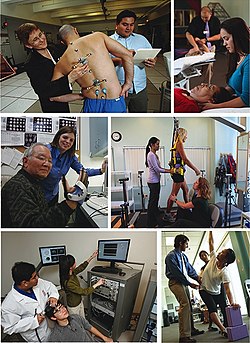


Community hub
Recent from talks
Contribute something
Nothing was collected or created yet.
Kinesiology
View on Wikipedia
Kinesiology (from Ancient Greek κίνησις (kínēsis) 'movement' and -λογία -logía 'study of') is the scientific study of human body movement. Kinesiology addresses physiological, anatomical, biomechanical, pathological, neuropsychological principles and mechanisms of movement. Applications of kinesiology to human health include biomechanics and orthopedics; strength and conditioning; sport psychology; motor control; skill acquisition and motor learning; methods of rehabilitation, such as physical and occupational therapy; and sport and exercise physiology. Studies of human and animal motion include measures from motion tracking systems, electrophysiology of muscle and brain activity, various methods for monitoring physiological function, and other behavioral and cognitive research techniques.[1][2]
Basics
[edit]Kinesiology studies the science of human movement, performance, and function by applying the fundamental sciences of cell biology, molecular biology, chemistry, biochemistry, biophysics, biomechanics, biomathematics, biostatistics, anatomy, physiology, exercise physiology, pathophysiology, neuroscience, and nutritional science. A bachelor's degree in kinesiology can provide strong preparation for graduate study in medical school, biomedical research, as well as in professional programs.
The term "kinesiologist" is not a licensed nor professional designation in many countries, with the notable exception of Canada. Individuals with training in this area can teach physical education, work as personal trainers and sports coaches, provide consulting services, conduct research and develop policies related to rehabilitation, human motor performance, ergonomics, and occupational health and safety. In North America, kinesiologists may study to earn a Bachelor of Science, Master of Science, or Doctorate of Philosophy degree in Kinesiology or a Bachelor of Kinesiology degree, while in Australia or New Zealand, they are often conferred an Applied Science (Human Movement) degree (or higher). Many doctoral-level faculty in North American kinesiology programs received their doctoral training in related disciplines, such as neuroscience, mechanical engineering, psychology, and physiology.
In 1965, the University of Massachusetts Amherst created the United States' first Department of Exercise Science (kinesiology) under the leadership of visionary researchers and academicians in the field of exercise science.[3] In 1967, the University of Waterloo launched Canada's first kinesiology department.[4]
Principles
[edit]Adaptation through exercise
[edit]
Adaptation through exercise is a key principle of kinesiology that relates to improved fitness in athletes as well as health and wellness in clinical populations. Exercise is a simple and established intervention for many movement disorders and musculoskeletal conditions due to the neuroplasticity of the brain[17] and the adaptability of the musculoskeletal system.[12][13][14] Therapeutic exercise has been shown to improve neuromotor control and motor capabilities in both normal[18] and pathological populations.[6][19]
There are many different types of exercise interventions that can be applied in kinesiology to athletic, normal, and clinical populations. Aerobic exercise interventions help to improve cardiovascular endurance.[20] Anaerobic strength training programs can increase muscular strength,[13] power,[21] and lean body mass.[22] Decreased risk of falls and increased neuromuscular control can be attributed to balance intervention programs.[23] Flexibility programs can increase functional range of motion and reduce the risk of injury.[24]
As a whole, exercise programs can reduce symptoms of depression[25] and risk of cardiovascular[26] and metabolic diseases.[27] Additionally, they can help to improve quality of life,[28] sleeping habits,[25] immune system function,[29] and body composition.[30]
The study of the physiological responses to physical exercise and their therapeutic applications is known as exercise physiology, which is an important area of research within kinesiology.
Neuroplasticity
[edit]
Neuroplasticity is also a key scientific principle used in kinesiology to describe how movement and changes in the brain are related. The human brain adapts and acquires new motor skills based on this principle.[42] The brain can be exposed to new stimuli and experiences and therefore learn from them and create new neural pathways hence leading to brain adaptation. These new adaptations and skills include both adaptive and maladaptive brain changes.
Adaptive plasticity
Recent[when?] empirical evidence indicates the significant impact of physical activity on brain function; for example, greater amounts of physical activity are associated with enhanced cognitive function in older adults.[43] The effects of physical activity can be distributed throughout the whole brain, such as higher gray matter density and white matter integrity after exercise training,[44][45] and/or on specific brain areas, such as greater activation in prefrontal cortex and hippocampus.[46] Neuroplasticity is also the underlying mechanism of skill acquisition. For example, after long-term training, pianists showed greater gray matter density in sensorimotor cortex and white matter integrity in the internal capsule compared to non-musicians.[47][48]
Maladaptive plasticity
Maladaptive plasticity is defined as neuroplasticity with negative effects or detrimental consequences in behavior.[49][50] Movement abnormalities may occur among individuals with and without brain injuries due to abnormal remodeling in central nervous system.[36][51] Learned non-use is an example commonly seen among patients with brain damage, such as stroke. Patients with stroke learned to suppress paretic limb movement after unsuccessful experience in paretic hand use; this may cause decreased neuronal activation at adjacent areas of the infarcted motor cortex.[52][53]
There are many types of therapies that are designed to overcome maladaptive plasticity in clinic and research, such as constraint-induced movement therapy (CIMT), body weight support treadmill training (BWSTT) and virtual reality therapy. These interventions are shown to enhance motor function in paretic limbs[54][55][56] and stimulate cortical reorganization[57][58][59] in patients with brain damage.
Motor redundancy
[edit]
Motor redundancy is a widely used concept in kinesiology and motor control which states that, for any task the human body can perform, there are effectively an unlimited number of ways the nervous system could achieve that task.[60] This redundancy appears at multiple levels in the chain of motor execution:
- Kinematic redundancy means that for a desired location of the endpoint (e.g. the hand or finger), there are many configurations of the joints that would produce the same endpoint location in space.
- Muscle redundancy means that the same net joint torque could be generated by many different relative contributions of individual muscles.
- Motor unit redundancy means that for the same net muscle force could be generated by many different relative contributions of motor units within that muscle.
The concept of motor redundancy is explored in numerous studies,[61][62][63] usually with the goal of describing the relative contribution of a set of motor elements (e.g. muscles) in various human movements, and how these contributions can be predicted from a comprehensive theory. Two distinct (but not incompatible) theories have emerged for how the nervous system coordinates redundant elements: simplification and optimization. In the simplification theory, complex movements and muscle actions are constructed from simpler ones, often known as primitives or synergies, resulting in a simpler system for the brain to control.[64][65] In the optimization theory, motor actions arise from the minimization of a control parameter,[63] such as the energetic cost of movement or errors in movement performance.[66]
Scope of practice
[edit]In Canada, kinesiology is a professional designation as well as an area of study.[67] In the province of Ontario the scope has been officially defined as, "the assessment of human movement and performance and its rehabilitation and management to maintain, rehabilitate or enhance movement and performance"[68]
Kinesiologists work in a variety of roles as health professionals. They work as rehabilitation providers in hospitals, clinics and private settings working with populations needing care for musculoskeletal, cardiac and neurological conditions. They provide rehabilitation to persons injured at work and in vehicular accidents. Kinesiologists also work as functional assessment specialists, exercise therapists, ergonomists, return to work specialists, case managers and medical legal evaluators. They can be found in hospital, long-term care, clinic, work, and community settings.[69] Additionally, kinesiology is applied in areas of health and fitness for all levels of athletes, but more often found with training of elite athletes.
Licensing and regulation
[edit]Canada
[edit]In Canada, kinesiology has been designated a regulated health profession in Ontario.[70] Kinesiology was granted the right to regulate in the province of Ontario in the summer of 2007[71] and similar proposals have been made for other provinces. The College of Kinesiologists of Ontario achieved proclamation on April 1, 2013, at which time the professional title "Kinesiologist" became protected by law. In Ontario only members of the college may call themselves a Registered Kinesiologist. Individuals who have earned degrees in kinesiology can work in research, the fitness industry, clinical settings, and in industrial environments.[72] They also work in cardiac rehabilitation, health and safety, hospital and long-term care facilities and community health centers just to name a few.
Health service
[edit]
- Health promotion
- Kinesiologists working in the health promotion industry work with individuals to enhance the health, fitness, and well-being of the individual. Kinesiologists can be found working in fitness facilities, personal training/corporate wellness facilities, and industry.
- Clinical/rehabilitation
- Kinesiologists work with individuals with disabling conditions to assist in regaining their optimal physical function. They work with individuals in their home, fitness facilities, rehabilitation clinics, and at the worksite. They also work alongside physiotherapists and occupational therapists.
- Ergonomics
- Kinesiologists work in industry to assess suitability of design of workstations and provide suggestions for modifications and assistive devices.
- Health and safety
- Kinesiologists are involved in consulting with industry to identify hazards and provide recommendations and solutions to optimize the health and safety of workers.
- Disability management/case coordination
- Kinesiologists recommend and provide a plan of action to return an injured individual to their optimal function in all aspects of life.
- Management/research/administration
- Kinesiologists frequently fulfill roles in all above areas, perform research, and manage businesses.[73]
- Health education
- Kinesiologists working in health education teach people about behaviors that promote wellness. They develop and implement strategies to improve the health of individuals and communities. Community health workers collect data and discuss health concerns with members of specific populations or communities.[74]
- Athletic coaches and scouts
- Kinesiologists who pursue a career as an athletic coach develop new talent and guide an athlete's progress in a specific sport. They teach amateur or professional athletes the skills they need to succeed at their sport. Many coaches are also involved in scouting. Scouts look for new players and evaluate their skills and likelihood for success at the college, amateur, or professional level.[75]
- Physical education teacher
- Kinesiologists working as physical education teachers are responsible for teaching fitness, sports and health. They help students stay both mentally and physically fit by teaching them to make healthy choices.[76]
- Physical therapy
- Kinesiologists working in physical therapy diagnose physical abnormalities, restore mobility to the client, and promote proper function of joints.[77]
History of kinesiology
[edit]
Royal Central Institute of Gymnastics (sv) G.C.I. was founded 1813 in Stockholm, Sweden by Pehr Henrik Ling. It was the first Physiotherapy school in the world, training hundreds of medical gymnasts who spread the Swedish physical therapy around the entire world. In 1887, Sweden was the first country in the world to give a national state licence to physiotherapists/physical therapists.[78]
The Swedish medical gymnast and kinesiologist Carl August Georgii (sv), Professor at the Royal Gymnastic Central Institute GCI in Stockholm, was the one who created and coined the new international word Kinesiology in 1854.[78]
The term Kinesiology is a literal translation to Greek+English from the original Swedish word Rörelselära, meaning "Movement Science". It was the foundation of the Medical Gymnastics, the original Physiotherapy and Physical Therapy, developed for over 100 years in Sweden (starting 1813).[78]
The new medical therapy created in Sweden was originally called Rörelselära (sv), and later in 1854 translated to the new and invented international word "Kinesiology". The Kinesiology consisted of nearly 2,000 physical movements and 50 different types of massage therapy techniques. They were all used to affect various dysfunctions and even illnesses, not only in the movement apparatus, but also into the internal physiology of man. Thus, the original classical and Traditional Kinesiology was not only a system of rehabilitation for the body, or biomechanics like in modern Academic Kinesiology, but also a new therapy for relieving and curing diseases, by affecting the autonomic nervous system, organs and glands in the body.,[78][79]
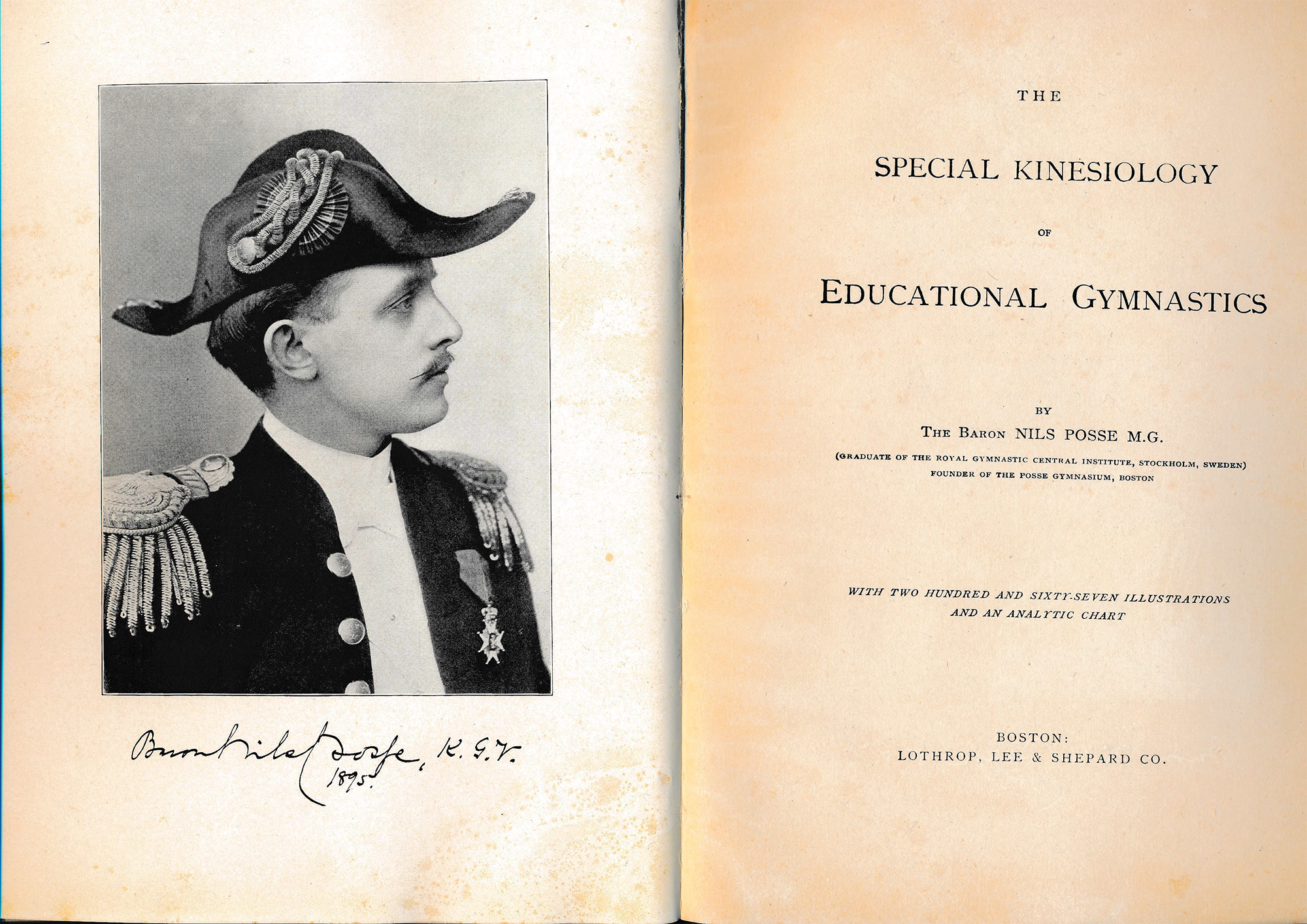
In 1886, the Swedish Medical Gymnast Nils Posse (1862–1895) introduced the term kinesiology in the U.S.[80] Nils Posse was a graduate of the Royal Gymnastic Central Institute in Stockholm, Sweden and founder of the Posse Gymnasium in Boston, MA. He was teaching at Boston Normal School of Gymnastics BNSG.[81] The Special Kinesiology Of Educational Gymnastics was the first book ever written in the world with the word "Kinesiology" in the title of the book. It was written by Nils Posse and published in Boston, 1894–1895.[82] Posse was elected posthumously as an Honorary Fellow in Memoriam in the National Academy of Kinesiology.[83]
The National Academy of Kinesiology was formally founded in 1930 in the United States. The academy's dual purpose is to encourage and promote the study and educational applications of the art and science of human movement and physical activity and to honor by election to its membership persons who have directly or indirectly contributed significantly to the study of and/or application of the art and science of human movement and physical activity. Membership in the National Academy of Kinesiology is by election and those elected are known as Fellows. Fellows are elected from around the world. Election into the National Academy of Kinesiology is considered a pinnacle achievement and recognition with the discipline.[84] For further information see: National Academy of Kinesiology | National Academy of Kinesiology
Technology in kinesiology
[edit]Motion capture technology has application in measuring human movement, and thus kinesiology. Historically, motion capture labs have recorded high fidelity data. While accurate and credible, these systems can come at high capital and operational costs. Modern-day systems have increased accessibility to mocap technology.
Adapted physical activity
[edit]Adapted physical activity (APA) is a branch of kinesiology, referring to physical activity that is modified or designed to meet the needs of individuals with disabilities.[85] The term originated in the field of physical education and is commonly used in the field of physical education and rehabilitation to refer to physical activities and exercises that have been modified or adapted for individuals with disabilities. These activities are often led by trained professionals, such as adapted physical educators, occupational therapists, or physical therapists.[86][87]
In 1973 the Federation Internationale de lʼ Activite Physique Adaptee (International Federation of Adapted Physical Activity - IFAPA) was formed and is described as a discipline/profession that purpose to facilitates physical activity across people with a wide range of individual differences, emphasizing in empowerment, self-determination and opportunities access.[88][89][90]
A common definition of APA is "a cross-disciplinary body of practical and theoretical knowledge directed toward impairments, activity limitations, and participation restrictions in physical activity. It is a service delivery profession and an academic field of study that supports an attitude of acceptance of individual differences, advocates access to active lifestyles and sport, and promotes innovative and cooperative service delivery, supports, and empowerment. Adapted physical activity includes, but is not limited to, physical education, sport, recreation, dance, creative arts, nutrition, medicine, and rehabilitation."[91] This definition aligns with the World Health Organization International Classification of Functioning, Disability and Health whereby disability is seen as the interaction between impairments or conditions with activity limitations, participation restrictions and contextual factors.[92]
Overview
[edit]The term APA has evolved in the course of years, and in some countries could be recognized with alternative terms that contain a similar set of constructs, for example, sports for disabled people, sports therapy, and psychomotor therapy.[93] The APA is considered as (i) activities or service delivery, (ii) a profession, and (iii) an academic field of study with a unique body of knowledge that differs from terms such as adapted physical education or para-sport.[94] Principally, APA is an umbrella term that incorporates the mentioned terms considered sub-specializations (i.e., physical education, para-sports, recreation, and rehabilitation).[93] APA is proposed to have close links between the field of practice and the field of study with unique theories and growing bodies of practical and scientific knowledge,[93] where APA practitioners are those who provide the services and activities, while APA scholars generate and promote evidence-based research practices among practitioners.[95]
Adaptation to physical activity opportunities is most often provided in the form of appropriately designed and modified equipment (prosthesis, wheelchairs, mono-ski, ball size), task criteria (e.g., modifying skill quality criteria or using a different skill), instructions (e.g., using personal supports, peer tutors, non-verbal instructions, motivational strategies), physical and social environments (e.g., increasing or decreasing court dimensions; segregated vs. inclusive; type of training climate: mastery-oriented, collaborative or competitive social environment; degree of peer and parental support), and rules (e.g., double bounce rule in wheelchair tennis).[96] In general, the APA presents various sub-specializations such as physical education (e.g., inclusion in physical education, attention to students with special needs, development of new education contents), sports (e.g., development of paralympic sports, activity by sports federations for athletes with disabilities), recreation (e.g., development of the inclusive sport approach and attitudes change programs), and rehabilitation (e.g., physical activity programs in rehabilitation centers, involvement of health-related professionals).[93][94]

.jpg)
The role of sports and physical activity participation in the population with disabilities has been recognized as a human right in the Convention on the Rights of Persons with Disabilities and declared in other international organization agreements such as:
- International Charter of Physical Education, Physical Activity and Sport (UNESCO).
- International Conference of Ministers and Senior Officials Responsible for Physical Education and Sport (MINEPS).
- Marseille Declaration, Universal Fitness Innovation & Transformation - UFIT Launch October 2015. A Commitment to Inclusion by and for the Global Fitness Industry.
- Sustainable Development Goals, Sports and Physical Activity, United Nations (UN).
In this line, the APA as a discipline/profession plays an essential role in addressing the needs from a theoretical and practical framework to provide full participation access in physical activity to populations with disabilities.[97]
There are many educational programmes offered around the world that specialise in APA, including disability sports, adapted sports, rehabilitation, adapted physical education and parasport management. In Europe there is the European Diploma of Adapted Physical Activity[98] for bachelor's degrees. At the master's degree level, there is the International Masters in Adapted Physical Activity[99] and the master's degree in Adapted Physical Activity offered by the Lithuanian Sports University.[100] A doctoral programme in adapted physical activity can be studied through the Multi-Institution Mentorship Consortium (MAMC).[101] Furthermore, there is offered a Master of Adapted Physical Education in the North American region in Oregon State University (USA).[102] In the South American Region, the San Sebastian University (Chile) offers a Master of Physical Activity and Adapted Sports.[103] The universities Viña del Mar[104] and UMCE[105] in Chile offers a specialization in adapted physical activity.
International Federation of Adapted Physical Activity
[edit]The International Federation of Adapted Physical Activity (IFAPA) is an international scientific organization of higher education scholars, practitioners and students dedicated to promoting APA.[106] IFAPA was founded in 1973 in Quebec, Canada, presenting an original purpose declared "to give global focus to professionals who use adapted physical activities for instruction, recreation, remediation, and research". From these initial times, IFAPA evolved from a small organization to an international corporation with active regional federations in different world regions.[107]
The current purpose of IFAPA are:[108]
- To encourage international cooperation in the field of physical activity to the benefit of individuals of all abilities,
- to promote, stimulate and support research in the field of adapted physical activity throughout the world,
- and to make scientific knowledge of and practical experiences in adapted physical activity available to all interested persons, organizations and institutions.
IFAPA coordinates national, regional, and international functions (both governmental and nongovernmental) that pertain to sport, dance, aquatics, exercise, fitness, and wellness for individuals of all ages with disabilities or special needs. IFAPA is linked with several other international governing bodies, including the International Paralympic Committee (IPC), Special Olympics International and the International Council of Sport Science and Physical Education (ICSSPE). English is the language used for IFAPA correspondence, conferences. Professor David Legg from Mount Royal University is the current president of the International Federation of Adapted Physical Activity (IFAPA) since 2019 at the International Symposium of Adapted Physical Activity (ISAPA) hosted by IFAPA Past President Martin Block at the University of Virginia.
.jpg)
The biennial ISAPA scheduled for 2021 was planned to be held at the University of Jyväskylä, Finland.[109] Due to the COVID-19 pandemic it was later announced to be held online only,[110] making it the first Online ISAPA since the first one in 1977.[111] The 2023 ISAPA was awarded to a multi-site organisation by Halberg Foundation in New Zealand and Mooven in France.[112]
Regions
[edit]- Africa - no formal organisation
- Asia - Asian society of adapted physical education - ASAPE[113]
- Europe - European Federation of Adapted Physical Activity - EUFAPA[114]
- Middle East - Middle East Federation of Adapted Physical Activity - MEFAPA
- North America - North American Federation of Adapted Physical Activity - NAFAPA[115]
- Oceania - no formal organisation
- South and Central America - South American Federation of Adapted Physical Activity - SAPA[116]
Research and dissemination in adapted physical activity
[edit]
Actually, it is possible to find numerous sports science journals with research papers on adapted sport, while those specific to APA are lesser. Adapted Physical Activity Quarterly (APAQ) is the only AFA-specific journal indexed in the Journal Citation Reports Index, appearing in both the Sport Sciences and Rehabilitation directories, which is another example of its interdisciplinarity (Impact Score 2020-2021 = 2.61) (Pérez et al., 2012).[117] Additionally, the European Journal of Adapted Physical Activity (EUJAPA) is another international, multidisciplinary journal introduced to communicate, share and stimulate academic inquiry focusing on APA of persons with disabilities, appearing in the Education directories of Scimago Journal & Country Rank (SJR). Regarding the dissemination of scientific knowledge generated by the APA, the most relevant international events are described as follows:
- International Symposium of Adapted Physical Activity (ISAPA), organized by IFAPA on a biannual basis.
- Vista conference, organized by the International Paralympic Committee on a biannual basis.
- Paralympic Congress, organized by the International Paralympic Committee every four years.
- European Conference on Adapted Physical Activity (EUCAPA), organized by European Federation in Adapted Physical Activity on a biannual basis.
- North American Federation of Adapted Physical Activity (NAFAPA) Conference, organized by NAFAPA on a biannual basis.
- South American Adapted Physical Activity Conference, organized by South American Federation of Adapted Physical Activity.
Adapted physical education
[edit]
Adapted physical education is a sub-discipline of physical education with a focus on including students with disabilities into the subject.[118] APE is the term used to refer to the physical education for individuals with disabilities that occurs primarily in elementary and secondary schools.[89] According to Dunn and Leitschuh[119] APE is defined as "Adapted physical education programs are those that have the same objectives as the regular physical education program but in which adjustments are made in the regular offerings to meet the needs and abilities of exceptional students". This education can be provided in separate educational settings as well as in general (regular) educational settings.[120] APE is oriented to educate students to lifelong engagement in physical activities and to live a healthy lifestyle offering possibilities to exploit movements, games, and sports and at the same time personal development.[121] Goals and objectives of adapted and general physical education might be the same with some minor differences. For example, learning to push a wheelchair or play wheelchair basketball might be a goal for a child with a spinal cord injury, while running and playing regular basketball is a goal for a child with a disability. In other cases, a child with a disability might focus on fewer objectives or modified objectives within a domain (e.g., physical fitness) compared to peers without disabilities.[118]
Parasport or disability sport
[edit]
The APA in this field is oriented principally to the Parasports movement, which organises sports for and by people with disabilities. Examples of para-sports organizations include sports in the Paralympic Games, Special Olympics, Deaflympics as well as Invictus games to name a few. Many para-sports have eligibility criteria according to the characteristics of the participants. In the Paralympics Games, this is known as sport classification, a system that provides a framework for determining who can and who cannot participate according to the impact of the impairments on the outcome of the competition.[122][123]
In the Special Olympics individuals eligible have to meet the following criteria
- be at least 8 years old
- have been identified by an agency or professional as having one of the following conditions: intellectual disabilities, cognitive delays (as measured by formal assessment), or significant learning or vocational problems due to cognitive delay that require specially designed instruction.[124]
Another sporting competition for people with intellectual impairments is the Virtus Games (formerly known as International Sports Federation for Persons with Intellectual Disability. This is different from the Special Olympics. Eligibility is based on a master list of
- II 1 Intellectual Disability
- II 2 Significant Intellectual Disability
- II 3 Austism[125]
To be eligible to compete at the Deaflympics, athletes must have a hearing loss of at least 55 decibels in the better ear.[126] The Invictus Games were designed to allow sport competitions between wounded, injured or sick servicemen and women (WIS).[127] Therefore, only people in the military sectors can compete in the Invictus games.
Physical medicine and rehabilitation
[edit]
The results from APA can help the practice of Physical medicine and rehabilitation, whereby the functional ability and quality of life is improved.[128] Rehabilitation is helping the individual achieve the highest level of functioning, independence, participation, and quality of life possible. The APA and sport in rehabilitation for individuals with disabilities is particularly important and is associated with the legacy of the medical rehabilitation specialist Sir Ludwig Guttman who was the founder of the International Stoke Mandeville Games Federation, the basis of the actual Paralympic movement.[129] APA and sports are strongly recommended in rehabilitation programs due to the positive impact and health benefits in people with different disabilities. The APA practitioner provides exercise and training regimens adapted for specific individual needs and works based on the International Classification of Functioning, Disability, and Health of the World Health Organization, facilitating a common language with other rehabilitation professionals during the rehabilitation process.[129]
See also
[edit]- Adapted Physical Education (USA)
- Anatomical terms of motion
- Assistive technology in sport
- Disability
- Disabled sports
- Exercise physiology
- Human musculoskeletal system
- Kinanthropometry
- Kinesiogenomics
- Kinesiotherapy
- Mental practice of action
- Motor imagery
- Movement assessment
- Neurology
- Parasports
- Physical therapy (USA)
- Physiological movement
- Sports science
References
[edit]- ^ Bodo Rosenhahn, Reinhard Klette and Dimitris Metaxas (eds.). Human Motion - Understanding, Modelling, Capture and Animation. Volume 36 in Computational Imaging and Vision, Springer, Dordrecht, 2007
- ^ Ahmed Elgammal, Bodo Rosenhahn, and Reinhard Klette (eds.) Human Motion - Understanding, Modelling, Capture and Animation. 2nd Workshop, in conjunction with ICCV 2007, Rio de Janeiro, Lecture Notes in Computer Science, LNCS 4814, Springer, Berlin, 2007
- ^ "History - School of Public Health & Health Sciences". umass.edu. Retrieved 28 February 2021.
- ^ "Home - Kinesiology". uwaterloo.ca. 20 August 2012. Archived from the original on 21 October 2012. Retrieved 27 April 2018.
- ^ a b Wang, E; Næss, MS; Hoff, J; Albert, TL; Pham, Q; Richardson, RS; Helgerud, J (Nov 16, 2013). "Exercise-training-induced changes in metabolic capacity with age: the role of central cardiovascular plasticity". Age (Dordrecht, Netherlands). 36 (2): 665–676. doi:10.1007/s11357-013-9596-x. PMC 4039249. PMID 24243396.
- ^ a b Potempa, K; Lopez, M; Braun, LT; Szidon, JP; Fogg, L; Tincknell, T (January 1995). "Physiological outcomes of aerobic exercise training in hemiparetic stroke patients". Stroke: A Journal of Cerebral Circulation. 26 (1): 101–5. doi:10.1161/01.str.26.1.101. PMID 7839377.
- ^ Wilmore, JH; Stanforth, PR; Gagnon, J; Leon, AS; Rao, DC; Skinner, JS; Bouchard, C (July 1996). "Endurance exercise training has a minimal effect on resting heart rate: the HERITAGE Study". Medicine & Science in Sports & Exercise. 28 (7): 829–35. doi:10.1097/00005768-199607000-00009. PMID 8832536.
- ^ Carter, JB; Banister, EW; Blaber, AP (2003). "Effect of endurance exercise on autonomic control of heart rate". Sports Medicine. 33 (1): 33–46. doi:10.2165/00007256-200333010-00003. PMID 12477376. S2CID 40393053.
- ^ Chen, Chao-Yin; Dicarlo, Stephen E. (January 1998). "Endurance exercise training-induced resting Bradycardia: A brief review". Sports Medicine, Training and Rehabilitation. 8 (1): 37–77. doi:10.1080/15438629709512518.
- ^ Crewther, BT; Heke, TL; Keogh, JW (February 2013). "The effects of a resistance-training program on strength, body composition and baseline hormones in male athletes training concurrently for rugby union 7's". The Journal of Sports Medicine and Physical Fitness. 53 (1): 34–41. PMID 23470909.
- ^ Schoenfeld, BJ (June 2013). "Postexercise hypertrophic adaptations: a reexamination of the hormone hypothesis and its applicability to resistance training program design" (PDF). Journal of Strength and Conditioning Research. 27 (6): 1720–30. doi:10.1519/JSC.0b013e31828ddd53. PMID 23442269. S2CID 25068522. Archived from the original (PDF) on 2020-02-29.
- ^ a b Dalgas, U; Stenager, E; Lund, C; Rasmussen, C; Petersen, T; Sørensen, H; Ingemann-Hansen, T; Overgaard, K (July 2013). "Neural drive increases following resistance training in patients with multiple sclerosis". Journal of Neurology. 260 (7): 1822–32. doi:10.1007/s00415-013-6884-4. PMID 23483214. S2CID 848583.
- ^ a b c Staron, RS; Karapondo, DL; Kraemer, WJ; Fry, AC; Gordon, SE; Falkel, JE; Hagerman, FC; Hikida, RS (March 1994). "Skeletal muscle adaptations during early phase of heavy-resistance training in men and women". Journal of Applied Physiology. 76 (3): 1247–55. doi:10.1152/jappl.1994.76.3.1247. PMID 8005869. S2CID 24328546.
- ^ a b Folland, JP; Williams, AG (2007). "The adaptations to strength training: morphological and neurological contributions to increased strength". Sports Medicine. 37 (2): 145–68. doi:10.2165/00007256-200737020-00004. PMID 17241104. S2CID 9070800.
- ^ Moritani, T; deVries, HA (June 1979). "Neural factors versus hypertrophy in the time course of muscle strength gain". American Journal of Physical Medicine. 58 (3): 115–30. PMID 453338.
- ^ Narici, MV; Roi, GS; Landoni, L; Minetti, AE; Cerretelli, P (1989). "Changes in force, cross-sectional area and neural activation during strength training and detraining of the human quadriceps". European Journal of Applied Physiology and Occupational Physiology. 59 (4): 310–9. doi:10.1007/bf02388334. PMID 2583179. S2CID 2231992.
- ^ Forrester, LW; Wheaton, LA; Luft, AR (2008). "Exercise-mediated locomotor recovery and lower-limb neuroplasticity after stroke". Journal of Rehabilitation Research and Development. 45 (2): 205–20. doi:10.1682/jrrd.2007.02.0034. PMID 18566939.
- ^ Roig, M; Skriver, K; Lundbye-Jensen, J; Kiens, B; Nielsen, JB (2012). "A single bout of exercise improves motor memory". PLOS ONE. 7 (9) e44594. Bibcode:2012PLoSO...744594R. doi:10.1371/journal.pone.0044594. PMC 3433433. PMID 22973462.
- ^ Hirsch, MA; Farley, BG (June 2009). "Exercise and neuroplasticity in persons living with Parkinson's disease". European Journal of Physical and Rehabilitation Medicine. 45 (2): 215–29. PMID 19532109.
- ^ Schjerve, IE; Tyldum, GA; Tjønna, AE; Stølen, T; Loennechen, JP; Hansen, HE; Haram, PM; Heinrich, G; Bye, A; Najjar, SM; Smith, GL; Slørdahl, SA; Kemi, OJ; Wisløff, U (November 2008). "Both aerobic endurance and strength training programmes improve cardiovascular health in obese adults". Clinical Science. 115 (9): 283–93. doi:10.1042/CS20070332. PMID 18338980. S2CID 1201555.
- ^ Jozsi, AC; Campbell, WW; Joseph, L; Davey, SL; Evans, WJ (November 1999). "Changes in power with resistance training in older and younger men and women". The Journals of Gerontology. Series A, Biological Sciences and Medical Sciences. 54 (11): M591–6. doi:10.1093/gerona/54.11.m591. PMID 10619323.
- ^ Campbell, WW; Crim, MC; Young, VR; Evans, WJ (August 1994). "Increased energy requirements and changes in body composition with resistance training in older adults". The American Journal of Clinical Nutrition. 60 (2): 167–75. doi:10.1093/ajcn/60.2.167. PMID 8030593.
- ^ El-Khoury, F; Cassou, B; Charles, MA; Dargent-Molina, P (Oct 29, 2013). "The effect of fall prevention exercise programmes on fall induced injuries in community dwelling older adults: systematic review and meta-analysis of randomised controlled trials". BMJ (Clinical Research Ed.). 347 (20) f6234. doi:10.1136/bmj.f6234. PMC 3812467. PMID 24169944.
- ^ Hartig, DE; Henderson, JM (Mar–Apr 1999). "Increasing hamstring flexibility decreases lower extremity overuse injuries in military basic trainees". The American Journal of Sports Medicine. 27 (2): 173–6. doi:10.1177/03635465990270021001. PMID 10102097. S2CID 26657402.
- ^ a b Brand, S; Gerber, M; Beck, J; Hatzinger, M; Pühse, U; Holsboer-Trachsler, E (February 2010). "High exercise levels are related to favorable sleep patterns and psychological functioning in adolescents: a comparison of athletes and controls". The Journal of Adolescent Health. 46 (2): 133–41. doi:10.1016/j.jadohealth.2009.06.018. PMID 20113919.
- ^ Cederberg, H; Mikkola, I; Jokelainen, J; Laakso, M; Härkönen, P; Ikäheimo, T; Laakso, M; Keinänen-Kiukaanniemi, S (June 2011). "Exercise during military training improves cardiovascular risk factors in young men". Atherosclerosis. 216 (2): 489–95. doi:10.1016/j.atherosclerosis.2011.02.037. PMID 21402378.
- ^ Borghouts, LB; Keizer, HA (January 2000). "Exercise and insulin sensitivity: a review". International Journal of Sports Medicine. 21 (1): 1–12. doi:10.1055/s-2000-8847. PMID 10683091. S2CID 21321775.
- ^ Tsai, JC; Yang, HY; Wang, WH; Hsieh, MH; Chen, PT; Kao, CC; Kao, PF; Wang, CH; Chan, P (April 2004). "The beneficial effect of regular endurance exercise training on blood pressure and quality of life in patients with hypertension". Clinical and Experimental Hypertension. 26 (3): 255–65. doi:10.1081/ceh-120030234. PMID 15132303. S2CID 24639038.
- ^ Nieman, DC (October 1994). "Exercise, infection, and immunity". International Journal of Sports Medicine. 15 (Suppl 3): S131–41. doi:10.1055/s-2007-1021128. PMID 7883395. S2CID 6381722.
- ^ Zorba, E; Cengiz, T; Karacabey, K (December 2011). "Exercise training improves body composition, blood lipid profile and serum insulin levels in obese children". The Journal of Sports Medicine and Physical Fitness. 51 (4): 664–9. PMID 22212270.
- ^ Marston, A (May 1967). "Self-reinforcement and external reinforcement in visual-motor learning". Journal of Experimental Psychology. 74 (1): 93–8. doi:10.1037/h0024505. PMID 6032584.
- ^ Marchant, David C.; Clough, Peter J.; Crawshaw, Martin; Levy, Andrew (January 2009). "Novice motor skill performance and task experience is influenced by attentional focusing instructions and instruction preferences". International Journal of Sport and Exercise Psychology. 7 (4): 488–502. doi:10.1080/1612197X.2009.9671921. S2CID 143999808.
- ^ Yoo, Kwangsun; Sohn, William S.; Jeong, Yong (2013). "Tool-use practice induces changes in intrinsic functional connectivity of parietal areas". Frontiers in Human Neuroscience. 7: 49. doi:10.3389/fnhum.2013.00049. PMC 3582314. PMID 23550165.
- ^ a b Dayan, Eran; Cohen, Leonardo G. (November 2011). "Neuroplasticity Subserving Motor Skill Learning". Neuron. 72 (3): 443–454. doi:10.1016/j.neuron.2011.10.008. PMC 3217208. PMID 22078504.
- ^ Nudo, RJ; Wise, BM; SiFuentes, F; Milliken, GW (Jun 21, 1996). "Neural substrates for the effects of rehabilitative training on motor recovery after ischemic infarct". Science. 272 (5269): 1791–4. Bibcode:1996Sci...272.1791N. doi:10.1126/science.272.5269.1791. PMID 8650578. S2CID 2423804.
- ^ a b Nudo, RJ; Milliken, GW (May 1996). "Reorganization of movement representations in primary motor cortex following focal ischemic infarcts in adult squirrel monkeys". Journal of Neurophysiology. 75 (5): 2144–9. doi:10.1152/jn.1996.75.5.2144. PMID 8734610.
- ^ Pascual-Leone, A; Nguyet, D; Cohen, LG; Brasil-Neto, JP; Cammarota, A; Hallett, M (September 1995). "Modulation of muscle responses evoked by transcranial magnetic stimulation during the acquisition of new fine motor skills". Journal of Neurophysiology. 74 (3): 1037–45. doi:10.1152/jn.1995.74.3.1037. PMID 7500130.
- ^ Liepert, J; Terborg, C; Weiller, C (April 1999). "Motor plasticity induced by synchronized thumb and foot movements". Experimental Brain Research. Experimentelle Hirnforschung. Experimentation Cerebrale. 125 (4): 435–9. doi:10.1007/s002210050700. PMID 10323289. S2CID 24980671.
- ^ Eickhoff, SB; Dafotakis, M; Grefkes, C; Shah, NJ; Zilles, K; Piza-Katzer, H (July 2008). "Central adaptation following heterotopic hand replantation probed by fMRI and effective connectivity analysis". Experimental Neurology. 212 (1): 132–44. doi:10.1016/j.expneurol.2008.03.025. PMID 18501895. S2CID 20877634.
- ^ Johansson, B. B. (1 January 2000). "Brain Plasticity and Stroke Rehabilitation: The Willis Lecture". Stroke. 31 (1): 223–230. doi:10.1161/01.STR.31.1.223. PMID 10625741.
- ^ Gomez-Pinilla, F. (1 November 2002). "Voluntary Exercise Induces a BDNF-Mediated Mechanism That Promotes Neuroplasticity". Journal of Neurophysiology. 88 (5): 2187–2195. CiteSeerX 10.1.1.408.4718. doi:10.1152/jn.00152.2002. PMID 12424260.
- ^ Ackerman, Courtney E. (25 July 2018). "What is Neuroplasticity? A Psychologist Explains [+14 Exercises]". PositivePsychology.com. Retrieved 4 January 2021.
- ^ Mora, F (March 2013). "Successful brain aging: plasticity, environmental enrichment, and lifestyle". Dialogues in Clinical Neuroscience. 15 (1): 45–52. doi:10.31887/DCNS.2013.15.1/fmora. PMC 3622468. PMID 23576888.
- ^ Hopkins, ME; Bucci, DJ (September 2010). "BDNF expression in perirhinal cortex is associated with exercise-induced improvement in object recognition memory". Neurobiology of Learning and Memory. 94 (2): 278–84. doi:10.1016/j.nlm.2010.06.006. PMC 2930914. PMID 20601027.
- ^ Thomas, C; Baker, CI (June 2013). "Teaching an adult brain new tricks: a critical review of evidence for training-dependent structural plasticity in humans". NeuroImage. 73: 225–36. doi:10.1016/j.neuroimage.2012.03.069. PMID 22484409. S2CID 2080124.
- ^ Erickson, KI; Weinstein, AM; Lopez, OL (November 2012). "Physical activity, brain plasticity, and Alzheimer's disease". Archives of Medical Research. 43 (8): 615–21. doi:10.1016/j.arcmed.2012.09.008. PMC 3567914. PMID 23085449.
- ^ Han, Y; Yang, H; Lv, YT; Zhu, CZ; He, Y; Tang, HH; Gong, QY; Luo, YJ; Zang, YF; Dong, Q (Jul 31, 2009). "Gray matter density and white matter integrity in pianists' brain: a combined structural and diffusion tensor MRI study". Neuroscience Letters. 459 (1): 3–6. doi:10.1016/j.neulet.2008.07.056. PMID 18672026. S2CID 16115661.
- ^ PANTEV, C; ENGELIEN, A; CANDIA, V; ELBERT, T (25 January 2006). "Representational Cortex in Musicians". Annals of the New York Academy of Sciences. 930 (1): 300–314. Bibcode:2001NYASA.930..300P. doi:10.1111/j.1749-6632.2001.tb05740.x. S2CID 11249292.
- ^ Cramer SC, Sur M, Dobkin BH, O'Brien C, Sanger TD, Trojanowski JQ, Rumsey JM, Hicks R, Cameron J, Chen D, Chen WG, Cohen LG, deCharms C, Duffy CJ, Eden GF, Fetz EE, Filart R, Freund M, Grant SJ, Haber S, Kalivas PW, Kolb B, Kramer AF, Lynch M, Mayberg HS, McQuillen PS, Nitkin R, Pascual-Leone A, Reuter-Lorenz P, Schiff N, Sharma A, Shekim L, Stryker M, Sullivan EV, Vinogradov S (June 2011). "Harnessing neuroplasticity for clinical applications". Brain. 134 (Pt 6): 1591–609. doi:10.1093/brain/awr039. PMC 3102236. PMID 21482550.
- ^ Nahum, A; Sznajder, JI; Solway, J; Wood, LD; Schumacker, PT (May 1988). "Pressure, flow, and density relationships in airway models during constant-flow ventilation". Journal of Applied Physiology. 64 (5): 2066–73. doi:10.1152/jappl.1988.64.5.2066. PMID 3391905.
- ^ Kadota, H; Nakajima, Y; Miyazaki, M; Sekiguchi, H; Kohno, Y; Amako, M; Arino, H; Nemoto, K; Sakai, N (July 2010). "An fMRI study of musicians with focal dystonia during tapping tasks". Journal of Neurology. 257 (7): 1092–8. doi:10.1007/s00415-010-5468-9. PMID 20143109. S2CID 33252039.
- ^ Taub E, Crago JE, Burgio LD, Groomes TE, Cook EW, DeLuca SC, Miller NE (March 1994). "An operant approach to rehabilitation medicine: overcoming learned nonuse by shaping". Journal of the Experimental Analysis of Behavior. 61 (2): 281–93. doi:10.1901/jeab.1994.61-281. PMC 1334416. PMID 8169577.
- ^ Jones TA, Allred RP, Jefferson SC, Kerr AL, Woodie DA, Cheng SY, Adkins DL (June 2013). "Motor system plasticity in stroke models: intrinsically use-dependent, unreliably useful". Stroke: A Journal of Cerebral Circulation. 44 (6 Suppl 1): S104–6. doi:10.1161/STROKEAHA.111.000037. PMC 3727618. PMID 23709698.
- ^ Macko, RF; Smith, GV; Dobrovolny, CL; Sorkin, JD; Goldberg, AP; Silver, KH (July 2001). "Treadmill training improves fitness reserve in chronic stroke patients". Archives of Physical Medicine and Rehabilitation. 82 (7): 879–84. CiteSeerX 10.1.1.326.8681. doi:10.1053/apmr.2001.23853. PMID 11441372.
- ^ Wolf, SL; Winstein, CJ; Miller, JP; Taub, E; Uswatte, G; Morris, D; Giuliani, C; Light, KE; Nichols-Larsen, D; EXCITE, Investigators (Nov 1, 2006). "Effect of constraint-induced movement therapy on upper extremity function 3 to 9 months after stroke: the EXCITE randomized clinical trial". JAMA: The Journal of the American Medical Association. 296 (17): 2095–104. doi:10.1001/jama.296.17.2095. PMID 17077374.
- ^ Turolla, A; Dam, M; Ventura, L; Tonin, P; Agostini, M; Zucconi, C; Kiper, P; Cagnin, A; Piron, L (Aug 1, 2013). "Virtual reality for the rehabilitation of the upper limb motor function after stroke: a prospective controlled trial". Journal of Neuroengineering and Rehabilitation. 10: 85. doi:10.1186/1743-0003-10-85. PMC 3734026. PMID 23914733.
- ^ Orihuela-Espina F, Fernández del Castillo I, Palafox L, Pasaye E, Sánchez-Villavicencio I, Leder R, Franco JH, Sucar LE (May–Jun 2013). "Neural reorganization accompanying upper limb motor rehabilitation from stroke with virtual reality-based gesture therapy". Topics in Stroke Rehabilitation. 20 (3): 197–209. doi:10.1310/tsr2003-197. hdl:10044/1/32069. PMID 23841967. S2CID 23333840.
- ^ Szaflarski, JP; Page, SJ; Kissela, BM; Lee, JH; Levine, P; Strakowski, SM (August 2006). "Cortical reorganization following modified constraint-induced movement therapy: a study of 4 patients with chronic stroke". Archives of Physical Medicine and Rehabilitation. 87 (8): 1052–8. doi:10.1016/j.apmr.2006.04.018. PMID 16876549.
- ^ Yang, YR; Chen, IH; Liao, KK; Huang, CC; Wang, RY (April 2010). "Cortical reorganization induced by body weight-supported treadmill training in patients with hemiparesis of different stroke durations". Archives of Physical Medicine and Rehabilitation. 91 (4): 513–8. doi:10.1016/j.apmr.2009.11.021. PMID 20382280.
- ^ Bernstein, Nikolai (1967). The Co-ordination and Regulation of Movement. Long Island City, NY: Permagon Press. p. 196.
- ^ Latash, ML; Scholz, JP; Schöner, G (January 2002). "Motor control strategies revealed in the structure of motor variability". Exercise and Sport Sciences Reviews. 30 (1): 26–31. doi:10.1097/00003677-200201000-00006. PMID 11800496. S2CID 5761936.
- ^ Tresch, MC; Jarc, A (December 2009). "The case for and against muscle synergies". Current Opinion in Neurobiology. 19 (6): 601–7. doi:10.1016/j.conb.2009.09.002. PMC 2818278. PMID 19828310.
- ^ a b Todorov, E; Jordan, MI (November 2002). "Optimal feedback control as a theory of motor coordination". Nature Neuroscience. 5 (11): 1226–35. doi:10.1038/nn963. PMID 12404008. S2CID 205441511.
- ^ d'Avella, A; Saltiel, P; Bizzi, E (March 2003). "Combinations of muscle synergies in the construction of a natural motor behavior". Nature Neuroscience. 6 (3): 300–8. doi:10.1038/nn1010. PMID 12563264. S2CID 2437859.
- ^ Mussa-Ivaldi, FA; Giszter, SF; Bizzi, E (Aug 2, 1994). "Linear combinations of primitives in vertebrate motor control". Proceedings of the National Academy of Sciences of the United States of America. 91 (16): 7534–8. Bibcode:1994PNAS...91.7534M. doi:10.1073/pnas.91.16.7534. PMC 44436. PMID 8052615.
- ^ Harris, CM; Wolpert, DM (Aug 20, 1998). "Signal-dependent noise determines motor planning". Nature. 394 (6695): 780–4. Bibcode:1998Natur.394..780H. doi:10.1038/29528. PMID 9723616. S2CID 4429717.
- ^ "Welcome to the Ontario Kinesiology Association". Oka.on.ca. Archived from the original on 2008-09-24. Retrieved 2009-07-25.
- ^ "Law Document English View". gov.on.ca. 24 July 2014. Archived from the original on 3 April 2015. Retrieved 27 April 2018.
- ^ "Health Professions Regulatory Advisory Council" (PDF). Archived from the original on 2013-06-28. Retrieved 2014-06-26.
- ^ Hoffman, S. J. (2008). Shirl J. Hoffman (ed.). Introduction to Kinesiology (3 ed.). Human Kinetics. ISBN 978-0-7360-7613-5.
- ^ "Kinesiology Act, 2007, S.O. 2007, c. 10, Sched. O". E-laws.gov.on.ca. 2007-06-04. Archived from the original on 2009-06-11. Retrieved 2009-07-25.
- ^ "CKA - Canadian Kinesiology Alliance - Alliance Canadienne de Kinésiologie". Cka.ca. Archived from the original on 2009-03-18. Retrieved 2009-07-25.
- ^ "CKA - Canadian Kinesiology Alliance - Alliance Canadienne de Kinésiologie". Cka.ca. Archived from the original on 2009-06-03. Retrieved 2009-07-25.
- ^ "Bureau of Labor Statistics, U.S. Department of Labor, Occupational Outlook Handbook, 2016-17 Edition, Health Educators and Community Health Workers". 20 April 2016. Archived from the original on 15 April 2016.
- ^ "Bureau of Labor Statistics, U.S. Department of Labor, Occupational Outlook Handbook, 2016-17 Edition, Coaches and Scouts". 20 April 2016. Archived from the original on 19 April 2016.
- ^ "Concordia Online Education, Physical Education Teacher: Job and Salary, Information for P.E. Teachers". teaching careers, 2016. 20 April 2016. Archived from the original on 5 May 2016.
- ^ "Physical therapy: Who can benefit and how can it help?". www.medicalnewstoday.com. 2017-03-08. Retrieved 2021-10-11.
- ^ a b c d Ottosson, Anders (2010). "The First Historical Movements of Kinesiology: Scientification in the Borderline between Physical Culture and Medicine around 1850". The International Journal of the History of Sport. 27 (11): 1892–1919. doi:10.1080/09523367.2010.491618. PMID 20653114. S2CID 205633105.
- ^ Ottosson, Anders (2007). Sjukgymnasten - vart tog han vägen? En undersökning av sjukgymnastyrkets maskulinisering och avmaskulinisering 1813-1934. Gothenburg Sweden, Göteborg Sverige: Doctoral Theses from University of Gothenburg. ISBN 978-91-88614-56-8.
- ^ "Archived copy" (PDF). Archived from the original (PDF) on 2016-09-11. Retrieved 2017-11-06.
{{cite web}}: CS1 maint: archived copy as title (link) - ^ "Archived copy". Archived from the original on 2017-11-07. Retrieved 2017-11-06.
{{cite web}}: CS1 maint: archived copy as title (link) - ^ www.Kinesiology.com, Mac Pompeius Wolontis. "Kinesiology.com - manual muscle testing MMT". kinesiology.com. Archived from the original on 7 November 2017. Retrieved 27 April 2018.
- ^ Cardinal, Bradley J. (2022). "Missing Honorary Fellow in Memoriam found: The Baron Nils Posse, 1862–1895" (PDF). National Academy of Kinesiology Newsletter. 44 (1): 0–11.
- ^ Cardinal, Bradley J. (2022). "The National Academy of Kinesiology: Its founding, focus, and future". Kinesiology Review. 11 (1): 6–25. doi:10.1123/kr.2021-0064.
- ^ "Adapted Physical Activity - Faculty of Kinesiology, Sport, and Recreation". University of Alberta. Retrieved May 14, 2023.
- ^ "What is APA". IFAPA. May 25, 2014. Retrieved May 14, 2023.
- ^ "Adapted Physical Activity". Liikuntatieteellinen tiedekunta - Jyväskylän yliopisto. April 5, 2018. Retrieved May 14, 2023.
- ^ Silva, Carla Filomena; Howe, P. David (1 January 2012). "Difference, Adapted Physical Activity and Human Development: Potential Contribution of Capabilities Approach". Adapted Physical Activity Quarterly. 29 (1): 25–43. doi:10.1123/apaq.29.1.25. PMID 22190052.
- ^ a b DePauw, Karen P.; Doll-Tepper, Gudrun M. (1 April 1989). "European Perspectives on Adapted Physical Activity". Adapted Physical Activity Quarterly. 6 (2): 95–99. doi:10.1123/apaq.6.2.95.
- ^ Hutzler, Yeshayahu; Sherrill, Claudine (January 2007). "Hutzler & Sherrill, 2007". Adapted Physical Activity Quarterly. 24 (1): 1–20. doi:10.1123/apaq.24.1.1. PMID 17703059. Retrieved 28 January 2021.
- ^ "IFAPA Definition". IFAPA. Retrieved 23 January 2021.
- ^ "WHO". WHO. Retrieved 27 April 2021.
- ^ a b c d Hutzler, Yeshayahu; Sherrill, Claudine (1 January 2007). "Defining Adapted Physical Activity: International Perspectives". Adapted Physical Activity Quarterly. 24 (1): 1–20. doi:10.1123/apaq.24.1.1. PMID 17703059.
- ^ a b Reina, R. (2014). "Adapted Physical Activity: The journey to Ithaca goes ahead". RICYDE: Revista Internacional de Ciencias del Deporte. 10 (37): 281–284. doi:10.5232/ricyde2014.037.
- ^ Hutzler, Yeshayahu; Hellerstein, Devora (1 April 2016). "Adapted Versus Adaptive Physical Activity". Adapted Physical Activity Quarterly. 33 (2): 109–112. doi:10.1123/APAQ.2016-0027. PMID 27078267.
- ^ Sherrill, C.; Hutzler, Y. (2008). Adapted physical activity science. In Directory of sport science (5th ed.). pp. 90–103.
- ^ Ginis, Kathleen A. Martin; Ploeg, Hidde P. van der; Foster, Charlie; Lai, Byron; McBride, Christopher B.; Ng, Kwok; Pratt, Michael; Shirazipour, Celina H.; Smith, Brett; Vásquez, Priscilla M.; Heath, Gregory W. (31 July 2021). "Participation of people living with disabilities in physical activity: a global perspective". The Lancet. 398 (10298): 443–455. doi:10.1016/S0140-6736(21)01164-8. PMID 34302764. S2CID 236165204.
- ^ "EUDAPA". Haaga Helia. Retrieved 28 January 2021.
- ^ "IMAPA". KU Leuven. Retrieved 28 January 2021.
- ^ "MDAPA". KU Leuven. 28 January 2020. Retrieved 28 January 2021.
- ^ "MAMC". MAMC. Retrieved 28 January 2021.
- ^ "Master of Adapted Physical Education". College of Public Health and Human Sciences. 24 December 2018.
- ^ "MAGÍSTER EN ACTIVIDAD FÍSICA Y DEPORTE ADAPTADO | Uss postgrado" (in Spanish). 25 January 2018.
- ^ Universidad Viña del Mar (UVM). "Diplomado en Actividad Física y Deportes Adaptados a Personas en Situación de Discapacidad » Universidad Viña del Mar (UVM)". Universidad Viña del Mar (UVM) (in Spanish).
- ^ "Diplomado en Actividad física, deporte e inclusión". econtinua (in Spanish).
- ^ "about IFAPA". IFAPA. Retrieved 23 January 2021.
- ^ Reid, G. (2016). "The International Federation of Adapted Physical Activity: Historical Perspectives Part 2". Palaestra. 30 (1).
- ^ "About IFAPA". IFAPA.
- ^ "ISAPA 2021 goes to Finland". IFAPA. 6 July 2018. Retrieved 23 January 2021.
- ^ "ISAPA 2021 Goes Online". 2 November 2020.
- ^ "Symposia". IFAPA.
- ^ "New Zealand and Mooven to co-organize the International Symposium on Adapted Physical Activity July 2023". 31 August 2020.
- ^ "ASAPE". www.asape.net. Retrieved 2024-03-24.
- ^ "European Federation of Adapted Physical Activity". European Federation of Adapted Physical Activity.
- ^ "ABOUT NAFAPA". nafapa.
- ^ "Inicio". FeSAFA.
- ^ Pérez, J.; Reina, R.; Sanz, D. (2012). "Adapted Physical Activity for people with disability in Spain: scientific perspectives and current issues". CCD. Cultura_Ciencia_Deporte. 72 (21): 213–224. doi:10.12800/ccd.v7i21.86.
- ^ a b "APE definition". Retrieved 23 January 2021.
- ^ Dunn, J.; Leitschuh, C. (2010). Special physical education. Kendall Hunt Publishing.
- ^ DePauw, K. (2020). Historical viewpoint in adapted physical education. In J. Haegele, S. Hodge, & D. R. Shapiro (Eds.), Routledge Handbook of Adapted Physical Education. Routledge, Taylor & Francis Group.
- ^ Kirch, Alina; Schnitzius, Melina; Spengler, Sarah; Blaschke, Simon; Mess, Filip (2021). "Knowing Students' Characteristics: Opportunities to Adapt Physical Education Teaching". Frontiers in Psychology. 12 619944: 31. doi:10.3389/fpsyg.2021.619944. PMC 7907514. PMID 33643149.
- ^ Tweedy, Sean M.; Connick, Mark J.; Beckman, Emma M. (1 May 2018). "Applying Scientific Principles to Enhance Paralympic Classification Now and in the Future: A Research Primer for Rehabilitation Specialists". Physical Medicine and Rehabilitation Clinics of North America. 29 (2): 313–332. doi:10.1016/j.pmr.2018.01.010. PMID 29627091.
- ^ "IPC Classification - Paralympic Categories & Classifications".
- ^ "Frequently Asked Questions". www.specialolympics.org. August 7, 2018.
- ^ "Eligibility Master List". VIRTUS.
- ^ "Eligibility and classification | sportanddev.org". www.sportanddev.org.
- ^ "Frequently asked questions – Invictus Games Foundation".
- ^ "EUSAPA". EUSAPA. Retrieved 23 January 2021.
- ^ a b Hutzler, Y. (2010). "International Encyclopedia of Rehabilitation Adapted Physical Activity and Sport in Rehabilitation". International Encyclopedia of Rehabilitation.
External links
[edit] The dictionary definition of kinesiology at Wiktionary

| International | |
|---|---|
| National | |
| Other | |


Kinesiology
View on GrokipediaKinesiology is the scientific study of human movement, encompassing the biomechanical, physiological, and neurological processes that govern physical activity and its effects on health and function.[1][2] The discipline integrates empirical data from anatomy, exercise physiology, and motor control to analyze how motion occurs and adapts under varying conditions, such as exercise or rehabilitation.[3][4] Emerging from early physical education programs in the late 19th century and formalized as an academic field in the 20th century, kinesiology traces its roots to efforts in Sweden to systematize gymnastics through scientific observation of body mechanics.[5][6] Central to kinesiology are principles like adaptation through exercise, where repeated physical loading induces measurable improvements in strength, endurance, and neural efficiency, as demonstrated in longitudinal studies of training responses.[7] Neuroplasticity enables the brain to reorganize pathways for skilled movement acquisition, while motor redundancy allows multiple muscular strategies to achieve the same task, optimizing efficiency amid variability.[8] Applications span sports performance enhancement, ergonomic design to prevent workplace injuries, and therapeutic interventions for motor disorders, all validated through controlled trials rather than anecdotal methods.[9] Notably, kinesiology distinguishes itself from applied kinesiology, a technique involving manual muscle testing for non-empirical diagnosis of health imbalances, which lacks scientific validation and is critiqued as pseudoscientific.[10][11] This emphasis on causal mechanisms and replicable evidence underscores kinesiology's role in advancing evidence-based practices for human performance and well-being.[12]