Hubbry Logo
logo
Inle Lake
Community hub

Inle Lake

logo
0 subscribers
Read side by side
from Wikipedia

Key Information

Inle Lake is located in Myanmar
Inle Lake
Inle Lake
Location of Inle Lake

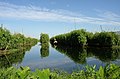
Inle Lake (Burmese: အင်းလေးကန်, MLCTS: ang: le: kan, [ʔɪ́ɰ̃lé kàɰ̃]) is a freshwater lake located in the Nyaungshwe Township of Shan State, part of Shan Hills in Myanmar (Burma). It is the second largest lake in Myanmar, with an estimated surface area of 44.9 square miles (116 km2), and one of the highest at an elevation of 2,900 feet (880 m). During the dry season, the average water depth is 7 feet (2.1 m), with the deepest point being 12 feet (3.7 m). During the rainy season, this can increase by 5 feet (1.5 m).

The watershed area for the lake lies to a large extent to the north and west of the lake. The lake drains through the Nam Pilu or Balu Chaung on its southern end. There is also a hot spring on its northwestern shore.

Large sections of the lake are covered by floating plants. Its clear and slightly alkaline waters (pH 7.8–8) are home to a diverse fauna and many species found nowhere else in the world (endemics).[2] There are more than 35 native species of fish, including 17 endemics. Some of these, notably the Sawbwa barb, red dwarf rasbora, emerald dwarf rasbora, Lake Inle danio, Inle loach and the Inle snakehead, are of minor commercial importance for the aquarium trade. Several fish that are not native have been introduced.[2][3] Additionally, the lake is home to about 45 species of freshwater snails, 30 of them endemic,[2] along with a small endemic freshwater crab, Inlethelphusa acanthica.[4] It hosts approximately 20,000 migratory gulls in November to January.[5]

In June 2015, it became Myanmar's first designated place of World Network of Biosphere Reserves.[6] It was one of 20 places added at the Unesco's 27th Man and the Biosphere (MAB) International Coordinating Council (ICC) meeting.[7] Since 2018 it has been designated as a protected Ramsar site.[1] Today the lake's environment is under serious pressure due to pollution, siltation, eutrophication, overfishing and introduced species, including the highly invasive water hyacinth. The endemic predatory fish Systomus compressiformis might already be extinct.[2]

People and culture

[edit]

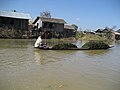
The people of Inle Lake (see Intha), live in four cities bordering the lake, in numerous small villages along the lake's shores, and on the lake itself. The entire lake area is in Nyaung Shwe township. The population consists predominantly of Intha, with a mix of other Shan, Taungyo, Pa-O (Taungthu), Danu, Kayah, Danaw and Bamar ethnicities. Most are devout Buddhists and live in simple houses of wood and woven bamboo on stilts; they are largely self-sufficient farmers.

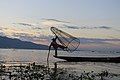
Transportation on the lake is traditionally by small boats, or by somewhat larger boats fitted with single cylinder inboard diesel engines. Local fishermen are known for practicing a distinctive rowing style which involves standing at the stern on one leg and wrapping the other leg around the oar. This unique style evolved out of necessity as the lake is covered by reeds and floating plants, making it difficult to see above them while sitting. Standing provides the rower with a view beyond the reeds. However, the leg rowing style is only practiced by the men. Women row in the customary style, using the oar with their hands, sitting cross legged at the stern.

Fish caught from the lake have been a staple of the local diet. The Inle carp (Cyprinus intha, called nga hpein locally) has historically been the most abundant but today is seriously threatened.[2][8] A popular local dish is htamin gyin - 'fermented' rice kneaded with fish and/or potato - served with hnapyan gyaw (lit.'twice-fried Shan tofu'). In addition to fishing, locals grow vegetables and fruit in large gardens that float on the surface of the lake. The floating garden beds are formed by extensive manual labor. The farmers gather up lake-bottom weeds from the deeper parts of the lake, bring them back in boats and make them into floating beds in their garden areas, anchored by bamboo poles. These gardens rise and fall with changes in the water level, and so are resistant to flooding. The constant availability of nutrient-laden water results in these gardens being incredibly fertile. Rice cultivation and consumption is also significant facet of the local diet and agricultural tradition.

Environmental concerns

[edit]

Inle Lake is suffering from the environmental effects of increased population and rapid growth in both agriculture and tourism. During the 65-year period from 1935 to 2000, the net open water area of Inle Lake decreased from 69.10 square kilometres (26.68 sq mi) to 46.69 square kilometres (18.03 sq mi), a loss of 32.4%, with development of floating garden agriculture, which occurs largely on the west side of the lake (a practice introduced in the 1960s).[9]

Lumber removal and unsustainable cultivation practices (slash and burn farming techniques) on the hills surrounding the lake are causing ever-increasing amounts of silt and nutrients to run off into the rivers that feed the lake, especially along its western and northern watershed areas. This silt fills up the lake; the nutrients encourage the growth of weeds and algae. More important however is the development of floating garden agriculture, largely along the western side of the lake. This practice encroaches into the diminishing area of the lake, since over time, the floating beds become solid ground. About 93% – nearly 21 square kilometres (8.1 sq mi) – of the recent loss in open water area of the lake, largely along its western side, is thought to be due to this agricultural practice. Direct environmental impacts associated with these combined agricultural activities within the wetlands and surrounding hills of the lake include sedimentation, eutrophication, and pollution.[9]

The water hyacinth, a plant not native to the lake, also poses a major problem. It grows rapidly, filling up the smaller streams and large expanses of the lake, robbing native plants and animals of nutrients and sunlight. At one time, all boats coming into Nyaung Shwe were required to bring in a specified amount of water hyacinth. Over the past twenty years, large-scale use of dredges and pumps has been employed with some success in controlling the growth of this plant. On a smaller scale, public awareness education and small-scale control have also been successful.

Another cause for concern is the planned introduction of non-native fish species, such as the Grass Carp (Ctenopharyngodon idella) intended to improve fishery.

Sanitation in the villages around the lake is an ongoing concern for public health authorities, due to untreated sewage (with 72% of households using open pits, not latrines) and waste water flowing into the lake.[10] To ensure fresh and clean water, some villages now have enclosed wells and public access to the well water. Some studies of the lake's surface water quality indicates that the water is not safe for consumption.[10] Water from Inle Lake has dissolved oxygen ranges lower than those necessary for fisheries and aquatic life, while nitrite, nitrate and phosphate ranges are unusually high.[10]

Noise pollution is also a noticeable issue. The noise from the cheaper poorly muffled diesel engines driving the stern drive propellers is significant, and can be a distraction to the otherwise tranquil lake.

The summer of 2010 registered very high temperatures causing the water level of the lake to drop so low, the lowest in nearly 50 years, that drinking water had to be fetched from elsewhere and the floating market was in danger of disappearing.[11] One other serious consequence was that the hydroelectric plant at Lawpita, where the former capital Yangon received its power supply from, could not operate at its full capacity.[12]

In 2015, the United Nations added Inle lake to its World Network Biosphere Reserves. There are a total of 651 sites in 120 countries on this network, but Inle Lake is the first biosphere reserve to be added for Myanmar.[13]

Tourism

[edit]
Boat carrying tourists
Religious event in Inle Lake

Inle Lake is a major tourist attraction, and this has led to some development of tourist infrastructure. Many small and large privately owned hotels and tour operations have arisen during the past few years. Local shops are flooded with consumer items, both local and foreign. The nearest airport is Heho Airport which is 35 kilometres (22 mi) away. There are flights from both Yangon and Mandalay. Yangon is 660 kilometres (410 mi) away by road and Mandalay is 330 kilometres (210 mi).

A number of festivals occur from August to October on Inle Lake and in the surrounding areas. The ceremonial Hpaung Daw U Festival, which lasts for a total of 18 days, is closely followed by the Thadingyut Festival of lights. Inthas and Shan turn out in their best clothes in great numbers to celebrate the Buddhist Lent. Traditional boat racing, with dozens of leg-rowers in traditional Shan dress compete on teams with a team on each boat. These boat races are locally one of the most anticipated affairs during the Hpaung Daw U Festival.[14]

One of the tourist attractions in the village on the lake itself is the traditional silversmithing, which has fed into the local tourist economy. The silver is brought in from the mines that line the hills surrounding the lake and is boated into the village. Almost all the houses in the village on the lake itself sit on stilts and are made of woven bamboo. Tourists can satisfy their need for trinkets and memorable tokens by observing the silver being smithed and purchase items on-site. If silversmithing doesn't interest a visitor there are also local silk workshops that operate on the lake in a very similar manner as the silversmiths.[15] Handmade goods for local use and trading are another source of commerce. Typical products include tools, carvings and other ornamental objects, textiles, and cheroots. A local market serves most common shopping needs and is held daily but the location of the event rotates through five different sites around the lake area, thus each of them hosting an itinerant market every fifth day.[16] When held on the lake itself, trading is conducted from small boats. This 'floating-market' event tends to emphasize tourist trade much more than the other four.

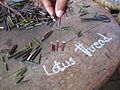
The Inle lake area is renowned for its weaving industry. The Shan-bags, used daily by many Burmese as a tote-bag, are produced in large quantities here. Silk-weaving is another very important industry, producing high-quality hand-woven silk fabrics of distinctive design called Inle longyi. A unique traditional fabric called lotus silk, made from the lotus plant fibers, is produced only at Inle Lake and in Cambodia and was used for weaving special robes for Buddha called kya thingan (lotus robe).[17]

While hot air balloon flights are more popular in Bagan, they are also provided over Inle Lake with Balloons Over Bagan.[18] There is also a winery near the lake, called Red Mountain Estate.[19][20]

See also

[edit]

References

[edit]
[edit]
Revisions and contributorsEdit on WikipediaRead on Wikipedia
from Grokipedia
Inle Lake is a large freshwater lake in the Southern Shan State of Myanmar, renowned for its shallow waters, floating gardens, and the distinctive leg-rowing technique employed by the Intha people who live around and on the lake.[1] Situated at an elevation of approximately 900 meters above sea level in the heart of the Shan Plateau, it spans about 22 kilometers in length and 10 kilometers across, making it the second-largest lake in Myanmar.[2] The lake's ecosystem supports a rich biodiversity, including endemic species like the Inle carp, and serves as a vital resource for fishing, agriculture, and tourism in the region.[3] The Intha, meaning "sons of the lake" in Burmese, are the primary ethnic group associated with Inle Lake, numbering around 200,000 in the surrounding Nyaungshwe Township, where they have adapted their livelihoods to the aquatic environment through stilt villages, floating farms, and traditional crafts such as lotus weaving and cheroot-making.[1] The lake's unique leg-rowing method, where rowers stand and wrap one leg around the oar to propel the boat while keeping hands free for casting conical nets, originated possibly as early as the 12th century and allows navigation through dense vegetation and shallow depths averaging 2 to 4 meters, varying by season.[1] Floating gardens, constructed from woven weeds, silt, and bamboo poles anchored to the lakebed, enable the cultivation of tomatoes, beans, and other crops in this nutrient-rich, marshy setting, forming a patchwork of verdant islands amid the open water.[2] Ecologically, Inle Lake is a shallow highland basin recharged by over 30 streams, with a watershed covering approximately 3,700 square kilometers, though it faces threats from siltation, pollution, and climate change, including a water level drop of about 1 meter since 1990, severe flooding from Typhoon Yagi in September 2024, and impacts from the 2025 Mandalay earthquake.[3][4][5] Designated as a UNESCO Man and the Biosphere Reserve in 2015, a Ramsar wetland site, and an ASEAN Heritage Park since 2003, the lake and its 1,664-square-kilometer wildlife sanctuary protect diverse flora, birds, and fish species while supporting a growing human population through fisheries yielding species like ngaphe and tilapia.[3] Culturally, it hosts festivals like the Phaung Daw Oo Pagoda ceremony, featuring boat races and processions that highlight the Intha's deep connection to the water.[2]

Geography

Location and Physical Features

Inle Lake is situated in the Nyaungshwe Township of Taunggyi District, in southern Shan State, Myanmar, at coordinates approximately 20°28′N 96°55′E and an elevation of about 880 meters above sea level.[6][7] This positioning places it within a highland valley on the Shan Plateau, making it one of Myanmar's highest significant freshwater bodies.[6] As the second-largest lake in Myanmar, Inle Lake spans roughly 22 kilometers in length and 11 kilometers in width, encompassing a surface area of approximately 116 square kilometers, though this includes peripheral wetlands and has fluctuated due to historical siltation and land use changes.[7][8] The lake is notably shallow, with an average depth of 3 to 4 meters, which contributes to its nutrient-rich, productive ecosystem.[6][9] The lake is enclosed by the rugged Shan Hills, including the western Let Maung Gway Range and the eastern Hsin Taung Range, which rise to elevations of around 900 to 1,500 meters and form a natural basin.[6] It is primarily fed by several rivers and streams, such as the Bilu River (also known as Indein) from the south and the Nyaungshwe area inflows from the north, alongside others like Nam Lat and Kalaw streams, creating a network of channels and marshes.[6][8] The landscape features extensive marshy wetlands and floating islands composed of tangled vegetation and silt, which stabilize the shallow margins and support unique agricultural practices.[6] Geologically, Inle Lake occupies a tectonic valley formed through faulting in the Shan Plateau during the Pleistocene epoch, approximately 1.5 million years ago, with bedrock primarily of limestone, calcareous sandstone, and shale.[8][10] Ongoing siltation from the surrounding hills has led to seasonal size fluctuations, reducing open water areas over time while enhancing sediment deposition in the basin.[6][9]

Hydrology and Climate

Inle Lake is primarily fed by inflows from numerous streams and rivers, including the main perennial contributors such as the Nam Lat from the north, Kalaw from the west, and Indein (upper Bilu) from the southwest, along with seasonal streams that swell during monsoons and over 30 streams draining a watershed of approximately 500 km².[6][3] The lake's outflow occurs via the Bilu River (also known as Balu Chaung) at its southern end, which drains into Sankar Lake and eventually joins the Myitnge River in the Ayeyarwaddy basin, supporting downstream hydroelectric facilities like Lawpita.[6] Annual water level fluctuations reach up to 7 meters, driven largely by monsoon rains that replenish the system with approximately 954 million cubic meters of inflow on average.[11] The lake's hydrology exhibits pronounced seasonal variations, with the dry season from November to April leading to a 30-50% reduction in surface area—from around 150 km² in the wet period to about 100 km²—due to lower inflows and evaporation, which concentrates pollutants in the remaining water volume.[12] In contrast, the wet season from May to October brings heavy monsoon precipitation, increasing water volume and depth from about 1 meter to 2.5 meters or more, though this often results in flooding that submerges surrounding lowlands and floating gardens.[8] These cycles are critical for the lake's usability, as low dry-season levels hinder navigation while wet-season surges support agricultural expansion but exacerbate erosion in the catchment.[11] Inle Lake lies within a tropical monsoon climate zone, classified as Aw (tropical savanna) under the Köppen system, characterized by distinct wet and dry periods.[13] Average temperatures range from 18°C in the cooler months to 30°C during the hot season, with peaks up to 35°C in April and May.[11] Annual rainfall totals 1,000-1,500 mm, with over 90% concentrated between June and September, fueling the monsoonal recharge that defines the region's hydrological rhythm.[11] Water quality in Inle Lake typically shows a pH range of 7.0-8.5, reflecting its alkaline nature influenced by surrounding geology and inflows.[14] However, high nutrient levels, particularly nitrogen and phosphorus from agricultural runoff carrying fertilizers from upland farms and floating gardens, pose significant risks of eutrophication that promote algal blooms and oxygen depletion.[14] These elevated nutrients underscore the lake's vulnerability to intensified farming practices in the catchment.[14]

History

Early Settlement and Development

The primary settlement phase began with the arrival of the Intha people, a Tibeto-Burman group related to Tai-Shan migrations, around the 13th-14th centuries CE, fleeing conflicts such as Siamese wars from southern regions like Tavoy (Dawei). Oral traditions link their presence to the Pagan Dynasty under King Alaungsithu (r. 1113-1167) for spreading Buddhism, while Shan Chronicles record their settlement in 1359 as servants of Shan King Sao Hseng Hpa, starting with 36 families in Nam Se village and expanding to four lake villages.[15] Nyaung Shwe, a key early hub, was founded in 1359 by Saopha Si Sai Pha, marking the establishment of enduring Intha communities adapted to lacustrine life.[16] By the 16th century, under Shan rule (late 13th to mid-16th centuries), Buddhist monasteries proliferated, solidifying the Intha's religious and social structures around the lake.[15] The Pa-O people, carrying Mon cultural elements from the region of Thaton near the Gulf of Martaban, migrated to the Shan plateau around the 11th century following the overthrow of Mon King Manuha.[17] These influences laid the groundwork for the lake's role as a cultural crossroads, though specific excavations at the lake remain limited. During the pre-colonial era, particularly under the Taungoo (16th-18th centuries) and Konbaung (18th-19th centuries) dynasties, the economy evolved around fishing communities and the development of floating agriculture by the early 19th century, building on Intha adaptations from their 14th-century arrival. Burmese control from the late 18th century integrated the region into broader trade networks, emphasizing sustainable lake-based livelihoods like leg-rowing fishing and ye-chan gardens.[18][15] Key historical sites include submerged or edge pagoda ruins, such as the Shwe Indein complex with over 1,000 stupas dating from the 13th century, reflecting early Intha-Buddhist heritage amid the lake's dynamic environment.[19]

Colonial Era to Present

During the British colonial period from 1885 to 1948, following the Third Anglo-Burmese War, the Shan States, including the region around Inle Lake, were incorporated into the British Raj as semi-autonomous princely states under the suzerainty of the British government, with local Shan rulers (sawbwas) retaining administrative control while acknowledging British paramountcy.[20] The British established hill stations such as Kalaw in the early 1900s near Inle Lake to escape lowland heat, marking the area's emergence as an early tourist destination for colonial officials and visitors drawn to its scenic landscapes and cooler climate.[21] Infrastructure developments, including the completion of the Thazi-Taunggyi railway in 1909, improved access to the Shan Plateau and facilitated the transport of goods, contributing to the intensification of rice cultivation in the lake's fertile wetlands through introduced wet-rice farming techniques that built on traditional floating garden methods.[22] After Myanmar's independence in 1948, the government under Prime Minister U Nu pursued policies of nationalization, including the Land Nationalization Act of 1953, which redistributed agricultural lands and integrated remote areas like Inle Lake into centralized state control, though ethnic autonomy in the Shan States remained a point of contention amid rising insurgencies.[23] The 1962 military coup led by General Ne Win imposed the "Burmese Way to Socialism," resulting in widespread nationalizations of industries and agriculture, severe restrictions on foreign travel, and limited access to peripheral regions such as Inle Lake, which became isolated due to closed borders and internal security measures that curtailed tourism and economic exchanges. The 1988 pro-democracy uprisings, which spread nationwide and prompted a violent military crackdown by the State Law and Order Restoration Council (SLORC), further entrenched isolationist policies, exacerbating ethnic tensions in Shan State and restricting development around Inle Lake until tentative openings in the late 1990s.[24] Political reforms beginning in 2011 under President Thein Sein liberalized the economy and eased travel restrictions, sparking a surge in tourism to Inle Lake that saw visitor numbers multiply several-fold by 2015, driven by international interest in its unique ecosystems and cultural sites, though this also accelerated environmental pressures from infrastructure growth.[25] In June 2015, Inle Lake was designated as Myanmar's first UNESCO Biosphere Reserve.[26] The 2021 military coup disrupted this progress, reigniting civil conflict and ethnic insurgencies in Shan State, where armed groups clashed with junta forces, leading to protests by Intha fishermen on the lake, a sharp decline in tourism, and heightened risks to conservation efforts due to disrupted governance and resource exploitation.[27] Ongoing ethnic tensions among Shan, Intha, and other minorities in the region continue to influence access to the lake, complicating coordinated conservation and post-coup stability as of 2025.[28] The March 28, 2025, magnitude 7.7 earthquake centered near Mandalay severely impacted the Inle Lake area, causing widespread structural damage including the collapse of stilt houses, monasteries, and infrastructure across villages, with 3,454 households destroyed or damaged and thousands of residents displaced to boats amid liquefaction and landslides.[29] This disaster compounded geopolitical instability, straining recovery efforts in the conflict-affected Shan State and underscoring vulnerabilities in the lake's fragile built environment. As of November 2025, international organizations such as the International Labour Organization (ILO) have launched recovery projects to rebuild jobs and livelihoods in the affected communities.[29]

Ecology and Biodiversity

Flora and Fauna

Inle Lake's aquatic flora is characterized by a variety of submerged, floating, and emergent plants adapted to its shallow, nutrient-rich waters. Dominant species include water hyacinth (Eichhornia crassipes), which forms dense mats and is utilized in constructing floating gardens alongside sedges and weeds, as well as lotus (Nelumbo nucifera), coontail (Ceratophyllum demersum), pondweed (Potamogeton crispus), and musk grass (Chara aspera).[6][30] Submerged macrophytes such as Najas species and stonewort (Nitella flexilis) thrive in the lake's hypoxic conditions, supporting the ecosystem's oxygen dynamics and serving as habitat for aquatic life.[6][31] The surrounding wetlands and hills feature diverse terrestrial vegetation, including swamp forests with reeds and elephant grass (Miscanthus spp., locally known as kaing), as well as bamboo groves, teak (Tectona grandis) stands, and pine forests in higher elevations.[32][30] Other notable plants include wetland sedges, Oryza rufipogon (wild rice), and medicinal species such as Enhydra fluctuans and rare orchids, contributing to the region's overall botanical richness of over 1,300 angiosperm species in the watershed.[32][6] Fauna in and around Inle Lake exhibits high diversity, with over 270 bird species, including migratory waterbirds that peak in winter along the East Asian-Australian Flyway, such as sarus cranes (Antigone antigone) and cattle egrets (Bubulcus ibis coromandus).[32][30] The lake supports approximately 43-61 fish species, among them endemic ones like the Inle carp (Cyprinus intha) and the Inle snakehead (Channa harcourtbutleri), which are adapted to low-oxygen environments through physiological traits such as enhanced gill surface area.[33][30] Amphibians include at least three recently discovered species, while invertebrates feature around 20-26 snail species, many unique to the basin, and 75-94 butterfly species.[32][6] Endemism is particularly pronounced, with 10-16 endemic fish species representing over 25% of Myanmar's total freshwater endemics, alongside several plants and invertebrates specialized for the lake's hypoxic, isolated conditions.[33][30] This biodiversity underscores Inle Lake's status as a key wetland hotspot, though species face pressures from habitat alterations.[6]

Conservation Efforts

Inle Lake received international recognition for its ecological significance in 2015 when it was designated as Myanmar's first UNESCO Man and the Biosphere Reserve, encompassing 489,721 hectares and highlighting its role in conserving biodiversity while supporting sustainable human development.[34] This status underscores the lake's unique wetland ecosystem, which serves as a critical habitat for endemic species and migratory birds along the East Asian-Australasian Flyway. In 2018, the site was further protected as a Ramsar Wetland of International Importance, covering 5,797.6 hectares and emphasizing its hydrological and biological value as the second-largest inland lake in Myanmar.[35] Additionally, the Inle Lake region is included in the World Wildlife Fund's [Global 200](/page/Global 200) ecoregions, identifying it as a priority for global conservation due to its freshwater biodiversity within the Irrawaddy Basin.[36] At the national level, Myanmar's government initiated the Inle Watershed Restoration Program in 2018, a multi-year effort led by the Forest Department to combat deforestation and soil erosion through targeted reforestation in the lake's 5,612-square-kilometer (2,166-square-mile) catchment area.[37] This program promotes agroforestry and community-led tree planting to restore upland forests, aiming to reduce annual silt inflows of approximately 708,000 tons that threaten the lake's depth and water quality. Complementing this, community-based management is facilitated through the proposed Inle Lake Development Authority (ILDA), which coordinates stakeholder involvement in resource monitoring and decision-making, building on the 2015 Long-Term Restoration and Conservation Plan's emphasis on local participation to ensure sustainable watershed governance.[6] Key initiatives address specific ecological pressures, including the control of invasive species such as water hyacinth (Eichhornia crassipes), which proliferates and reduces oxygen levels in the lake; efforts involve deploying mechanical weed harvesters and community harvesting programs to clear overgrowth and repurpose the plant for local crafts and agriculture.[6] Sustainable fishing practices have been advanced through community fisheries committees, which introduced zoning regulations and seasonal restrictions around 2020 to prevent overfishing and protect endemic species like the Inle carp, supported by awareness campaigns under the Fish for Livelihoods project.[38] Post-2021, eco-tourism guidelines were developed to minimize environmental impacts, promoting low-impact visitor activities, waste management, and revenue sharing with local communities via frameworks outlined in sustainable tourism plans for the Inlay Lake region.[39] Despite these measures, implementation faces significant hurdles as of 2025, including chronic funding shortages that limit equipment procurement and program scaling, exacerbated by Myanmar's ongoing political instability and armed conflicts disrupting coordination and enforcement in the Shan State region. As of 2025, conservation efforts have been severely hampered by the 2021 military coup, ensuing armed conflicts in Shan State, and a significant earthquake earlier in the year, which exacerbated habitat degradation and delayed reforestation and invasive species control initiatives, according to reports from local and international observers.[40][41][42] These challenges have delayed reforestation targets and invasive species removal, though international partnerships continue to provide technical support to sustain core efforts. These conservation actions collectively aim to safeguard the lake's rich biodiversity, including its endemic flora and fauna, from further degradation.

Environmental Challenges

Pollution and Habitat Degradation

Inle Lake faces significant pollution from agricultural runoff, primarily originating from the extensive floating gardens that dominate its surface. These gardens, used intensively for tomato cultivation, rely on chemical fertilizers and pesticides that leach directly into the water, as there is no soil to filter them, leading to nutrient enrichment and eutrophication. This process promotes excessive algal growth, depleting oxygen levels and disrupting the aquatic ecosystem.[43][44] Upland deforestation exacerbates these issues through increased soil erosion and siltation, with approximately 708,000 tons of sediment deposited annually into the lake. This sedimentation has contributed to a notable reduction in water depth, estimated at about 0.3 meters per decade, transforming open water areas into shallower zones and reducing the lake's overall capacity.[6][38] Urban and tourism-related pollution further compounds the degradation, with untreated wastewater from Nyaung Shwe town and surrounding hotels discharging around 5.6 million liters per day into the lake, introducing pathogens, nutrients, and organic matter. Plastic waste from visitors and local activities accumulates in the water, posing risks to aquatic life through ingestion and entanglement, while overfishing has depleted stocks of endemic species such as the Intha carp (Cyprinus intha), threatening biodiversity and fisheries sustainability.[6][45][38] Habitat loss is driven by the conversion of wetlands into aquaculture zones, including expansions of floating farms that encroach on natural marshlands, and the proliferation of invasive water hyacinth (Pontederia crassipes), which covered substantial portions—up to 20% of the surface by 2020—choking navigation channels and exacerbating oxygen depletion.[46][43] Monitoring efforts reveal a clear decline in water quality, with biochemical oxygen demand (BOD) levels of 1.00–9.67 mg/L recorded in 2019–2020, indicating heightened organic pollution. Post-2025 earthquake assessments, following the March 28 magnitude 7.7 event, documented accelerated sedimentation and increased floating debris, further muddying fishing grounds and amplifying existing pressures on the lake's health.[47][48][49]

Climate Change and Recent Disasters

Inle Lake has experienced rising temperatures of approximately 0.6 °C in daytime lake surface water since the late 1980s, contributing to erratic monsoon patterns and increased water scarcity in the region.[50] These changes have disrupted traditional water inflows, leading to reduced lake levels during dry periods.[48] Overall, fish habitats have reduced by 40% since 2010, with daily catches dropping from 15 viss to near zero in affected areas.[48] Extreme weather events linked to climate change have intensified around Inle Lake, with increased flooding frequency during heavy rains and prolonged droughts affecting aquatic life.[8] Drought episodes in 2019 and 2023 led to significant fish population declines, as low oxygen levels and water stagnation stressed endemic species like the Inle carp.[48] The March 28, 2025, earthquake of 7.7 magnitude, centered near Sagaing, triggered landslides and water contamination in the Inle Lake basin, spilling sewage and waste into the lake.[48] A post-disaster assessment in May 2025 documented accelerated sedimentation, biodiversity impacts affecting 53 bird species and 36 fish species (16 of which are endemic), and compounded ecological stress.[48] This event destroyed around 3,500 homes in 30 villages and compounded existing climate vulnerabilities.[51] Heavy flooding in July 2025 further exacerbated sedimentation and submerged thousands of acres of farmland in the region.[52] In response, 2025 rehabilitation plans propose early warning systems, including meteorological and hydrologic stations across the catchment, to be implemented starting in late 2025.[48] Resilient village designs are also recommended, featuring disaster-resistant housing, floating shelters, and improved sanitation to support recovery through 2026; as of October 2025, efforts include restoring water supply infrastructure in affected villages.[48][53] These measures aim to address both seismic and climate-induced threats while preserving cultural practices.[54]

People and Culture

Demographics and Ethnic Groups

Inle Lake and its surrounding areas are home to an estimated 120,000 to 150,000 residents as of 2024, with approximately 70% inhabiting stilt villages such as Inpawkhone and Ywama, where communities rely on the lake's ecosystem for daily life.[55] The broader Nyaungshwe township, encompassing the lake region, had a population of about 189,000 in 2014, with projections indicating growth to around 244,000 by 2024 amid regional developments.[56][57] The ethnic composition is dominated by the Intha people, a Tibeto-Burman group and Buddhist subgroup closely related to the Bamar majority, comprising roughly 80% of the lake's residents and known for their adaptation to aquatic living.[58] Minorities include the Shan, Pa-O, Kayah, and Ta'ang (Palaung), who contribute to the region's cultural diversity through intergroup interactions along the shores.[34] Since the 2021 military coup, migration trends have intensified in southern Shan State, with internal displacement from conflict and the March 2025 earthquake (affecting ~3,454 households in the Inle Lake area) driving some families to relocate to safer lakeside settlements or urban edges, exacerbating population shifts as of November 2025.[59][29] Settlement patterns feature around 17 lakeside villages and several towns built on stilts or floating platforms, enabling habitation directly over the water amid the lake's shallow, marshy environment.[60] Urban centers like Nyaungshwe, with around 14,000 residents as of 2019, serve as administrative and commercial hubs connected by canals and roads to the dispersed rural communities. Intha society exhibits traditional extended family structures fostering community cohesion in isolated lake dwellings. Literacy rates stand at approximately 89% among adults aged 15 and older as of 2014, reflecting strong basic education access, though remoteness limits higher education and vocational training opportunities for many youth.[56] These demographics underpin the vibrant cultural traditions of the lake's inhabitants, including festivals that unite ethnic groups.[58]

Traditional Practices and Festivals

The Intha people of Inle Lake employ a distinctive leg-rowing technique in fishing, where fishermen stand at the stern of their narrow boats, wrapping one leg around a single oar to propel the vessel while keeping both hands free to cast conical nets into the shallow waters.[61] This method, adapted to the lake's dense vegetation and floating gardens, allows for better visibility and maneuverability in the marshy environment.[62] Traditional canoes, essential to daily life on the lake, are handcrafted from local hardwoods such as teak, with planks sawn manually and joined using mixtures of shredded wood and natural sealants for durability against the water.[63] Home-based weaving remains a cornerstone of Intha craftsmanship, particularly the production of lotus silk, where fibers are meticulously extracted from lotus stems harvested during the monsoon season, twisted into threads, and woven into fine scarves, robes, and textiles on traditional looms.[64] This labor-intensive process, originating over a century ago, often blends lotus fibers with cotton or silk to create lightweight, breathable fabrics prized for their softness and cultural significance.[65] Cotton weaving, similarly conducted in stilted homes, produces everyday garments and longyi using hand-spun yarns dyed with natural plant extracts. Silversmithing thrives in Nyaung Shwe, where artisans in family workshops melt and shape silver into intricate jewelry, bowls, and religious items using age-old techniques passed down through generations, often incorporating motifs inspired by Buddhist iconography.[66] Women across lake villages engage in cheroot-making, rolling tobacco leaves with sweeteners like honey, tamarind, and rice flour into mild cigars at low tables in their homes, a practice that reflects the communal and gendered division of labor in Intha society.[67] Pottery traditions are prominent in villages like Nampan, where potters dig red clay from lakebed deposits, shape it on foot-powered wheels into pots, jars, and decorative items, then fire them in traditional kilns fueled by rice husks.[68] Lacquerware, though more regionally associated, appears in lake communities through the coating of wooden items with sap-derived resin for waterproof bowls and alms vessels used in daily rituals.[69] The Phaung Daw Oo Pagoda Festival, held annually during the Thadingyut lunar month (typically September-October), features elaborate boat processions where four gold-covered Buddha images from the lakeside pagoda are carried on an ornate barge rowed by young men in traditional attire, circling the lake over 18 days amid chants, dances, and offerings from surrounding villages; in 2025, it proceeded despite recent earthquake damage, highlighting community resilience.[70] Pa-O communities celebrate their Toke Tae harvest festival in February or March with communal feasts, traditional dances in colorful turbans and shawls, and rituals thanking for bountiful crops from the surrounding hills.[71] Thadingyut, coinciding with the full moon in October, illuminates the lake with floating lanterns released from boats, symbolizing the dispelling of darkness and the Buddha's return from the heavens, as families gather for illuminated processions and merit-making activities.[72] Theravada Buddhism permeates lake life, with numerous monasteries dotting the shores and waters, serving as centers for meditation, education, and community gatherings. The Nga Phe Kyaung Monastery, the oldest and largest on the lake, built in the 19th century on stilts, features trained cats jumping through hoops as an attraction alongside scriptural study and serene reflection.[73] Daily alms-giving routines see villagers in boats offering rice, fruits, and robes to saffron-robed monks at dawn, reinforcing the cycle of dana (generosity) central to Theravada practice.[74]

Economy and Tourism

Livelihoods and Agriculture

The primary livelihoods of communities around Inle Lake revolve around fishing, which employs traditional techniques adapted to the shallow waters. Fishermen, primarily from the Intha ethnic group, use a distinctive one-legged rowing method to propel flat-bottomed boats while standing, allowing them to scan for fish and maintain balance in the lake's vegetation. They deploy conical bamboo traps known as Inle saung or passive gill nets to capture species, with catches dominated by endemic carp like the endangered Inle carp (Cyprinus intha) and introduced common carp (Cyprinus carpio), alongside freshwater prawns. These methods sustain local food security, as inland fisheries provide a significant portion of protein in the region.[75][76][77] Since the early 2000s, there has been a gradual shift toward aquaculture to offset declining wild stocks, with floating pens introduced for polyculture systems combining carp varieties and other species like tilapia. Hypophysation techniques using pituitary extracts from common carp enable seed production for Inle carp farming in ponds, supporting sustainable yields for local markets. However, fish stocks have plummeted due to habitat loss, pollution, and overfishing, with daily catches per fisher dropping from approximately 163 kg thirty years ago to 7–8 kg today, and Inle carp now comprising less than 10% of the haul.[78] Agriculture complements fishing through innovative floating gardens, or kyun, formed by weaving mats from water hyacinth, reeds, and lake weeds, anchored with bamboo poles to create stable platforms. These gardens, covering significant portions of the lake, cultivate high-value crops such as tomatoes (which account for up to 90% of yields), beans, and gourds, benefiting from the nutrient-rich sediments trapped in the mats for natural fertility. In surrounding uplands, terraced rice farming on slopes utilizes seasonal rains and soil amendments from lake dredgings to produce staple paddy rice. Local reliance on these systems highlights the integration of aquatic and terrestrial resources for productivity.[79][80][81][82] Additional resources include reed harvesting from lake margins for crafting mats, roofing, and fuel in stilt-house communities, alongside household-scale animal husbandry of pigs and chickens for meat and eggs. Small-scale logging persists in upland forests despite protective bans aimed at preventing watershed erosion, providing timber for local construction. Economic integration with broader markets occurs via road networks linking to Heho Airport, where lake produce like tomatoes is transported for domestic and export trade, enhancing income but exposing communities to price volatility. These activities face ongoing pressures from resource depletion, underscoring the need for balanced management.[83][6][18]

Tourism Development and Impacts

Tourism in Inle Lake experienced limited development prior to Myanmar's political reforms in 2011, when international sanctions and military restrictions constrained visitor access, resulting in only about 20,000 international arrivals annually in 2009-10.[84] Following the reforms, tourism surged as a key economic driver, with international visitors rising to 110,000 by 2013-14 and total arrivals (including domestic) exceeding 300,000 per year by the mid-2010s, fueled by the lake's UNESCO-recognized cultural landscape.[84] This boom peaked around 2019 amid Myanmar's overall tourism growth to over 4 million foreign visitors nationwide, though Inle Lake's share remained concentrated in the hundreds of thousands, before declining sharply due to the COVID-19 pandemic, the 2021 military coup, and ensuing civil war. As of 2023, tourism remained severely limited, with fewer than 3,000 international visitors annually, further impacted by floods and a 7.7 magnitude earthquake in March 2025 that damaged infrastructure and stilt communities around the lake.[85][86][87][88][89][90] Key attractions draw visitors through immersive experiences centered on the lake's unique ecosystem and Intha culture, including longtail boat tours navigating stilt villages like those in Nampan and Ywama, where communities live atop bamboo pilings.[91] Pilgrims and tourists flock to Phaung Daw Oo Pagoda, the holiest site on the lake housing five sacred Buddha images, while the ancient Indein ruins—over 1,000 weathered stupas covered in vines—offer a glimpse into Shan State's historical Buddhist heritage reached via a scenic canal trek.[91] Modern additions like eco-lodges on the lake's periphery promote low-impact stays, and hot air balloon rides provide aerial views of floating gardens and leg-rowing fishermen at dawn, enhancing experiential tourism.[25] Nyaung Shwe serves as the primary gateway town, hosting over 200 hotels and guesthouses by the late 2010s, up from fewer than 50 a decade earlier, to accommodate the influx of visitors.[92] Heho Airport, the nearest entry point about 30 kilometers away, had proposed expansions starting in 2021, including a new passenger terminal and runway improvements to handle up to 1 million passengers annually, but progress has been stalled due to political instability.[92] Sustainable zoning initiatives, outlined in the Myanmar Tourism Master Plan 2013-2020 and subsequent green growth roadmaps, designate protected zones around the lake to regulate development, limit hotel sprawl, and integrate tourism with conservation, including wastewater management projects funded partly by a $10 visitor entrance fee.[25] While tourism contributes significantly to local livelihoods—accounting for up to 20% of the regional GDP through jobs in boating, guiding, and hospitality—it has led to overcrowding, with boat traffic multiplying and straining narrow waterways during peak seasons.[45] This growth has increased waste generation from hotels and vessels, exacerbating pollution in the lake's shallow waters despite mitigation efforts like sanitary landfills.[45] Culturally, traditional practices face commodification, as fishermen stage leg-rowing demonstrations and pose with conical traps for photographs in exchange for tips, shifting authentic livelihoods toward performative tourism.[45] Tourism revenues also briefly support conservation funding, channeling entrance fees into community projects like water supply improvements.[84] The civil war and 2025 earthquake have further strained these benefits, displacing communities and damaging tourism infrastructure, while reducing visitor numbers has impacted income from guiding and hospitality.[93][90]

References

User Avatar
No comments yet.