Hubbry Logo
Intraperitoneal injectionIntraperitoneal injectionMain
Open search
Intraperitoneal injection
Community hub
Intraperitoneal injection
logo
8 pages, 0 posts
0 subscribers
Be the first to start a discussion here.
Intraperitoneal injection
from Wikipedia

Intraperitoneal injection
Other namesIP injection
ICD-9-CM54.96-54.97

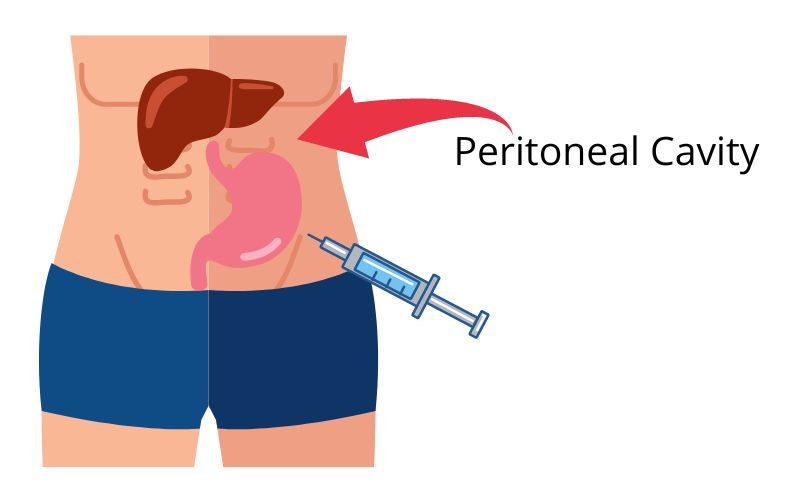
Intraperitoneal injection or IP injection is the injection of a substance into the peritoneum (body cavity). It is more often applied to non-human animals than to humans. In general, it is preferred when large amounts of blood replacement fluids are needed or when low blood pressure or other problems prevent the use of a suitable blood vessel for intravenous injection.[citation needed]

In humans, the method is widely used to administer chemotherapy drugs to treat some cancers, particularly ovarian cancer. Although controversial, intraperitoneal use in ovarian cancer has been recommended as a standard of care.[1] Fluids are injected intraperitoneally in infants, also used for peritoneal dialysis.[citation needed]

Intraperitoneal injections are a way to administer therapeutics and drugs through a peritoneal route (body cavity). They are one of the few ways drugs can be administered through injection, and have uses in research involving animals, drug administration to treat ovarian cancers, and much more. Understanding when intraperitoneal injections can be utilized and in what applications is beneficial to advance current drug delivery methods and provide avenues for further research. The benefit of administering drugs intraperitoneally is the ability for the peritoneal cavity to absorb large amounts of a drug quickly. A disadvantage of using intraperitoneal injections is that they can have a large variability in effectiveness and misinjection.[2] Intraperitoneal injections can be similar to oral administration in that hepatic metabolism could occur in both.

History

[edit]

There are few accounts of the use of intraperitoneal injections prior to 1970. One of the earliest recorded uses of IP injections involved the insemination of a guinea-pig in 1957.[3] The study however did not find an increase in conception rate when compared to mating. In that same year, a study injected egg whites intraperitoneally into rats to study changes in "droplet" fractions in kidney cells. The study showed that the number of small droplets decreased after administration of the egg whites, indicating that they have been changed to large droplets.[4] In 1964, a study delivered chemical agents such as acetic acid, bradykinin, and kaolin to mice intraperitoneally in order to study a "squirming" response.[5] In 1967, the production of amnesia was studied through an injection of physostigmine.[6] In 1968, melatonin was delivered to rats intraperitoneally in order to study how brain serotonin would be affected in the midbrain.[7] In 1969, errors depending on a variety of techniques of administering IP injections were analyzed, and a 12% error in placement was found when using a one-man procedure versus a 1.2% error when using a two-man procedure.[8]

A good example of how intraperitoneal injections work is depicted through "The distribution of salicylate in mouse tissues after intraperitoneal injection" because it includes information on how a drug can travel to the blood, liver, brain, kidney, heart, spleen, diaphragm, and skeletal muscle once it has been injected intraperitoneally.[9]

These early uses of Intraperitoneal injections provide good examples of how the delivery method can be used, and provides a base for future studies on how to properly inject mice for research.

Use in humans

[edit]

Currently, there are a handful of drugs that are delivered through intraperitoneal injection for chemotherapy. They are mitomycin C, cisplatin, carboplatin, oxaliplatin, irinotecan, 5-fluorouracil, gemcitabine, paclitaxel, docetaxel, doxorubicin, premetrexed, and melphalan.[10] There needs to be more research done to determine appropriate dosing and combinations of these drugs to advance intraperitoneal drug delivery.

There are few examples of the use of intraperitoneal injections in humans cited in literature because it is mainly used to study the effects of drugs in mice. The few examples that do exist pertain to the treatment of pancreatic/ovarian cancers and injections of other drugs in clinical trials. One study utilized IP injections to study pain in the abdomen after a hysterectomy when administering anesthetic continuously vs patient-controlled.[11] The results depicted that ketobemidone consumption was significantly lower when patients controlled anesthetic through IP. This led to the patients being able to be discharged earlier than when anesthesia was administered continuously. These findings could be advanced by studying how the route of injection affects the organs in the peritoneal cavity.

In another Phase I clinical trial, patients with ovarian cancer were injected intraperitoneally with dl1520 in order to study the effects of a replication-competent/-selective virus.[12] The effects of this study were the onset of flu-like symptoms, emesis, and abdominal pain. The study overall defines appropriate doses and toxicity levels of dl1520 when injected intraperitoneally.

One study attempted to diagnose hepatic hydrothorax with the use of injecting Sonazoid intraperitoneally. Sonazoid was utilized to aid with contrast-enhanced ultrasonography by enhancing the peritoneal and pleural cavities.[13] This study demonstrates how intraperitoneal injections can be used to help diagnose diseases by providing direct access to the peritoneal cavity and affecting the organs in the cavity.

In a case of a ruptured hepatocellular carcinoma, it was reported that the patient was treated successfully through the use of an intraperitoneal injection of OK-432, which is an immunomodulatory agent.[14] The patient was a 51-year-old male who was hospitalized. The delivery of OK-432 occurred a total of four times in a span of one week. The results of this IP injection were the disappearance of the ascites associated with the rupture. This case is a good example of how IP injections can be used to deliver a drug that can help to treat or cure a medical diagnosis over the use of other routes of delivery. The results set a precedent of how other drugs may be delivered in this way to treat other similar medical issues after further research.

In 2018, a patient with stage IV ovarian cancer and peritoneal metastases was injected intraperitoneally with 12g of mixed cannabinoid before later being hospitalized.[15] The symptoms of this included impairment of cognitive and psychomotor abilities. Because of the injection of cannabis, the patient was predicted to have some level of THC in the blood from absorption. This case presents the question of how THC is absorbed in the peritoneal cavity. It also shows how easily substances are absorbed through the peritoneal cavity after an IP injection.

Overall, this section provides a few examples of the effects and uses of intraperitoneal injections in human patients. There are a variety of uses and possibilities for many more in the future with further research and approval.

Use in laboratory animals

[edit]

Intraperitoneal injections are the preferred method of administration in many experimental studies due to the quick onset of effects post injection. This allows researchers to observe the effects of a drug in a shorter period of time, and allows them to study the effects of drugs on multiple organs that are in the peritoneal cavity at once. In order to effectively administer drugs through IP injections, the stomach of the animal is exposed, and the injection is given in the lower abdomen. The most efficient method to inject small animals is a two-person method where one holds the rodent and the other person injects the rodent at about 10 to 20 degrees in mice and 20 to 45 degrees in rats. The holder retains the arms of the animal and tilts the head lower than the abdomen to create optimal space in the peritoneal cavity.[2]

There has been some debate on whether intraperitoneal injections are the best route of administration for experimental animal studies. It was concluded in a review article that utilizing IP injections to administer drugs to laboratory rodents in experimental studies is acceptable when being applied to proof-of-concept studies.[16]

A study was conducted to determine the best route of administration to transplant mesenchymal stem cells for colitis. This study compared intraperitoneal injections, intravenous injections, and anal injections. It was concluded that the intraperitoneal injection had the highest survival rate of 87.5%.[17] This study shows how intraperitoneal injections can be more effective and beneficial than other traditional routes of administration.

One article reviews the injection of sodium pentobarbital to euthanize rodents intraperitoneally.[2] Killing the rodent through an intraperitoneal route was originally recommended over other routes such as inhalants because it was thought to be more efficient and ethical. The article overviews whether IP is the best option for euthanization based on evidence associated with welfare implications. It was concluded that there is evidence that IP may not be the best method of euthenasia due to possibilities of missinjection.

Another example of how intraperitoneal injections are used in studies involving rodents is the use of IP for micro-CT contrast enhanced detection of liver tumors.[18] Contrast agents were administered intraperitoneally instead of intravenously to avoid errors and challenges. It was determined that IP injections are a good option for Fenestra to quantify liver tumors in mice.

An example of how intraperitoneal injections can be optimized is depicted in a study where IP injections are used to deliver anesthesia to mice. This study goes over the dosages, adverse effects, and more of using intraperitoneal injections of anesthesia.[19]

An example of when intraperitoneal injections are not ideal is given in a study where the best route of administration was determined for cancer biotherapy.[20] It was concluded that IP administration should not be used over intravenous therapy due to high radiation absorption in the intestines. This shows an important limitation to the use of IP therapy.

The provided examples show a variety of uses for intraperitoneal injections in animals for in vitro studies. Some of the examples depict situations where IP injections are not ideal, while others prove the advantageous uses if this delivery method. Overall, many studies utilize IP injections to deliver therapeutics to lab animals due to the efficiency of the administration route.

References

[edit]
Revisions and contributorsEdit on WikipediaRead on Wikipedia
from Grokipedia
Intraperitoneal injection (IP injection) is a and research technique that involves administering a substance, such as a or , directly into the —the serous membrane-lined space within the that contains the , intestines, liver, and other viscera. This route allows for rapid absorption through the peritoneum's extensive vascular and lymphatic network, providing higher local concentrations compared to oral or . In experimental animal studies, particularly with like mice and rats, IP injection is a common method for delivering pharmacological agents, anesthetics, or cells due to its ease of performance, ability to handle larger volumes (up to 10 mL/kg body weight), and relatively low stress on the subject. The procedure typically involves restraining the animal in a , tilting the head downward, and inserting a needle at a shallow angle (about 10–15 degrees) into the lower caudal quadrant of the to avoid organs like the or intestines, ensuring deposition into the cavity rather than solid tissue. Advantages include quick absorption for small molecules via the and suitability for chronic dosing, though can be affected by first-pass hepatic . However, risks encompass inadvertent organ puncture leading to internal , peritoneal , adhesions, or if aseptic techniques are not followed. In human medicine, IP injection is primarily employed for targeted therapies in cancers involving the , such as ovarian, colorectal, gastric, or appendiceal malignancies with , where it delivers high-dose (e.g., , , or ) directly to microscopic or residual tumors post-surgery. Techniques include normothermic postoperative infusions via indwelling catheters or (HIPEC), which circulates heated solutions (41–43°C) intraoperatively for enhanced penetration and . Clinical benefits include prolonged —such as a 16-month increase in median overall for advanced in landmark trials—and effective palliation of malignant —though penetration is limited to tumors less than 1 cm in diameter. Potential complications involve catheter-related infections, bowel , chemical from drug , and systemic side effects due to absorption, necessitating careful patient selection and monitoring.

Definition and Anatomy

Definition

Intraperitoneal injection is the administration of a substance directly into the , the fluid-filled space within the that houses various organs such as the , intestines, and liver, enabling absorption through the peritoneal membranes. This method involves inserting a needle through the to deliver the substance into this cavity, where it can be rapidly taken up by surrounding tissues. Unlike intravenous injection, which delivers substances directly into the bloodstream for immediate systemic distribution, or , which relies on absorption from muscle tissue, intraperitoneal injection utilizes the peritoneum's extensive surface area—approximately 125 cm² in a 200 g —for efficient and systemic uptake. This route avoids gastrointestinal degradation associated with while being simpler and less invasive than intravenous access for repeated dosing in experimental settings. The absorption mechanism primarily involves or through the visceral and parietal mesothelial layers of the , with small molecules (molecular weight <5,000 Da) entering the via mesenteric capillaries and larger molecules absorbed via lymphatic drainage, particularly through diaphragmatic stomata. Pharmacokinetically, this leads to rapid onset, with peak plasma concentrations (C_max) achieved faster than subcutaneous routes but slower than intravenous, and typically ranging from 70% to 100% for small molecules due to partial first-pass hepatic . Common substances administered via this route include fluids for hydration, pharmacological drugs such as anesthetics or chemotherapeutics, nutrients, and diagnostic agents, provided they are non-irritant and isotonic to minimize tissue damage.

Peritoneal Cavity

The is the potential space within the , lined by the , a continuous composed of two principal layers: the parietal peritoneum, which adheres to the inner surface of the abdominal and pelvic walls, and the visceral peritoneum, which envelops the abdominal viscera. This membrane structure forms a closed sac that contains a small volume of , secreted by the mesothelial cells, to lubricate organ movement and minimize friction during physiological activities. The cavity encloses several key intraperitoneal organs, including the , liver, , , , and portions of the colon, which are suspended and supported by peritoneal folds. The , a prominent double-layered peritoneal extension, anchors the intestines to the posterior and houses an extensive vascular network of arteries, veins, and lymphatics, facilitating the absorption and distribution of nutrients and fluids from the cavity. In human adults, the peritoneal surface area measures approximately 1-2 , providing a broad interface that supports passive of small solutes, such as electrolytes and low-molecular-weight compounds, across the semipermeable mesothelial barrier driven by concentration gradients. For larger molecules, proteins, and excess fluid, absorption predominantly occurs through lymphatic drainage into the and , preventing accumulation within the cavity. Anatomical variations exist across species, with the in , such as mice and rats, being proportionally larger relative to body size—evidenced by a volume of 0.02–0.1 ml in mice compared to 50-75 ml in s—and offering greater accessibility due to a less obstructive omentum and shallower abdominal depth.

Procedure

Preparation

Prior to performing an intraperitoneal injection, thorough assessment of the patient or subject is essential to identify contraindications and ensure safety. In both humans and animals, conditions such as , abdominal adhesions, significant distension, or enlarged organs (e.g., due to tumors or ) contraindicate the procedure, as they increase the risk of complications like organ perforation or . In laboratory , additional evaluation includes checking for recent surgical history or signs of , while in humans—where intraperitoneal injections are typically reserved for specific therapies like —pre-procedure imaging or clinical exams assess patency. is generally not required for uncomplicated intraperitoneal injections in animals or outpatient human procedures via port, but in humans undergoing associated procedures under or , a 6-8 hour fast may be advised to minimize aspiration risk. Essential equipment includes sterile syringes (1-5 mL for small animals, larger for others), needles sized 23-27 gauge for (thinner for mice to minimize trauma, e.g., 25-27G) and 18-23 gauge for larger animals or humans, antiseptic solutions like 70% or for site preparation, disposable gloves, and . For animal subjects, immobilizing devices such as restraint tubes or boards facilitate safe handling, particularly in , to prevent movement during setup. All equipment must be single-use where possible to maintain sterility. The injectate must be prepared to minimize and ensure compatibility with the peritoneal environment. Substances are typically diluted in isotonic solutions like 0.9% saline or to achieve physiological osmolality (approximately 300 mOsm/L), with adjusted to near-neutral (around 7.4) to avoid tissue damage. Volume limits are species-dependent: 10-20 mL/kg body weight in (e.g., maximum 0.25-0.5 mL for a 25 g ), up to 20 mL/kg in larger animals like rats or rabbits, and typically 1-2 L for normothermic IP infusions or 2-6 L for hyperthermic procedures (HIPEC) in humans, adjusted per protocol and patient factors. Pre-warming the solution to body temperature (37°C) reduces discomfort, and for viscous or concentrated drugs, through a 0.22 μm filter ensures sterility if not commercially prepared. Sterility protocols are critical to prevent introducing pathogens into the , which could lead to severe . Aseptic technique involves hand hygiene with soap or alcohol-based sanitizer, donning sterile gloves, and disinfecting the injection vial septa and abdominal site with swabs in a from center outward, allowing to air dry. Work in a clean environment, such as a for hazardous substances, and use a new needle for drawing up the injectate to avoid coring the and contaminating the solution. In animals, clipping fur at the site (if excessive) and avoiding multiple punctures further uphold sterility.

Technique

The technique for intraperitoneal injection involves careful site selection, proper positioning of the subject, precise needle insertion, and controlled administration to ensure delivery into the peritoneal cavity while minimizing risks to organs or vessels. Site selection is critical to avoid vital structures such as the bladder, intestines, liver, or major blood vessels. In laboratory animals like mice and rats, the injection is typically performed in the lower right abdominal quadrant, lateral to the midline and caudal to the umbilicus, to reduce the chance of penetrating the cecum or other organs on the left side. In larger animals or veterinary settings, the lower quadrants of the abdomen are used, avoiding the umbilicus, scars, or any palpable masses, with a quadrant rotation method sometimes employed for repeated injections to promote even distribution. For humans, direct needle injection is uncommon and generally reserved for specific clinical scenarios; instead, access is often via an implanted subcutaneous port or catheter positioned near the rib cage, with the peritoneal entry site surgically determined to target the abdominal cavity broadly. Positioning ensures safe access to the and organ displacement away from the needle path. In humans, the patient is placed in a on a bed or table to facilitate abdominal exposure and relaxation. Local or general may be used depending on the procedure's invasiveness, such as during surgical placement of access devices. In animals, restraint in dorsal recumbency (, abdomen up) is standard, often with the head tilted slightly downward to allow abdominal organs to slide cranially; manual scruffing or / is applied to minimize movement, particularly in or smaller species. The insertion process begins with skin preparation using solutions, followed by needle entry. A 25-30 gauge needle (for ) or larger for bigger animals is inserted at a 15-45 degree angle to the skin surface, directed toward the head or caudally to penetrate the without entering organs. Aspiration is performed by gently pulling back on the to check for blood (indicating vascular puncture) or organ contents (such as or intestinal ); if present, the needle is withdrawn, and a new one used at an alternative site. In humans, for port-based administration, a needle is inserted perpendicularly through the skin into the self-sealing port disc, secured with tape, and connected to an infusion line. Once placement is confirmed, the substance is injected slowly over several minutes in animals to allow dispersion and prevent abdominal pressure buildup, followed by needle withdrawal and gentle massage of the site to aid distribution. Volume and administration rate are tailored to the subject's size to avoid leakage, organ compression, or systemic overload. In rodents, volumes are limited to 10-20 mL/kg body weight, administered gradually at rates of 0.5-1 mL per minute to minimize discomfort and ensure absorption. For larger animals, up to 20-25 mL/kg may be used in divided doses if needed and tolerated. In human clinical practice, infusions via catheter can involve 1-2 liters of fluid mixed with medication over 1.5-2 hours to achieve therapeutic concentrations without acute distress. Throughout the process, immediate monitoring for reactions such as respiratory distress, , or signs of organ puncture is essential, with cessation if adverse effects occur.

Post-Administration Care

Following intraperitoneal injection, patients or subjects should be monitored closely for immediate adverse effects to ensure and detect complications early. In both human and animal contexts, observation protocols typically involve assessing such as , , and for 15-30 minutes post-injection, with extended monitoring up to several hours if any distress is noted. Signs of distress to watch for include (manifesting as hunching, writhing, or grimacing in animals; or reported discomfort in humans), or distention, and potential leakage indicated by at the site or . Site management begins immediately after withdrawal of the needle. If bleeding occurs, apply gentle with clean for 20-30 seconds until is achieved, then clean the area with saline or water to prevent . In humans, advise rest in a semi-upright position, hydration, and light ambulation to alleviate or from instilled fluid; comfortable clothing with elastic waistbands is recommended. For animals, return the subject to its housing promptly but observe in a quiet, warmed environment to minimize stress, with adjustments such as single housing if multi-animal setups could exacerbate agitation. Follow-up care includes thorough documentation of the procedure details, including injected , timing, substance used, and any observed reactions, to inform subsequent administrations. Schedules for repeat doses should be established based on the therapeutic protocol, with imaging or clinical assessments (e.g., for fluid distribution in humans) if the injection is diagnostic. Ongoing monitoring for delayed effects, such as or , is essential, particularly in research settings where animals may require daily health checks. Emergency responses are critical for severe complications like anaphylaxis or organ perforation, often linked to insertion errors such as inadvertent puncture of abdominal structures. For anaphylaxis, administer intramuscular epinephrine (0.3-0.5 mg in adults; 0.01 mg/kg in animals) immediately, followed by supplemental oxygen, fluids, and transfer to an emergency facility for at least 4-6 hours of observation. In cases of suspected perforation leading to peritonitis, initiate broad-spectrum antibiotics (e.g., covering Gram-negative and anaerobic bacteria) intravenously, provide supportive fluids, and prepare for surgical intervention if hemodynamic instability or worsening abdominal signs develop. Veterinary protocols emphasize contacting a specialist immediately for analgesia and further evaluation in animals showing acute pain or shock.

Clinical Applications

In Humans

Intraperitoneal (IP) injection in humans is primarily employed for therapeutic purposes in and . In the treatment of and primary peritoneal malignancies, IP chemotherapy delivers drugs such as directly into the to achieve higher local concentrations at tumor sites, particularly after optimal . This approach has been shown to improve overall survival and compared to intravenous administration alone in patients with stage III ovarian cancer. For instance, regimens involving IP combined with intravenous have demonstrated a median survival benefit of up to 16 months in clinical trials. Additionally, hyperthermic IP chemotherapy (HIPEC), where heated chemotherapeutic agents like or are instilled post-surgery, enhances drug penetration and cytotoxicity for peritoneal metastases. However, subsequent trials, such as the 2018 OVHIPEC study, have shown mixed results, with no significant overall survival benefit in some settings for HIPEC added to . In , a form of IP injection, sterile dialysate solutions are infused into the via an indwelling to facilitate the removal of waste products and excess fluid in patients with end-stage renal disease, mimicking the kidneys' filtration function. Diagnostic applications of IP injection include peritoneography, where contrast media is instilled into the to visualize abnormalities such as hernias, leaks, or adhesions using imaging modalities like CT or MRI. This technique aids in evaluating complications in patients or detecting occult inguinal hernias in cases of unexplained . Furthermore, IP nutrition, involving the administration of amino acid-based solutions, serves as a supplemental method for nutrient delivery in malnourished patients undergoing or those with gastrointestinal intolerance, providing calories and proteins directly absorbable through the . Efficacy studies indicate that IP administration results in improved local drug concentrations for abdominal malignancies, with peritoneal-to-plasma ratios often exceeding 20:1 for agents like , enhancing antitumor effects while systemic exposure remains controlled. Bioavailability of IP-administered drugs in humans typically ranges from 50% to 90%, depending on the agent and patient factors, allowing for efficient systemic absorption via peritoneal capillaries and lymphatics. Intraperitoneal administration of for advanced is supported by pivotal clinical trials demonstrating its safety and efficacy, leading to recommendations by the . However, contraindications include significant , bowel obstruction, extensive adhesions, or extra-abdominal metastases, as these can increase risks of leakage, , or ineffective distribution.

In Veterinary Medicine

In veterinary medicine, intraperitoneal injection serves as an alternative route for fluid in dehydrated small animals, including dogs and cats, when intravenous access is challenging or unavailable. Isotonic crystalloid solutions, such as lactated Ringer's, are administered to provide rapid volume expansion and correction of through peritoneal absorption into the systemic circulation. This approach is particularly useful in critically ill patients, allowing delivery of moderate to large fluid volumes (typically 20-30 mL/kg) without requiring vascular catheterization. The technique is also applied for antibiotic administration in small animals with peritoneal infections, such as septic peritonitis in cats and dogs, enabling direct delivery of agents like aminoglycosides or cephalosporins to the affected site for enhanced local efficacy. In such cases, combinations of broad-spectrum antibiotics are instilled post-surgical lavage to reduce bacterial burden and support recovery. Species-specific adaptations are critical for safety and efficacy. In ruminants like calves, the large accommodates higher fluid volumes, up to 40 mL/kg of isotonic solutions, making it a viable option for treating moderate in neonates where oral or intravenous routes are impractical. Conversely, intraperitoneal injection is contraindicated in birds due to the presence of extensive , which pose a high of inadvertent injection leading to respiratory or drowning-like effects. This route offers advantages in through its rapid absorption profile, which is beneficial for stabilization in hypovolemic or septic patients. Ethical considerations in veterinary applications prioritize minimization, guided by Institutional Animal Care and Use Committee (IACUC) protocols adapted for clinical settings, which recommend or local anesthetics prior to injection and vigilant monitoring for signs of distress to ensure humane procedure execution.

Research Applications

In Laboratory Animals

Intraperitoneal (IP) injection is a primary method for administering substances in experimental animal , particularly in such as mice and rats, where it facilitates rapid systemic absorption for drug testing, toxicity assessments, efficacy trials, and model induction. In toxicity studies, IP administration allows evaluation of dose-dependent effects, such as determining the LD50 of compounds like in mice, where particle size influences lethality (189 mg/kg for small particles versus 288 mg/kg for larger ones). For trials, the route supports delivery of macromolecules like IgG-TNF or recombinant , often achieving higher compared to subcutaneous injection. models benefit from the peritoneal cavity's large surface area, enabling efficient dissemination, as seen in simulations using bacterial inocula. Standardization of IP injection protocols is essential to ensure and minimize variability in laboratory . In mice, the maximum recommended volume is typically 10 mL/kg body weight, equating to about 0.25 mL for a 25 g animal, while similar limits apply to (e.g., 2.5 mL for a 250 g rat). The technique involves restraining the animal in a head-down position, inserting a 25-27 gauge needle into the lower right abdominal quadrant at a 10-30° angle toward the head to avoid organs like the or liver, and injecting slowly to prevent leakage. (2-4% induction, 0.5-1.5% maintenance) is commonly employed to reduce stress and facilitate handling during the procedure, particularly for repeated administrations. Ethical frameworks guide the use of IP injection in animal research, emphasizing the 3Rs principle—replacement, reduction, and refinement—to promote humane practices. Replacement seeks non-animal alternatives where feasible; reduction minimizes animal numbers through optimized study design; and refinement improves procedures to lessen pain, such as using and precise techniques to avoid peritoneal irritation. Publications involving IP injections must adhere to reporting standards like the ARRIVE guidelines, which require detailing randomization, blinding, and welfare considerations to enhance transparency and reproducibility. Representative examples illustrate IP injection's utility in specific models. In peritonitis research, IP administration of zymosan A (0.1-1 mg per ) induces acute in mice, mimicking aspects of bacterial . Alternatively, hog gastric induces acute in mice, mimicking bacterial with monitored survival rates up to 24 hours post-injection. For studies, IP insulin tolerance tests assess glucose ; mice are acclimated to handling before receiving 0.55-0.75 IU/kg insulin, with glucose monitored at intervals to evaluate insulin sensitivity without excessive stress.

In Pharmacological Studies

Intraperitoneal (IP) injection offers distinct pharmacokinetic advantages in pharmacological studies, primarily by bypassing gastrointestinal first-pass while still subjecting drugs absorbed via the portal system to hepatic . This route enables rapid systemic absorption through the extensive peritoneal surface area, with small molecules often detectable in circulation within seconds and absorption half-lives typically ranging from 10 to 30 minutes for many drugs, facilitating quicker onset compared to . In bioavailability studies, IP injection frequently demonstrates superior pharmacokinetics relative to oral routes, achieving higher absolute bioavailability (F%)—for instance, 69% for in mice versus approximately 2.8% orally—due to avoidance of gut degradation and variable absorption. Compared to intravenous (IV) administration, IP yields comparable bioavailability but with slightly delayed peak concentrations, as seen with (F% ≈ 105% IP versus IV). These comparisons are central to evaluating formulations, particularly for poorly bioavailable compounds like deramciclane, where IP F% reached 18.49% against 3.42% orally in rats. IP injection has proven valuable in nanoparticle delivery systems for targeted therapies, enhancing tumor accumulation and penetration in peritoneal malignancies. For example, uPAR-targeted nanoparticles administered IP accumulated 17% of the injected dose per gram in orthotopic pancreatic tumors—threefold higher than IV delivery—while carrying chemotherapeutics like or to inhibit tumor growth by 40-71.5% without systemic toxicity. Key findings highlight enhanced efficacy of biologics via IP, such as monoclonal antibodies, which achieve significant therapeutic effects in preclinical models; intraperitoneal injection of anti-amyloid-β antibody mE8-IgG2a reduced Aβ plaques in a dose-dependent manner in PDAPP mice without inducing microhemorrhages. Similarly, IP administration of neutralizing anti-H5N1 monoclonal antibodies provided prophylactic and therapeutic protection in murine infection models. However, limitations in protein stability persist, as biologics may degrade in the peritoneal milieu due to enzymatic exposure or variations, necessitating strategies to maintain integrity during absorption. Translational research leverages IP data from animal studies to inform human trials through dose extrapolation, commonly using body surface area (BSA) scaling via allometric principles. The human equivalent dose (HED) is calculated as HED (mg/kg) = animal dose (mg/kg) × (animal K_m / human K_m), where K_m factors (e.g., 6 for rats, 37 for humans) normalize for metabolic differences, enabling safe starting doses after applying safety factors like division by 10. This approach, recommended by regulatory guidelines, supports progression from rodent IP pharmacokinetics to clinical dosing while accounting for route-specific absorption.

Advantages and Risks

Benefits

Intraperitoneal injection leverages the large surface area of the , approximately 125 cm² in rats, to facilitate rapid absorption of administered substances into the systemic circulation without requiring direct vascular access. This route is particularly advantageous in volume-limited scenarios, allowing for the safe delivery of larger fluid volumes—up to 10–20 mL/kg body weight in (e.g., 0.2–0.5 mL in mice)—compared to routes constrained by tissue capacity. The abundant blood supply and microvilli in the enable efficient diffusion into capillaries and lymphatics, achieving high for various compounds, such as 69% for in preclinical studies. For targeted delivery, intraperitoneal injection provides elevated local concentrations in the , which is beneficial for treating peritoneal diseases and reduces systemic toxicity, especially in applications. This approach exposes tumors to higher drug levels while minimizing exposure to distant healthy tissues, as the peritoneal-plasma barrier limits drug transfer from the cavity to the bloodstream. In pharmacological studies, this has demonstrated improved therapeutic efficacy with lower overall toxicity profiles for agents like in models. The technique's accessibility stems from its relative simplicity compared to surgical routes, requiring minimal specialized equipment and being easier to master for repeated administrations in research and veterinary settings. It is particularly cost-effective for small animals like rodents, utilizing inexpensive, widely available solutions without the need for anesthesia or advanced facilities. In veterinary medicine, organizations such as the World Small Animal Veterinary Association endorse intraperitoneal analgesia as a straightforward and economical method for postoperative pain management in procedures like ovariohysterectomy. Comparative pharmacokinetic data highlight intraperitoneal injection's advantages over , with faster absorption rates leading to quicker onset of effects. For instance, small molecules appear in systemic circulation within 10 seconds post-intraperitoneal injection versus 60 seconds subcutaneously. In insulin delivery studies among patients with non-insulin-dependent diabetes mellitus, intraperitoneal administration achieved higher peak insulin levels and increased glucose utilization rates by approximately 50% (to 3.91 mg/kg/min from 2.60 mg/kg/min), compared to slower and less pronounced responses subcutaneously. Overall, intraperitoneal routes often yield higher maximum concentrations (Cmax) and shorter times to peak (tmax) for small molecules, with area under the curve (AUC) values substantially elevated for macromolecules relative to subcutaneous delivery.

Complications and Limitations

Intraperitoneal injection carries several acute risks, primarily related to procedural errors and the introduction of substances into the . Organ perforation, such as laceration of the intestines, , or major vessels, can occur if the needle penetrates vital structures, leading to immediate bleeding, , or secondary complications like within 12-48 hours. In laboratory rodents, misinjection rates—where the needle enters unintended sites like the or subcutaneous tissues—range from 3% to 100%, with pilot studies reporting up to 24% overall, increasing the likelihood of such perforations. , often chemical or bacterial in origin, arises from during injection, gastrointestinal leakage, or by non-sterile or acidic substances, manifesting as , , and of the peritoneal wall and mesenteric fat. Chemical from injected agents can further promote adhesions between visceral organs, exacerbating and potentially causing or abscesses, as observed in histopathological examinations of mice following repeated injections. Systemic complications stem from the route's pharmacokinetic profile, which introduces variability and delays compared to other methods. Absorption from the is generally rapid due to the large surface area but highly variable, influenced by factors like substance , volume, and first-pass hepatic , potentially leading to inconsistent levels and overdose risks if dosing is not precisely calibrated. This variability can result in uneven , where misinjected doses absorb more slowly or erratically, heightening in sensitive models. Additionally, intraperitoneal injection provides slower onset than intravenous administration, making it unsuitable for emergencies requiring immediate systemic effects, as peritoneal absorption typically takes minutes longer to achieve peak plasma concentrations. Certain conditions contraindicate intraperitoneal injection to avoid amplified risks. In humans, particularly during intraperitoneal for , it is contraindicated in cases of active abdominal , extensive adhesions from recent , or uncorrectable coagulopathies, which elevate bleeding and hazards. poses a significant contraindication due to potential fetal exposure and heightened risks from anatomical changes. Immunocompromised patients face higher rates post-injection, with catheter-related complications like occurring more frequently in such populations. In veterinary and research settings, similar contraindications apply, including recent abdominal or coagulopathies in animals, where incidence may reach 1-5% in untrained hands. Mitigation strategies can reduce these risks, though the procedure demands expertise. In human applications, such as intraperitoneal chemotherapy, ultrasound guidance facilitates direct puncture and minimizes perforation by visualizing the peritoneal space, improving safety and feasibility. For animals, operator training, post-injection monitoring for signs like or pain, and validation of injection sites via necropsy are essential to detect and address complications early. Despite these measures, remains a notable limitation, with studies in showing scores significantly elevated after repeated injections compared to controls.

History

Early Development

The concept of intraperitoneal injection emerged in the as an experimental therapeutic approach, with one of the earliest recorded instances occurring in 1744 when English physician Christopher Warrick administered a mixture of Bristol water and directly into the of a suffering from dropsy (), aiming to deliver treatment locally to the abdominal region. Although rudimentary and lacking modern sterility, this marked an initial exploration of the peritoneal route for , predating more systematic medical applications. By the late , advances in , pioneered by figures such as Scottish Lawson Tait, facilitated greater understanding of peritoneal access during procedures like ovariotomy and treatment of pelvic conditions in the , though these primarily involved drainage for rather than active injection. Tait's work on aseptic techniques in abdominal operations laid foundational knowledge for later invasive peritoneal interventions, emphasizing the need for cleanliness to mitigate risks in the peritoneal space. In the early 20th century, intraperitoneal injection gained traction in animal experimentation, particularly for nutrient and fluid administration. By the 1900s, researchers employed the route in laboratory animals to deliver saline solutions and nutrients, leveraging the peritoneum's for rapid systemic effects in studies of hydration and . A notable veterinary milestone occurred in 1892 in , where intraperitoneal injection was first utilized for anesthetic agents like in animals, providing an alternative to oral or rectal routes and influencing early protocols for and experimental subjects. In human applications, pediatricians Kenneth D. Blackfan and Kenneth F. Maxcy introduced intraperitoneal saline infusions in 1918 to treat and in infants, demonstrating the method's utility for volume replacement when intravenous access was challenging. These experiments highlighted the route's potential for quick absorption but also underscored anatomical considerations, such as avoiding vascular or organ puncture based on contemporaneous peritoneal knowledge. Key contributions to intraperitoneal injection's development came from surgeons addressing shock and metabolic disorders in the 1910s. American surgeon , renowned for his work on surgical shock during the early , incorporated fluid resuscitation techniques to counteract , though his primary innovations focused on direct blood transfusions and adrenaline use. Initial veterinary applications extended to in the early , where intraperitoneal routes were explored for nutrient supplementation and basic therapeutics in large animals like , aiding in field-based treatments amid limited intravenous options. Prior to 1950, intraperitoneal injection faced significant challenges, primarily high infection rates stemming from inadequate sterility practices in the pre-antibiotic era. Peritoneal contamination often led to , with historical mortality rates approaching 100% for secondary infections in the early , limiting the procedure's adoption to desperate cases like severe . Poor aseptic techniques, reliance on non-sterile fluids, and limited understanding of bacterial exacerbated these risks, confining widespread use to controlled experimental settings until improvements in sterilization and antimicrobial agents emerged.

Modern Uses

Following , intraperitoneal injection saw significant integration into clinical practices, particularly in the management of renal failure through . In 1960, introduced the first commercially available peritoneal dialysis solution, enabling more reliable and standardized infusion of dialysate into the to filter waste from the via the peritoneal membrane. This advancement built on earlier experimental work from the and , where intermittent became established as a viable technique using polyethylene and catheters. Concurrently, the marked the emergence of intraperitoneal chemotherapy protocols, with the U.S. pioneering the concept of locoregional intraperitoneal to target peritoneal malignancies more effectively than . These protocols laid the groundwork for (HIPEC), first clinically applied in 1980 by for , involving heated chemotherapeutic agents delivered directly into the post-cytoreductive surgery to enhance tumor penetration and efficacy against . Technological improvements in the late 20th and early 21st centuries further refined intraperitoneal injection for precision and patient safety. Implantable ports, initially developed for venous access in oncology around 1983, were adapted for peritoneal use by the 1990s to facilitate repeated infusions with reduced infection risk and procedural discomfort; these subcutaneous devices connect to peritoneal catheters, allowing needle access through a self-sealing septum. By the 2000s, nanoparticle-based enhancements transformed drug delivery, enabling targeted and controlled release within the peritoneal space; for instance, superparamagnetic iron oxide nanoparticles labeled with high-density lipoprotein improved uptake and imaging of peritoneal tumors when administered intraperitoneally. Robotic assistance emerged in the 2010s and 2020s to enhance procedural accuracy, with CT-guided robotic systems achieving sub-millimeter precision for needle placements in peritoneal interventions, minimizing trauma and improving outcomes in minimally invasive settings. Additionally, fully implantable robotic devices for intraperitoneal microinfusion, refilled minimally invasively, were prototyped by 2021 to support programmable, long-term drug delivery. Regulatory milestones in the 1980s emphasized safe injection practices, influencing intraperitoneal applications through broader (WHO) guidelines on injection safety and , which promoted sterile techniques and standardized equipment to prevent complications like in dialysis and contexts. From the 2010s onward, research expanded into via intraperitoneal routes, leveraging vectors like serotype rh.10 for muscle transduction and chimeric antigen receptor () T-cell delivery to eradicate established peritoneal ovarian tumors in preclinical models. These approaches demonstrated durable expression and antitumor , with intraperitoneal administration achieving higher local concentrations than systemic methods. As of 2025, recent trends incorporate (AI) for optimized dosing and biodegradable injectates for sustained release, enhancing therapeutic precision in peritoneal applications. AI-driven models now guide personalized dosing in precision oncology, integrating real-time imaging and to predict optimal intraperitoneal infusion rates for , reducing toxicity while maximizing tumor exposure. Complementing this, biodegradable nanoparticles and hydrogels enable prolonged drug release; for example, gelatin-silica hybrids provide sustained elution over weeks, while exosome-engineered hydrogels mitigate peritoneal adhesions through effects post-injection. Similarly, MDM2-siRNA-loaded biodegradable nanoparticles, administered intraperitoneally, have extended survival in peritoneal dissemination models by inhibiting tumor growth over extended periods. These innovations underscore a shift toward minimally invasive, intelligent systems for chronic peritoneal therapies.

References

Add your contribution
Related Hubs
User Avatar
No comments yet.