


Community hub
Recent from talks
Contribute something
Nothing was collected or created yet.
Kilogram
View on Wikipedia
| kilogram | |
|---|---|
 A series of 5, 2, 1, 0.5 and 0.2 kilogram weights, made of cast iron | |
| General information | |
| Unit system | SI |
| Unit of | mass |
| Symbol | kg |
| Conversions | |
| 1 kg in ... | ... is equal to ... |
| Avoirdupois | |
| British Gravitational | ≈ 0.0685 slugs |
| Unified atomic mass units | 6.02214076×1026 Da |
The kilogram (also spelled kilogramme[1]) is the base unit of mass in the International System of Units (SI), equal to one thousand grams. It has the unit symbol kg.[1] The word "kilogram" is formed from the combination of the metric prefix kilo- (meaning one thousand) and gram;[2] it is commonly shortened to "kilo" (plural "kilos").[3]
The kilogram is an SI base unit, defined ultimately in terms of three defining constants of the SI, namely a specific transition frequency of the caesium-133 atom, the speed of light, and the Planck constant.[4]: 131 A properly equipped metrology laboratory can calibrate a mass measurement instrument such as a Kibble balance as a primary standard for the kilogram mass.[5]
The kilogram was originally defined in 1795 during the French Revolution as the mass of one litre of water (originally at 0 °C, later changed to the temperature of its maximum density, approximately 4 °C). The current definition of a kilogram agrees with this original definition to within 30 parts per million (0.003%). In 1799, the platinum Kilogramme des Archives replaced it as the standard of mass. In 1889, a cylinder composed of platinum–iridium, the International Prototype of the Kilogram (IPK), became the standard of the unit of mass for the metric system and remained so for 130 years, before the current standard was adopted in 2019.[6]
Definition
[edit]The kilogram is defined in terms of three defining constants:[4]
- a specific atomic transition frequency ΔνCs, which defines the duration of the second,
- the speed of light in vacuum c, which when combined with the second, defines the length of the metre,
- and the Planck constant h, which when combined with the metre and second, defines the mass of the kilogram.
The formal definition according to the General Conference on Weights and Measures (CGPM) is:
The kilogram, symbol kg, is the SI unit of mass. It is defined by taking the fixed numerical value of the Planck constant h to be 6.62607015×10⁻³⁴ when expressed in the unit J⋅s, which is equal to kg⋅m2⋅s−1, where the metre and the second are defined in terms of c and ΔνCs.
Defined in term of those units, the kg is formulated as:[9]
This definition is generally consistent with previous definitions: the kilogram remains within 30 parts per million (0.003%) of the mass of one litre of water at the temperature of its maximum density (approximately 4 °C), with the density of water at that temperature very close to 1 kg/L.[10]
Timeline of previous definitions
[edit]
- 1793: The grave (the precursor of the kilogram) was defined as the mass of 1 litre (dm3) of water, which was determined to be 18841 grains.[11]
- 1795: the gram (+1⁄1000 of a kilogram) was provisionally defined as the mass of one cubic centimetre of water at the melting point of ice (0 °C).[12]
- 1799: The Kilogramme des Archives was manufactured as a prototype. It had a mass equal to the mass of 1 dm3 of water at the temperature of its maximum density (approximately 4 °C).[13]
- 1875–1889: The Metre Convention was signed in 1875, leading to the production of the International Prototype of the Kilogram (IPK) in 1879 and its adoption in 1889.[14]
- 2019: The kilogram was defined in terms of the Planck constant, the speed of light and hyperfine transition frequency of 133Cs as approved by the General Conference on Weights and Measures (CGPM) on 16 November 2018.[6]
Name and terminology
[edit]The kilogram is the only base SI unit with an SI prefix (kilo) as part of its name. The word kilogramme or kilogram is derived from the French kilogramme,[15] which itself was a learned coinage, prefixing the Greek stem of χίλιοι khilioi "a thousand" to gramma, a Late Latin term for "a small weight", itself from Greek γράμμα.[16] The word kilogramme was written into French law in 1795, in the Decree of 18 Germinal,[17] which revised the provisional system of units introduced by the French National Convention two years earlier, where the gravet had been defined as weight (poids) of a cubic centimetre of water, equal to 1/1000 of a grave.[18] In the decree of 1795, the term gramme thus replaced gravet, and kilogramme replaced grave.[13]
The French spelling was adopted in Great Britain when the word was used for the first time in English in 1795,[19][15] with the spelling kilogram being adopted in the United States. In the United Kingdom both spellings are used, with "kilogram" having become by far the more common.[1] UK law regulating the units to be used when trading by weight or measure does not prevent the use of either spelling.[20]
In the 19th century the French word kilo, a shortening of kilogramme, was imported into the English language where it has been used to mean both kilogram[21] and kilometre.[22] While kilo as an alternative is acceptable, to The Economist for example,[23] the Canadian government's Termium Plus system states that "SI (International System of Units) usage, followed in scientific and technical writing" does not allow its usage and it is described as "a common informal name" on Russ Rowlett's Dictionary of Units of Measurement.[24][25] When the United States Congress gave the metric system legal status in 1866, it permitted the use of the word kilo as an alternative to the word kilogram,[26] but in 1990 revoked the status of the word kilo.[27]
The SI system was introduced in 1960 and in 1970 the BIPM started publishing the SI Brochure, which contains all relevant decisions and recommendations by the CGPM concerning units. The SI Brochure states that "It is not permissible to use abbreviations for unit symbols or unit names ...".[28][Note 2]
For use with east Asian character sets, the SI symbol is encoded as a single Unicode character, U+338F ㎏ SQUARE KG in the CJK Compatibility block.
Redefinition based on fundamental constants
[edit]

The replacement of the International Prototype of the Kilogram (IPK) as the primary standard was motivated by evidence accumulated over a long period of time that the mass of the IPK and its replicas had been changing; the IPK had diverged from its replicas by approximately 50 micrograms since their manufacture late in the 19th century. This led to several competing efforts to develop measurement technology precise enough to warrant replacing the kilogram artefact with a definition based directly on physical fundamental constants.[6]
The International Committee for Weights and Measures (CIPM) approved a revision in November 2018 that defines the kilogram by defining the Planck constant to be exactly 6.62607015×10⁻³⁴ kg⋅m2⋅s−1, effectively defining the kilogram in terms of the second and the metre. The new definition took effect on 20 May 2019.[6][7][29]
Prior to the redefinition, the kilogram and several other SI units based on the kilogram were defined by a man-made metal artifact: the Kilogramme des Archives from 1799 to 1889, and the IPK from 1889 to 2019.[6]
In 1960, the metre, previously similarly having been defined with reference to a single platinum-iridium bar with two marks on it, was redefined in terms of an invariant physical constant (the wavelength of a particular emission of light emitted by krypton,[30] and later the speed of light) so that the standard can be independently reproduced in different laboratories by following a written specification.
At the 94th Meeting of the CIPM in 2005, it was recommended that the same be done with the kilogram.[31]
In October 2010, the CIPM voted to submit a resolution for consideration at the General Conference on Weights and Measures (CGPM), to "take note of an intention" that the kilogram be defined in terms of the Planck constant, h (which has dimensions of energy times time, thus mass × length2 / time) together with other physical constants.[32][33] This resolution was accepted by the 24th conference of the CGPM[34] in October 2011 and further discussed at the 25th conference in 2014.[35][36] Although the Committee recognised that significant progress had been made, they concluded that the data did not yet appear sufficiently robust to adopt the revised definition, and that work should continue to enable the adoption at the 26th meeting, scheduled for 2018.[35] Such a definition would theoretically permit any apparatus that was capable of delineating the kilogram in terms of the Planck constant to be used as long as it possessed sufficient precision, accuracy and stability. The Kibble balance is one way to do this.[37]
As part of this project, a variety of very different technologies and approaches were considered and explored over many years. Some of these approaches were based on equipment and procedures that would enable the reproducible production of new, kilogram-mass prototypes on demand (albeit with extraordinary effort) using measurement techniques and material properties that are ultimately based on, or traceable to, physical constants. Others were based on devices that measured either the acceleration or weight of hand-tuned kilogram test masses and that expressed their magnitudes in electrical terms via special components that permit traceability to physical constants. All approaches depend on converting a weight measurement to a mass and therefore require precise measurement of the strength of gravity in laboratories (gravimetry). All approaches would have precisely fixed one or more constants of nature at a defined value.[citation needed]
SI multiples
[edit]Because an SI unit may not have multiple prefixes (see SI prefix), prefixes are added to gram, rather than the base unit kilogram, which already has a prefix as part of its name.[38] For instance, one-millionth of a kilogram is 1 mg (one milligram), not 1 μkg (one microkilogram).
| Submultiples | Multiples | ||||
|---|---|---|---|---|---|
| Value | SI symbol | Name | Value | SI symbol | Name |
| 10−1 g | dg | decigram | 101 g | dag | decagram |
| 10−2 g | cg | centigram | 102 g | hg | hectogram |
| 10−3 g | mg | milligram | 103 g | kg | kilogram |
| 10−6 g | μg | microgram | 106 g | Mg | megagram |
| 10−9 g | ng | nanogram | 109 g | Gg | gigagram |
| 10−12 g | pg | picogram | 1012 g | Tg | teragram |
| 10−15 g | fg | femtogram | 1015 g | Pg | petagram |
| 10−18 g | ag | attogram | 1018 g | Eg | exagram |
| 10−21 g | zg | zeptogram | 1021 g | Zg | zettagram |
| 10−24 g | yg | yoctogram | 1024 g | Yg | yottagram |
| 10−27 g | rg | rontogram | 1027 g | Rg | ronnagram |
| 10−30 g | qg | quectogram | 1030 g | Qg | quettagram |
| Common prefixed units are in bold face.[Note 3] | |||||
Usage and practical issues with SI mass units
[edit]- Serious medication errors have been made by confusing milligrams and micrograms when micrograms has been abbreviated.[39] The abbreviation "mcg" rather than the SI symbol "μg" is formally mandated for medical practitioners in the US by the Joint Commission on Accreditation of Healthcare Organizations (JCAHO).[40] In the United Kingdom, the National Institute for Health and Care Excellence and Scottish Palliative Care Guidelines state that "micrograms" and "nanograms" must both be written in full, and never abbreviated as "mcg", "μg" or "ng" respectively.[39][41]
- The hectogram (100 g) (Italian: ettogrammo or etto) is a very commonly used unit in the retail food trade in Italy.[42][43][44]
- The former standard spelling and abbreviation "deka-" and "dk" produced abbreviations such as "dkm" (dekametre) and "dkg" (dekagram).[45] As of 2020,[update] the abbreviation "dkg" (10 g) is still used in parts of central Europe in retail for some foods such as cheese and meat.[46][47][48][49][50]
- The unit name megagram is rarely used, and even then typically only in technical fields in contexts where especially rigorous consistency with the SI standard is desired. For most purposes, the name tonne is instead used. The tonne and its symbol, "t", were adopted by the CIPM in 1879. It is a non-SI unit accepted by the BIPM for use with the SI. According to the BIPM, "This unit is sometimes referred to as 'metric ton' in some English-speaking countries."[51]
See also
[edit]
- Inertia – Fundamental principle of classical physics
- Kibble balance – Electromechanical weight measuring instrument
- Kilogram-force – Weight on earth of a one-kilogram mass
- Mass versus weight – Distinction between mass and weight
- Metric system – Decimal-based systems of measurement
- National Institute of Standards and Technology – Measurement standards laboratory in the United States (NIST)
- Newton – Unit of force in physics
- Specific quantity – Quotient of a quantity by mass
- Standard gravity – Standard gravitational acceleration on Earth
- Weight – Force on a mass due to gravity
Notes
[edit]- ^ The avoirdupois pound is part of both United States customary system of units and the Imperial system of units. It is defined as exactly 0.45359237 kilograms.
- ^ The French text (which is the authoritative text) states "Il n'est pas autorisé d'utiliser des abréviations pour les symboles et noms d'unités ..."
- ^ Criterion: A combined total of at least five occurrences on the British National Corpus and the Corpus of Contemporary American English, including both the singular and the plural for both the -gram and the -gramme spelling.
References
[edit]- ^ a b c "Kilogram". Oxford Dictionaries. Archived from the original on January 31, 2013. Retrieved November 3, 2011.
- ^ "Kilogram". Collins Online Dictionary. Retrieved 14 October 2024.
- ^ Merriam-Mebster definition of Kilo
- ^ a b International Bureau of Weights and Measures (20 May 2019), The International System of Units (SI) (PDF) (9th ed.), ISBN 978-92-822-2272-0, archived from the original on 18 October 2021
- ^ "Mise en pratique for the definition of the kilogram in the SI". BIPM.org. 7 July 2021. Retrieved 18 February 2022.
- ^ a b c d e Resnick, Brian (20 May 2019). "The new kilogram just debuted. It's a massive achievement". vox.com. Retrieved 23 May 2019.
- ^ a b Draft Resolution A "On the revision of the International System of units (SI)" to be submitted to the CGPM at its 26th meeting (2018) (PDF), archived (PDF) from the original on 2 April 2021
- ^ Decision CIPM/105-13 (October 2016). The day is the 144th anniversary of the Metre Convention.
- ^ SI Brochure: The International System of Units (SI). BIPM, 9th edition, 2019.
- ^ The density of water is 0.999972 g/cm3 at 3.984 °C. See Franks, Felix (2012). The Physics and Physical Chemistry of Water. Springer. ISBN 978-1-4684-8334-5.
- ^ Guyton; Lavoisier; Monge; Berthollet; et al. (1792). Annales de chimie ou Recueil de mémoires concernant la chimie et les arts qui en dépendent. Vol. 15–16. Paris: Chez Joseph de Boffe. p. 277.
- ^ Gramme, le poids absolu d'un volume d'eau pure égal au cube de la centième partie du mètre, et à la température de la glace fondante
- ^ a b Zupko, Ronald Edward (1990). Revolution in Measurement: Western European Weights and Measures Since the Age of Science. Philadelphia: American Philosophical Society. ISBN 978-0-87169-186-6.
- ^ "Treaty of the Metre". Encyclopædia Britannica. 2023. Retrieved 18 July 2023.
- ^ a b "Kilogram". Oxford English Dictionary. Oxford University Press. Archived from the original on 30 January 2013. Retrieved 3 November 2011.
- ^ Fowlers, HW; Fowler, FG (1964). The Concise Oxford Dictionary. Oxford: The Clarendon Press. Greek γράμμα (as it were γράφ-μα, Doric γράθμα) means "something written, a letter", but it came to be used as a unit of weight, apparently equal to 1/24 of an ounce (1/288 of a libra, which would correspond to about 1.14 grams in modern units), at some time during Late Antiquity. French gramme was adopted from Latin gramma, itself quite obscure, but found in the Carmen de ponderibus et mensuris (8.25) attributed by Remmius Palaemon (fl. 1st century), where it is the weight of two oboli (Charlton T. Lewis, Charles Short, A Latin Dictionary s.v. "gramma", 1879). Henry George Liddell. Robert Scott. A Greek-English Lexicon (revised and augmented edition, Oxford, 1940) s.v. γράμμα, citing the 10th-century work Geoponica and a 4th-century papyrus edited in L. Mitteis, Griechische Urkunden der Papyrussammlung zu Leipzig, vol. i (1906), 62 ii 27.
- ^ "Décret relatif aux poids et aux mesures du 18 germinal an 3 (7 avril 1795)" [Decree of 18 Germinal, year III (April 7, 1795) regarding weights and measures]. Grandes lois de la République (in French). Digithèque de matériaux juridiques et politiques, Université de Perpignan. Retrieved 3 November 2011.
- ^ Convention nationale, décret du 1er août 1793, ed. Duvergier, Collection complète des lois, décrets, ordonnances, règlemens avis du Conseil d'état, publiée sur les éditions officielles du Louvre, vol. 6 (2nd ed. 1834), p. 70. The metre (mètre) on which this definition depends was itself defined as the ten-millionth part of a quarter of Earth's meridian, given in traditional units as 3 pieds, 11.44 lignes (a ligne being the 12th part of a pouce (inch), or the 144th part of a pied.
- ^ Peltier, Jean-Gabriel (1795). "Paris, during the year 1795". Monthly Review. 17: 556. Retrieved 2 August 2018. Contemporaneous English translation of the French decree of 1795
- ^ "Spelling of "gram", etc". Weights and Measures Act 1985. Her Majesty's Stationery Office. 30 October 1985. Retrieved 6 November 2011.
- ^ "kilo (n1)". Oxford English Dictionary (2nd ed.). Oxford: Oxford University Press. 1989. Retrieved 8 November 2011.
- ^ "kilo (n2)". Oxford English Dictionary (2nd ed.). Oxford: Oxford University Press. 1989. Retrieved 8 November 2011.
- ^ "Style Guide" (PDF). The Economist. 7 January 2002. Archived from the original (PDF) on 1 July 2017. Retrieved 8 November 2011.
- ^ "kilogram, kg, kilo". Termium Plus. Government of Canada. 8 October 2009. Retrieved 29 May 2019.
- ^ "kilo". How Many?. Archived from the original on 16 November 2011. Retrieved 6 November 2011.
- ^
29th Congress of the United States, Session 1 (13 May 1866). "H.R. 596, An Act to authorize the use of the metric system of weights and measures". Archived from the original on 5 July 2015.
{{cite web}}: CS1 maint: numeric names: authors list (link) - ^
"Metric System of Measurement:Interpretation of the International System of Units for the United States; Notice" (PDF). Federal Register. 63 (144): 40340. July 28, 1998. Archived from the original (PDF) on October 15, 2011. Retrieved November 10, 2011.
Obsolete Units As stated in the 1990 Federal Register notice, ...
- ^ International Bureau of Weights and Measures (2006), The International System of Units (SI) (PDF) (8th ed.), p. 130, ISBN 92-822-2213-6, archived (PDF) from the original on 4 June 2021, retrieved 16 December 2021
- ^ Pallab Ghosh (16 November 2018). "Kilogram gets a new definition". BBC News. Retrieved 16 November 2018.
- ^ International Bureau of Weights and Measures (2006), The International System of Units (SI) (PDF) (8th ed.), p. 112, ISBN 92-822-2213-6, archived (PDF) from the original on 4 June 2021, retrieved 16 December 2021
- ^ Recommendation 1: Preparative steps towards new definitions of the kilogram, the ampere, the kelvin and the mole in terms of fundamental constants (PDF). 94th meeting of the International Committee for Weights and Measures. October 2005. p. 233. Archived (PDF) from the original on 30 June 2007. Retrieved 7 February 2018.
- ^ "NIST Backs Proposal for a Revamped System of Measurement Units". NIST. Nist.gov. 26 October 2010. Retrieved 3 April 2011.
- ^ Ian Mills (29 September 2010). "Draft Chapter 2 for SI Brochure, following redefinitions of the base units" (PDF). CCU. Retrieved 1 January 2011.
- ^ Resolution 1 – On the possible future revision of the International System of Units, the SI (PDF). 24th meeting of the General Conference on Weights and Measures. Sèvres, France. 17–21 October 2011. Retrieved 25 October 2011.
- ^ a b "BIPM – Resolution 1 of the 25th CGPM". www.bipm.org. Retrieved 27 March 2017.
- ^ "General Conference on Weights and Measures approves possible changes to the International System of Units, including redefinition of the kilogram" (PDF) (Press release). Sèvres, France: General Conference on Weights and Measures. 23 October 2011. Retrieved 25 October 2011.
- ^ Robinson, Ian A.; Schlamminger, Stephan (2016). "The watt or Kibble balance: A technique for implementing the new SI definition of the unit of mass". Metrologia. 53 (5): A46 – A74. Bibcode:2016Metro..53A..46R. doi:10.1088/0026-1394/53/5/A46. PMC 8752041. PMID 35023879.
- ^ BIPM: SI Brochure: Section 3.2, The kilogram Archived March 29, 2016, at the Wayback Machine
- ^ a b "Prescribing Information for Liquid Medicines". Scottish Palliative Care Guidelines. Archived from the original on 10 July 2018. Retrieved 15 June 2015.
- ^ "New Joint Commission "Do Not Use" List: Abbreviations, Acronyms, and Symbols". American Academy of Physical Medicine and Rehabilitation. Archived from the original on 15 September 2015. Retrieved 19 February 2024.
- ^ "Prescription writing". National Institute for Health and Care Excellence. Retrieved 19 February 2024.
- ^ Tom Stobart, The Cook's Encyclopedia, 1981, p. 525
- ^ J.J. Kinder, V.M. Savini, Using Italian: A Guide to Contemporary Usage, 2004, ISBN 0521485568, p. 231
- ^ Giacomo Devoto, Gian Carlo Oli, Nuovo vocabolario illustrato della lingua italiana, 1987, s.v. 'ètto': "frequentissima nell'uso comune: un e. di caffè, un e. di mortadella; formaggio a 2000 lire l'etto"
- ^ U.S. National Bureau of Standards, The International Metric System of Weights and Measures, "Official Abbreviations of International Metric Units", 1932, p. 13
- ^ "Jestřebická hovězí šunka 10 dkg | Rancherské speciality". eshop.rancherskespeciality.cz (in Czech). Archived from the original on 16 June 2020. Retrieved 16 June 2020.
- ^ "Sedliacka šunka 1 dkg | Gazdovský dvor – Farma Busov Gaboltov". Sedliacka šunka 1 dkg (in Slovak). Archived from the original on 16 June 2020. Retrieved 16 June 2020.
- ^ "sýr bazalkový – Farmářské Trhy". www.e-farmarsketrhy.cz (in Czech). Archived from the original on 16 June 2020. Retrieved 16 June 2020.
- ^ "Termékek – Csíz Sajtműhely" (in Hungarian). Archived from the original on 16 June 2020. Retrieved 16 June 2020.
- ^ Non-SI units that are accepted for use with the SI, SI Brochure: Section 4 (Table 8), BIPM
External links
[edit]
 NIST: K20, the US National Prototype Kilogram resting on an egg crate fluorescent light panel NIST: K20, the US National Prototype Kilogram resting on an egg crate fluorescent light panel | |
| BIPM: Steam cleaning a 1 kg prototype before a mass comparison | |
| BIPM: The IPK and its six sister copies in their vault | |
| The Age: Silicon sphere for the Avogadro Project | |
| NPL: The NPL's Watt Balance project | |
| NIST: This particular Rueprecht Balance, an Austrian-made precision balance, was used by the NIST from 1945 until 1960 | |
| BIPM: The FB‑2 flexure-strip balance, the BIPM's modern precision balance featuring a standard deviation of one ten-billionth of a kilogram (0.1 μg) | |
| BIPM: Mettler HK1000 balance, featuring 1 μg resolution and a 4 kg maximum mass. Also used by NIST and Sandia National Laboratories' Primary Standards Laboratory | |
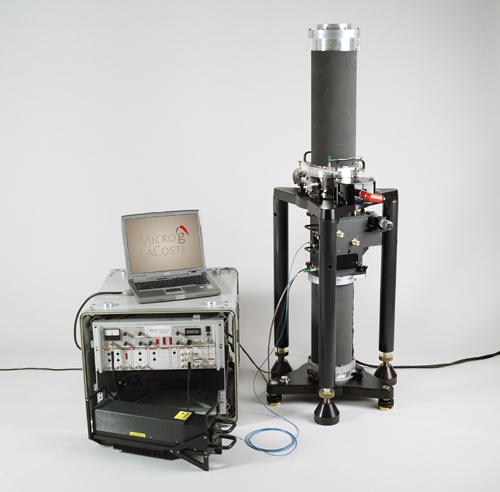
| Micro-g LaCoste: FG‑5 absolute gravimeter, (diagram), used in national laboratories to measure gravity to 2 μGal accuracy |
- NIST Improves Accuracy of 'Watt Balance' Method for Defining the Kilogram
- The UK's National Physical Laboratory (NPL): Are any problems caused by having the kilogram defined in terms of a physical artefact? (FAQ – Mass & Density)
- NPL: NPL Kibble balance
- Metrology in France: Watt balance Archived March 19, 2014, at the Wayback Machine
- Australian National Measurement Institute: Redefining the kilogram through the Avogadro constant
- International Bureau of Weights and Measures (BIPM): Home page
- NZZ Folio: What a kilogram really weighs
- NPL: What are the differences between mass, weight, force and load?
- BBC: Getting the measure of a kilogram
- NPR: This Kilogram Has A Weight-Loss Problem, an interview with National Institute of Standards and Technology physicist Richard Steiner
- Avogadro and molar Planck constants for the redefinition of the kilogram
- Realization of the awaited definition of the kilogram
- Sample, Ian (9 November 2018). "In the balance: scientists vote on first change to kilogram in a century". The Guardian. Retrieved 9 November 2018.
Videos
[edit]- The BIPM – YouTube channel
- "The role of the Planck constant in physics" – presentation at 26th CGPM meeting at Versailles, France, November 2018 when voting on superseding the IPK took place on YouTube

| International | |
|---|---|
| National | |
| Other | |



Kilogram
View on GrokipediaHistory and Evolution of the Definition
Early Concepts and Prototype Development
During the French Revolution, efforts to standardize measurements culminated in the development of the metric system, with the kilogram originating as a key unit of mass. In 1790, the French National Assembly tasked the French Academy of Sciences with creating an invariable system of weights and measures, leading to the formation of the Commission des Poids et Mesures.[6] Prominent chemist Antoine Lavoisier served on this commission, contributing to the foundational concepts for mass units by advocating for definitions tied to natural phenomena.[7] The commission's work aimed to replace the disparate regional standards that hindered trade and science, proposing a decimal-based system rooted in universal properties.[8] In 1795, the French Academy of Sciences formalized the initial definition of the kilogram—originally termed the "grave"—as the mass of one cubic decimeter (1 liter) of pure water at its temperature of maximum density, approximately 4°C.[8] This water-based standard was intended to provide a reproducible reference grounded in a common substance, with the provisional kilogram established in 1799 as a practical embodiment of this mass.[6] The name was later adjusted to "kilogram" to denote a thousand grams, aligning with the decimal progression of the metric system.[8] However, the water-based definition proved challenging due to variations in water's density influenced by temperature fluctuations and impurities in even distilled samples, making precise replication difficult without controlled conditions.[9] These issues, including the impracticality of maintaining exact environmental parameters for commercial and scientific use, prompted a shift toward a stable physical prototype.[6] In 1799, the Kilogramme des Archives—a cylindrical artifact crafted from platinum and intended to match the mass of one cubic decimeter of water at maximum density—was deposited in the French National Archives as the first official standard.[8] This prototype provided a more durable reference, though it marked a transition from intrinsic to artifact-based measurement.[6]Artifact-Based Standards and the IPK
In 1889, at the first General Conference on Weights and Measures (CGPM), the kilogram was officially defined as the mass of the International Prototype of the Kilogram (IPK), a physical artifact sanctioned as the global standard of mass. This marked the transition from earlier water-based prototypes to an international artifact-based system, with the IPK serving as the definitive reference until its replacement in 2019. The IPK, crafted by the Johnson Matthey company in London, was selected from several candidates after rigorous testing for stability and purity.[2] The IPK is a cylindrical artifact measuring approximately 39 mm in both diameter and height, constructed from a 90% platinum–10% iridium alloy to enhance durability and resistance to corrosion. It is housed in a triple-locked vault at the International Bureau of Weights and Measures (BIPM) in Sèvres, France, under controlled atmospheric conditions—maintained at a temperature of 18–23 °C and 40–60% relative humidity—to limit exposure to air and potential contaminants. Access requires approval from the International Committee for Weights and Measures (CIPM) and is restricted to periodic calibrations.[10] To disseminate the kilogram standard globally, 40 national prototypes, identical in material and design to the IPK, were produced and calibrated against it at the BIPM in 1889 before distribution to member states and the BIPM itself. These served as primary references for national metrology institutes, with secondary working standards calibrated against them locally. Every 40 years or so, the BIPM conducted periodic verifications, during which national prototypes were compared to the IPK and its official copies using precision mass comparators; notable verifications occurred in 1946 and from 1989 to 1991. These comparisons revealed gradual divergences, with a median mass difference of about 25 micrograms between the IPK and national prototypes by the late 1980s.[2] Despite its design for permanence, the IPK demonstrated instability over time, with an estimated mass loss of around 50 micrograms relative to its official copies since 1889. This drift, observed through long-term comparisons, is attributed primarily to surface contamination, including adsorption of atmospheric hydrocarbons and mercury vapors, as well as potential self-contamination from volatile impurities within the alloy. Short-term fluctuations of up to 30 micrograms could occur monthly due to handling or environmental exposure, while longer-term changes averaged 1 microgram per decade between major verifications.[11] Calibration against the IPK required a standardized cleaning protocol to ensure consistent mass readings, as surface films could alter apparent mass by tens of micrograms. The BIPM procedure, established in the early 20th century and refined over time, involves initial immersion in organic solvents like ether and chloroform to dissolve organic residues, followed by steam washing with deionized water at 100 °C to remove inorganic contaminants, and final drying in a controlled environment. This "cleaning and washing" process, taking about 50 minutes, was performed immediately before measurements, with reproducibility verified to within 2–5 micrograms across operations. National prototypes underwent similar protocols during verifications.[12][11] Early indications of instability emerged in the 1920s through informal comparisons at national laboratories, but systematic evidence surfaced during the 1946 verification, which showed drifts of up to 50 micrograms in some prototypes since 1889. By the 1960s, recalibrations prompted adjustments to national standards; for instance, the U.S. national prototype K20 was found to have lost about 100 micrograms relative to its 1939 calibration, leading to updated correction values for dissemination of the unit. These events highlighted the challenges of artifact-based standards, influencing ongoing refinements in storage and handling practices at the BIPM.[13]Transition to Fundamental Constants
Throughout the 20th century, metrologists recognized the instability of the artifact-based kilogram definition, as periodic verifications revealed gradual mass changes in the International Prototype of the Kilogram (IPK) and national prototypes, with a median divergence of approximately 25 micrograms observed during the 1989–1991 comparisons.[2] This drift, amounting to about 50 micrograms since 1889, underscored the limitations of relying on a physical object susceptible to environmental factors like contamination and surface oxidation, prompting proposals for invariant definitions based on fundamental physical constants to ensure long-term stability and universality.[2] A key advancement came in the 1970s with the development of the Kibble balance, originally known as the watt balance, invented by Bryan Kibble at the UK's National Physical Laboratory (NPL).[14] Conceptualized in 1975, the device equates the weight of a mass to an electromagnetic force generated by a current-carrying coil in a magnetic field, allowing precise measurement of mass in terms of electrical quantities such as voltage and resistance, which are traceable to the Planck constant .[14] This innovation provided an experimental pathway to link the kilogram directly to quantum electrical standards, reducing dependence on mechanical artifacts and enabling measurements with uncertainties below 10 parts per billion.[14] Parallel efforts focused on the atom-counting approach through the International Avogadro Project, coordinated by institutions like Germany's Physikalisch-Technische Bundesanstalt (PTB), which aimed to define the kilogram using highly pure, nearly perfect silicon-28 spheres.[15] By measuring the spheres' volume via interferometry and their lattice spacing with X-ray crystallography, researchers determined the number of silicon atoms, thereby linking mass to the Avogadro constant and, indirectly, to through the molar mass constant.[15] This method, pursued since the early 2000s, achieved uncertainties comparable to the Kibble balance, around 2 parts per 10^8, and complemented electrical approaches by providing an independent verification route.[15] International collaboration, facilitated by the International Committee for Weights and Measures (CIPM) and the Consultative Committee for Mass and Related Quantities (CCM), drove progress, with the Committee on Data for Science and Technology (CODATA) playing a crucial role in adjusting values of fundamental constants through least-squares analyses of global measurements.[16] CODATA's 2017 special adjustment refined to J s with a relative uncertainty of 1.5 \times 10^{-9}, ensuring consistency across experiments and paving the way for the redefinition.[16] The 24th General Conference on Weights and Measures (CGPM) in 2011 adopted Resolution 1, endorsing the revision of the SI by fixing numerical values for , the elementary charge , the Boltzmann constant , and , contingent on achieving requisite measurement precision.[17] This diplomatic milestone built on decades of research, inviting further international efforts to meet the criteria outlined in the 2007 CGPM Resolution 12. Culminating at the 26th CGPM in 2018, Resolution 1 formally redefined the SI, with the kilogram specified as: "The kilogram, symbol kg, is the SI unit of mass. It is defined by taking the fixed numerical value of the Planck constant to be 6.626 070 15 × 10^{-34} when expressed in the unit J s, which is equal to kg m² s^{-2}, where the metre and the second are defined in terms of c and Δν_{Cs}."[18] The redefinition took effect on 20 May 2019 (World Metrology Day), marking the complete transition of all SI base units to fundamental constants through unanimous global consensus.[18]Current Definition and Realization
Definition via Planck's Constant
The kilogram, symbol kg, is the SI unit of mass. It is defined by taking the fixed numerical value of the Planck constant to be exactly when expressed in the unit J s, which is equal to kg m² s⁻¹, where the metre and the second are defined in terms of the speed of light and the cesium hyperfine transition frequency .[19] This definition, adopted at the 26th General Conference on Weights and Measures in 2018 and effective from 20 May 2019, anchors the kilogram directly to a fundamental physical constant rather than a physical artifact.[19] By fixing the value of , the definition links the kilogram to universal constants that are invariant across time and space, ensuring the unit's reproducibility without reliance on material standards that could degrade or vary.[19] Planck's constant, discovered by Max Planck in 1900 through his analysis of blackbody radiation, serves as a cornerstone of quantum mechanics by quantifying the discrete nature of energy, as expressed in the relation between a photon's energy and its frequency .[20] This theoretical foundation ties mass to quantum phenomena, where the energy equivalent of mass via Einstein's allows derivation of a relation such as , with as the wavelength (), connecting mass to frequency and length in the SI framework through force and acceleration relations.[9] This approach extends to the broader SI system, where the kilogram joins the other six base units—all now defined via exact values of the seven defining constants: the speed of light , the hyperfine transition frequency , the Planck constant , the elementary charge , the Boltzmann constant , the Avogadro constant , and the luminous efficacy —creating an interdependent structure that enhances precision and universality across metrology.[19]Methods for Practical Realization
Since the 2019 redefinition of the SI units, the kilogram is realized in laboratories through primary methods that link mass directly to the fixed value of Planck's constant, enabling precise experimental determinations without reference to physical artifacts. The two principal techniques are the Kibble balance and the X-ray crystal density (XRCD) method, also known as the Avogadro approach, both of which achieve relative standard uncertainties on the order of a few parts in . These methods allow national metrology institutes (NMIs) such as the National Institute of Standards and Technology (NIST) in the United States and the National Physical Laboratory (NPL) in the United Kingdom to generate kilogram standards traceable to fundamental constants.[21][22] The Kibble balance operates on the principle of equating the gravitational force on a test mass to an electromagnetic force generated by a current-carrying coil in a magnetic field, combined with a velocity mode to calibrate the system. In the weighing mode, the equation is , where is the test mass, is the local acceleration due to gravity, is the current, is the magnetic flux density, and is the effective length of the coil in the field. In the moving (velocity) mode, the induced voltage satisfies , where is the voltage and is the coil velocity. Combining these yields the mass realization equation: The current and voltage are measured using the Josephson effect (voltage standard ) and quantum Hall effect (resistance standard ), directly tying the measurement to Planck's constant . This method has demonstrated relative uncertainties below 50 parts per billion (ppb) in operational systems, with ongoing refinements targeting sub-10 ppb precision.[21][14][23] The Avogadro method realizes the kilogram by determining the mass of a near-perfect sphere of isotopically pure Si, where the number of atoms is calculated from the sphere's volume and the lattice parameter of the crystal: for the face-centered cubic structure of silicon. The mass of the sphere is then , where is the atomic mass of Si, given by with the molar mass (approximately 0.027977 kg/mol) and the atomic mass constant ( kg, with fixed at mol). The volume and lattice parameter are measured using interferometry and X-ray diffraction, achieving relative uncertainties around 20 ppb in practice, comparable to the Kibble balance.[21][23] International key comparisons, such as CCM.M-K8 coordinated by the International Bureau of Weights and Measures (BIPM), have verified the equivalence of realizations from both methods. The CCM.M-K8.2024 comparison, completed in 2024, showed deviations typically below a few ppb, with a key comparison reference value uncertainty of approximately 7.4 ppb, confirming consistency at the sub-10 ppb level or better for select implementations. As of 2025, NMIs disseminate the kilogram using a consensus value derived from multiple realizations, with an uncertainty of about 20 µg and ongoing adjustments (e.g., a potential -5 µg shift by late 2025). NMIs like NIST, NPL, Physikalisch-Technische Bundesanstalt (PTB) in Germany, and National Metrology Institute of Japan (NMIJ) employ these techniques to calibrate working standards, disseminating the kilogram through mass comparisons and ensuring global traceability via periodic verifications.[23][24] Future enhancements focus on cryogenic Kibble balances, which operate at low temperatures to minimize thermal noise and mechanical losses in the coil and magnetic system, potentially reducing uncertainties to below 1 ppb and enabling more compact, routine realizations of the kilogram.[21]Name, Symbol, and Terminology
Etymology and Historical Naming
The term "kilogram" originates from the Greek "khilioi," meaning "thousand," prefixed to the French "gramme," a unit denoting a small mass derived from the Late Latin "gramma" and Greek "gramma." This nomenclature was formally introduced in 1795 by the French Academy of Sciences during the establishment of the metric system in the wake of the French Revolution.[25][26] The kilogram was initially defined as the mass of one liter (or one cubic decimeter) of pure water at the temperature of melting ice (0 °C), while the gram—its foundational subunit—was set as the mass of one cubic centimeter of the same water. Thus, the kilogram equaled exactly 1,000 grams, providing a decimal progression suited to scientific and commercial needs. This relation underscored the metric system's emphasis on coherence, with the kilogram serving as the practical base unit for mass rather than the smaller gram.[27] In French, the original spelling was "kilogramme," featuring a double "m" to align with words like "gramme," but English adopted "kilogram" as early as 1797, shortening it for consistency with linguistic conventions; by the 19th century, this single-"m" form had become the international standard in scientific literature.[25][28] The term gained global traction through the 1875 Metre Convention, a treaty signed by 17 nations in Paris that not only endorsed the kilogram prototype but also harmonized its nomenclature across borders, establishing it as the universal unit of mass under the emerging International System of Units.[29] In other languages, adaptations reflect local phonetics, such as "kilogramo" in Spanish, while the kilogram's adoption marked a shift from pre-metric terms like the French "millier" (thousandweight), a traditional measure for bulk goods, to a unified decimal framework.[30][31]Symbols, Abbreviations, and Usage Conventions
The official symbol for the kilogram in the International System of Units (SI) is "kg", consisting of a lowercase "k" for the prefix kilo- followed immediately by a lowercase "g" for gram, with no space between them.[1] This symbol is printed in upright Roman type and is never pluralized, such that quantities are expressed as, for example, 2 kg rather than 2 kgs.[1] Abbreviations such as "kgs" or capitalized forms like "Kg" are prohibited, as are historical notations involving a subscript on the "k", such as ₖg, which have been avoided in modern usage to maintain consistency.[1] According to conventions established by the International Bureau of Weights and Measures (BIPM) and detailed in ISO 80000-1, a space must separate the numerical value from the unit symbol, as in 5 kg, rather than 5kg; no period follows the symbol unless it ends a sentence.[1] Capitalization of the symbol is restricted to the start of a sentence or in titles, where "Kg" may appear, but lowercase "kg" is standard otherwise.[1] These rules ensure clarity in scientific writing and prevent ambiguity with other symbols. The symbol "kg" must be distinguished from similar non-SI notations, such as "kn" for the knot (a unit of speed equal to one nautical mile per hour, accepted for use with the SI in maritime and aviation contexts) and "kgf" for kilogram-force (a non-SI unit of force equivalent to the weight of one kilogram under standard gravity, approximately 9.80665 N, still used in some engineering fields but not part of the SI base units).[1][32] In compound units, "kg" is treated as a single entity, with multiplication indicated by a space or middle dot, as in N m for newton metre, avoiding direct juxtaposition.[1] Internationally, these conventions are widely adopted, including in non-metric countries like the United States, where the kilogram and its symbol "kg" are legally recognized for trade, scientific, and medical applications under federal law, despite the prevalence of customary units in everyday consumer contexts.[33] In the US, adherence to SI symbol rules is mandatory for federal agencies and international commerce to facilitate global standardization.[34]Integration in the SI System
Relation to Other Base Units
The International System of Units (SI) comprises seven base units, each representing a fundamental physical quantity: the kilogram (kg) for mass, the metre (m) for length, the second (s) for time, the ampere (A) for electric current, the kelvin (K) for thermodynamic temperature, the mole (mol) for amount of substance, and the candela (cd) for luminous intensity.[1] These units form the foundation for all SI measurements, with derived units constructed as products or quotients of powers of these base units.[1] Prior to the 2019 revision of the SI, the kilogram was defined independently as the mass of the international prototype kilogram, a platinum-iridium artifact maintained at the International Bureau of Weights and Measures (BIPM), while the other base units were already linked to fundamental physical constants.[1] Following the 2019 redefinition, the kilogram is now defined by fixing the numerical value of the Planck constant J s, where the joule is expressed as kg m² s⁻², thereby interconnecting mass directly with length (via the metre, defined through the speed of light ) and time (via the second, defined through the caesium hyperfine transition frequency).[1] This shift links the kilogram to the ampere (via the elementary charge ), kelvin (via the Boltzmann constant , which incorporates mass, length, and time), mole (via the Avogadro constant , relating to molar mass), and indirectly to the candela (via luminous efficacy, which involves energy units with mass).[1] The post-2019 framework establishes full interdependence among the base units, as all are now derived from a set of seven fixed defining constants, eliminating previous hierarchies where the kilogram served as an independent reference.[1] This structure ensures universal consistency, allowing any SI unit to be expressed through products or quotients of these constants, and permits the redefinition of individual units without disrupting the system as a whole, provided the defining constants remain fixed.[1] For instance, derived units involving mass highlight these connections: the newton (N) for force is given by , linking mass to length and time; the joule (J) for energy by ; and the pascal (Pa) for pressure by .[1]Prefixes and Derived Units
The kilogram, as the SI base unit of mass, forms multiples and submultiples using standard SI prefixes, though with specific conventions to avoid cumbersome names like "millikilogram." Submultiples smaller than the kilogram are typically expressed using the gram (1 g = 10^{-3} kg) combined with prefixes, such as the milligram (mg = 10^{-3} g = 10^{-6} kg) for pharmaceutical dosages or the microgram (µg = 10^{-6} g = 10^{-9} kg) in trace analysis.[1] Larger multiples avoid the prefix "kilo-" directly on kilogram; instead, the tonne (t = 10^3 kg) is the accepted non-SI unit for 1000 kilograms, commonly used in commerce and engineering, while the megagram (Mg = 10^6 g = 10^3 kg) serves for even larger scales like bulk materials.[1] The following table lists common SI prefixes applied to the gram for mass units, illustrating their factors relative to the kilogram:| Prefix | Symbol | Factor (relative to 1 g) | Equivalent in kg |
|---|---|---|---|
| micro- | µ | 10^{-6} | 10^{-9} kg |
| nano- | n | 10^{-9} | 10^{-12} kg |
| milli- | m | 10^{-3} | 10^{-6} kg |
| kilo- | k | 10^3 | 1 kg |
| mega- | M | 10^6 | 10^3 kg |