Hubbry Logo
Kosher wineKosher wineMain
Open search
Kosher wine
Community hub
Kosher wine
logo
8 pages, 0 posts
0 subscribers
Be the first to start a discussion here.
Kosher wine
Kosher wine
from Wikipedia
Kosher wine
יין כשר
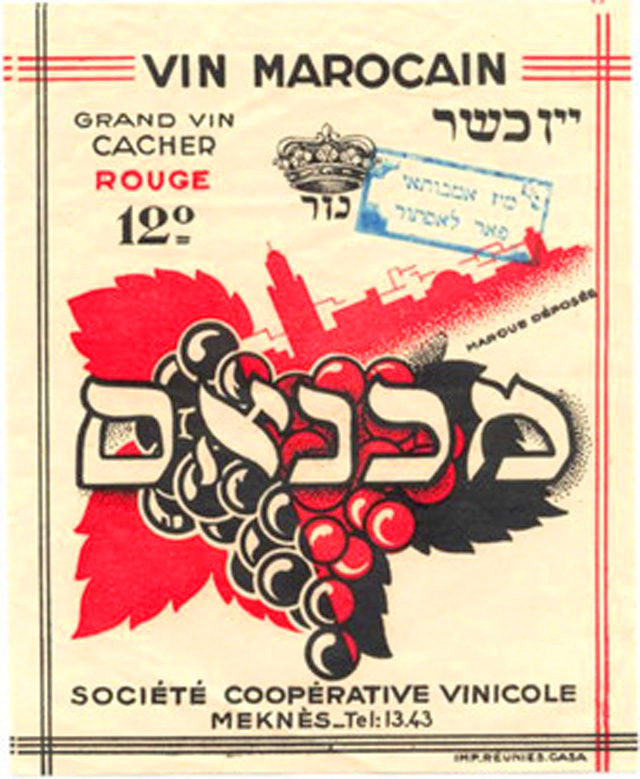
Kosher wine label from 1930
Halakhic texts relating to this article
Torah:Deuteronomy 32:38
Mishnah:Avodah Zarah 29b
Babylonian Talmud:Avodah Zarah 30a

Kosher wine (Hebrew: יין כשר, romanizedyáyin kashér) is wine that is produced in accordance with halakha, and more specifically kashrut, such that Jews will be permitted to pronounce blessings over and drink it. This is an important issue, since wine is used in several Jewish ceremonies, especially those of Kiddush.

To be considered kosher, Sabbath-observant Jews must supervise the entire winemaking process and handle much of it in person, from the time the grapes are loaded into the crusher until the finished wine product is bottled and sealed. Additionally, any ingredients used, including finings, must be kosher.[1] Wine that is described as "kosher for Passover" must have been kept free from contact with leavened or fermented grain products, a category that includes many industrial additives and agents.[2]

When kosher wine is produced, marketed, and sold commercially, it would normally have a hechsher (kosher certification mark) issued by a kosher certification agency, or by an authoritative rabbi who is respected and known to be learned in Jewish law, or by the Kashruth Committee working under a beth din (rabbinical court of Judaism).

In recent times, there has been an increased demand for kosher wines, and a number of wine-producing countries now produce a wide variety of sophisticated kosher wines under strict rabbinical supervision, particularly in Israel, the United States, France, Germany, Italy, South Africa, Chile,[3] and Australia. Two of the world's largest producers and importers of kosher wines—Kedem and Manischewitz—are both based in the American Northeast.

History

[edit]
Ancient Israelite wine press at Migdal HaEmek.

The use of wine has a long history in Judaism, dating back to biblical times. Archeological evidence shows that wine was produced throughout ancient Israel. The traditional and religious use of wine continued within the Jewish diaspora community. In the United States, kosher wines came to be associated with sweet Concord wines produced by wineries founded by Jewish immigrants to New York.

Beginning in the 1980s, a trend towards producing dry, premium-quality kosher wines began with the revival of the Israeli wine industry. Today kosher wine is produced not only in Israel but throughout the world, including premium wine areas like Napa Valley and the Saint-Émilion region of Bordeaux.[2]

Role of wine in Jewish holidays and rituals

[edit]

It has been one of history's cruel ironies that the blood libel---accusations against Jews using the blood of murdered non-Jewish children for the making of wine and matzot---became the false pretext for numerous pogroms. And due to the danger, those who live in a place where blood libels occur are halachically exempted from using [kosher] red wine, lest it be seized as "evidence" against them.[4]

Almost all Jewish holidays, especially the Passover Seder where all present drink four cups of wine, on Purim for the festive meal, and on the Shabbat require obligatory blessings (Kiddush) over filled cups of kosher wine that are then drunk. Grape juice is also suitable on these occasions. If no wine or grape juice is present on Shabbat, the blessing over challah suffices for kiddush on Friday night; for Kiddush on Shabbat morning as well as Havdalah, if there is no wine one would use "Chamar ha-medinah", literally the "drink of the country".

Rabbi in a kosher wine shop in New York City, circa 1942

At Jewish marriages, circumcisions, and at redemptions of first-born ceremonies, the obligatory blessing of Borei Pri HaGafen ("Blessed are you O Lord, Who created the fruit of the vine") is almost always recited over kosher wine (or grape juice).

According to the teachings of the Midrash, the forbidden fruit that Eve ate and which she gave to Adam was the grape from which wine is derived, though others contest this and say that it was in fact a fig.[5][6] The capacity of wine to cause drunkenness with its consequent loosening of inhibitions is described by the ancient rabbis in Hebrew as nichnas yayin, yatza sod ("wine enters, [and one's personal] secret[s] exit"), similar to the Latin "in vino veritas". Another similarly evocative expression relating to wine is: Ein Simcha Ela BeBasar Veyayin—"There is no joy except through meat and wine".)

Requirements for being kosher

[edit]

Because of wine's special role in many non-Jewish religions, the kashrut laws specify that wine cannot be considered kosher if it might have been used for idolatry. These laws include prohibitions on Yayin Nesekh (יין נסך – "poured wine"), wine that has been poured to an idol, and Stam Yeynam (סתם יֵינָם), wine that has been touched by someone who believes in idolatry or produced by non-Jews. When kosher wine is yayin mevushal (יין מבושל – "cooked" or "boiled"), it becomes unfit for idolatrous use and will keep the status of kosher wine even if subsequently touched by an idolater.[7]

While none of the ingredients that make up wine (alcohol, sugars, acidity and phenols) is considered non-kosher, the kashrut laws involving wine are concerned more with who handles the wine and what they use to make it.[2] For wine to be considered kosher, only Sabbath-observant Jews may handle it, from the first time in the process when a liquid portion is separated from solid waste, until the wine is pasteurized or bottles are sealed or even sold from kosher supermarkets.[8][9] Wine that is described as "kosher for Passover" must have been kept free from contact with chametz and kitnios. This would include grain, bread, and dough as well as legumes and corn derivatives.[2]

Mevushal wines

[edit]

When kosher wine is mevushal (Hebrew: "cooked" or "boiled"), it thereby becomes unfit for idolatrous use and will keep the status of kosher wine even if subsequently touched by an idolater. It is not known whence the ancient Jewish authorities derived this claim; there are no records concerning "boiled wine" and its fitness for use in the cults of any of the religions of the peoples surrounding ancient Israel. Indeed, in Orthodox Christianity, it is common to add boiling water to the sacramental wine. Another opinion holds that mevushal wine was not included in the rabbinic edict against drinking wine touched by an idolater simply because such wine was uncommon in those times.

Mevushal wine is frequently used in kosher restaurants and by kosher caterers so as to allow the wine to be handled by non-Jewish or non-observant waiters.

The process of fully boiling a wine kills off most of the fine mold on the grapes, and greatly alters the tannins and flavors of the wine. Therefore, great care is taken to satisfy the legal requirements while exposing the wine to as little heat as necessary. There is significant disagreement between halachic deciders as to the precise temperature a wine must reach to be considered mevushal, ranging from 74 to 90 °C (165 to 194 °F). (At this temperature, the wine is not at a rolling boil, but it is cooking, in the sense that it will evaporate much more quickly than usual.) Cooking at the minimum required temperature reduces some of the damage done to the wine, but still has a substantial effect[further explanation needed] on quality and aging potential.[2]

A process called flash pasteurization rapidly heats the wine to the desired temperature and immediately chills it back to room temperature. This process is said to have a minimal effect on flavor, at least to the casual wine drinker.

Irrespective of the method, the pasteurization process must be overseen by mashgichim to ensure the kosher status of the wine. Generally, they will attend the winery to physically tip the fruit into the crush, and operate the pasteurization equipment. Once the wine emerges from the process, it can be handled and aged in the normal fashion.

According to Conservative Judaism

[edit]

In the 1960s, the Committee on Jewish Law and Standards approved a responsum ("legal ruling") by Rabbi Israel Silverman on this subject. Silverman noted that some classical Jewish authorities believed that Christians are not considered idolaters, and that their products cannot be considered forbidden in this regard. He also noted that most winemaking in the United States is fully automated. Based on 15th–19th century precedents in the responsa literature, he concluded that wines manufactured by this automated process may not be classified as wine "manufactured by gentiles", and thus are not prohibited by Jewish law. This responsum makes no attempt to change halakhah in any way, but rather argues that most American wine, made in an automated fashion, is already kosher by traditional halakhic standards. Some criticism was later made against this teshuvah, because (a) some wines are not made by automated processes but rather, at least in some steps, by hand, and (b) on rare occasions non-kosher fining ingredients are used in wine preparation. Silverman later retracted his position.

A later responsum on this subject was written by Rabbi Elliot N. Dorff and also accepted by the CJLS.[10] Dorff noted that not all wines are made by automated processes, and thus the reasoning behind Silverman's responsum was not conclusively reliable in all cases. On the other hand, Dorff points out that even if we can avoid the issue of "wine handled by a gentile", there is a separate prohibition against wine produced from wineries owned by a gentile, in which case automation is irrelevant, and all non-certified wines are prohibited. Therefore, he explored the possibility to change the halacha, arguing that the prohibition no longer applies. He cites rabbinic thought on Jewish views of Christians, also finding that most poskim refused to consign Christians to the status of idolater. Dorff then critiqued the traditional halakhic argument that avoiding such wine would prevent intermarriage. Dorff asserted, however, that those who were strict about the laws of kashrut were not likely to intermarry, and those that did not follow the laws would not care if a wine has a heksher or not. He also noted that a number of non-kosher ingredients may be used in the manufacturing process, including animal blood.

Dorff concluded a number of points including that there is no reason to believe that the production of such wines is conducted as part of pagan (or indeed, any) religious practice. Most wines have no non-kosher ingredients whatsoever. Some wines use a non-kosher ingredient as part of a fining process, but not as an ingredient in the wine as such. Dorff noted that material from this matter is not intended to infiltrate the wine product. The inclusion of any non-kosher ingredient within the wine occurs by accident, and in such minute quantities that the ingredient is nullified. All wines made in the US and Canada may be considered kosher, regardless of whether or not their production is subject to rabbinical supervision. Many foods once considered forbidden if produced by non-Jews (such as wheat and oil products) were eventually declared kosher. Based on the above points, Dorff's responsum extends this same ruling to wine and other grape-products.

However, this teshuvah also notes that this is a lenient view. Some Conservative rabbis disagree with it, e.g. Isaac Klein. As such Dorff's teshuvah states that synagogues should hold themselves to a stricter standard so that all in the Jewish community will view the synagogue's kitchen as fully kosher. As such, Conservative synagogues are encouraged to use only wines with a hekhsher, and preferably wines from Israel.

Regional kosher wine consumption

[edit]
Photo of Yarden wine bottle from Israel, 2007

United States

[edit]

Historically, kosher wine has been associated in the US with the Manischewitz brand, which produce a sweetened wine with a distinctive taste, made of Vitis labrusca rather than V. vinifera grapes. Due to the addition of high-fructose corn syrup, the normal bottlings of Manischewitz are, for Ashkenazi Jews, not kosher during Passover by the rule of kitniyot, and a special bottling is made available. This cultural preference for a distinct, unique variety of wine dates back to Jewish settlements in early US history.[11]

See also

[edit]

References

[edit]
[edit]
Revisions and contributorsEdit on WikipediaRead on Wikipedia
from Grokipedia
Kosher wine is grape wine produced and handled in strict accordance with Jewish dietary laws, known as , to ensure it is permissible for consumption by observant , particularly during religious rituals such as and . This requires that only kosher ingredients, such as grapes and approved fining agents like , are used throughout the process, avoiding non-kosher additives such as or . The primary concern stems from biblical prohibitions against yayin nesekh (wine used in idolatrous rituals) and stam yayin (wine handled by non-Jews without supervision), which could render the wine unfit for Jewish use. The production of kosher wine demands continuous oversight by Sabbath-observant from the crushing of grapes through , aging, and bottling to prevent any non-Jewish intervention that might disqualify it. Grapes must be harvested and processed promptly, with the juice (must) separated for under rabbinical supervision, often using kosher enzymes if artificial is involved. Certification bodies, such as STAR-K or OU (), inspect facilities and issue hechsher (kosher symbols) on labels to verify compliance. Kosher wine encompasses various styles, including dry reds and whites, sweet varieties like raisin wine (with at least 18% raisin concentrate), all derived from grape products as per halakhic definitions. A key distinction in kosher is between mevushal and non-mevushal wines. Mevushal wine undergoes flash-—heating the must to approximately 74–90°C (165–194°F)—to "cook" it, allowing non- to handle it afterward without compromising kosher status, which facilitates commercial distribution and use in settings like non-kosher restaurants. Non-mevushal wine, preferred for premium expressions to preserve flavor, requires exclusive handling by observant at every stage, including serving, making it more restrictive but often higher quality. This pasteurization process, while effective, can subtly alter taste, leading many top kosher producers to favor non-mevushal methods where possible. The history of kosher wine traces back over 3,000 years to ancient , where wine played a central role in Temple offerings and daily Jewish life, with archaeological evidence of production dating to biblical times. in the region, one of the earliest globally, was revived in the by philanthropist Edmond de Rothschild, who established vineyards and cellars in using European techniques. In the United States, kosher wine production emerged in the late 1800s with Jewish immigrants using hardy Concord grapes from the Northeast to create sweet, fortified styles, boosted by Prohibition-era exemptions for , effective from 1920. Iconic brands like , launched in the 1940s, popularized affordable sweet kosher wines, though they later diversified into drier options amid evolving tastes. As of 2025, kosher wine production spans over 4,000 labels worldwide, with hosting more than 300 wineries across six regions, producing high-quality varietals from international grapes like and . Major producers include (Israel's oldest, founded 1882) and the Royal Wine Corporation (holding the largest kosher portfolio globally), alongside operations in , New York, and . While historically associated with sweet, mass-market wines, modern kosher wines rival non-kosher counterparts in sophistication, earning acclaim at international competitions and reflecting a in quality-driven kosher .

Historical Development

Ancient and Biblical Origins

The earliest references to wine in Jewish tradition appear in the Torah, where it is depicted as both a divine gift and a potential source of moral caution. In Genesis 9:20-21, following the Flood, Noah is described as the first to plant a vineyard and produce wine, becoming intoxicated and lying uncovered in his tent, an event that underscores wine's dual role in human experience. Similarly, Numbers 15:5-10 prescribes wine as a mandatory libation in sacrificial offerings, specifying quantities such as a quarter of a hin for certain burnt offerings, integrating wine into ritual worship as a symbol of joy and gratitude to God. These passages establish wine's foundational place in biblical narratives, portraying it as integral to agriculture, celebration, and sacred practice among the ancient Israelites. Archaeological evidence confirms that in the region of ancient predates these biblical accounts, with installations dating back to around 3000 BCE during the and Early periods. Excavations in southern have uncovered simple winepresses consisting of treading floors and collection vats carved from rock, used for processing grapes into wine on a local scale. These facilities, found at sites like those in the and Judean hills, indicate that was a widespread agricultural activity in , supporting the biblical portrayal of the land as fertile for grape cultivation. Ancient Israelite winemaking techniques, inherited from Canaanite practices, involved cultivating grapevines on terraced hillsides suited to the , where grapes ripened during the late summer harvest. Workers harvested clusters by hand, then crushed them by foot-treading in shallow basins to extract , which fermented naturally before storage. For preservation, the wine was transferred to large clay jars, often amphorae with pointed bases for cooling when buried or pointed ends for stability, allowing long-term storage without spoilage. These methods, refined over generations, formed the basis for wine production in the kingdoms of and Judah, where became a key economic and cultural element. Early rabbinic interpretations of wine purity, codified in the and around the 2nd-5th centuries CE, built directly on biblical concerns by prohibiting wine associated with to prevent inadvertent participation in pagan rituals. The 2:1 declares that wine used for libations to idols is forbidden for Jewish consumption or benefit, even in small amounts, as it renders the entire mixture impure. This ruling, expanded in the ( 29b), extends the ban to gentile-handled wine due to the risk of idolatrous use, establishing foundational kosher standards that emphasized ritual separation and sanctity. These interpretations preserved the Torah's vision of wine as a pure offering while adapting it to post-biblical contexts.

Medieval and Early Modern Periods

During the Roman and Byzantine eras, Jewish communities faced significant restrictions on wine and consumption to prevent any association with , as non-Jewish handling of wine raised concerns about potential libations to pagan deities. These prohibitions, rooted in biblical concepts of purity, evolved in the to ensure that wine remained untainted by contact, limiting Jewish participation in broader Mediterranean while compelling communities to produce their own kosher varieties. In , rabbinic texts documented these adaptations, balancing economic involvement in wine culture with strict halakhic oversight to avoid yayin nesech (wine used for idolatrous purposes). In the medieval period, rabbinic authorities codified these restrictions more formally, with ' providing a comprehensive framework in the Laws of Forbidden Foods (chapters 11-13). explicitly prohibited benefiting from wine poured as a to idols or even touched by non-Jews after opening, extending the stam yeinam (gentile-handled wine) ban to safeguard against intermarriage and idolatrous misuse. These rulings influenced Jewish legal practice across and the , requiring observant to oversee every stage of to maintain kosher status. From the 12th to 18th centuries, kosher wine production thrived in regions such as , , and the , where Jewish communities established vineyards and traded under local tolerances. In medieval , Sephardic Jews played a pivotal role in , cultivating grapes and producing kosher wines that contributed to the peninsula's wine expansion until the 1492 expulsion during the dismantled these operations and scattered communities. Similar disruptions occurred in , where Jewish vintners in areas like and adapted production methods, such as sealing barrels for sea transport to preserve kosher integrity during trade. In the , non-Muslim continued winemaking under imperial policies that permitted such activities despite broader alcohol restrictions on , sustaining local supply for rituals and commerce.

19th-Century Revival and Contemporary Industry

The resurgence of kosher wine production in the was markedly influenced by Zionist movements and philanthropic initiatives, particularly in , where Baron Edmond de Rothschild invested millions of francs starting in the 1880s to establish vineyards and support Jewish agricultural settlements, reviving in the region after centuries of decline. This effort, often termed the modern wine revival in the area, involved planting European grape varieties and building wineries to foster economic self-sufficiency among Jewish communities. In the early , waves of Jewish immigration from to the significantly boosted demand for kosher wines, leading to the expansion of domestic production. The brand, originating from a company founded in 1888 by Rabbi for matzo production, entered the wine market in through a licensing agreement with the Monarch Wine Company, specializing in sweet wines made from Concord grapes sourced from New York and other East Coast regions. These affordable, sweet varieties became staples for immigrant communities, marking the beginning of large-scale kosher wine manufacturing in America. Following , the kosher wine industry underwent substantial growth, supported by the standardization of certification processes from agencies like the (OU), which began overseeing wines such as in 1934 and expanded its role in ensuring compliance amid rising consumer needs. This period saw increased production to meet the demands of a growing Jewish population in the U.S. and elsewhere. By the 1970s and 1980s, a pivotal shift occurred toward dry varietals, driven by innovations from Israeli wineries like Carmel, which pioneered higher-quality dry wines using international grapes, moving away from the dominance of sweet styles and elevating the industry's reputation. In the , kosher wine production has expanded globally, with a strong emphasis on premium offerings from regions including , , and , where annual outputs reach millions of cases collectively. The Orthodox Union's certification efforts have facilitated this worldwide proliferation, with kosher wines now produced across every continent in premier appellations.

Religious and Cultural Role

Use in Jewish Rituals and Holidays

Kosher wine plays a central role in Jewish rituals, serving as the preferred medium for sanctification due to its association with joy and celebration in Jewish tradition. In the ceremony, which sanctifies and , a is recited over a cup of kosher wine, with participants required to consume at least a revi'it—a Talmudic measure equivalent to approximately 3.8 fluid ounces (112 ml)—to fulfill the . This practice, derived from the (Pesachim 109a), ensures the ritual's dignity and communal participation. During the Passover Seder, the consumption of four cups of kosher wine is obligatory, corresponding to the four expressions of redemption in Exodus 6:6-7: "I will bring you out," "I will deliver you," "I will redeem you," and "I will take you." These cups are drunk at key points in the Seder to commemorate the Exodus from , with permitted as an alternative, particularly for children or those unable to consume alcohol. The ritual underscores the themes of freedom and divine promise through structured libation. The ceremony, marking the conclusion of , incorporates kosher wine alongside spices and a multi-wicked to distinguish between the sacred and the ordinary. The blessing over the wine is recited first, followed by those for the spices and flame, providing a sensory transition from the holiness of back to the workweek. In lifecycle events, kosher wine facilitates sanctification in the wedding (Kiddushin) under the , where blessings are recited over a from which the bride and groom sip, symbolizing their union and joy. Similarly, during the circumcision ritual on the eighth day after birth, blessings are pronounced over wine, and a few drops are traditionally placed in the infant's mouth by the to welcome the child into the covenant.

Symbolic and Theological Importance

In Jewish theology, wine serves as a profound of and divine , evoking the upliftment of the human spirit through sacred experiences. The Book of articulates this vividly: "And wine that maketh glad the heart of man" ( 104:15), portraying wine not merely as a beverage but as a gift from that enhances celebration and gratitude in life. This positive imagery underscores wine's role in fostering communal harmony and spiritual elevation within Jewish tradition. Theological perspectives on wine also incorporate contrasts between its redemptive potential and the perils of misuse, reflecting a nuanced approach to its spiritual significance. Prophetic literature envisions wine as emblematic of messianic abundance, as in Isaiah's depiction of a divine featuring "a feast of well-aged wine" on the holy mountain, symbolizing ultimate salvation and universal peace for all peoples ( 25:6). In counterpoint, cautions against excess, with Proverbs declaring, "Wine is a mocker, strong drink a brawler; and whosoever erreth thereby is not wise" (Proverbs 20:1), thereby promoting temperance as essential to ethical living. Within Kabbalistic traditions, particularly the Lurianic mysticism that flourished in during the , wine holds symbolic importance as a medium in rituals and spiritual practices. Lurianic teachings emphasize wine's role in mystical experiences, where it aids in elevating the . These theological dimensions permeate Jewish cultural expressions, including and art, where wine evokes the intimate joys of observance. In Sholem Aleichem's stories of Eastern European Jewish life, such as those featuring the Dairyman, the recitation of over wine during Friday night meals symbolizes familial resilience, spiritual refuge, and the enduring rhythm of tradition amid adversity. This motif in art and narrative often illustrates wine as a bridge between the divine and the everyday, mirroring its scriptural and mystical roles. Specific holiday rituals, like the , further manifest this symbolism by using wine to recount redemption and express gratitude.

Production and Certification Standards

Core Kosher Requirements

The fundamental halakhic requirements for kosher wine originate from biblical and ic prohibitions designed to prevent any association with . The bans yayin nesech, wine libated to idols, rendering such wine unfit for Jewish consumption or benefit. This prohibition extends rabbinically to stam yeinam, wine handled or touched by non-Jews, due to concerns over potential idolatrous use, as codified in the ( 29b). These rules necessitate strict controls on production to ensure the wine remains untainted by non-kosher influences. Grape sourcing must adhere to agricultural laws derived from the . Grapes for kosher wine come exclusively from vines that comply with the of orlah, barring the use of fruit from trees during their first three years of production, as stated in :23. This ensures the raw material aligns with kosher standards from the outset. For non-mevushal wine, continuous oversight by Sabbath-observant is mandatory from the crushing of grapes to bottling, to prevent any non-Jewish handling that could invalidate the wine under stam yeinam rules and to exclude non-kosher additives. All ingredients must be kosher-certified, prohibiting non-kosher fining agents such as , while requiring for additives like sulfites and yeasts to verify their purity and compliance. One optional adaptation to these baseline requirements is the mevushal process, which heats the wine to allow limited non-Jewish handling afterward without compromising kosher status.

Mevushal and Non-Mevushal Processes

Mevushal wine, derived from the Hebrew term meaning "cooked," refers to kosher wine that has been heated to a sufficient to render it unfit for idolatrous libations, thereby allowing it to be handled by non-Jews without becoming non-kosher under the prohibition of stam yeinam (wine touched by non-Jews). According to the (Yoreh De'ah 123:3), kosher wine that has been cooked remains permitted even if subsequently touched by non-Jews, as the heating process disqualifies it from ritual idolatrous use. In modern practice, this is achieved through , where the grape must is heated to temperatures commonly ranging from 79–88°C (175–190°F) immediately after crushing and before or during early stages, depending on rabbinic , ensuring the wine meets halachic standards while minimizing flavor alteration. The production of mevushal wine begins with the crushing and destemming of grapes under kosher , followed by rapid heating of the must to the required temperature for a brief period—typically seconds to minutes—to achieve bishul (cooking) without prolonged exposure that could significantly impact quality. This process, often conducted using heat exchangers, halts potential natural temporarily and prevents issues like hamshacha (juice separation by non-Jews, which could render the wine non-kosher). Once pasteurized, the wine can proceed to with kosher , and it permits broader involvement of non-Jewish workers in bottling, distribution, and even opening or pouring in certain settings, making it suitable for mass-market appeal and easier certification logistics. However, the can subtly affect the wine's aroma and texture, though advancements in have reduced this impact compared to traditional boiling methods. In contrast, non-mevushal wine undergoes no such heating and relies entirely on continuous supervision by observant (Shomrei Torah u'Mitzvot) from the grape crushing stage through bottling to avoid any non-Jewish contact that could invoke stam yeinam prohibitions. The process emphasizes natural , where skins and enzymes drive the transformation without , preserving the wine's , complexity, and varietal characteristics for premium expressions. This stringent oversight limits production scale and distribution—bottles must often feature double seals or be handled exclusively in kosher environments—but it is preferred for high-end kosher wines, as the absence of heat maintains optimal flavor profiles without the potential oxidative notes from . The choice between mevushal and non-mevushal processes balances kosher accessibility with quality: mevushal enables wider market reach and convenience in mixed settings, such as non-kosher restaurants or events with non-Jewish staff, while non-mevushal upholds superior taste integrity at the cost of restricted handling, appealing to connoisseurs seeking unadulterated expressions of grape and soil.

Variations by Jewish Denominations

In , kosher wine standards demand strict rabbinic supervision throughout production, ensuring that only Sabbath-observant handle the grapes from crushing onward to prevent any risk of association, as outlined in traditional halakhah. Most Orthodox kosher wines are produced as mevushal—flash-pasteurized at temperatures around 180–195°F—to allow handling by non- without compromising , a practical adaptation widely adopted for communal and commercial use. Certification agencies such as the (OU) and Star-K provide hechsher symbols verifying compliance, overseeing thousands of wines globally to maintain these rigorous protocols. Conservative Judaism takes a more flexible approach to kashrut for wine, permitting the use of uncertified wines in social or personal settings where non-kosher fining agents are considered nullified, while recommending certified kosher wines for rituals and communal events. Rabbinical Assembly responsa, such as those addressing fining agents in American wines, allow uncertified wines for personal consumption if no non-kosher residues are present, though certified kosher wines are recommended for rituals and events to uphold communal standards. Grape juice is more readily accepted as a kosher alternative for and holidays, aligning with leniencies in processing that prioritize accessibility without full requirements. Reform Judaism does not impose strict kashrut requirements on wine, emphasizing ethical considerations such as fair labor and environmental sustainability over traditional dietary laws, and permits the use of most commercial wines for personal and ritual purposes. Central Conference of American Rabbis (CCAR) discussions highlight concerns with Orthodox standards like exclusive Jewish handling, viewing them as potentially exclusionary, and instead promote wines that symbolize joy and community without mandatory certification. For holidays like , kosher wines are often chosen voluntarily to connect with tradition, but non-kosher options are not prohibited if they align with broader Jewish values. Sephardic and Ashkenazic communities exhibit slight nuances in kosher wine practices, particularly in the interpretation of mevushal heat thresholds, with rabbinic authorities across both traditions differing on the precise temperature required for "cooking," though both prioritize rabbinic oversight to ensure validity.

Global Production and Varieties

Key Producing Regions

stands as the preeminent hub for kosher wine production, with the and Judean Hills serving as primary regions due to their favorable climates and historical significance. The , at elevations up to 1,200 meters, benefits from a cool climate with significant diurnal temperature variations, ideal for cultivating varieties such as , while the Judean Hills offer a with soils that contribute to structured wines. Production has surged since the 1967 , when access to these areas expanded, leading to modern ; today, produces over 40 million bottles annually, nearly all kosher-certified. In the United States, and New York dominate kosher wine output, accounting for a substantial portion of global supply through innovative facilities and premium production. 's Central Coast, particularly around Oxnard, hosts Wine Cellars, established in the by the Herzog family with a nine-generation heritage originating in ; it is the largest fully kosher in the U.S., producing around 250,000 cases yearly using sustainable practices and local grapes for premium blends. New York State's Hudson Valley and regions contribute through wineries like Kedem, focusing on traditional and sparkling kosher varieties suited to the area's cooler climate. Overall, U.S. production emphasizes quality exports, supported by major players like Royal Wine Corp., the world's largest kosher wine and spirits producer based in . France and Italy maintain longstanding traditions in kosher wine, adapting renowned appellations for export while honoring historical Jewish involvement in . In , France, houses like Barton & Guestier, dating to 1725, produce kosher versions of classics such as Château Magnol, leveraging the region's gravelly soils and maritime climate for structured reds; Jewish winemakers have influenced since medieval times, with kosher production now certified for global markets. in features kosher adaptations from estates in , utilizing grapes in the hilly, sun-drenched terrain, with historical ties to Jewish communities that date back centuries and continue through modern certifications. These European regions prioritize mevushal processes to meet Orthodox standards, exporting significant volumes. Emerging regions in the , including , , and , are experiencing rapid growth in kosher wine production, driven by diverse climates and increasing demand. 's and offer warm conditions for robust Shiraz-based kosher wines, with producers expanding output through kosher certifications. 's and Coastal regions, with their Mediterranean-like climate, have seen notable advancements, as evidenced by high-scoring kosher releases from estates like ESSA Wine Co. in recent years. 's Mendoza area utilizes high-altitude vineyards for Malbec-focused kosher wines, benefiting from Andean influences. These areas reflect investments in kosher infrastructure.

Styles, Varieties, and Innovations

Kosher wines encompass a diverse array of varieties, primarily drawn from classic grapes adapted to kosher production standards. Red varieties such as , , and are prominent, often producing structured, age-worthy wines with notes of dark fruit and spice, as seen in Israeli expressions from the region. White varieties like and yield crisp, aromatic profiles, ranging from oaked Chardonnays to herbaceous Sauvignon Blancs, while rosés and sparkling wines add lighter options, with sparklers employing methods akin to Champagne's traditional bottle fermentation for kosher brut styles. Styles of kosher wine have evolved significantly, moving beyond traditional sweet profiles to include dry, off-dry, and fortified expressions. Early kosher wines, particularly , relied heavily on sweet Concord grape-based varieties for affordability and ritual use, but since the 1990s, producers have shifted toward drier varietals like Cabernet and , emphasizing terroir-driven quality over saccharine sweetness. Sweet styles persist in late-harvest Rieslings and wines, while fortified options, such as Port-inspired reds, have seen a resurgence with complex, balanced iterations from regions like New York and . Blending in kosher winemaking adheres to strict rules ensuring all processes maintain kosher integrity, with Sabbath-observant supervision from grape selection through assemblage to prevent non-kosher contact. Israeli Bordeaux-style blends exemplify this, typically combining , , and in proportions that highlight regional fruit while complying with certification protocols, as in the Bravdo series. Recent innovations in kosher wine production reflect broader industry trends while upholding religious standards. Organic certifications have gained traction, with vineyards employing sustainable practices like regenerative farming to produce pesticide-free kosher wines, as certified by bodies like the OU. Vegan kosher wines, inherently free of animal-derived fining agents due to rabbinical oversight, now dominate the market, aligning with ethical consumer demands. Low-alcohol options, around 10-12% ABV, have emerged to cater to health-conscious drinkers, often using techniques like arrested under . By 2025, kosher winemaking incorporates advanced technologies for resilience and precision. AI-optimized , using algorithms to monitor and adjust processes in real-time under rabbinical supervision, enhances consistency and quality in both Israeli and international kosher facilities.

Consumption and Market Dynamics

Patterns in Jewish Communities

Consumption patterns of kosher wine within Jewish communities are closely tied to religious observances, particularly holidays like , where demand surges significantly. Approximately 40% of all kosher wine sales occur in the months leading up to , reflecting a substantial annual spike driven by the ritual requirement of four cups per participant at the Seder. This holiday-driven consumption underscores how ritual uses, such as and festive meals, shape year-round habits among observant . Jewish demand accounts for the majority of kosher wine production, fueling a dedicated industry segment. Cultural preferences for kosher wine vary across Jewish ethnic traditions, influencing styles consumed in rituals and daily life. In Ashkenazi communities, particularly those of Eastern European descent, sweet red wines have historically dominated, often associated with accessible, fruit-forward profiles like varieties that evoke nostalgia and pair with traditional foods. In contrast, Sephardic traditions, rooted in Mediterranean and Middle Eastern influences, favor drier, more complex wines that align with savory cuisines and reflect a preference for balanced, less sweetened expressions. The early saw a notable rise in as an alternative in Jewish rituals, particularly among teetotalers during the era in the United States, when companies like began producing kosher-certified to meet demand for non-alcoholic options in observances. In the , Jewish communities adapted kosher wine practices to modern lifestyles, with bottling innovations in the enabling portability and year-round availability for travelers and remote households. Surveys indicate significant engagement with kosher products during holidays among Jewish individuals. Export dynamics further highlight these patterns, as a substantial portion of Israeli kosher wine production targets diaspora markets worldwide, supporting Jewish needs through established trade networks. In , domestic wine consumption, predominantly kosher due to the country's production standards, stands at approximately 6 liters annually as of recent estimates (around 2023). This figure reflects a notable increase from historical levels of around 3.9 liters, driven by a shift toward premium local varieties that emphasize quality and over imports. Consumers increasingly favor high-end Israeli wines from regions like the and , where demand often exceeds supply, underscoring a preference for domestically produced options that align with cultural and religious observance. Across , the kosher wine market has experienced steady expansion, particularly in the and , where production and availability have grown in response to diverse consumer bases including Jewish expatriates and broader interest in certified products. In the UK, events like the Kosher and Fine Wine Experience (KFWE) highlight robust engagement, with tastings featuring wines from , , and drawing significant attendance and signaling sustained demand. , a global wine powerhouse, has seen a surge in kosher , especially in and , where estates like Koenig produce up to 60,000 bottles annually of certified varieties, contributing to dedicated kosher sections in supermarkets catering to multicultural populations. Overall, kosher wine demand in has risen outside traditional niches, with recognition of its purity and quality appealing to non-religious buyers. Emerging markets in and are witnessing rising kosher wine consumption, often tied to expatriate Jewish communities and growing curiosity among non-Jewish consumers for ethically certified beverages. In , particularly and , kosher options are increasingly featured in luxury hospitality settings, reflecting broader market maturation and demand for premium imports amid the region's expanding wine sector. , including countries like and , receives substantial kosher wine exports, with brands like shipping hundreds of thousands of cases annually to meet local needs. Trends indicate heightened non-Jewish interest, as kosher certification is perceived as a marker of purity and ethical production, with studies showing such consumers often willing to pay premiums comparable to or higher than Jewish buyers. These regional trends build on established patterns within Jewish communities, where observance drives baseline demand, but face hurdles such as import tariffs and restricted availability in Muslim-majority countries across the . High duties on alcoholic beverages—reaching 200% in —elevate costs and limit market access, while outright prohibitions in nations like further constrain trade and distribution. Such barriers not only affect kosher wine specifically but also broader Middle Eastern commerce, prioritizing local or alternative sourcing over international imports.

United States Market Specifics

The represents the largest consumer market for kosher wine. This dominance is driven by a robust distribution network led by major brands such as Kedem and Carmel, which together command a significant share of the market through widespread availability in supermarkets, kosher specialty stores, and online platforms. The consumer base is diverse, including observant seeking certified products for religious observance and non-Jewish buyers attracted to kosher wine for its perceived health benefits, ethical production standards, and quality improvements in recent decades. Sales exhibit pronounced peaks during , particularly , when demand surges to around 1 million cases nationwide, representing roughly 40% of annual kosher wine volume. Regulatory oversight in the U.S. combines general food and beverage standards enforced by the (FDA), which ensures labeling accuracy and safety, with voluntary kosher certification via hechsher symbols from authoritative bodies like the (OU) or OK Kosher. This dual framework supports market integrity while allowing producers to meet niche demands. Complementing this, the craft kosher winery sector has expanded notably in regions like Napa Valley, where producers such as Hagafen Cellars and Hajdu Wines have leveraged premium grape varieties to produce high-end bottles, contributing to broader innovation in domestic production. Recent trends underscore a post-2020 surge, accelerated by the , which boosted sales through platforms like KosherWine.com and expanded accessibility for both domestic and imported varieties. The premium segment has grown by about 15% leading into 2025, fueled by interest in natural and sustainable kosher wines, reflecting evolving tastes toward sophisticated, terroir-driven options amid overall market maturation.

References

Add your contribution
Related Hubs
User Avatar
No comments yet.