Hubbry Logo
search
logo
2049823

Light beam

logo
Community Hub0 Subscribers
Read side by side
from Wikipedia
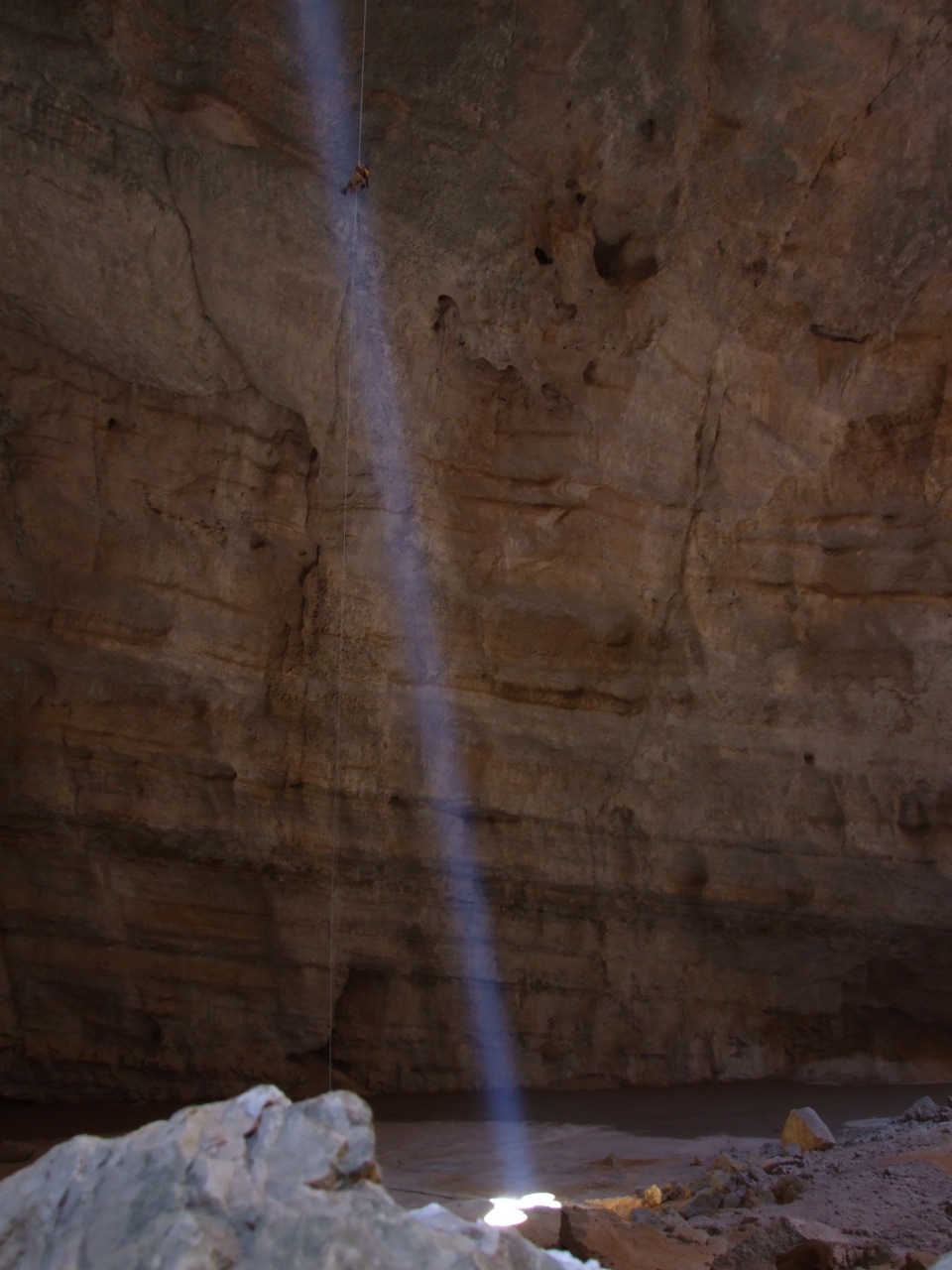
A natural lightbeam in the Majlis al-Jinn (lit.'Meeting place of the jinn') cave in Oman
Light beams were used to symbolize the missing towers of the World Trade Center as part of the Tribute in Light.

A light beam or beam of light is a directional projection of light energy radiating from a light source. Sunlight forms a light beam (a sunbeam) when filtered through media such as clouds, foliage, or windows. To artificially produce a light beam, a lamp and a parabolic reflector is used in many lighting devices such as spotlights, car headlights, PAR Cans, and LED housings. Light from certain types of laser has the smallest possible beam divergence.

Visible light beams

[edit]

From the side, a beam of light is only visible if part of the light is scattered by objects: tiny particles like dust, water droplets (mist, fog, rain), hail, snow, or smoke, or larger objects such as birds. If there are many objects in the light path, then it appears as a continuous beam, but if there are only a few objects, then the light is visible as a few individual bright points. In any case, this scattering of light from a beam, and the resultant visibility of a light beam from the side, is known as the Tyndall effect.

Visibility from the side as side effect

[edit]
  • Flashlight (UK 'Torch'), beam directed by hand
  • Headlight, forward beam; the lamp is mounted in a vehicle, or on the forehead of a person, e.g. built into a helmet
  • Lighthouse, beam sweeping around horizontally
  • Searchlight, beam directed at something

Visibility from the side as purpose

[edit]

For the purpose of visibility of light beams from the side, sometimes a haze machine or fog machine is used. The difference between the two is that the fog itself is also a visual effect.

Laser beams used for visual effects during a musical performance
Laser beams with different wavelengths (405nm - 660nm).
  • Laser lighting display- Laser beams are often used for visual effects, often in combination with music.
  • Searchlights are often used in advertising, for instance by automobile dealers; the beam of light is visible over a large area, and (at least in theory) interested persons can find the dealer or store by following the beam to its source. This also used to be done for movie premieres; the waving searchlight beams are still to be seen as a design element in the logo of the 20th Century Fox movie studio.

Other applications

[edit]

See also

[edit]

References

[edit]
[edit]
Revisions and contributorsEdit on WikipediaRead on Wikipedia
from Grokipedia
A light beam is light that propagates essentially in one direction while having a limited spatial extension in the directions perpendicular to the propagation.[1] This directional projection of light energy radiates from a source and forms the basis for numerous optical phenomena and technologies.[2] Light beams occur naturally, as in sunbeams where parallel rays of sunlight pass through gaps in clouds or foliage, creating visible shafts that appear to diverge due to perspective effects despite their actual parallelism.[3][4] Artificially, they are generated using collimators, such as parabolic mirrors focusing light from lamps, or more precisely through lasers, which produce highly directional and coherent beams with minimal divergence.[1] In optics, light beams are often modeled as solutions to the paraxial Helmholtz equation, which approximates wave propagation for small angles and characterizes their intensity distributions across the transverse plane.[5] Key properties of light beams include their beam waist (the narrowest point of cross-section), divergence (the angular spread over distance due to diffraction), and spatial profile, such as the Gaussian distribution common in high-quality laser beams.[1] Diffraction inherently limits beam collimation, causing the radius to increase with propagation distance, while coherence—particularly in laser beams—ensures phase-related waves for tight focusing.[1][6] Beams are typically invisible in clear air but become apparent when scattered by particles like dust or water droplets.[2] Classifications of light beams encompass Gaussian beams (with bell-shaped intensity), multimode beams (complex patterns from waveguides), and flat-topped beams used in applications requiring uniform illumination.[1][5] In laser contexts, beams exhibit monochromaticity (narrow wavelength range) and high directionality, distinguishing them from incoherent sources like incandescent bulbs.[7] Light beams underpin diverse applications, including optical imaging, fiber-optic communications, laser cutting, and remote sensing, where their controllability enables precise energy delivery over distances.[1][8] Advances in beam shaping continue to enhance their utility in fields like photonics and quantum optics.[5]

Fundamentals

Definition and Basic Properties

A light beam is a directional projection of light energy radiating from a source, propagating essentially in one direction while maintaining a limited spatial extension perpendicular to that direction.[1] It consists of photons, the fundamental quanta of electromagnetic radiation, traveling along a specific path.[9] Unlike diffuse light that spreads omnidirectionally, a beam's directionality allows it to concentrate energy over distance, often achieved through collimation to minimize divergence.[1] The basic properties of a light beam include its wavelength, which determines its color in the visible spectrum and ranges from approximately 400 to 700 nanometers for human perception, though beams can extend into ultraviolet (below 400 nm) and infrared (above 700 nm) regions.[10] Intensity distribution refers to the variation of light energy across the beam's cross-section, typically higher at the center and tapering outward.[1] This directionality fundamentally distinguishes beams from scattered or ambient light, enabling applications requiring focused illumination.[1] Early conceptualizations of light beams trace back to 17th-century optics, where Isaac Newton described light rays as streams of corpuscles—tiny particles—propagating in straight lines, laying groundwork for understanding directional light propagation.[11] Contemporaneously, Christiaan Huygens proposed a wave theory in which rays of light also travel linearly, influenced by secondary wavelets from each point on a wavefront, serving as precursors to modern beam ideas.[12] For visible light beams, luminous flux quantifies the total perceived power output in lumens (lm), accounting for human eye sensitivity.[13] Irradiance measures the power per unit area incident on a surface, expressed in watts per square meter (W/m²), providing a key metric for beam energy density.[14]

Beam Formation and Propagation

Light beams are formed through the emission of light from a source followed by optical manipulation to achieve a directed, parallel stream of rays. Point sources such as light-emitting diodes (LEDs) produce light via electroluminescence in semiconductor materials, where electrons recombine with holes to emit photons in a roughly isotropic manner.[15] Arc lamps, on the other hand, generate light through an electric discharge between electrodes, creating a high-temperature plasma that emits a broad spectrum via thermal radiation and atomic transitions.[16] To form a beam, this emitted light is collimated using lenses or apertures, which redirect diverging rays into a parallel bundle; for instance, placing a point source at the focal point of a converging lens produces a collimated output where rays are parallel.[17] Apertures play a critical role in defining beam boundaries by limiting the spatial extent of the light, suppressing unwanted diffraction edges and shaping the intensity profile.[18] In propagation, light beams follow straight-line paths in a vacuum or uniform medium according to Fermat's principle, which states that light travels the path of least time between two points, equivalent to the shortest optical path length in homogeneous media.[19] However, wave nature introduces diffraction, causing beams to spread transversely even in free space; this angular spreading arises from the interference of wavefronts at the beam's edges, with the minimum divergence limited by the aperture size or source dimension.[20] When entering a different medium, beams refract according to Snell's law, $ n_1 \sin \theta_1 = n_2 \sin \theta_2 $, where $ n $ is the refractive index and $ \theta $ the angle from the normal, bending the propagation direction due to the speed change in the medium.[21] Environmental interactions during propagation lead to beam attenuation through absorption and scattering. Absorption occurs when photons are captured by material particles, converting light energy into heat or chemical reactions, following Beer's law where intensity $ I(z) = I_0 e^{-\alpha z} $, with $ \alpha $ the absorption coefficient and $ z $ the distance.[22] Scattering redirects light in various directions: Rayleigh scattering dominates for particles much smaller than the wavelength ($ d \ll \lambda $), with cross-section proportional to $ 1/\lambda^4 ,explainingblueskyappearancefromatmosphericmolecules.[Miescattering](/page/Miescattering)appliestolargerparticles(, explaining blue sky appearance from atmospheric molecules. [Mie scattering](/page/Mie_scattering) applies to larger particles ( d \approx \lambda $), producing forward-directed scattering with less wavelength dependence, as seen in white clouds.[23] These processes collectively reduce beam intensity over distance, with total attenuation given by $ \beta = \alpha + \sigma_s $, where $ \sigma_s $ is the scattering coefficient.[24] A key quantitative aspect of beam propagation is divergence, particularly for Gaussian-profile beams, which approximate the diffraction-limited case and influence spreading behavior. The half-angle divergence $ \theta $ far from the waist is approximated as $ \theta \approx \frac{\lambda}{\pi w_0} $, where $ \lambda $ is the wavelength and $ w_0 $ the beam waist radius at its minimum. This formula derives from solving the paraxial wave equation for a Gaussian field $ E(r,z) = E_0 \frac{w_0}{w(z)} \exp\left( -\frac{r^2}{w(z)^2} \right) \exp\left( i(kz + \phi(z) - \frac{kr^2}{2R(z)}) \right) $, where the beam radius evolves as $ w(z) = w_0 \sqrt{1 + \left( \frac{z}{z_R} \right)^2 } $ and the Rayleigh range $ z_R = \frac{\pi w_0^2}{\lambda} .Inthefarfield(. In the far field ( z \gg z_R $), $ w(z) \approx w_0 \frac{z}{z_R} = \frac{\lambda z}{\pi w_0} $, so the asymptotic slope $ \theta = \frac{dw}{dz} \big|_{z \to \infty} = \frac{\lambda}{\pi w_0} $, highlighting the fundamental trade-off between spot size and angular spread imposed by diffraction.[25]

Physical Characteristics

Beam Parameters and Profiles

Light beams are characterized by several key parameters that quantify their spatial extent, divergence, and quality, which are crucial for applications in optics and laser engineering. The beam waist w0w_0 represents the minimum radius of the beam at its narrowest point, typically defined as the radius where the intensity falls to 1/e21/e^2 of its peak value for Gaussian profiles.[26] The Rayleigh range zR=πw02/λz_R = \pi w_0^2 / \lambda, where λ\lambda is the wavelength, denotes the axial distance from the waist over which the beam's cross-sectional area doubles due to diffraction. For an ideal Gaussian beam, the beam quality factor M2=1M^2 = 1, indicating perfect propagation invariance; real beams have M21M^2 \geq 1, with higher values signifying increased divergence and poorer focusability relative to the diffraction limit.[27] The propagation of a Gaussian beam is described by the beam radius w(z)=w01+(z/zR)2w(z) = w_0 \sqrt{1 + (z/z_R)^2}, where zz is the distance from the waist, illustrating the beam's paraxial expansion.[28] Additionally, the phase front curvature radius R(z)=z[1+(zR/z)2]R(z) = z \left[1 + (z_R/z)^2\right] governs the wavefront shape, transitioning from flat at the waist to spherical far from it.[26] Common intensity profiles include the Gaussian form, I(r)=I0exp(2r2/w2)I(r) = I_0 \exp(-2r^2/w^2), where rr is the radial distance, I0I_0 is the peak intensity, and ww is the beam radius; this profile is fundamental to many laser outputs due to its stability in resonators.[26] Top-hat profiles feature uniform intensity across a flat central region with sharp edges, often achieved via beam shaping optics for applications requiring even illumination, such as micromachining.[29] Hermite-Gaussian modes, denoted as TEMmn_{mn}, exhibit structured profiles with mm and nn nodal lines in orthogonal directions, common in rectangular laser cavities, and have M2M^2 factors of (2m+1)(2m + 1) and (2n+1)(2n + 1) in respective dimensions. Beam parameters and profiles are measured using techniques like CCD camera-based profilers, which capture two-dimensional intensity distributions for direct analysis of shape and width via pixelated sensors.[30] The knife-edge method involves scanning an opaque edge across the beam while monitoring transmitted power with a detector, allowing determination of the waist size from the second derivative of the power curve, often fitted to an error function for Gaussian beams. Coherence influences profile stability by maintaining phase relations during propagation.
ParameterDefinitionIdeal Gaussian Value
Beam Waist w0w_0Minimum beam radius at 1/e21/e^2 intensityN/A (varies by system)
Rayleigh Range zRz_RDistance where area doublesπw02/λ\pi w_0^2 / \lambda
Beam Quality M2M^2Ratio to diffraction-limited propagation1

Coherence and Polarization

Coherence in light beams refers to the predictable phase relationship between different parts of the electromagnetic wave, which is essential for phenomena like interference. Temporal coherence describes the correlation of the electric field at a single point in space over time, quantified by the coherence length $ l_c $, the maximum path difference over which interference fringes remain visible. This length is approximated by $ l_c \approx \frac{\lambda^2}{\Delta \lambda} $, where $ \lambda $ is the central wavelength and $ \Delta \lambda $ is the spectral bandwidth; narrower bandwidths, as in lasers, yield longer coherence lengths (e.g., tens to hundreds of micrometers), while broader spectra shorten it.[31] Spatial coherence, in contrast, measures the phase correlation across transverse positions in the beam, characterized by the transverse coherence width, which determines how well the wavefront maintains a consistent phase front perpendicular to propagation; this width is larger in beams from point-like sources and decreases with extended sources due to the Van Cittert–Zernike theorem.[32] The degree of temporal coherence, denoted $ \gamma(\tau) $, formalizes this temporal correlation as the normalized autocorrelation of the electric field:
γ(τ)=E(t)E(t+τ)E(t)2E(t+τ)2, \gamma(\tau) = \frac{\langle E^*(t) E(t + \tau) \rangle}{\sqrt{\langle |E(t)|^2 \rangle \langle |E(t + \tau)|^2 \rangle}},
where $ E(t) $ is the complex electric field, $ \tau $ is the time delay, and $ \langle \cdot \rangle $ denotes a time average. The magnitude $ |\gamma(\tau)| $ ranges from 0 (incoherent) to 1 (fully coherent), indicating the fringe visibility in interferometry; for monochromatic light, $ |\gamma(\tau)| = 1 $ for all $ \tau $, but it decays with increasing $ \tau $ for polychromatic sources, with the coherence time $ \tau_c $ marking the decay scale.[33] Light sources exhibit partial or full coherence depending on their emission mechanism. Full coherence occurs when $ |\gamma(\tau)| \approx 1 $ over relevant scales, as in single-mode lasers, where stimulated emission enforces phase locking across frequencies and space, producing highly directional beams. Partial coherence prevails in thermal sources like sunlight, where spontaneous emission from an extended, broadband emitter limits both temporal (short $ l_c \approx 1 , \mu \mathrm{m} $) and spatial coherence, resulting in diffuse propagation without sustained interference.[32] Polarization describes the orientation of the electric field oscillation in a light beam, which can be linear (field along a fixed axis), circular (field rotating in a circle with equal amplitudes and $ \pm 90^\circ $ phase shift), or elliptical (general case with unequal amplitudes and arbitrary phase difference). These states are fully characterized by the Stokes parameters $ (S_0, S_1, S_2, S_3) $, where $ S_0 $ is total intensity, $ S_1 $ and $ S_2 $ quantify linear polarization along orthogonal axes, and $ S_3 $ measures circular components; the degree of polarization is $ \sqrt{S_1^2 + S_2^2 + S_3^2}/S_0 $. For pure (fully polarized) states, Jones vectors provide a compact representation using complex field components, such as $ \begin{pmatrix} 1 \ 0 \end{pmatrix} $ for horizontal linear polarization or $ \frac{1}{\sqrt{2}} \begin{pmatrix} 1 \ i \end{pmatrix} $ for left circular.[34][35] High coherence enables light beams to produce stable interference patterns, as the fixed phase relationship allows constructive and destructive superposition, forming fringes in setups like Young's double-slit experiment when path differences are within the coherence length. Polarized beams, by selectively transmitting one oscillation direction, reduce glare from specular reflections (e.g., off water or glass), which are predominantly linearly polarized parallel to the surface, enhancing contrast in applications like photography and machine vision.[36][37]

Types of Beams

Coherent Light Beams

Coherent light beams are electromagnetic waves emitted from sources where photons are generated through stimulated emission, resulting in a fixed phase relationship across the beam's wavefront and high temporal and spatial coherence. The primary source of such beams is the laser, an acronym for Light Amplification by Stimulated Emission of Radiation, coined by physicist Gordon Gould in 1957 during his doctoral research at Columbia University.[38] This concept builds on the maser, its microwave-frequency analog (Microwave Amplification by Stimulated Emission of Radiation), invented by Charles H. Townes, J. P. Gordon, and H. J. Zeiger in 1953, which demonstrated coherent amplification using an ammonia beam in a resonant cavity. The first operational laser was constructed by Theodore H. Maiman in 1960 at Hughes Research Laboratories, employing a synthetic ruby (chromium-doped aluminum oxide) crystal optically pumped by a helical flashlamp to produce pulsed output at 694.3 nm.[39] Key characteristics of coherent light beams from lasers include exceptional monochromaticity and directionality. Monochromaticity stems from the stimulated emission process, which selects photons at a specific transition frequency, yielding narrow spectral linewidths; for instance, stabilized helium-neon (He-Ne) lasers, operating on the 632.8 nm neon transition, achieve linewidths Δν < 1 MHz in single-longitudinal-mode operation.[40] High directionality arises from the beam's confinement within a resonant cavity, resulting in low divergence angles typically < 1 mrad (full angle); semiconductor diode lasers, compact sources widely used in telecommunications and consumer electronics, exemplify this with divergences of 0.5–1 mrad due to their waveguide structures.[41] These properties enable laser beams to propagate as nearly parallel rays, far surpassing the diffuse spreading of incoherent sources like incandescent bulbs. The transverse intensity profile of coherent beams is governed by cavity modes, solutions to the wave equation in the resonator. The fundamental transverse electromagnetic (TEM00_{00}) mode exhibits a Gaussian distribution, I(r)=I0exp(2r2/w2)I(r) = I_0 \exp(-2r^2 / w^2), where ww is the beam radius at 1/e21/e^2 intensity, offering the minimal divergence θλ/(πw0)\theta \approx \lambda / (\pi w_0) for waist radius w0w_0. Higher-order modes, such as TEM01_{01} (doughnut-shaped) or TEM11_{11}, introduce nodal lines and more complex patterns, selectable via cavity design for applications needing structured light profiles. Lasing requires population inversion, a non-equilibrium state where the upper lasing level population N2N_2 exceeds the effective lower level population N1N_1, enabling net amplification via stimulated emission. This threshold condition derives from the Einstein coefficients describing atomic transitions in a two-level system with degeneracies g1g_1 (lower level) and g2g_2 (upper level). The rate of stimulated absorption is N1B12ρ(ν)N_1 B_{12} \rho(\nu), and stimulated emission is N2B21ρ(ν)N_2 B_{21} \rho(\nu), where ρ(ν)\rho(\nu) is the spectral energy density, B12B_{12} the absorption coefficient, and B21B_{21} the stimulated emission coefficient. The thermodynamic relation links them as g1B12=g2B21g_1 B_{12} = g_2 B_{21}, or B12=(g2/g1)B21B_{12} = (g_2 / g_1) B_{21}. Net stimulated emission dominates when N2B21ρ(ν)>N1B12ρ(ν)N_2 B_{21} \rho(\nu) > N_1 B_{12} \rho(\nu), simplifying to N2B21>N1(g2/g1)B21N_2 B_{21} > N_1 (g_2 / g_1) B_{21}, or
N2N1>g2g1. \frac{N_2}{N_1} > \frac{g_2}{g_1}.
This inversion threshold ensures positive gain coefficient γ(ν)=(N2N1g2/g1)σ(ν)>0\gamma(\nu) = (N_2 - N_1 g_2 / g_1) \sigma(\nu) > 0, where σ(ν)\sigma(\nu) is the transition cross-section; in practice, γ\gamma must equal cavity losses for steady-state lasing. In thermal equilibrium, Boltzmann statistics yield N2/N1=(g2/g1)exp(hν/kT)g2/g1N_2 / N_1 = (g_2 / g_1) \exp(-h\nu / kT) \ll g_2 / g_1 for optical ν\nu (where hνkTh\nu \gg kT), necessitating pumping (optical, electrical, or chemical) to achieve and maintain inversion.[42][43]

Incoherent Light Beams

Incoherent light beams originate from sources where the emitted electromagnetic waves lack a consistent phase relationship, resulting in the absence of both temporal and spatial coherence. This randomness in phase and frequency distinguishes them from coherent beams, making them suitable for applications requiring broad illumination rather than precise interference patterns.[44][45] Typical sources of incoherent light beams include thermal emitters, such as incandescent bulbs, where light is generated by heating a filament to high temperatures, producing radiation across a wide spectrum. Sunlight serves as a prominent natural example, emanating from the Sun's photosphere at approximately 5800 K as thermal blackbody radiation. Light-emitting diodes (LEDs) also produce incoherent beams, though they display partial spatial coherence on the order of microns due to their structured emission from semiconductor junctions. Flashlights commonly utilize these sources, combining LEDs or bulbs with optics to direct the output.[44][46][47] These beams exhibit broad spectral bandwidths, often following the characteristics of blackbody radiation, with emission spanning visible and infrared wavelengths depending on the source temperature. For blackbody emitters, the peak wavelength of emission is determined by Wien's displacement law, expressed as λmaxT=2898μmK\lambda_{\max} T = 2898 \, \mu\text{m} \cdot \text{K}, where λmax\lambda_{\max} is the wavelength of maximum spectral radiance and TT is the absolute temperature in Kelvin. This law illustrates how cooler sources, like a 3000 K incandescent bulb, peak in the infrared, while hotter ones shift toward visible light. Incoherent beams also demonstrate high divergence, typically with full angles exceeding 10°, arising from the isotropic nature of the emission. Many such sources follow Lambertian emission patterns, where the radiance is independent of viewing angle but the intensity varies with the cosine of the angle from the normal, leading to a diffuse, non-directional output.[48][49] The spectral distribution of intensity for a blackbody incoherent source is described by Planck's law for spectral radiance:
B(λ,T)=2hc2λ51ehc/λkT1 B(\lambda, T) = \frac{2hc^2}{\lambda^5} \frac{1}{e^{hc / \lambda k T} - 1}
where hh is Planck's constant, cc is the speed of light, kk is Boltzmann's constant, λ\lambda is the wavelength, and TT is the temperature. This equation quantifies the energy per unit wavelength, highlighting the continuous, broadband nature of the radiation.[50] To form directed beams from these divergent sources, optical elements such as parabolic reflectors or paraboloids are employed to collimate the light, approximating parallel rays by reflecting emission from a focal point outward. In practical devices like projectors, a bulb or LED at the paraboloid's focus is used to shape the beam for uniform projection, while automobile headlights integrate similar reflectors to concentrate incoherent light from halogen or LED sources into a forward-directed pattern for visibility. These methods achieve partial collimation but cannot match the low divergence of coherent systems due to the inherent phase randomness.[51][52]

Visibility and Detection

Mechanisms of Visibility

Light beams are generally invisible when viewed from the side in a vacuum or perfectly clean medium, as photons travel in straight lines without deviation. However, in Earth's atmosphere, side visibility arises primarily from scattering interactions between the beam's photons and particles in the air, redirecting some light toward the observer's eye. In relatively clean air, this occurs via Rayleigh scattering, where gas molecules scatter shorter wavelengths more effectively than longer ones, following an inverse fourth-power dependence on wavelength (∝ λ⁻⁴); this same mechanism contributes to the blue color of the sky by preferentially scattering blue light out of the direct solar beam path.[53][54] When dust, aerosols, or other suspended particles are present, the Tyndall effect takes over, involving larger-particle scattering (Mie scattering regime) that makes the beam's path distinctly luminous from the side, often appearing as a glowing column. This phenomenon, named after physicist John Tyndall, was demonstrated in his 1869 experiments using colloidal solutions, where he shone light through suspensions of fine particles and observed the illuminated path due to scattered light emerging perpendicular to the beam direction.[55] In everyday air, trace dust enhances this effect, rendering even modest beams observable laterally. Intentional introduction of fog, smoke, or haze provides abundant scattering particles, dramatically increasing side visibility for applications like stage effects, where clean beams would otherwise remain unseen.[56][57] End-on visibility differs fundamentally, occurring when the observer looks directly along the beam's propagation direction, allowing unscattered photons to enter the eye and form an image on the retina through standard optical focusing. In contrast, side observation relies on the indirect scattered component, which must exceed the human eye's detection threshold for visible wavelengths under dark-adapted conditions to produce a perceptible glow. Wavelength plays a key role here as well, with shorter wavelengths (e.g., blue or green) yielding stronger scattering and thus lower intensity thresholds for detection compared to red light.[58] Coherent beams, like those from lasers, often display particularly clean side visibility due to their low divergence and uniform intensity profile.[59]

Factors Affecting Perception

The perception of light beams by human observers is modulated by environmental conditions that influence contrast, scattering, and beam stability. High levels of ambient light diminish the contrast between a beam and its background, thereby reducing visibility, especially for beams with low intensity relative to the surroundings.[60] Humidity and fog increase atmospheric scattering, which can enhance the apparent brightness and extent of a beam through greater diffusion of light particles, though dense conditions may diffuse the beam profile excessively.[61] Atmospheric turbulence induces beam wander, characterized by random transverse displacements of the beam centroid due to refractive index fluctuations, complicating steady observation and tracking.[62] Biological aspects of human vision further shape beam perception, extending the physical principles of visibility through scattering. In low-light environments, the eye's adaptation mechanism involves pupil dilation, which increases the aperture to admit more photons from dim beams onto the retina, thereby elevating sensitivity.[63] Color perception of beams relies on the tristimulus values derived from differential stimulation of long-, medium-, and short-wavelength-sensitive cones, enabling the brain to interpret wavelength-specific intensities as hues.[64] However, intense beams pose risks, with safety governed by standards such as ANSI Z136.1, which specifies maximum permissible exposures based on wavelength and duration to avoid photochemical or thermal retinal injury.[65] Technological aids extend perceptual capabilities beyond natural limits. Night-vision goggles incorporate image intensifiers that amplify near-infrared beams, converting their invisible emissions into visible green-hued images for enhanced detection in dark conditions.[66] In astronomical contexts, beam trackers employing laser guide stars project and monitor sodium-excited beams at ~90 km altitude to compensate for turbulence-induced distortions, facilitating precise beam alignment and perception.[67] Quantitative limits of the visual system define perceptual thresholds for beams. Human visual acuity constrains the resolution of beam edges to about 1 arcminute, the minimum angular separation resolvable under optimal conditions, beyond which edges blur into indistinguishability.[68] Detection of beam contrasts against backgrounds is quantified by the contrast sensitivity function CSF(f), where sensitivity peaks at intermediate spatial frequencies (around 2-4 cycles per degree) and declines at higher frequencies relevant to fine beam details.[69]

Applications

Scientific and Technological Uses

In scientific research, light beams, particularly coherent ones from lasers, enable precise interferometry, as demonstrated in the Michelson-Morley experiment of 1887. This experiment split a monochromatic light beam into two perpendicular paths using a half-silvered mirror, reflected them off mirrors, and recombined them to produce interference fringes; rotation of the apparatus was expected to shift these fringes due to Earth's motion through the luminiferous aether, but no shift was observed, supporting the constancy of light speed. Spectroscopy benefits from laser light beams through techniques like Raman scattering, where a focused laser beam interacts with molecular vibrations to produce inelastically scattered light, revealing chemical composition without sample destruction. The advent of lasers in the 1960s revolutionized this field; for instance, the first laser-excited Raman spectrum was recorded in 1962 using a ruby laser,[70] enabling high-resolution, non-resonant scattering for molecular identification in gases, liquids, and solids. Optical trapping utilizes tightly focused laser beams to manipulate microscopic particles via radiation pressure and gradient forces. Arthur Ashkin's 1970 demonstration trapped dielectric microspheres in a Gaussian beam trap, where the beam's intensity gradient draws particles to the focus, achieving stable levitation without mechanical contact; this laid the foundation for optical tweezers in biology and physics.[71] Technologically, CO₂ laser beams at a wavelength of 10.6 μm are widely used for cutting and welding due to their high absorption in non-metals and assisted absorption in metals via coatings or gases. In cutting, the beam melts or vaporizes material along a focused path, achieving kerf widths below 0.2 mm and speeds up to 8 m/min for polymers such as PMMA; in welding, it produces deep penetration keyhole modes for joints in automotive and aerospace components.[72] In telecommunications, single-mode fiber optic beams maintain low divergence, typically with a numerical aperture of ~0.1 corresponding to a half-angle divergence of about 5.7° for the output mode at 1550 nm, enabling efficient coupling and minimal loss over hundreds of kilometers. These beams propagate a single fundamental mode (LP01), supporting high-bit-rate data transmission in wavelength-division multiplexing systems.[73] Holography records and reconstructs three-dimensional images using the interference of coherent light beams, as pioneered by Dennis Gabor in 1948 with an in-line setup where object-scattered light interferes with a reference beam on a photographic plate. Modern laser-based holography, developed in the 1960s, uses off-axis configurations for higher resolution in security, data storage, and microscopy. Key milestones include the first practical laser application in rangefinding during the early 1960s, when ruby lasers were adapted for military distance measurement up to 20 km with pulse timing. LIDAR (Light Detection and Ranging) emerged concurrently in the 1960s for remote sensing, with initial systems in 1961 using pulsed lasers to map atmospheric aerosols and terrain via time-of-flight.[74] In LIDAR for velocity measurement, the Doppler shift arises from the round-trip propagation of the beam off a moving target. The frequency shift Δf is given by
Δf=2vf0c, \Delta f = \frac{2 v f_0}{c},
where v is the radial velocity (positive for approaching), f0 is the transmitted frequency, and c is the speed of light. To derive this, consider a transmitted wave at frequency f0 and wavelength λ0 = c / f0. For a target approaching at velocity v, the received frequency at the target (one-way Doppler) is f1 = f0 (c + v) / c, as the wavefronts are compressed. The target then reflects this as a source moving toward the receiver, producing a second Doppler shift: f = f1 c / (c - v). Substituting f1 yields f = f0 (c + v) / (c - v). For v ≪ c, the binomial approximation (1 + x)n ≈ 1 + n x gives f ≈ f0 (1 + 2 v / c), so Δf = f - f0 = 2 v f0 / c. This double shift doubles the effect compared to one-way propagation.[75]

Everyday and Specialized Uses

In everyday applications, light beams from flashlights and vehicle headlights provide directed illumination for navigation and task performance in low-light environments, such as searching dark spaces or driving at night.[76] These beams, often adjustable for flood or spot patterns, enhance safety and visibility in routine activities like camping or home maintenance.[76] Barcode scanners rely on diode lasers to project a narrow beam across product codes, where the laser's reflection off alternating black and white bars creates detectable intensity variations for rapid decoding.[77] Laser pointers, typically Class 2 devices outputting up to 1 mW or Class 3R up to 5 mW, are widely used for presentations, teaching, or pet interaction, with the human eye's natural blink reflex offering protection from brief, accidental exposures.[78] Specialized uses include laser light shows, where dichroic mirrors selectively reflect or transmit beams of different wavelengths—such as red, green, and blue—to achieve precise color mixing and dynamic aerial displays.[79] In medicine, excimer lasers enable LASIK eye surgery by ablating corneal tissue to correct refractive errors; the procedure's foundational U.S. patent was granted on June 20, 1989, to Gholam A. Peyman, MD, marking the start of clinical adoption.[80] Entertainment settings like discos project laser beams through fog or haze, making the otherwise invisible paths visible and creating immersive, rhythmic effects synchronized with music.[81] Military applications feature infrared light beams from devices like the AN/PEQ-2, which provide invisible aiming and target illumination for rifles, extending effective range up to several kilometers when paired with night-vision goggles.[82] Navigation aids incorporate flashing light beams from aeronautical beacons to mark airports or obstacles, with green flashes indicating land-based facilities and directional beams guiding aircraft along airways.[83] In cultural contexts, light beams contribute to art installations that explore perception and space, as seen in Anthony McCall's "solid light" works, where projected beams through controlled mist form sculptural volumes that viewers can physically navigate and experience as three-dimensional forms.

References

User Avatar
No comments yet.