Hubbry Logo
Pierre de FermatPierre de FermatMain
Open search
Pierre de Fermat
Community hub
Pierre de Fermat
logo
8 pages, 0 posts
0 subscribers
Be the first to start a discussion here.
Contribute something
Pierre de Fermat
Pierre de Fermat
from Wikipedia

Pierre de Fermat (/fɜːrˈmɑː/;[2] French: [pjɛʁ fɛʁma]; 17 August 1601[a] – 12 January 1665) was a French magistrate, polymath, and above all mathematician who is given credit for early developments that led to infinitesimal calculus, including his technique of adequality. In particular, he is recognized for his discovery of an original method of finding the greatest and the smallest ordinates of curved lines, which is analogous to that of differential calculus, then unknown, and his research into number theory. He made notable contributions to analytic geometry, probability, and optics. He is best known for his Fermat's principle for light propagation and his Fermat's Last Theorem in number theory, which he described in a note at the margin of a copy of Diophantus' Arithmetica. He was also a lawyer[4] at the parlement of Toulouse, France, a poet, a skilled Latinist, and a Hellenist.

Key Information

Biography

[edit]
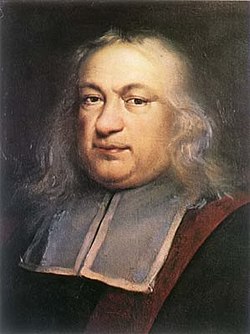
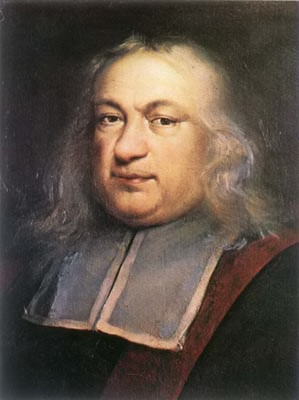
Pierre de Fermat, 17th century painting by Rolland Lefebvre [fr]

Fermat was born in 1601[a] in Beaumont-de-Lomagne, France — the late 15th-century mansion where Fermat was born is now a museum. He was from Gascony, where his father, Dominique Fermat, was a wealthy leather merchant and served three one-year terms as one of the four consuls of Beaumont-de-Lomagne. His mother was Claire de Long.[3] Pierre had one brother and two sisters and was almost certainly brought up in the town of his birth.[citation needed]

He attended the University of Orléans from 1623 and received a bachelor in civil law in 1626, before moving to Bordeaux. In Bordeaux, he began his first serious mathematical researches. In 1629, he gave a copy of his restoration of Apollonius's De Locis Planis to one of the mathematicians there. In Bordeaux, he was in contact with Beaugrand, and during this time, he produced important work on maxima and minima which he gave to Étienne d'Espagnet who shared mathematical interests with Fermat. There, he became much influenced by the work of François Viète.[5]

In 1630, he bought the office of a councilor at the Parlement de Toulouse, one of the High Courts of Judicature in France, and was sworn in by the Grand Chambre in May 1631. He held this office for the rest of his life. Fermat thereby became entitled to change his name from Pierre Fermat to Pierre de Fermat. On 1 June 1631, Fermat married Louise de Long, a fourth cousin of his mother Claire de Fermat (née de Long). The Fermats had eight children, five of whom survived to adulthood: Clément-Samuel, Jean, Claire, Catherine, and Louise.[6][7][8]

Fluent in six languages (French, Latin, Occitan, classical Greek, Italian and Spanish), Fermat was praised for his written verse in several languages and his advice was eagerly sought regarding the emendation of Greek texts. He communicated most of his work in letters to friends, often with little or no proof of his theorems. In some of these letters to his friends, he explored many of the fundamental ideas of calculus before Newton or Leibniz. He was a trained lawyer making mathematics more of a hobby than a profession. Nevertheless, he made important contributions to analytical geometry, probability, number theory and calculus.[9] Secrecy was common in European mathematical circles at the time. This naturally led to priority disputes with contemporaries such as Descartes and Wallis.[10]

Anders Hald writes that, "The basis of Fermat's mathematics was the classical Greek treatises combined with Vieta's new algebraic methods."[11]

Work

[edit]
The 1670 edition of Diophantus's Arithmetica includes Fermat's commentary, referred to as his "Last Theorem" (Observatio Domini Petri de Fermat), posthumously published by his son.

Fermat's pioneering work in analytic geometry (Methodus ad disquirendam maximam et minimam et de tangentibus linearum curvarum) was circulated in manuscript form in 1636 (based on results achieved in 1629),[12] predating the publication of Descartes' La géométrie (1637), which exploited the work.[13] This manuscript was published posthumously in 1679 in Varia opera mathematica, as Ad Locos Planos et Solidos Isagoge (Introduction to Plane and Solid Loci).[14]

In Methodus ad disquirendam maximam et minimam et de tangentibus linearum curvarum, Fermat developed a method (adequality) for determining maxima, minima, and tangents to various curves that was equivalent to differential calculus.[15][16] In these works, Fermat obtained a technique for finding the centers of gravity of various plane and solid figures, which led to his further work in quadrature.

Fermat was the first person known to have evaluated the integral of general power functions. With his method, he was able to reduce this evaluation to the sum of geometric series.[17] The resulting formula was helpful to Newton, and then Leibniz, when they independently developed the fundamental theorem of calculus.[citation needed]

In number theory, Fermat studied Pell's equation, perfect numbers, amicable numbers and what would later become Fermat numbers. It was while researching perfect numbers that he discovered Fermat's little theorem. He invented a factorization method — Fermat's factorization method — and popularized the proof by infinite descent, which he used to prove Fermat's right triangle theorem which includes as a corollary Fermat's Last Theorem for the case n=4. Fermat developed the two-square theorem, and the polygonal number theorem, which states that each number is a sum of three triangular numbers, four square numbers, five pentagonal numbers, and so on.

Although Fermat claimed to have proven all his arithmetic theorems, few records of his proofs have survived. Many mathematicians, including Gauss, doubted several of his claims, especially given the difficulty of some of the problems and the limited mathematical methods available to Fermat. His Last Theorem was first discovered by his son in the margin in his father's copy of an edition of Diophantus, and included the statement that the margin was too small to include the proof. It seems that he had not written to Marin Mersenne about it. It was first proven in 1994, by Sir Andrew Wiles, using techniques unavailable to Fermat.[citation needed]

Through their correspondence in 1654, Fermat and Blaise Pascal helped lay the foundation for the theory of probability. From this brief but productive collaboration on the problem of points, they are now regarded as joint founders of probability theory.[18] Fermat is credited with carrying out the first-ever rigorous probability calculation. In it, he was asked by a professional gambler why if he bet on rolling at least one six in four throws of a die he won in the long term, whereas betting on throwing at least one double-six in 24 throws of two dice resulted in his losing. Fermat showed mathematically why this was the case.[19]

The first variational principle in physics was articulated by Euclid in his Catoptrica. It says that, for the path of light reflecting from a mirror, the angle of incidence equals the angle of reflection. Hero of Alexandria later showed that this path gave the shortest length and the least time.[20] Fermat refined and generalized this to "light travels between two given points along the path of shortest time" now known as the principle of least time.[21] For this, Fermat is recognized as a key figure in the historical development of the fundamental principle of least action in physics. The terms Fermat's principle and Fermat functional were named in recognition of this role.[22]

Death

[edit]

Pierre de Fermat died on 12 January 1665, at Castres, in the present-day department of Tarn.[23] The oldest and most prestigious high school in Toulouse is named after him: the Lycée Pierre-de-Fermat. French sculptor Théophile Barrau made a marble statue named Hommage à Pierre Fermat as a tribute to Fermat, now at the Capitole de Toulouse.

Assessment of his work

[edit]

Together with René Descartes, Fermat was one of the two leading mathematicians of the first half of the 17th century. According to Peter L. Bernstein, in his 1996 book Against the Gods, Fermat "was a mathematician of rare power. He was an independent inventor of analytic geometry, he contributed to the early development of calculus, he did research on the weight of the earth, and he worked on light refraction and optics. In the course of what turned out to be an extended correspondence with Blaise Pascal, he made a significant contribution to the theory of probability. But Fermat's crowning achievement was in the theory of numbers."[24]

Regarding Fermat's work in analysis, Isaac Newton wrote that his own early ideas about calculus came directly from "Fermat's way of drawing tangents".[25]

Of Fermat's number theoretic work, the 20th-century mathematician André Weil wrote that: "what we possess of his methods for dealing with curves of genus 1 is remarkably coherent; it is still the foundation for the modern theory of such curves. It naturally falls into two parts; the first one ... may conveniently be termed a method of ascent, in contrast with the descent which is rightly regarded as Fermat's own".[26] Regarding Fermat's use of ascent, Weil continued: "The novelty consisted in the vastly extended use which Fermat made of it, giving him at least a partial equivalent of what we would obtain by the systematic use of the group theoretical properties of the rational points on a standard cubic".[27] With his gift for number relations and his ability to find proofs for many of his theorems, Fermat essentially created the modern theory of numbers.

Fermat made a number of mistakes. Some mistakes were pointed out by Schinzel and Sierpinski.[28] In his letter to Pierre de Carcavi, Fermat said that he had proved that the Fermat numbers are all prime. Euler pointed out that 4,294,967,297 is divisible by 641. Also, see Weil, in "Number Theory".[29]

See also

[edit]

Notes

[edit]

References

[edit]

Further reading

[edit]
[edit]
Revisions and contributorsEdit on WikipediaRead on Wikipedia
from Grokipedia
Pierre de Fermat (17 August 1601 – 12 January 1665) was a French lawyer and government official who, as an amateur , laid foundational work in several branches of , including , , early , and probability. Born in Beaumont-de-Lomagne to a prosperous father who served as second consul, Fermat received his early education locally before studying at the in the early 1620s, possibly also attending the . He entered professional life as a in , securing an appointment as councillor to the Parlement of Toulouse in 1631, where he advanced to head the criminal court by 1638 and later to one of the senior positions by 1652; his career involved administrative duties in regional parliaments, including periods in Beaumont-de-Lomagne and , though he largely avoided the political intrigues of the time. Despite his primary occupation, Fermat's passion for led him to correspond extensively with leading scholars like , , and [René Descartes](/page/René Descartes), sharing discoveries through letters rather than formal publications, which limited his immediate influence but preserved his ideas for posterity. Fermat's most enduring contribution is to , where he is regarded as the founder of the modern discipline through innovations like the method of infinite descent—a technique for proving the non-existence of solutions to certain Diophantine equations—and theorems on sums of squares, such as the result that a can be expressed as a sum of two squares it is of the form 4k+1. His most famous claim, , posited in a 1637 marginal note in his copy of Diophantus's Arithmetica that no positive integers a, b, and c satisfy the equation an + bn = cn for any integer n > 2, a statement he asserted had a proof too large for the margin but never documented, sparking centuries of mathematical pursuit until its resolution in 1994. Fermat also formulated , stating that if p is prime and a is not divisible by p, then ap-1 ≡ 1 (mod p), a result later rigorously proved by Leonhard Euler and fundamental to modern . These works, often derived from restoring lost texts of ancient mathematicians like Apollonius, elevated number theory from recreational puzzles to a systematic field. In and early calculus, Fermat independently developed coordinate methods around 1636, predating and paralleling Descartes's work, by using them to restore Apollonius's Plane Loci and solve problems linking algebraic equations to geometric curves. He pioneered techniques for finding maxima and minima of functions and tangents to curves through his method of "adequality," an precursor to differentiation that approximated limits without infinitesimals, influencing the later calculus of and . Additionally, in probability, Fermat collaborated with Pascal via letters in 1654 to resolve the "," determining of stakes in an interrupted , thus establishing foundational principles for probabilistic reasoning that underpin modern statistics. Fermat extended his ingenuity to optics with Fermat's principle, proposing in 1657 that light travels between two points along the path that minimizes time, a variational idea that anticipated the and explained refraction and reflection laws independently of Descartes's snell's law derivation. Much of his output appeared posthumously, including a 1670 edition of his Diophantus annotations compiled by his son Samuel, underscoring his reticence to publish during his lifetime—possibly due to his demanding legal career or a preference for private verification. Fermat's correspondence network and unpublished insights profoundly shaped 17th-century mathematics, earning him recognition as one of history's most influential "hobbyist" scholars despite producing no systematic treatises.

Early Life and Education

Birth and Family Background

Pierre de Fermat was born in Beaumont-de-Lomagne, a small town in the region of ; traditional sources date his birth to 17 August 1601, but this likely refers to a of an half-brother from his father's first who died young. Recent analyses, based on his composed by his son stating he died at age 57 in 1665, place his birth between January 13, 1607, and January 12, 1608, with a likely window in late 1607, though the exact date remains uncertain due to incomplete parish records from the period. Fermat was the third child of Dominique Fermat, a wealthy merchant who also held the position of second in Beaumont-de-Lomagne, and Claire de Long, his second wife from a prominent local family of jurists. The family's prosperity stemmed from Dominique's successful trade in and agricultural products, affording them a comfortable middle-class status in a rural setting. His older siblings included a brother, Clément, who pursued a clerical career as a , and a sister, Louise; a younger sister, Marie, completed the immediate family. Growing up in Beaumont-de-Lomagne, a modest provincial town, Fermat was immersed in a practical environment shaped by his father's mercantile activities, providing early familiarity with commerce and local economic affairs. The family maintained connections to regional scholars and officials through Dominique's civic role, fostering an atmosphere conducive to intellectual curiosity. Limited records suggest Fermat received initial tutoring in Latin and basic arithmetic, possibly at the local Franciscan monastery, before transitioning to more formal studies elsewhere. In the early 1620s, supported by his family's resources as a prosperous merchant's son, Pierre Fermat relocated from Beaumont-de-Lomagne to around 1623 to pursue formal schooling at the , where he studied canon and civil law, possibly also attending the for advanced training. This move marked the beginning of his structured , aligning with the era's emphasis on for social advancement among the . Fermat's curriculum at Toulouse encompassed classical languages such as Latin and Greek, alongside , essential for legal argumentation and scholarly discourse. Local Jesuit influences during his formative years likely introduced him to ancillary subjects like astronomy, reflecting the order's contributions to scientific pedagogy in seventeenth-century . He subsequently advanced his legal training, receiving a baccalaureate in civil law from the in 1631, solidifying his qualifications for a professional career in . During this period, Fermat encountered mathematical texts through self-study or informal guidance, notably Euclid's Elements, which captivated him and fostered an amateur interest in and beyond his primary vocation. Upon securing his legal office as councillor in the Parlement of in 1631, he adopted the name "Pierre de Fermat," incorporating the noble particle "de" to denote his elevated status—a convention among office-holders aspiring to aristocratic legitimacy, though it also underscored his emerging scholarly identity.

Professional Career

In 1631, Pierre de Fermat registered as an avocat (lawyer) at the Parlement de Toulouse, one of France's sovereign courts responsible for judicial and administrative matters in the region. That same year, he purchased the offices of conseiller (counselor) and commissaire aux requêtes (commissioner of requests) for 43,500 livres, marking his entry into the professional judiciary. In this role, Fermat handled civil cases, including those related to inheritance disputes, contract enforcement, and local property conflicts, which were common in the Parlement's docket as it oversaw appeals and regional governance. His work focused on legal advocacy and preliminary investigations, providing stability that allowed him to pursue other interests in his spare time. Fermat's career progressed steadily within the . On 16 January 1638, he advanced to conseiller aux enquêtes, a position involving judicial inquiries and . In 1642, he joined the criminal court and the Grand Chamber, the Parlement's highest deliberative body, where he contributed to decisions on serious offenses and policy matters. His promotion to conseiller du roi (king's counselor) in 1648 elevated his status further, positioning him as a key figure in the court's operations during a period of political unrest. Fermat's legal duties intersected with broader regional tensions, particularly the lingering Protestant-Catholic conflicts in . As a Catholic member and eventual president of the Chambre de l'Édit—a special chamber in the established to adjudicate disputes between and Catholics—he oversaw cases involving religious freedoms and property rights under the . In 1648, amid administrative pressures following Cardinal Richelieu's centralizing reforms, Fermat served as the Parlement's chief spokesman in negotiations with Chancellor Pierre Séguier, addressing grievances over royal impositions and local autonomy during the early stages of . He continued this work until late in life, signing his final judicial arrêt (decree) just two days before his death in 1665. His professional success enabled Fermat to establish a stable residence in , relocating there permanently after his 1631 marriage and office purchase. While specific addresses vary in records, his family's eventual ownership of properties, including a vault in the Church of the Augustines for burial, reflected the financial security gained from his judicial roles. This base in supported his dual life as a public servant and scholar.

Administrative Roles and Personal Life

In 1652, Fermat advanced to a senior position in the criminal court of the Parlement de Toulouse. This role built on his earlier service, where his legal expertise supported broader civic duties. Fermat also served in the Parlement at , particularly as a Catholic counsellor in the Chambre de l'Édit starting in 1642, handling regional disputes between Protestants and Catholics under the . Fermat married Louise de Long on 1 June 1631, uniting two families from Beaumont-de-Lomagne and establishing a household centered on intellectual and religious values. The couple had five children who reached adulthood: Clément-Samuel, who pursued like his father; Jean; Claire; Catherine; and Louise. The family emphasized education, with the children receiving training suited to their Catholic upbringing, fostering a domestic environment that balanced and private scholarship. Two of his daughters entered convents, underscoring the integration of and family in his later years.

Mathematical Discoveries

Foundations in Number Theory

Pierre de Fermat laid the groundwork for modern through his innovative approaches to Diophantine equations, emphasizing proofs by contradiction and constructive methods derived from classical sources. His work primarily circulated via private correspondence rather than formal publications, influencing later mathematicians like Euler and Lagrange. Central to his contributions was the development of techniques for solving equations involving solutions, particularly those related to quadratic forms and prime factorizations. Fermat introduced the method of infinite descent in a 1659 letter to Pierre de Carcavi, describing it as a tool for demonstrating the non-existence of solutions to certain Diophantine equations by assuming a minimal and deriving a smaller one, leading to an impossible for positive integers. This technique, akin to reverse induction, was first applied to problems involving sums of squares, such as proving that no has a square area. Fermat noted its versatility for negative results but hinted at broader potential, stating, "Je n’adjouste pas la raison... c’est là tout le mystère de ma méthode." The method marked a shift from algebraic manipulation to structural arguments about the ordering of natural numbers. Building on this, Fermat established his theorem on sums of two squares in the same 1659 correspondence, proving that an odd prime pp can be expressed as p=x2+y2p = x^2 + y^2 with integers xx and yy if and only if p1(mod4)p \equiv 1 \pmod{4}; the prime 2 also qualifies as 12+121^2 + 1^2. He sketched the proof using infinite descent: assuming a prime p3(mod4)p \equiv 3 \pmod{4} divides a sum of two squares leads to a smaller such prime, contradicting minimality. For illustration, 5=12+225 = 1^2 + 2^2 and 13=22+3213 = 2^2 + 3^2 exemplify primes congruent to 1 modulo 4, while 3 and 7 cannot be so expressed. This result, initially announced in a 1640 letter to Marin Mersenne, provided a criterion linking quadratic residues to geometric representations. In a 1640 letter to Mersenne, Fermat explored primes of the form Fn=22n+1F_n = 2^{2^n} + 1, claiming all such numbers are prime and, given infinitely many nn, implying infinitely many primes overall; he verified the first five (F0=3F_0=3, F1=5F_1=5, F2=17F_2=17, F3=257F_3=257, F4=65537F_4=65537). Extending his interest in additive structures, Fermat proposed in a letter to Mersenne the theorem: every positive integer is the sum of at most nn nn-gonal numbers, such as at most four squares (e.g., 7=4+1+1+17 = 4 + 1 + 1 + 1) or three triangles. These claims, unproven by Fermat, were later validated by Cauchy in using descent-like arguments. His broader exchanges with Mersenne facilitated dissemination of these ideas among European scholars. Fermat advanced the study of perfect numbers—those equal to the sum of their proper divisors—and amicable pairs, where two numbers are each the sum of the other's proper divisors, building on Euclidean and Iamblichan traditions with novel computational methods. In 1636, he discovered the amicable pair (17296, 18416), the second known after (, 284), by systematically checking sums of divisors up to larger bounds; for instance, the proper divisors of 17296 sum to 18416, and vice versa. He also sought even perfect numbers beyond Euclid's form 2p1(2p1)2^{p-1}(2^p - 1) for prime pp, providing new proofs of their even exclusivity via descent. These findings, shared in correspondence with Frenicle de Bessy around 1643, enriched classical lore with rigorous verification techniques.

Developments in Probability and Combinatorics

In 1654, Pierre de Fermat exchanged letters with , establishing key principles of through their resolution of the "." This classic dilemma, raised by the gambler Chevalier de Méré, addressed how to equitably divide stakes in an interrupted , such as a dice contest where players aim for a fixed number of successes but the game ends prematurely. Fermat's solution introduced the notion of , apportioning the pot according to each player's probability of winning if the game continued, marking a pivotal advancement in handling uncertainty in . Fermat employed combinatorial to tally all possible future outcomes, such as sequences of rolls or flips, thereby computing the relevant probabilities. For instance, in a game to three points with a 2-1 score, he considered the four possible results of two additional rounds, finding three favorable to the leading player and allocating shares accordingly (3/4 and 1/4 of the stake). This technique extended to outcomes and card , where Fermat counted distinct combinations—like the ways to draw specific suits or ranks—to evaluate , predating systematic probability frameworks and emphasizing discrete for practical applications. Fermat further demonstrated combinatorial prowess through recursive methods building on his approaches to integer decompositions. Fermat's contributions also encompassed early explorations of binomial coefficients and extensions of to assess odds. Although Pascal explicitly leveraged the triangle's rows for recursive probability calculations in interrupted games, Fermat's outcome enumerations aligned with binomial expansions, enabling efficient determination of success probabilities in repeated trials like dice throws. This shared framework enhanced precision in wagering scenarios, influencing subsequent developments in stochastic analysis.

Precursors to Calculus and Analytic Geometry

Fermat developed an innovative method known as "" in 1636 to determine to , which involved setting two as "adequate" or infinitesimally close and using algebraic elimination to find the . In this approach, for a defined by an such as y=x2y = x^2, Fermat considered points (x,y)(x, y) and (x+e,y+v)(x + e, y + v), where ee is a small increment, leading to the relation v=2xe+e2v = 2x e + e^2; by eliminating higher-order terms in ee, he obtained the as $2x$, anticipating the . This technique, detailed in his correspondence with , applied algebraic methods to geometric problems, marking a precursor to . Building on , Fermat introduced a method of maxima and minima around the same period (1636–1642) for optimization problems, which involved assuming a maximum or minimum occurs when an increment causes no change in the function. He applied this to curves like parabolas, such as maximizing the area of inscribed rectangles, and to cycloids, where he optimized dimensions like the AC:AB=3:2AC:AB = 3:2 for solid volumes. These methods, outlined in his treatise Methodus ad disquirendam maximam et minima and shared via letters to Mersenne, predated Newton's fluxional by decades and relied on algebraic manipulation rather than limits. In parallel, Fermat independently pioneered in 1636 by representing curves through coordinate equations in his letters to Mersenne, allowing algebraic plotting of loci. For instance, he described the parabola as y=x24py = \frac{x^2}{4p}, where pp relates to the focus, enabling the solution of geometric problems like Apollonius's loci via intersections of curves. This work, circulated among Parisian mathematicians, overlapped with Descartes's similar developments but emphasized algebraic generality over . Fermat also advanced quadrature techniques for computing areas under curves, particularly the , using approximations via infinite series in s in his (c. 1658). For the y=1xny = \frac{1}{x^n} (n>1n > 1), he divided the region into rectangles with bases in (e.g., x=1,2,4,x=1, 2, 4, \dots), yielding a convergent series sum ra\frac{r}{a} that provided the exact area, extending Archimedean methods to transcendental curves. These innovations, preserved in De quadratura parabolae and related letters, laid groundwork for integral calculus by integrating discrete summation with continuous geometry.

Contributions to Optics and Physics

In 1657, Pierre de Fermat articulated what is now known as , positing that propagates between two points along the path that minimizes the travel time, rather than the shortest geometric distance. This formulation appeared in a letter to the philosopher Marin Cureau de La Chambre, where Fermat critiqued ' mechanistic explanation of and sought a more adequate principle grounded in efficient natural processes. By assuming travels at different speeds in air and denser media—slower in the latter—Fermat demonstrated that the principle yields the law of , quantitatively expressed as n1sinθ1=n2sinθ2n_1 \sin \theta_1 = n_2 \sin \theta_2, where nn denotes the and θ\theta the angle of incidence or relative to the normal. This derivation involved minimizing the time functional t=1c(ysinθ1+dysinθ2)t = \frac{1}{c} \left( \frac{y}{\sin \theta_1} + \frac{d - y}{\sin \theta_2} \right), with cc as the speed in , establishing a variational approach to that bridged and empirical observation. Fermat extended this method of maxima and minima to reflection, proving the law that the angle of incidence equals the angle of reflection for plane mirrors by showing that any deviation increases the optical path length, thus the time. For spherical mirrors, he employed algebraic techniques to analyze ray paths, determining conditions for focal points where incident rays converge after reflection, which anticipated later developments in mirror design. These proofs relied on geometric optimization without full infinitesimal calculus, yet they effectively modeled light behavior in curved surfaces. Fermat further integrated his expertise in algebraic geometry to trace light rays through optical elements like lenses and prisms, representing paths as solutions to equations that satisfy the least-time condition at interfaces. This approach allowed him to predict patterns in compound systems, such as how rays bend successively in prismatic dispersions. His optical work also foreshadowed broader physical principles; the least-time idea influenced the development of of least action in , where paths of particles under —such as in planetary orbits—minimize an analogous , though Fermat himself did not directly apply it to celestial motion. These contributions marked a pivotal shift toward variational methods in physics, emphasizing nature's economy in both and .

Fermat's Last Theorem

Statement of the Theorem

Fermat's Last Theorem asserts that there are no positive integers aa, bb, and cc such that an+bn=cna^n + b^n = c^n for any integer n>2n > 2. This claim emerged from Fermat's work in number theory, specifically within the study of Diophantine equations, where solutions are sought in integers. The theorem generalizes the case for n=2n=2, which corresponds to Pythagorean triples—sets of integers satisfying a2+b2=c2a^2 + b^2 = c^2, such as (3, 4, 5)—and these were well-known in ancient mathematics. Fermat first recorded the theorem in a marginal note around 1637 in his copy of Claude Bachet's 1621 edition of Diophantus's Arithmetica, a foundational text on algebraic equations. In this note, Fermat stated the general result for n>2n > 2 and claimed to have discovered a "truly marvelous proof" of it, adding that "the margin is too narrow to contain it." The note remained unpublished during Fermat's lifetime, and the proof he alluded to was never found, leaving the general unproven at the time. Although Fermat did not provide a general proof, he did establish the theorem for specific cases. Notably, he proved it for n=4n=4 using the method of infinite descent, a technique he pioneered for showing the non-existence of solutions by assuming a minimal and deriving a smaller one, leading to a contradiction. This proof for n=4n=4 was published posthumously in 1670 by Fermat's son Samuel in the edition of Diophantus's Arithmetica that included Fermat's annotations.

Early Correspondence and Challenges

In 1640, Pierre de Fermat corresponded with Bernard Frénicle de Bessy, challenging him to find proofs for the cases of his theorem where the exponent n=3n=3 and n=5n=5. Fermat indicated that he had already discovered a proof for n=4n=4, which he shared privately with Frénicle but withheld from broader publication, teasing the mathematician with partial details that frustrated Frénicle's attempts. This exchange highlighted Fermat's penchant for posing difficult problems in without fully revealing his methods, as Frénicle responded with irritation, feeling that Fermat was deliberately evading a complete disclosure. During the 1650s and 1660s, Fermat engaged in lively exchanges with English mathematicians such as and William Brouncker, discussing various challenges related to his . These letters included Fermat providing counterexamples to purported solutions for cases involving composite exponents, demonstrating that no positive solutions existed even when nn was not prime, thereby reinforcing the theorem's broader applicability. Wallis and Brouncker contributed insights using continued fractions and other techniques, but their debates often centered on specific Diophantine equations, with Fermat defending his claims while maintaining secrecy about his general proof. Progress on verifying Fermat's theorem accelerated in the 18th and 19th centuries through efforts by prominent mathematicians building on his hints. Leonhard Euler claimed a proof for n=3n=3 in a 1753 letter to , later publishing it in his 1770 work , though it contained a subtle error regarding unique factorization in certain rings; the flaw was later addressed indirectly, validating the result. For n=5n=5, proved one case in 1825, while completed the full proof later that year, publishing it in September; both drew on infinite descent methods inspired by Fermat. Similarly, for n=7n=7, Dirichlet extended related results to n=14n=14 in 1832, with the case for n=7n=7 resolved by Gabriel Lamé in 1839 using advanced algebraic techniques. Fermat's reluctance to publish his work systematically contributed to the theorem's slow dissemination during his lifetime, as he preferred private correspondence over formal treatises, fearing misinterpretation or loss of priority. After his death in 1665, his son Samuel Fermat compiled and edited his father's unpublished notes, including the marginal stating the theorem, into the 1670 edition of Diophantus's Arithmetica. This posthumous publication, along with copies shared among colleagues like Frénicle and Carcavi, ensured the theorem's survival and sparked centuries of investigation.

Correspondence and Recognition

Key Exchanges with Contemporaries

Fermat's mathematical ideas were primarily disseminated through an extensive network of private correspondence, with Marin Mersenne serving as a key intermediary in the 1630s and 1640s. As a Minim friar and coordinator of intellectual exchanges in Paris, Mersenne facilitated Fermat's sharing of discoveries in number theory, including methods for finding perfect numbers and aliquot parts, as well as challenges involving Diophantine equations such as the impossibility of expressing rational cubes as sums of two rational cubes—a precursor to his famous last theorem. In geometry, Fermat sent Mersenne detailed treatments of tangents to curves and solutions to problems like the "question des ellipses," proposing numerical and algebraic approaches to enumerate ellipses with rational foci and directrices. These exchanges often highlighted Fermat's preference for concrete arithmetic solutions over abstract symbolism. Tensions arose in this correspondence when Fermat critiqued ' geometric methods, particularly through Mersenne's role as go-between. In 1638, Fermat rejected Descartes' algebraic resolution of the ellipses problem for failing to provide an exact count of possible configurations, arguing that symbolic methods overlooked essential numerical constraints specific to the curves involved. Fermat's letters to Mersenne emphasized the superiority of his ic techniques for handling such geometric enumerations, sparking a broader on the integration of and that Mersenne circulated among French scholars. A landmark exchange occurred in 1654 between Fermat and , prompted by queries from the gambler Antoine Gombaud de Méré on chance and equitable divisions. In a series of letters from to October, they resolved the "," determining how to divide stakes in an interrupted based on remaining plays, using combinatorial enumeration and recursive methods that laid the groundwork for calculations. Their discussion also addressed dice probabilities, such as the number of throws required for a favorable chance of rolling double sixes, establishing foundational principles of modern through rigorous enumeration rather than intuition. Fermat engaged in heated debates with Gilles Personne de Roberval and during the 1630s and 1640s over methods for finding s and handling s, staunchly defending his algebraic approach. With Roberval, correspondence via Mersenne revealed rivalries in tangent constructions; Fermat proposed algebraic "" to equate curve points and their increments, which Roberval challenged using kinematic and techniques, leading to mutual accusations of incomplete demonstrations. Similarly, Fermat critiqued Cavalieri's method of indivisibles for quadrature and tangents, favoring his purely algebraic elimination of terms to derive exact slopes without relying on geometric indivisibles or limits. These exchanges underscored Fermat's commitment to algebraic precision over the infinitesimal geometries emerging in and . In the 1660s, Fermat's works reached English mathematicians through intermediaries like Sir Kenelm Digby and John Collins, bridging continental and British mathematical circles. Digby, acting as a conduit, forwarded Fermat's letters on and to in 1660, prompting Wallis to engage with and extend Fermat's theorems on and Diophantine problems. Collins, as to the , further disseminated Fermat's challenges and solutions, including those on perfect numbers and tangents, fostering responses from Wallis and others that integrated Fermat's ideas into English analytic traditions.

Publication and Contemporary Reception

Fermat published few works during his lifetime, preferring to share his discoveries through private correspondence rather than formal dissemination. One notable exception was his 1660 contribution, "De linearum curvarum cum lineis rectis comparatione," included as a supplement to Antoine de La Loubère's Veterum geometria promota, where he addressed the rectification of curves and the . His annotations on , including early insights into Diophantine problems, appeared in marginal notes to his personal copy of Claude-Gaspard Bachet's Latin translation of Diophantus's Arithmetica, though these remained unpublished until after his death. Following Fermat's death in 1665, his son Samuel de Fermat compiled and edited a comprehensive collection of his father's mathematical writings, letters, and notes, publishing Varia opera mathematica in 1679 through the printer Johannem Pech in Toulouse. This volume, spanning over 200 pages, included previously circulated manuscripts such as Ad locos planos et solidos isagoge (an introduction to plane and solid loci, outlining his foundational work in analytic geometry) and selections from his correspondence on number theory, probability, and optics. In a separate 1670 edition of Diophantus's Arithmetica, Samuel reproduced Fermat's marginalia from the translation, notably the famous annotation on what would later be termed Fermat's Last Theorem, thereby preserving and publicizing his father's unpublished insights for the broader mathematical community. Contemporary mathematicians responded to Fermat's ideas with a mix of admiration and contention. Fermat expressed high regard for Blaise Pascal's intellect during their 1654 exchange on probability, stating in a letter, "I have infinite esteem for his genius," which laid the groundwork for modern probability theory through their collaborative resolution of the "problem of points." Their collaboration reflected mutual admiration. Christiaan Huygens similarly praised Fermat's contributions to optics and probability in their correspondence beginning in 1656, incorporating elements of Fermat's principle of least time into his wave theory of light, though he later diverged on certain probabilistic calculations. In contrast, René Descartes sharply criticized Fermat's methods for finding tangents to curves and his claims in analytic geometry, dismissing them as erroneous and inadequate in letters to Marin Mersenne, partly to assert priority over similar ideas in his own La Géométrie (1637); Descartes even challenged Fermat publicly but conceded the correctness of his tangent method upon further review. Despite his status as an amateur mathematician—a lawyer by profession—Fermat gained significant recognition within informal French mathematical circles, particularly through the network centered on Marin Mersenne in Paris. Mersenne actively circulated Fermat's manuscripts and challenge problems among scholars like Girard Desargues and Claude Mydorge, fostering debates that elevated Fermat's reputation as a leading innovator in number theory and geometry during the 1630s and 1640s. This informal acknowledgment persisted until his death, underscoring his influence despite his reluctance to seek formal academic validation.

Death and Legacy

Final Years and Death

In the early 1650s, Fermat suffered a near-fatal bout of the plague during the Toulouse of 1652–1653, which temporarily halted his activities and led to erroneous reports of his death before his recovery was confirmed. Despite this ordeal, he maintained relatively good health for much of the decade, continuing his administrative duties as a councillor in the Parlement de , including promotions within the court and legal work across regions like Beaumont-de-Lomagne and . By the early 1660s, Fermat's health began to weaken, coinciding with a tapering of his mathematical pursuits, which he had largely set aside by 1662 in favor of and lighter correspondence on with figures like . He persisted in his judicial role until the end, signing his final legal decree (arrêt) on January 10, 1665, just two days before his , suggesting no formal but a gradual shift toward reduced professional demands around 1664. Fermat died on January 12, 1665, in , , at the age of 63, with the exact cause unknown; three days prior, he had been conducting legal business at the local courthouse. He was initially buried in the Church of St. Dominique in , though his remains were later transferred in 1675 to the family vault in the Church of the Augustines in . In the immediate aftermath, Fermat's eldest son, Clément-Samuel de Fermat, inherited his father's judicial offices and played a crucial role in preserving his unpublished mathematical papers by compiling and publishing them in as an appendix to an edition of Diophantus's Arithmetica, thereby safeguarding key works amid the family's transition.

Long-Term Influence and Modern Assessment

Fermat's work laid the foundational principles of modern number theory through his investigations into Diophantine equations, prime forms, and integral solutions, such as those to x2Ny2=±1x^2 - N y^2 = \pm 1, which revitalized interest in problems from ancient texts like Diophantus's Arithmetica. These contributions inspired Leonhard Euler in the 18th century, who proved many of Fermat's assertions—such as properties of Fermat numbers 22n+12^{2^n} + 1—and extended the field with results like the Euler product for the Riemann zeta function, thereby reviving number theory as a vibrant discipline. Carl Friedrich Gauss further elevated Fermat's legacy in his Disquisitiones Arithmeticae (1801), systematizing concepts like quadratic reciprocity and binary quadratic forms, which connected Fermat's intuitive ideas to algebraic structures and propelled the subject toward contemporary algebraic number theory. The proof of Fermat's Last Theorem by Andrew Wiles in 1994 confirmed the conjecture that no positive integers aa, bb, cc satisfy an+bn=cna^n + b^n = c^n for n>2n > 2, validating Fermat's 1637 claim after over three centuries and establishing a deep link between elliptic curves and modular forms. This breakthrough not only resolved a longstanding challenge but also spawned new research directions in number theory, serving as an invaluable toolkit for later advances, including the full modularity theorem proved in 2001 by Breuil, Conrad, Diamond, and Taylor. Fermat's techniques for determining tangents to curves and locating maxima and minima via ""—equating expressions like f(a+e)=ADf(a)f(a + e) =_{AD} f(a) and eliminating terms in ee—anticipated key elements of , influencing the independent developments by and in the late . Although Fermat's approach remained geometric and algebraic without treating variables as functions or incorporating integrals, it provided essential precursors that Newton built upon with fluxions and Leibniz formalized through notation and the transcendental law of homogeneity. In optics, Fermat's principle—that light rays follow paths minimizing travel time, expressed variationally as δn(r(s))ds=0\delta \int n(\mathbf{r}(s)) \, ds = 0 where nn is the —underpins modern geometric optics and extends to variational mechanics through its equivalence to of stationary action, δS=0\delta S = 0 with S=L(q,q˙)dtS = \int L(q, \dot{q}) \, dt. This formulation yields the Euler-Lagrange equations, such as dds(n(r)drds)=n\frac{d}{ds} \left( n(\mathbf{r}) \frac{d\mathbf{r}}{ds} \right) = \nabla n (the ), governing ray trajectories and linking to Hamiltonian systems via , with applications in anisotropic media and broader mechanical problems like geodesic motion. Historiographical evaluations position Fermat as an extraordinary amateur —a by profession—who single-handedly invented modern and bridged geometric traditions with Enlightenment analytic rigor, yet his legacy is tempered by critiques of incomplete proofs, as he often shared results via correspondence without full demonstrations, leaving verification to successors like Euler. His intuitive genius is praised for shattering classical boundaries while renewing them, though the absence of rigorous arguments for claims like fueled debates on whether he truly possessed "marvelous proofs" or merely profound conjectures. This secretive style, typical of 17th-century mathematical circles to guard priority, delayed immediate impact but amplified his enduring mystique.

References

Add your contribution
Related Hubs
Contribute something
User Avatar
No comments yet.